

62 Easter Table Decor Ideas: Pastel, Elegant & Family-Friendly
Sixty-two Easter table ideas you can actually pull off at home, from a moss table runner to gold-veined eggshells.
Why the Easter Table Matters More Than the Eggs
Easter lunch is the first long meal of the year. The light is back, the garden is waking up, and everyone is ready to sit down together again.
That is why the table is worth an hour of your time. It is the one place where the whole family gathers at once, with no screens and no rush.
You do not need a big budget or a stylist. You need a palette, one good texture and something alive in the middle of the table.
The ideas below are built for real homes. Some take five minutes, some are a weekend project, and every one works on an ordinary dining table.
Each idea is short and specific so you can read it at the kitchen counter and then go and do it. Choose two or three that suit your table, and leave the rest for next year.
The 2027 Easter Table Trends Worth Using
This year the pastel-only table feels tired. The strongest tables mix softness with depth: sage and moss greens, warm ochre, raw linen and hand-thrown ceramics.
Natural materials are leading everything. Think unglazed terracotta, birch and rattan, plus beeswax candles instead of dyed ones.
Florals are looser and lower than in recent years. Instead of one tall arrangement, designers cut stems at three or four heights to build a soft meadow down the middle of the table.
Eggs have moved off the sideboard and onto the table itself. Speckled quail eggs, naturally dyed shells and eggshell place cards are the detail guests photograph most.
Finally, tables are getting personal. Hand-painted name tiles, family photos, recipe cards and a tablecloth guests can write on all make the setting feel like it belongs to one family, not a catalogue.
Warm light is the last piece. A mix of tapers, votives and one low lantern does more for the room than any centerpiece.
How to Use This List of 62 Ideas
The ideas are grouped into seven sections, from linens and foundations to lighting and personal touches. Each one is a single, finished scheme rather than a shopping list.
Start with the section that matches your table. A big family table needs low centerpieces, while a table for four can carry something taller and more sculptural.
Then pick one anchor idea and two supporting details. For example, a heavy linen runner, moss with speckled eggs, and beeswax tapers make a complete table with almost no effort.
Stick to two or three colours throughout. A tight palette is the single fastest way to make a home table look styled.
Every idea includes a short note on why it works, so you can adapt it to the plates and glassware you already own.
01 – 08
Table Foundations & Linens
The cloth decides the mood before anything else is placed. Warm neutrals and honest textures give the rest of your table room to breathe.
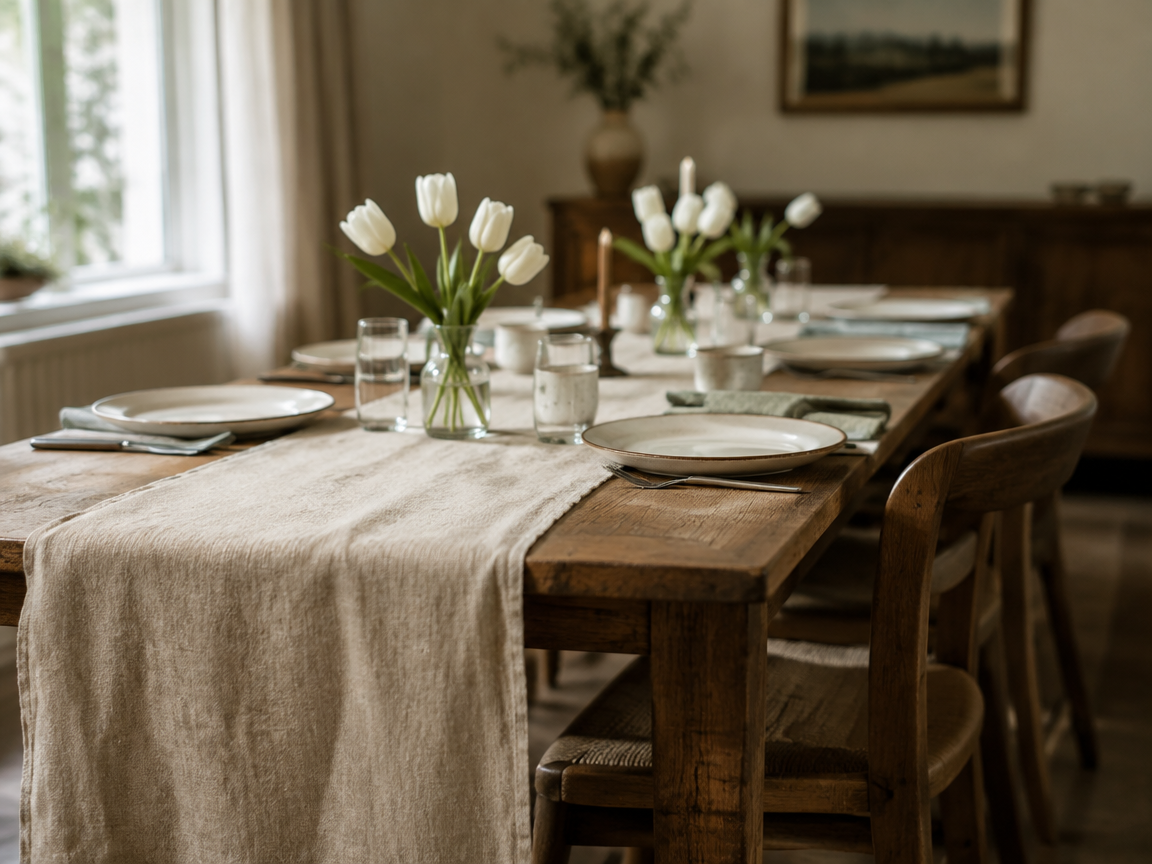
Heavy Unbleached Linen Runner
Start with a runner of heavy, unbleached linen in a warm oatmeal tone. Let it fall over both ends of the table instead of stopping short.
The rough weave catches the afternoon light and softens every plate placed on top. Press it lightly, then leave a few natural creases for a lived-in feel.
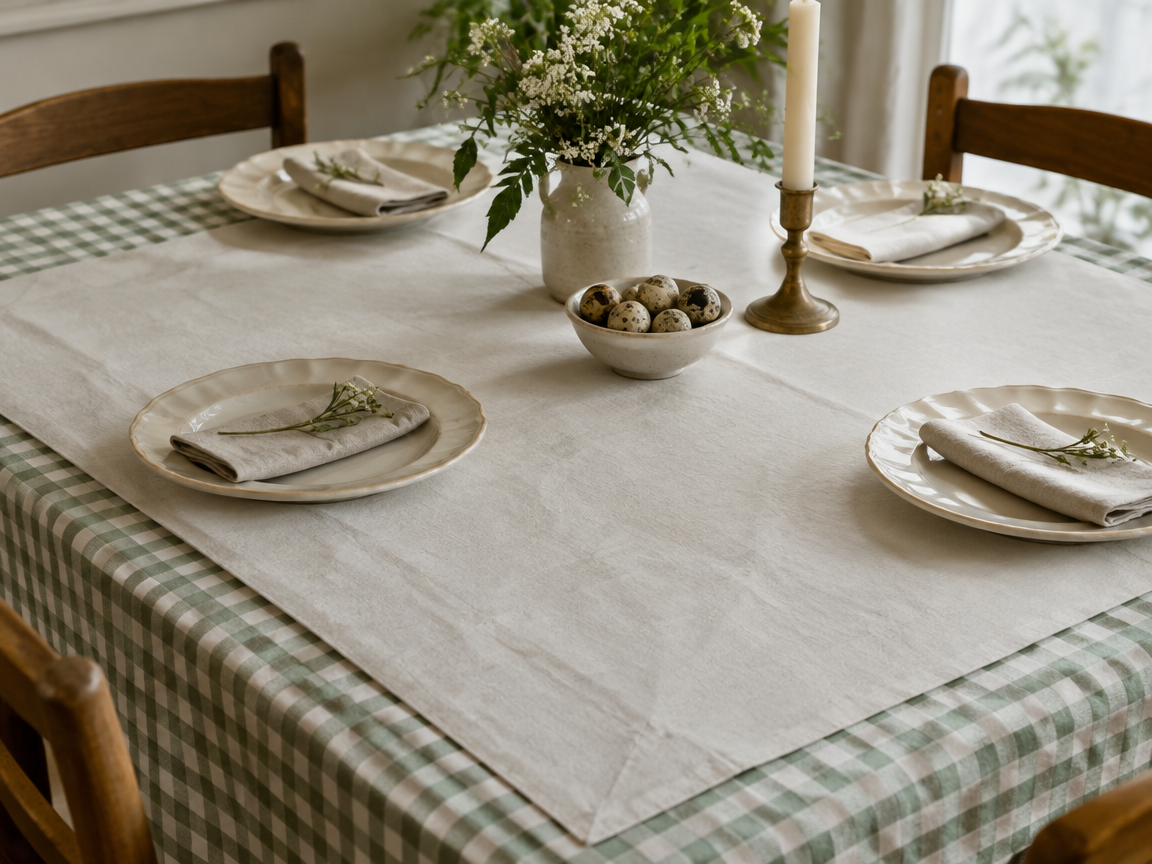
Double-Cloth Gingham Layers
Lay a wide gingham cloth first, then centre a plain ivory linen square on top. The check appears only at the edges, so the table feels tailored rather than busy.
Choose tea-stained brown or sage checks instead of bright pastels. This keeps the pattern grown-up and works with almost any china.
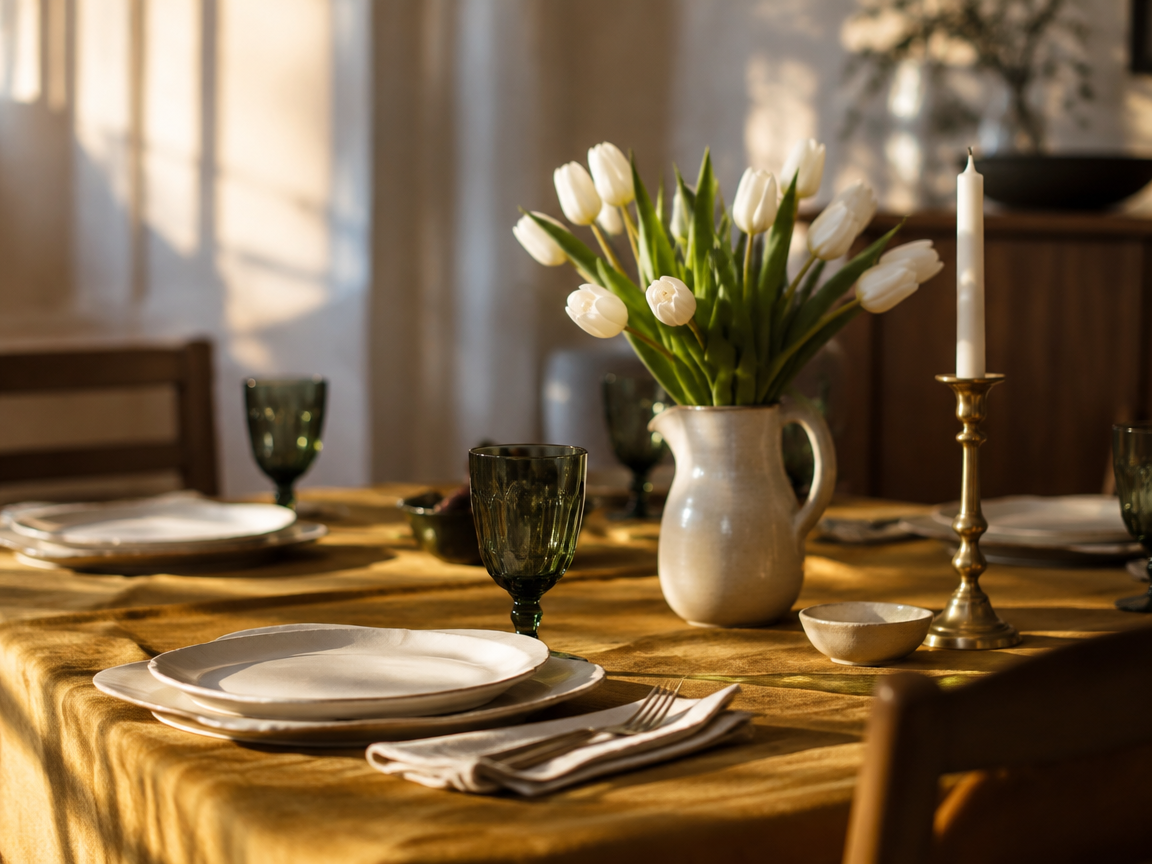
Warm Ochre Tablecloth Base
A soft ochre cloth gives the whole table a golden cast, even on a rainy spring day. Pair it with cream plates and dark green glassware for balance.
Ochre flatters candles, brass and fresh bread in a way pale pink rarely does. It also photographs beautifully in low evening light.
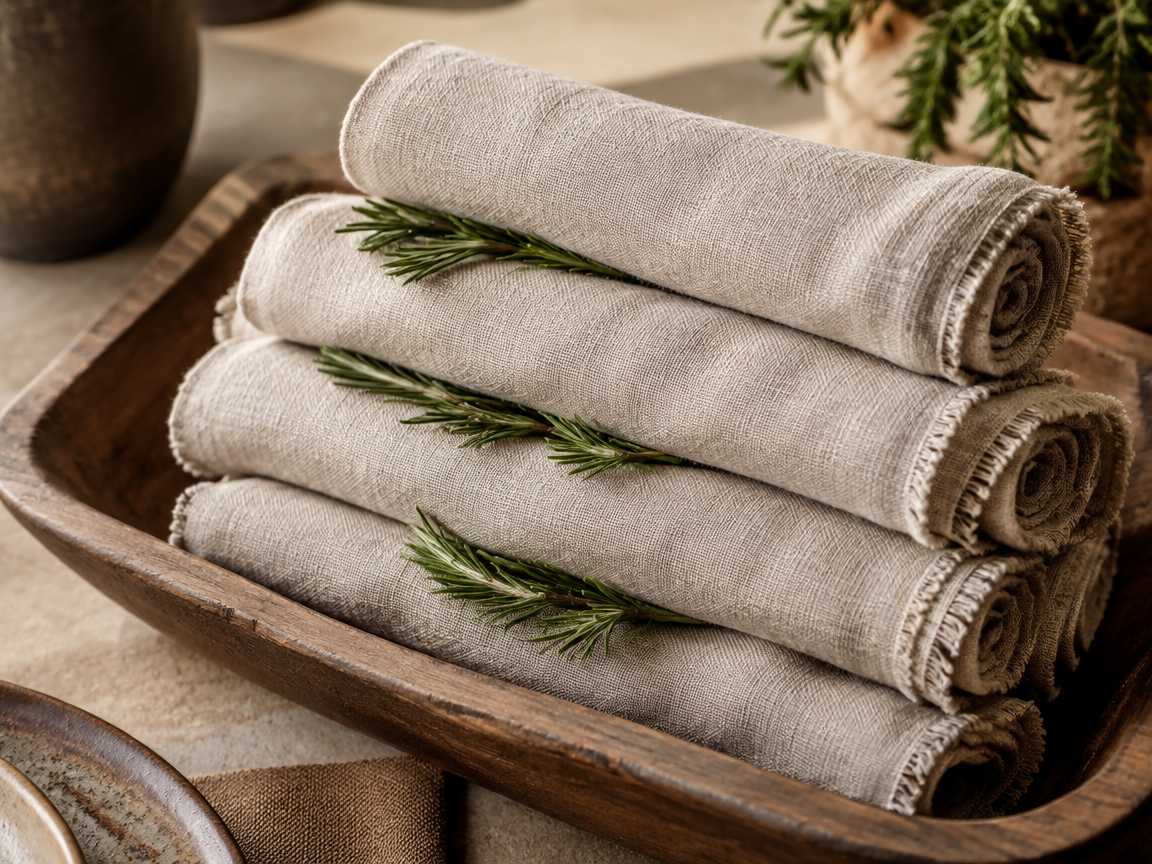
Raw-Edge Napkins in a Wooden Tray
Roll four raw-edge linen napkins and stack them in a shallow wooden tray. Let the loose threads show, because they are part of the charm.
Place the tray at the centre so guests can help themselves before sitting down. Add a sprig of rosemary between the rolls for scent.
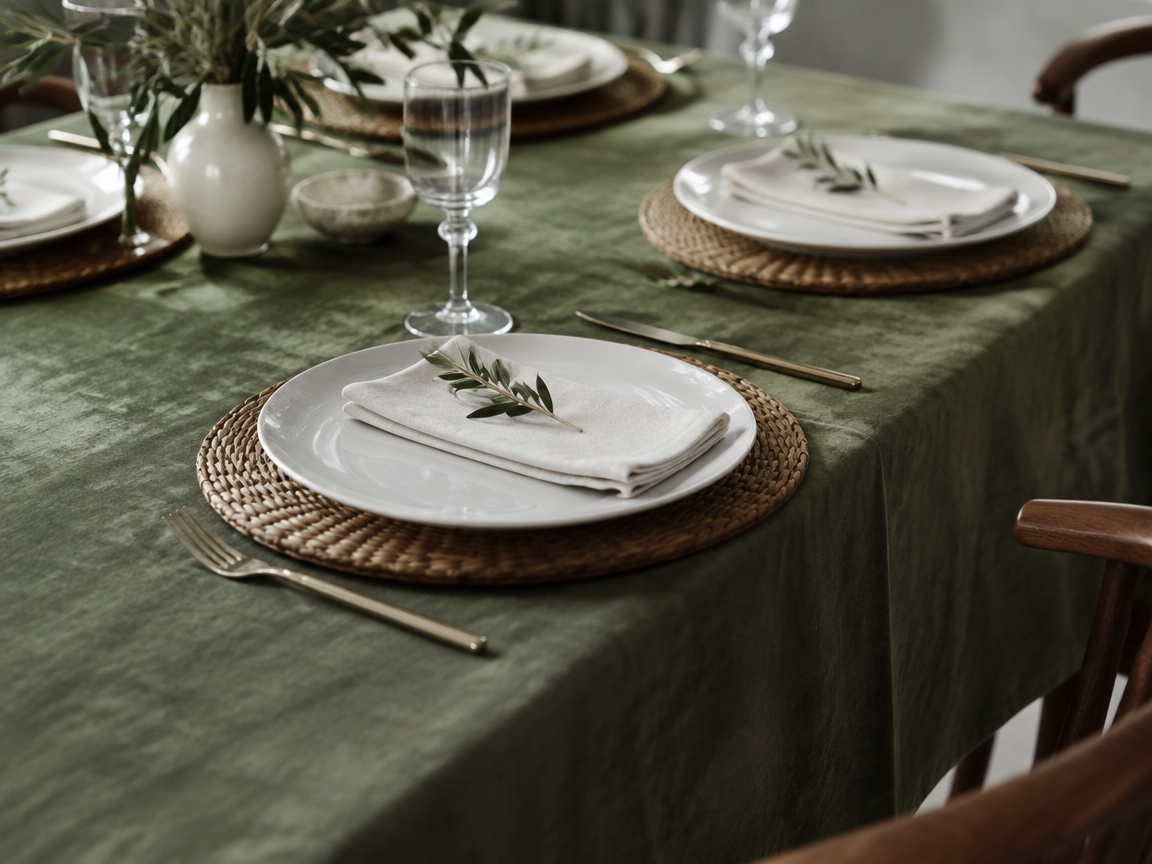
Sage Velvet Under Rattan Mats
Velvet sounds formal, but a sage velvet cloth makes a spring table feel rich and soft. Keep the texture quiet with plain woven rattan mats at every place.
The matte surface hides spills and steadies glassware. Finish with simple white plates so the fabric stays the star.
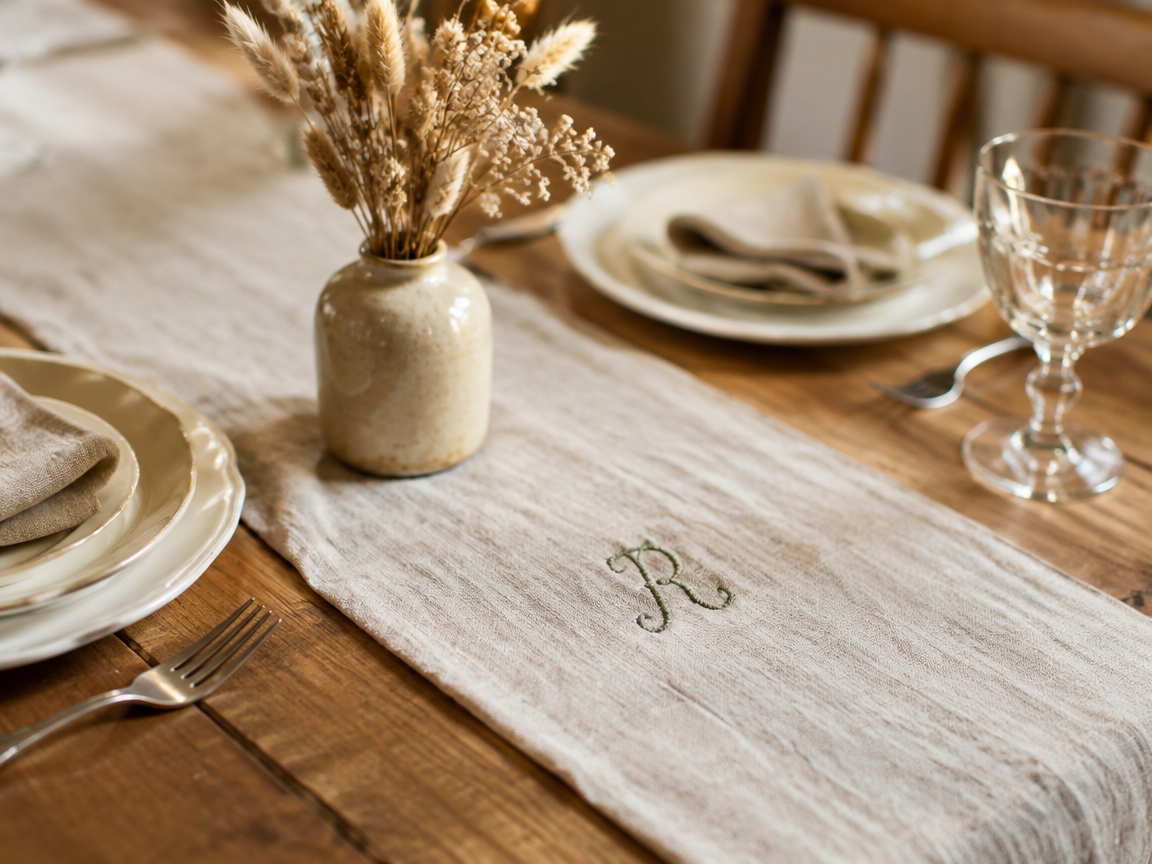
Monogrammed Linen Runner
Have a long runner embroidered with your family initial in a single thread colour. Place the monogram slightly off-centre so it reads as a detail, not a logo.
Linen ages well, so this becomes the piece you unwrap every Easter. Store it rolled rather than folded to avoid permanent creases.
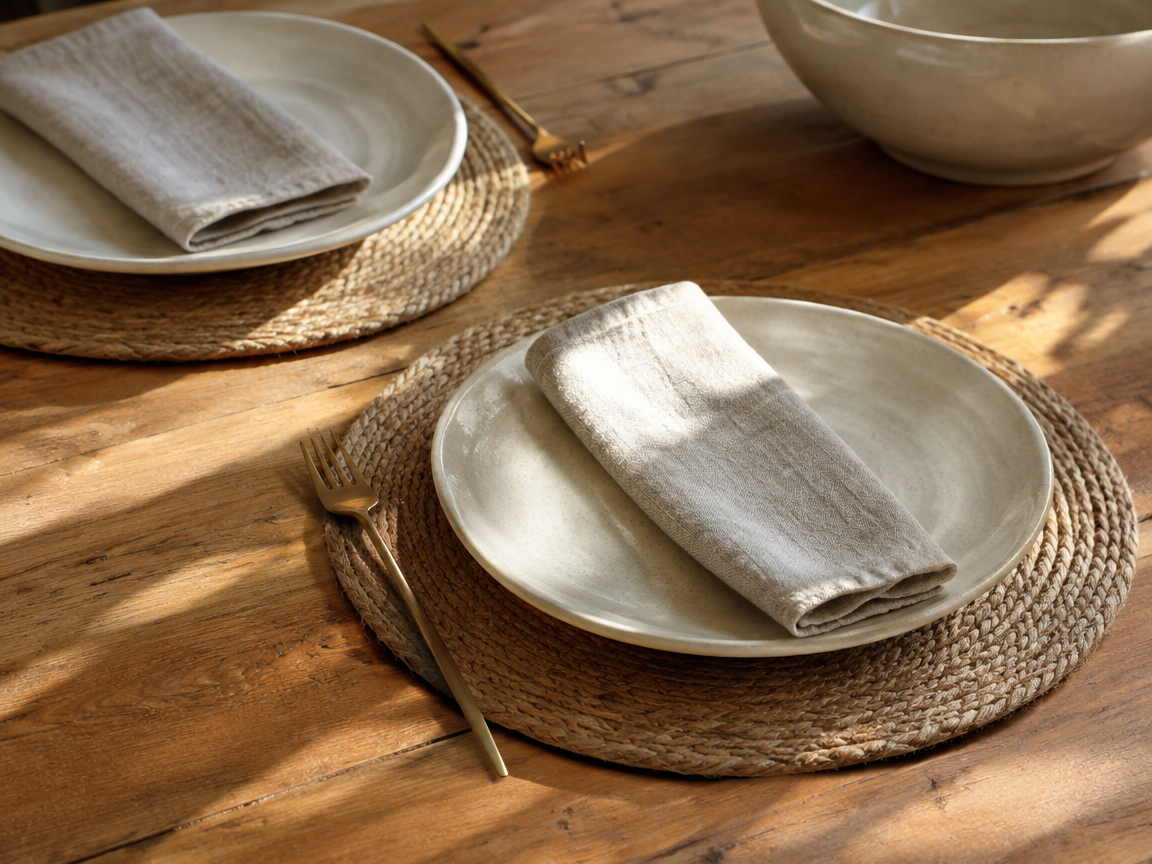
Jute Placemats with Cream Plates
Round jute placemats bring a garden-floor texture to an indoor table. Their natural tan works with both pastel and earthier settings.
Keep them slightly oversized so the cream plate leaves a generous border. A folded napkin on top is all the styling you need.
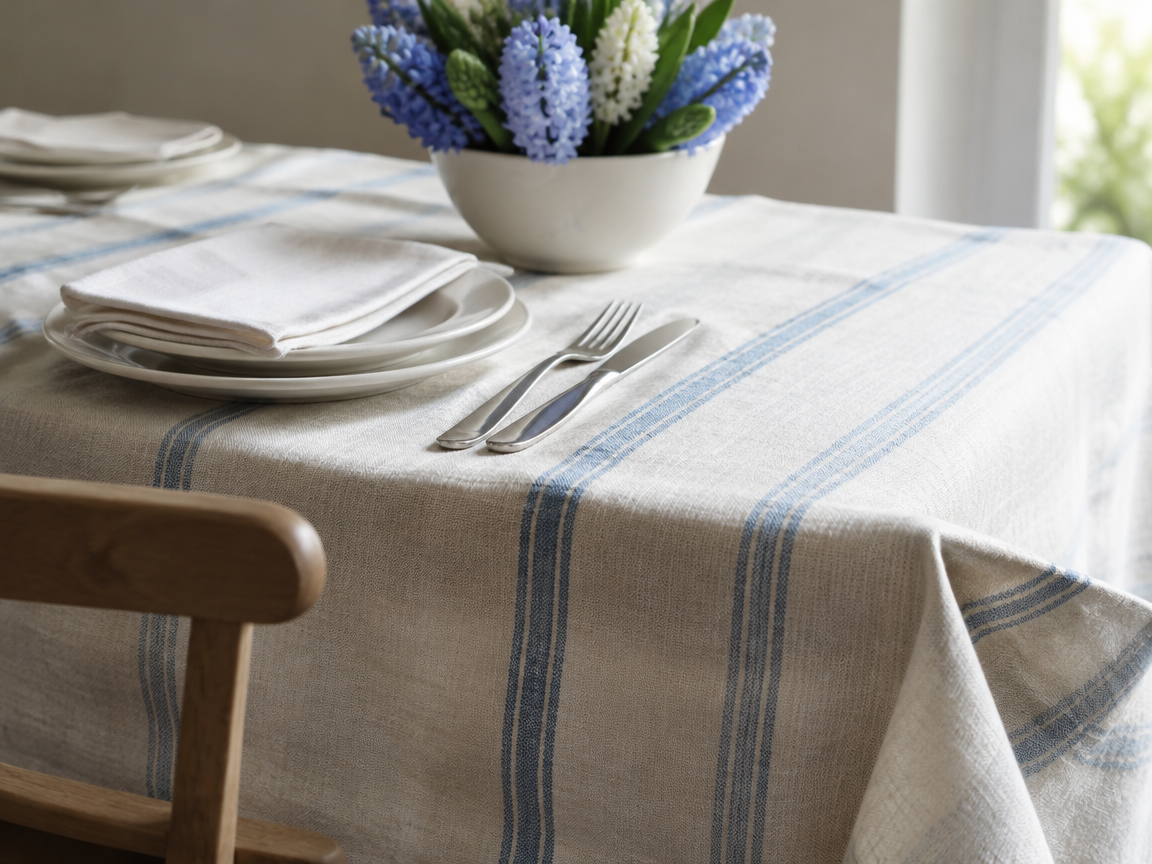
Striped French Market Cloth
A cream cloth with faded blue or red stripes looks collected rather than bought. Layer it with plain napkins and no other pattern.
Stripes running lengthways draw the eye down the table and make it feel longer. Fold the ends back to show the reverse of the weave.
09 – 20
Centerpieces & Florals
Keep the centre low enough for conversation. These arrangements use branches, bulbs and moss so nothing looks shop-bought.
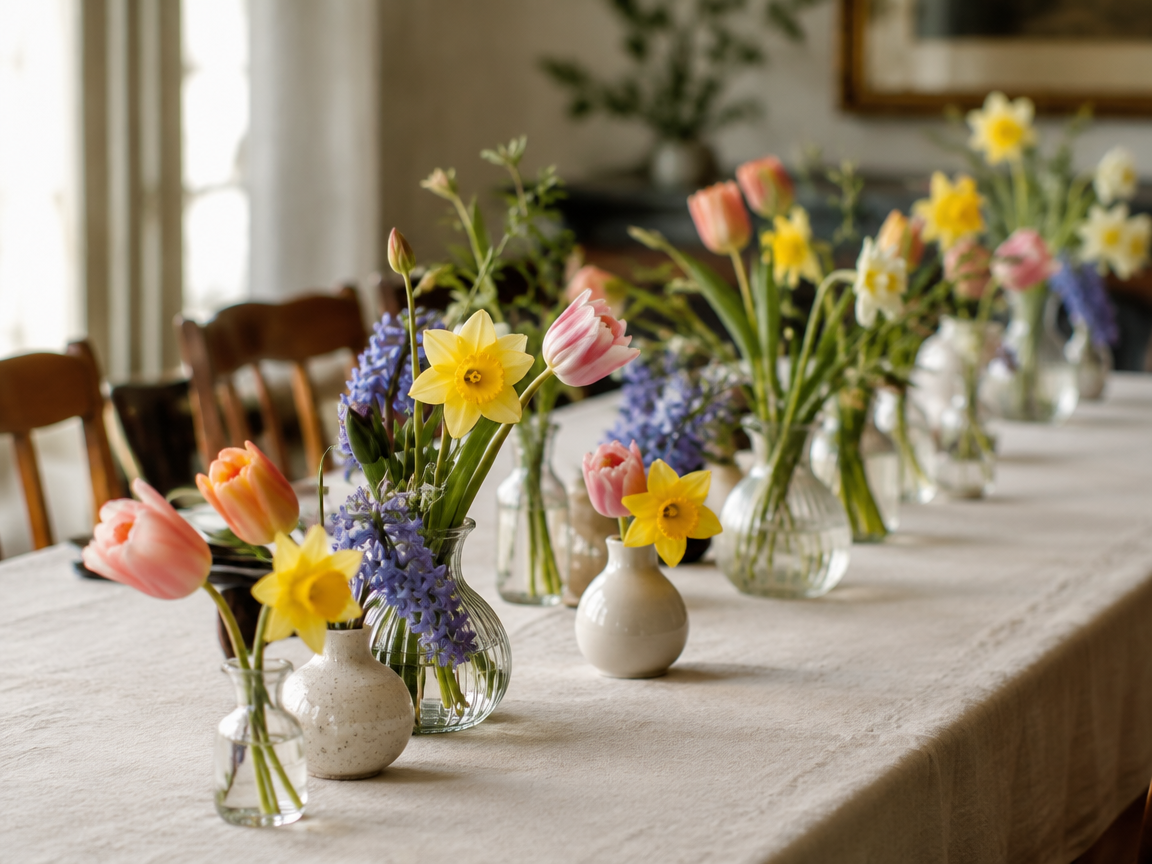
Table Meadow of Spring Bulbs
Cut tulips, daffodils and hyacinths to three different heights and arrange them in small clusters down the centre. The uneven tops create the look of a meadow.
Keep every stem short enough to see over from a seated position. Mix bud vases with one low bowl so the eye has somewhere to rest.
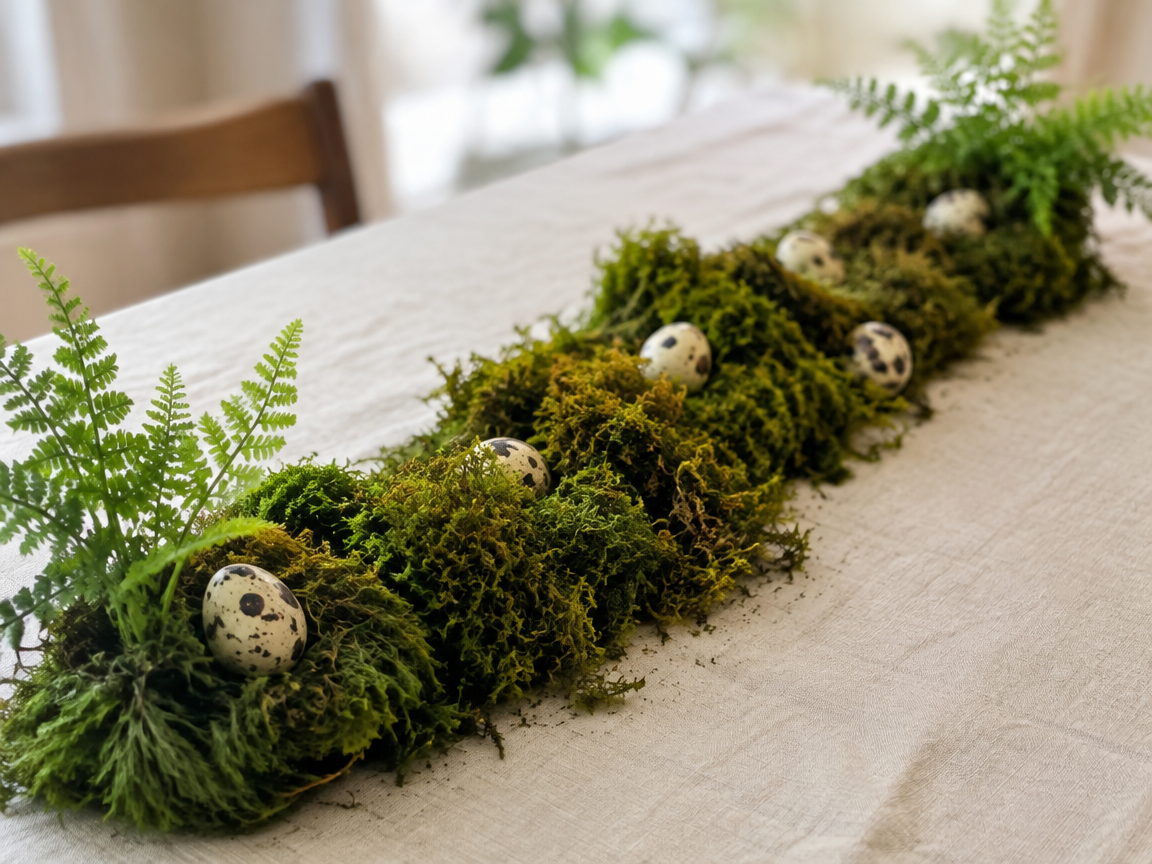
Moss Mound with Speckled Eggs
Build a low mound of preserved moss along the middle of the table. Press speckled quail eggs into the surface at uneven intervals.
Moss needs no water and lasts the whole weekend. Add two small ferns at either end to stop the shape looking like a rectangle.
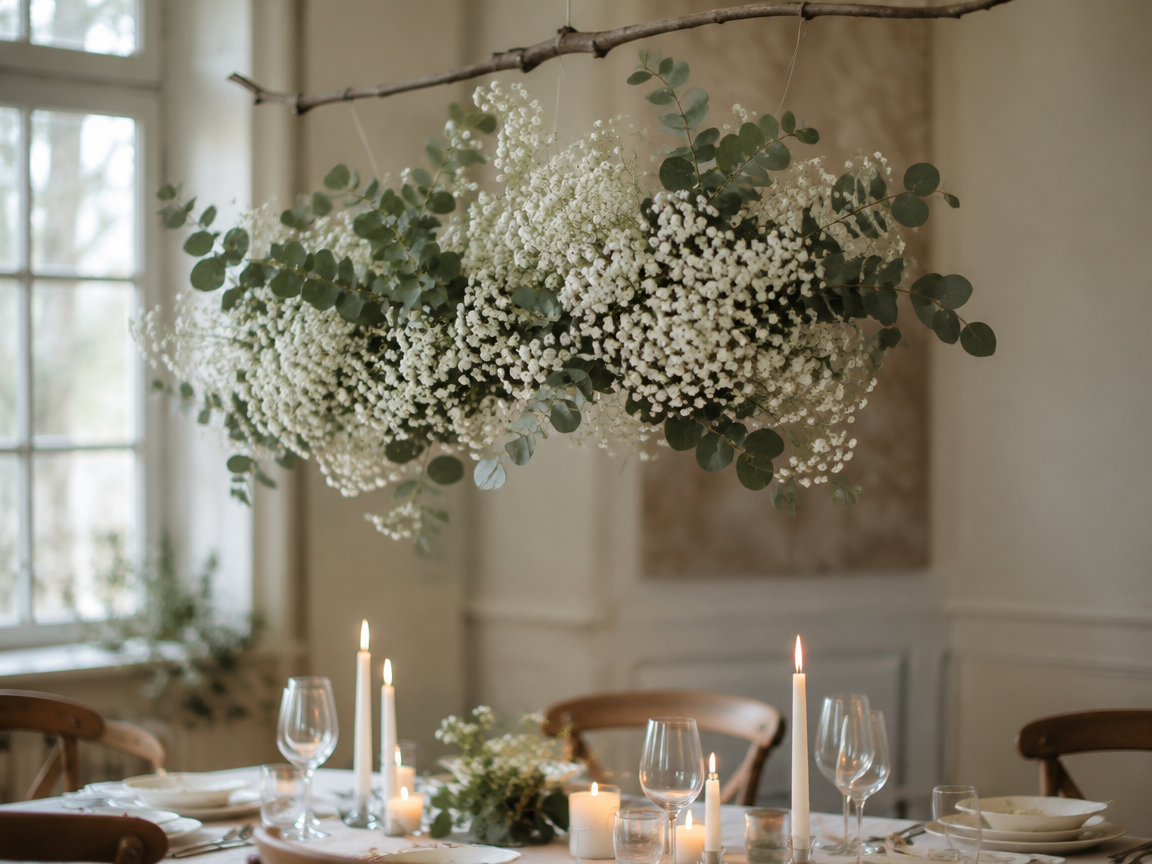
Floating Wildflower Cloud
Hang a light installation of baby’s breath and eucalyptus above the table, just high enough to see underneath. It reads as a soft cloud of white rather than a heavy arrangement.
Use fishing line and a slim branch as the frame. Test the height from a seated position before guests arrive.
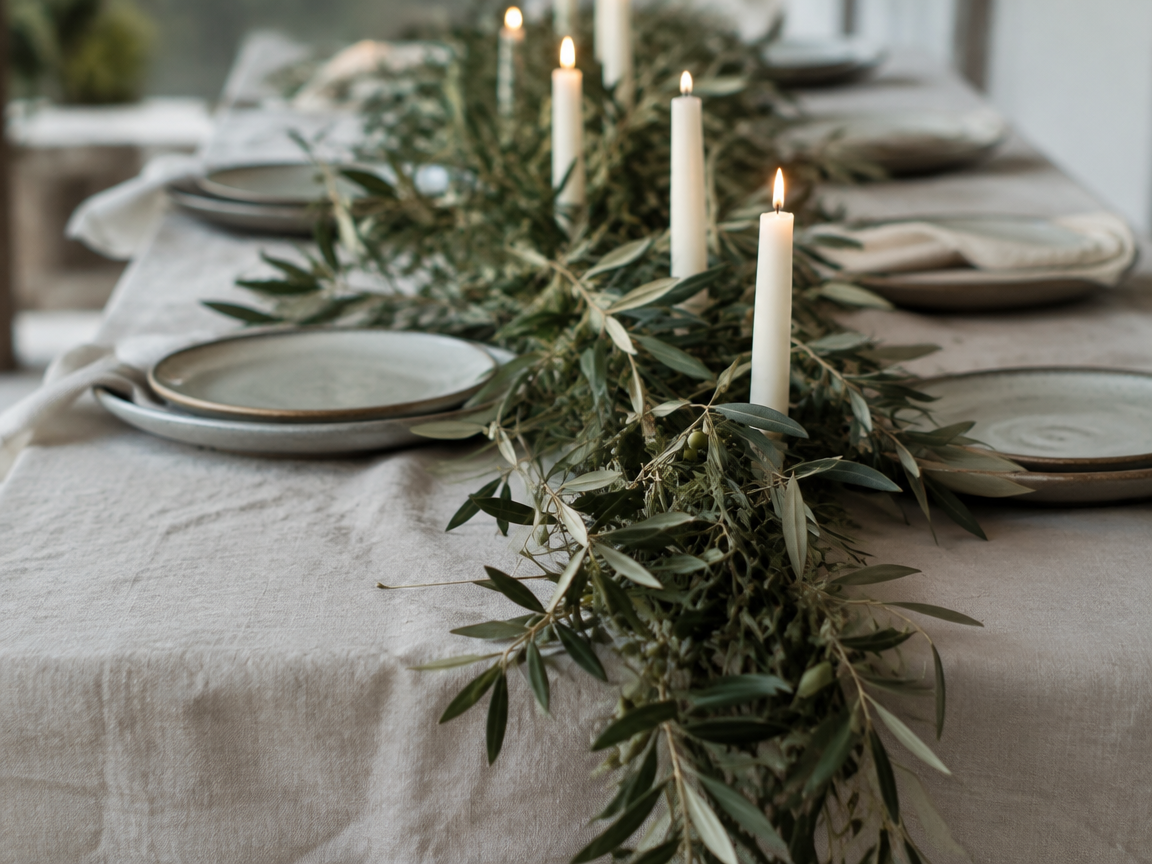
Olive Branch Garland
Run a loose garland of olive branches down the centre and let it spill over the edges in two places. Olive leaves stay fresh for days without water.
Tuck a few white tapers between the stems for height. The silver-green leaves flatter brass and stoneware beautifully.
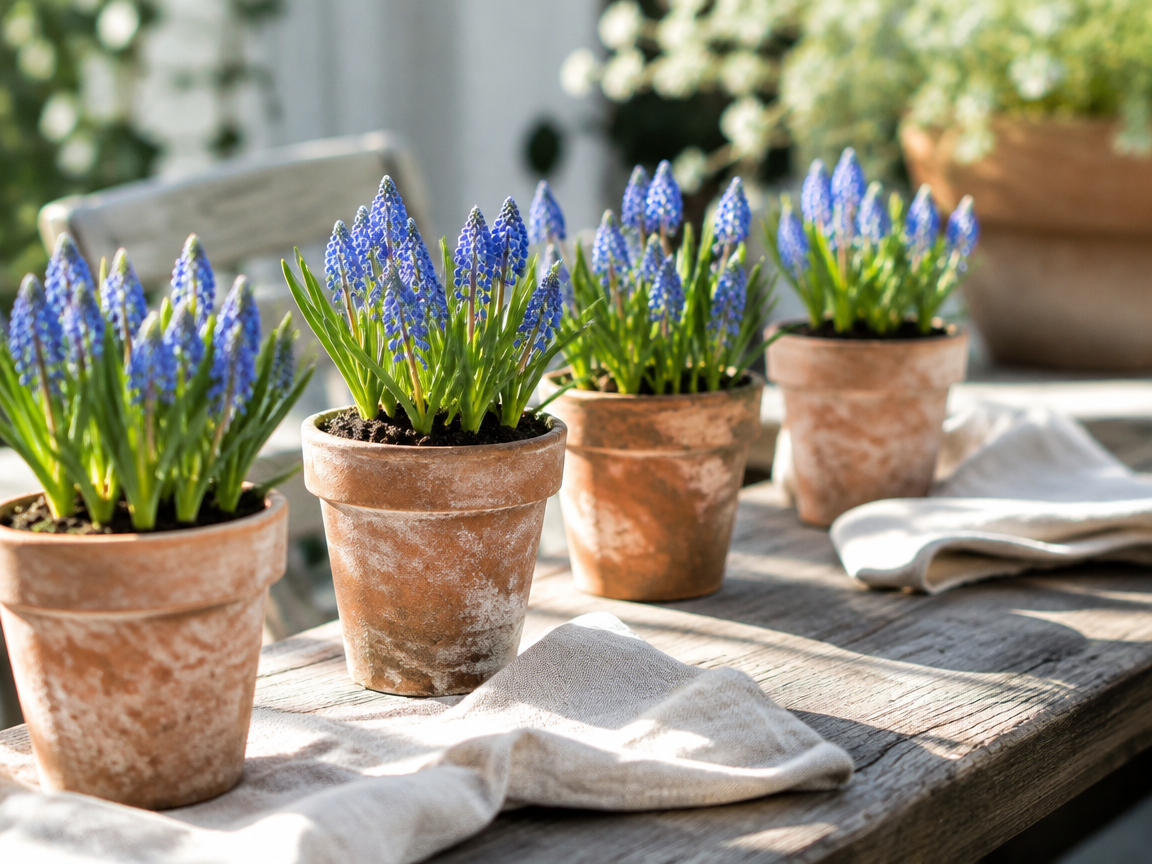
Terracotta Bowls of Potted Muscari
Line up small terracotta pots planted with grape hyacinths along the table. Leave the pots unglazed and slightly dusty for warmth.
After lunch, guests can take a pot home as a favour. Water them lightly the night before so the flowers open.
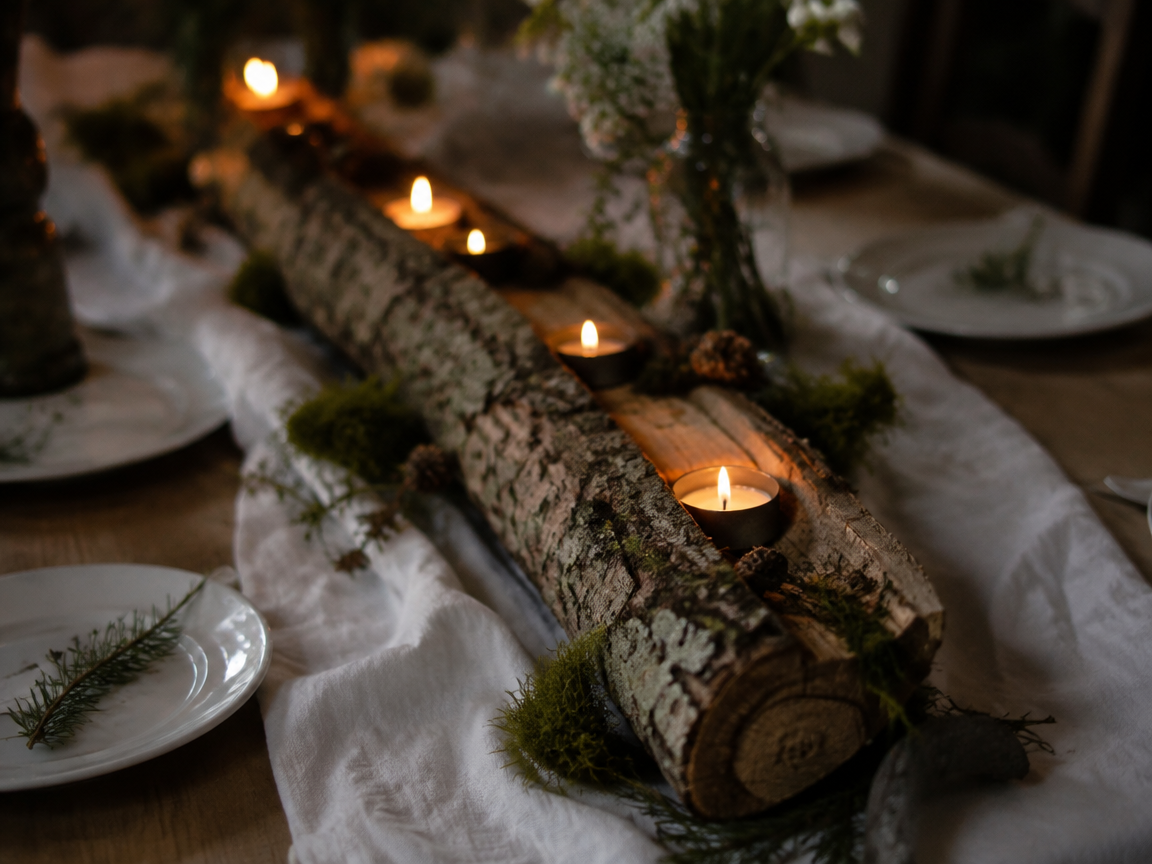
Birch Log Runner with Tea Lights
Split a slim birch log lengthwise and lay it down the centre as a rustic runner. Drill shallow holes and set tea lights inside.
Keep the bark on for texture and contrast with the white candles. This suits a woodland mood without looking like a theme party.
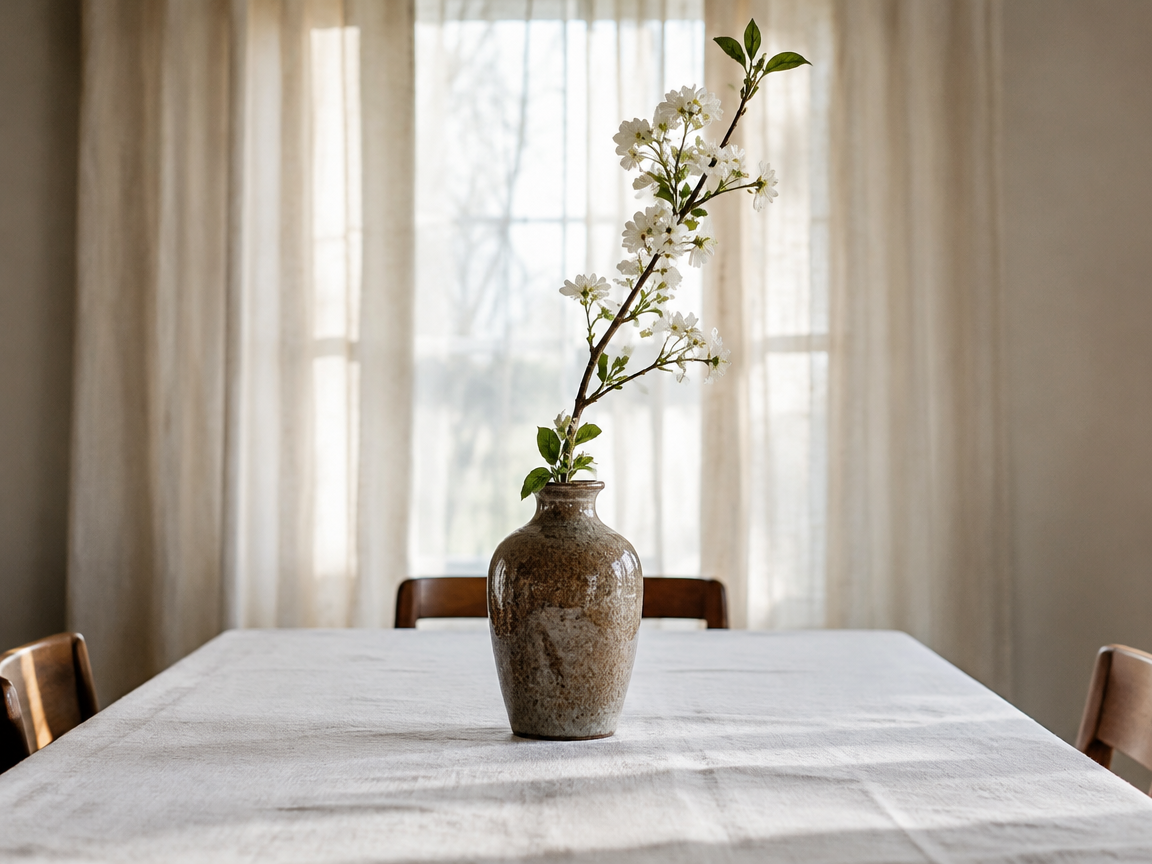
Single Statement Branch in Stoneware
Instead of a wide arrangement, use one tall branch of blossom in a heavy stoneware vase. Place it at one end so the table opens up for serving dishes.
Choose a vase with a narrow neck to hold the branch upright. Let the blossom sit above eye level to frame the room.
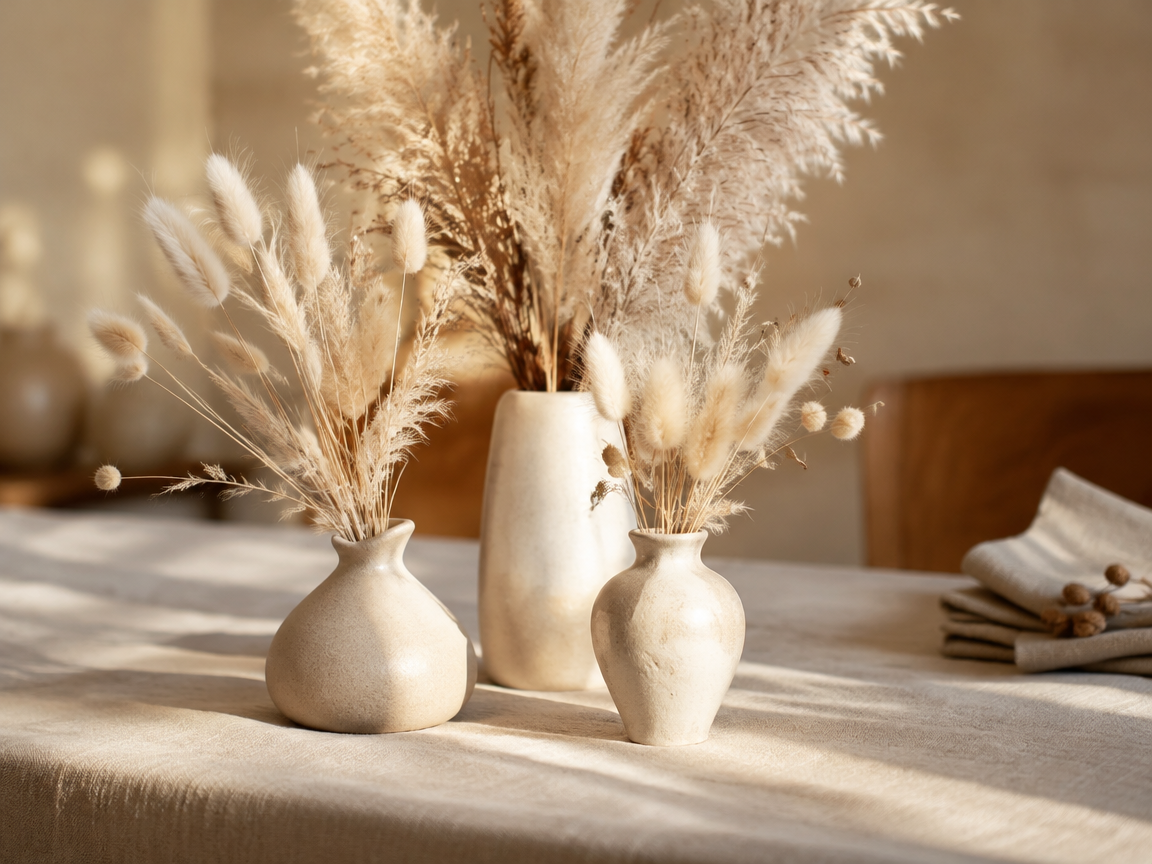
Dried Pampas and Bunny Tail Grass
Group dried pampas with soft bunny tail grasses in three low vases. The pale beige tones work all spring and need no care.
Fluff the plumes with your fingers before arranging. Keep them well away from candles, because dried grass catches light easily.
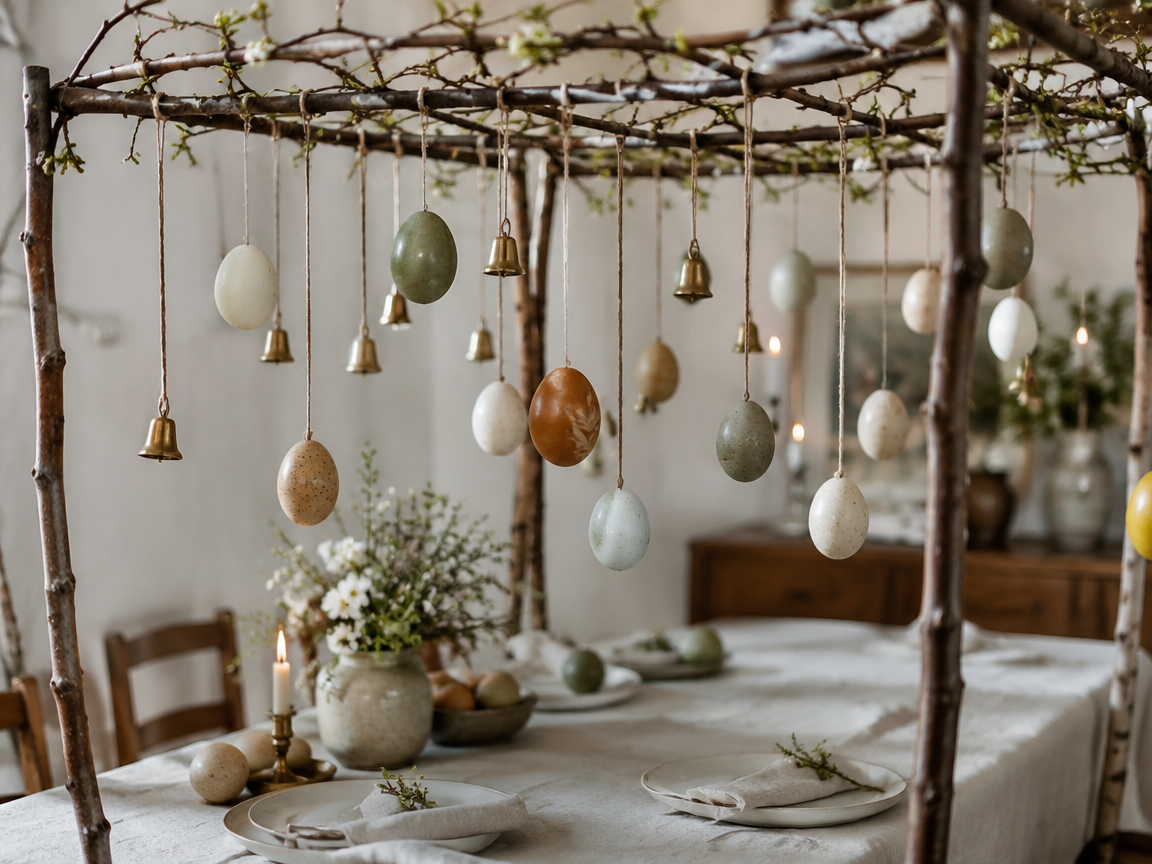
Hanging Egg Vine Pergola
Build a simple pergola of thin hazel branches above the table and hang dyed eggs from it with twine. Vary the string lengths so the eggs sit at different heights.
Use blown eggs so they are light enough to hang safely. Add a few small brass bells for gentle movement.
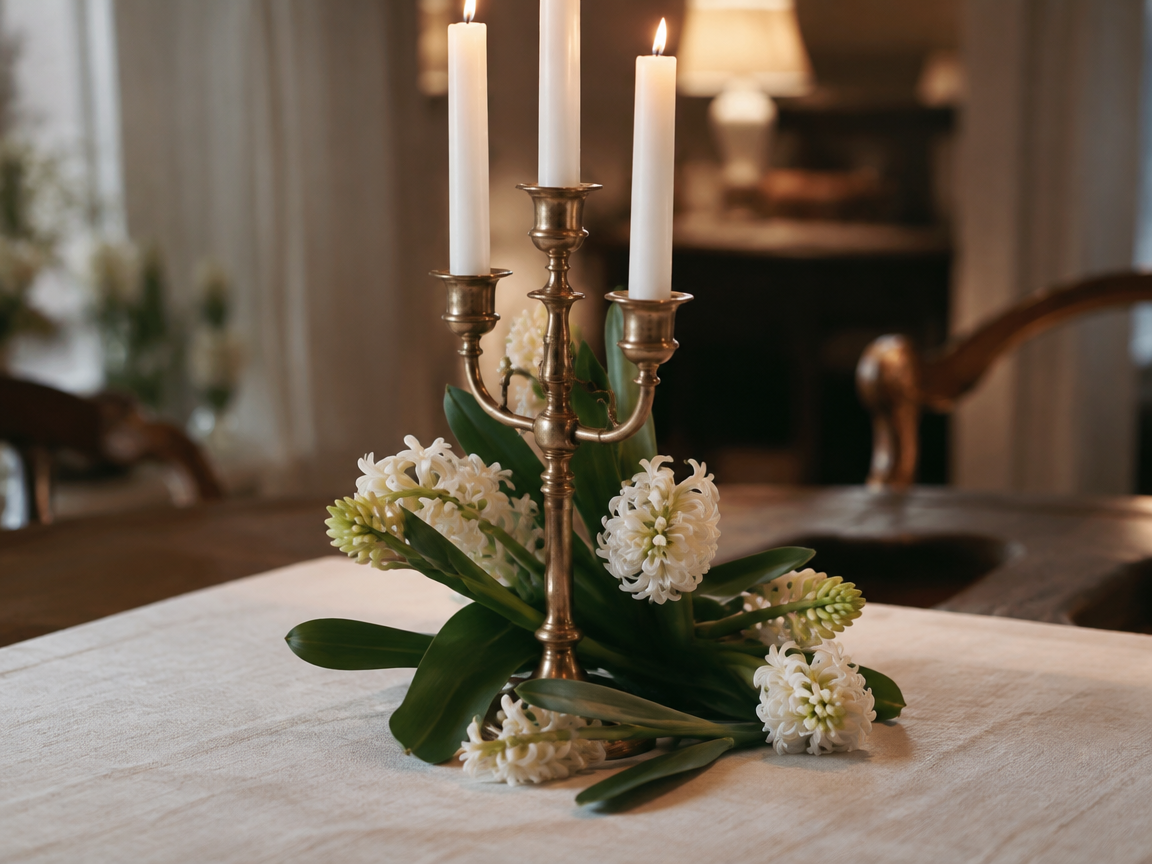
Brass Candelabra with Hyacinth
Place a slim brass candelabra in the centre and thread hyacinth stems around its base. The dark stems make the brass look older and warmer.
Keep candles white and unscented so they do not compete with the flowers. Light them ten minutes before guests sit down.
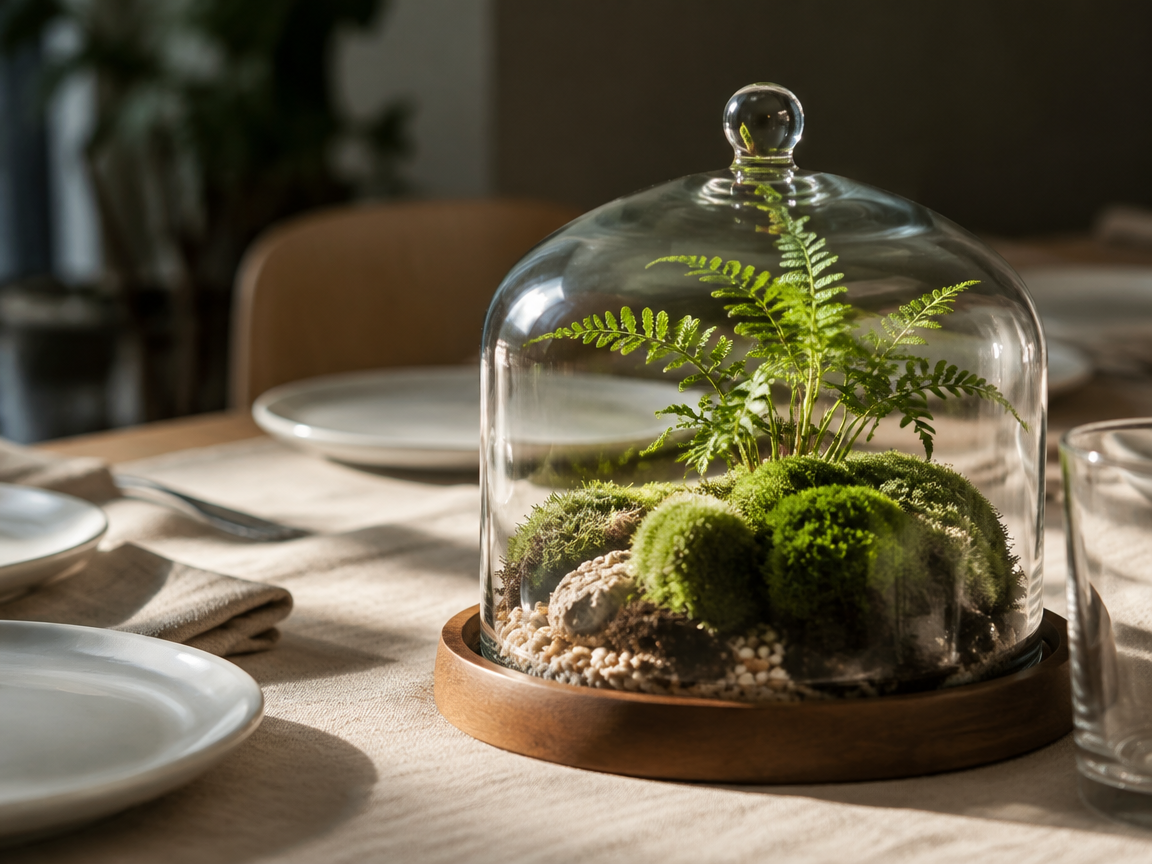
Glass Cloche Miniature Garden
Plant a tiny garden of moss, gravel and one small fern under a glass cloche. It becomes a tabletop curiosity that guests lean in to inspect.
Set it on a wooden board so it can be lifted away for serving. Mist the moss once a day so it stays green.
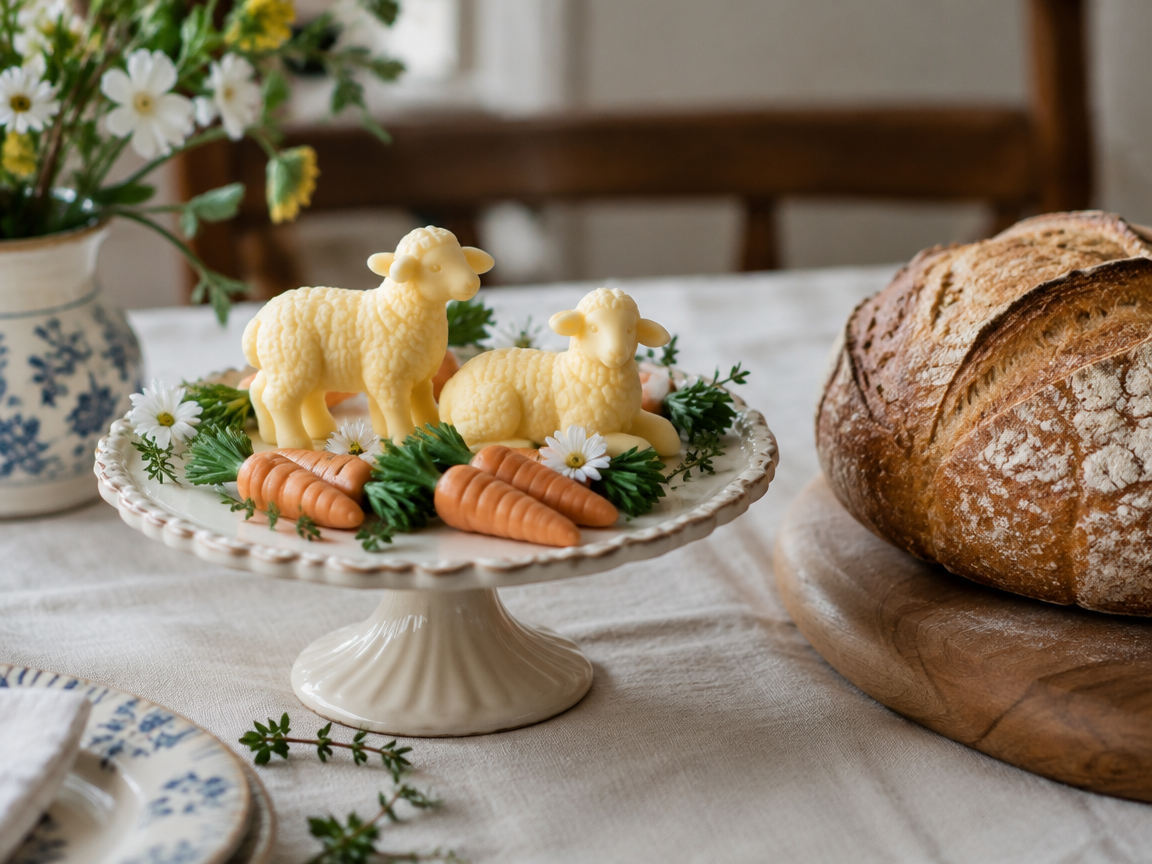
Sculpted Butter Lambs and Carrots
Make or buy small sculpted butter lambs and carrots and set them on a cake stand. They are edible, unexpected and instantly charming.
Keep the stand next to the bread so the butter has a purpose. Chill the shapes for an hour before serving so they hold their form.
21 – 30
Place Settings & Napkins
The place setting is the part each guest touches. Small touches like a folded ear or a handwritten name make lunch feel considered.
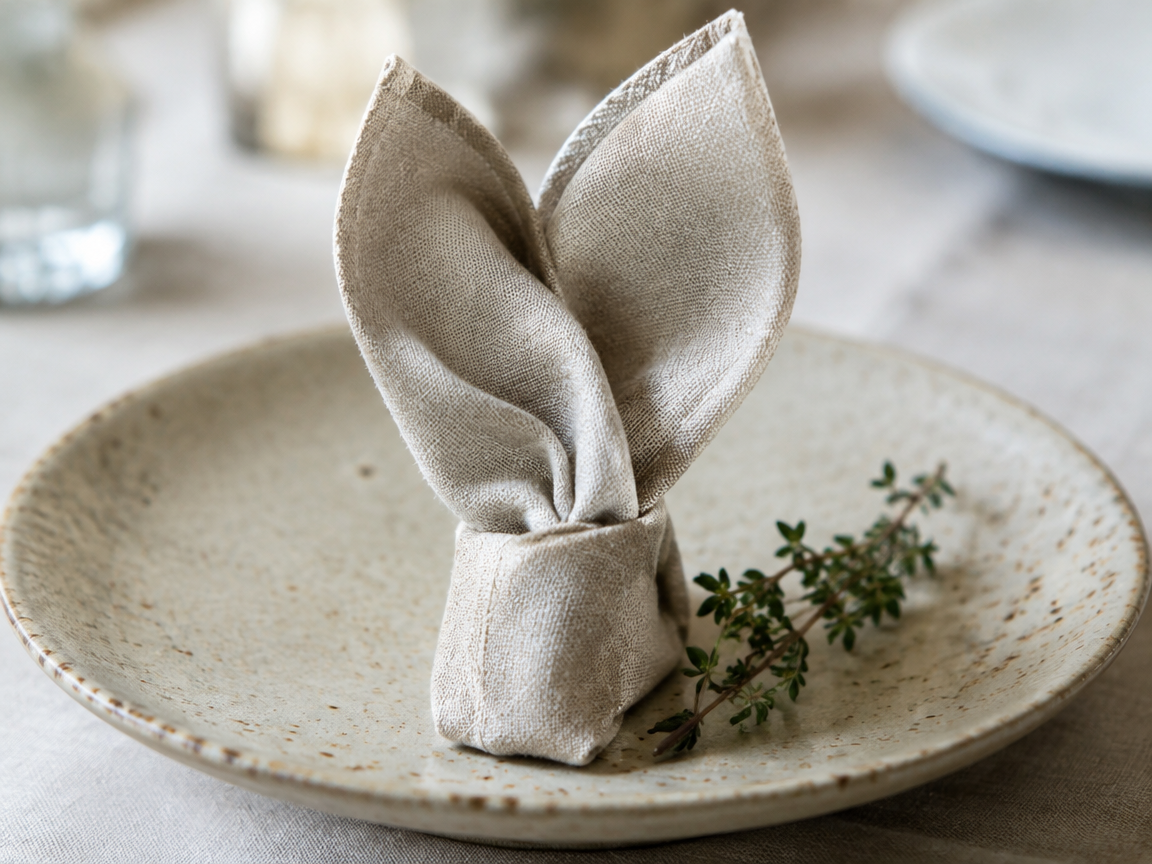
Bunny-Ear Napkin Fold on Stoneware
Fold each linen napkin into two soft ears and stand it upright on a stoneware plate. The fold takes a minute and needs no ring.
Choose napkins with a little body so the ears hold their shape. Press the base flat with your thumb before placing.
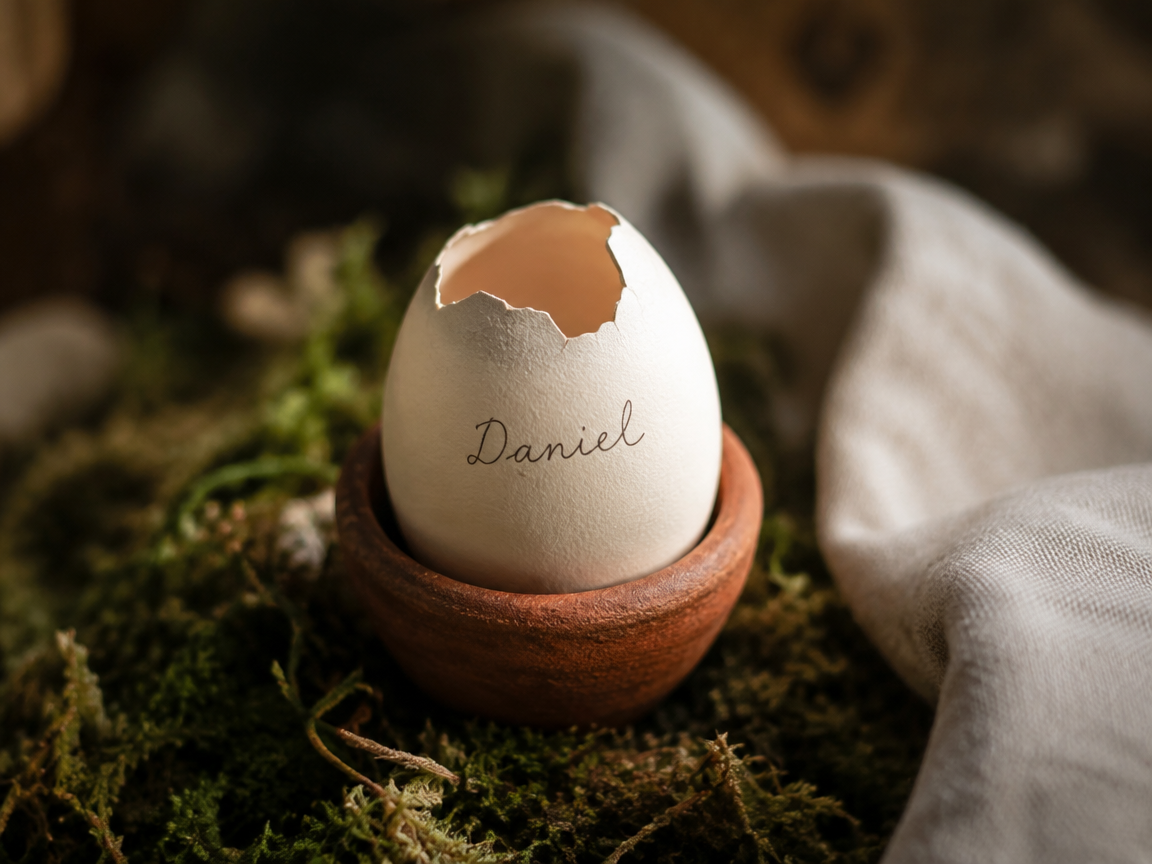
Eggshell Place Cards
Crack the top from a clean egg and write each guest’s name on the shell in fine ink. Rest it in a small terracotta cup so it stands upright.
Use a fine-liner pen rather than a marker for crisp letters. Keep a few spare shells in case one breaks while writing.
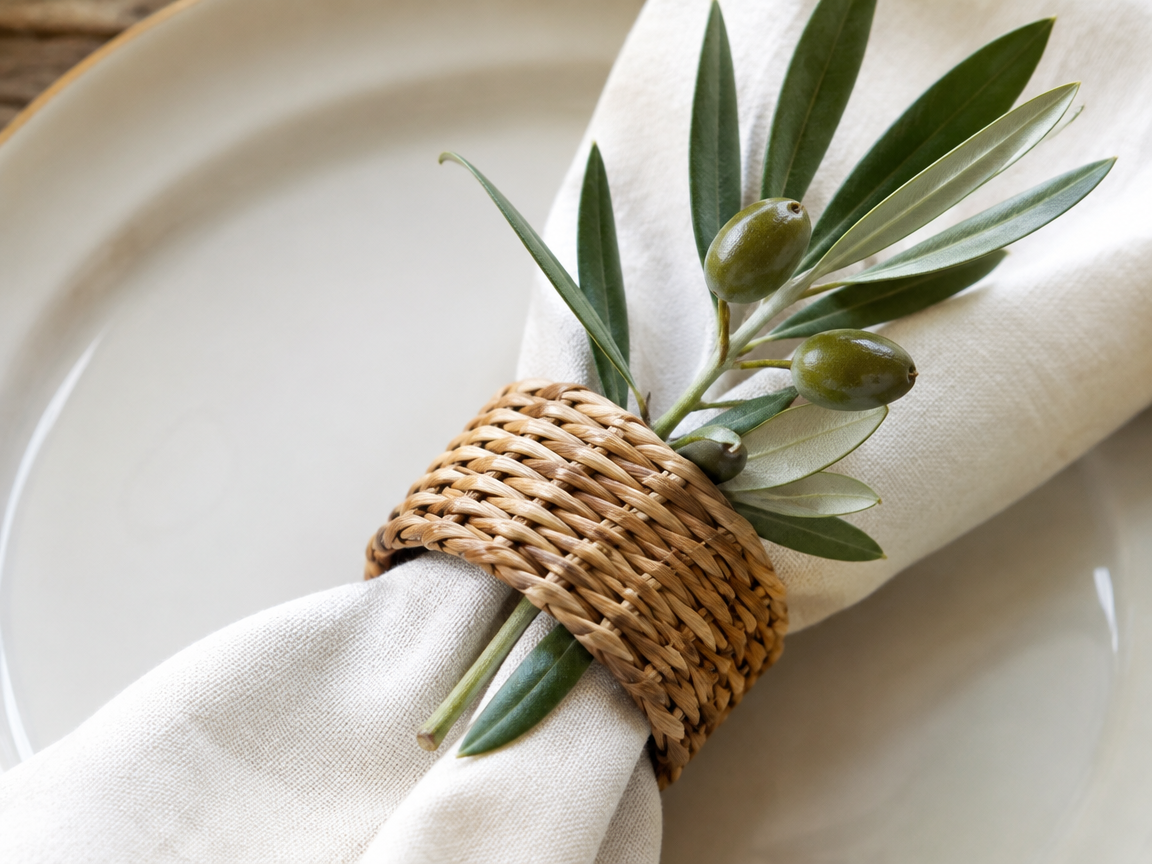
Woven Napkin Rings with Olive Sprig
Wrap woven rattan rings around plain napkins and tuck one olive sprig into each. The mix of textures does the decorating for you.
Soak the sprigs in water for an hour so they stay fresh through lunch. Wipe the rings dry afterwards before storing.
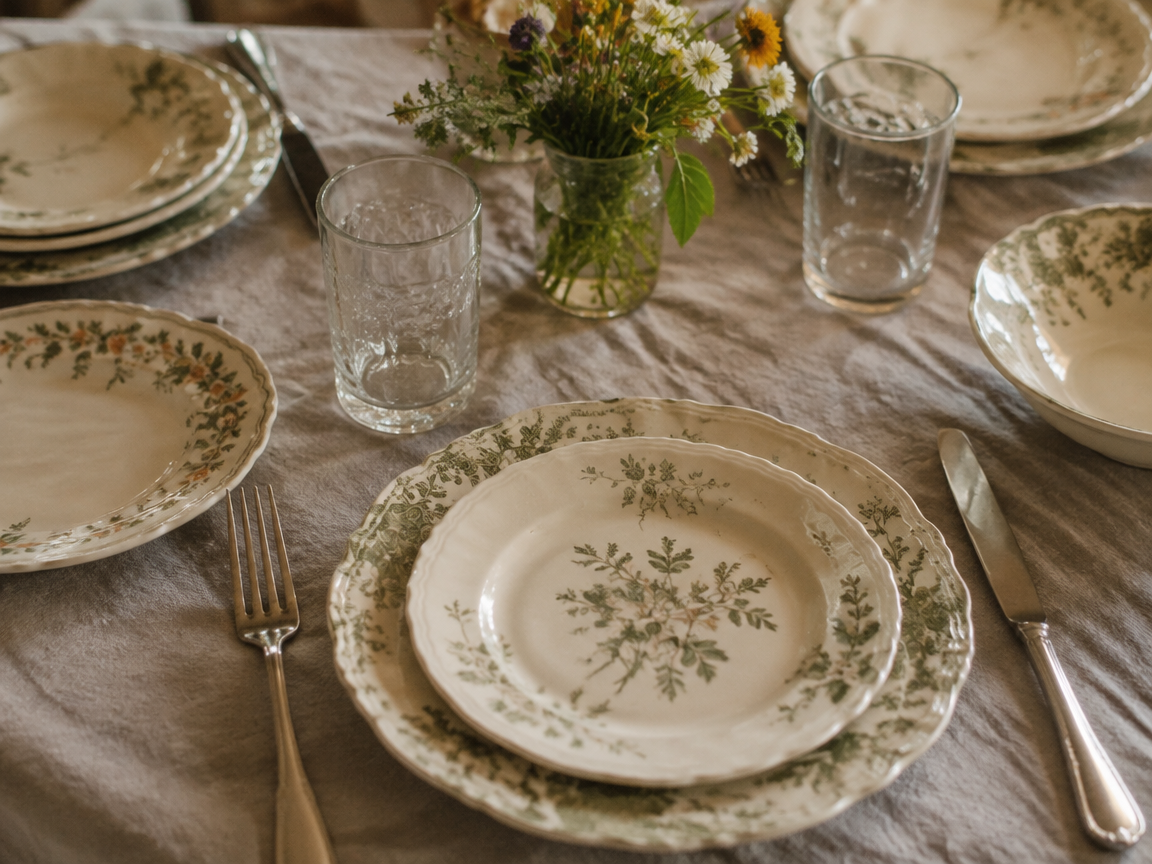
Mismatched Vintage China
Set each place with a different cream or sage vintage plate and enjoy the gentle unevenness. Mismatched china makes a table feel collected over time.
Keep the palette tight so the mix reads as intentional. Borrow from family cupboards before buying anything new.
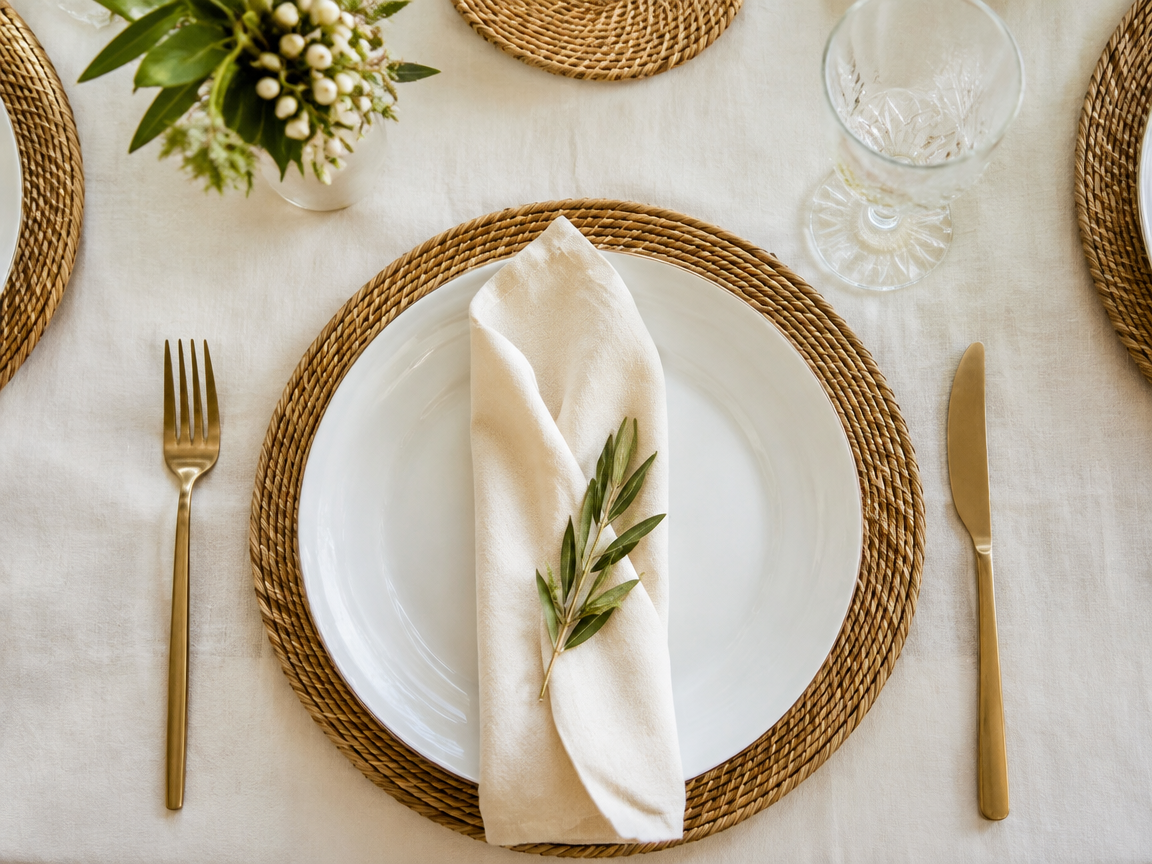
Rattan Chargers Under Porcelain
Put a flat rattan charger under each white porcelain plate for an instant layer of warmth. The round edge frames the food beautifully.
Choose chargers with a low rim so plates sit flat. They also protect the tablecloth from hot serving dishes.
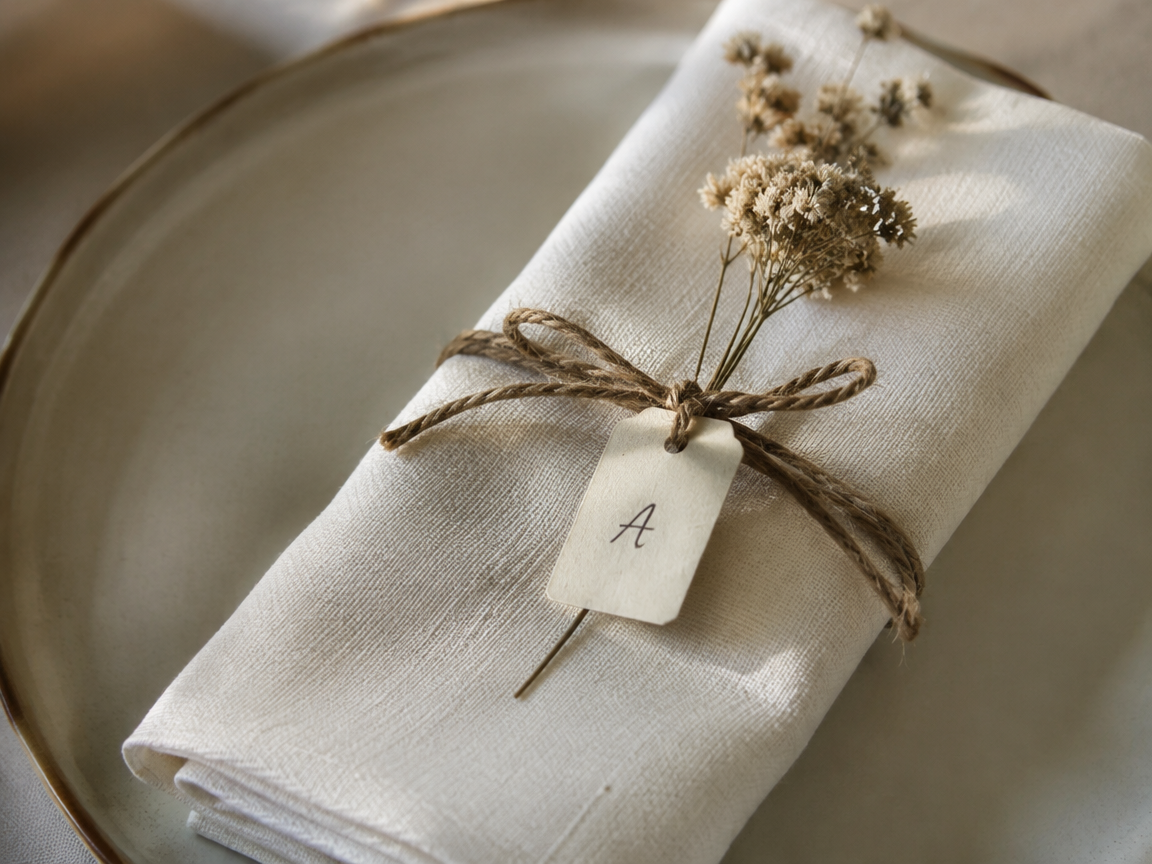
Monogrammed Napkins with Twine
Fold napkins into a simple rectangle, wrap with garden twine and add a tiny tag with the guest’s initial. It feels personal without being fussy.
Write the tags by hand in dark ink for a softer look. A single dried flower behind the twine finishes it.
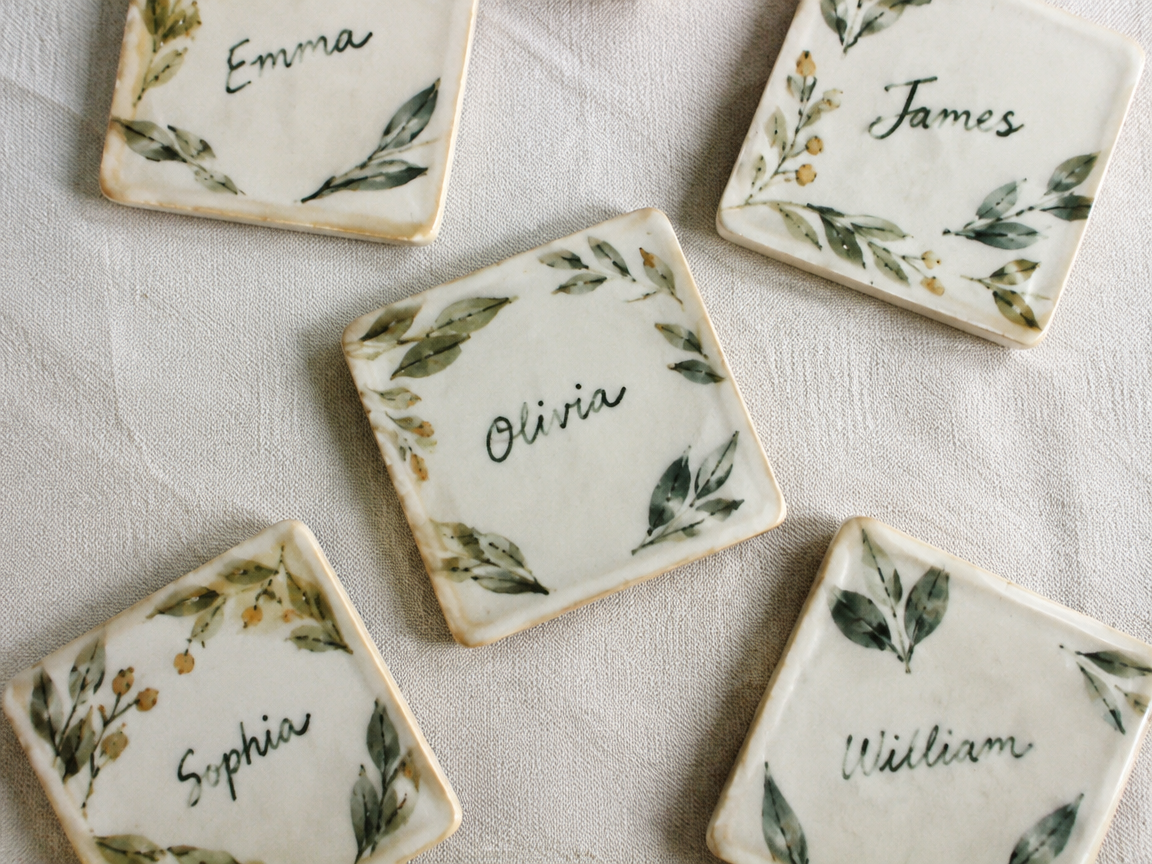
Hand-Painted Name Tiles
Paint small ceramic tiles with guests’ names and use them as place cards. They double as coasters and go home as keepsakes.
Use a porcelain paint pen and bake the tiles as directed. Keep the design to a name and one small leaf.
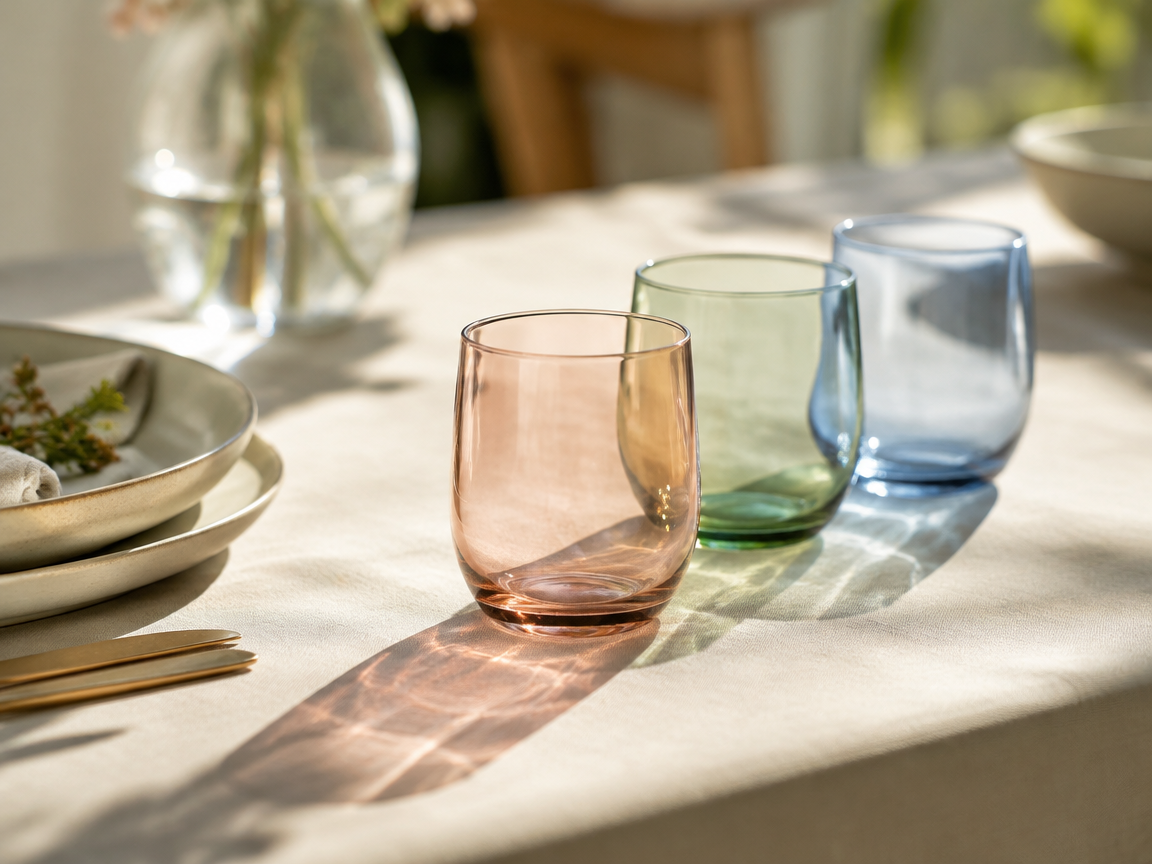
Pastel Glassware Cluster
Group three pastel tumblers at each setting instead of one glass. The colours catch the light and make the table look generous.
Stick to two or three tones within the palette. Clear water glasses can sit alongside without competing.
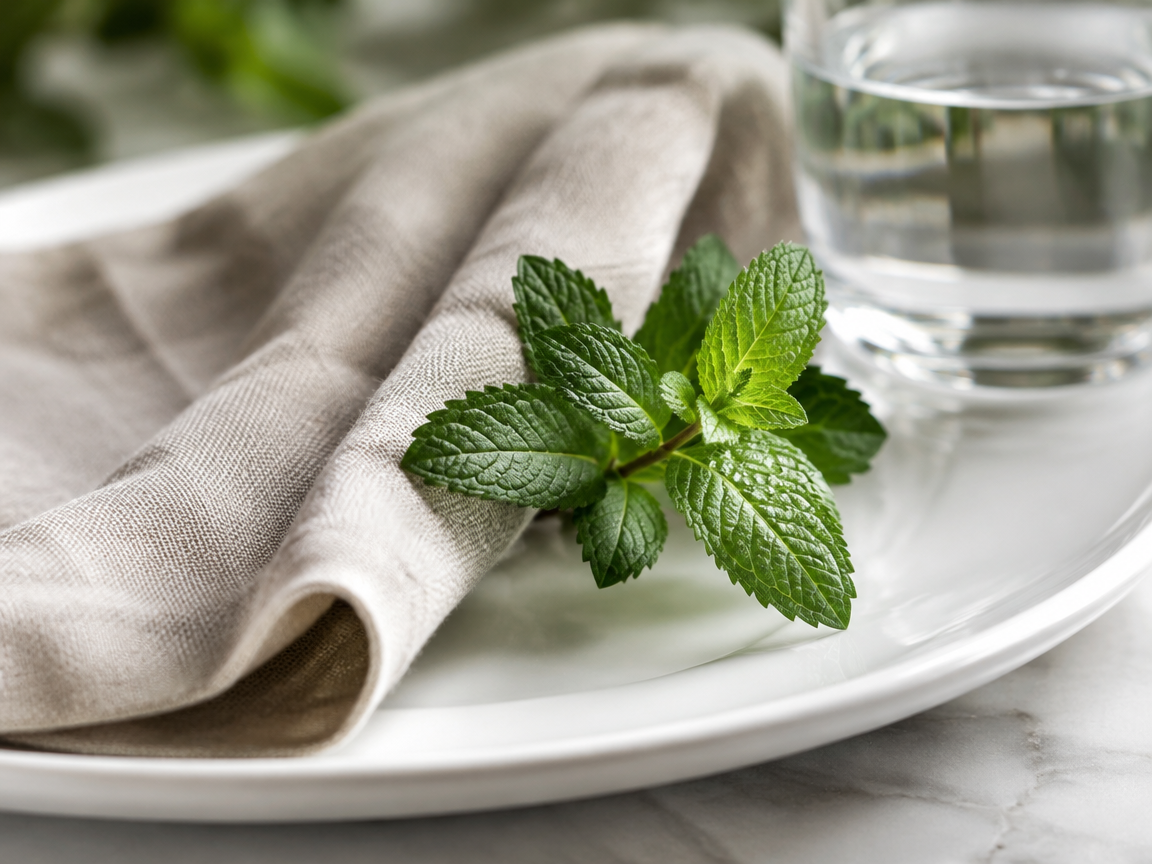
Mint Sprig on Every Napkin
Tuck a single mint sprig under the napkin fold so it scents the place setting. Guests can drop it into their water glass.
Pick the sprigs just before lunch so the leaves stay crisp. Rinse and dry them well first.
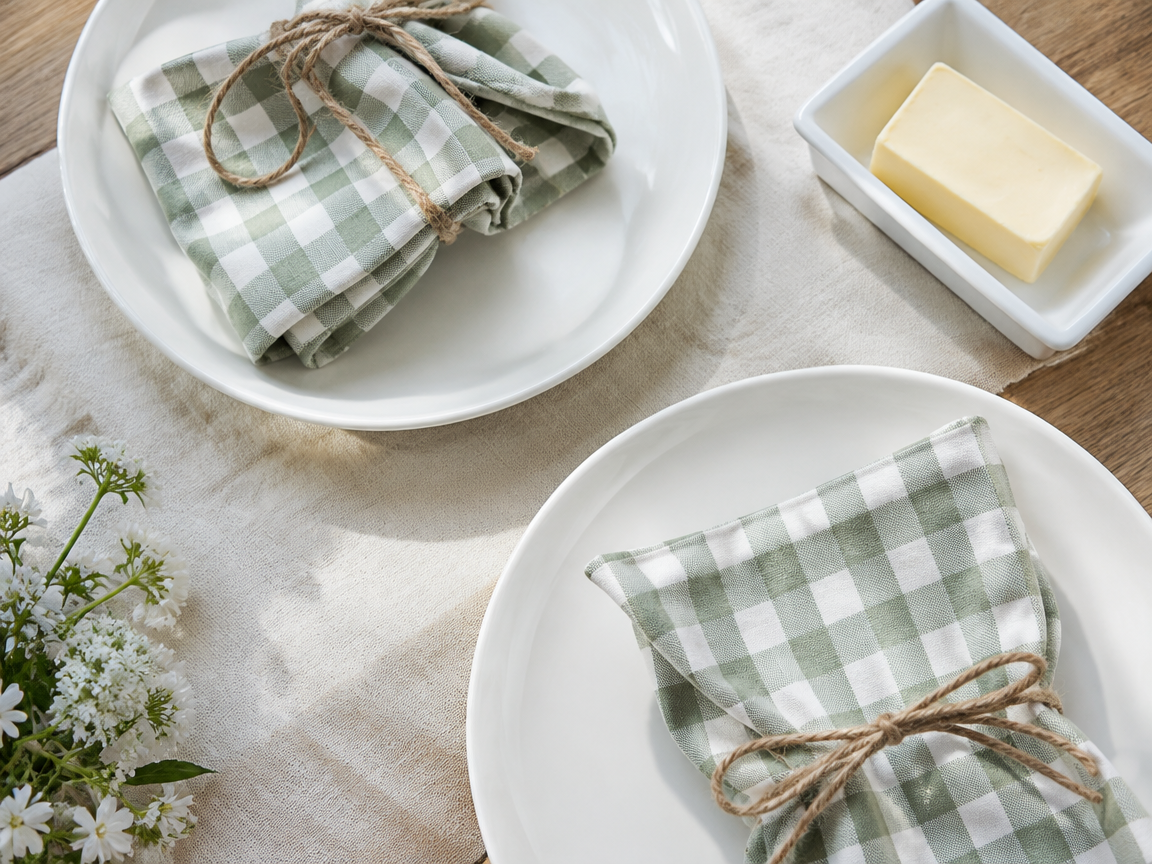
Gingham Napkins with Garden Twine
Use small gingham napkins in sage or butter yellow and tie each with twine. The check adds pattern without a full tablecloth.
Press the napkins flat so the check lines up neatly. Keep plates plain to let the pattern breathe.
31 – 39
Eggs & Natural Details
Eggs belong on the table, not just in a basket by the door. Natural dyes and speckled shells are this year’s most photographed detail.
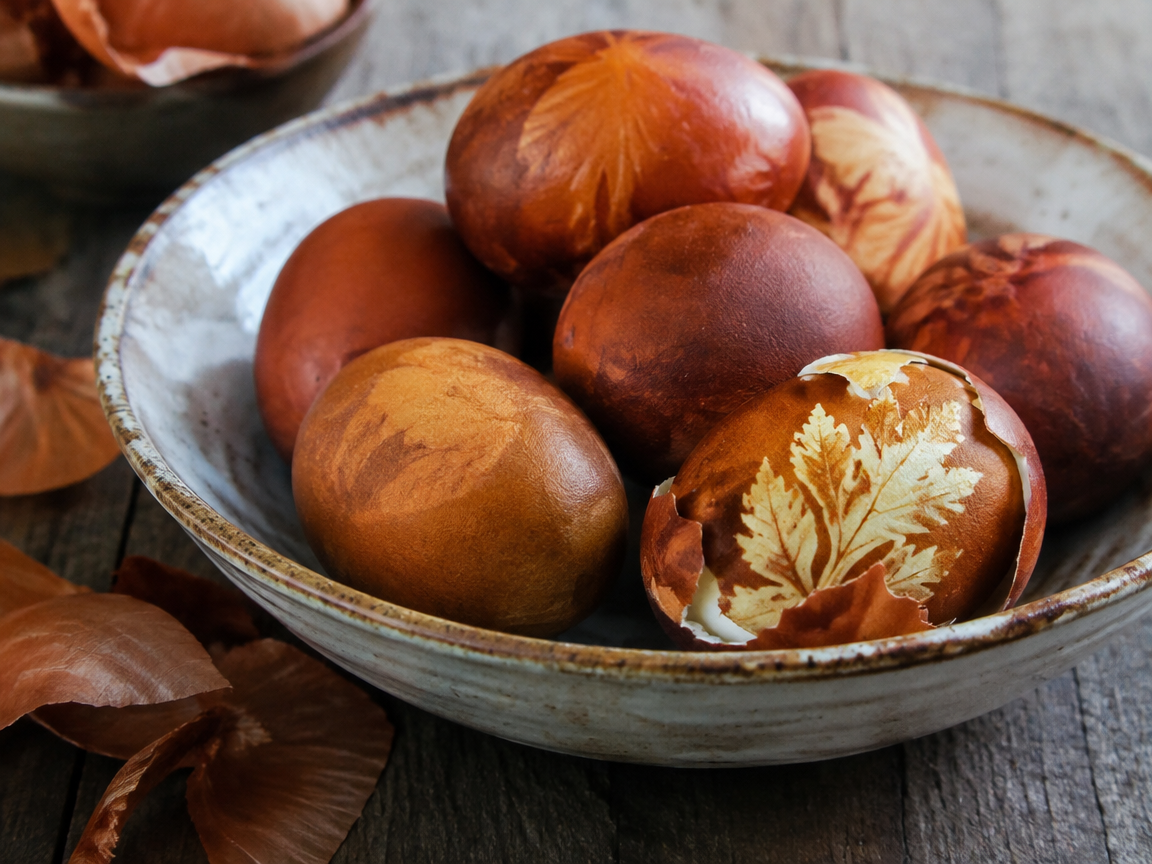
Naturally Dyed Eggs with Onion Skin
Simmer white eggs with onion skins to get deep amber and rust tones. Wrap the skins tightly around each egg with thread before boiling.
Add a splash of vinegar to help the colour take. Rub the dry eggs with a little oil for a soft sheen.
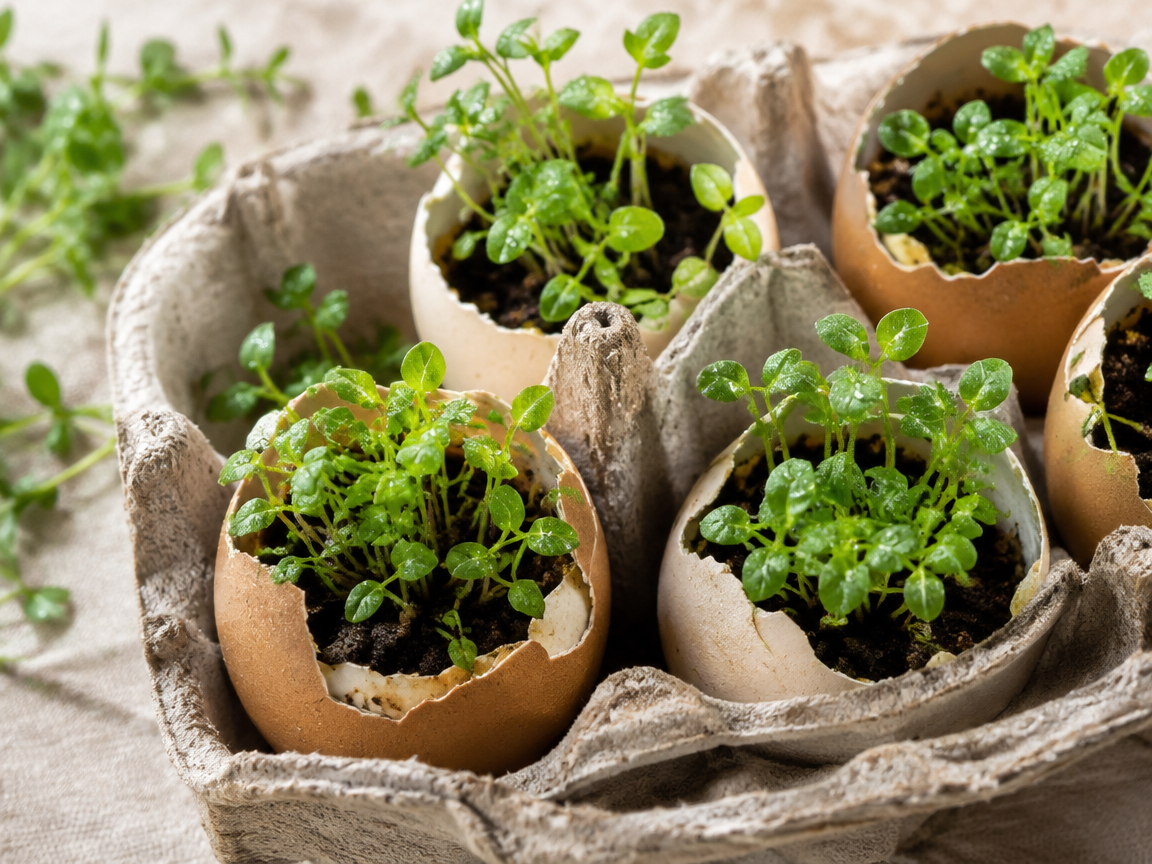
Eggshell Seedling Planters
Fill halved eggshells with damp compost and sow a pinch of cress seeds in each. Set them in an egg carton down the table.
Mist daily and the green shoots appear within a week. Guests can take a shell home to plant in the garden.
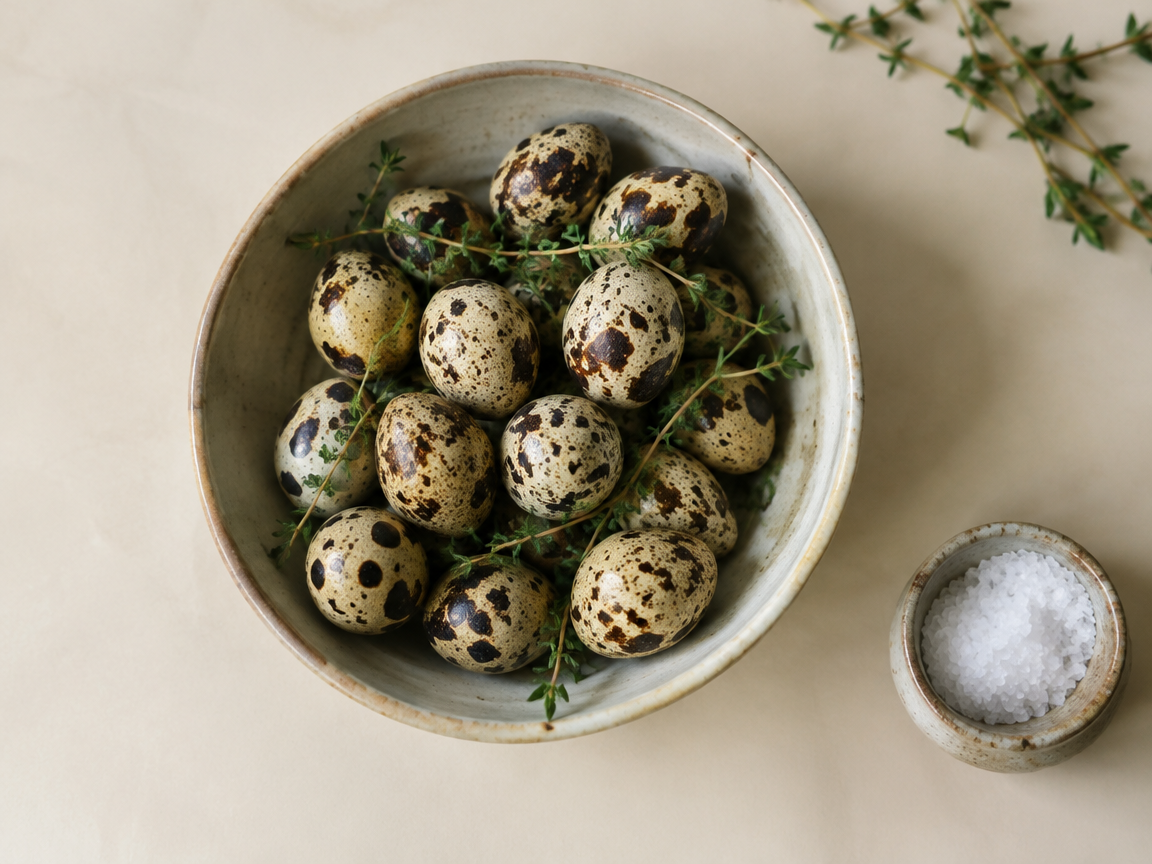
Speckled Quail Egg Bowl
Fill a shallow ceramic bowl with speckled quail eggs and place it beside the salt. Their natural pattern is more interesting than any painted egg.
Keep the bowl low so it never blocks conversation. Add a few sprigs of thyme between the eggs.
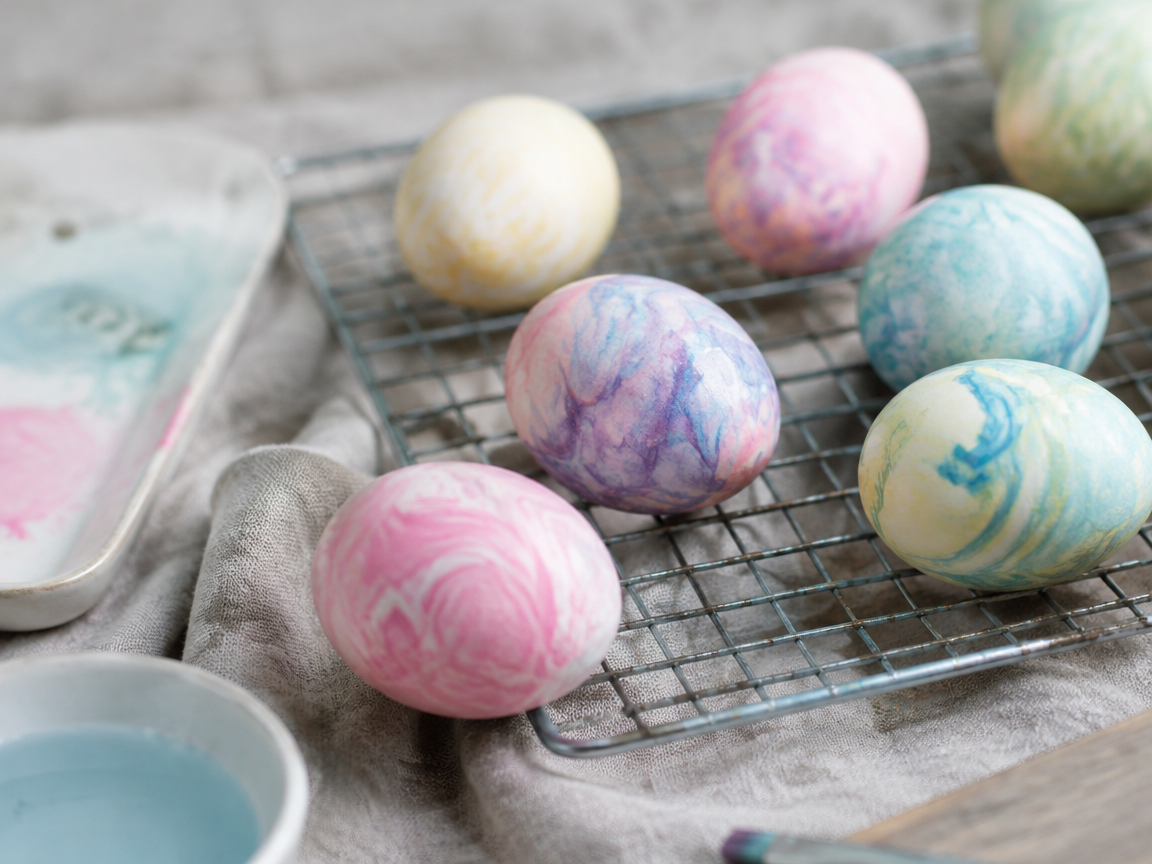
Marble-Dipped Pastel Eggs
Dip dyed eggs into a shallow tray of diluted paint to create soft marbled swirls. Work quickly and do not over-mix.
Let the eggs dry on a rack so the pattern stays crisp. Choose two colours close in tone for a subtle finish.
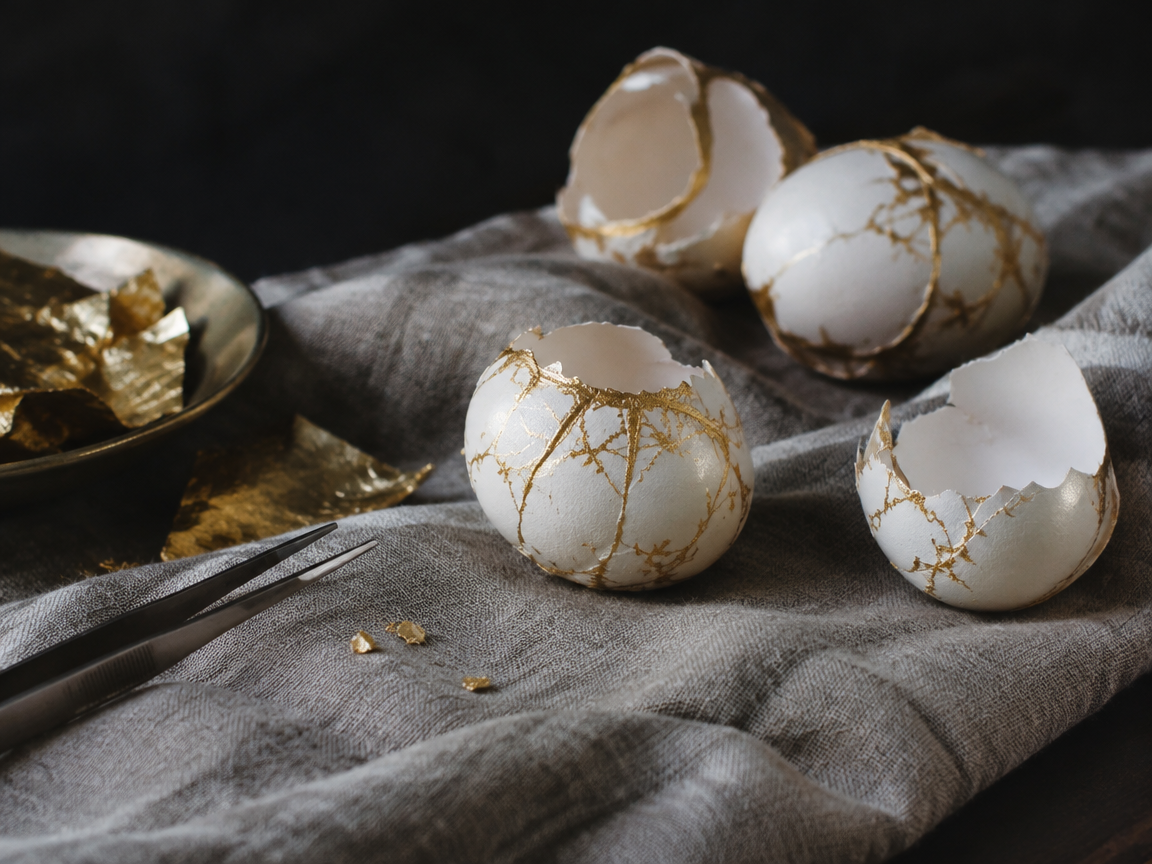
Gold Leaf Veins on Blown Eggs
Blow the eggs, then draw fine gold veins across the shell with leaf adhesive and gold flakes. The result looks like porcelain.
Handle with tweezers so the gold stays clean. Display them on a tray of raw linen.
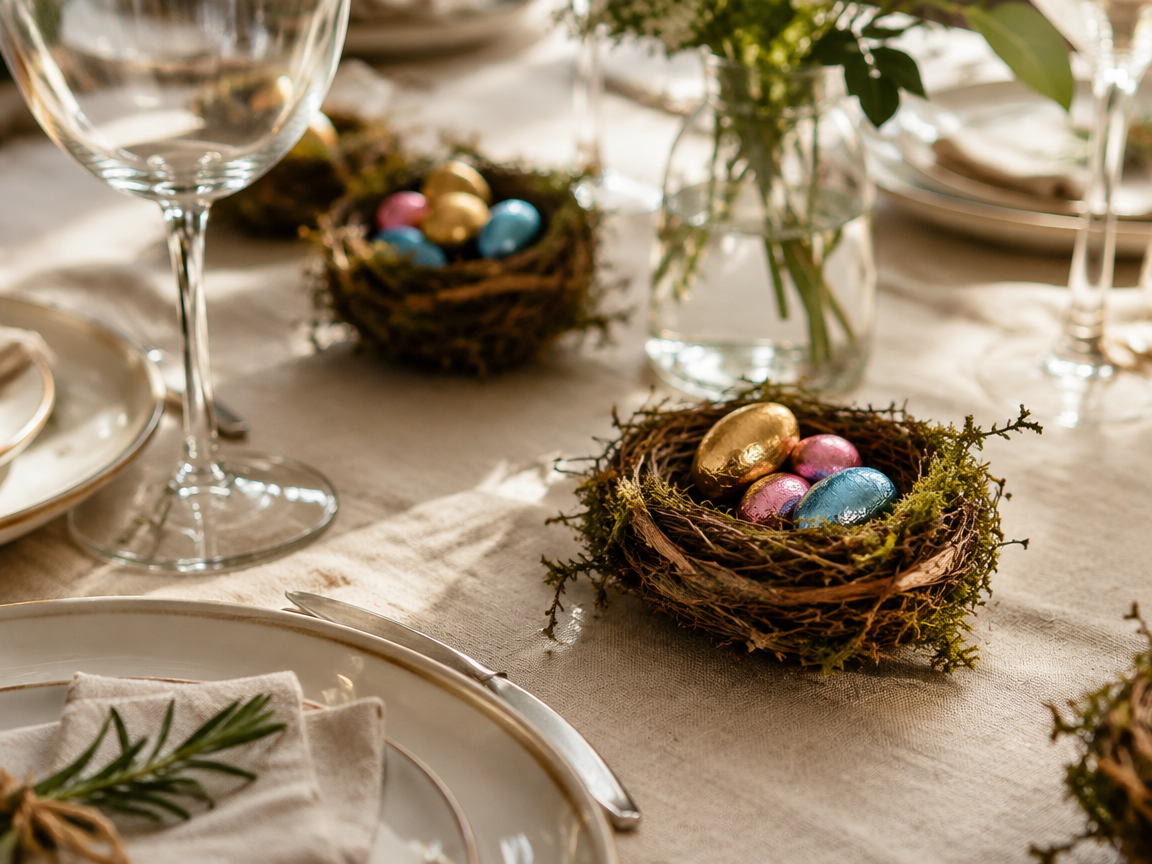
Twig Nest with Chocolate Eggs
Twist dry twigs and moss into small nests and fill them with wrapped chocolate eggs. Place one nest between every two settings.
Line the nest with a little tissue so chocolate does not mark the twigs. These double as favours at the end of lunch.
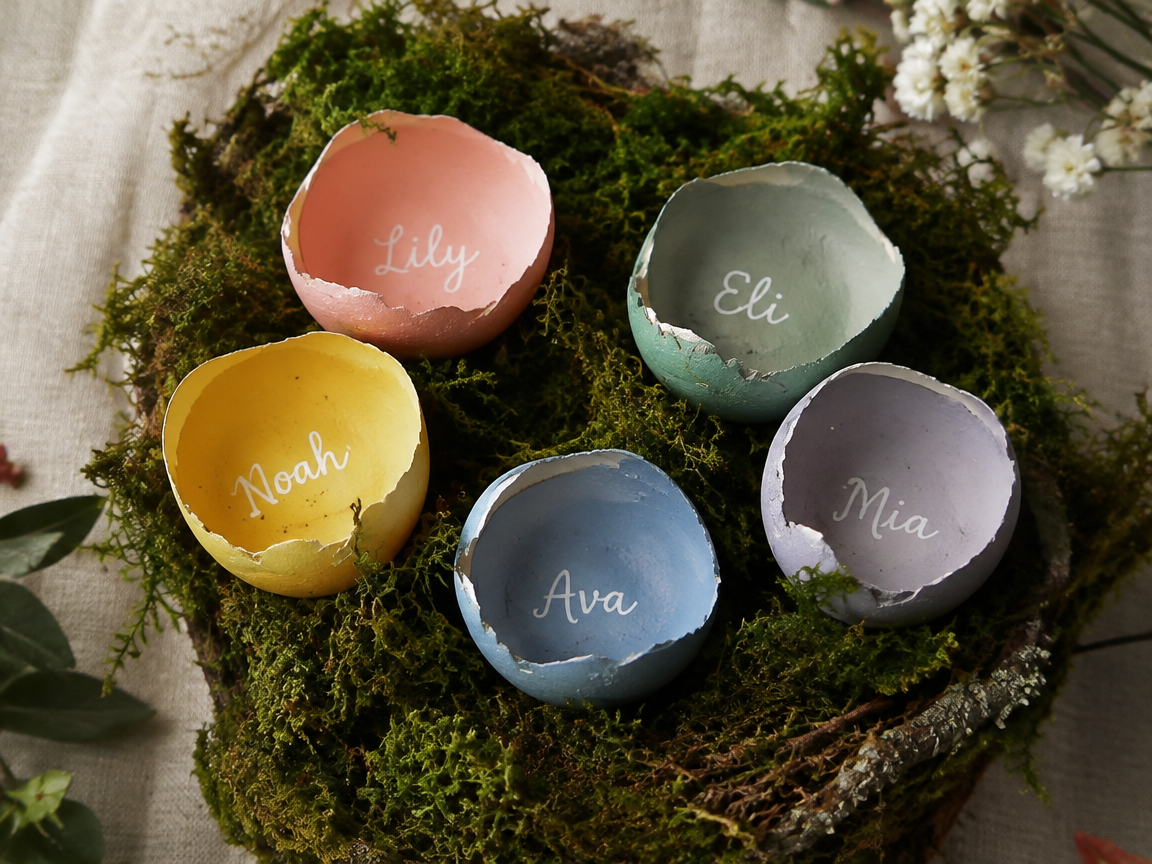
Painted Eggshell Place Markers on Moss
Paint the top half of broken eggshells in soft pastels and write names on them with white ink. Nestle each one in a bed of moss.
Use matte paint so the surface takes ink. Keep letters large enough to read across the table.
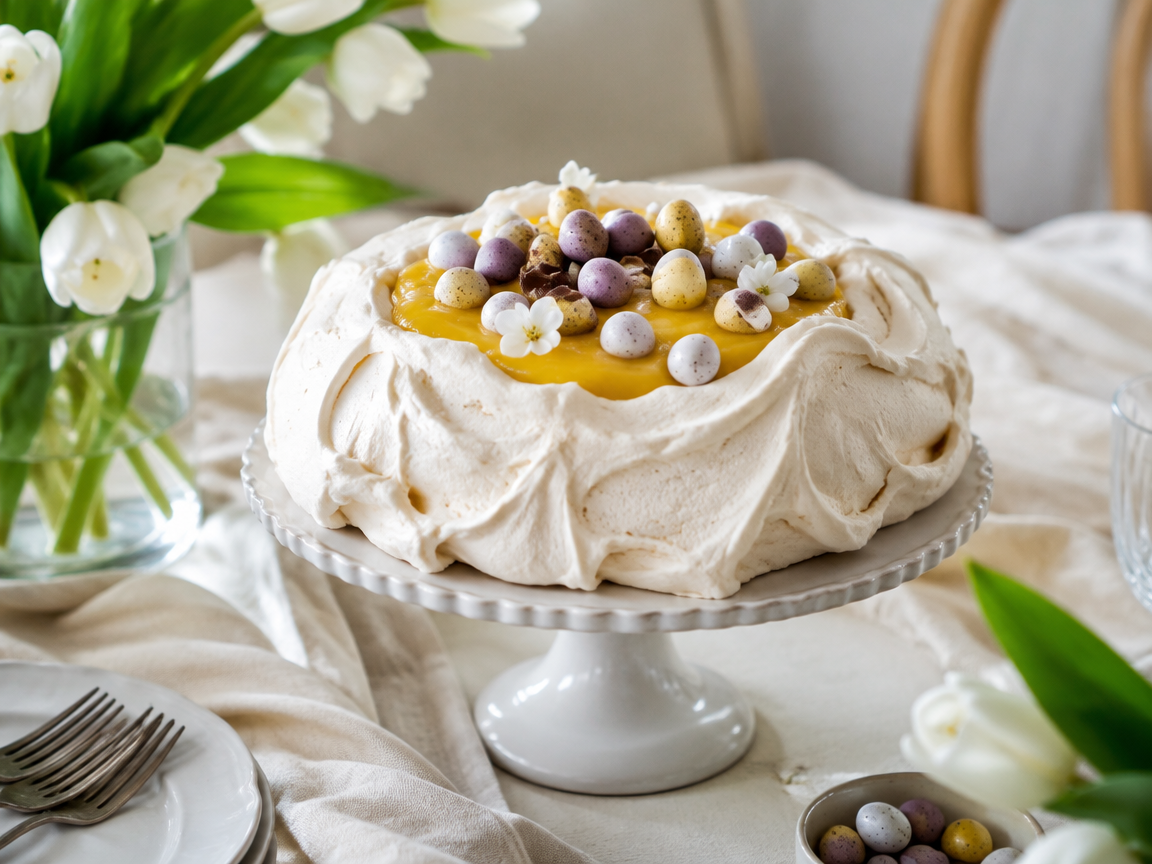
Edible Nest Dessert Centerpiece
Build a centrepiece from a meringue nest filled with lemon curd and small chocolate eggs. It looks like decor and gets eaten at pudding.
Assemble it just before serving so the meringue stays crisp. Sit it on a cake stand above the flowers.
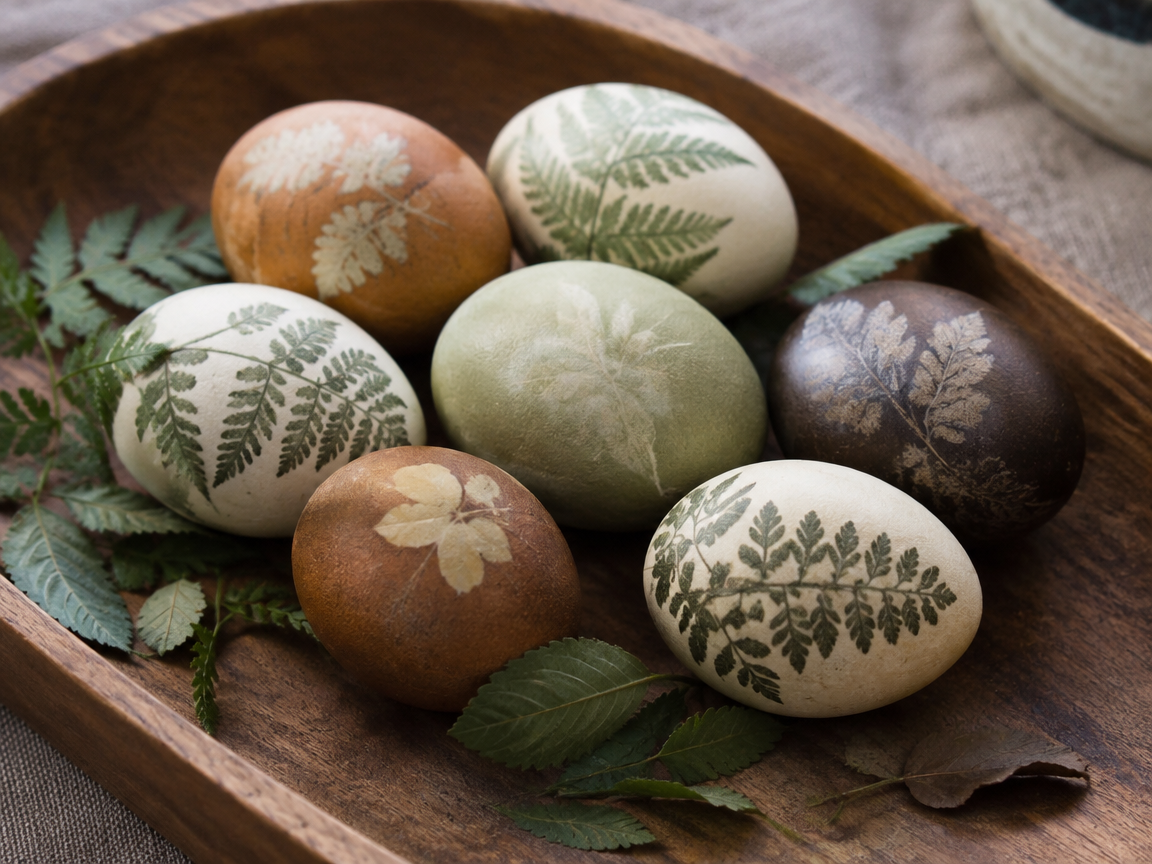
Botanical-Printed Eggs
Press small leaves and fern fronds against eggs, wrap them tightly and dye as usual. The leaf shape stays behind as a delicate print.
Use flat leaves that cling closely to the shell. Vary the leaf shapes for a natural, collected look.
40 – 47
Light & Ambience
Candlelight is the cheapest decorating tool you own. Layer tapers, votives and one low lantern for a warm room at any hour.
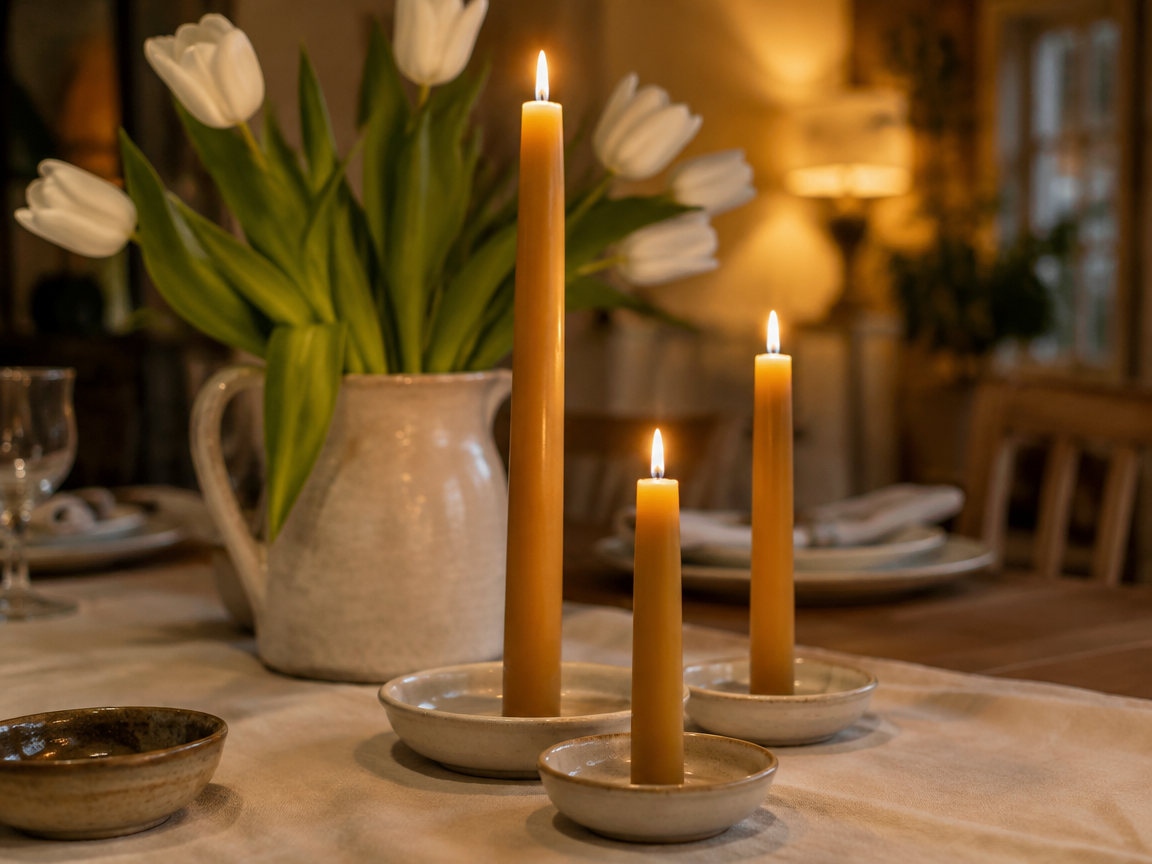
Beeswax Tapers at Varying Heights
Use beeswax tapers in three heights and let them burn down unevenly. The warm honey tone flatters every pastel on the table.
Set them in small dishes so wax does not drip onto the cloth. Light them just before guests arrive.
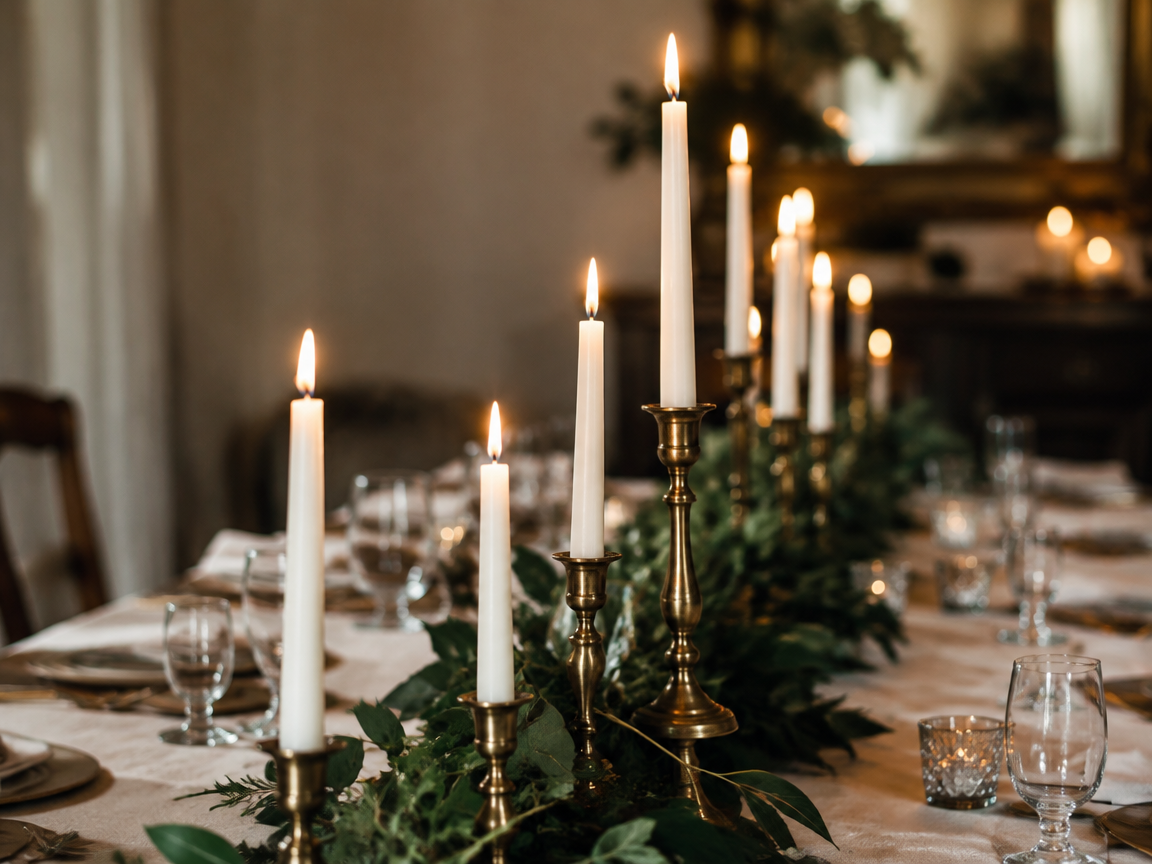
Brass Candleholders with White Tapers
Line slim white tapers in brass holders down the centre, alternating heights. Brass picks up the candlelight and glows at the end of the meal.
Polish the brass lightly but leave a little patina. Keep the spacing even so the rhythm feels calm.
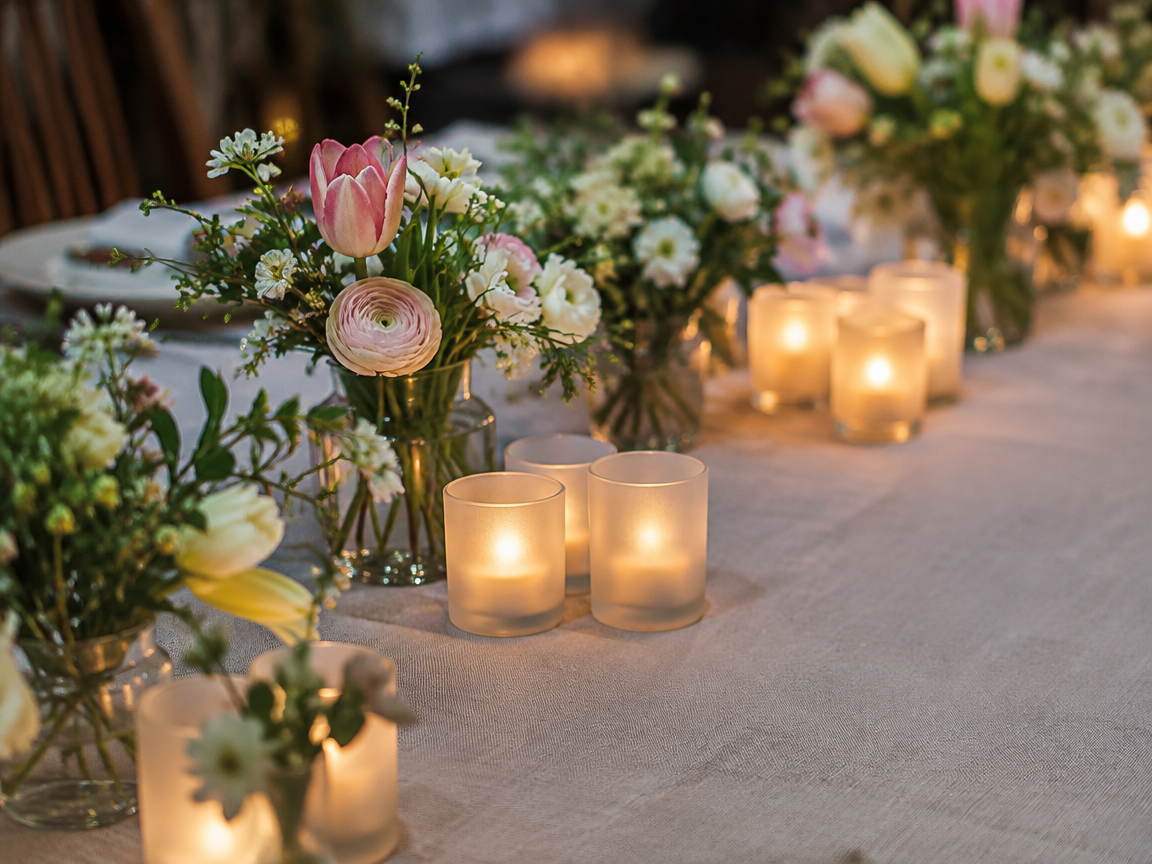
Frosted Glass Votives
Scatter frosted glass votives between the flowers so the light spreads softly. Frosted glass hides the wax and looks expensive.
Use unscented beeswax so it does not clash with the food. Group them in threes rather than spacing them evenly.
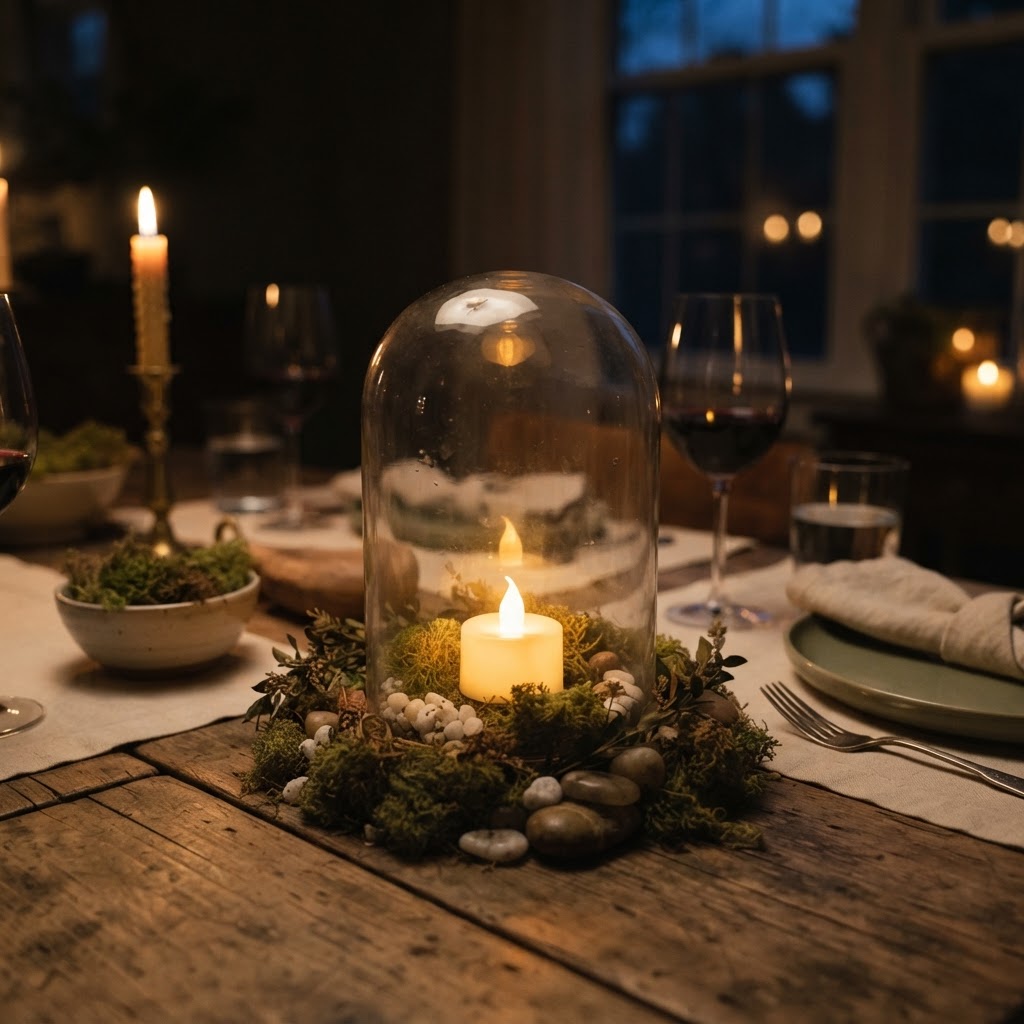
Uplighting Under a Cloche
Place a small battery tea light under a glass cloche with a few moss stones beside it. The light bounces upward and makes the centrepiece glow.
Battery lights stay cool and let you use dry moss safely. Turn them on before guests sit down.
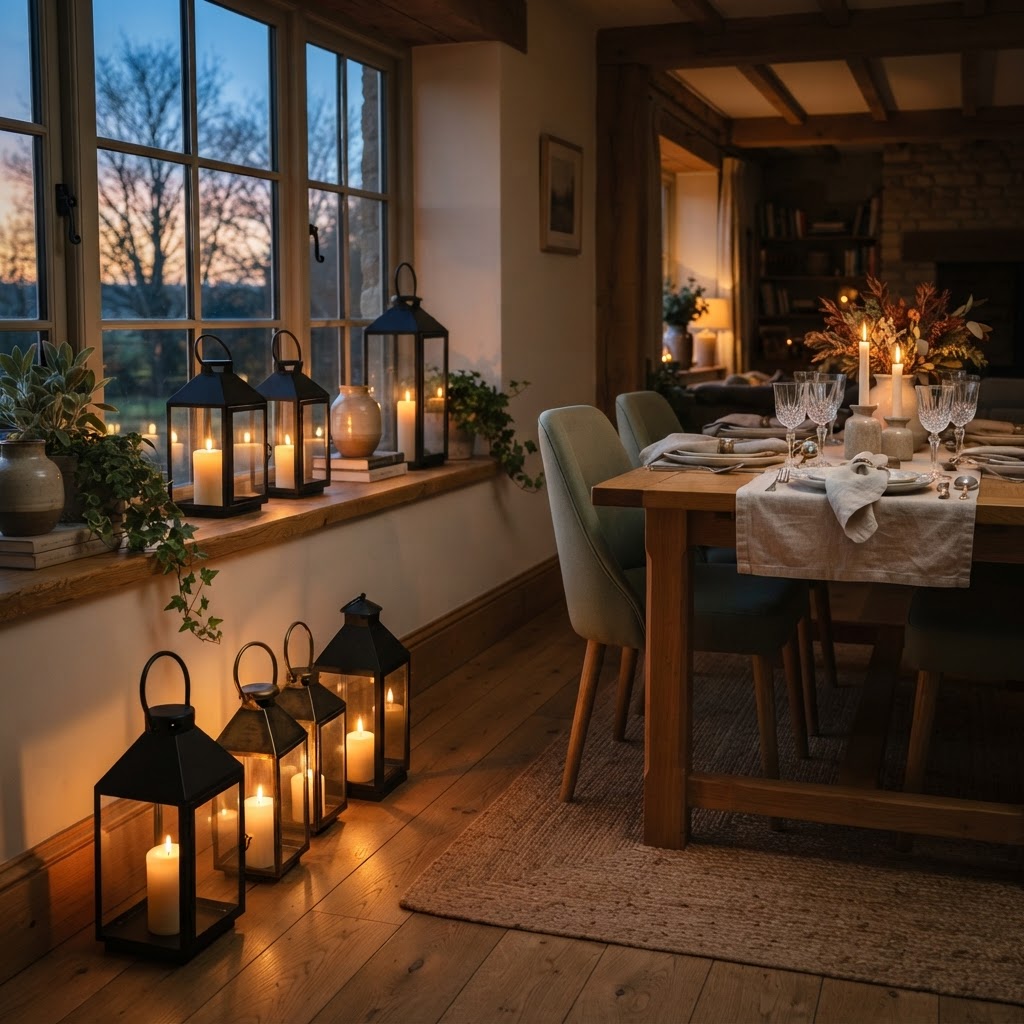
Lanterns on Windowsills and Floor
Move some of the light off the table and onto the windowsill and floor. Low lanterns extend the glow and make the room feel larger.
Use the same candle colour everywhere for a unified look. Keep floor lanterns out of walking paths.
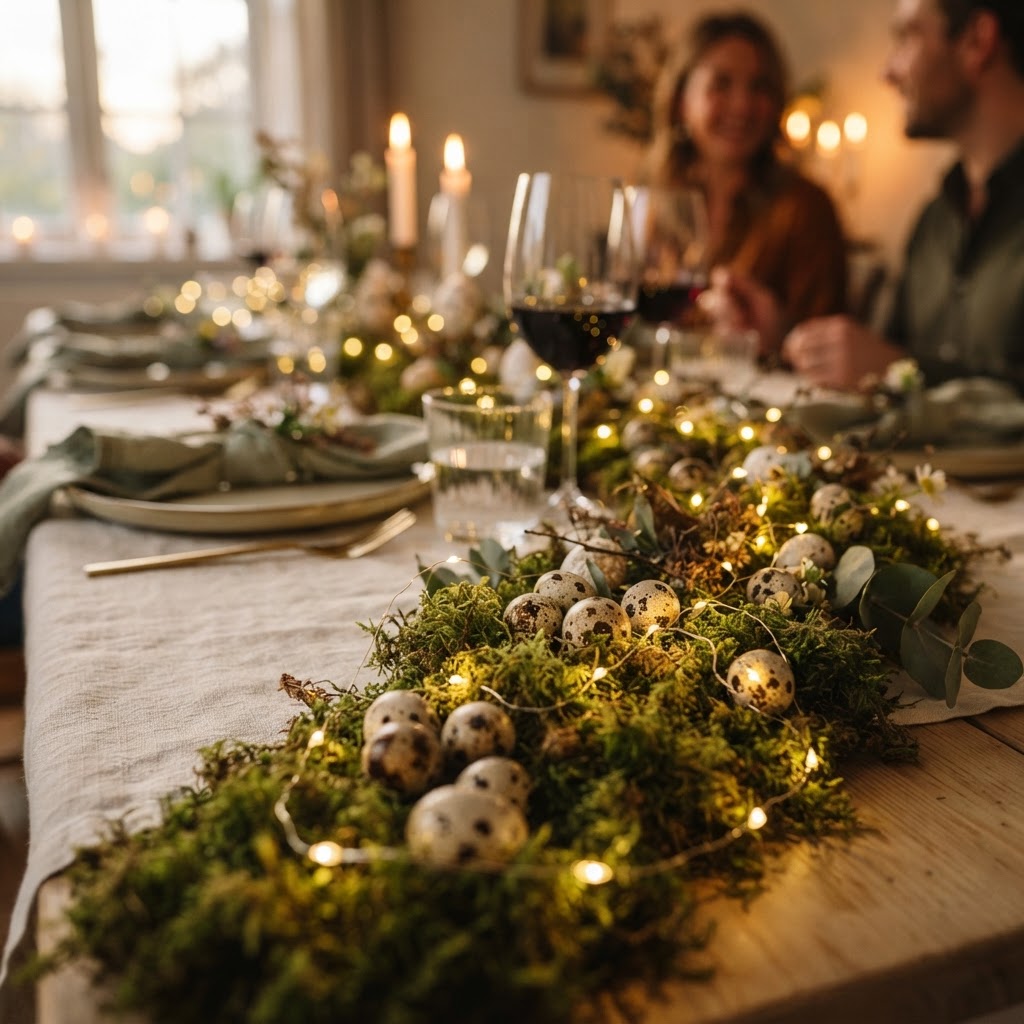
Fairy Lights in the Moss
Wind warm fairy lights through the moss runner so tiny points of light appear between the eggs. Keep the wire hidden under the greenery.
Choose warm white rather than cool white. Battery packs can sit under the table out of sight.
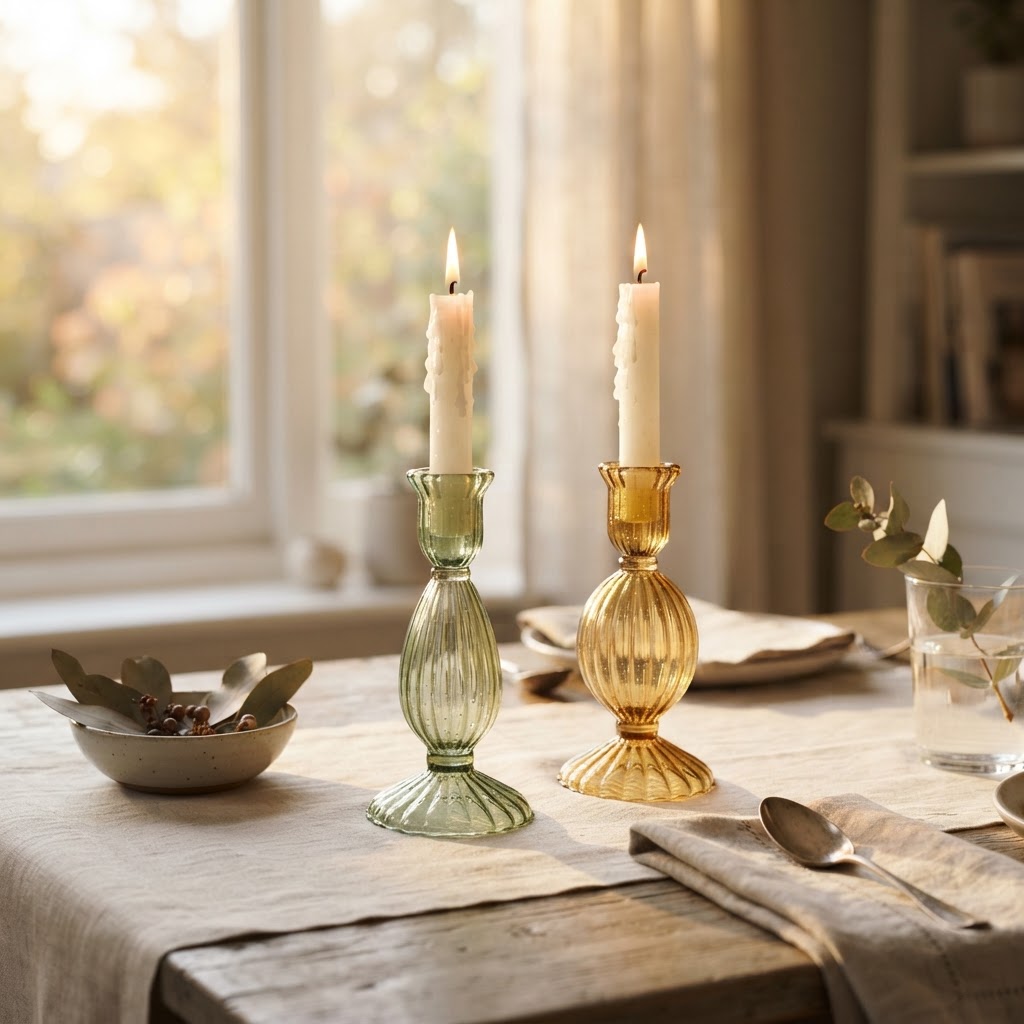
Coloured Glass Candlesticks
Choose candlesticks in sage, amber or smoke glass instead of clear. The colour tints the flame and repeats your palette on the table.
Mix two colours and keep the candles white. Glass catches late afternoon sun beautifully.
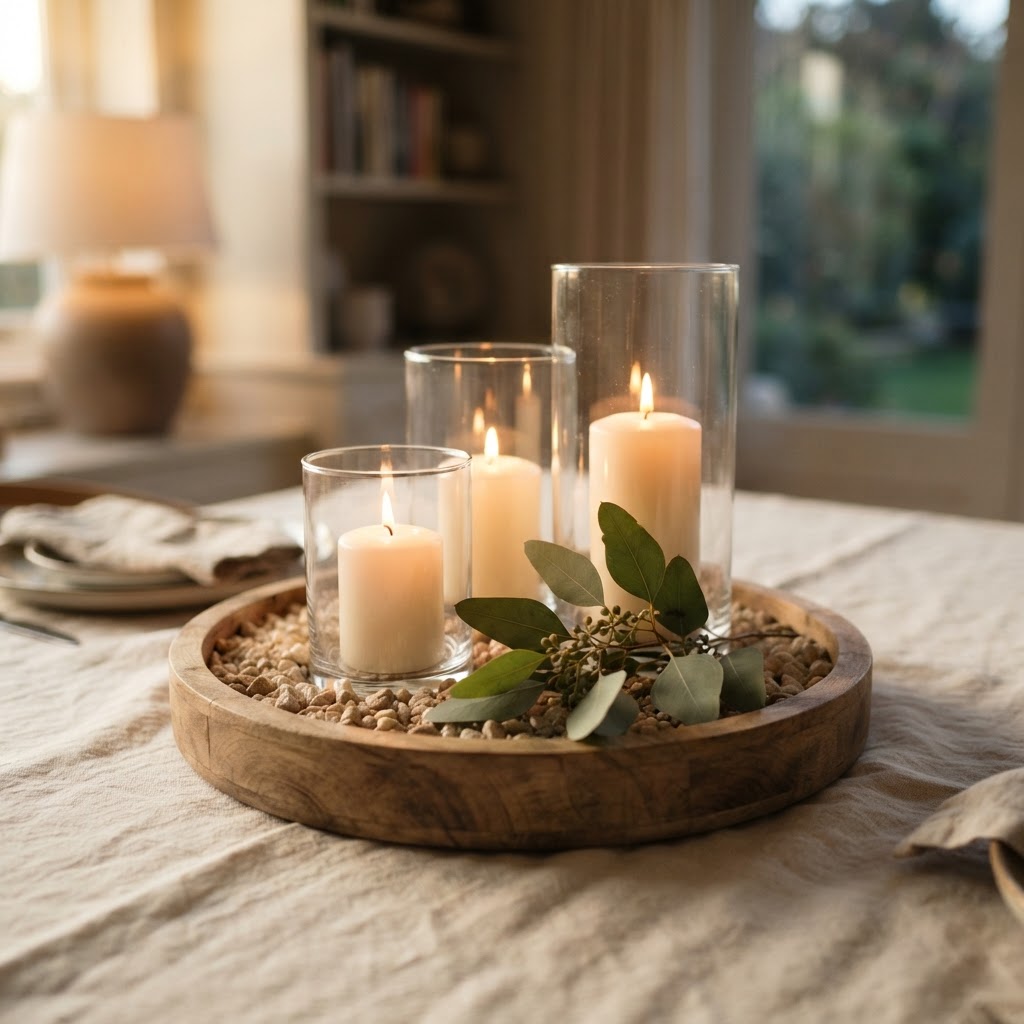
Hurricane Candles in a Wooden Tray
Group three hurricane candles in a shallow wooden tray with a little gravel. The tray contains any drips and makes the group easy to move.
Use candles of different heights for interest. Add a sprig of eucalyptus between the glass.
48 – 55
Colour Stories & Palettes
Choose a palette and repeat it three times. These eight combinations flatter spring food and photograph beautifully.
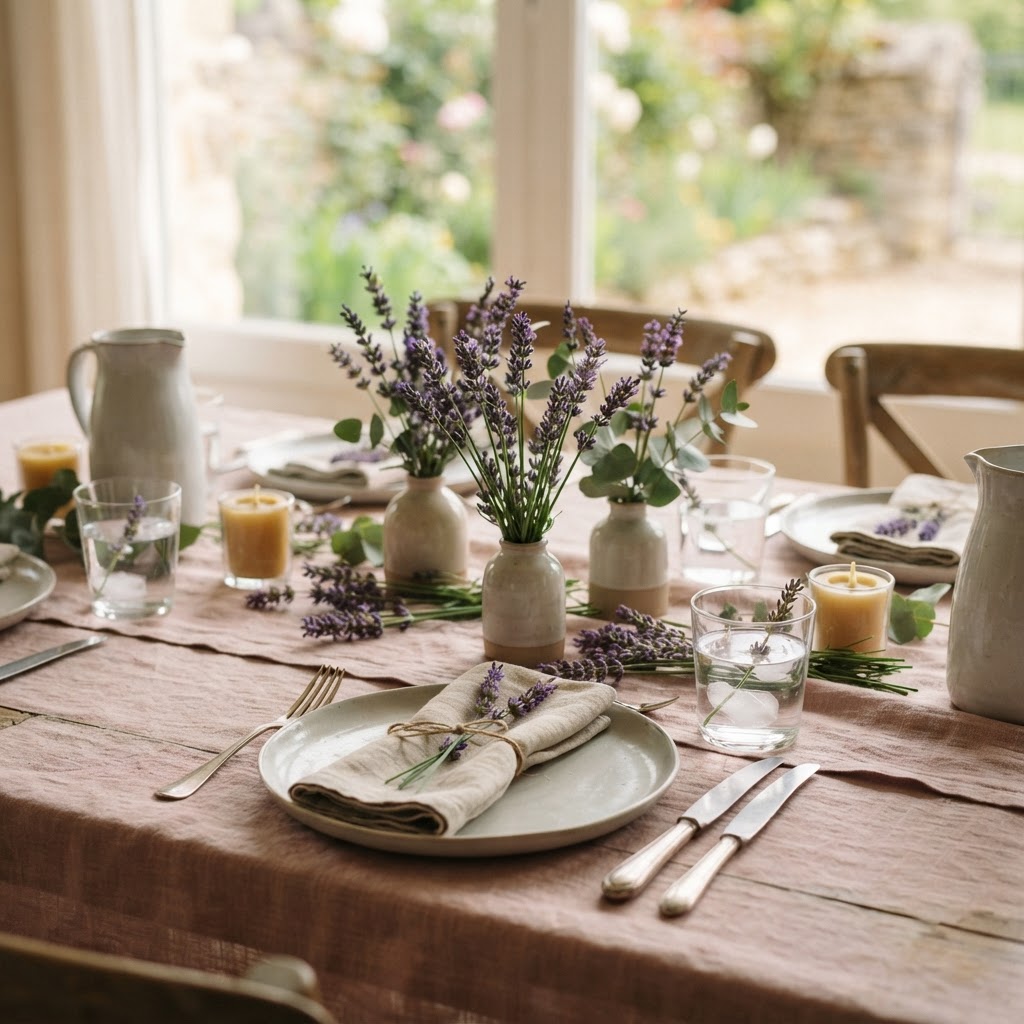
Soft Blush and Lavender
Pair dusty blush linen with lavender stems and pale grey plates. The combination is romantic without tipping into sugary pink.
Keep the flowers loose and low, and repeat lavender in a water glass at each setting.
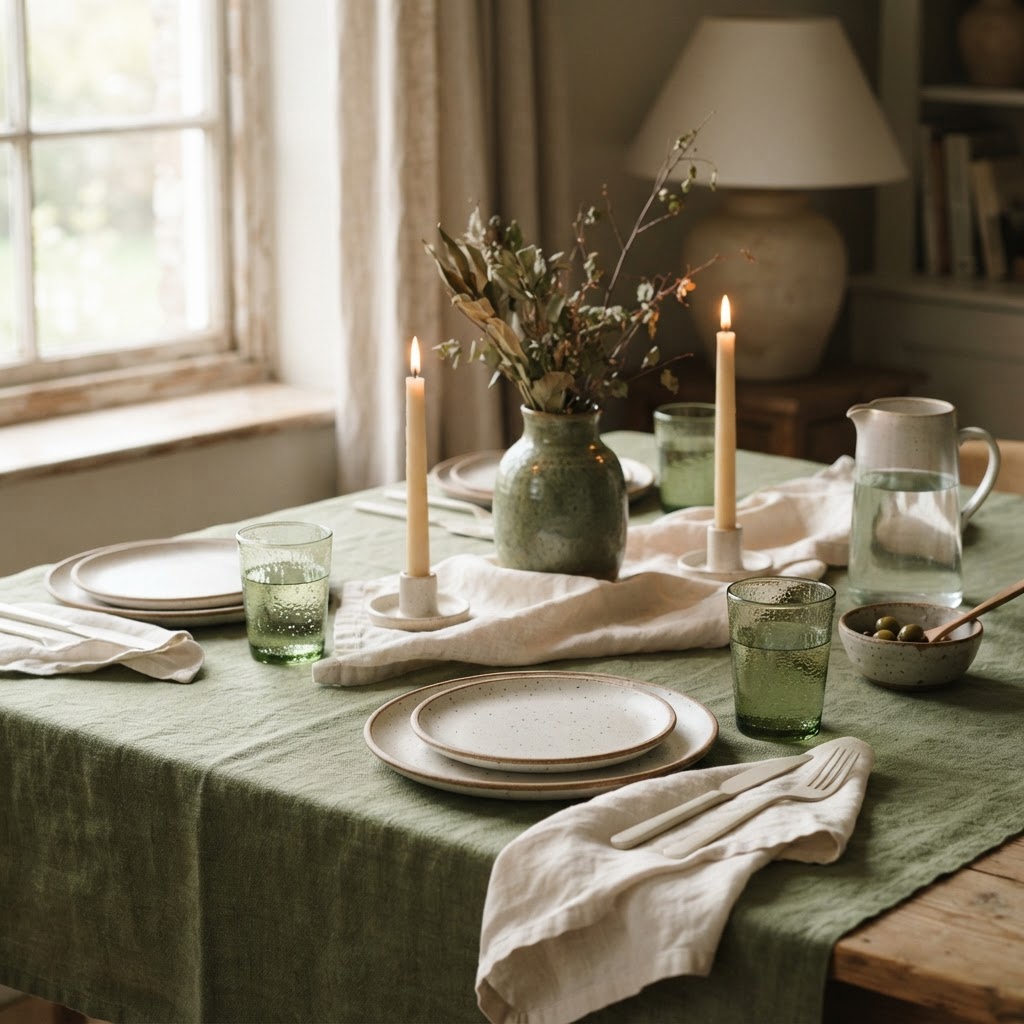
Moss Green and Cream Monochrome
Build the whole table from two colours: moss green and warm cream. Vary only texture, with linen, stoneware and glass.
A monochrome table looks calm in photos and takes ten minutes to set. Add small brass details if it feels too quiet.
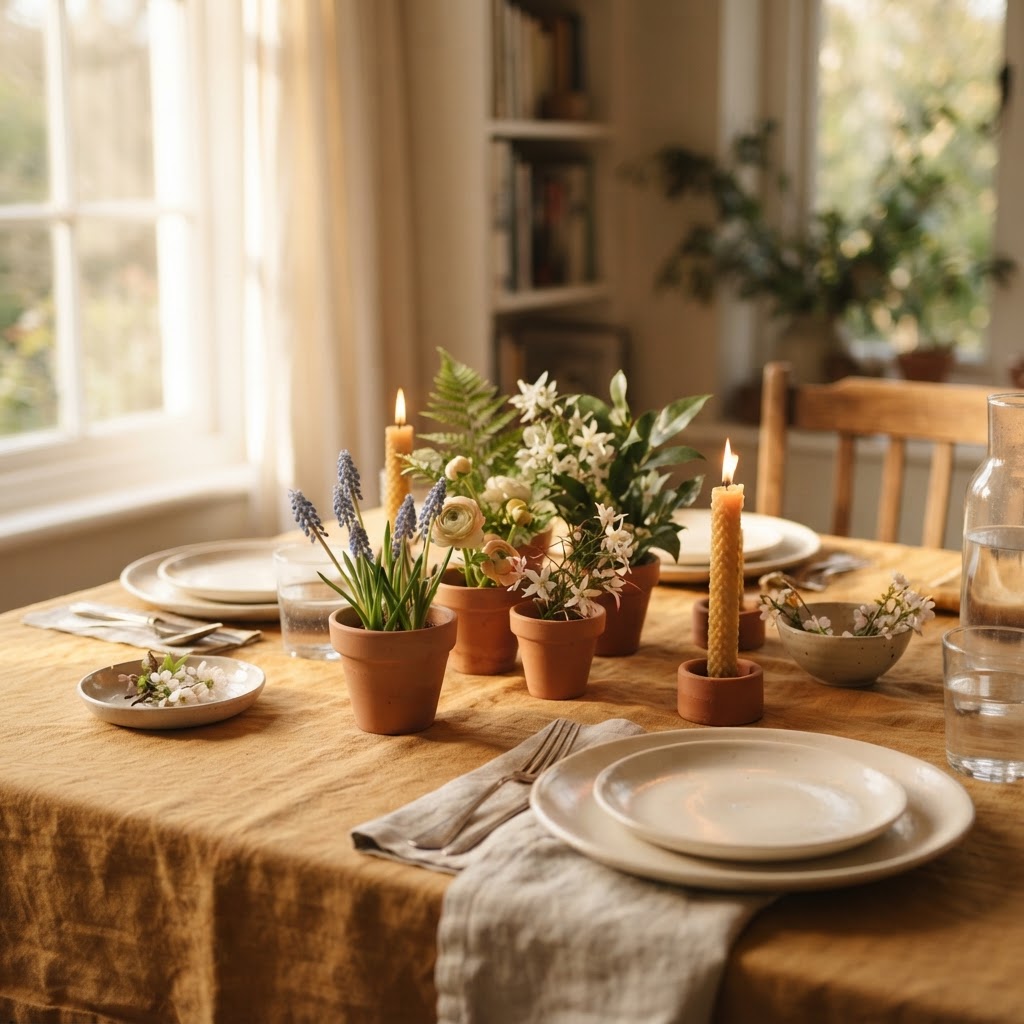
Ochre and Terracotta Warmth
Layer ochre linen with terracotta pots and cream china. The palette echoes spring soil and feels grounded rather than sweet.
Include one white element at each setting to keep it fresh. Beeswax candles complete the warmth.
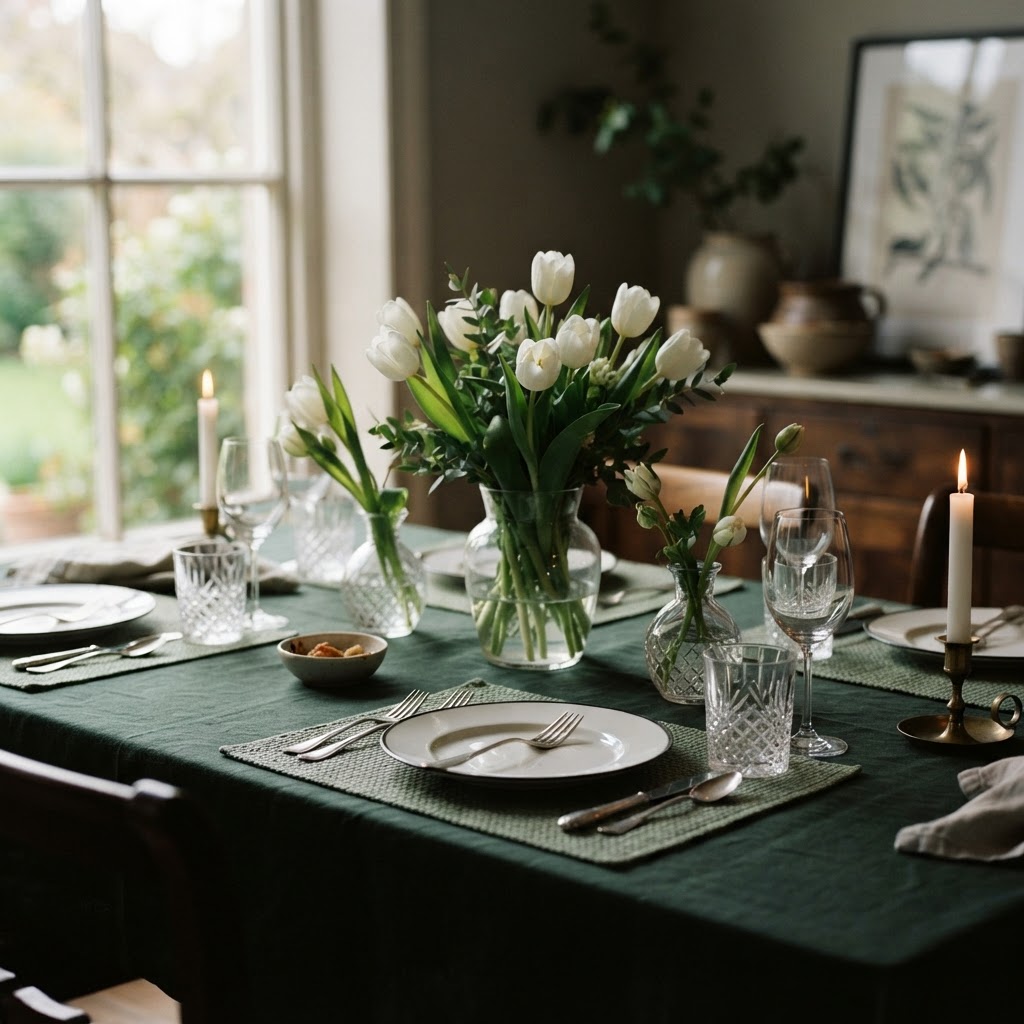
Forest Green with White Tulips
Use a deep forest green cloth and keep every flower white. The contrast is dramatic and surprisingly easy to style.
Add clear glass and silver cutlery so nothing competes. White tulips open slowly as the meal goes on.
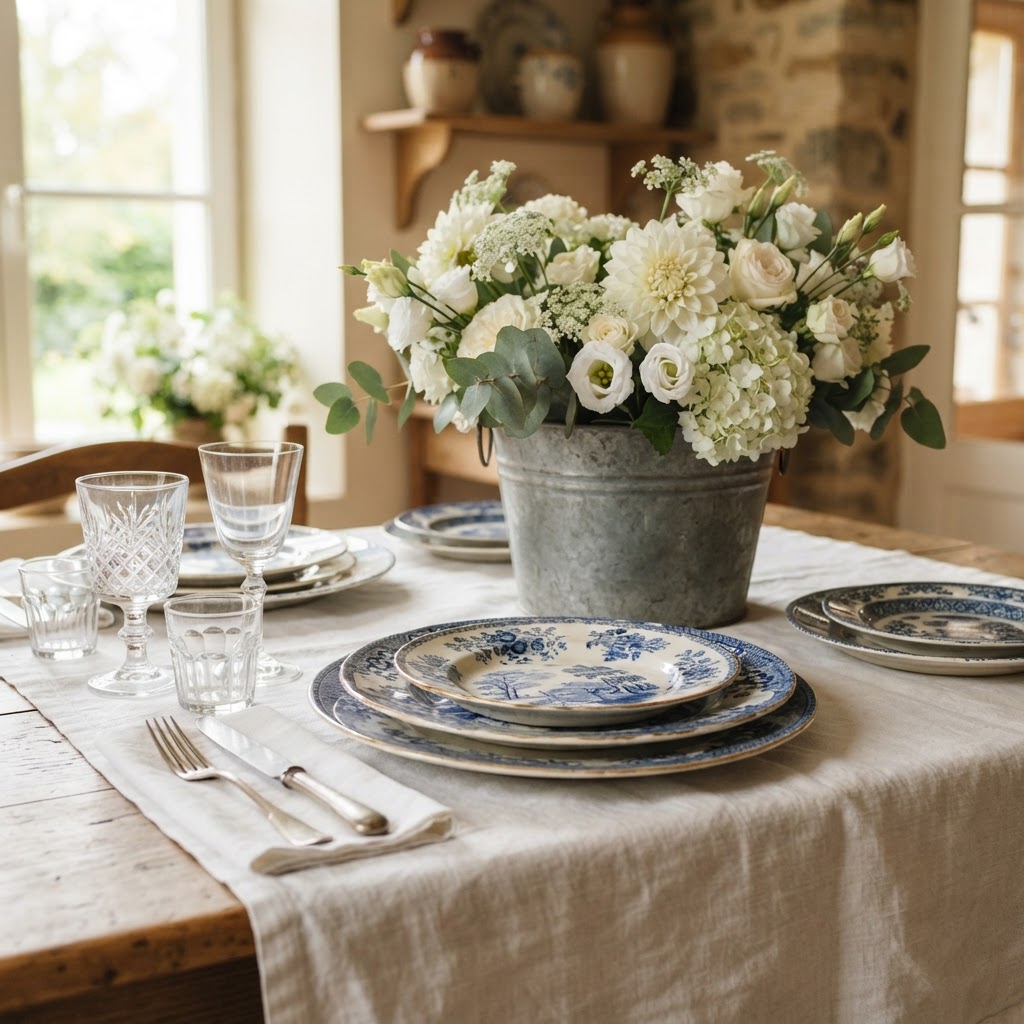
Blue and White Porcelain Story
Bring out blue and white plates and let them set the theme. Mix patterns freely, as long as the blues sit close in tone.
Support the china with plain white linen and one bucket of white flowers. Skip pastel eggs here so the pattern leads.
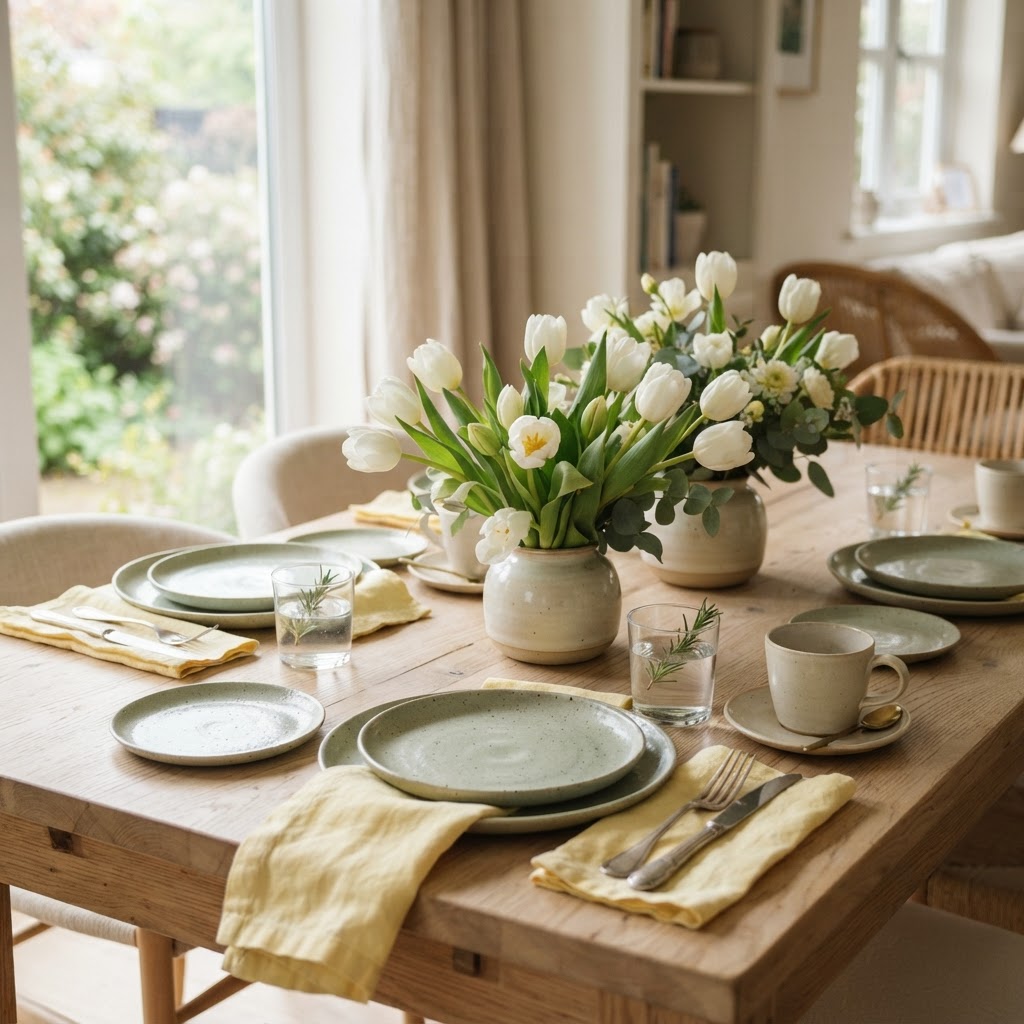
Butter Yellow and Sage
Pair butter yellow napkins with sage plates and pale wood. The result feels like early spring sunshine on a kitchen table.
Keep the yellow in fabric only so it stays elegant. Add white tulips in low vases to finish.
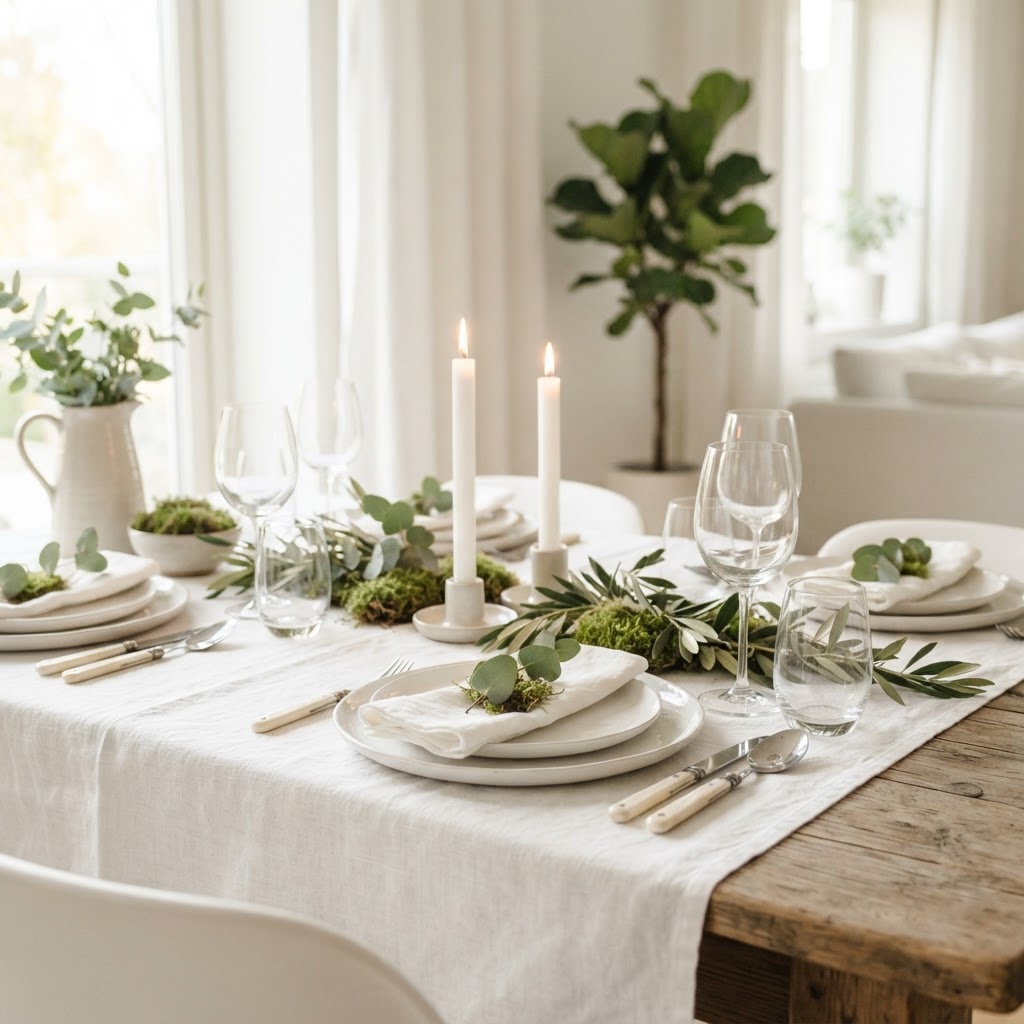
All-White with Green Accents
Set an all-white table and add green only through stems and moss. White-on-white looks expensive and photographs beautifully.
Mix white textures: linen, matte ceramic, glossy glass. A single green sprig per napkin is enough.
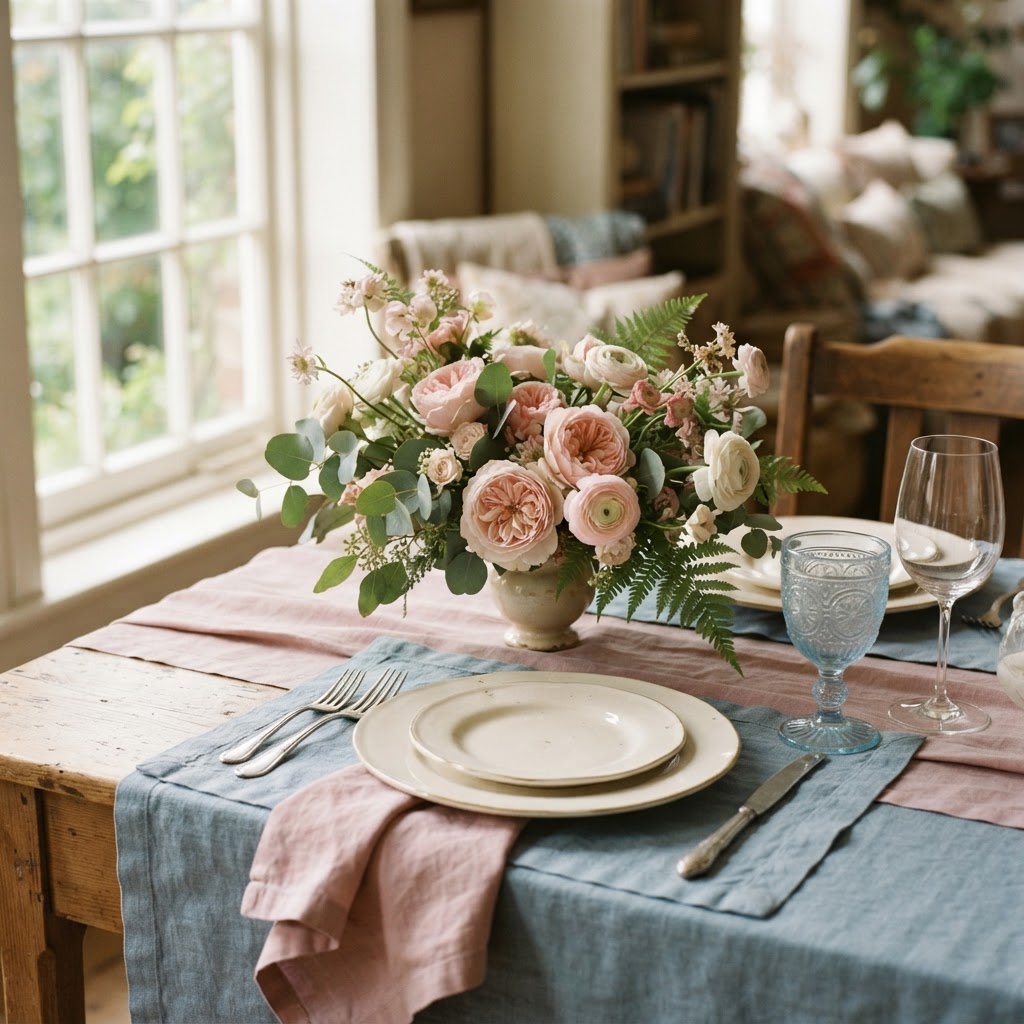
Dusty Pink and Dusty Blue
Combine muted pink and blue linens with cream china for a gentle, vintage feel. Both colours are soft enough to sit quietly together.
Repeat the blue in glassware and the pink in one flower. Avoid anything neon or high gloss.
56 – 62
Modern & Personal Touches
The last ideas are the ones guests remember. They turn a pretty table into a family tradition you repeat every year.
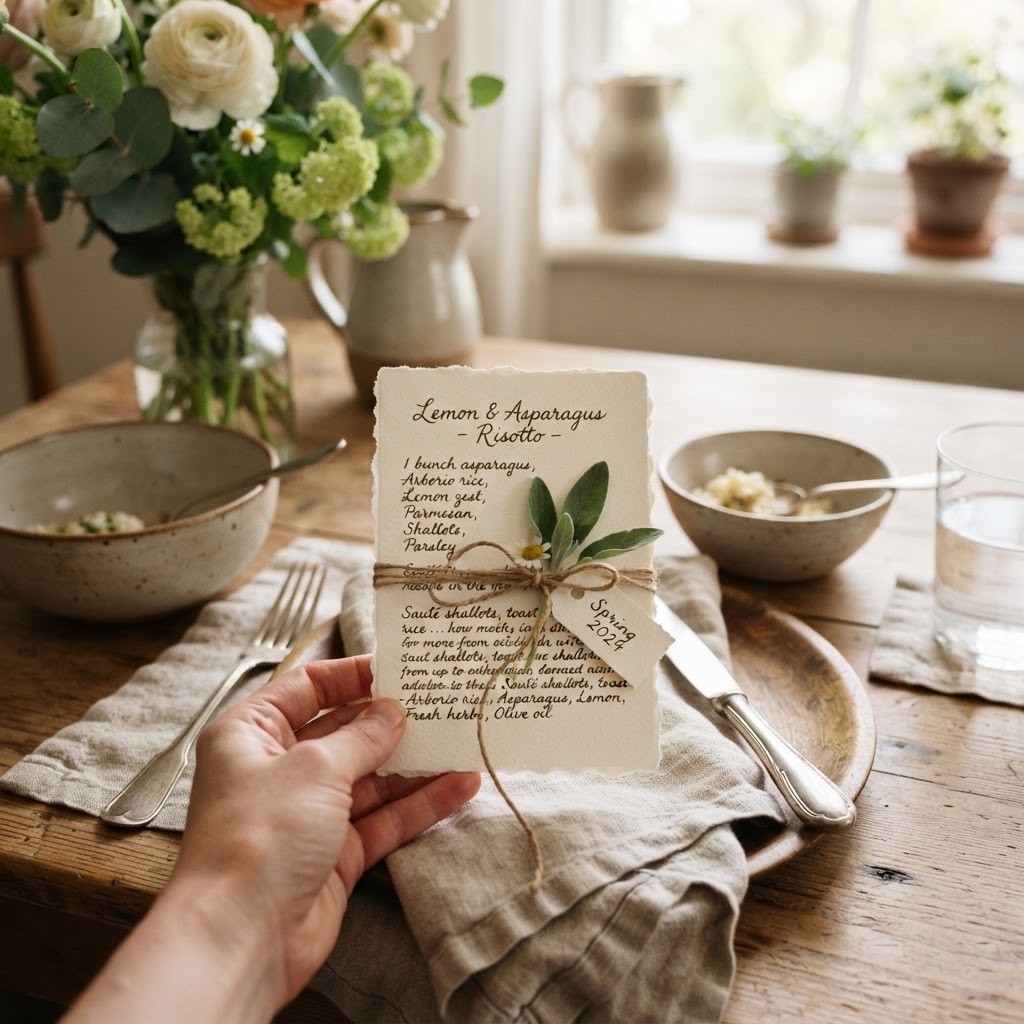
Recipe Card Favours
Write your Easter recipe on a small card and place one at each setting. Guests take home something useful instead of another trinket.
Print on textured cream card and tie with twine. Keep the recipe short enough to read at the table.
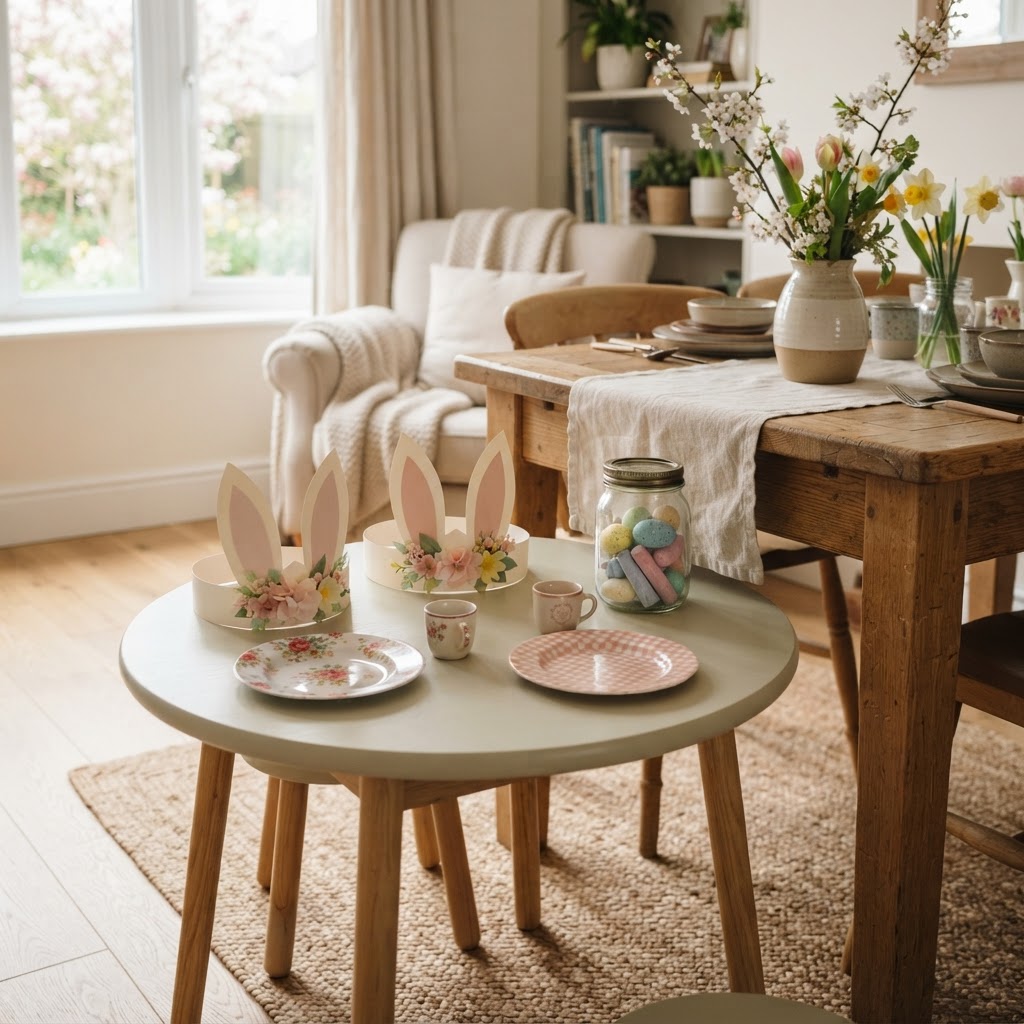
Kids’ Table with Bunny Ear Crowns
Set a low side table for children with paper bunny ear crowns and crayons. Keeping them nearby but separate makes lunch calmer for everyone.
Use unbreakable enamel plates and short cups. Add a small jar of chalk eggs for drawing between courses.
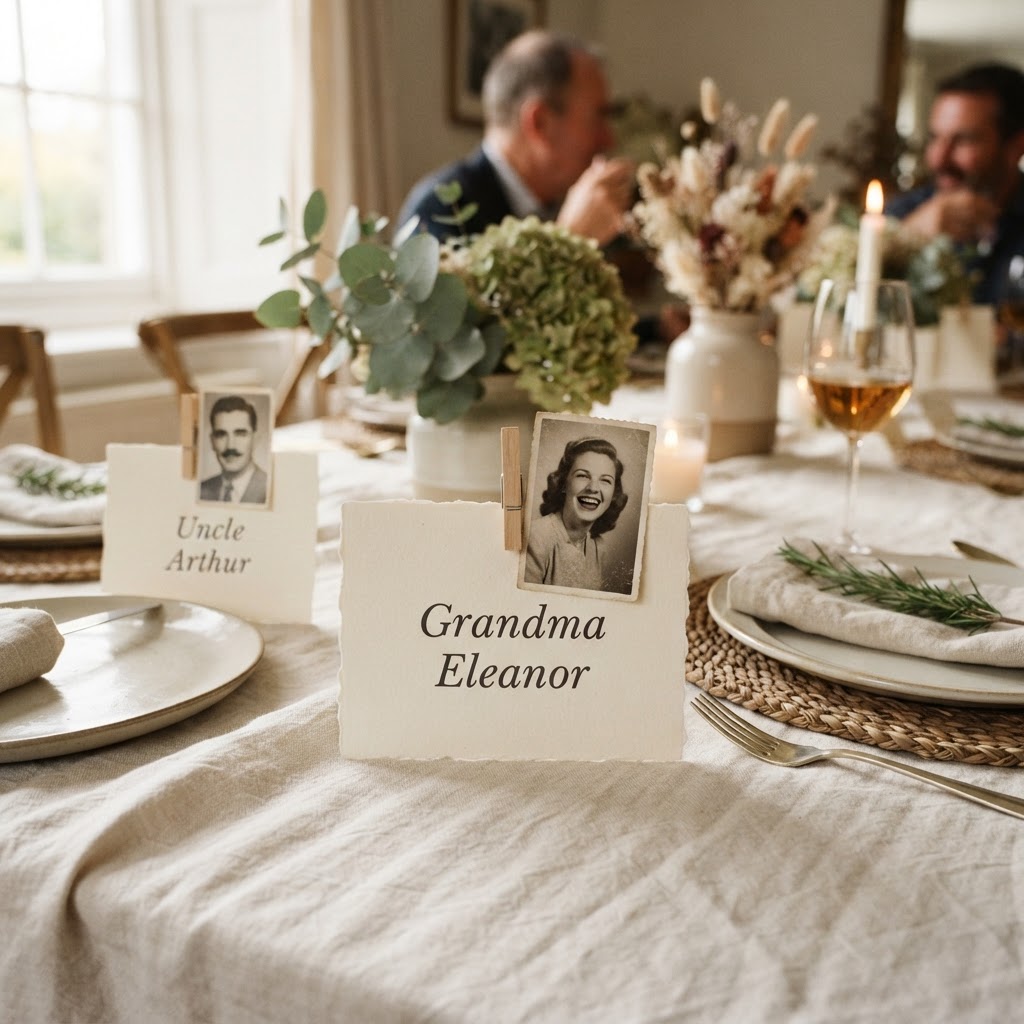
Family Photo Place Cards
Clip an old family photo to each place card so guests find their seat and a story. It starts conversations without any effort.
Print photos in black and white so the table stays calm. Use small wooden clips instead of frames.
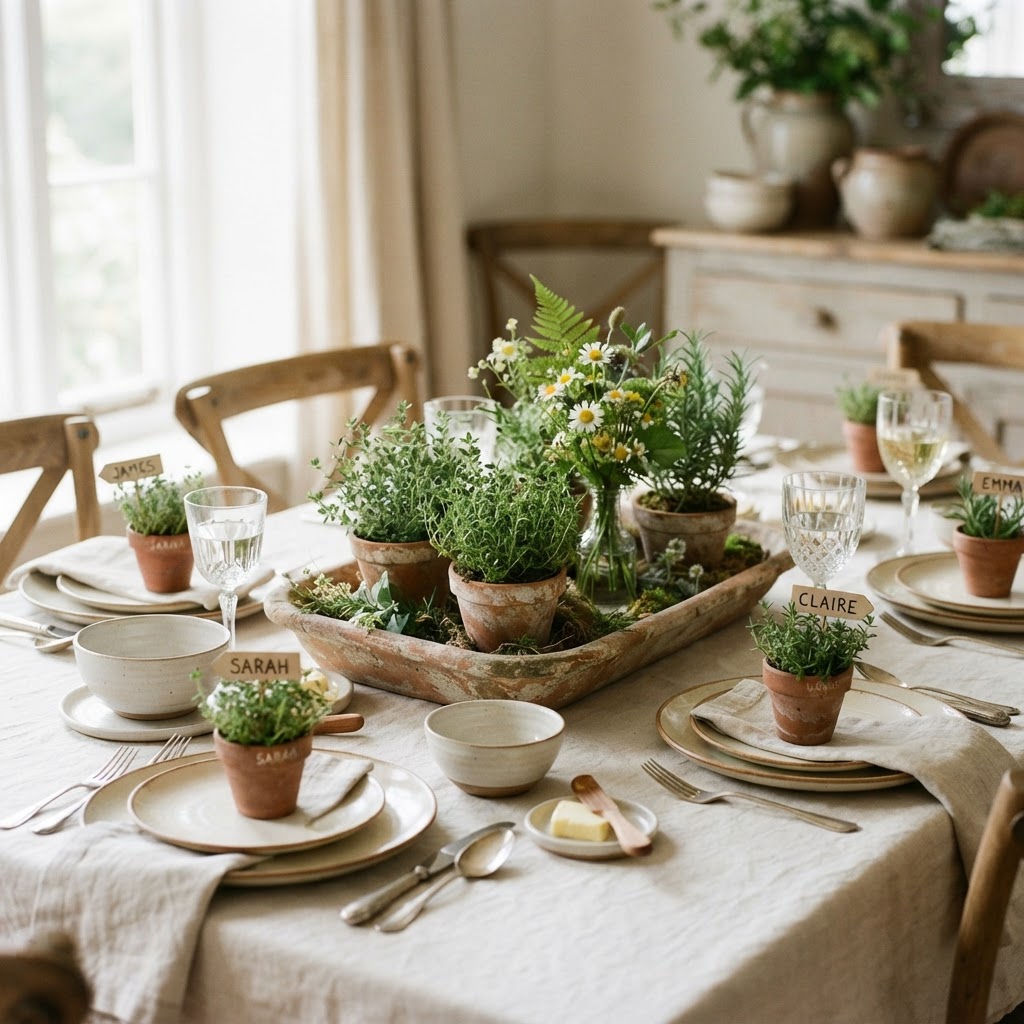
Herb Pot Favours
Put a small pot of thyme or rosemary at each setting with the guest’s name on a wooden stick. It doubles as decor and a gift.
Group the herbs on a tray at the centre once guests sit down. Water them the morning of the lunch.
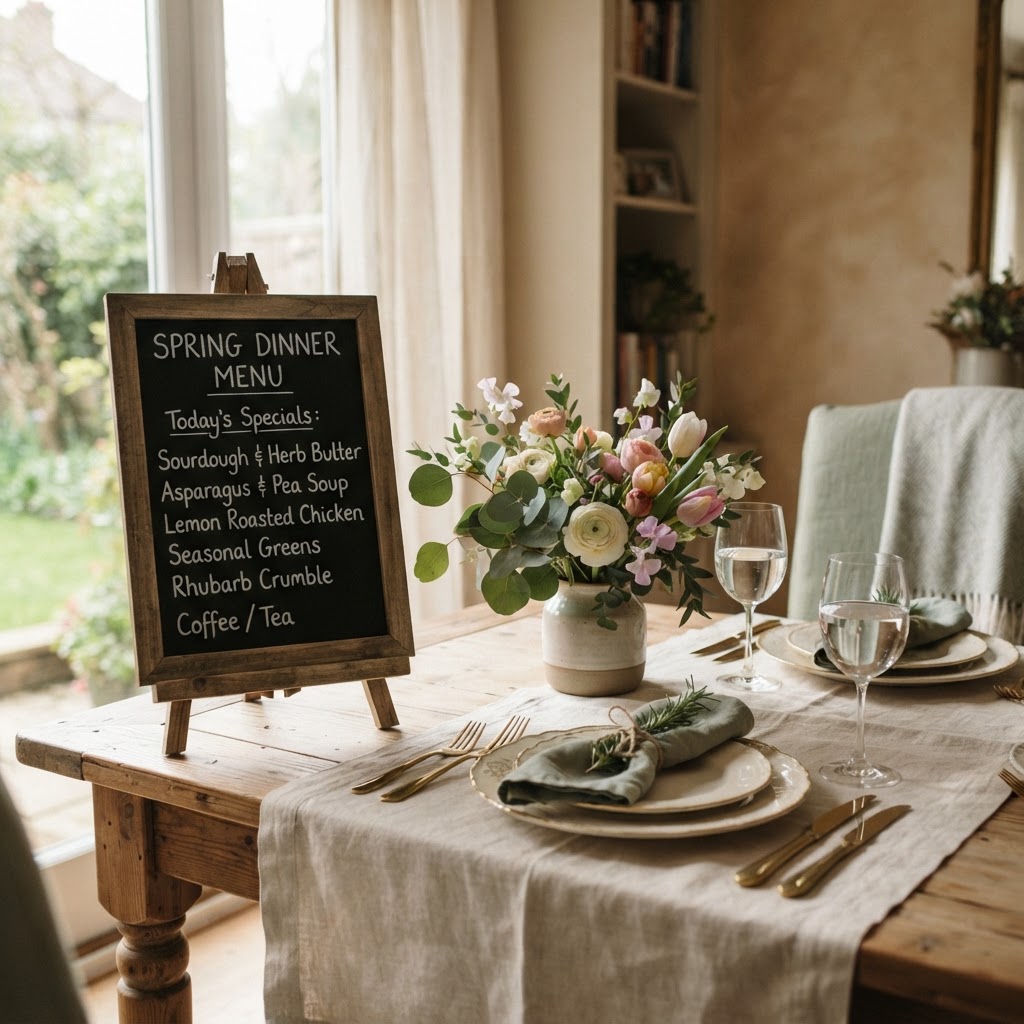
Chalkboard Menu on an Easel
Write the menu on a small chalkboard and stand it on an easel beside the table. It answers questions before they are asked and looks charming.
Keep the lettering simple and use white chalk only. Leave space at the bottom for a short thank you.
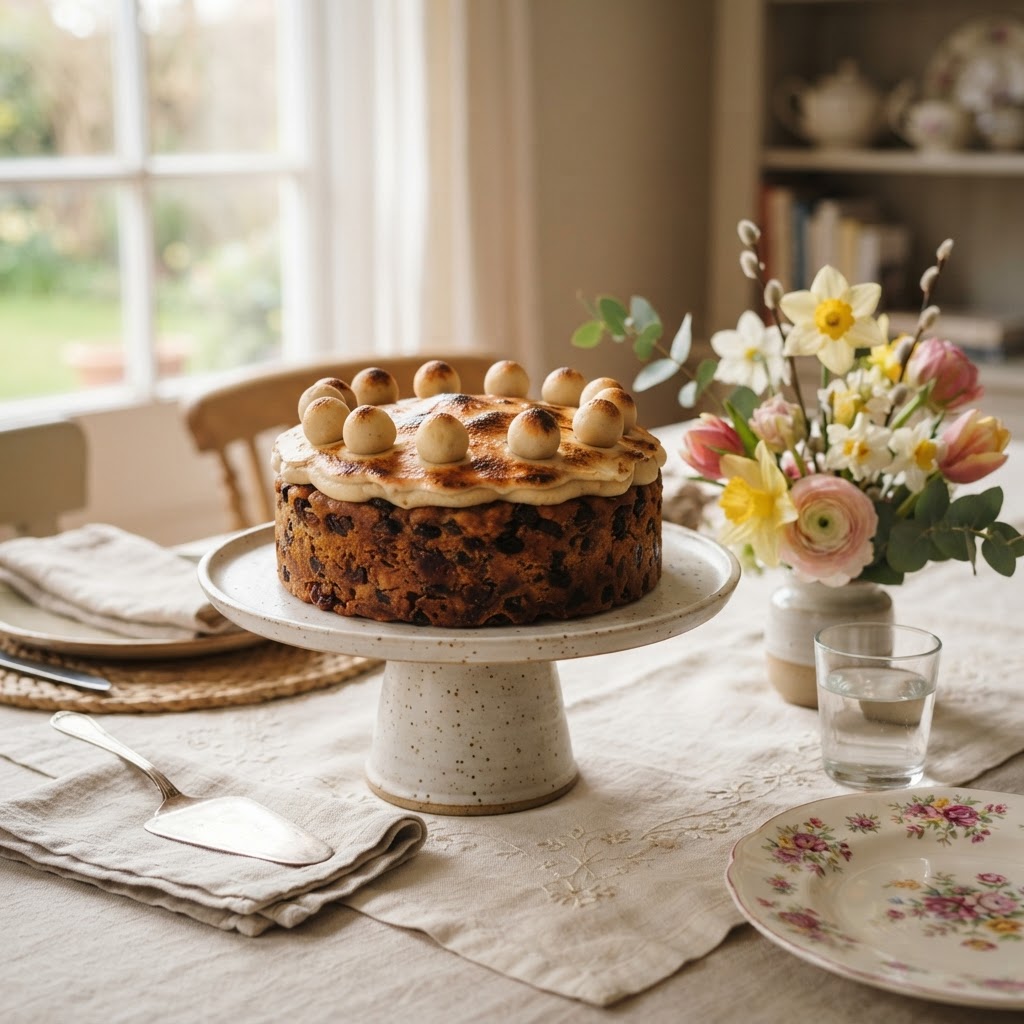
Simnel Cake Centrepiece
Make a traditional simnel cake the centrepiece and decorate it with eleven marzipan eggs. It is a talking point with real meaning behind it.
Toast the marzipan lightly for colour before serving. Cut it after the main course so it stays intact at the table.
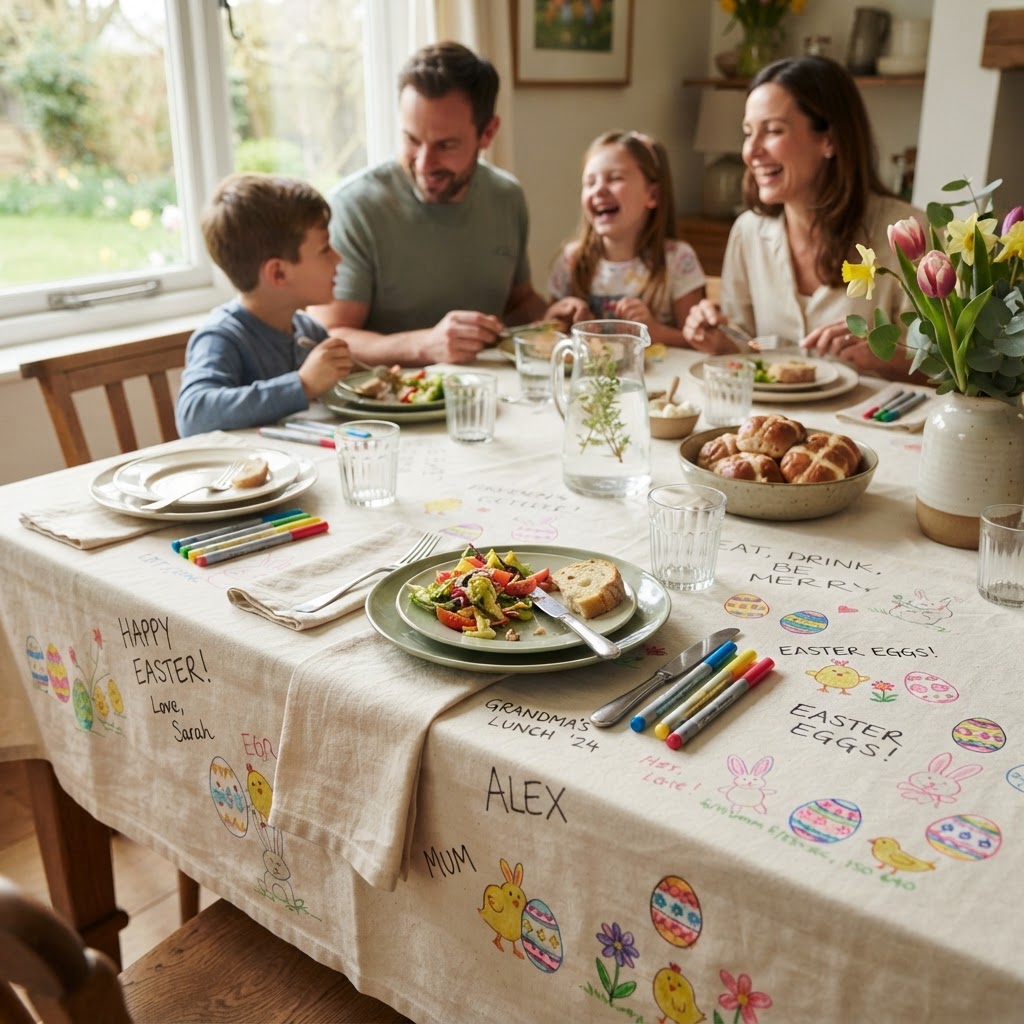
Guestbook Tablecloth
Lay a plain cotton cloth and leave fabric markers beside each place. Guests write a message or draw a small egg during lunch.
Use washable ink if children are joining. The cloth becomes a record you bring out every Easter.
A Simple Planning Timeline for the Week Before
A calm Easter table is mostly a matter of order. Spread the work over four short sessions instead of one long day.
Nine days out, choose your palette and pick two or three ideas from this list. Order anything you need to buy online now.
One week out, wash and press your linens and check your candle supply. This is also the day to blow and clean any eggs you plan to decorate.
Two days out, dye the eggs and pick up flowers. Keep flowers in deep water somewhere cool so they open slowly.
The day before, build the centrepiece structure and set the table. Lay everything except the food, then drape a sheet over it if you have pets.
On the day, add fresh flowers, light the candles and put the butter on its stand. Save the last details for the hour before guests arrive.
What to Spend On and What to Skip
Spend on linen, plates and candles, because you will use them again every year. These are the pieces that quietly lift the whole table.
Skip expensive single-use decor. Paper garlands, printed banners and themed figurines rarely earn their place, and they photograph flat.
Use what the season already gives you. A few branches, bulbs from the garden centre and moss cost very little and look far better than plastic.
If your budget is tight, do three things well: one cloth, one low arrangement and one candle. A restrained table always looks more expensive.
Rent or borrow for a big table. Glassware and extra chairs are often cheaper to rent than to buy, and no one notices they are borrowed.
The Table Guests Actually Remember
Guests rarely remember the exact plates or the colour of the napkins. They remember whether the room felt warm and whether there was space to sit and talk.
So keep the centre low, the light soft and the palette simple. Add one detail that is personal, whether that is a family photo, a handwritten card or a cloth they can write on.
Choose two ideas from this list and leave the rest. Next year you will still have fifty-nine fresh options waiting.
Set the table early, open the windows and let the house fill with the smell of lunch. That is the decorating that matters most.


