
52 Small Kitchen Storage Ideas: Clever Organization That Actually Works
A small kitchen does not need a bigger room. It needs better decisions.
Most tiny kitchens lose space in the same places. The back of a deep cabinet, the gap beside the fridge, the wall above the sink.
This guide covers 52 storage ideas that work in real kitchens. Some take two minutes and no tools. A few need a handyman.
Each one solves a specific problem, so you can fix the worst spot first.
Pick five ideas this weekend. Most people feel the difference after the first two.
Every idea below names the exact problem it solves. Skip the ones that do not match your kitchen.
You do not need a big budget either. Most of these cost less than a takeaway dinner.
Vertical and Wall Storage
Walls are the most underused surface in a small kitchen. Most people stop at eye level and leave a metre of height empty. These eight ideas use the full wall, so tools stay visible and the counter stays clear. Start with the wall you face while you cook, because that is the one you notice every day.
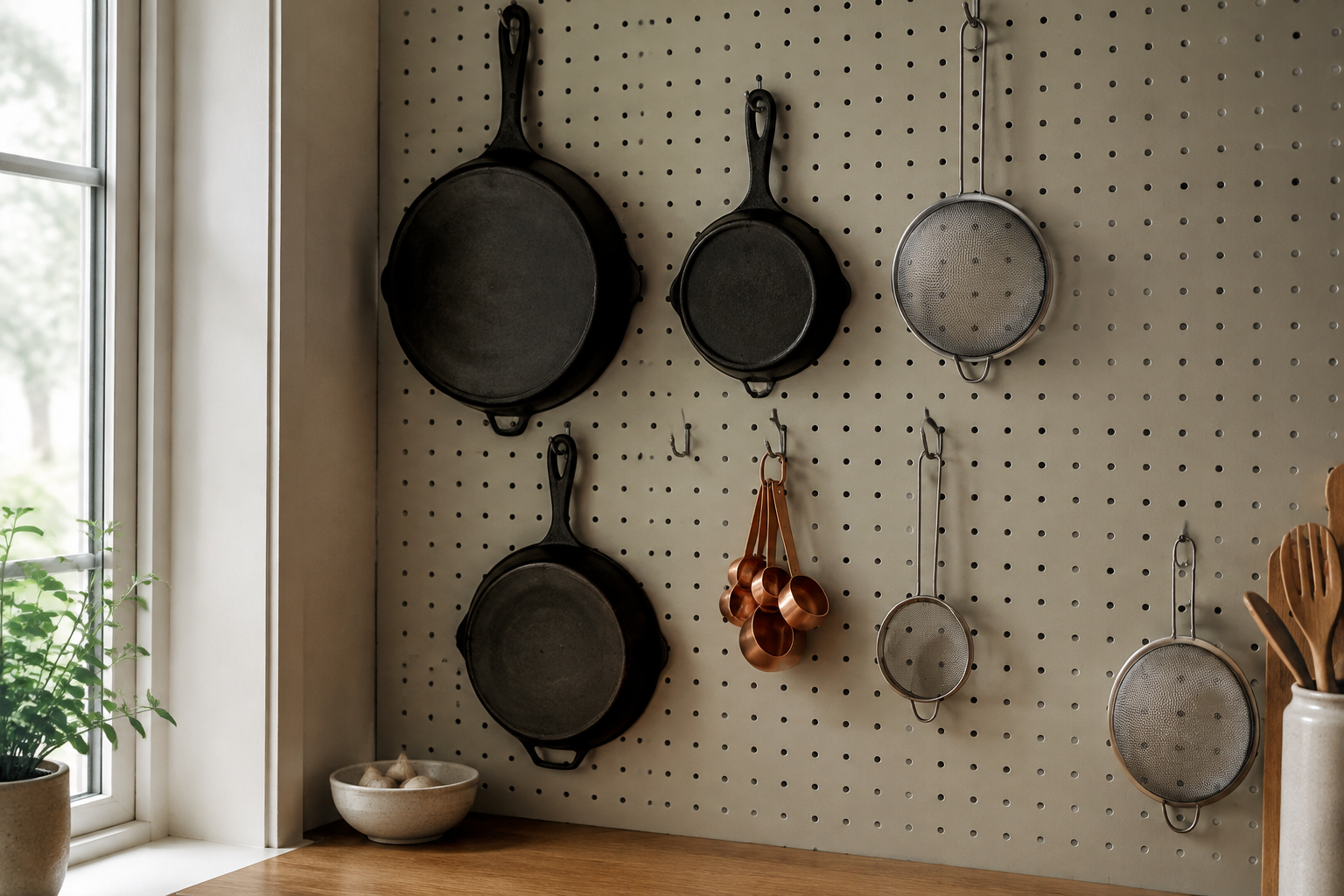
Full-Height Pegboard Wall
Turn one narrow wall into a floor-to-ceiling pegboard. Paint it the same color as your cabinets so it fades into the room.
Hang skillets, sieves, and measuring cups on movable hooks. Nothing lives on the counter anymore.
This single wall can do the work of a whole cupboard. Reposition the hooks any weekend without tools.
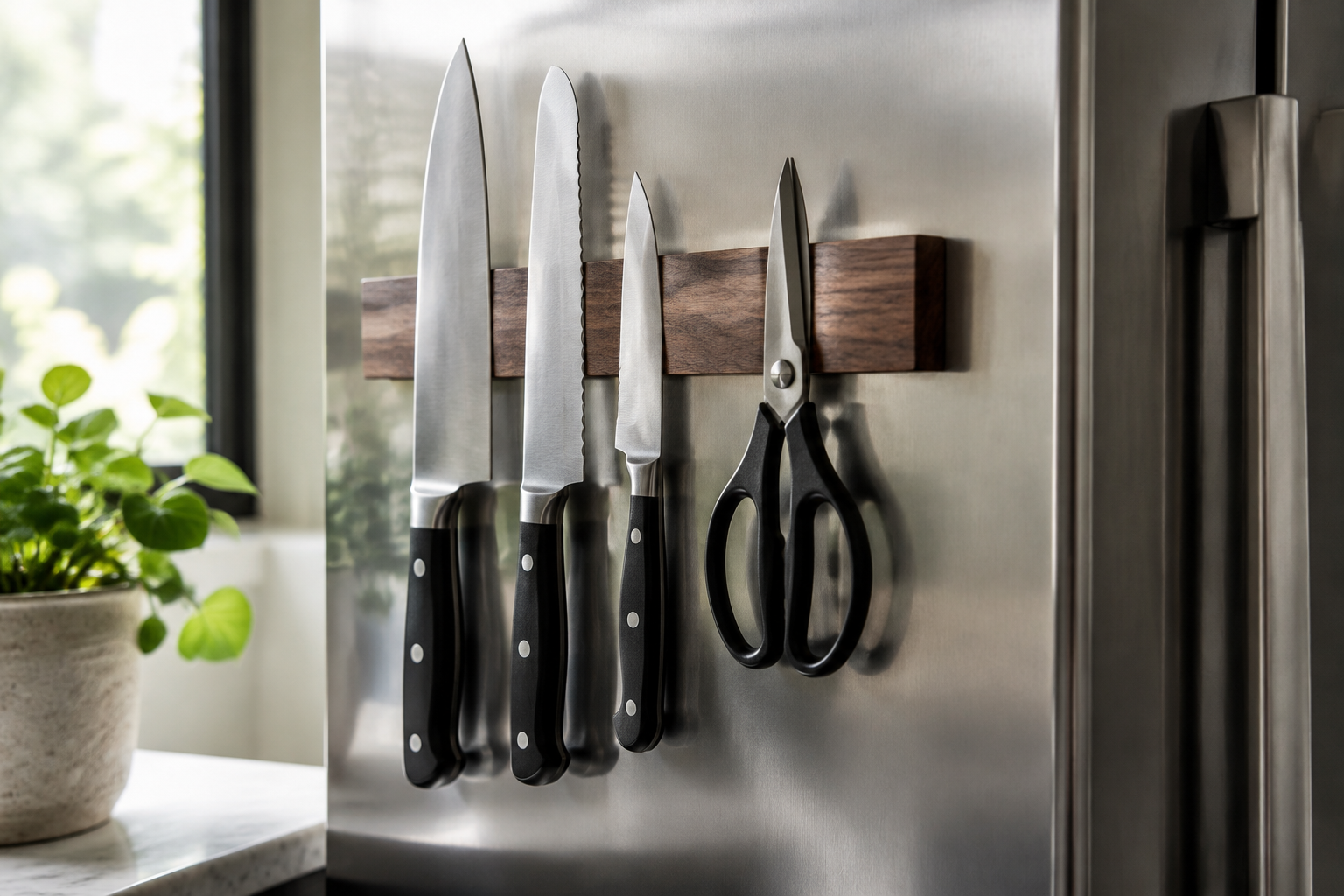
Magnetic Knife Strip on the Fridge Side
The side of your fridge is dead space in most small kitchens. A magnetic strip there holds knives, scissors, and small ladles.
It keeps blades off the counter and out of a crowded drawer. Choose a strip rated for the heaviest knife you own.
Mount it high enough that children cannot reach.
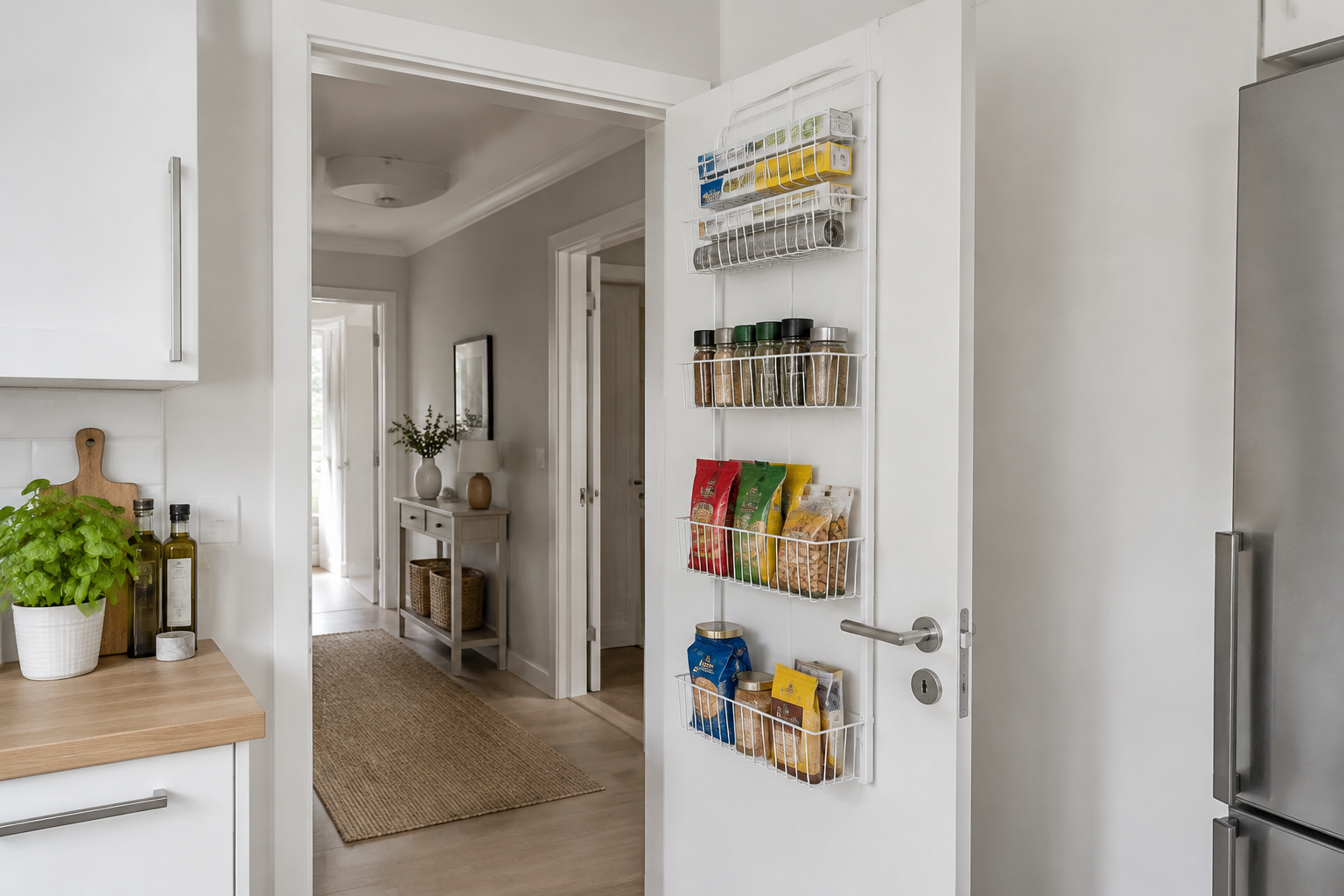
Over-the-Door Pantry Rack
Hang a slim wire rack over the inside of the kitchen door. It holds foil, wrap, spices, and snack bags in plain sight.
The door swings shut and the clutter disappears. Measure your door thickness before you buy.
Most racks fit standard interior doors without a single screw.
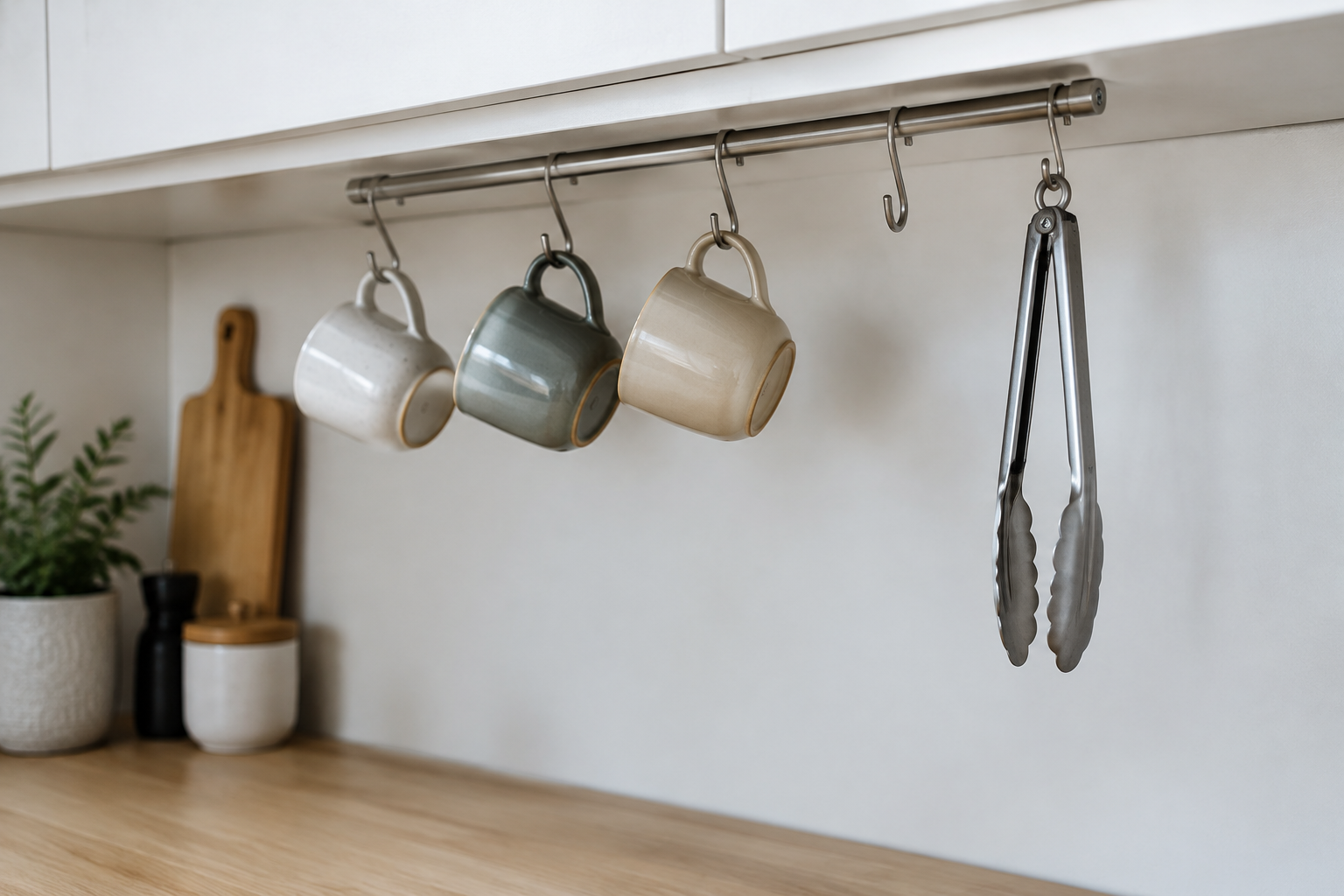
Under-Cabinet Rail with S-Hooks
Screw a simple metal rail under your upper cabinets. Slide S-hooks along it to hang mugs, tongs, and small pans.
The space between counter and cabinet is usually wasted. This rail uses it and keeps daily tools within reach.
Move the hooks whenever your habits change.
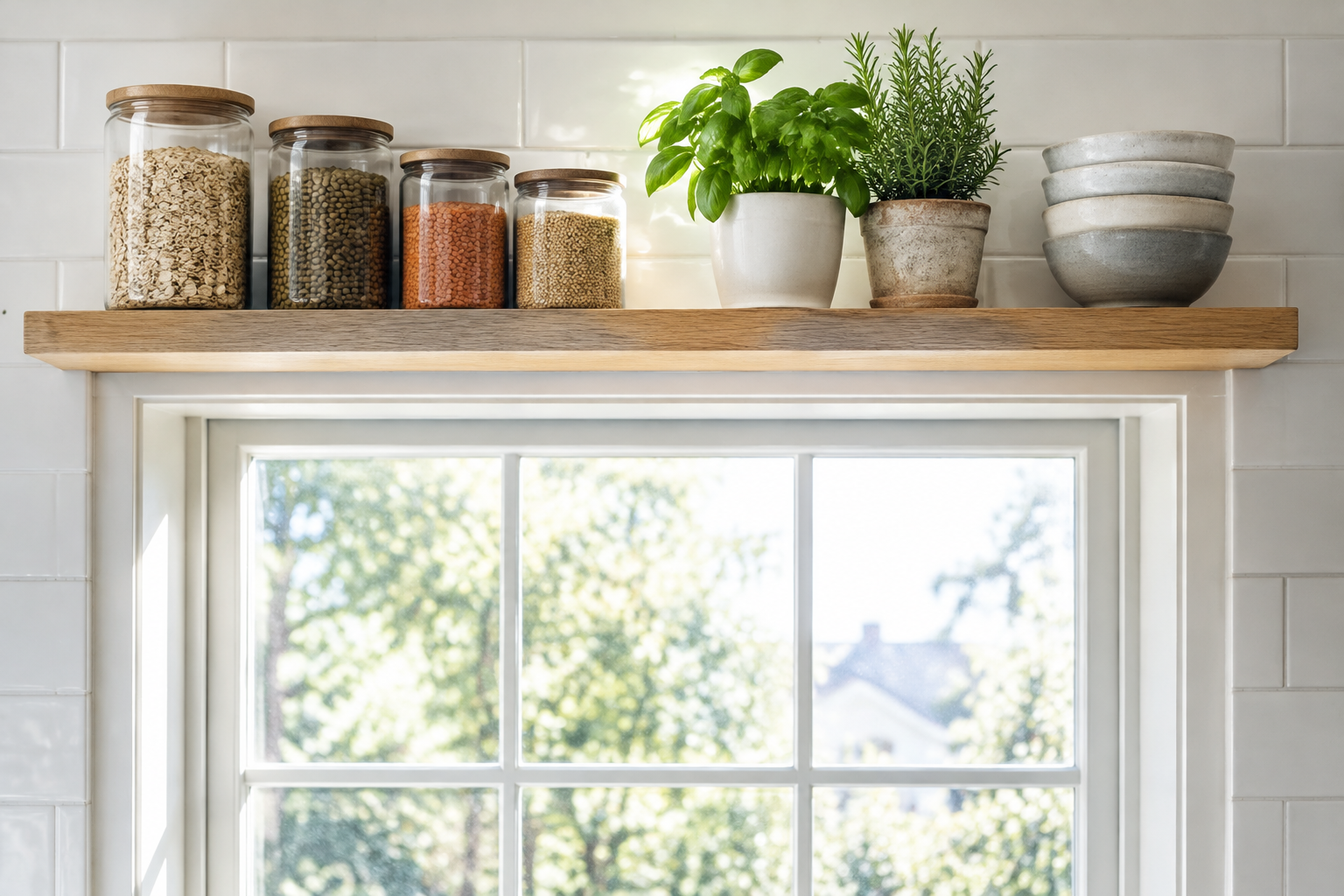
Floating Ledge Above the Window
The strip above a kitchen window is often empty. A shallow floating ledge fits there and holds jars, herbs, and small bowls.
Keep the ledge narrow so it never blocks daylight. Use it for things you want to see, not heavy items.
Glass jars look tidy and let light pass straight through.
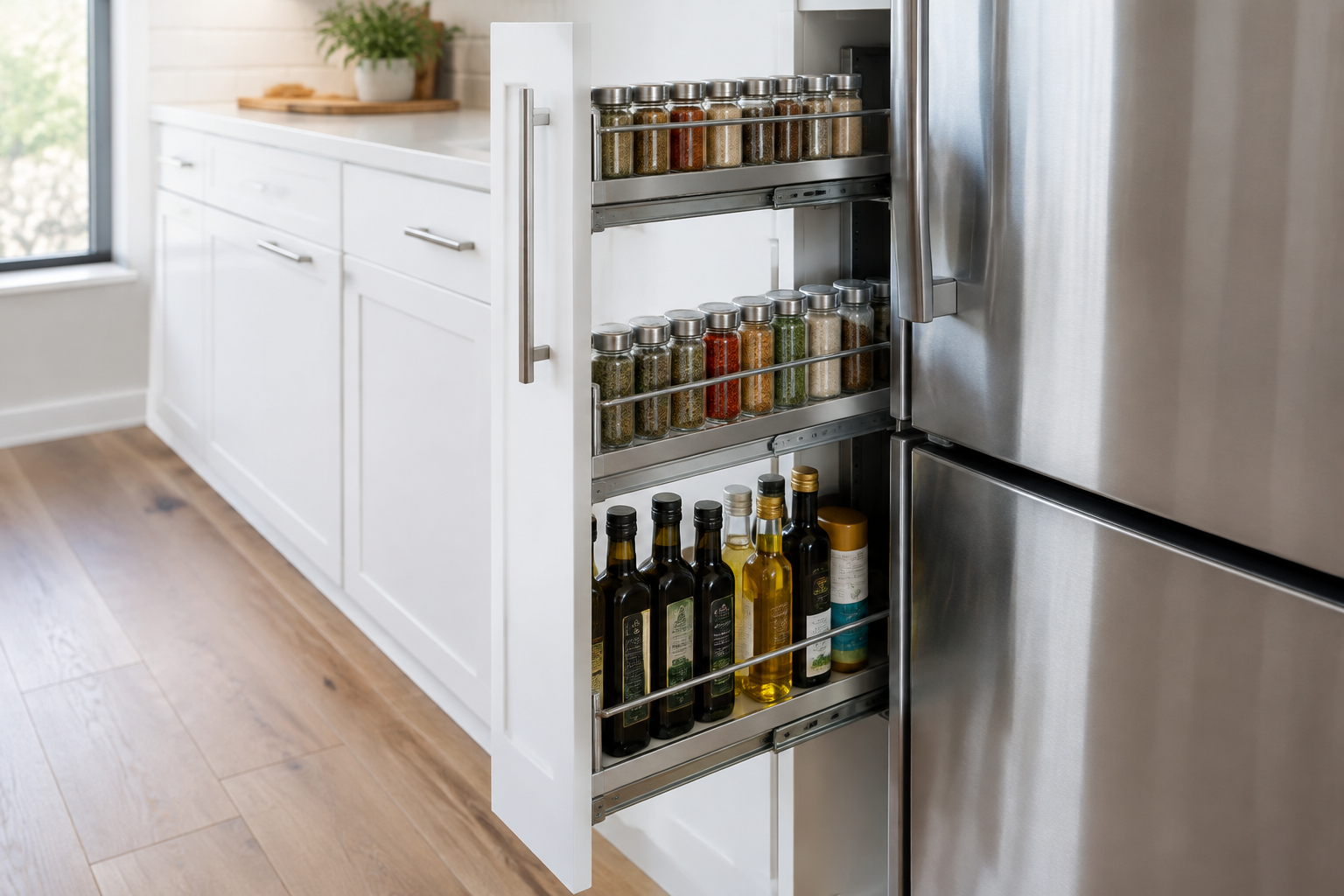
Slim Pull-Out Spice Tower Beside the Fridge
A twelve-inch gap beside the fridge can hold a tall pull-out tower. Spices, oils, and vinegars line up in single rows.
Everything is visible the moment you open it. Nothing hides at the back.
This is one of the cheapest ways to add real storage without moving a wall.
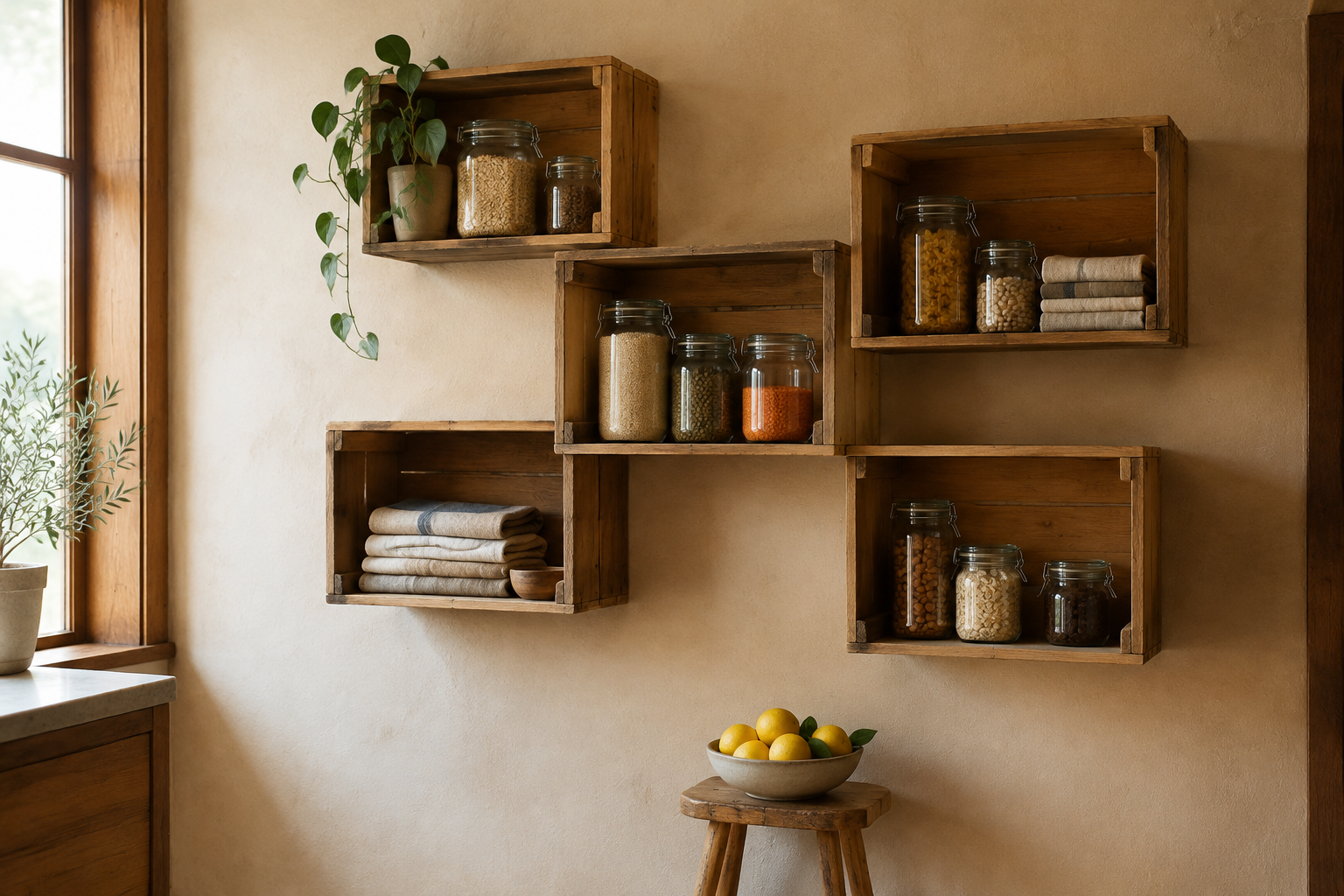
Stacked Wall Crates as Open Shelving
Wooden crates stacked on the wall make quick open shelves. Stagger them for a relaxed look or line them up for a clean grid.
Each crate becomes a container for dry goods or linens. They are cheap, light, and renter-friendly.
Anchor them into studs so they can hold real weight.
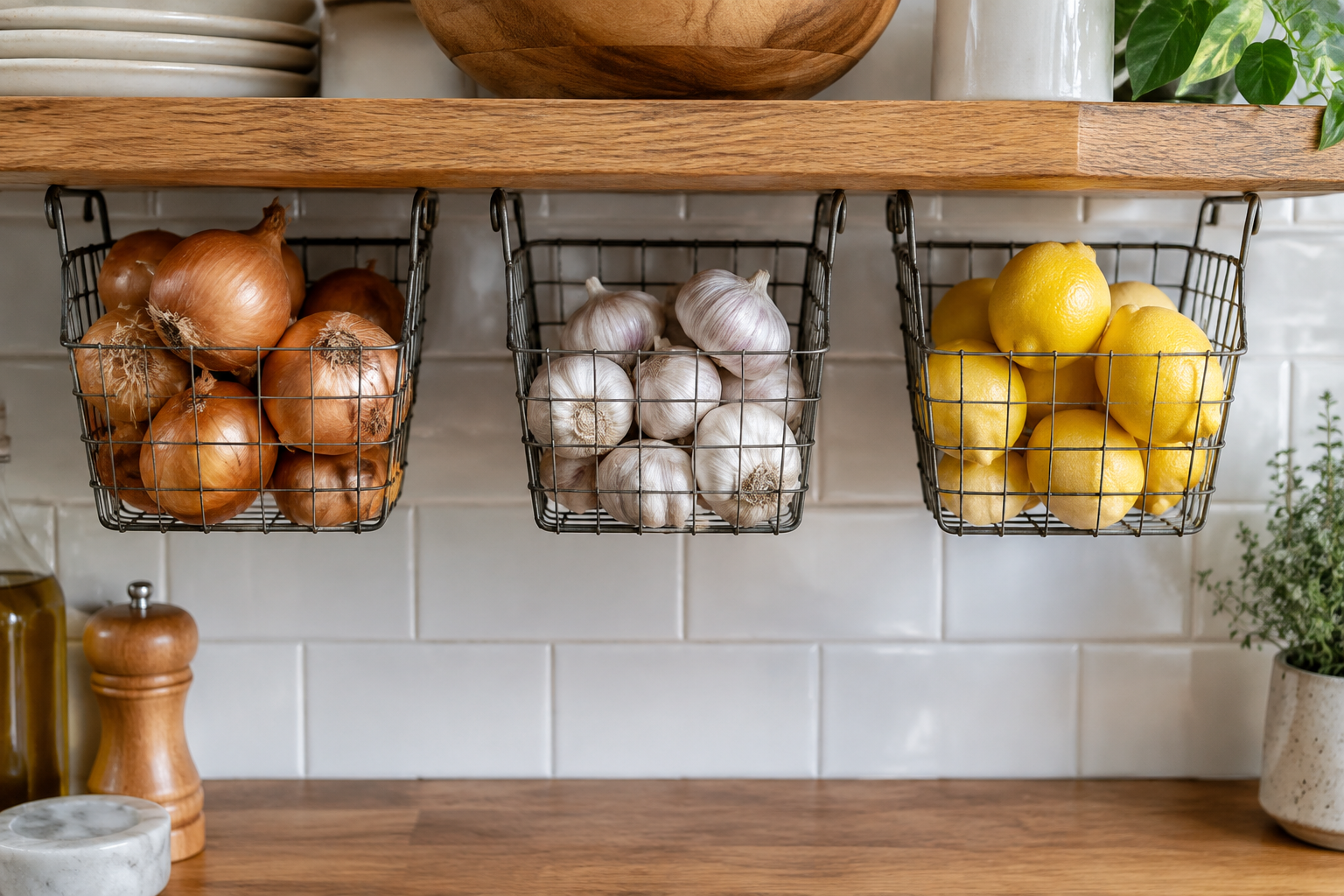
Under-Shelf Hanging Baskets for Produce
Hang small wire baskets under a solid shelf. Onions, garlic, and lemons breathe in them and stay off the counter.
Airflow keeps produce fresher for longer. The baskets slide out when you need them.
This works well over a prep area where the shelf is already sturdy.
Inside the Cabinets
Cabinets usually waste more space than they hold. Deep shelves hide food at the back and fixed shelves waste the height between them. These eight fixes cost very little and work in rentals too. Do one cabinet per weekend and the change is obvious the same evening.
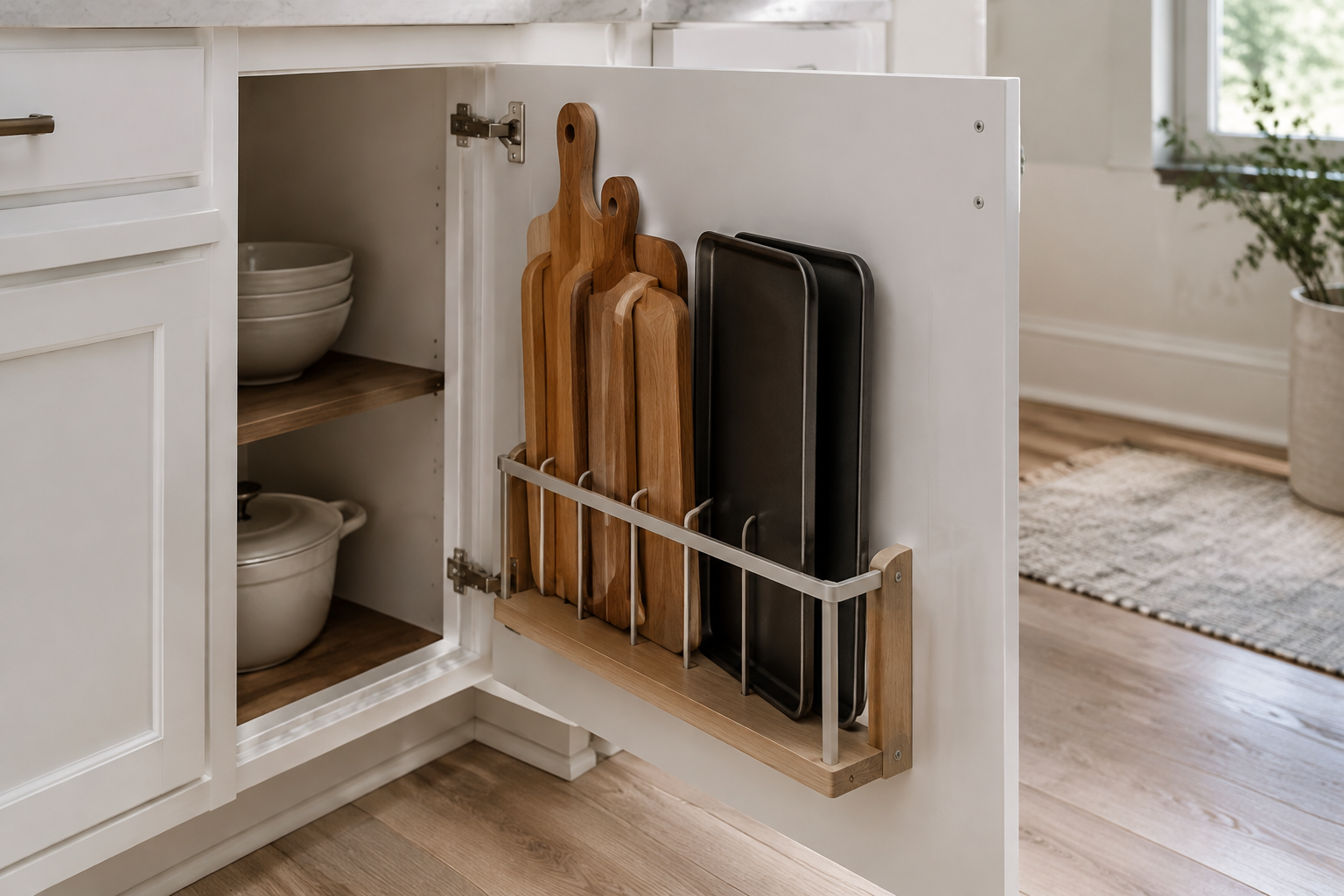
Inside-Door Rack for Cutting Boards
Mount a narrow rack inside a base cabinet door. Slide cutting boards, trays, and baking sheets into it.
These flat items are the hardest to store standing up. The door becomes storage instead of just a panel.
Check the door swing before you drill anything.
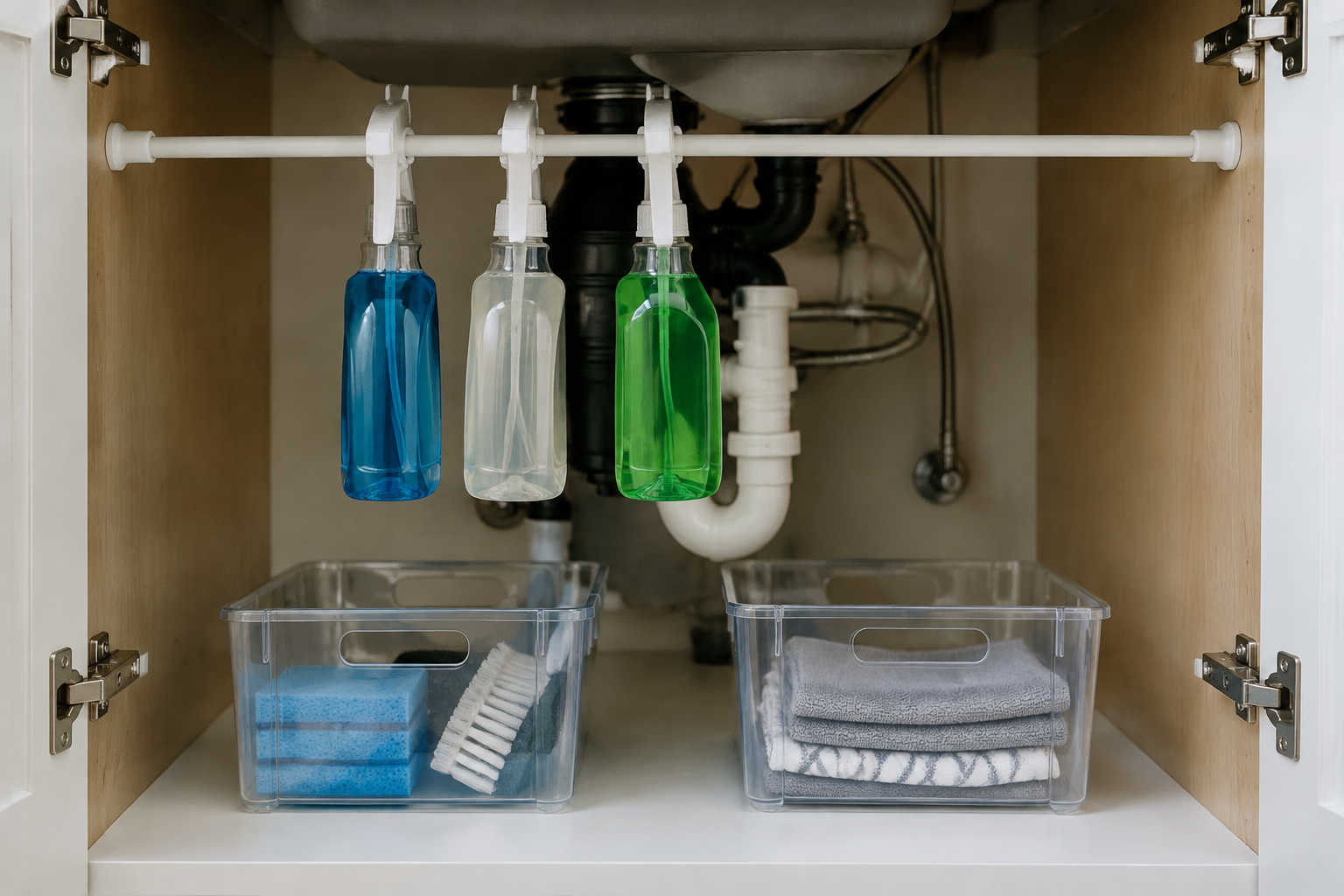
Tension Rod Under the Sink
Push a spring tension rod across the cabinet under the sink. Clip spray bottles onto it by their triggers.
The floor of the cabinet stays clear for bins and bulky items. There are no screws and no damage.
It takes about two minutes to install.
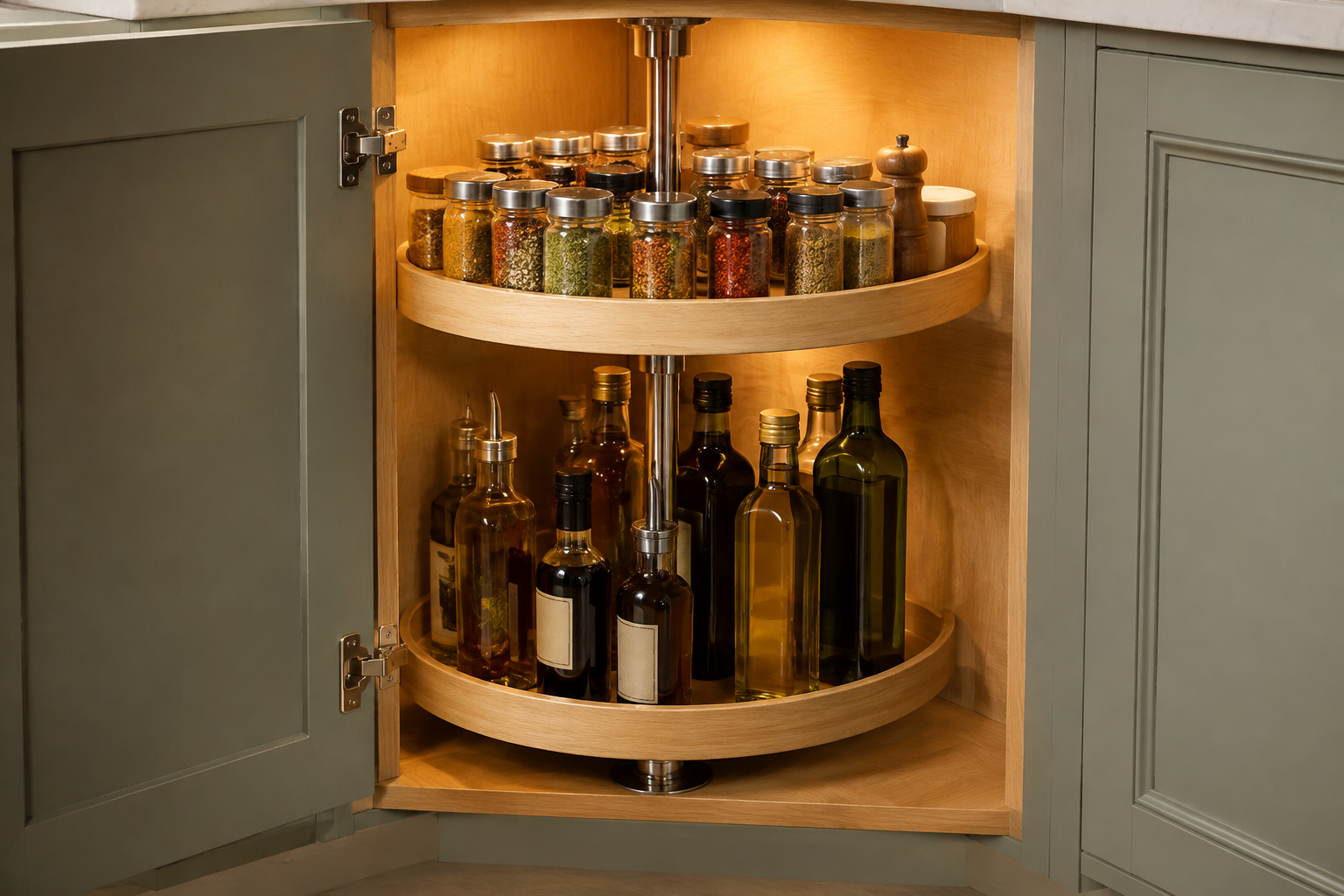
Two-Tier Lazy Susan in the Corner Cabinet
A corner base cabinet swallows items at the back. A two-tier lazy Susan spins everything to the front.
The upper tray holds small jars and the lower one holds bottles. Measure the cabinet opening before buying.
Tall items need a clear gap between the tiers.
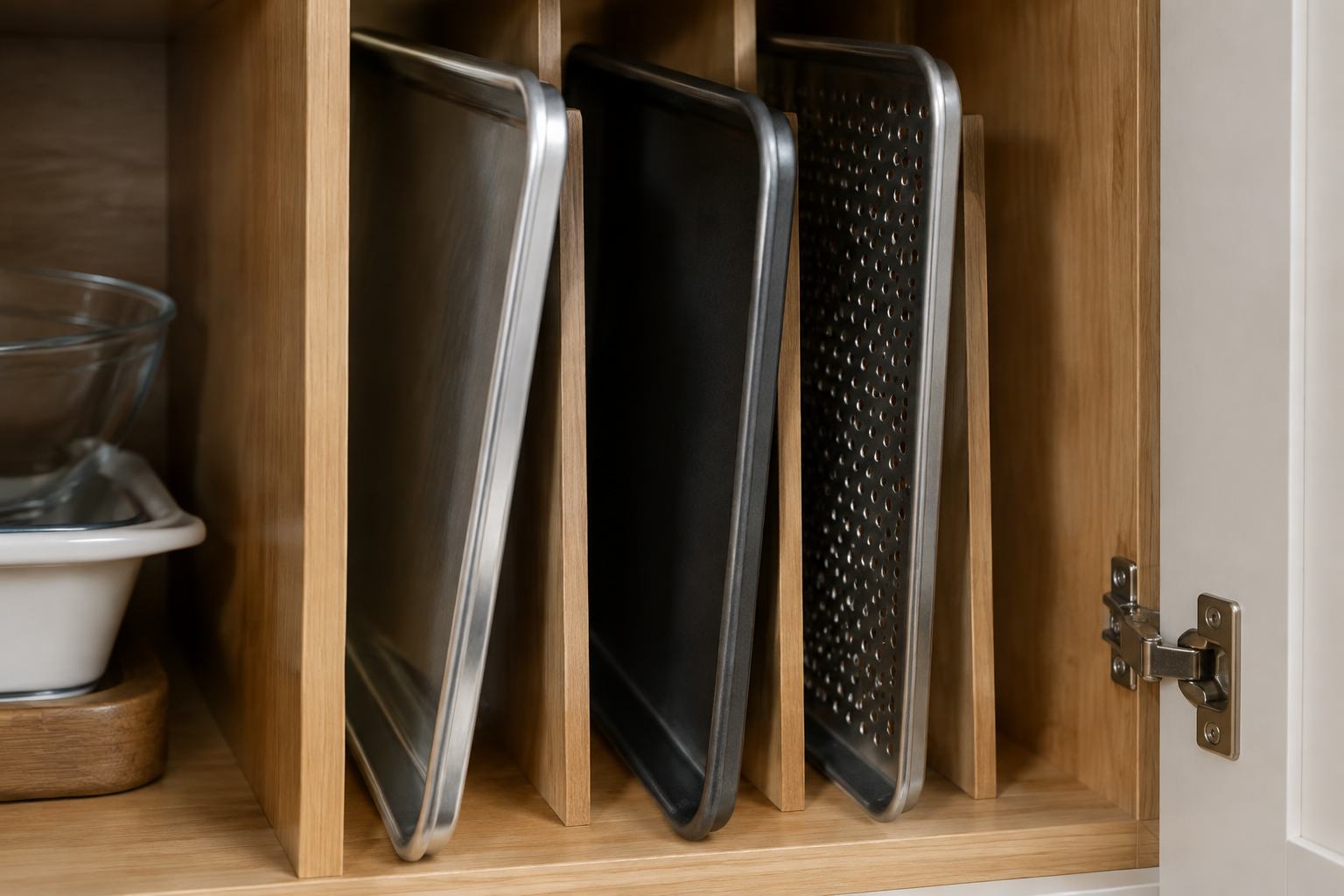
Upright Sheet Pan Dividers
Stop stacking baking sheets flat. Stand them on edge in a divided slot.
You can pull out one tray without lifting five others. The dividers also protect non-stick surfaces from scratches.
A simple wire or wood divider does the job and costs very little.
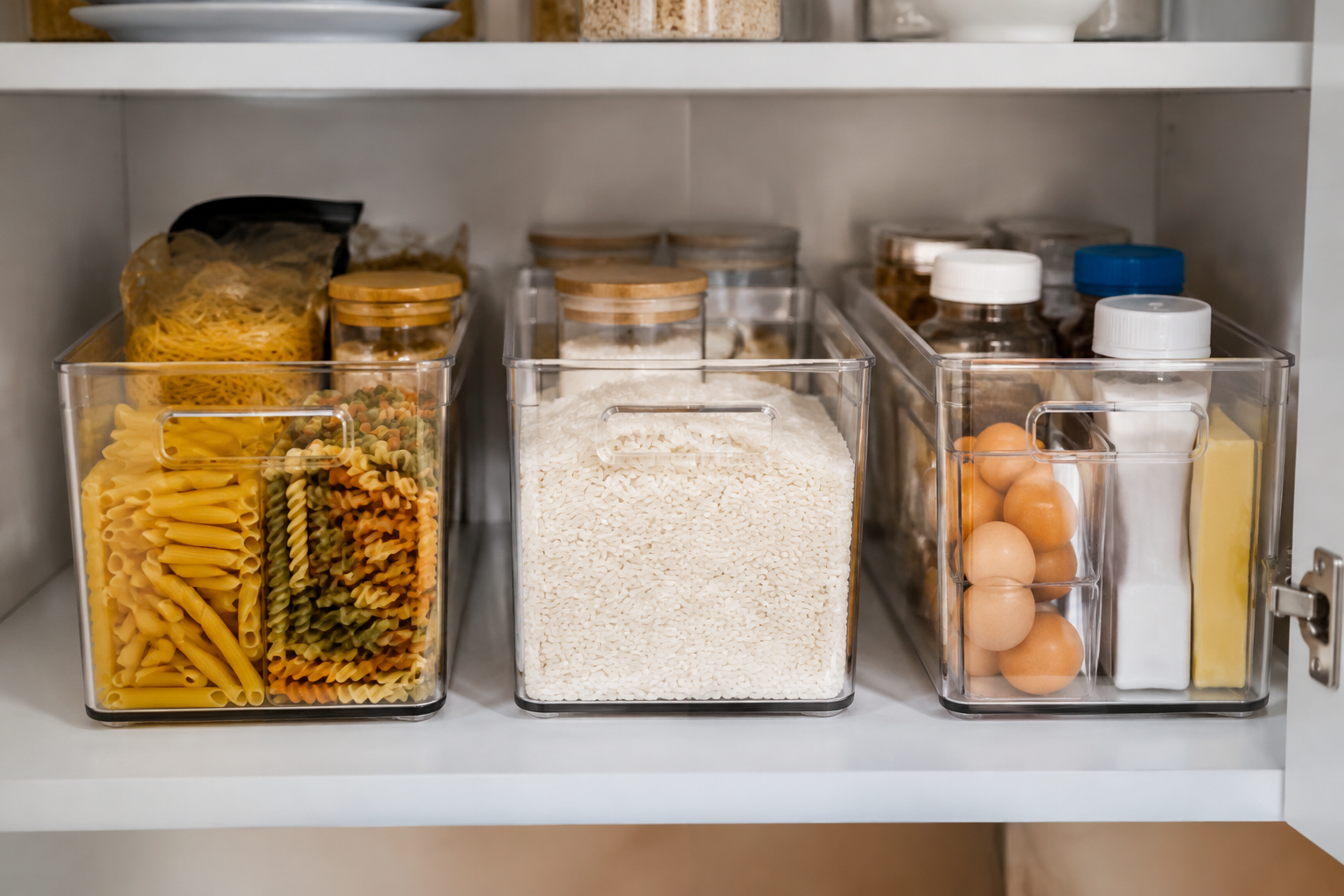
Clear Stackable Bins in Deep Cabinets
Deep shelves hide food at the back. Clear bins turn each shelf into a pull-out drawer.
Group pasta in one bin and baking goods in another. You can see everything at a glance.
Labels on the front edge keep the system honest.
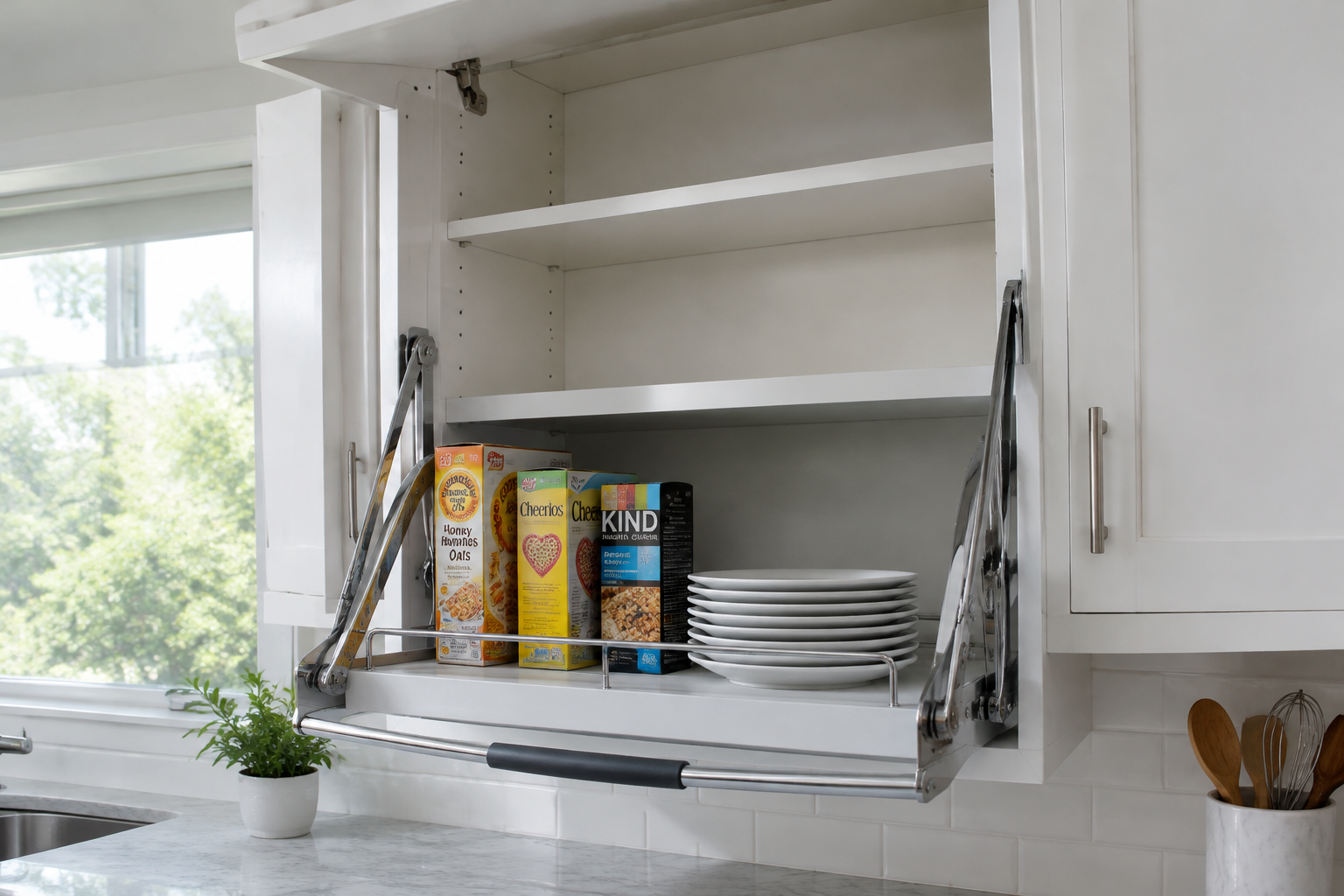
Pull-Down Shelf in the Upper Cabinet
A pull-down shelf brings the top cabinet down to your hands. It works on a simple spring mechanism.
No more step stool for the cereal or the good plates. This is ideal for short cooks and tall cabinets.
It costs more than a bin but saves your shoulders every day.
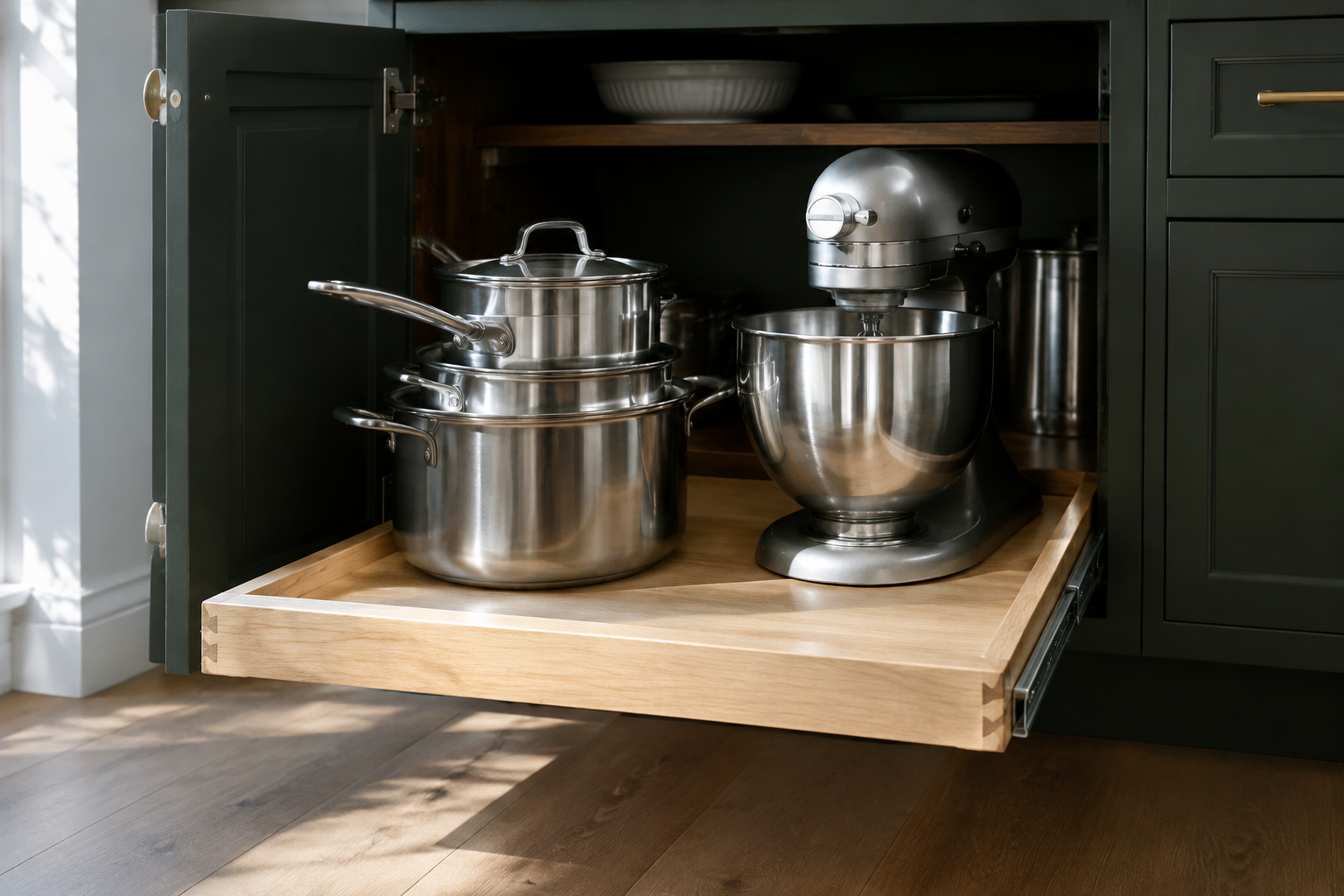
Roll-Out Shelf Inside a Base Cabinet
A roll-out shelf converts a dark cupboard into a drawer. Install one in the cabinet you open most.
Pots, appliances, and bulk bags slide forward together. Nothing is lost in the dark back corner.
Most versions screw into the existing shelf with four screws.
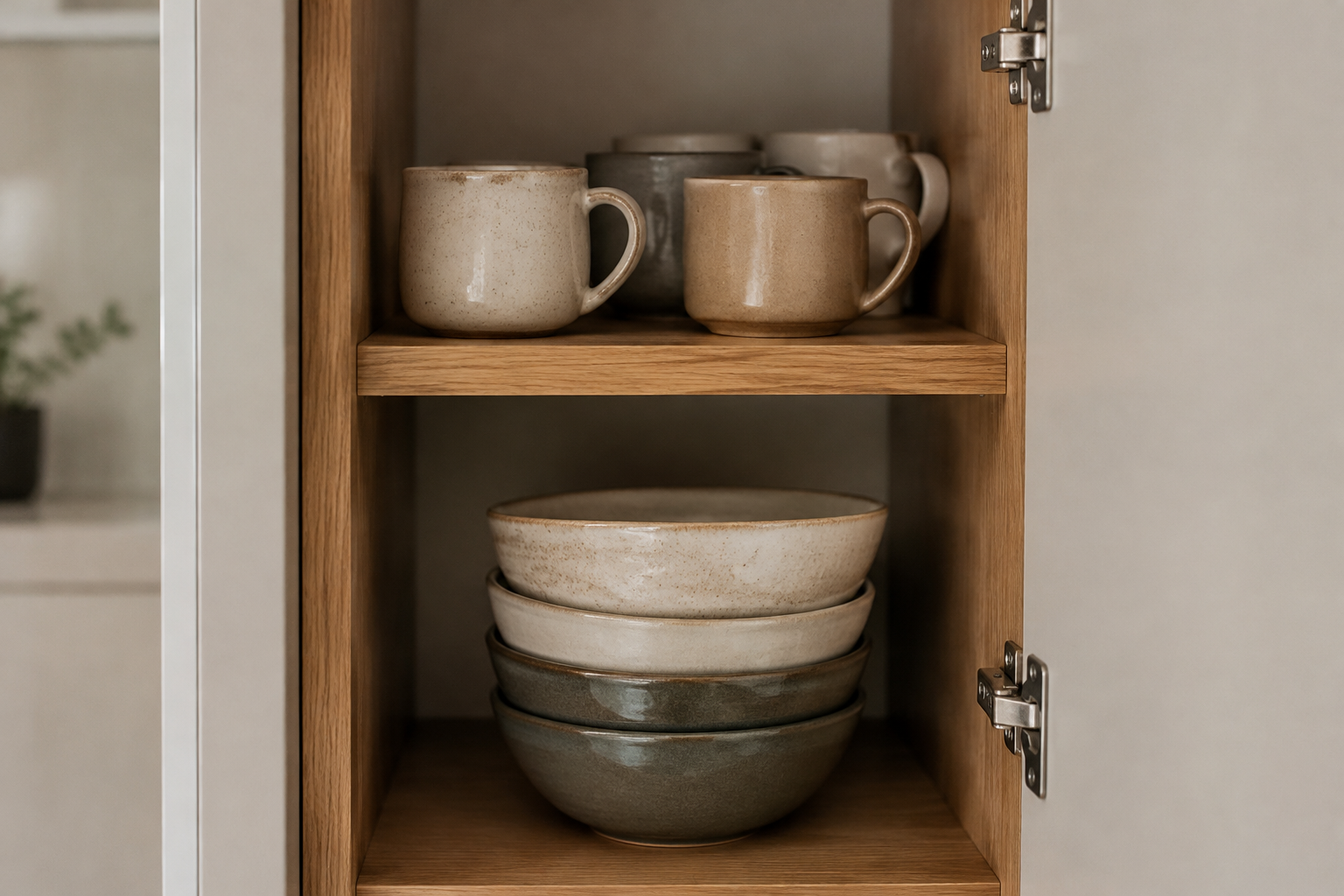
In-Cabinet Half-Shelf Inserts
Add a half-width shelf inside a tall cabinet. It splits one tall gap into two usable levels.
Mugs go above and bowls below, or cans above and boxes below. These inserts need no tools at all.
They are the fastest way to double shelf space.
Drawers That Finally Work
A drawer fails the moment everything slides into one pile. Dividers, layers and inserts fix that in a single afternoon. These eight ideas give every tool a known slot, so you stop digging and start cooking. Measure the inside of each drawer before you buy a single insert.
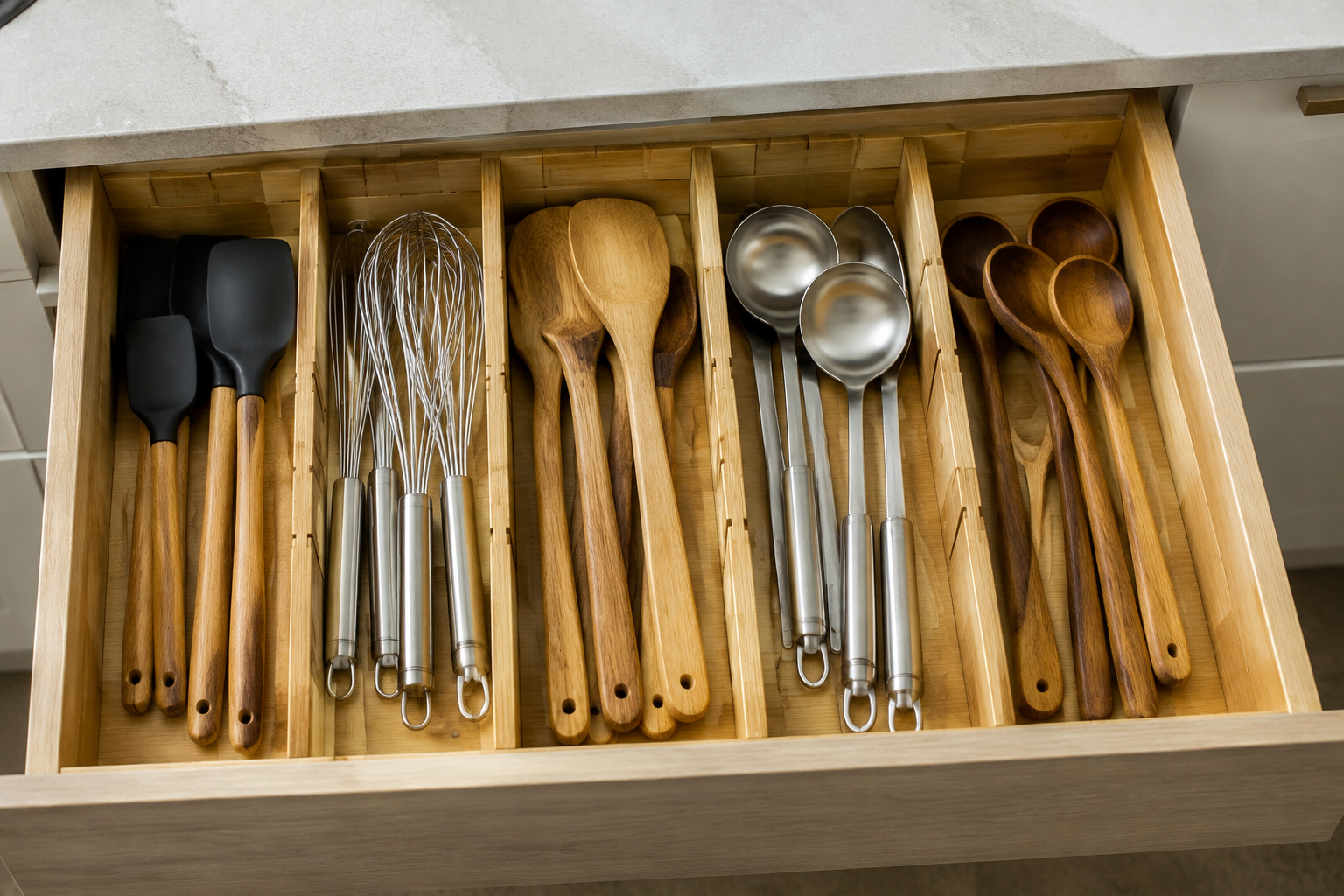
Bamboo Drawer Dividers for Utensils
Loose utensils waste half of every drawer. Adjustable bamboo dividers create a slot for each tool type.
Spatulas stay together and whisks stay together. You grab without digging.
The dividers expand to fit and lift out for cleaning.
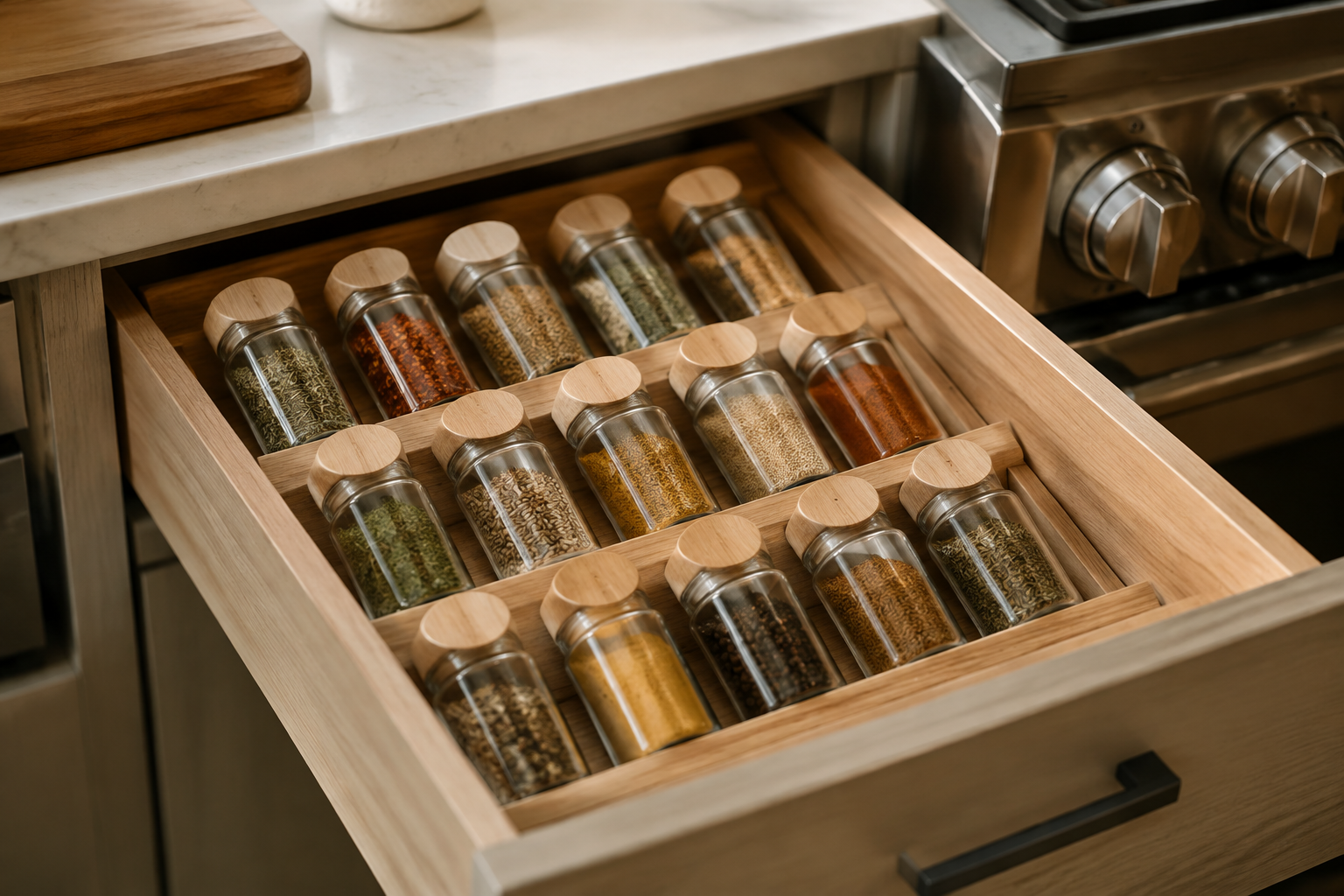
Flat-Lying Spice Drawer Insert
Standing spice jars hide their labels. A flat insert lays them at an angle so every cap reads clearly.
You can see the whole collection in one look. This insert fits a shallow drawer near the stove.
It also stops jars from tipping when the drawer closes.
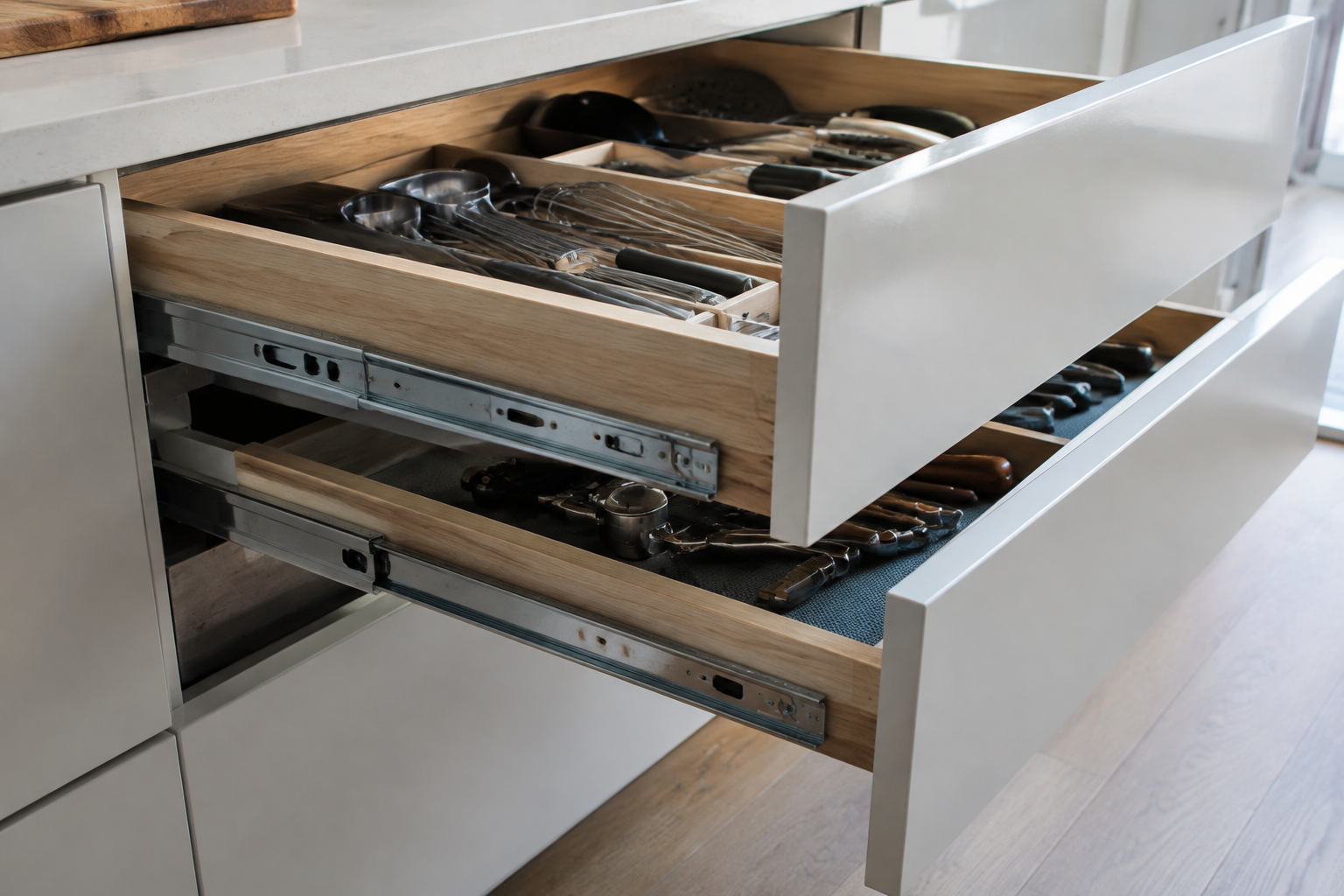
Two-Tier Under-Drawer Tray
A second sliding tray sits below your top drawer. It doubles the storage in the same footprint.
Use the lower level for things you need less often. The upper drawer still closes normally.
This works well in a narrow kitchen where every inch counts.
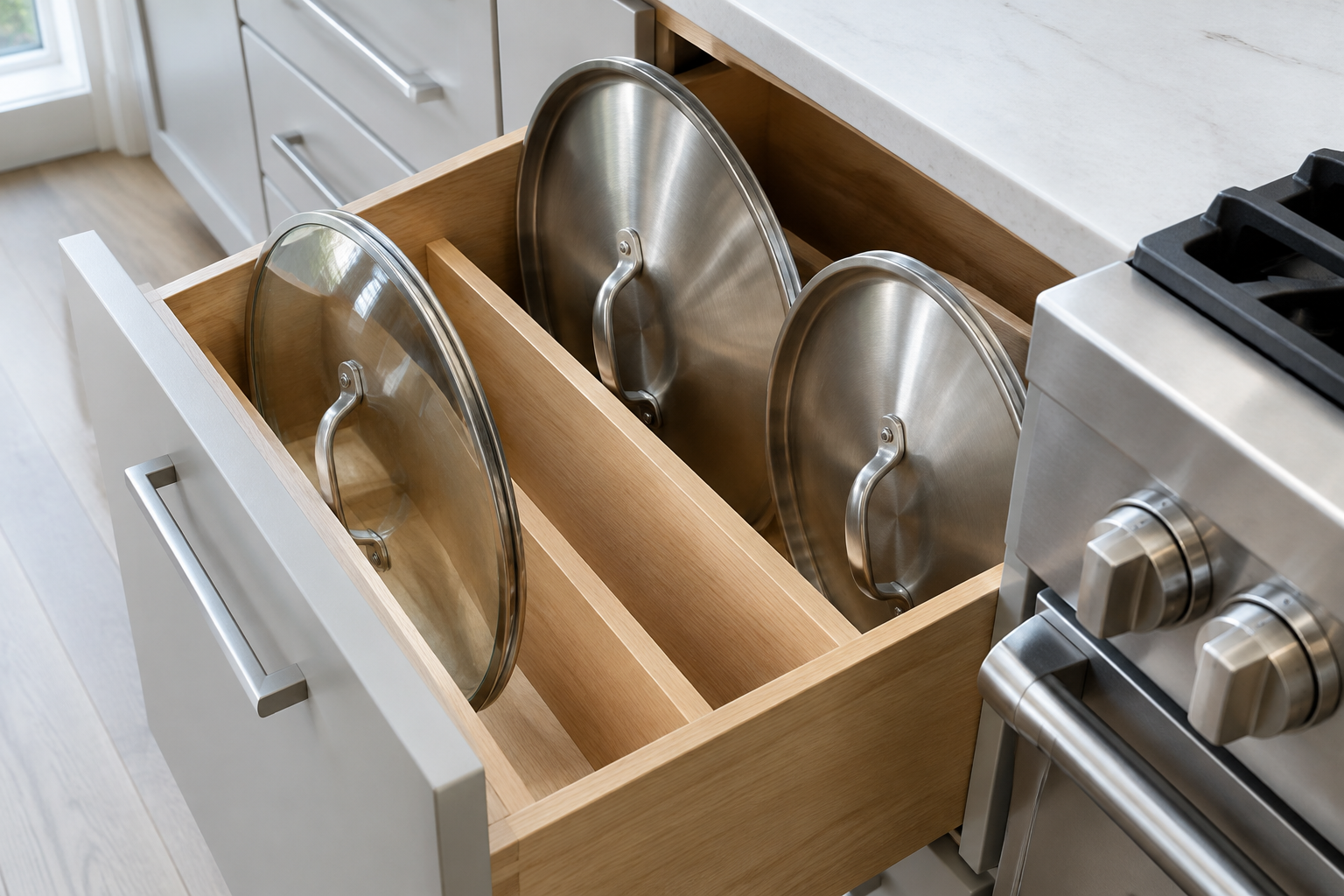
Lid Organizer Drawer Near the Stove
Pot lids are awkward and always in the way. A dedicated lid drawer holds them upright in slots.
Keep it beside the stove so lids travel one step. The drawer stays flat and quiet when it closes.
It also frees the space where lids used to lean.
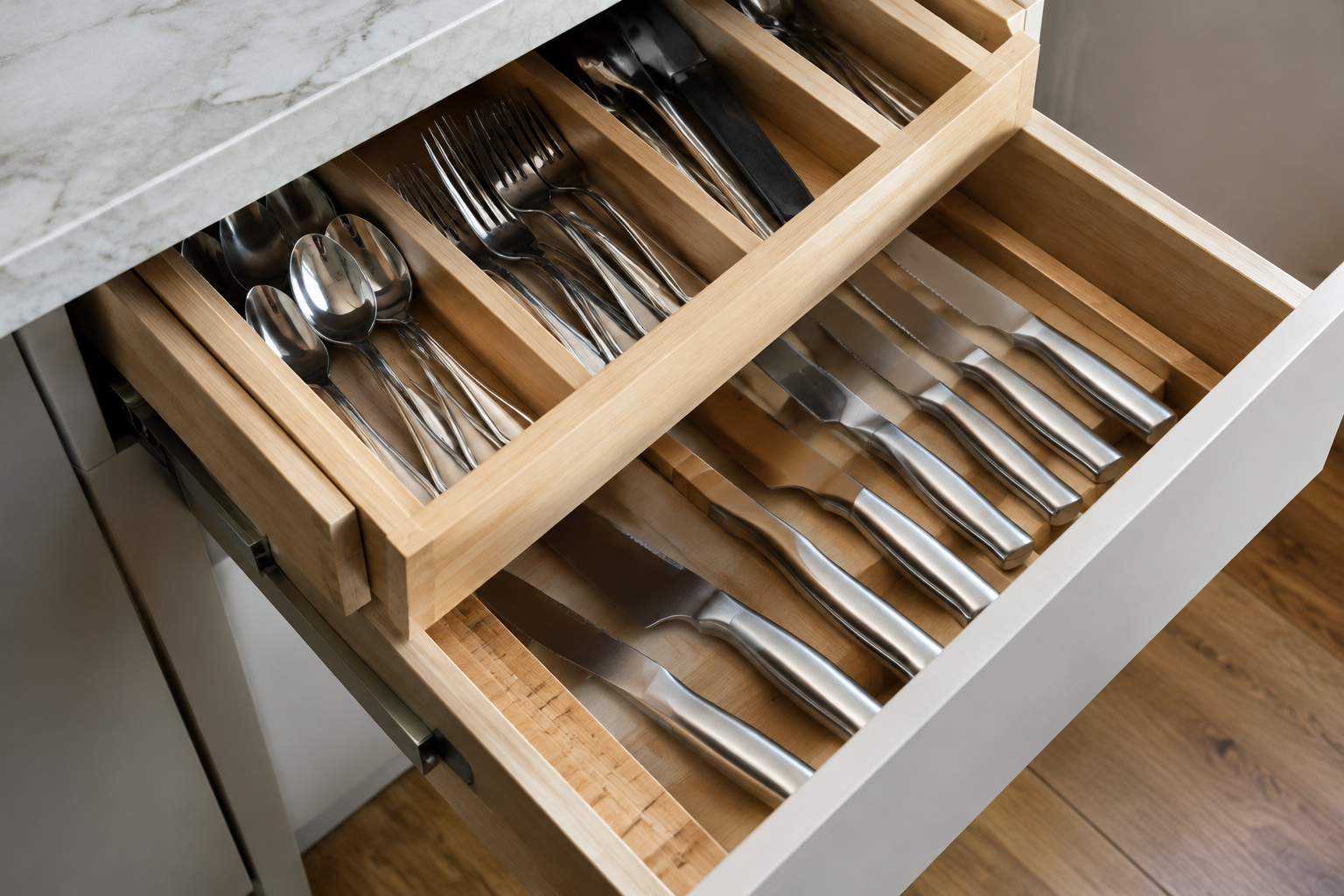
Expandable Cutlery Tray with a Second Layer
A two-layer cutlery tray stacks knives over forks. The upper layer slides back to reach the lower one.
It fits drawers that are too narrow for a full insert. This is a small purchase with a big effect.
Measure your drawer depth before ordering.
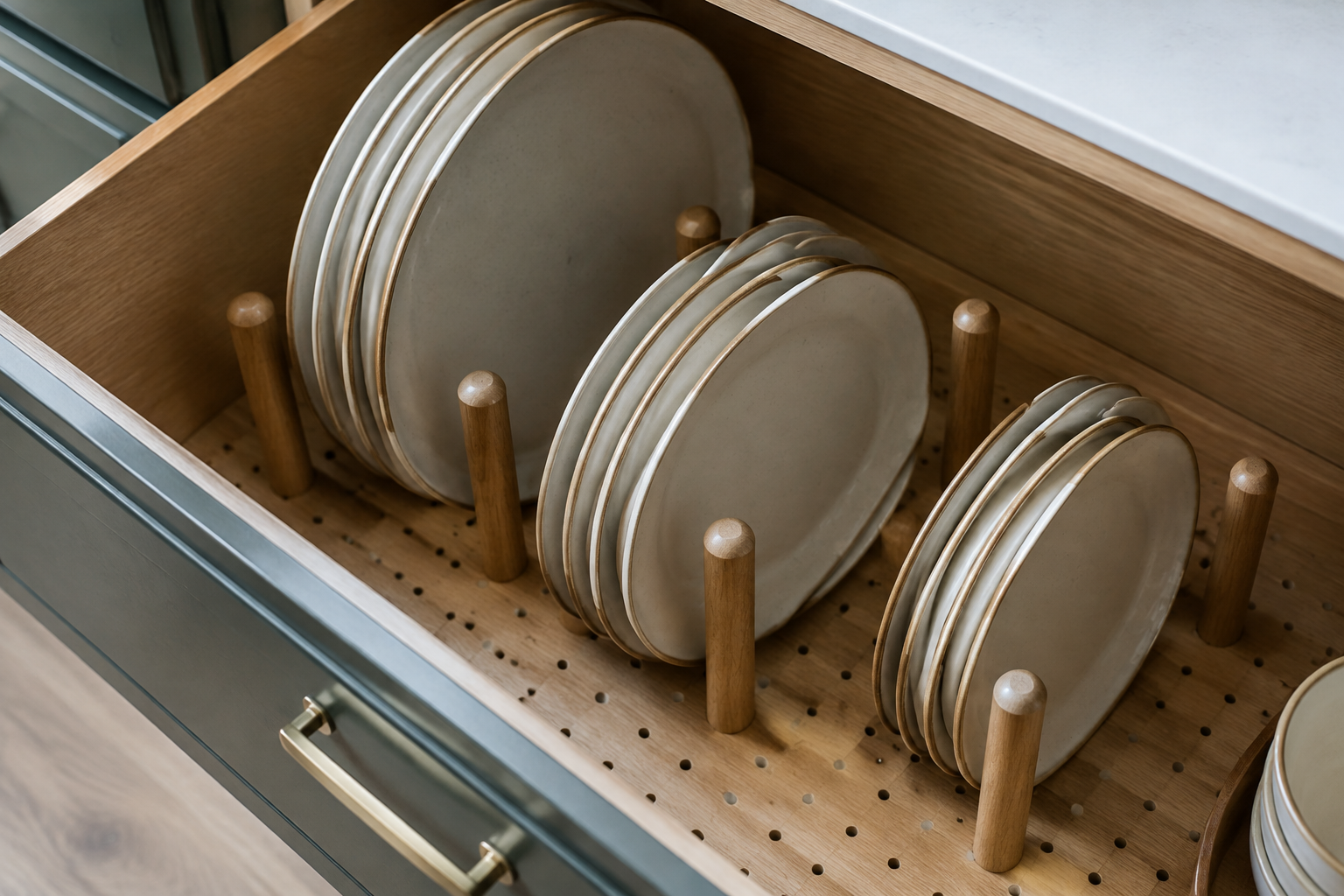
Pegboard Plate Drawer
A pegboard insert in a deep drawer holds plates on edge. Pegs adjust to the size of each stack.
Plates stand upright, so you lift one without moving the rest. It also protects rims from chipping.
This works best in a drawer at hip height.
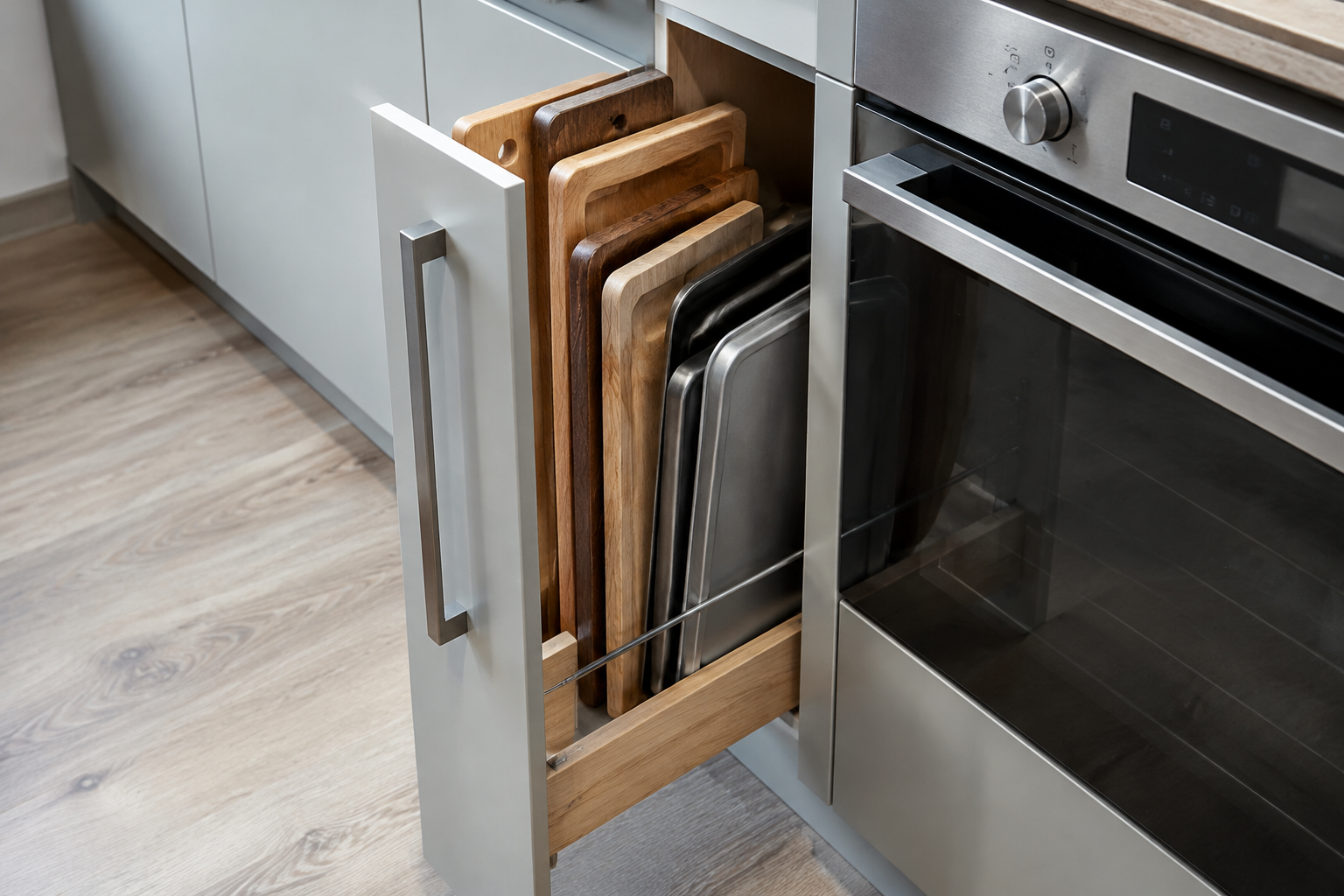
Slim Pull-Out Board Drawer Beside the Oven
The narrow slot beside an oven is often a filler panel. Replace it with a slim pull-out for boards and trays.
It holds them upright and close to where you chop. The drawer pulls out fully for easy loading.
This is a small carpentry job with a large payoff.
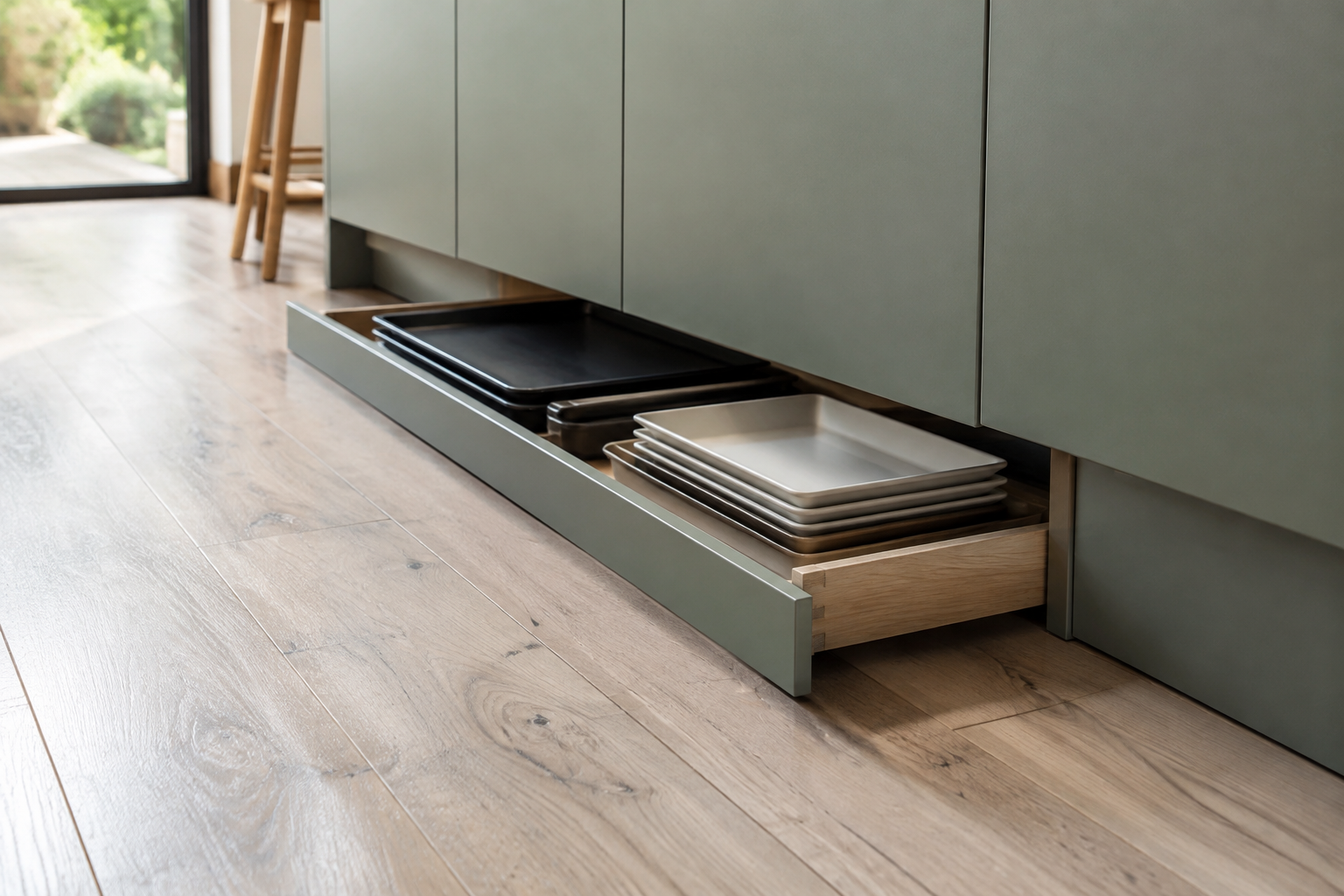
Toe-Kick Drawer Under the Base Cabinet
The four inches under your base cabinets are usually wasted. A shallow toe-kick drawer hides baking trays and flat platters.
It sits where your toes go, so it stays out of the way. Open it with a light push.
This trick adds storage without changing the room.
Sink and Counter Zones
The sink zone collects more objects than any other part of a kitchen. Soap, sponges, boards and bottles all compete for one metre of counter. These ideas move storage up and over instead of sideways. The counter becomes clear prep space again, which is the whole point.
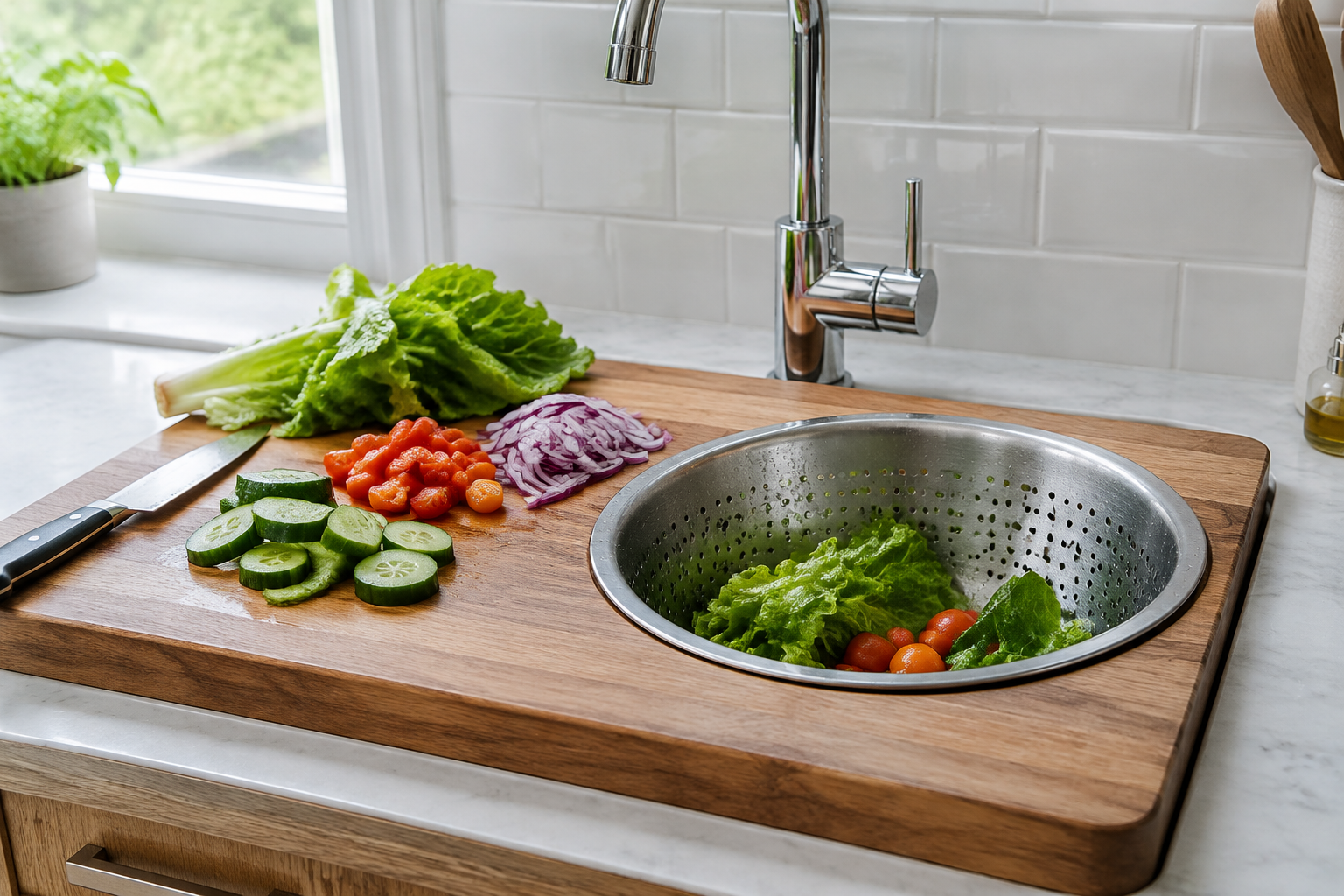
Over-the-Sink Cutting Board with Colander
A board that fits over the sink adds prep space instantly. Some versions include a colander cut into the surface.
You chop, rinse, and drain in one spot. Nothing rolls onto the floor.
Store it upright behind the faucet when you finish.
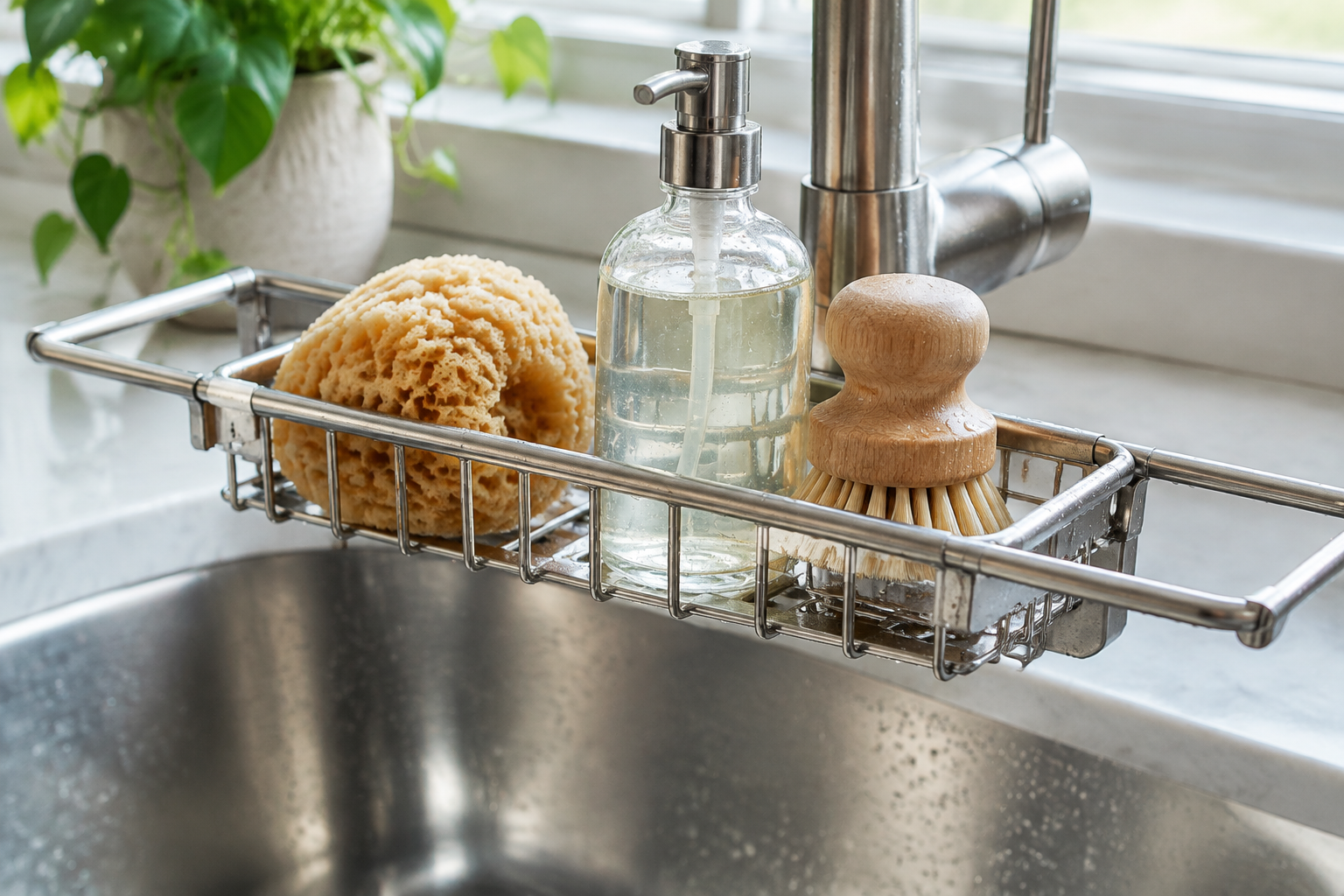
Expandable Sink Caddy Over the Faucet
A caddy that spans the faucet holds sponges, soap, and brushes. It lifts everything off the counter edge.
Water drips straight into the sink instead of pooling. The arms expand to fit most sink widths.
Choose one with a removable tray for cleaning.
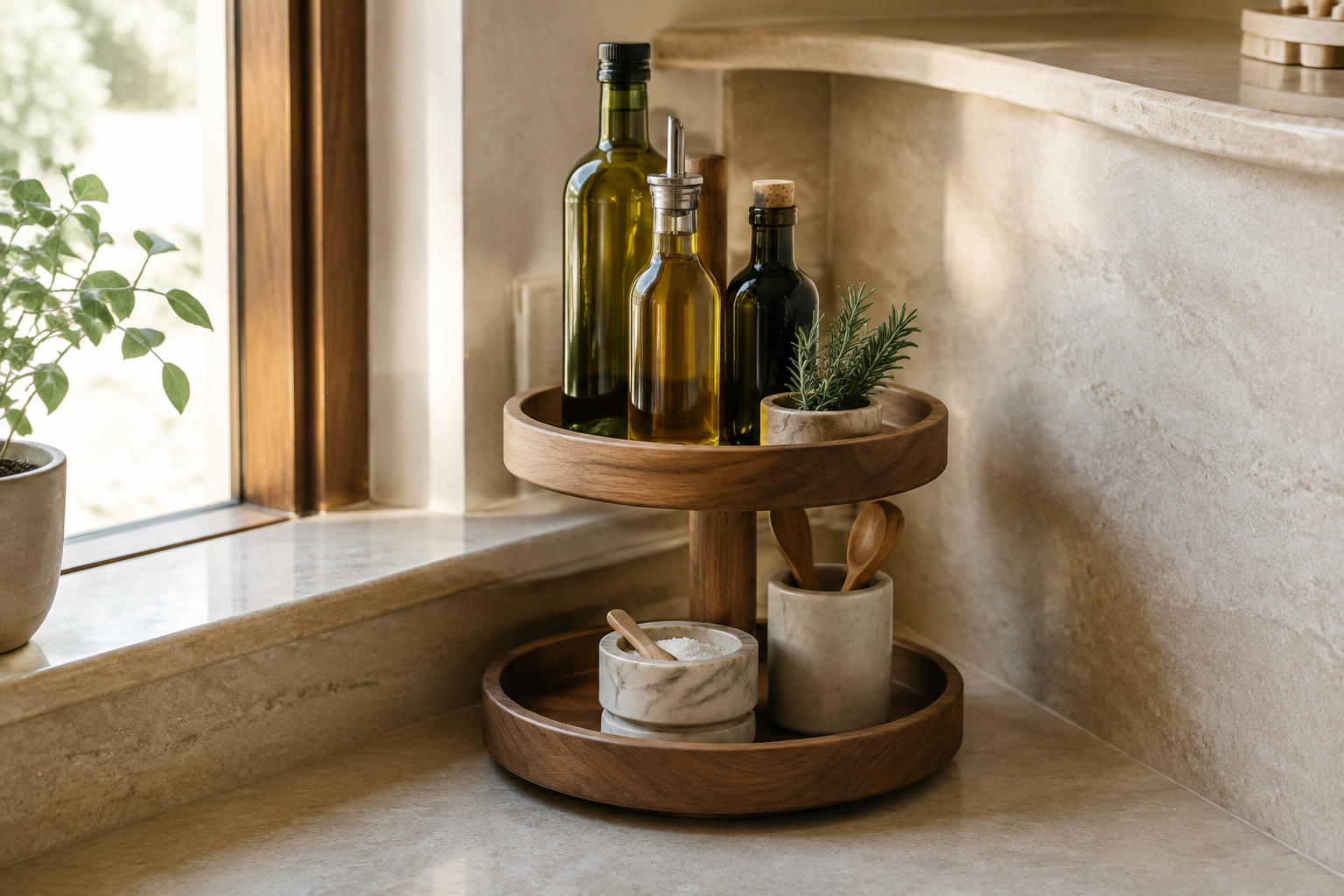
Corner Counter Carousel
A round carousel in the corner counter holds oils, salt, and utensils. The corner is usually the hardest spot to use.
A round tray makes it reachable with one twist. Keep it small so it never crowds the prep zone.
This is one of the few corner solutions that needs no renovation.
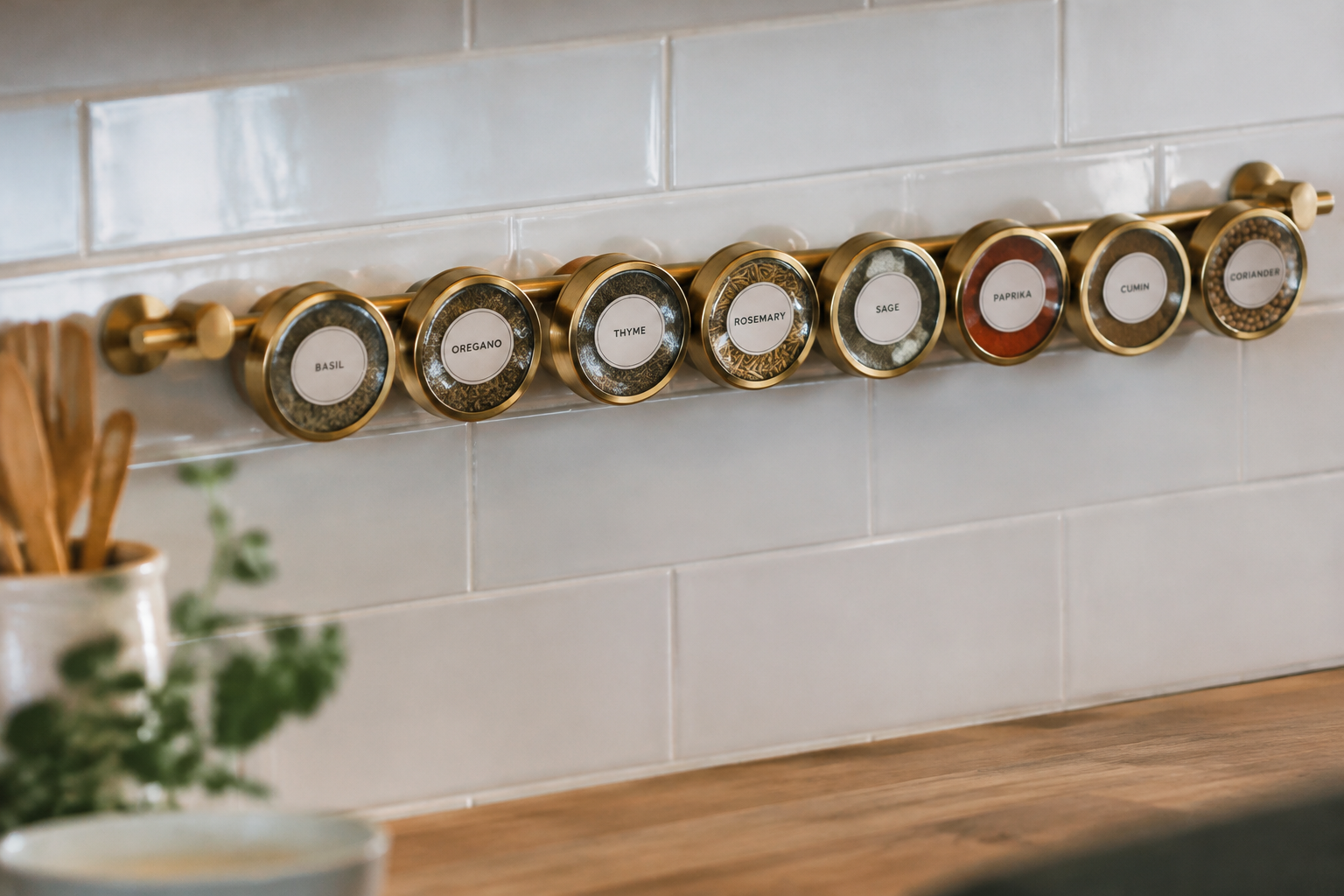
Magnetic Spice Jars on a Backsplash Rail
A slim rail on the backsplash holds magnetic spice tins. They sit at eye level and stay off the counter.
Labels face out so you grab the right jar fast. The rail takes up less depth than a shelf.
It also looks intentional rather than cluttered.
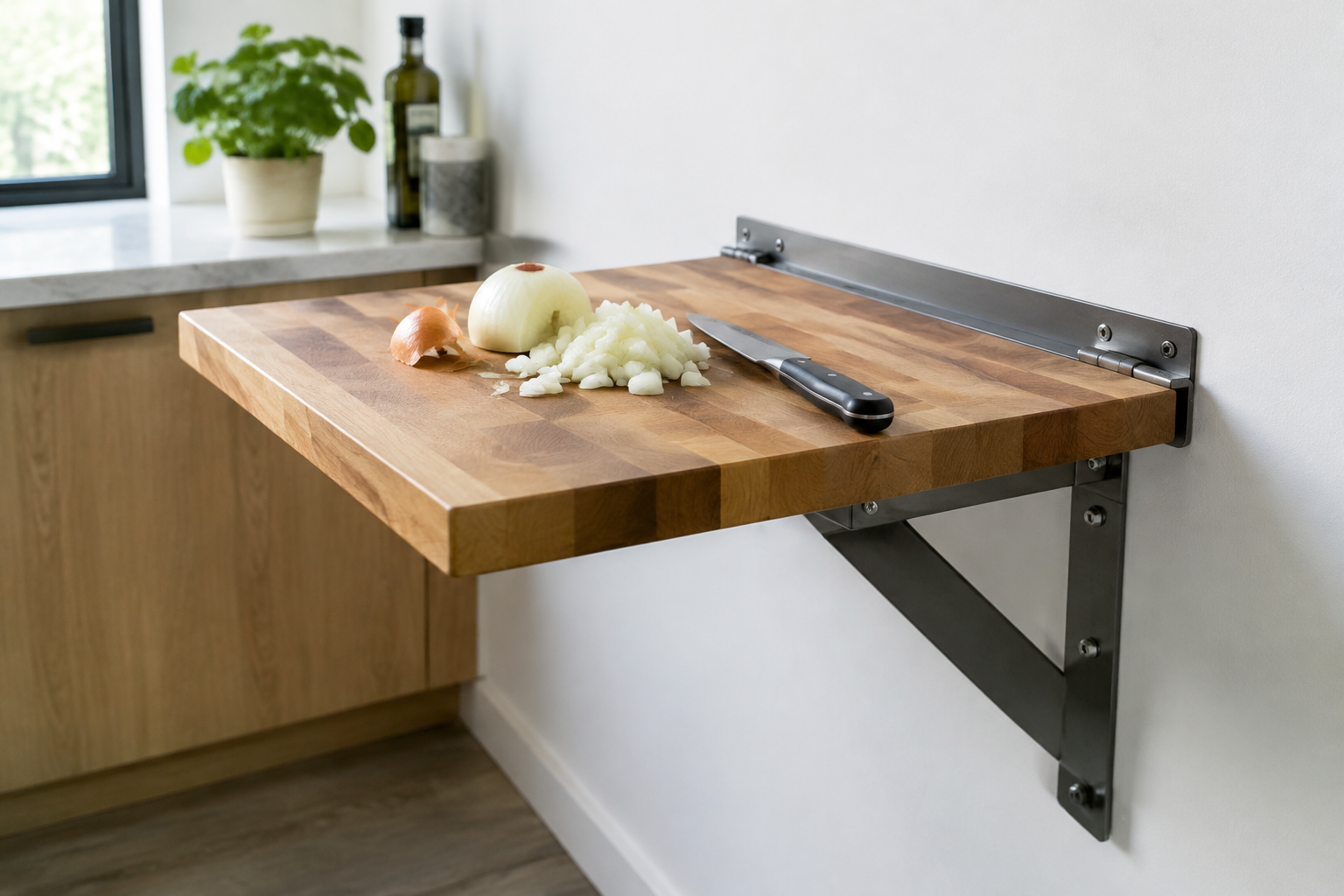
Fold-Down Butcher Block Prep Shelf
A hinged board folds down from the wall when you need it. It becomes a small prep shelf above the counter.
Fold it up and the space disappears again. This suits kitchens where the counter is always full.
Use a sturdy bracket rated for chopping pressure.
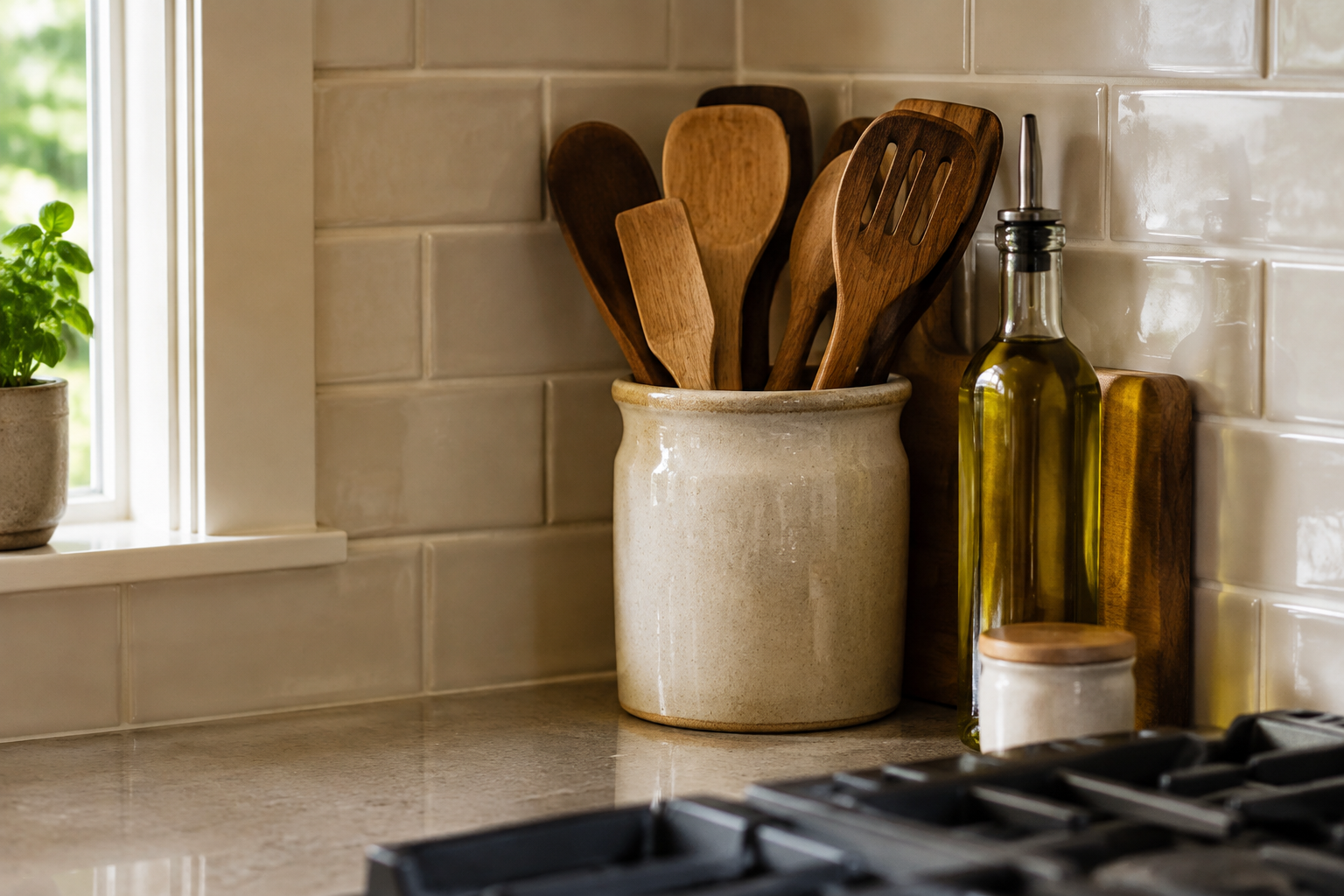
Corner Utensil Crock Triangle
Slide a crock into the back corner behind the stove. The triangle of counter there is usually unusable.
A crock turns it into a home for spatulas and spoons. Keep it away from the flame and the sink splash.
It frees a full drawer for other tools.
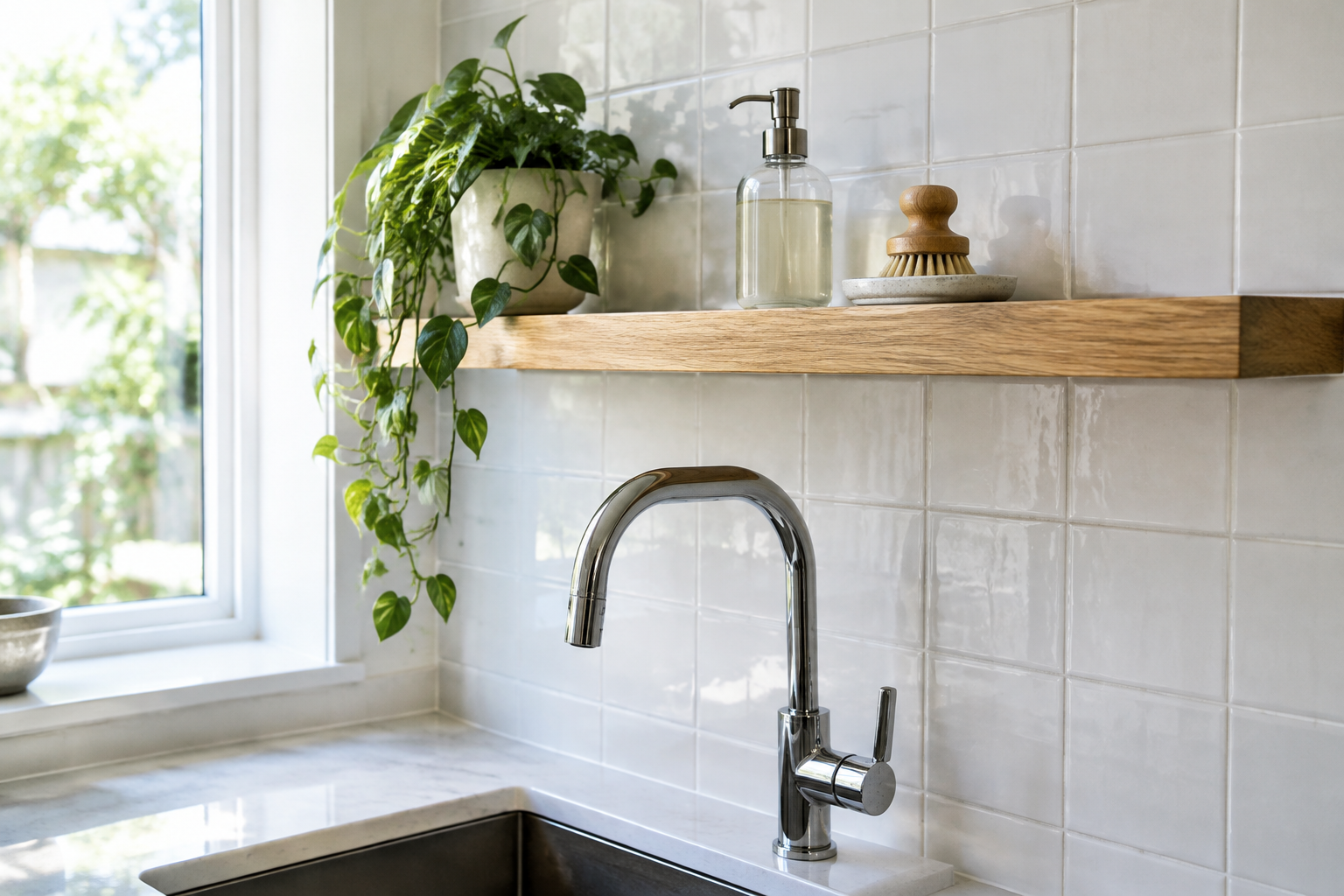
Floating Shelf Over the Sink
The wall above the sink is often bare. A shallow floating shelf holds soap, scrubbers, and a small plant.
Keep it high enough to clear the faucet arc. Use it for light items so it never feels heavy.
It also frames the window nicely.
Pantry and Pull-Outs
Dry storage decides how a small kitchen feels day to day. When cans and boxes line up in rows, cooking is faster and shopping is smarter. These pull-outs and racks turn narrow gaps into real pantry space, and most need no demolition. Measure your widest gap first and start there.
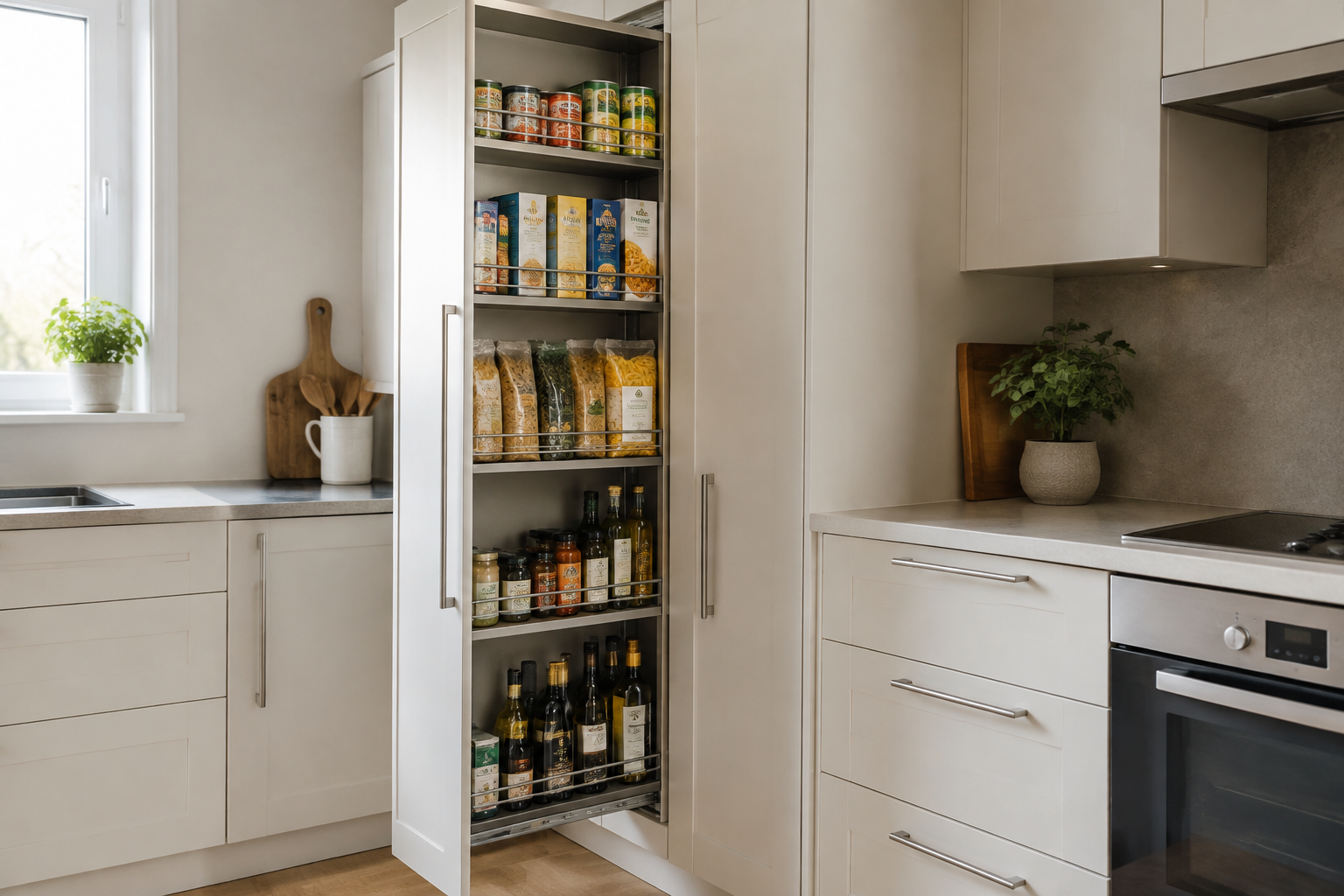
Twelve-Inch Pull-Out Pantry Column
A full-height pull-out column fits in twelve inches of width. It holds cans, boxes, and bottles in tidy rows.
Everything rolls out into the room for a full view. Nothing hides behind anything else.
This is the single biggest upgrade for dry storage in a small kitchen.
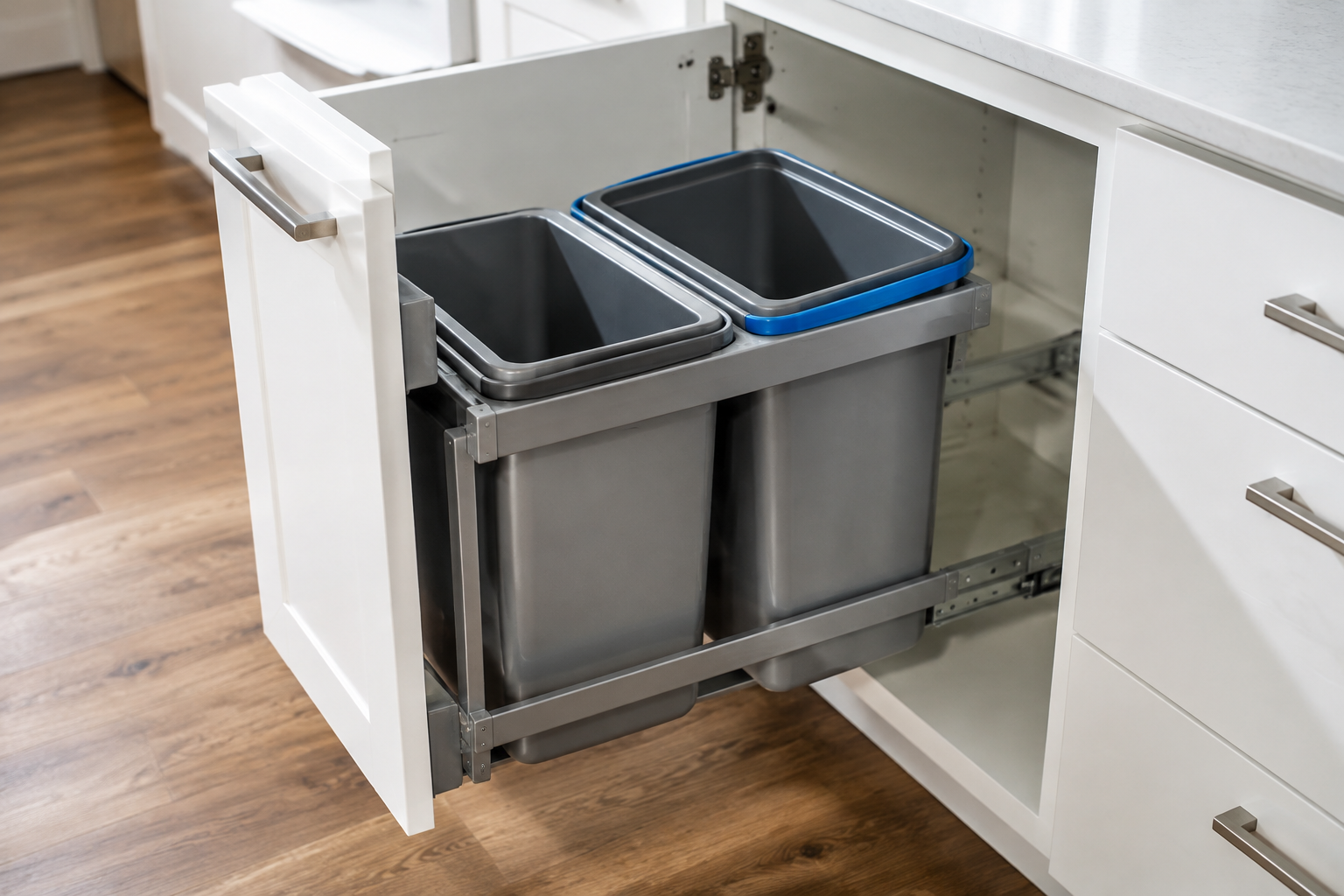
Pull-Out Double Bin Under the Counter
Two bins on one sliding frame handle rubbish and recycling. They tuck under the counter and slide out when needed.
The cabinet door hides the mess. Choose soft-close runners so the frame never slams.
Measure your bin height against the cabinet opening.
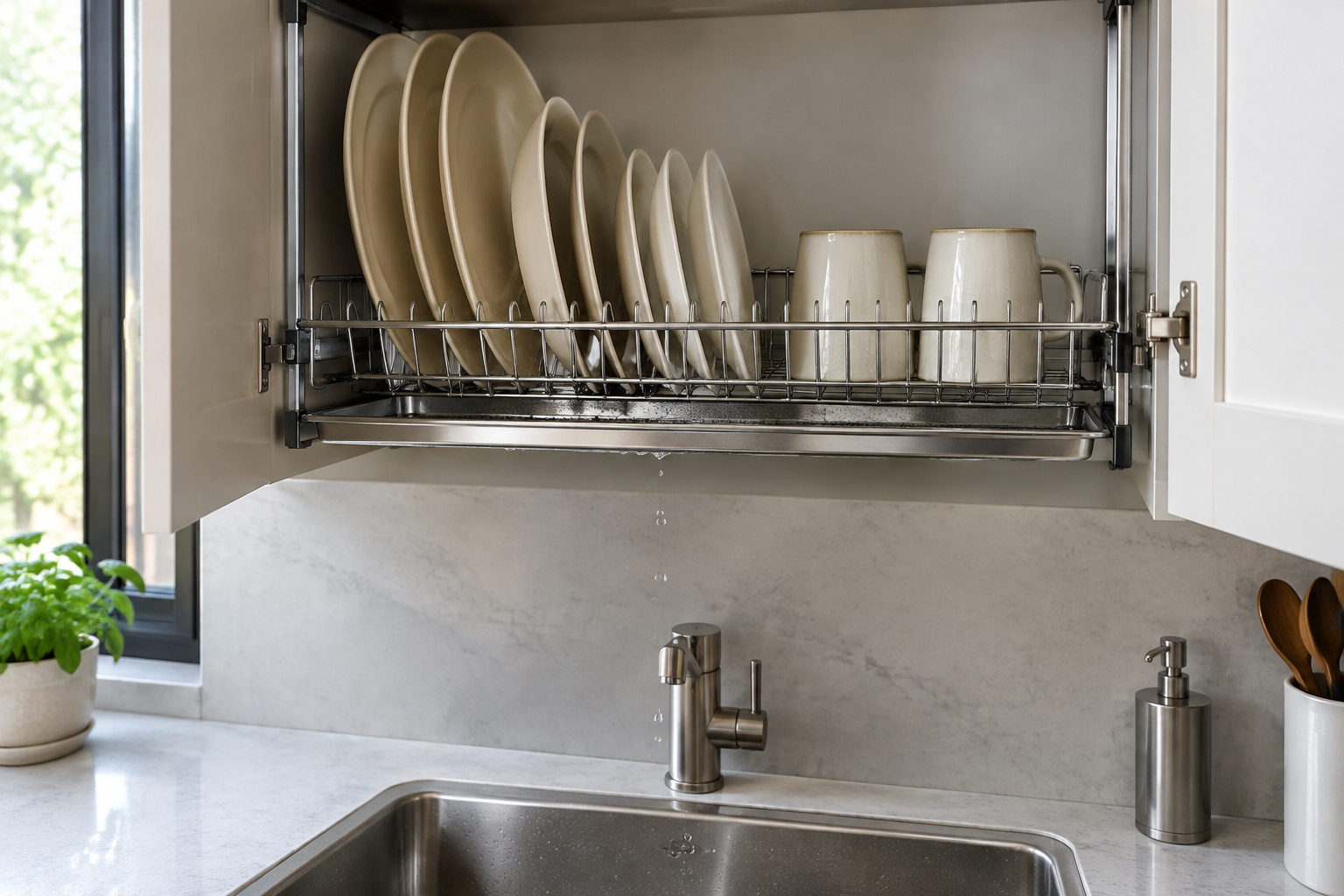
In-Cabinet Dish Drying Rack Above the Sink
Mount a drying rack inside the cabinet above the sink. Plates and cups drip straight into the basin below.
The counter stays clear of a permanent rack. Dishes are out of sight the moment the door closes.
Check that the cabinet base can handle the moisture.
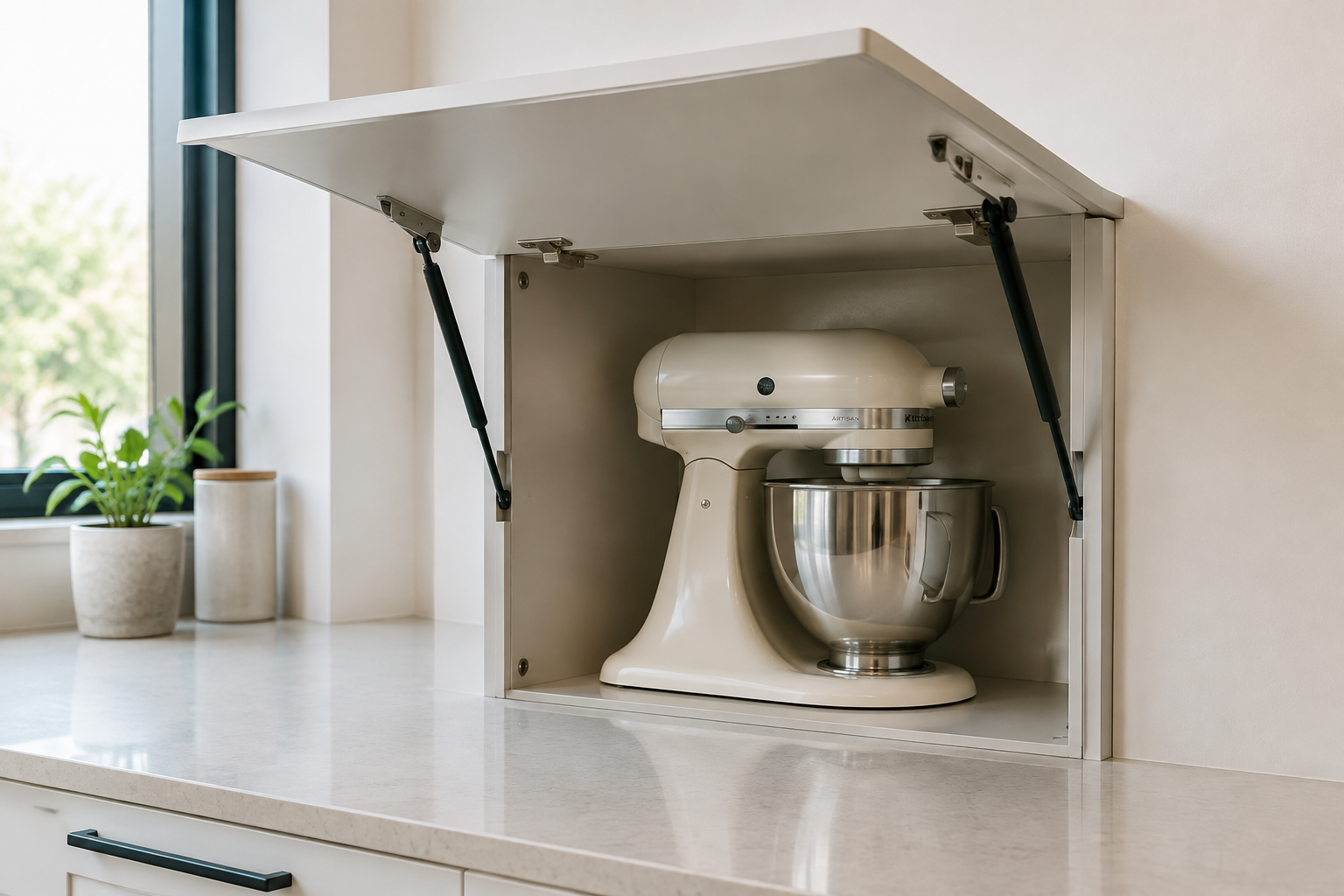
Appliance Garage for the Stand Mixer
A lift-up door hides the stand mixer on the counter. Close it and the counter looks empty.
The mixer stays plugged in and ready. This works on any counter with a spare corner.
Choose a lift-up style so the door never blocks your work.
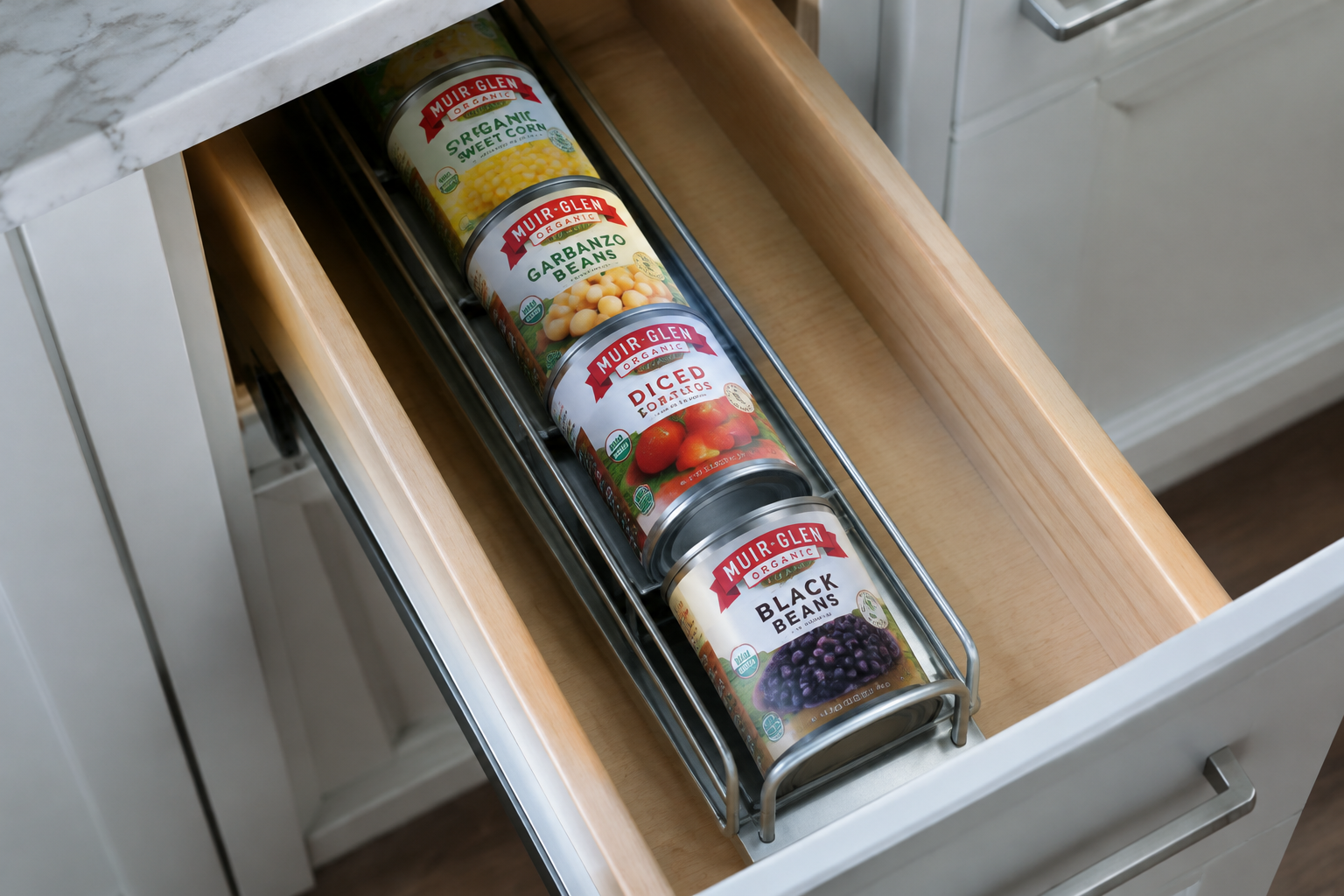
Slim Can Dispenser Drawer
A narrow dispenser drawer holds cans in a single row. Gravity feeds the next can forward as you take one.
It fits the slim gap beside a base cabinet. Labels stay visible and nothing rolls.
It is the tidiest way to store cans in a tight kitchen.
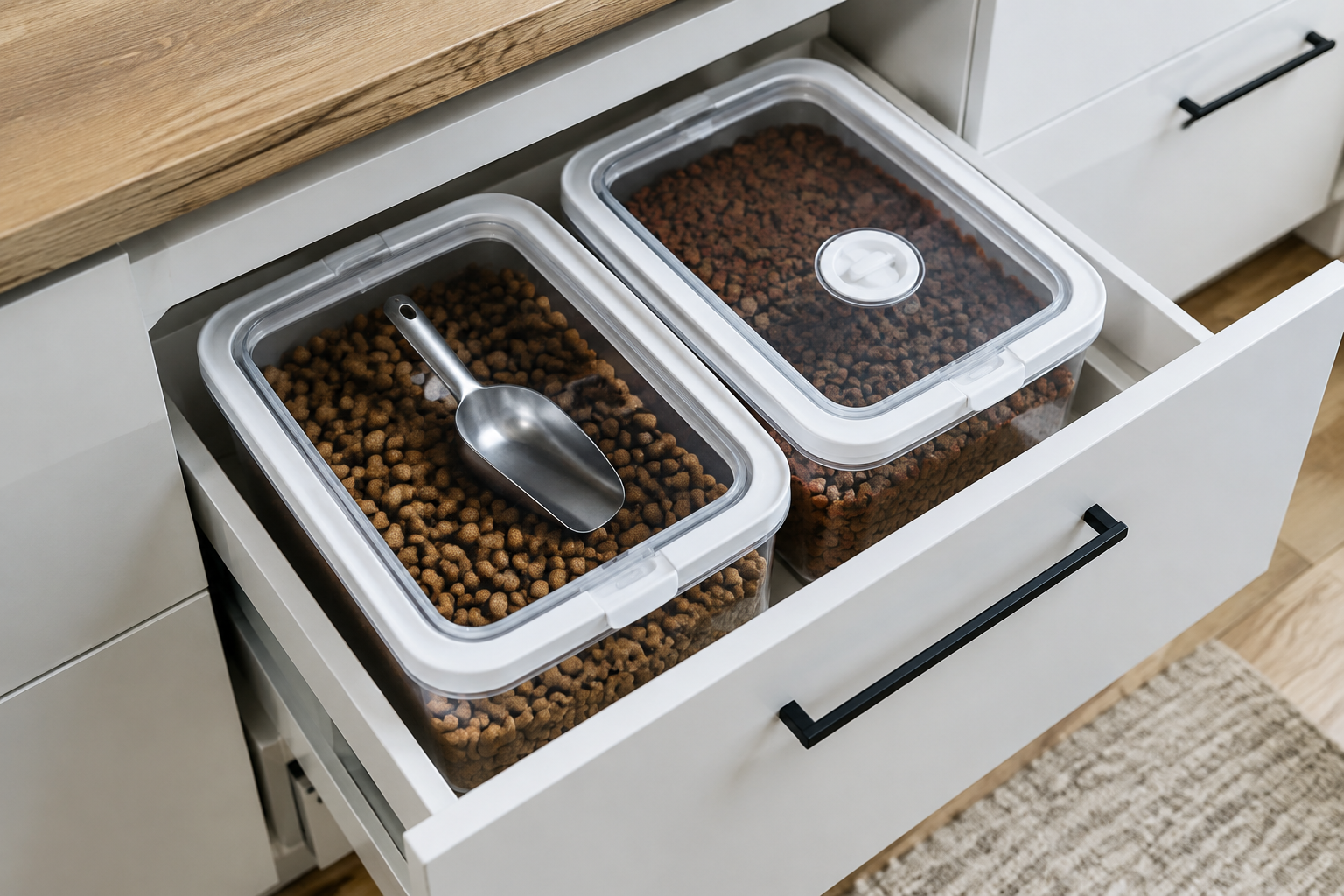
Pull-Out Pet Food Drawer
A deep drawer with two sealed bins stores pet food out of sight. Scoop from the bin without lifting a heavy bag.
The lid keeps smells inside. This keeps bowls and bags off the kitchen floor.
It also protects the food from humidity.
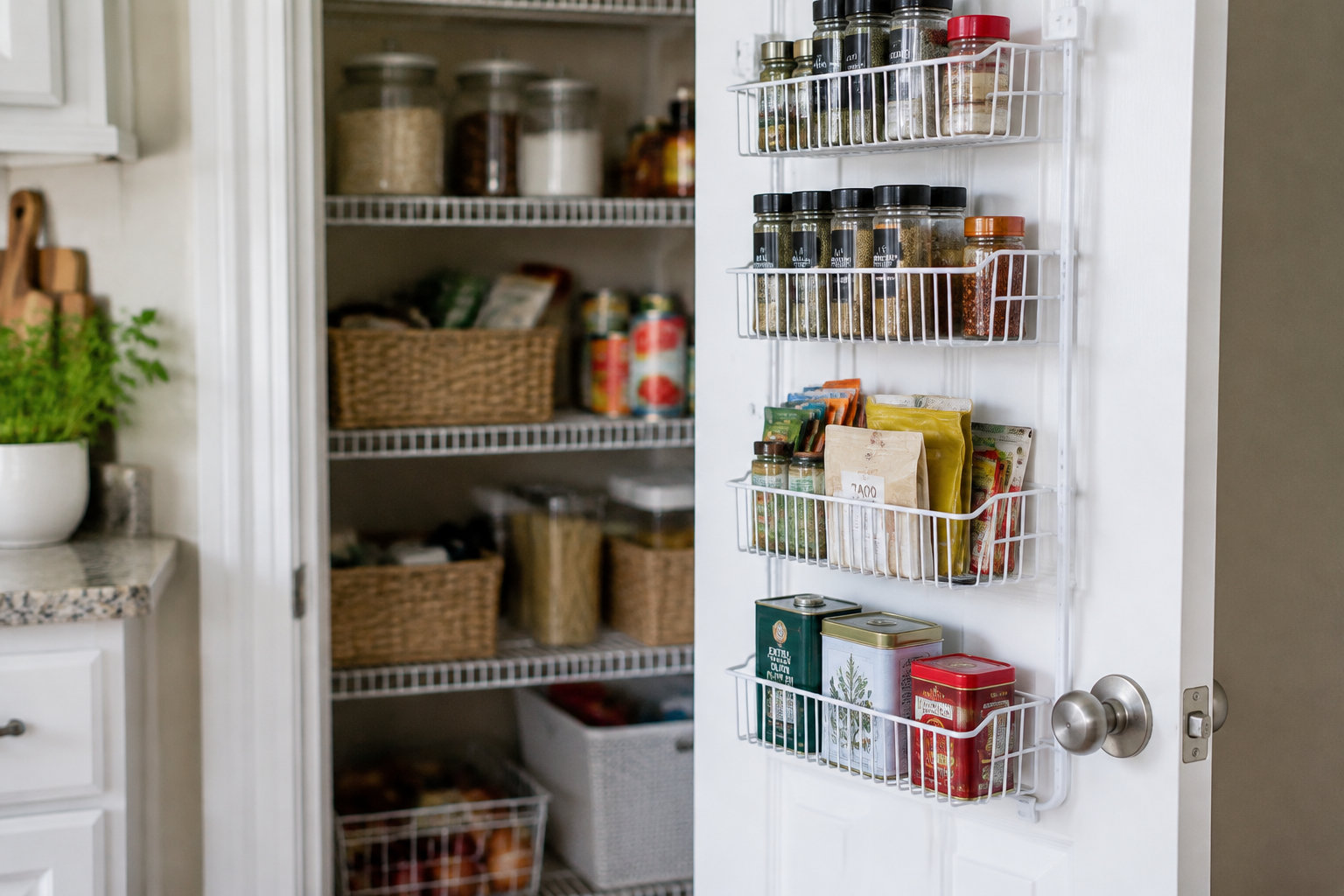
Wire Rack on the Pantry Door
A wire rack on the pantry door adds a full extra shelf of storage. Small jars and packets fit in the baskets.
The rack uses the door, not the floor space. Make sure the door still closes with the rack loaded.
This is the cheapest pantry upgrade available.
Fridge, Freezer and Appliances
The space around the fridge is usually dead space. A side panel, a top gap and a narrow slot can together hold a surprising amount. These ideas use surfaces you already own. None of them block the door, the walkway or the airflow the fridge needs.
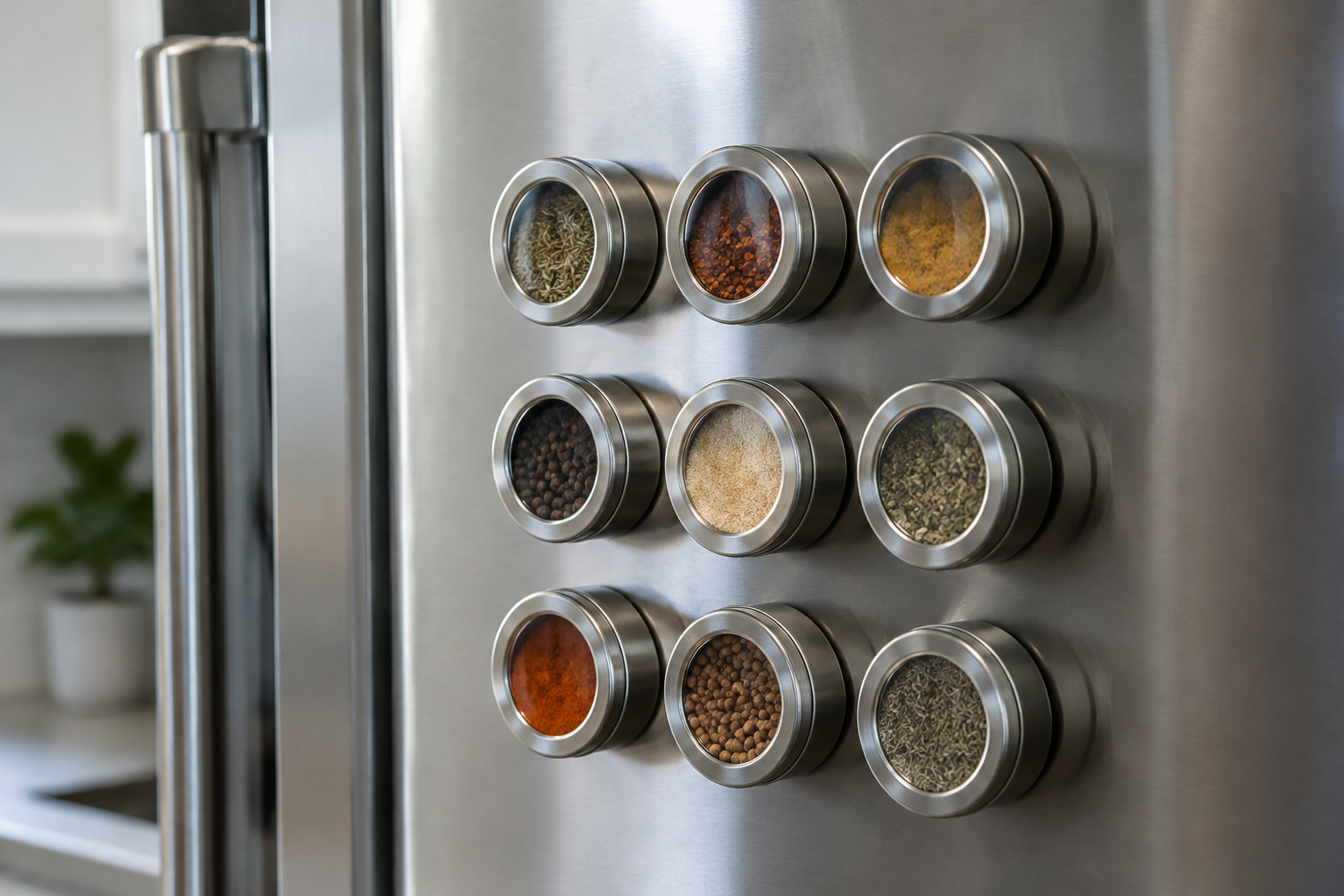
Magnetic Spice Tins on the Fridge Panel
Stick small magnetic tins to the side of the fridge. Use them for the spices you reach for daily.
They are visible, labelled, and off the counter. The fridge panel is usually empty and close to the stove.
Group them by cuisine so you grab faster.
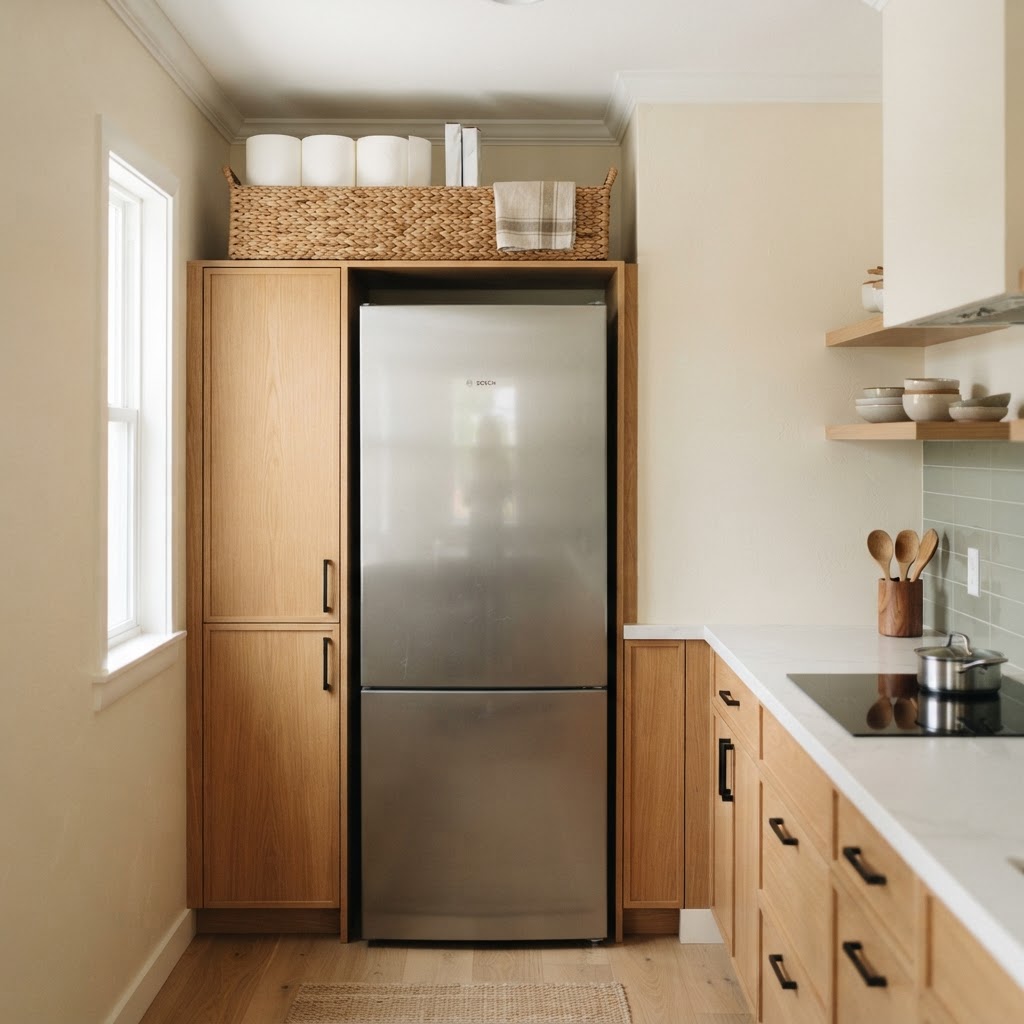
Basket on Top of the Fridge
The gap above the fridge is deep and forgotten. One long basket there holds paper towels, spare foil, and party supplies.
Group by purpose, not by shape. A single basket looks tidy and hides the mess.
Use a step stool only when you need the contents.
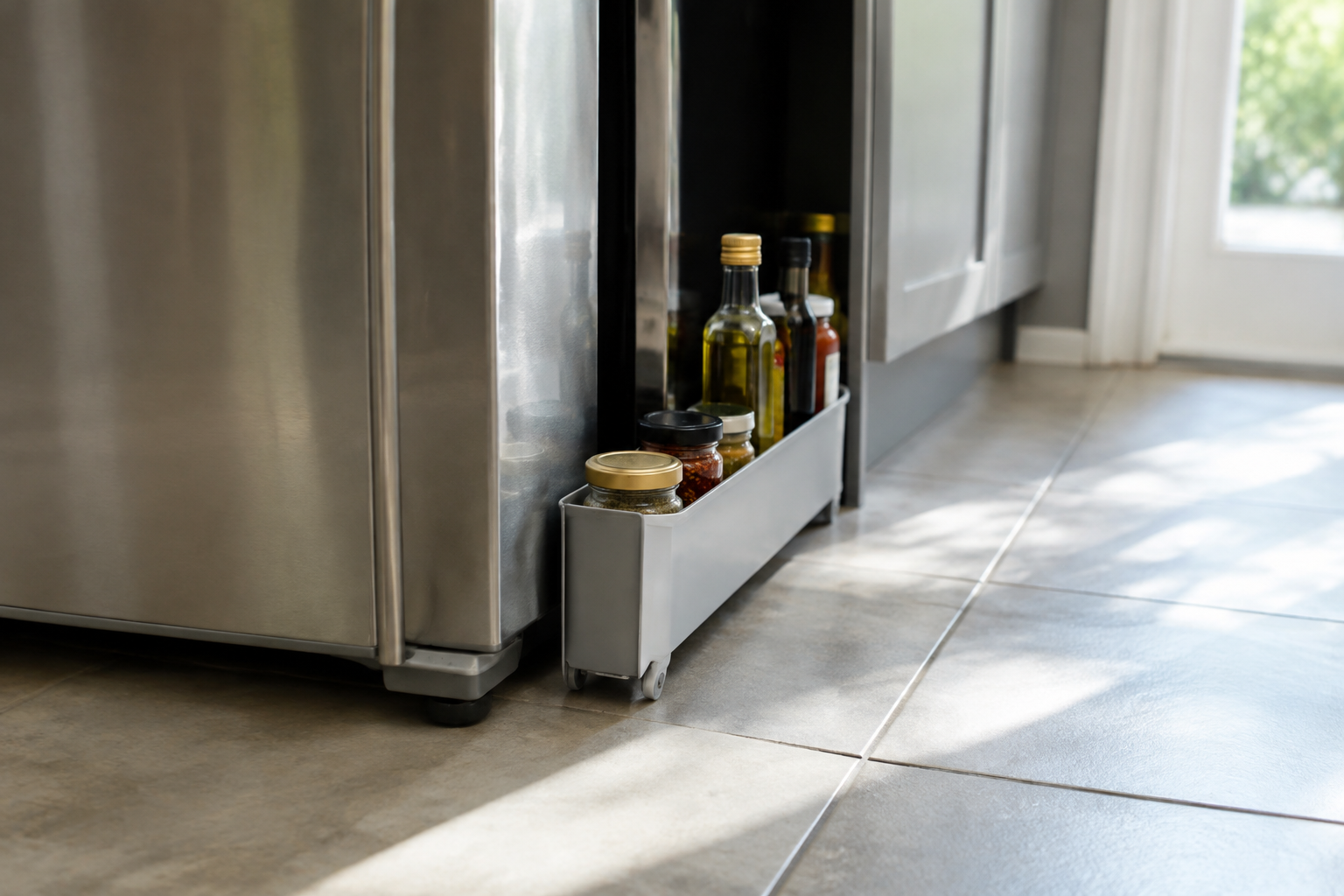
Slim Rolling Tray Under the Fridge
A low rolling tray slides under the fridge if there is a gap. It holds spare bottles, jars, and cleaning supplies.
Pull it out with one finger. Nothing gets lost in that dark slot.
Measure the clearance before you buy anything.
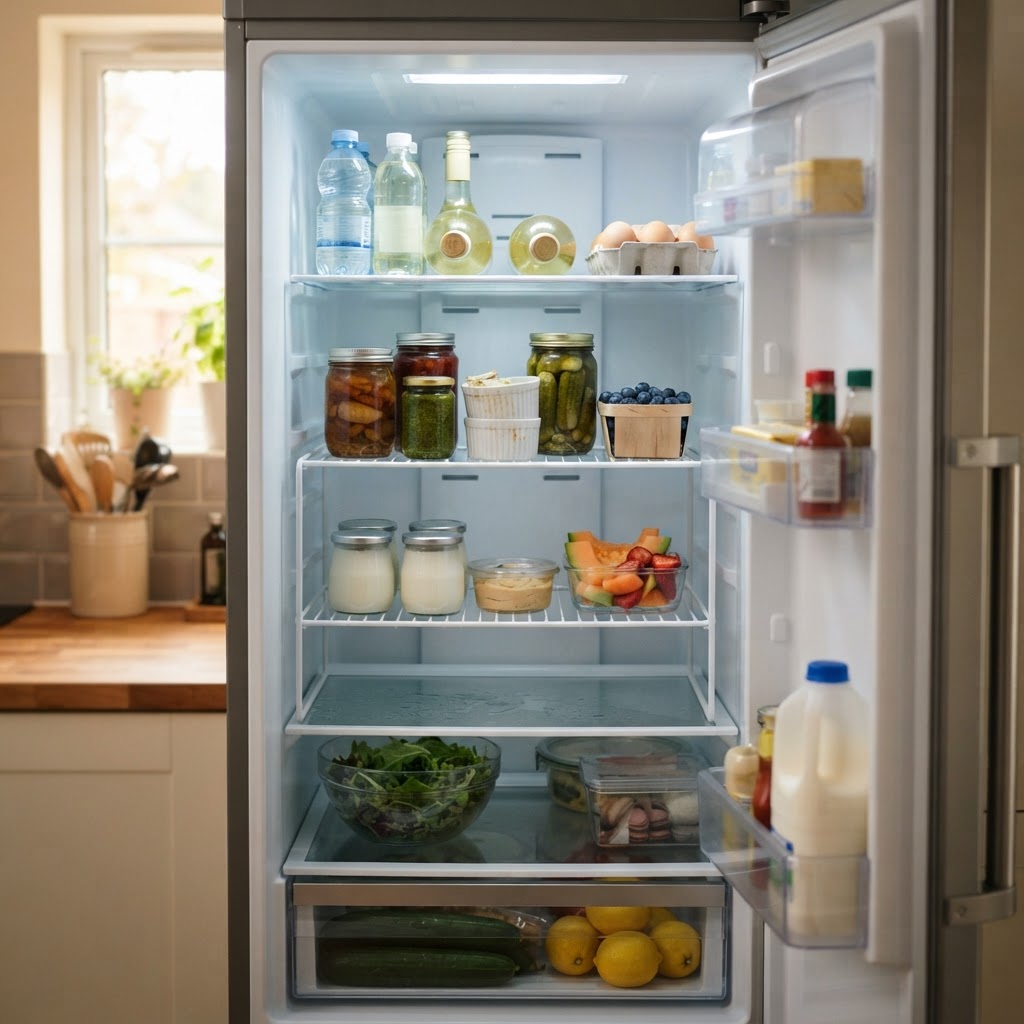
Stacking Racks Inside the Fridge
Wire stacking racks double the shelf space in the fridge. Bowls go under and plates go on top.
Airflow still reaches everything, so food stays cold. You can see the whole shelf at once.
This is the fastest fix for an overflowing fridge.
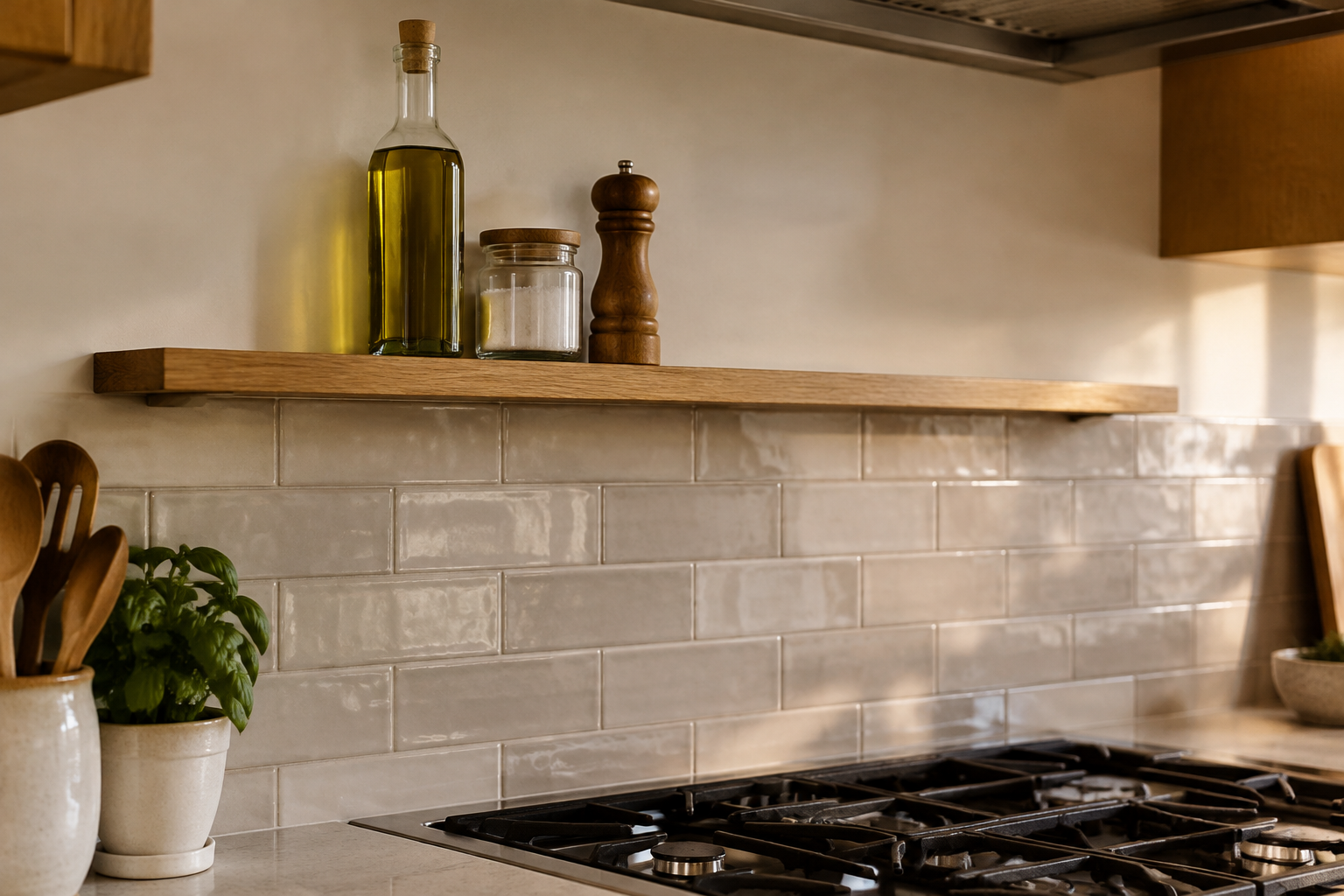
Over-the-Stove Shelf for Oil and Salt
A slim shelf above the stove holds oil, salt, and pepper. These are the things you grab mid-cook.
Keep it shallow and away from direct flame. Only put heat-safe items up there.
It removes three bottles from the counter at once.
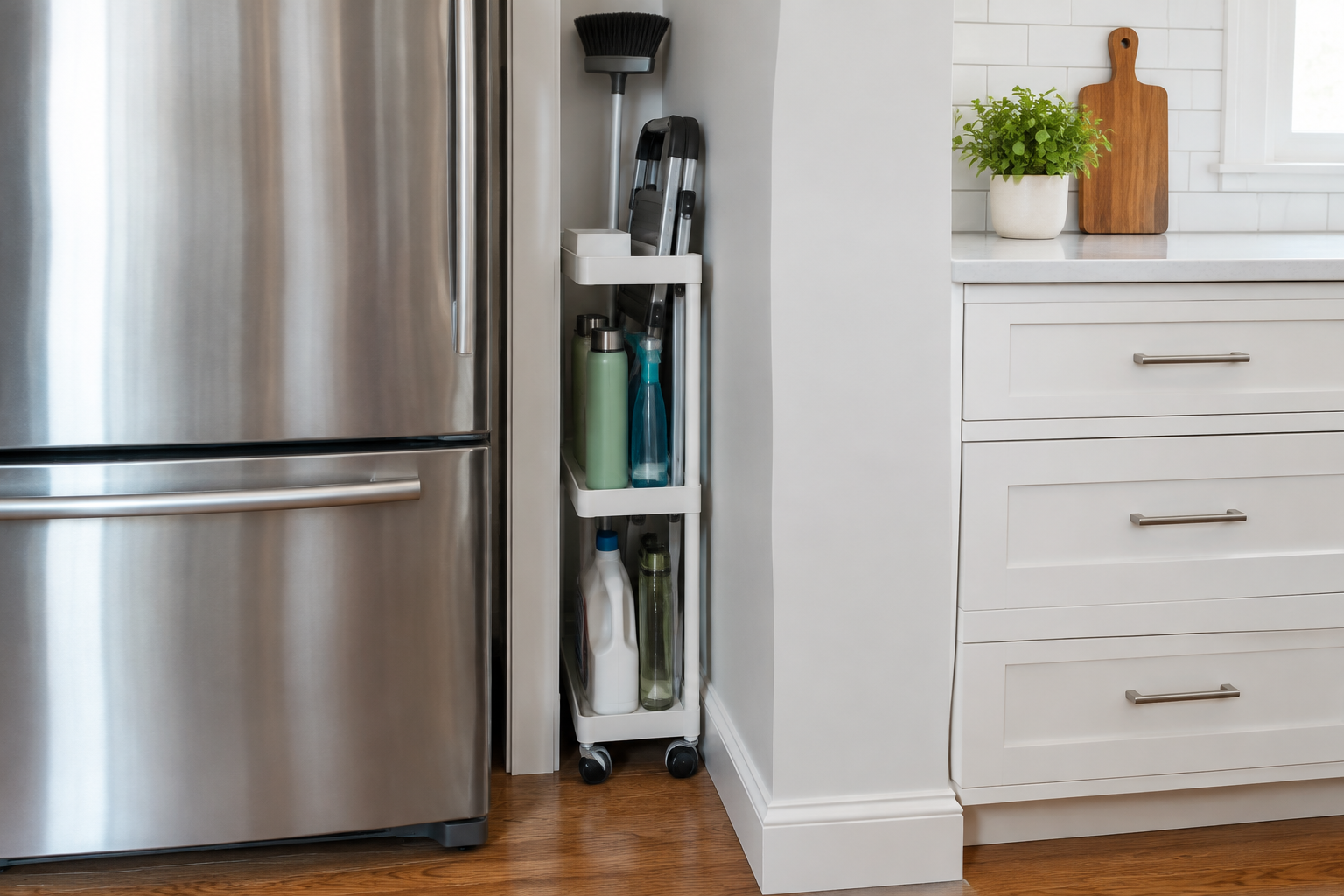
Slim Cart in the Fridge-to-Wall Gap
A narrow rolling cart fits the gap between fridge and wall. It holds brooms, bags, and tall bottles.
Roll it out for cleaning day. This turns a dead slot into working storage.
Look for one with locking casters so it stays put.
Hanging, Rolling and Moveable
Some storage should move with you. A cart, a rack and a hook station solve problems that fixed cabinets cannot. These pieces work hard in a small room and pack away when guests arrive. Choose locking wheels so nothing drifts while you chop.
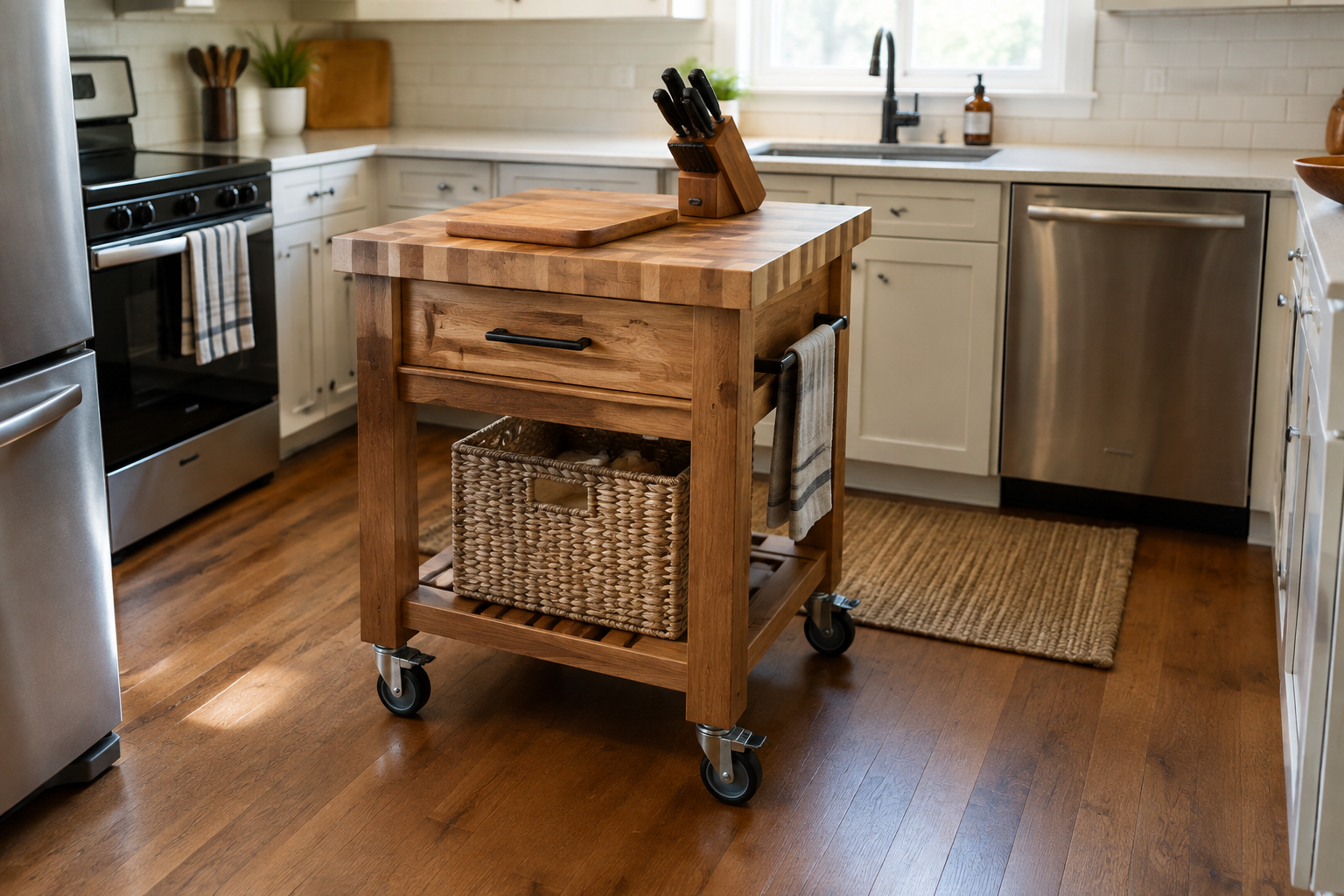
Rolling Cart as a Moveable Island
A butcher-block cart becomes an island when you need one. Roll it to the stove for prep, then push it against the wall.
It holds a cutting board, knives, and a bin underneath. This gives you island function without island space.
Choose locking wheels so it stays steady while you chop.
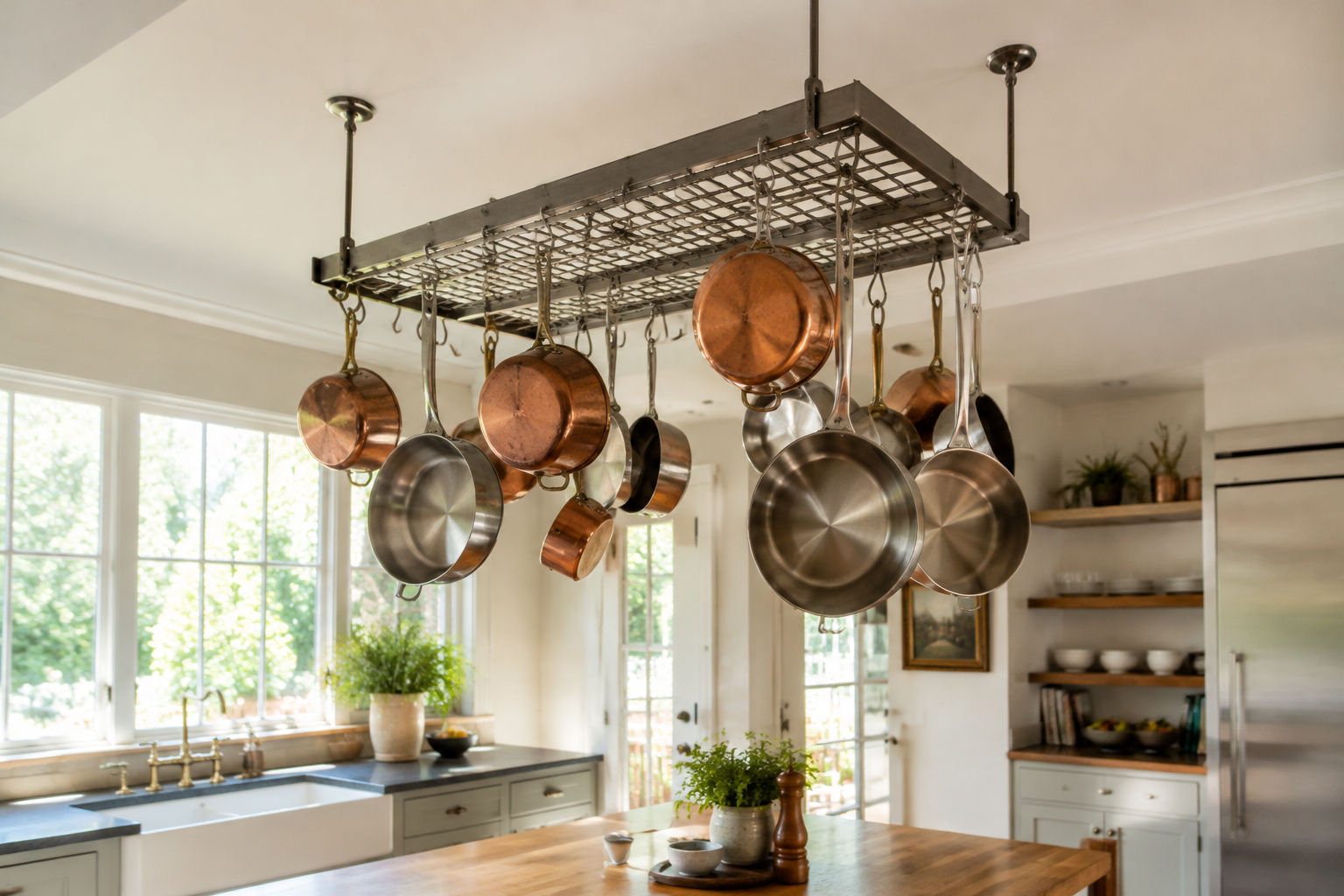
Ceiling Pot Rack Over the Island
Hang a rack from the ceiling above the prep area. Pots and pans hang in easy reach and out of the cabinets.
Keep it centred over the counter, never over a walkway. Use proper ceiling anchors for the weight.
This frees an entire cabinet for food.
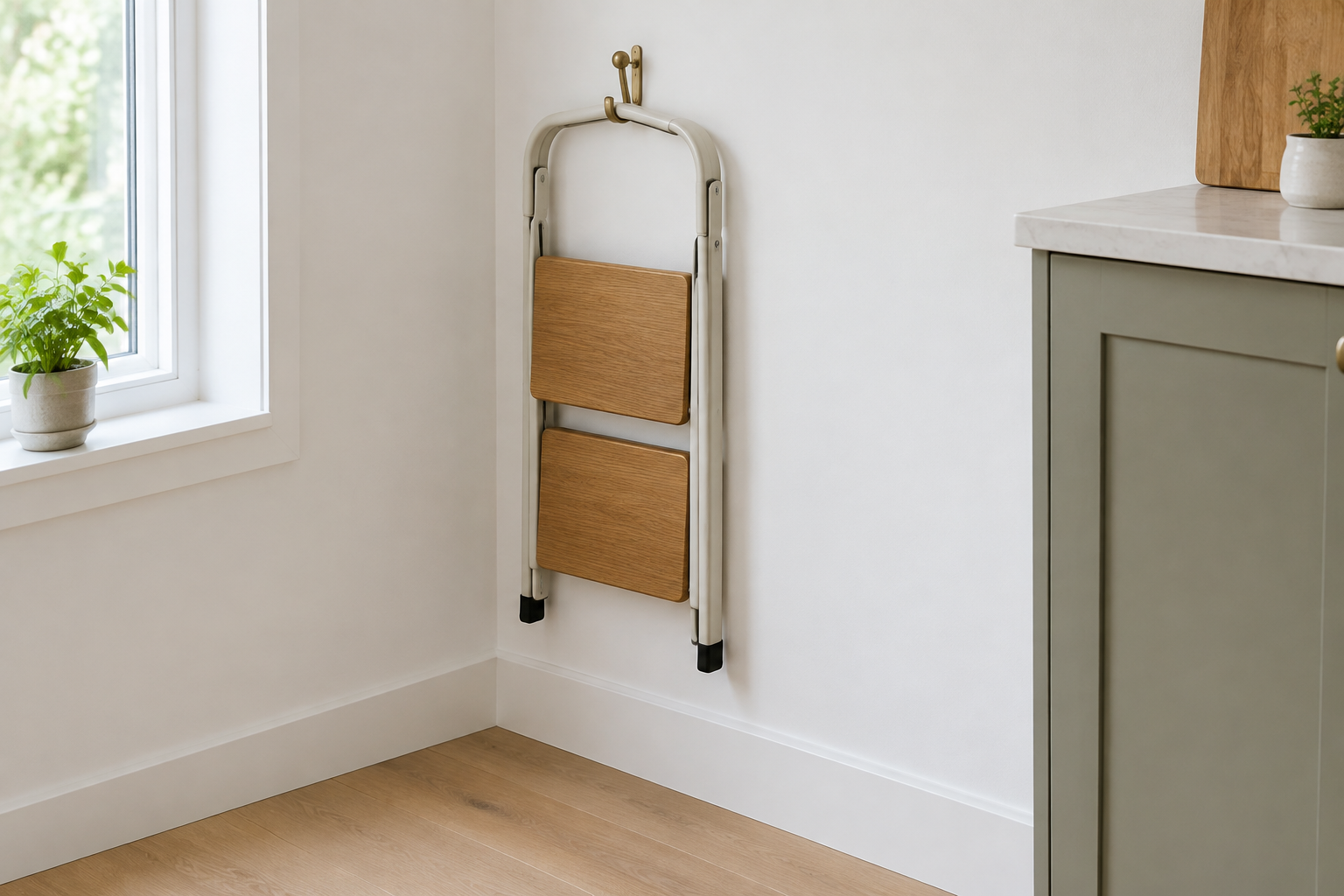
Foldable Step Stool on a Hook
A folding stool hangs flat inside a closet or on a wall hook. It opens in one motion for the high shelf.
No more dragging a dining chair across the floor. It stays out of the way when closed.
Choose one with non-slip feet for safety.
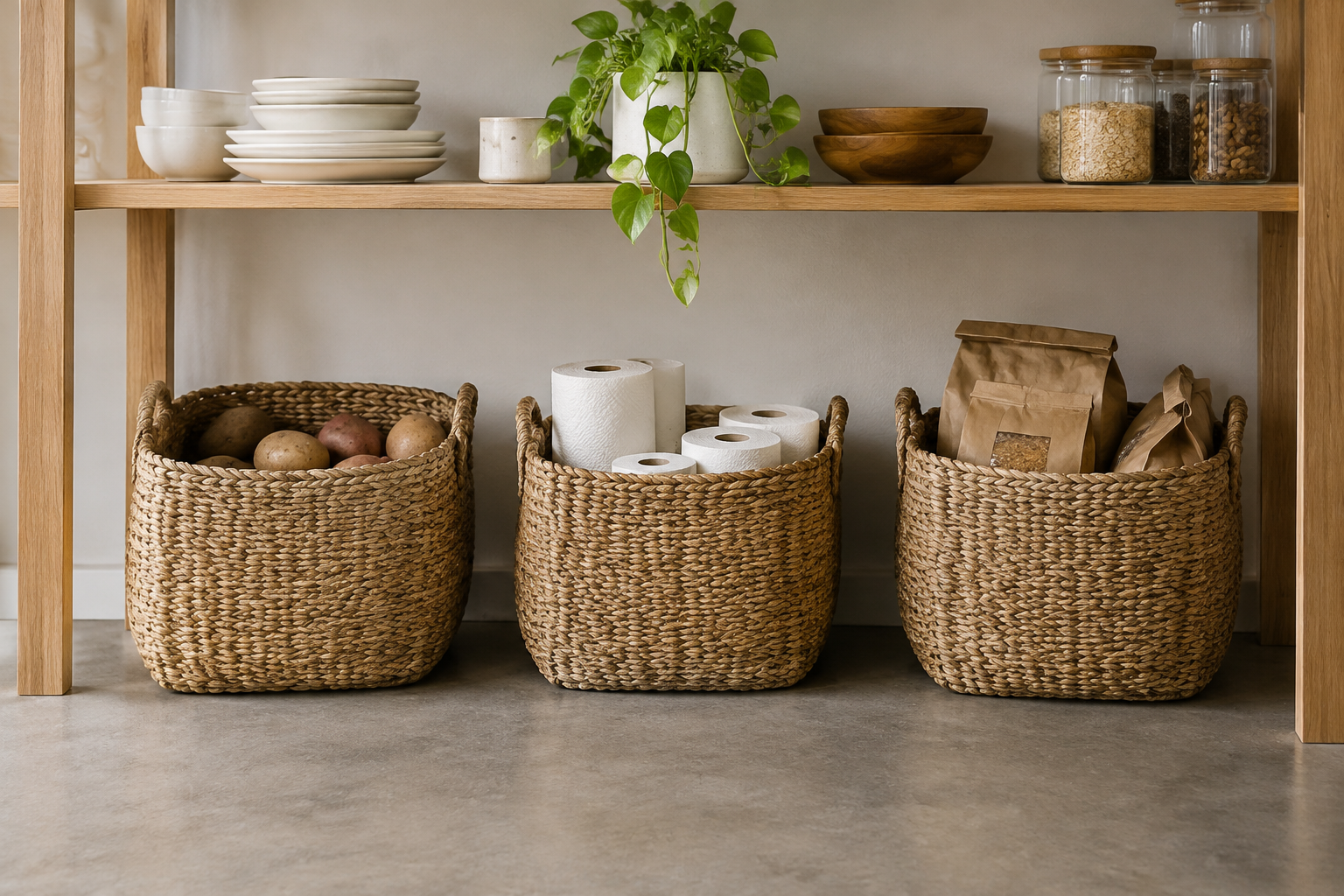
Nesting Baskets Under the Open Shelves
Line the floor under open shelves with nesting baskets. Bulk bags, potatoes, and paper goods live inside.
The baskets look clean and slide out easily. Choose one material so the row reads as one unit.
This hides the clutter open shelving usually shows.
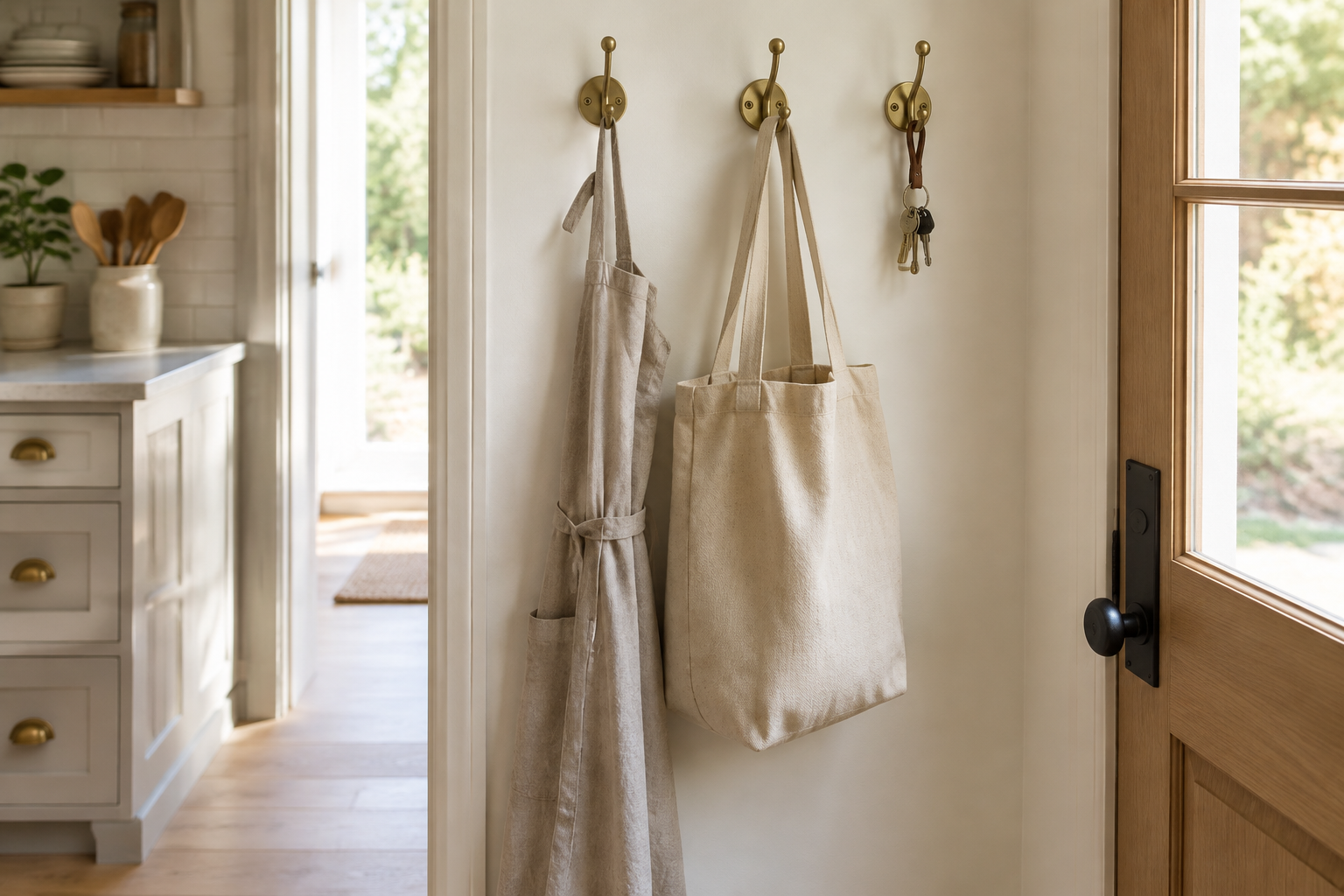
Apron and Market Bag Hook Station
A row of hooks by the door holds aprons, totes, and keys. Everything for leaving the house lives in one spot.
Bags no longer land on the counter. Use a rail with movable hooks so you can adjust them.
Keep the hooks at chest height for easy reach.
Habits That Keep It Tidy
Storage fails without a simple system behind it. These three habits keep the other 49 ideas working long after the novelty fades. They cost nothing and take minutes to set up. Start them in the same week you install the shelves, not months later.
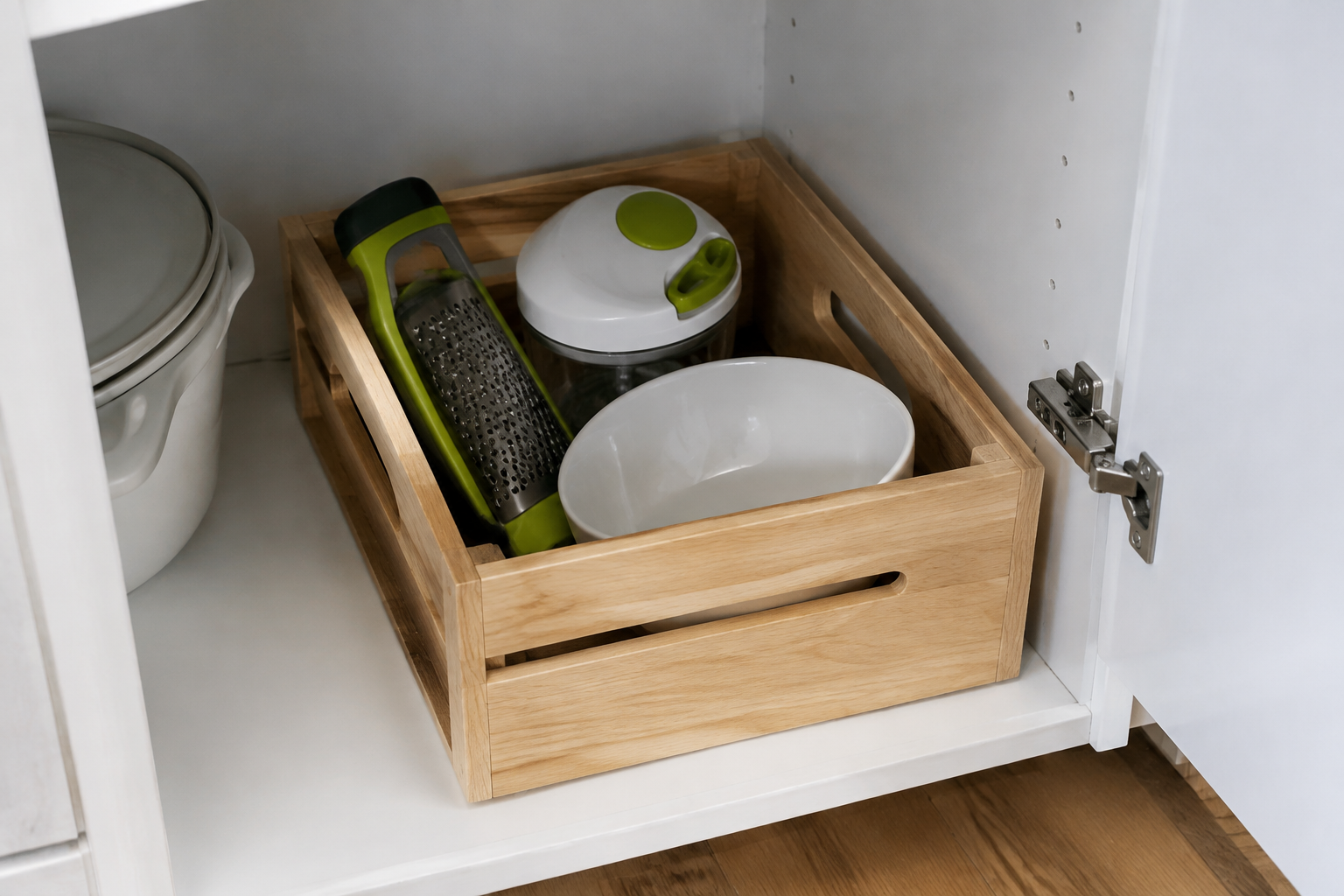
One-In-One-Out Donation Bin
Keep a small bin in the kitchen for things you no longer use. Every new gadget means one thing leaves.
The bin stays hidden in a low cabinet. When it fills, it goes to charity.
This rule stops clutter before it starts.
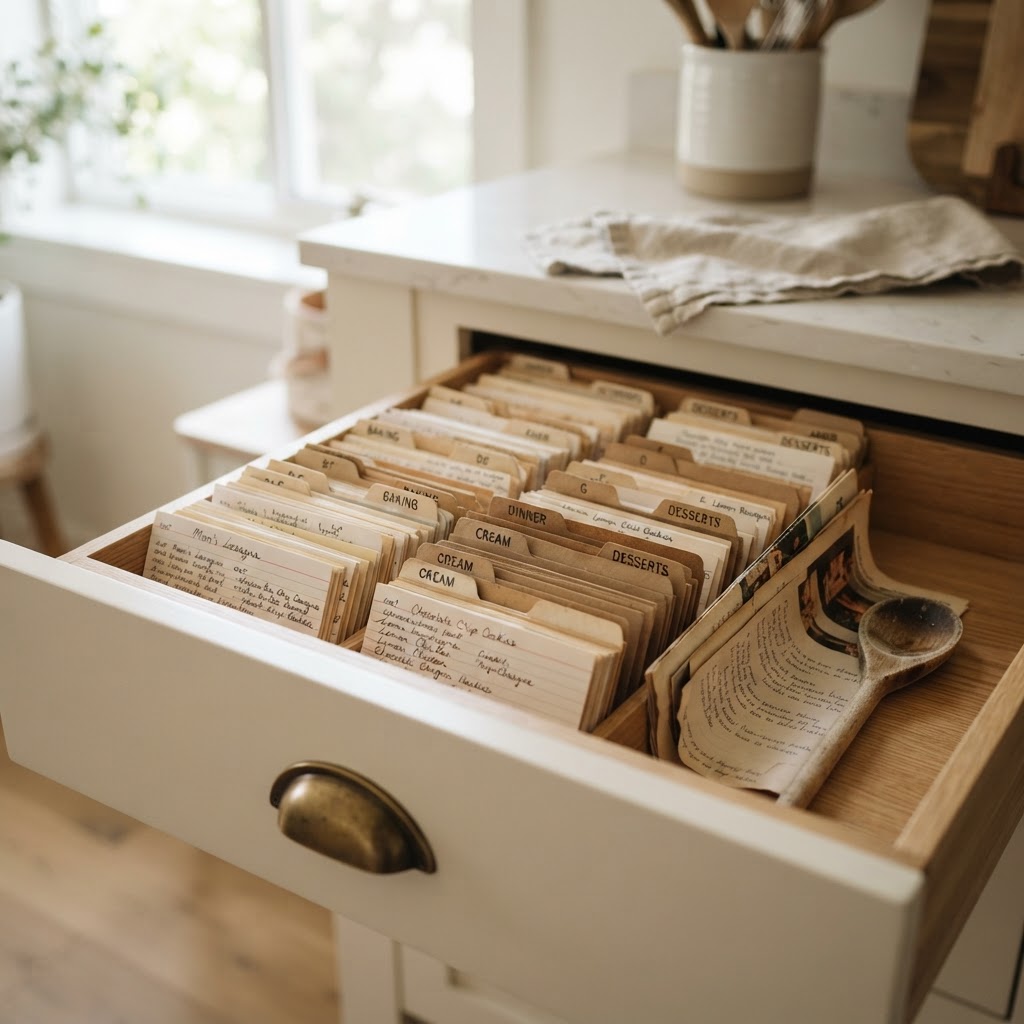
Shallow Recipe File Drawer
A shallow drawer with upright files holds recipe cards and manuals. Nothing gets buried under other papers.
Add tabs by meal type so you find things fast. Keep the drawer near your prep area.
It replaces the pile that usually sits on the counter.
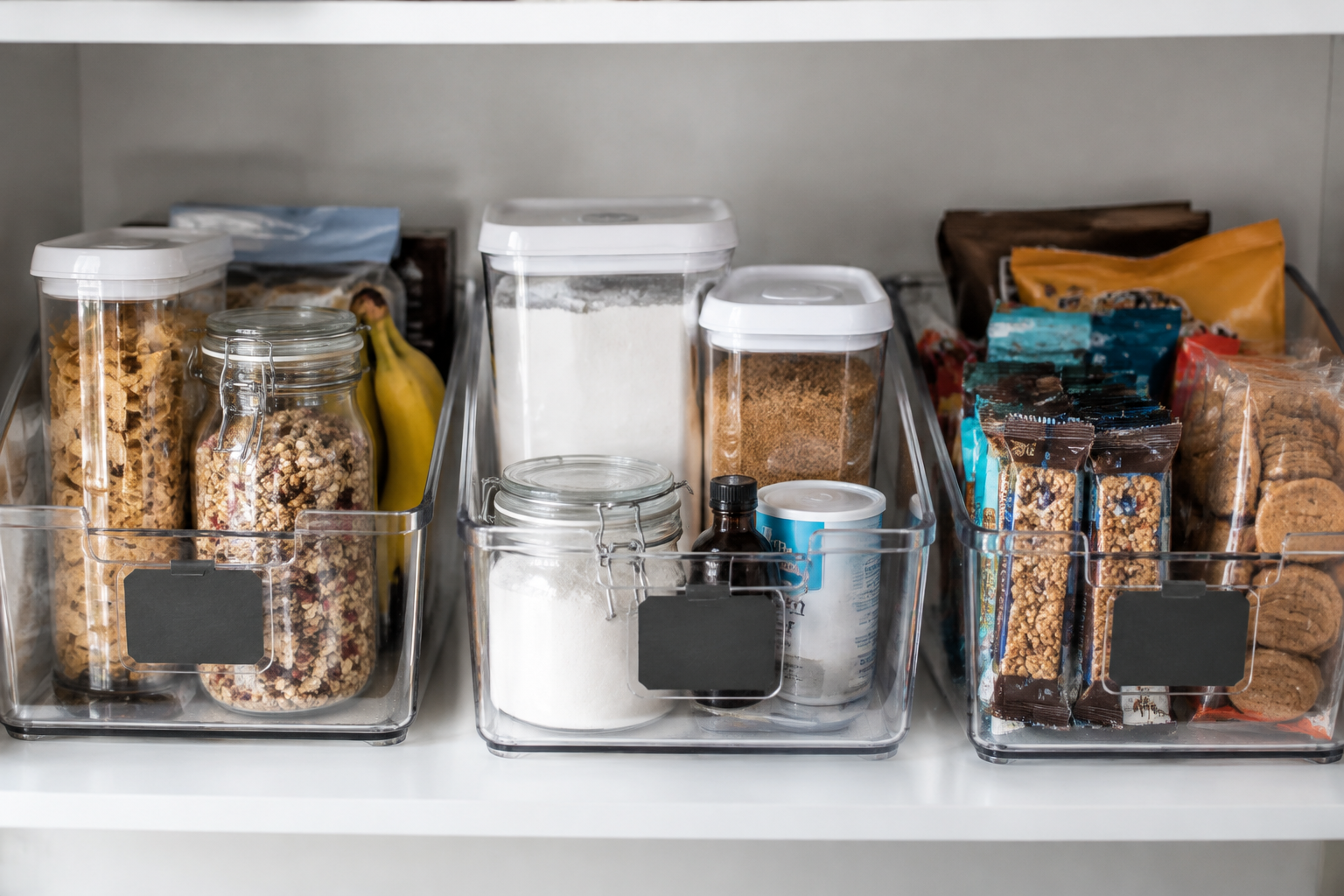
Chalk-Pen Zone Labels on Every Bin
Label bins by zone, not by item. Words like breakfast, baking, and snacks tell everyone where things belong.
Chalk pens wipe clean when your system changes. Labels keep the whole family consistent.
This is the step that makes every other idea stick.
Where to start this weekend
Begin with the zone you fight with every day. For most people that is the base cabinet they open first, or the strip of counter where everything piles up. Fix that one spot and the whole room feels easier.
Work one project at a time, from the first screw to the final label. A half-finished shelf feels worse than no shelf at all, and it teaches you to stop trusting your own system.
Measure the opening, the drawer depth and the door swing before you buy anything. Most returns happen because a good idea was the wrong size. A tape measure costs far less than a second delivery.
Spend your budget on the changes you cannot undo. A pull-out pantry or a roll-out shelf changes how the kitchen works. Baskets, hooks and labels you can add later for almost nothing.
Questions people ask about small kitchens
How do I add storage to a small kitchen without renovating?
Use the surfaces and gaps you already have. A rail under the upper cabinets, a rack inside a cabinet door and a tension rod under the sink all add space with almost no tools. Hanging storage costs the least of anything on this list. Add three of those before you consider a single structural change.
What is the cheapest small kitchen storage idea?
A tension rod, a set of S-hooks and a second-hand basket will cost you very little. Each one turns wasted space into usable storage in about ten minutes. Cheap does not mean temporary here, because the space it frees stays free. Start with the rod under the sink, since that cabinet is always the worst.
Where should I start if my kitchen has almost no counter space?
Clear one metre of counter completely and keep it that way. Hang the utensils, move the crock into the corner and put the oils on a narrow shelf. The goal is a single clear landing spot for chopping and plating. Everything else can stay messy while you fix that one strip.
Are pull-out shelves worth it in a small kitchen?
Yes, in the cabinet you open most often. A roll-out shelf costs less than a good pan and removes the dark back corner from your life. Buy one first and test the idea before you fit the whole kitchen. If you love it, add a pull-out pantry column next.
How do I store pots and pans in a tiny kitchen?
Store them where you use them, not where they happen to fit. A ceiling rack or a wall rail keeps pans at hand and frees a full cabinet for food. If drilling is not an option, stand them upright in a divided cabinet slot. Never stack more than three, because you will stop using the bottom one.
Can I add storage in a rental kitchen?
Almost everything here is renter-friendly. Tension rods, over-the-door racks, freestanding carts and adhesive hooks leave no marks at all. The few permanent fixes use screw holes you can fill in ten minutes. Ask your landlord before you drill, then choose the ideas that need nothing.
How do I stop a small kitchen from getting cluttered again?
Give every item a home and label that home. When something has no place, it lands on the counter and stays there. Use the one-in-one-out rule for gadgets and a small donation bin for everything else. A five-minute reset each evening does more than a deep clean once a month.
Do storage ideas really make a small kitchen feel bigger?
They do, because clutter reads as a smaller room. When the counter is clear and the shelves are calm, your eye stops at the wall instead of the mess. Light bounces further and the same square metres feel larger. The effect is psychological, and it lasts as long as the system does.
What should stay on the counter in a small kitchen?
Only the things you use more than once a day. A kettle, a knife block and one bottle of oil earn their place. Everything else goes into a cabinet, a drawer or onto a rail. Test a counter item for a week, then move it if you never touched it.
How do I organise a small kitchen when I cook every day?
Build the kitchen around the order you cook in. Plates go above the sink, pans go under the hob and boards go beside the oven. Nothing should travel more than one step. Set the zones once and your hands stop searching for things.
Start with the space that annoys you most. For most people that is the back of a base cabinet or the gap beside the fridge.
Add one idea per weekend. A small kitchen improves in layers, not in one big renovation.
Take a photo of each shelf before you change it. The difference is the proof that the system works.
If you only do one thing this month, clear the counter. A clear counter makes a small kitchen feel twice its size.