

52 Small Apartment Living Room Ideas on a Budget (2027)
A small living room asks one question. What deserves to stay?
That is not a sad question. It is the reason small apartments often look better than big ones.
Here are 52 ideas for small apartment living rooms. Each one has a photo, and each one is something you can copy.
The list runs from layout to lighting to the smallest styling habits. Nothing repeats.
Most ideas cost nothing. Some need a paintbrush. A few need one new piece of furniture.
Read it once, then come back to the numbers that fit your room.
How to Use This List
Start with layout, because placement changes a room more than decor does. Ideas 1 to 10 cover that.
Then pick one big idea and one small one. Doing ten things at once makes a small room feel busier, not bigger.
Measure before you buy anything. A sofa 10 cm too deep will undo every trick on this list.
Layout Ideas That Open Up the Floor
Start here. These ten moves change how much floor your room appears to have.
Try one or two of them before you buy anything new. Most cost nothing at all.
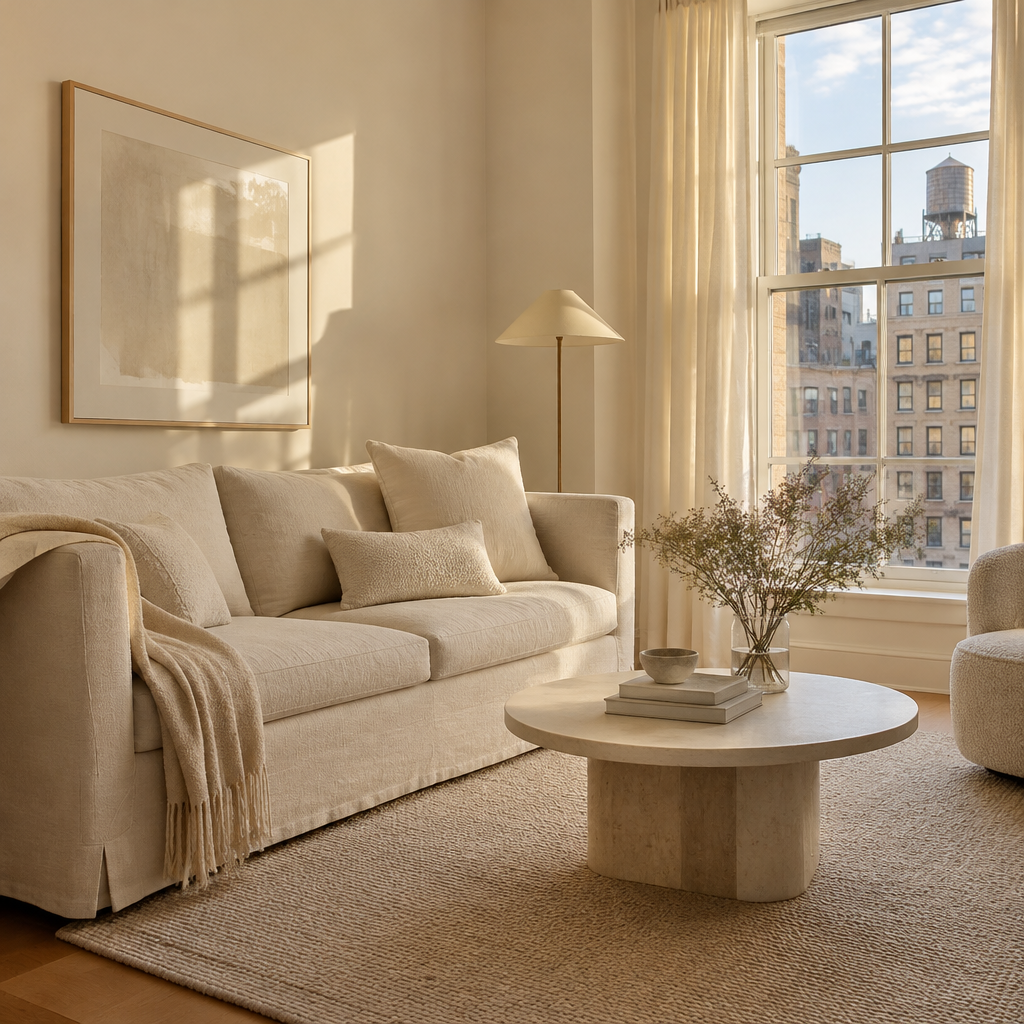
Monochromatic Depth
Start with one colour and repeat it in three or four shades. Bone walls, cream linen and oatmeal wool stop your eye at nothing.
The room reads as one soft block. Small rooms feel cramped when the eye keeps hitting contrast lines.
Add texture instead of new colours. Bouclé, wool and washed cotton all sit in the same tone but feel completely different.
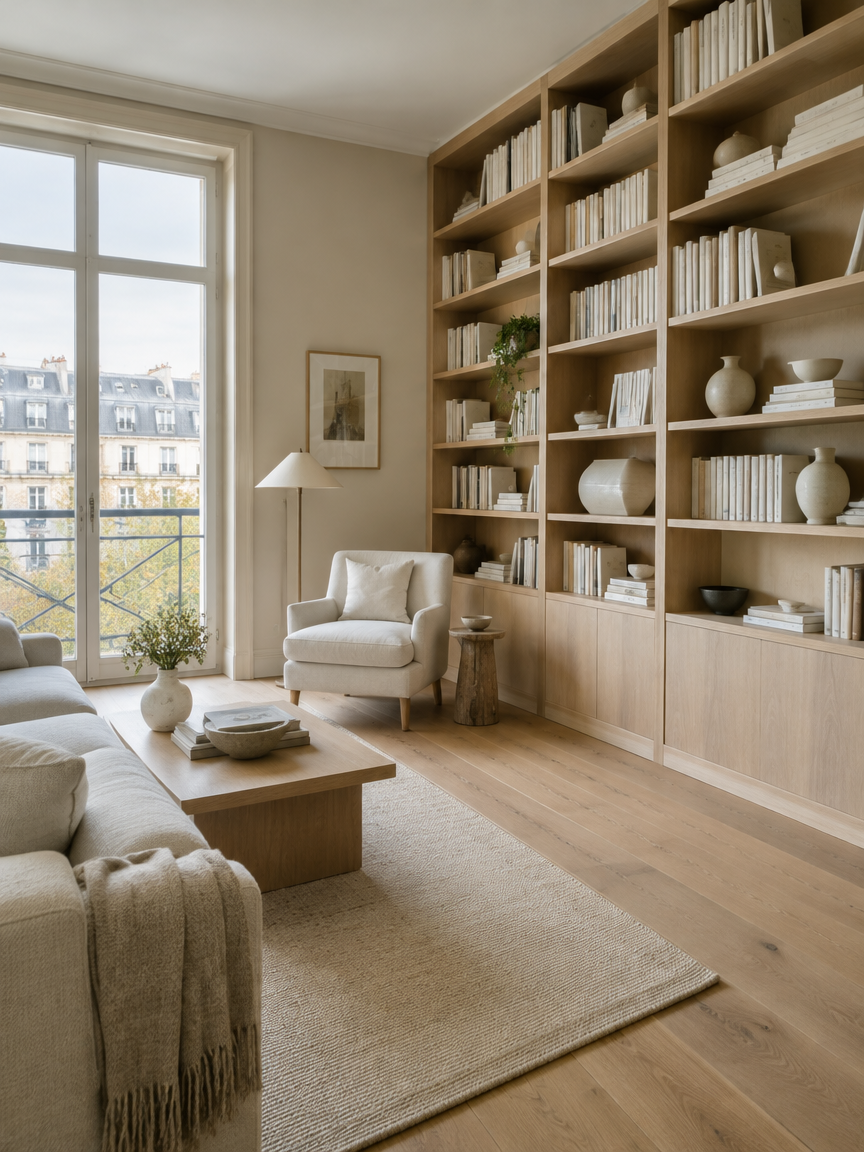
The Vertical Sky-Line
Take your shelving all the way up to the ceiling. The vertical lines pull the eye upwards and the ceiling feels higher than it is.
Keep the lowest shelf empty. That gap keeps floor visible and stops the wall feeling heavy.
Style the top shelf lightly with one vase and a few books. Busy shelves high up make walls feel closer.
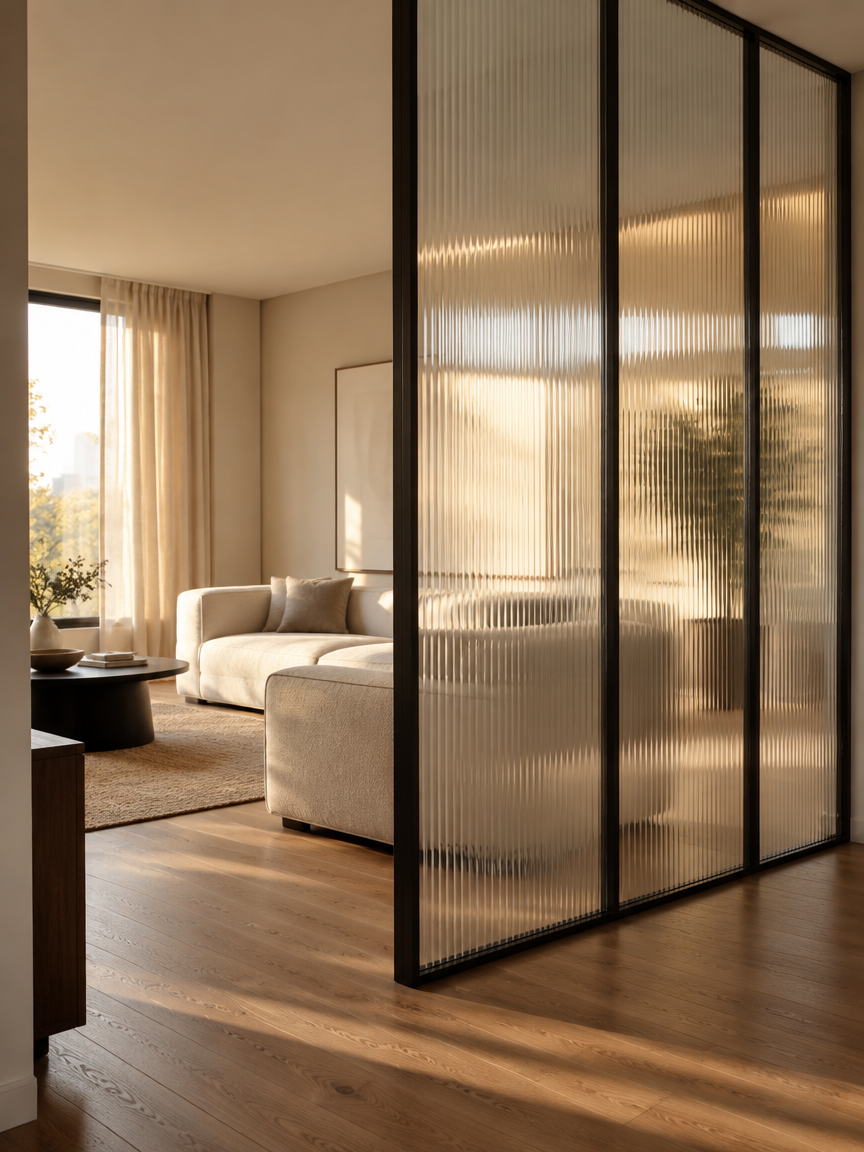
The Fluted Glass Partition
A fluted glass wall gives you two rooms without blocking the light. It works especially well in studios and one-bedroom apartments.
Light passes through the ribs, so the space stays bright. Your eye still reads a soft edge instead of a hard wall.
Keep the frame slim and dark. A thin black frame looks deliberate, not like a leftover partition.
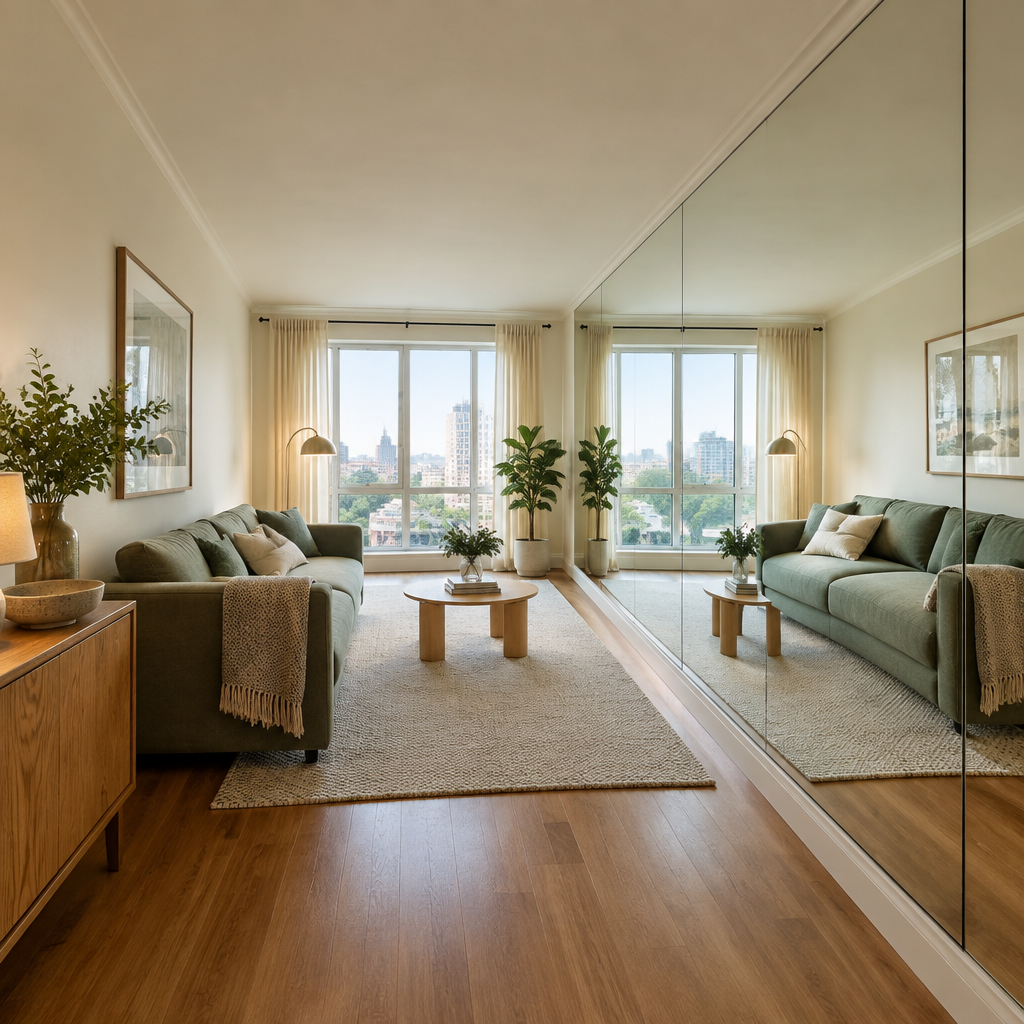
The Full-Wall Mirror
One large mirror on the longest wall can double how big the room reads. Place it opposite a window for the biggest gain.
Skip the cluster of small decorative mirrors. They add clutter without adding any space.
Choose frameless or a very slim frame. The mirror should look like part of the wall, not an object hung on it.
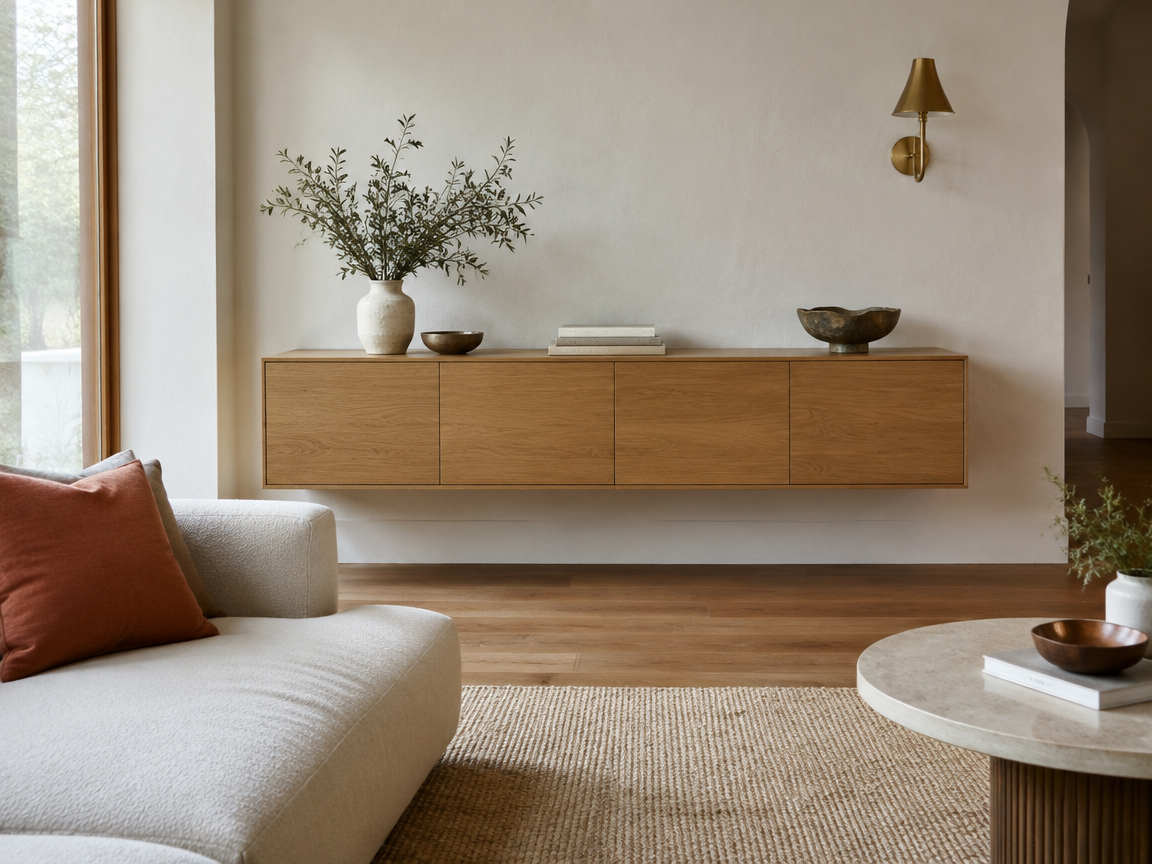
The Floating Console
Mount the TV console on the wall and leave the floor underneath open. Visible floor is the cheapest space you can add.
You also get a full sweep of floor to clean. That matters in a room you use every single day.
Keep the console shallow, around 30 cm deep. Deep cabinets eat floor space you cannot even see.
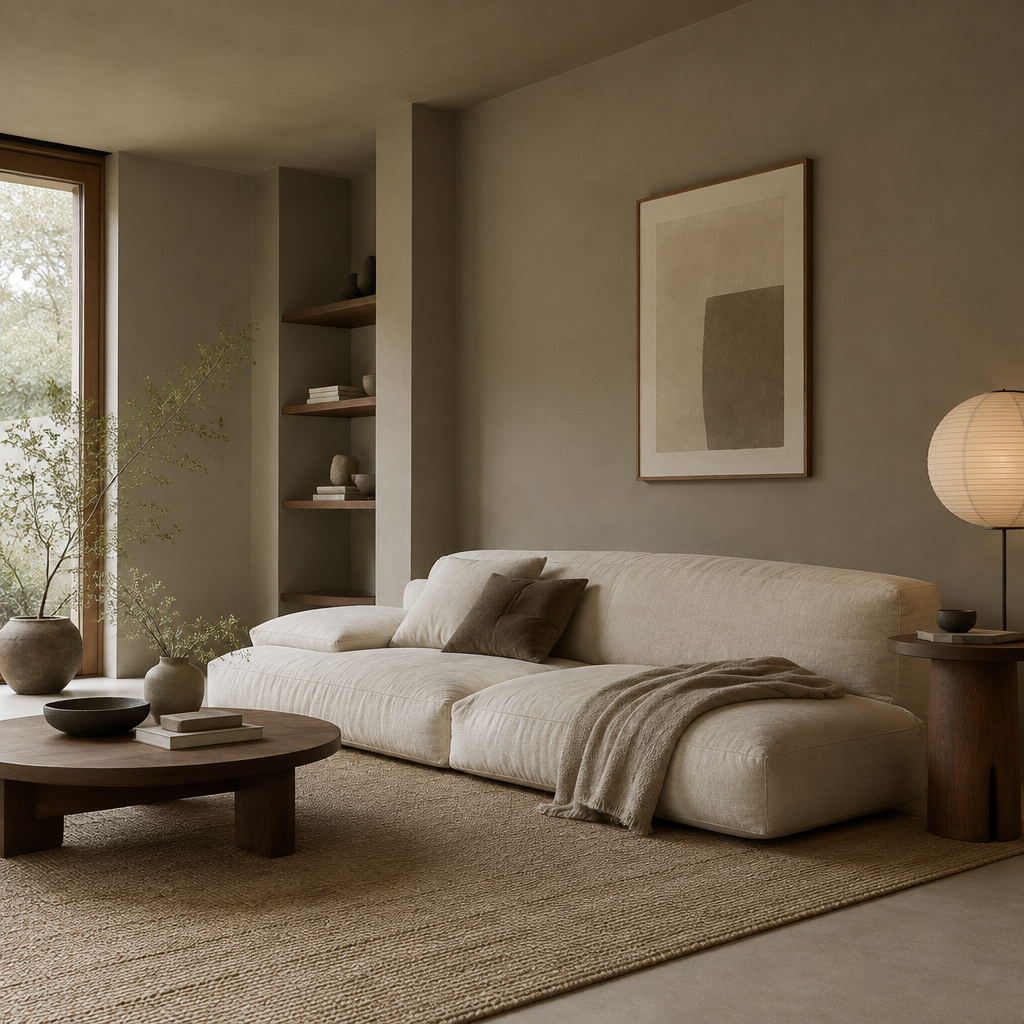
The Low-Profile Sofa
A low sofa leaves more empty air above it. That band of wall is what makes a small room breathe.
Low seating also feels calmer, because your eye is not travelling up and down the whole time.
Look for a seat height around 40 cm. Add a firm cushion so it is still easy to get up from.
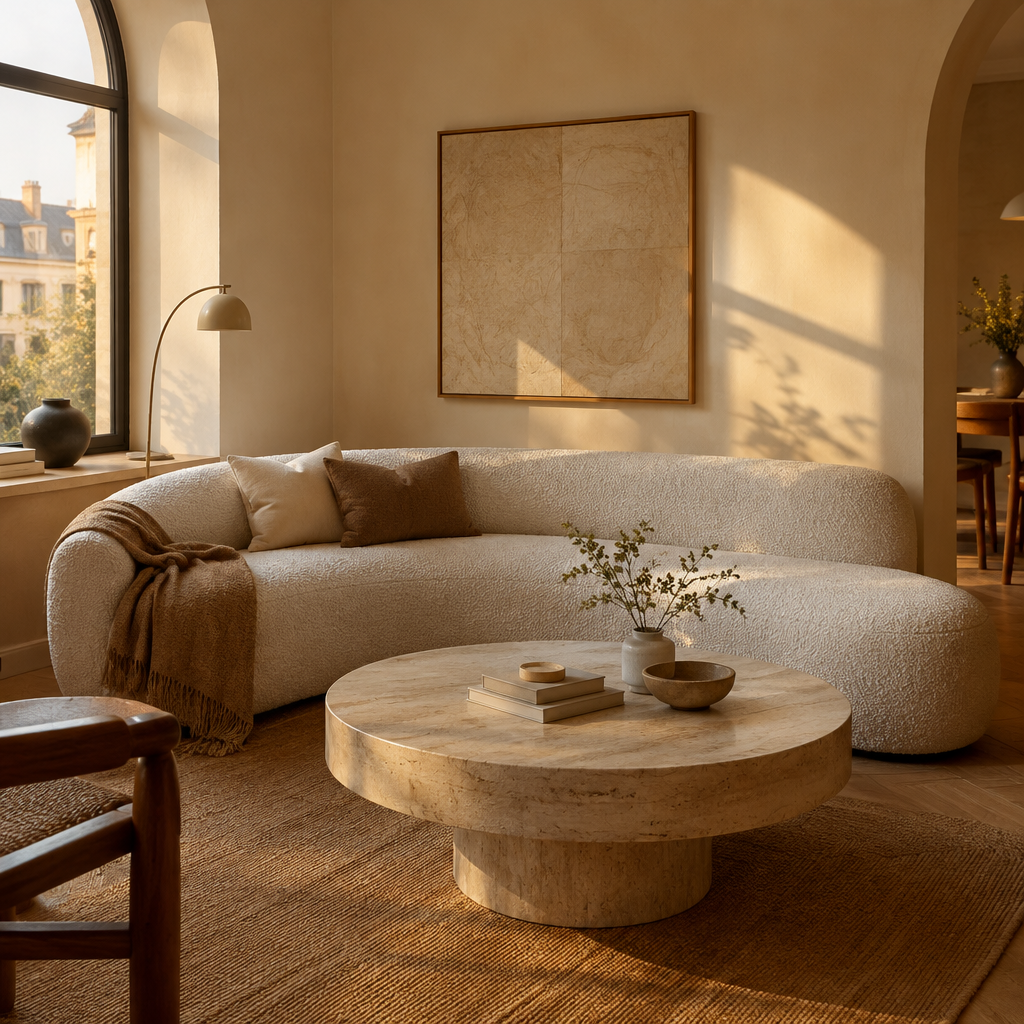
The Curved Corner Sofa
A curved sofa removes the hard right angle in a corner. Corners are where small rooms lose the most usable space.
The curve softens the whole layout. Everything else can stay straight and the room still feels gentle.
Measure the curve, not just the length. A deep curve can block a doorway you need to keep clear.
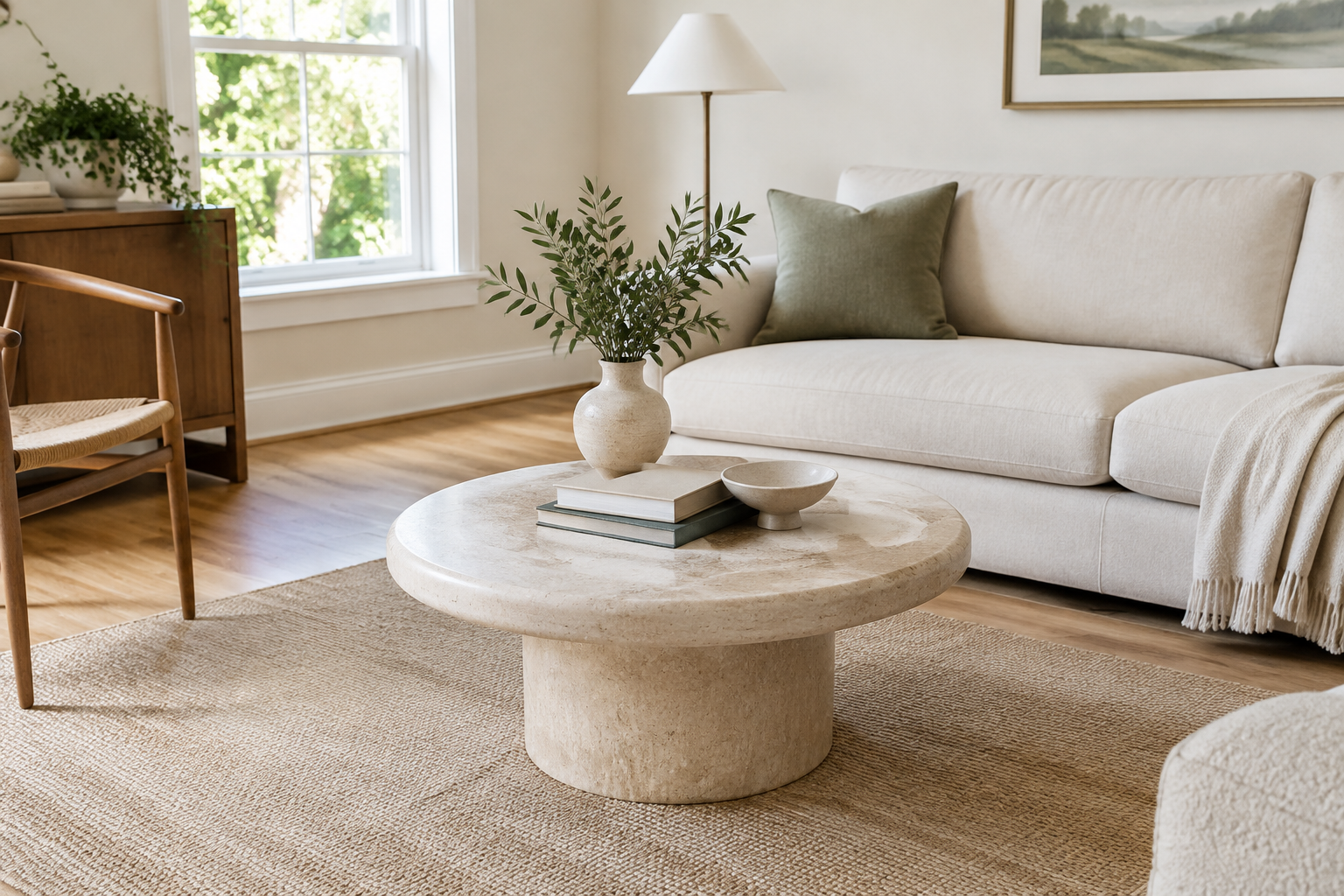
The Round Coffee Table
Round tables let you walk around them without a sharp edge catching your hip. In a tight room you notice that immediately.
A circle also reads as smaller than a rectangle of the same width. Your room feels bigger at no cost.
Keep the table 45 to 50 cm from the sofa. Close enough to reach a cup, far enough to move past.
The Zone Rug
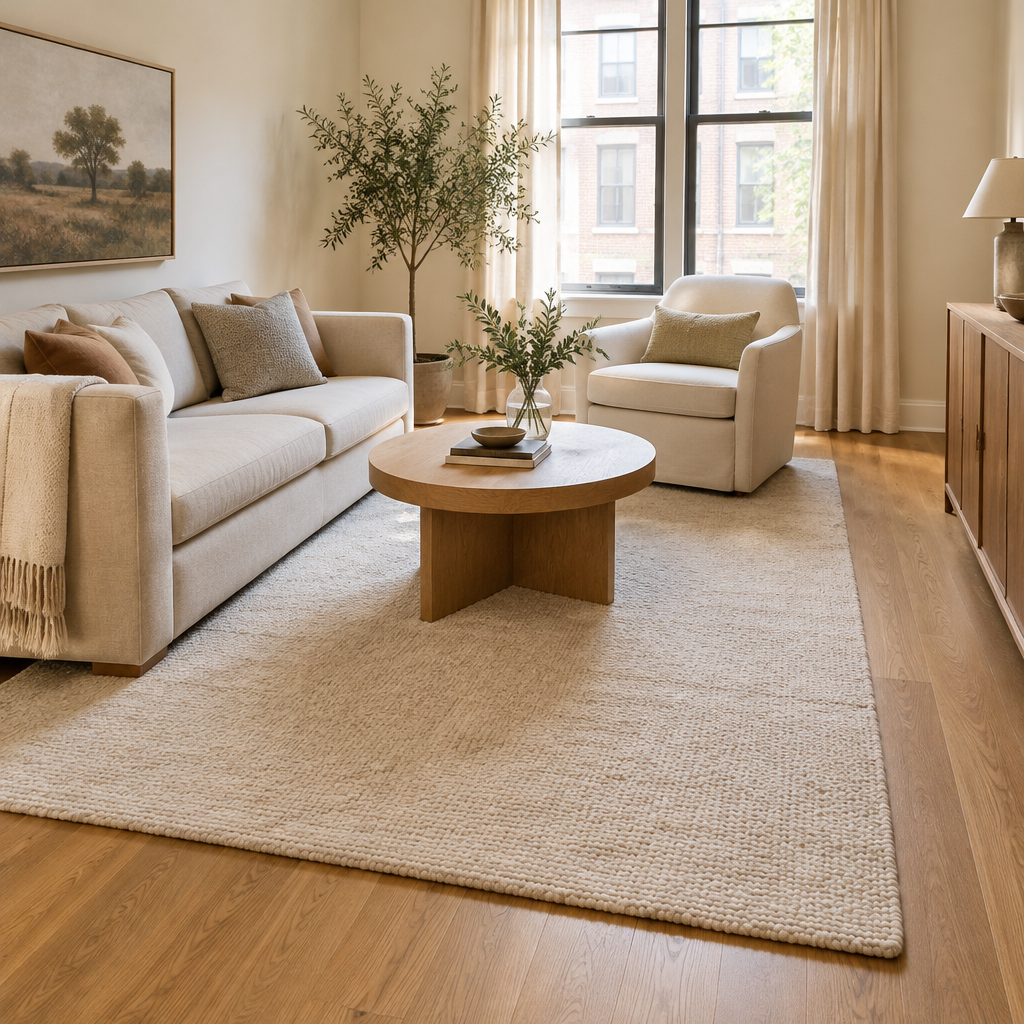
A rug is a wall you can walk over. Use one big rug to mark the living zone inside an open plan room.
Bigger is almost always better here. A rug that reaches under every seat ties the layout into one shape.
Leave a strip of bare floor around the edge. That border is what makes the zone read as a zone.
Negative Space Discipline
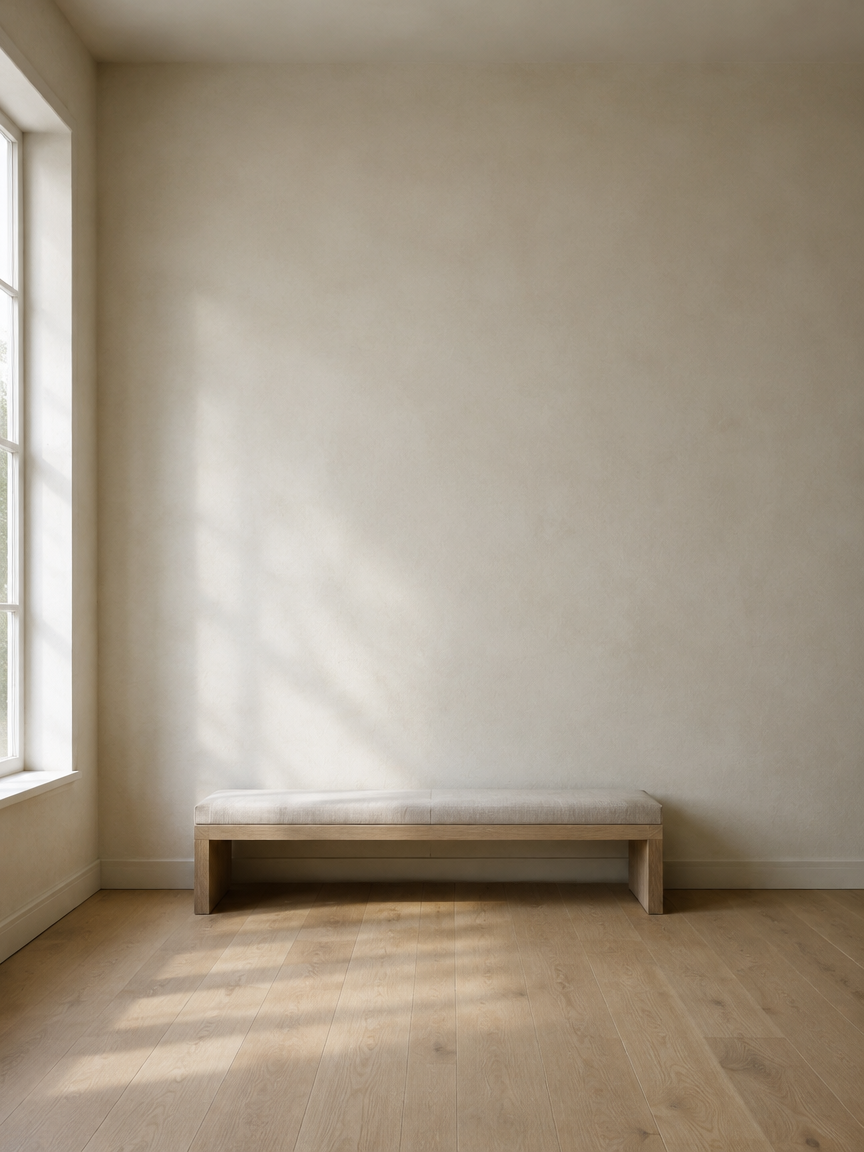
Choose one wall and leave it completely empty. Nothing on it, nothing in front of it.
Empty space is not wasted space. It is what makes the things you do own look considered.
This one habit fixes more small rooms than any shopping trip. Try it for a week before you fill the wall.
Furniture That Works Twice
Good furniture in a small apartment does two jobs at once.
Each of these twelve pieces replaces something else you would otherwise have to buy or store.
The Storage Ottoman Table
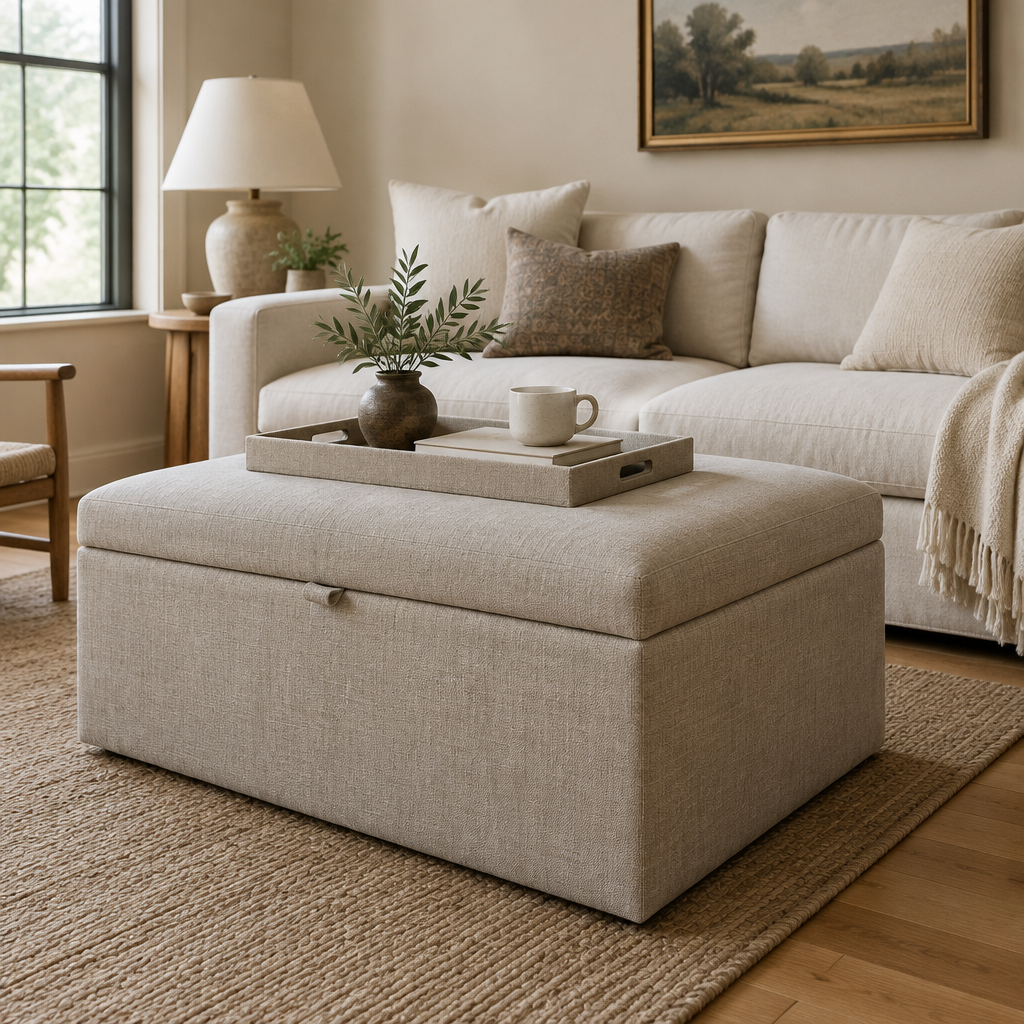
An upholstered ottoman with a lift-off lid is a table, a seat and a hiding place. Use it exactly where a coffee table would go.
Blankets, remotes and the games console all disappear inside it. The room looks tidy in five seconds.
Add a firm tray on top so cups stay level. Then treat it exactly like a table.
The Rise-Up Coffee Table
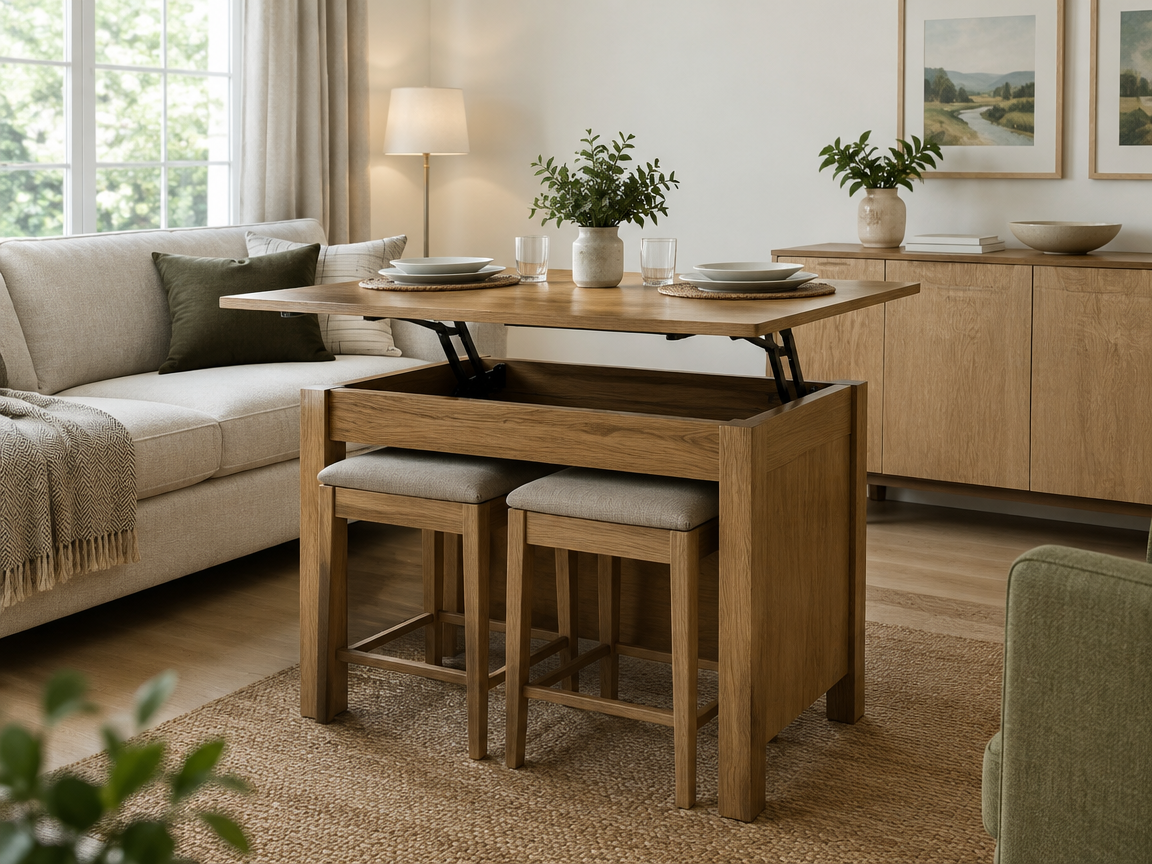
A lift-top table goes from coffee height to dining height in one movement. You get a desk, a dinner table and a coffee table in one footprint.
Two folding stools can live inside it. That is a full eating setup without a dining room.
Pick one with a gas lift rather than a manual prop. You will raise it far more often if it is easy.
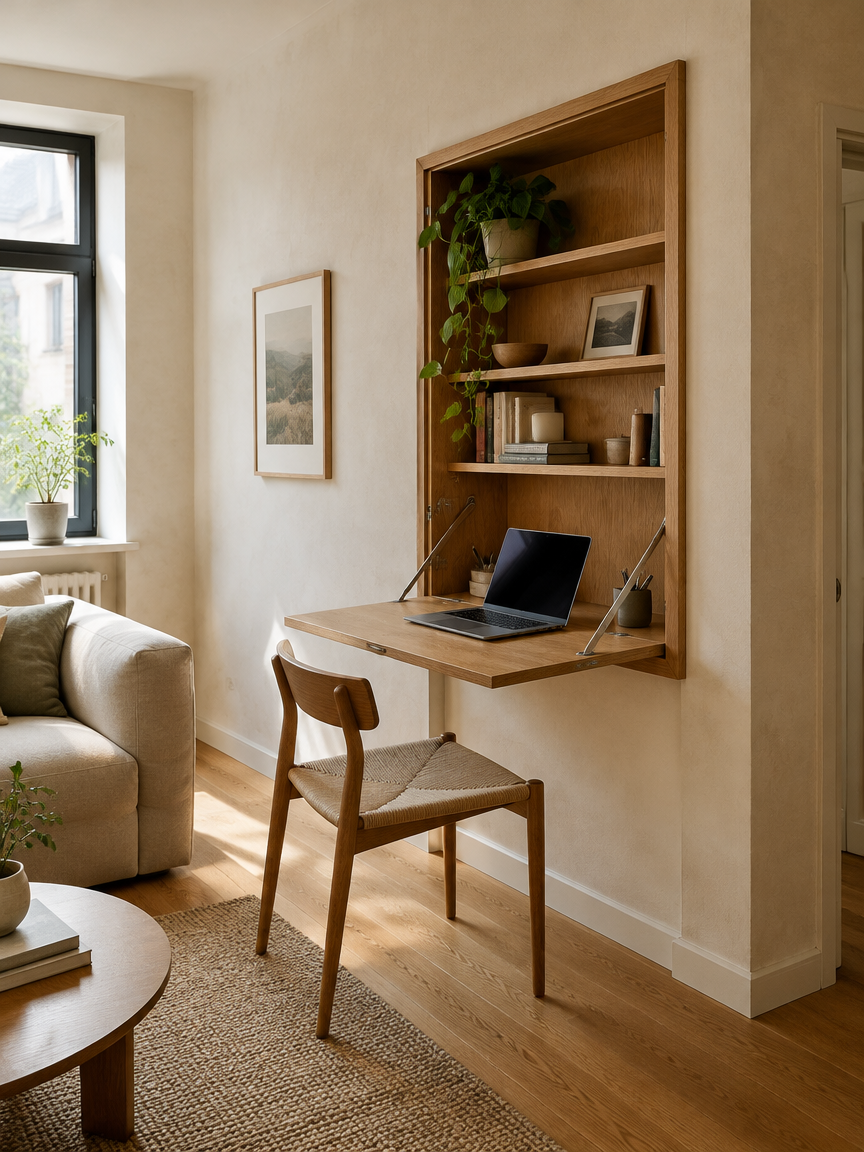
The Fold-Down Desk
Build a desk into a shallow wall cabinet and drop it down when you work. The rest of the day the floor is yours again.
Keep the cabinet 35 cm deep or less. That is enough for a laptop, a notebook and a lamp.
Add one shelf above at eye level. It holds the things you would otherwise spread across the room.
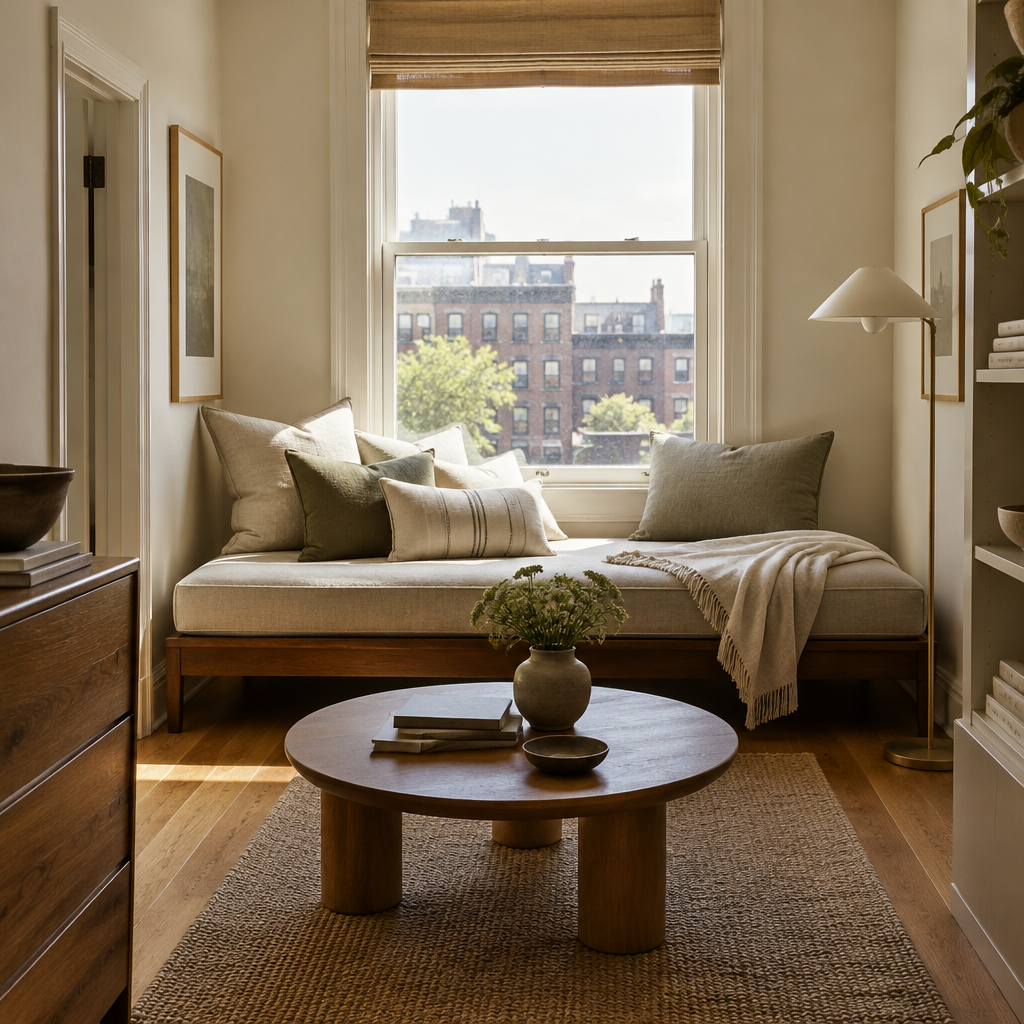
The Daybed Swap
A daybed does the work of a sofa and a guest bed. It also sits lower and slimmer than most sofas do.
Push it against a wall or into a bay window. Then dress it with the same cushions and throws you would use on a sofa.
Choose a firm mattress and a washable cover. In a small apartment it will be both seat and bed.
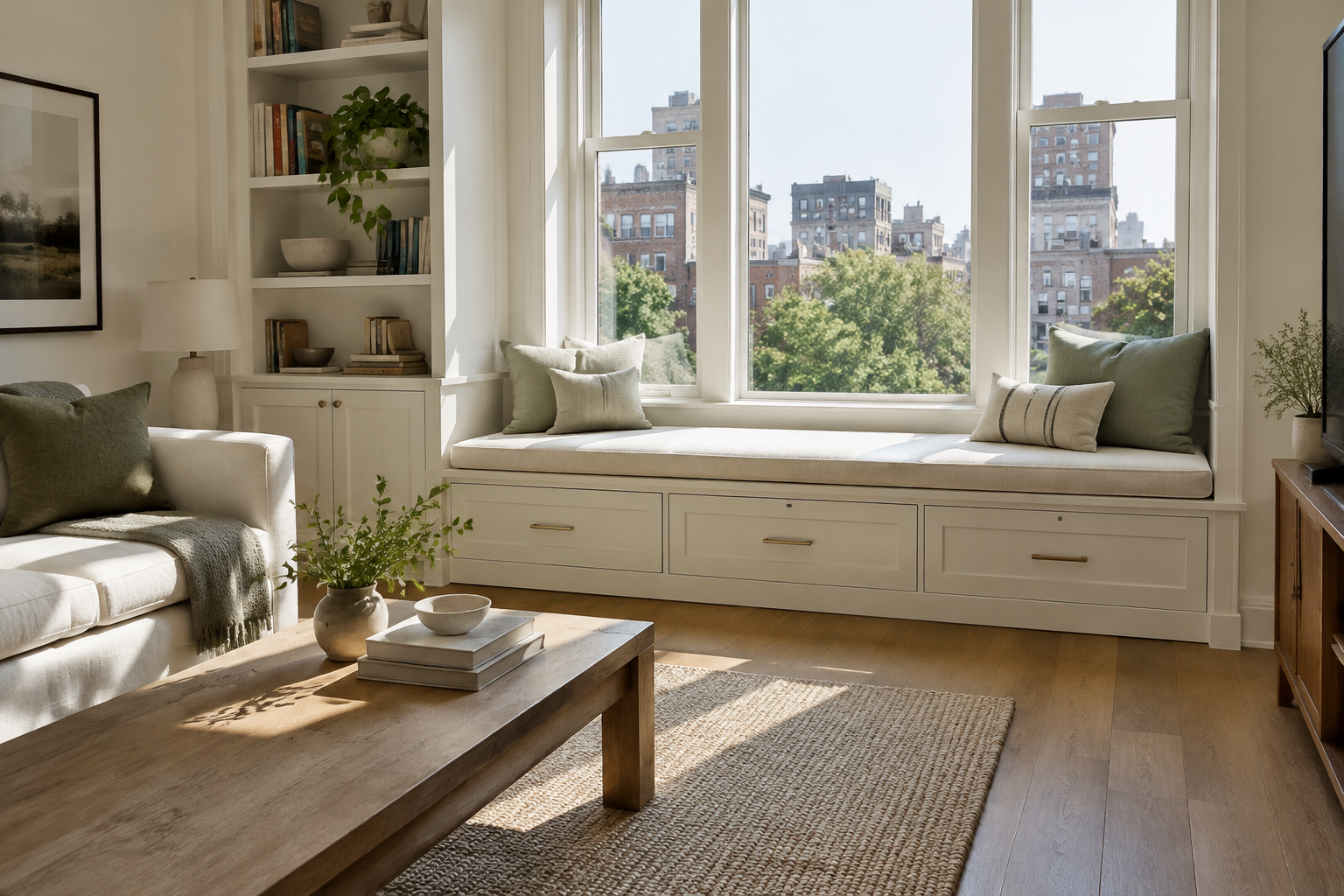
The Window Bench
A bench under the window adds seating without blocking the view. Build drawers underneath and it stores the clutter too.
This is the trick for rooms too narrow for a sofa and a chair. The bench uses depth you were not using anyway.
Keep the seat cushion slim, around 8 cm. Thick cushions look plush but eat the seat.
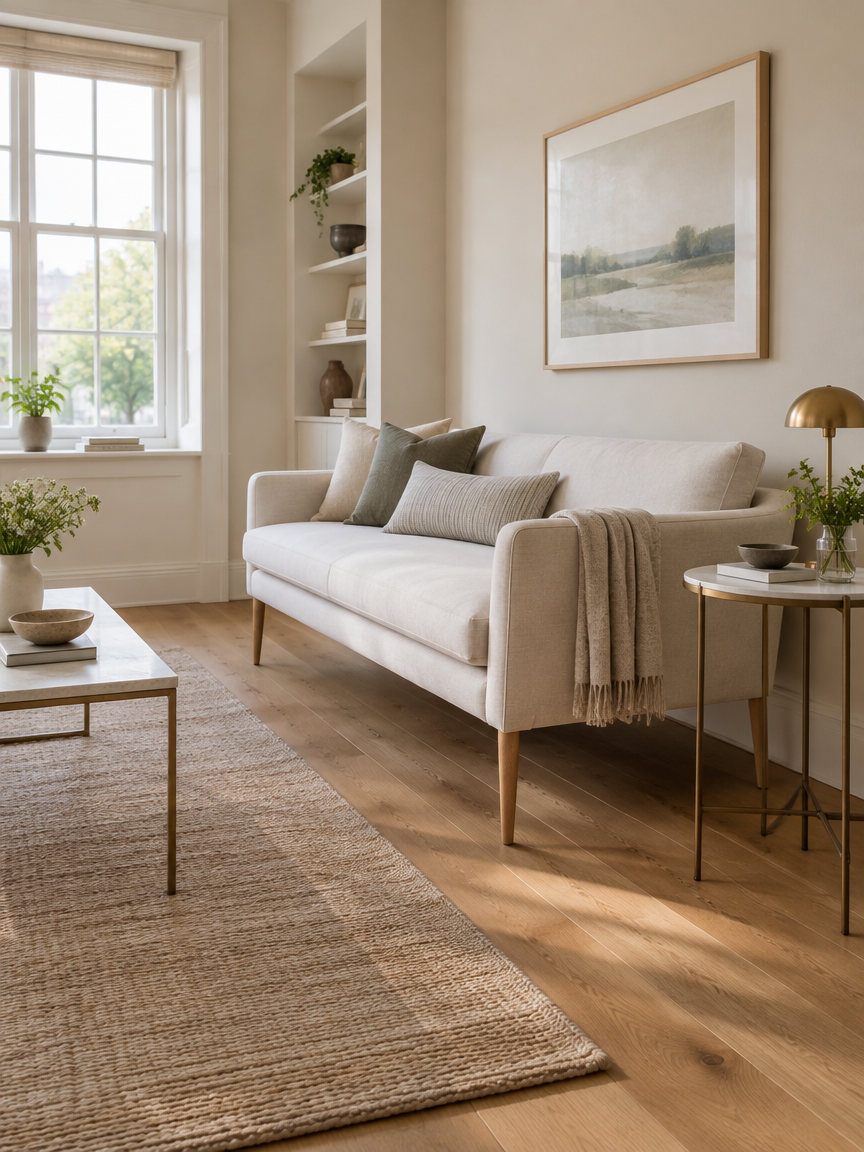
The Slim-Leg Rule
Choose furniture on slim legs and keep the floor visible underneath. That glimpse of floor is what makes a room feel open.
Skirted sofas look heavier because the floor disappears behind them completely.
Metal or tapered wood legs both work. Just make sure light can pass beneath the piece.
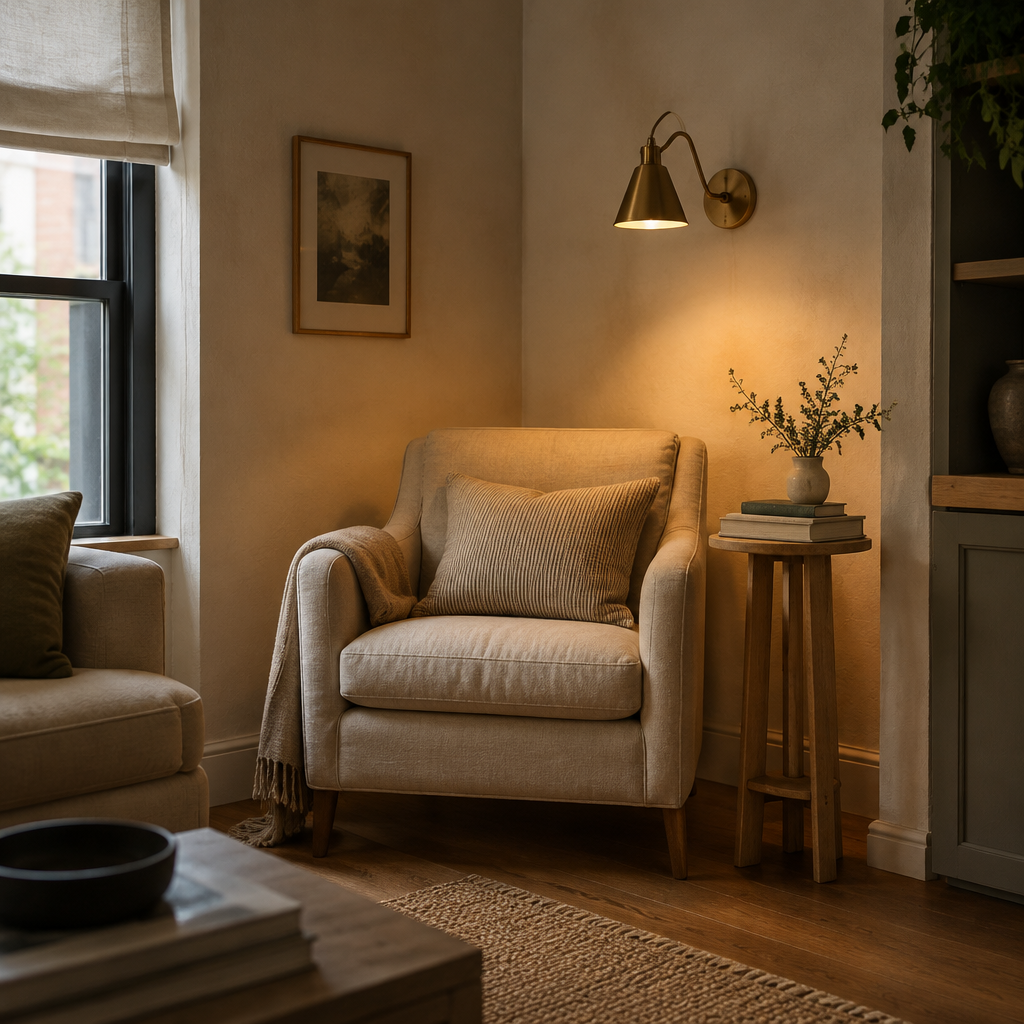
The Micro Reading Nook
You only need about one square metre for a reading chair. Look for a corner everyone walks past and claim it.
Add a small side table for a cup and a sconce above the chair. That is the whole nook.
A nook gives a small room somewhere to look. It also stops that corner becoming a dumping ground.
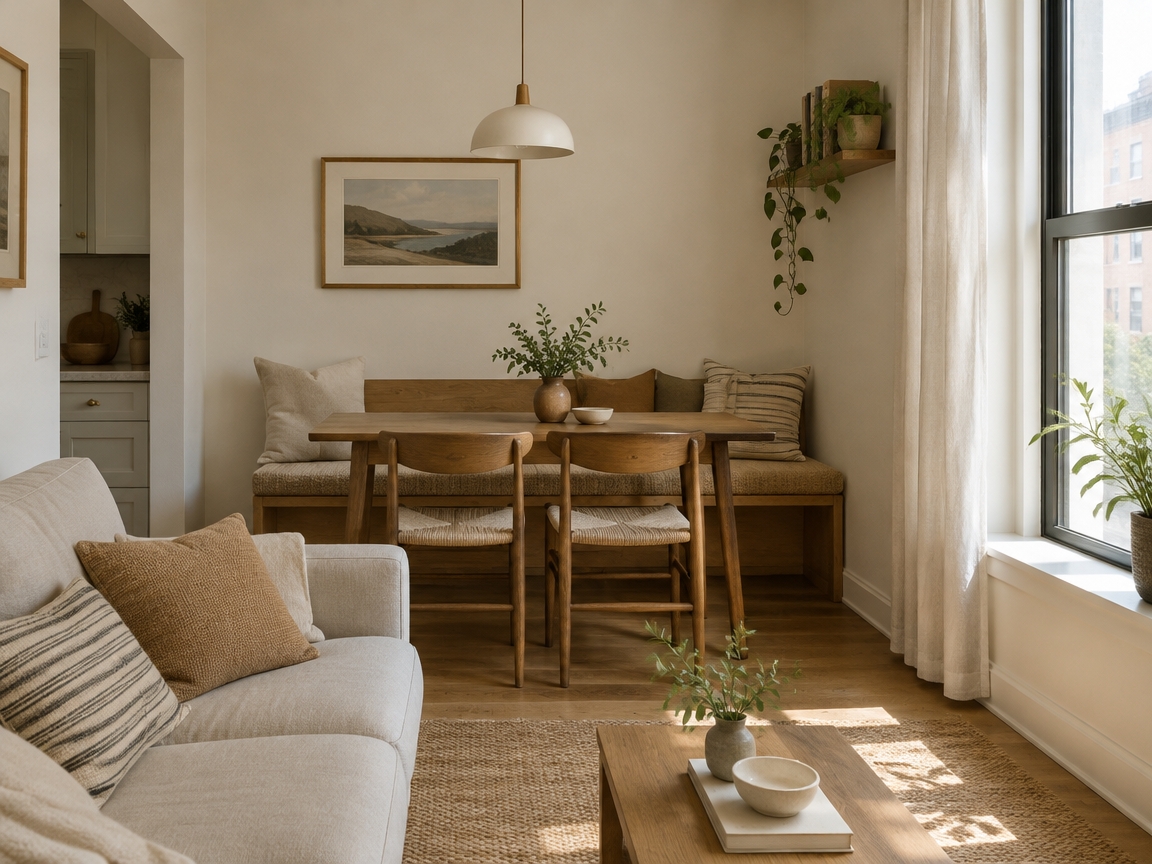
The Wall Bench
A bench against the wall seats three people in the space of one chair. It works beside a small dining table in a living room.
Benches tuck fully under the table, so the walkway stays clear when you are not eating.
Add a thin cushion for longer dinners. Keep it narrow so the bench still slides underneath.
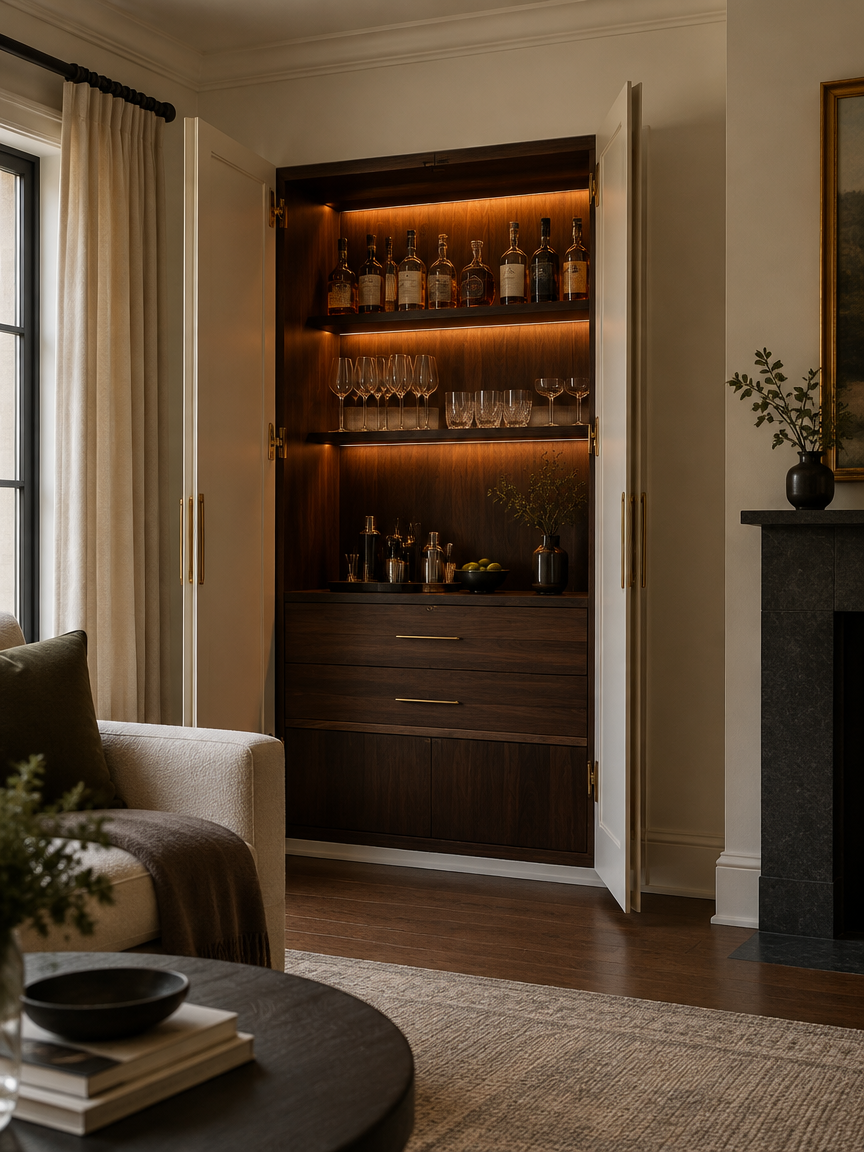
The Concealed Bar
A drinks cabinet inside a bookshelf or wall unit hides the mess. Open it for guests and close it for the rest of the week.
Line it in a darker tone than the room. The contrast makes it feel like a surprise rather than storage.
Add a small light inside. Two warm bulbs turn a cupboard into a bar.
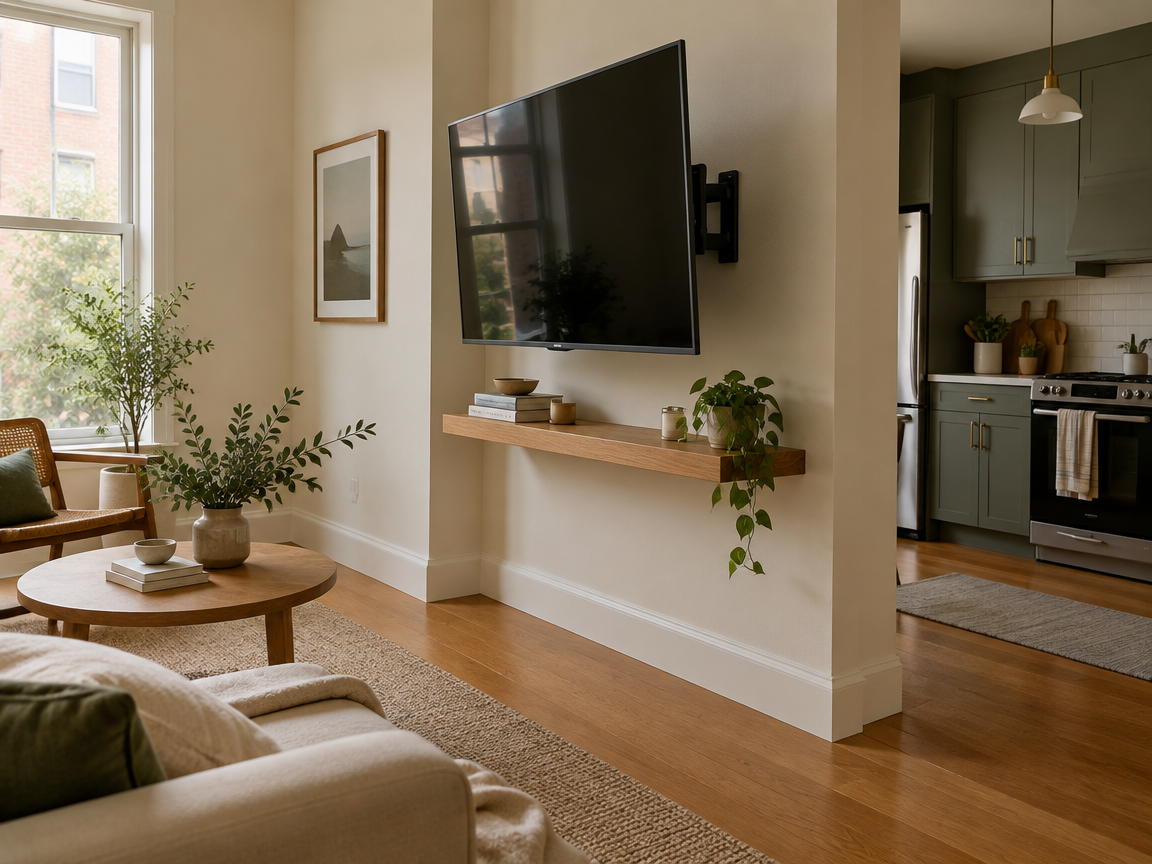
The Swivel TV
A swivel mount lets one screen serve the sofa and the kitchen. That saves buying a second TV in a small home.
It also lets you push the screen flat against the wall when nobody is watching. The room calms down instantly.
Mount it at eye height when seated. Too high is the most common mistake in small rooms.
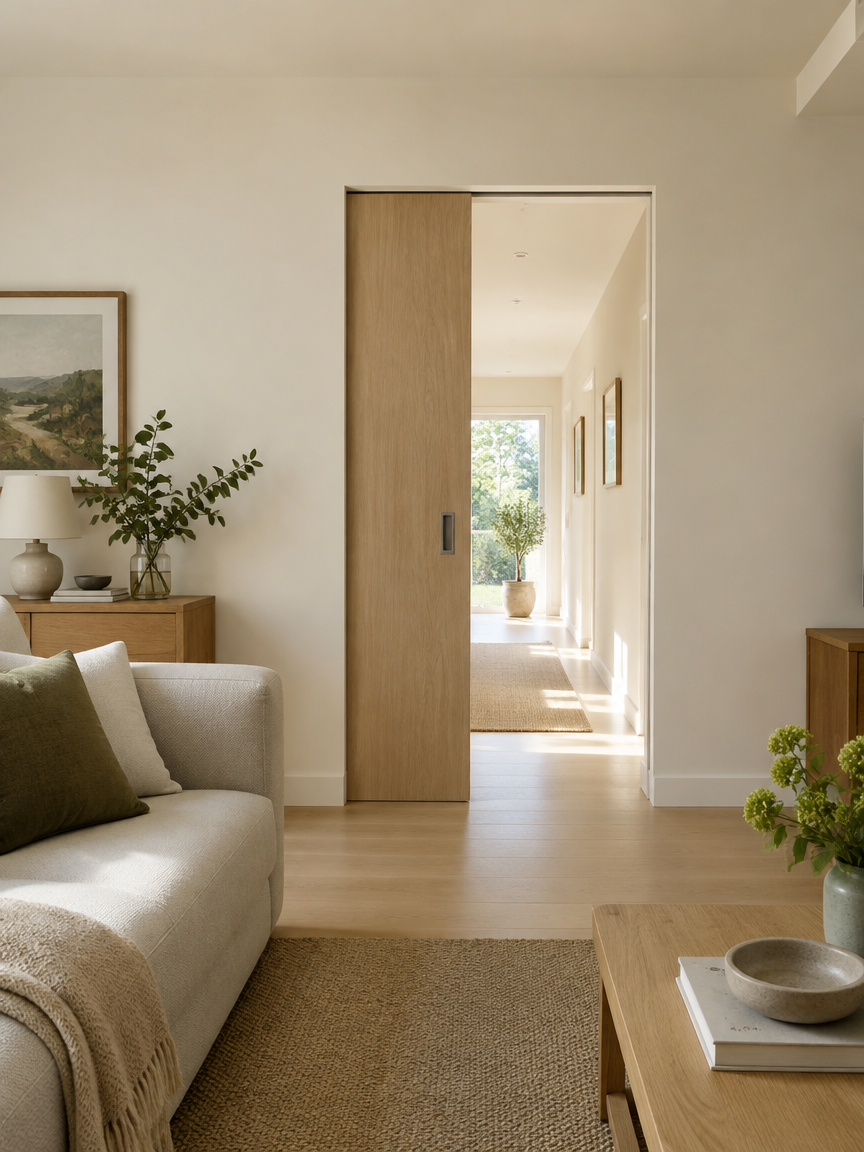
The Pocket Door
A hinged door steals a quarter circle of floor every time it opens. A pocket door slides away into the wall instead.
In a small apartment that recovered floor is often exactly where you wanted a chair.
If a pocket door will not fit, a sliding barn door gives you most of the benefit for far less work.
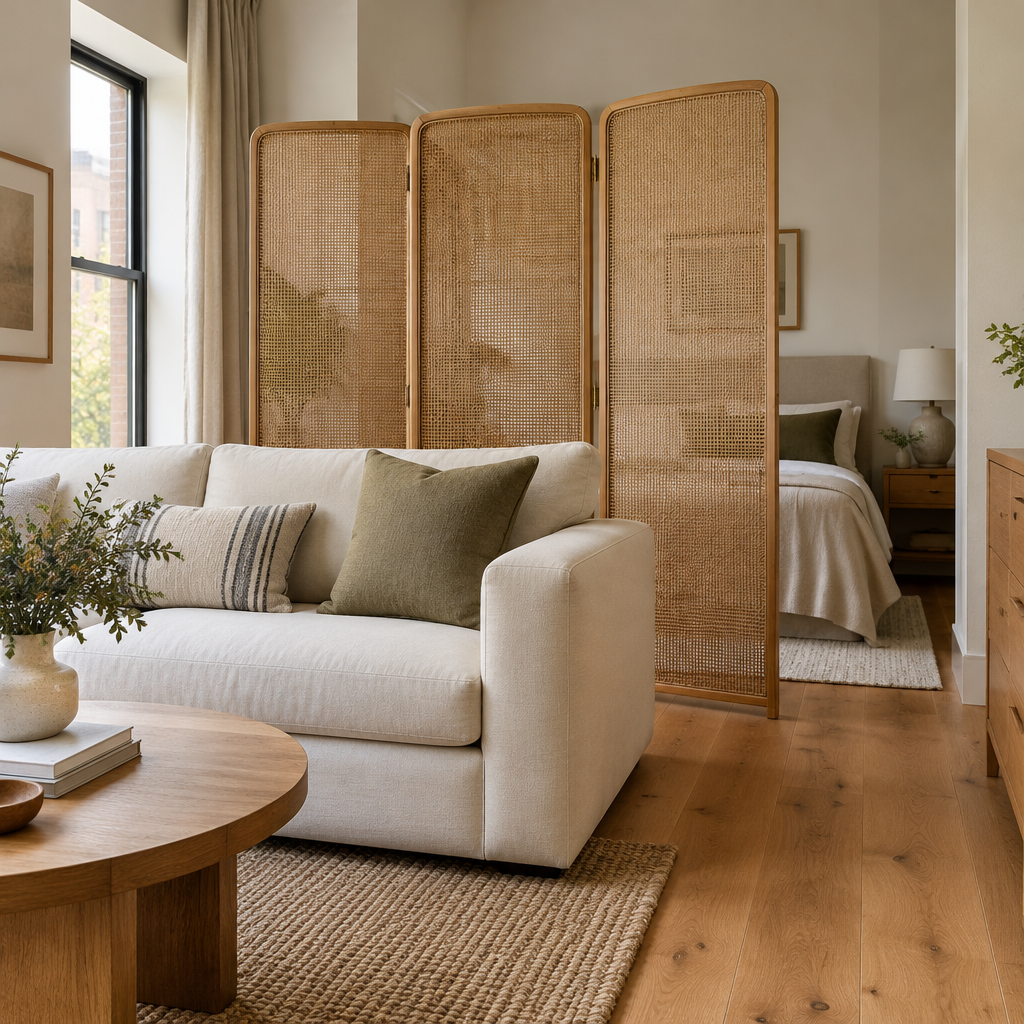
The Folding Screen
A folding screen makes a bedroom out of a studio in ten seconds. It also folds flat when you want the space back.
Choose something open like rattan or cane. Solid panels block light and make both sides feel smaller.
Three panels is usually enough. More than that and the screen starts to behave like a wall.
Colour, Walls and Light
Colour and light decide how big a room reads before the furniture does.
These twelve ideas work on the walls and the lamps, not the layout.
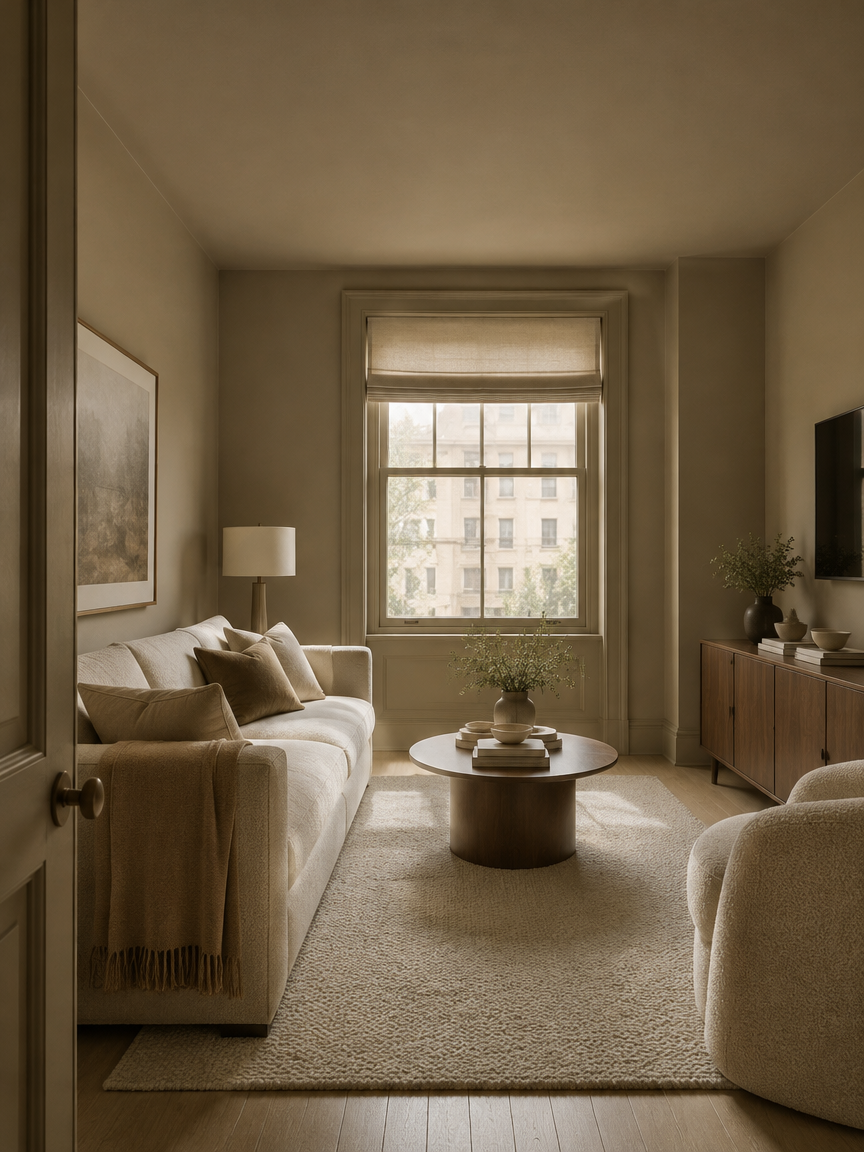
Colour Drenching
Paint the walls, ceiling, skirting and door frames the same shade. The hard lines disappear and the room becomes one calm shape.
This is the fastest way to make a small room feel bigger with paint alone. No furniture required.
Go one shade lighter on the ceiling if the room is dark. You keep the cocoon effect without the gloom.
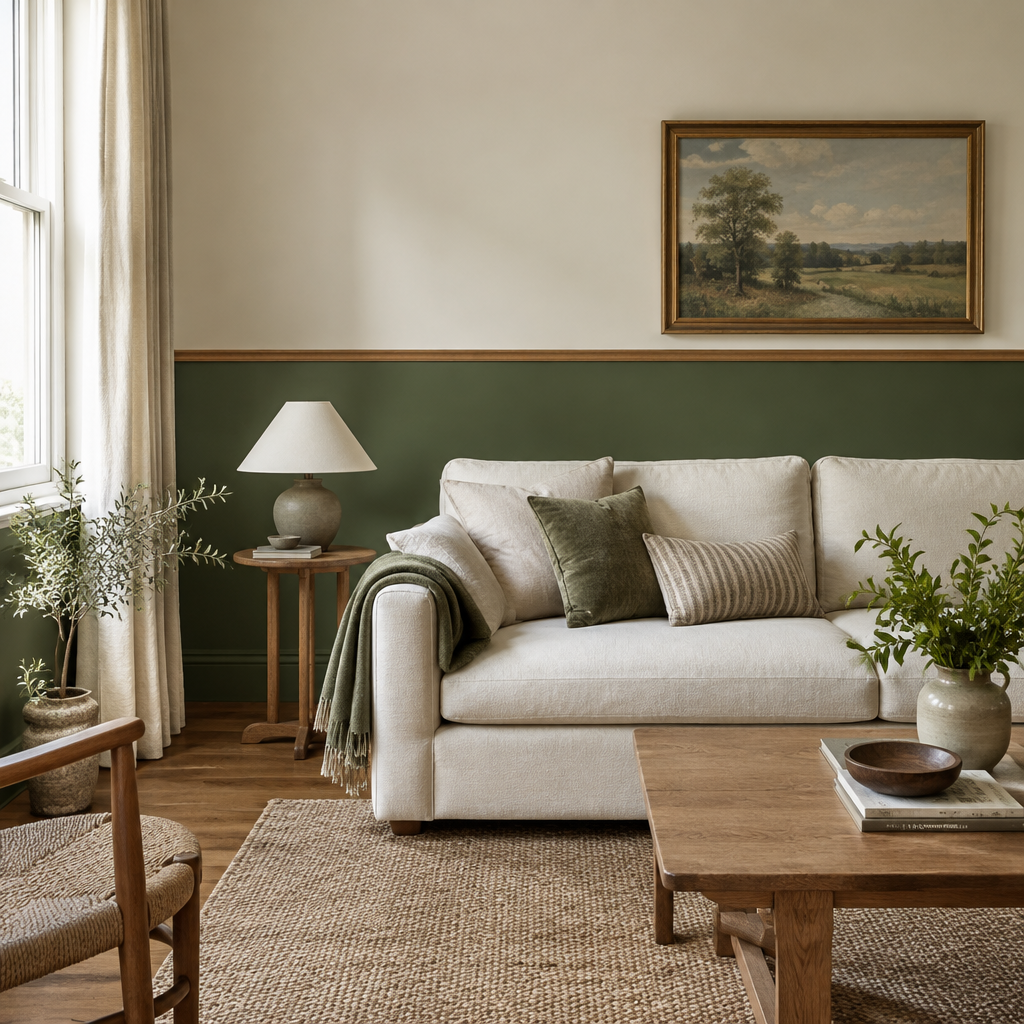
The Two-Tone Wall
Paint the lower half of the wall darker than the top. The dark band grounds the sofa and hides everyday scuffs.
The lighter top half keeps the ceiling feeling high. You get depth without shrinking the room.
Put the split just above the sofa back. Around 90 cm from the floor usually works.
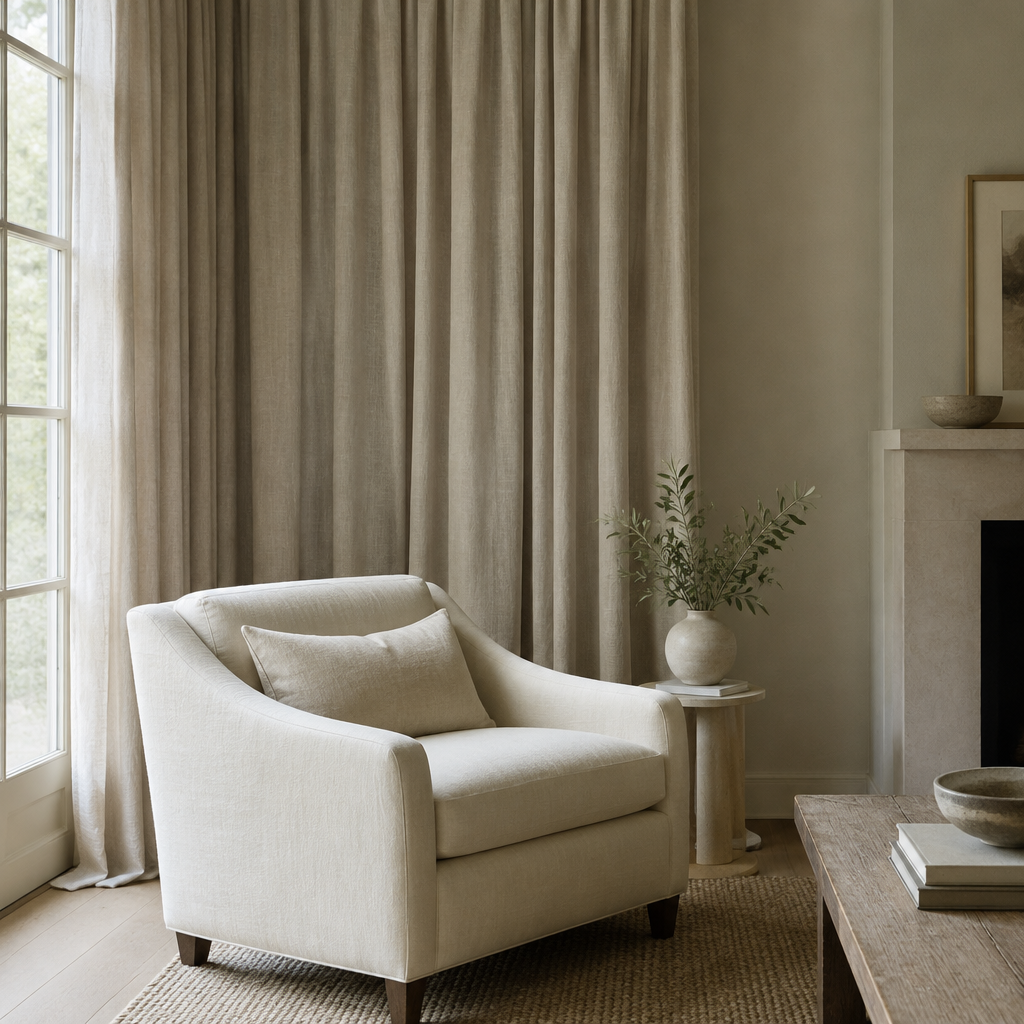
Tone-on-Tone Curtains
Match your curtains to the wall colour, not to the sofa. The window then reads as part of the wall instead of a block on it.
In a small room this removes a whole visual shape. The wall simply continues.
Choose a fabric with some weight so the folds hold. Thin fabric looks flat against a wall.
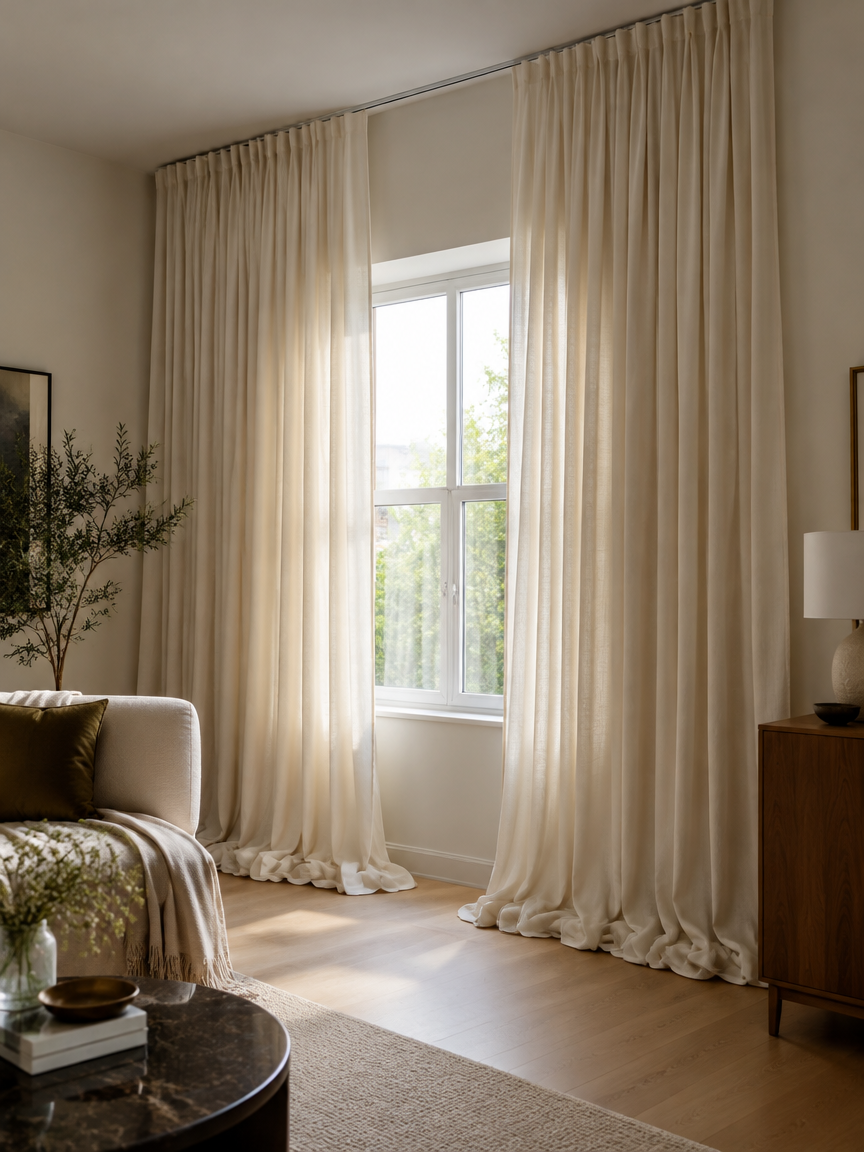
Ceiling-Track Curtains
Hang the track on the ceiling instead of on the window frame. The extra height makes both the window and the room look taller.
Run the track wider than the glass so the curtains stack off the window. You keep the full opening for light.
Let the fabric just touch the floor. Curtains that stop short look like a mistake in a small space.
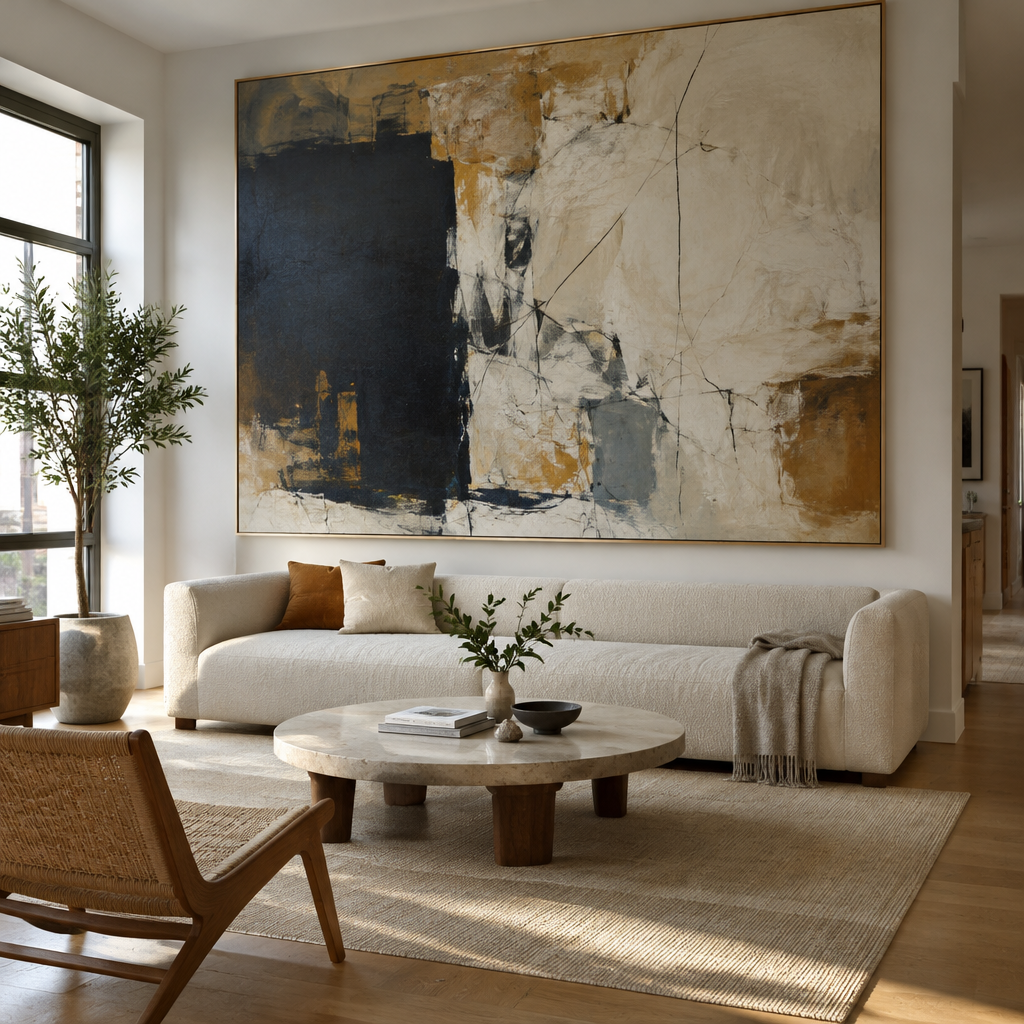
One Oversized Artwork
One large piece of art does more than ten small ones. It gives the eye a single place to land.
Small frames on a small wall make the wall look crowded. A big piece makes it look generous.
Hang the centre at eye level when standing. In tiny rooms, go slightly lower so it relates to the sofa.
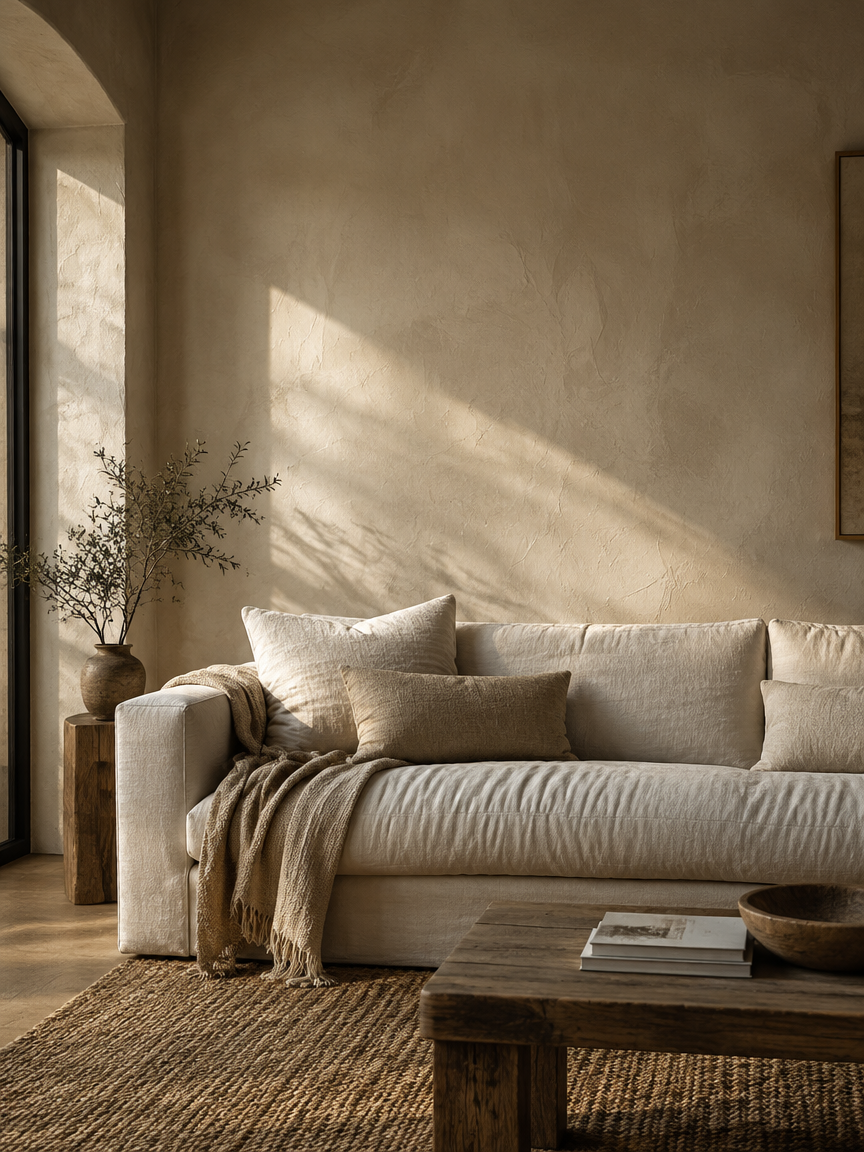
The Plaster Wall
A hand-troweled plaster finish adds depth without a single object. The wall itself becomes the decoration.
It also hides small marks, which matters in a hard-working or rented room.
Limewash is the easiest version to try yourself. Two thin coats and a wide trowel are enough.
The Arch Niche
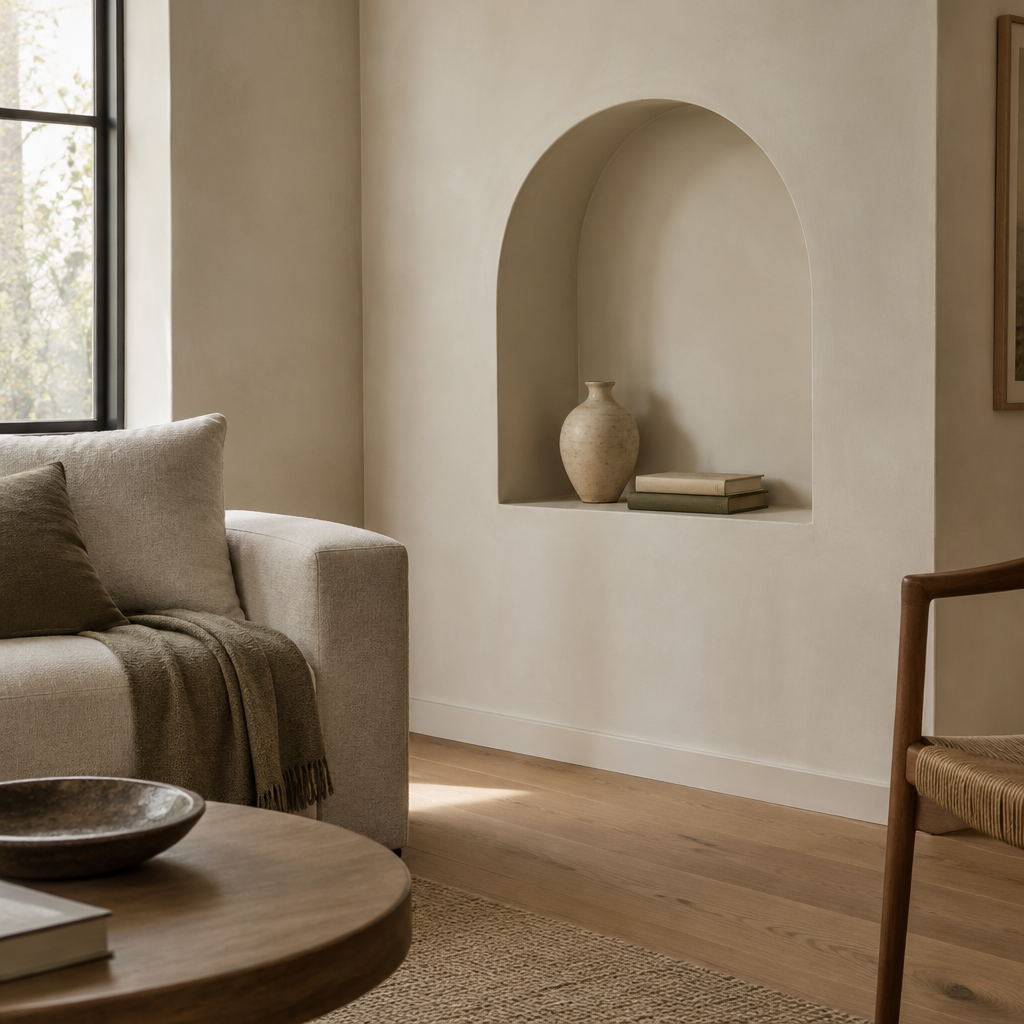
A shallow arch recessed into the wall gives you display space with zero floor cost. Renters can fake it with a stick-on arch border.
Keep it 10 to 15 cm deep. Deeper than that and it stops being a niche and becomes a cupboard.
Put one object inside, not five. The arch frames whatever sits in it.
The Gloss Ceiling
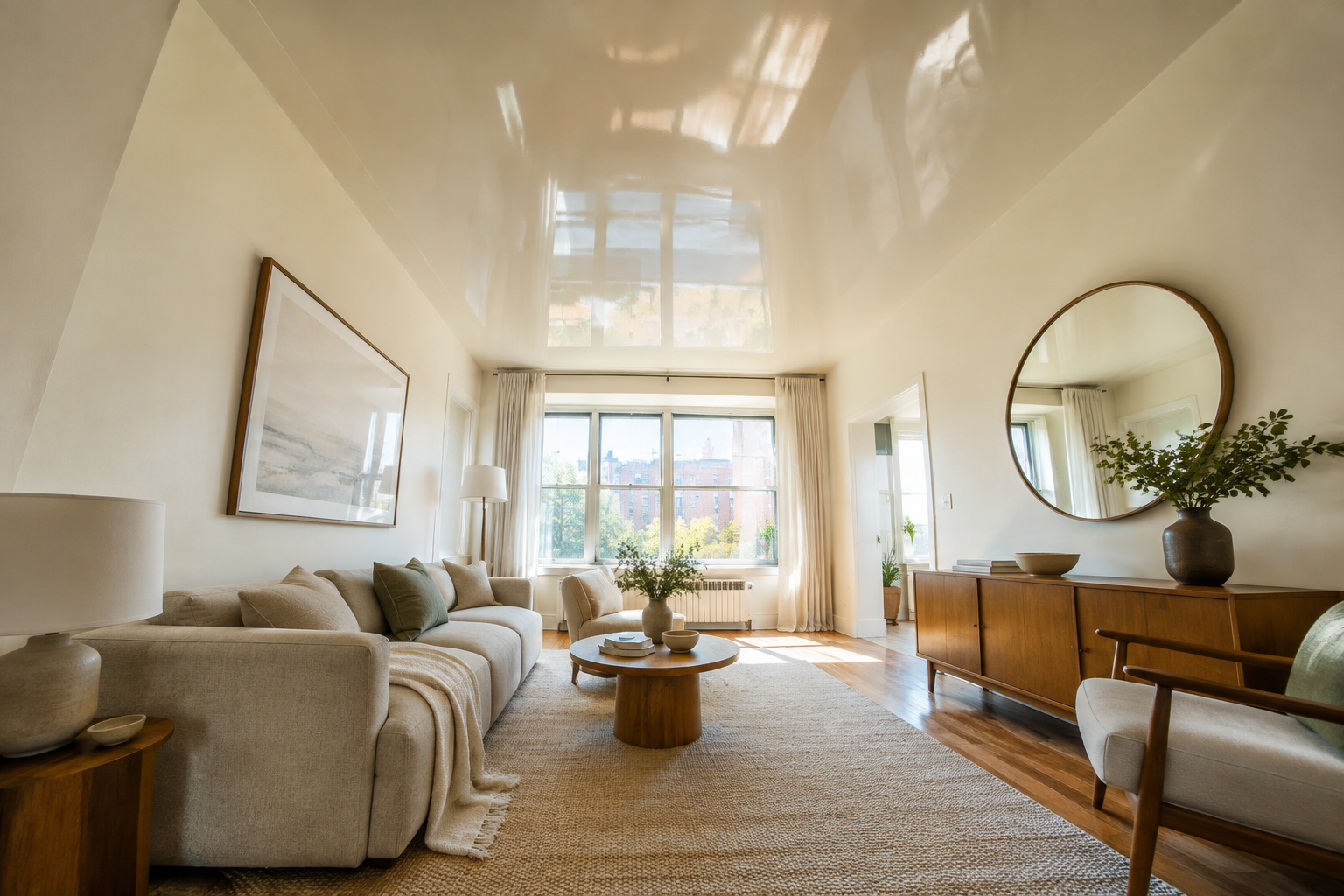
A gloss ceiling bounces window light back down into the room. Small, dark rooms brighten without another lamp.
Use the same colour as the walls, just in a gloss finish. Matching tone with a different sheen keeps it calm.
This works best with a decent window. In a room with no daylight it only reflects the lamps.
The Statement Pendant
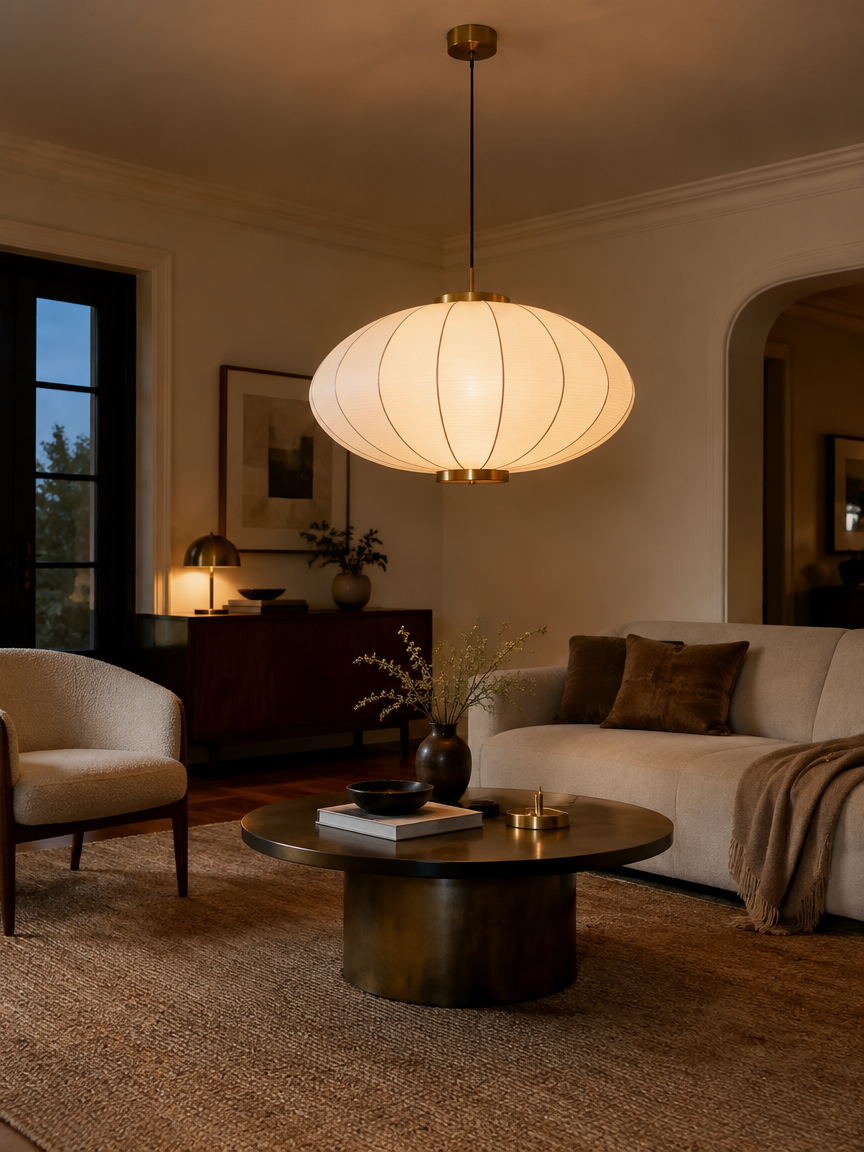
Hang one bold pendant low over the coffee table. Your eye goes to the light and stops noticing the room’s width.
Low pendants also make a small room feel intentional. Something in it has obviously been placed with thought.
Keep the bottom around 75 cm above the table. Any lower and you will hit your head on it.
The Baseboard Glow
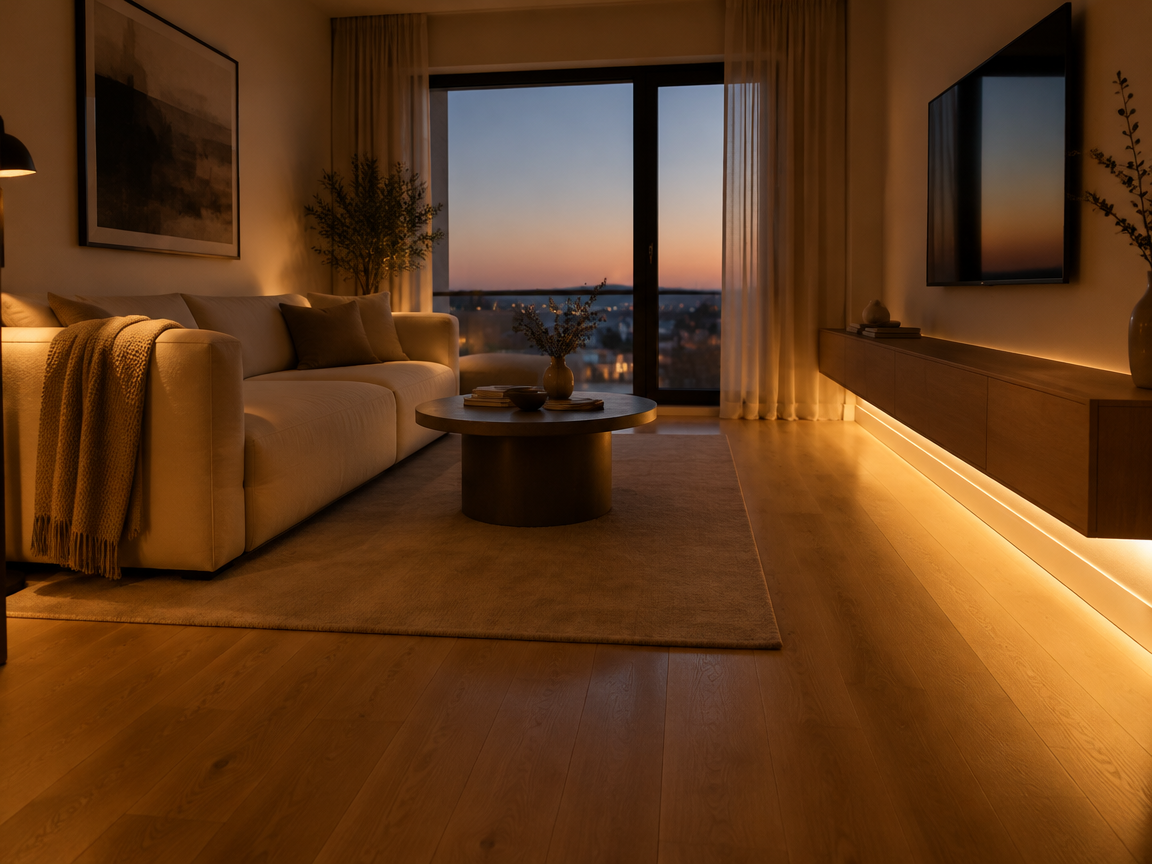
Hide a warm LED strip at the baseboard and wash light across the floor. The floor reads wider and the whole room feels lifted.
This is the best evening lighting for a small room. It lights the space without glaring back at you.
Keep it warm, around 2700K. Cool white at floor level looks like a shop, not a home.
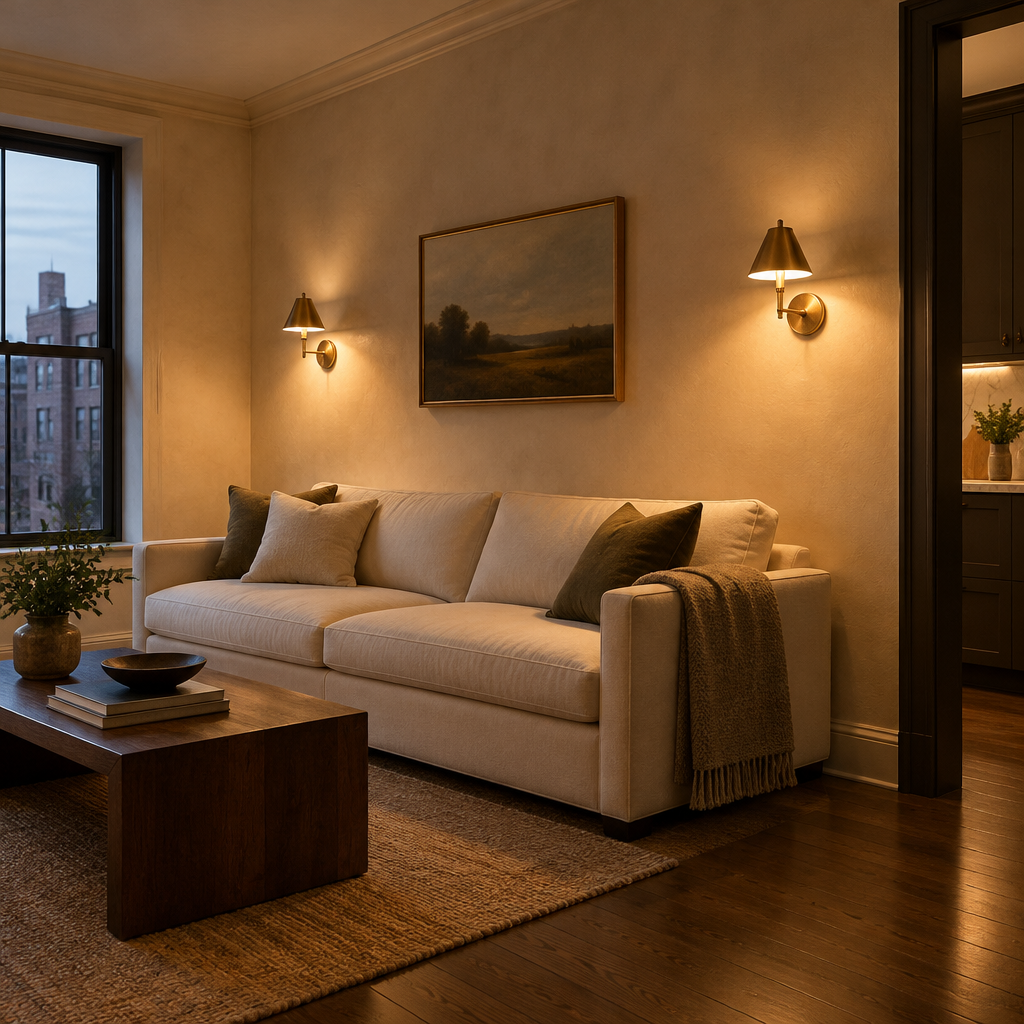
Wall Sconces Instead of Floor Lamps
Wall sconces free up two circles of floor that lamps would have taken. In a small room that is real, usable space.
They also light from two different heights, which is much softer than one bulb in the middle.
Put them at around 1.5 m and point the light upwards. Bounced light opens a room more than direct light.
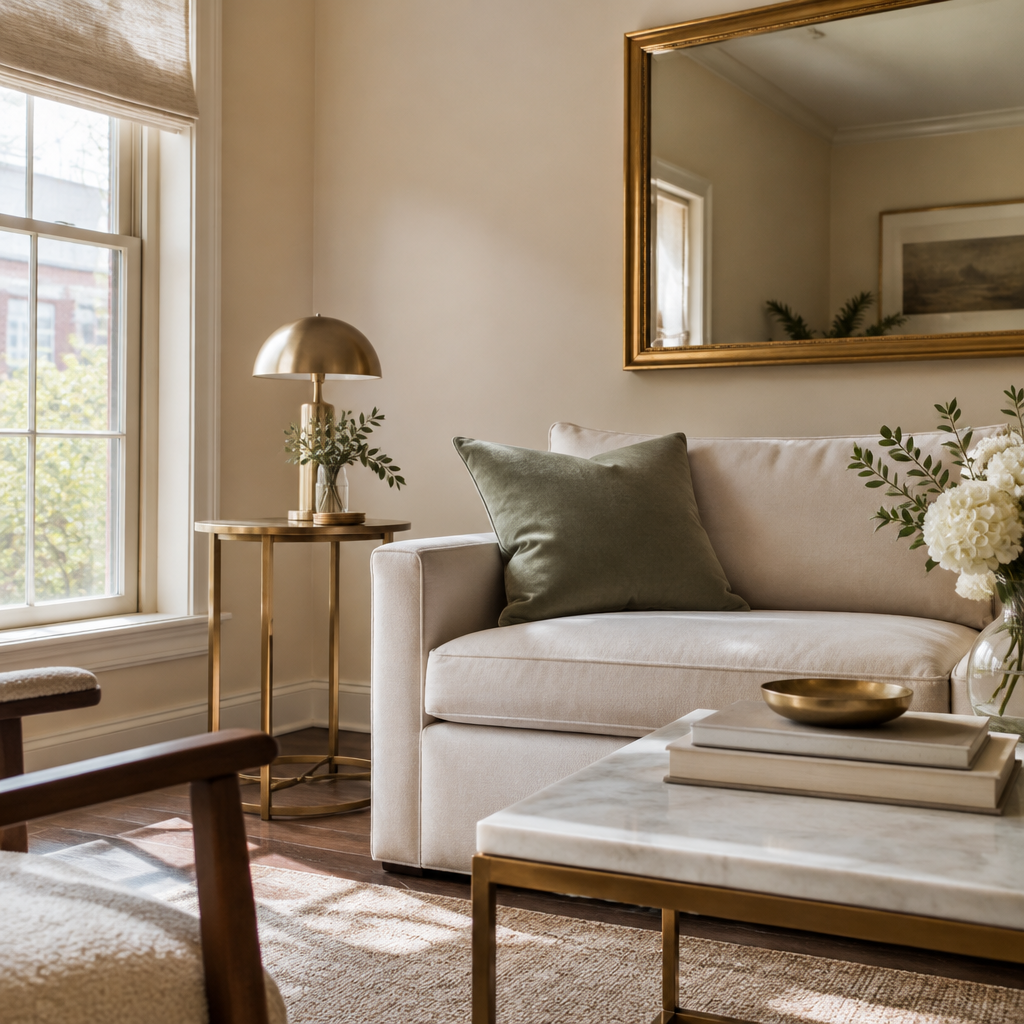
Brass Reflectors
A little brass or polished metal acts like a small mirror. It throws light into the darker parts of the room.
Use it in two or three places, not everywhere. A few points of shine lift a room; a lot of them look busy.
Brushed brass is more forgiving than chrome. It reflects warm light instead of cold.
Texture, Materials and Plants
Small rooms need touch, not more objects.
These eleven ideas add warmth, quiet and greenery without filling the floor.
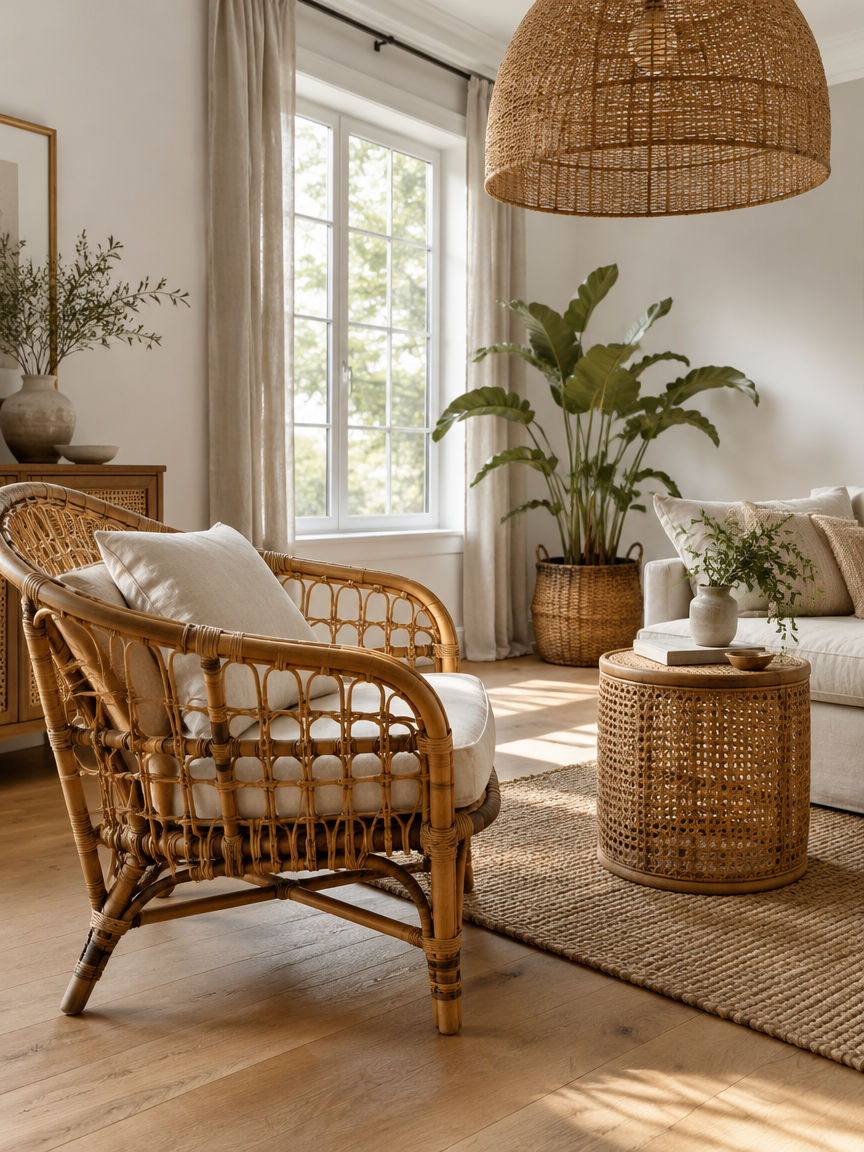
Rattan Warmth
Rattan and cane add warmth with almost no visual weight. You see through them, so they do not fill the room.
One woven chair is usually enough. Pair it with a plain sofa so the texture has a calm neighbour.
Choose natural or honey tones. Black rattan reads heavier and closes a small room in.
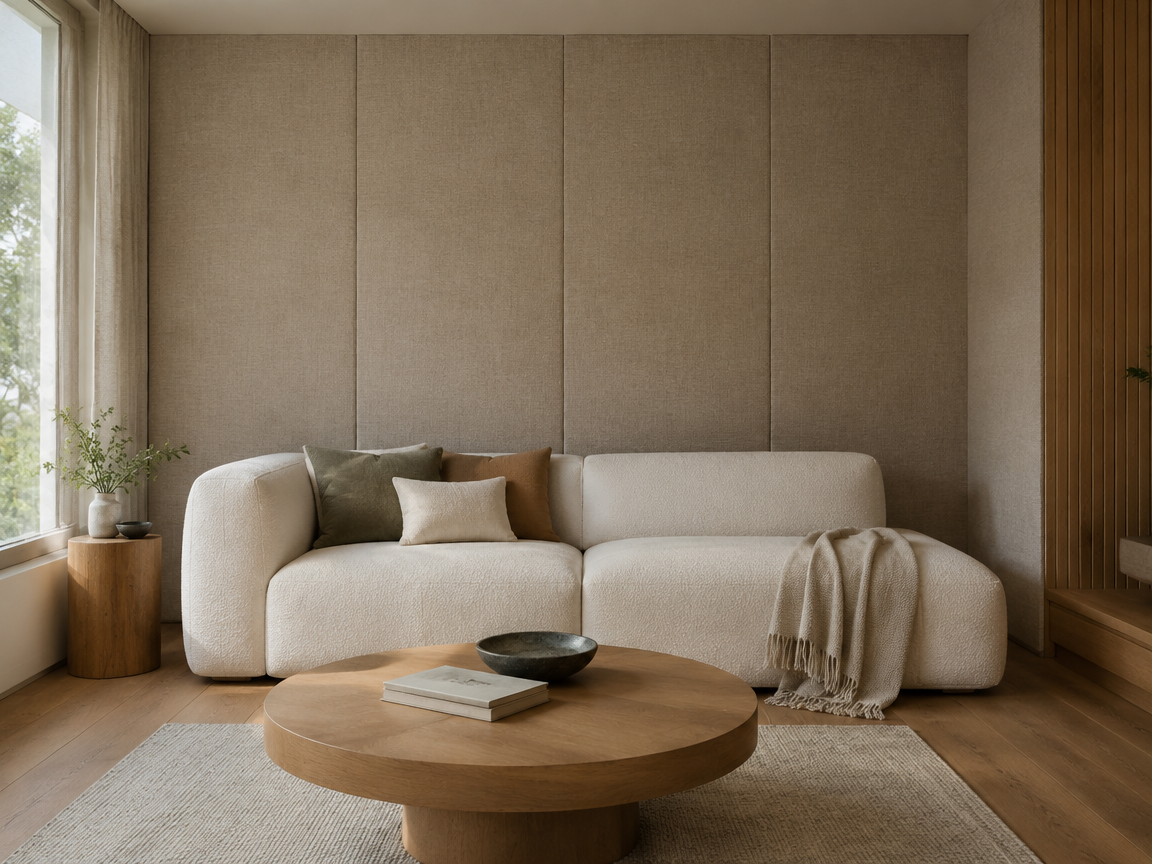
Fabric Wall Panels
Upholstered wall panels soften both sound and touch in a hard room. Small apartments echo badly, and fabric fixes that.
They also add texture without adding furniture. The wall does the work for you.
Keep the panels in the wall’s own tone. Contrast here makes the wall feel closer than it is.
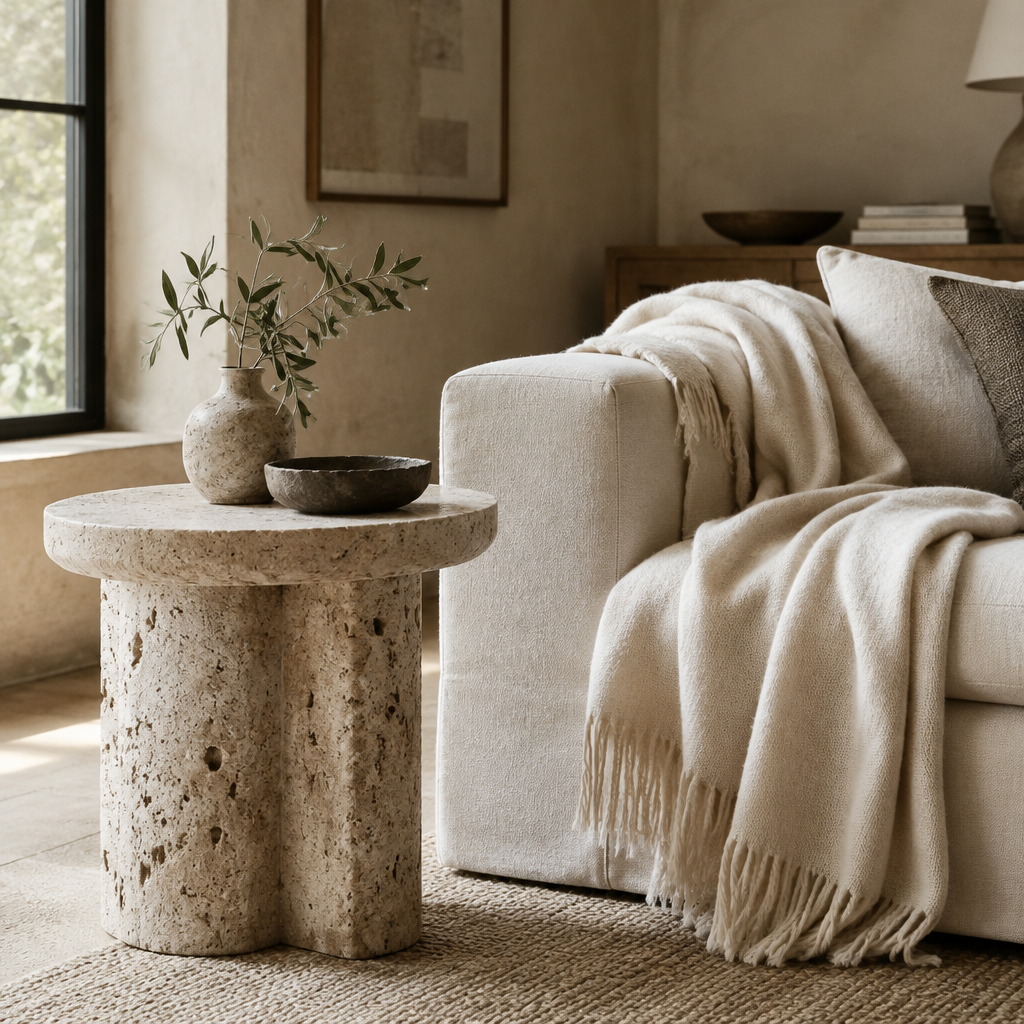
Stone and Cashmere
Mix one rough material with one soft one. Stone next to cashmere reads as expensive and costs almost nothing extra.
Hard surfaces on their own feel cold. One soft layer is all a small room needs.
Keep the palette tight while you mix materials. Aim for contrast in touch, not in colour.
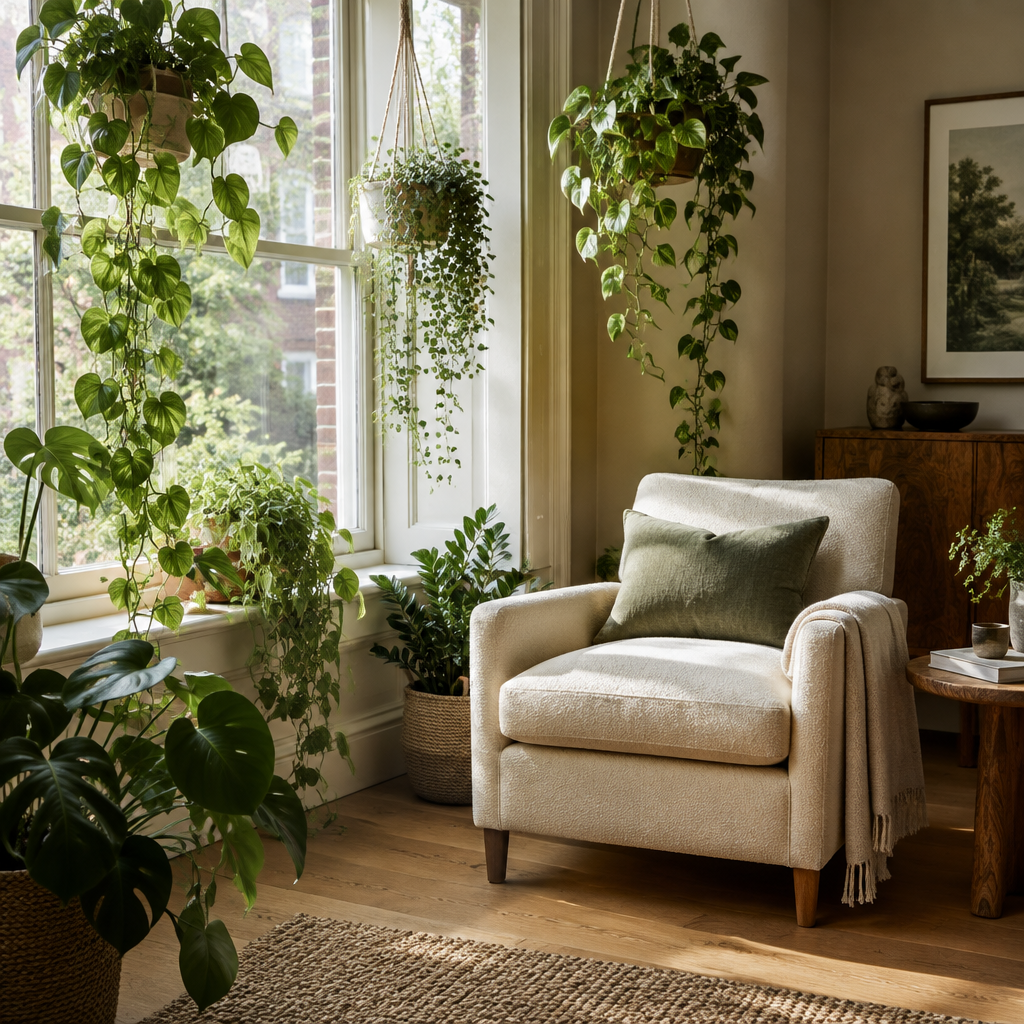
The Hanging Plant Curtain
Hang plants at three different heights beside the window. The greenery gives the eye something to climb.
Trailing plants are the best choice because they fill the air without taking any floor space.
Water them in the shower every few weeks. In a small room, plants need to be easy or they get forgotten.
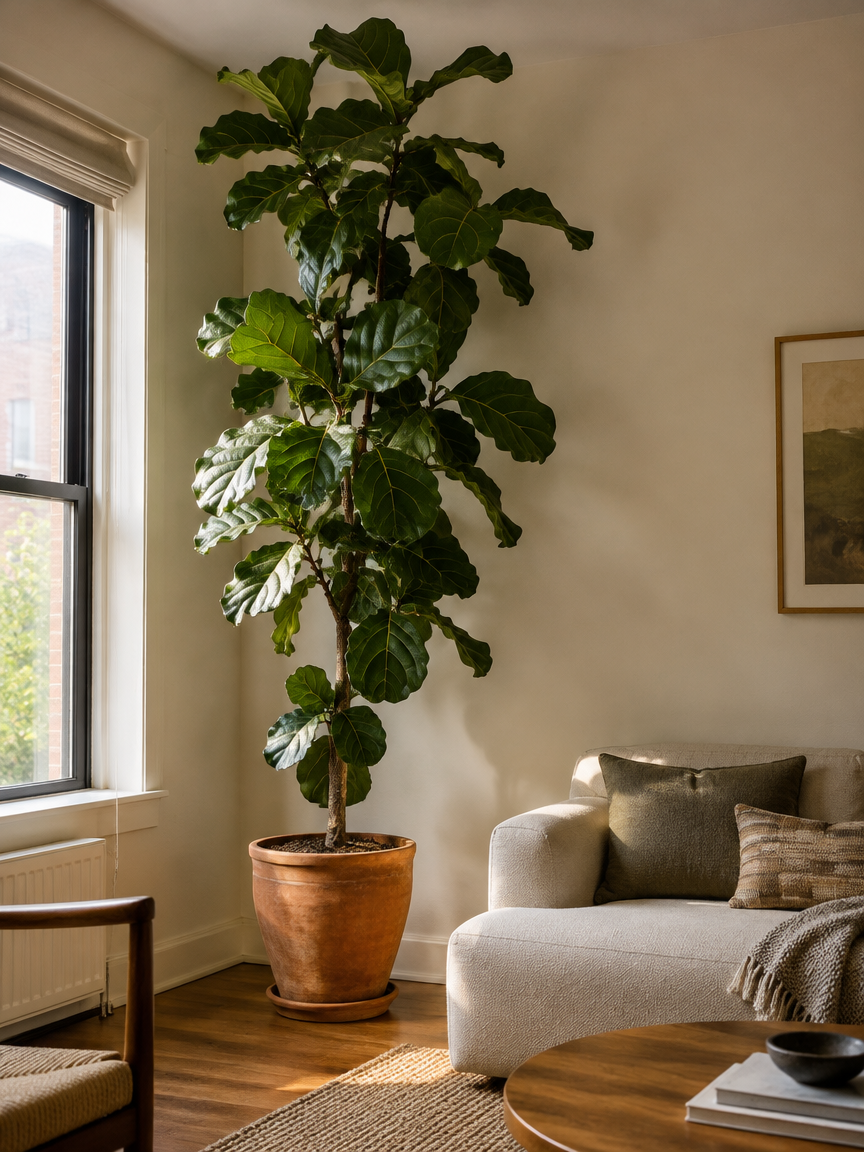
The Corner Tree
One tall plant in the corner softens the hardest angle in the room. It also covers space you could never use anyway.
Choose a plant that reaches close to the ceiling. Height is what makes a small room look taller.
A pot on a low stand adds a few more centimetres. Skip the row of tiny plants on shelves.
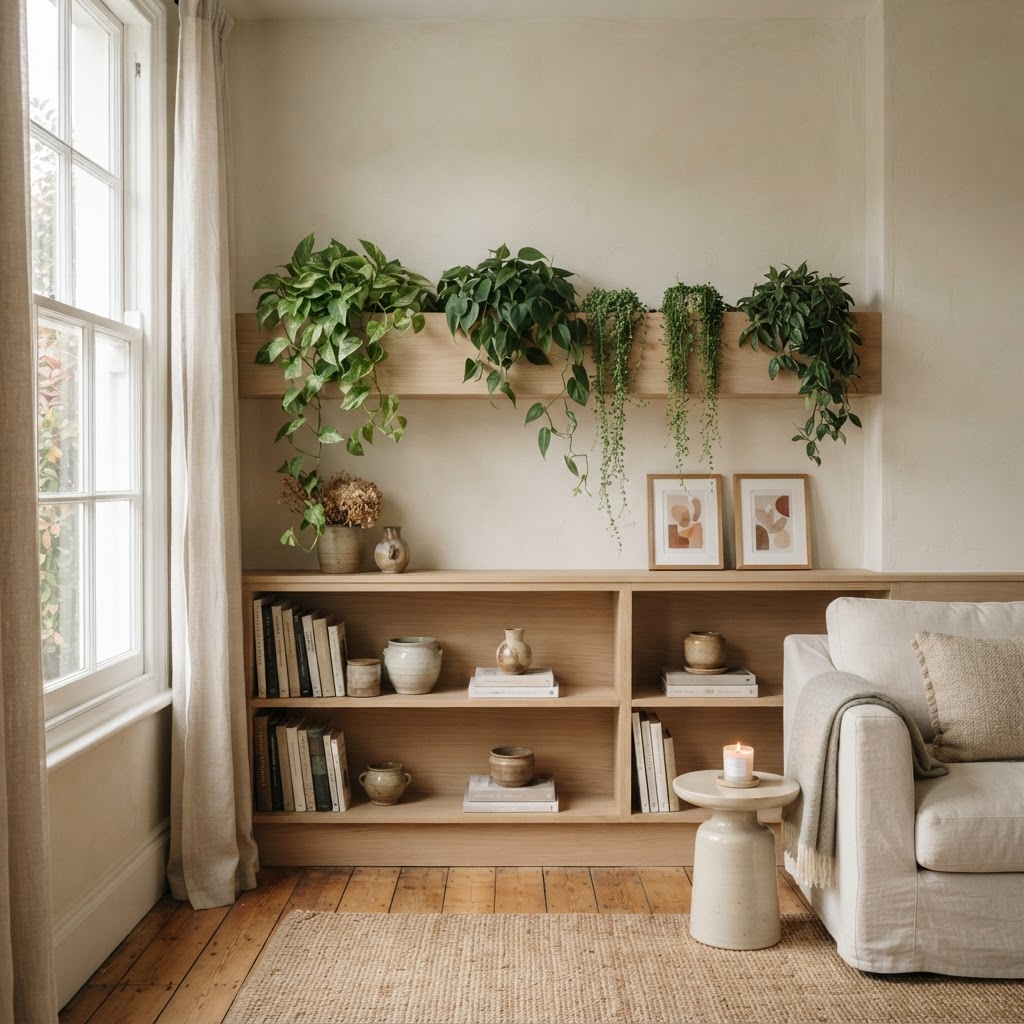
Built-In Planters
Build a narrow planter along the top of a low shelf. Greenery grows downwards and the furniture reads lighter.
Line the planter so water cannot reach the wood. A plastic tray inside is enough.
Choose plants that trail rather than climb. Upward growth blocks the wall you need to keep clear.
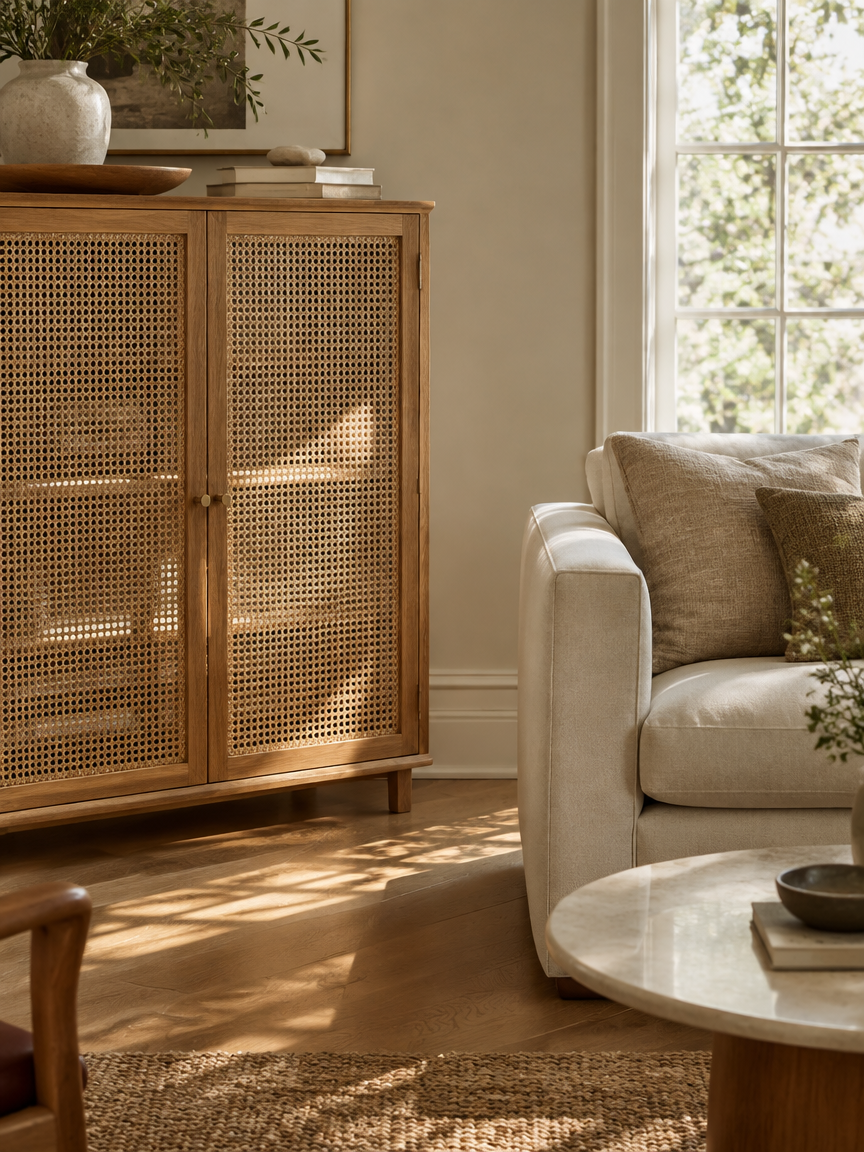
The Cane Door
Cane door fronts let light pass through storage. Solid doors read as a heavy block on a small wall.
This is especially useful for wall units, which otherwise look like a second wall.
Line the inside in a light tone. Then the cabinet glows instead of turning into a dark hole.
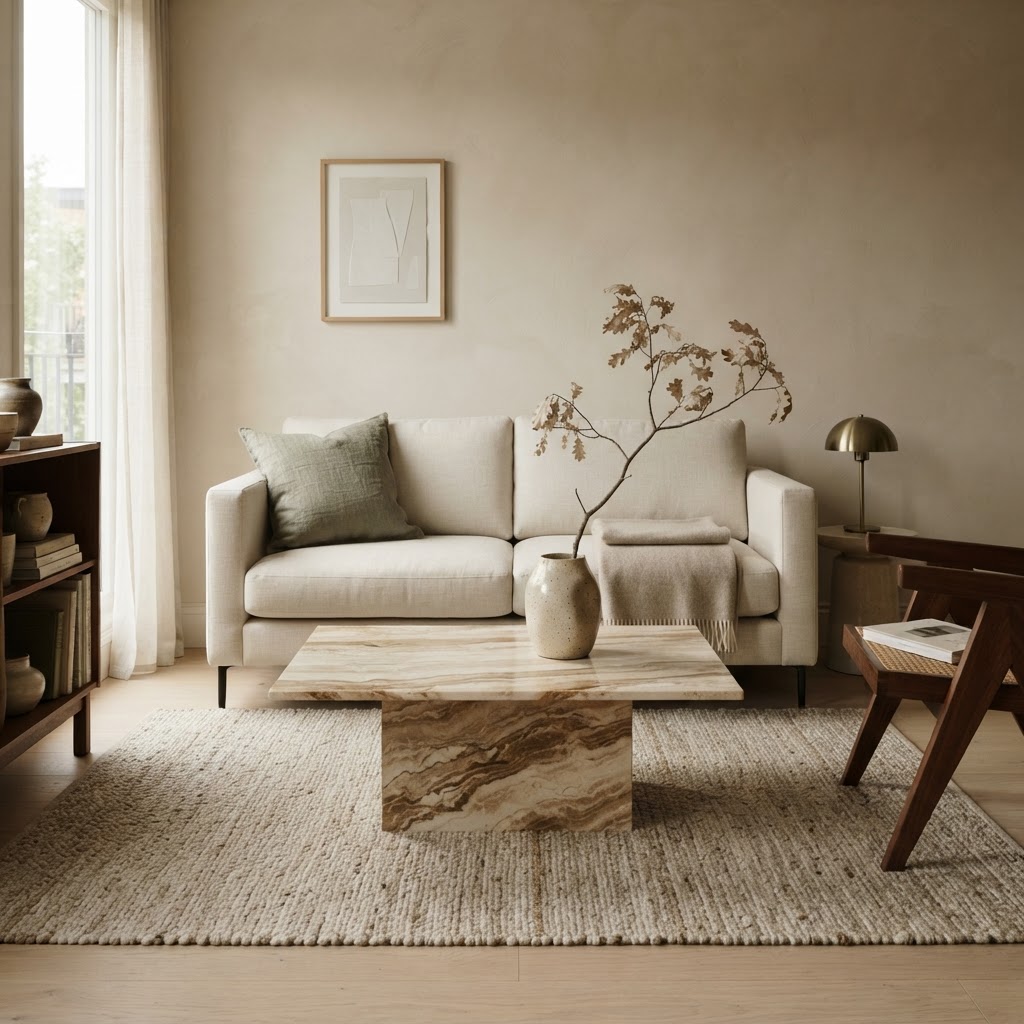
The Marble Accent
One marble surface adds weight and age to a small, light room. Use it on a table rather than on a wall.
Bold veins are better than quiet ones here. You want one place for the eye to stop.
Travertine and honed stone scuff less than polished marble. In a busy room that matters.
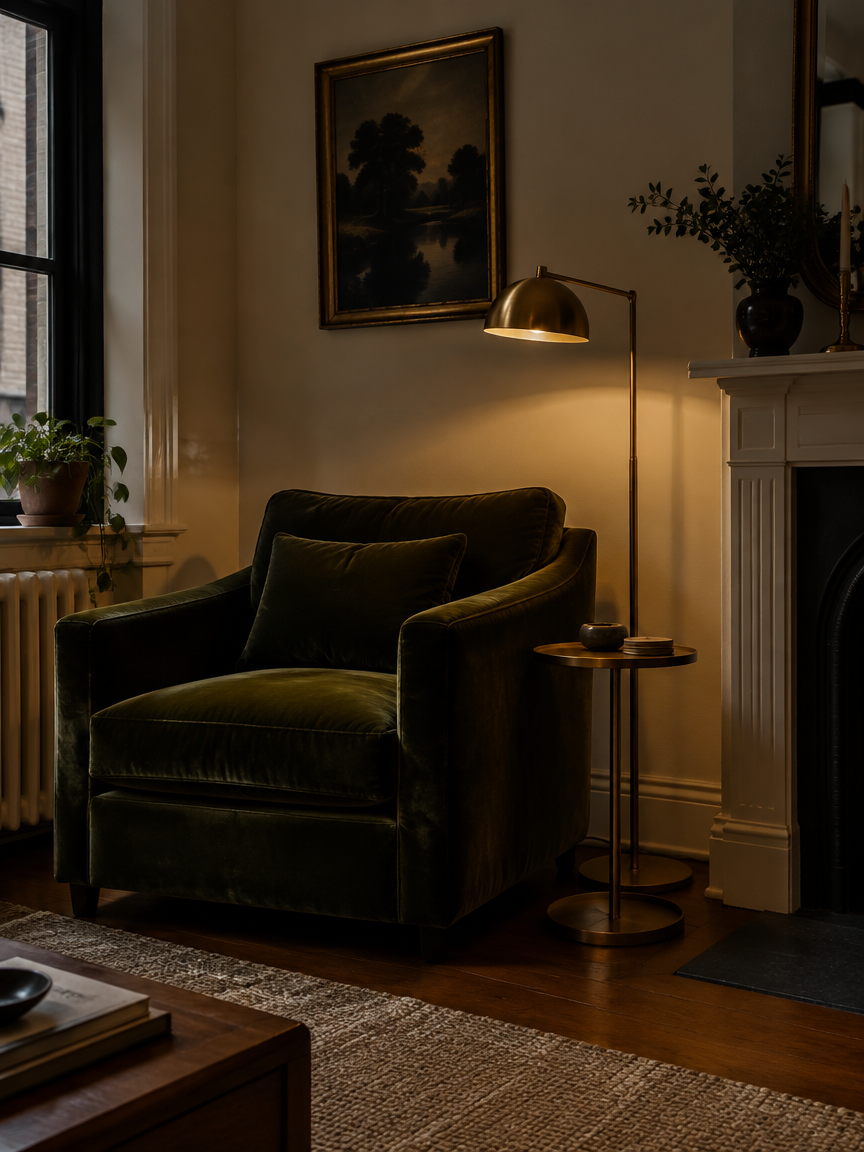
Deep Velvet in the Dark Corner
Put the darkest, softest piece in the darkest corner. Velvet absorbs shadow, so the corner stops feeling empty.
A dark chair also makes the rest of the room look lighter by comparison.
Keep the shape simple. Dark colour plus a busy shape is too much for a small space.
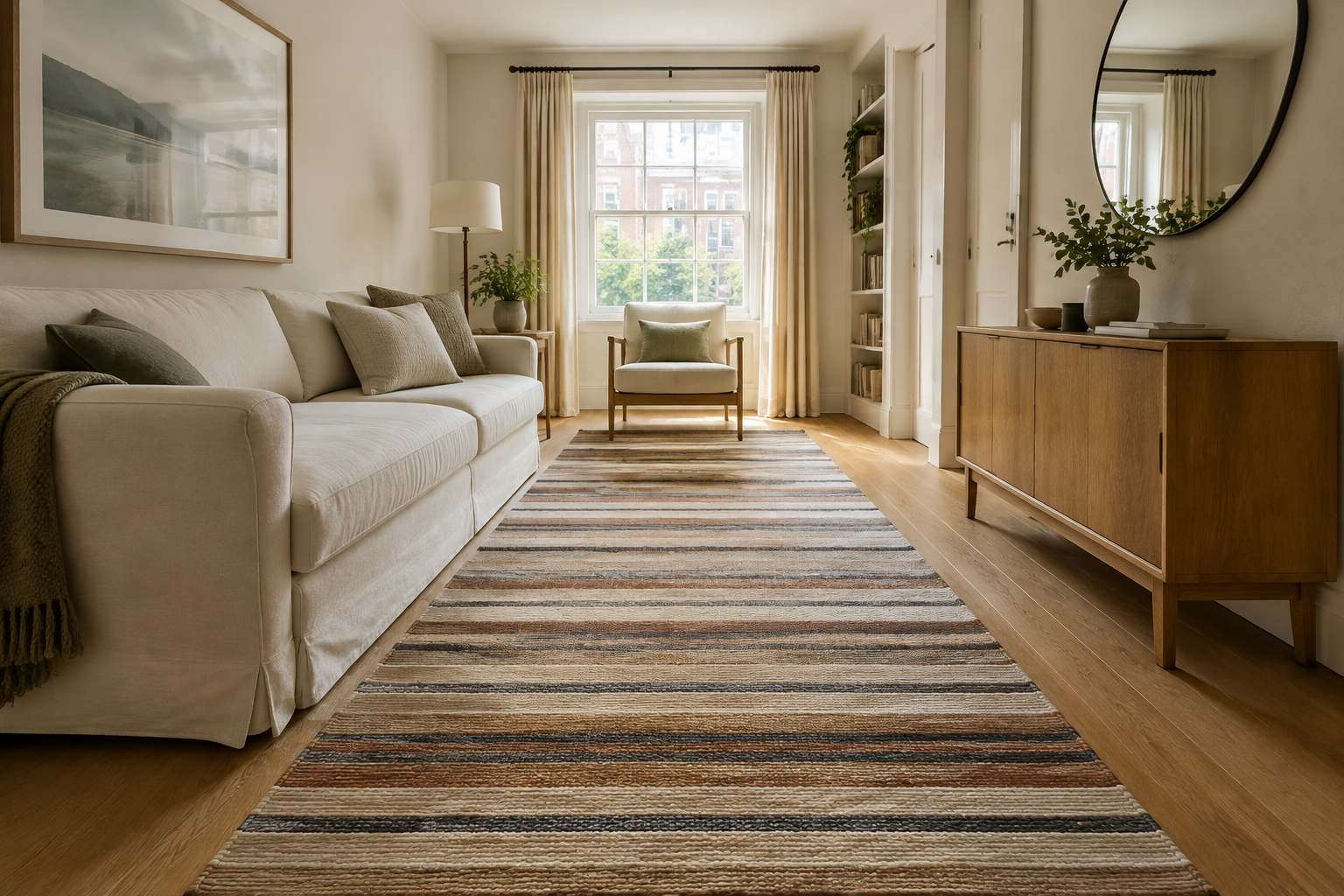
The Striped Rug
Lay the stripes along the length of the room, not across it. The lines pull the floor out and make the space read longer.
Keep the stripes narrow and low-contrast. Wide bold bands cut the floor into sections.
A flatweave sits flatter than a pile rug. That matters in a room where doors have to clear the floor.
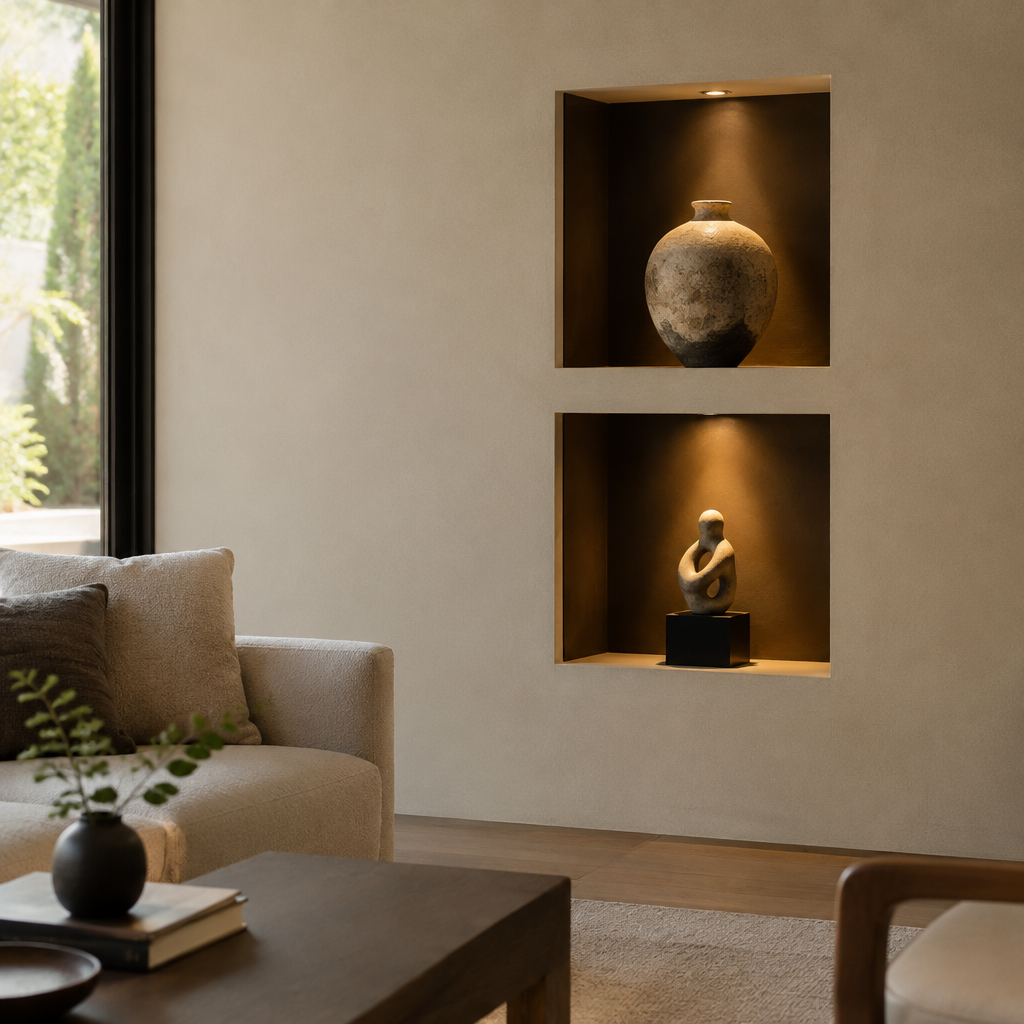
The Shadow Box Shelf
A deep shelf with a front edge frames whatever sits inside it. Ordinary shelves let objects blend into the wall.
Use one or two, not a whole row. Each one should hold a single object.
Warm light inside the box makes it read as display even in daylight.
Small Habits That Keep a Room Calm
These last seven are habits more than purchases.
They keep a small living room calm once the big decisions are done.
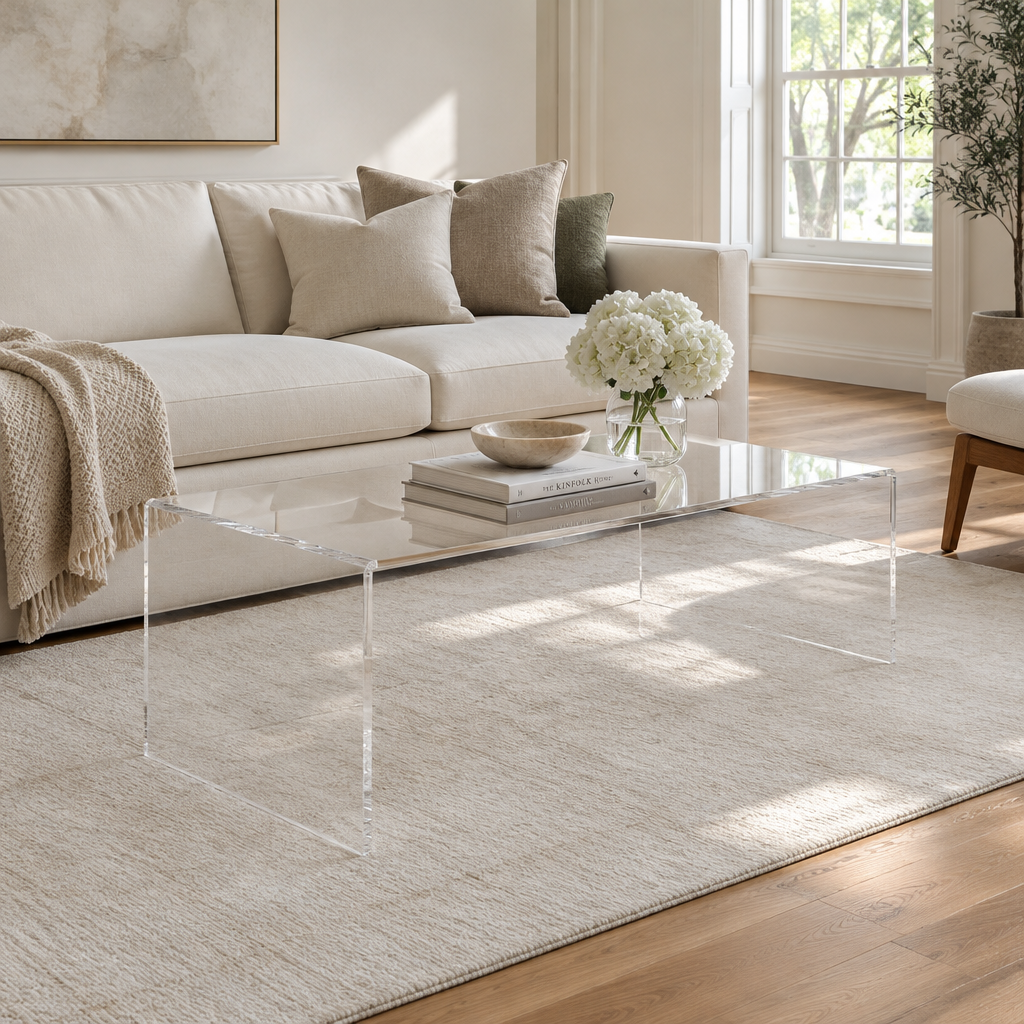
The Acrylic Ghost Table
A clear acrylic table almost disappears. You keep a surface without adding a visual block to the middle of the room.
It works best over a light rug. Over a dark floor it shows every fingerprint.
Choose thick acrylic, around 12 mm. Thin acrylic looks cheap and flexes under a cup.
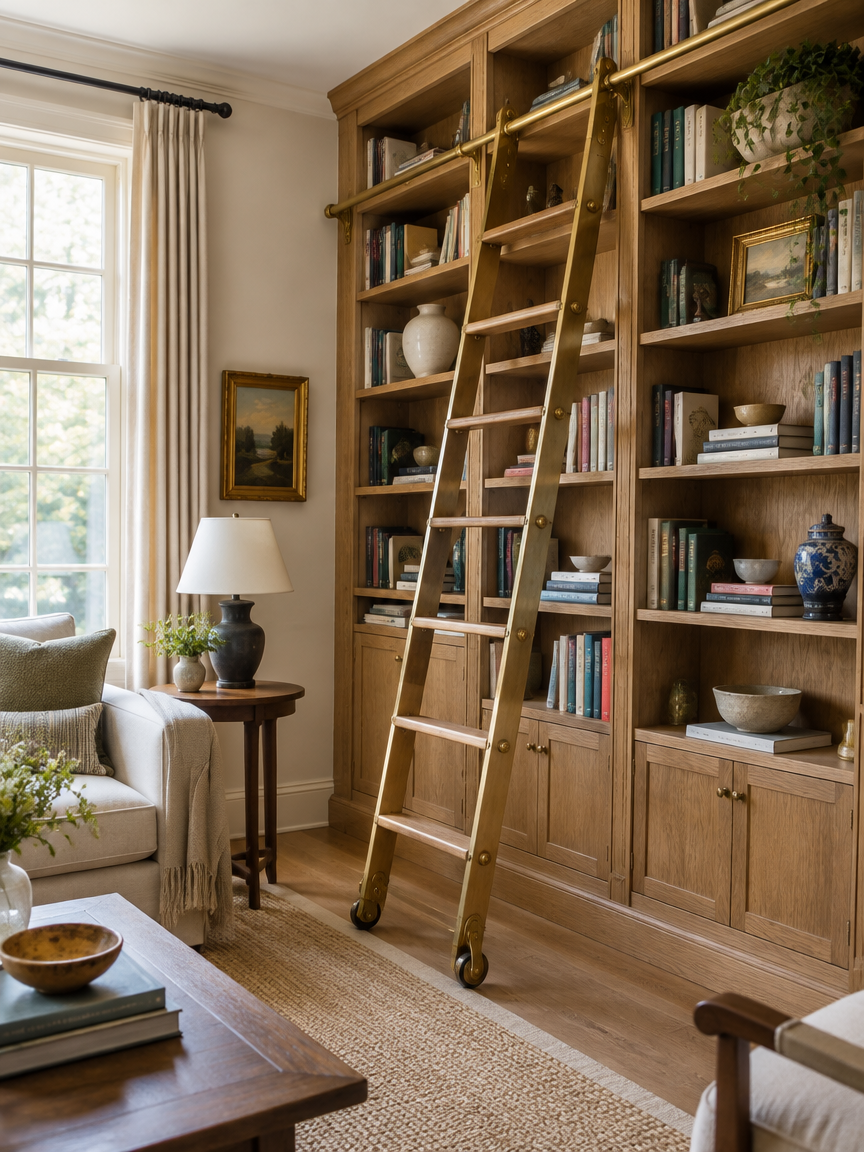
The Library Ladder
If your shelves reach the ceiling, a slim ladder makes the top rows usable. It also draws a vertical line that makes the room feel taller.
Choose brass or pale wood. A dark rail on a light wall cuts the wall in half.
Keep the ladder narrow and close to the shelf. A wide ladder becomes an obstacle.
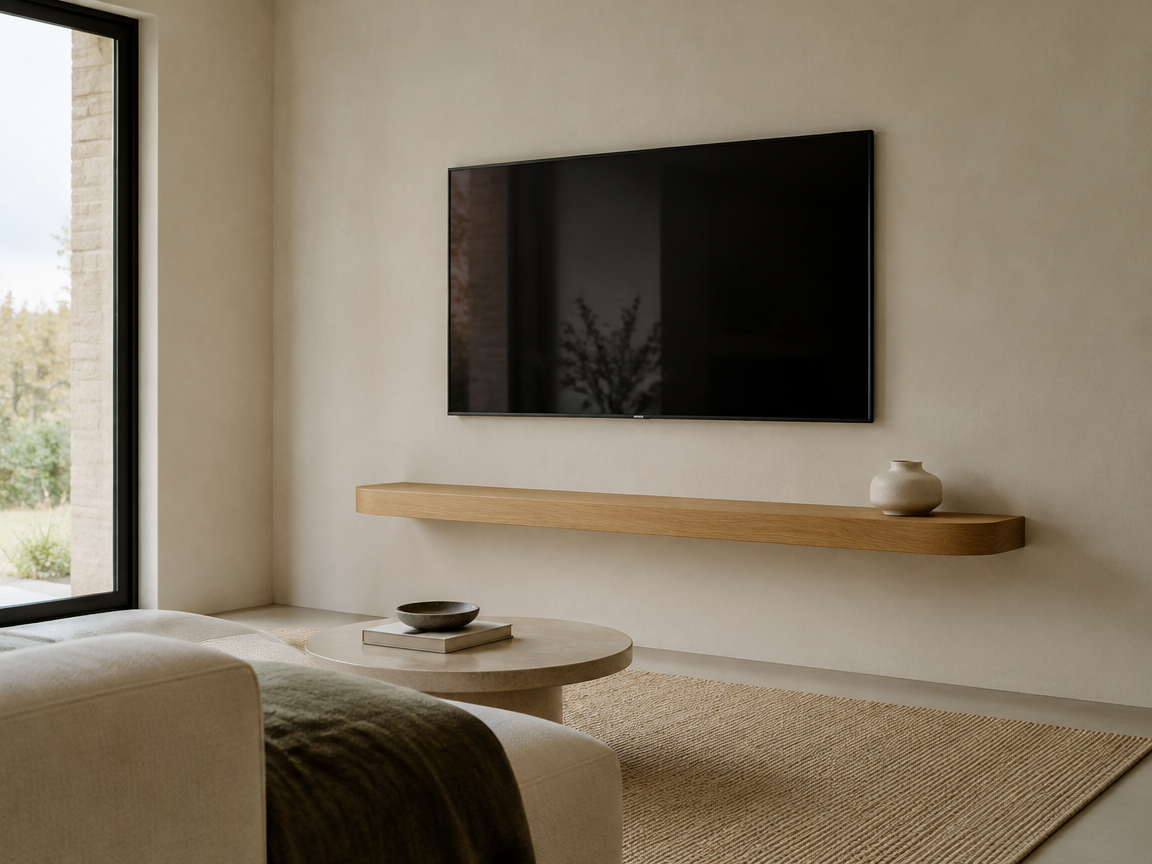
The Cord-Free Wall
Hide every cable inside the wall or in slim trunking. Visible wires make a small room look untidy rather than lived in.
Mount the screen flat and put one object on the shelf below it. Nothing else.
If you rent, run a slim cable cover down the corner and paint it to match the wall.
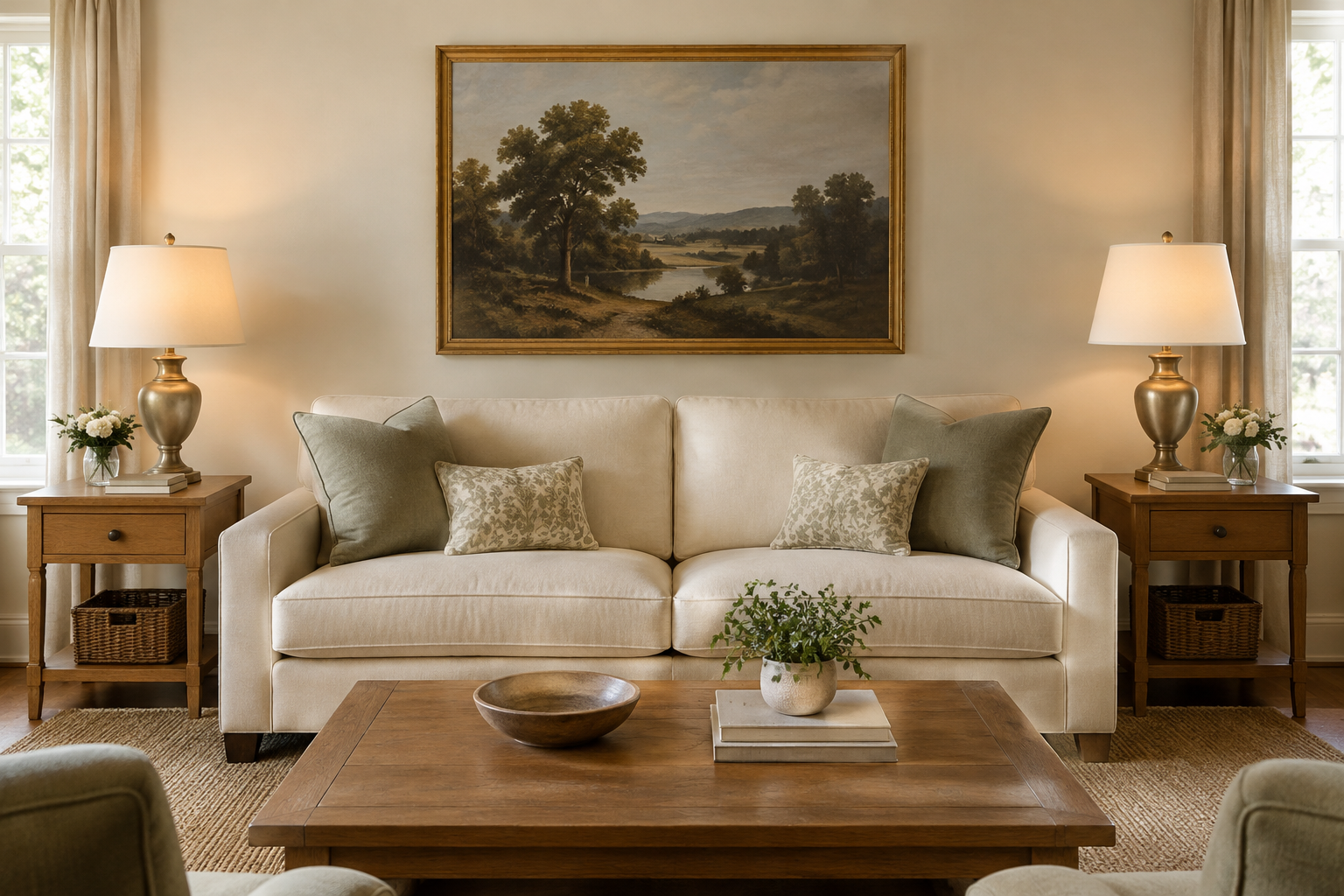
The Symmetry Pairing
Use two identical lamps on two identical tables. Symmetry calms a room faster than any other styling trick.
It also makes a small space look designed rather than assembled. Both sides answer each other.
Keep everything else asymmetric so the room does not turn stiff.
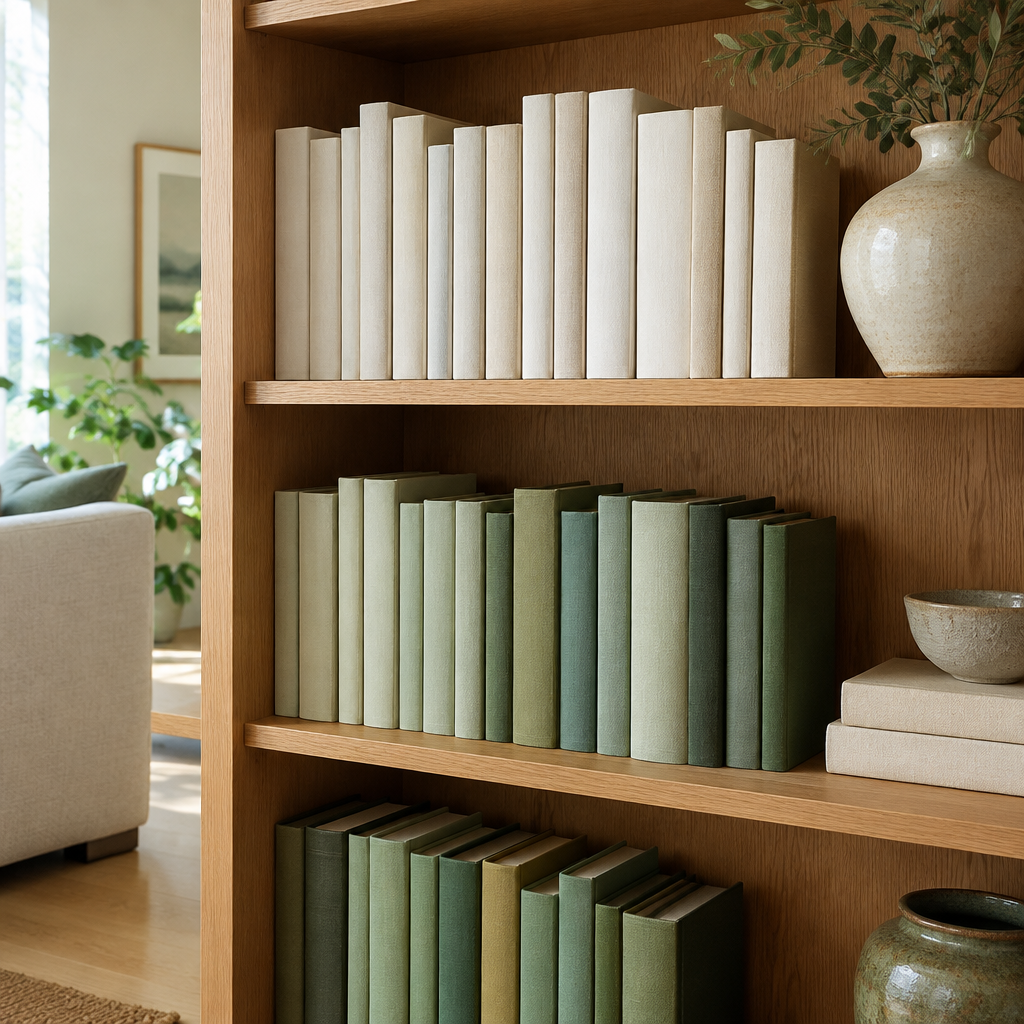
Colour-Sorted Books
Sort books by spine colour and the shelf becomes part of the palette. Random colours read as clutter at a glance.
Keep the range narrow, two or three tones. A full rainbow is louder than most small rooms can carry.
Leave gaps on the shelf. Books pushed edge to edge read as one solid block.
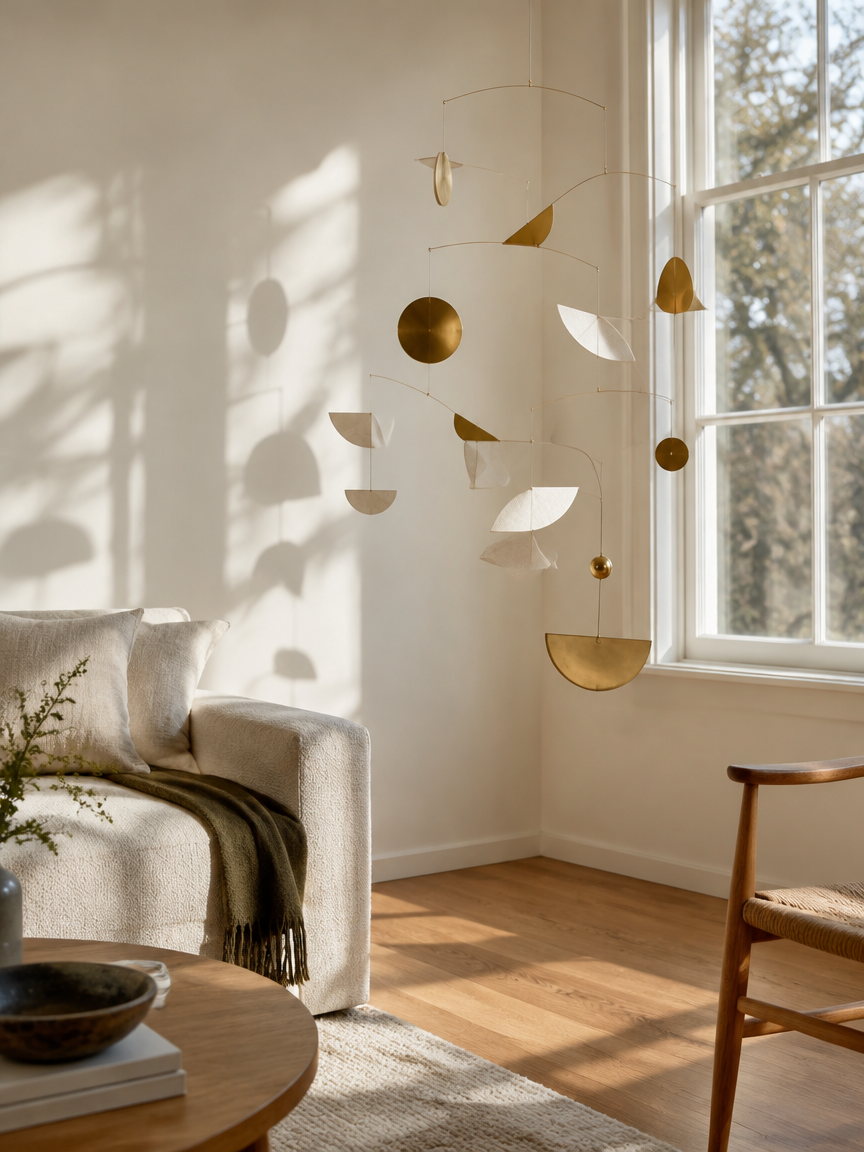
The Kinetic Mobile
A mobile moves air and light without taking floor or wall space. In a still, small room it adds life.
Hang it near a window where a draught will catch it. Then the moving shadows do the decorating.
Keep it light in colour. A dark mobile against a bright window becomes a silhouette you cannot ignore.
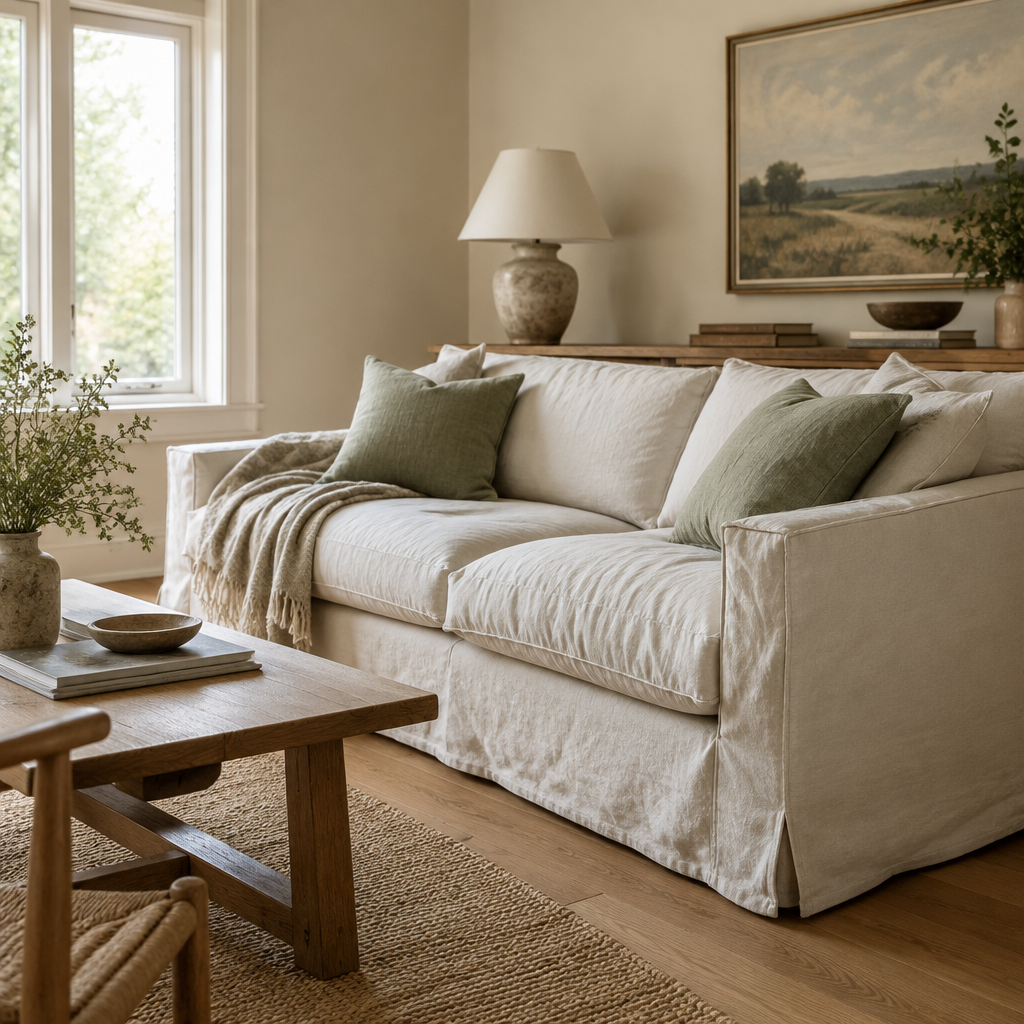
The Two-Season Slipcover
Buy a sofa with a washable slipcover and keep a second cover in another tone. The room changes season without new furniture.
In a small apartment this is the cheapest way to feel like you redecorated.
Choose covers that fit loosely. Tight slipcovers look like upholstery and lose the relaxed look.
Small Apartment Living Room FAQ
How do I make a small living room look bigger?
Start with the floor. Lift the furniture onto slim legs or wall-mount it, then use one big rug to define the seating zone.
After that, paint the walls and trim in the same light tone so the corners stop reading as edges.
What is the best sofa for a small apartment living room?
A low sofa with slim legs and a shallow depth works best. A seat height near 40 cm leaves more air above the piece.
If your room is narrow, a curved or chaise-free design keeps the walkway clear.
What colour should I paint a small living room?
Warm off-whites, bone, mushroom and soft sage all make a small room feel open. Colour drenching the walls, ceiling and trim in one shade works especially well.
Save stronger colour for the lower half of a wall or for one piece of furniture.
Where should I put the TV in a small living room?
Mount it on the longest wall at eye height when seated. A swivel mount lets one screen serve the sofa and the kitchen.
Hide the cables inside the wall so the screen reads as part of the wall, not an object in the room.
How do I add storage without losing floor space?
Go up and go under. Floating consoles, window benches, storage ottomans and lift-top tables all hide things without new footprint.
Pick pieces that do two jobs, because every single-purpose item in a small room costs you something else.
Final Thoughts
A small living room is not a design problem to fix. It is a room with fewer, better decisions in it.
Pick the ideas that solve one real annoyance, like a door that hits a chair or a corner that collects bags. Then stop.
The room will feel finished sooner than you expect. And it will feel like yours.


