

64 Outdoor Kitchen Ideas: Grills, Bars & Backyard Cooking Spaces
An outdoor kitchen is the one renovation you use every warm evening. It is also the one most people get wrong, because it gets bought like furniture and built like plumbing.
We collected sixty-four ideas from real builds, from a simple slat pergola to a full fire station. Every idea names the material, the layout and the one detail that makes it work.
Read the whole list, then pick two or three ideas that fit your space. Most great kitchens are a combination of a shelter, a strong counter and one fire.
Every idea works on its own, and every idea works harder when it is paired with one from another chapter.
You do not need all sixty-four. You need the three that fit the way your household actually eats.
How to Choose Your Outdoor Kitchen
Start with how you cook, not with how the kitchen looks. A household that grills twice a week needs a very different build from a host who cooks for twenty every summer.
Write down three meals you actually make outdoors. Each one shows the appliances, counter space and storage the kitchen really needs.
Then mark the space on the ground with tape and walk it. Carry a full tray from the house to the grill and the gaps become obvious.
Decide the roof before you choose the counter. Shade and rain cover decide which materials survive, and how many weeks a year you use the space.
Wind matters as much as sun. A grill squeezed between two walls pulls smoke towards the house; a gap on one side usually solves it.
Split the budget into structure, appliances and finishes. Structure is the part you cannot upgrade later, so it takes the first share.
Plan storage for fuel, tools and waste before you plan the wine fridge. Small kitchens run out of storage long before they run out of counter.
Leave spare capacity for what comes later: a heater, a second light circuit, one more socket. Ten percent of headroom saves a rebuild.
Choose the counter material last. Once the roof, the layout and the budget are set, only two or three options still make sense, and price decides between them.
Match the light to the meal. Bright task light over the grill, dim warm light over the seating, and nothing shining into the cook’s eyes.
Stand in a finished outdoor kitchen before you build one, if you can. Ten minutes there teaches more than a hundred photographs.
Keep the working area tidy with small habits: a hook for tools, a shelf for oils, one place for the cover. Small order keeps a stone counter looking new.
Build the first version for one season, not for one decade. Add the pizza oven and the heater once you know the space gets used.
Shelter & Structure
Start with the roof. Shelter decides how often you actually cook outside, so these eight ideas solve sun, rain and wind first.
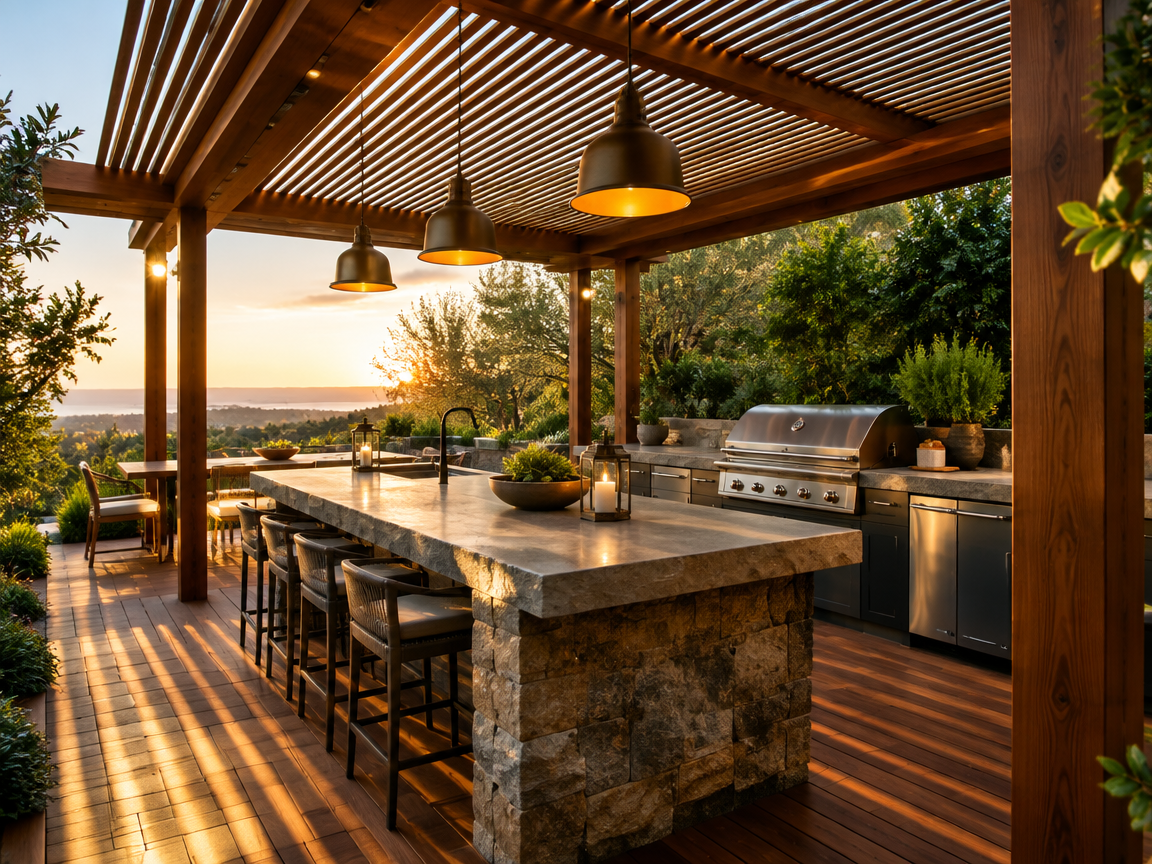
Cedar Pergola with a Slat Roof
A cedar pergola with tight horizontal slats throws striped shade across the counter all day. The open gaps still let smoke and heat escape without a fan.
Mount the posts on steel shoes so the wood never sits in water. Staining every second spring keeps the cedar from silvering too fast.
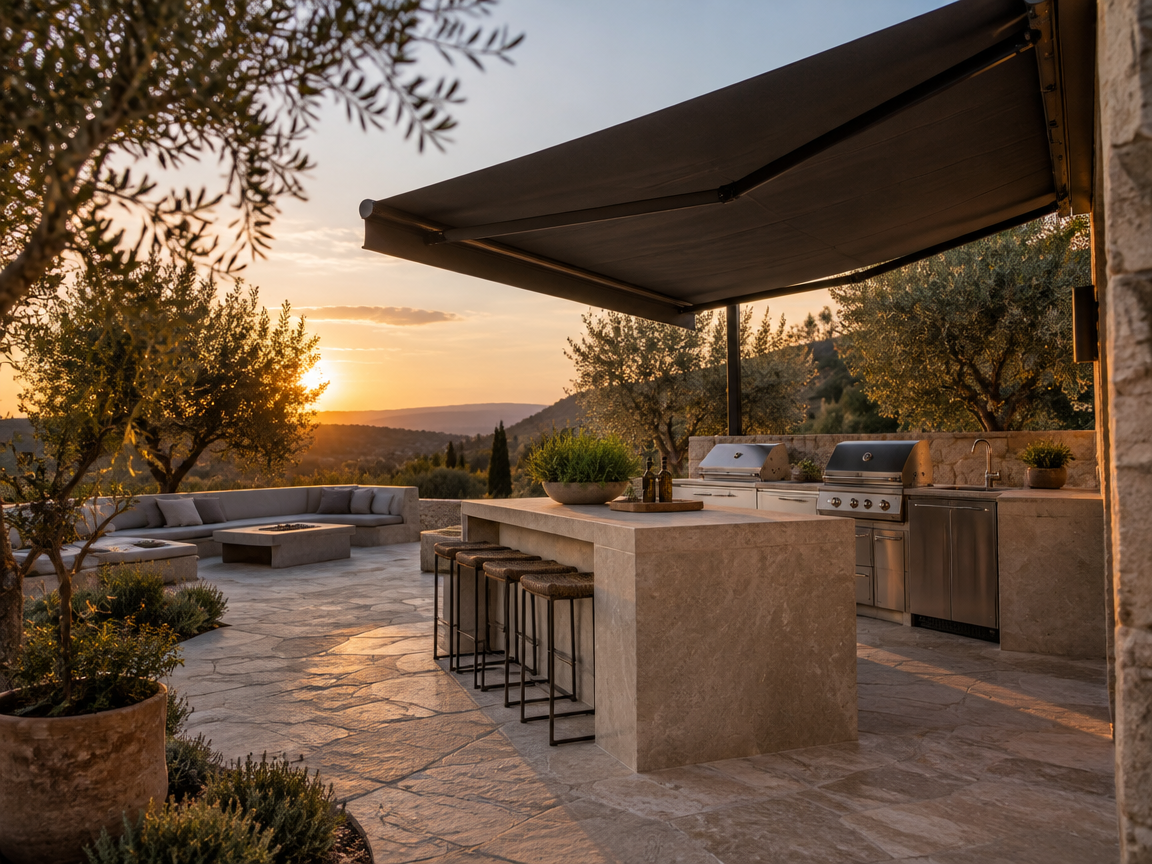
Retractable Awning Kitchen
A wall-mounted awning rolls out over the counter and disappears when the sun drops. One button gives you shade for lunch and open sky at dusk.
Choose a solution-dyed acrylic fabric that resists mildew in humid air. Add a wind sensor so the awning retracts before a storm arrives.
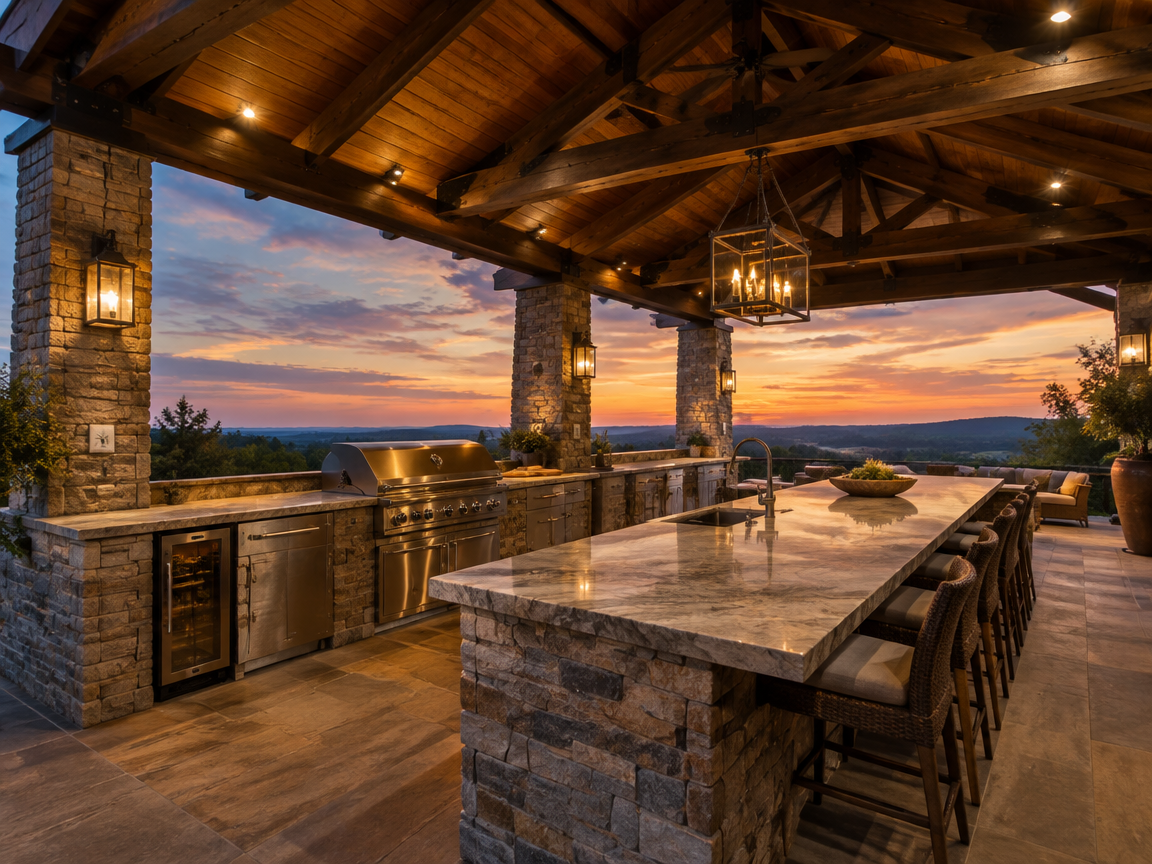
Open Pavilion with Exposed Rafters
A timber pavilion gives you a real ceiling without closing the room in. Exposed rafters hold the lights, the fan and the heater on one frame.
Keep the ridge open so heat rises out of the cooking zone. Dark-stained beams make the kitchen read as an extension of the house.
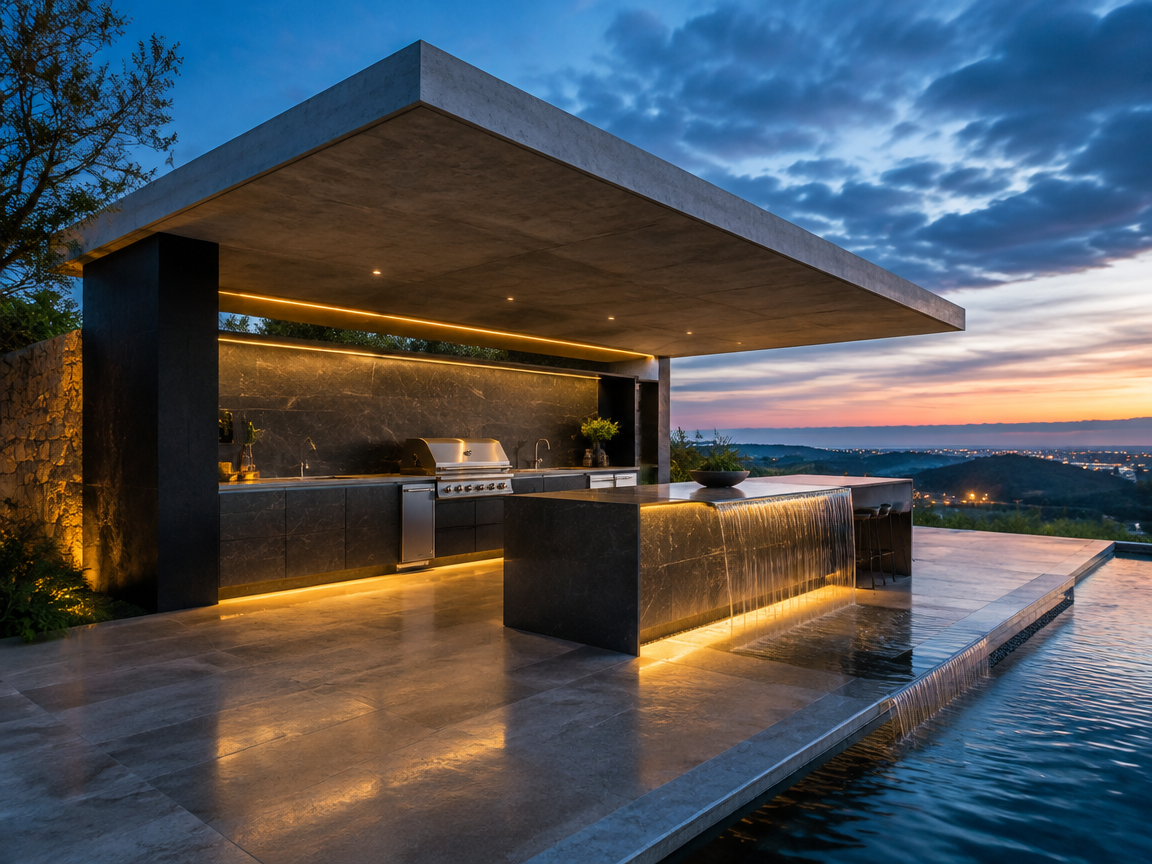
Cantilevered Flat Roof Island
A thin concrete roof can span the island with no posts in the cooking zone. That single move makes the kitchen feel architectural instead of temporary.
Insulate the slab and line the underside in timber so it does not drip with condensation. A recessed LED channel replaces pendant lights.
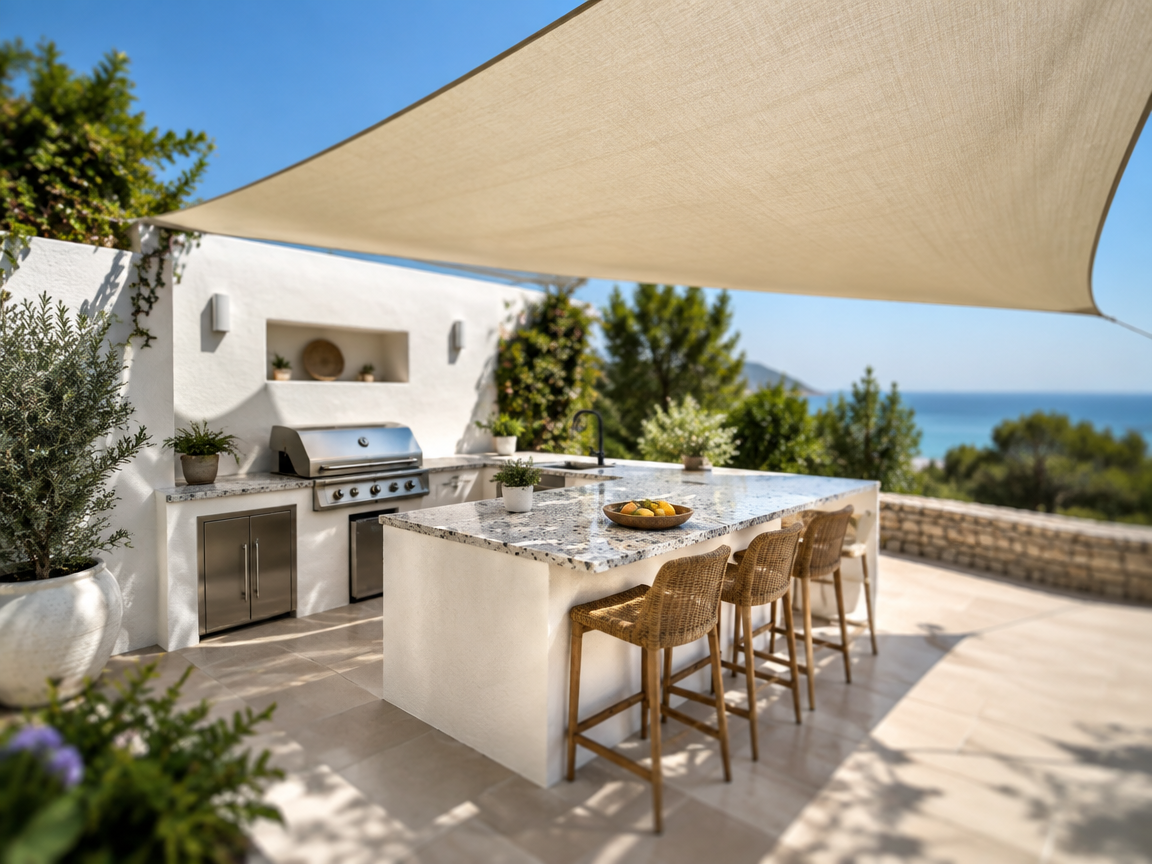
Sail Shade Summer Kitchen
A taut triangular sail costs a fraction of a pergola and looks sharp above a white kitchen. It blocks the harsh midday sun and lets the evening light back in.
Use marine-grade turnbuckles so you can re-tension the fabric each season. Take the sail down before winter storms and it will last for years.
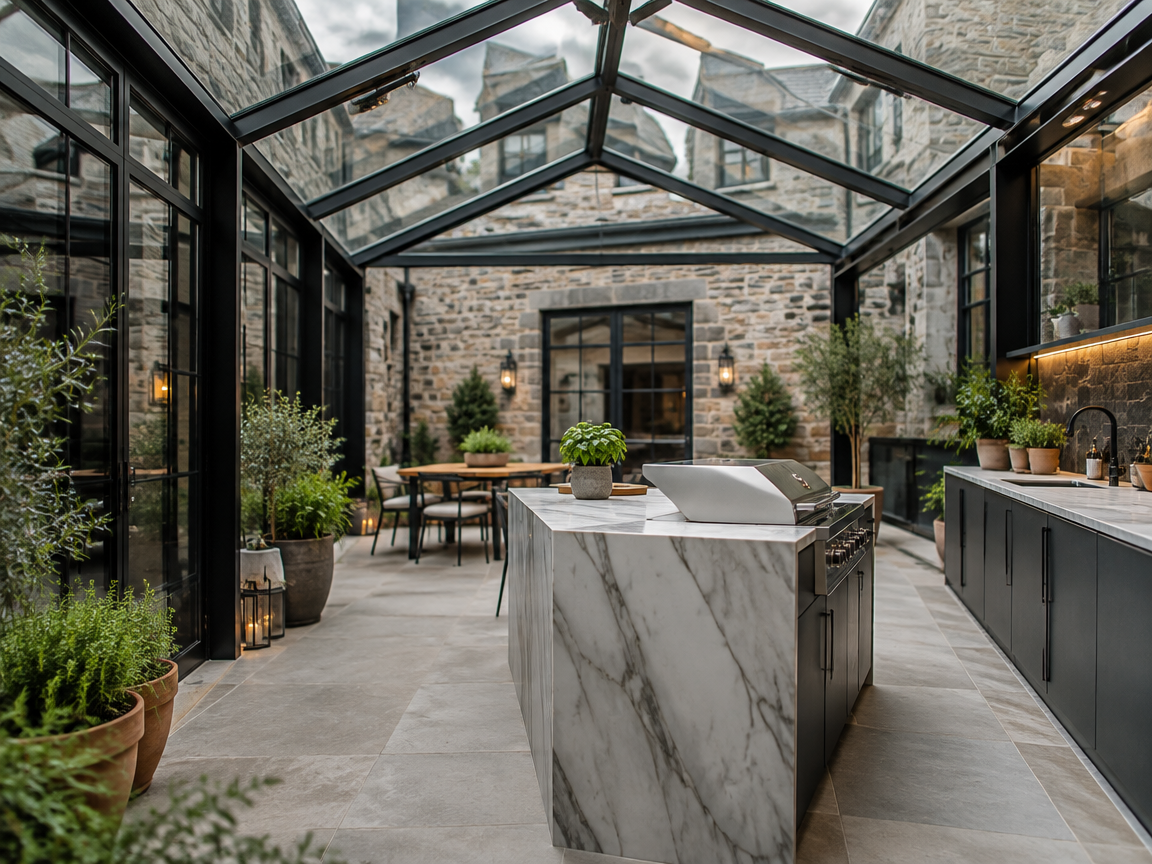
Glass-Roofed Courtyard Kitchen
A glass roof over an enclosed courtyard gives you outdoor cooking with indoor comfort. Rain stays out, light stays in, and the walls stop the wind.
Specify laminated safety glass with a self-cleaning coating. Add one opening vent near the grill so smoke has somewhere to go.
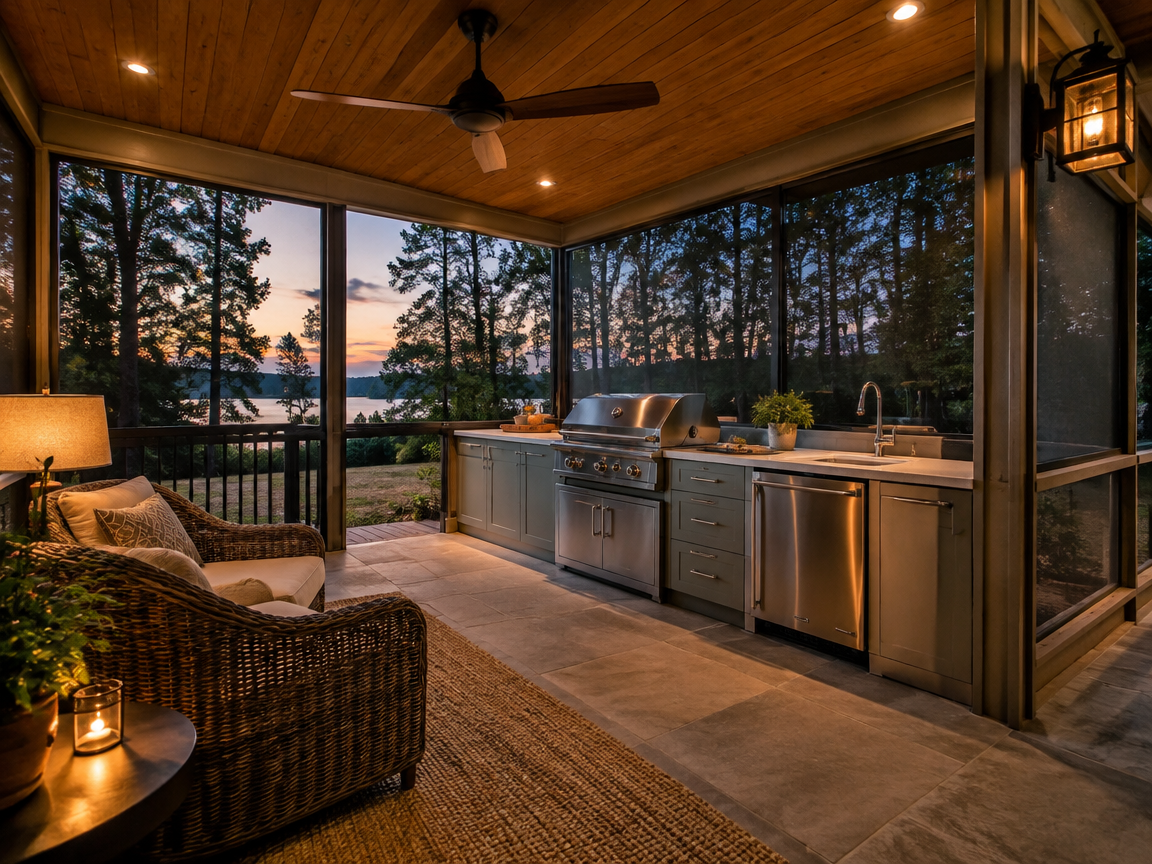
Screened Porch Kitchen
A screened porch keeps the insects out and the evening air in. The kitchen sits against the house wall, so plumbing and power come cheap.
Run the screen mesh in a dark colour; it disappears against the garden. A slow ceiling fan moves smoke away and keeps guests cool.
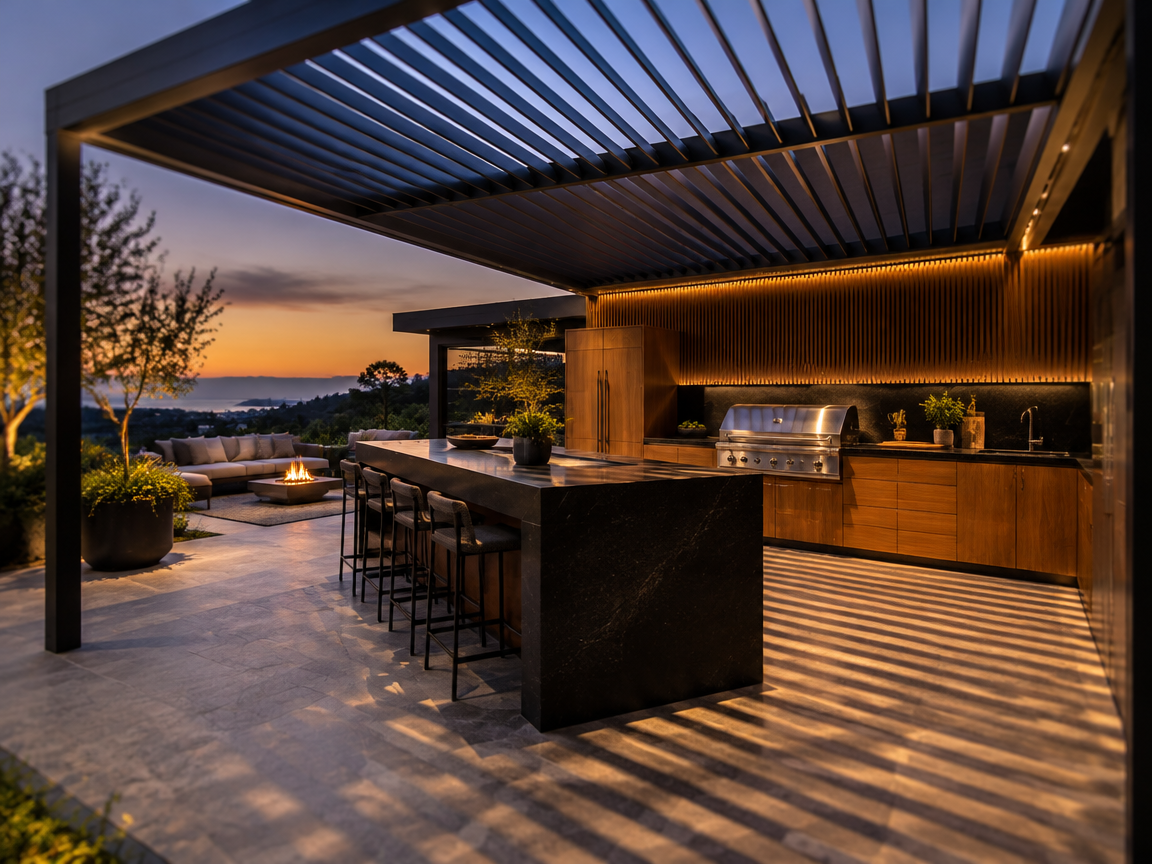
Louvered Roof Pergola
Adjustable aluminium louvres open for sun and close for rain with a remote. The roof becomes a ceiling you can tune to the weather.
Choose a powder-coated finish rated for coastal salt air. Hidden gutters inside the posts carry rain away without a visible downpipe.
Stone & Masonry
Stone is the material that outlives the house. These eight builds lean on real masonry, thick tops and honest joints.
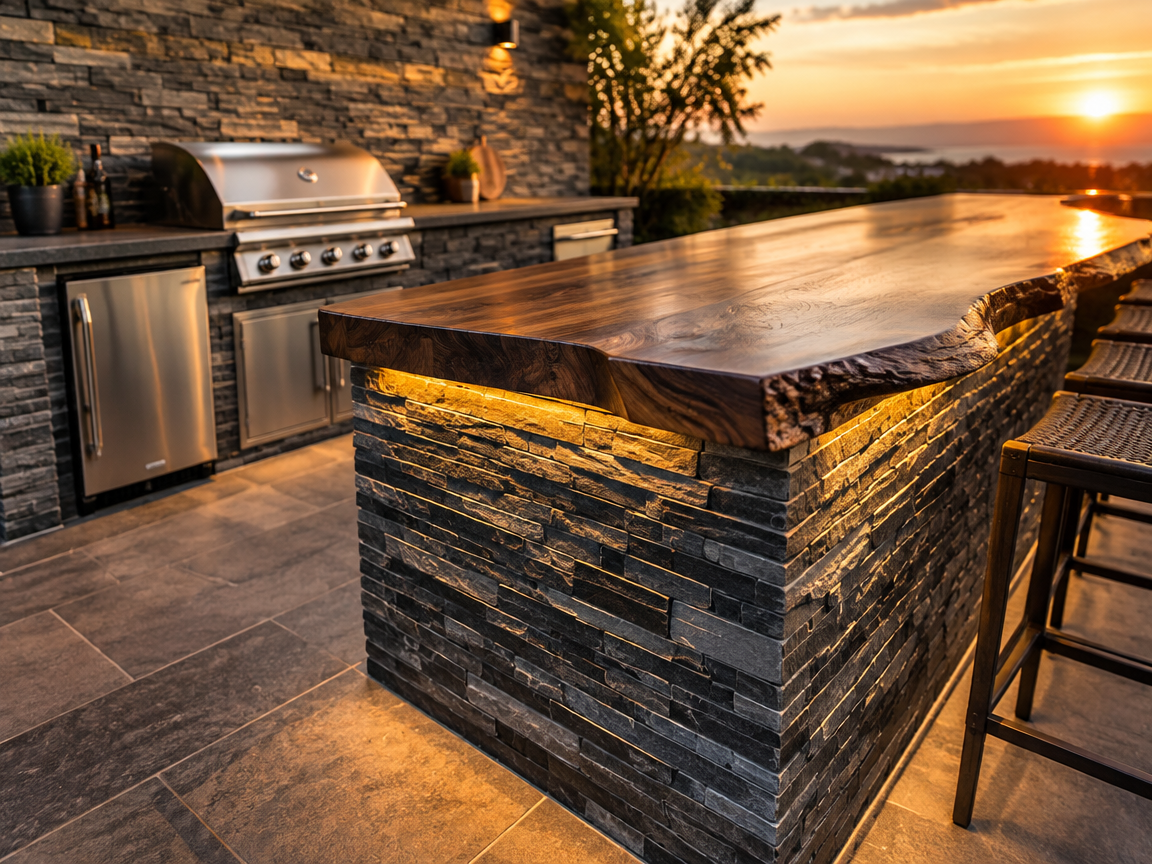
Stacked Slate Island with a Walnut Bar
Thin stacked slate gives the island a layered, almost geological face. A live-edge walnut bar softens the stone and warms the seating side.
Seal the slate with a penetrating sealer, never a film finish. Stone and wood move differently, so leave a shadow gap between them.
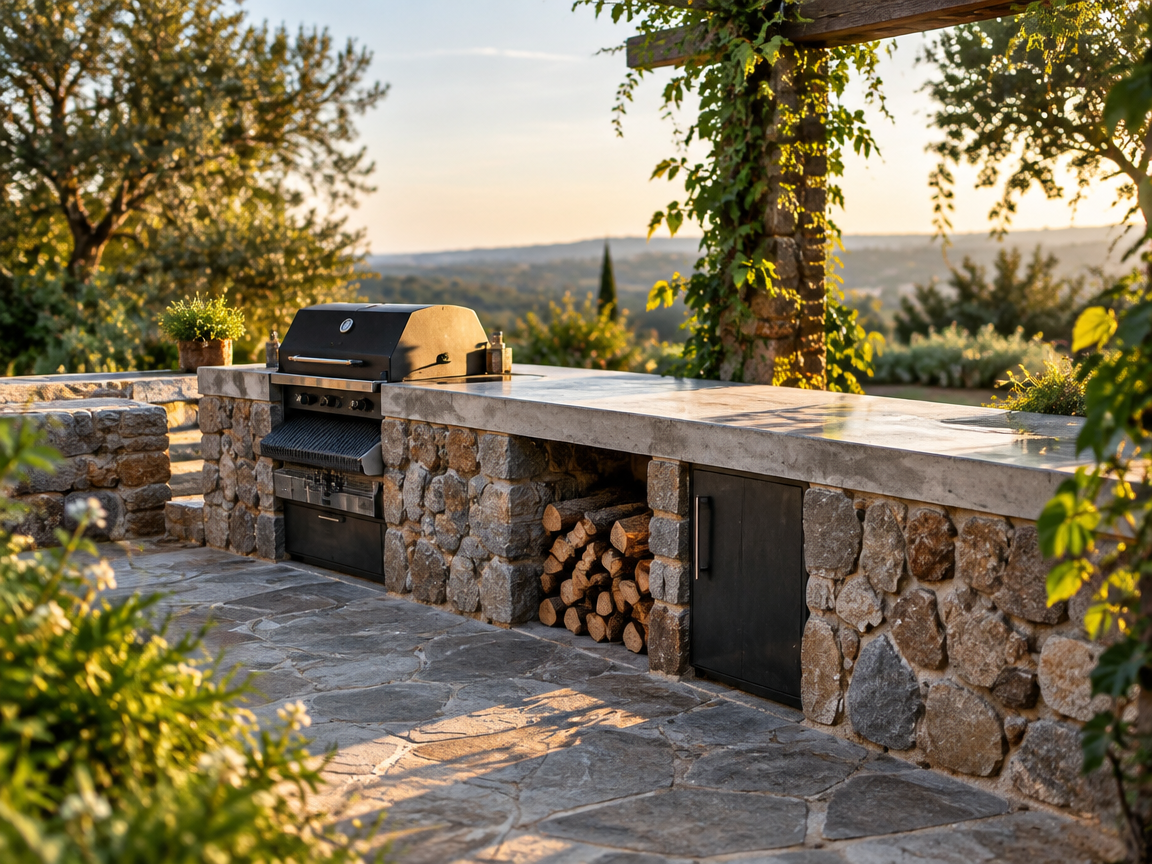
Fieldstone Base with a Concrete Top
Rounded fieldstone set in mortar looks like it grew out of the garden. A poured concrete top ties the rough base to a clean working surface.
Build a plywood form and pour the top in one go for a seamless edge. Grind it smooth, then seal it twice a year against stains.
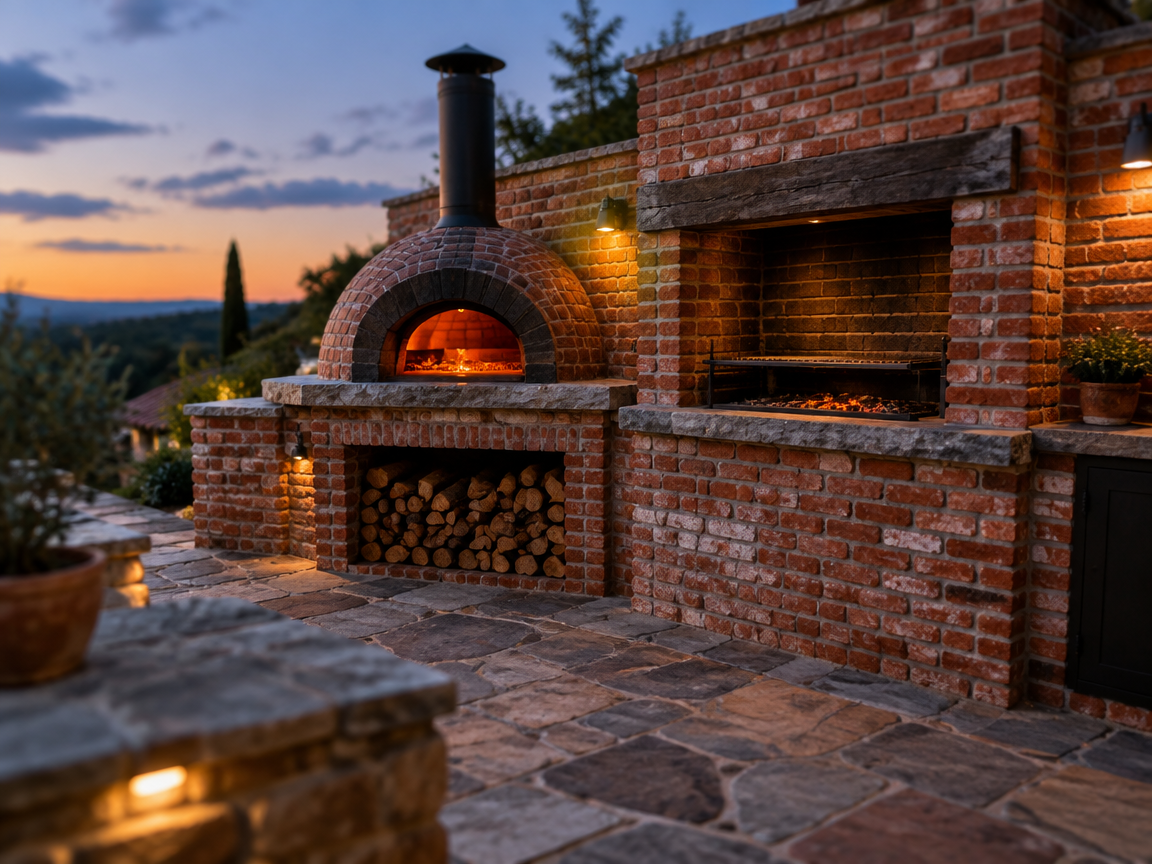
Brick Pizza Oven Wall
A full brick wall turns the oven into the backdrop of the whole garden. Tuck the grill into a recessed niche and the wall does two jobs.
Leave the oven dome exposed for a classic look, or render it for a modern one. Line the firebox in firebrick; ordinary brick will crack.
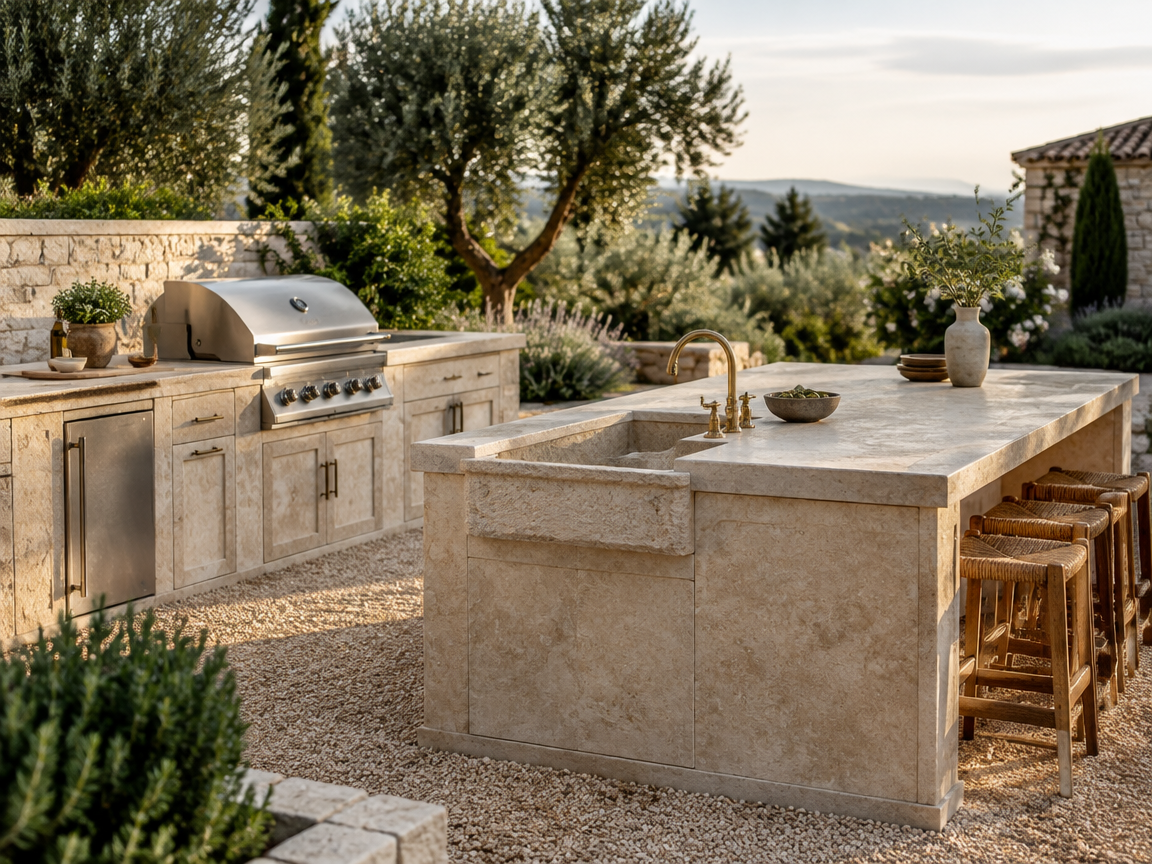
Limestone Kitchen with a Carved Sink
A solid limestone sink carved from one block feels ancient and expensive. Limestone counters around it stay cool in the shade.
Choose a dense limestone and seal it before the first use. Avoid acidic cleaners; they eat the surface and dull the finish.
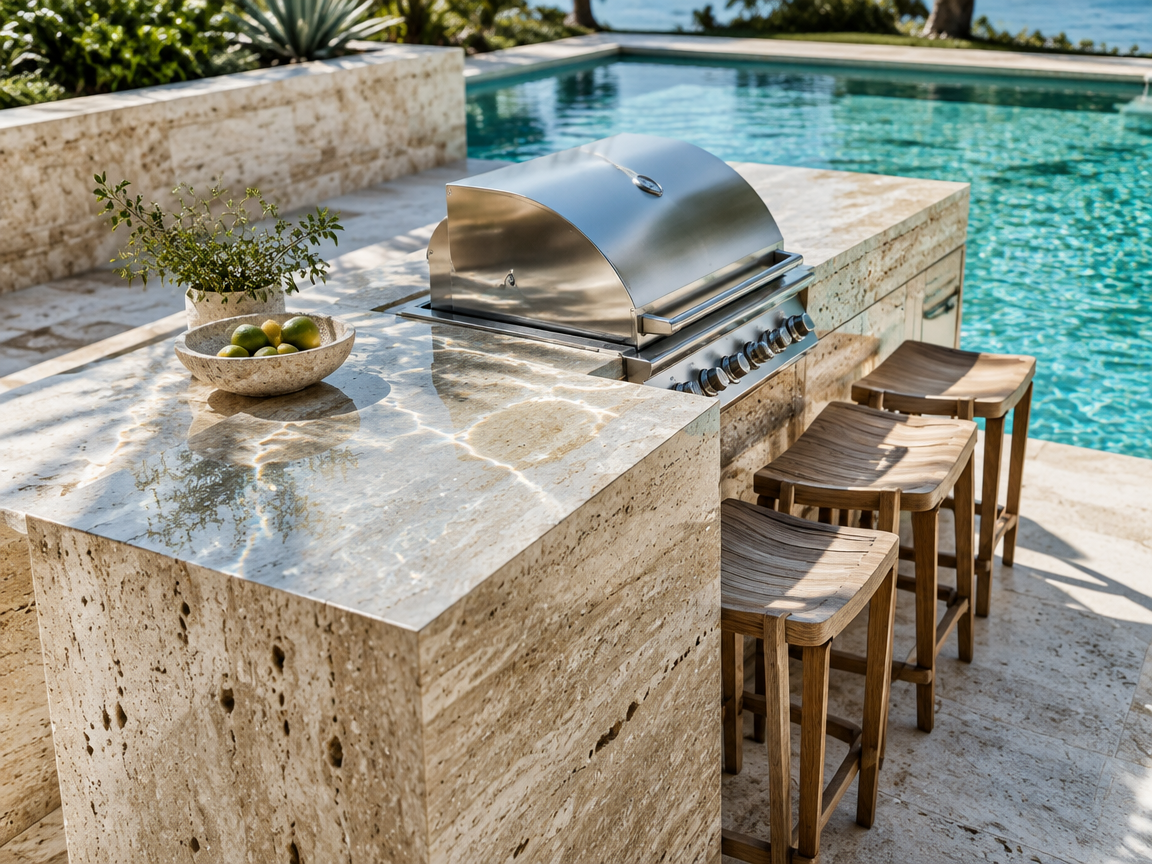
Travertine Island on the Pool Deck
Travertine stays cooler underfoot than concrete and grips when wet. That makes it the natural partner for a kitchen beside the pool.
Fill the travertine pores so food and wine cannot stain them. Use a honed finish for grip; polished stone turns slippery with water.
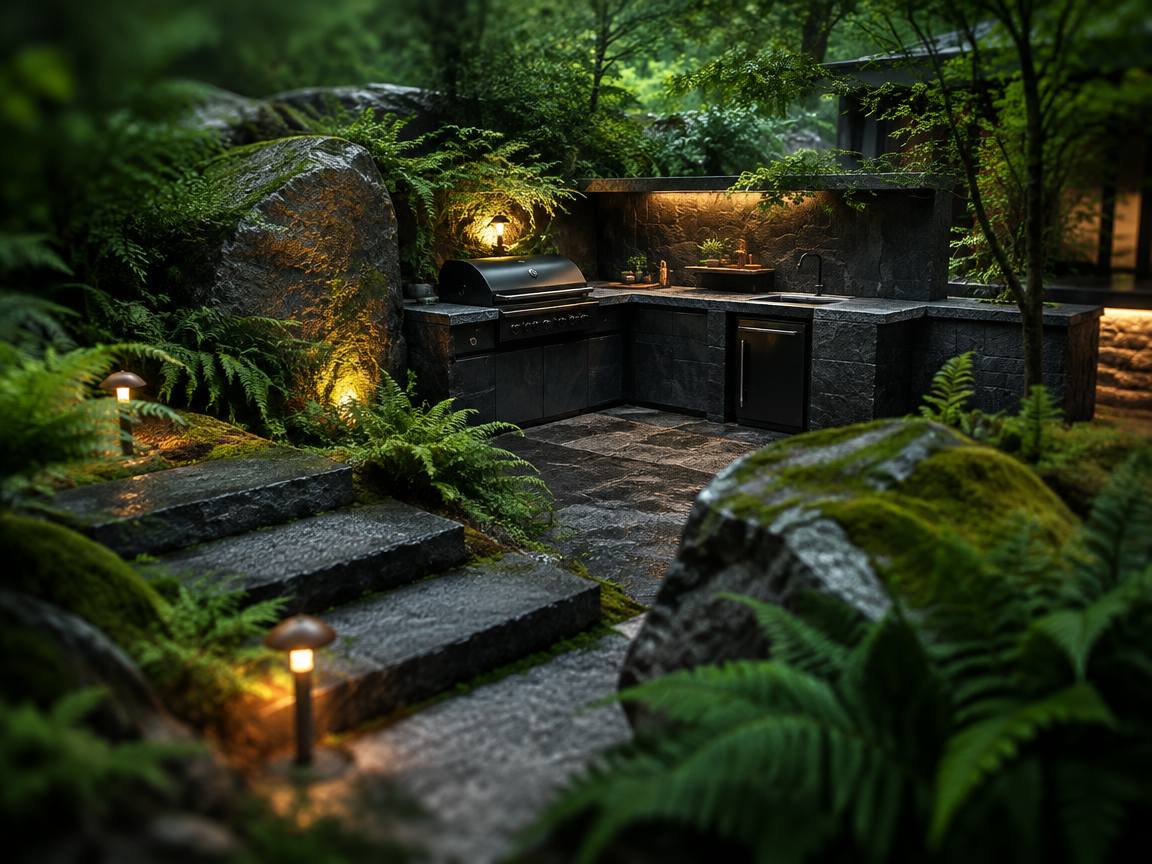
Basalt Kitchen in a Shade Garden
Dark basalt absorbs light, so it sits quietly among ferns and moss. Pair it with matte black appliances and the corner turns moody.
Basalt is dense, so it handles heat and frost without flaking. Add one warm light source so the black stone does not vanish at night.
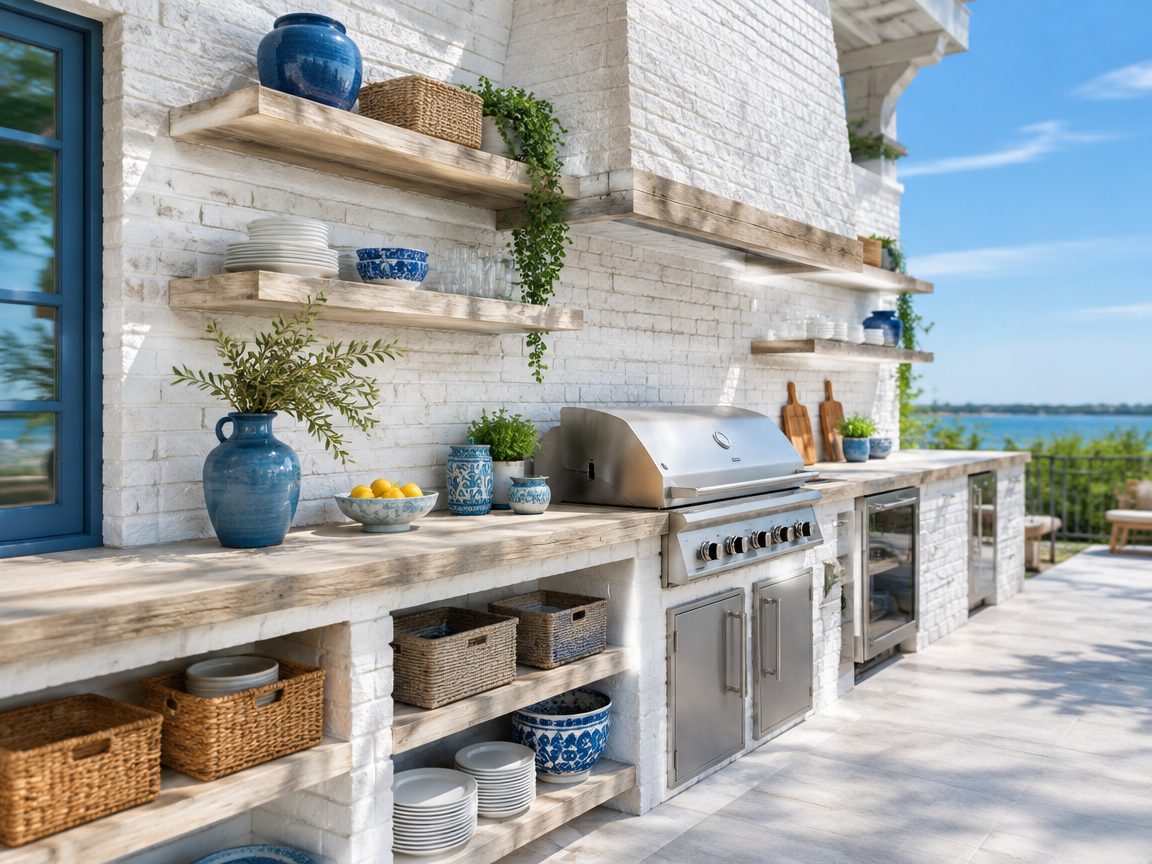
Whitewashed Brick Kitchen Wall
Whitewashed brick keeps the texture but throws light back into the space. It is the friendliest way to use masonry in a small garden.
Dilute the paint and wipe it back while wet for a soft, uneven finish. Seal the brick so grease wipes off instead of soaking in.
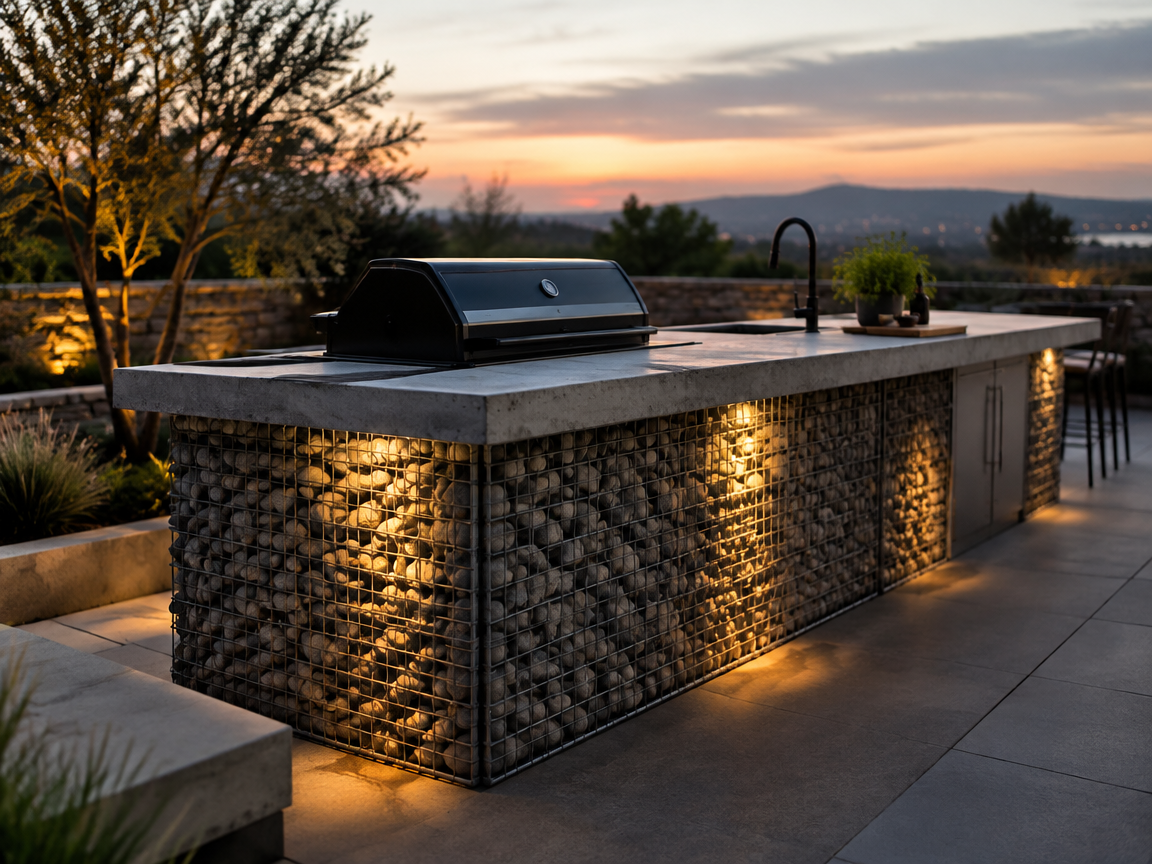
Gabion Stone Island Base
Steel gabion cages filled with river stone give you a fast, low-cost base. The texture is honest and the stone can be swapped later.
Use double-twist galvanised mesh and pack the stones tightly by hand. Cap the cage with a thick slab so nothing shifts under the grill.
Modern & Minimal
Less detail, more control. These eight designs win with proportion, shadow gaps and one confident material.

Charcoal Concrete Island
A single charcoal island with a flush grill reads as furniture, not equipment. Keep everything below the counter line and the shape stays pure.
Pigment the concrete through its full depth so chips never show. A narrow under-counter LED washes the paving and hides the shadow gap.
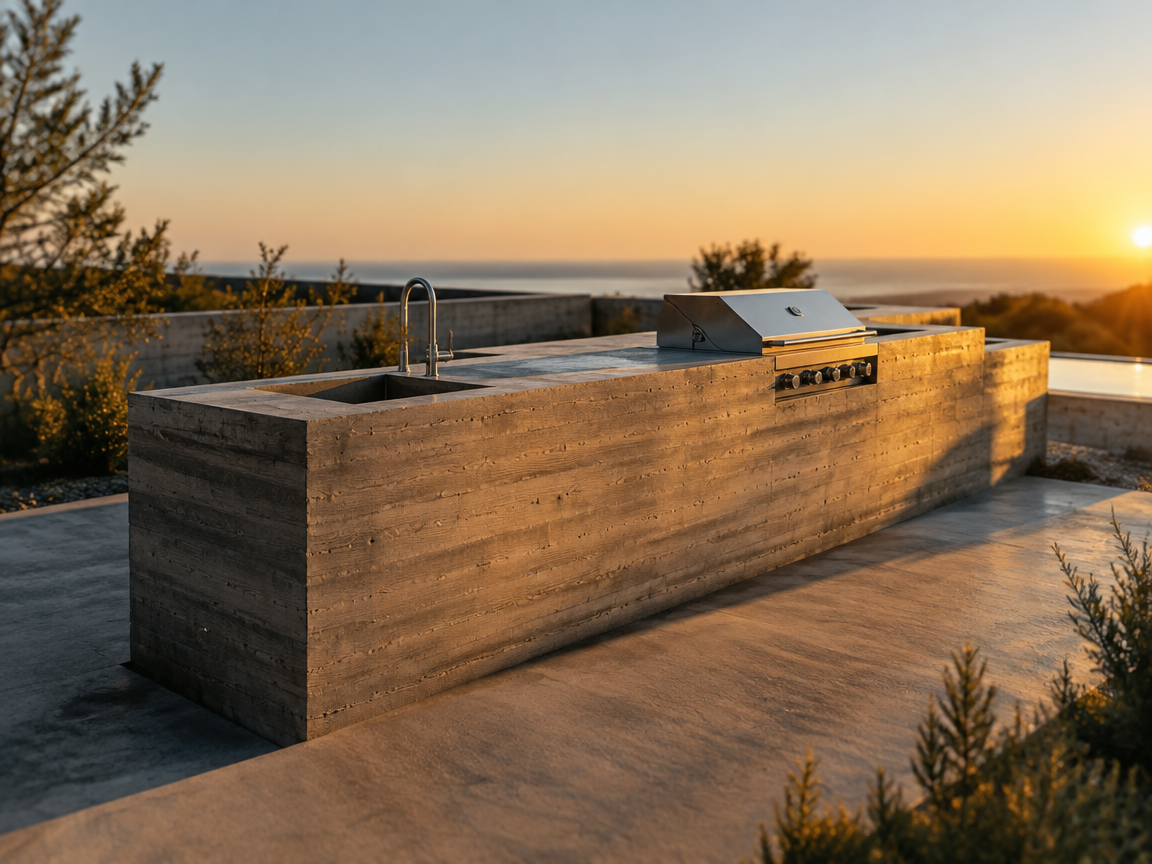
Monolithic Poured Concrete Kitchen
One pour, no joints, no visible fixings: the kitchen becomes a block. Board-formed texture gives the concrete a fine horizontal grain.
Cast it off site if your garden access is tight, then crane it in. Seal it against oil and red wine before the first cookout.
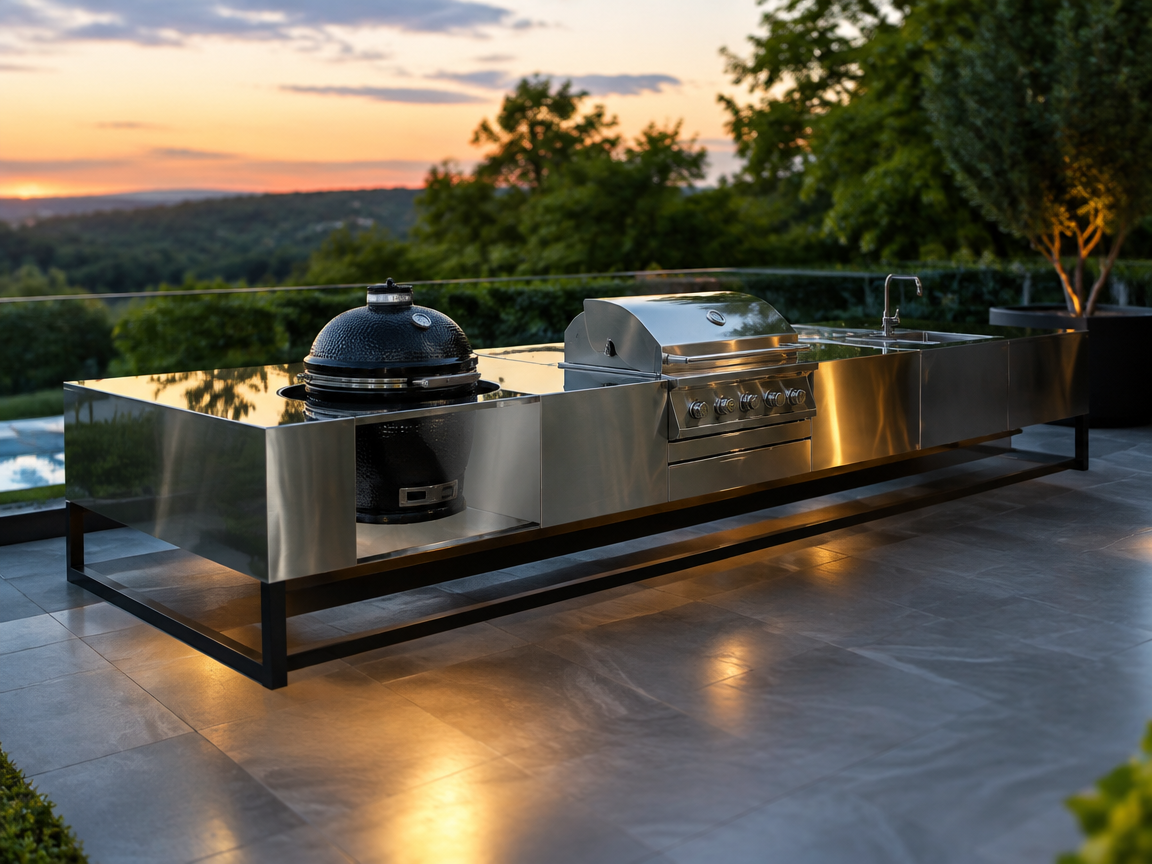
Floating Stainless Steel Counter
A stainless counter held on a steel frame appears to hover over the paving. Reflections of plants do the decorating for you.
Specify a brushed finish, not mirror, so scratches blend in. Marine-grade steel is the only option within reach of salt air.
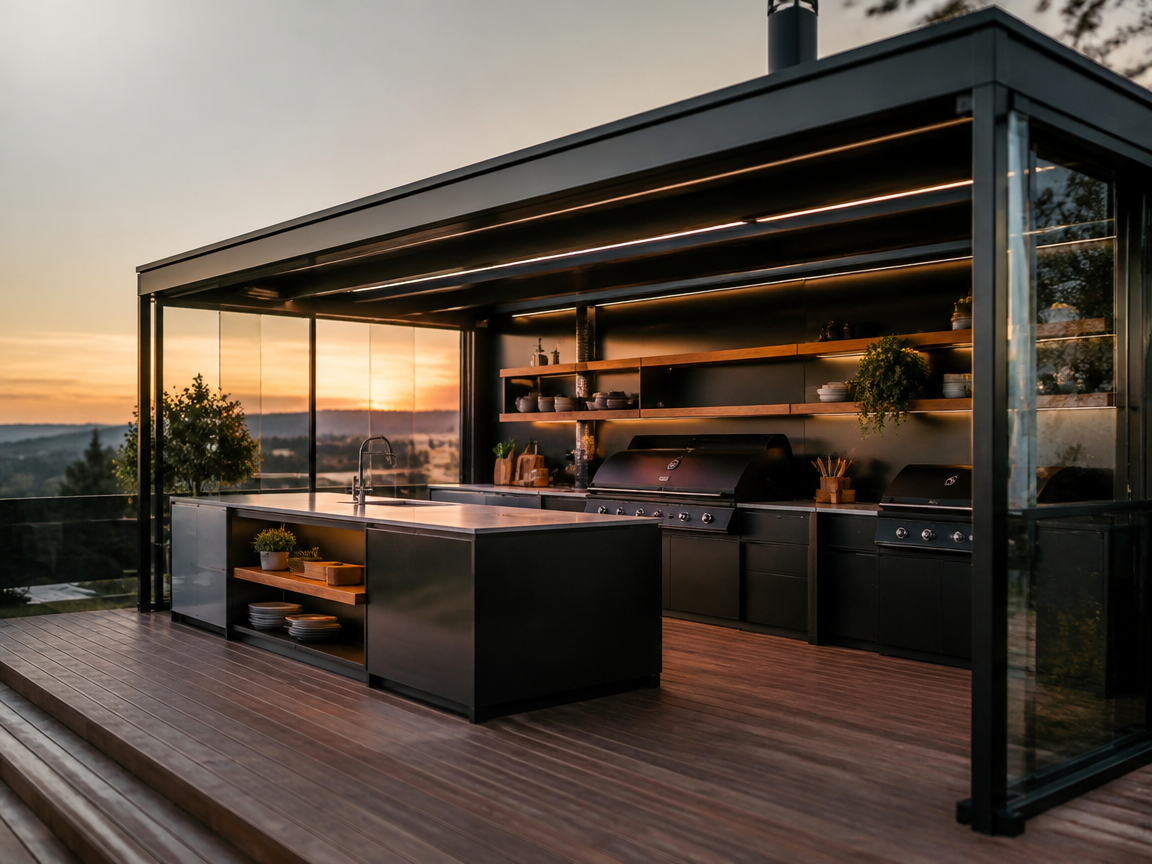
Black Steel Frame Kitchen
A black steel frame with glass shelves and oak tops reads industrial and light at once. Nothing is boxed in, so air moves freely.
Use a powder coat rated for exterior use, and cap every open steel tube. Water collects in uncapped sections and rusts them from inside.

Matte Porcelain Slab Island
Large porcelain slabs give you the look of stone with almost no maintenance. They resist stains, frost and sun without sealing.
Insist on 20mm slabs over a solid substrate, never 6mm unsupported. Mitre the corners so no dark edge shows.
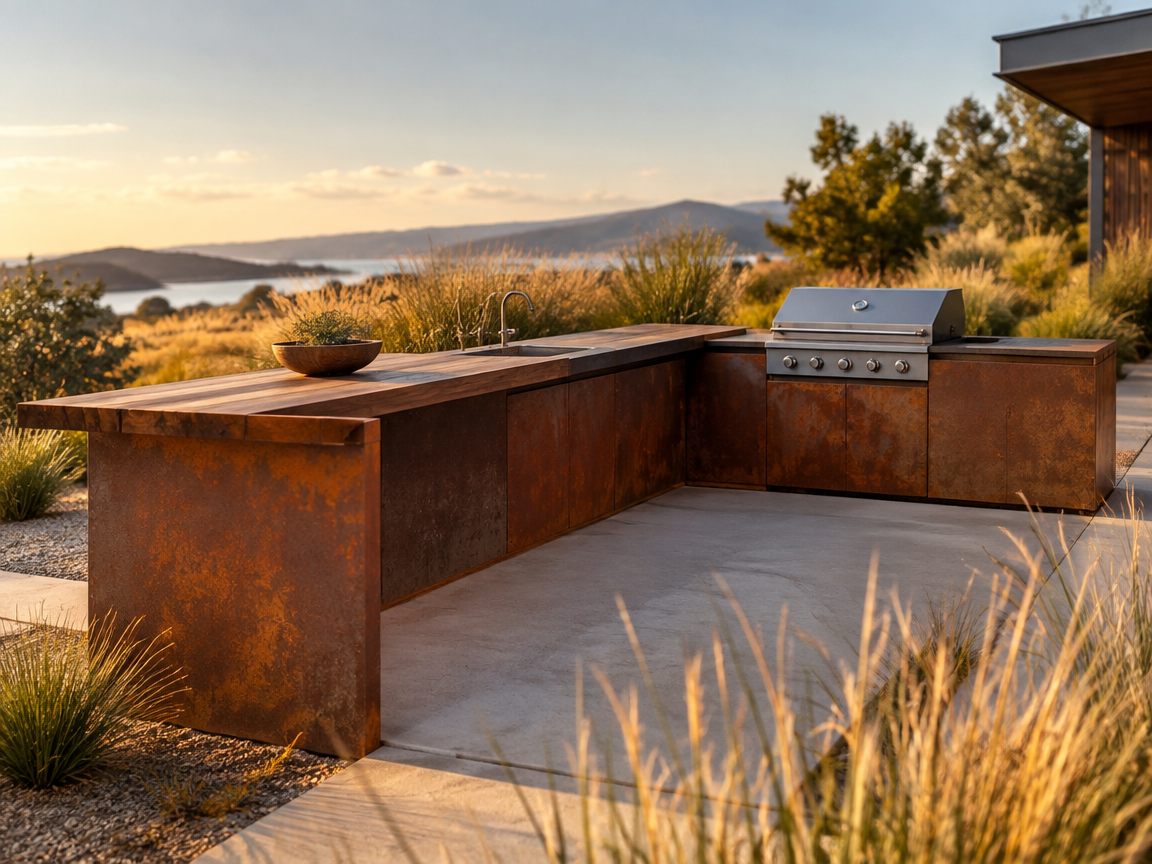
Cor-Ten Steel Kitchen with a Timber Top
Weathering steel develops a stable rust skin that never needs paint. Warm timber on top stops the kitchen feeling cold.
Let cor-ten weather away from paving and walls; it bleeds while it cures. Raise it on a plinth so water drains underneath.
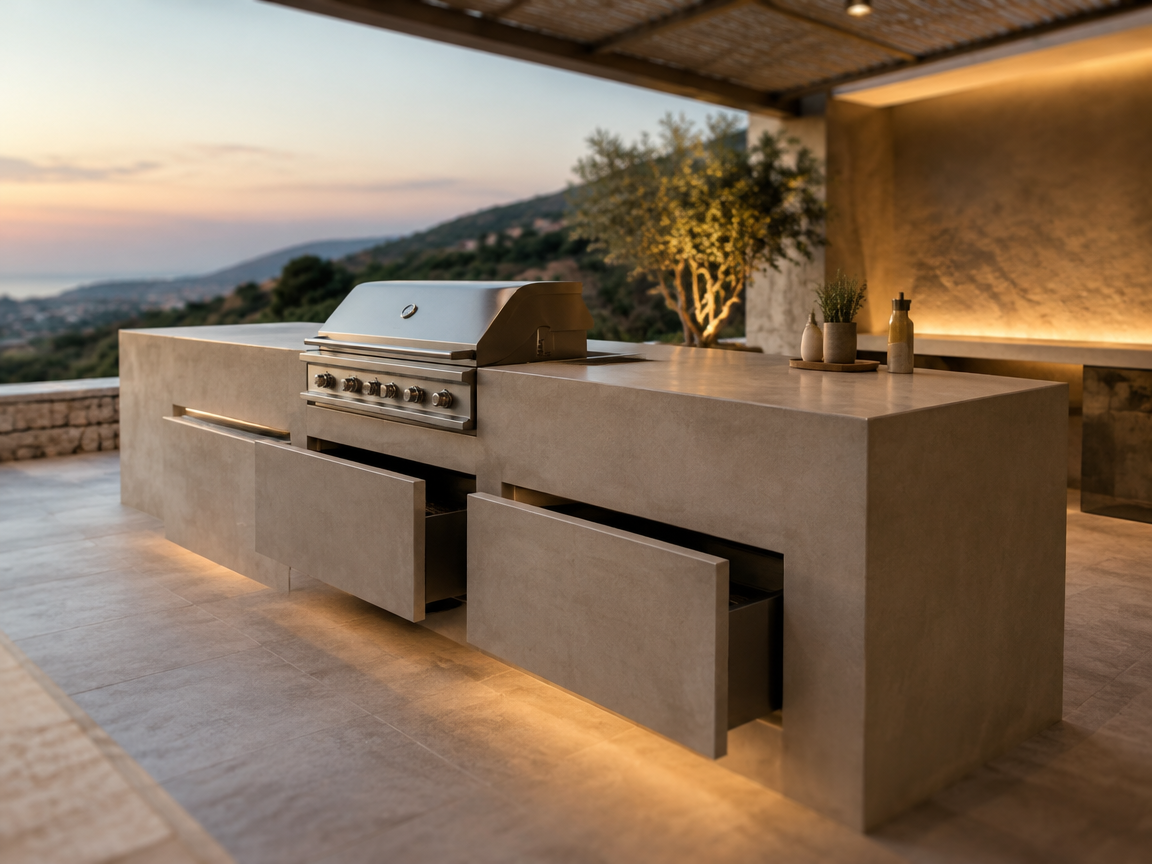
Microcement Island with Hidden Drawers
Microcement wraps the island in one seamless skin with no tile lines. Push-to-open drawers disappear into the face until you need them.
Microcement needs a proper base and three coats to last outdoors. Re-seal it yearly and it will stay waterproof.
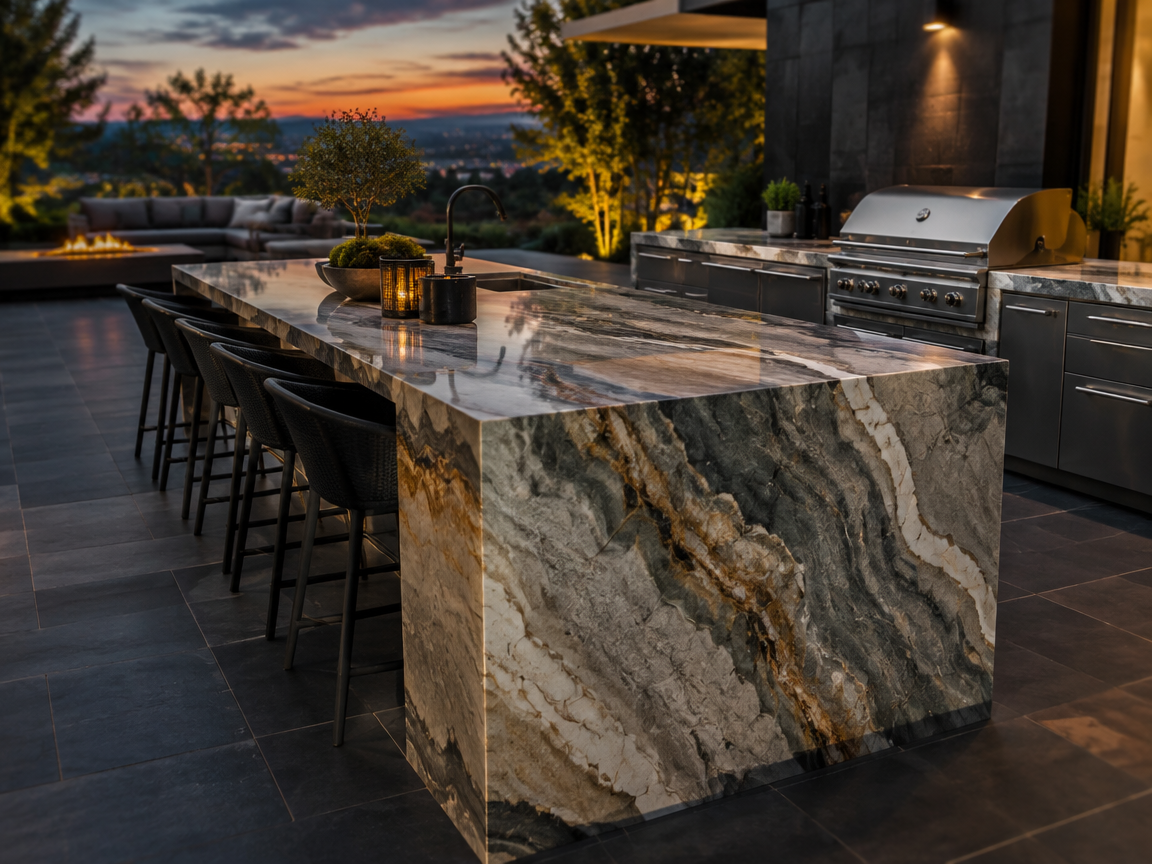
Waterfall-Edge Quartzite Island
Quartzite with a waterfall edge sends the stone straight to the floor. The effect turns a counter into a sculptural object.
Book-match the slabs so the veining runs continuously around the corner. Quartzite is harder and more heat-proof than marble.
Wood & Warmth
Wood keeps an outdoor kitchen from feeling like a showroom. These seven builds put real timber where your hands and elbows land.
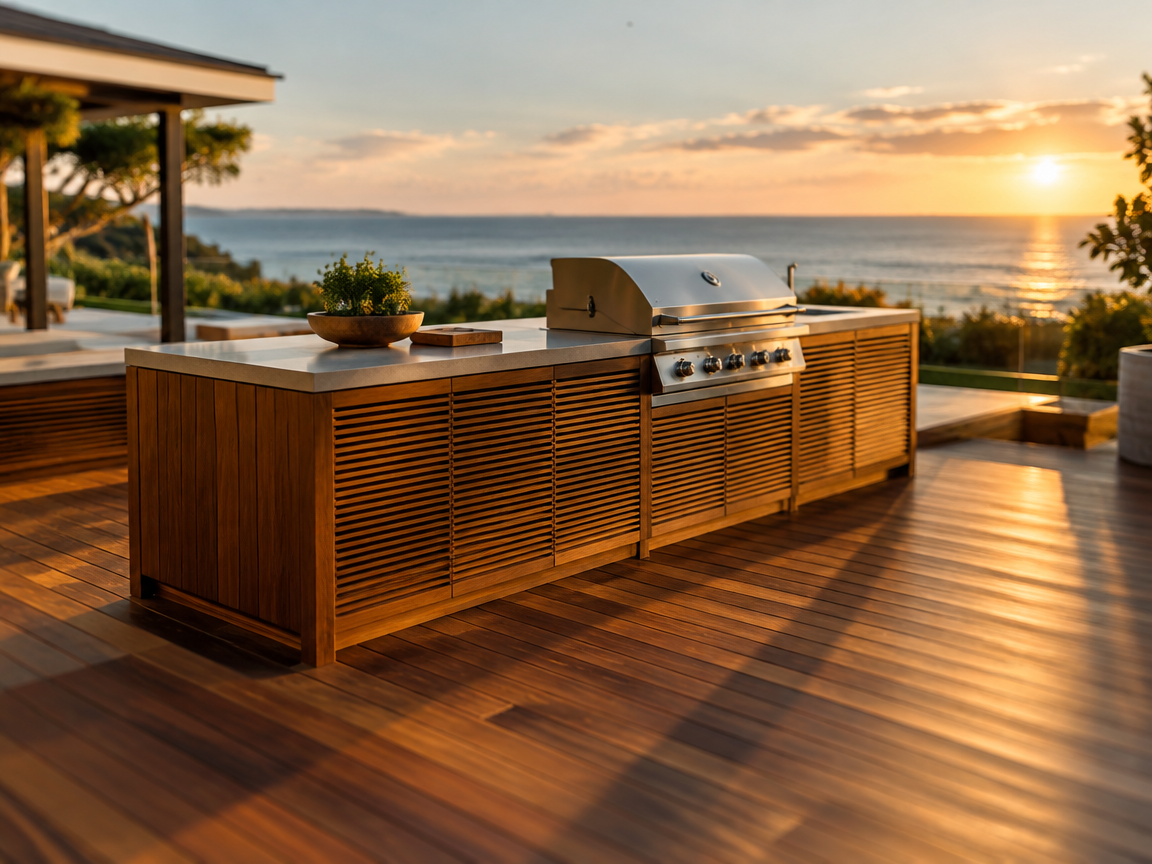
Teak Island on an Ipe Deck
Teak cabinet fronts and an ipe deck give you two hardwoods that ignore weather. Run the deck boards parallel to the counter for calm lines.
Space the boards with a hidden clip system so water never pools. Oil both woods once a year instead of varnishing them.
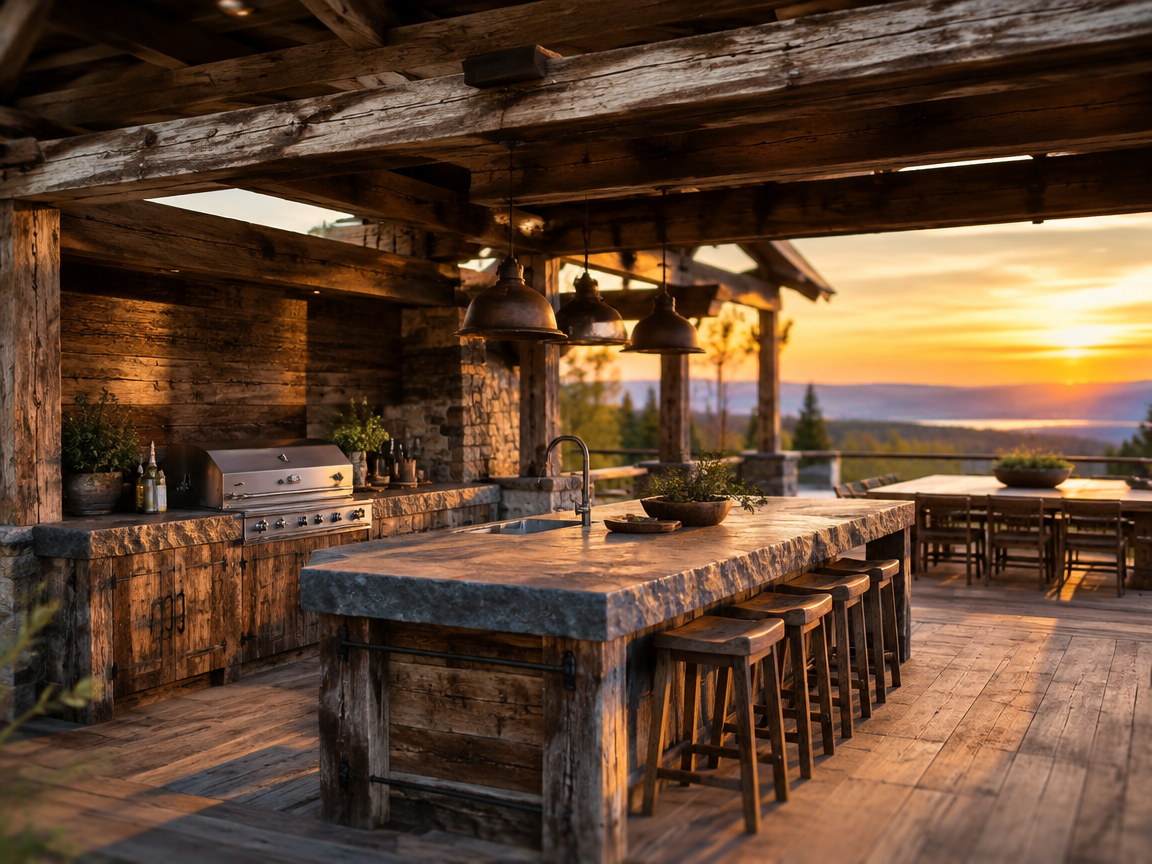
Reclaimed Timber Beam Kitchen
Old barn beams bring a history that new wood cannot fake. Use the beams for the frame and keep the counters quiet and flat.
Treat reclaimed timber against insects before it goes up. Check for nails and rot, and cut out anything soft.
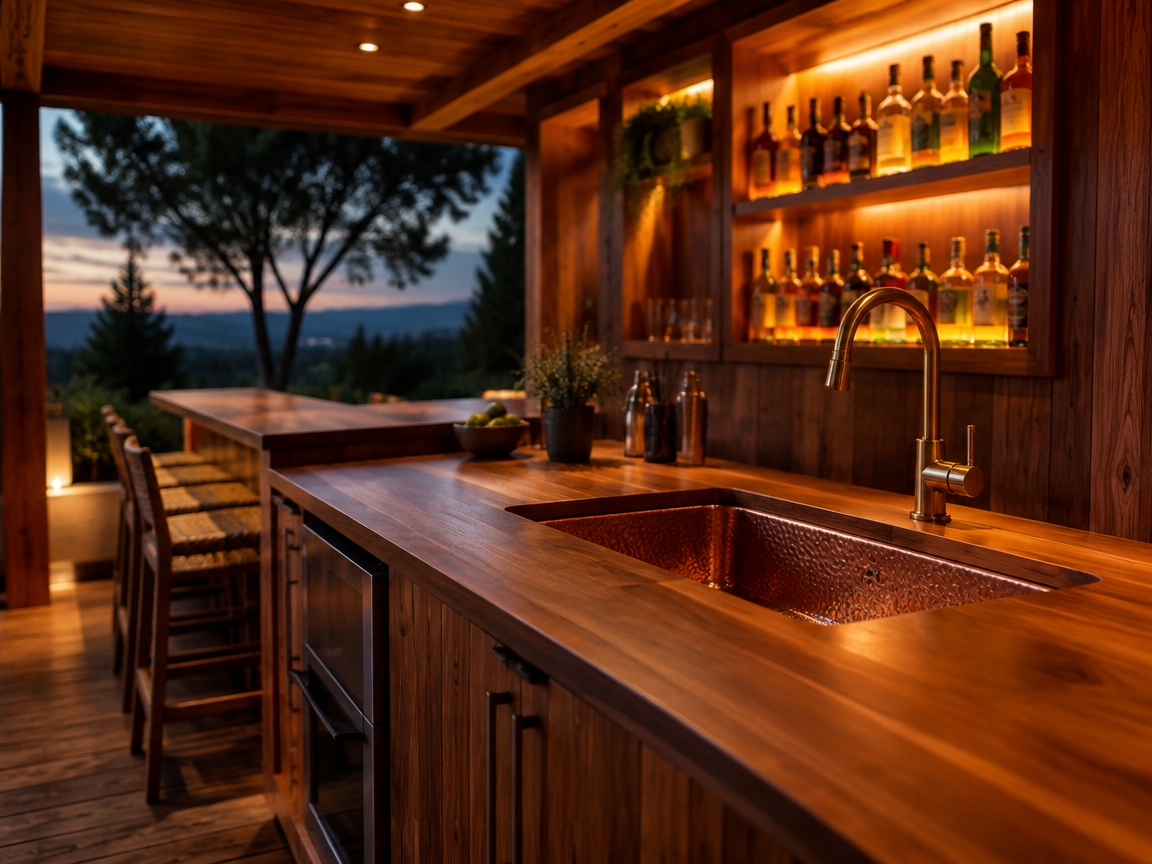
Cedar Bar with a Copper Sink
A hammered copper sink against cedar turns a plain bar into furniture. Copper ages into a patina that never looks dirty.
Copper is naturally antimicrobial, so it suits outdoor prep. Wipe it dry after rain to control how fast it darkens.
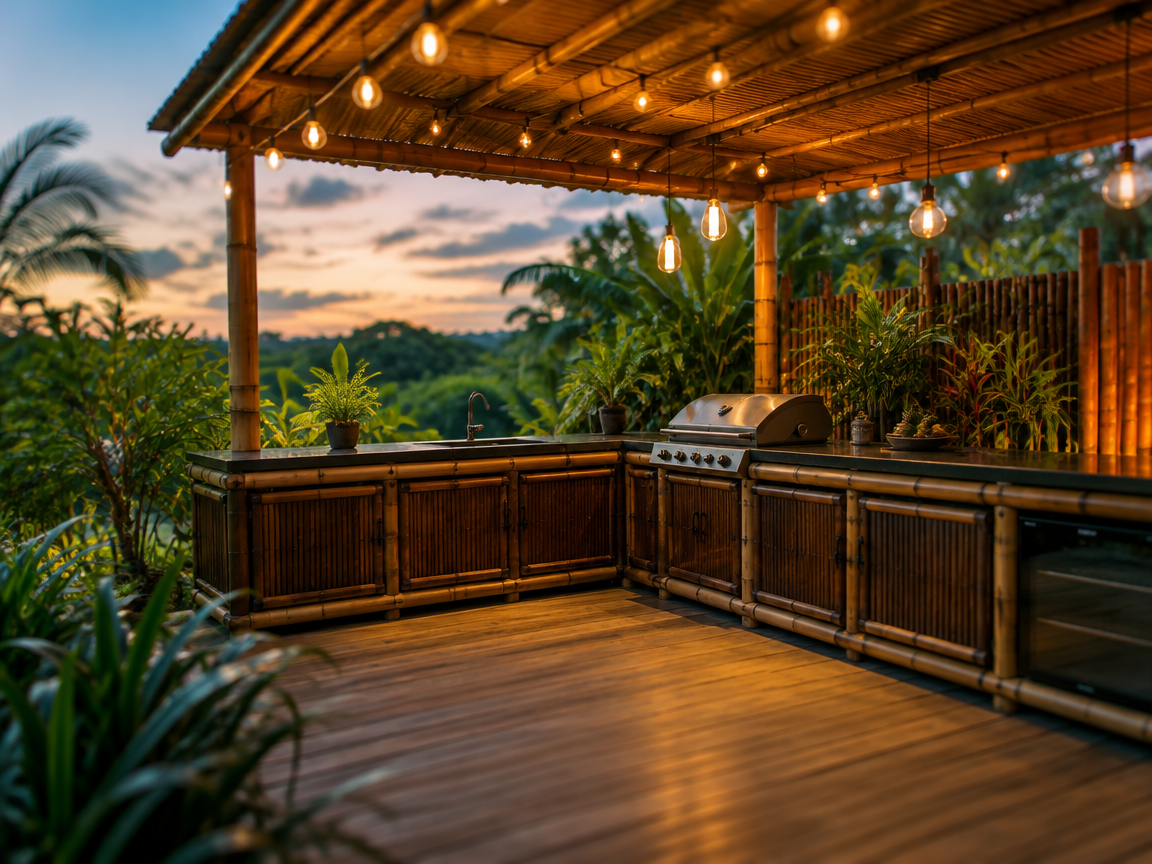
Bamboo Counter under String Lights
Bamboo is a fast-renewing hardwood with a tight, modern grain. Under warm string lights it glows and the whole garden feels softer.
Bamboo needs a water-based exterior sealer to survive rain. Buy strand-woven bamboo; it is far more stable than plain strips.
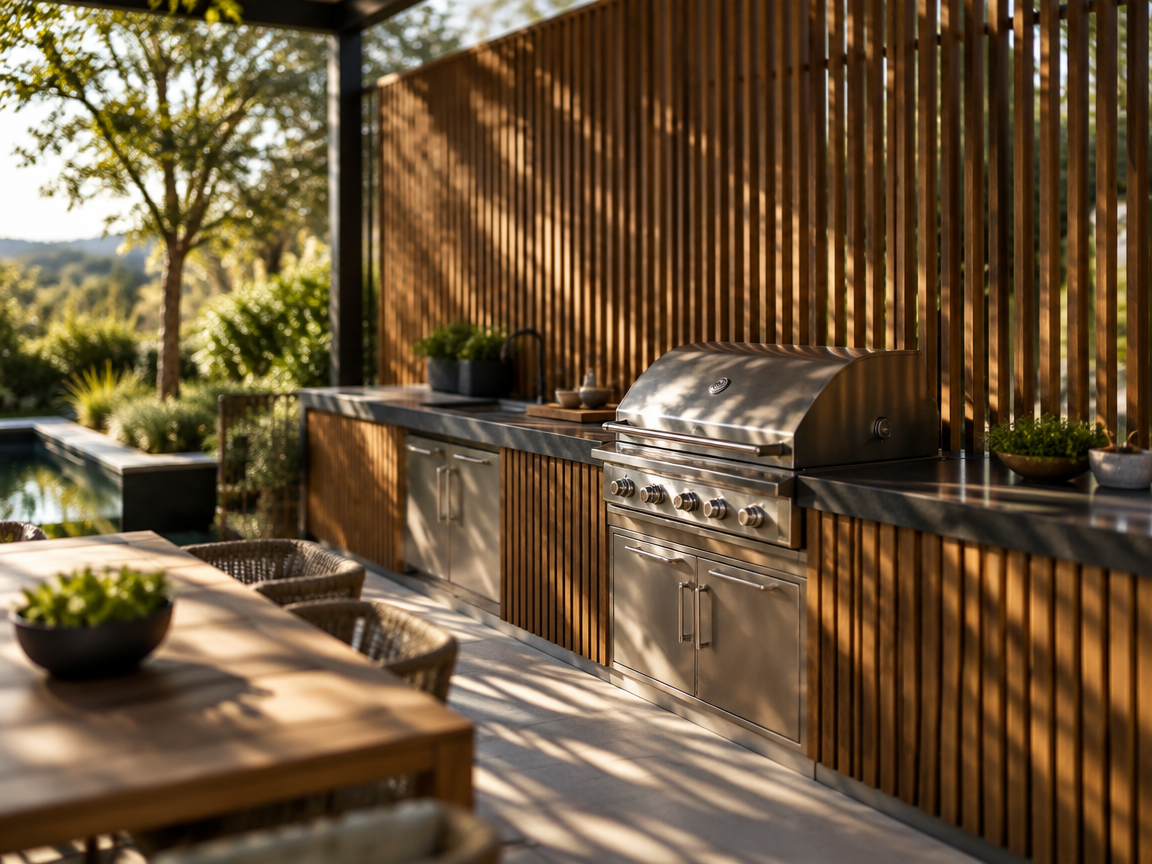
Wood Slat Privacy Screen Kitchen
A vertical slat screen hides the neighbours without blocking the breeze. Set the counter into the screen and the kitchen gains a back wall.
Use battens on a hidden frame so no fixings show on the face. Wider gaps let more light through and make the wall feel lighter.
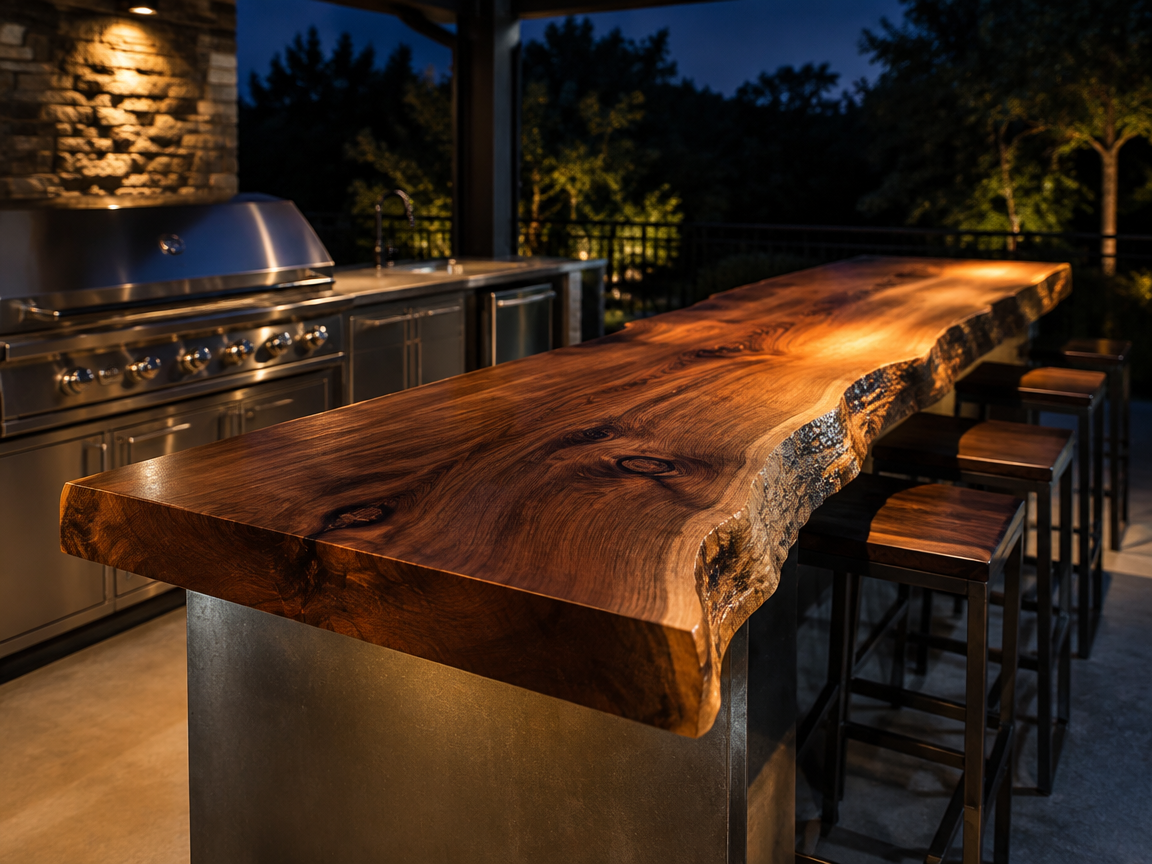
Live-Edge Slab Bar Top
A single live-edge slab makes a bar that no factory can copy. Keep the bark edge on the outside and the straight edge at the counter.
Choose a stable species like walnut or white oak for the slab. Butterfly keys stop the ends from splitting as it dries.
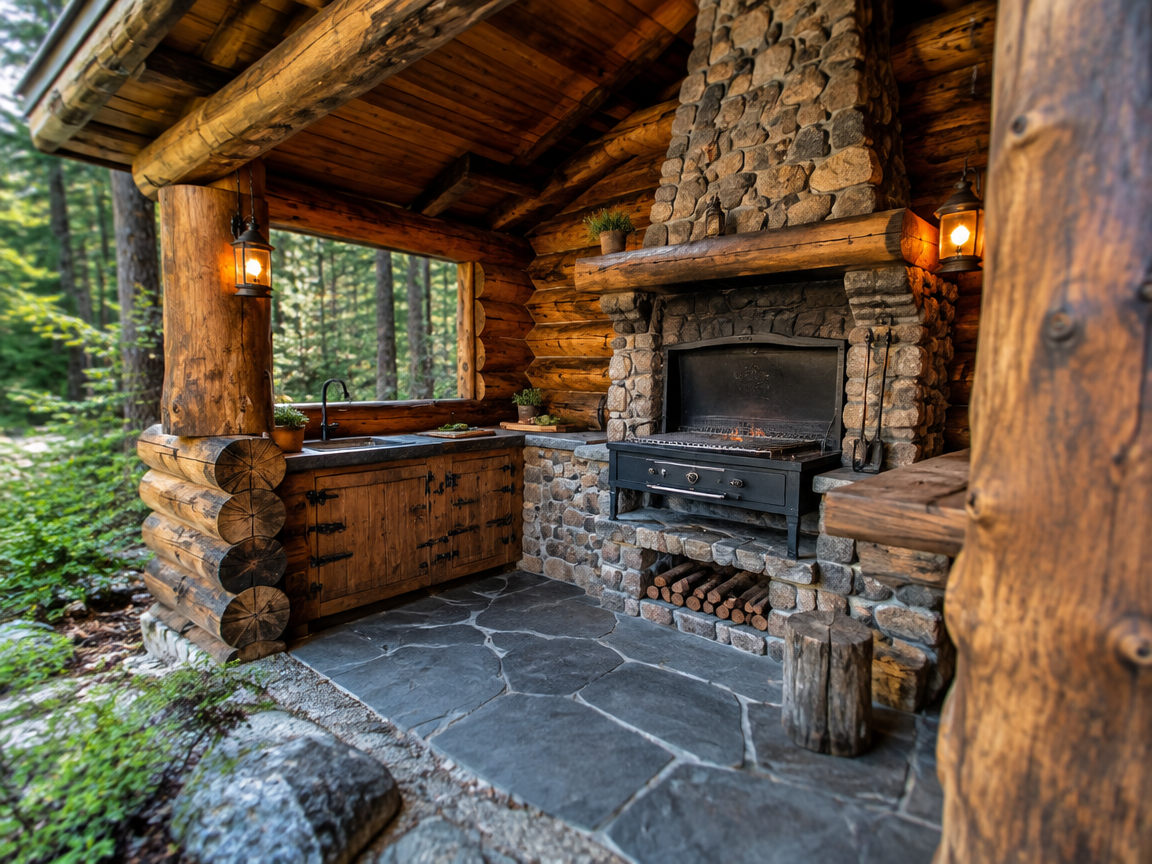
Log Cabin Kitchen Nook
Hand-hewn logs and a stone chimney turn a cooking corner into a cabin. Cast iron and lantern light finish the look.
Chink the logs properly or wind will find every gap. Keep the grill under a deep overhang so rain never reaches the fire.
Fire & Grill Craft
This is where the cooking happens. Nine builds shaped around one specific fire, from a pizza dome to a flat-top griddle.
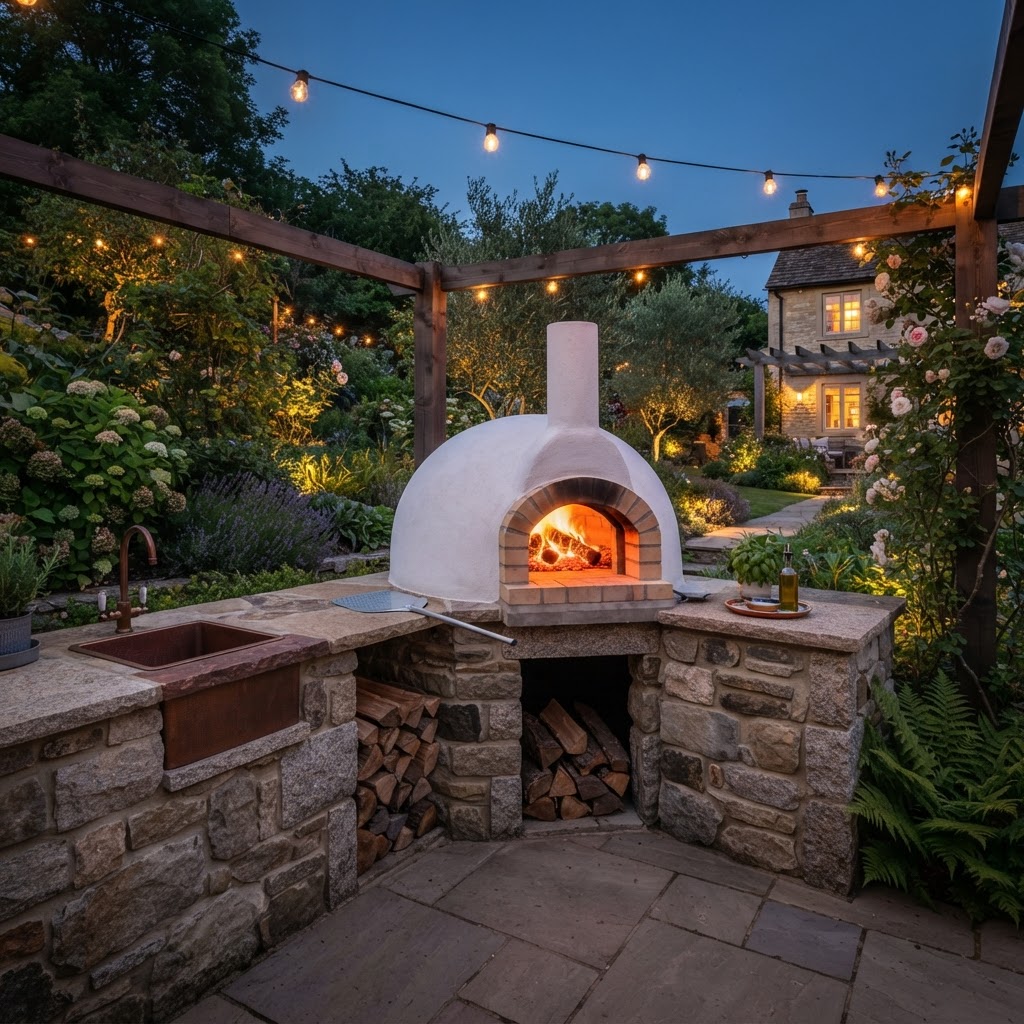
White Dome Wood-Fired Pizza Oven
A rounded white dome becomes the centrepiece of the whole garden. It heats for an hour, then cooks a pizza in ninety seconds.
Insulate the dome heavily so the heat stays in the floor. A tiled landing gives you somewhere to rest hot peels.
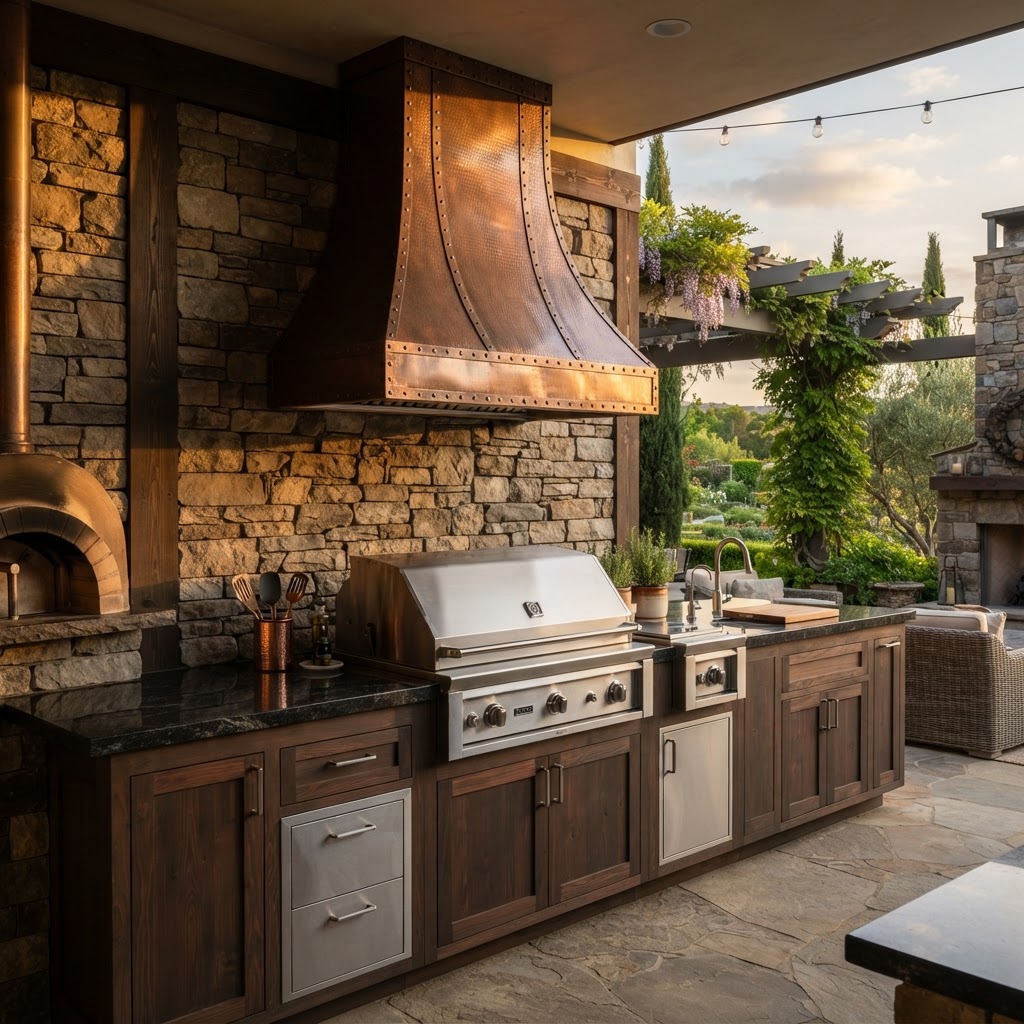
Copper Range Hood Grill Station
A copper hood pulls smoke away and makes the grill look like a professional range. Paired with a stone splashback, it feels built in for good.
Size the hood at least six inches wider than the grill on each side. Check local rules before you vent into a covered roof.
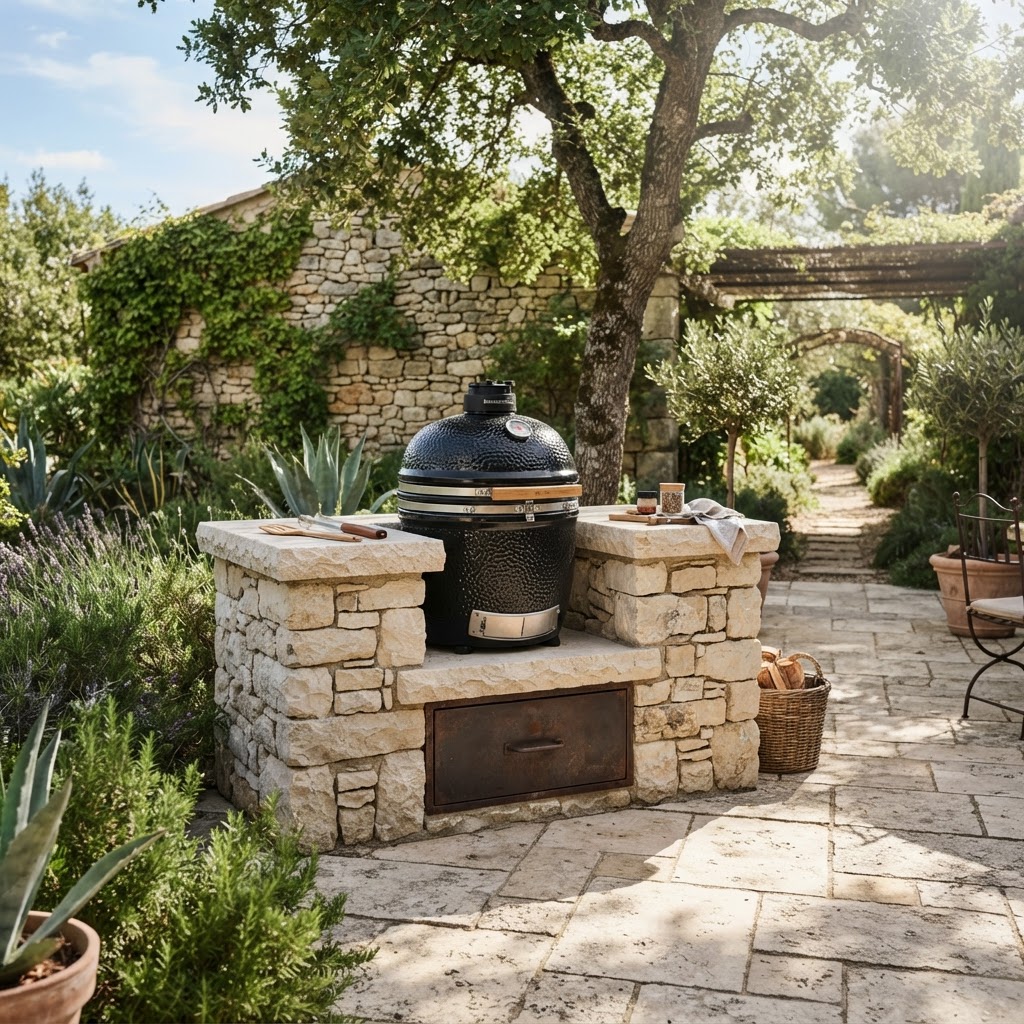
Kamado Ceramic Grill Cradle
A ceramic kamado set into a stone cradle holds low heat for twelve hours. It becomes part of the island instead of a trolley you shove around.
Leave an air gap around the ceramic body so it cannot crack. Add a pull-out ash drawer underneath for easy cleaning.
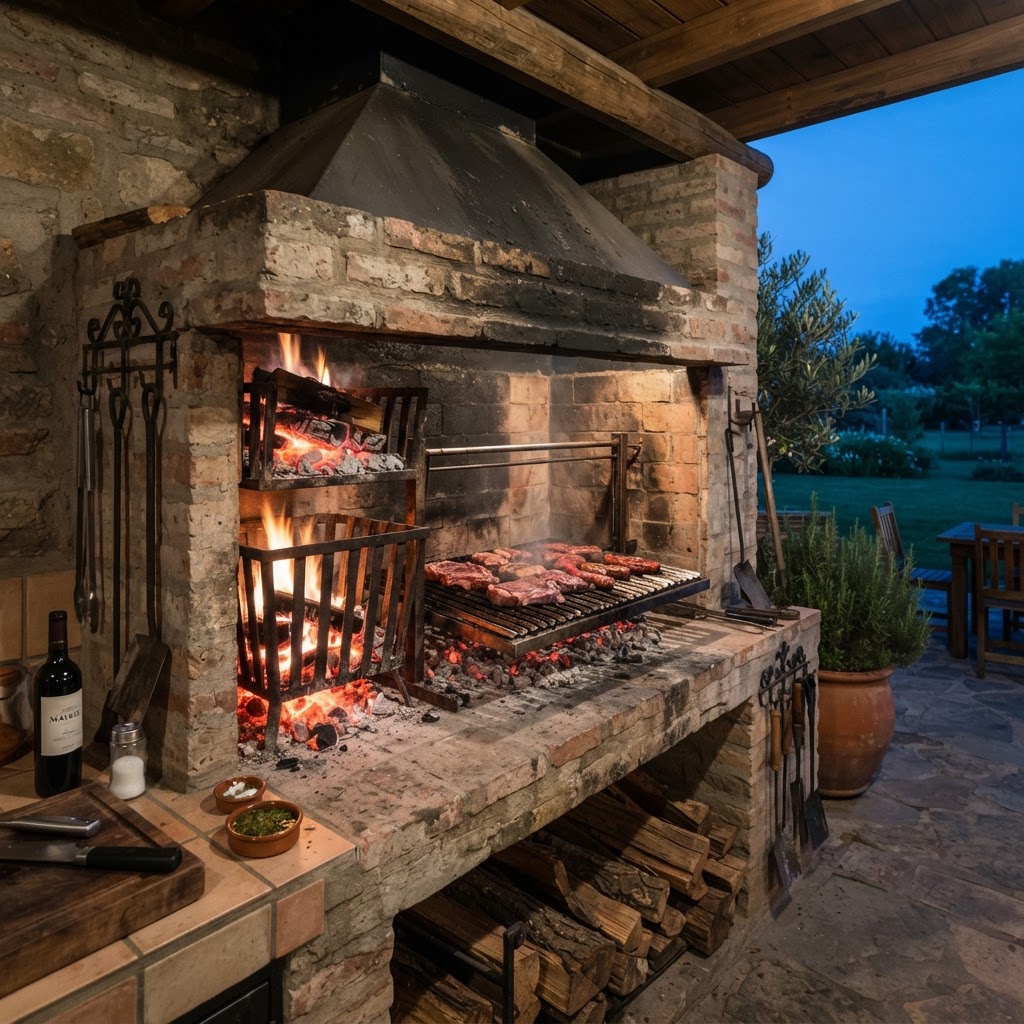
Argentine Asado Fire Basket
An asado burns wood in a basket beside the grill, not under it. You rake the glowing coals beneath the meat as you cook.
Build the basket from thick steel and raise it on legs for airflow. Line the surround in brick; this fire gets very hot.
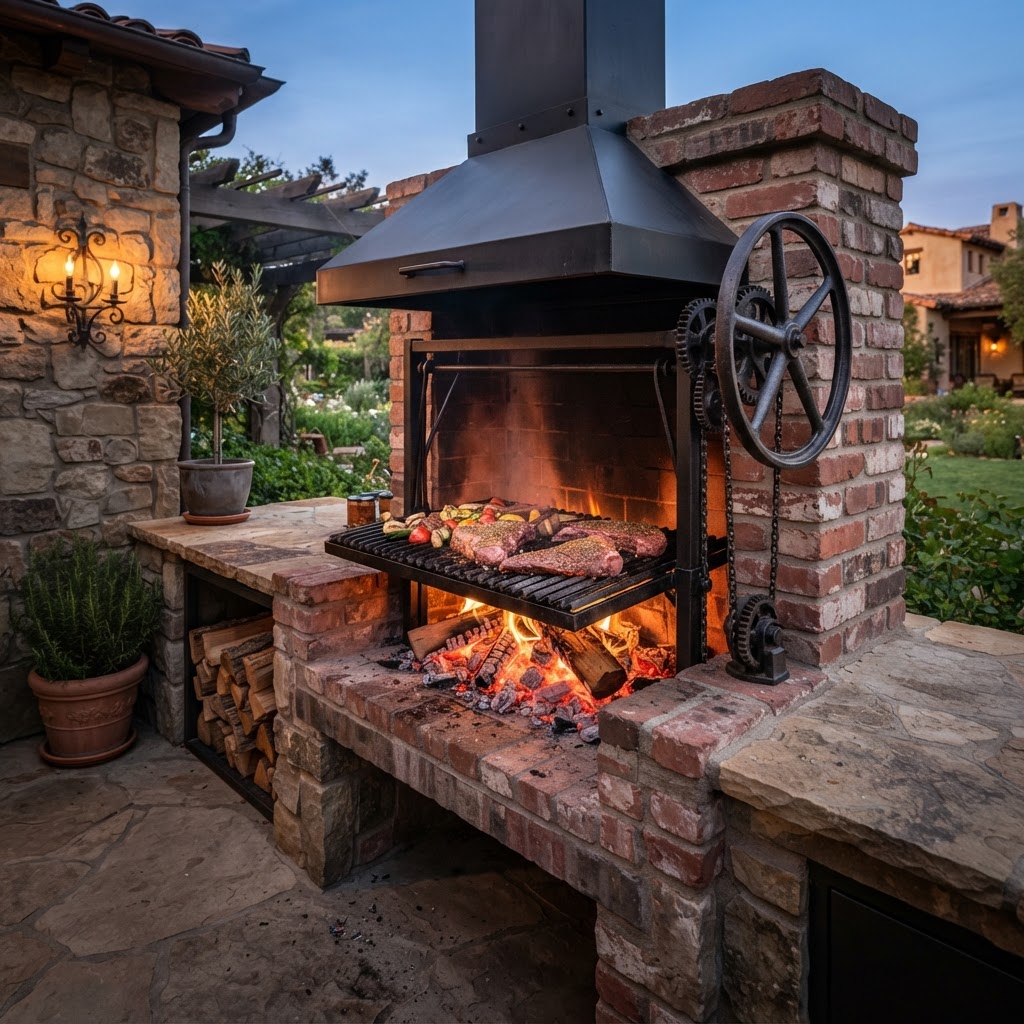
Santa Maria Crank Grill
A crank wheel raises and lowers the grate over open oak coals. That one control gives you searing heat or a slow finish.
Grease the crank mechanism with high-temperature lubricant each season. Keep a second coal bed ready so the heat never drops.
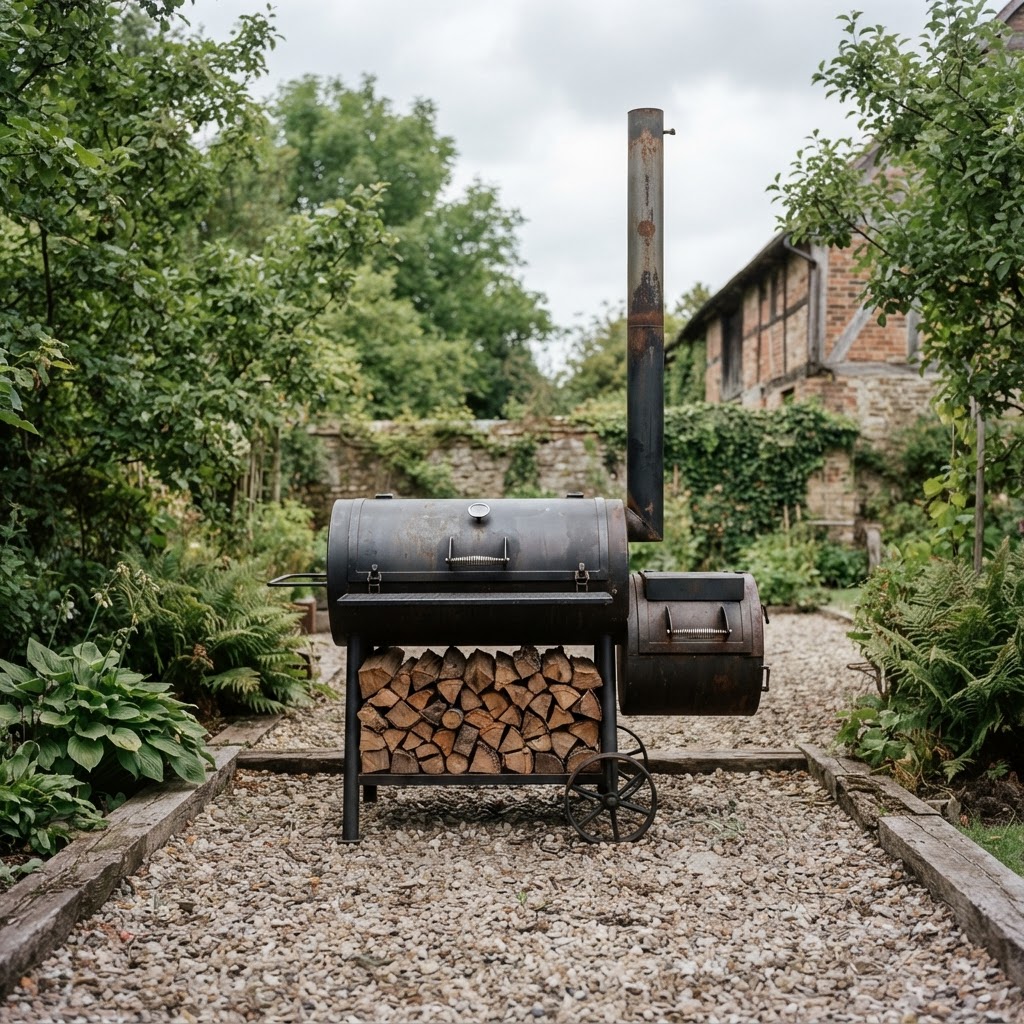
Offset Smoker with Firewood Storage
A barrel smoker with a side firebox is the classic low-and-slow machine. Store split wood underneath so fuel is always within reach.
Level the smoker and seal the door with a gasket for steady heat. Keep it away from walls and overhangs when it runs.
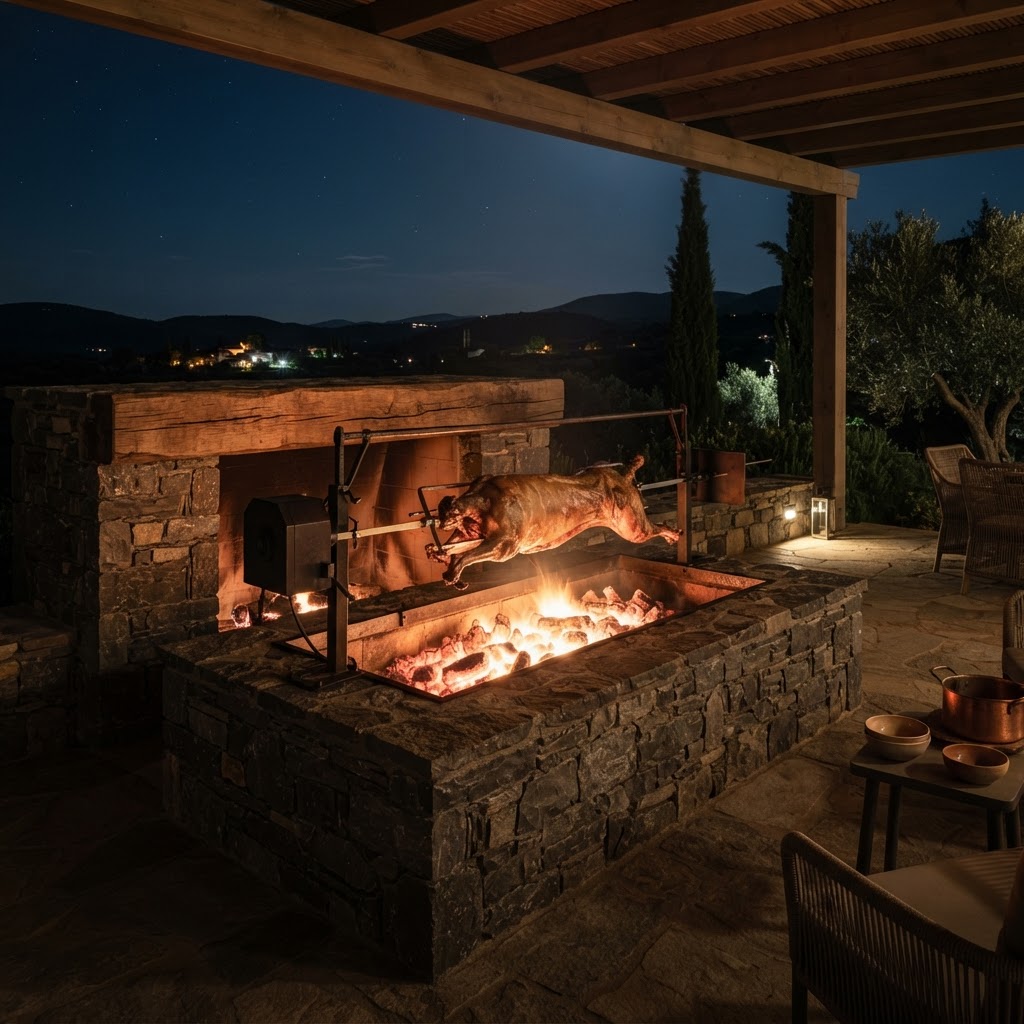
Built-In Rotisserie Fire Pit
A rotisserie over a rectangular fire pit turns the garden into theatre at night. The fire is both the cooking method and the lighting.
Use stainless skewers and a motor rated for outdoor use. Place the pit so smoke drifts away from the seating.
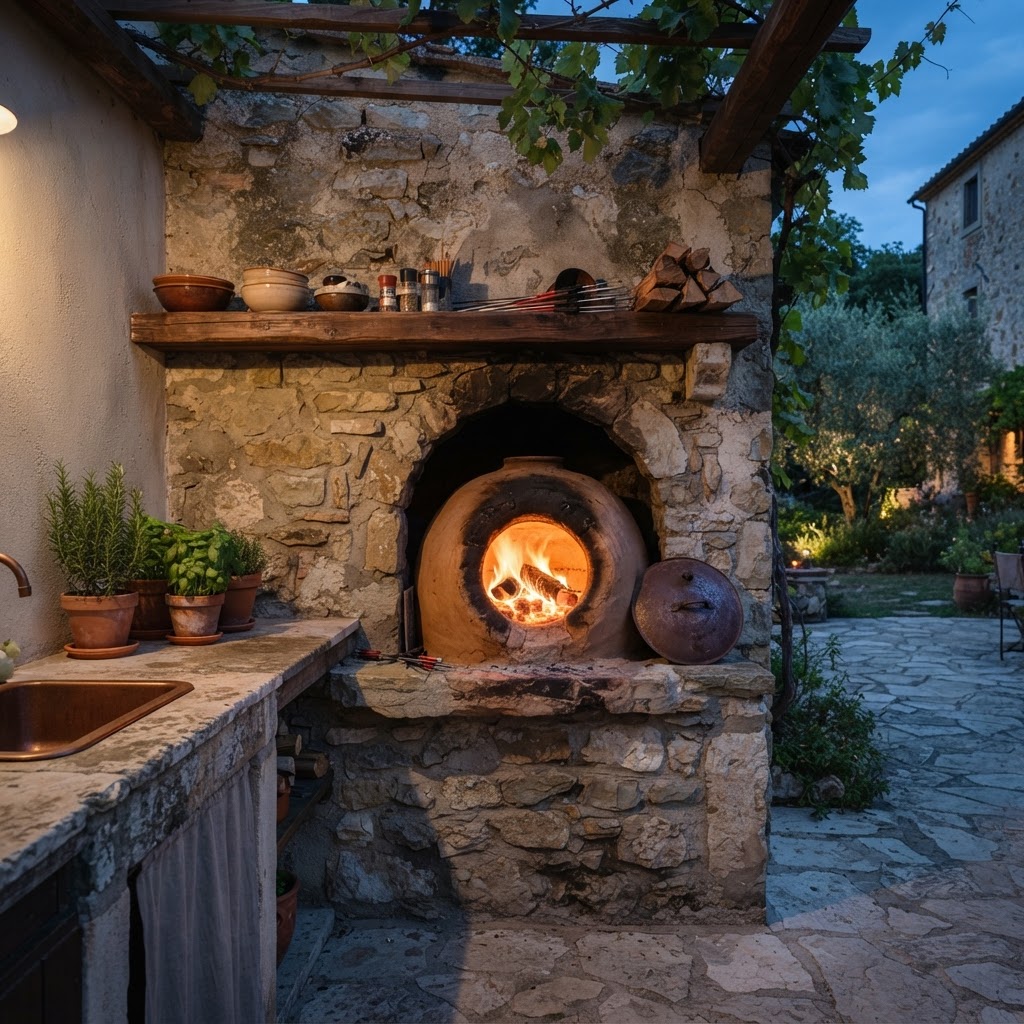
Clay Tandoor Nook
A clay tandoor reaches 480°C and bakes flatbread against its walls in minutes. Sinking it into a stone nook keeps it safe and tidy.
Insulate around the clay body with sand and vermiculite. Never light it with accelerants; heat it slowly so the clay does not crack.
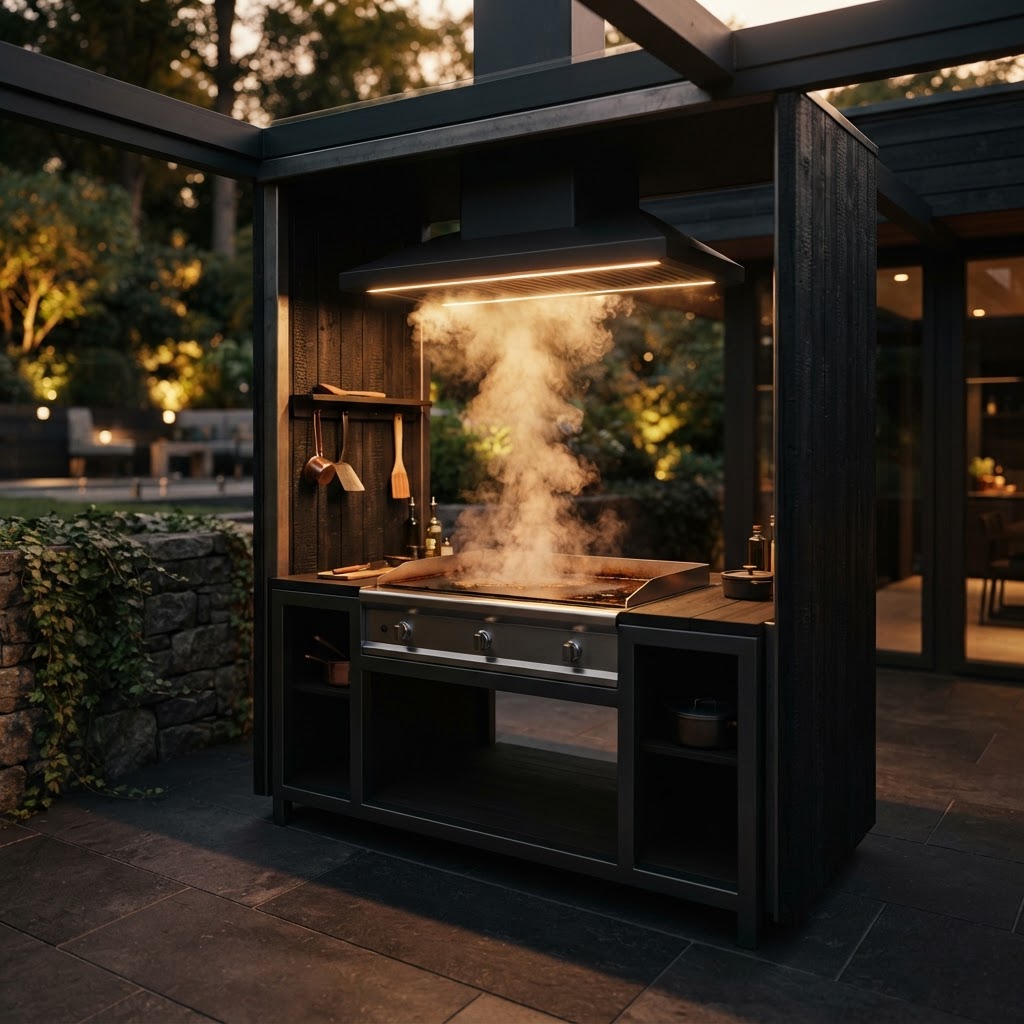
Teppanyaki Flat-Top Station
A flat-top griddle cooks breakfast, stir-fries and seafood on the same steel. Guests gather around it because something is always happening.
Fit a proper grease trough and drip tray under the plate. Stainless with a slight slope drains far better than a flat sheet.
Small & Urban Spaces
A small garden is not a limitation, it is a brief. Seven compact builds that use every inch on purpose.
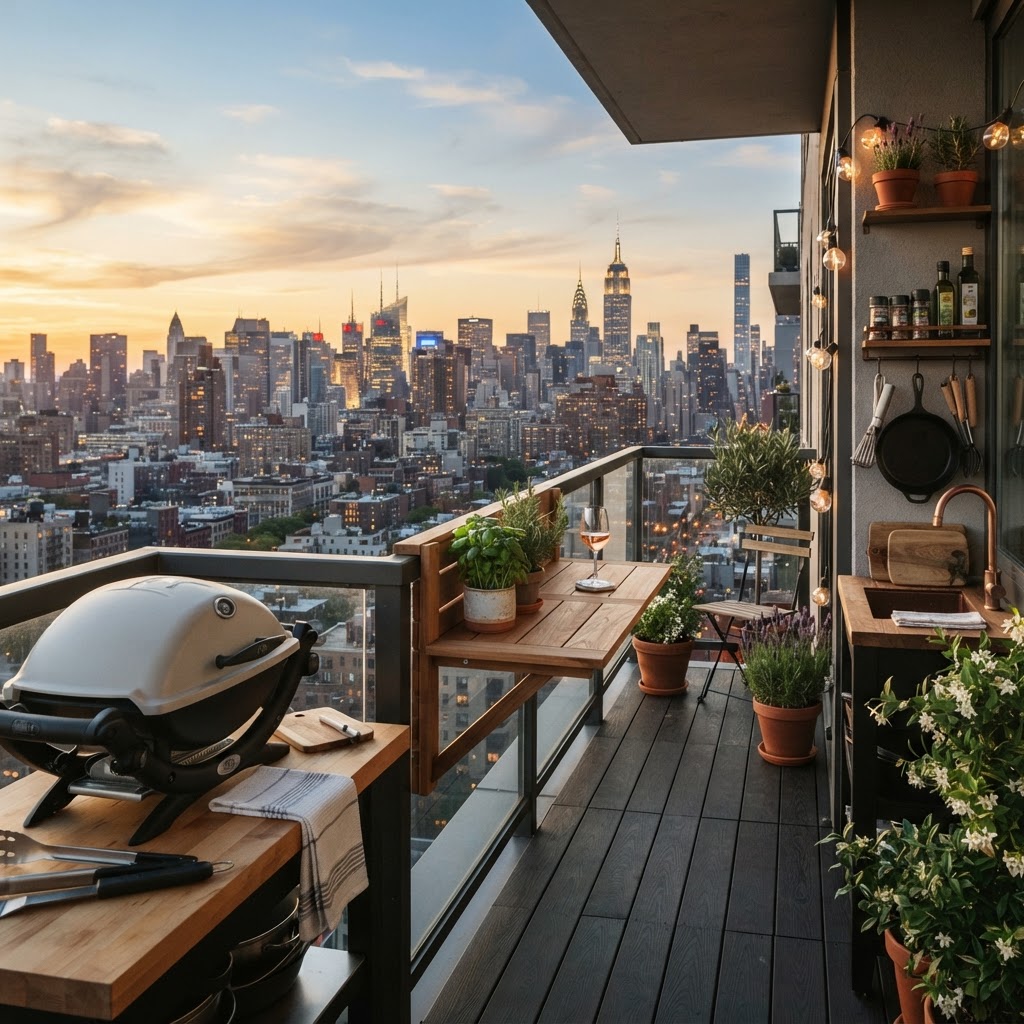
Balcony Kitchen with a Folding Counter
A counter that folds down over the railing doubles your prep space on demand. Close it and the balcony is yours again.
Use stainless hinges and a bracket rated for the load. Check your building’s rules on gas and open flame first.
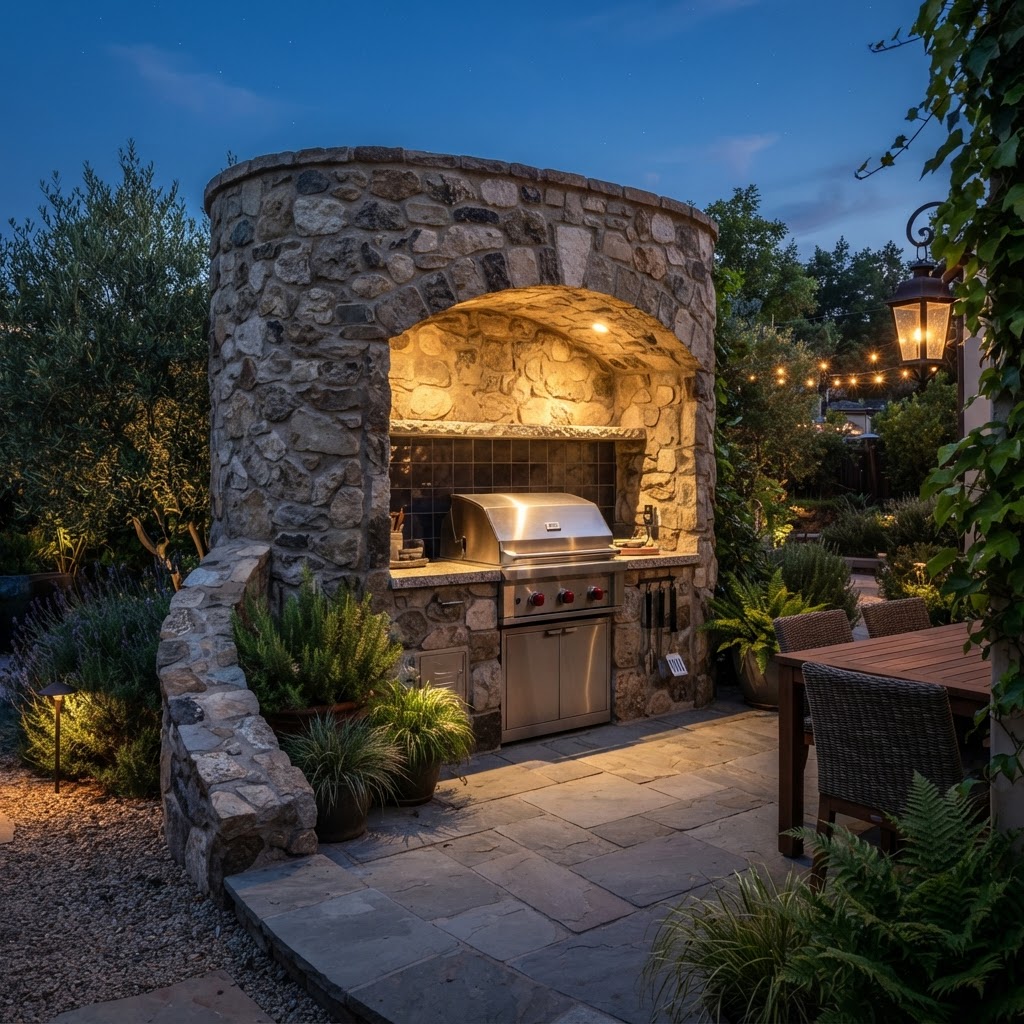
Wall-Recessed Grill Nook
A grill recessed into a garden wall takes up no floor space at all. A stone niche with uplighting makes it the focal point.
Leave air gaps and a heat shield behind the grill so the wall stays cool. Run power and gas before you close the niche up.
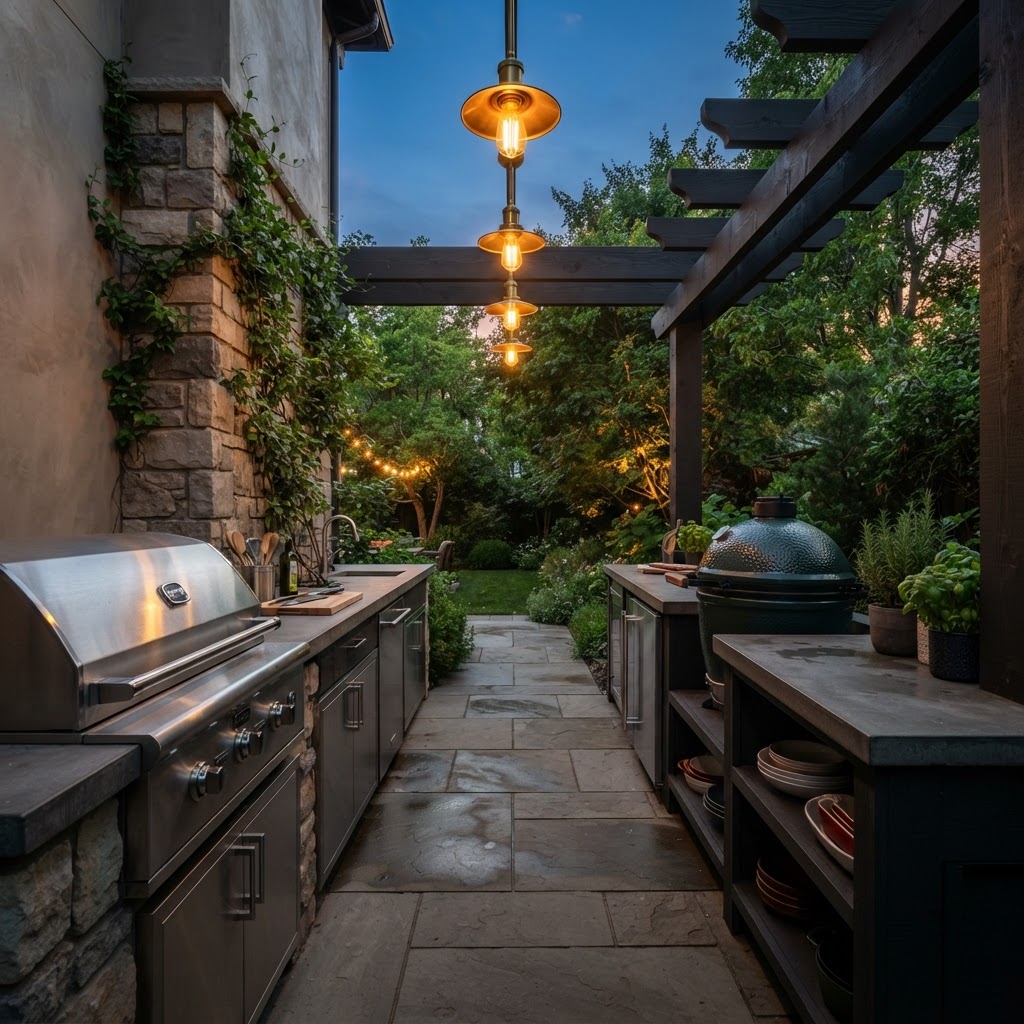
Narrow Galley Side-Yard Kitchen
A side yard becomes a serious kitchen when you run two counters facing each other. One side cooks, the other side preps and serves.
Keep the walkway at least 1.1 metres clear. Use wall-mounted lights instead of pendants so nothing sits at head height.
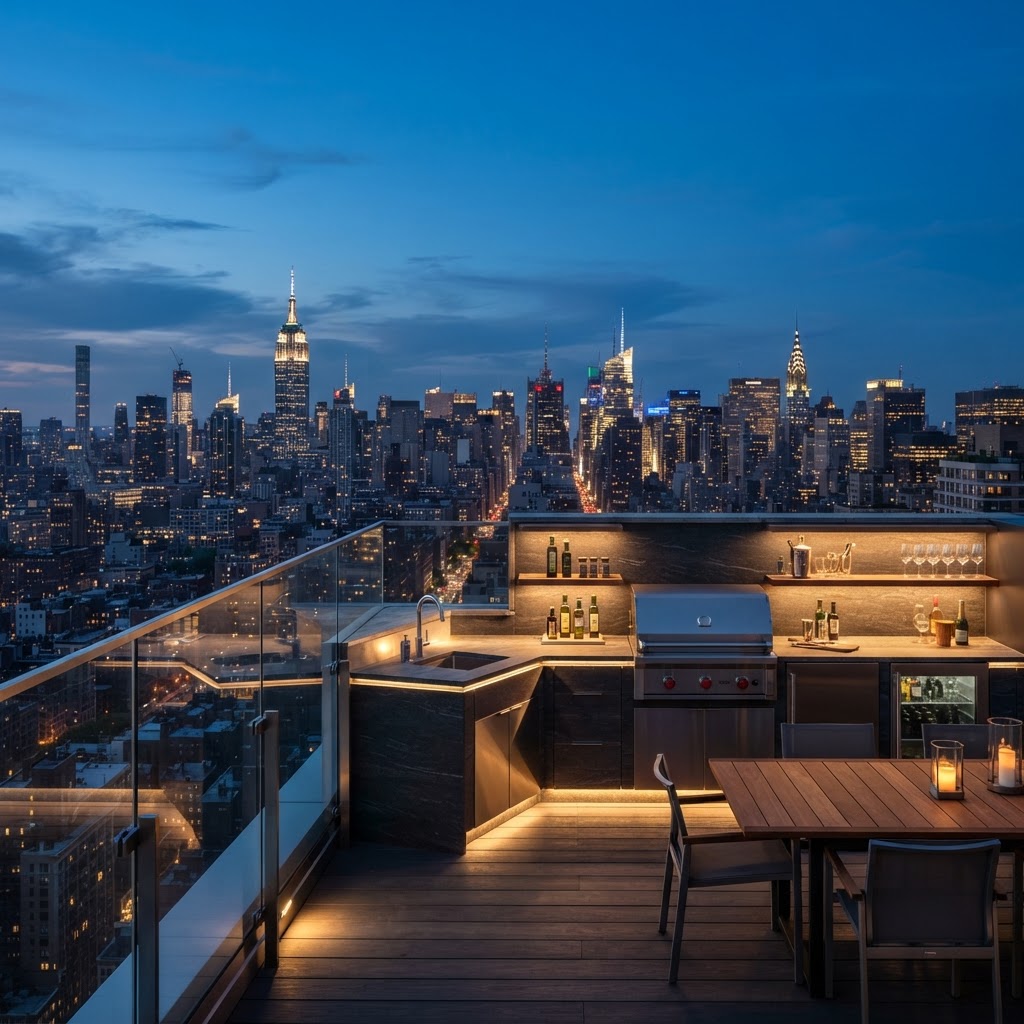
Rooftop Kitchen with a Skyline View
A rooftop kitchen turns dead space into the best table in the building. A glass balustrade keeps the view and blocks the wind.
Check the structural load before you add stone or a grill. Use lightweight composite counters and wind-rated fixings.
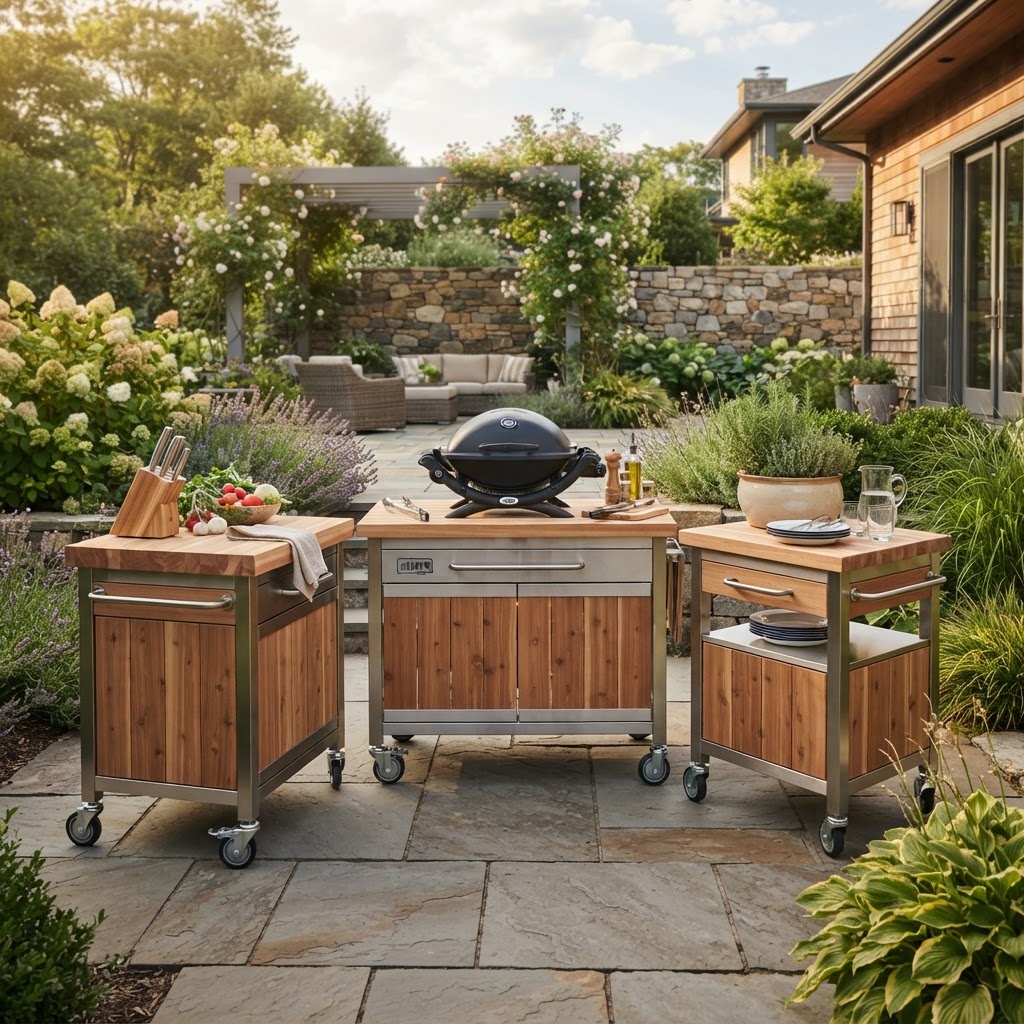
Modular Rolling Carts
Separate carts on casters let you build the kitchen you need that day. Wheel the grill into the sun, roll the bar into the shade.
Specify locking castors and a brake on every unit. Store the carts under cover in winter so the wheels do not seize.
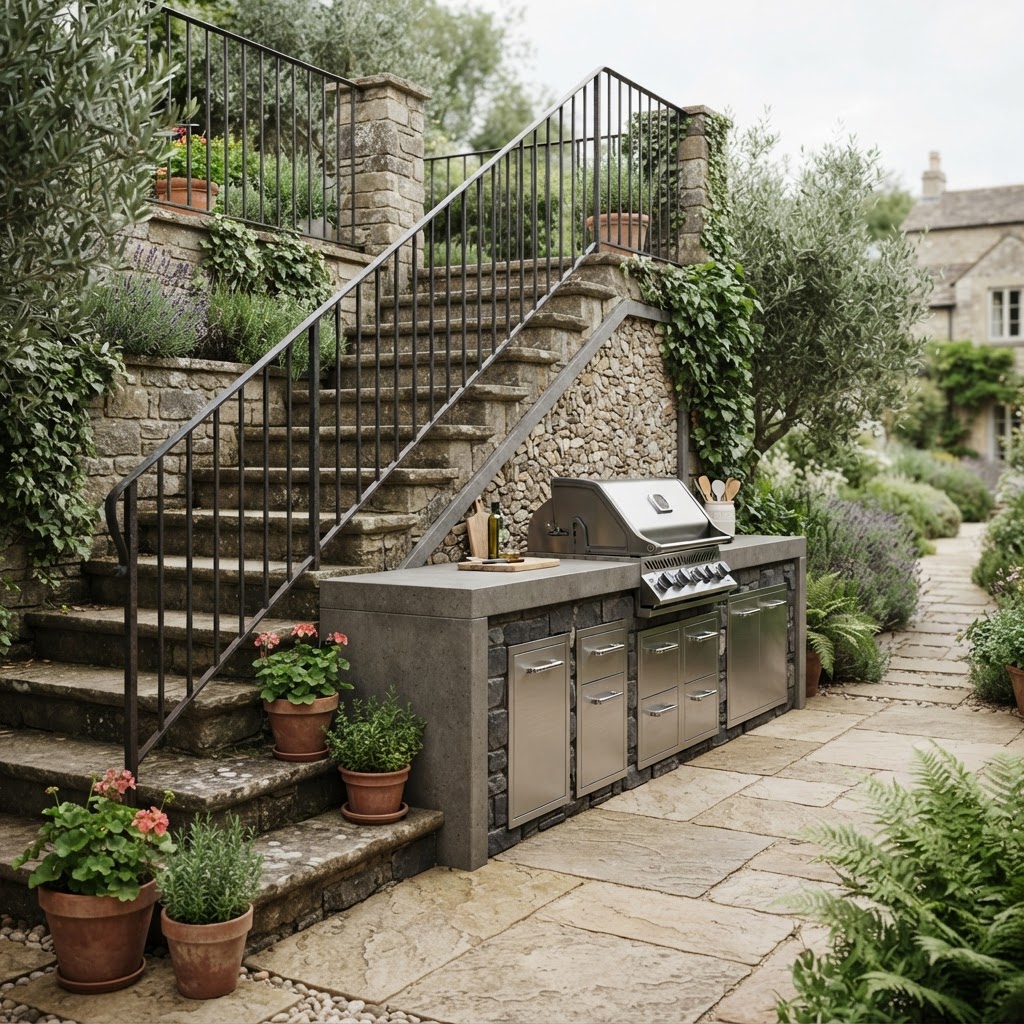
Under-Stair Kitchen
The space under an external staircase is usually wasted. Fit drawers and a grill into it and you gain a full outdoor kitchen.
Line the underside with cement board before anything else. Keep a fire extinguisher within reach of the grill.
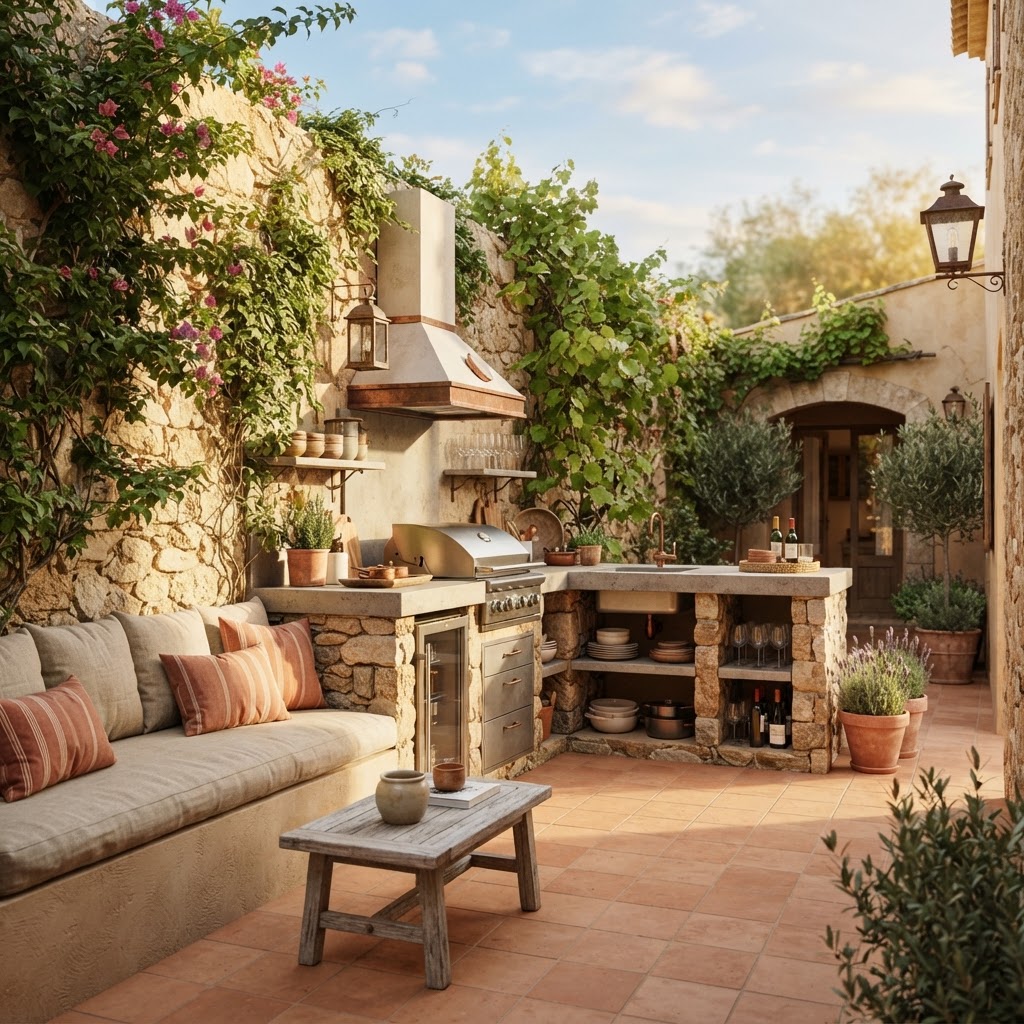
Courtyard Kitchen with Bench Seating
An L-shaped counter with a built-in bench turns a tiny courtyard into a dining room. The bench adds storage under the seat.
Use moisture-resistant cushions and lift them to dry each night. Plant one tree for shade instead of building a roof.
Poolside & Views
Water and horizon change how a kitchen should behave. Seven builds designed around the view and the wet feet that come with it.
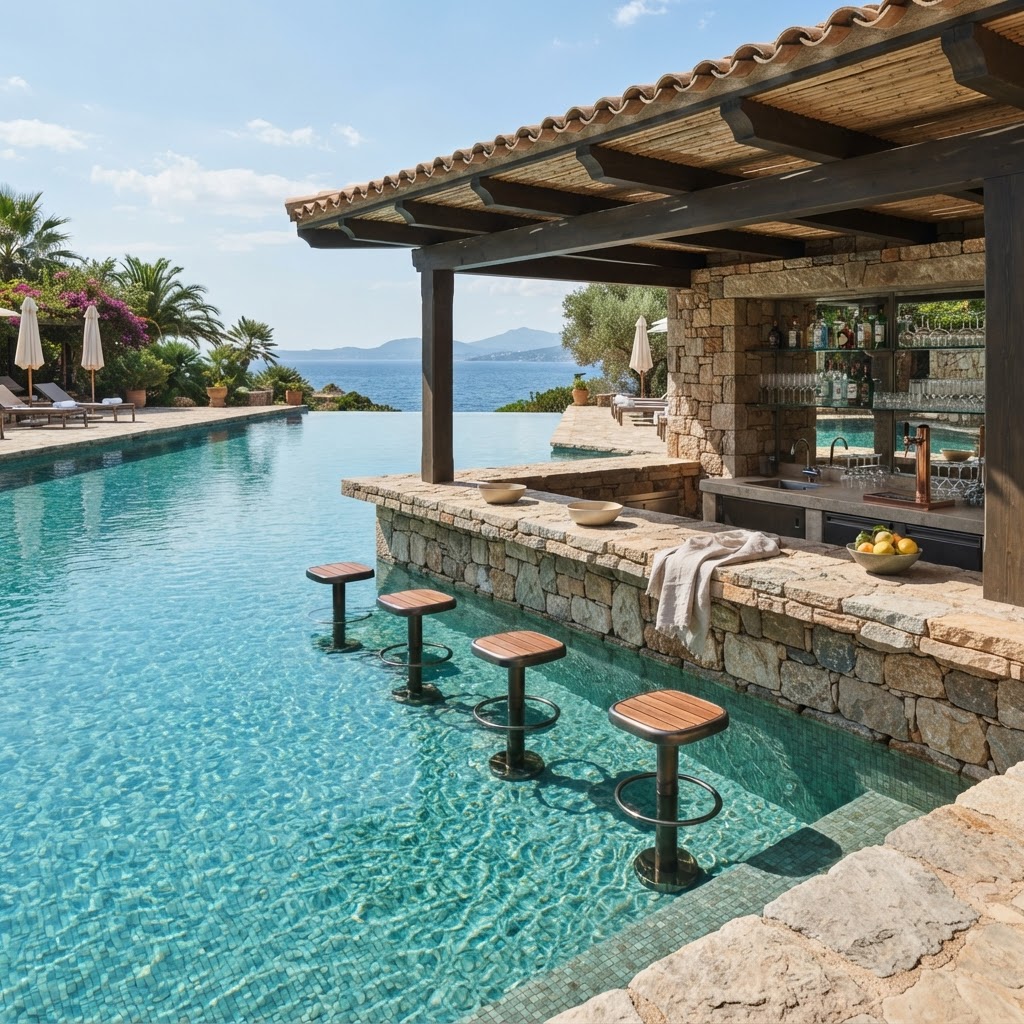
Swim-Up Pool Bar
A bar at water level with submerged stools keeps everyone in the pool. The counter becomes the social centre of the garden.
Finish the bar face in glass mosaic so it handles chlorine and salt. Run all electrics well above the waterline on a dedicated circuit.
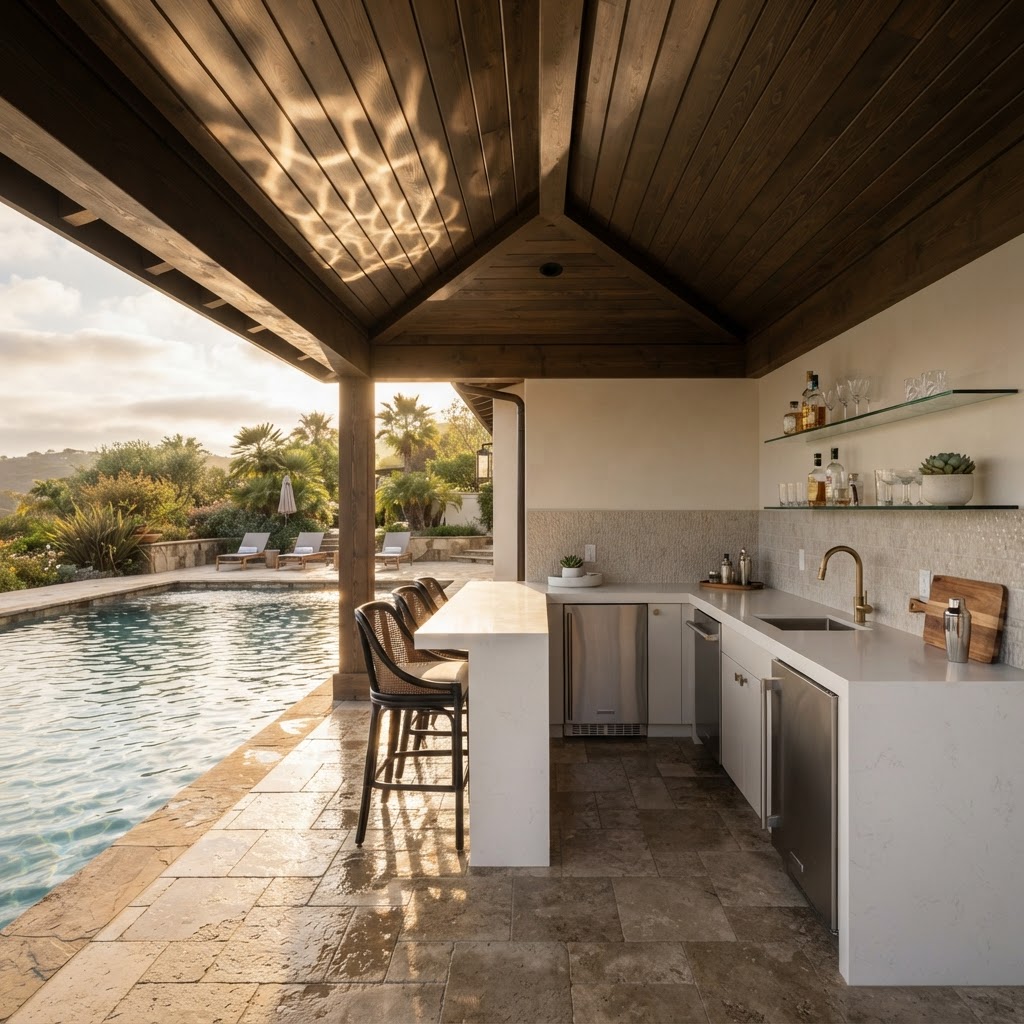
Poolside Pavilion Wet Bar
A pavilion with a sink, fridge and ice keeps drinks out of the house. Draped fabric or louvres let you control the afternoon sun.
Slope the counter away from the pool so spills drain outside. Use slip-rated paving even on the dry side.
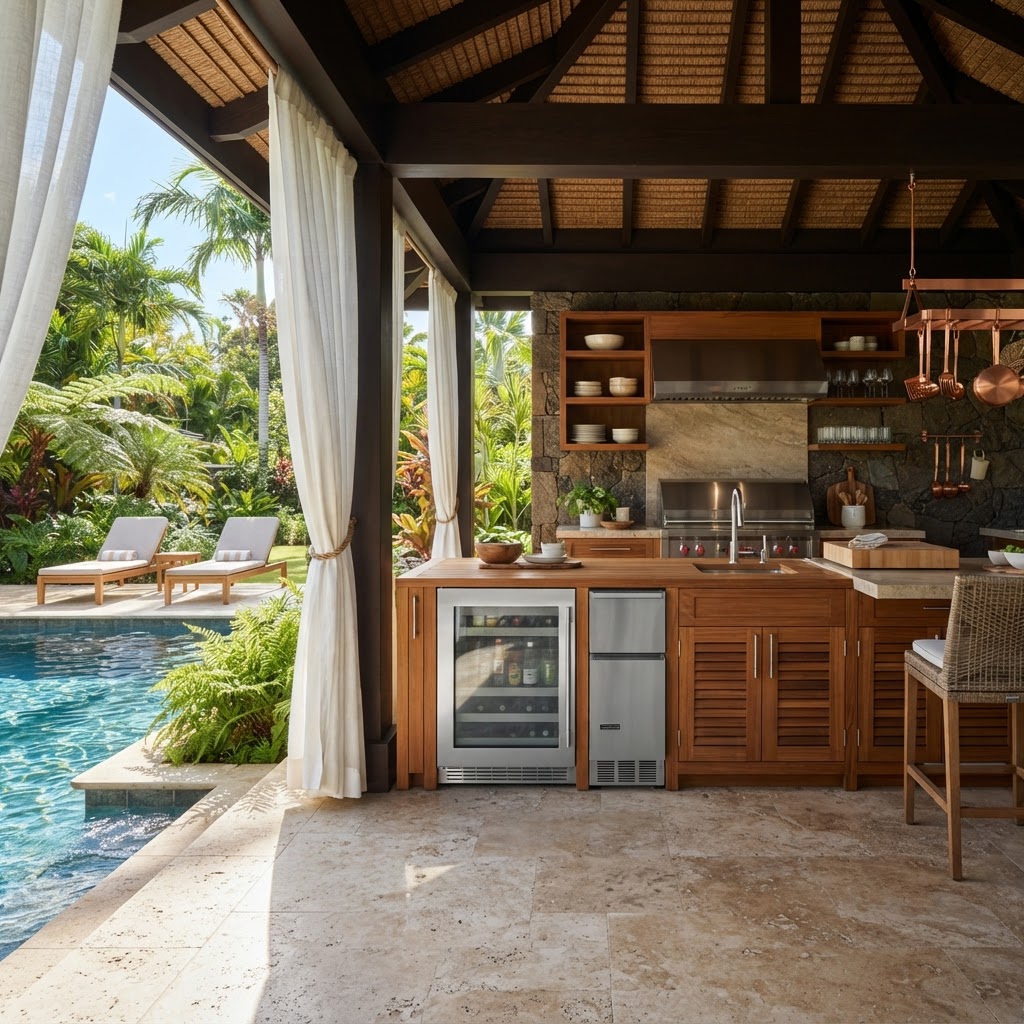
Cabana Kitchen with an Ice Maker
A cabana kitchen with an ice maker and towel shelf works as a service station all summer. Store glassware behind closed doors to keep it clean.
Choose appliances rated for outdoor use, not indoor ones under a roof. Give the fridge ventilation space or it will fail early.
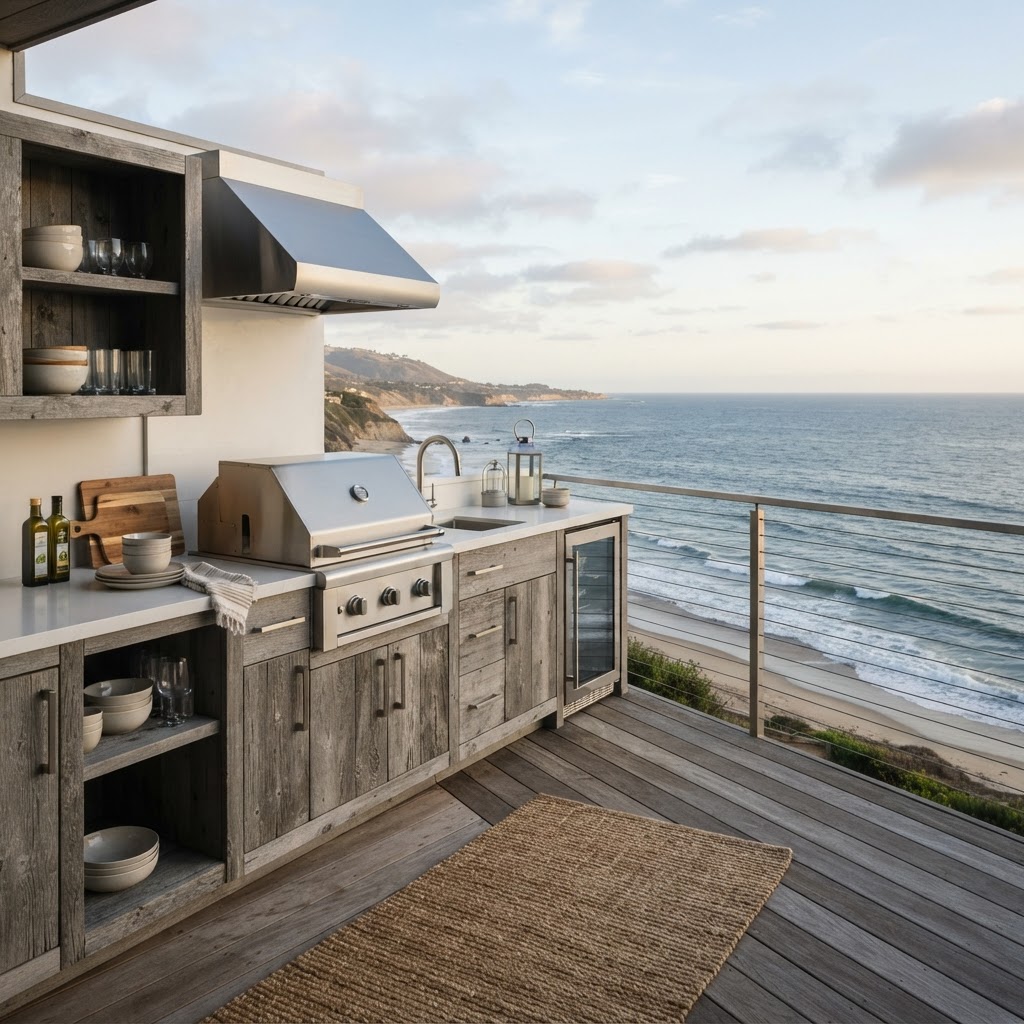
Beach Deck Kitchen
Weathered grey timber and a pale quartz top suit a beach house perfectly. Sand and salt are the real design constraints here.
Specify 316 marine-grade stainless for every fixing and hinge. Rinse the grill after each use; salt eats ordinary steel fast.
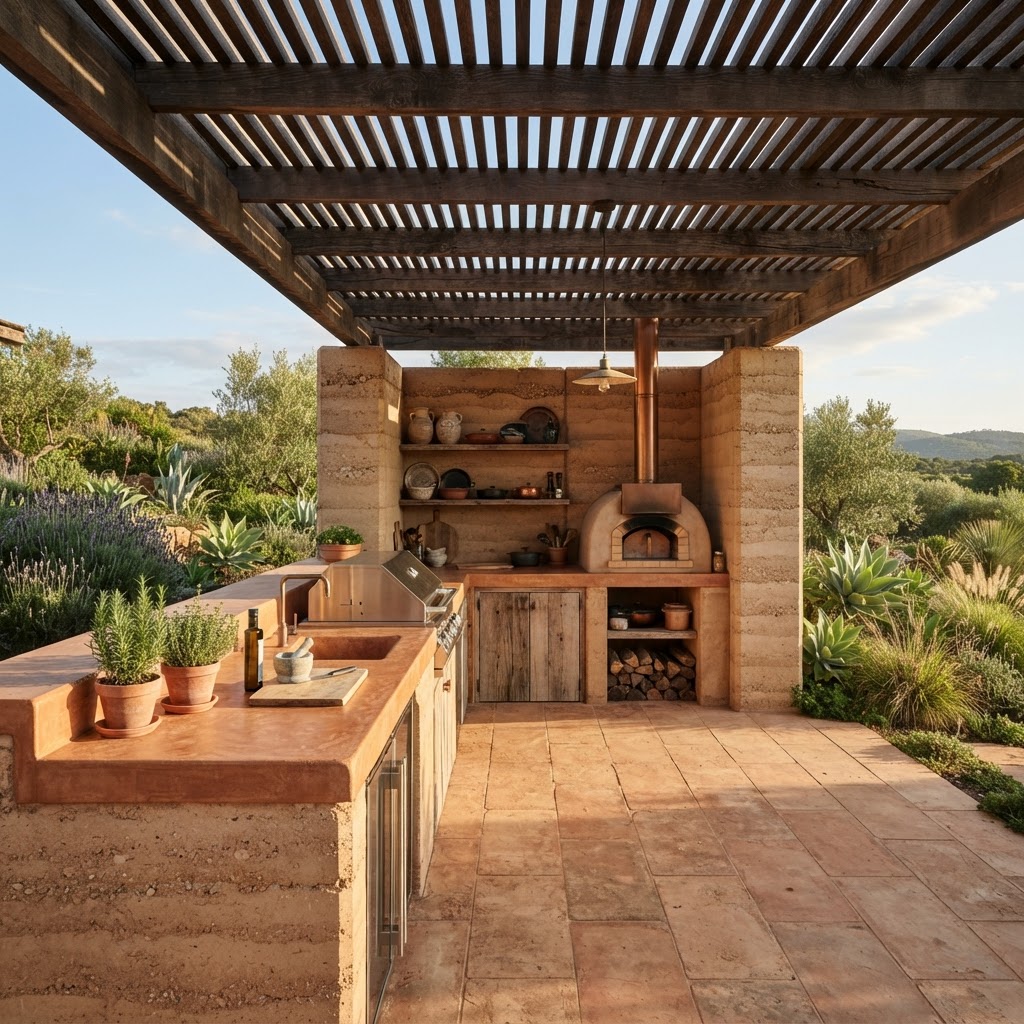
Rammed Earth Desert Kitchen
Rammed earth walls hold the cool of the night well into the afternoon. A slatted shade structure keeps the sun off the counter.
Seal rammed earth against rain even in dry climates. Choose pale, heat-reflective counters that stay touchable in the sun.
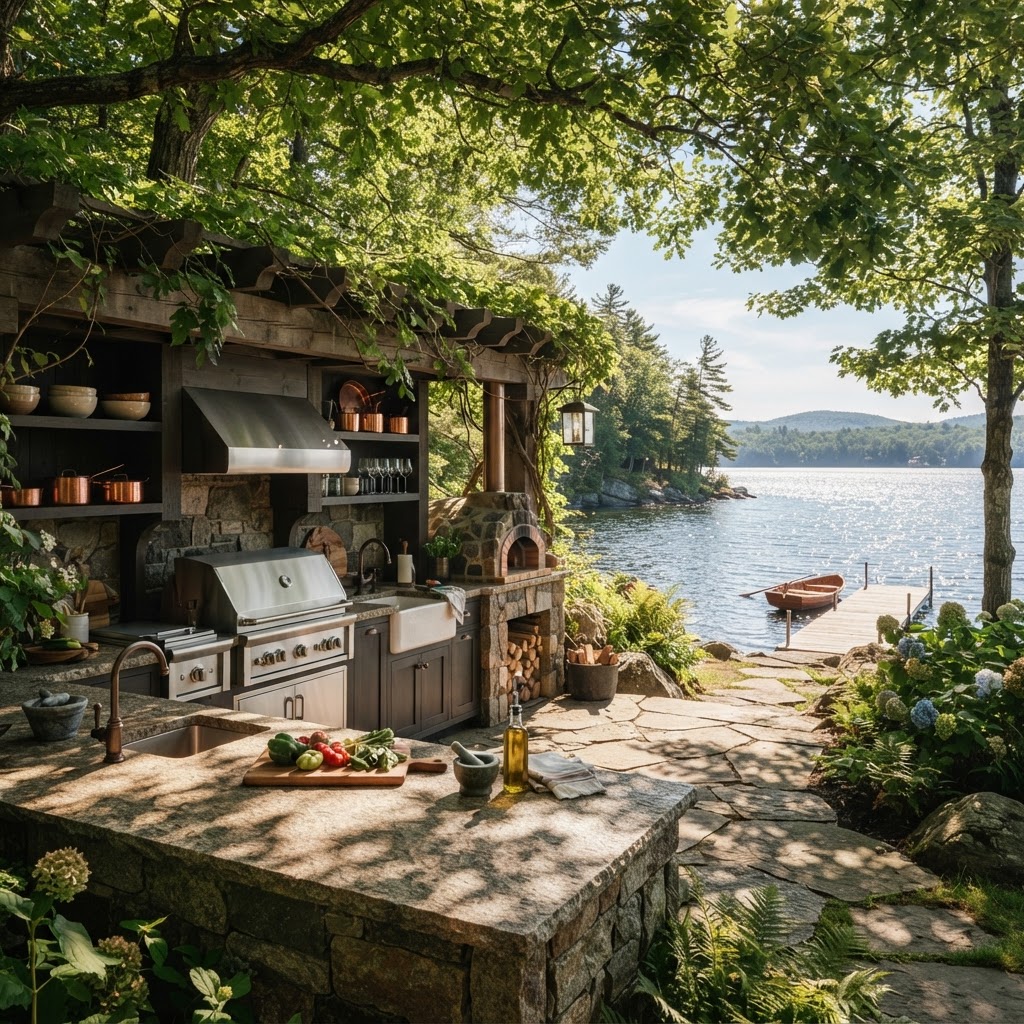
Lakeside Kitchen under Trees
Building the kitchen under an existing canopy gives you shade for free. Dappled light on stone is hard to fake with a roof.
Keep the grill clear of low branches and check rules on open flame near water. Raise the deck so the kitchen stays dry in flood season.
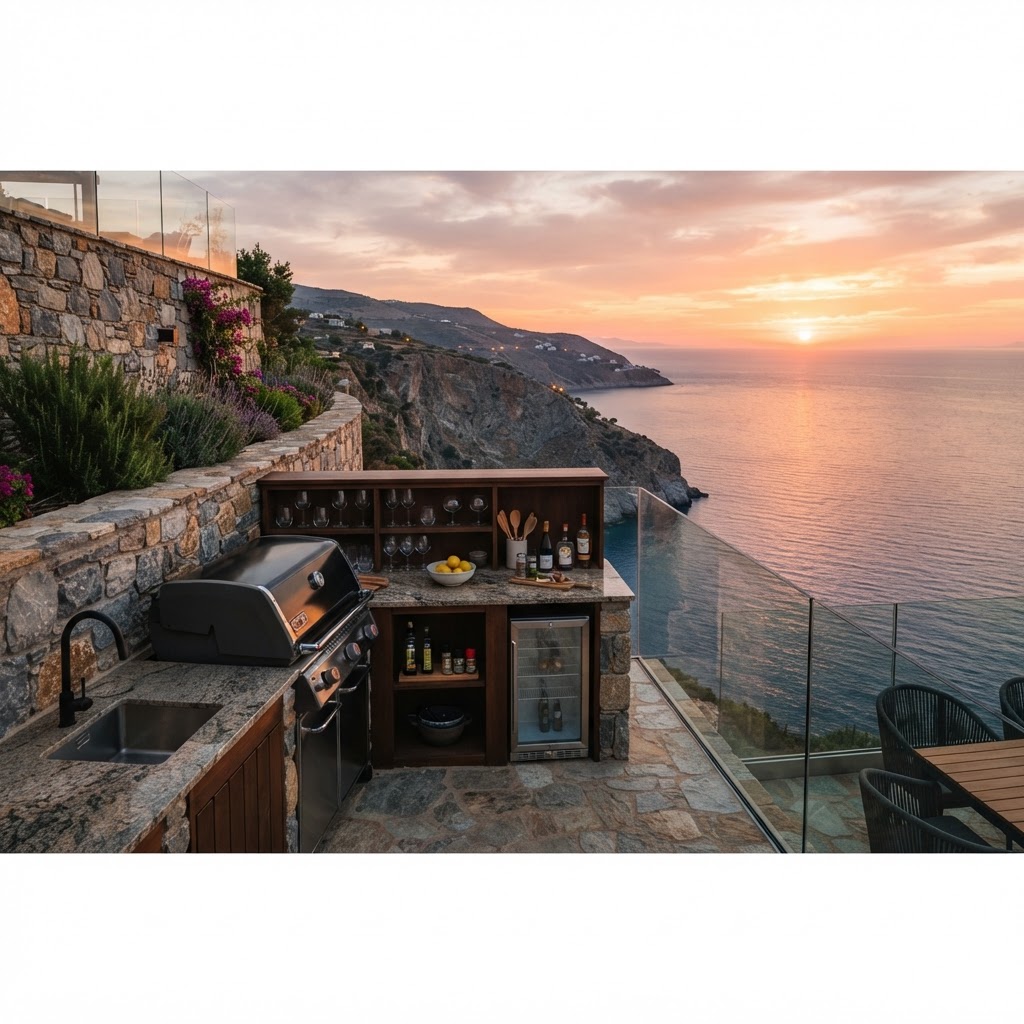
Cliffside Kitchen with Glass Railing
A frameless glass balustrade keeps the sea view open from the counter. The kitchen becomes a viewing platform with a grill.
Use toughened laminated glass and marine-rated spigots. Anchor for wind; coastal gusts are far stronger at the edge.
Details, Light & Comfort
The last ten percent is what makes a kitchen get used. These ten details decide whether it feels finished.
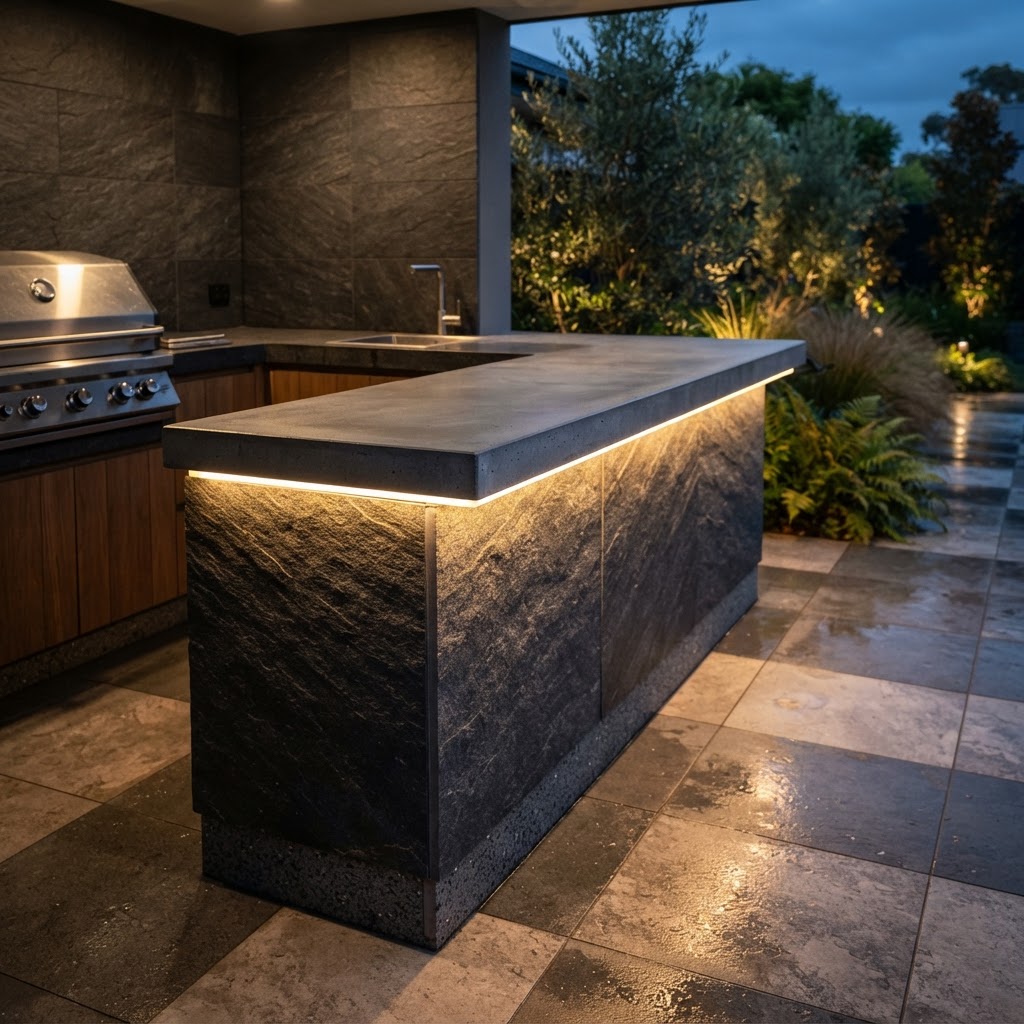
Under-Counter LED Strip
A warm LED strip under the counter edge lights the paving and hides the cabinet base. It is the cheapest way to make a kitchen look expensive.
Use 3000K warm white and an IP65-rated strip. Put it on a dimmer so it works for cooking and for late conversation.
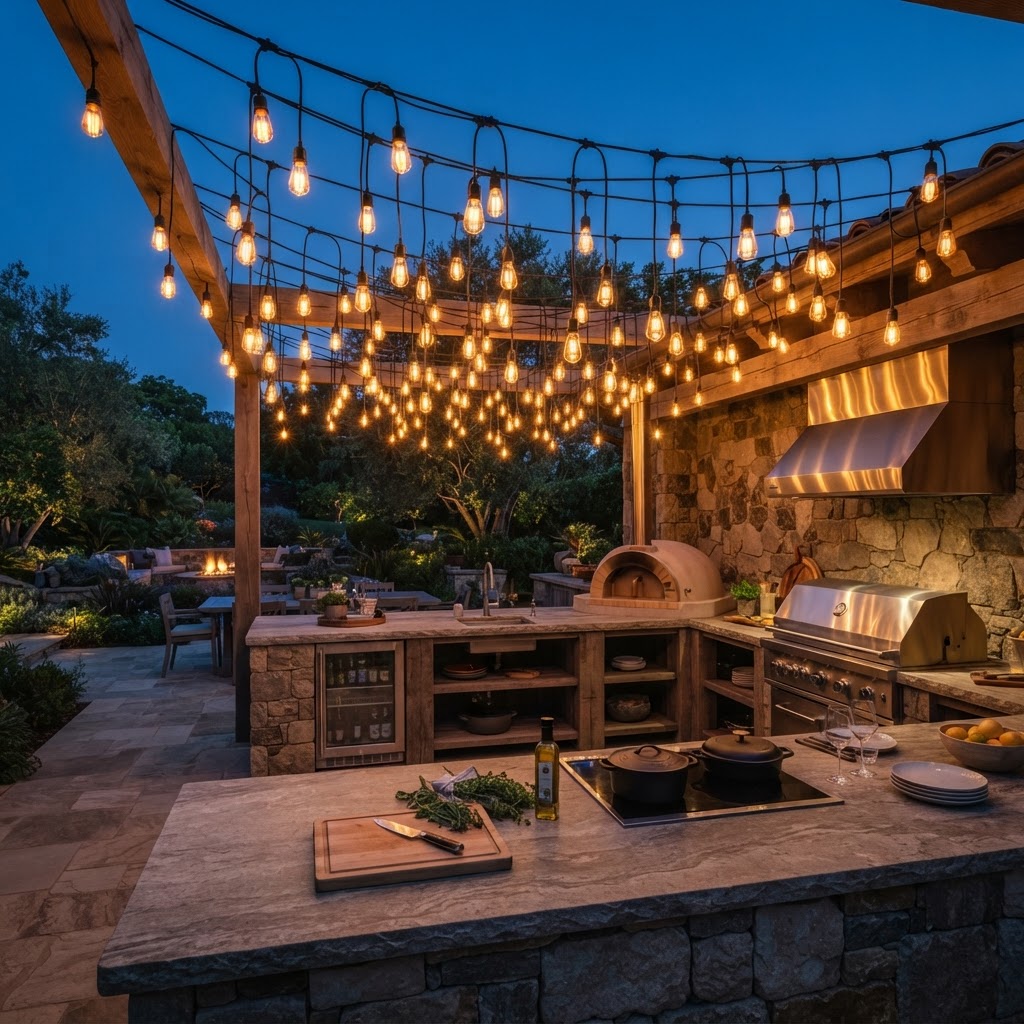
Edison Bulb Light Canopy
A canopy of bare bulbs overhead makes the garden feel like a courtyard restaurant. Warm amber light flatters stone, wood and food.
Use LED filament bulbs rated for outdoor use on rubber cable. Hang the lowest bulb above 2.2 metres so nobody walks into it.
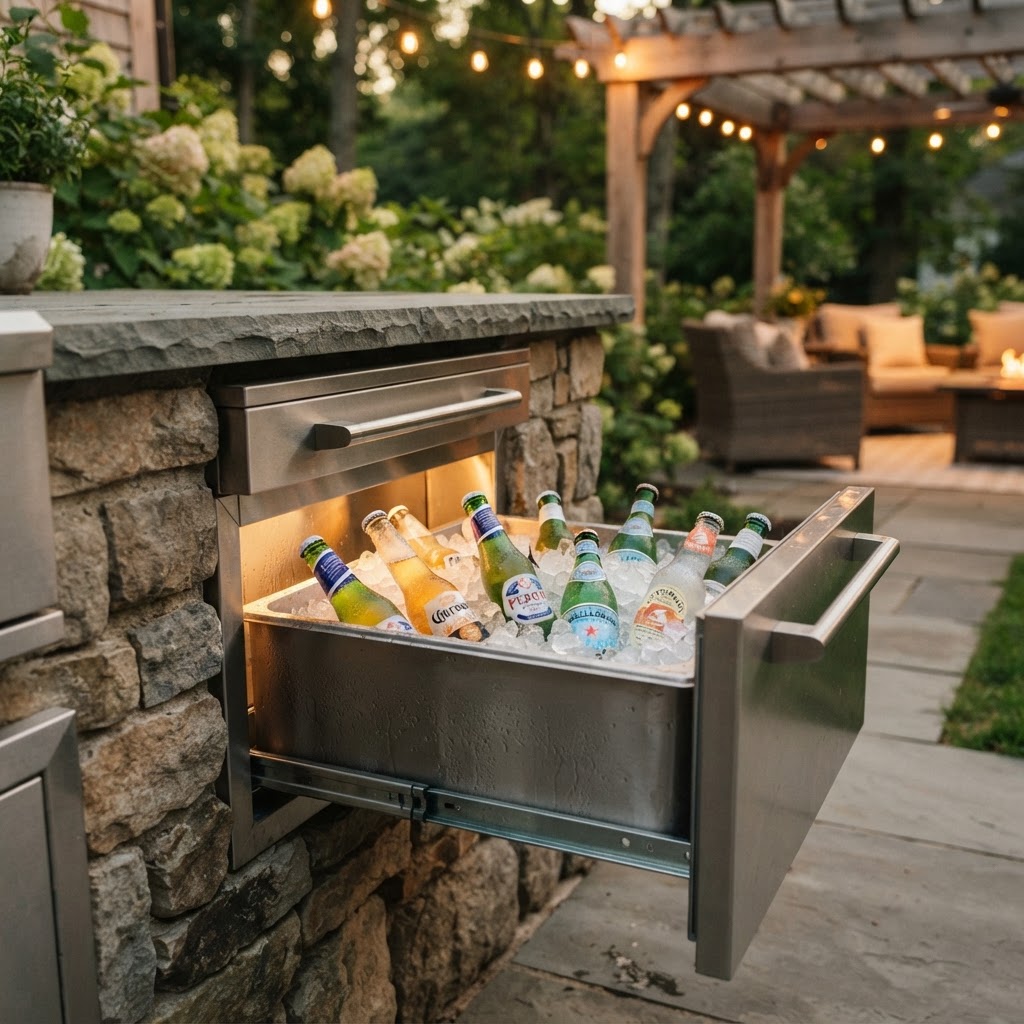
Hidden Beverage Center with an Ice Bin
A drawer that opens to an ice bin and cold bottles saves a hundred trips to the kitchen. Closed, it disappears into the stone facade.
Insulate the bin and add a drain plug so meltwater has an exit. Keep the ice drawer out of the grill’s heat zone.
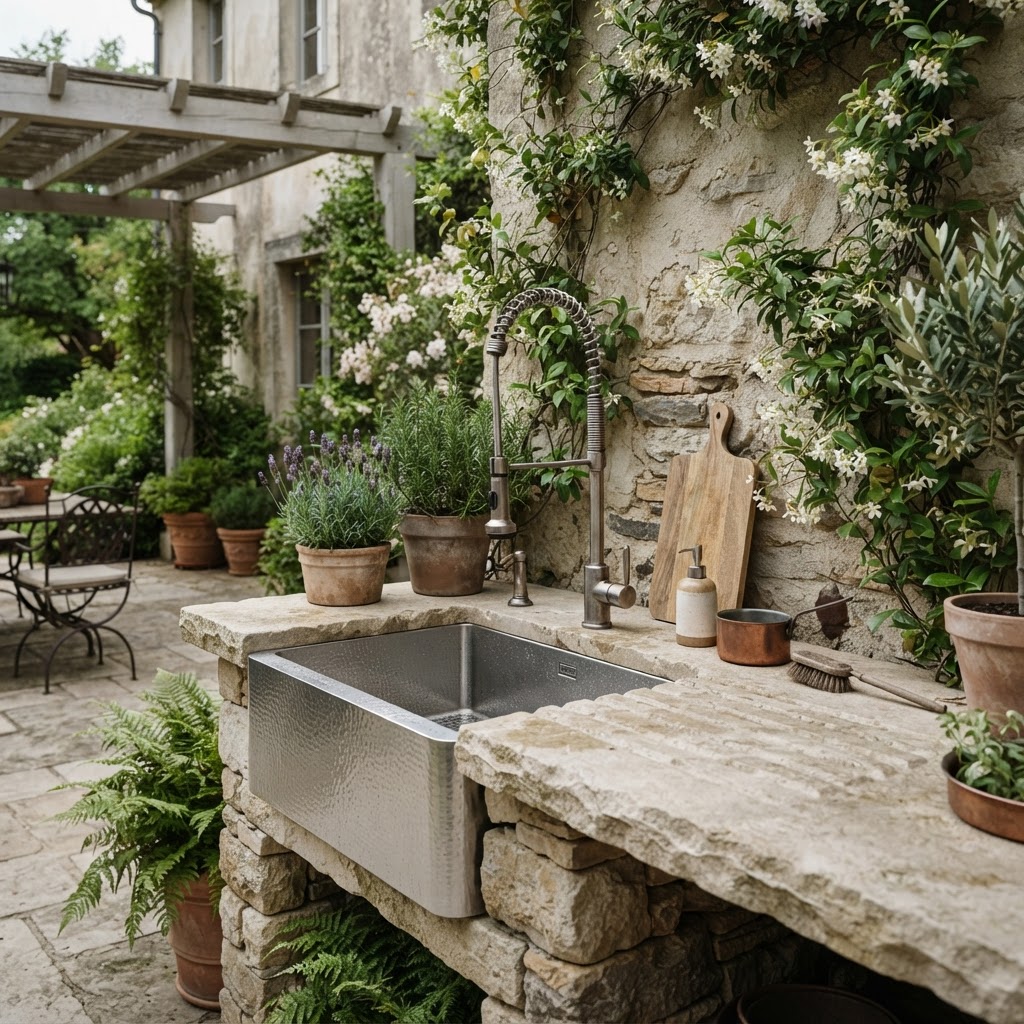
Deep Prep Sink Station
A deep basin with a tall gooseneck tap handles corn, mussels and greasy trays. A drainboard beside it keeps the counter dry.
Fit a removable strainer basket so scraps cannot block the drain. Drain to a soakaway, never onto the patio.
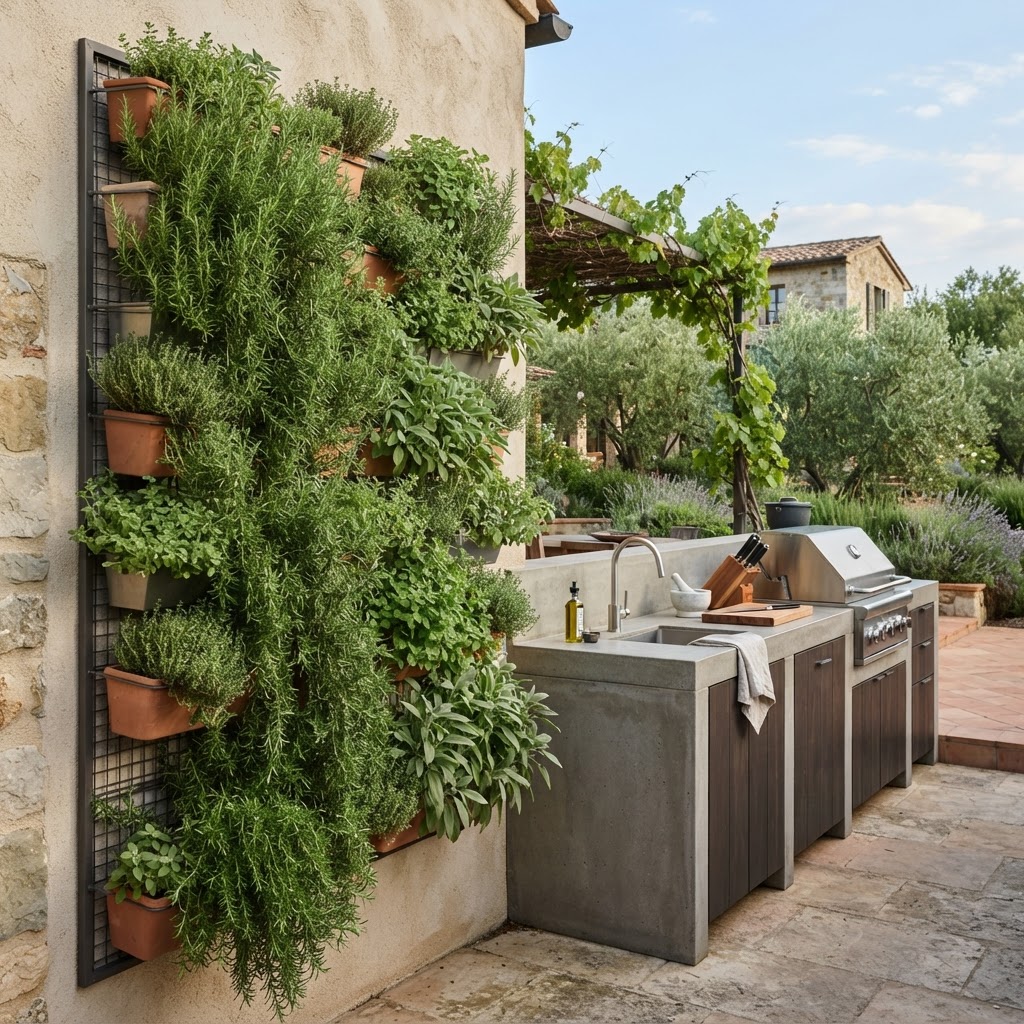
Integrated Herb Planter Wall
Pockets of herbs built into the wall put seasoning within arm’s reach. Rosemary and thyme handle the heat thrown off by a grill.
Include a drip tray so water never stains the stone below. Plant in gritty compost for drainage and rotate the pots monthly.
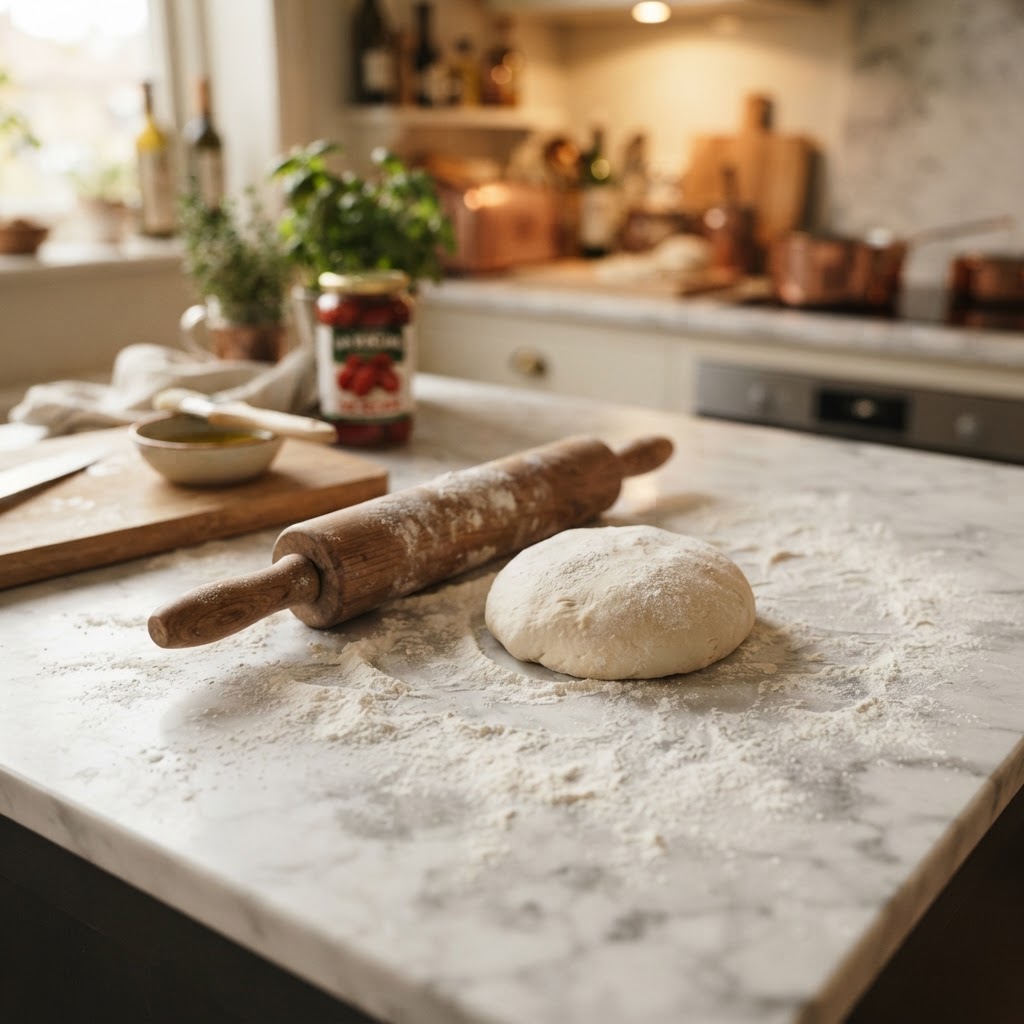
Floured Pizza Prep Counter
A marble counter that stays cool is the right surface for stretching dough. Keep the peel, flour and toppings in one dedicated zone.
Marble is soft, so cut on a board, not on the stone. Install the counter within a step of the oven door.
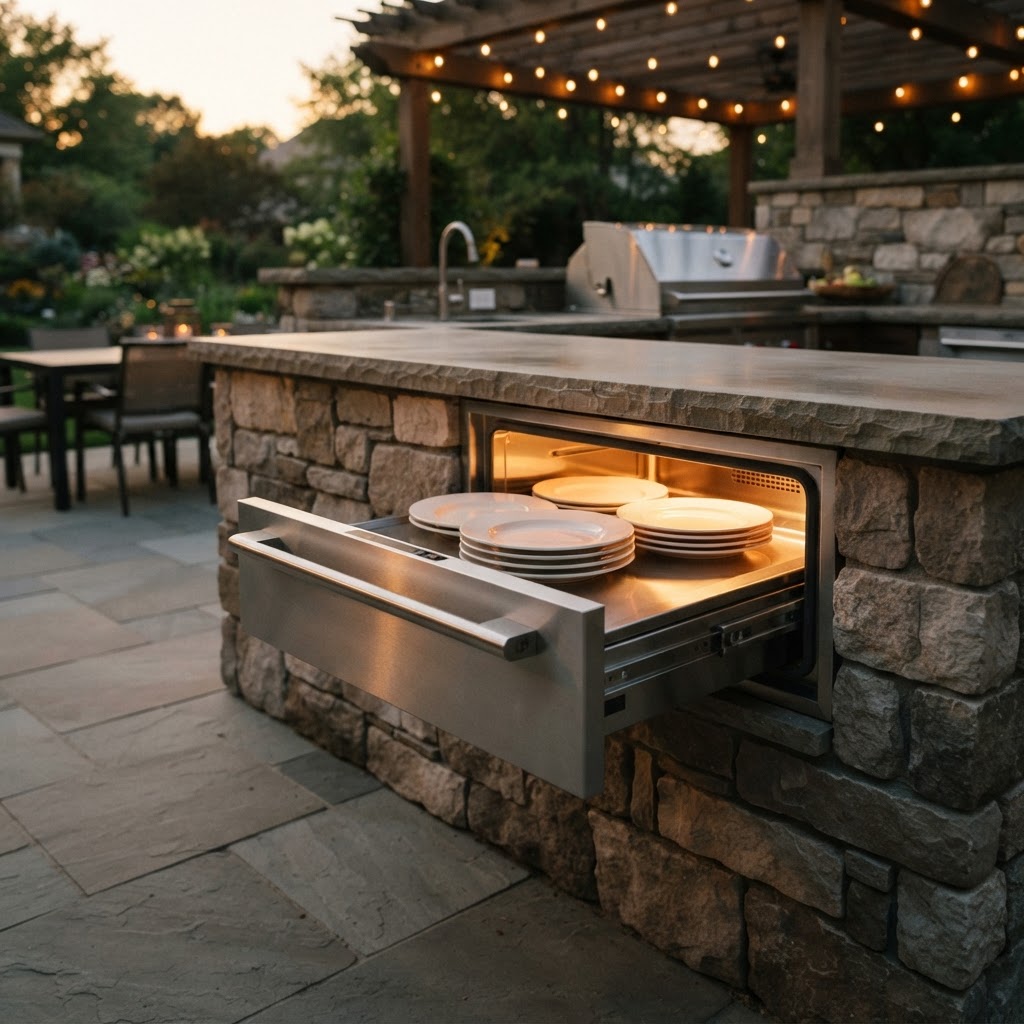
Stainless Warming Drawer
A warming drawer keeps finished plates hot while the rest of the meal cooks. It solves the oldest problem in outdoor entertaining.
Choose a drawer rated for outdoor installation and give it ventilation. Keep it clear of the grill’s immediate heat.
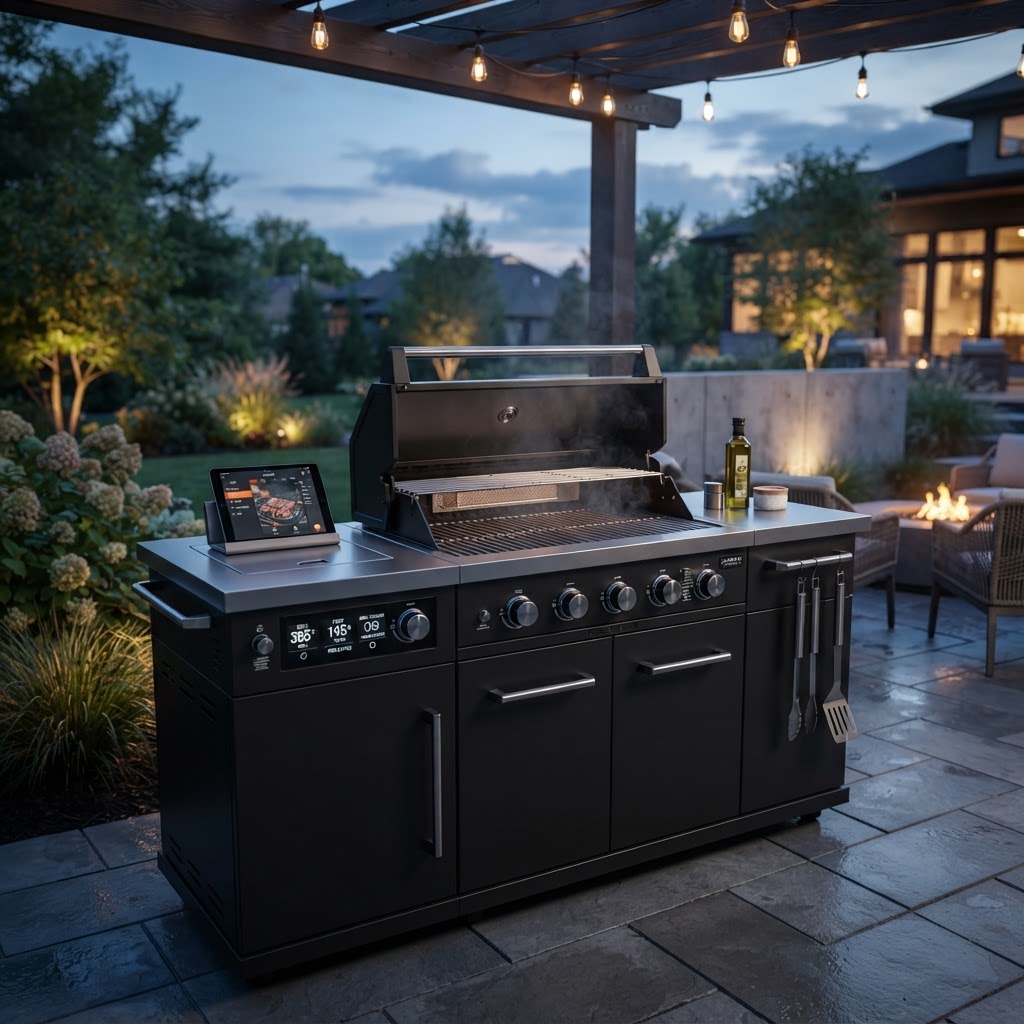
Smart Grill Control Station
A grill with app control lets you watch temperature from the table. The control panel belongs in a shaded, rain-protected spot.
Run a dedicated circuit and add a waterproof cover for the panel. Keep Wi-Fi strong at the grill or the app is useless.
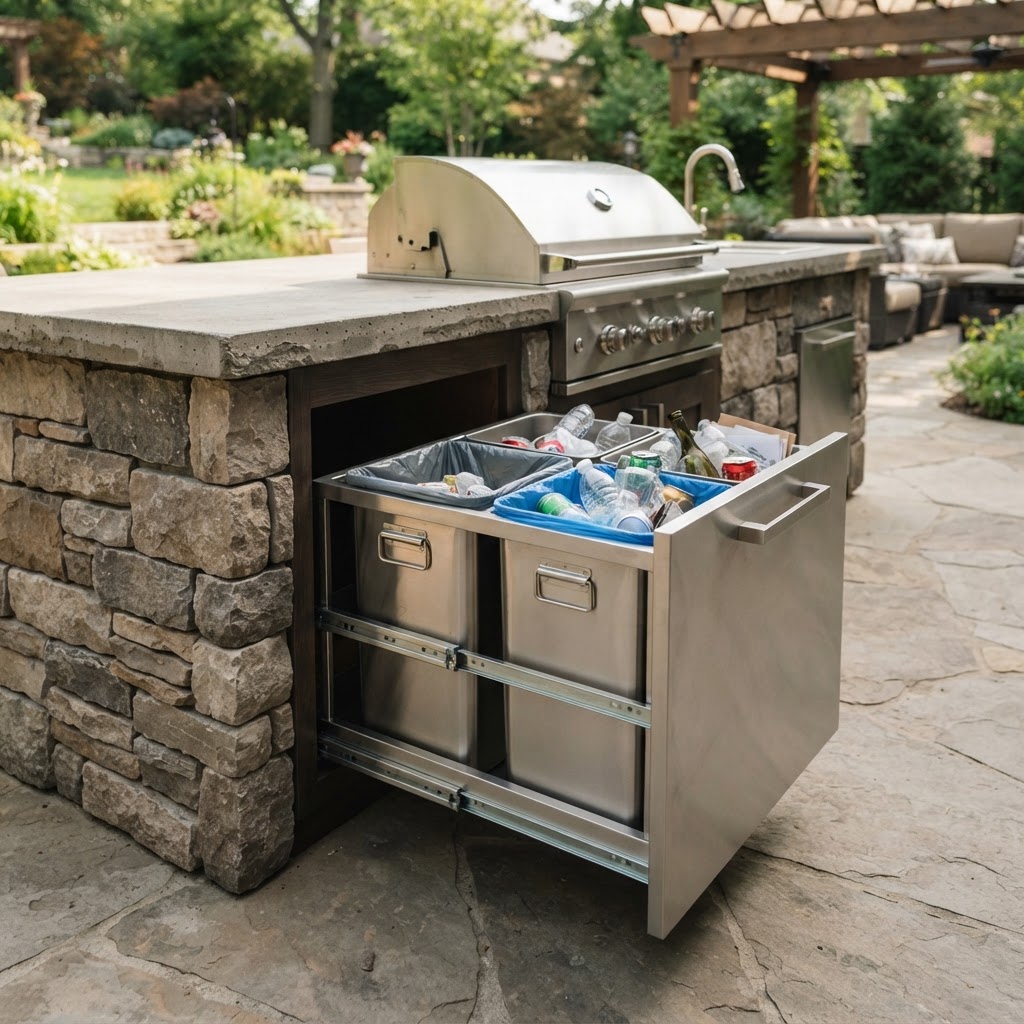
Pull-Out Bin and Recycling Drawers
Two pull-out drawers under the counter keep waste out of sight. One bin for rubbish, one for recycling, both on soft-close runners.
Line the drawers so they can be lifted out and hosed down. Never store gas cylinders in the same cabinet.
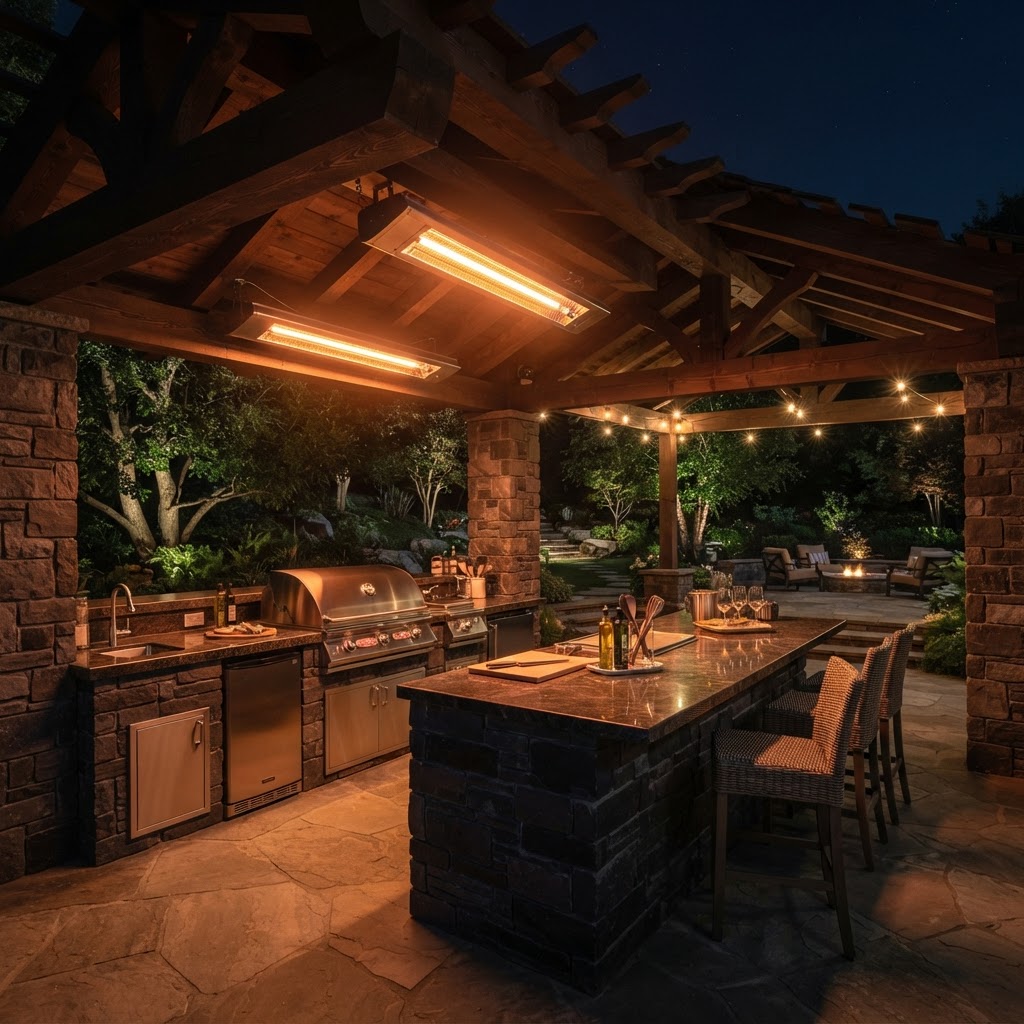
Infrared Ceiling Heaters
Ceiling heaters warm people, not air, so they work on an open patio. They add three extra months to the cooking season.
Mount them at least 2.2 metres up and angle them at the seating. Put them on a timer so nobody forgets to switch them off.
Before You Build
- Draw the cooking triangle first: grill, prep counter and sink within one step of each other.
- Run gas, water and power before the paving goes down. Retrofitting costs twice as much.
- Match the counter to your climate: quartzite for frost, porcelain for salt air, teak for wet zones.
- Plan shade and light together. A kitchen that is too bright at noon and too dark at nine rarely gets used.
- Leave a service gap behind appliances so heat can escape and cables can be reached.
- Check local rules on open flame, gas lines and smoke before you buy the grill.
- Buy the cover the same week as the grill. Rain and pollen ruin more outdoor kitchens than heat ever does.
- Photograph the finished build from the doorway you use most. That view tells you what still feels unfinished.
A good outdoor kitchen is not about the grill. It is about everything within arm’s reach of it.


