

43 Chicken Coop Ideas: Photos, Costs & Plans for 2026
Backyard Poultry · Design Guide
A good chicken coop does three jobs at once. It keeps the flock safe, keeps them dry, and keeps your morning routine under ten minutes.
Most first coops fail on the boring details. Ventilation, cleaning access and predator proofing decide whether you enjoy year two.
This guide collects 43 coop ideas that actually work in real gardens. Each one lists flock size, footprint, skill level and a realistic budget.
Pick the idea that fits your climate and your weekends. Then steal the details from the rest.
How to Choose the Right Coop
Start with the flock you want next spring, not the chicks you buy today. Hens multiply faster than coops do.
Space is the number almost everyone gets wrong. Allow four square feet inside the house and ten square feet of run per hen, as a minimum.
Then match the build to your climate. Hot sites need shade and airflow, wet sites need pitch and overhangs, cold sites need dry shelter and wind protection.
- Flock sizeTwo to four hens suits a micro coop. Six to twelve needs a walk-in. Over twelve, plan a shed conversion.
- FootprintMeasure the actual spot before you buy timber. Include the run, the door swing and a place to stand with a wheelbarrow.
- ClimateWet and windy sites need a steep roof and deep eaves. Hot sites need shade cloth, open vents and sand.
- Skill levelPallets, A-frames and lean-tos are beginner builds. Two-story coops and stone bases are not.
- BudgetReclaimed timber and a tin roof cut costs hard. Hardware cloth, latches and hinges are where you should spend.
- Local rulesCheck setbacks, hen limits and rooster bans before the first post goes in. Rules are much easier to follow than to undo.
7 Rules That Matter More Than Looks
A beautiful coop that is damp, dark and hard to clean will make you quit. These seven rules carry more weight than any finish.
Get them right and almost any design on this list will work for years.
- Ventilate high, not lowPut vents above the birds, never at roost height. Warm damp air leaves at the top while cold draughts stay away from feathers.
- Allow roost spaceGive every hen eight to ten inches of roost bar. Crowded roosts cause squabbles and feather damage.
- One nest box per four hensLine them with straw and keep them dark. Hens queue for the favourite box no matter how many you build.
- Use half-inch hardware clothChicken wire keeps hens in but stops nothing. Raccoons tear it open and rats walk through it.
- Bury an apron of meshRun 18 inches of mesh flat on the ground around the base. Digging predators give up at the wire.
- Build for cleaningYou should be able to empty the coop in ten minutes. A slide-out tray or a full-height door is worth the extra cost.
- Raise it off the groundTimber in soil rots and rats move in. Put the floor on bearers, pads or stone.
The 43 Chicken Coop Ideas
Mid-Century Modern A-Frame
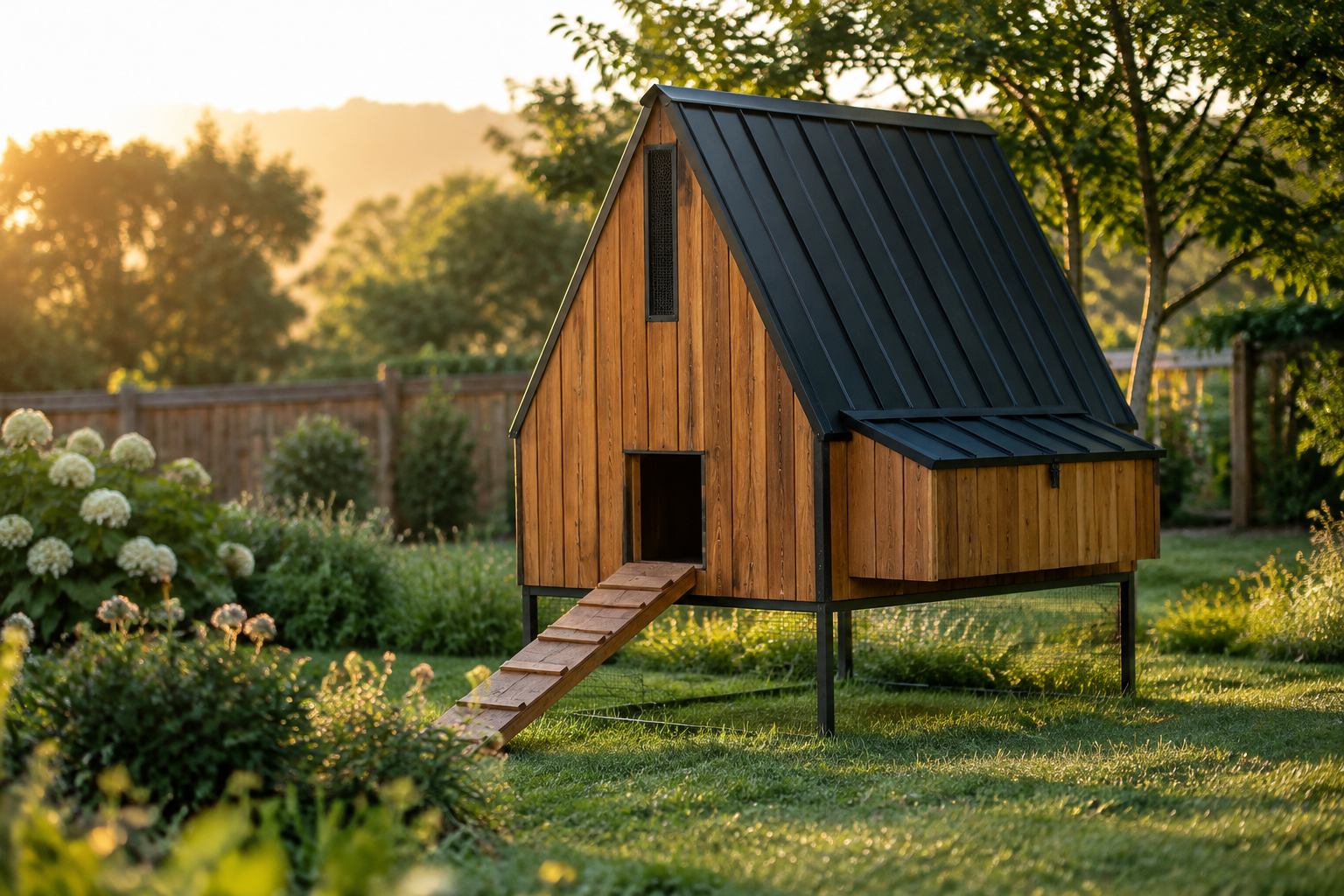
This design borrows the crisp geometry of 1950s architecture. Two angled walls meet under a low black roof, so the coop reads as a piece of garden sculpture.
Vertical cedar slats keep the walls breathable. Air slips between the boards instead of trapping damp inside.
Build the frame first, then clad it from the outside in. A slide-out tray under the roost bar turns the weekly clean into a two-minute job.
Angle the glass-look door toward the morning sun. Hens will step out early and dry off fast.
- Flock4–6 hens
- Footprint4 × 6 ft
- SkillIntermediate
- Budget$400–$700
Reclaimed Barnwood Sanctuary
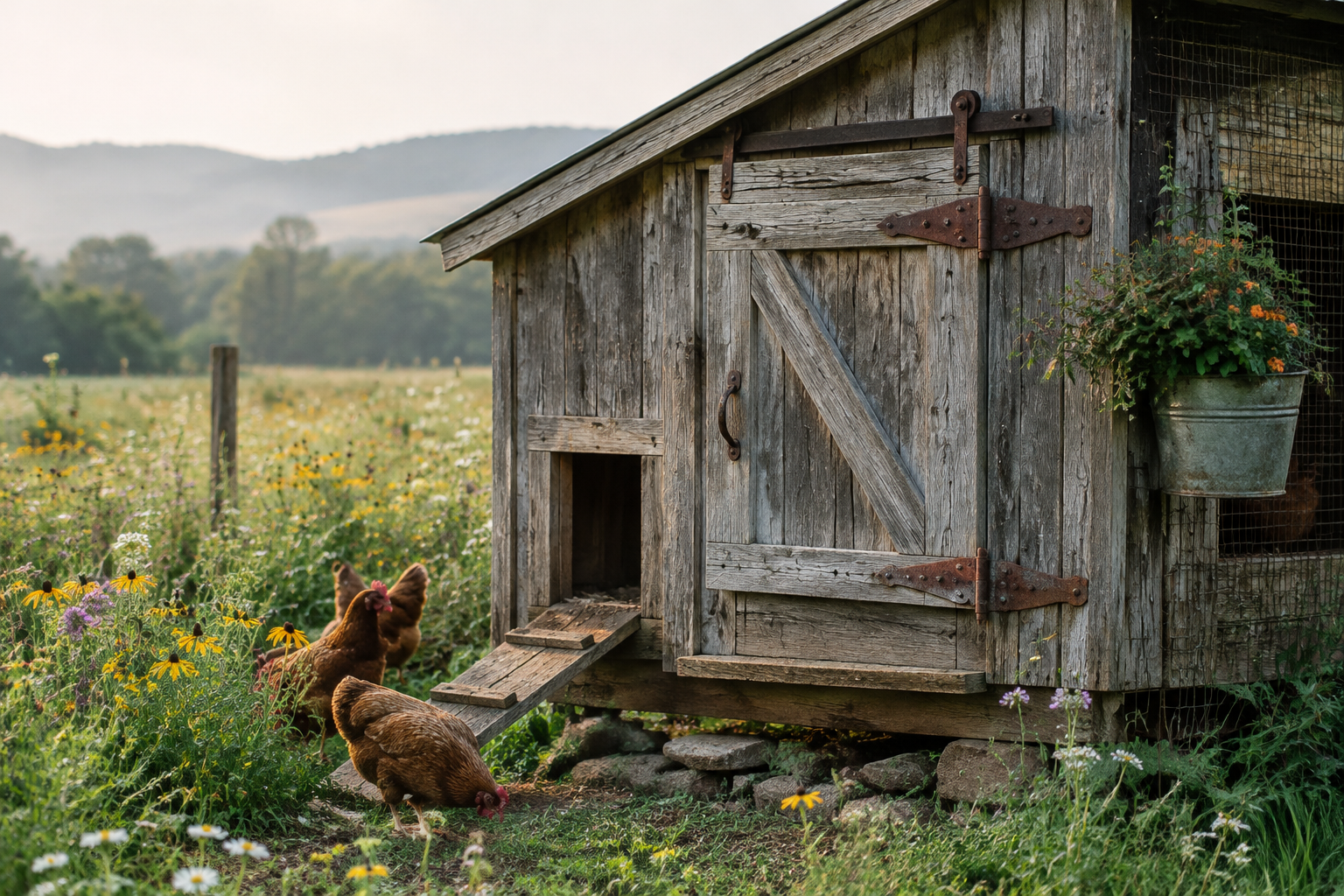
Old barn boards carry a story that new timber cannot fake. Every knot, nail hole and sun-bleached streak has already been earned.
Face the weathered side outward and the clean side inward. That keeps the inside easy to scrub down.
Seal the wood with a non-toxic oil rather than a hard varnish. Oil lets the boards breathe while it keeps rot at bay.
Patch the gaps with cedar offcuts and galvanised mesh. Old boards shrink, and mice find every new opening.
- Flock6–8 hens
- Footprint6 × 8 ft
- SkillIntermediate
- Budget$500–$900
Elevated Chicken Tractor
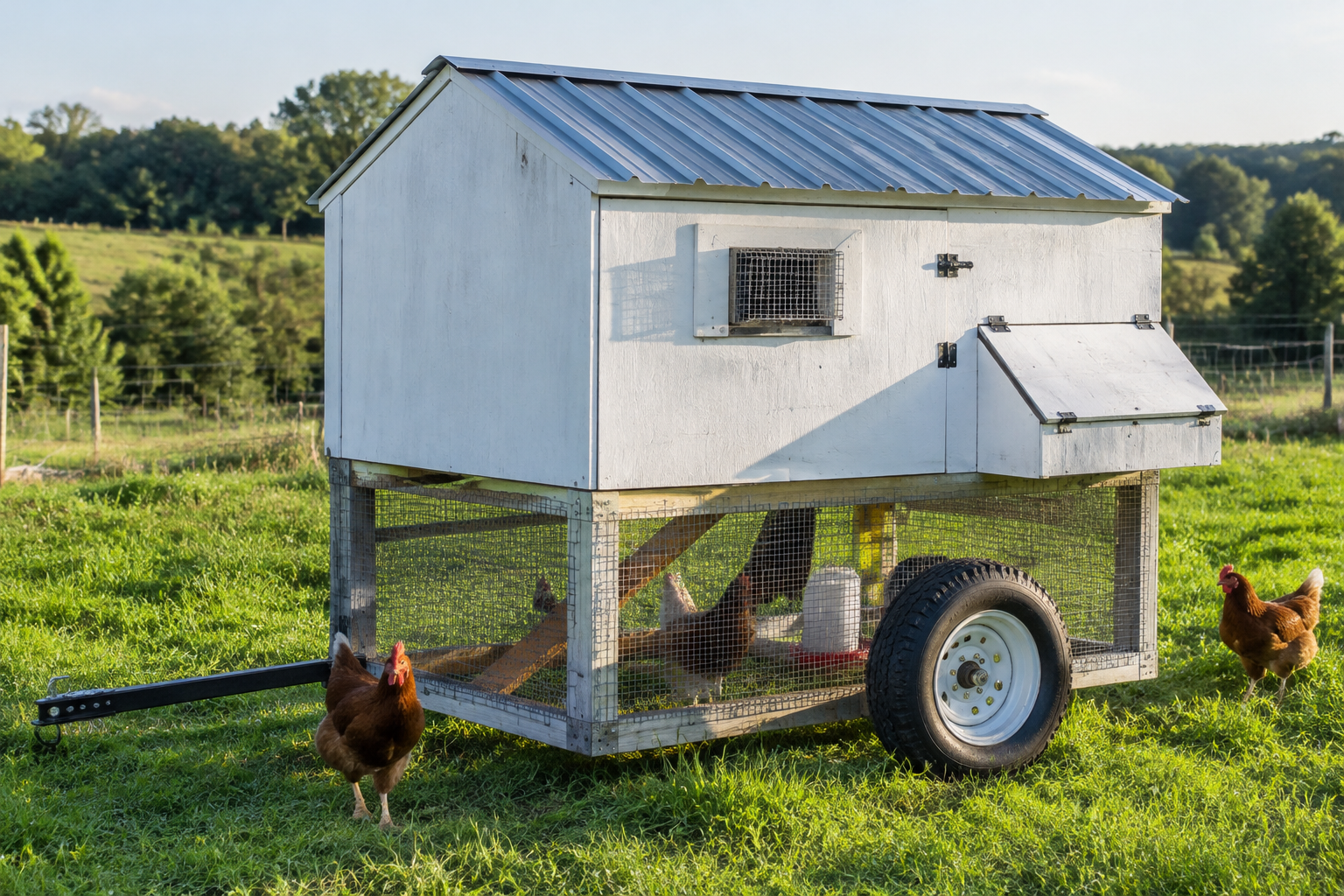
A tractor puts your flock to work. Move it every morning and the hens scratch, weed and fertilise as they go.
Two pneumatic wheels and a tow bar make it easy to roll. The house sits above, so the run underneath stays cool.
Keep the whole build under 120 pounds. If it is heavy, you will stop moving it by the second week.
Line the floor with half-inch mesh and let grass grow through. Nothing can dig in from below.
- Flock3–5 hens
- Footprint4 × 8 ft
- SkillBeginner
- Budget$250–$450
Pallet Wood Budget Coop
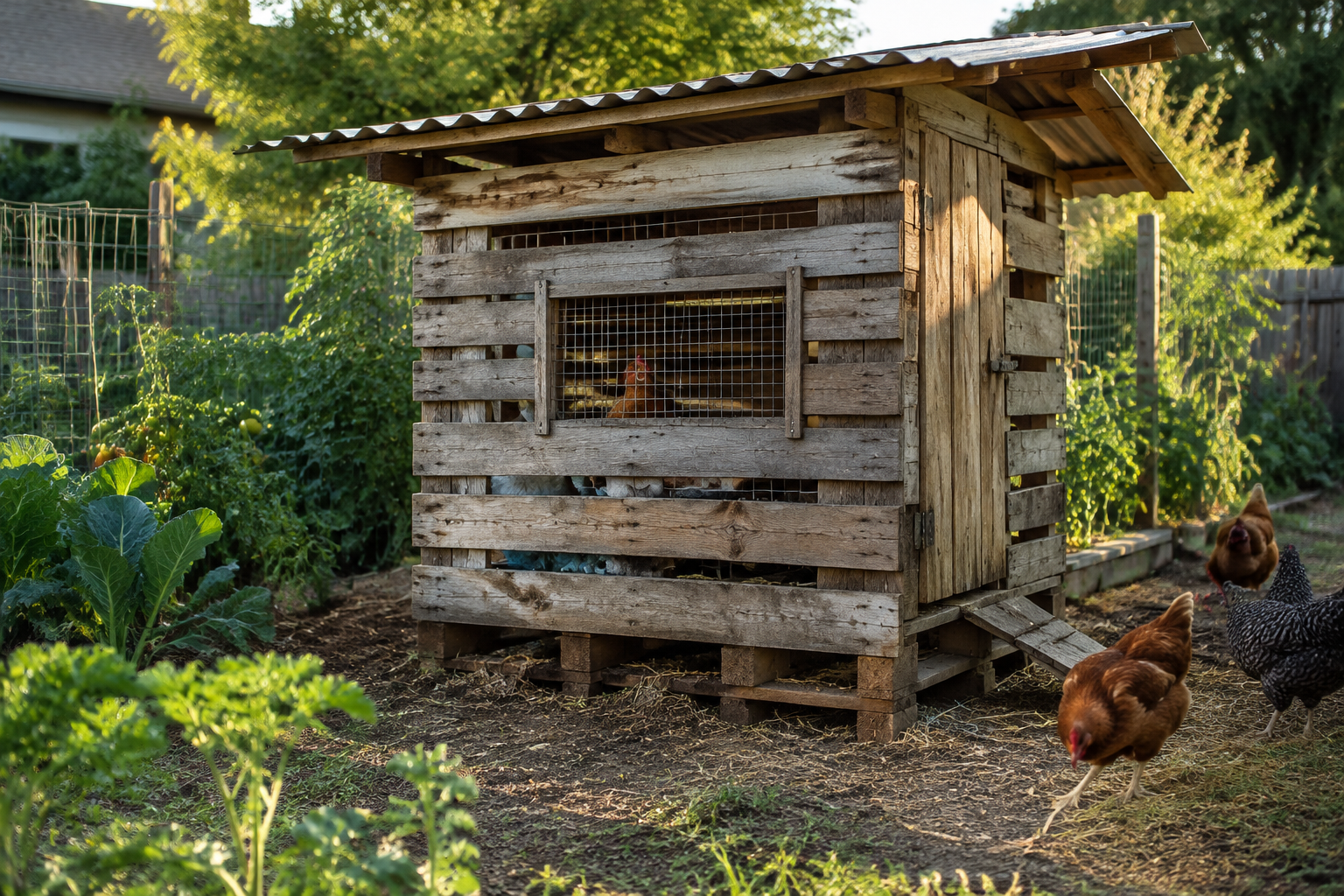
Pallets are heat-treated, cheap and everywhere behind building sites. Ask before you take them, and never use painted or chemically treated stock.
Pull the boards whole with a flat pry bar and a block of wood. Splitting them wastes the material you came for.
Frame the box in 2 × 4s and skin it with pallet boards. The frame carries the weight, the pallet slats only keep weather out.
Give the roof a real overhang on every side. Pallet timber is thin, so water running down the wall is the main enemy.
- Flock3–4 hens
- Footprint3 × 5 ft
- SkillBeginner
- BudgetUnder $150
Converted Garden Shed
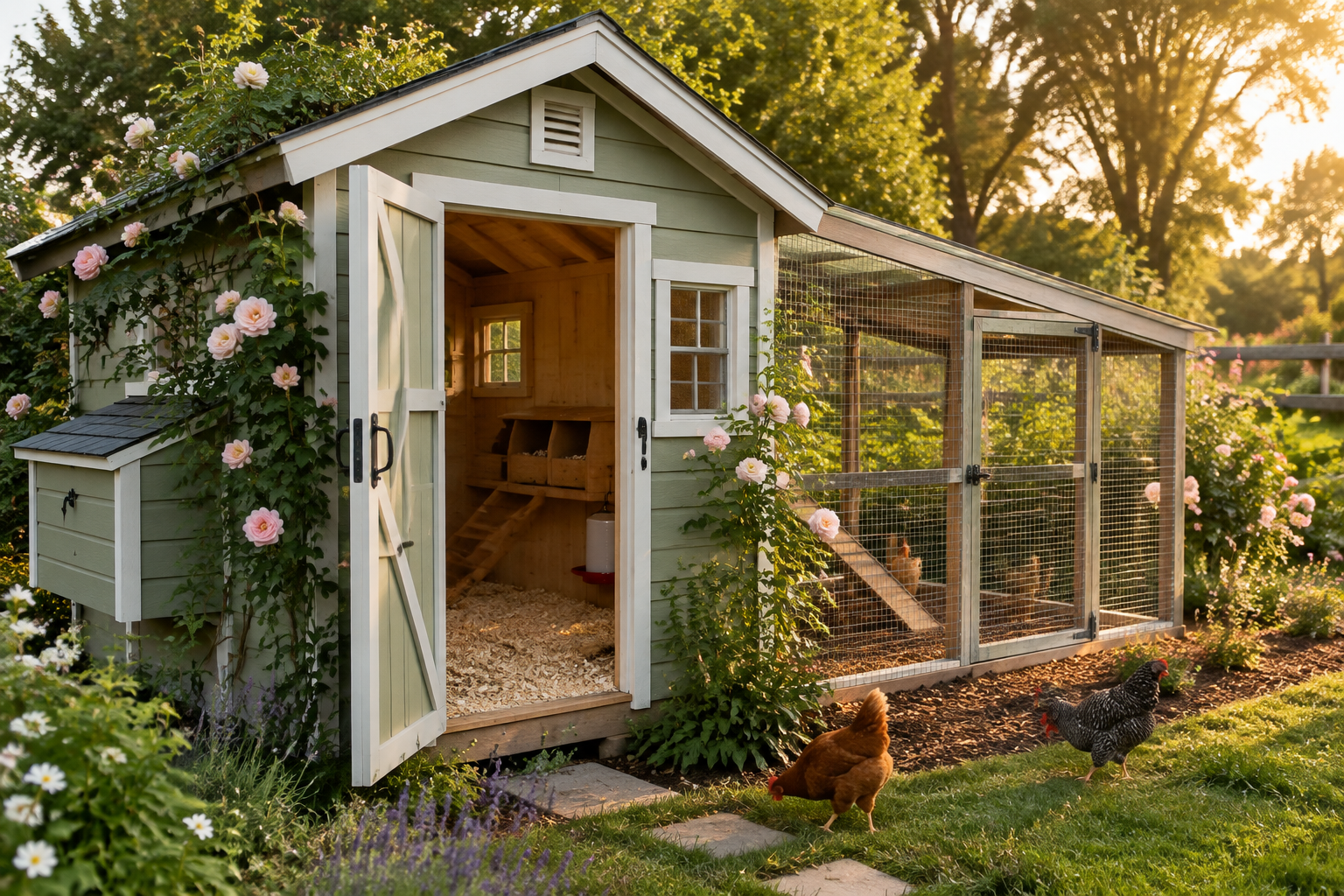
A used garden shed gives you walls, a roof and a door on day one. That head start saves both money and weekends.
Raise the floor on pressure-treated bearers before anything else. A shed sitting straight on soil will rot from the bottom up.
Cut a small pop door into one wall and line the inside with washable board up to roost height. Deep bedding hides the original floor for good.
Insulate only the roof, not the walls. Roof condensation drips onto birds, while wall gaps are what keeps the air fresh.
- Flock8–12 hens
- Footprint8 × 10 ft
- SkillIntermediate
- Budget$600–$1,200
Walk-In Coop with Covered Run
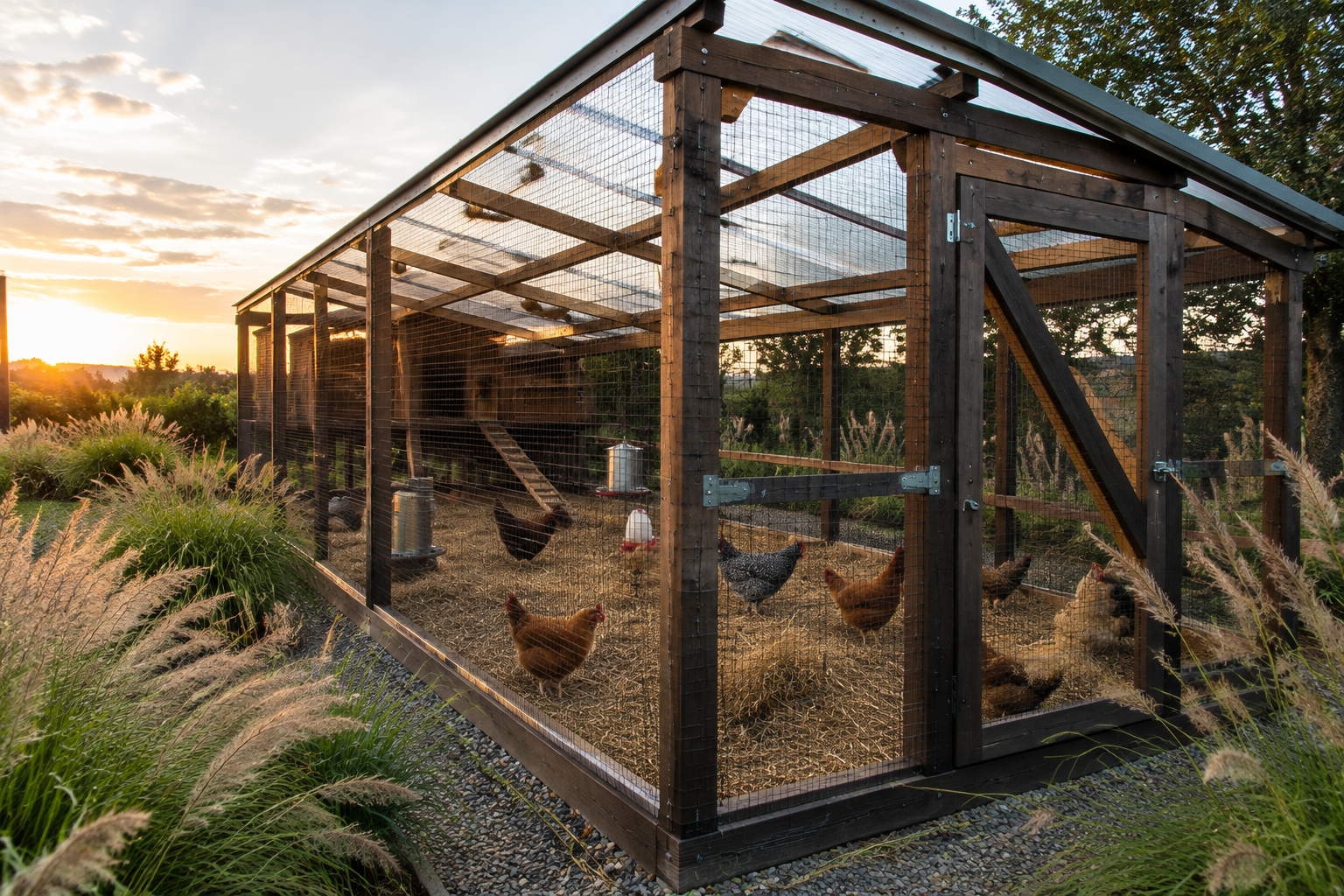
A walk-in coop lets you clean, feed and collect eggs without crouching. That single change keeps the hobby enjoyable in bad weather.
Frame it in 4 × 4 posts set in gravel, then roof the run with clear polycarbonate. The run stays dry and bright all winter.
Use half-inch hardware cloth, not chicken wire. Chicken wire keeps hens in, but a raccoon will tear straight through it.
Add a solid windbreak panel on the prevailing weather side. Hens hate a cold draught far more than cold air.
- Flock8–15 hens
- Footprint10 × 12 ft
- SkillAdvanced
- Budget$1,200–$2,500
Modern Cedar Slat Coop
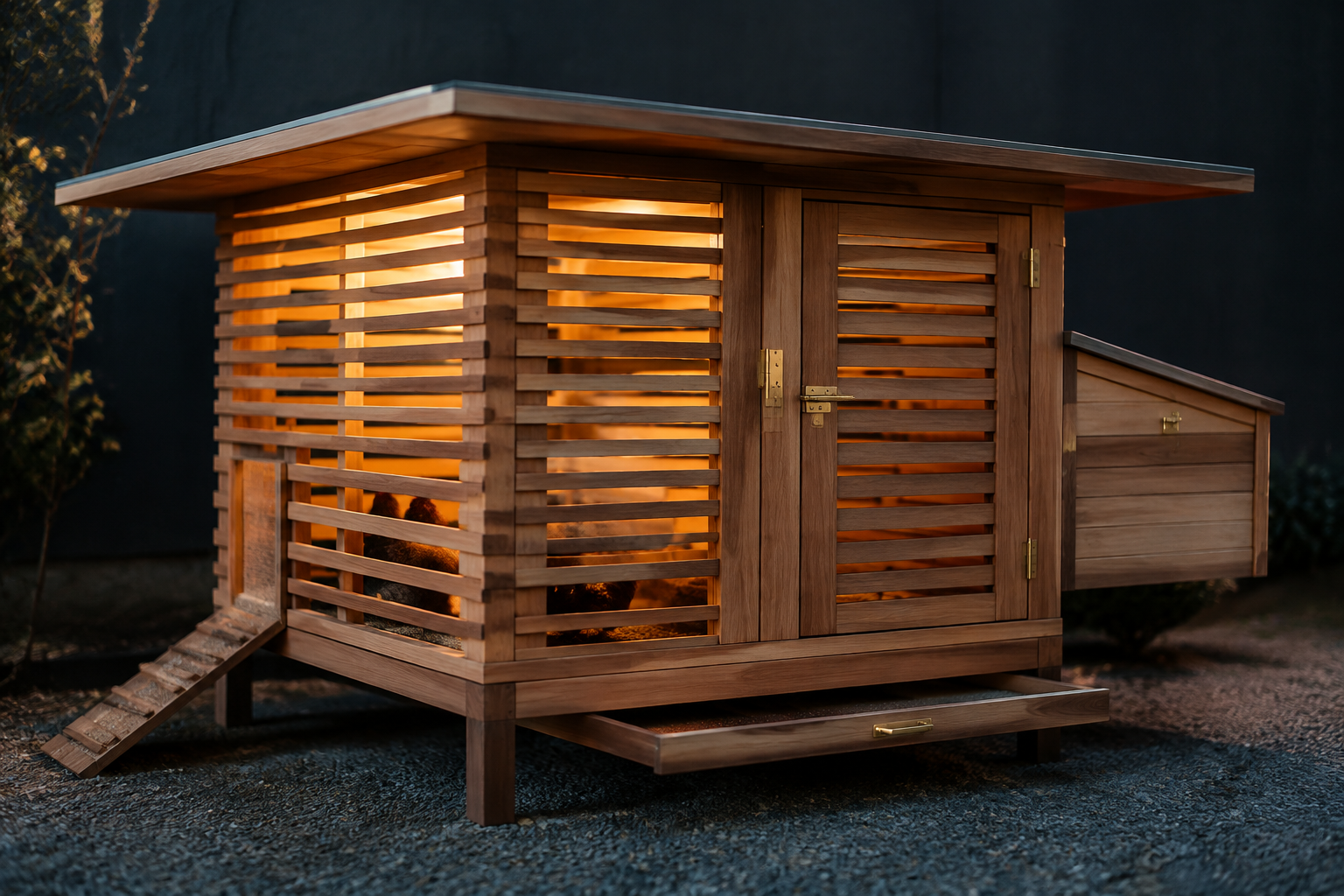
Open horizontal battens give this coop its sharp modern look. Behind them sits a solid inner wall with proper vents cut in.
Build the inner box airtight first, then add the decorative slats. The gap between the two layers becomes a natural insulation cavity.
Cedar ages to a soft silver grey without any finish at all. If you want the warm tone to stay, refresh it with a UV oil every two years.
Hide the hardware. Black hinges, a recessed latch and a flush handle keep the facade completely clean.
- Flock4–6 hens
- Footprint4 × 6 ft
- SkillAdvanced
- Budget$700–$1,200
White Farmhouse Coop
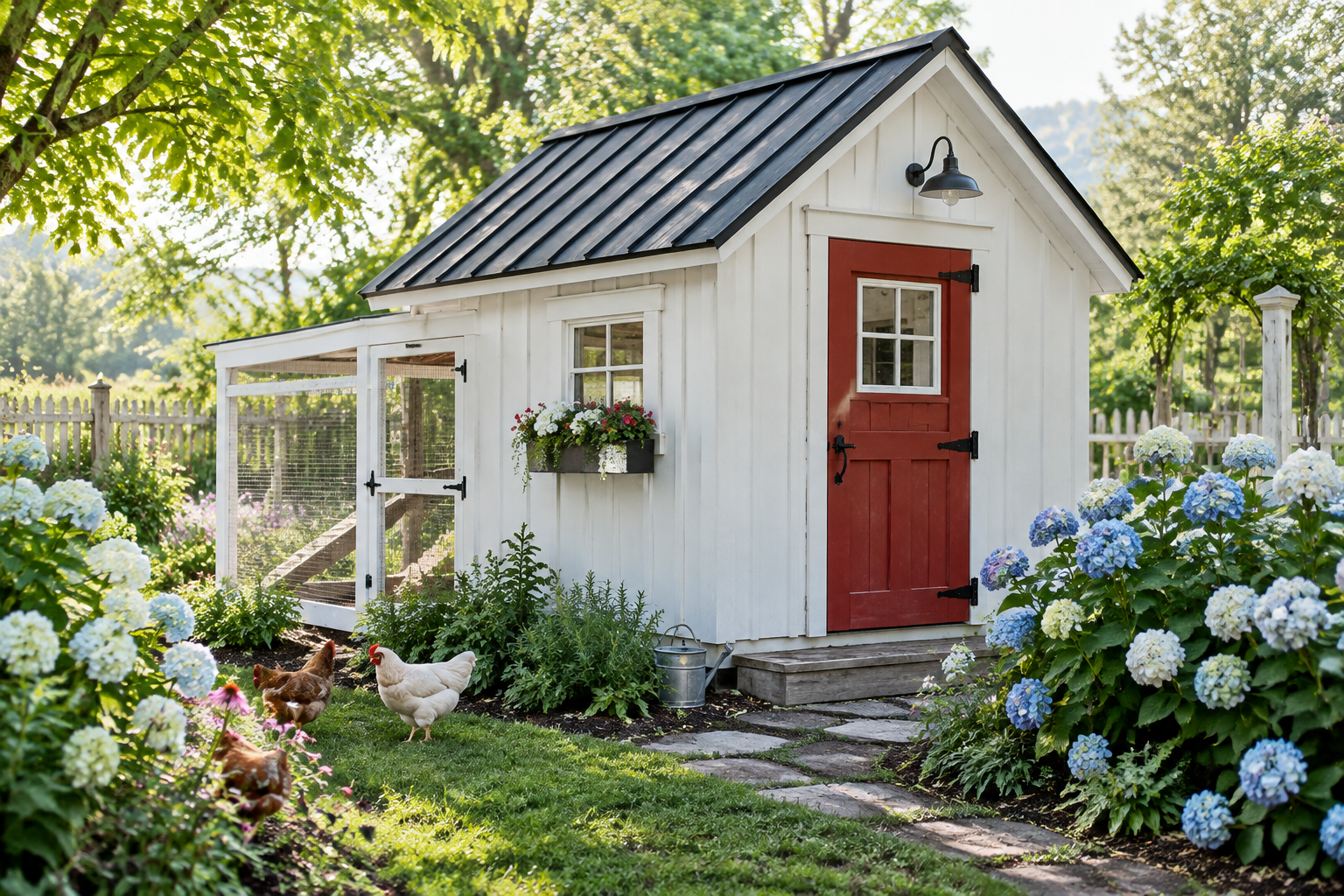
Board and batten siding is forgiving to install and hides small mistakes. Vertical battens cover every seam.
Paint the body white and pick one bold accent for the door. A single red or sage door does more for charm than any ornament.
Prime every cut edge before assembly. Bare end grain is where paint always fails first.
Add a small window box with herbs under the side window. It softens the structure and gives you a handy supply of mint.
- Flock5–7 hens
- Footprint5 × 7 ft
- SkillBeginner
- Budget$350–$650
Hoop House Coop for Cold Climates
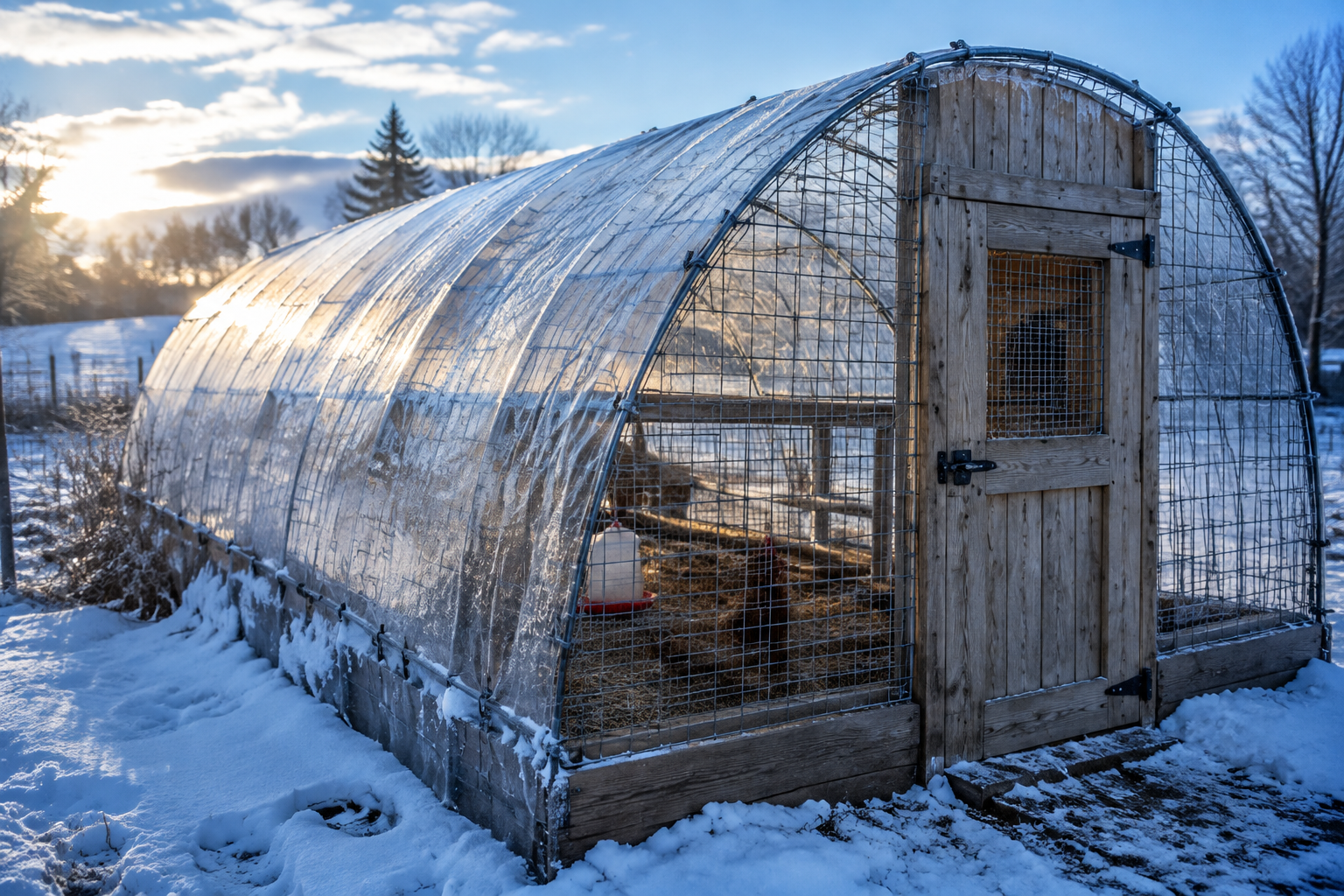
A hoop house is the cheapest way to give hens a bright run in winter. Bent cattle panels do the structural work.
Cover the arch with wire mesh first, then clear greenhouse plastic over the top. Mesh is the security layer, plastic is the weather layer.
Leave the ends open on mild days and close them when the wind picks up. Ventilation matters even in freezing weather.
Bank snow against the outside walls for extra insulation. Packed snow is free and surprisingly effective.
- Flock6–10 hens
- Footprint8 × 12 ft
- SkillIntermediate
- Budget$300–$600
Urban Micro Coop
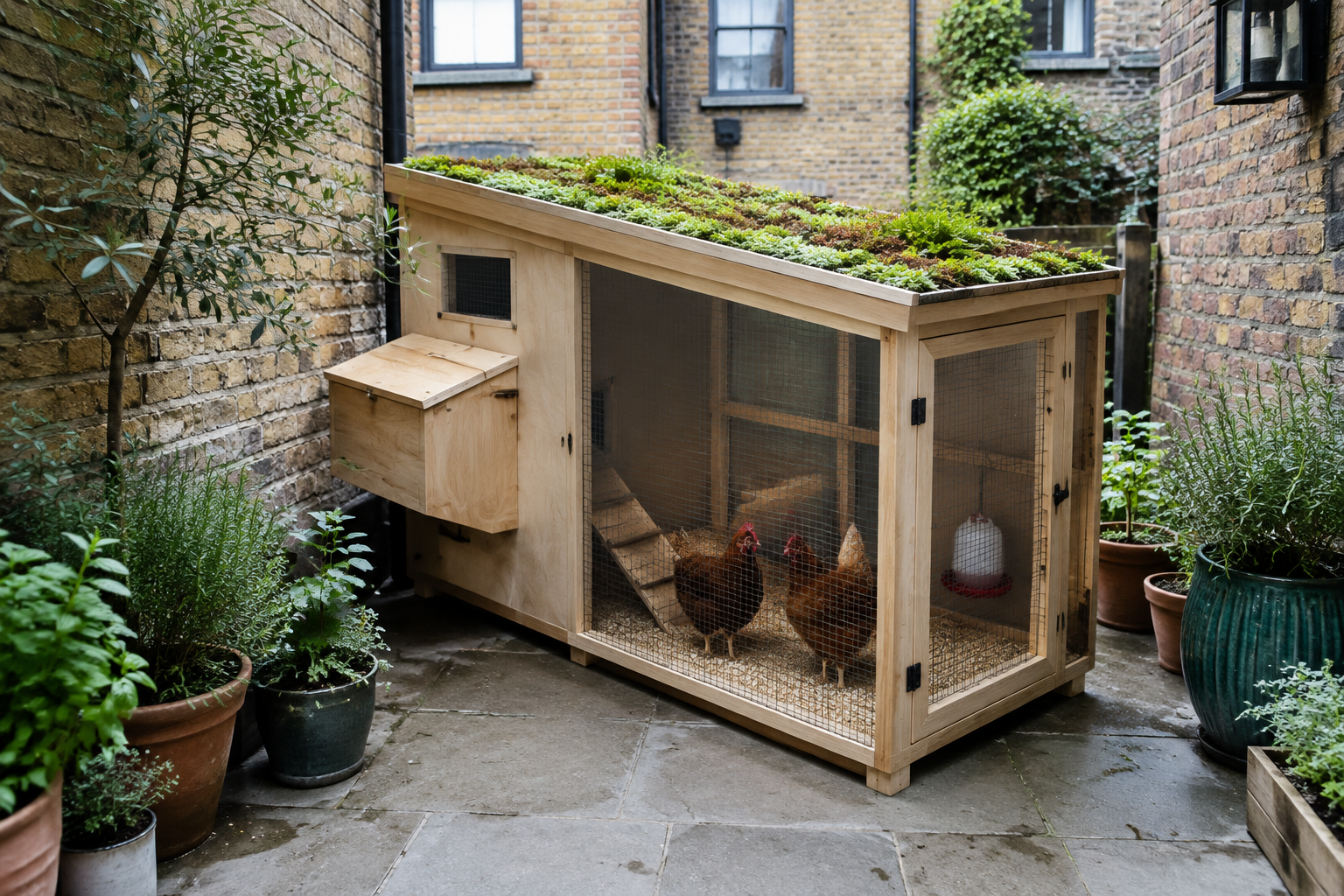
City hens need compact housing and a lot of thought about smell. Two bantams are plenty for a courtyard.
A sedum living roof keeps the coop cooler in summer and absorbs rain. It also looks far better than a bare sheet of metal.
Use a sealed plastic tray rather than a wooden floor. Wooden floors in small coops hold moisture and smell.
Keep the run on a hard surface you can hose down. Gravel under the coop and a scrub brush will save your weekends.
- Flock2–3 bantams
- Footprint2 × 4 ft
- SkillIntermediate
- Budget$250–$500
Cedar and Corrugated Steel
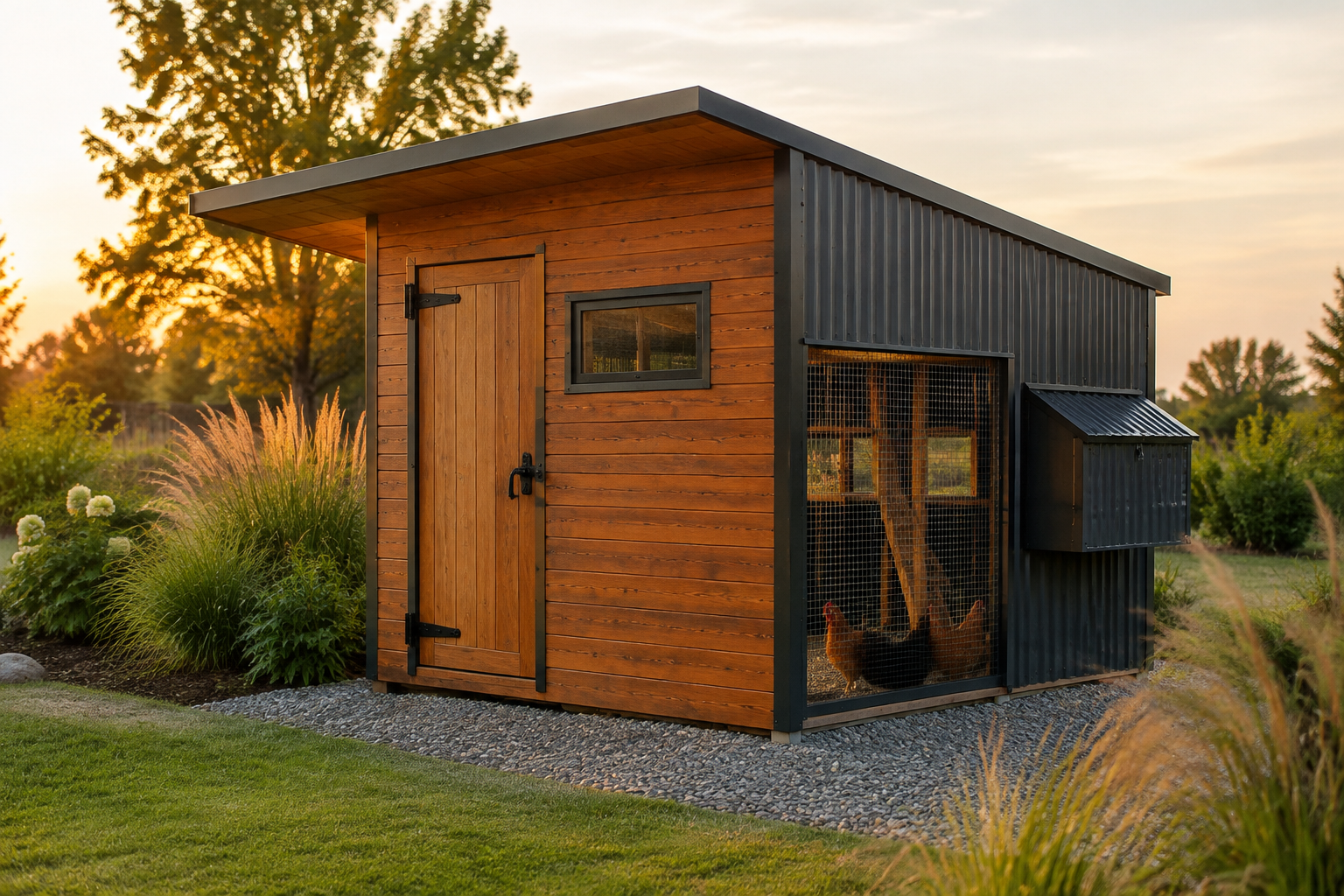
Cedar softens the industrial edge of corrugated steel. The two materials also behave differently in weather, which is why the detailing matters.
Fix steel panels to battens, never directly to the timber. The gap lets water drain and air move behind the metal.
Leave an asymmetric roof overhang on the sunny side. It shelters the pop door from rain and midday heat.
Run a gravel apron around the base. It stops mud splashing up the cedar and buries the mesh skirt at the same time.
- Flock5–8 hens
- Footprint5 × 8 ft
- SkillAdvanced
- Budget$800–$1,400
Sloped-Roof Coop for Rainy Climates

Where it rains for weeks, roof pitch is not a detail. A steep slope sheds water fast and stops it wicking under the shingles.
Give every side at least a 12-inch overhang. Deep eaves keep the walls dry and the run usable in drizzle.
Fit a rain chain instead of a downpipe. Water is guided away gently and it sounds good on a wet afternoon.
Set the whole coop on a gravel and pebble pad. Splash-back from soil is what rots the bottom boards.
- Flock6–8 hens
- Footprint6 × 8 ft
- SkillAdvanced
- Budget$900–$1,600
Raised Coop with Run Underneath
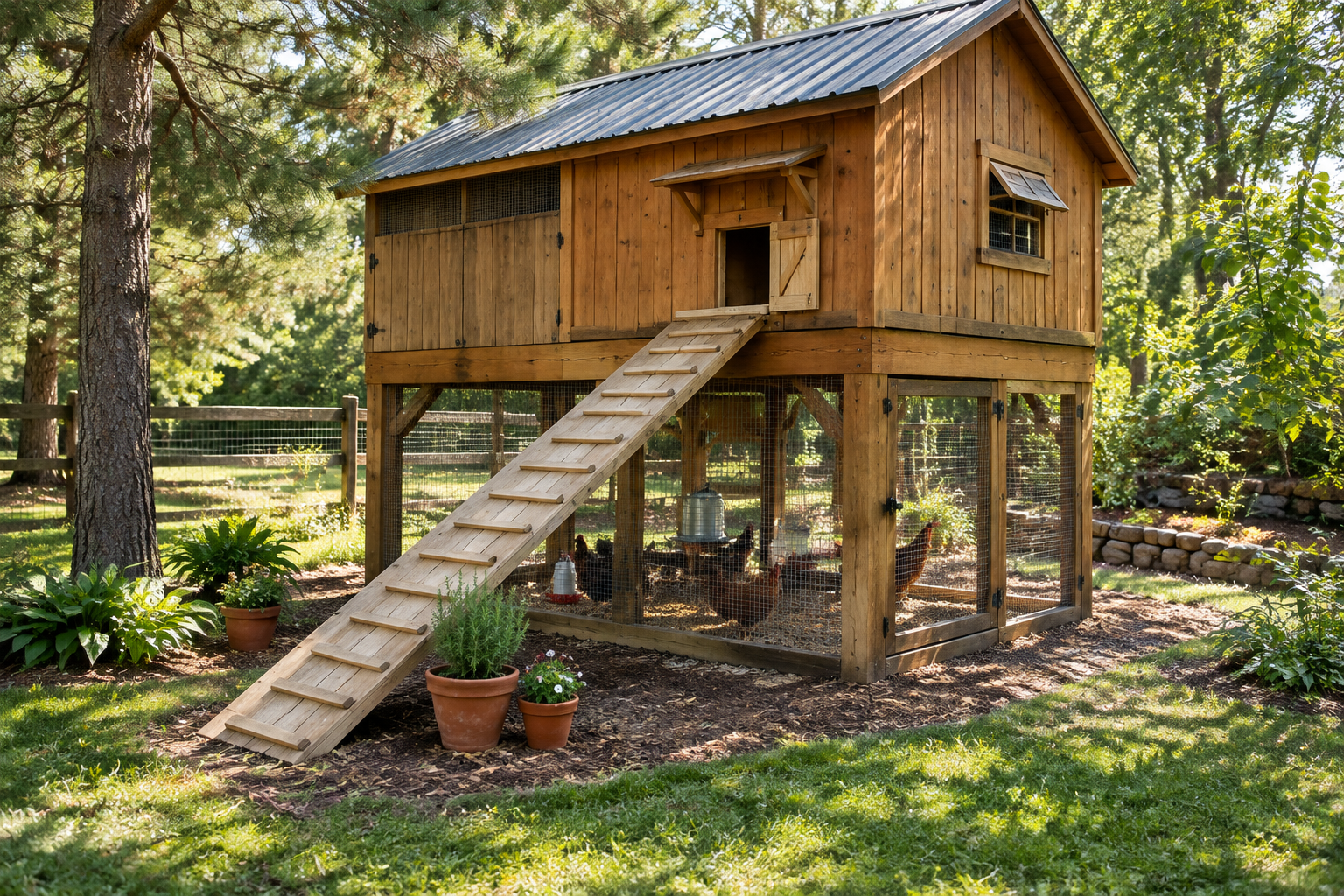
Raising the coop two feet off the ground doubles your usable space. The run moves underneath and stays shaded in summer.
Use 4 × 4 posts on concrete pads, not buried timber. Posts in soil rot within a few seasons.
Give the ramp cleats every four inches. Hens slip on smooth boards, and a lame bird is an expensive lesson.
Enclose the under-run with mesh on all sides, including a buried apron. It is the most exposed part of any coop.
- Flock6–10 hens
- Footprint6 × 8 ft
- SkillIntermediate
- Budget$600–$1,000
Rotating Pasture Tractor
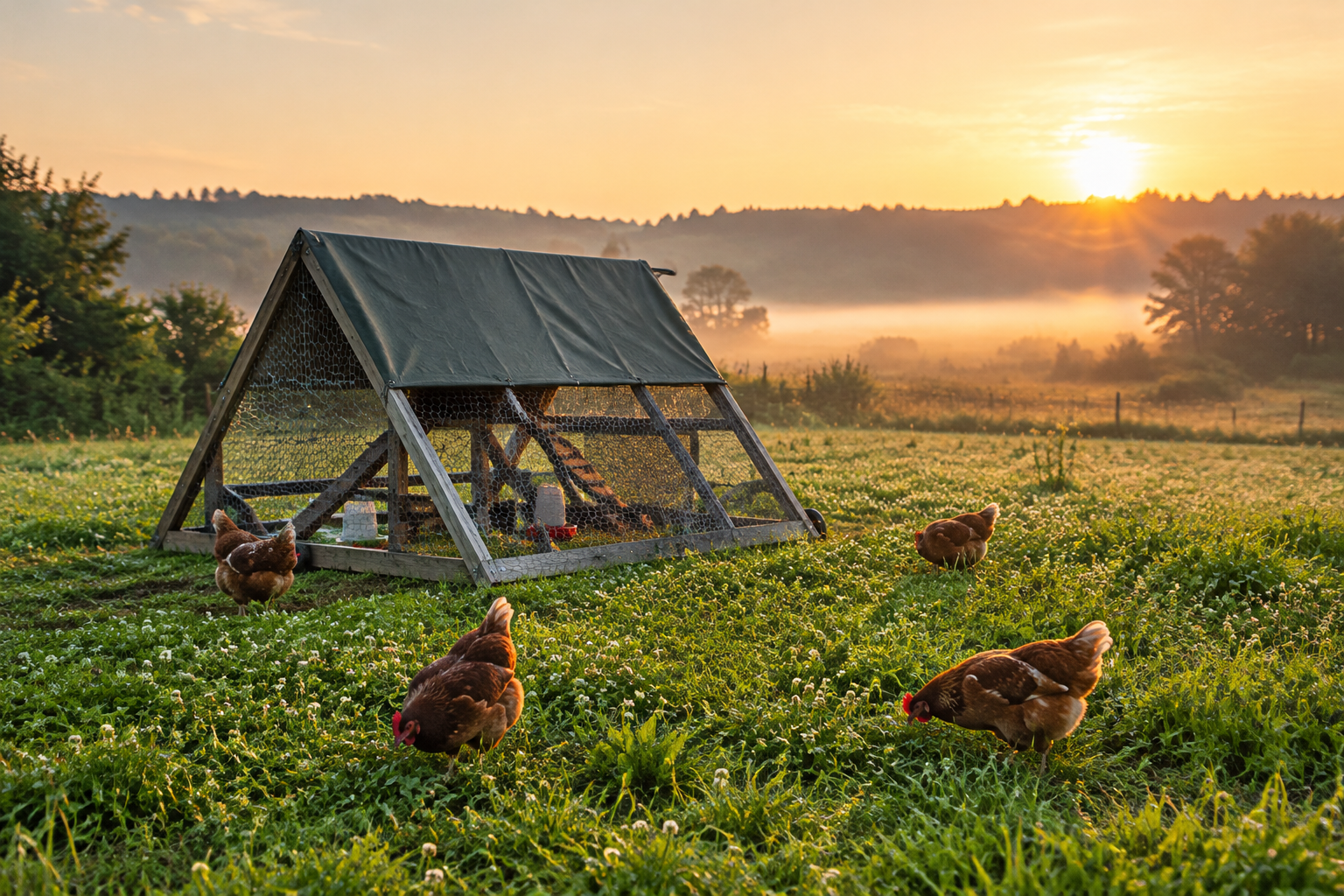
Rotating a tractor keeps hens on clean ground and cuts feed costs. Grass and insects do a lot of the work for you.
Plan the moves before you build. A simple grid of daily positions avoids bare patches and keeps the lawn even.
Shade one third of the run with a solid panel. On hot afternoons that panel is the difference between grazing and panting.
Lift the tractor onto a small trailer once a season. Even a light coop benefits from a rest and a fresh gravel pad.
- Flock4–8 hens
- Footprint5 × 10 ft
- SkillBeginner
- Budget$300–$550
Deep Litter Coop on a Slab
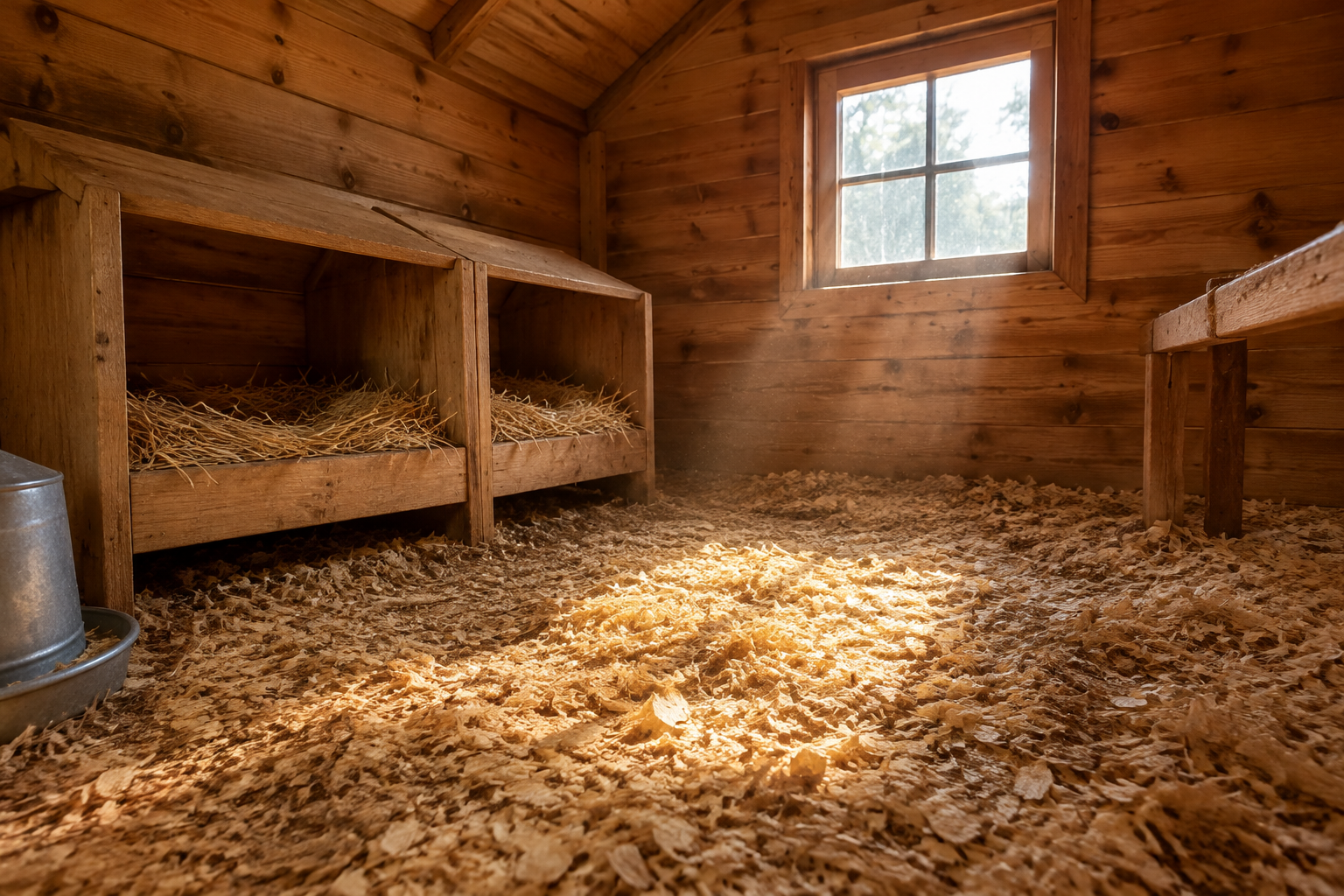
A concrete slab under deep litter is the easiest coop floor to live with. Hose it out once a year and forget it.
Start with six inches of pine shavings and turn them weekly. The bedding composts slowly and generates gentle warmth.
Never let the litter stay wet. Damp bedding grows mould, and mouldy litter damages a hen’s lungs quickly.
Top up rather than replace. Keeping the base layer going is what makes deep litter work.
- Flock8–20 hens
- Footprint10 × 12 ft
- SkillBeginner
- Budget$400–$900
Automatic Door Smart Coop
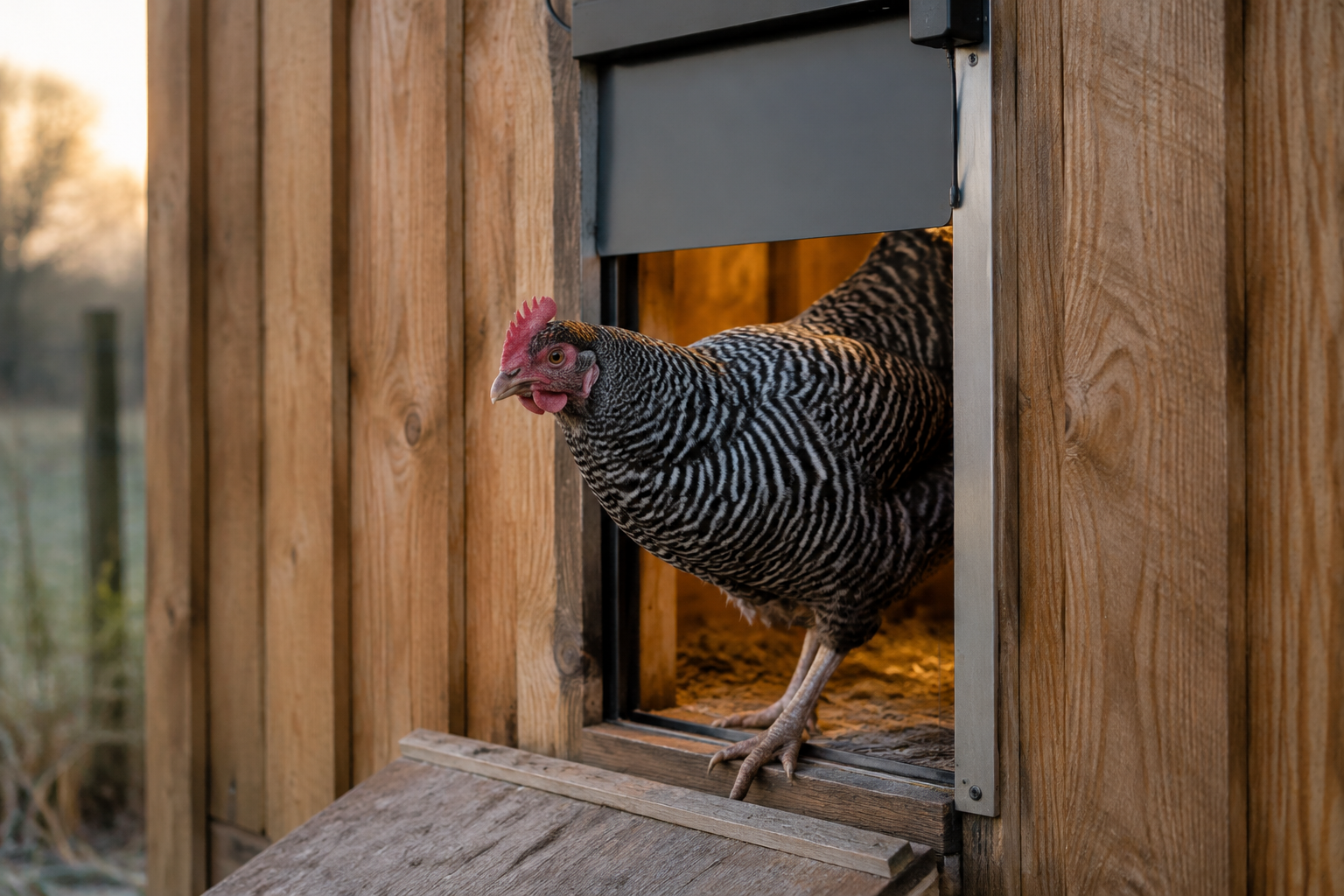
An automatic door opens at sunrise and shuts at dusk on its own. That removes the single most time-sensitive chore of chicken keeping.
Choose a light-sensing model with a battery backup. Power cuts always happen on the evening you are late.
Fit the door inside a protective frame. A determined raccoon can pry a thin panel open if it has something to grip.
Test it for a week before trusting it. Watch the close cycle once at dusk with the hens inside.
- Flock4–10 hens
- Footprint5 × 8 ft
- SkillIntermediate
- Budget$450–$800
Predator-Proof Fortress
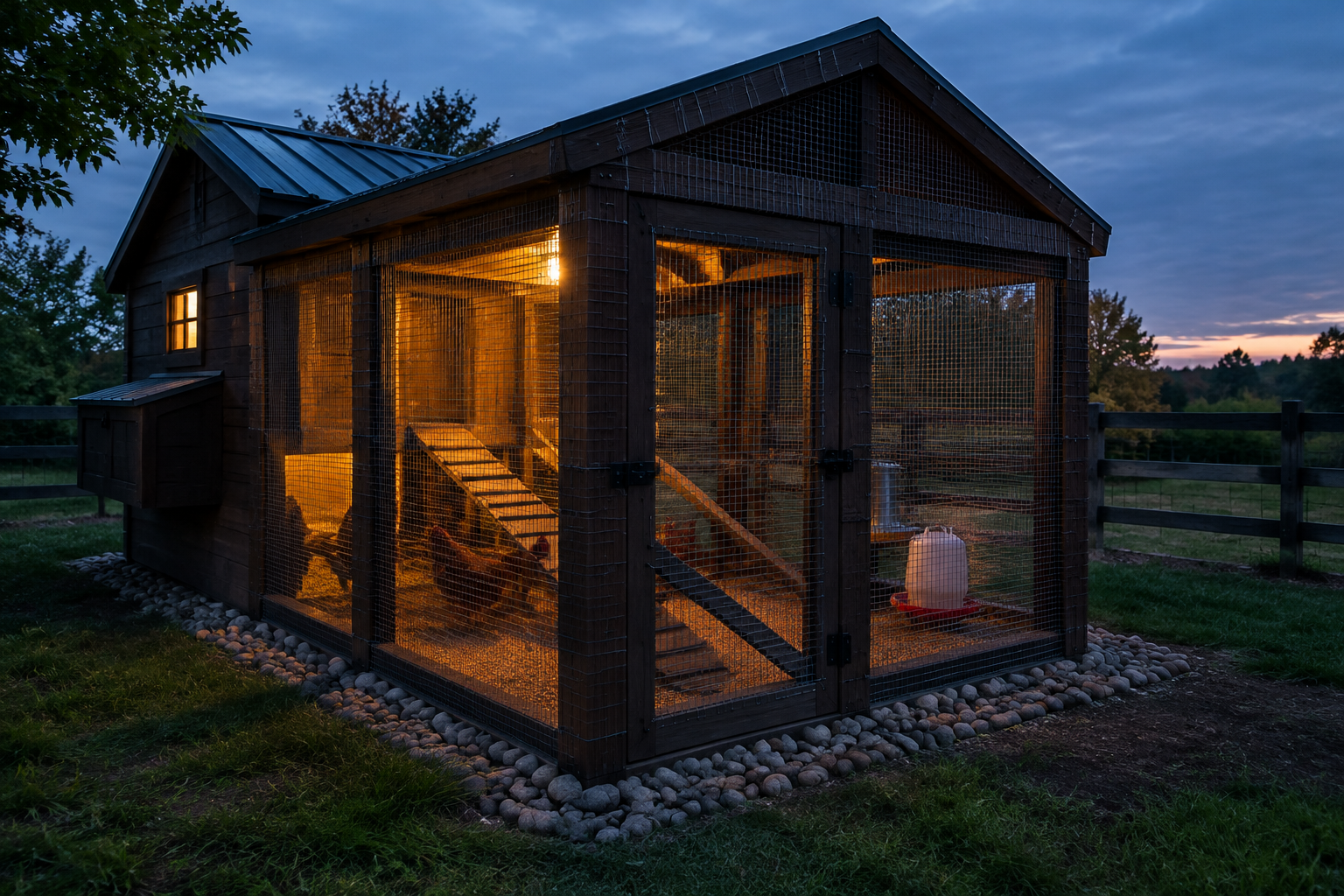
Predator proofing is engineering, not luck. Every opening wider than half an inch is a future loss.
Use 19-gauge half-inch hardware cloth and staple it every three inches. Staples alone pull out, so add washers or battens.
Bury an 18-inch mesh apron flat around the base. Foxes and dogs dig at the wall, then give up on the wire.
Fit two-step latches on every door. Raccoons open hooks, slides and simple bolts with surprising skill.
- Flock8–15 hens
- Footprint8 × 10 ft
- SkillAdvanced
- Budget$900–$1,800
Portable A-Frame for Small Flocks
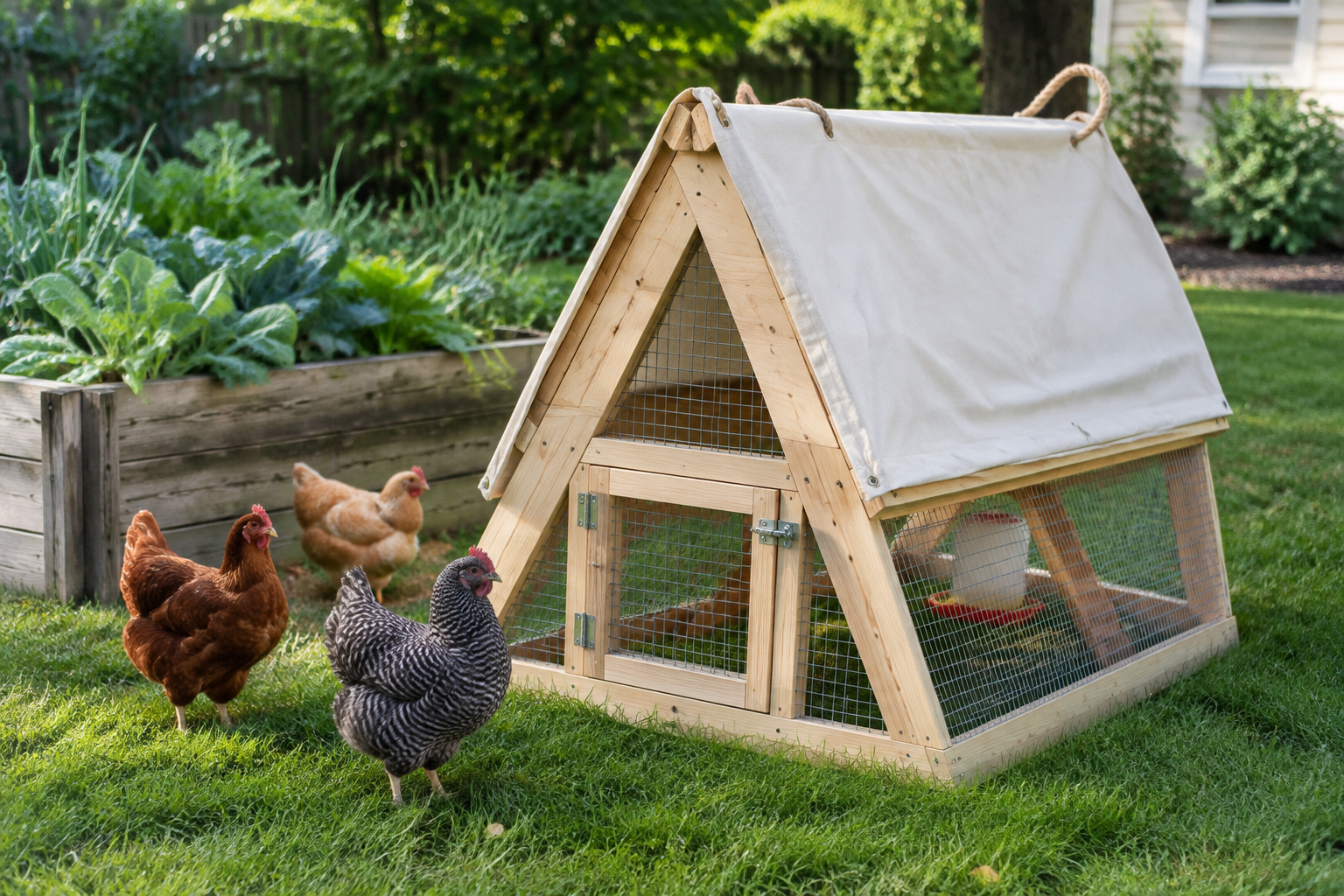
A small A-frame is the easiest way to try chicken keeping. It is light, cheap and moves without help.
Use 1 × 3 framing and thin plywood to keep the weight down. Every extra sheet makes it harder to shift.
Fit rope handles at the balance point. You will move it far more often if it is comfortable to lift.
Lock it down for storms with two tent pegs and a strap. Light coops take off in high winds.
- Flock2–4 hens
- Footprint3 × 5 ft
- SkillBeginner
- Budget$180–$350
Nesting Box with External Egg Hatch
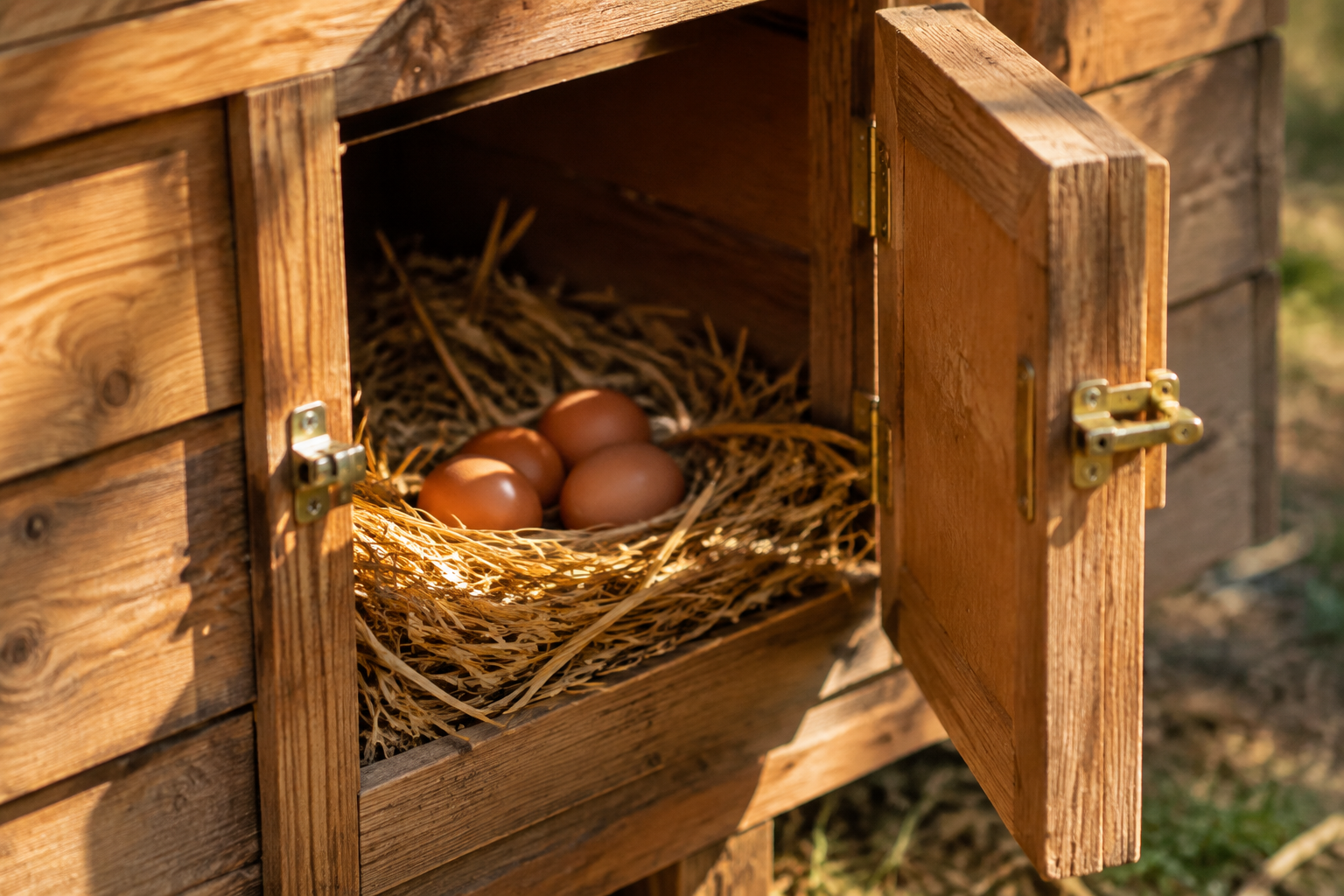
An external egg hatch lets you collect without walking through the run. Muddy boots and broken eggs both disappear.
Build one box for every four hens and line them with straw. Crowded boxes lead to cracked eggs and broody squabbles.
Hinge the lid on top and add a simple prop stick. A lid that stays open makes collection quick and safe.
Darken the box interior and keep it lower than the roosts. Hens want privacy for laying and never sleep in the nest.
- Flock4–12 hens
- Footprint1 box per 4 hens
- SkillBeginner
- Budget$60–$150
Two-Story Coop
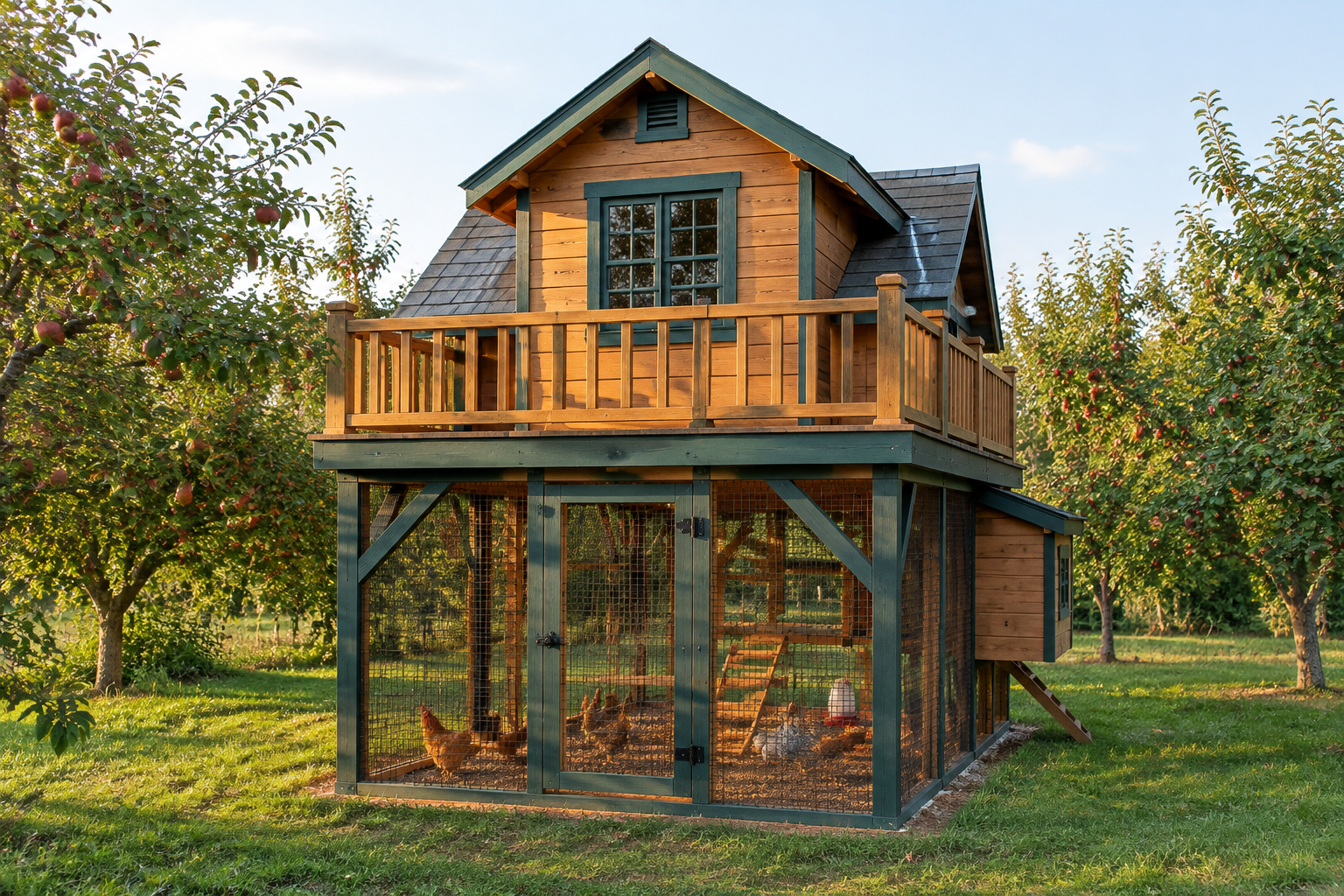
A two-story coop stacks a secure run under the sleeping quarters. It gives a big flock room on a small plot.
Frame the upper floor with joists that can carry bedding, feeders and a person. Assume someone will stand up there.
Cover the lower run fully so rain never reaches it. Dry ground underneath is what stops mud and respiratory problems.
Add a small balcony rail to the upper level. It keeps tools and feed scoops from tumbling into the run.
- Flock10–16 hens
- Footprint6 × 10 ft
- SkillAdvanced
- Budget$1,400–$2,600
Greenhouse Sunroom Coop
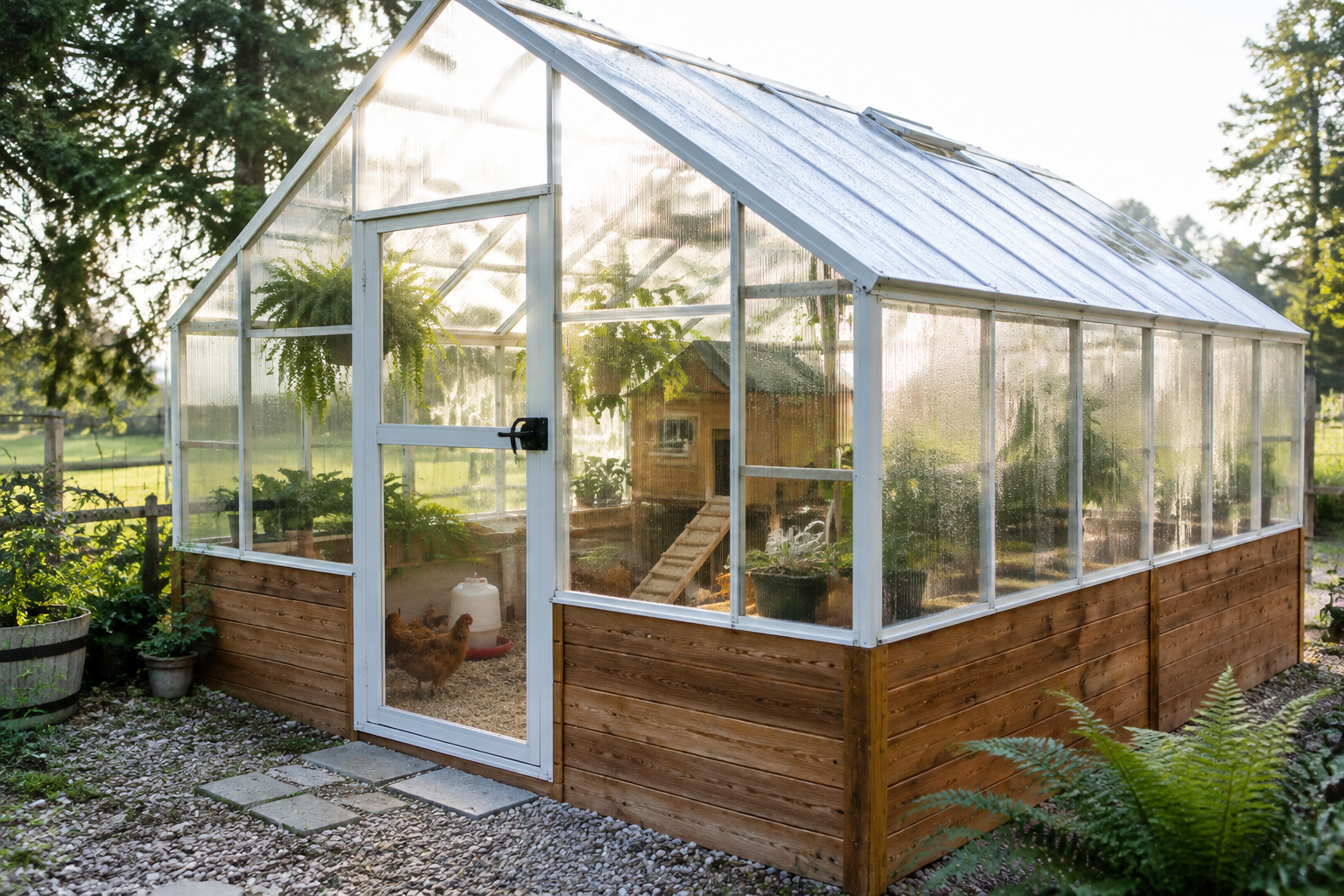
A translucent roof keeps the run bright through the shortest days. Hens lay better when light hours stay consistent.
Glaze the roof and only the top third of the walls. Full glazing turns the coop into an oven in summer.
Fit ridge vents that you can open from outside. Hot air needs somewhere to leave before the birds suffer.
Add shade cloth over the south-facing panels from June. Two hooks and a strip of cloth solve the heat problem.
- Flock6–10 hens
- Footprint6 × 10 ft
- SkillAdvanced
- Budget$1,000–$1,800
Recycled Plastic Coop
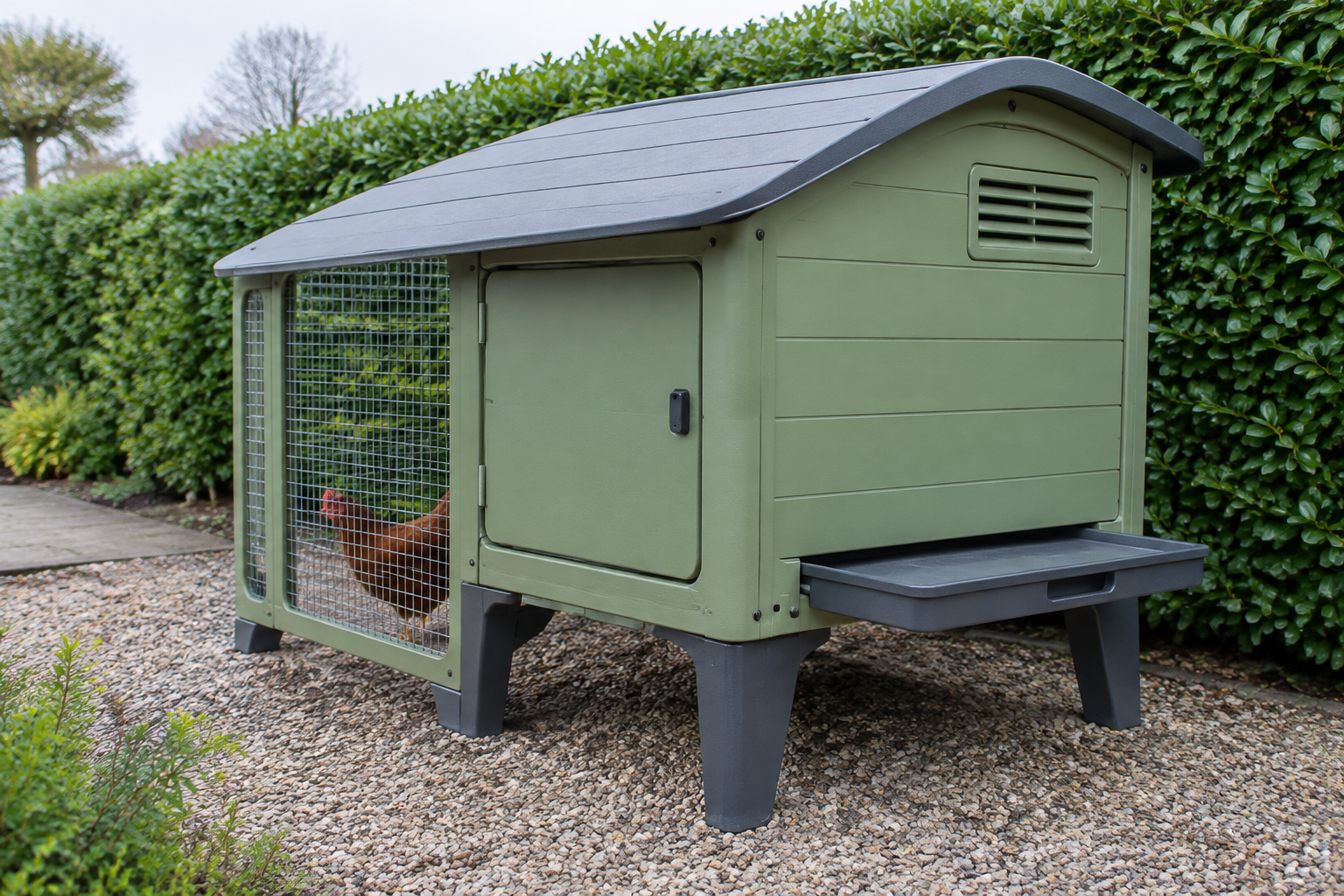
Recycled plastic panels never rot and never need painting. They also deny red mite the tiny seams it loves.
Choose a model with a slide-out tray and a removable roost bar. The easier it is to strip, the cleaner it stays.
Ventilate more than you think you need. Plastic does not breathe, so all airflow has to be designed in.
Anchor it on a level gravel pad. A plastic shell flexes on uneven ground and the door stops lining up.
- Flock4–6 hens
- Footprint4 × 5 ft
- SkillBeginner
- Budget$500–$900
Log Cabin Coop
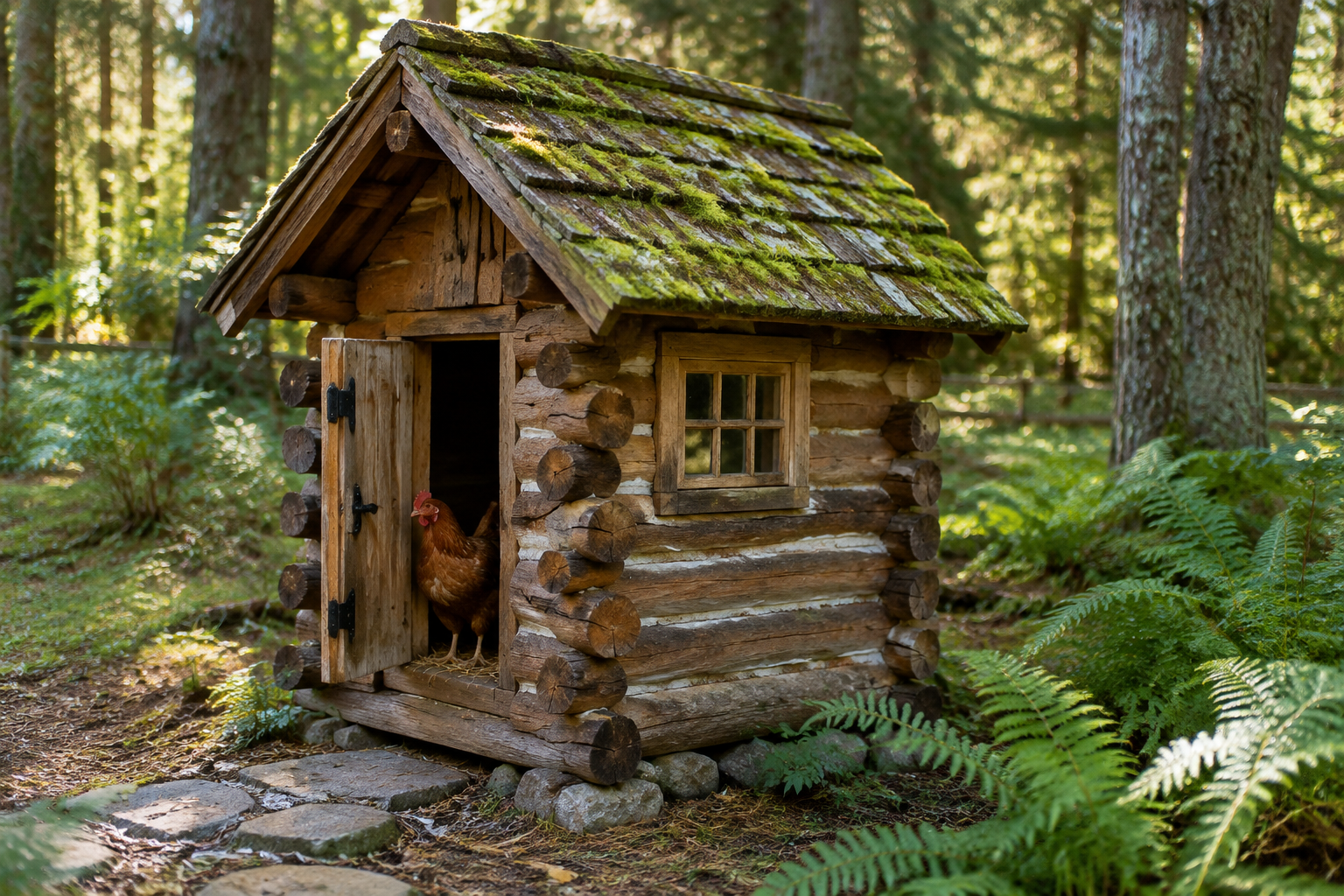
A miniature log cabin is as much garden feature as animal housing. Half-round logs stacked and notched read instantly as craft.
Keep the logs small, around four inches, so the scale stays right. Thick logs make a coop look like a shed.
Fill the gaps with a flexible chinking compound, not mortar. Timber moves with the seasons and mortar cracks.
Lift the first course off the ground on a stone plinth. Logs touching soil are gone in three years.
- Flock4–6 hens
- Footprint5 × 7 ft
- SkillAdvanced
- Budget$700–$1,300
Japanese Shou Sugi Ban Coop
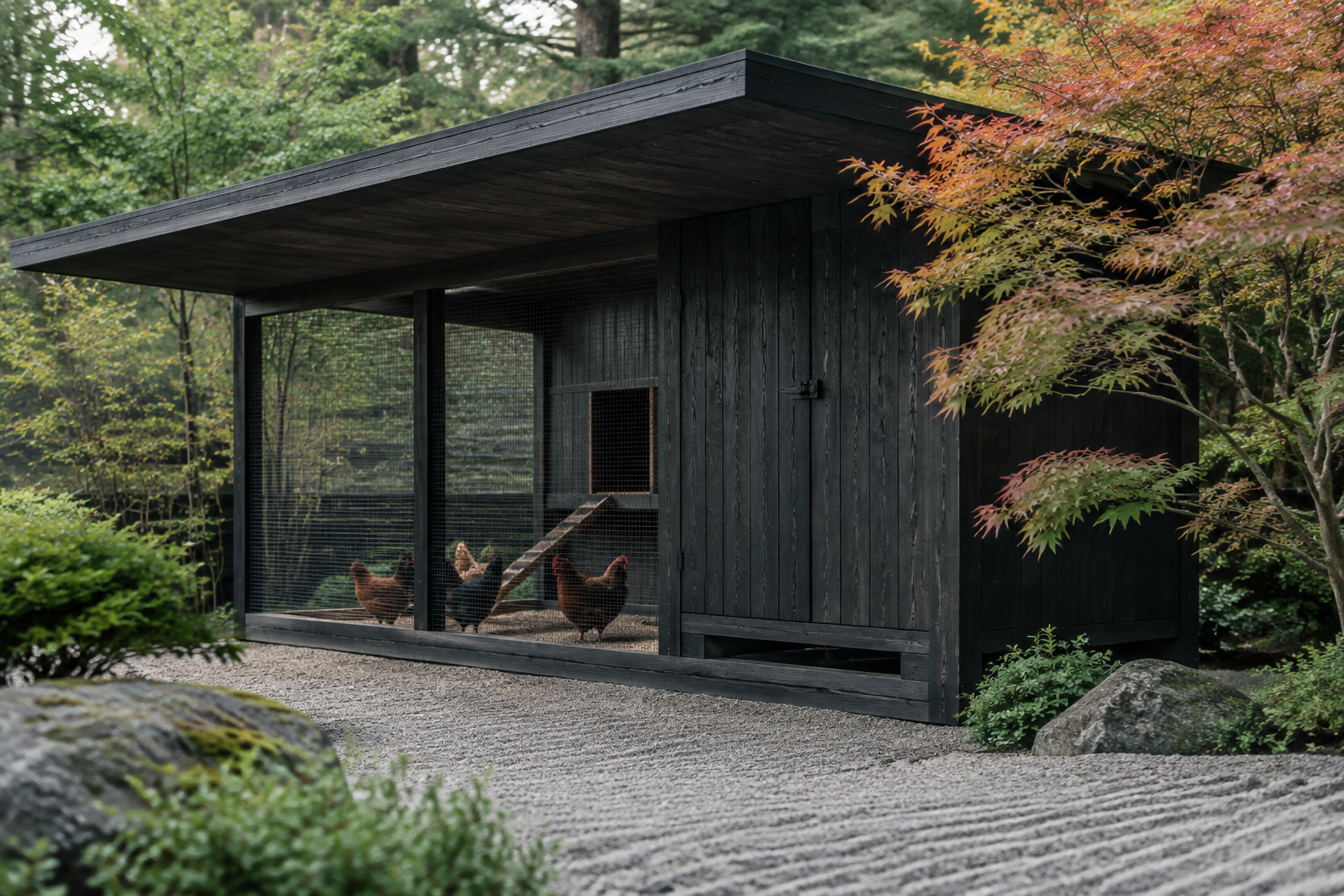
Shou sugi ban means charring the surface of cedar until it turns black. The burnt layer resists water, rot and insects.
Burn the boards flat on the ground with a torch, then brush away the loose soot. A stiff brush leaves the crisp grain.
Seal the char with a penetrating oil so it does not rub off on hands and feathers.
Point the charred face outward and keep the fixings black. Silver screws ruin the whole effect.
- Flock4–6 hens
- Footprint4 × 6 ft
- SkillAdvanced
- Budget$800–$1,400
Mediterranean Stucco Coop

Stucco over blockwork gives real thermal mass. It keeps the coop noticeably cooler at midday and warmer after dark.
Use a lime-based render rather than cement. Lime lets moisture escape and does not trap damp behind the wall.
Add a terracotta roof and a deep overhang. Both suit the style and both shade the walls.
Paint the walls a warm sand tone. Light walls reflect heat and look right against lavender and olives.
- Flock6–8 hens
- Footprint6 × 8 ft
- SkillAdvanced
- Budget$900–$1,600
Scandinavian Black Timber Coop

Black tarred timber absorbs heat on winter days. Combined with a steep roof, it handles snow without drama.
Apply the tar finish to bare timber only, and give it two thin coats. Thick coats stay tacky for weeks.
Use slim white trim around the door and window. The contrast is what makes the black timber sing.
Raise the structure on a ventilated plinth. Snow sitting against the base is the main rot risk in a Nordic build.
- Flock5–8 hens
- Footprint5 × 7 ft
- SkillIntermediate
- Budget$600–$1,100
Solar-Powered Coop
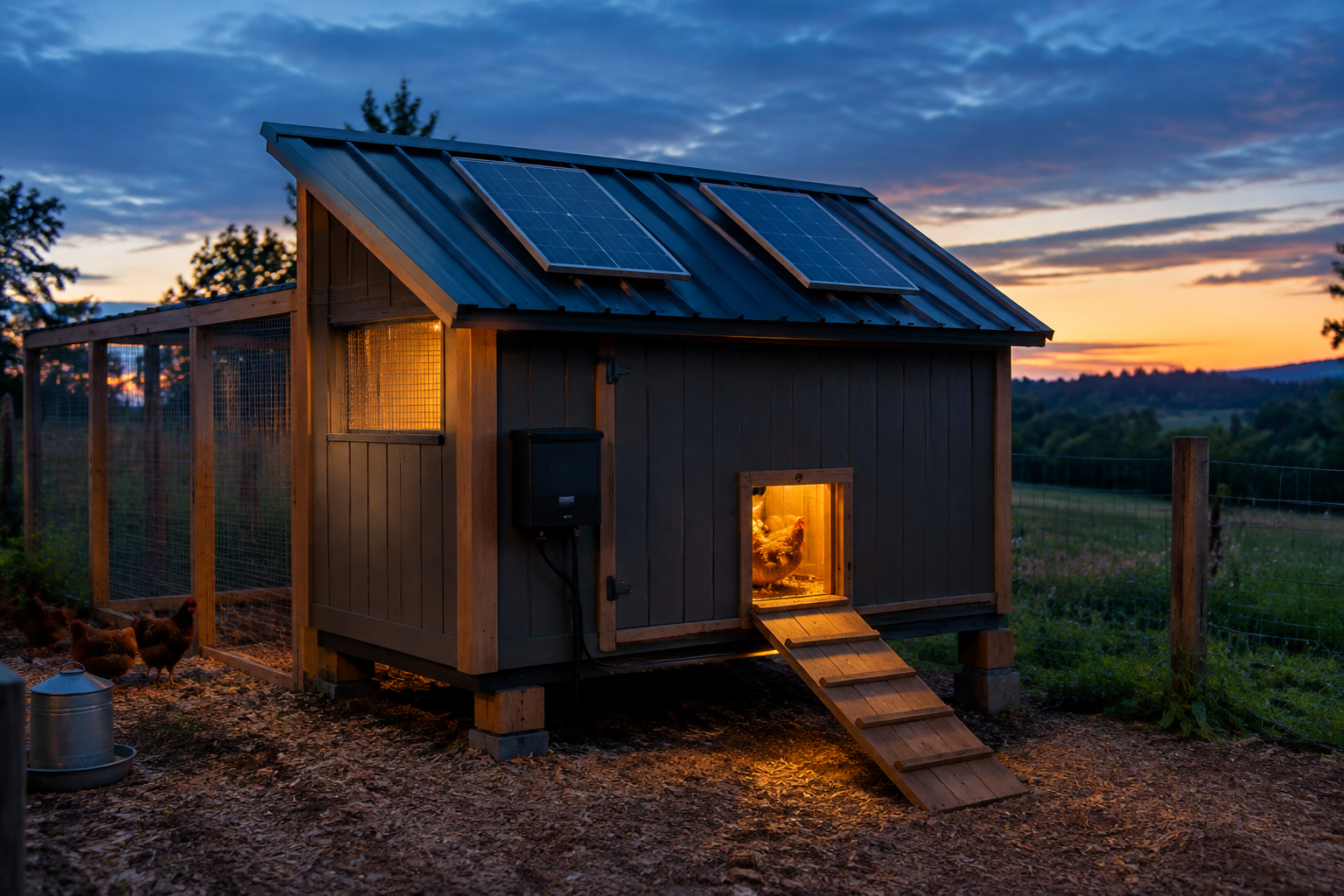
A single 50-watt panel will run an automatic door, a small light and a fan. That is most of what a coop needs.
Mount the panel at the roof angle of your latitude. Any flatter and winter sun will barely register.
Keep the battery and controller in a dry, ventilated box. Electronics hate the ammonia that builds up inside a coop.
Use warm-white light on a timer for winter mornings. Two hours is plenty and it does not disturb roosting.
- Flock4–10 hens
- Footprint5 × 8 ft
- SkillAdvanced
- Budget$700–$1,300
Rainwater Harvesting Coop
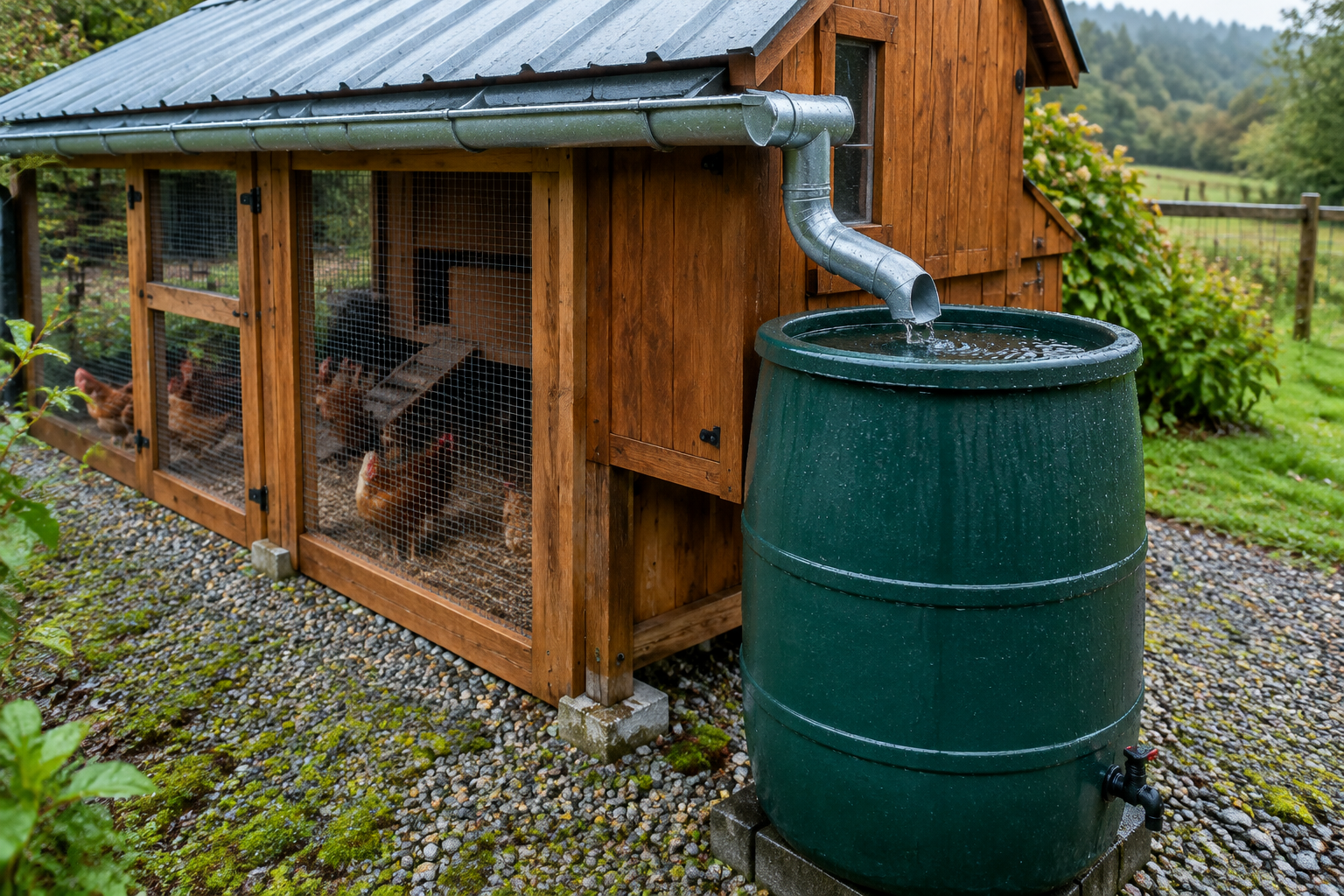
A gutter and barrel turn the coop roof into a small water supply. It also stops roof water dumping onto the run.
Fit leaf guards at the top of the downpipe. A blocked downpipe overflows straight into the coop wall.
Raise the barrel on blocks and add a spigot near the bottom. Gravity-fed access beats lifting a watering can.
Screen the inlet with fine mesh. Standing water with no screen is a mosquito farm.
- Flock6–12 hens
- Footprint6 × 8 ft
- SkillIntermediate
- Budget$450–$800
Coop with Integrated Compost Bin
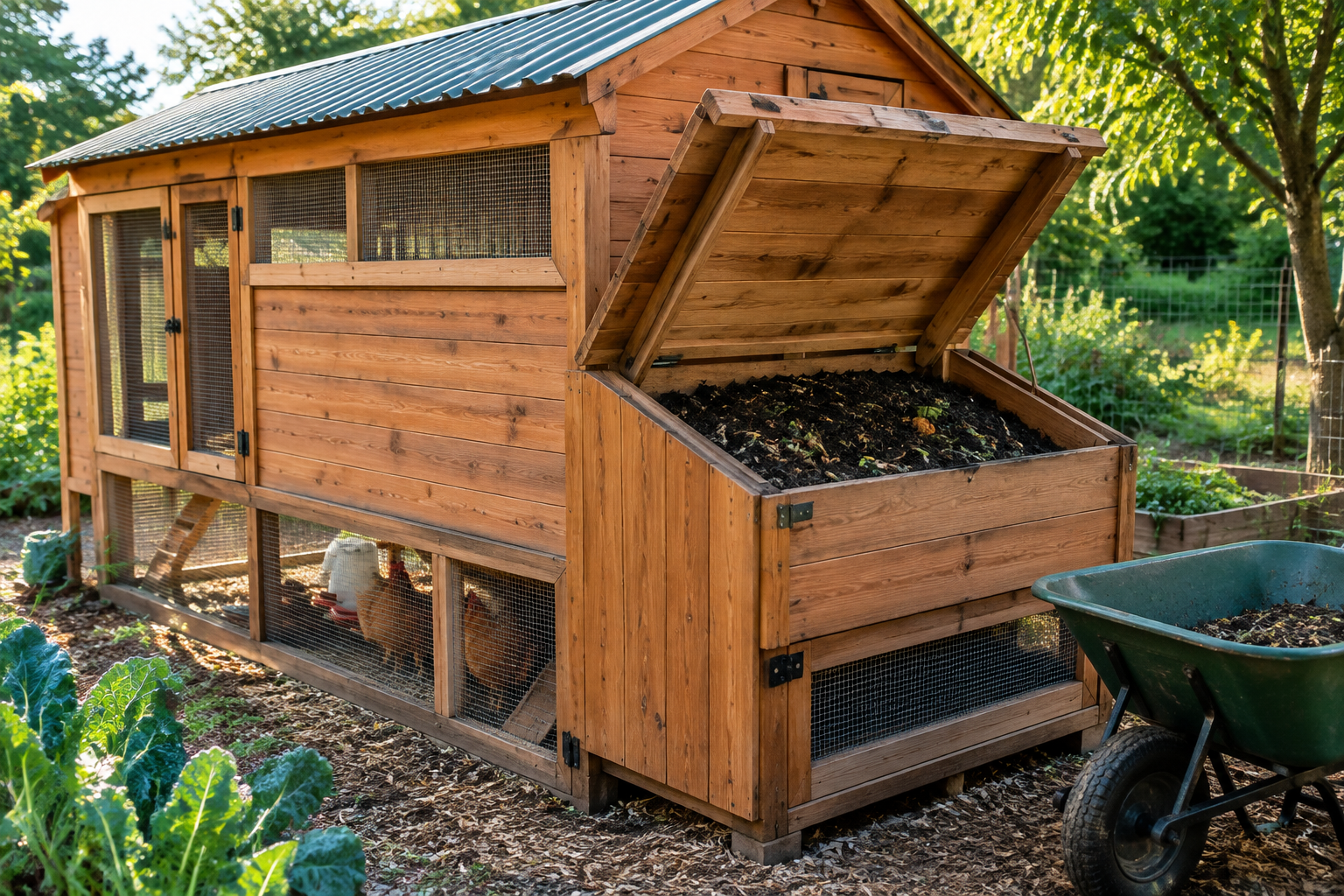
Building a compost bay into the coop turns waste into next spring’s soil. You also walk less with a wheelbarrow.
Site the bay on the shaded side and give it a proper lid. A dry bin breaks down faster and smells far less.
Line the bin with welded mesh at the base. Rats arrive for any food scraps long before they arrive for hens.
Turn the pile whenever you clean the coop. Two minutes with a fork keeps the process aerobic and odour-free.
- Flock6–10 hens
- Footprint8 × 10 ft
- SkillAdvanced
- Budget$700–$1,200
Herb-Planted Run Border
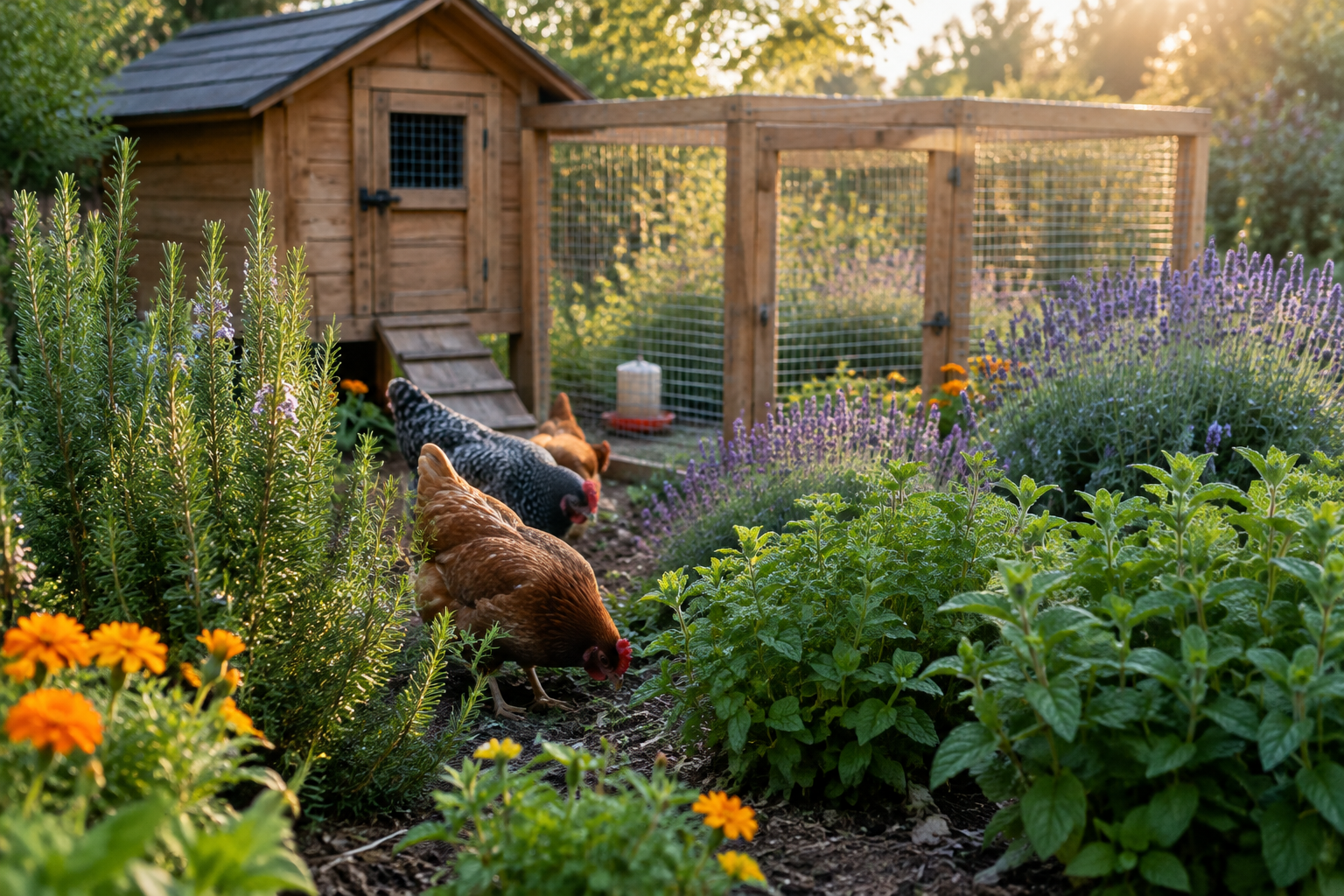
Planting strongly scented herbs around the run does two jobs at once. It softens the structure and masks the smell.
Rosemary, lavender, mint and marigolds all cope with dry soil and heavy use. Keep them outside the wire so hens cannot strip them.
Plant in a two-foot strip of gravel mulch. The mulch stops mud splashing through the mesh.
Cut the herbs back hard in early spring. Dense regrowth is what makes the border read as intentional.
- Flock4–6 hens
- Footprint4 × 8 ft run
- SkillBeginner
- Budget$120–$250
Lean-To Coop Against a Wall
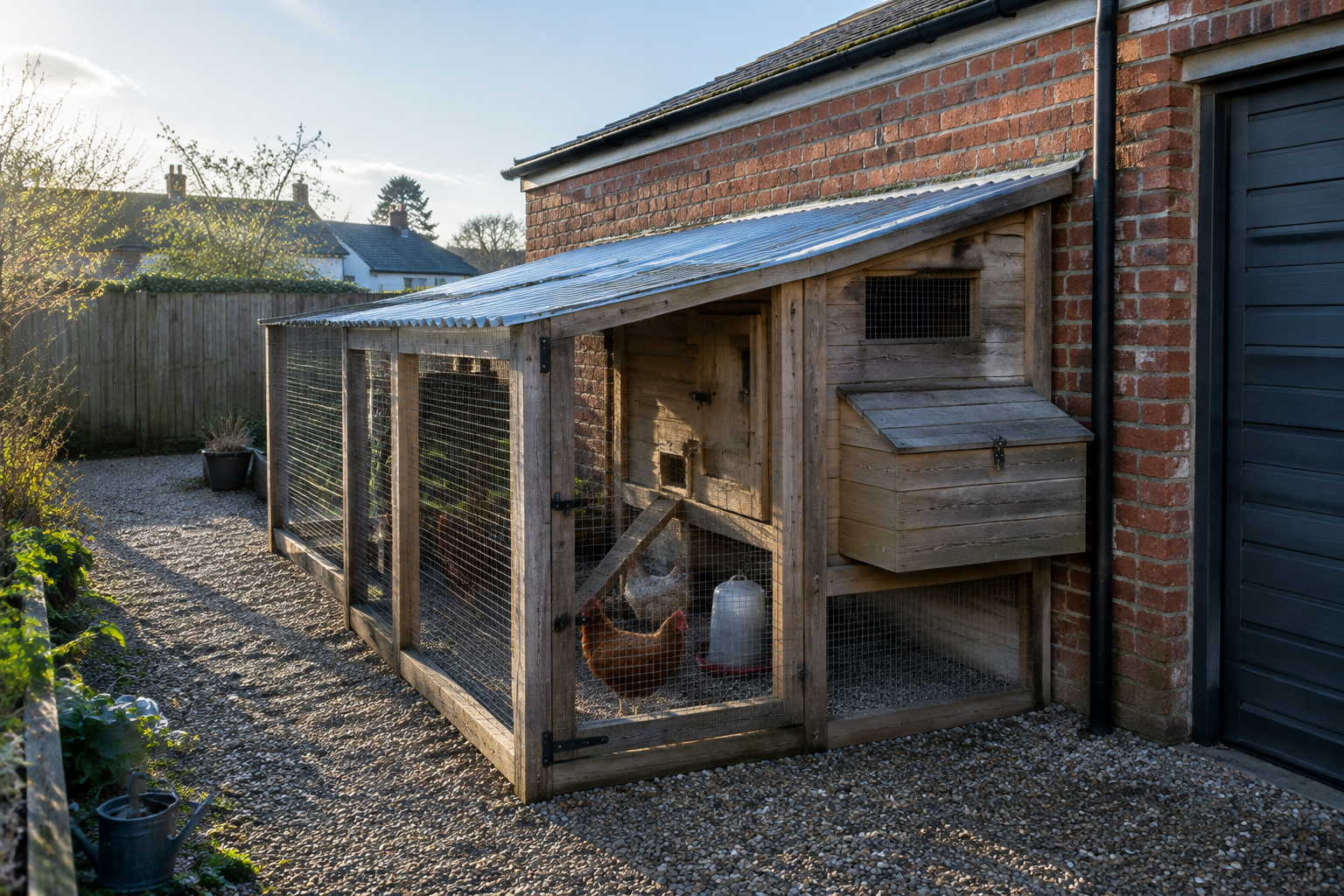
A lean-to borrows an existing wall and roof line. That saves a full side of cladding and one whole corner of the garden.
Use a single-slope roof with at least a 15-degree fall. Shallow tin roofs pool water and grow moss fast.
Stand the wall plate off the brick with spacers. Timber flat against masonry traps damp and rots quietly.
Make the run narrow and long instead of square. A corridor run fits down a side return where nothing else will.
- Flock3–6 hens
- Footprint3 × 6 ft
- SkillBeginner
- Budget$200–$450
Stone-Base Coop with Slate Roof
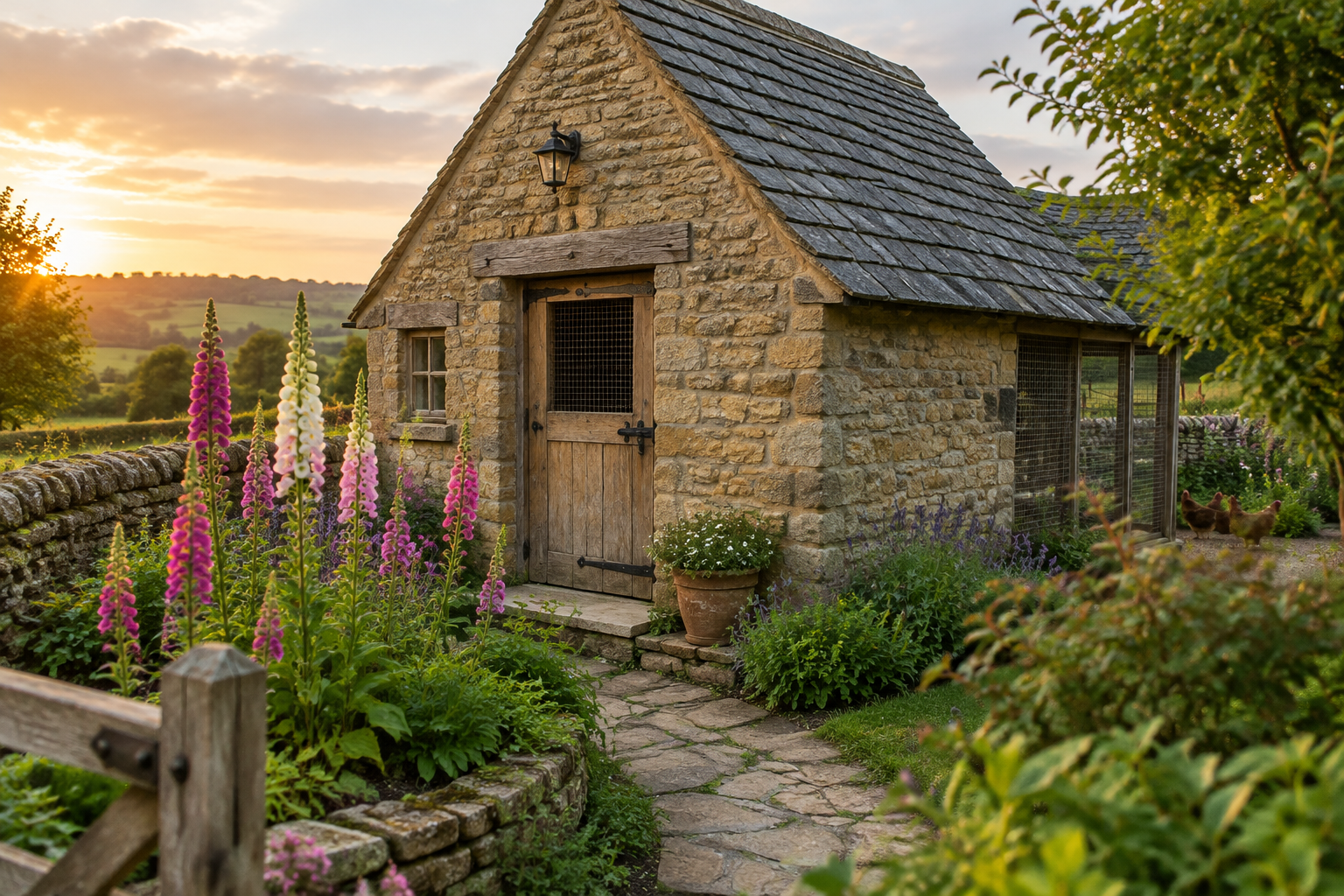
A stone base solves the oldest problem in coop building. It cannot rot, and nothing can chew through it.
Build the stone section only to waist height, then continue in timber. Full stone walls are cold and expensive.
Slate needs a steep pitch and a breathable underlay. Anything flatter and wind-driven rain creeps under the courses.
Cap the stone with a slate or timber sill that overhangs. Water running down the timber must never reach the masonry.
- Flock4–6 hens
- Footprint5 × 7 ft
- SkillAdvanced
- Budget$1,200–$2,000
Treehouse-Inspired Coop

An elevated coop between two trees is genuinely predator-proof. Height does what mesh cannot.
Use sliding brackets that let the trees move. A rigid fixing will tear itself apart as trunks sway.
Give the birds a proper wide ramp with cleats and a handrail. Height is only safe if the access is easy.
Run the mesh skirt around the base of both trunks. Predators use the trees as ladders otherwise.
- Flock4–6 hens
- Footprint5 × 6 ft
- SkillAdvanced
- Budget$1,000–$1,800
Barn-Style Coop with Cupola
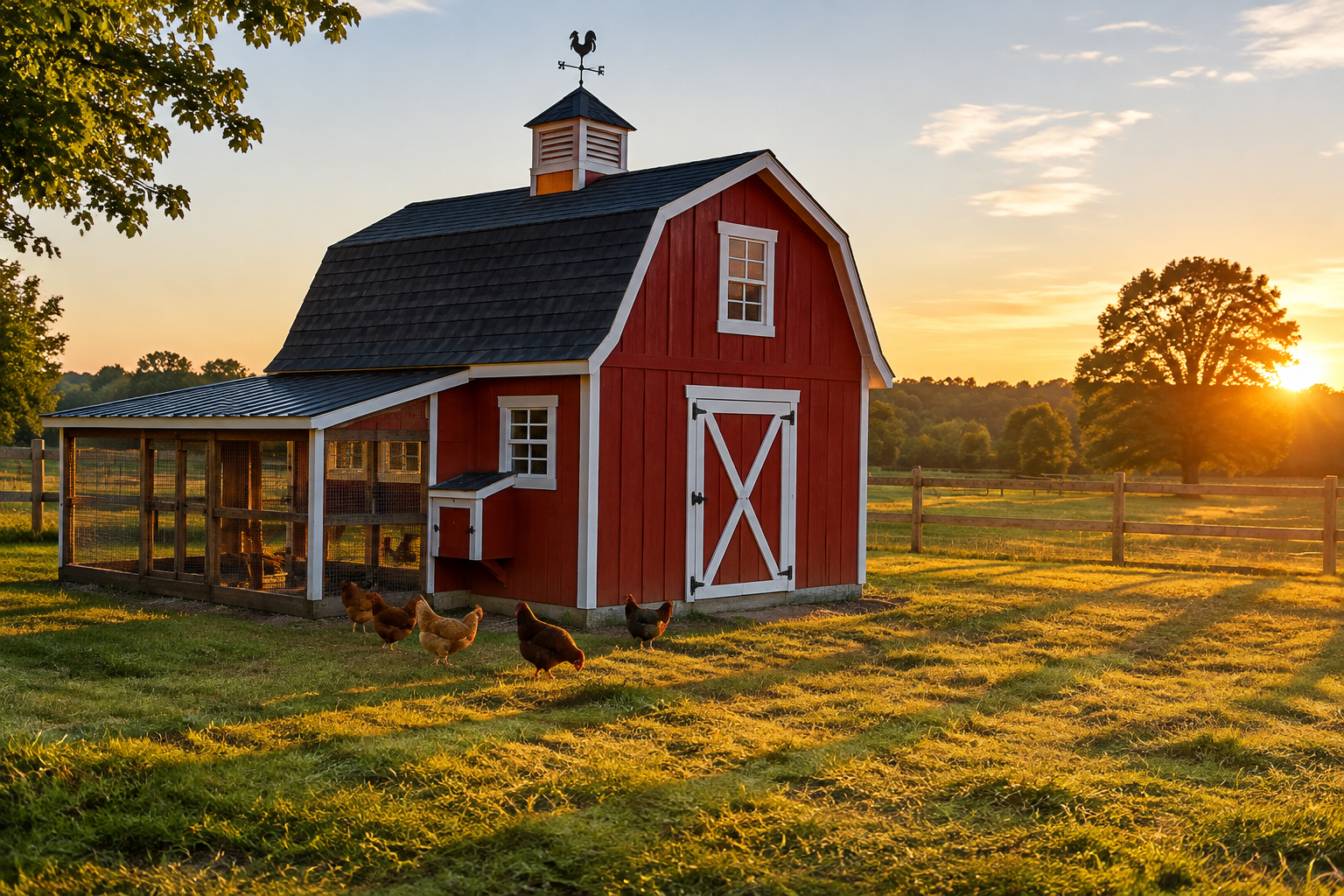
A gambrel roof gives you far more headroom than a simple gable. That extra volume keeps the loft cooler in summer.
Build the roof trusses on the ground as a jig, then lift them in pairs. Doing it in the air is slow and unsafe.
Louvre the cupola and leave it open to the loft. It becomes a high vent that pulls stale air out of the whole coop.
Paint classic barn red over a proper primer. Red fades fast on untreated softwood.
- Flock8–12 hens
- Footprint8 × 10 ft
- SkillAdvanced
- Budget$1,200–$2,000
Tiny House Coop with Porch
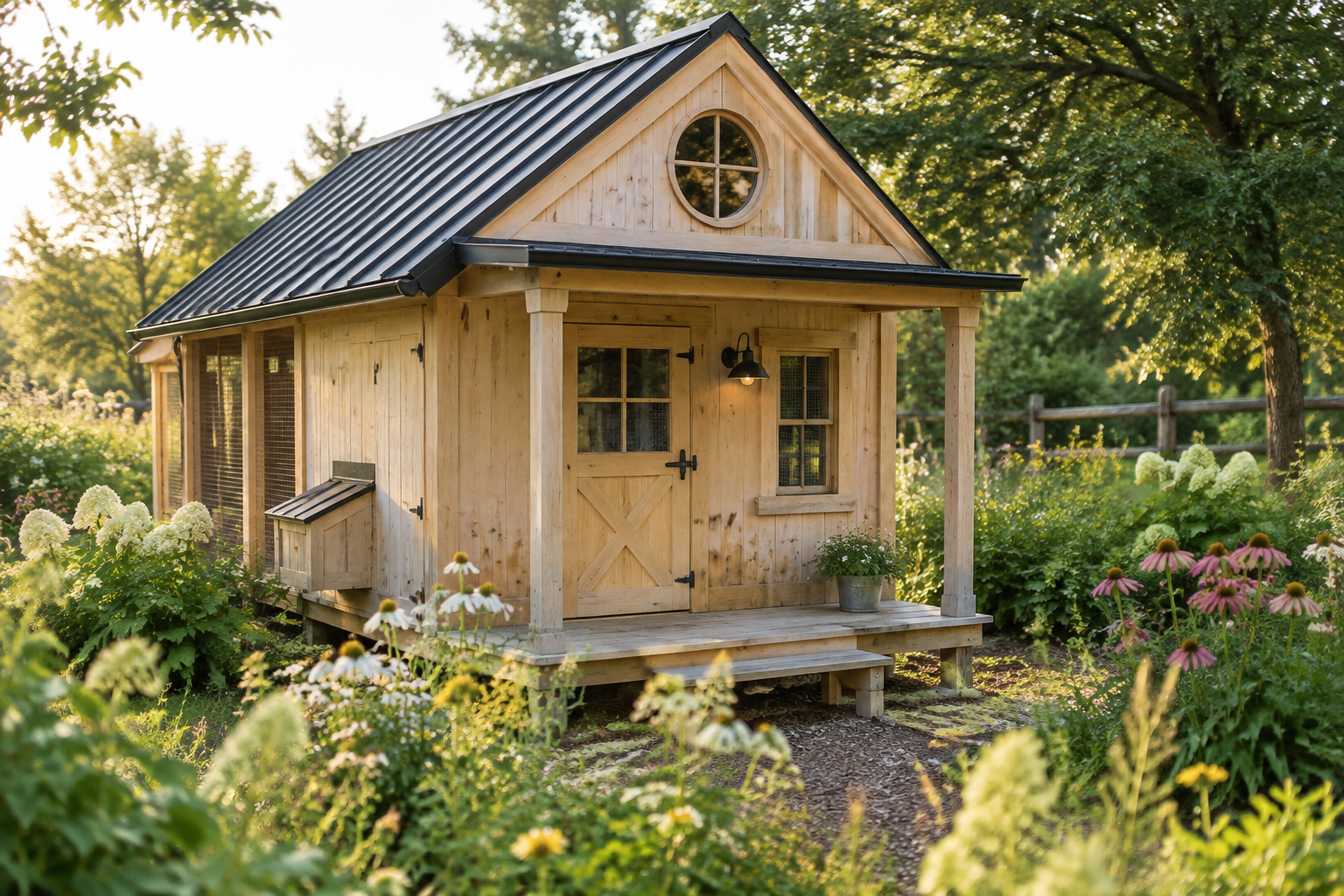
A little porch is the most useful luxury you can add to a coop. Feed stays dry and hens shelter without going inside.
Set the porch posts on small concrete feet so they never sit in soil. Post rot is the usual way these builds fail.
Add a bench step at the front. It gives you somewhere to sit while you watch the flock, and it hides the tray.
Paint the porch floor with a deck coating. Bare timber collects droppings and never really dries.
- Flock4–6 hens
- Footprint5 × 8 ft
- SkillIntermediate
- Budget$600–$1,000
Desert Coop with Shade Cloth
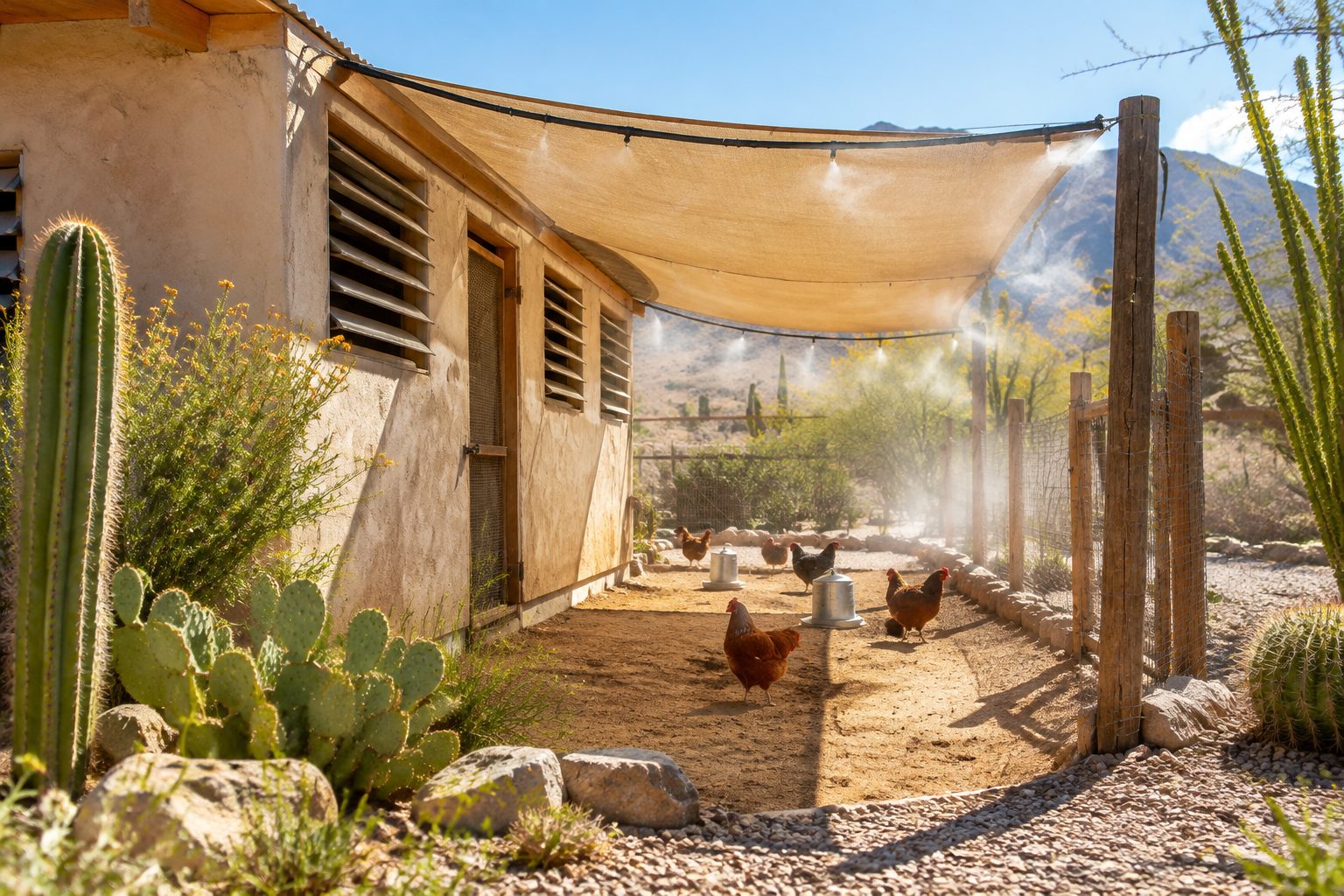
In real heat, shade and airflow outrank insulation. A hen cannot sweat, so moving air is her only cooling tool.
Stretch 70 percent shade cloth over the run and mist it at midday. Evaporative cooling drops the temperature fast.
Orient the open side away from the afternoon sun. West-facing openings turn a coop into an oven.
Use sand rather than straw in the run. Sand stays cooler, drains instantly and is easy to sieve.
- Flock4–8 hens
- Footprint5 × 8 ft
- SkillIntermediate
- Budget$450–$800
Tropical Coop on Stilts

In the tropics, ground moisture destroys coops faster than rain. Stilts lift the floor above damp soil and let air move underneath.
Open slatted walls on two sides keep the interior dry and breezy. Solid walls trap humidity and grow mould.
Use a steep thatched or long-run metal roof with big overhangs. Short overhangs mean rain on the birds all season.
Treat every cut end of timber with preservative. Termites enter through the smallest exposed surface.
- Flock6–10 hens
- Footprint6 × 8 ft
- SkillAdvanced
- Budget$600–$1,100
HOA-Friendly Neat Coop
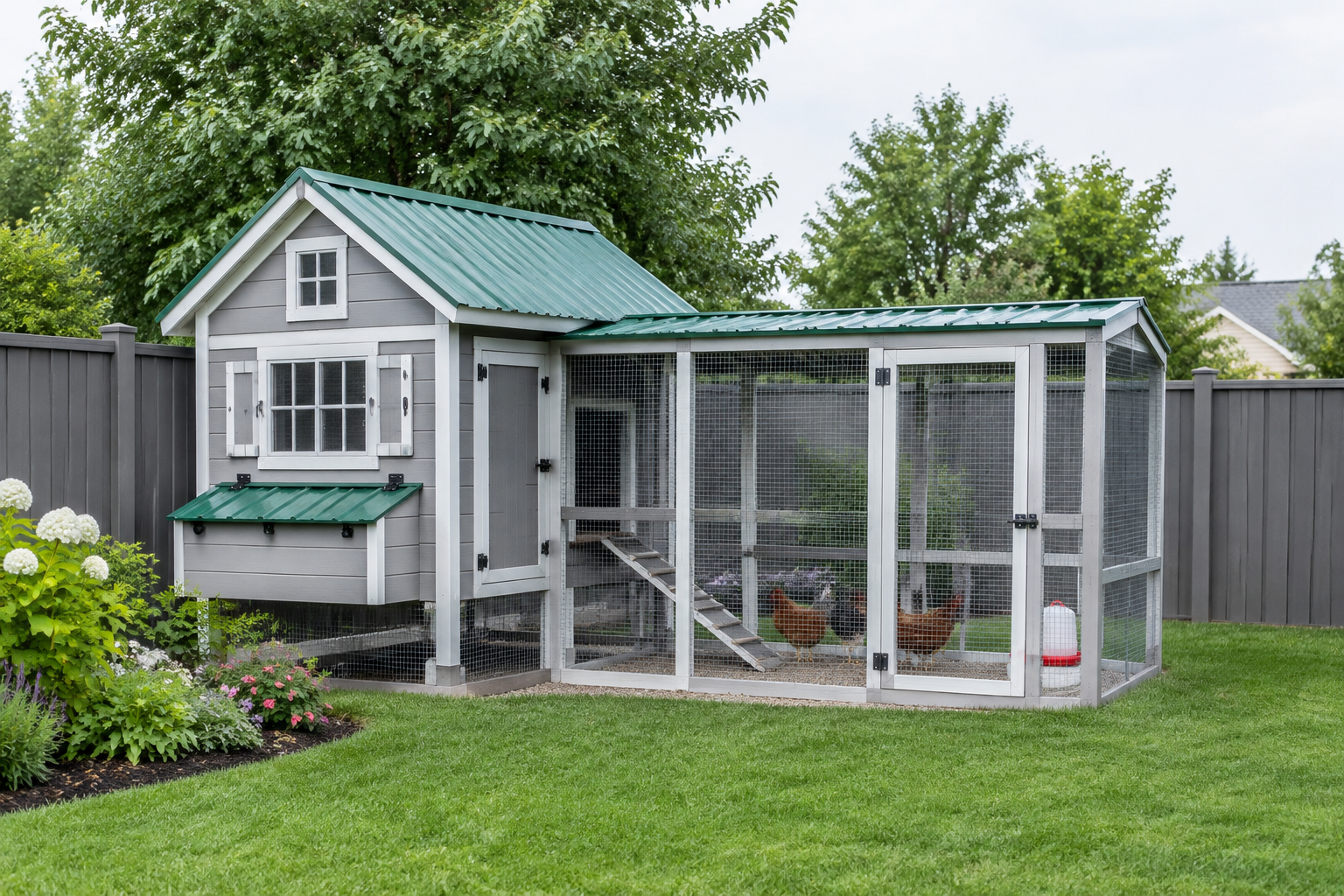
Where rules are strict, tidiness matters more than personality. A clean silhouette and one muted colour solve most objections.
Paint the coop and run frame the same colour as your fence. The whole assembly visually disappears.
Screen the run with a slim planter box of tall grasses. It softens the wire without adding clutter.
Keep the run roofed and the bedding fresh. Smell is what actually generates complaints, not noise.
- Flock3–5 hens
- Footprint4 × 6 ft
- SkillBeginner
- Budget$400–$750
Coop with a Dust Bath Sandbox

Dust bathing is how hens clean their feathers and control mites. Without a dry bath they will make one in your best soil.
Build a shallow box of 2 × 6 timber and fill it with builder’s sand plus a scoop of wood ash. Ash helps against parasites.
Put it under the run roof so it stays dry. A wet bath turns into a mud wallow and stops working.
Sieve it monthly and top up the sand. Fresh dry material is the whole point of the box.
- Flock4–10 hens
- Footprint3 × 3 ft bath
- SkillBeginner
- Budget$40–$100
Aviary-Style Coop
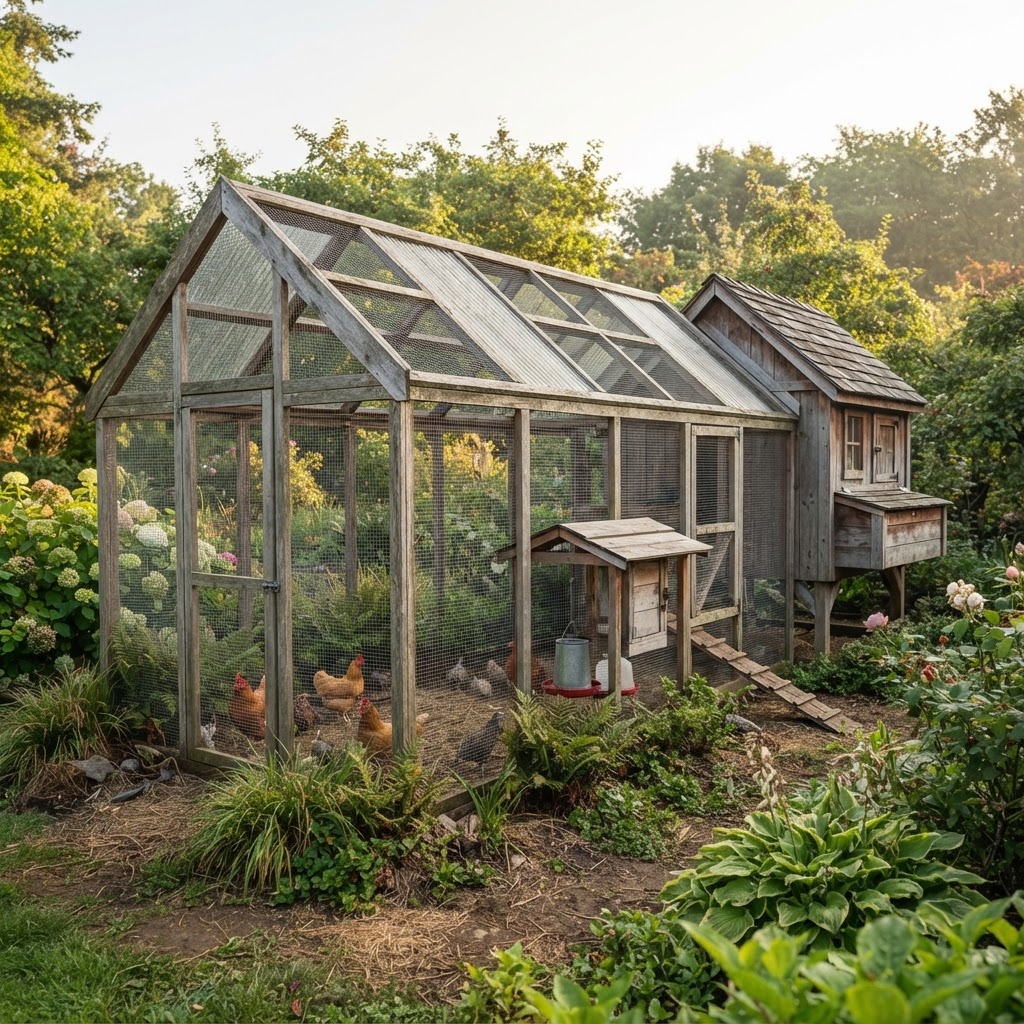
An aviary approach treats the whole enclosure as habitat. Planted shrubs and varied height keep birds active and calm.
Make the flight at least six feet tall so you can walk in. Anything lower is a cage you have to crawl into.
Plant only in ground that is mesh-protected below. Otherwise the flock excavates the shrubs within a week.
Use weld-mesh panels bolted together. Panels go up fast and can be moved if you rearrange the garden.
- Flock8–16 birds
- Footprint10 × 14 ft
- SkillAdvanced
- Budget$1,500–$2,800
Chicken Palace with Veranda
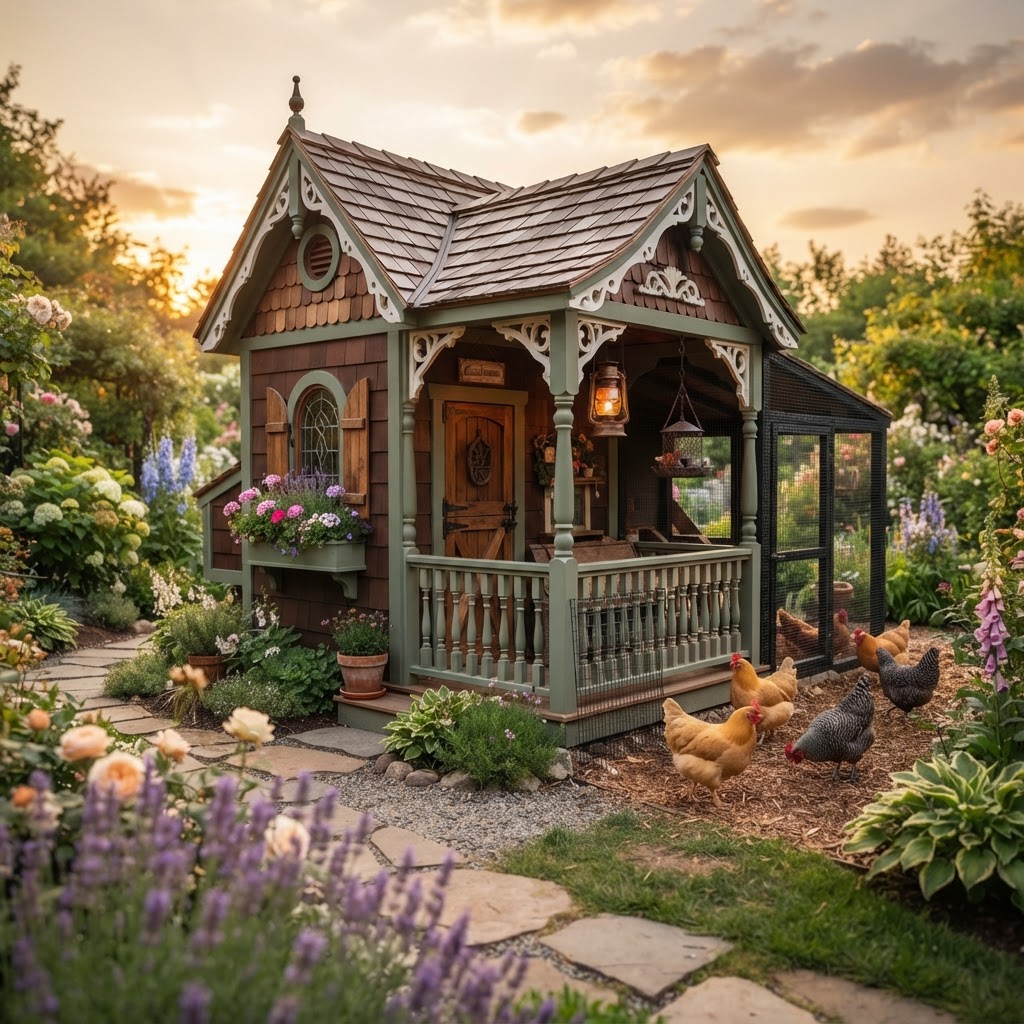
A veranda makes the coop usable in every weather and gives the flock a dry outdoor room. It is the detail people remember.
Use turned posts only where they are visible. Structural corners can stay plain square timber.
Hang the feeder from a veranda rafter rather than the floor. It stays clean and the birds work for their food.
Add a low-wattage lantern on a timer. Soft evening light shows the build off without interrupting the flock.
- Flock6–10 hens
- Footprint8 × 12 ft
- SkillAdvanced
- Budget$1,800–$3,000
Rolling Chicken Caravan
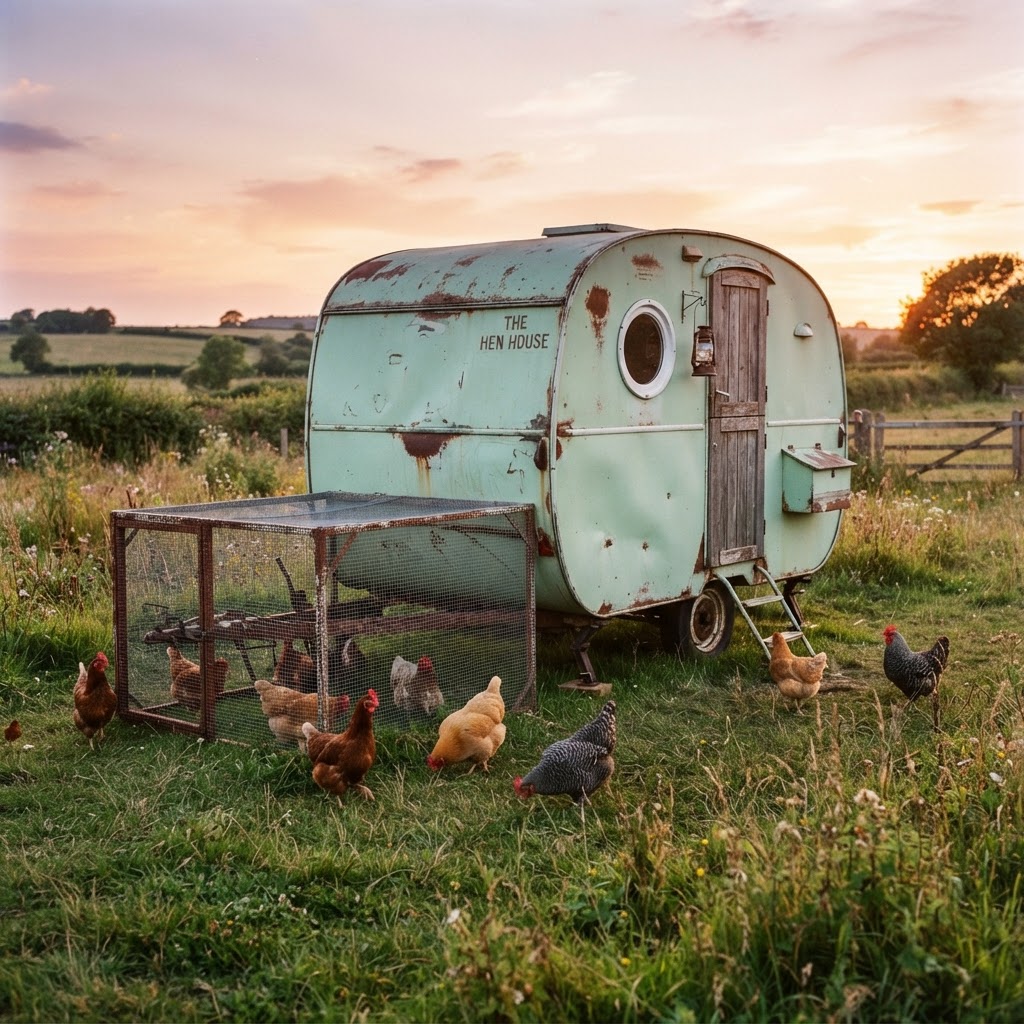
An old caravan shell already has a floor, walls and wheels. You mostly need to strip it, ventilate it and add a run.
Remove every soft furnishing and line the interior with washable board. Fabric holds ammonia and mites forever.
Build the run onto the tow bar with a quick-release pin. It tows as one unit and detaches for cleaning.
Check the brakes and lights before moving it. A coop on the road still has to be road legal.
- Flock6–12 hens
- Footprint12 × 6 ft
- SkillAdvanced
- Budget$1,000–$2,500
Homestead Coop with Feed Store
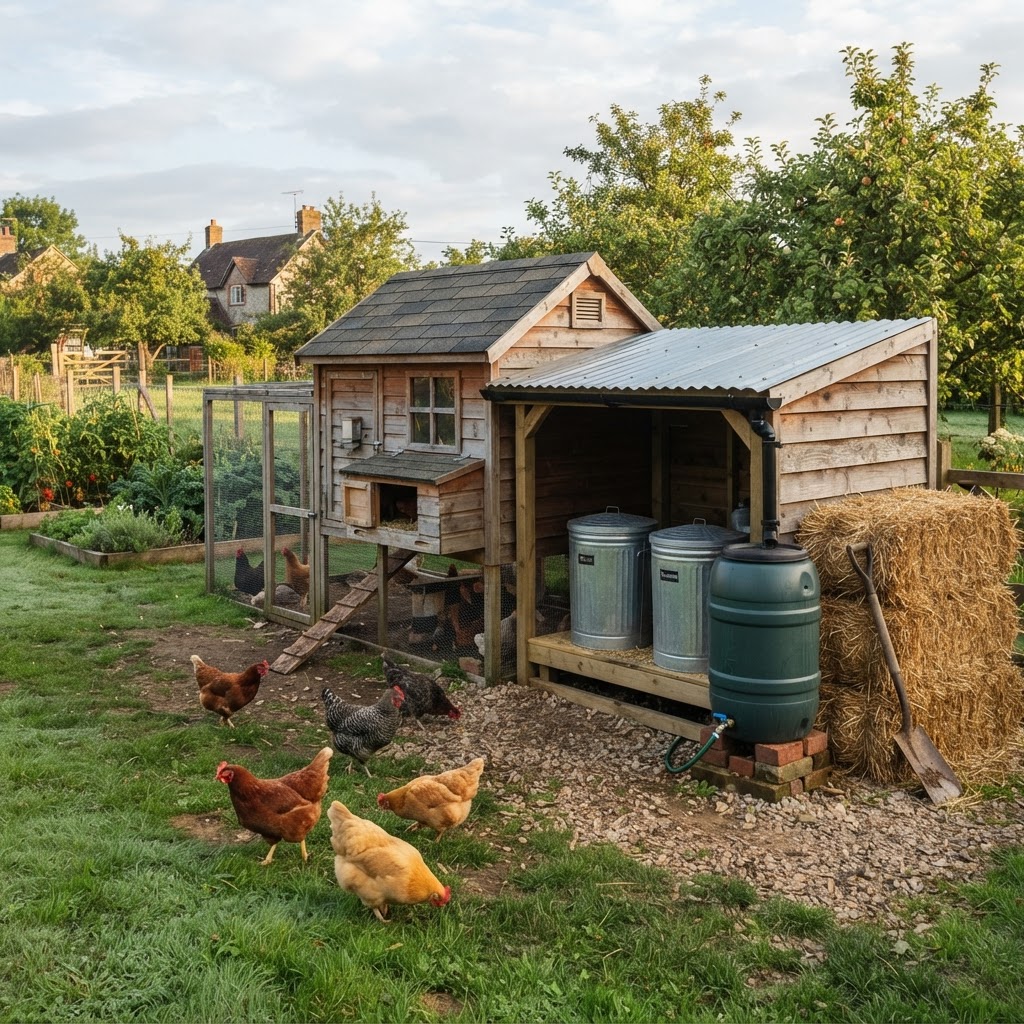
Storing feed beside the flock saves time every single day. It also keeps rodents out of your garage.
Use metal bins with locking lids, not bags stacked on pallets. Bags invite mice and mice invite rats.
Leave a covered gap between the store and the coop. Air movement between the two keeps feed dry and cool.
Add a small bench and a tool hook at the door. A place to set the scoop down is what keeps the routine tidy.
- Flock10–20 hens
- Footprint10 × 16 ft
- SkillAdvanced
- Budget$1,500–$2,800
Chicken Coop Questions, Answered
How much does a chicken coop cost to build?
A small pallet or A-frame coop costs under $300 in materials. A walk-in coop with a covered run usually lands between $1,200 and $2,500. Buying a ready-made coop of the same quality is typically two to three times the material cost.
How many hens fit in a small coop?
Plan on four square feet of indoor floor space per hen. A 4 × 6 ft house comfortably holds six standard hens, or eight bantams. Always add a run of at least ten square feet per bird.
What is the best flooring for a chicken coop?
A concrete slab under deep litter is the easiest to live with. Plywood on bearers works well for smaller coops, provided the joints are sealed and the floor stays dry. Avoid bare soil inside the house.
Do chickens need heat in winter?
Healthy, dry, draft-free hens handle cold well without a heater. Ventilation and dry bedding matter more than warmth. Heat lamps add a real fire risk in a timber coop.
Pick One Idea and Start Small
The best coop is the one you can clean on a wet Tuesday without resentment. Choose a design you can finish in a weekend, then upgrade later.
Build the shell, the vents and the mesh first. Paint, planters and porches can wait a season.
Your flock will tell you what needs changing. Watch where they shelter, where they dust bathe, and where the mud appears.
Then fix that one thing. That is how good coops actually get built.
Back to the top