

58 Home Office Desk Ideas: Productive, Stylish & Small Space Setups
A desk is the one piece of furniture you touch every single day. It decides how you sit, how you see light and how fast you can start.
This guide collects fifty-eight home office desk ideas that actually work in real rooms. Some cost a weekend of DIY, others are simply a better arrangement of what you already own.
Every idea below follows the same rule. Clear the surface, plan the light, then add storage. That order keeps a workspace calm instead of crowded.
Read straight through, or jump to the section that matches your space. Each entry lists the desk type, the material that defines it and why it works.
The Minimalist Monoliths
Clean lines and pale surfaces keep a small room feeling open. These ten desks remove visual weight so your attention lands on the work.
White Oak Floating Desk
Wall-mounted oak
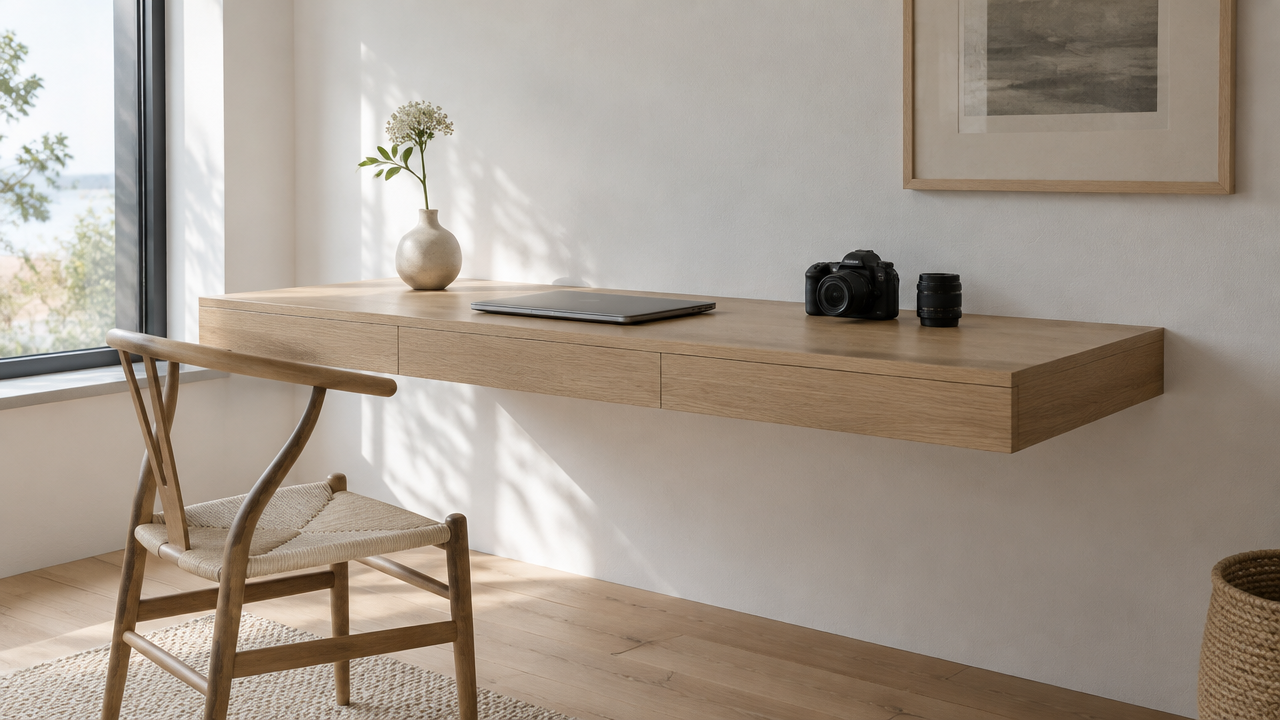
Mount a solid white oak top straight to the studs and leave the legs off. A floating desk removes the visual clutter that makes a small room feel cramped.
Run a slim drawer under the top for pens and notebooks. Keep the shelf below to a single basket so the grain stays the star.
Hang the top at elbow height, roughly 73 cm from the floor. Find the studs before you drill, because a solid oak slab is heavier than it looks.
Ghost Glass Console
Bent tempered glass
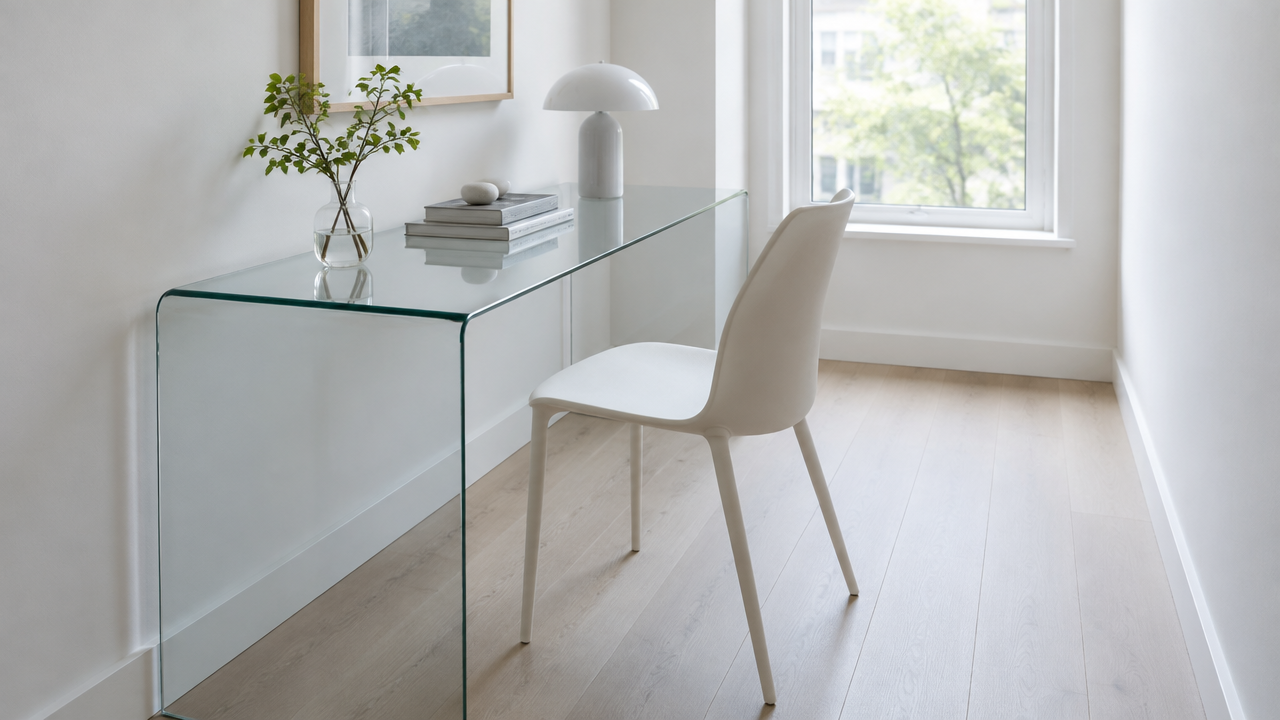
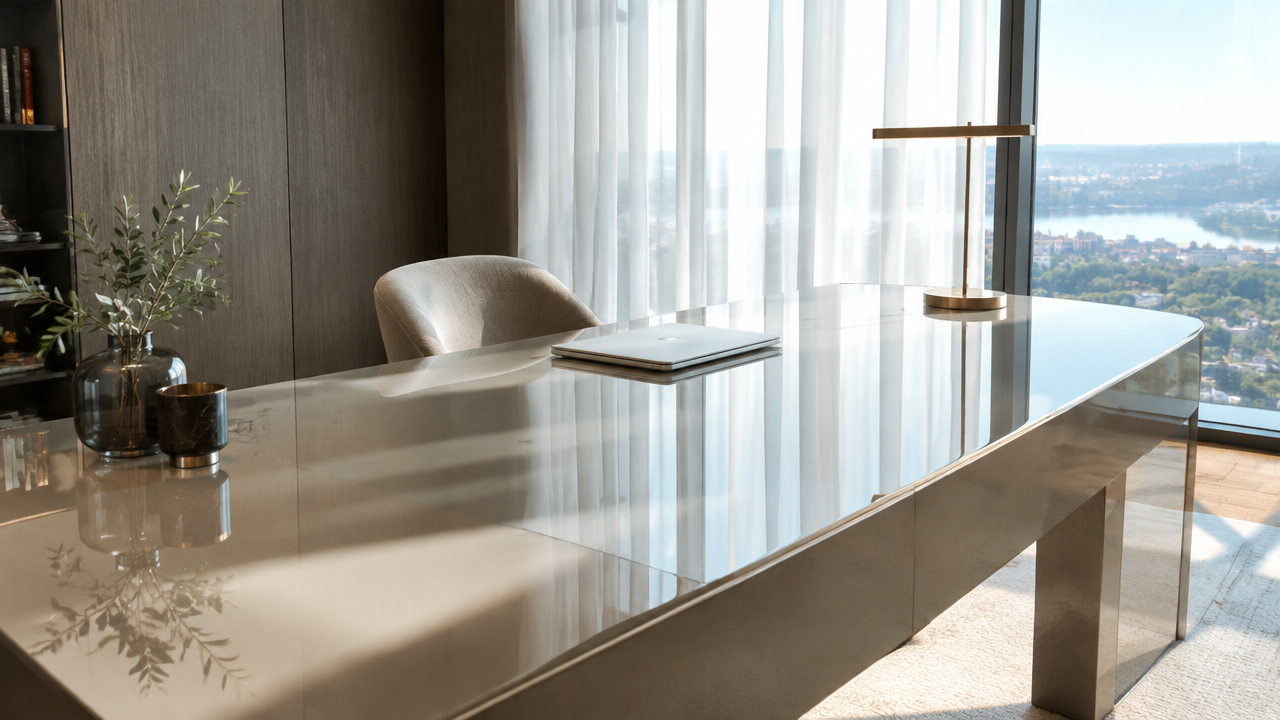
A single bent sheet of tempered glass makes the desk almost invisible. Light passes through it, so a narrow room keeps its full width.
Pair it with a white or pale wood chair to stay airy. Wipe it each morning with a microfibre cloth, because glass shows every fingerprint.
Keep the cables inside a glass tray under the top. A glass desk only looks clean when nothing shows through it.
Matte Black Trestle Desk
Black on charcoal
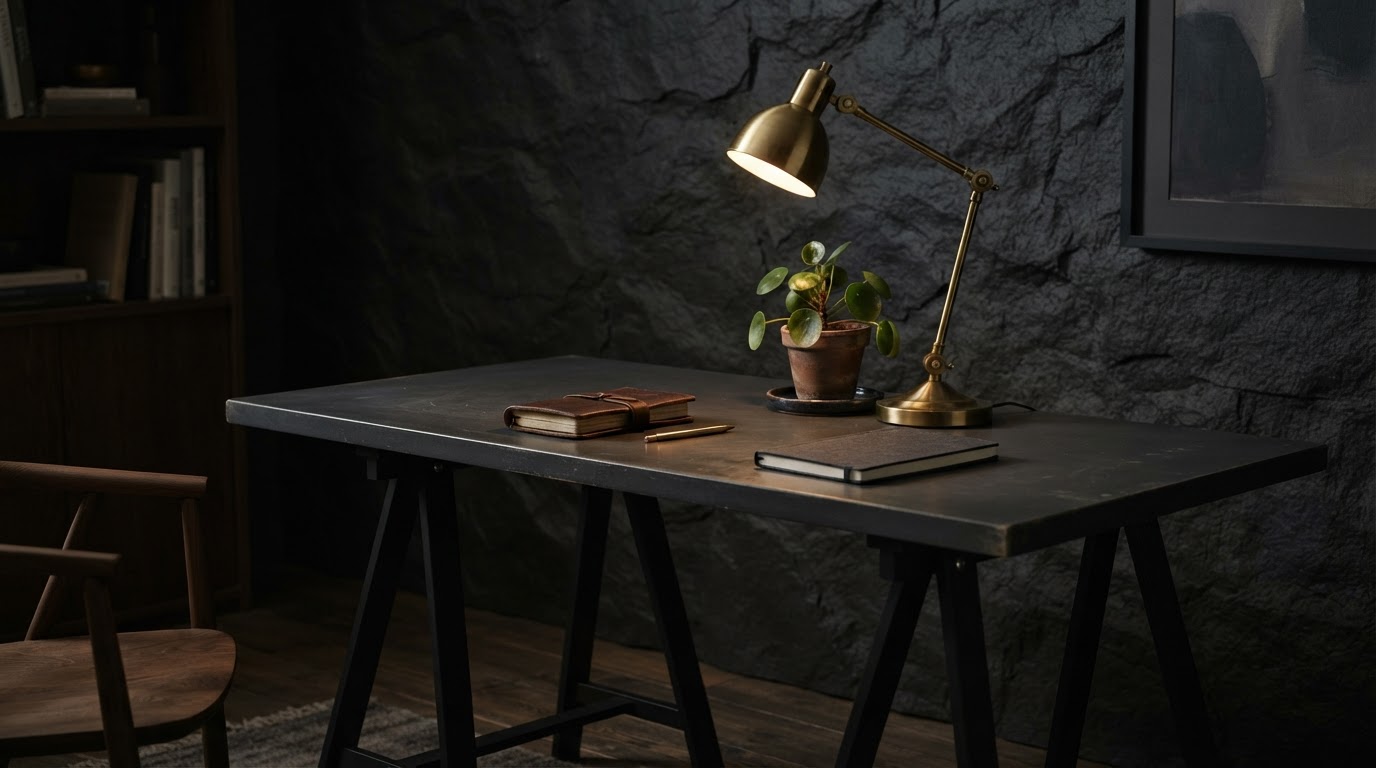
Two matte black trestles hold a charcoal top for a calm, serious look. Dark surfaces cut screen reflections and pull the eye toward your work.
Add one warm brass lamp and a single green plant. The warm accents stop all that black from feeling cold.
Choose a top at least 60 cm deep so a monitor sits comfortably. Set the two trestles wide apart and the desk will never wobble.
Honed Slate Stone Desk
Solid stone top
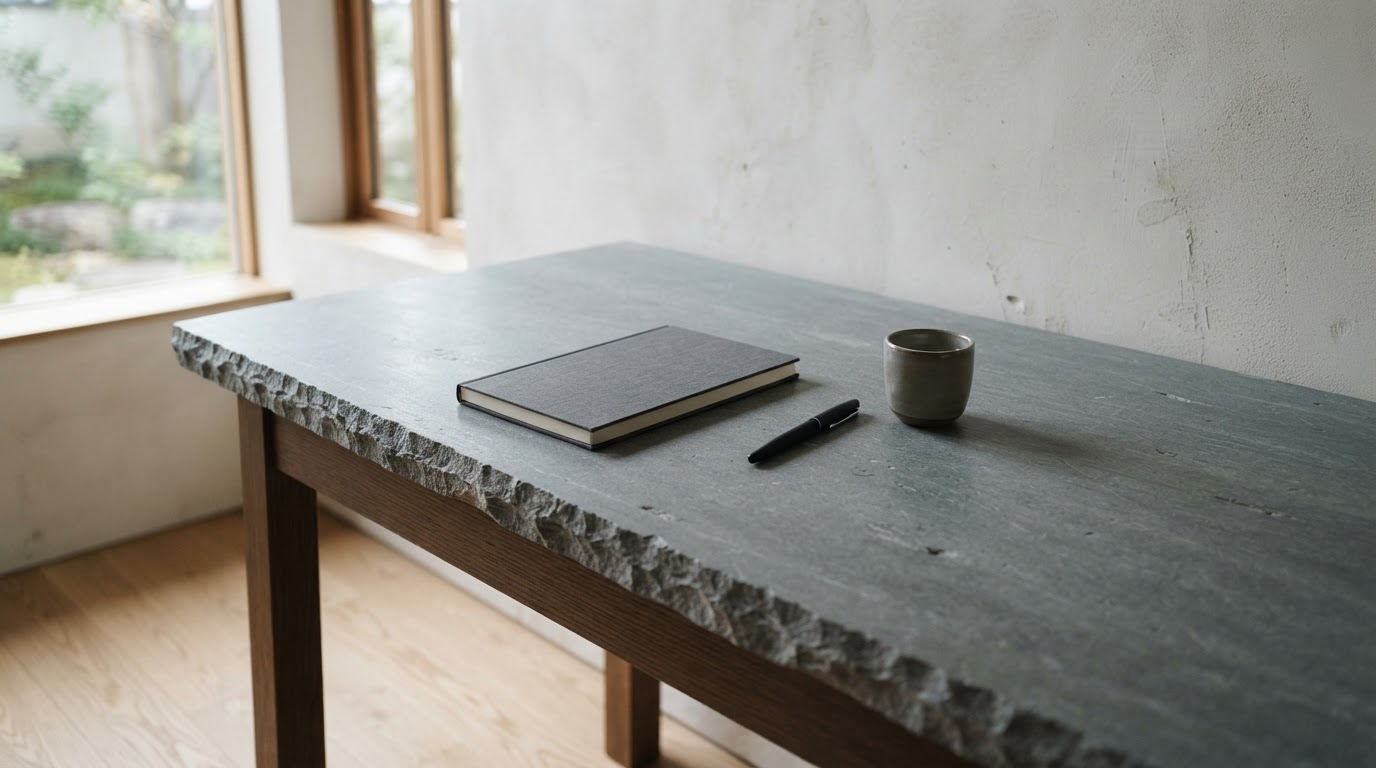
A honed slate top gives you a cool, quiet surface with a soft matte finish. Stone is heavy, so it stays perfectly still while you type.
Seal it once a year to stop water marks. It looks best against plaster walls and pale oak flooring.
Ask for a 20 mm slab with a sealed edge. Anything thinner chips at the corners within a year of daily use.
Scandi Plywood Platform
Birch plywood
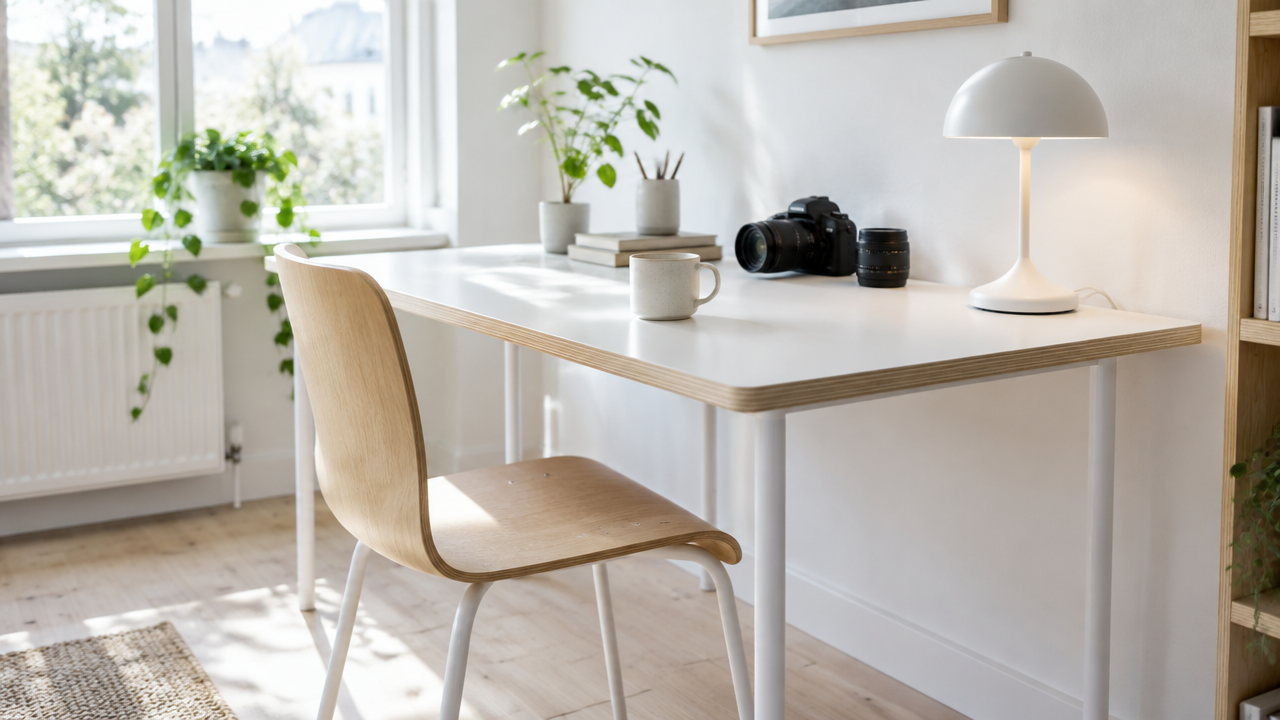
Birch plywood with visible edges and a white laminate top keeps the setup bright. Pale wood reflects daylight back into the room instead of absorbing it.
Leave the edges exposed and add simple white legs. It is the cheapest way to look completely intentional.
Sand the front edge so your wrists rest easily on it. Finish with a matte sealant rather than gloss, which shows every scratch.
White Desk with Cable Spine
Tonal white
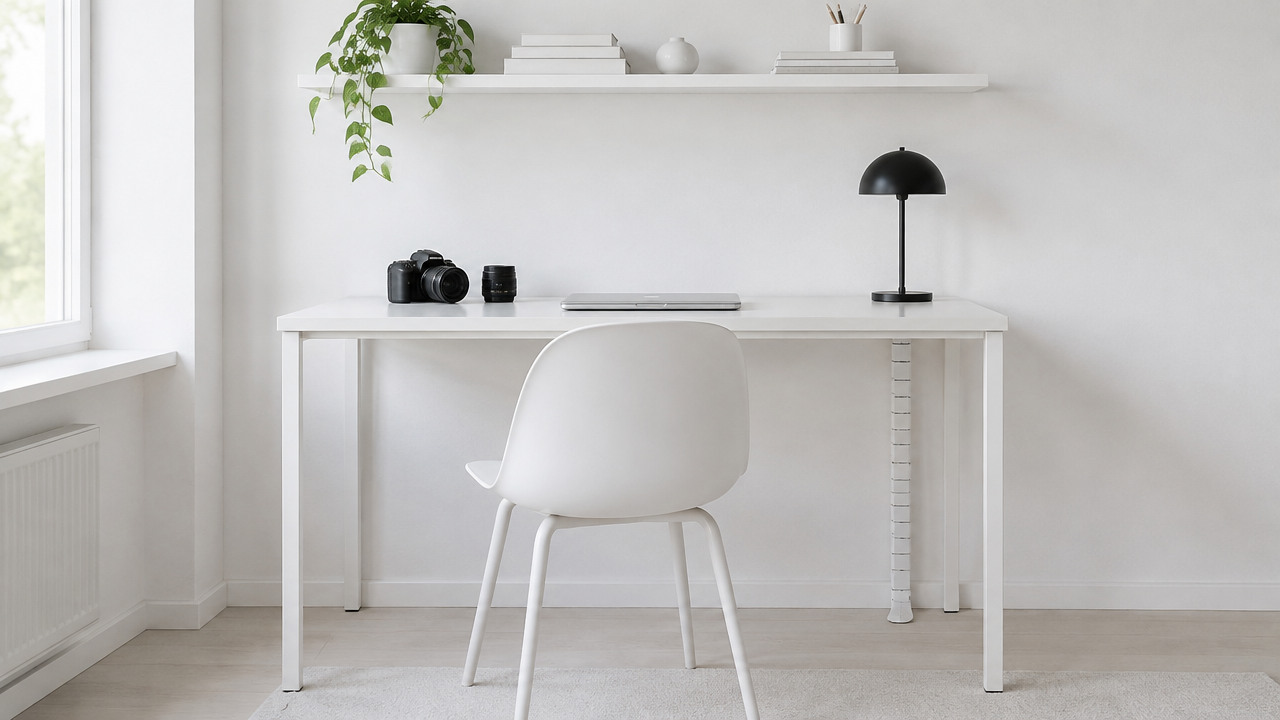
Paint the wall and the desk the same soft white so the edges almost disappear. A vertical cable spine behind the desk hides every charger and monitor lead.
Choose one accent only, such as a single ceramic vase. Repeating white is what keeps a busy room calm.
Run the spine down to a floor-level socket behind the desk. That one detail removes the last tangle from the room.
Japanese Wabi-Sabi Low Desk
Low cedar
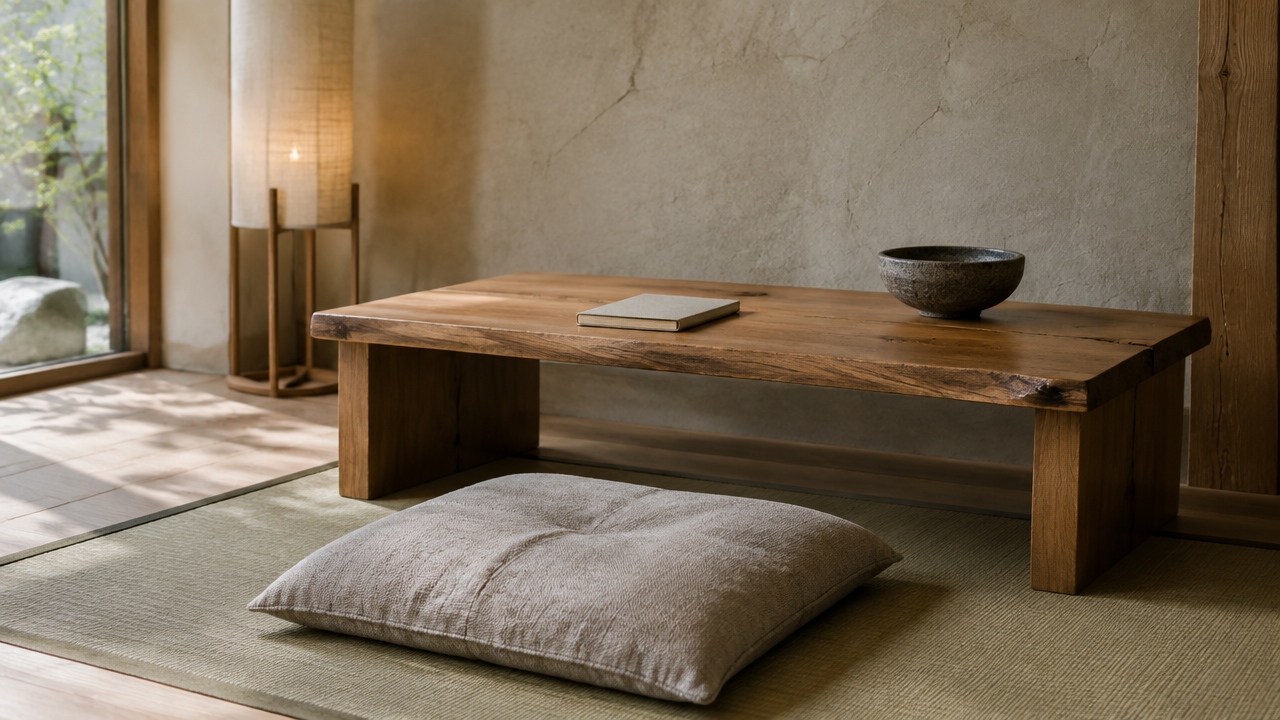
A low cedar desk you use from a floor cushion changes how you work. The lower height slows you down and softens a hurried morning.
Keep only a stone bowl, a linen shade lamp and one notebook. Imperfect textures look better here than polished ones.
Sit with your hips slightly above your knees on a firm cushion. Change position every twenty minutes so your back stays loose.
Monochrome All-White Studio
Full white layers
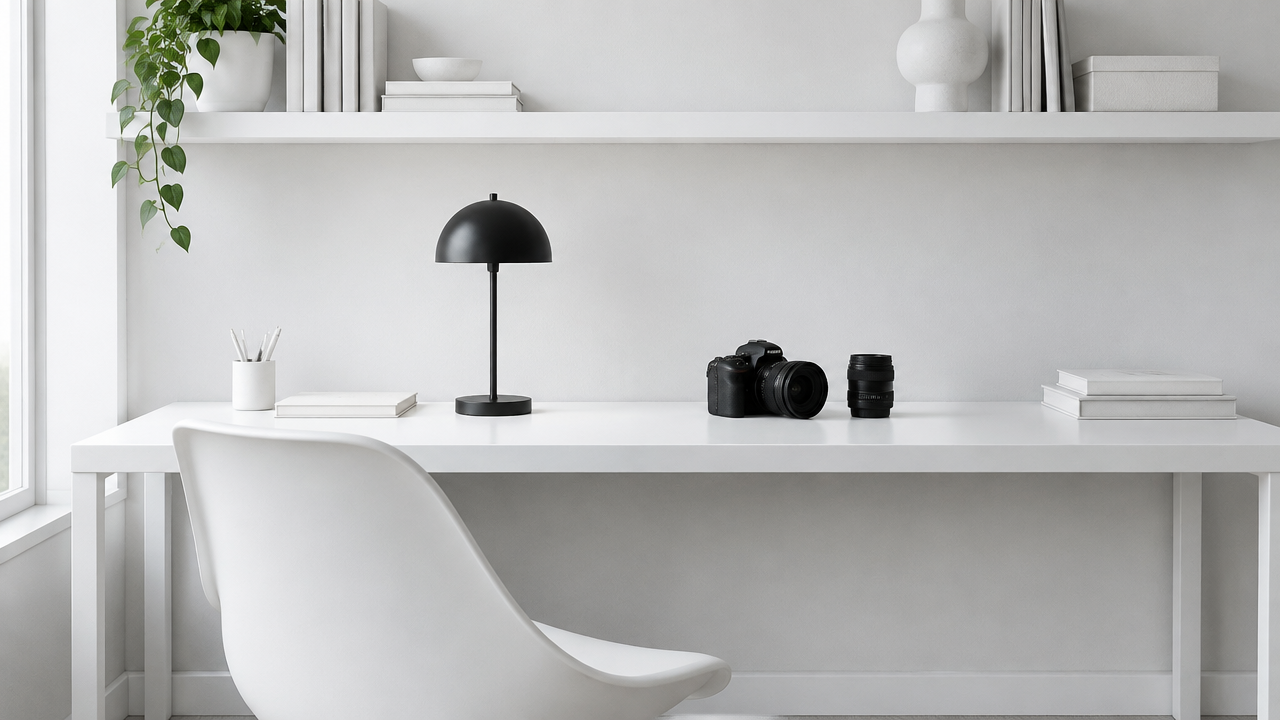
An all-white desk, chair, shelf and wall create a blank canvas for deep focus. White bounces light, so the room needs almost no lamp during the day.
Stick to matte finishes to avoid glare. Add one dark object, such as a black lamp, to anchor the eye.
Choose matte paint so the surface never shines. Gloss white turns harsh under a bright lamp and photographs badly.
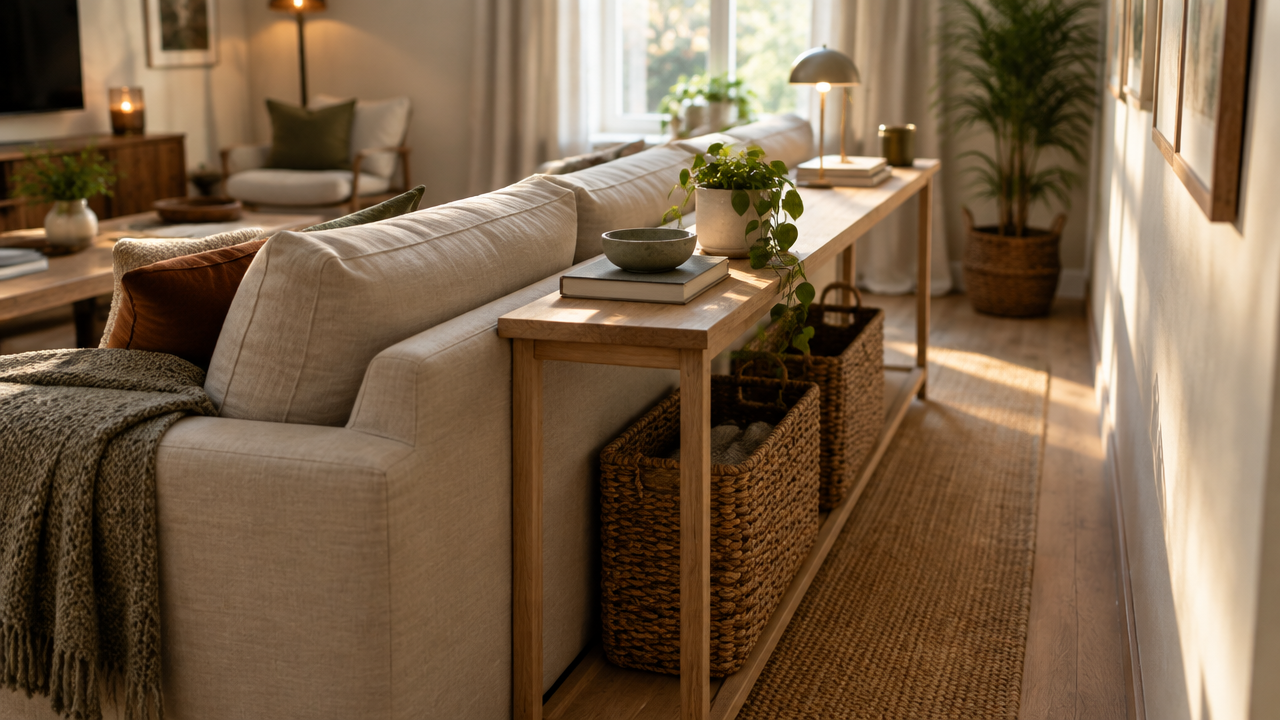
Slim Console Behind the Sofa
Narrow console
A console behind the sofa turns a dead strip of floor into a real workspace. It is the easiest desk to add without moving any furniture.
Fit two shallow baskets underneath for paperwork. Close the laptop at six and it becomes a sideboard again.
Measure the sofa height so the console tucks just behind it. A 35 cm depth is all the space you really need.
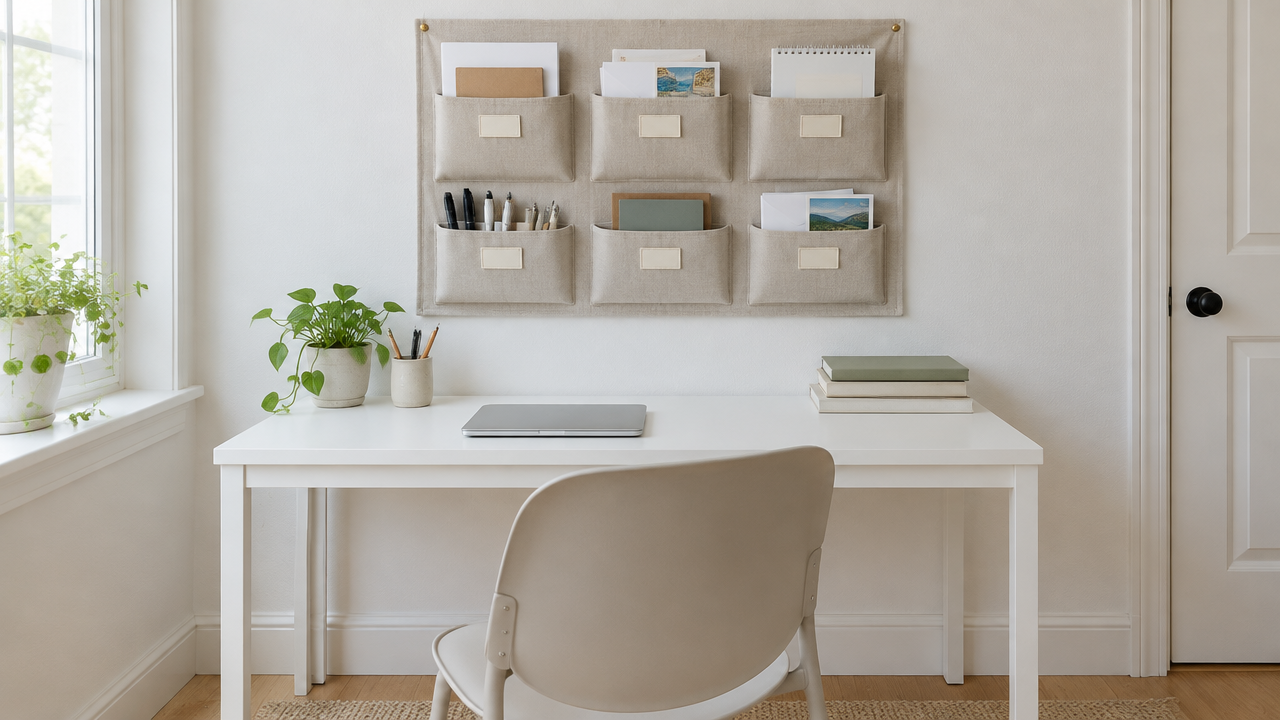
Paper-White Desk with Wall Pocket
Fabric wall pocket
A fabric wall pocket above a plain white desk holds papers, pens and post. Everything lifts off the surface, so the desk stays clear.
Label each pocket with a small typewritten tag. The wall does all the organising for you.
Keep one pocket for things to file and one for things to keep. Anything that fits neither leaves the room.
Industrial and Raw
Steel, stone and reclaimed timber bring workshop character into the home. Every mark becomes part of the story instead of a flaw to hide.
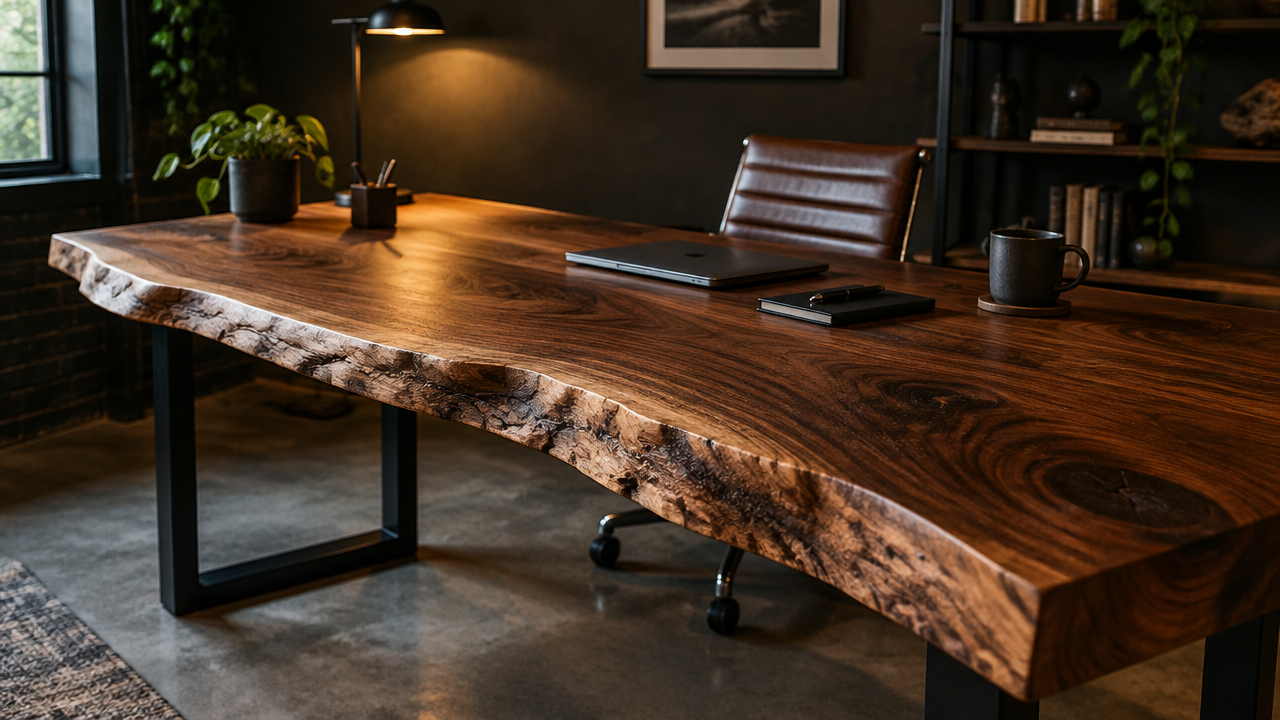
Live-Edge Walnut Slab
Single slab
One thick walnut slab with a natural edge becomes the whole personality of the room. Each board has a grain you will never find twice.
Support it on blackened steel legs and add nothing else. The wood is the statement.
Ask the supplier to flatten the underside of the slab. Steel legs need a level top or the desk will rock.
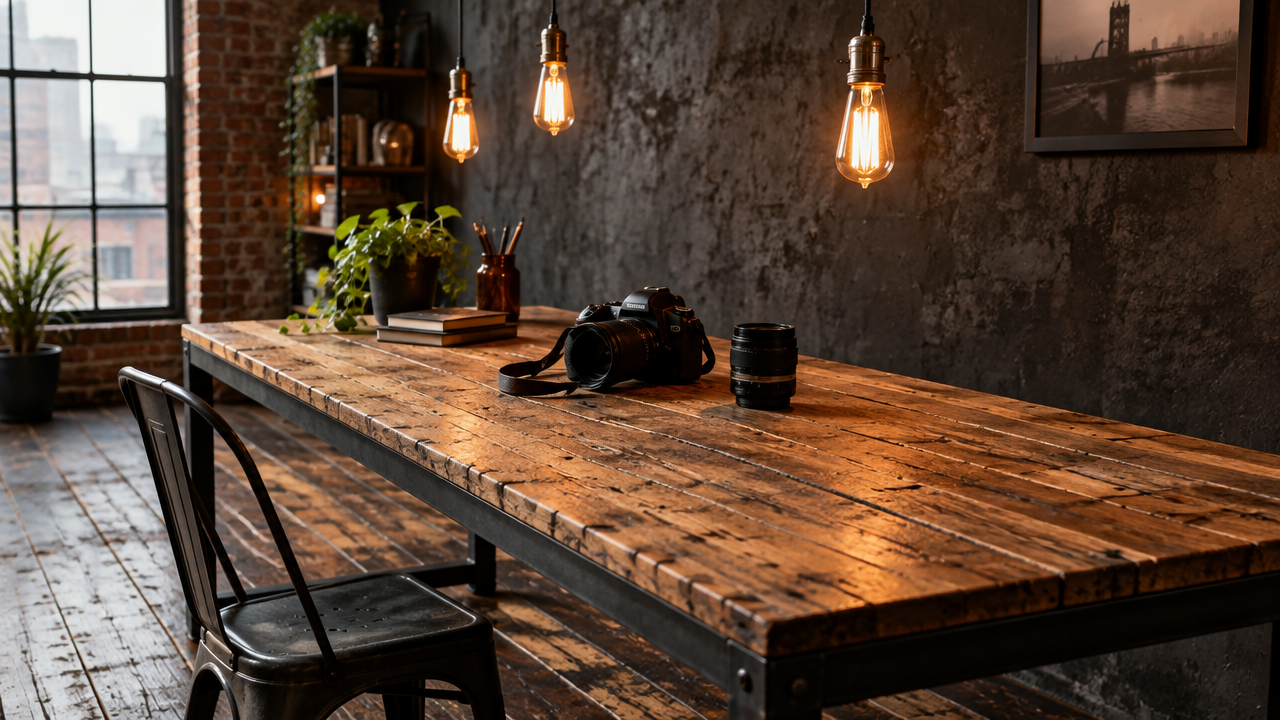
Black Steel and Reclaimed Wood
Salvaged timber
A reclaimed timber top on a black steel frame brings old workshop character indoors. Scratches and nail holes read as history rather than damage.
Sand it lightly, oil it once and then leave it alone. Warm Edison bulbs finish the industrial look.
Measure your doorways before you order a thick reclaimed top. Old timber is often wider and heavier than the listing says.
Concrete Top with Edison Bulbs
Cast concrete
A cast concrete desktop stays cool and looks like a piece of architecture. Pair it with exposed bulbs on a fabric cord for soft industrial warmth.
Concrete is heavy, so check the frame rating before you buy. Seal the surface to stop coffee stains.
Use a rubber mat between the concrete and the frame. It stops chipping and dulls the hollow sound of the slab.
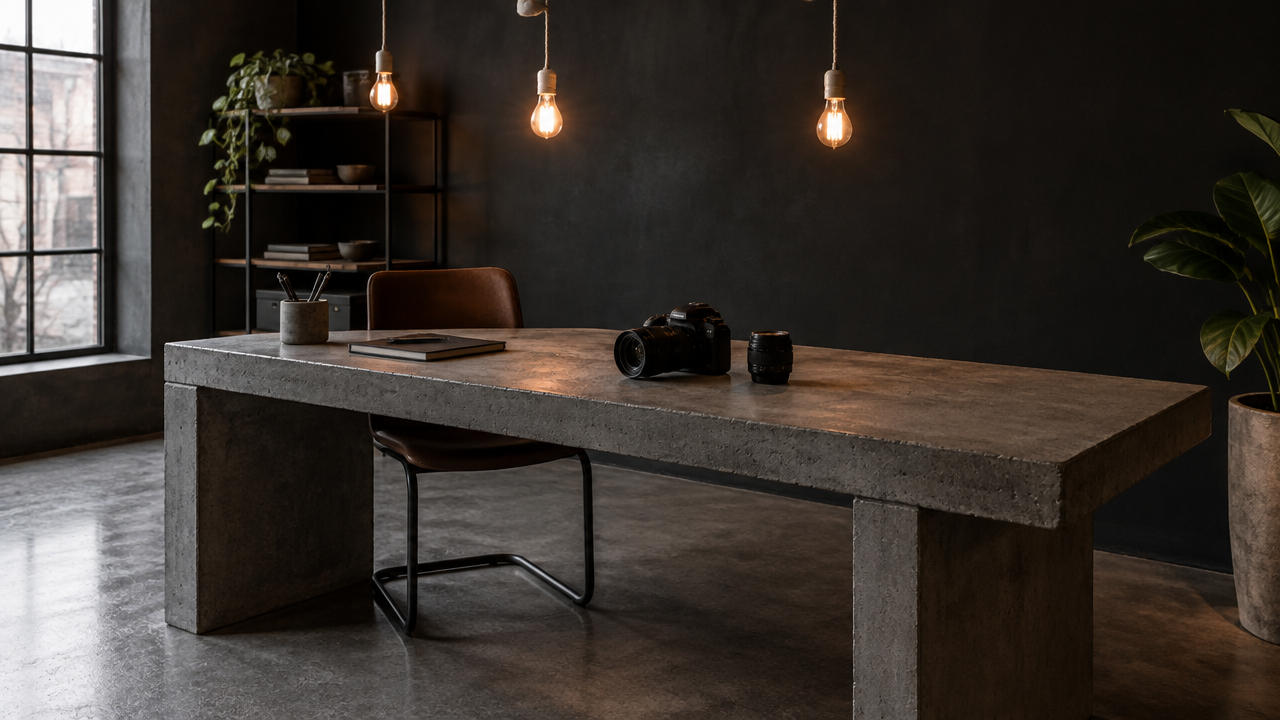
Rustic Farmhouse with Shiplap
Shiplap wall
Shiplap boards behind a farmhouse desk add texture without a single extra object. White boards bounce light and stop the space feeling dark.
Hang one iron bracket shelf for books. Keep the palette to wood, white and black.
Choose a warm white for the boards rather than pure white. Pure white reads cold and grey against timber.
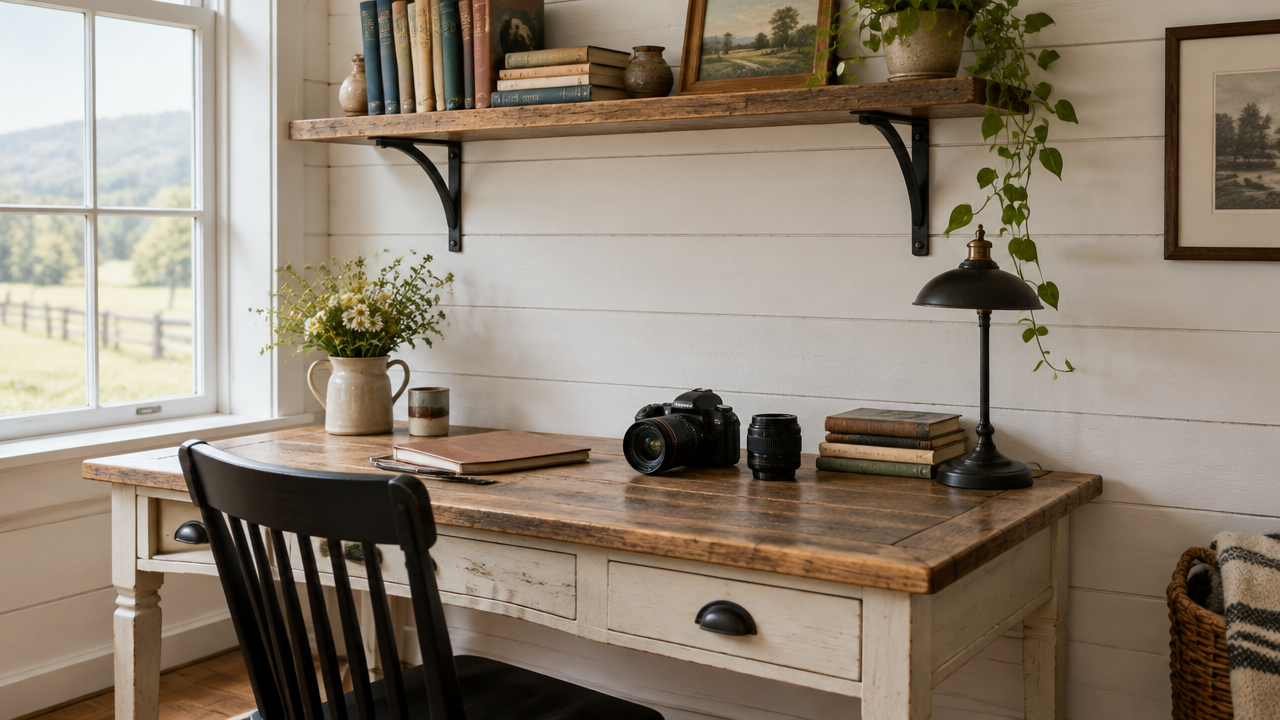
Steel Pipe and Scaffold Board
Plumbing pipe frame
Scaffold board and plumbing pipe make a sturdy desk for very little money. The pipe frame dismantles flat, which helps in rented flats.
Sand the board, wax it, and leave the pipe raw. It suits brick walls and tall windows.
Add a felt pad under each pipe foot. Floors stay unmarked and the desk stops sliding while you type.
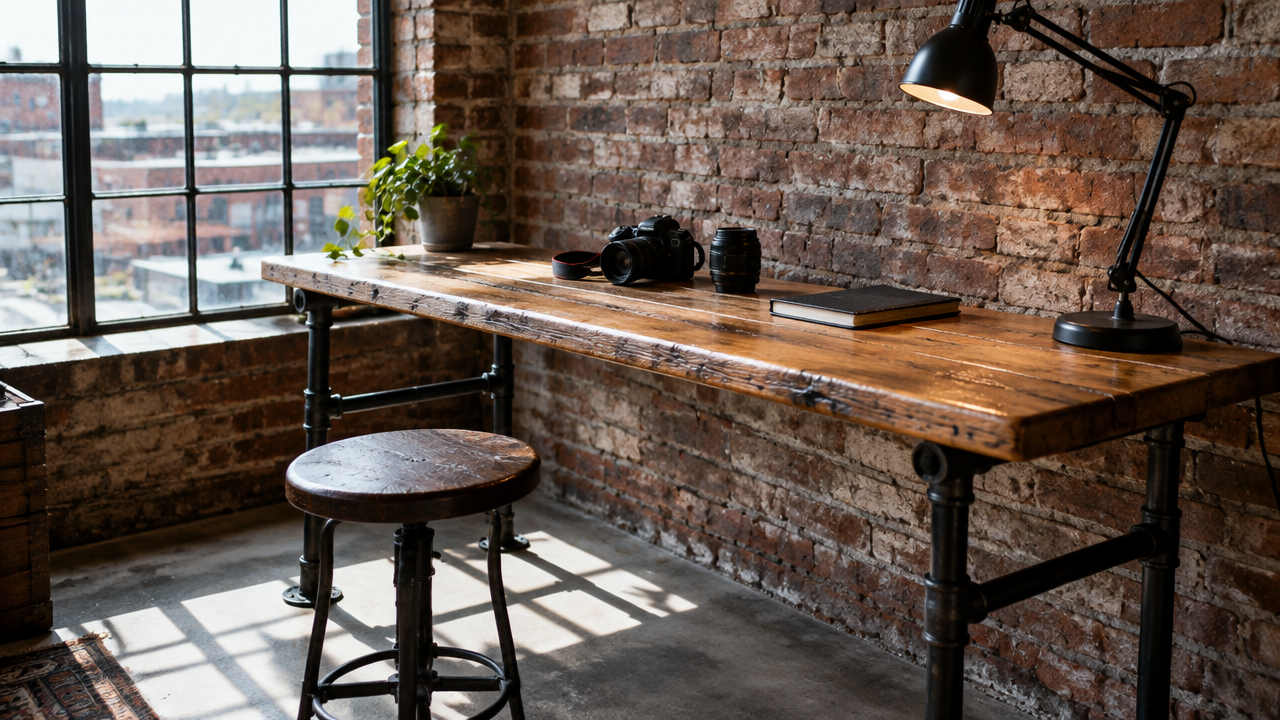
Exposed Brick Studio Desk
Brick backdrop
Place the desk against exposed brick and let the wall do the decorating. Brick also softens sound, which helps in loud shared buildings.
Use warm woods and a green desk lamp to lift the darker tones. Keep the furniture minimal so the brick stays the focus.
Seal the brick with a matte finish so it stops shedding dust onto the desk. Painted brick looks flat and loses its texture.
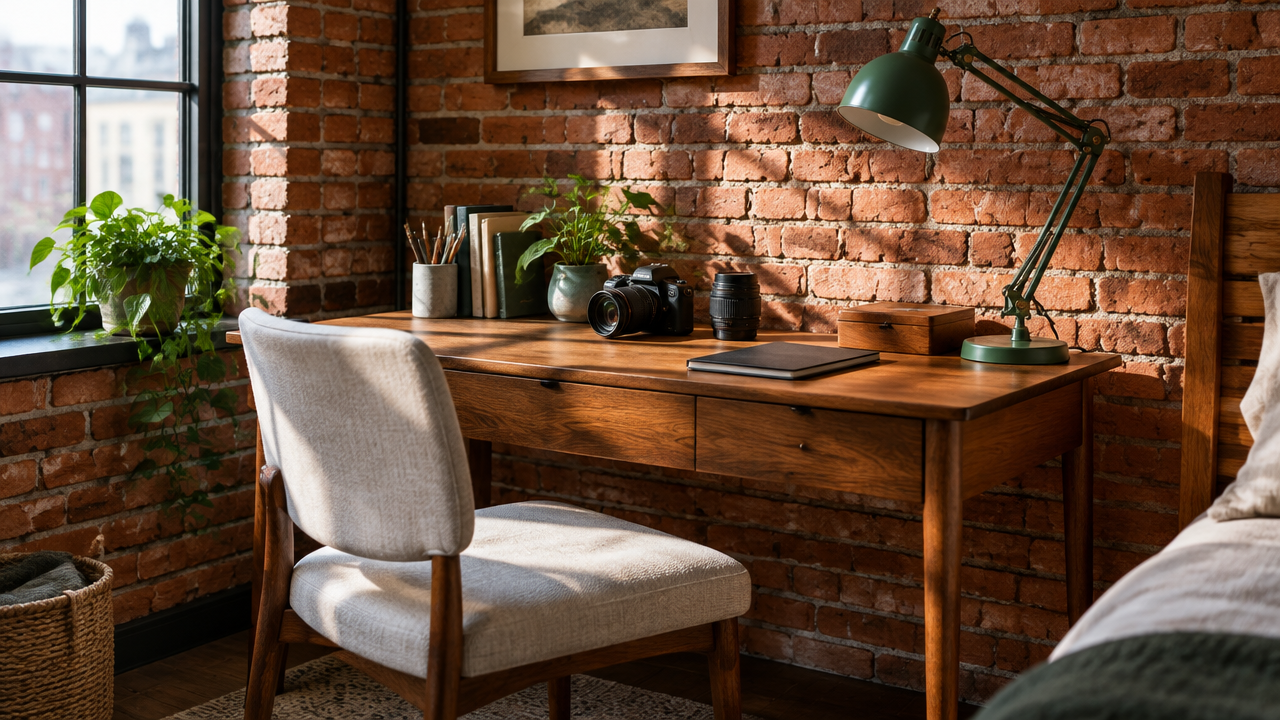
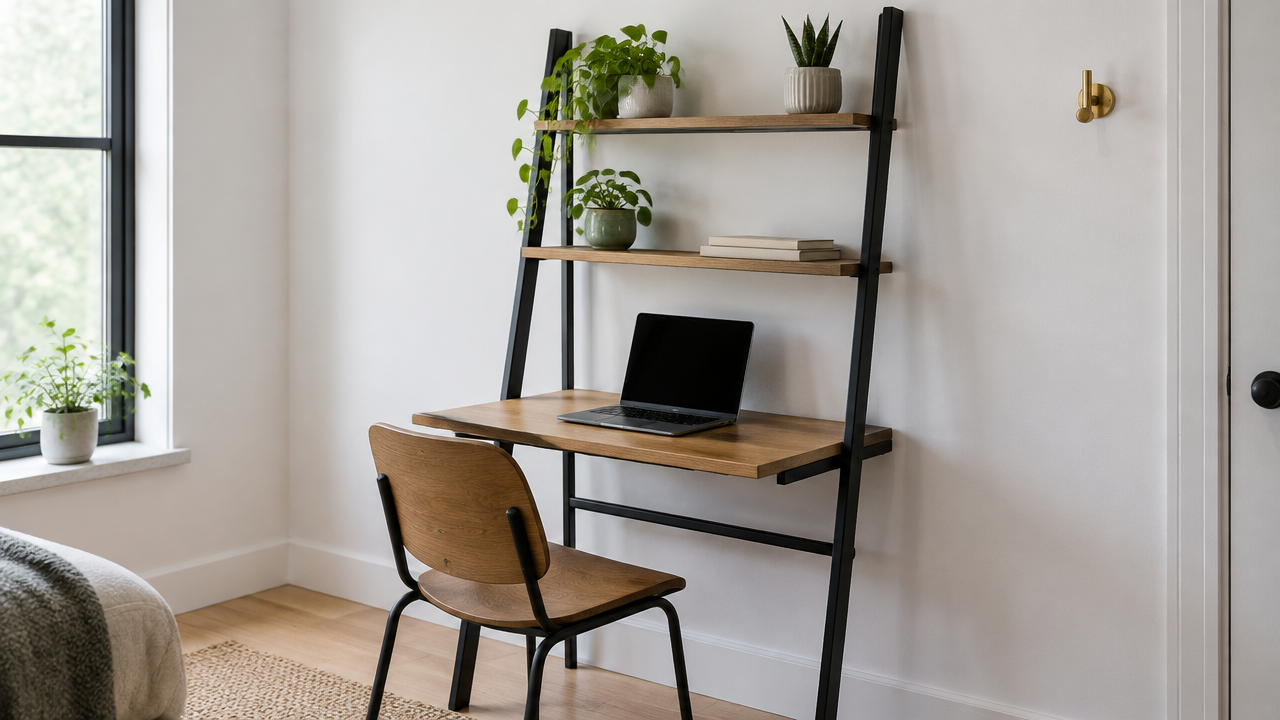
Black Metal Ladder Desk
Leaning ladder frame
A leaning ladder desk uses vertical space instead of floor space. The shelves climb the wall while the desk stays shallow.
Fix the top to the wall for safety. Use it for a laptop, a lamp and two plants, and nothing more.
Leave at least 30 cm between the desk edge and your chair. Small clearances stop a narrow wall feeling tight.
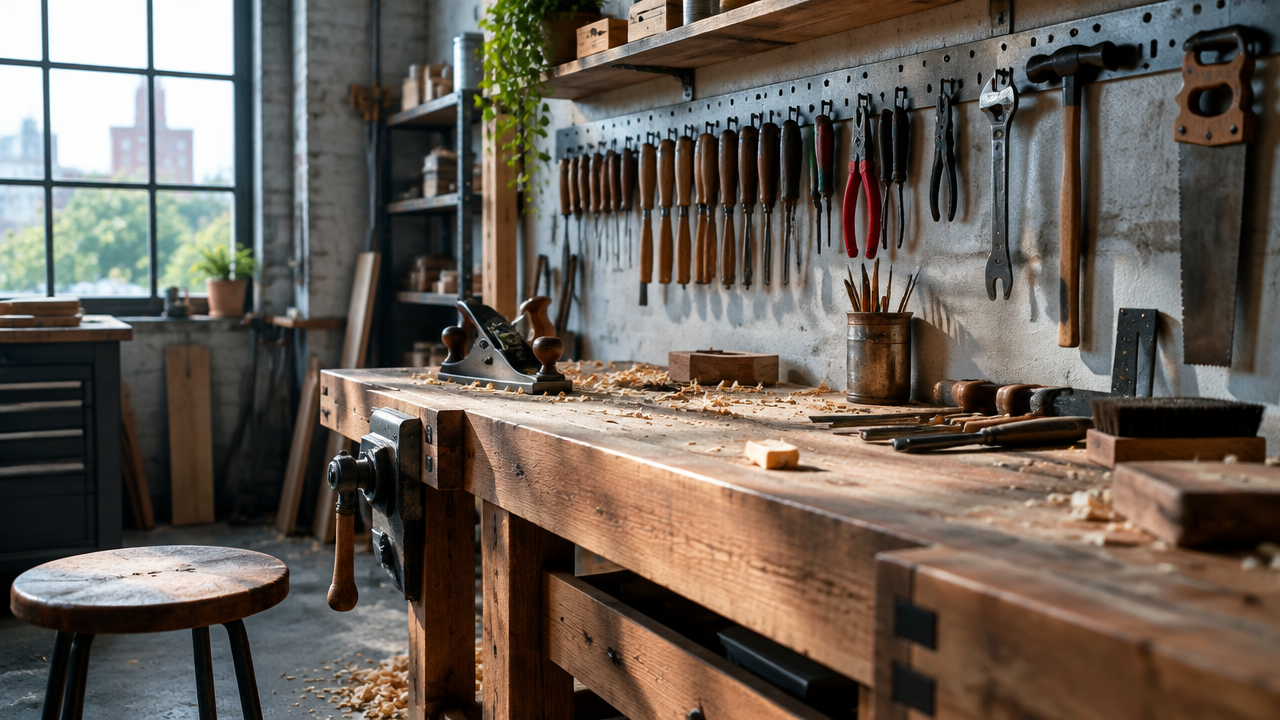
Workshop Bench with Tool Rail
Workbench build
A solid workbench with a steel tool rail suits anyone who makes things at a desk. Everything hangs in reach, so the top stays open.
Choose a bench height that lets you stand comfortably. Add a stool for longer sessions.
Fix the rail at eye level so you lift tools down, not up. A low rail quietly becomes a shelf for clutter.
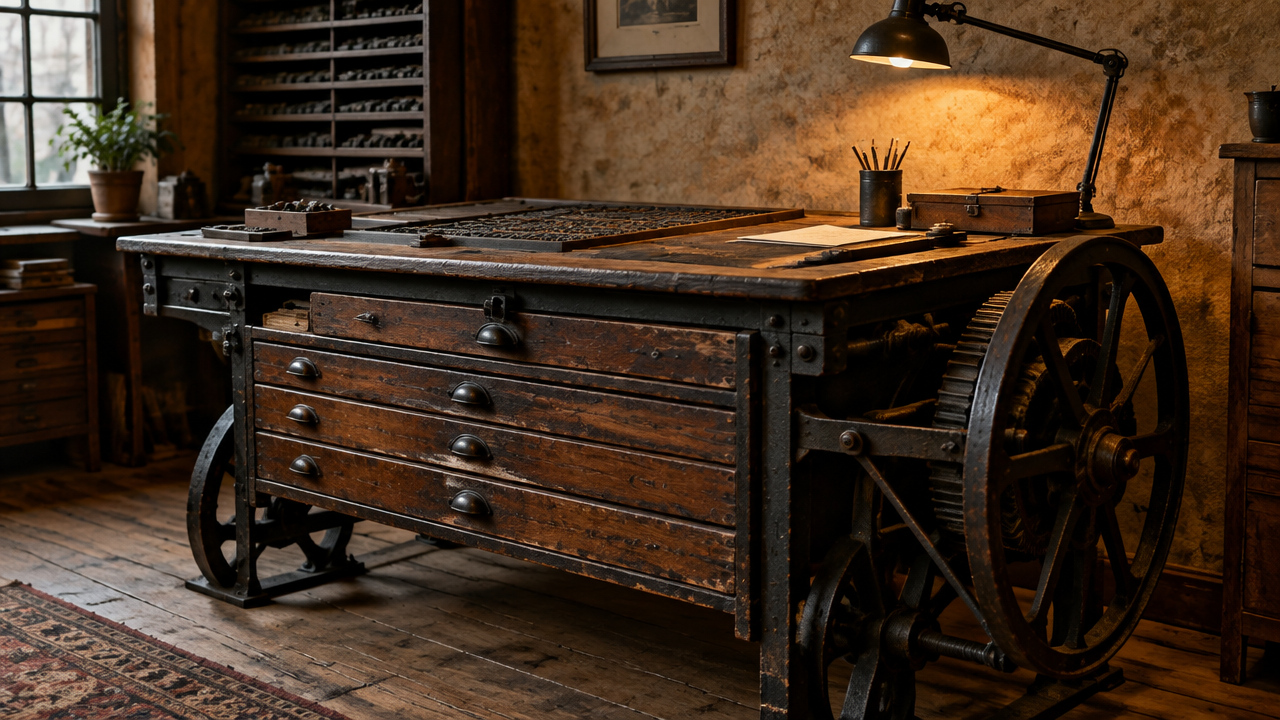
Vintage Printing Press Table
Antique iron
An old letterpress table has deep drawers, iron wheels and instant character. Those drawers swallow cables and paper without a hint of modern clutter.
Check the height before you commit, because antique tables run low. Add a small footrest if you need one.
Measure knee clearance before you commit to an antique. Old drawers usually sit deeper than modern ones.
Compact and Space-Saving
These layouts turn corners, closets and stairwells into real workspaces. Each one folds, slides or tucks away when the day ends.
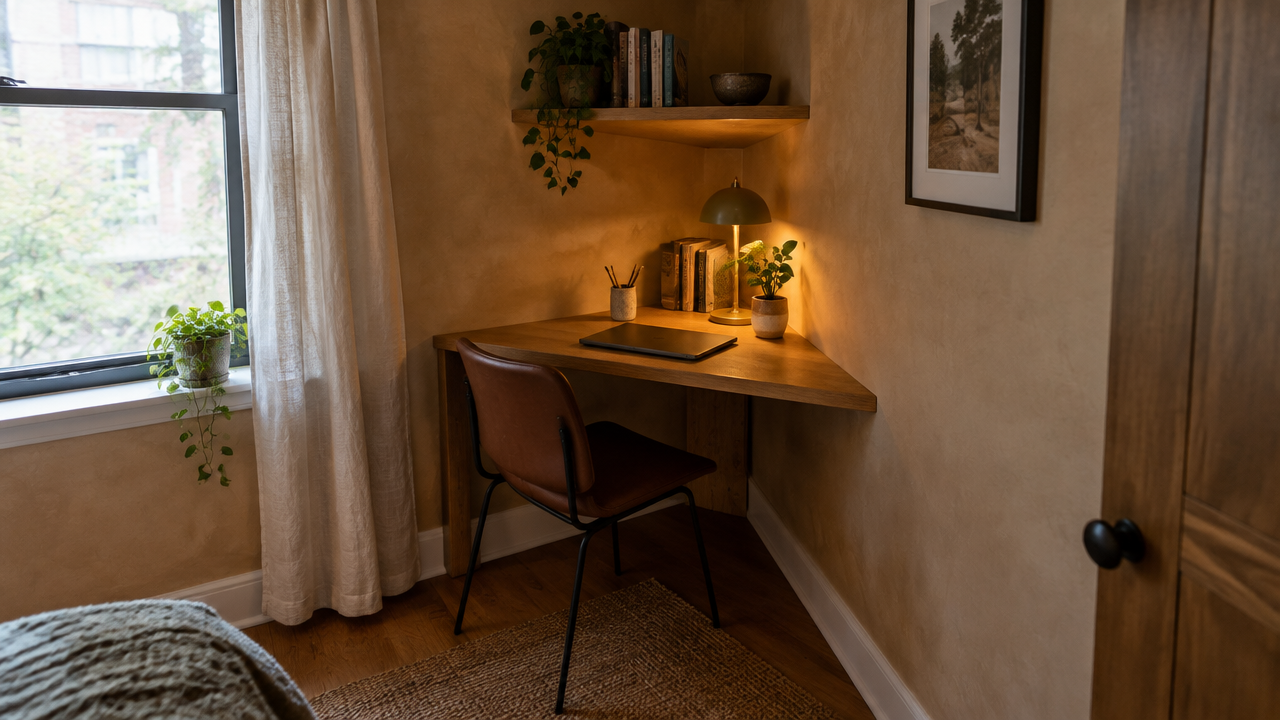
Corner Nook Desk
Corner footprint
A desk tucked into an unused corner gives you a full workstation in under a metre. Angling the top toward the room makes it feel bigger.
Use a corner shelf above for light and storage. Keep the chair slim so you can still walk past.
Choose a 90 to 100 cm top for a corner. Anything wider blocks the doorway you walk through every morning.
Fold-Down Wall Desk
Folds flat
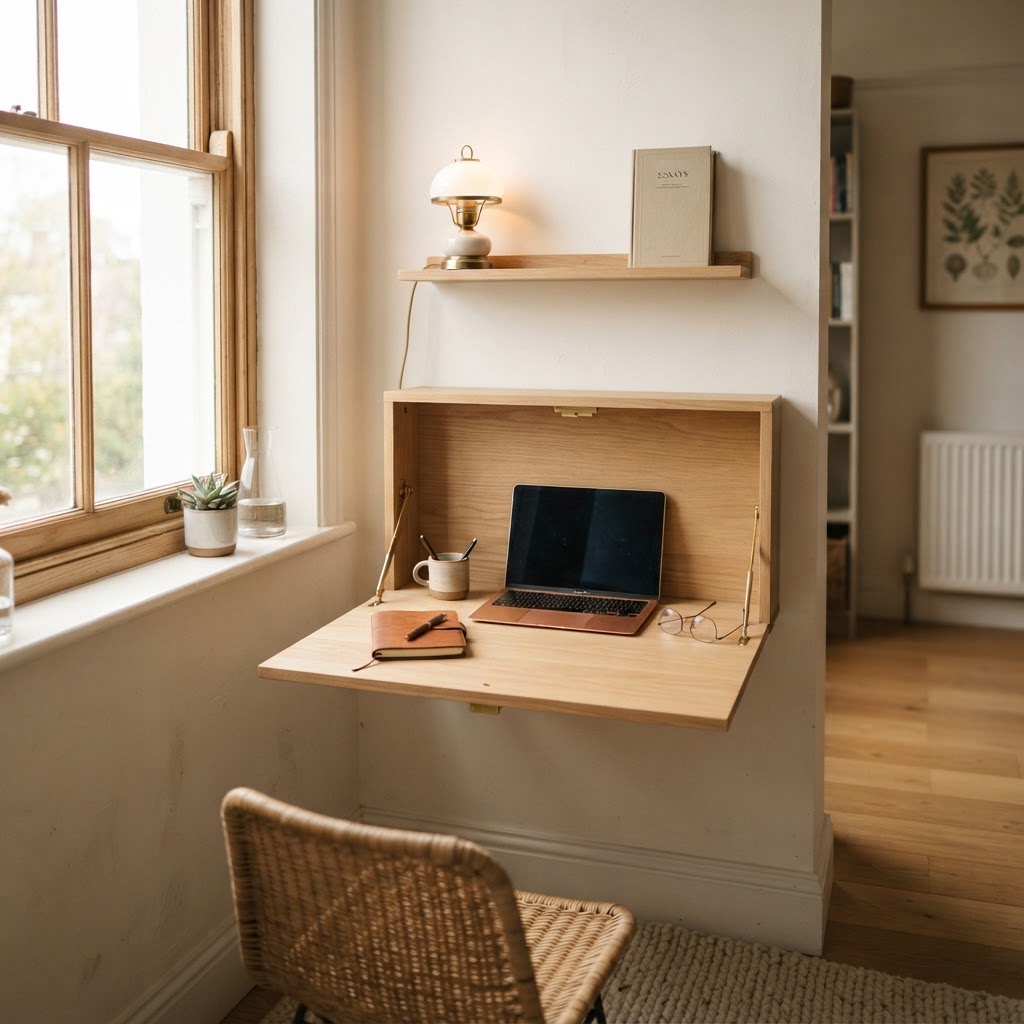
A wall-mounted desk that folds flat gives the whole room back when work ends. It suits guest rooms, hallways and tiny flats.
Choose a version with a proper support bracket, not a chain. Add a magnetic strip inside the lid for pens.
Check the hinge rating before you load the desk with a monitor. A cheap bracket sags within a year.
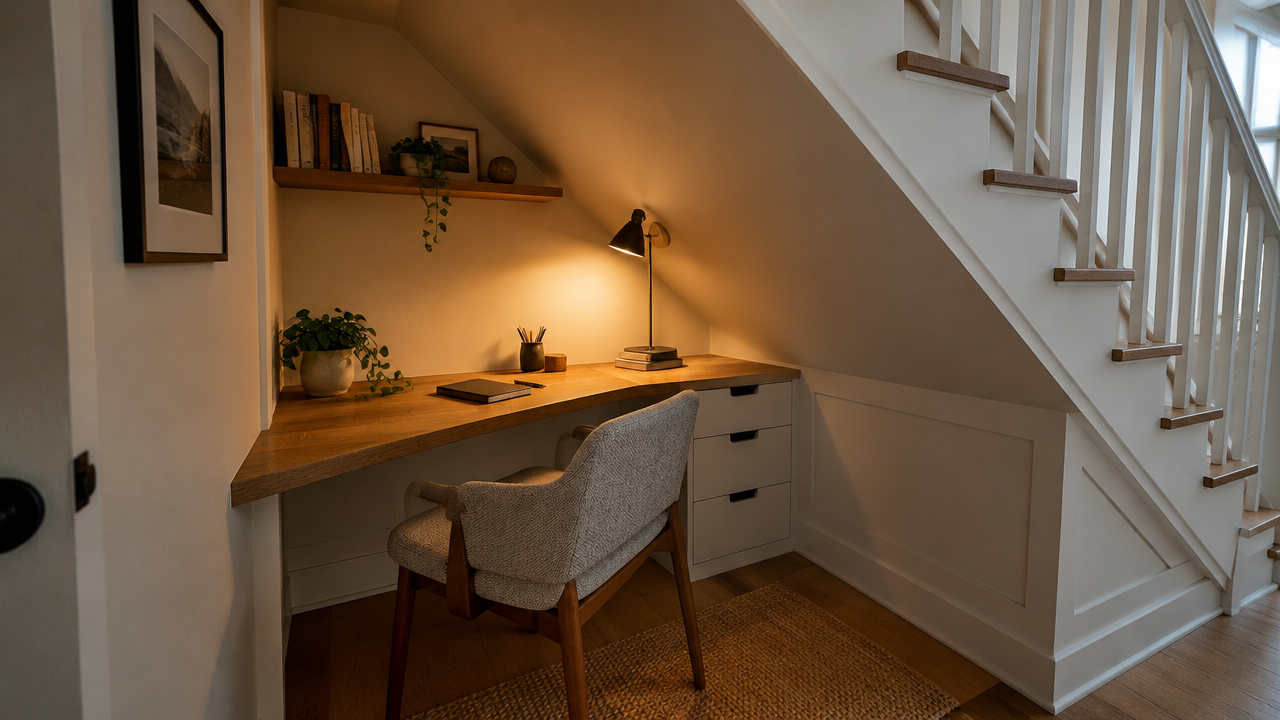
Under-Stair Desk Studio
Sloped nook
The space under the stairs makes a quiet studio with a sloped ceiling above you. Add a built-in drawer and a single wall light.
Paint the interior a light colour so the nook does not close in. Use felt pads on the drawers to keep it silent.
Ask a joiner to box in the underside neatly. Felt lining hides the grain and stops dust dropping on you.
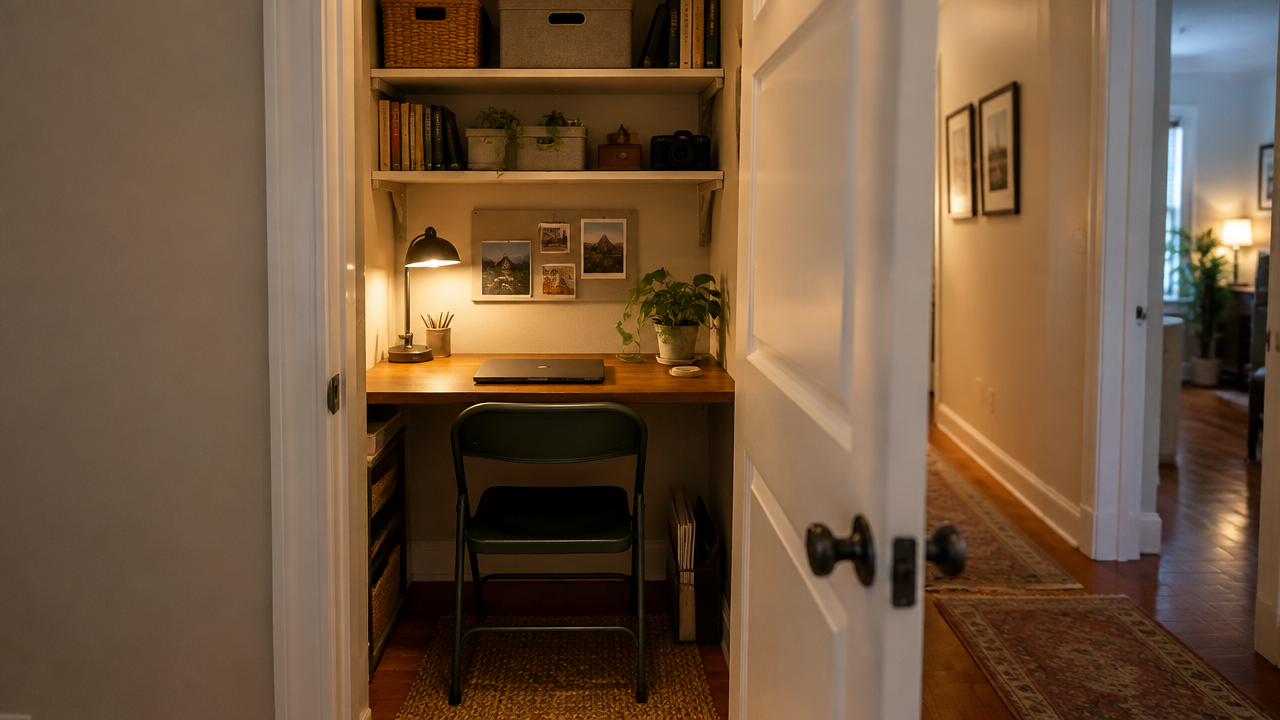
Closet Micro Office
Closet conversion
An unused closet becomes a full office once you add a shelf desk and a lamp. Close the door and the workday disappears.
Use a folding chair so the door shuts fully. Leave the door open while you work so the space can breathe.
Add a slim shelf above the desk for a lamp and one book. Nothing else belongs inside a closet that small.
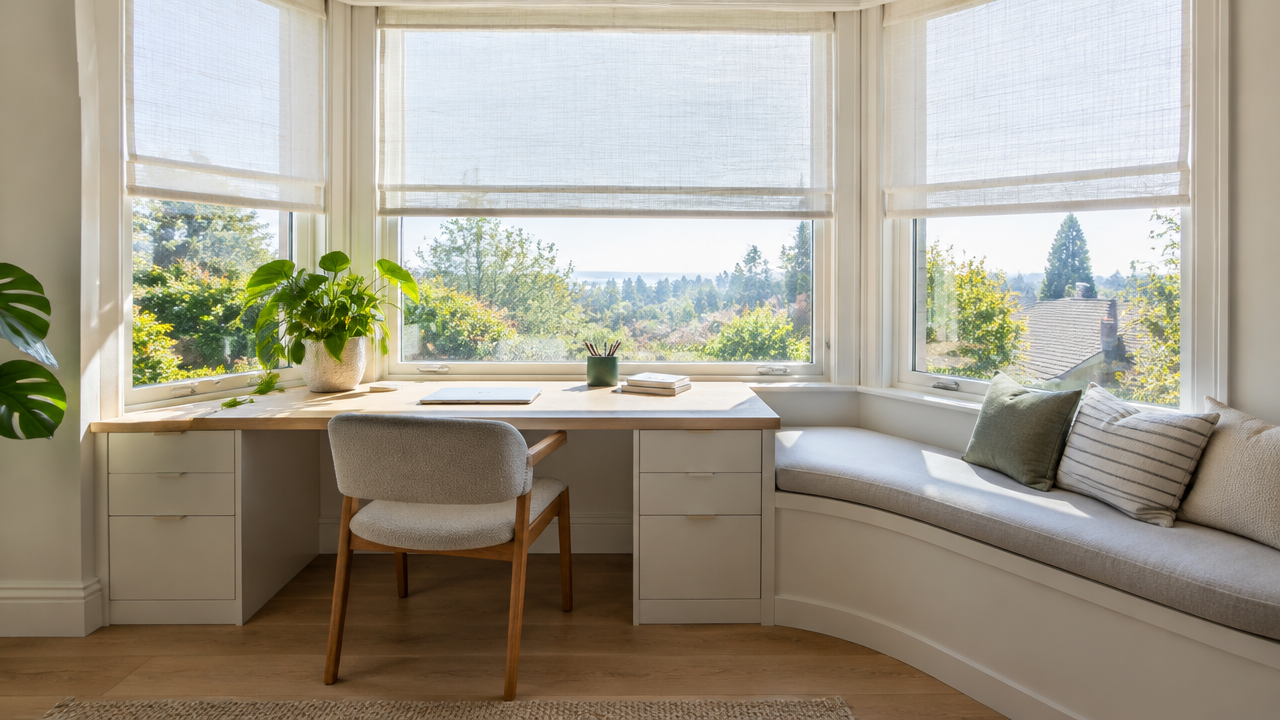
Bay Window Alcove Desk
Three-sided light
A desk built into a bay window gets light from three sides all day. The curve of the bay wraps around you like a booth.
Fit a cushion on a shallow bench beside it for reading. Use sheer blinds to soften strong afternoon sun.
Order the top as a single piece rather than two boards. The seam collects crumbs within the first week.
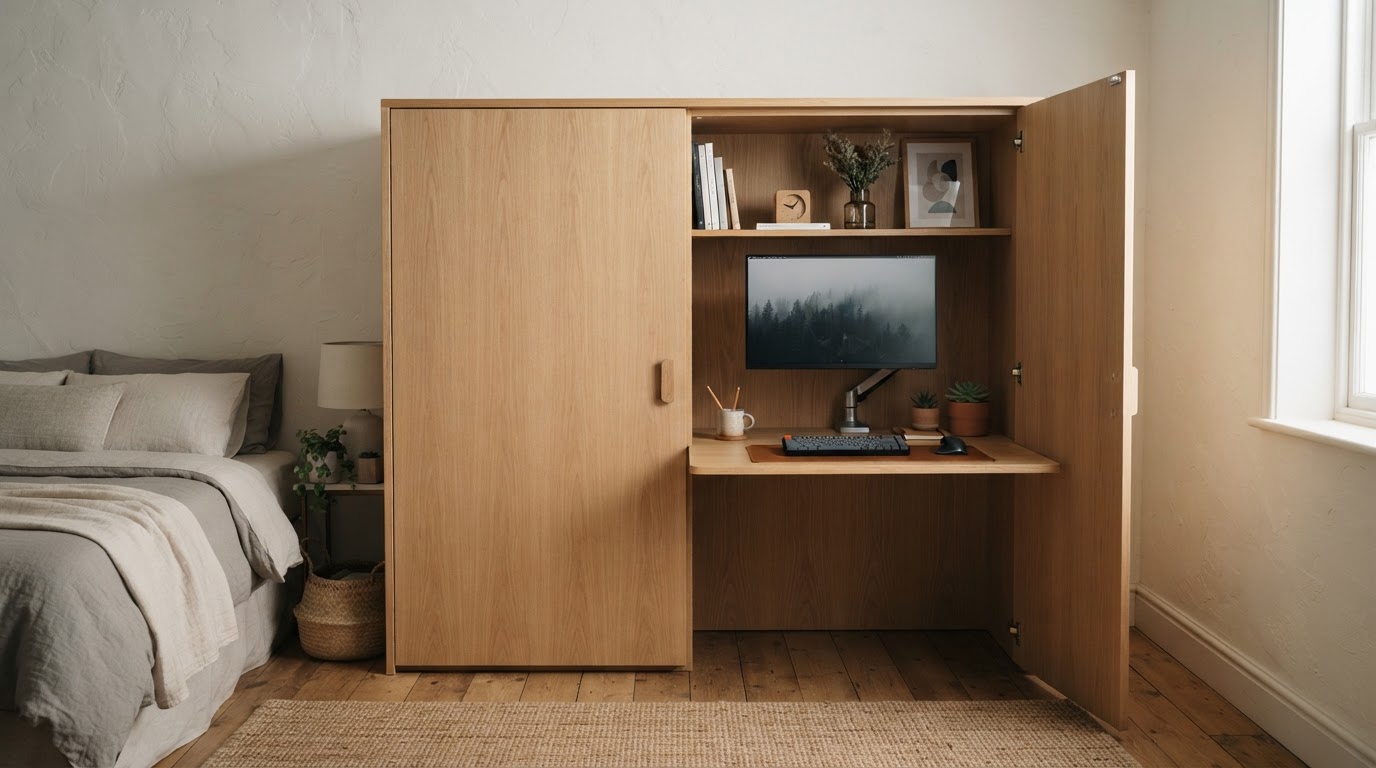
Hideaway Sliding Cabinet Desk
Sliding door
A sliding door hides the desk, monitor and paperwork inside a cabinet. It is the cleanest way to work in a room you also live in.
Plan the cable routing before you build so nothing blocks the door. Choose soft-close runners to keep it quiet.
Measure the monitor depth before you build the cabinet. Ten centimetres of clearance behind the screen is the minimum.
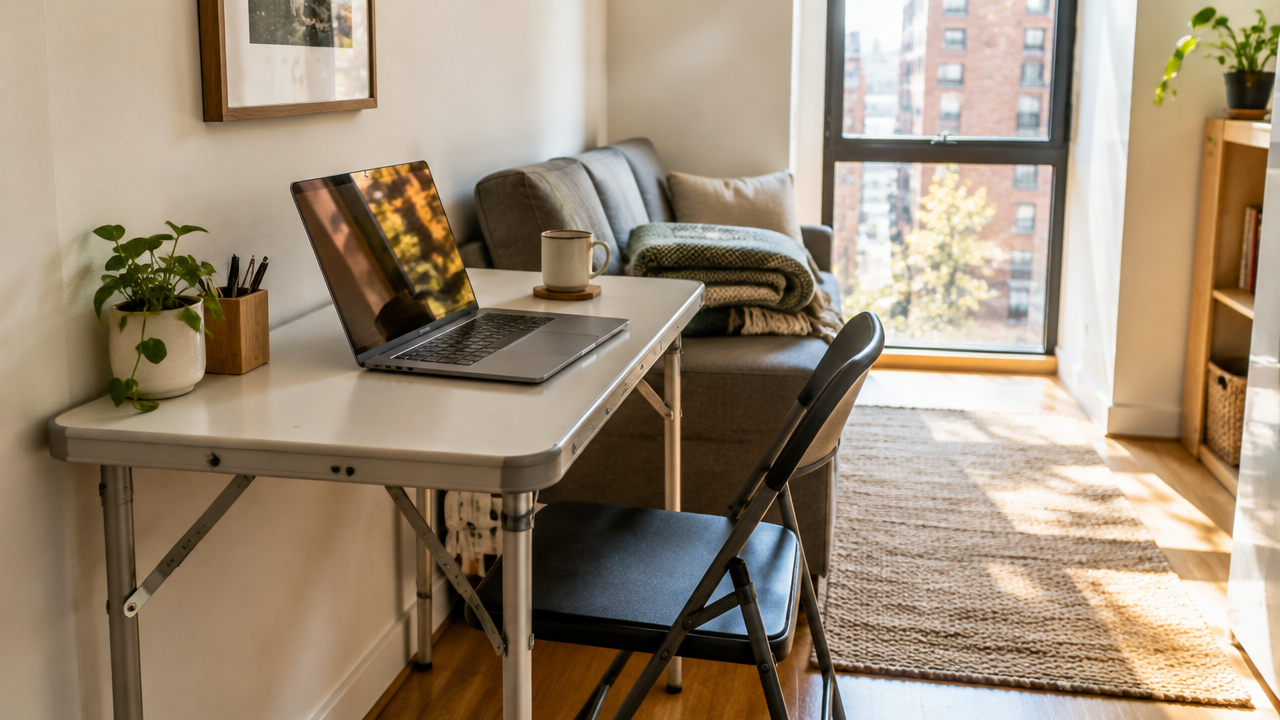
Folding Table Desk for Studio Flats
Opens and closes
A good folding table opens into a real desk and closes into nothing. Look for a 120 cm top with a locking hinge.
Store it behind the sofa or inside a wardrobe. Keep a small tray for the laptop so setup takes seconds.
Buy a table with adjustable feet. Uneven floors make any folding desk rattle while you are typing.
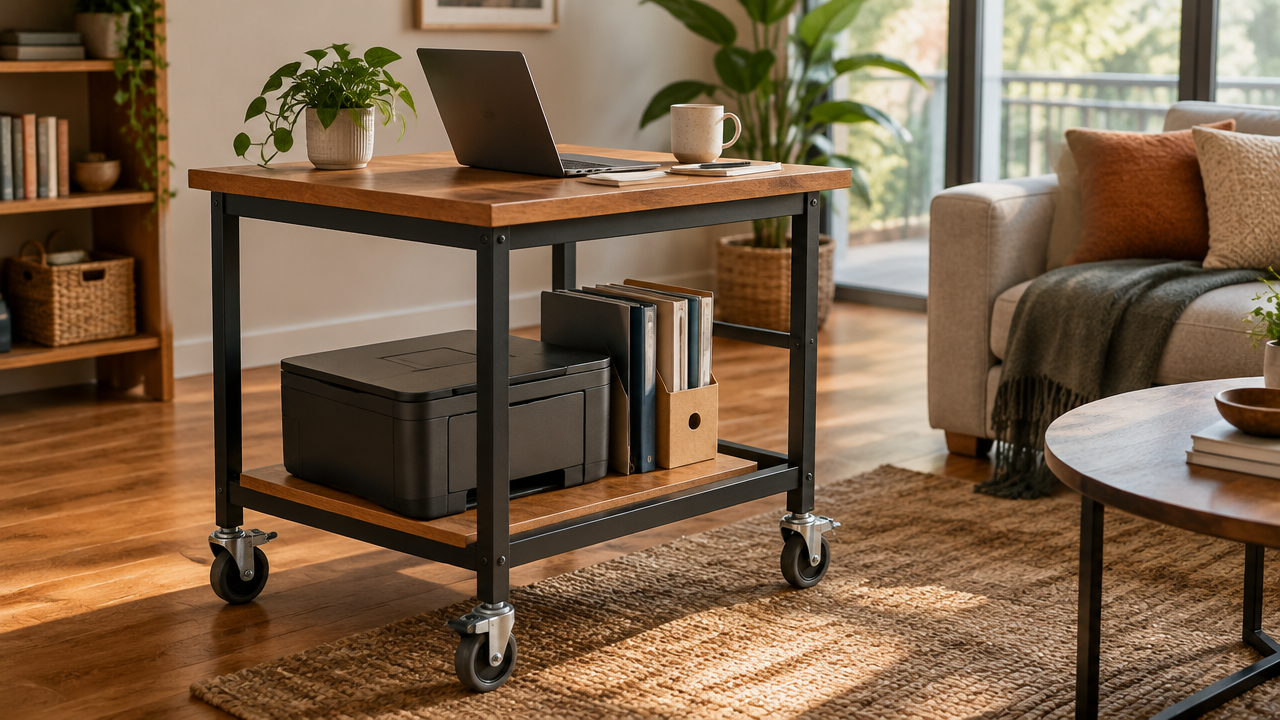
Rolling Cart Desk
Desk on castors
A desk on castors moves from the kitchen to the bedroom on demand. It also rolls away when friends come over.
Lock two of the wheels so it does not drift while you type. Use the lower shelf for a printer or files.
Choose a cart with a solid back panel and a lip on each shelf. It keeps papers from sliding off when you move it.
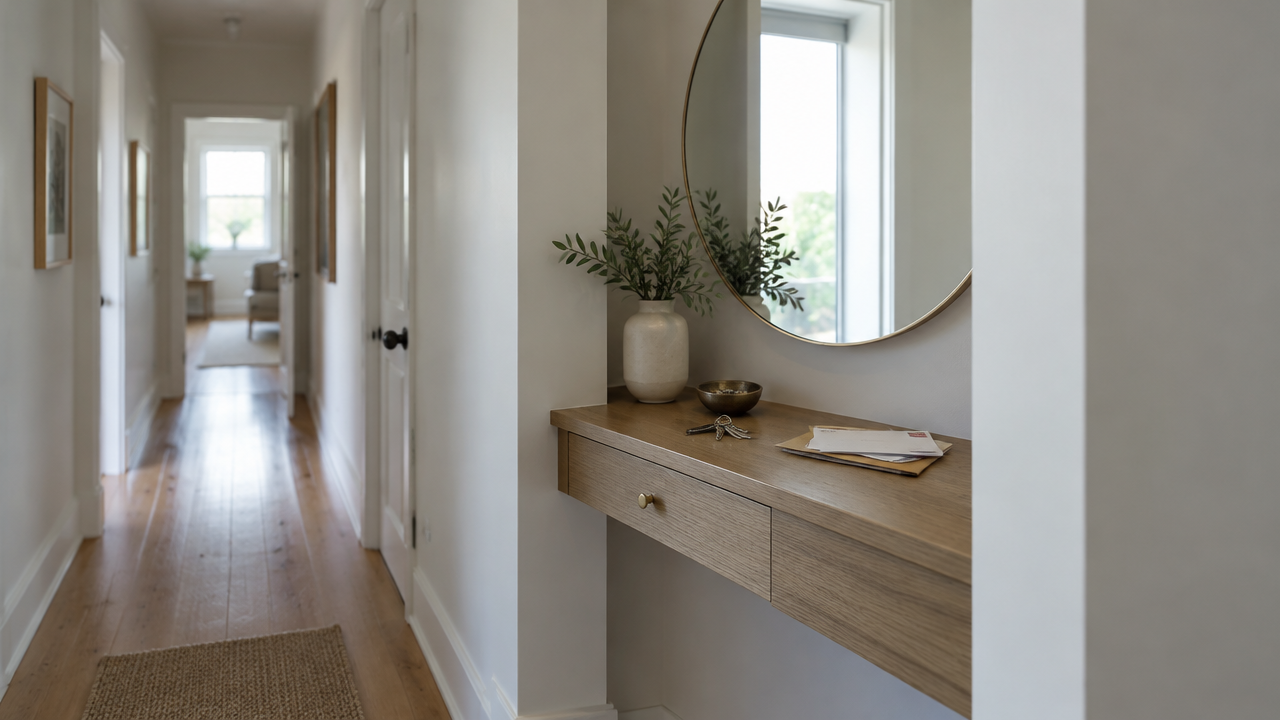
Hallway Niche Desk with Mirror
Mirror above
A mirror above a hallway desk doubles the available light and makes the nook look twice as deep. It also lets you check your screen from the doorway.
Choose a shallow 40 cm top so the corridor stays walkable. Add a small drawer for keys and post.
Hang the mirror at sitting eye level. A high mirror only reflects the ceiling and the top of your head.
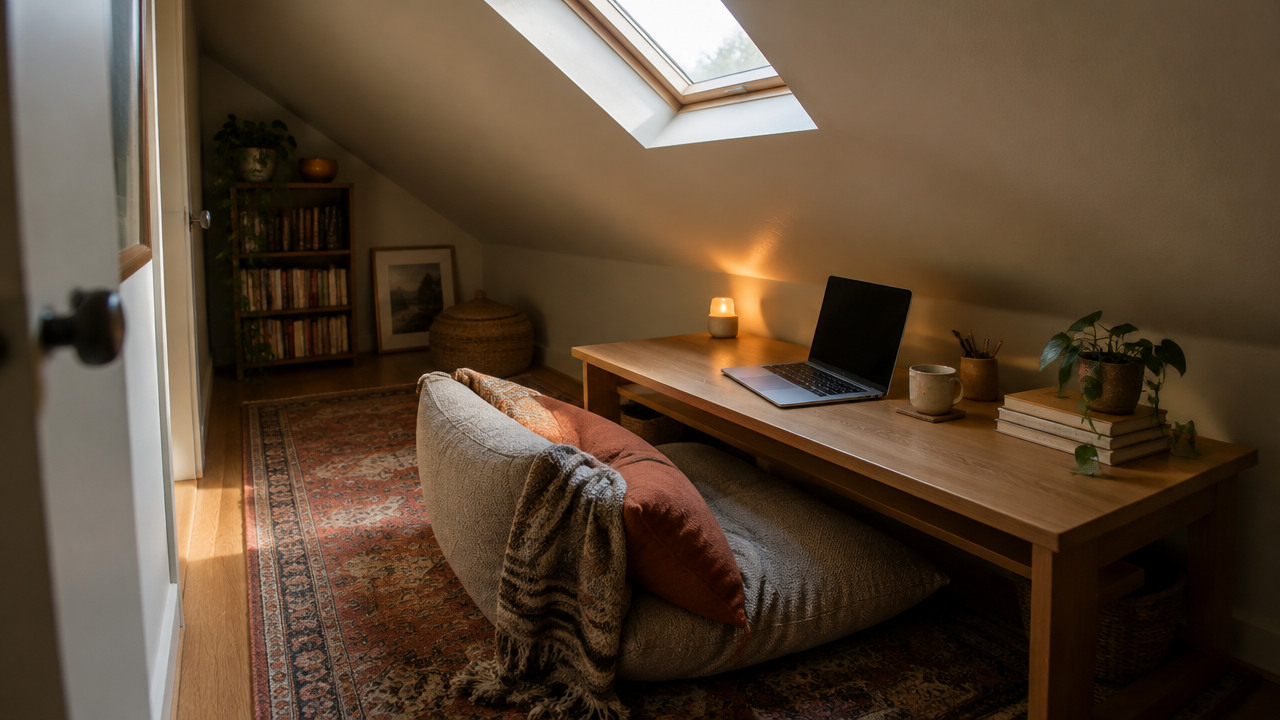
Desk Under a Sloped Attic Ceiling
Attic hideaway
A low desk under a sloped ceiling makes an attic feel like a hideaway. The angle above you creates a natural sense of shelter.
Paint the slope the same colour as the wall. Put the chair where you can still stand up without ducking.
Check the headroom where you will stand up. A low beam is the one thing you cannot change later.
Tech-Forward Command Centers
Screens, audio and lighting are planned before the furniture. Cable routes and posture come first, so the technology disappears.
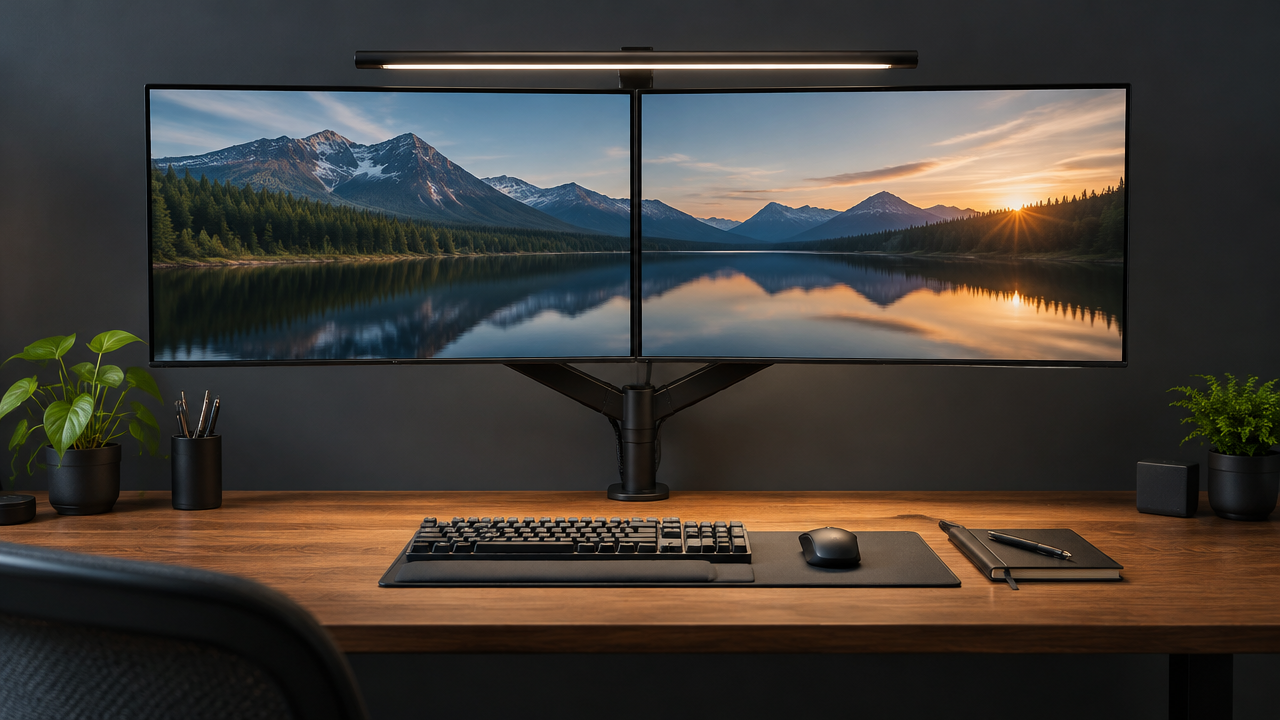
Dual-Monitor Command Center
Two screens, one arm
Two monitors on a single arm free the desk and keep your neck centred. Align the screens so your eyes move instead of your head.
Add a light bar above the screens to cut evening glare. Keep a notebook under the arms for quick notes.
Set both screens to the same brightness and colour profile. Mixed brightness makes your eyes work twice as hard.
Height-Adjustable Standing Desk
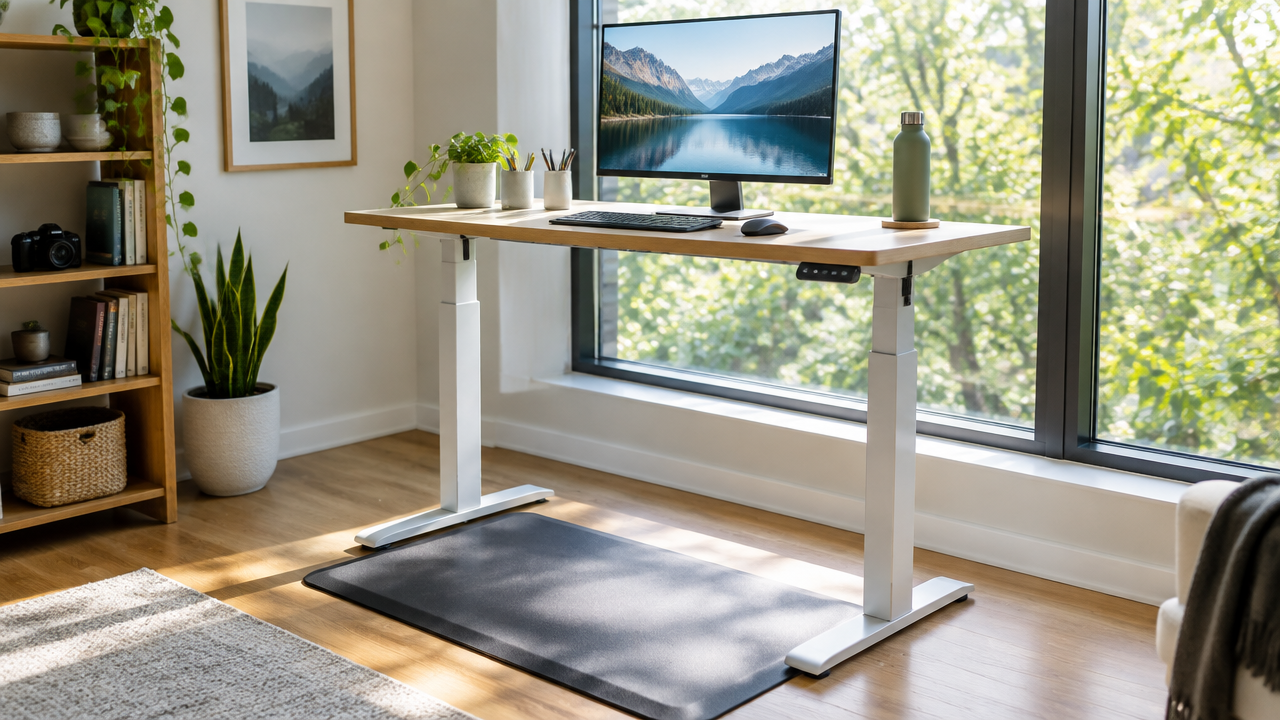
Sit-stand frame
A sit-stand desk lets you change posture every hour instead of every year. Program two heights and switch without thinking about it.
Add an anti-fatigue mat for longer standing blocks. Keep the floor clear so the frame never hits a cabinet.
Measure your standing elbow height before you buy anything. The desk should meet the middle of your forearm.
All-Black Moody Gaming Desk
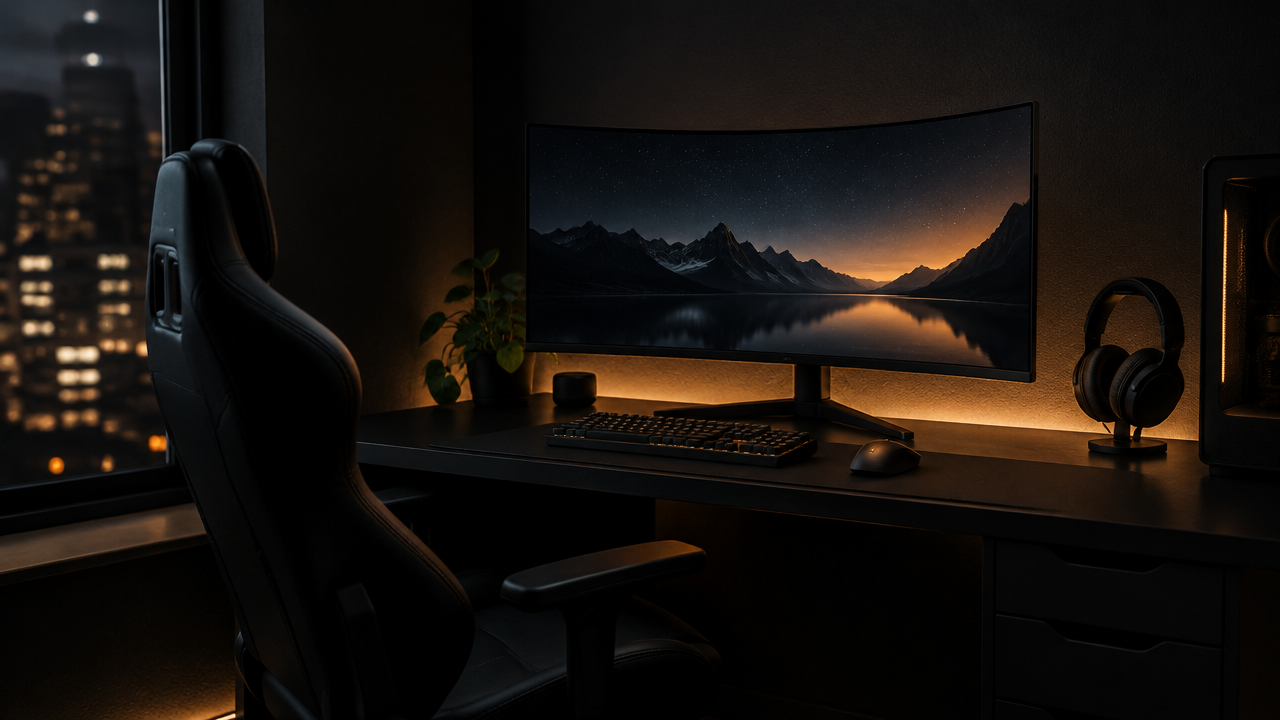
Dark bias lighting
A black desk, black chair and black wall create a focused cave for long sessions. Soft bias lighting behind the monitor reduces eye strain at night.
Choose warm white bulbs rather than bright blue. One plant breaks up the darkness nicely.
Route every cable through one grommet behind the desk. Loose cables ruin the effect of a dark, moody room.
Smart Desk with Wireless Charging
Built-in charging
A desk with a built-in charging pad removes the last cable from your surface. Drop your phone down and it starts charging.
Combine it with a USB panel at the back edge for everything else. Label each port so you stop guessing.
Test the charging pad with your phone case still on. Thick cases block the transfer and make the feature useless.
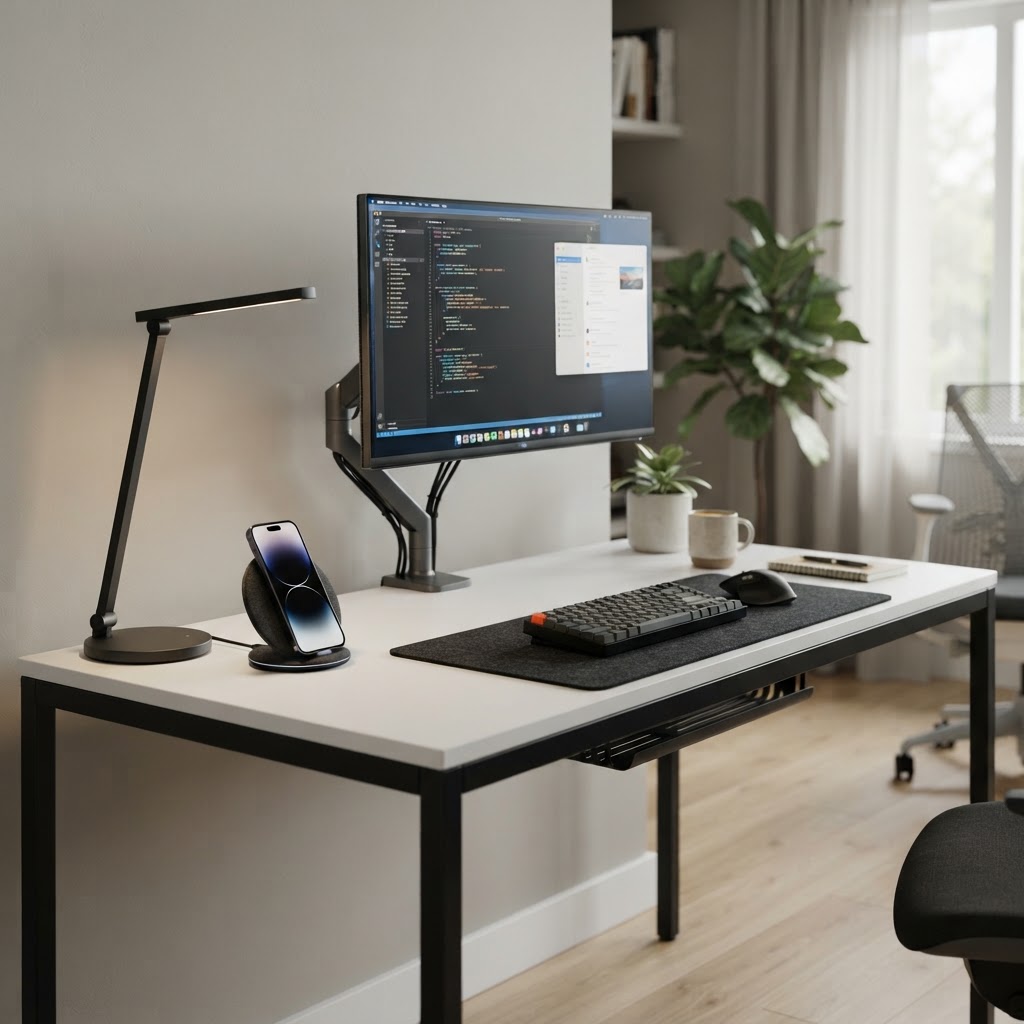
Podcast Recording Desk
Mic and interface
A podcast desk puts the microphone, interface and headphones within one arm’s reach. A boom arm keeps the mic off the surface and kills desk thumps.
Hang a thick rug or acoustic panel behind you. Soft surfaces make voices sound closer and warmer.
Set the microphone about 15 cm from your mouth, slightly off axis. You will lose far less breath noise that way.
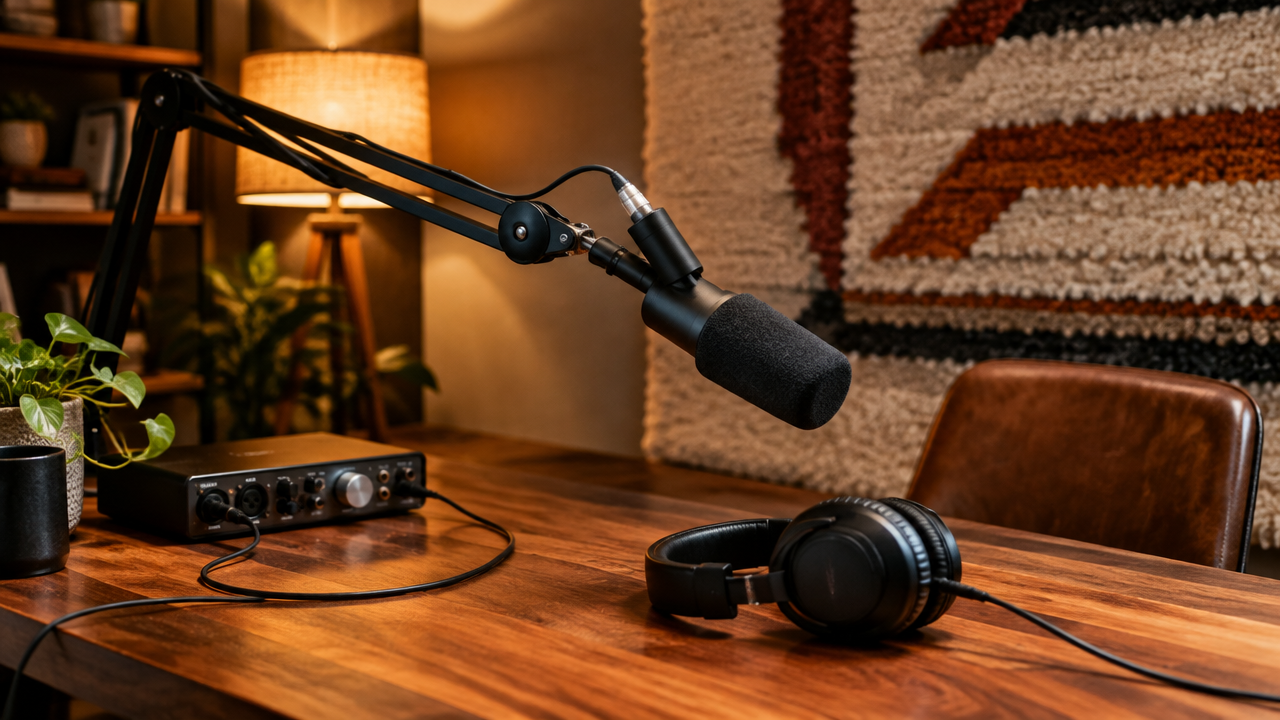
Acoustic Felt Panel Desk Wall
Sound-absorbing felt
Felt panels behind the desk absorb echo and make video calls sound professional. They also hide pinboards and cables in one move.
Choose panels in muted moss or clay to match the room. Add a magnetic strip on the panel for notes.
Leave a 5 cm gap behind the panels for cables. The gap also lets the felt breathe and stops mould in cold rooms.
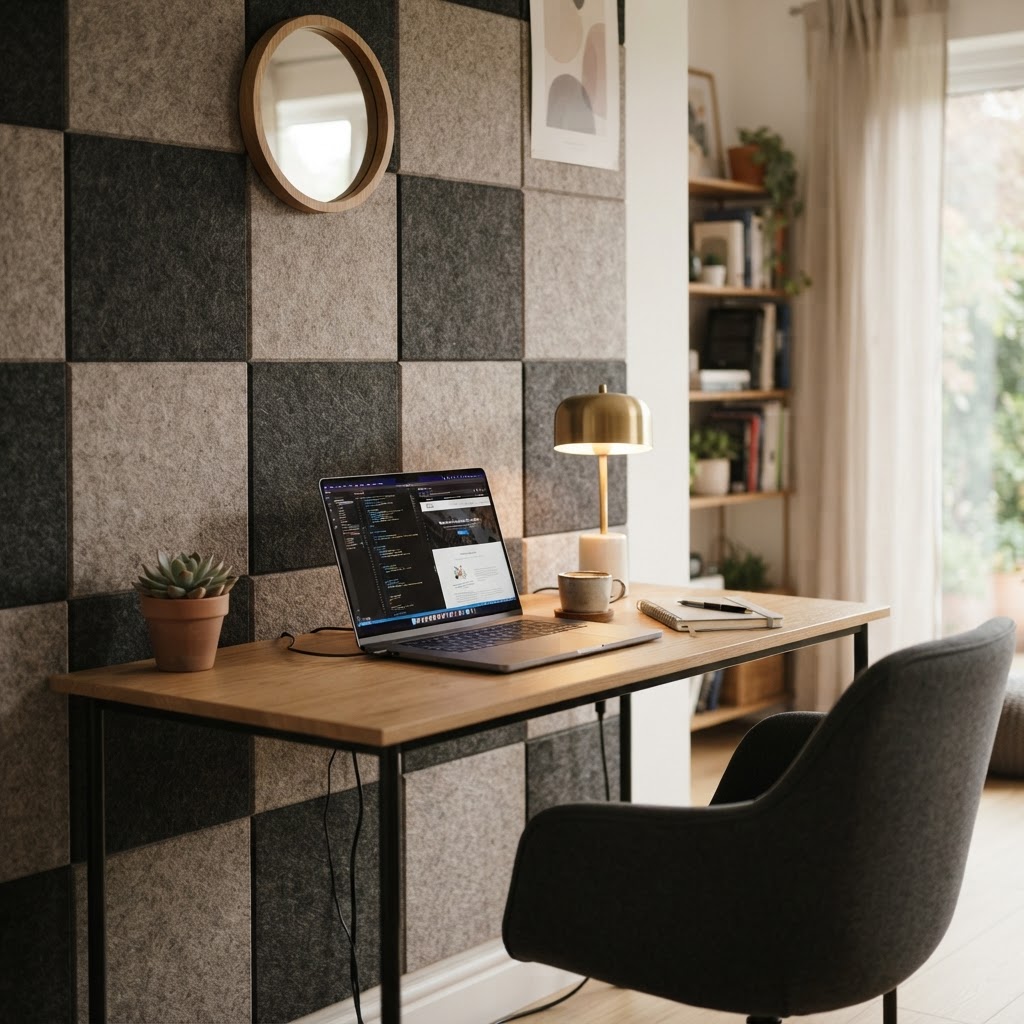
Three-Screen Trading Desk
Shallow arc layout
Three screens in a shallow arc keep every chart in view without turning your head. A wide, deep top stops the stands from crowding you.
Mount a light under the middle shelf to read printouts. Use one switched power strip for a clean shutdown.
Tilt the outer screens about 20 degrees inward. That small angle keeps all three screens equidistant from your eyes.

Compact Streaming Desk
Camera-ready corner
A small streaming setup needs only a microphone, a light and a clean backdrop. Put the desk side-on to the window to avoid a blown-out frame.
Hide the cables behind a black panel. Frame your shot first, then place the furniture around it.
Test the light before every session, not after. One bright highlight behind you flattens the whole frame.
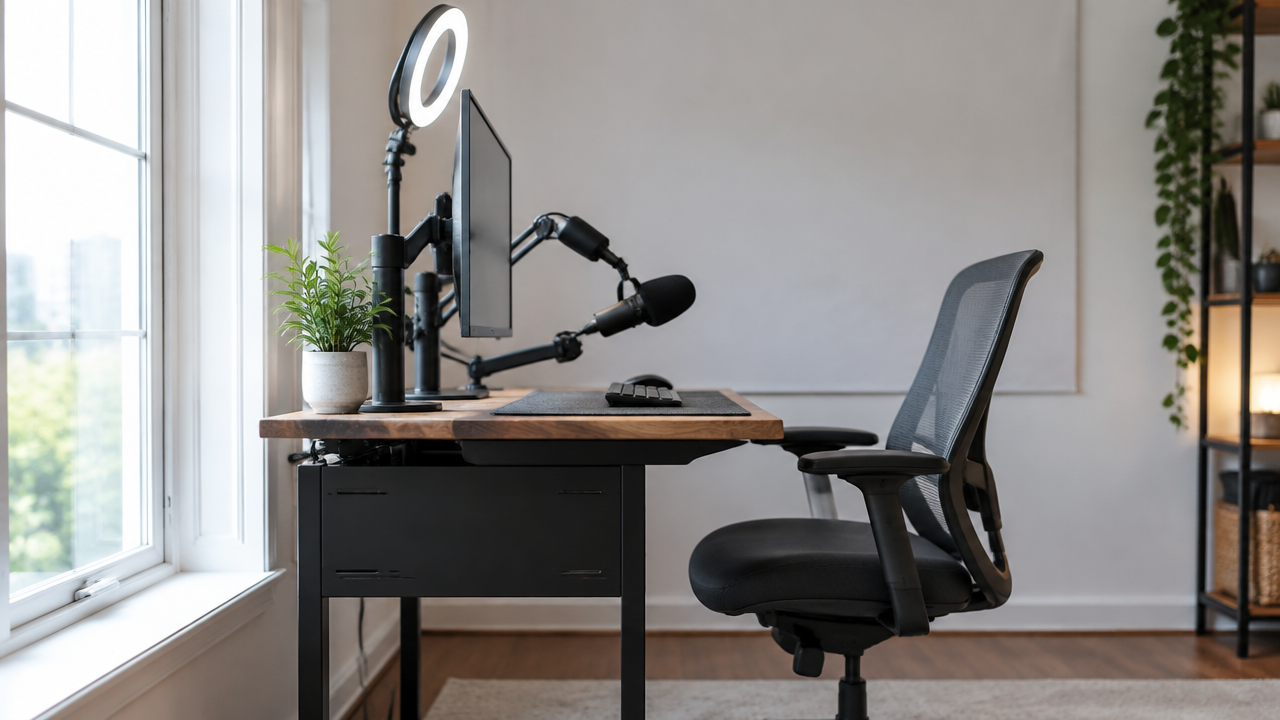
Laptop-Riser Travel Desk
Portable setup
A laptop riser plus an external keyboard turns any table into a proper desk. Your screen sits at eye level and your shoulders drop.
Keep a small pouch for the riser, keyboard and cable. The whole office fits in a bag when you travel.
Buy a keyboard the same width as your laptop. A mismatched keyboard quietly ruins the posture you just fixed.
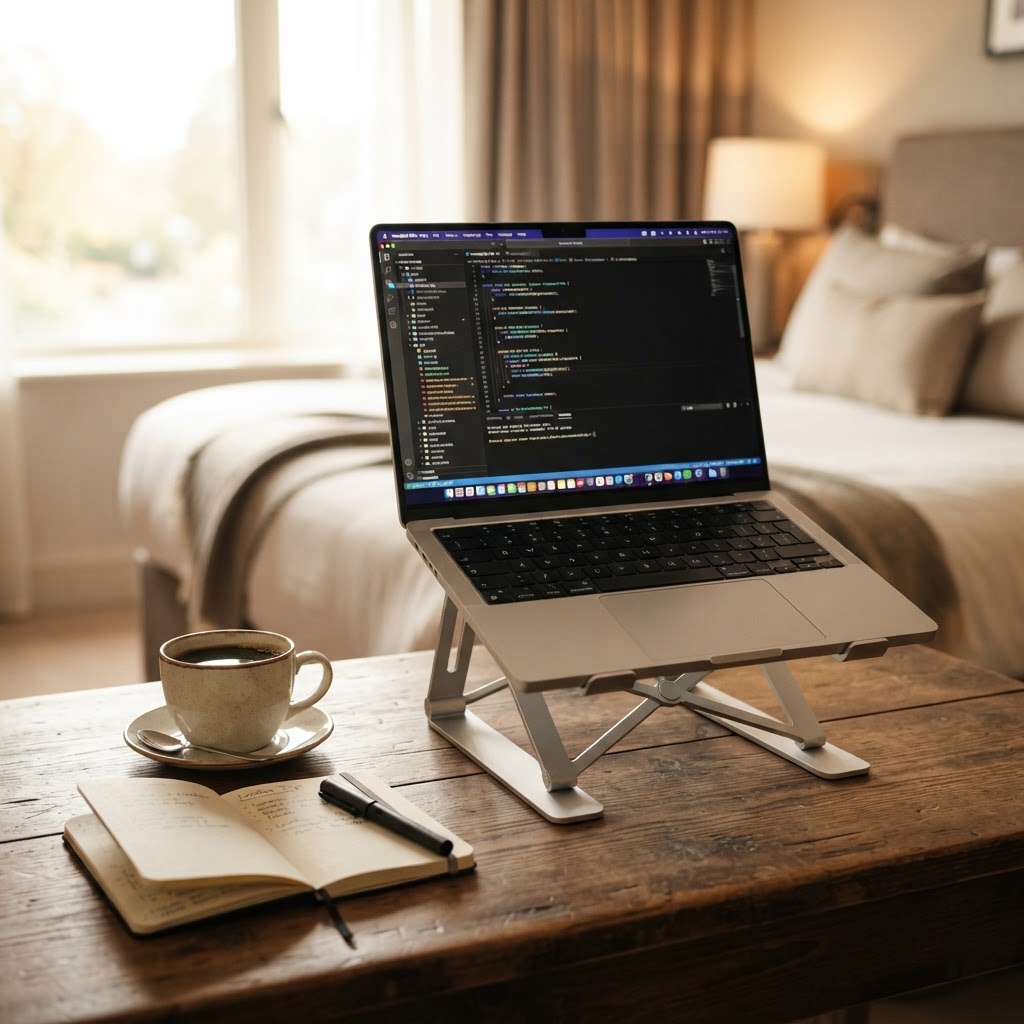
Executive and Heritage
Dark timber, leather and marble give a home office quiet authority. These pieces are meant to be inherited, not replaced.
Dark Oak Library-Wall Desk
Floor-to-ceiling oak
Run dark oak shelving from floor to ceiling and build the desk into the lower run. Books and files sit within reach and the room reads as a study.
Use warm 2700K lamps inside the shelves. Leave one shelf completely empty so the wall can breathe.
Ask for adjustable shelves instead of fixed ones. Your books and files will change within a year of moving in.

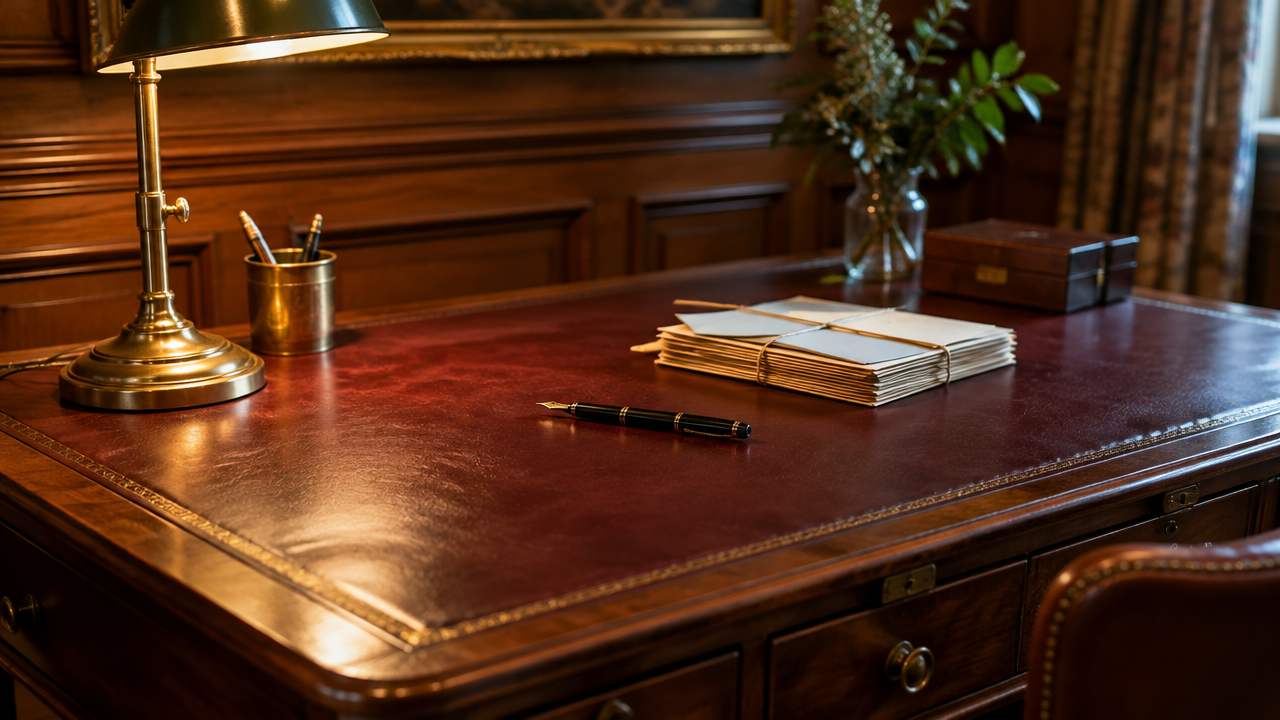
Leather-Topped Writing Desk
Leather inlay
A leather inlay gives a wooden desk a warm, quiet surface for writing. It also softens the sound of keys and cups.
Choose a deep green or oxblood leather. Condition it once a year with a soft cloth.
Never put a hot mug straight on the leather. Use a coaster and the inlay will last for decades.
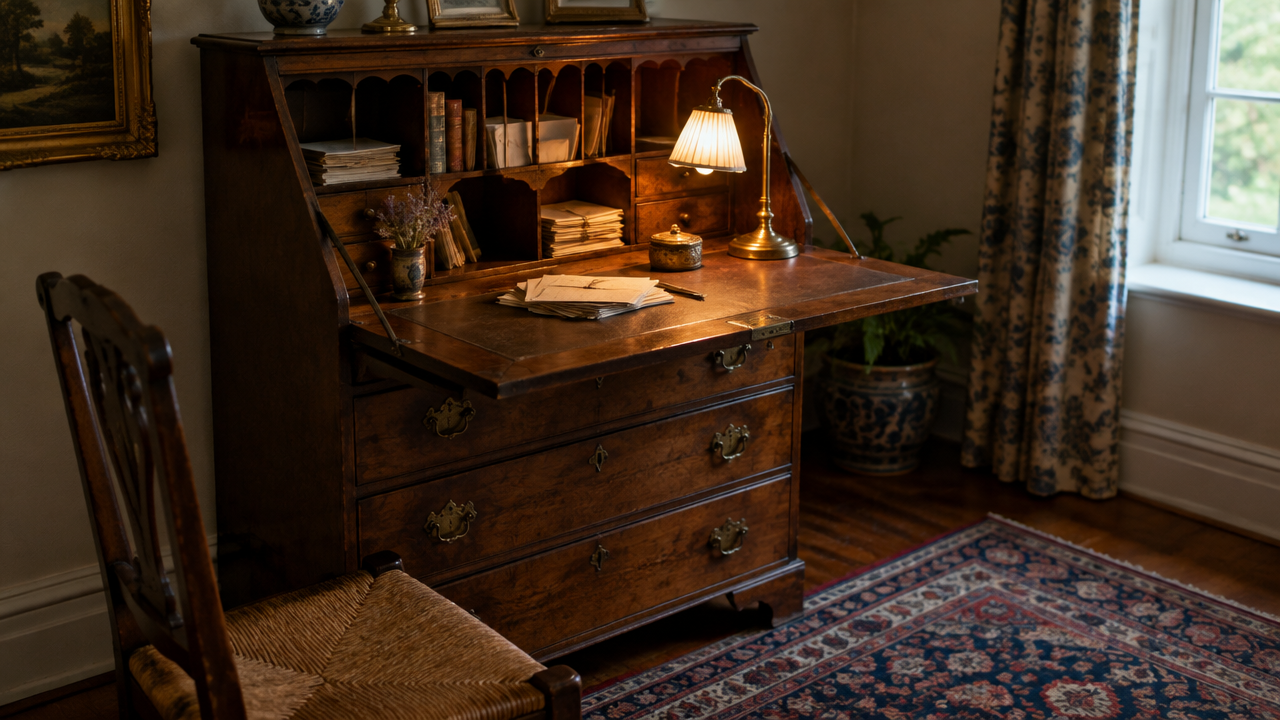
Antique Secretary Desk
Drop-front
A drop-front secretary desk hides letters, stamps and bills behind a flap. Closed, it looks like furniture rather than an office.
Place it so light falls over your left shoulder if you write with your right hand. Add a small lamp with a warm bulb.
Check that the flap opens flat and locks firmly. A loose hinge drops while you are mid-sentence.
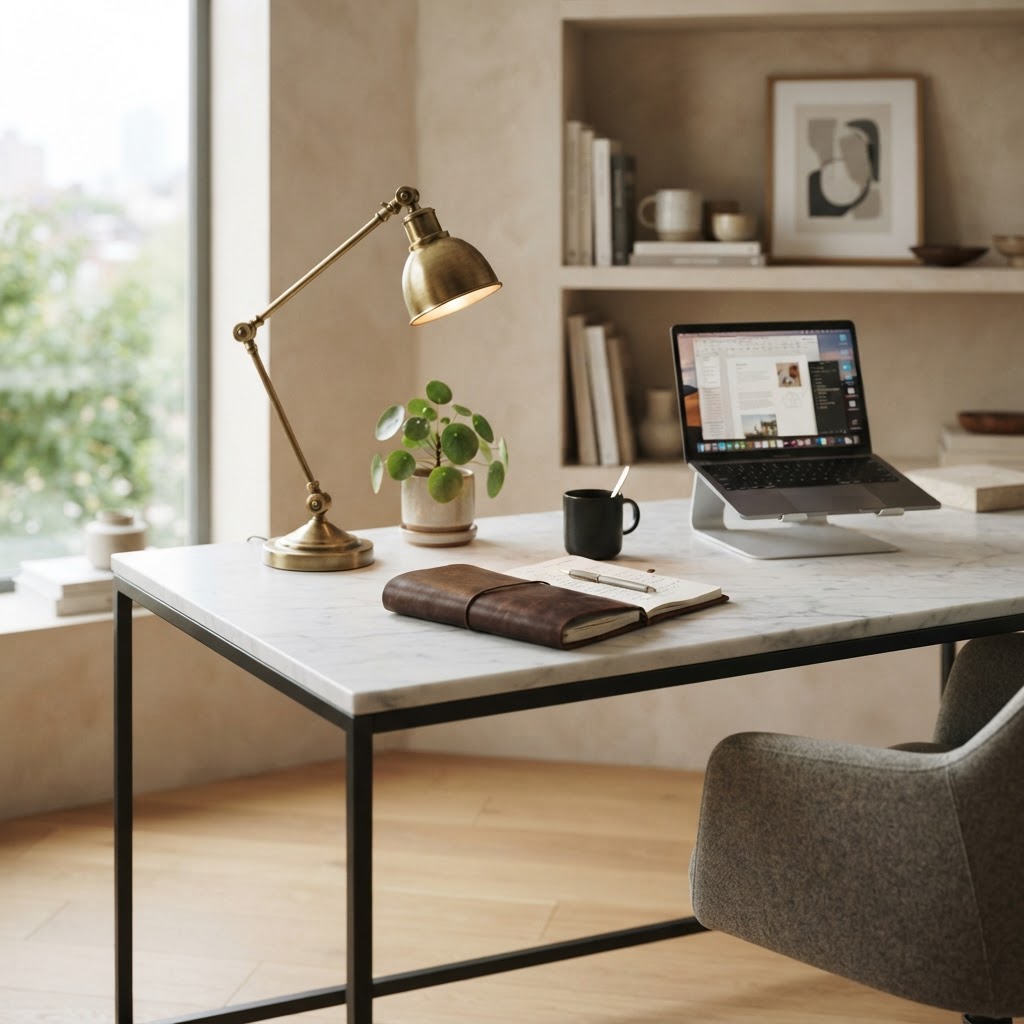
Marble-Top Executive Desk
Honed marble
A marble top brings a cool, formal weight to a home office. Pale marble with soft grey veins looks crisp against dark joinery.
Seal the marble to prevent ring marks. Use felt pads under lamps and trays.
Ask for a mitred edge on the front of the slab. A raw marble edge chips exactly where your wrists rest.
High-Gloss Lacquer Desk
Mirror finish
A lacquered desk reflects light and looks like a showroom piece. It suits modern rooms where the desk is meant to be seen.
Wipe with a damp microfibre cloth only. Keep it out of direct sun so the finish does not dull.
Inspect the finish in daylight, not under shop lighting. Some lacquers show every fingerprint you leave.
Mid-Century Walnut Desk
Tapered legs
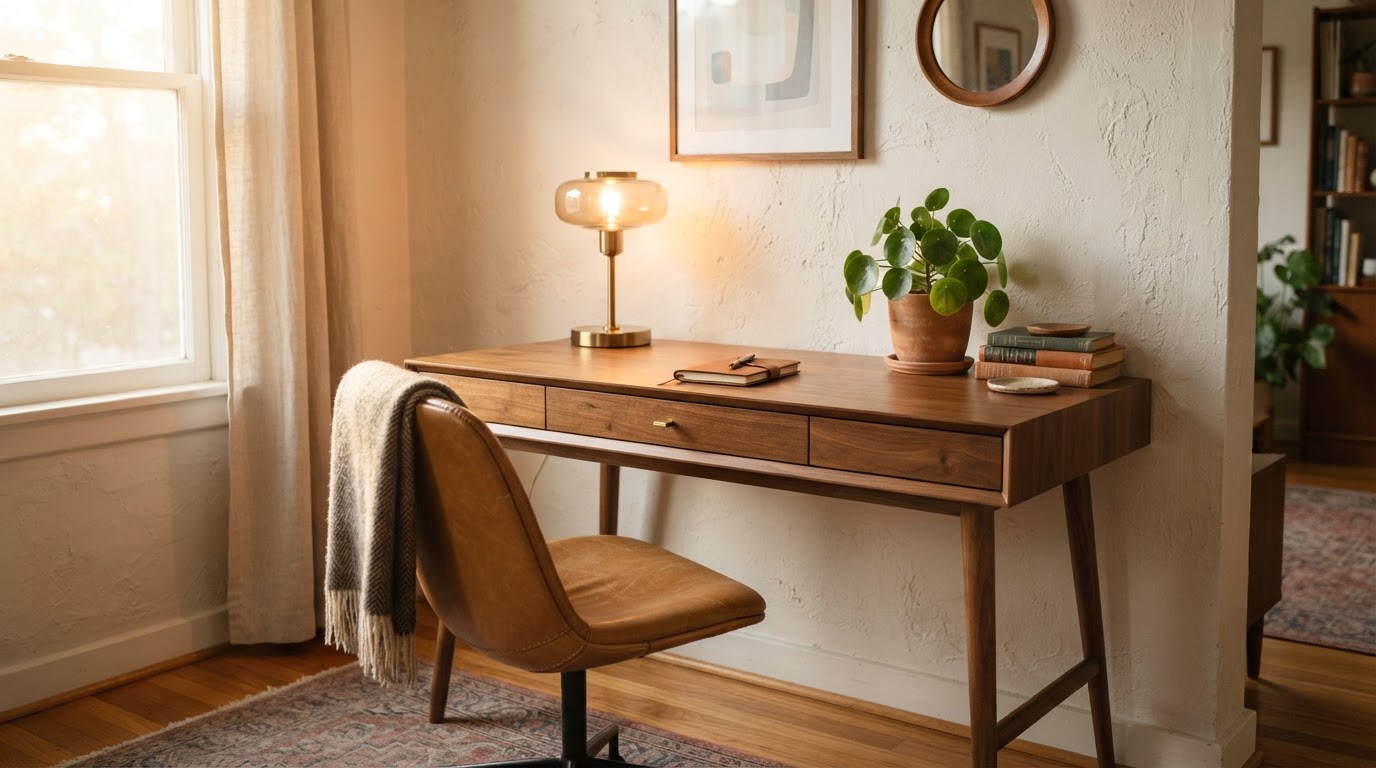
Tapered legs, a shallow drawer and warm walnut are all a mid-century desk needs. It sits comfortably in a living room without shouting office.
Match it with a tan leather chair. Keep accessories to one lamp and one tray.
Match the wood tone to your floor before your walls. Warm walnut sits better on warm timber than on grey.
Mahogany Partner Desk
Double-sided
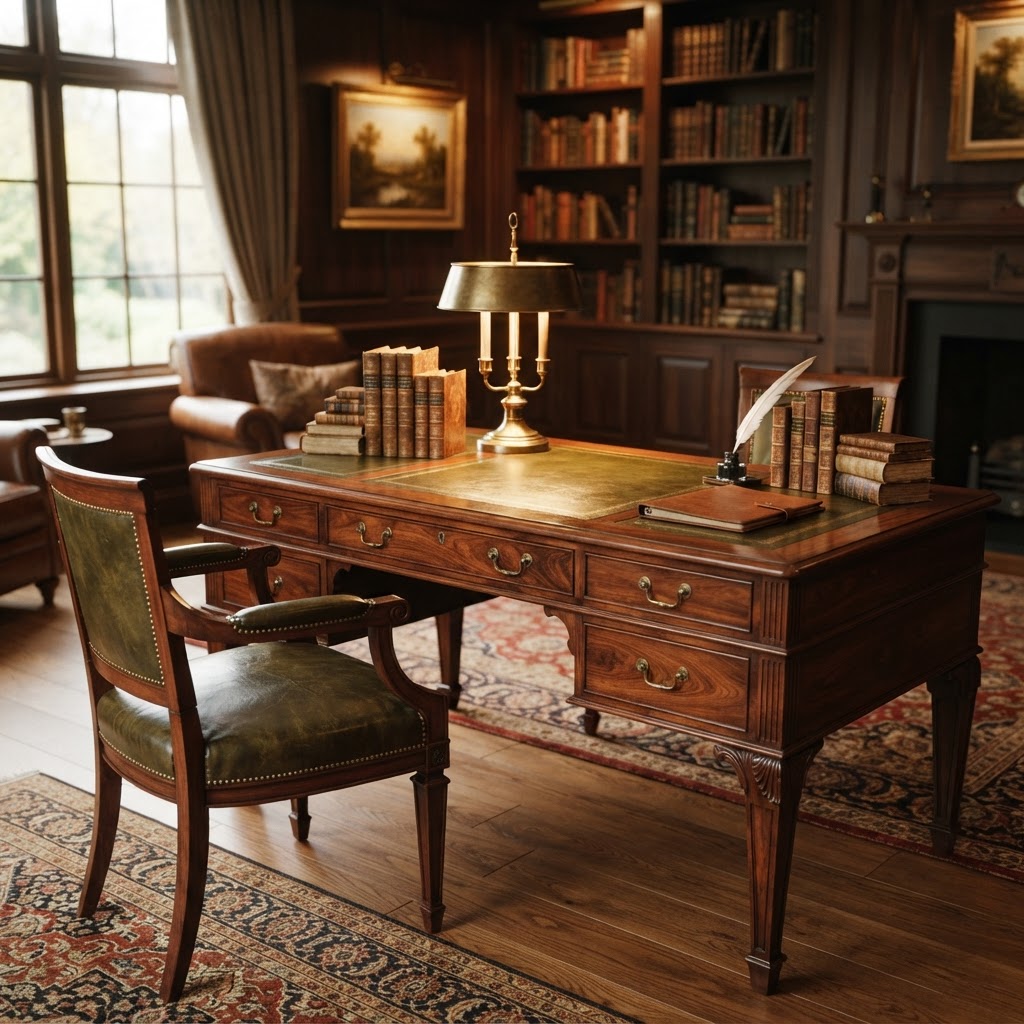
A double-sided partner desk gives you a large working surface and storage on both sides. It works beautifully in the middle of a room, not against a wall.
Use the outward drawers for files and the inner ones for daily tools. A green banker’s lamp completes the look.
You need 90 cm of clearance on every side. A partner desk pushed into a corner is just a large table.
Biophilic and Creative
Plants, colour and texture soften a hard working day. This group suits makers, artists and anyone who thinks with their hands.
Plant-Filled Jungle Desk
Trailing greenery
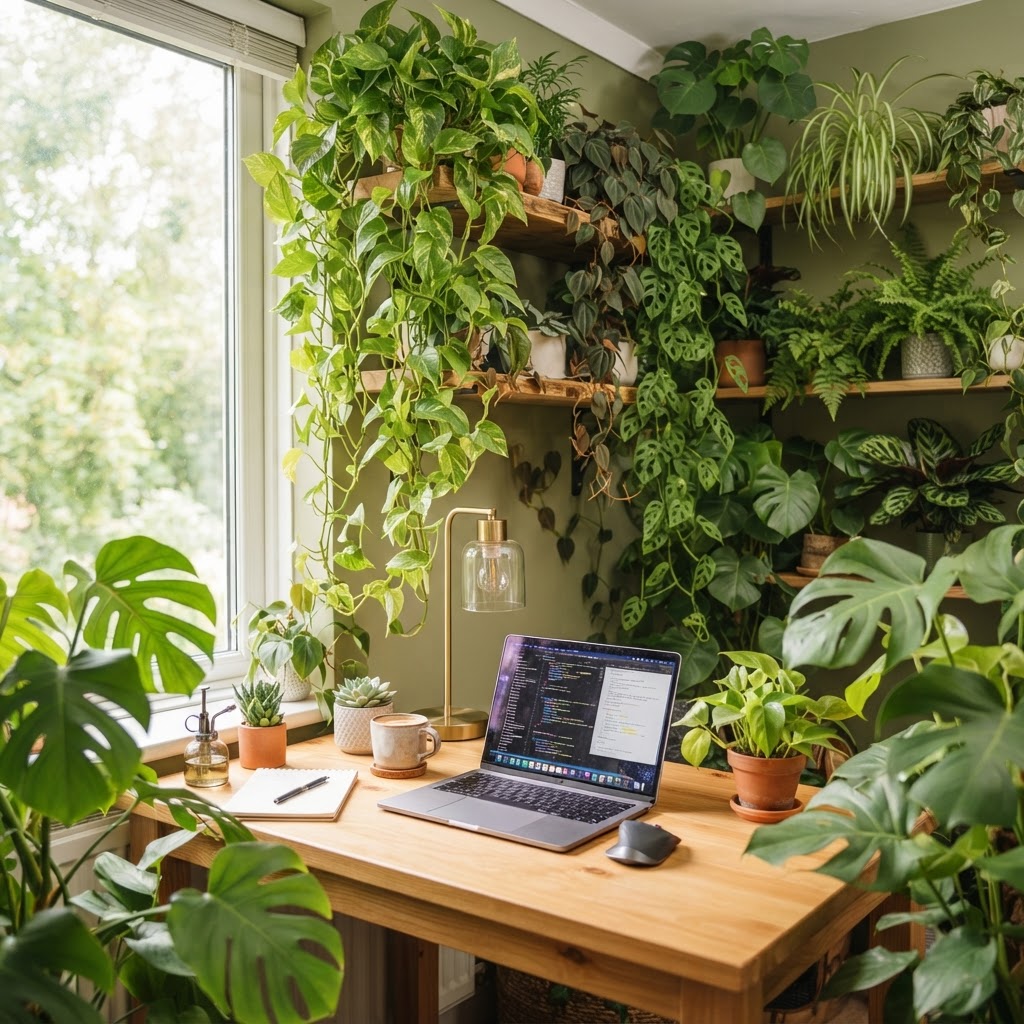
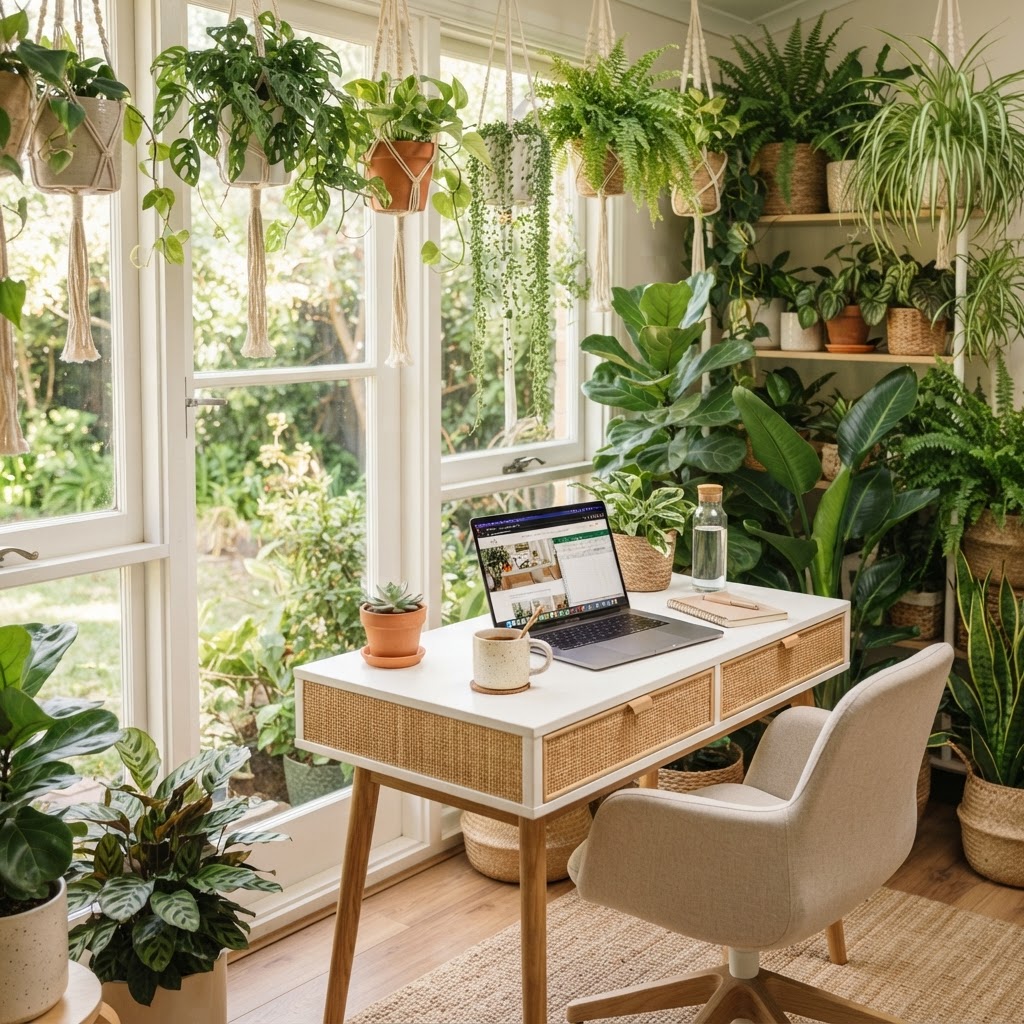
Surround the desk with trailing plants so your eye lands on green instead of a wall. Foliage softens corners and makes long days feel shorter.
Group plants by water need so care stays simple. Add a grow light if the room faces north.
Water deeply once a week instead of a little every day. Shallow watering leaves the roots weak and the leaves limp.
Sunroom Desk with Foliage
Garden view
A desk in a sunroom works under natural light for most of the day. Foliage outside the glass gives you a calm, green view.
Use sheer blinds for glare on screens. Pick weatherproof furniture if the room swings in temperature.
Check the room temperature before you leave paper there overnight. Glass rooms swing ten degrees after dark.
Vertical Garden Desk Wall
Modular pockets
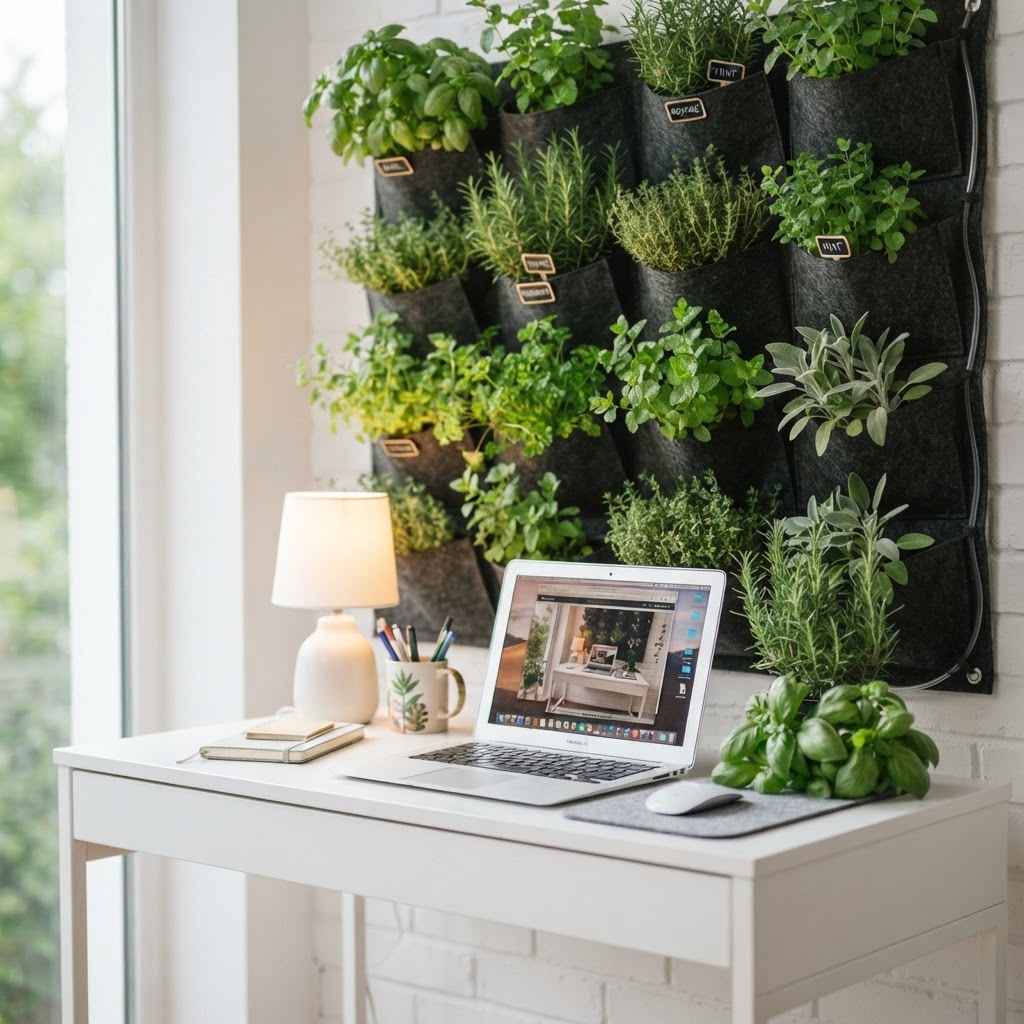
A plant wall behind the desk adds greenery without using desk space. Modular pockets let you rearrange the pattern each season.
Fit a drip tray and a waterproof backing before you plant. Keep a small watering can within reach.
Choose plants with the same light and water needs. A mixed wall means two watering schedules and a lot of dead leaves.
Pastel Creative Studio Desk
Soft colour
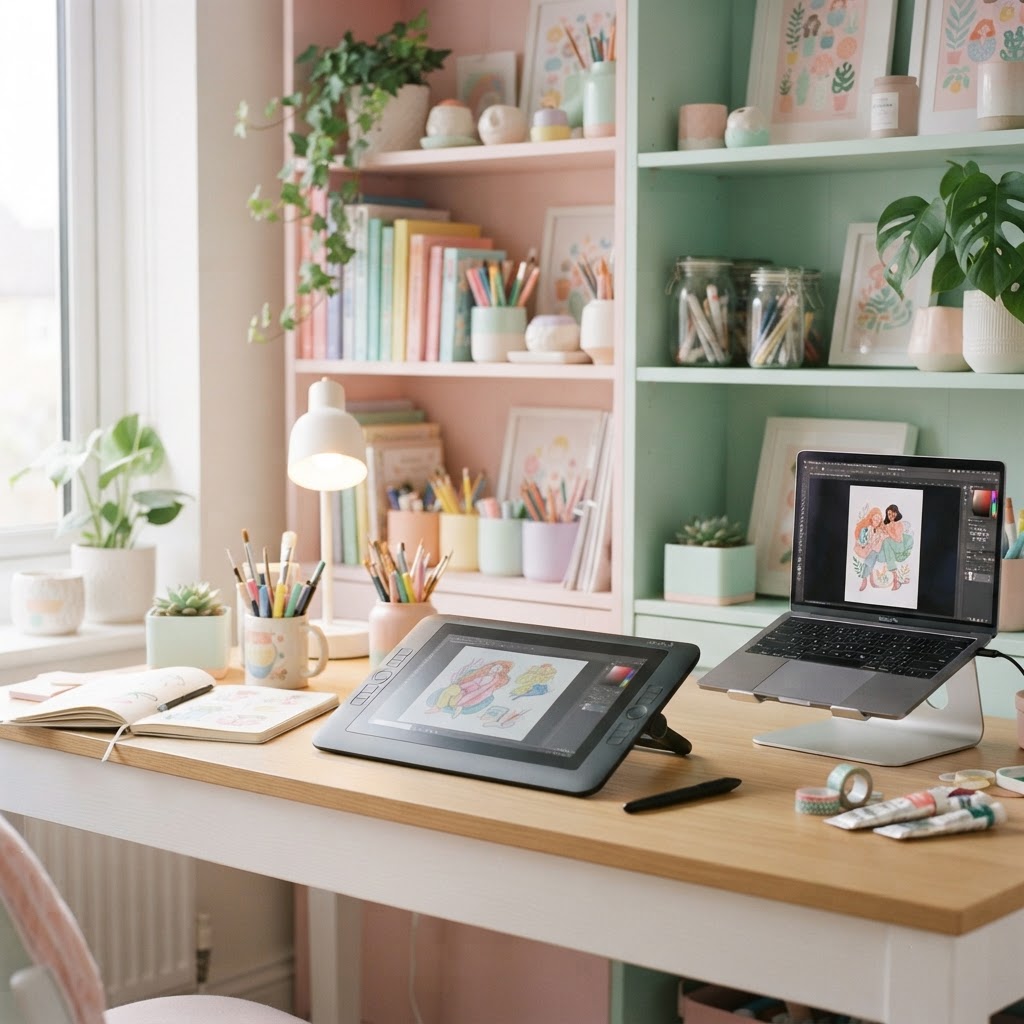
A pastel palette of blush, sage and butter lifts a creative workspace. Soft colour keeps energy high without adding visual noise.
Keep the desk itself pale wood or white. Use one bolder object for contrast.
Keep the largest surface neutral and let the wall carry colour. Pastel on both starts to look like a nursery.
Terrazzo Artist’s Desk
Terrazzo top
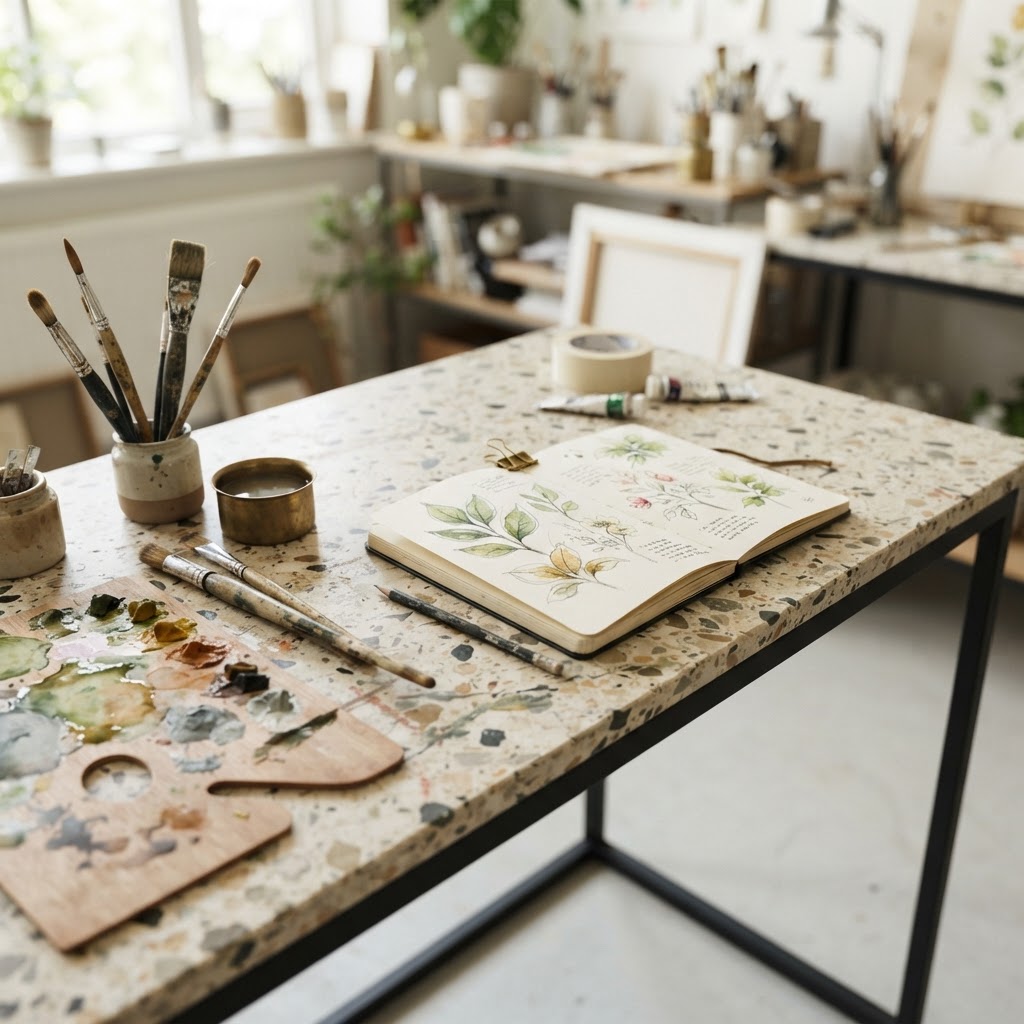
A terrazzo top is durable, playful and hides small marks. The flecks add colour without any decoration on the wall.
Choose a top large enough for paper and tools. Wipe spills quickly before they set.
Ask for terrazzo with a matte seal rather than a polished one. Polished terrazzo shows every pencil mark.
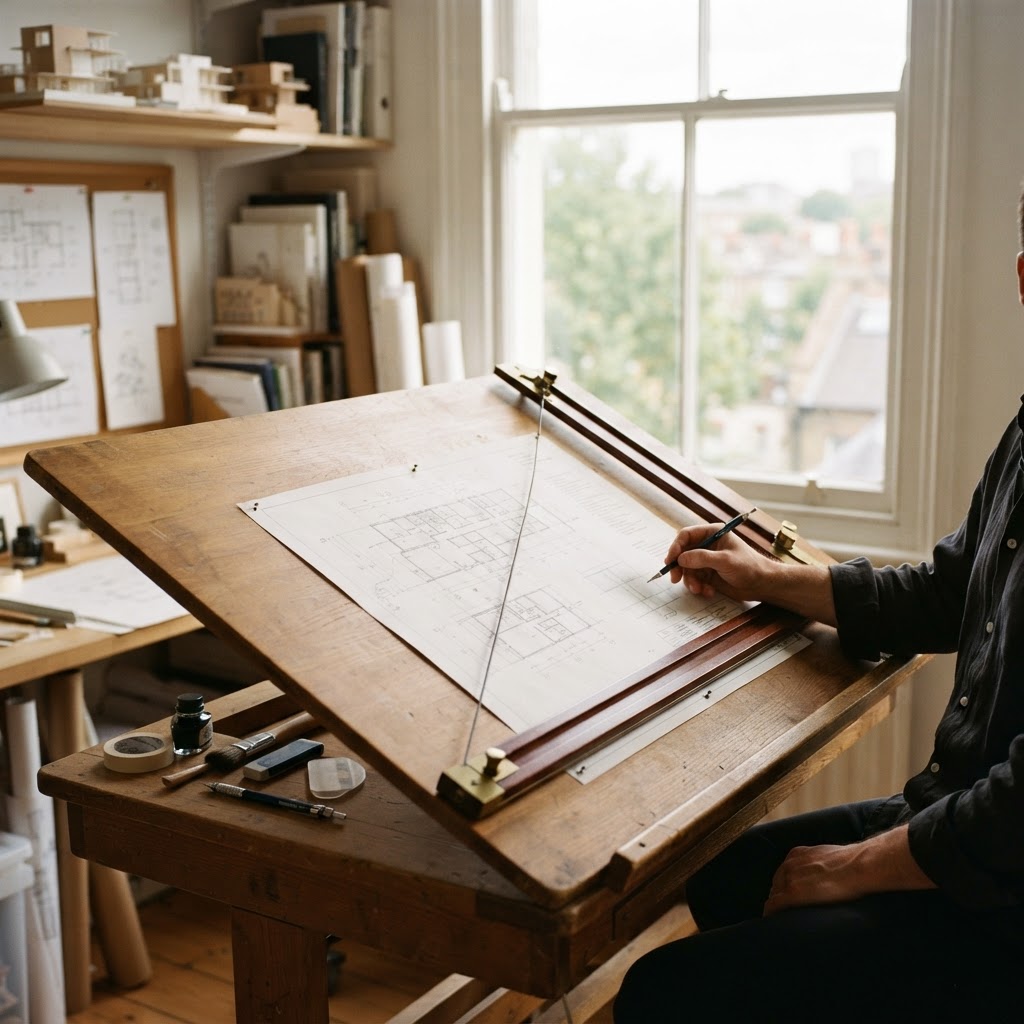
Drafting Table Studio
Tilting top
A tilting drafting table saves your neck during long drawing sessions. The angle brings the page up to your eye line.
Add a clamp lamp and a shallow tray for pencils. Keep the floor clear for a tall stool.
Buy a table with a parallel rule if you draw plans. It saves you reaching for a ruler on every sheet.
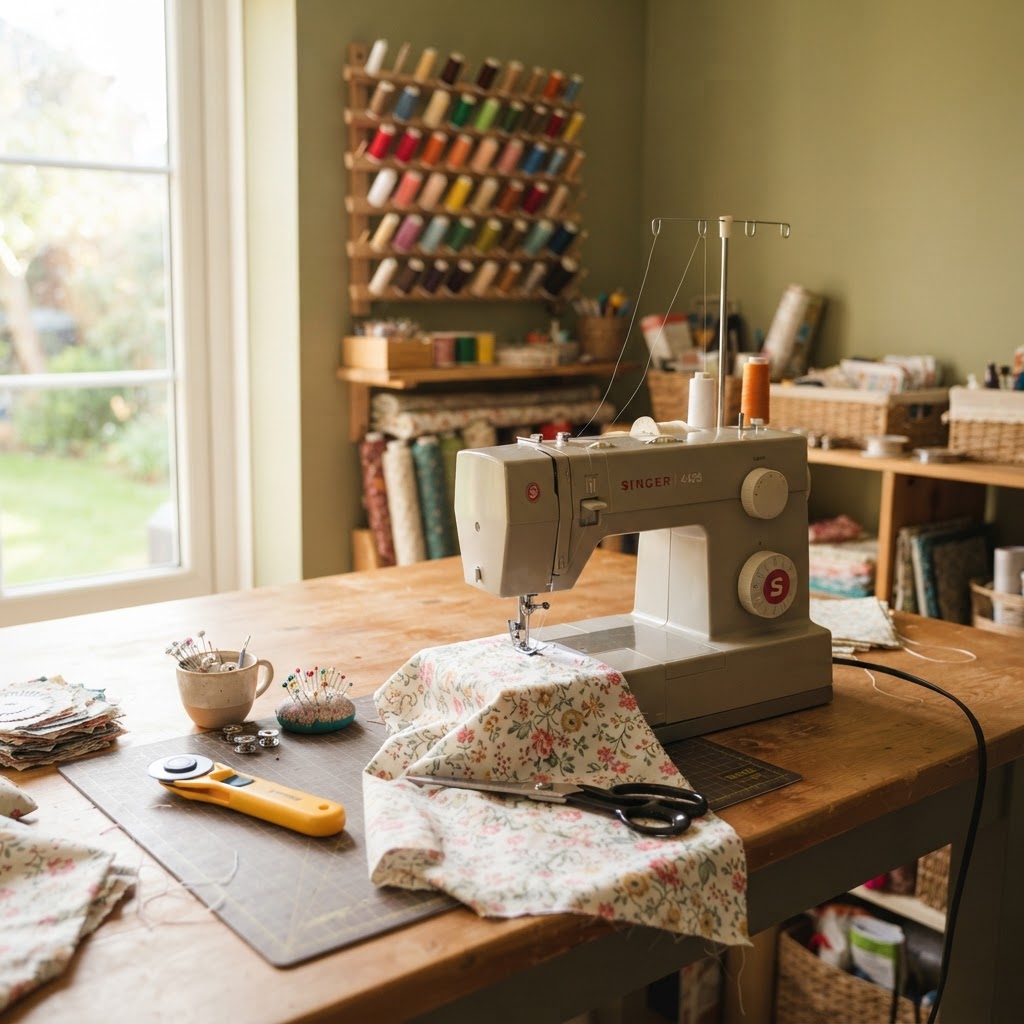
Sewing and Craft Desk
Large flat worktop
A craft desk needs a large flat top and storage that moves. A cutting mat, thread racks and a rolling cart keep the flow easy.
Set the height for standing work if you cut fabric often. Add task lighting directly above the mat.
Add a bin on wheels under the desk. Trimmings and offcuts pile up faster than anyone expects.
Clever Builds and Multi-Purpose
These are the practical builds that solve a real room. Each one can be copied with basic tools and a weekend.
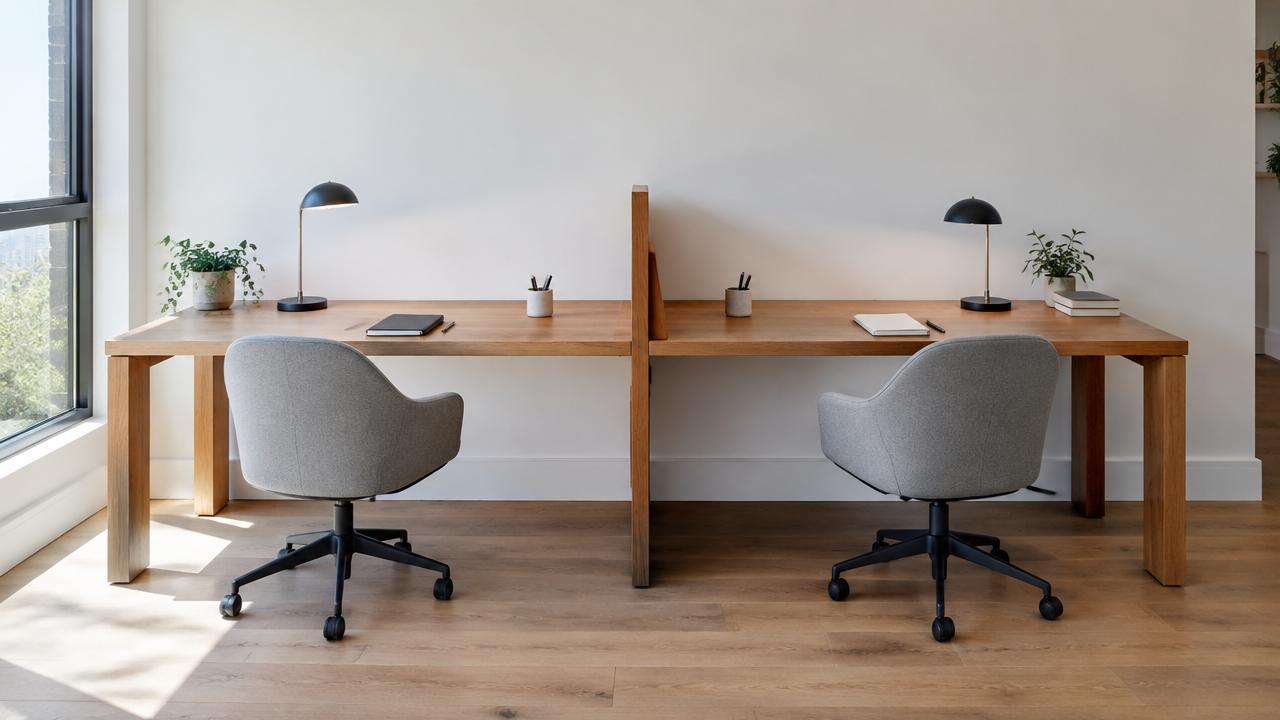
Two-Person Shared Desk
Long double run
A long shared desk gives two people room to work side by side. A central divider keeps focus and hides the cable mess.
Choose a top of at least 280 cm for real comfort. Give each person their own lamp and power point.
Test both chairs before you fix the height. A shared desk always needs one compromise height for both people.
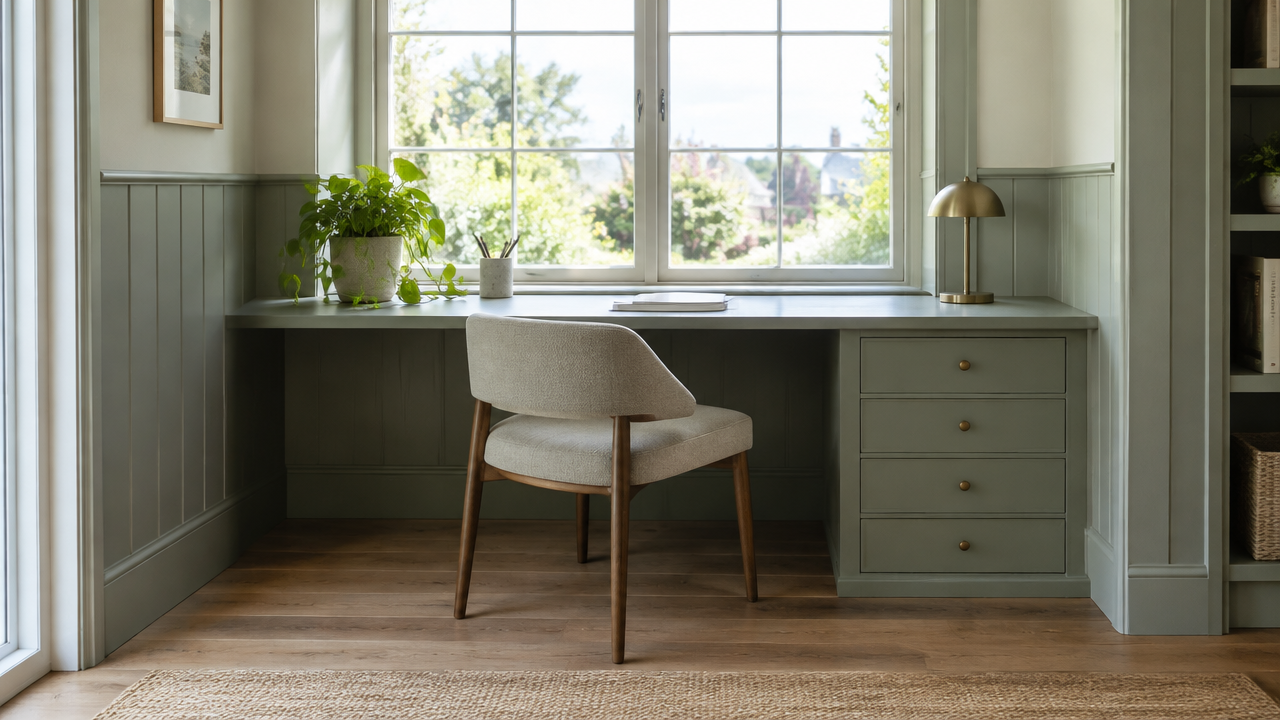
Built-In Window Desk with Drawers
Drawer bank
A desk built under a window uses the best light in the house. A drawer bank on one side keeps the knee space clear.
Leave a radiator gap if the wall runs warm. Use a low-back chair so the windowsill stays visible.
Check the radiator before you build anything. Wooden tops warp when heat runs straight beneath them all winter.
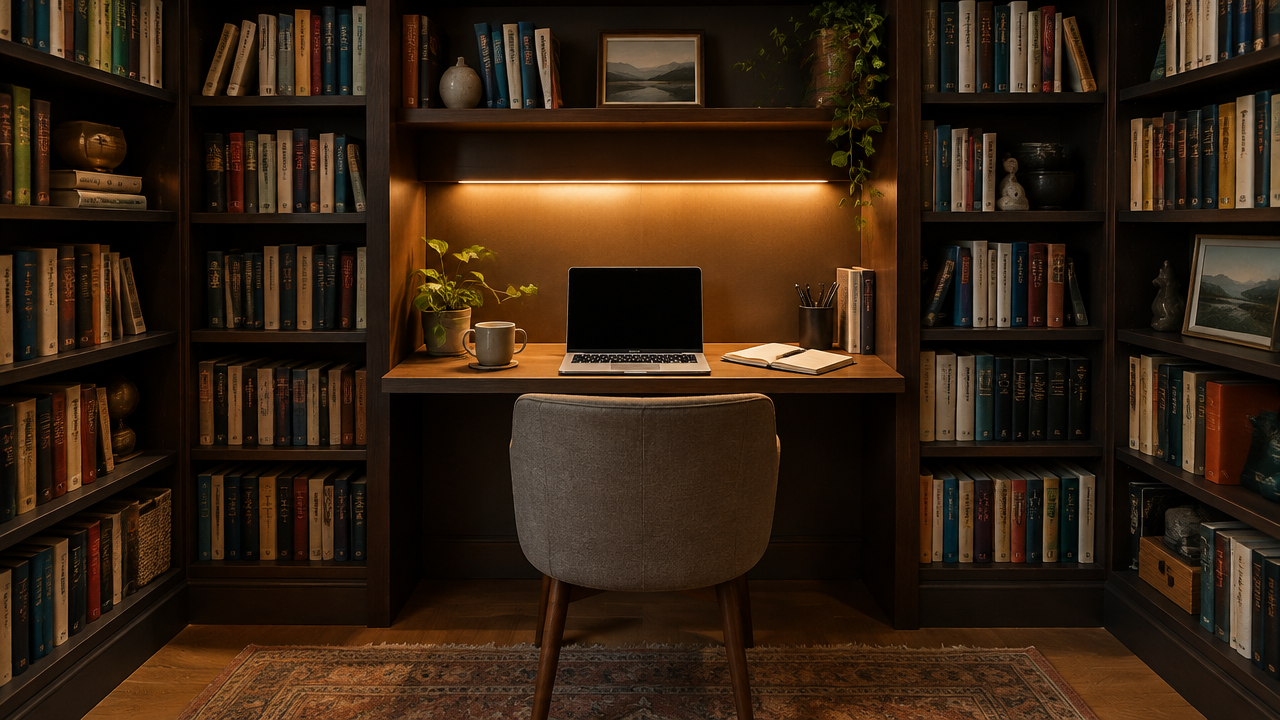
Bookcase Alcove Desk
Shelved alcove
A desk set into a bookcase alcove feels like a private study. Books on both sides give you instant depth and quiet.
Add a shelf light under the first row. Keep the surface to a laptop and one notebook.
Measure the alcove at the top and at the bottom. Old walls are almost never perfectly parallel.
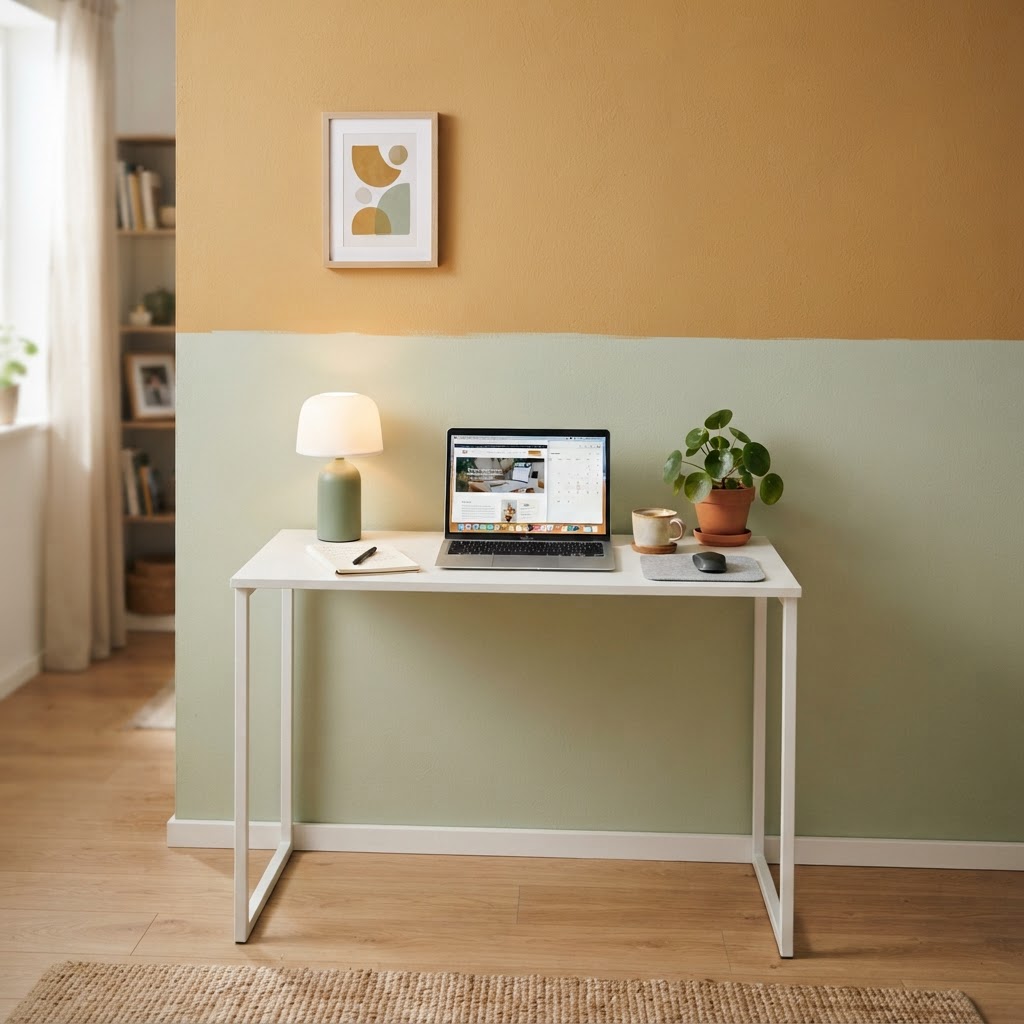
Two-Tone Colour-Block Wall
Painted block
Painting the wall behind the desk in a bold block defines the workspace without adding walls. The colour frames the desk like a picture.
Choose one deep tone such as clay or moss. Keep the furniture neutral so the block stands alone.
Paint a straight 30 cm border around the block for a crisp edge. Low-tack masking tape gives you the line.
Chalkboard Wall Desk
Planning surface
A chalkboard wall above the desk turns planning into something you look at. Lists, sketches and deadlines stay visible all day.
Use liquid chalk markers for cleaner lines. Seal the wall if you want it to last.
Keep a damp cloth and a dry one beside the board. Chalk lifts off in a single pass and the wall stays sharp.

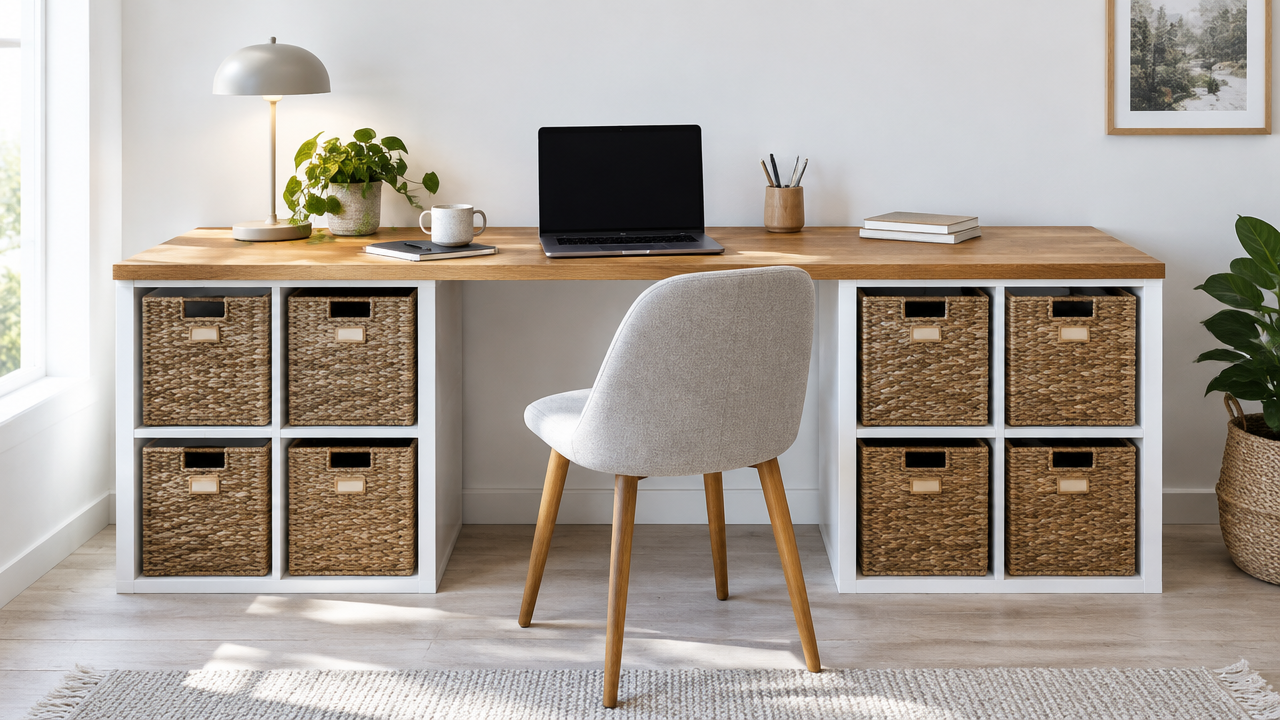
Storage Cube Desk Hack
Cube-unit build
Stack two cube units and bridge them with a wide top for a cheap, sturdy desk. The cubes become drawers, shelves and legs at once.
Fix the units to the wall so the desk cannot shift. Add labelled baskets to hide small clutter.
Choose 30 cm deep cubes so the top has support at both ends. A wide span always needs a centre leg.
How to choose the right one
Start with the ideas that match the room you actually have. A narrow corner will never hold a partner desk, and it does not need to.
Measure the wall, measure your chair and check where the light falls. Ten minutes with a tape measure saves an expensive mistake.
Then choose one desk and commit to it for a month before adding anything else. The best home office desk ideas are the ones you finish.


