

73 Small Backyard Ideas to Maximize a Tiny Outdoor Space
Outdoor Living · Updated for 2026
A small backyard is not a limitation. It is a design brief with very clear rules.
Every square foot has to earn its place. The good news is that constraint makes a garden look better, not worse.
Designers call it zoning. You give each corner one job, then build only what that job needs.
That single habit is what separates a cramped yard from a calm one. It costs nothing and it changes everything.
This list has 73 ideas, and every one is different. Some cost a weekend, some cost a season, and a few cost a single afternoon.
Each idea is small enough to fit a courtyard, a side yard, or a balcony terrace. None of them need a big budget.
You will also find the trend that runs through 2026: water-wise planting, native grasses, warm low lighting, and rooms made from furniture rather than walls.
Read the whole list once, then pick three ideas that share a zone. Three ideas done properly beat ten ideas half finished.
01Patios, Decks and Paving
The floor decides the size of every other decision. Choose a surface that drains, that you can install quickly, and that runs to the edges of the yard. A continuous floor makes a small space read as one big room instead of a patchwork.
IDEA 01
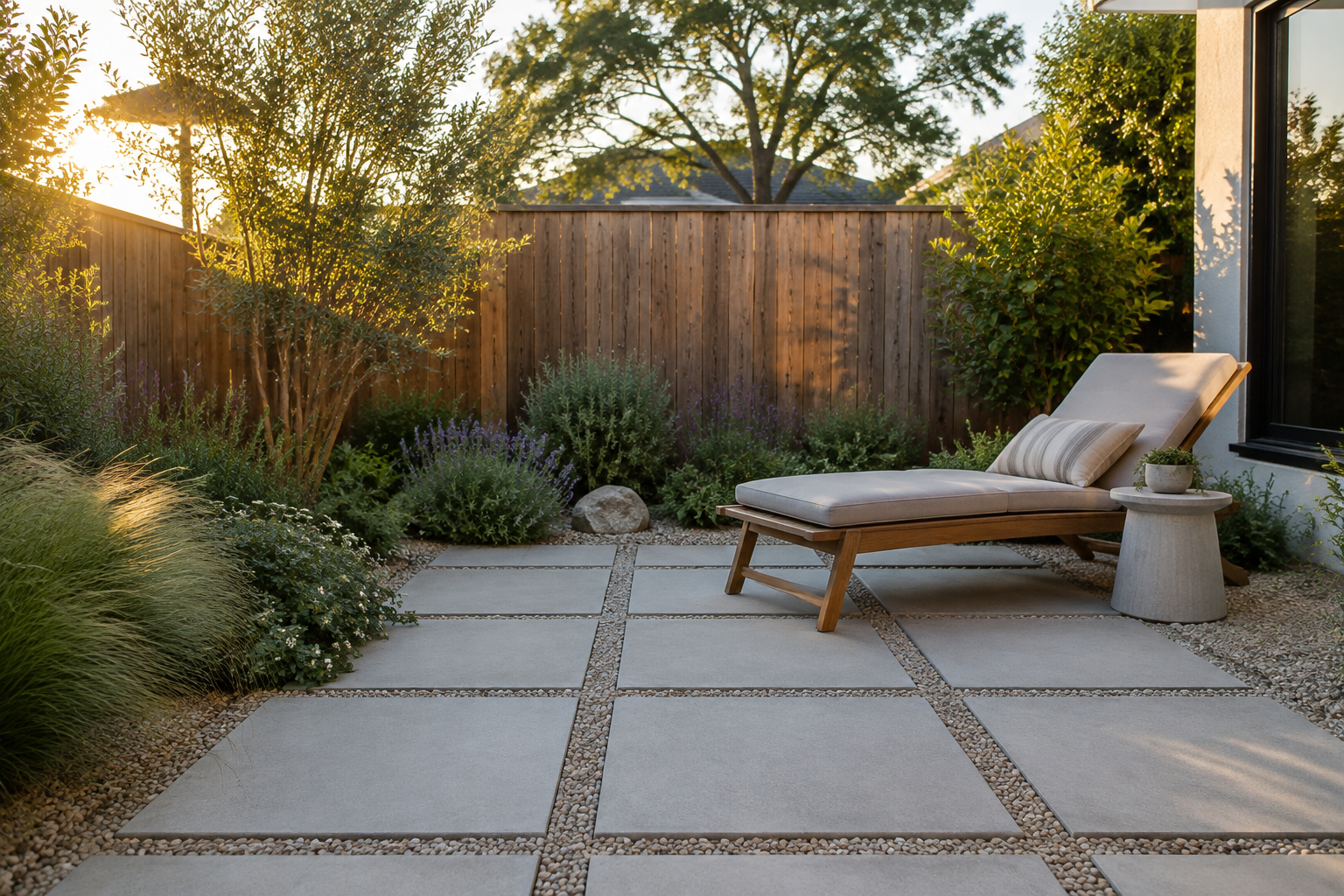
Gravel-and-Paver Patio
Lay large square pavers on a bed of pea gravel and skip the mortar entirely. The open gaps drain storm water, so the patio never turns into a puddle.
Leave a three inch gap between slabs for a clean modern line. It costs a fraction of a poured concrete slab and you can lift any stone to fix it later.
IDEA 02
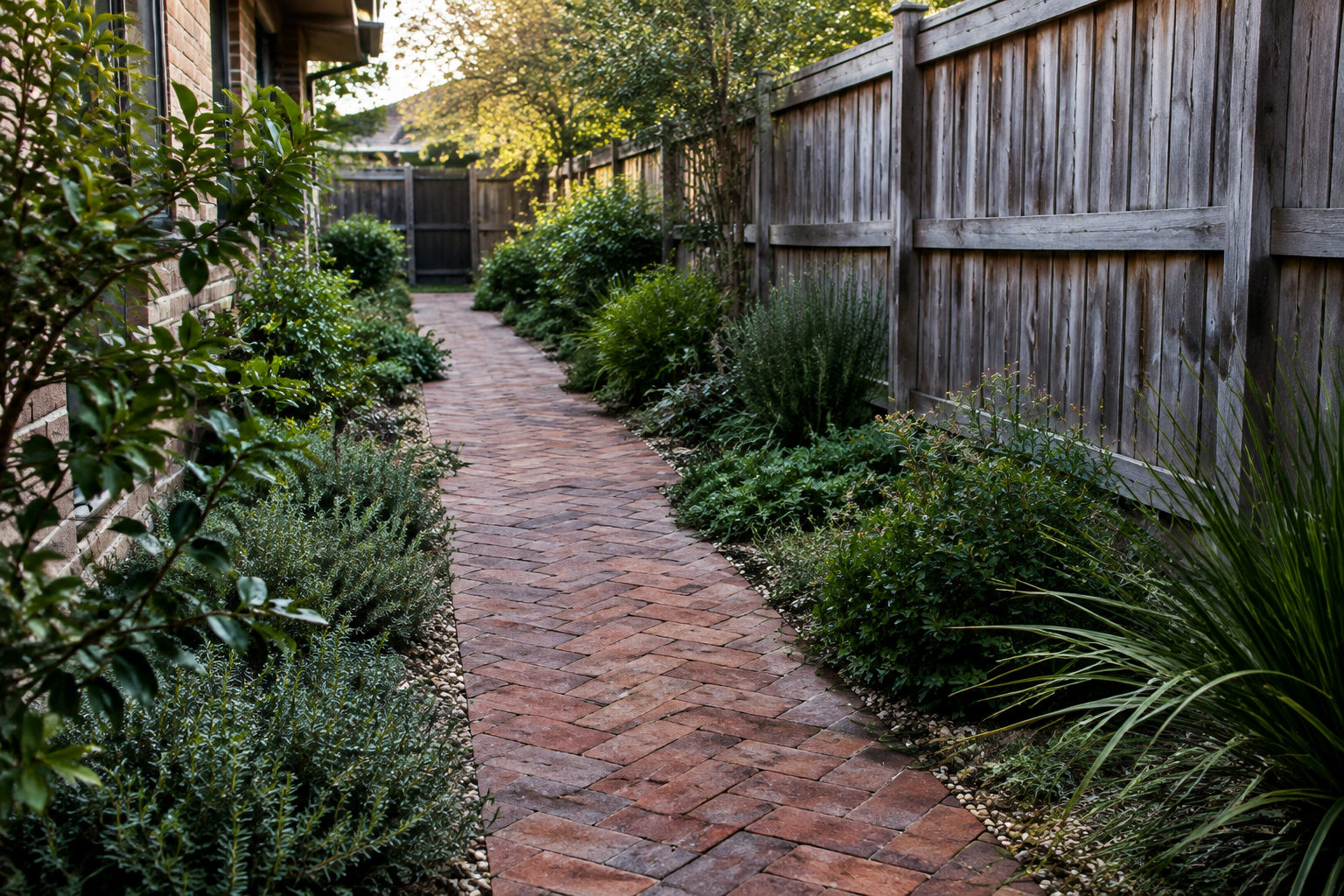
Zigzag Brick Path
A brick path that turns at hard angles makes a short yard feel twice as long. Each turn hides the next stretch, so the garden reveals itself in stages.
Set two inch clay pavers in sand rather than mortar. They hold firm underfoot and you can re-lay a single brick without breaking the run.
IDEA 03
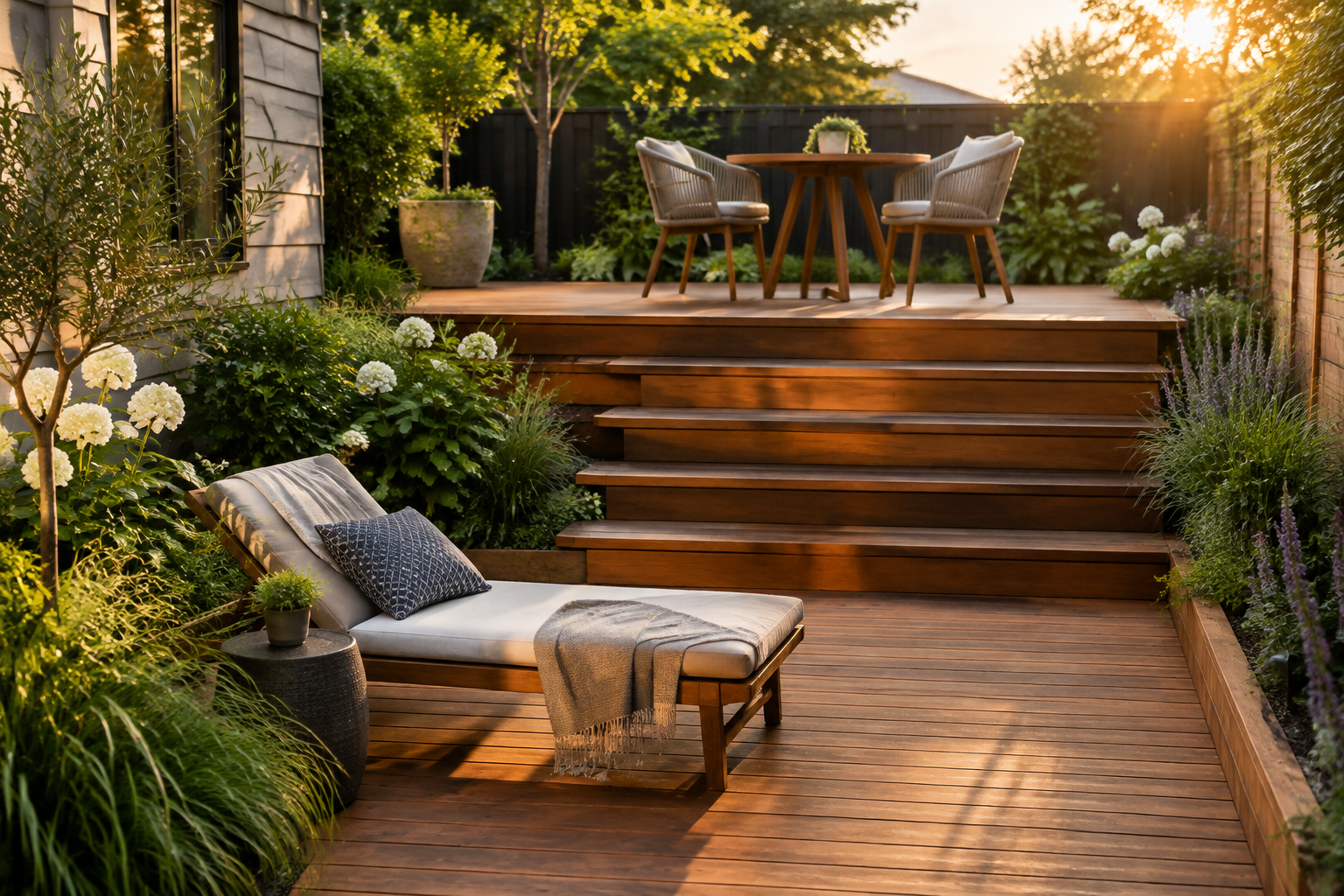
Two-Tier Timber Deck
Split one flat deck into two levels about a foot apart to separate eating from lounging. You get two rooms from one footprint and no wall between them.
Tuck a hidden LED strip into the step edge. The change in level reads instantly at night without any visible fitting.
IDEA 04
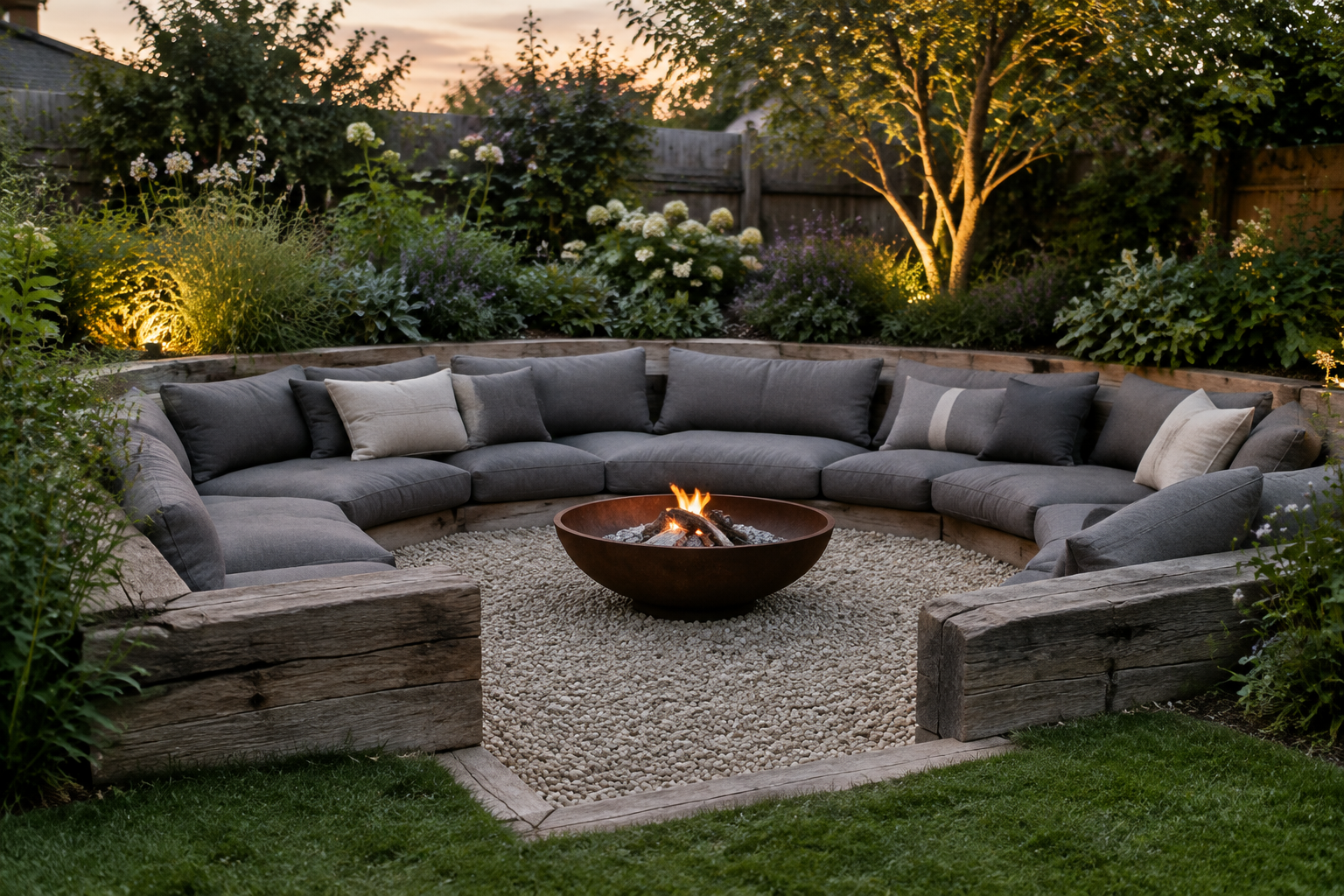
Sunken Gravel Lounge
Dig a shallow pit, edge it with weathered timber, and fill it with gravel for a conversation circle. Sinking the seats makes even a ten foot wide garden feel deep.
Add a lightweight cover and the pit becomes a play area or a dance floor. One hole in the ground gives you three outdoor rooms.
IDEA 05
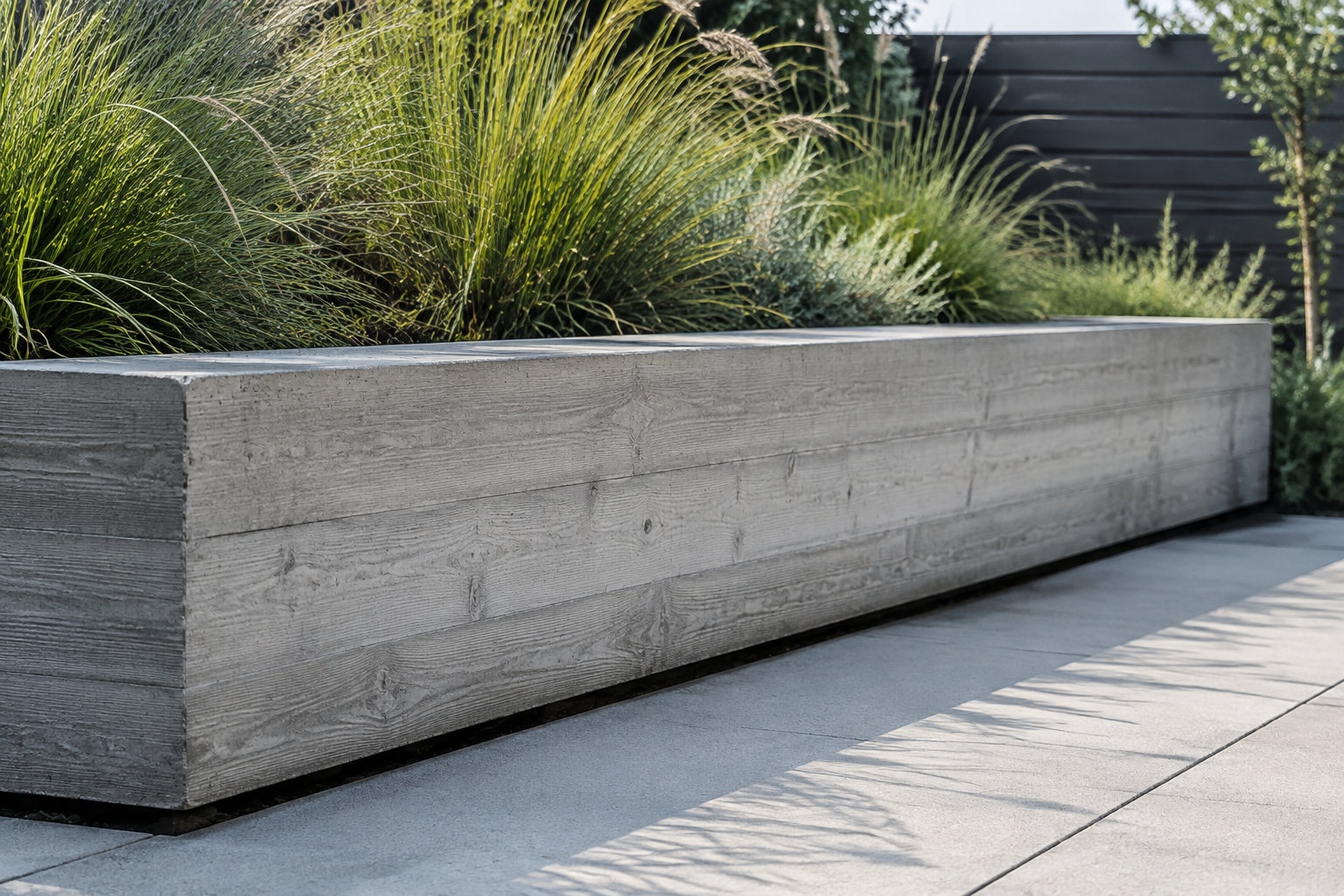
Concrete Plinth Bench
Cast one low concrete bench that works as seat, retaining wall and boundary line. A single element does the job of three and never needs repainting.
Leave a shadow gap of an inch at the base. The whole mass appears to float, which keeps a heavy material feeling light.
IDEA 06
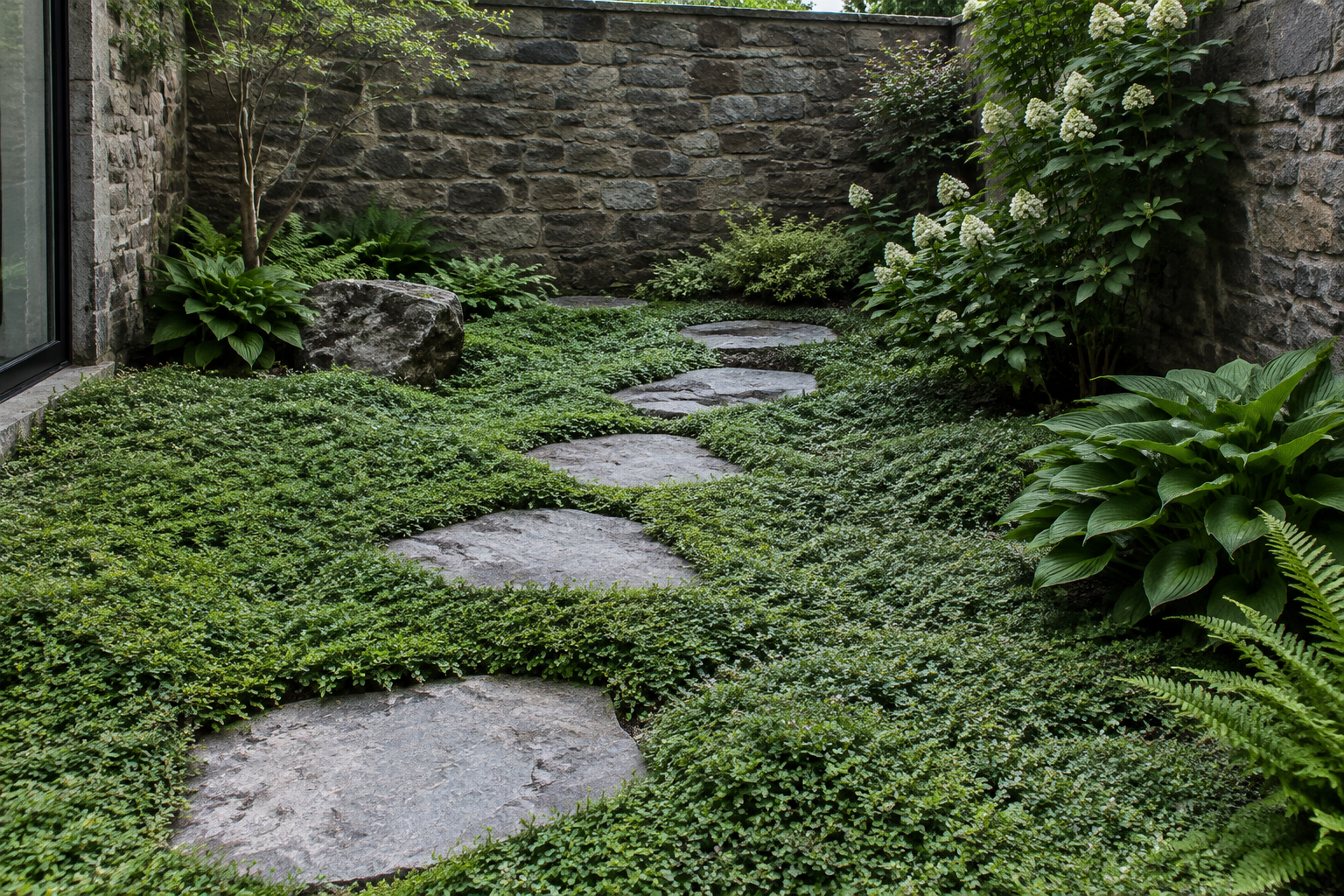
Stepping-Stone Lawn Strip
Pull up a tired lawn and set irregular stone treads through low creeping thyme. The green stays, but mowing, watering and muddy feet all go away.
Space the stones eighteen inches apart to match a natural stride. Any wider and people step on the plants instead.
IDEA 07
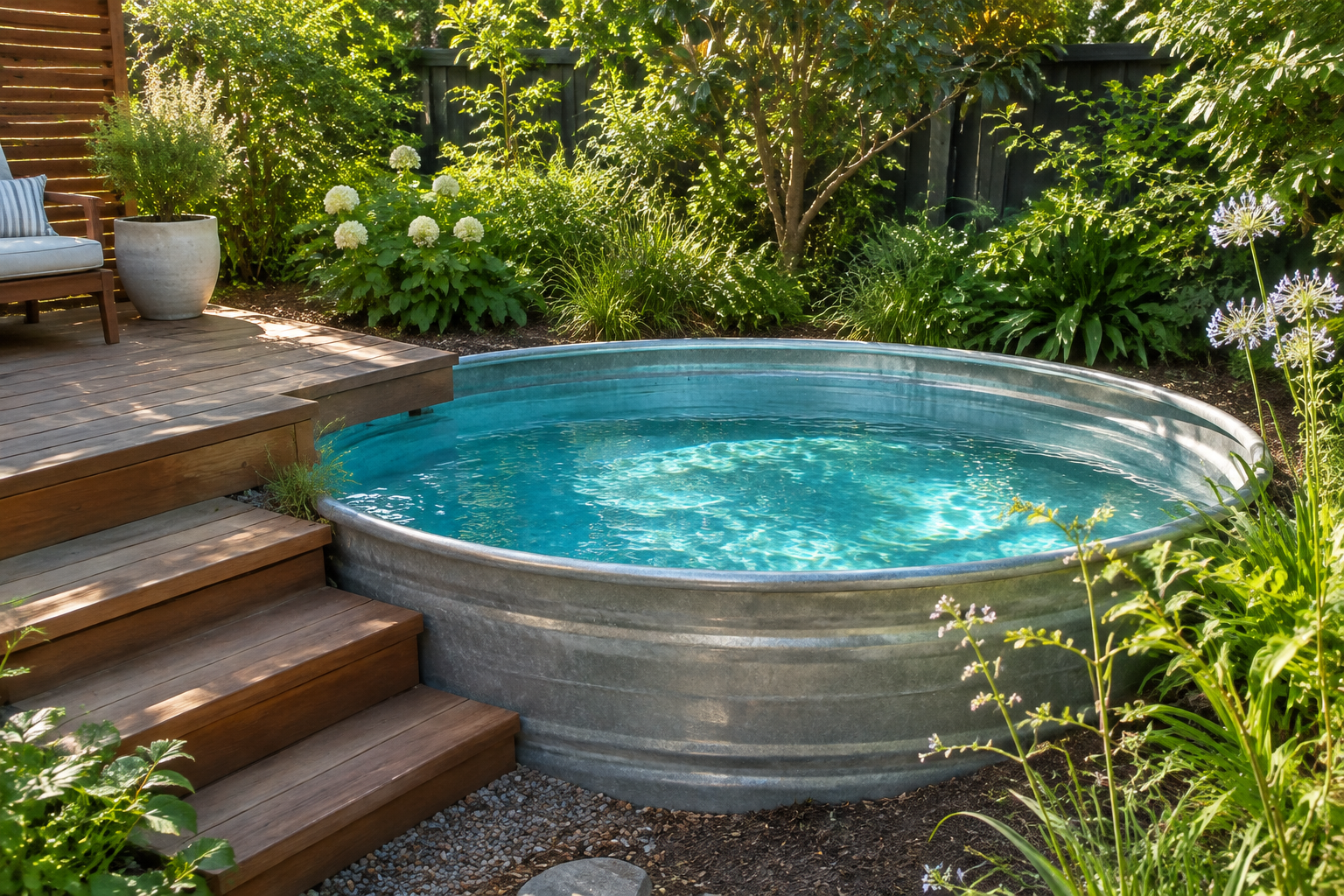
Stock Tank Plunge Pool
A galvanised stock tank sunk halfway into the ground makes an instant plunge pool. It warms quickly in sun and costs a fraction of a built pool.
Add a small submersible pump and a floating skimmer to keep the water clear. Empty it at the end of the season and store it dry.
IDEA 08
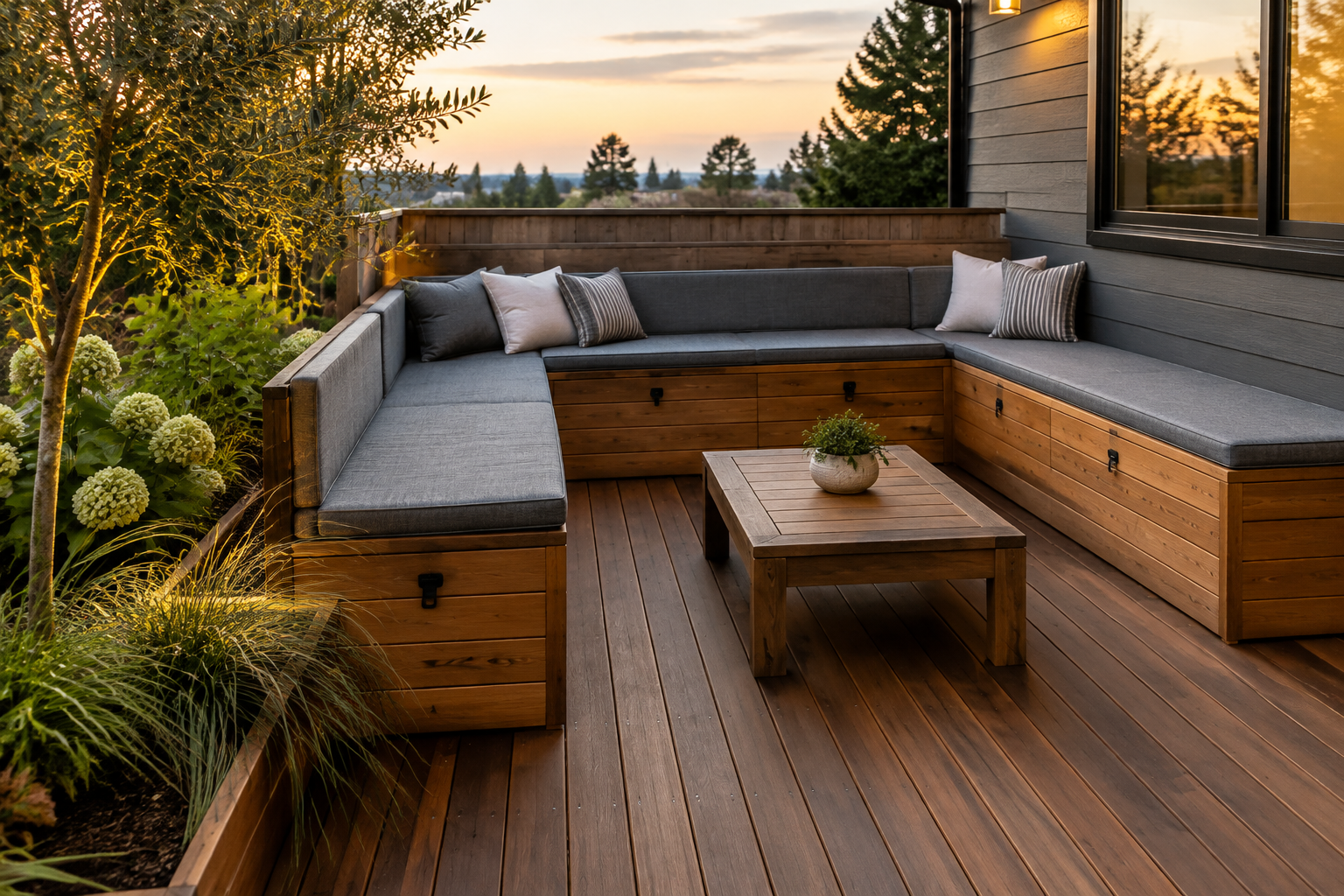
Storage Bench Deck
Build the deck benches with lift-up lids and you gain a full storage wall for cushions, tools and toys. Small yards lose floor space fast, so every seat should hide something.
Use marine grade hinges and leave a drainage gap at the back. Damp cushions ruin timber faster than rain ever will.
IDEA 09
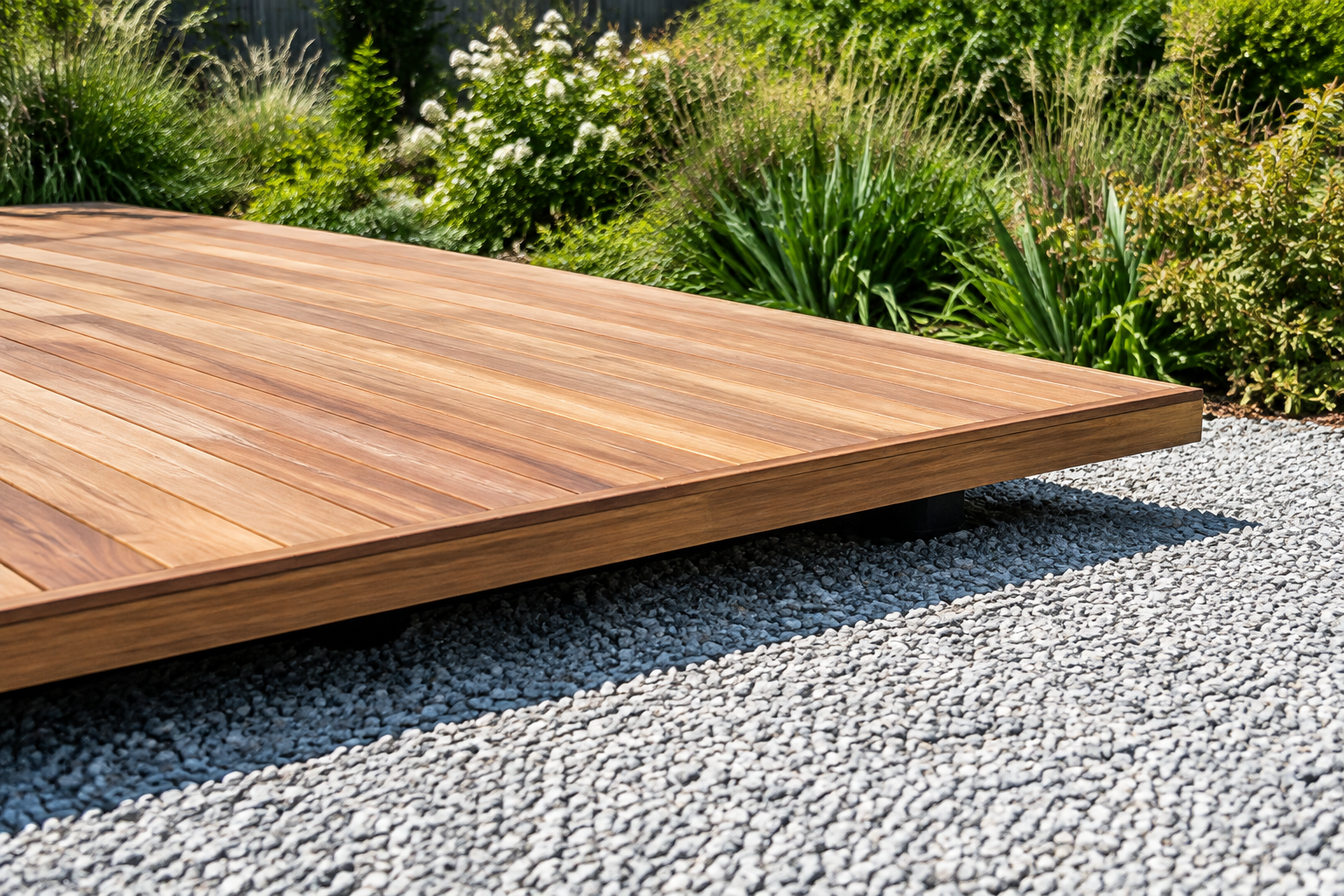
Floating Deck Over Gravel
Set a cedar deck on hidden pedestals above a gravel bed and skip the joists. Water drains straight through, so the surface stays dry all year.
Pedestals let you level the deck without digging or pouring concrete. It is the fastest route to a raised floor on uneven ground.
IDEA 10
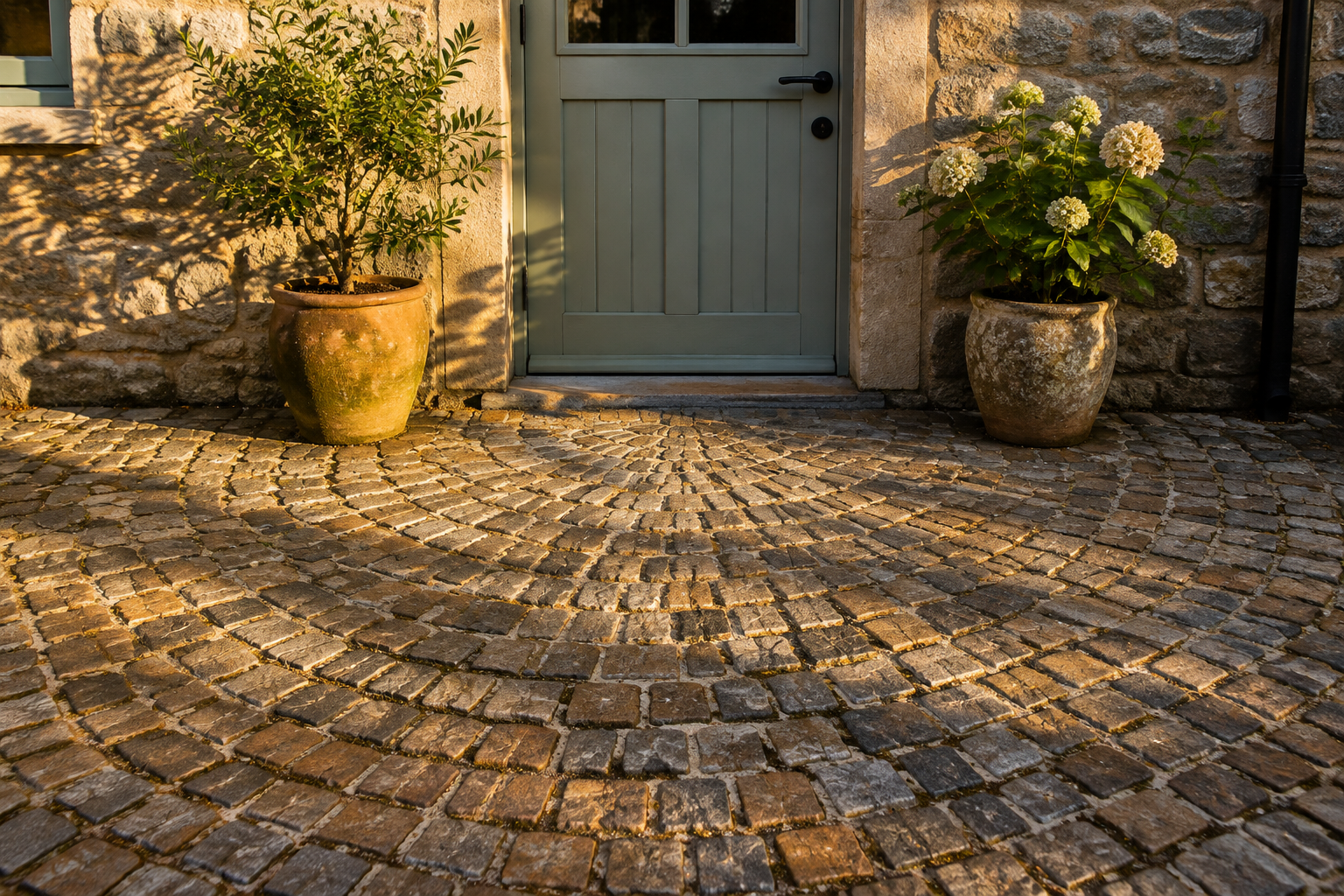
Cobblestone Threshold Court
Lay a small fan pattern of cobblestones right outside the back door as a transition court. It marks the line between house and garden and keeps mud out.
Seal the stones once a year to hold their colour. A tight pattern also hides small level changes you would otherwise have to build steps for.
02Shade, Shelter and Privacy
Shade is what turns a yard into a place you stay in. Privacy is what lets you relax once you are there. Both can be added without building a solid wall, using slats, sails, vines and movable screens.
IDEA 11
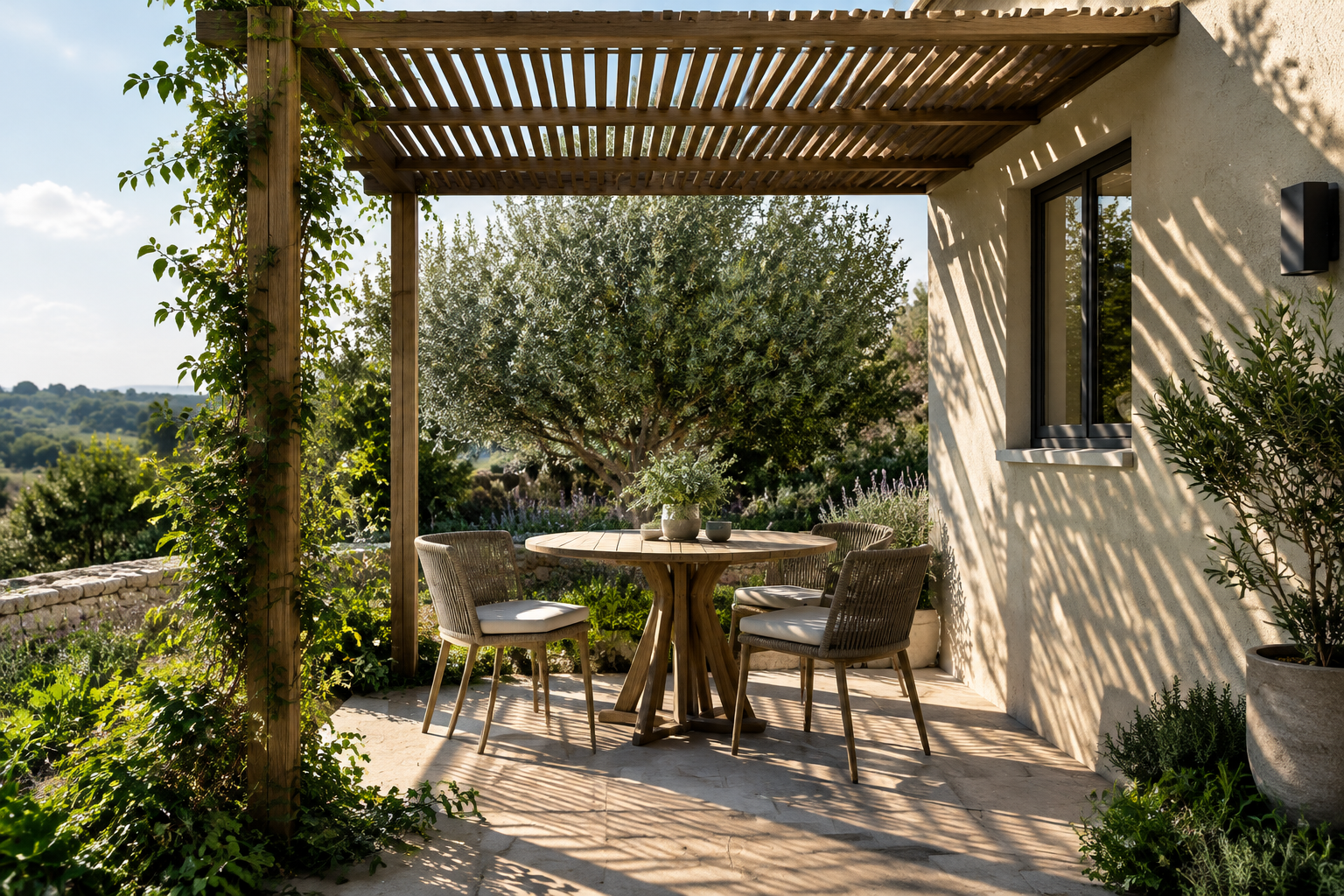
Wall-Mounted Pergola
Bolt a half pergola to the house wall so it needs only two posts. The slats cut harsh summer sun without blocking low winter light.
Angle the slats slightly away from the house to shed rain. Warm timber slats also soften an ugly rendered wall at no extra cost.
IDEA 12
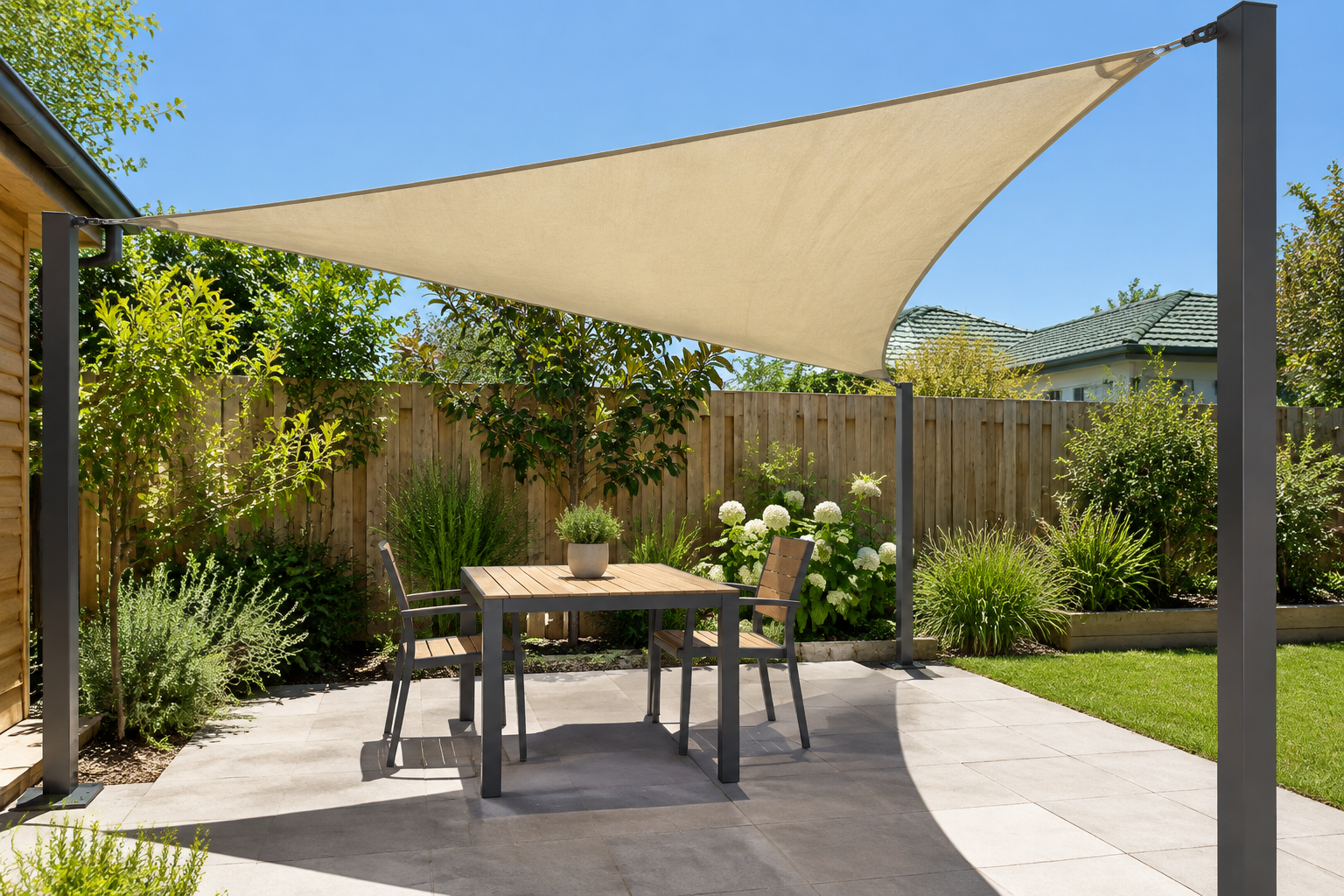
Triangle Shade Sail
One taut triangle sail covers a full dining table for the price of a good parasol. It blocks most UV while still letting air move underneath.
Anchor to fence posts rather than the house wall. Even tension on both sides keeps the fabric tight and stops it flapping in wind.
IDEA 13
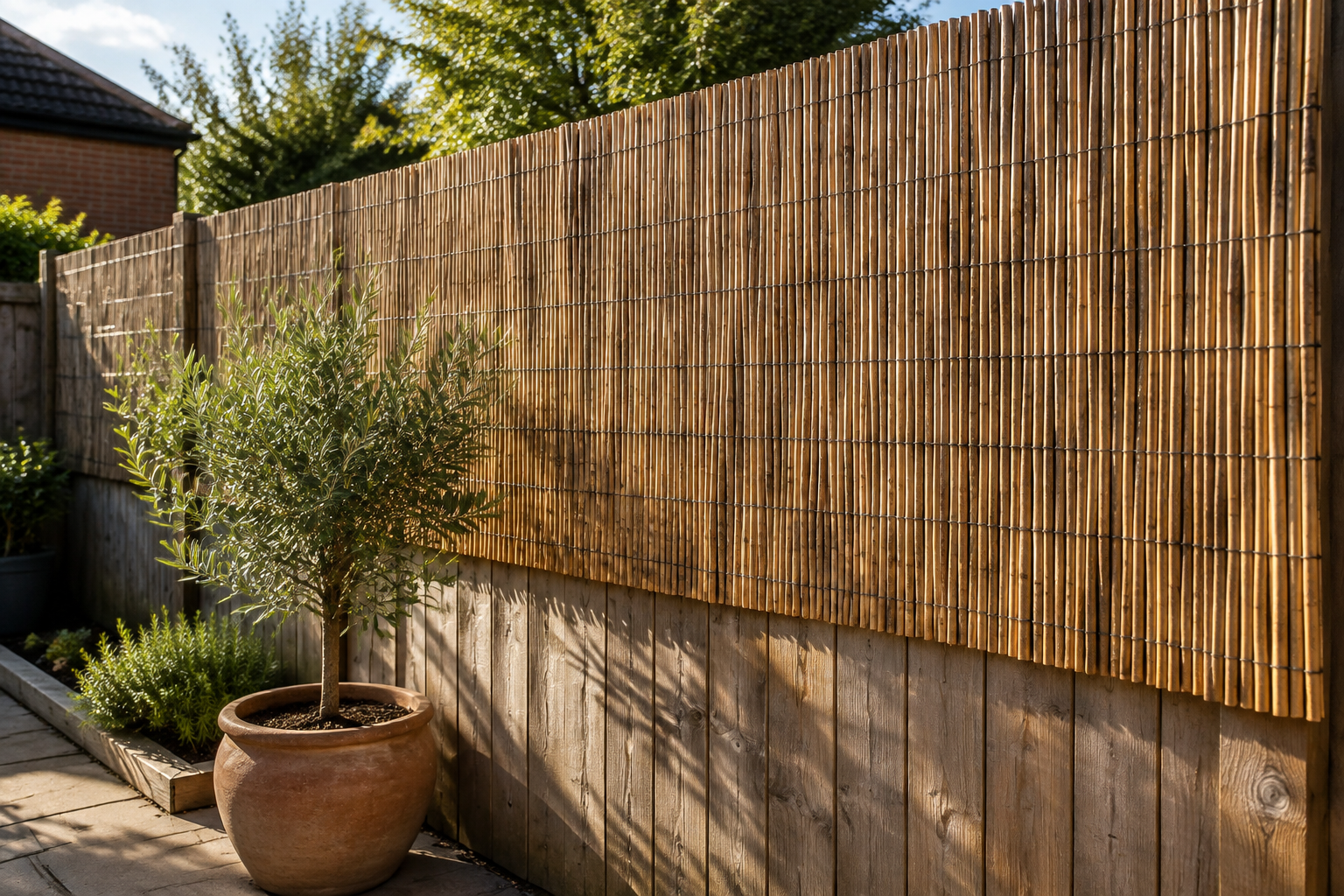
Reed Fence Screen
Roll-out reed screening fixed over an existing fence adds height and privacy in an afternoon. It softens a hard boundary and blocks the neighbouring window.
Leave a one inch gap along the bottom for airflow. Wet reeds rot quickly when air cannot move behind them.
IDEA 14
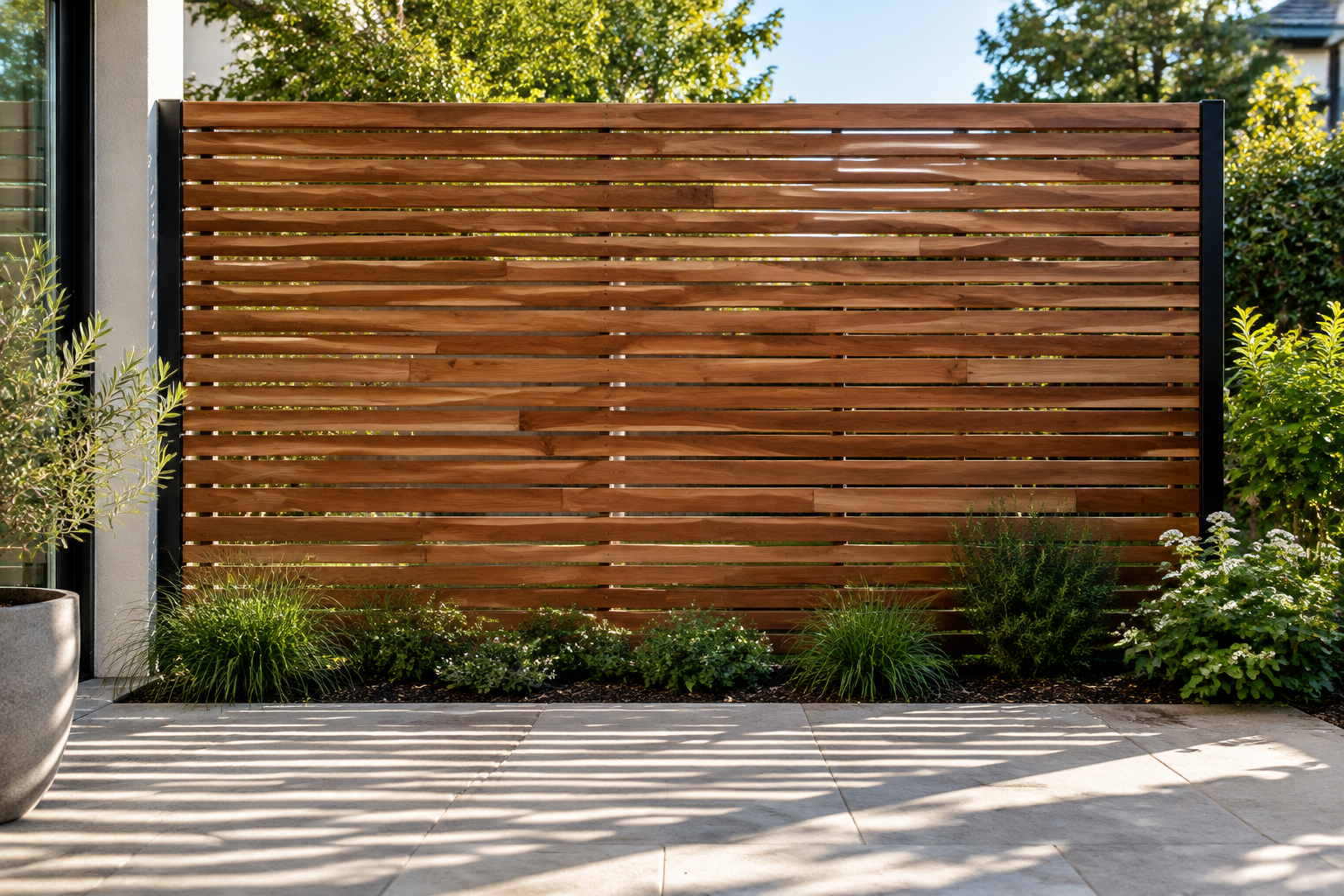
Slatted Cedar Screen
Horizontal cedar slats on a slim frame give privacy without turning the corner into a solid wall. Light and breeze still pass through the gaps.
Stagger the slats off-square so views are blocked from the house but the sky stays open. The pattern also throws soft shadow lines across the paving.
IDEA 15
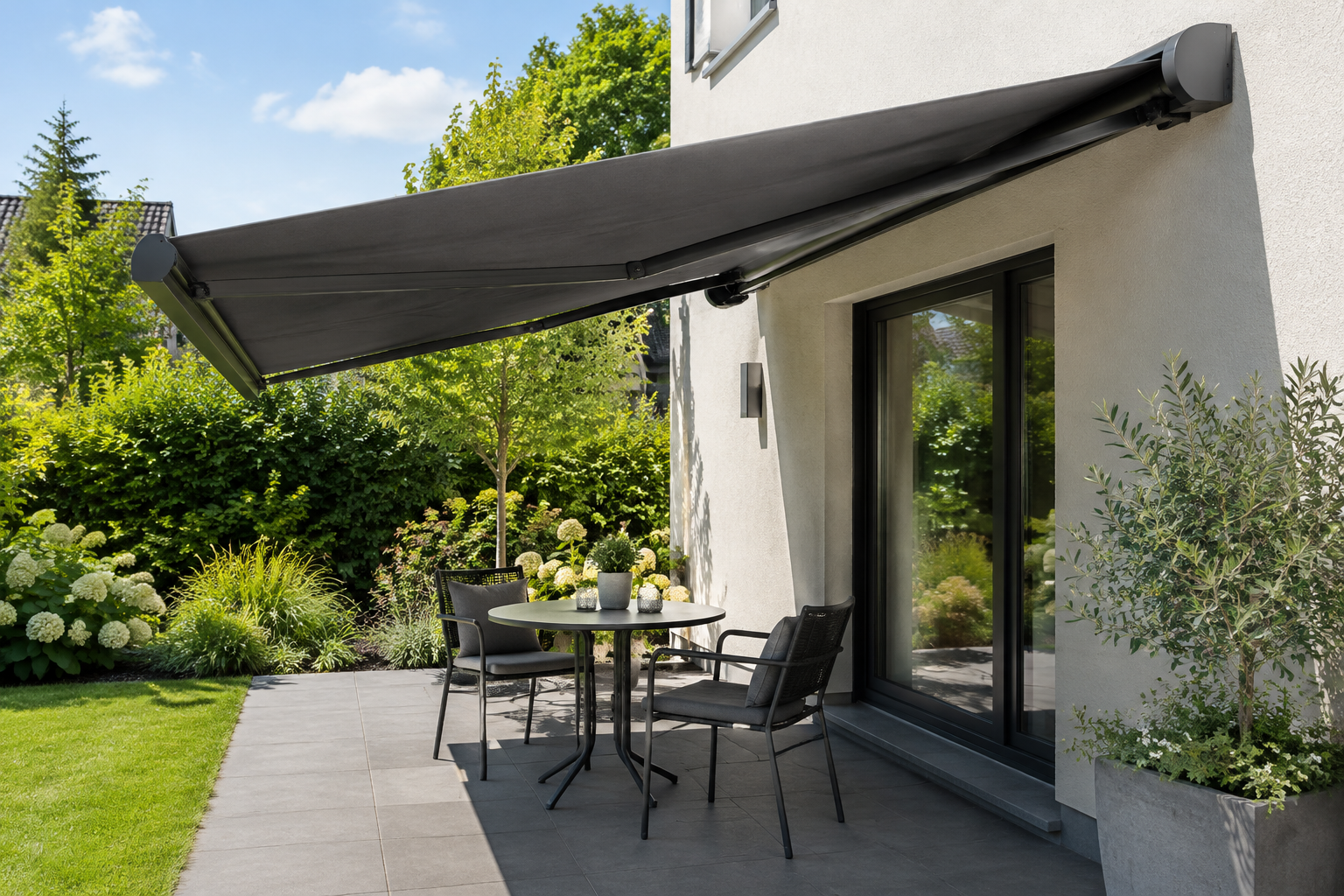
Slim Retractable Awning
A wall-mounted retractable awning opens only when you need it. It gives full shade for lunch, then disappears so the yard feels open again.
Choose a cassette housing that closes completely. Clean fabric lasts twice as long and the wall stays neat when the awning is away.
IDEA 16
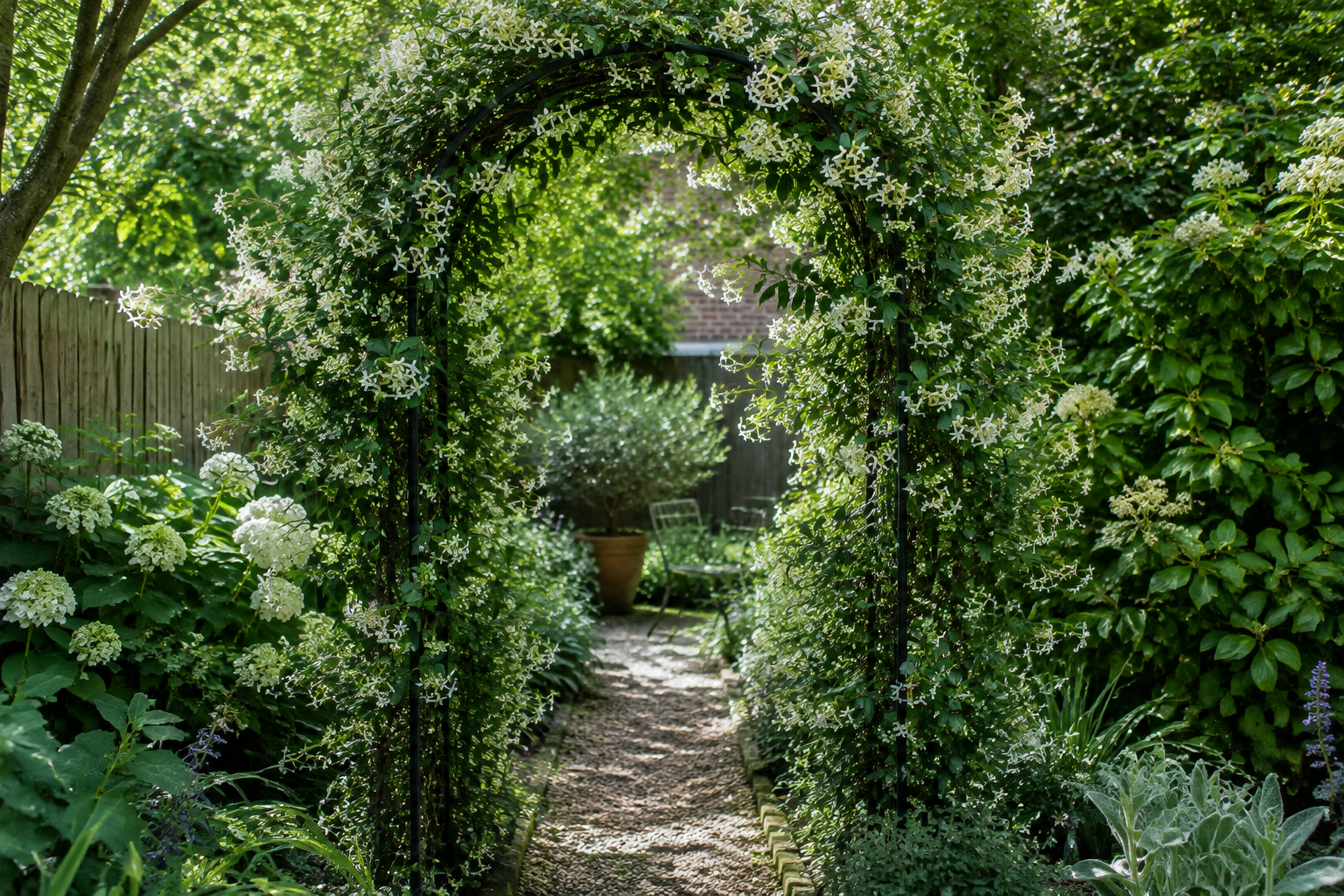
Vine Arch Tunnel
Train climbing jasmine or grape over a metal arch placed across the path. Walking under it turns a corridor into a proper garden room.
Plant one vine on each side and pinch the leaders to force an even canopy. Scent under a tunnel is the cheapest luxury there is.
IDEA 17
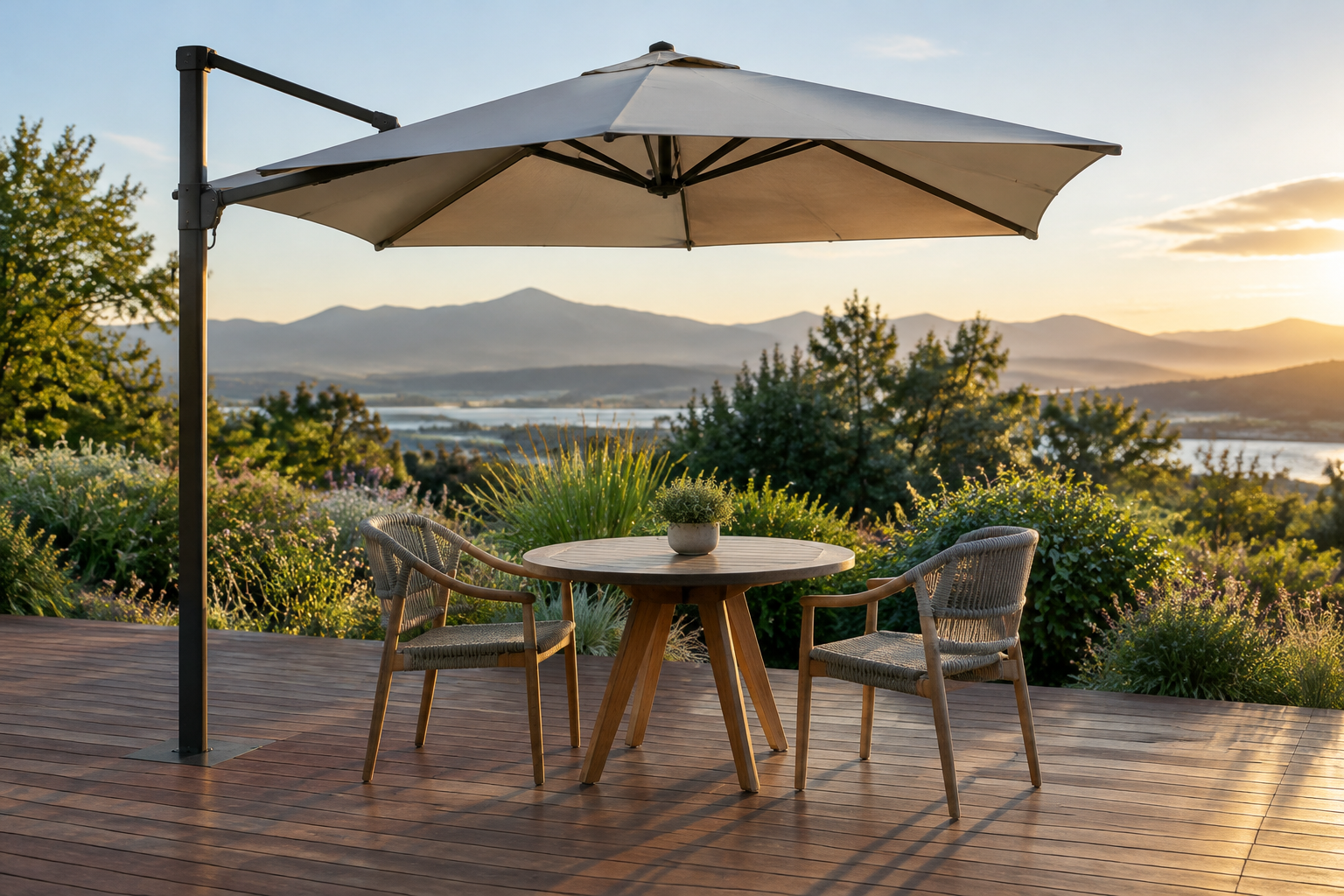
Umbrella Pocket Deck
Cut a flush sleeve into the deck for a cantilever umbrella and hide the base underneath. Nothing trips, and the table sits dead centre.
Cap the sleeve with a hinged lid for the months it stays empty. A flush lid means the deck still works as a dance floor.
IDEA 18
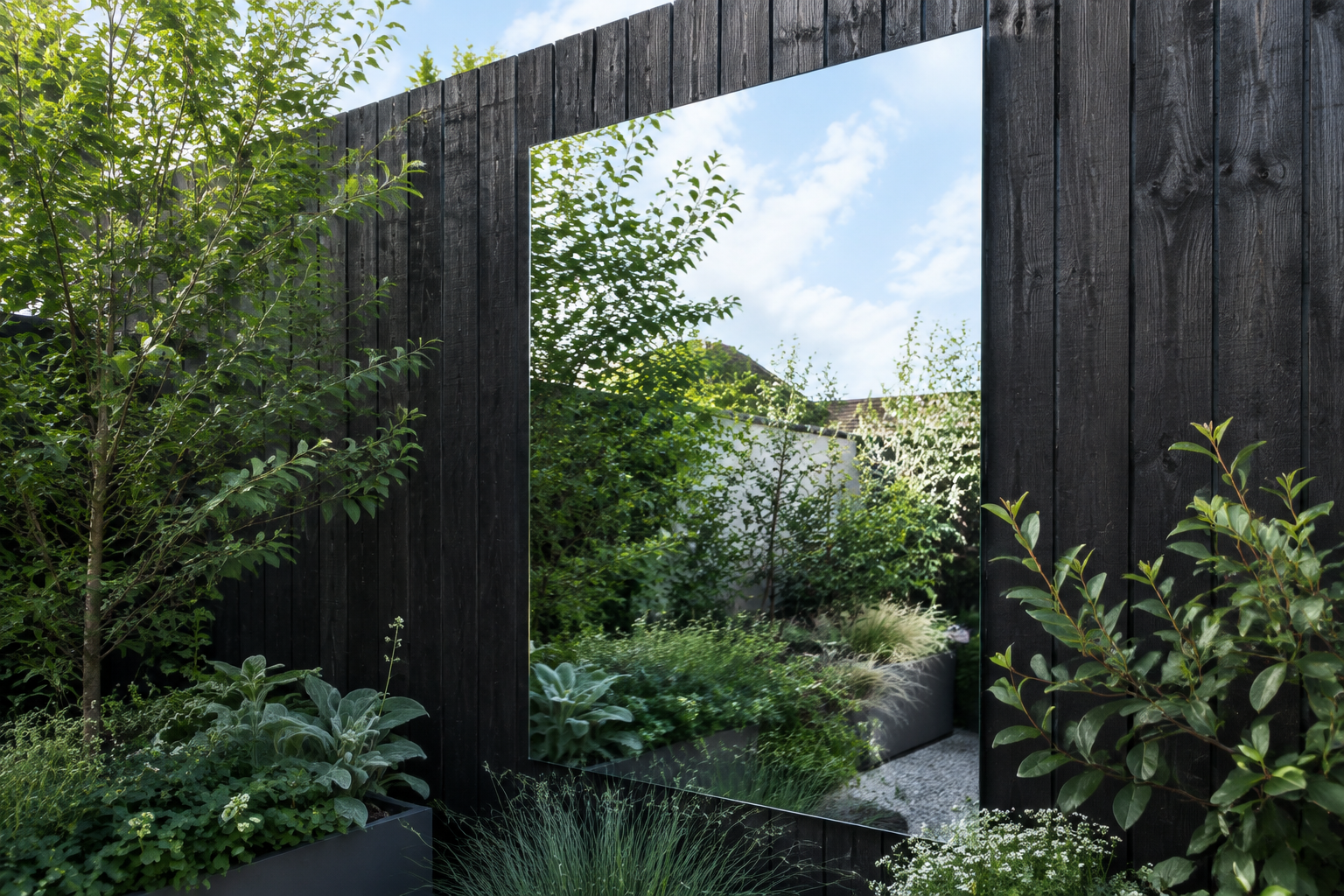
Mirror Fence Panel
One large mirrored panel on the back fence doubles the apparent depth of the garden. It bounces light into a shaded corner and hides the boundary.
Frame it in dark timber and tilt it a few degrees upward to catch sky. Flat glass reflecting only a fence looks like a window into nothing.
IDEA 19
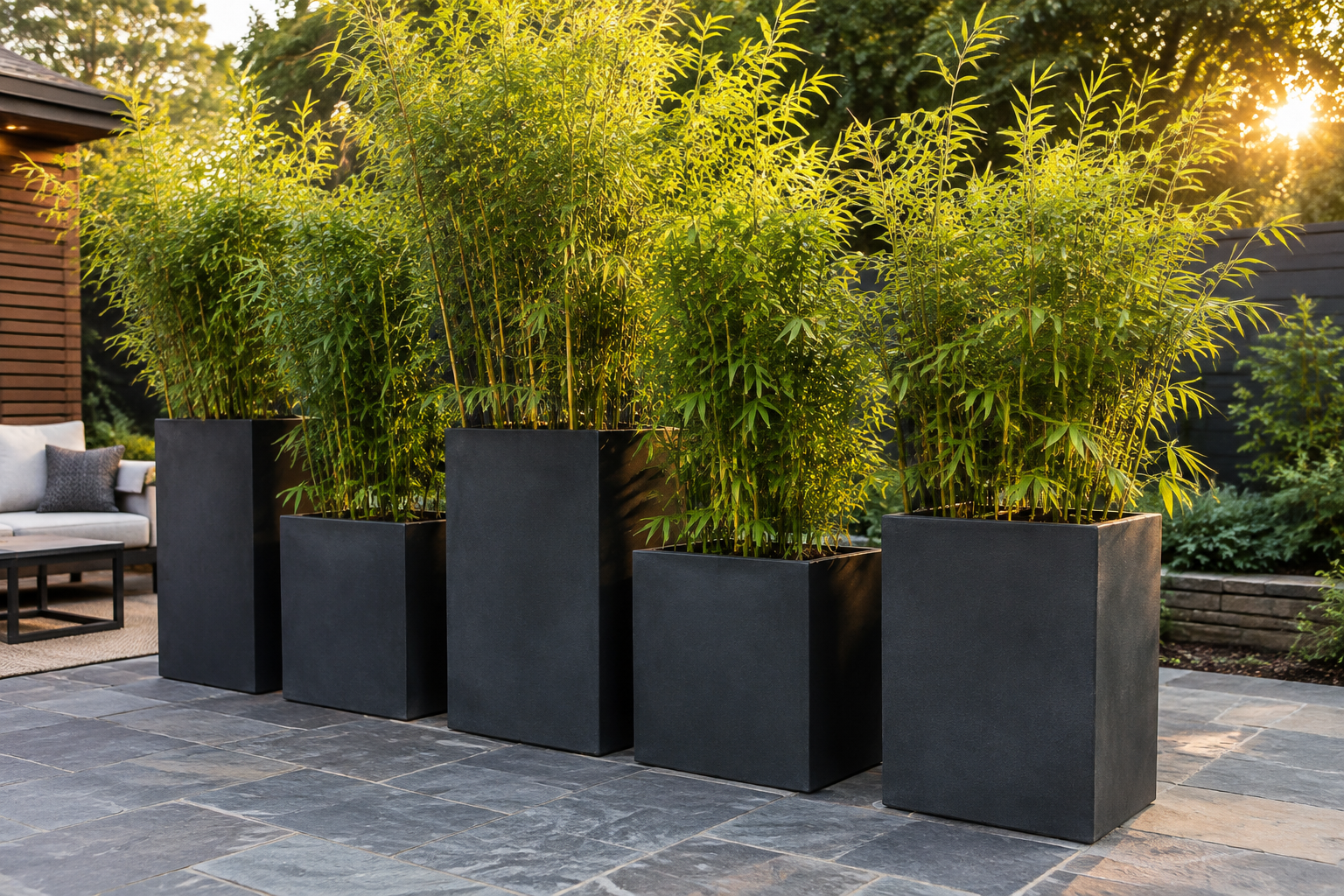
Tall Planter Privacy Wall
A row of five foot planters planted with bamboo or olive creates privacy you can move. Renters can take the whole screen with them when they leave.
Stagger the heights so the line does not read as a second fence. Mixing two species keeps it from looking like a hedge in pots.
IDEA 20
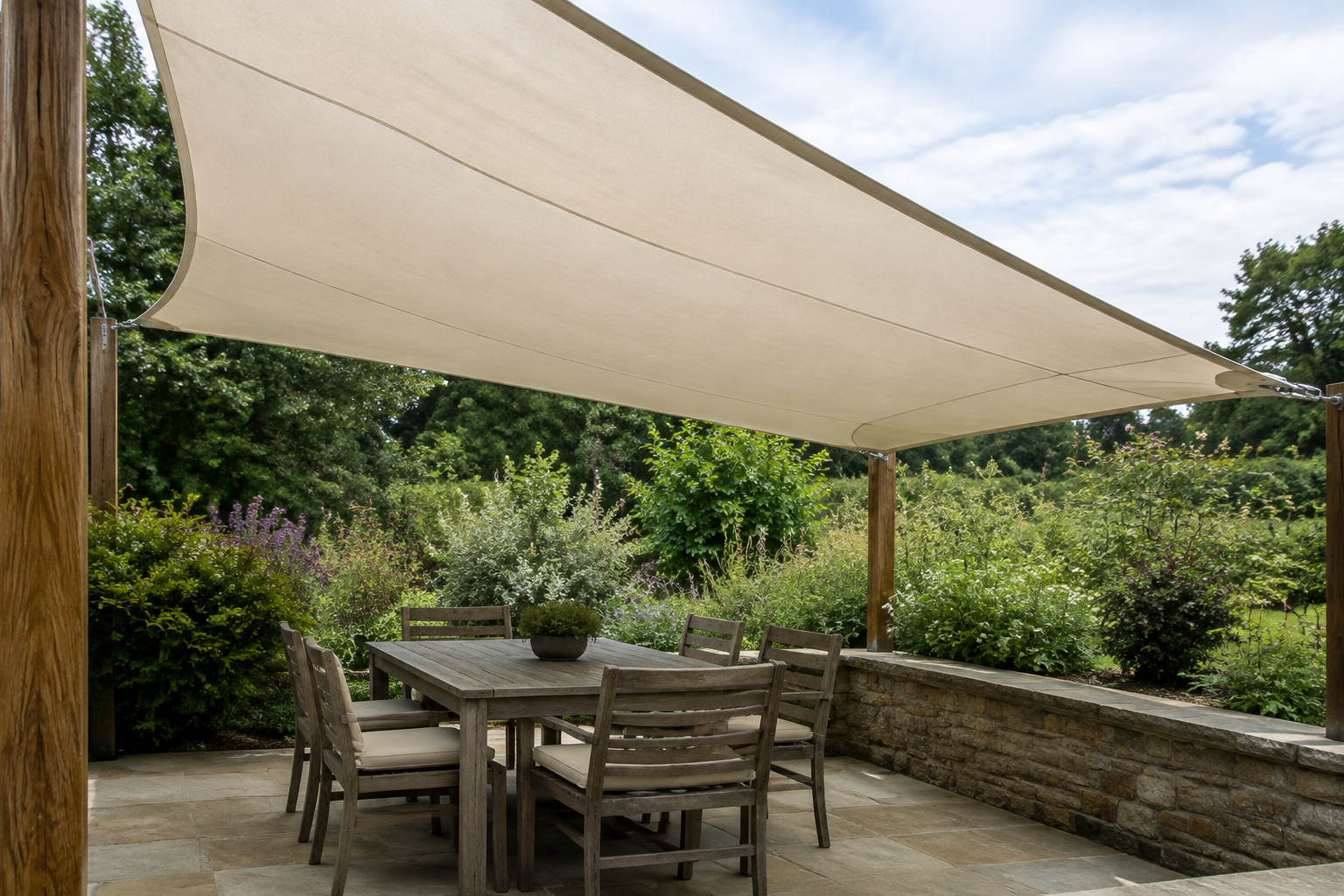
Sailcloth Canopy
Stretch canvas over a dining nook with turnbuckles for a soft, cool ceiling. Fabric shade stays cooler than metal roofing and folds away in winter.
Slope one corner lower so rain runs off to a single point. A canopy that pools water will sag within a season.
03Seating, Dining and Lounging
Most small yards are over-furnished. Pick one seating zone and make it excellent. Better still, choose pieces that fold, stack, swing or hide storage so the floor comes back when you are not using it.
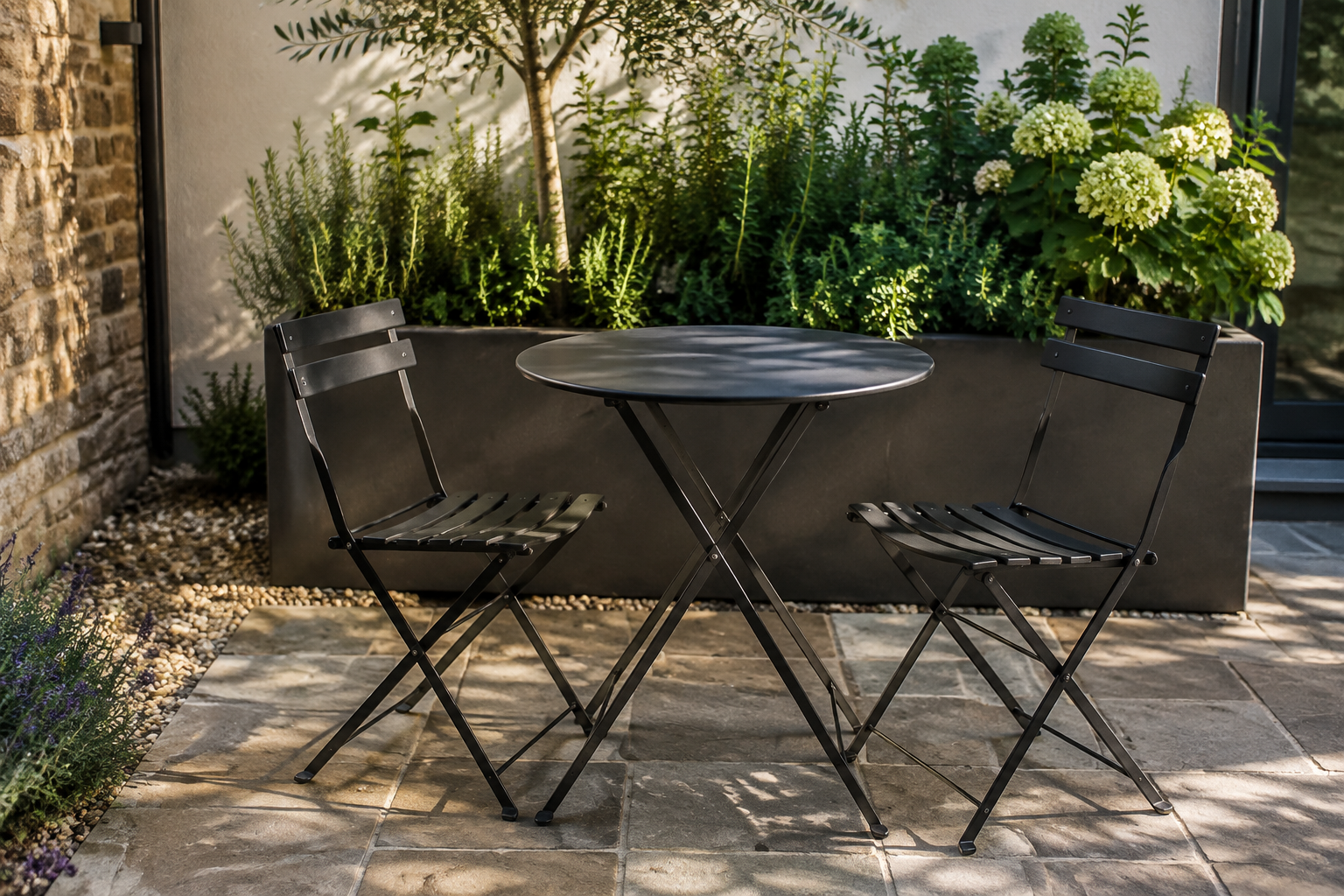
IDEA 21
Petite Bistro Set
A twenty-eight inch round bistro table with two folding chairs seats a couple in a five foot square. Fold both chairs flat and the space becomes a walkway again.
Choose powder-coated steel so it survives weather with no maintenance. Round tables are easier to squeeze past than square ones.
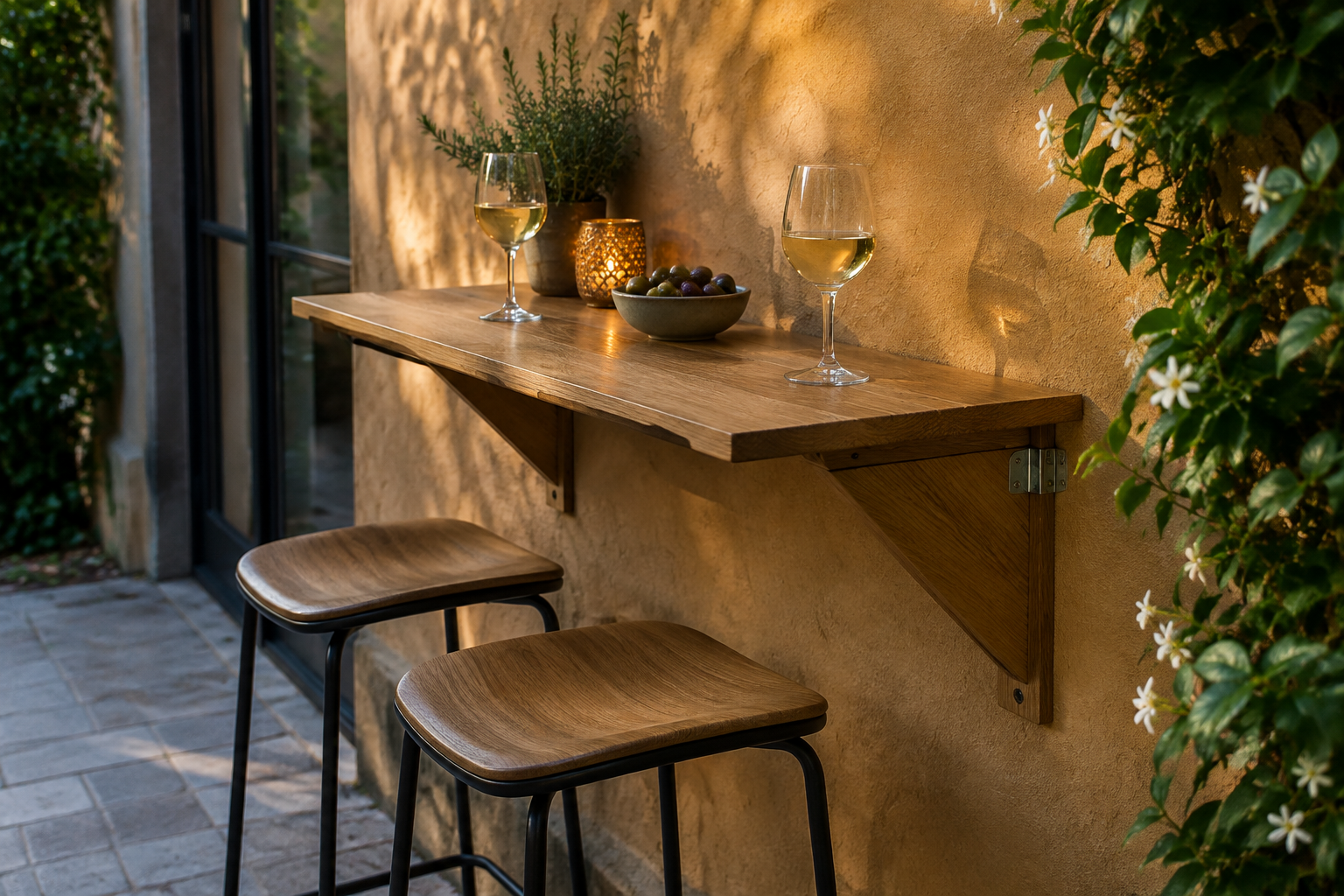
IDEA 22
Fold-Down Bar Ledge
Hinge a narrow bar ledge to the wall or fence and drop it flat when it is not in use. It turns dead vertical space into a drinks counter for four.
Use fold-down shelf brackets rated for at least fifty pounds. Keep the ledge an inch shy of the wall so spills wipe away cleanly.
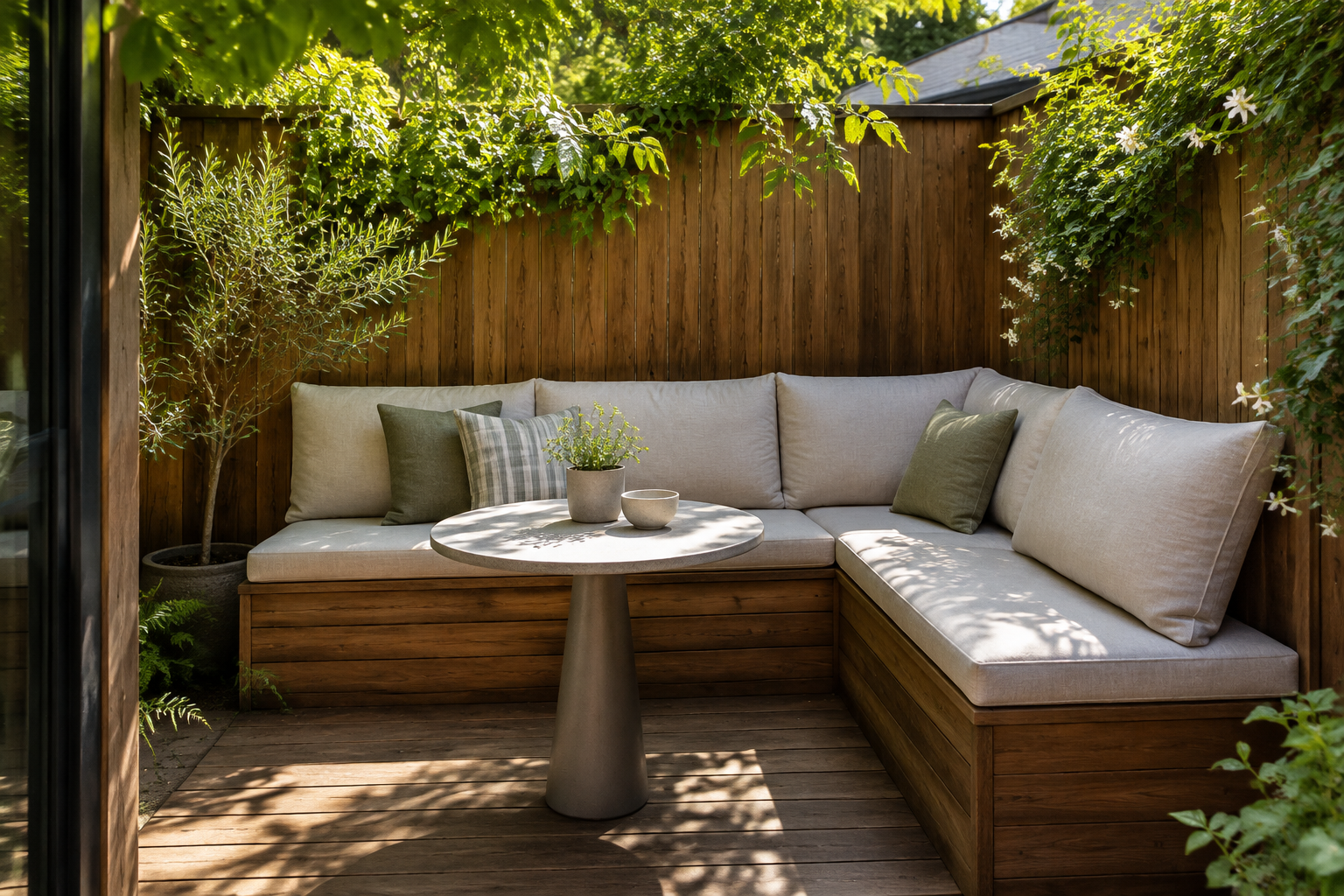
IDEA 23
Corner Banquette Bench
An L-shaped bench built into the corner seats six where a table would seat four. Cushions and a round table finish the dining room feel.
Store the table under the bench in winter and the same corner becomes a reading nook. Corners are the most wasted space in any small yard.
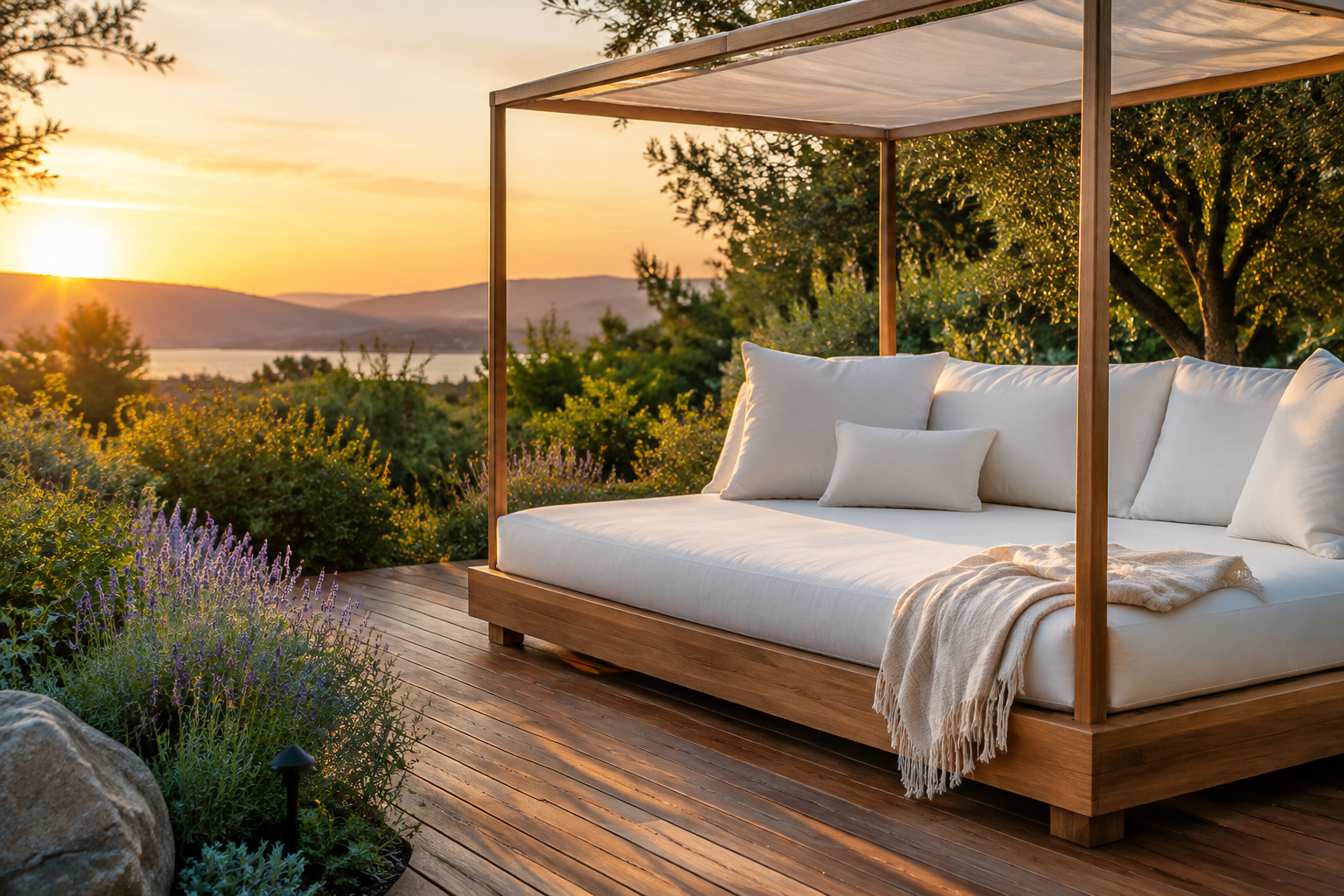
IDEA 24
Deck Daybed
A wide low daybed with a canopy frame reads as a sofa, a lounger and a guest bed. One piece of furniture covers three uses in a tiny yard.
Add locking castors so you can roll it under cover before rain. Choose a mattress fabric rated for outdoor use.
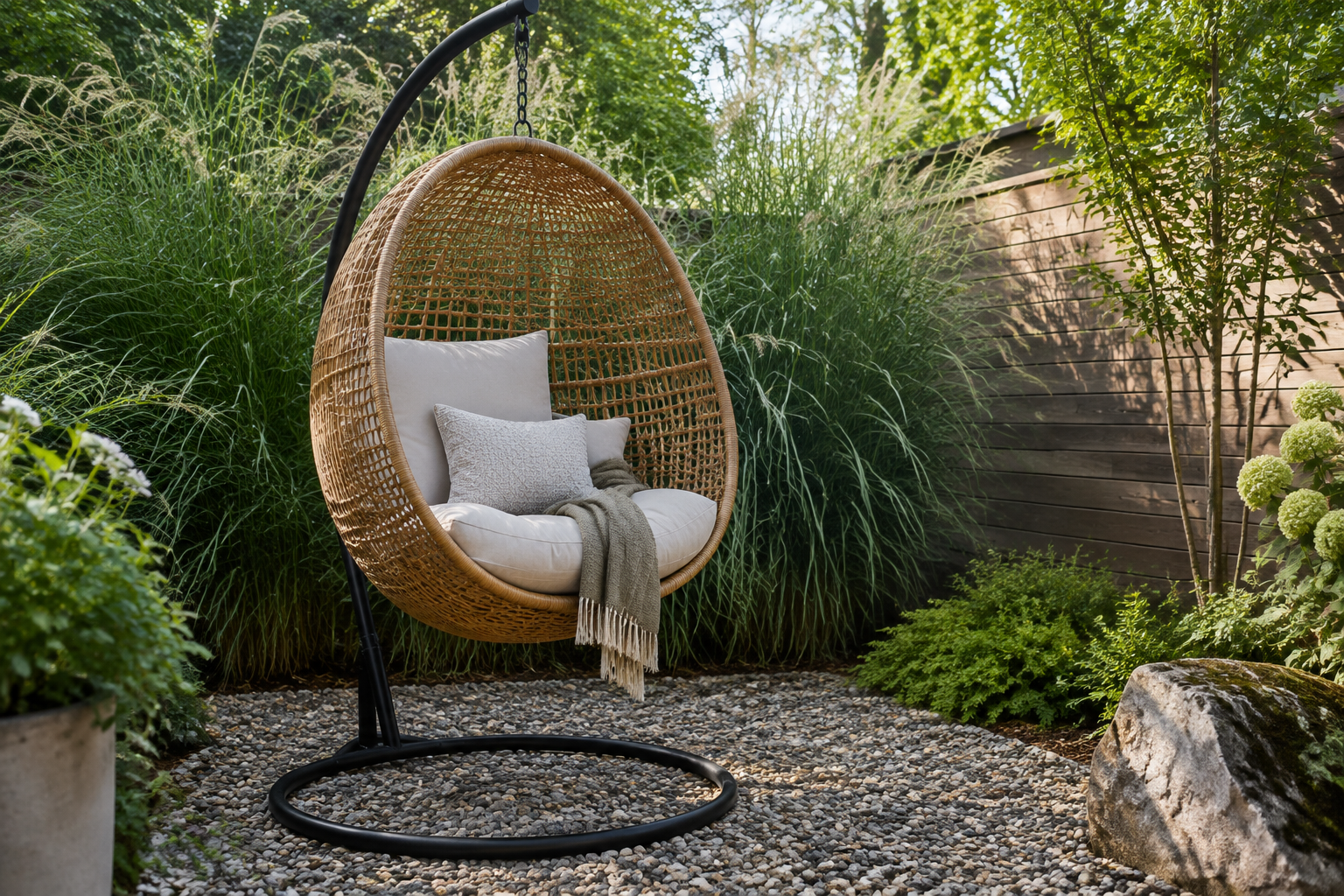
IDEA 25
Hanging Egg Chair
Suspend one egg chair from a single frame and you gain a lounge zone with almost no footprint. It becomes the seat everyone wants at a party.
Keep three feet clear on every side so it swings without clipping plants. A freestanding frame works where there is no strong branch.
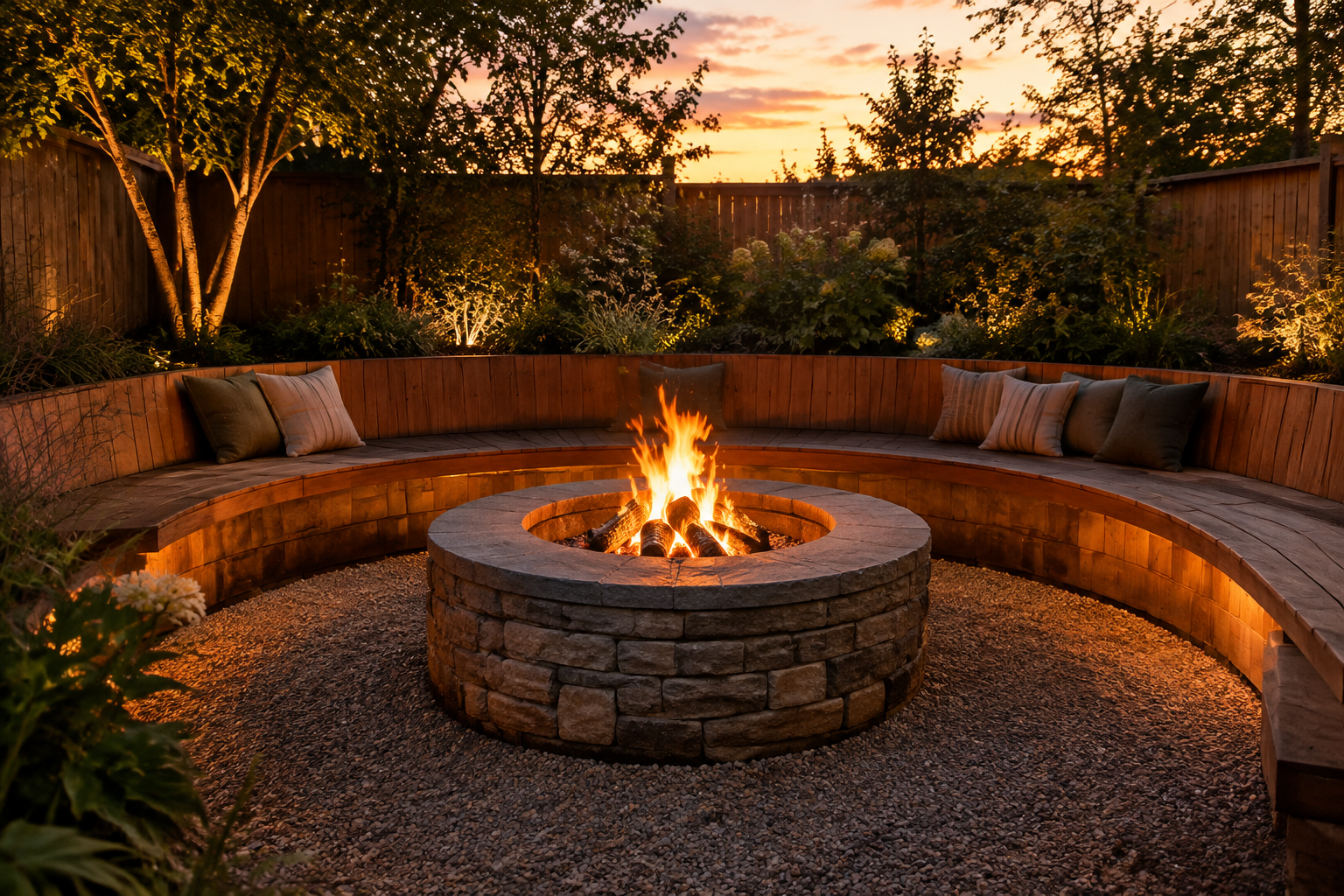
IDEA 26
Fire Pit Bench Ring
Cast a circular bench around a fire pit and the seating becomes the wall. The curve uses the corners that square furniture always wastes.
Use a smokeless insert so the evening does not end early. Keep at least three feet of clear floor between the ring and the boundary.
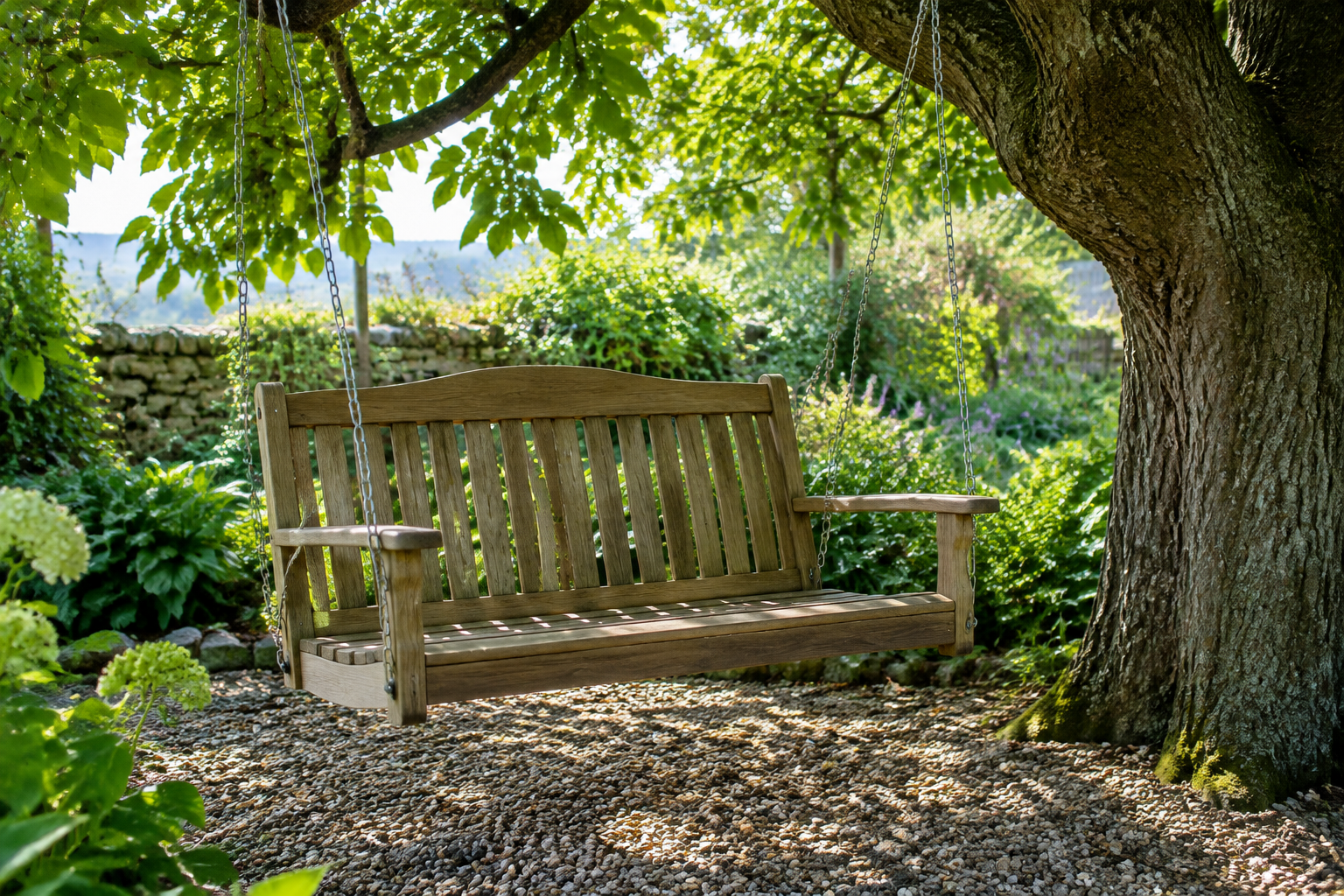
IDEA 27
Tree Swing Bench
Hang a two-person swing from a mature branch and skip the furniture entirely. It costs very little and instantly makes a young garden feel established.
Inspect the limb every spring and use rated chain with swivel clips. A swing under a tree also keeps roots cool and planting simple.
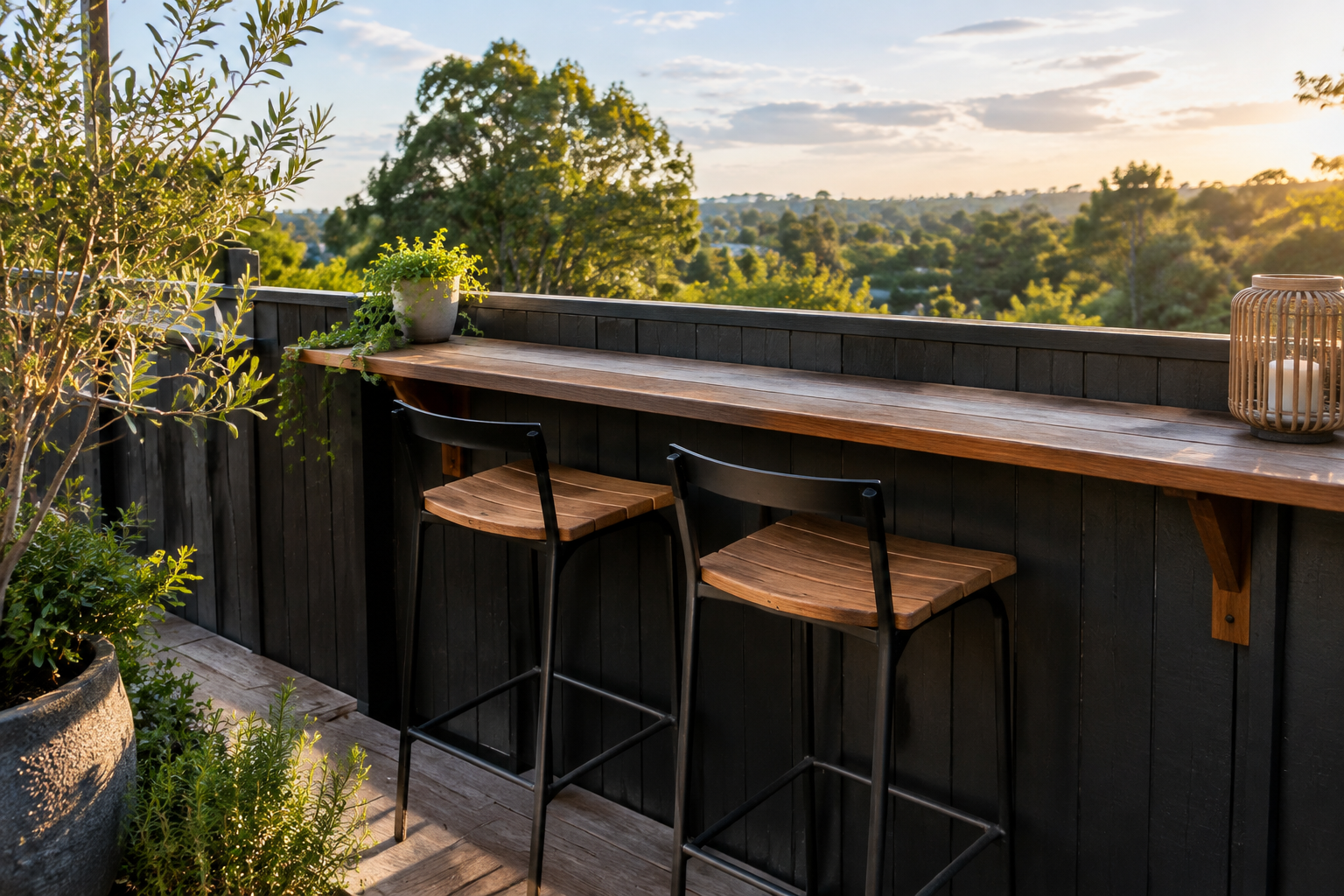
IDEA 28
Bar-Height Rail Seating
Fix a slim counter to the top of a fence or railing with stools tucked underneath. It gives you a view over the boundary without raising the whole yard.
Keep the counter twelve inches wide so glasses do not tip. Stools that tuck fully under the counter keep the path open.
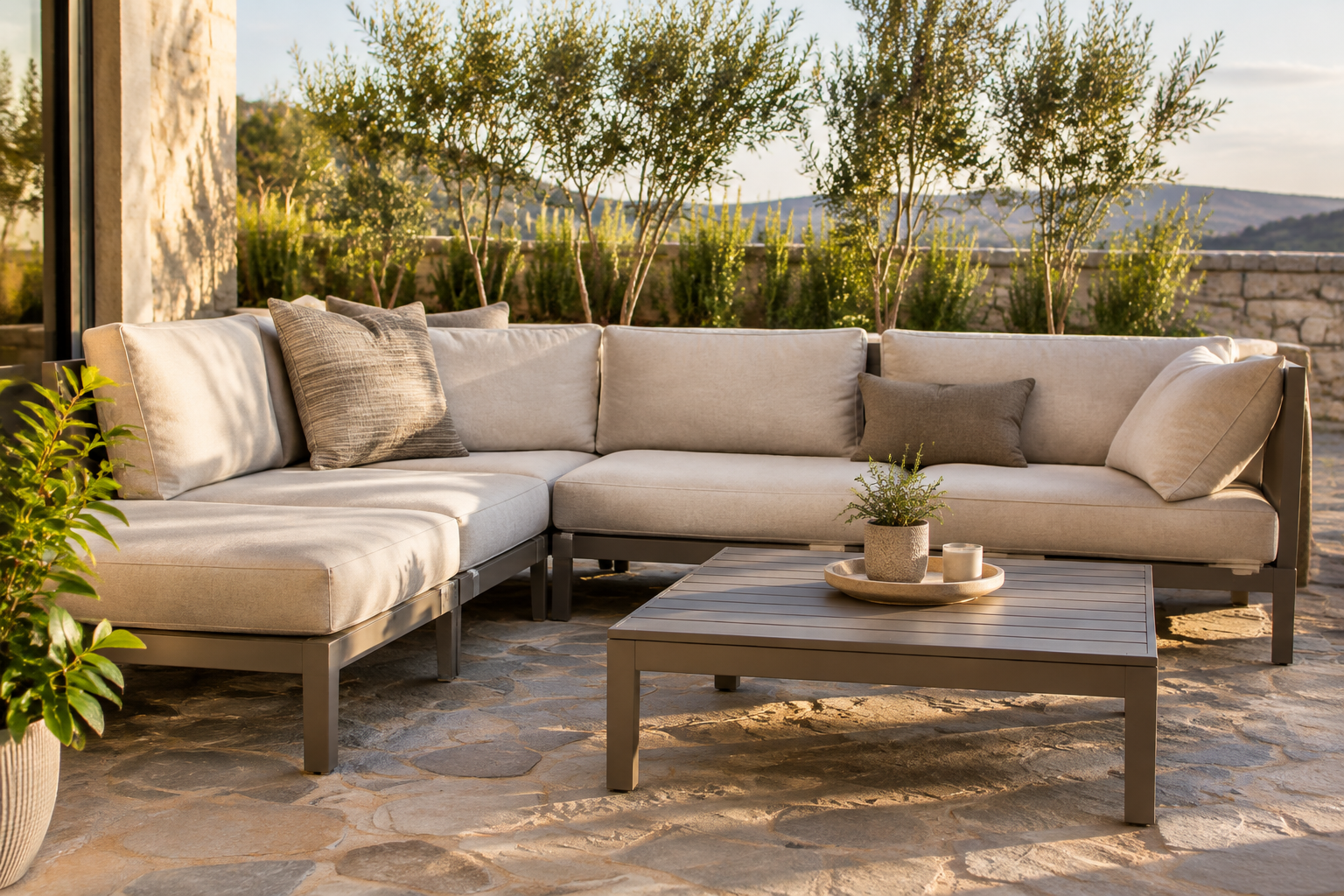
IDEA 29
Modular Lounge With Storage
Choose lounge modules that clip together and hide storage inside. Rearrange them for a party, then stack them tight to reclaim the floor.
Fabric in solution-dyed acrylic survives sun and rain without fading. Deep modules look luxurious but eat the walkway, so measure first.
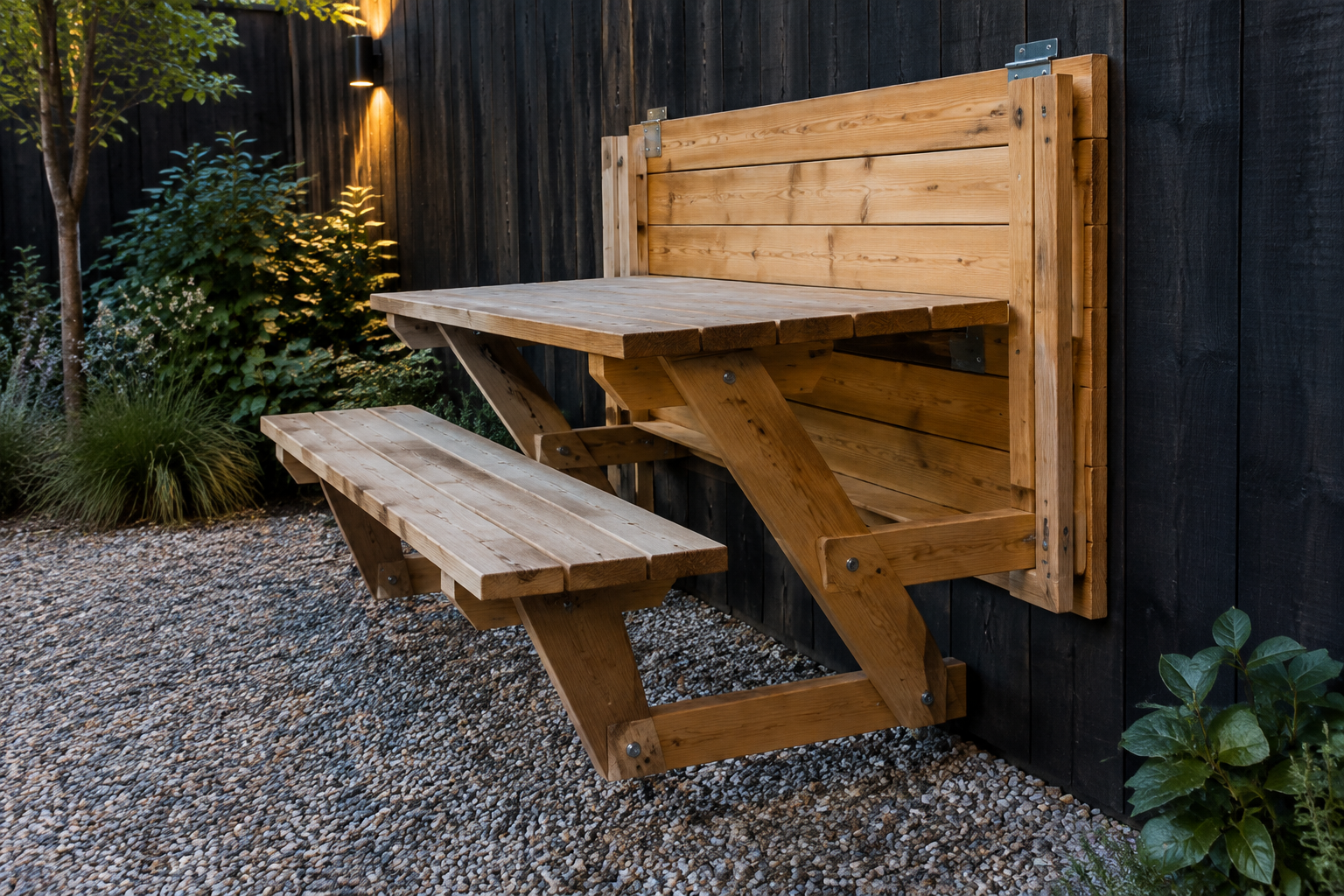
IDEA 30
Folding Picnic Table
A wall-hinged picnic table folds flat against the fence and opens to seat eight. You gain a dining room that simply is not there most of the week.
Seal the underside, which catches the most weather. A chain stay holds the table level when it is open.
04Greenery and Growing
Plants are the cheapest way to add depth and height. In a compact garden, grow upward and use scent, movement and edible crops rather than filling the floor with pots. Water-wise choices keep the work down.
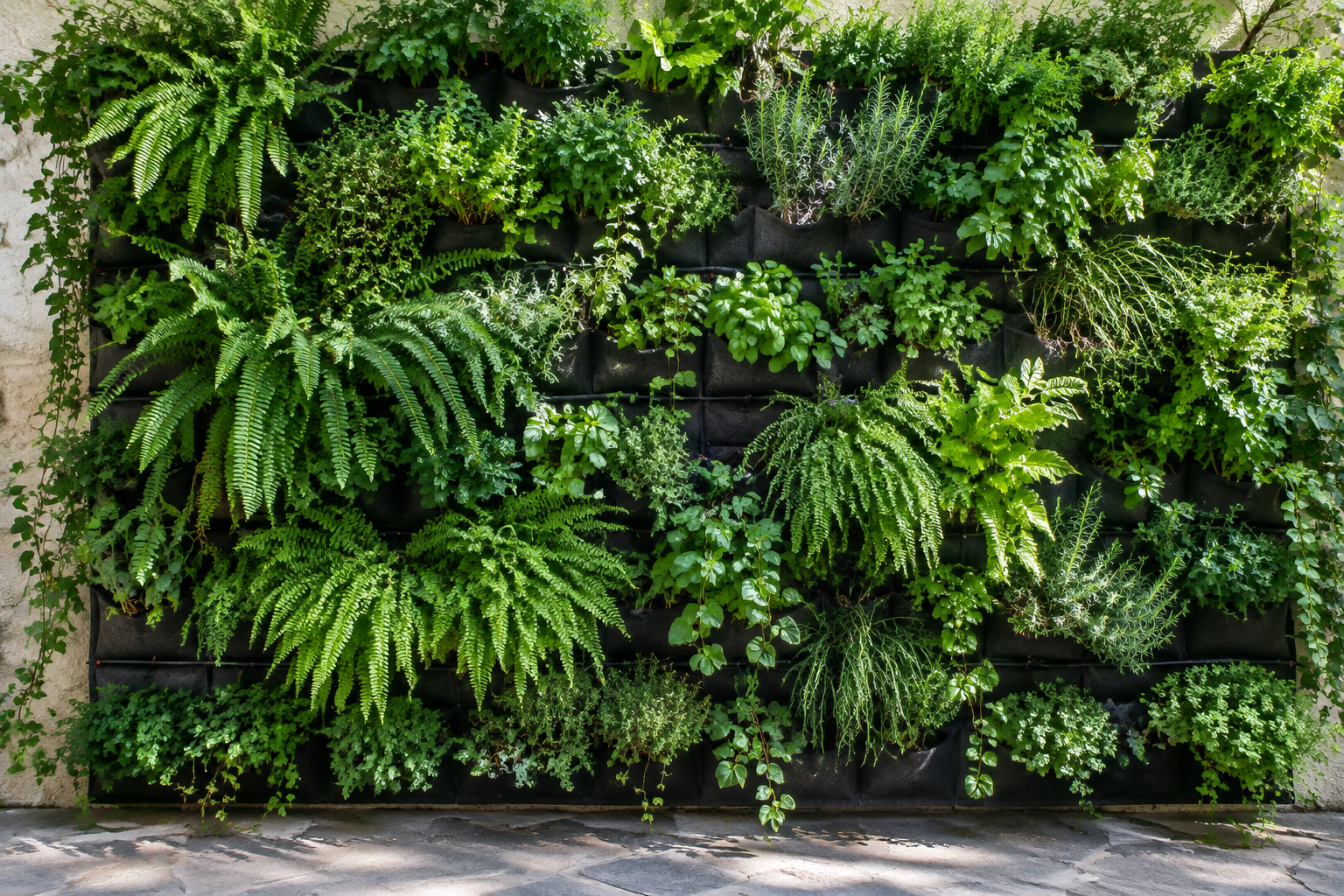
IDEA 31
Vertical Living Wall
A felt-pocket panel on the sunniest wall grows salad, herbs and ferns in two square feet of floor. Water it with a drip line on a simple timer.
Choose lightweight plants because a saturated wall is heavy. Anchor the panel into masonry, not into render.
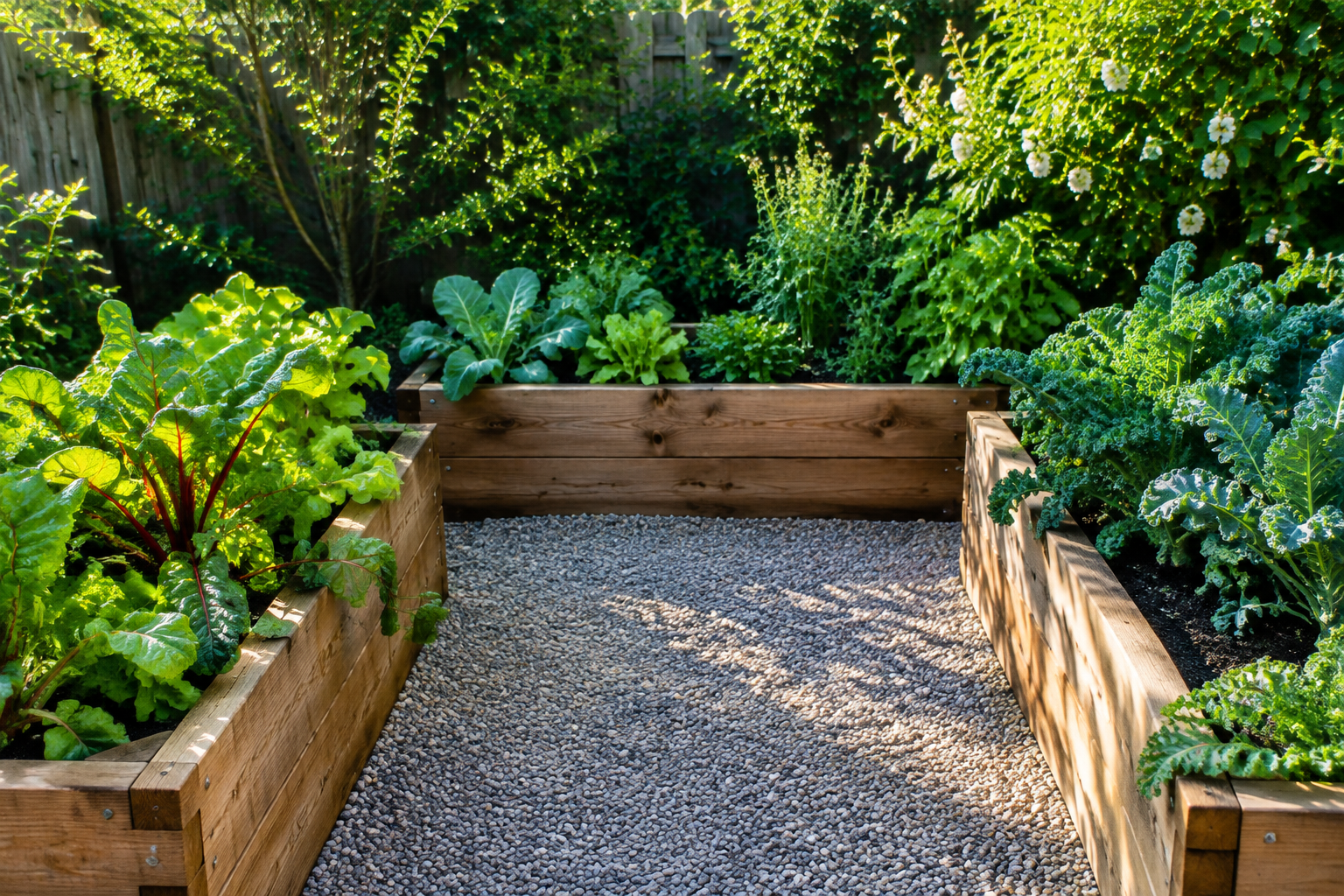
IDEA 32
U-Shaped Raised Beds
Wrap three raised beds into a U and the open centre becomes a work zone. You reach every plant without ever stepping on the soil.
Keep beds eighteen inches deep for root crops and line them with gravel at the base. The U shape also frames a seat perfectly.
IDEA 33
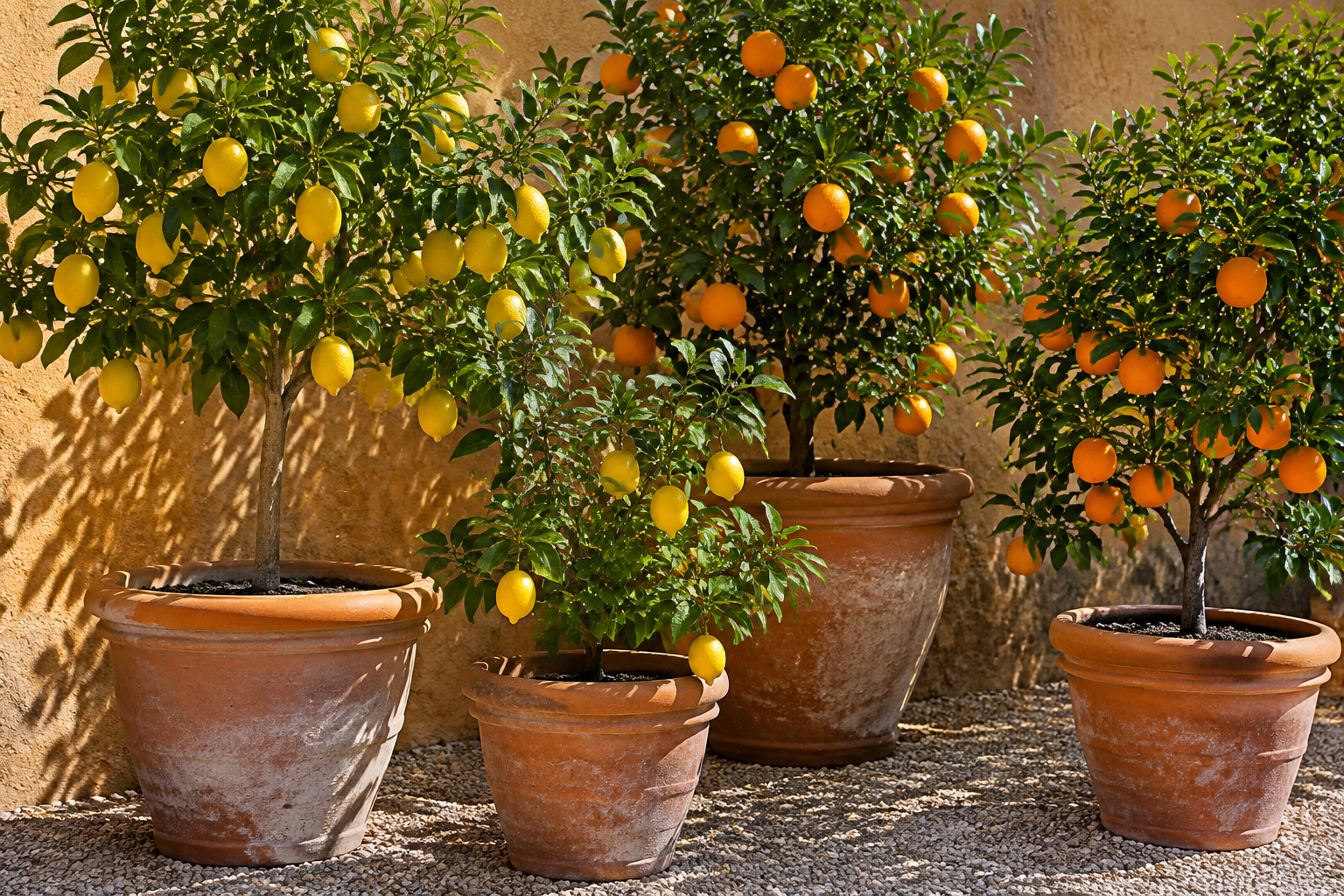
Potted Citrus Grove
Cluster four citrus trees in matching pots and you create a fragrant mini orchard. Move them against the house wall in winter for warmth.
Use pot feet so roots never sit in water. Feed with a citrus fertiliser through the growing season.
IDEA 34
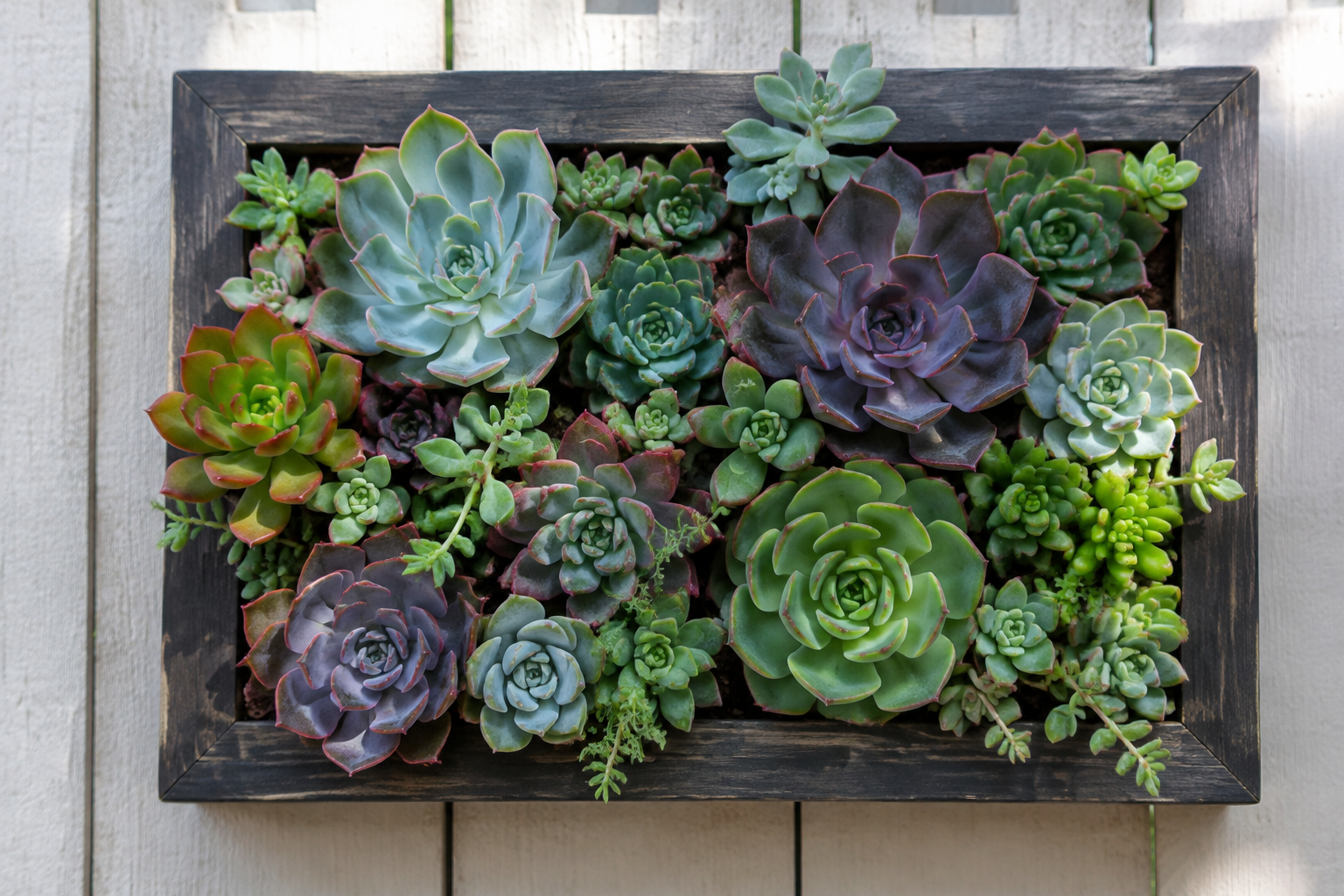
Succulent Picture Frame
Mount a shallow box packed with succulents and it reads as living art on a fence. It needs very little water and no floor space at all.
Use a soil mix that is two thirds grit so roots never rot. Bring the frame under cover during hard frost.
IDEA 35
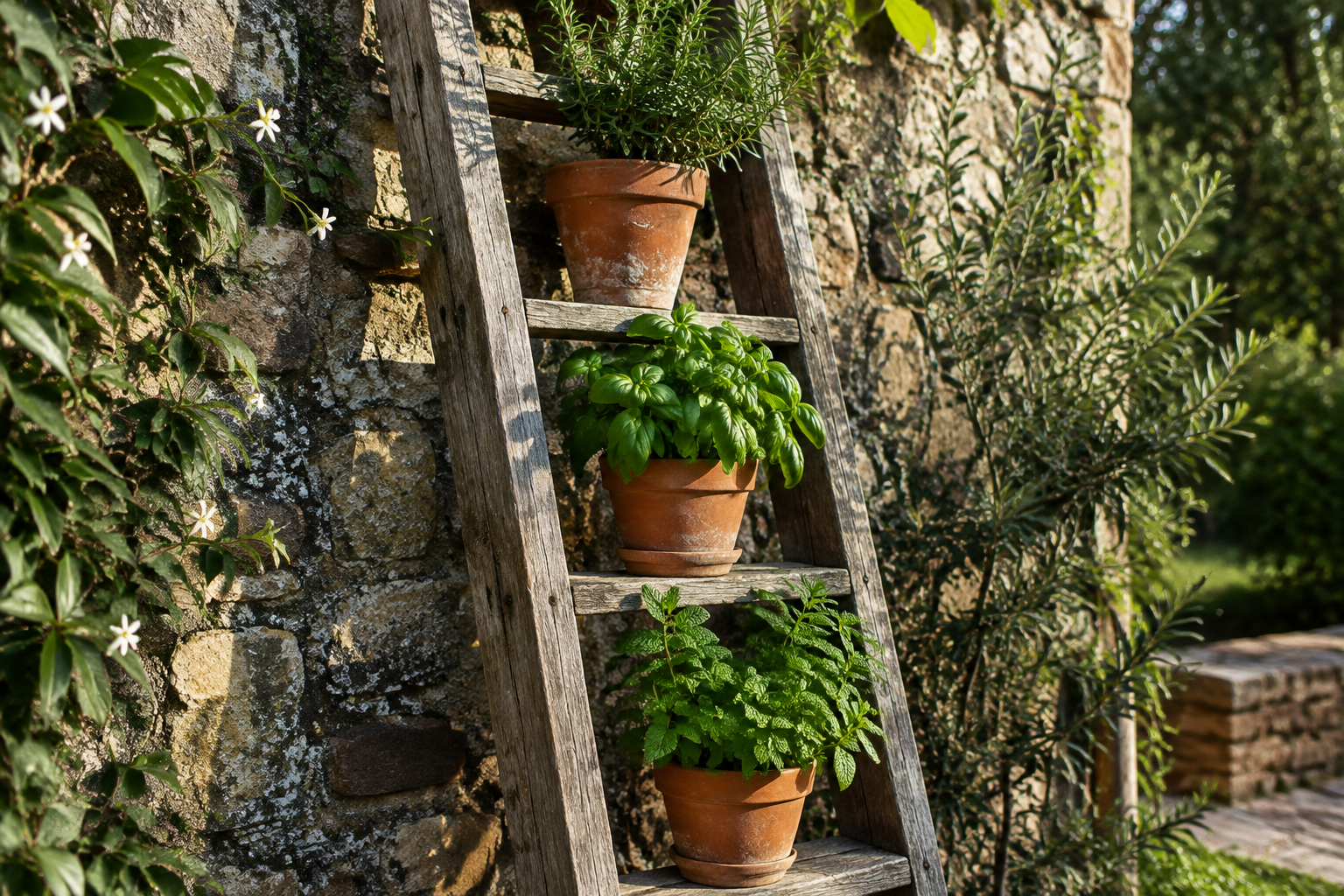
Tiered Herb Ladder
Lean an old ladder against the wall with herb pots on each rung. The vertical stack gives you eight crops in the footprint of one planter.
Group herbs by water need so you never drown the rosemary. Rotate the pots each month so both sides get sun.
IDEA 36
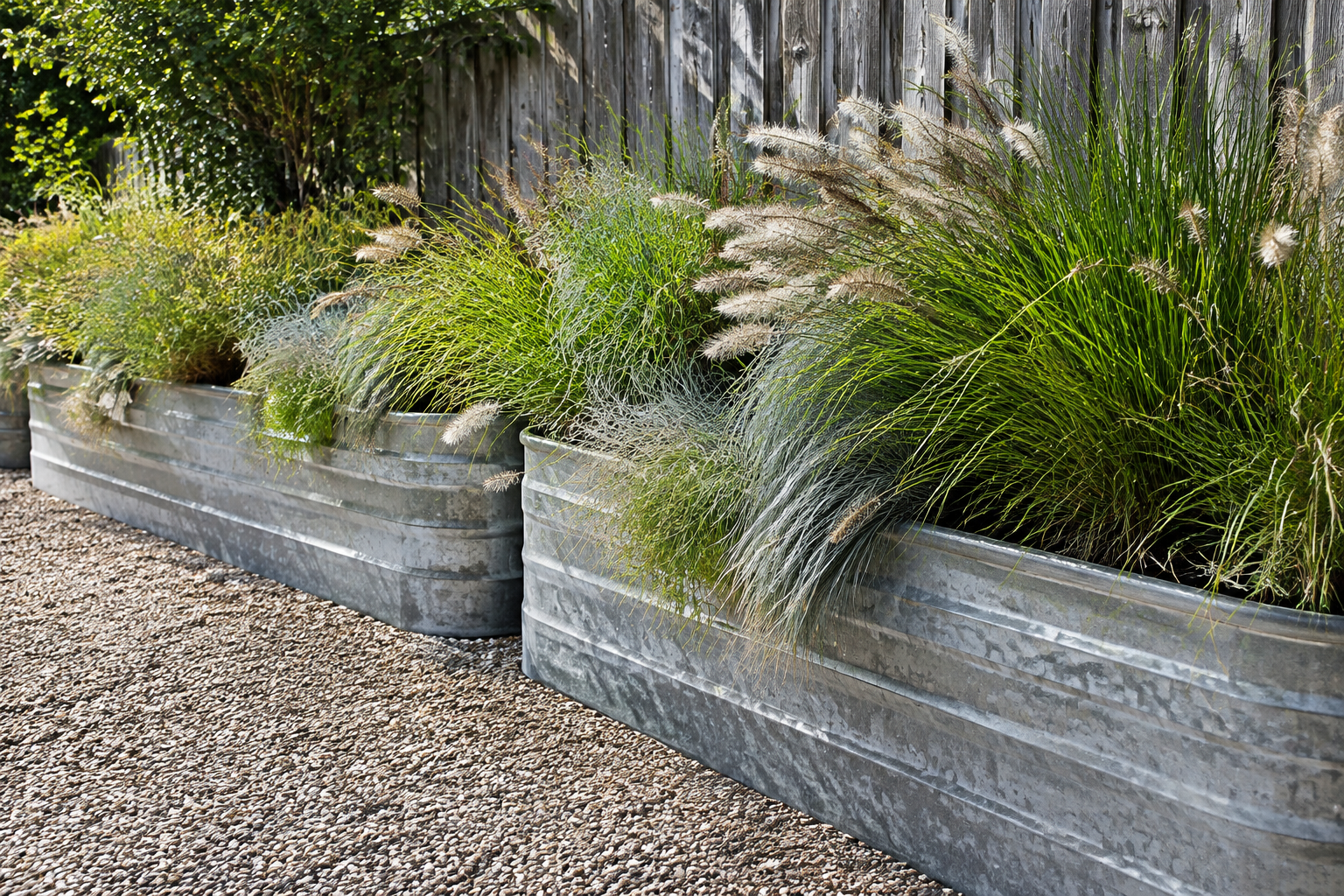
Galvanised Trough Planters
Long metal troughs along a boundary make a clean, modern planting line. They raise plants to eye level and hide an ugly base or drain.
Drill drainage holes before filling and add a layer of gravel. Metal also warms soil early, which suits herbs and grasses.
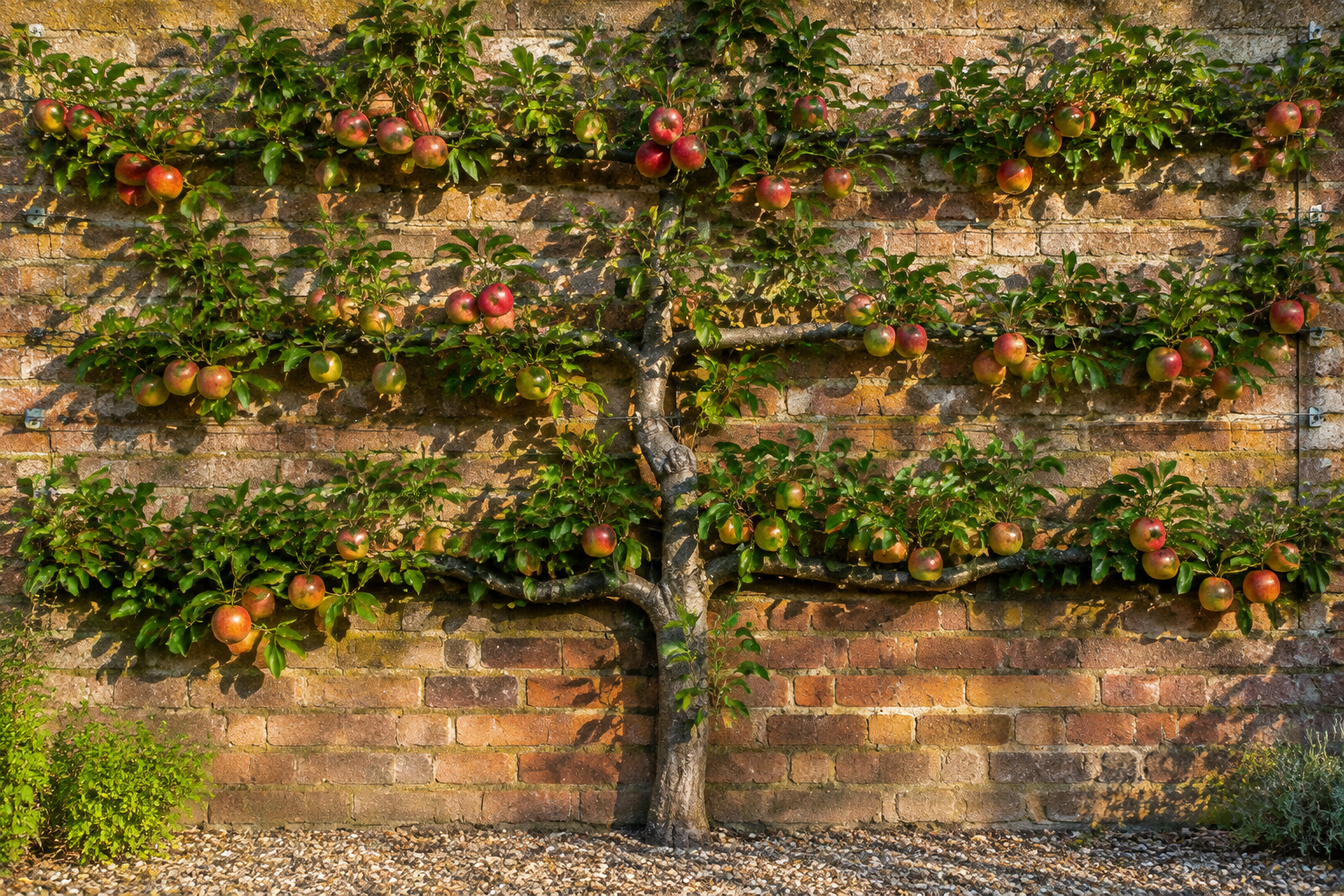
IDEA 37
Espalier Fruit Tree
Train an apple or pear flat against a sunny wall and it stays six feet wide. You get real fruit from a tree that never blocks the path.
Prune in summer to keep the frame tidy and the fruit within reach. A wall also holds warmth, which ripens fruit earlier.
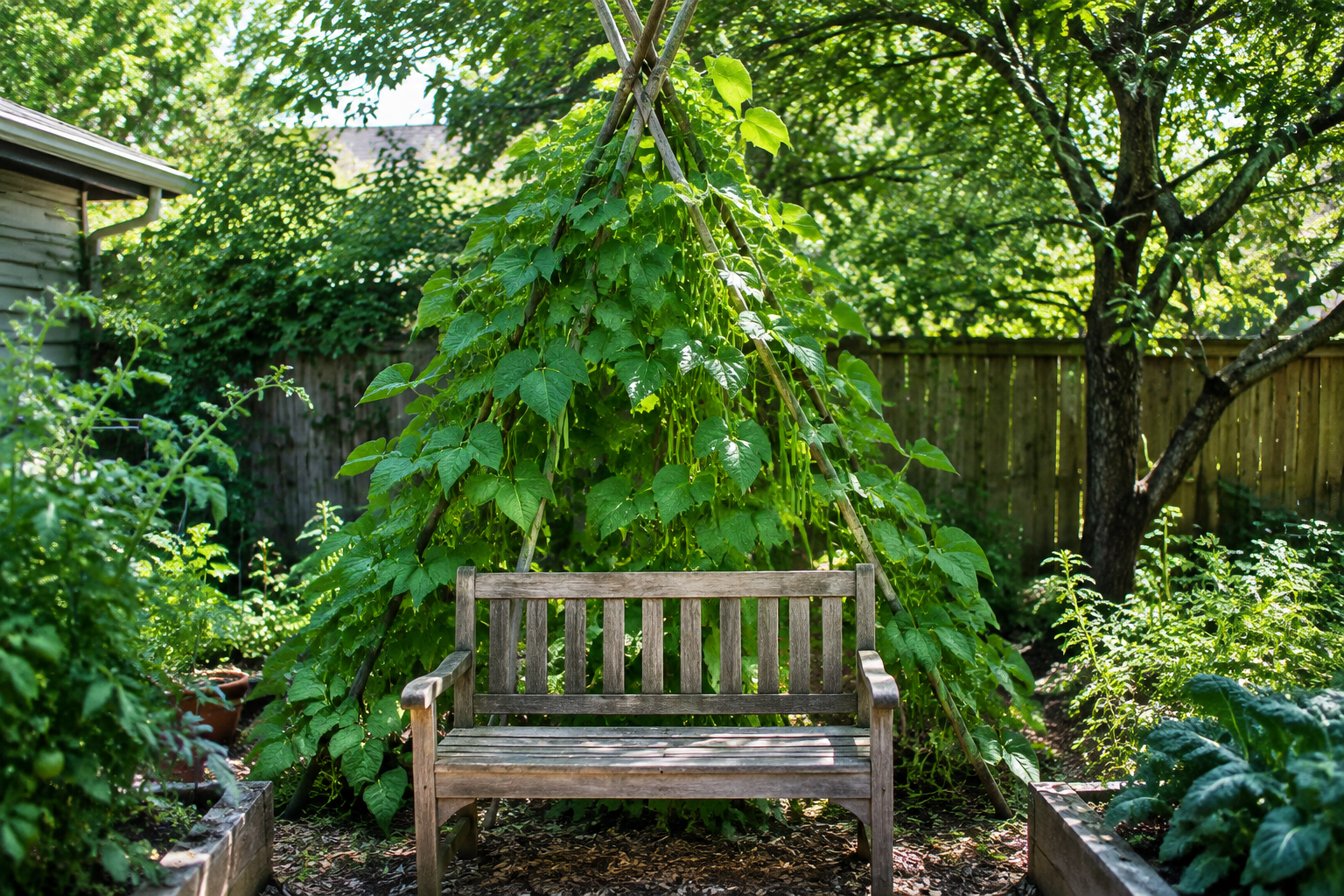
IDEA 38
Bean Teepee Over Seating
Grow climbing beans up three poles tied into a teepee behind a bench. The leaves give shade and dinner grows directly overhead.
Plant on the outside of the poles, never underneath. Pick pods every few days to keep the plants producing.

IDEA 39
Fern Shade Nook
Fill the darkest corner with ferns, moss and a stone basin and it becomes a cool retreat. Shade stops being a problem and starts being the feature.
Water deeply once a week rather than lightly every day. Mulch thickly to keep moisture in.
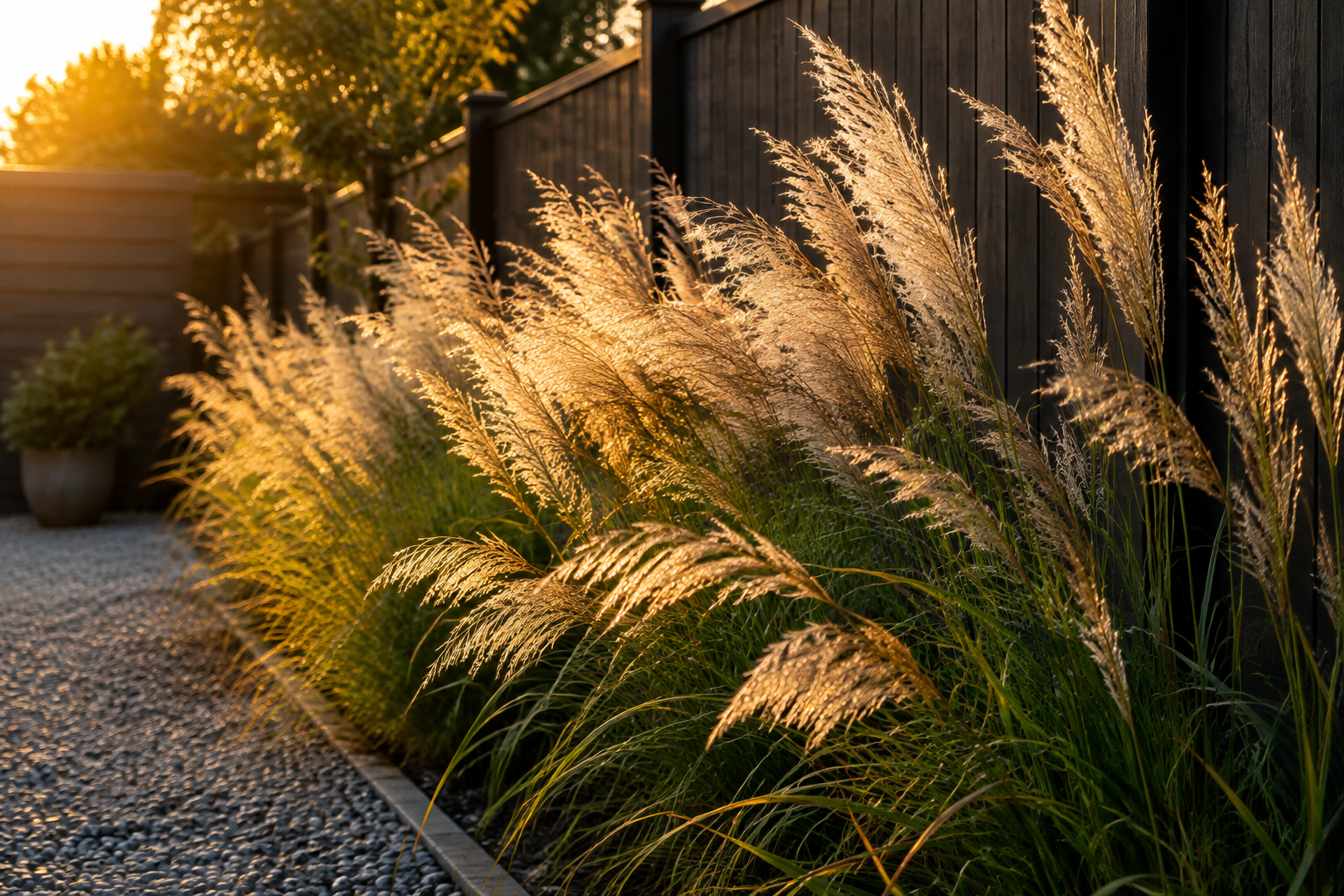
IDEA 40
Ornamental Grass Strip
A narrow border of feather reed grass sways in the lightest breeze and hides the fence line. Grasses add movement that a lawn never gives you.
Leave the stems standing through winter for structure and frost. Cut back hard in early spring before new growth appears.
05Water and Wellness
Water adds sound, which masks traffic and makes a small yard feel private. Wellness features like a shower, a plunge tub or a hot tub also give the space a daily job, and a daily job is what keeps a garden alive.
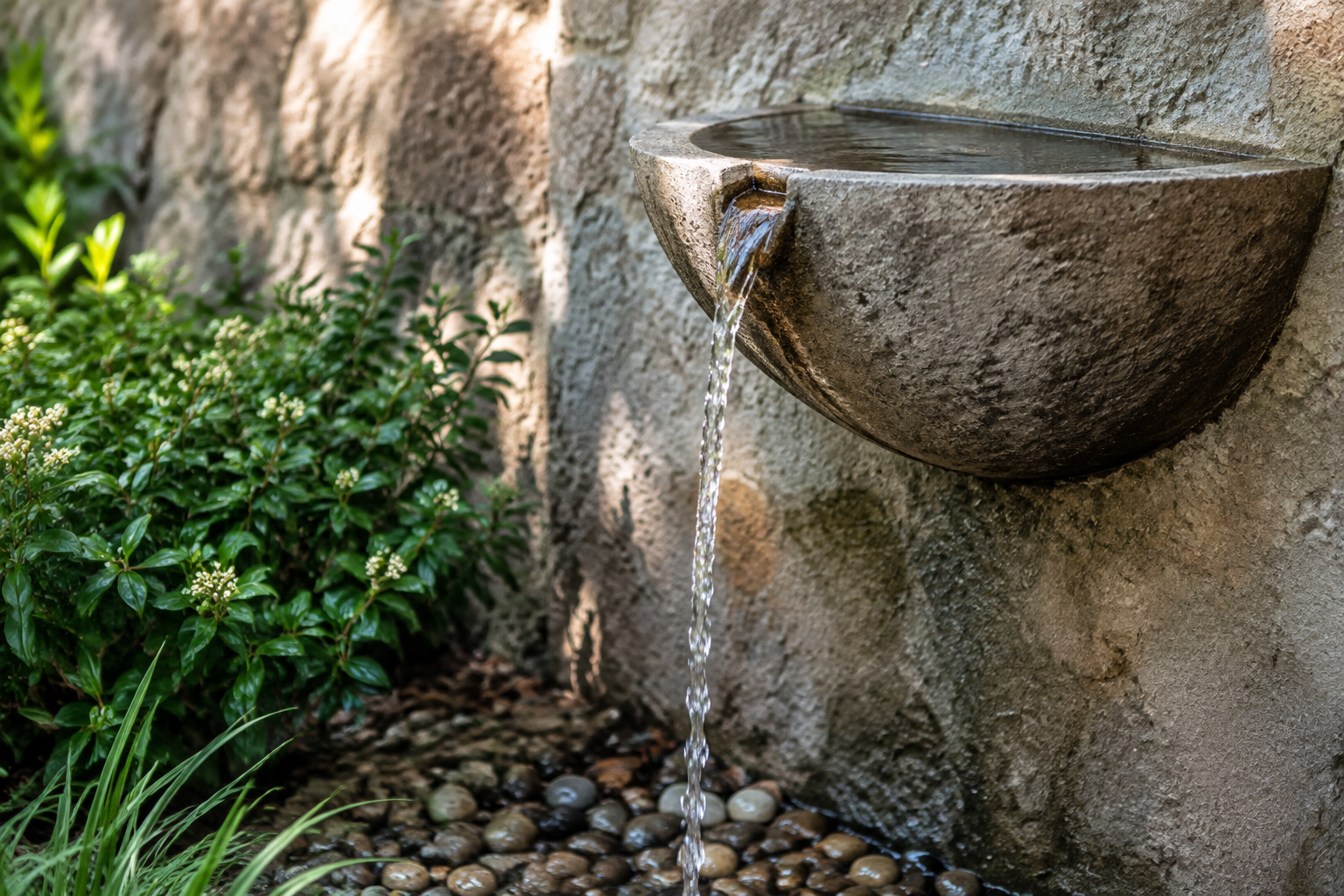
IDEA 41
Wall Bowl Fountain
A half-bowl fountain mounted at chest height makes water sound without eating floor space. Recirculating water needs no plumbing, only an occasional top-up.
Use a variable pump so you can set the volume. A quiet trickle in a small yard reads as calm rather than noisy.
IDEA 42
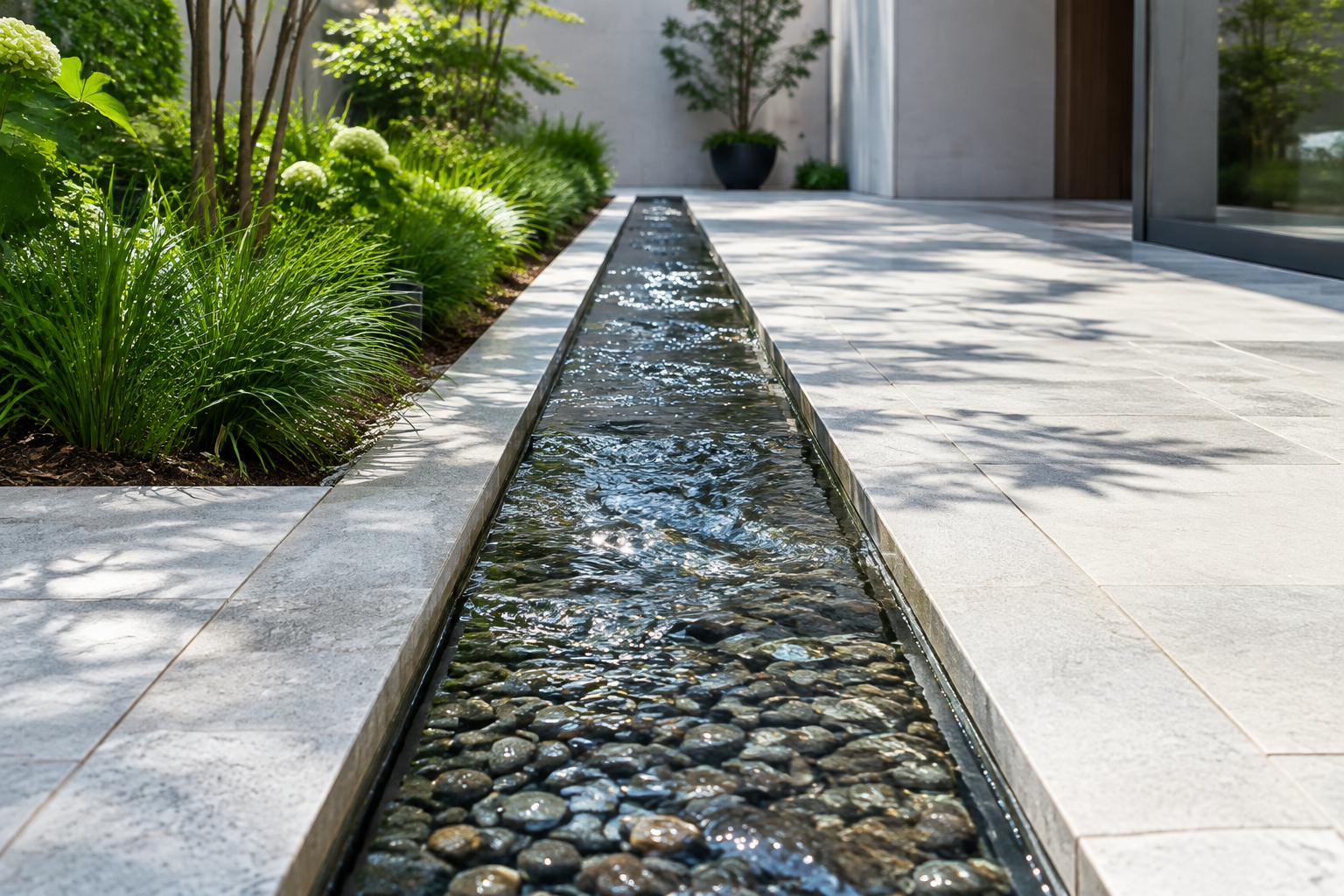
Pebble Water Rill
Cut a shallow channel through the paving and let water trickle along it. The moving line draws the eye the full length of the garden.
Line it with pond liner and add a filter box at the far end. Keep the depth under four inches and it stays a feature rather than a pool.
IDEA 43
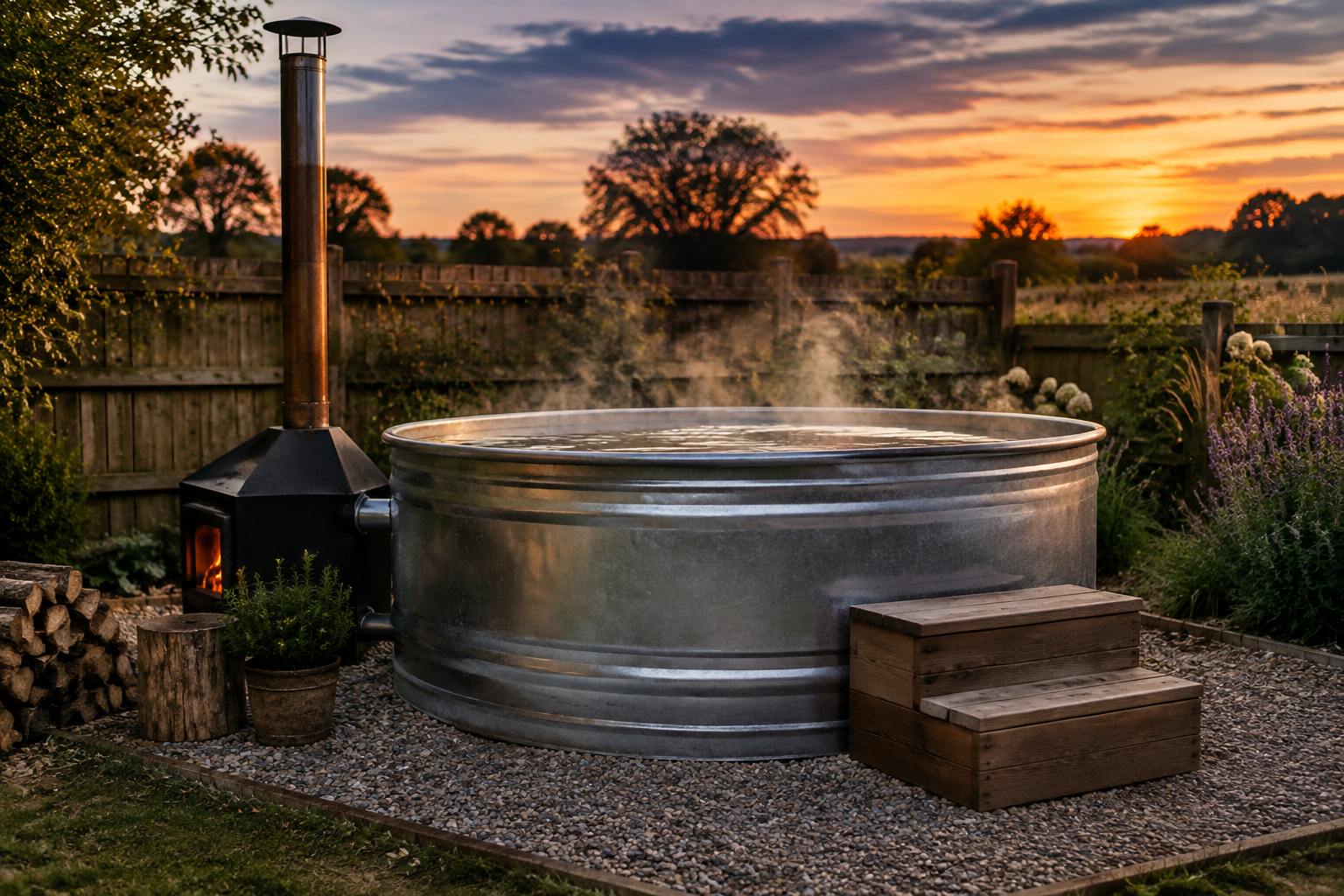
Stock Tank Hot Tub
A wood-fired stock tank tub heats in about two hours and fits four people. It costs a fraction of a spa and can be drained and moved.
Place it on level, compacted ground with a heat shield behind the stove. A simple lid keeps it hot between soaks.
IDEA 44
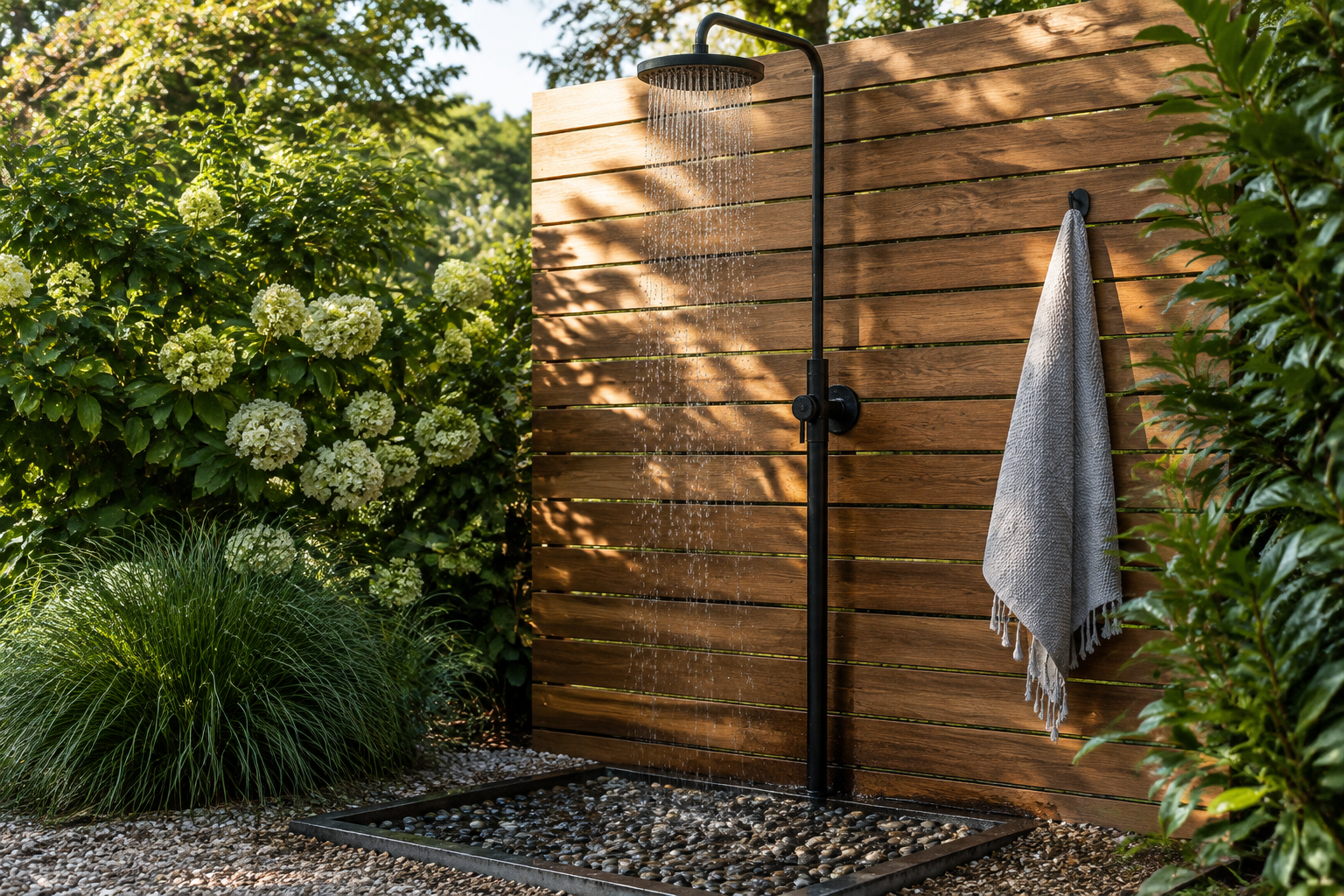
Slatted Outdoor Shower
An outdoor shower against a slatted cedar screen gives privacy with airflow. It keeps sand, chlorine and mud out of the house.
Use a thermostatic valve so the temperature never spikes. A gravel or deck tray handles drainage without plumbing.
IDEA 45
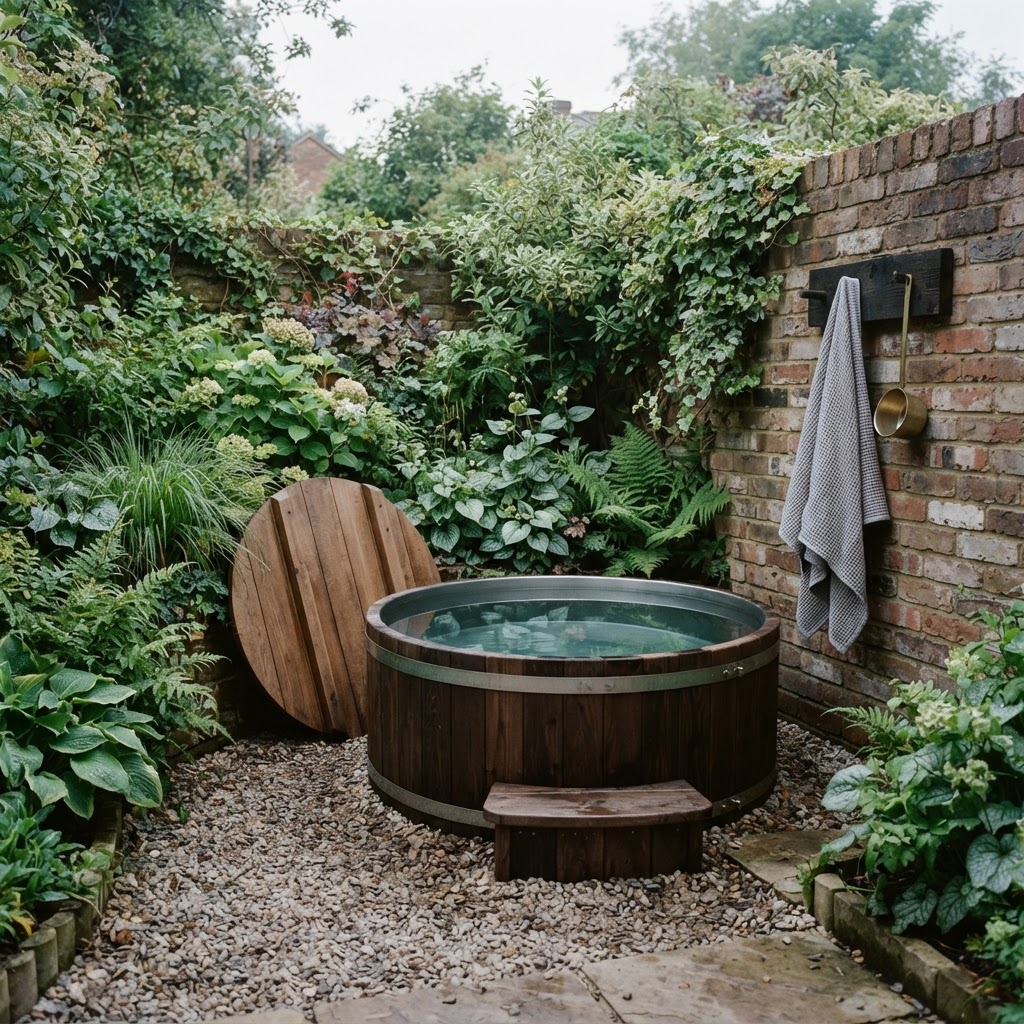
Cold Plunge Tub
A small cold plunge tank fits in a side yard and pairs with any seating area. Ice and an insulated cover are all you need to keep it cold.
Add a small filter pump so the water can be reused for a week. A timber lid doubles as a bench when the tub is closed.
IDEA 46
Rain Chain Feature
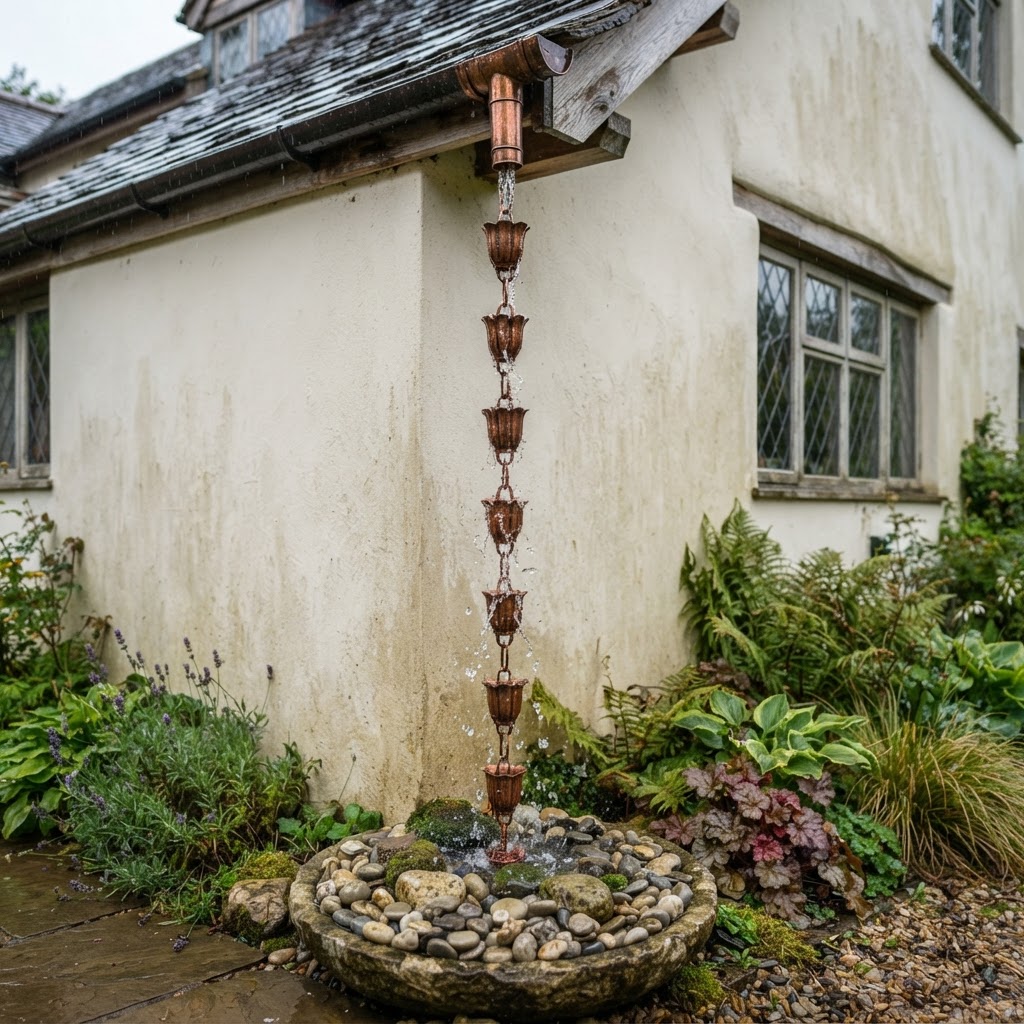
Replace a downpipe with a copper rain chain that drops into a gravel basin. Storm water becomes a visual feature instead of a puddle by the door.
Angle the chain toward a slight run-off slope so the basin drains. Copper patinas over a season and looks better every year.

IDEA 47
Zen Gravel Garden
Rake fine gravel into lines around two or three large stones and you have instant calm. It needs no water, no mowing and almost no weeding.
Use a stiff fan rake for crisp patterns and keep stones to an odd number. Rake in the morning and the lines last through the day.
IDEA 48
Stone Basin Pond
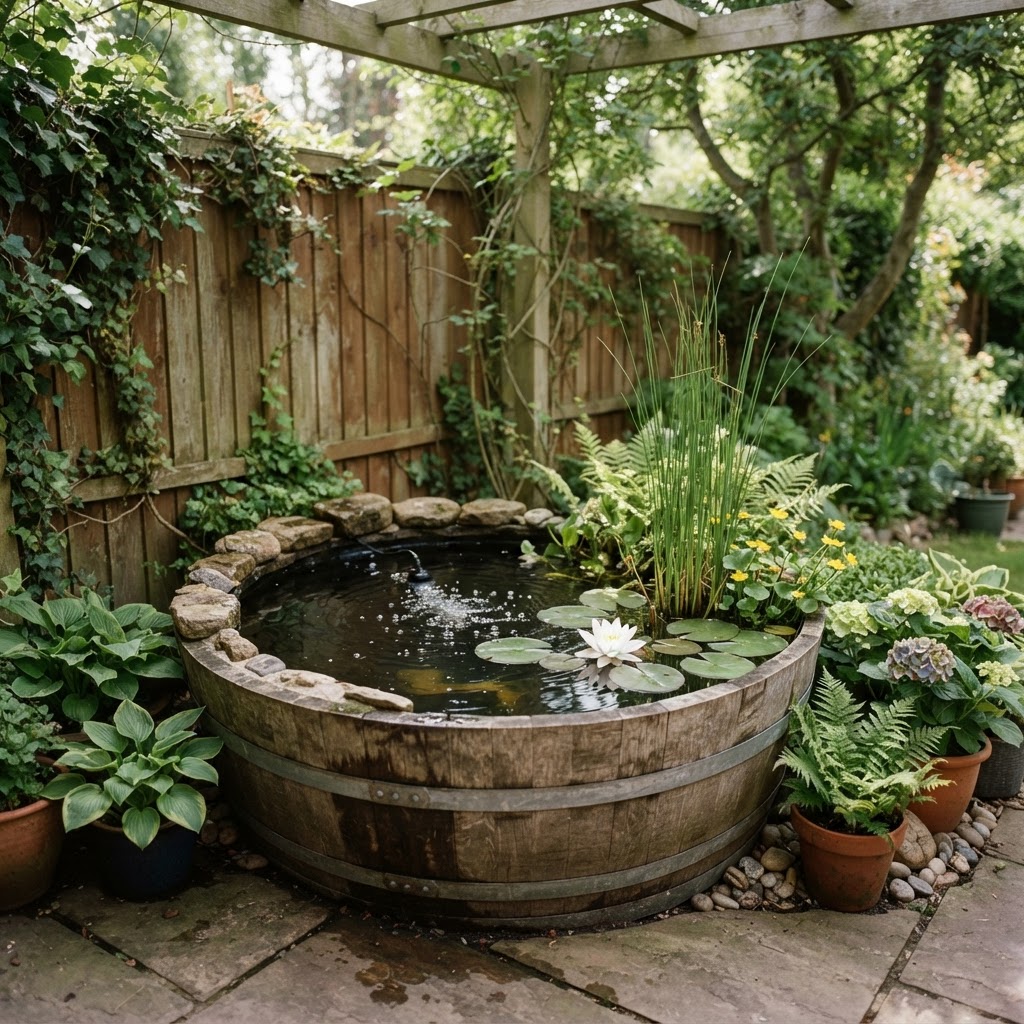
A half-barrel pond with one lily and a small submerged pump brings wildlife within arm’s reach. It takes an hour to install and fits a patio corner.
Cover it with mesh in autumn to keep leaves out. A single lily covers the surface and starves algae of light.
06Lighting and Evenings
Light is the most underrated material in garden design. Layered warm light at low level makes a small yard feel deeper after dark. It is also the least expensive upgrade on this entire list.
IDEA 49
Zigzag String Lights
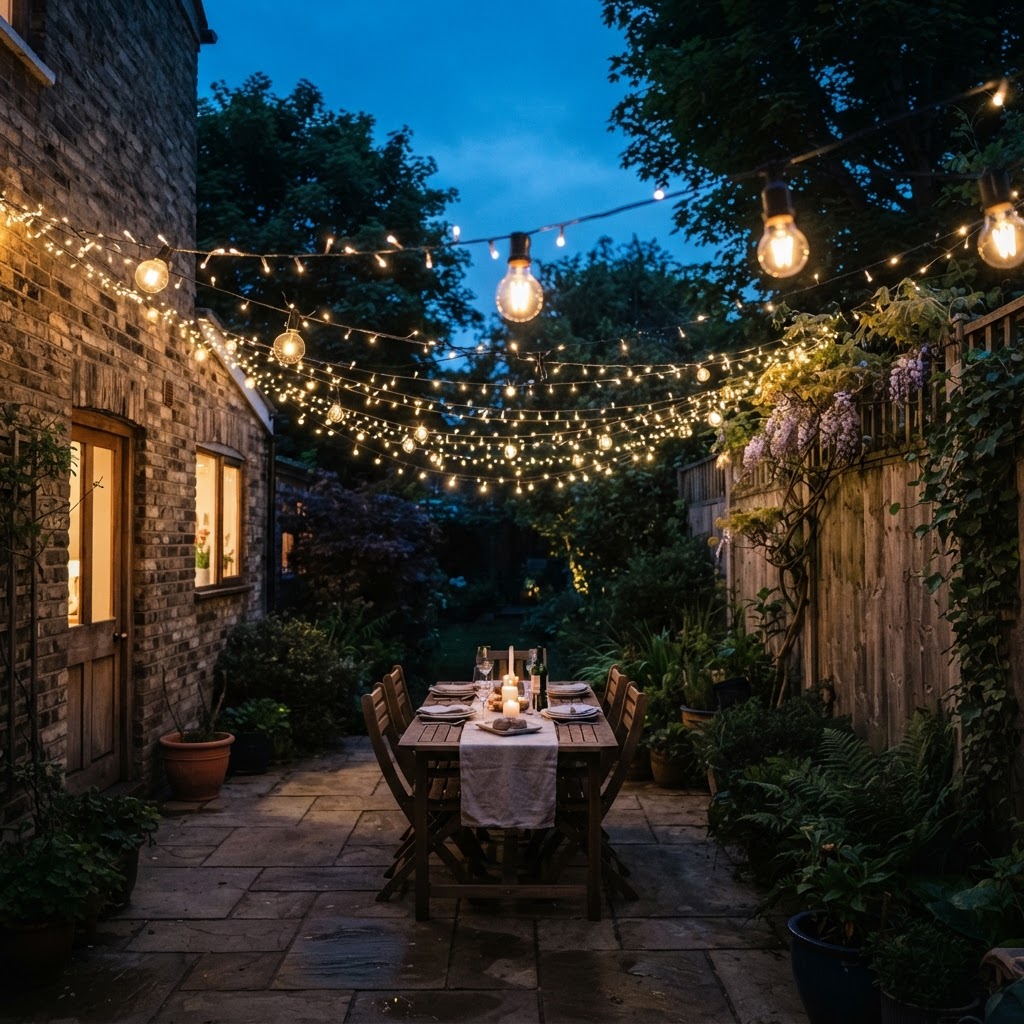
Run catenary string lights in a zigzag between fence and house at about eight feet. The pattern defines an outdoor ceiling and spreads light evenly.
Leave a little slack in each run so the cable never strains in wind. Warm bulbs at 2700 kelvin flatter brick, timber and skin.
IDEA 50
Fence Uplighting
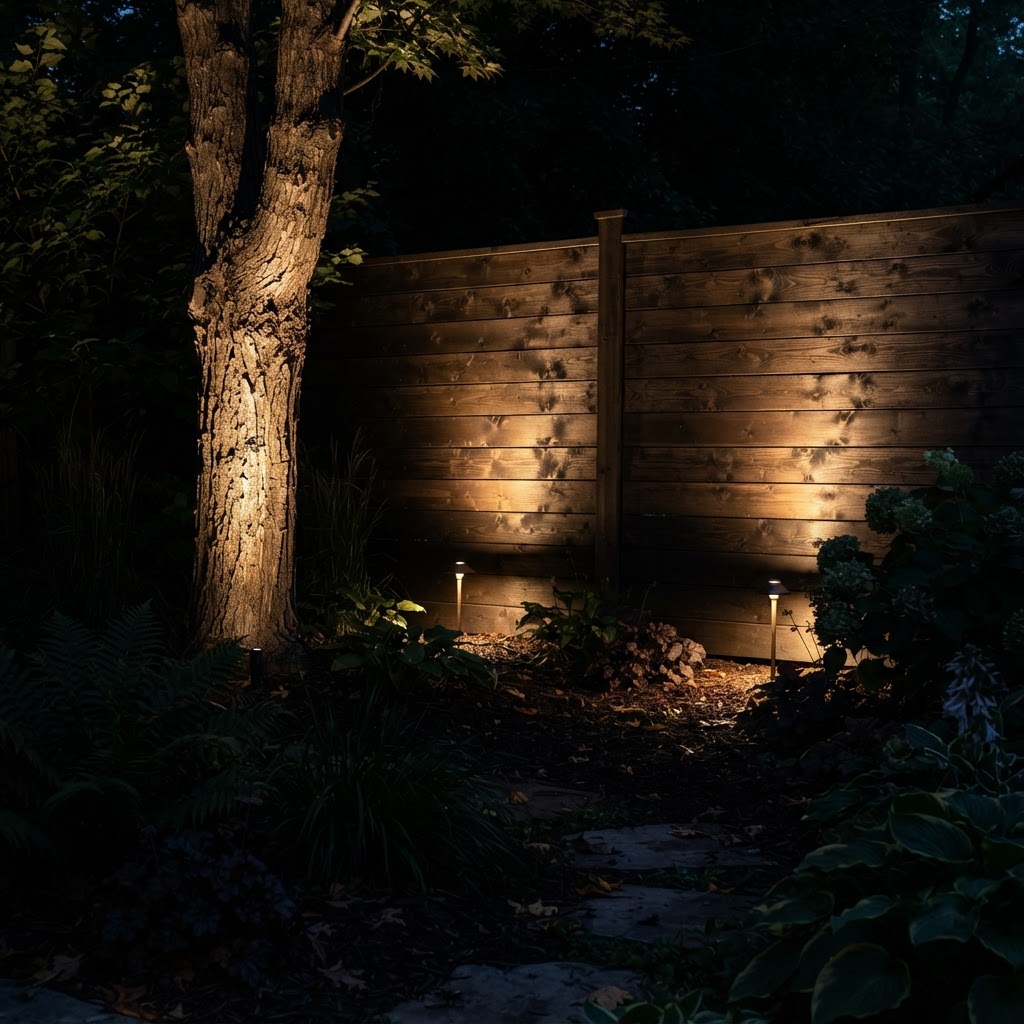
Three low-voltage uplights aimed at a tree trunk or fence texture create drama for very little money. They hide the fixture and light the surface, not the eye.
Point them at dark or textured materials for the strongest effect. Angle them away from the house to avoid glare in windows.
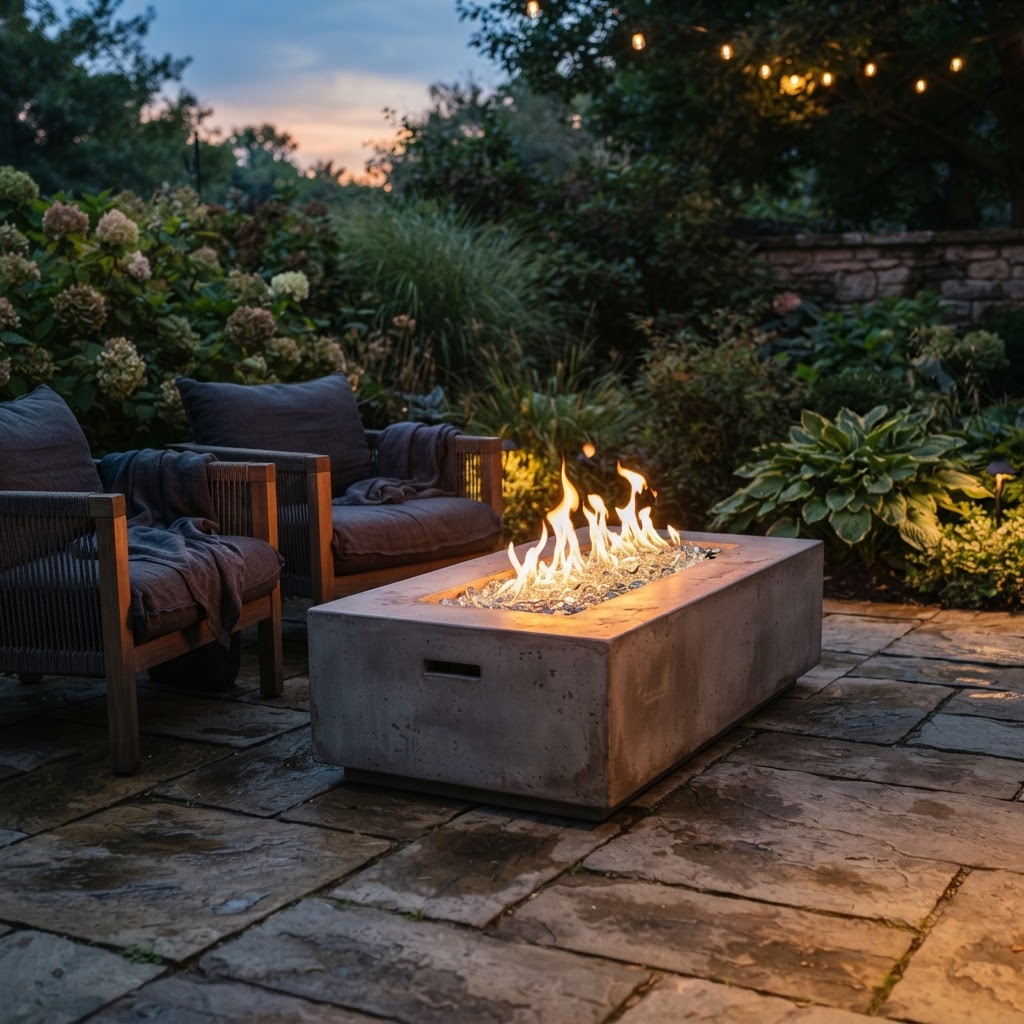
IDEA 51
Fire Table
A low fire table gives flame, warmth and a coffee-table surface in one piece. It replaces a fire pit without the smoke problem.
Choose gas for instant light and no ash to clear. The flat top doubles as a drinks table when the flame is off.
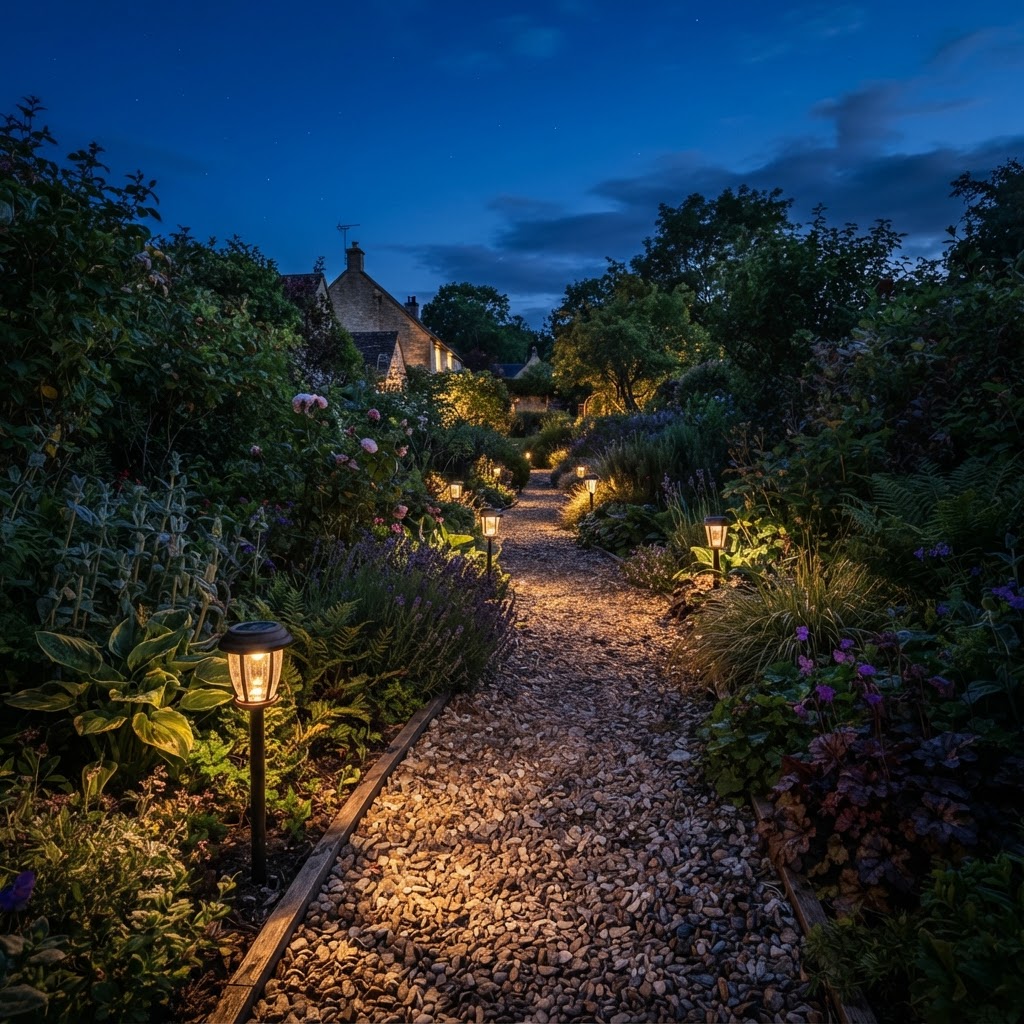
IDEA 52
Lantern Path Posts
Short solar posts staked along a path guide feet without lighting the whole garden. Low light keeps the sky dark and the mood intimate.
Place them six feet apart for an even rhythm. Choose a warm white output, since cool white makes timber look grey.
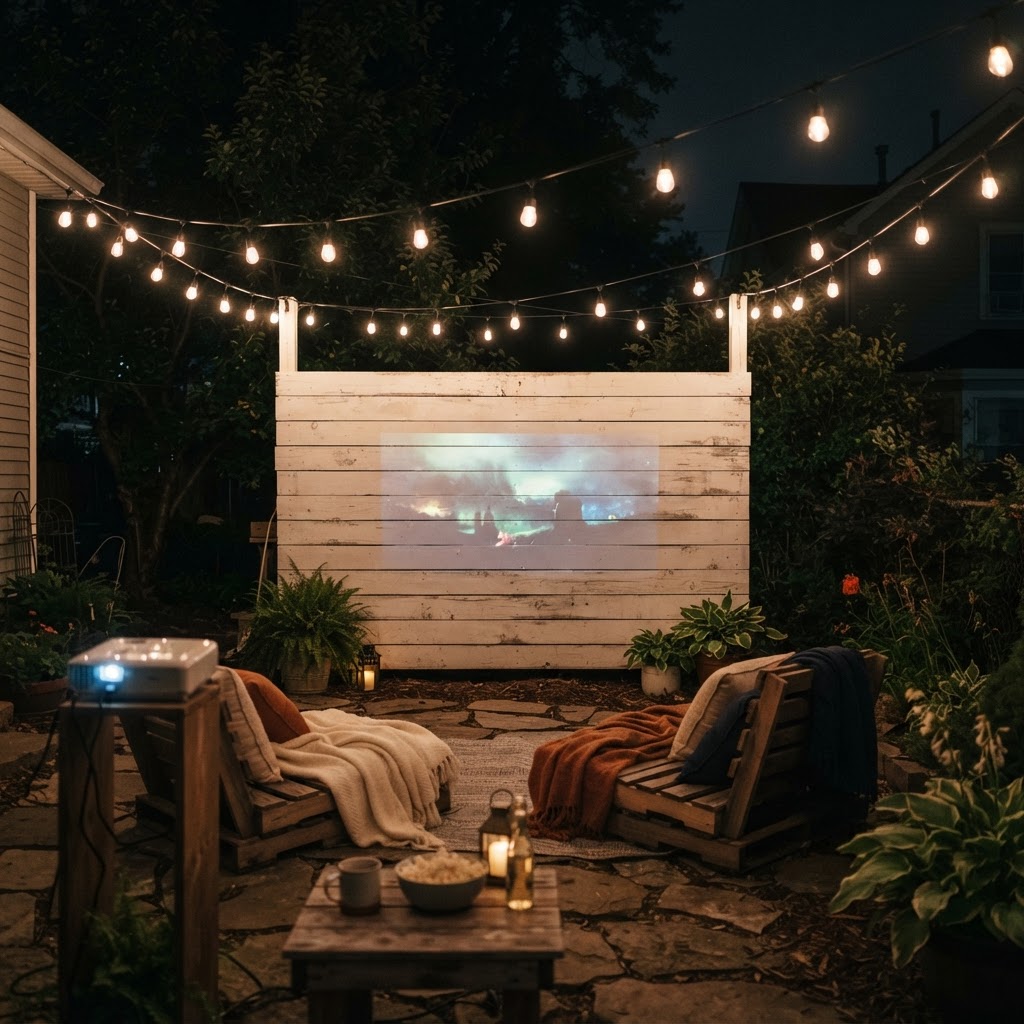
IDEA 53
Outdoor Movie Wall
A white-painted fence panel and a small projector make a cinema for six. The wall works as a screen by night and a bright backdrop by day.
Add a Bluetooth speaker and a basket of blankets and the setup is finished. Keep the projector under cover when it is not running.
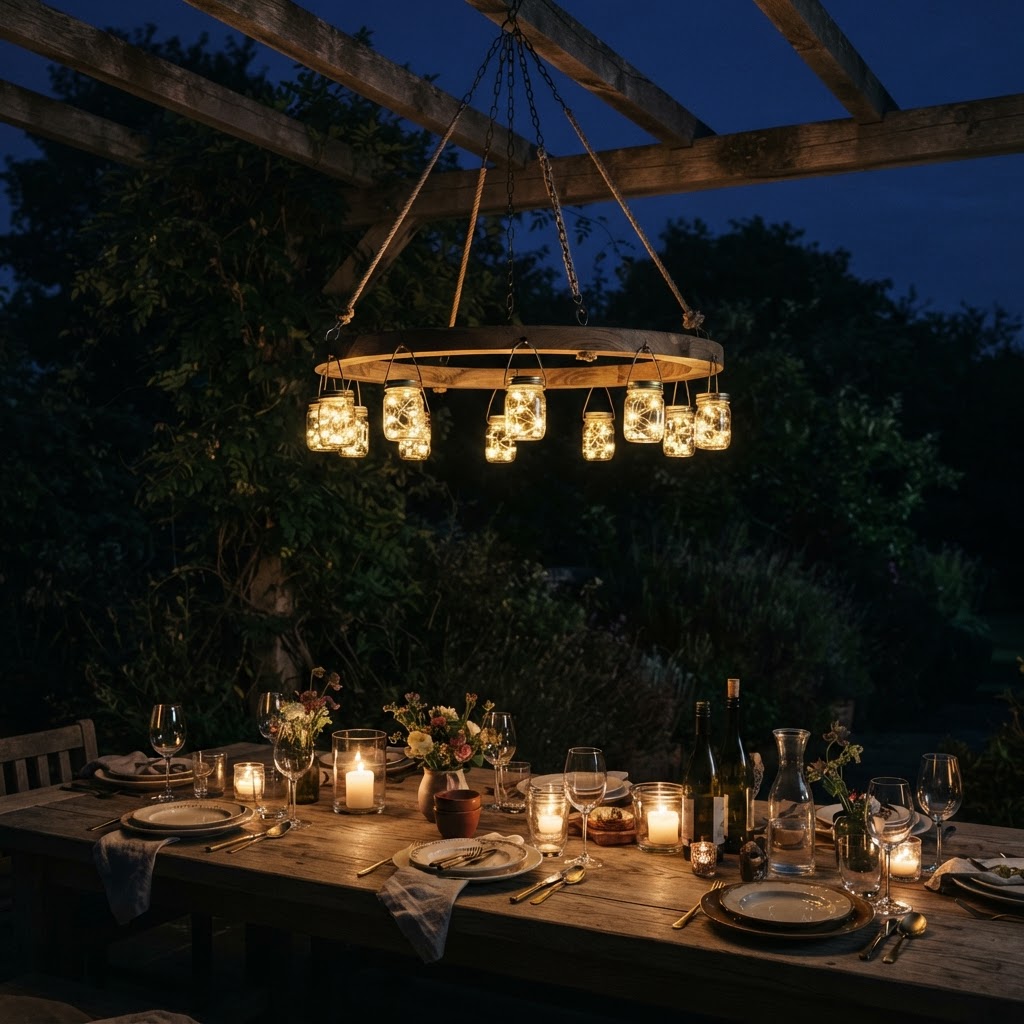
IDEA 54
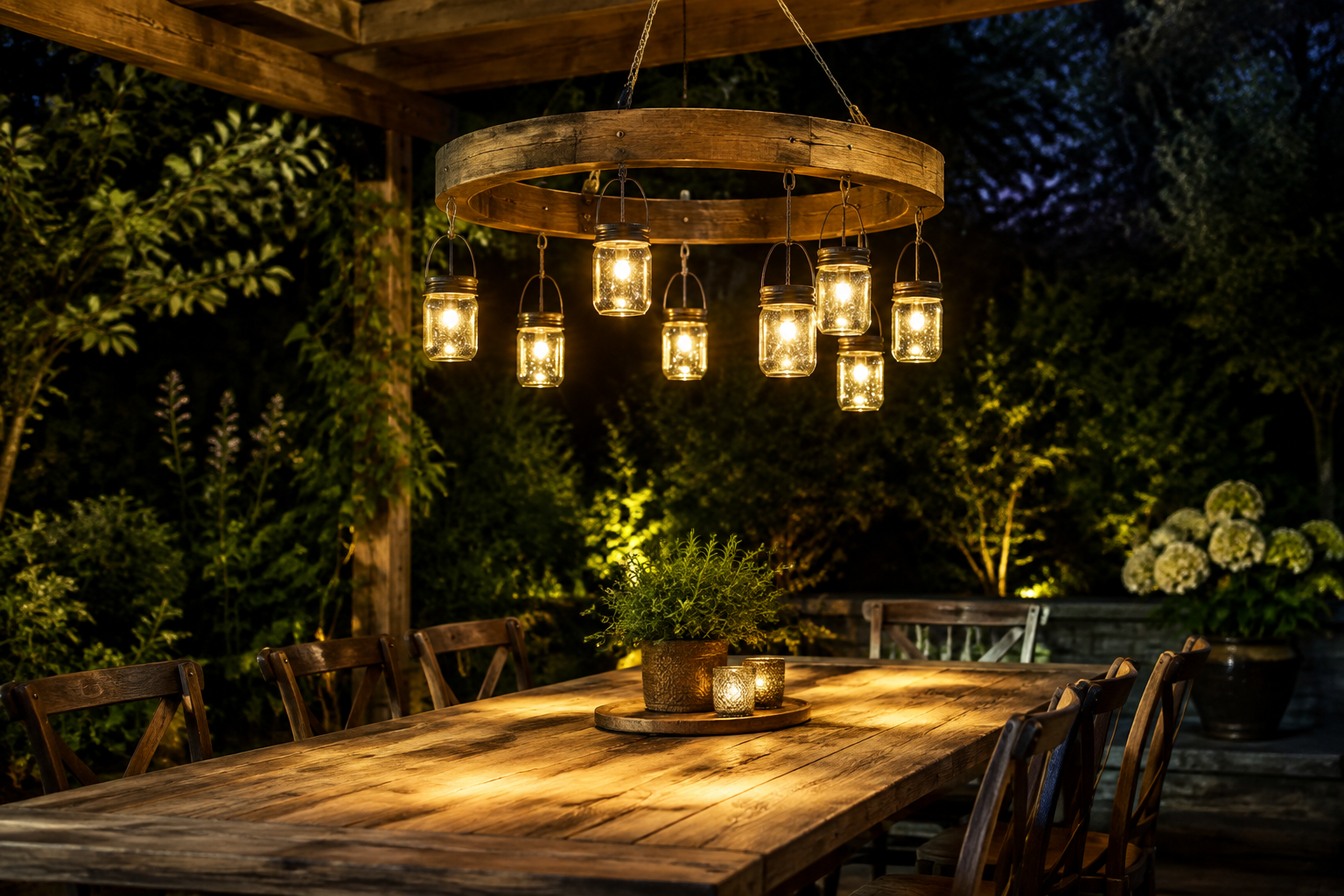
Solar Jar Chandelier
Suspend a wooden ring of solar jars over the dining table and skip the wiring completely. Each jar charges in the day and glows through dinner.
Hang it from a pergola beam or a single tree hook. Frosted jars give softer light than clear glass.
IDEA 55
Candle Niche Shelf
Carve a shallow niche into a thick fence post and fill it with pillar candles. The glow sits at eye level, where it flatters everyone.
Use LED candles under a canopy, and a deeper niche so wind cannot reach the flame. Line the niche with slate to reflect the light.
IDEA 56
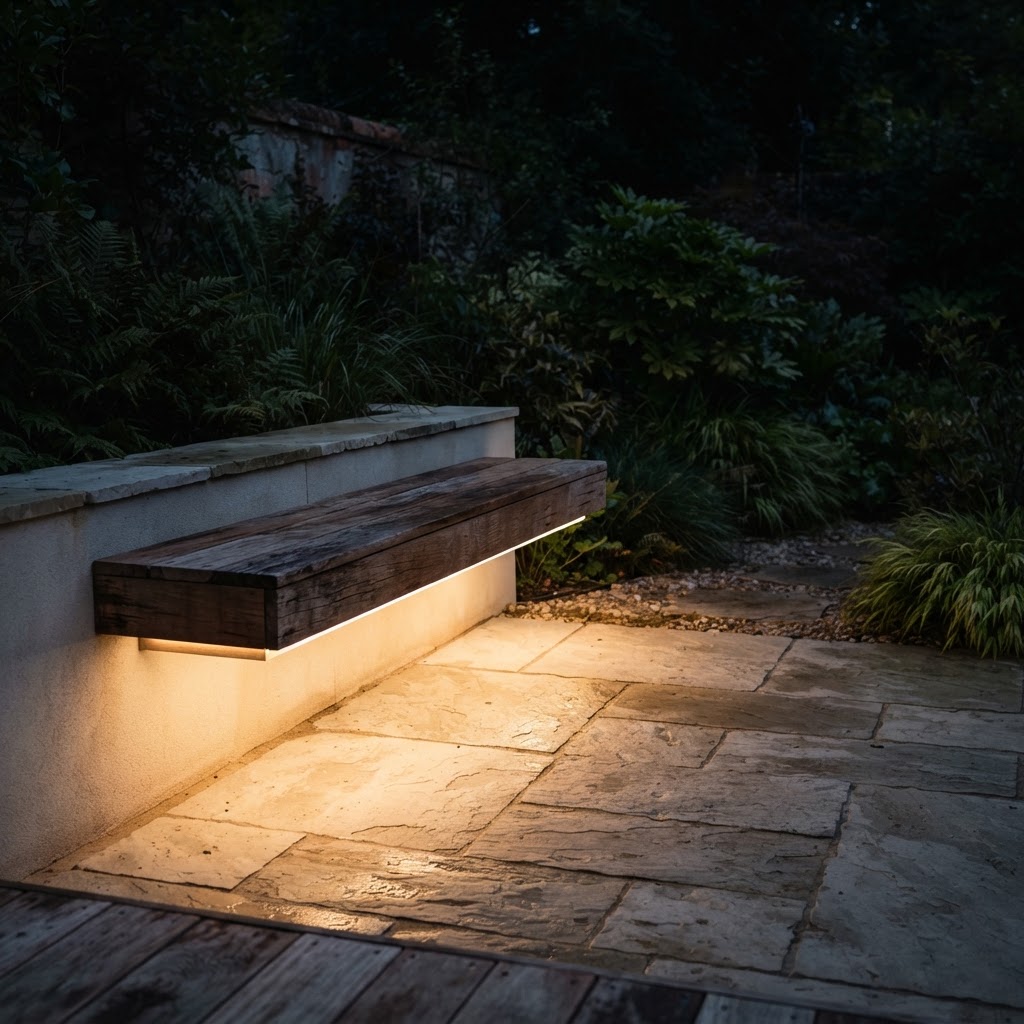
Under-Bench Light Strip
A warm LED strip under a bench or step edge lights the floor without any glare. It makes the yard look bigger by revealing the ground plane.
Use a dimmable, IP65 rated strip with a warm white output. Run it on a timer so it doubles as a night light.
07Kitchens, Storage and Utility
A working yard still needs somewhere for bins, bikes, tools and the barbecue. Solved properly, that utility disappears and the space you have gains a whole room. Every item here hides something.
IDEA 57
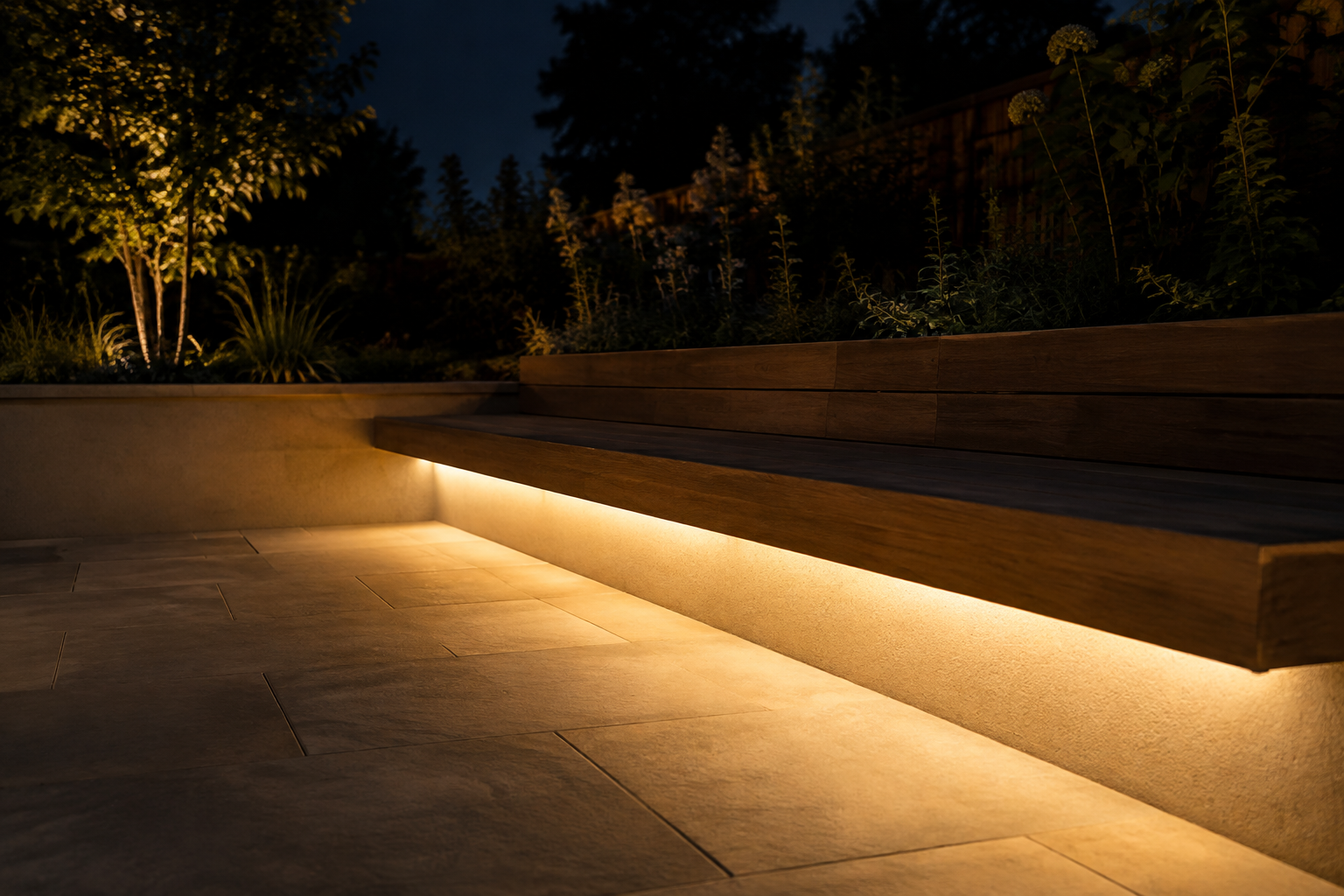
Slim Bike Shed
A three foot deep shed along a boundary stores bikes, tools and bins out of sight. The roof doubles as a shelf for pots and trays.
Fit a full-height door so you can wheel a bike straight in. Ventilate the top so damp tools do not rust.
IDEA 58
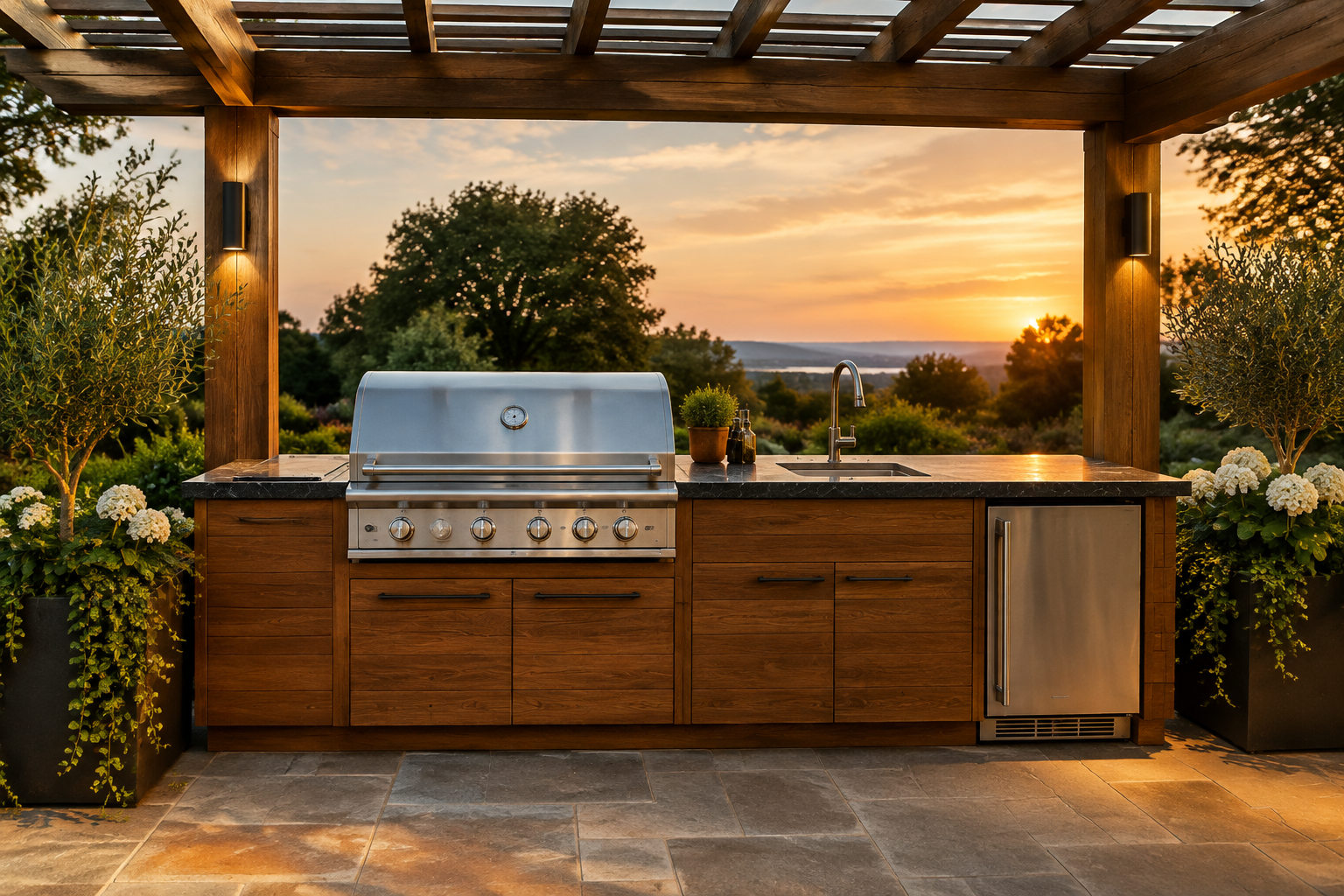
Outdoor Kitchen Counter
A single six foot counter with a built-in grill, sink and fridge covers all outdoor cooking. Everything you need sits within one step.
Use stainless hardware and sealed stone that survives frost. Leave the ends open so the counter reads as furniture, not a wall.
IDEA 59
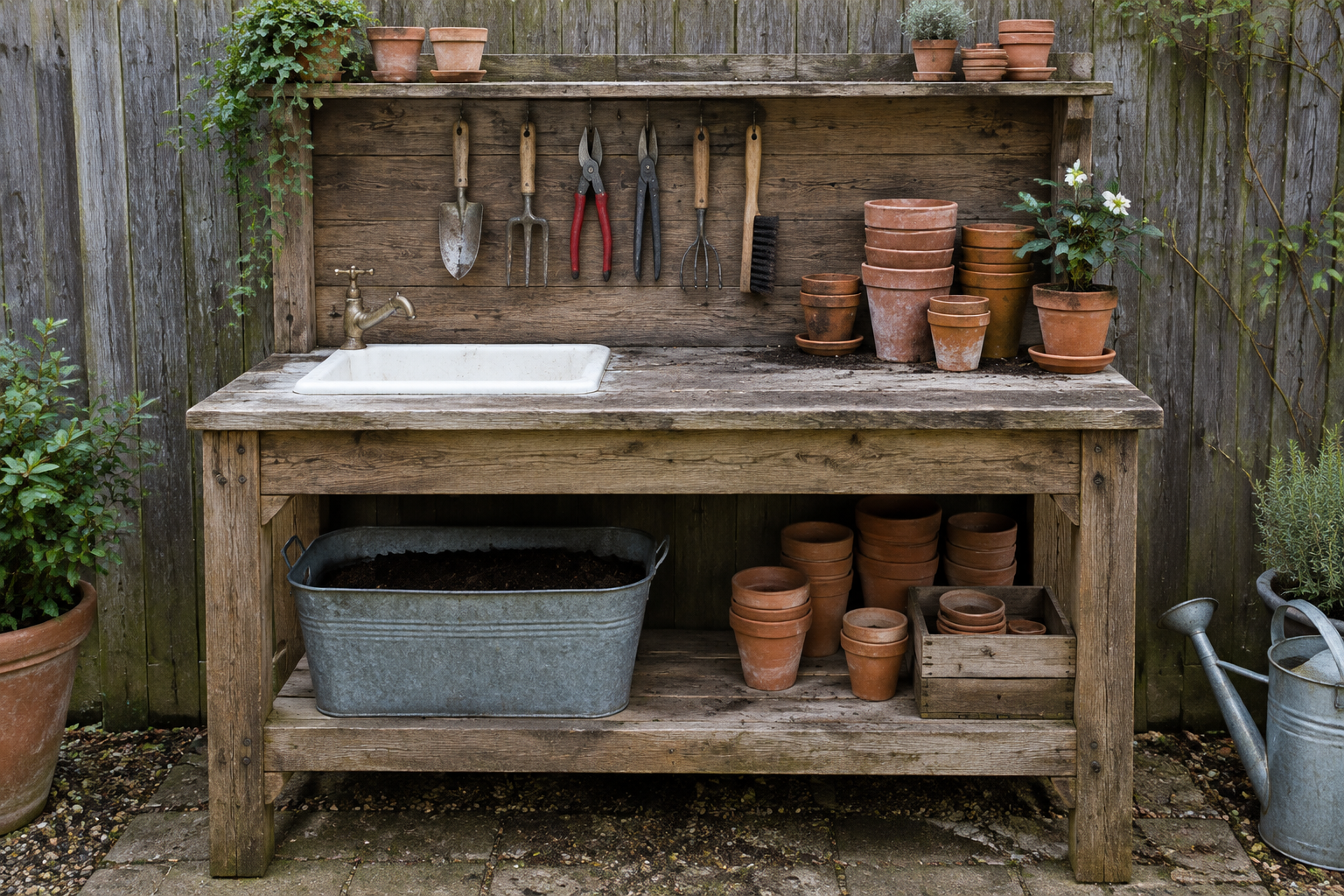
Potting Bench With Sink
A waist-height bench with a small sink and soil bin makes plant work comfortable. The mess stays outside and your back thanks you.
Add a lower shelf for watering cans and a hook rail above for tools. A hinged lid hides the soil bin completely.
IDEA 60
Compost Bench
Build a bench with a lift-up seat over two compost bays and the utility simply disappears. It hides waste and gives you somewhere to sit while you work.
Vent the sides with drilled panels so the heap breathes. Use two bays so one can mature while you fill the other.
IDEA 61
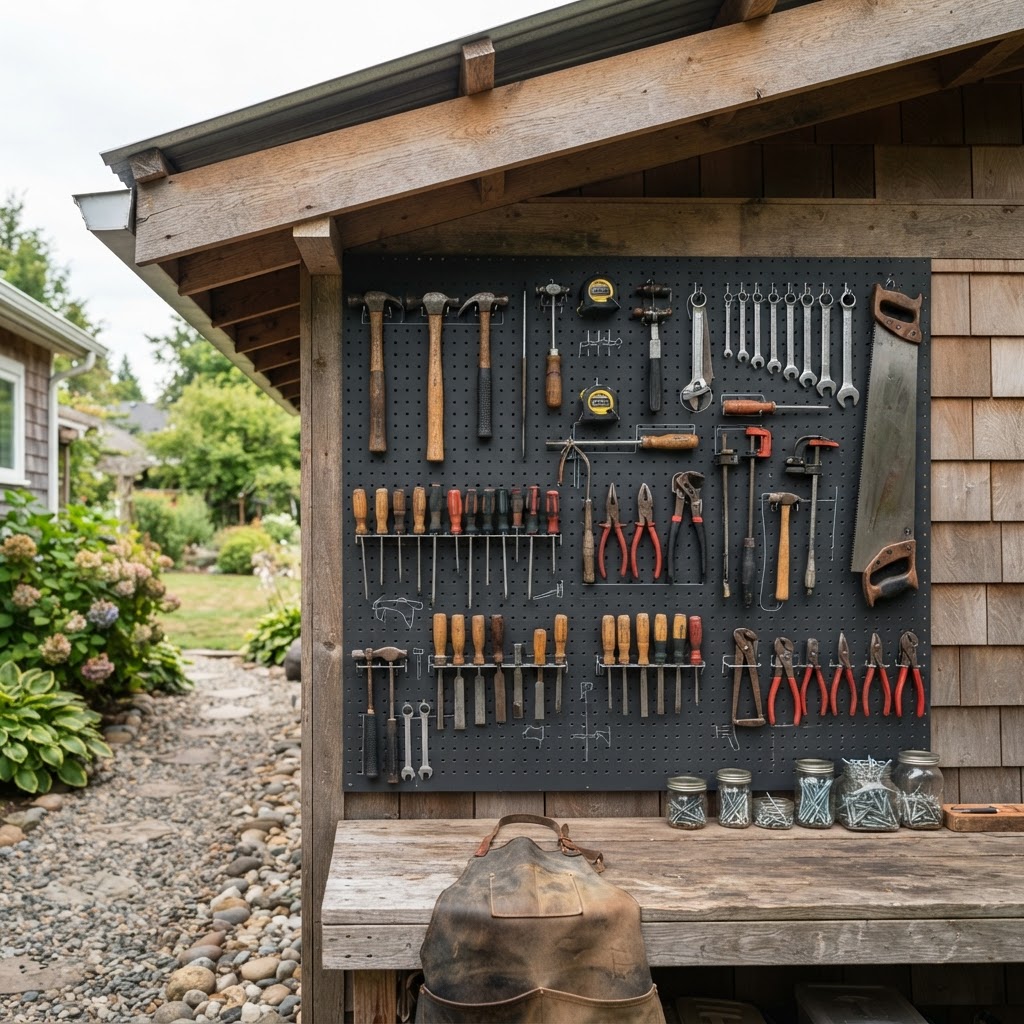
Tool Wall
Pegboard or magnetic strips on a fence back panel keep tools visible and dry. You stop buying duplicates because you can see what you already own.
Mount it under an eave so rain never reaches the steel. Paint the board dark so the tools stand out.
IDEA 62
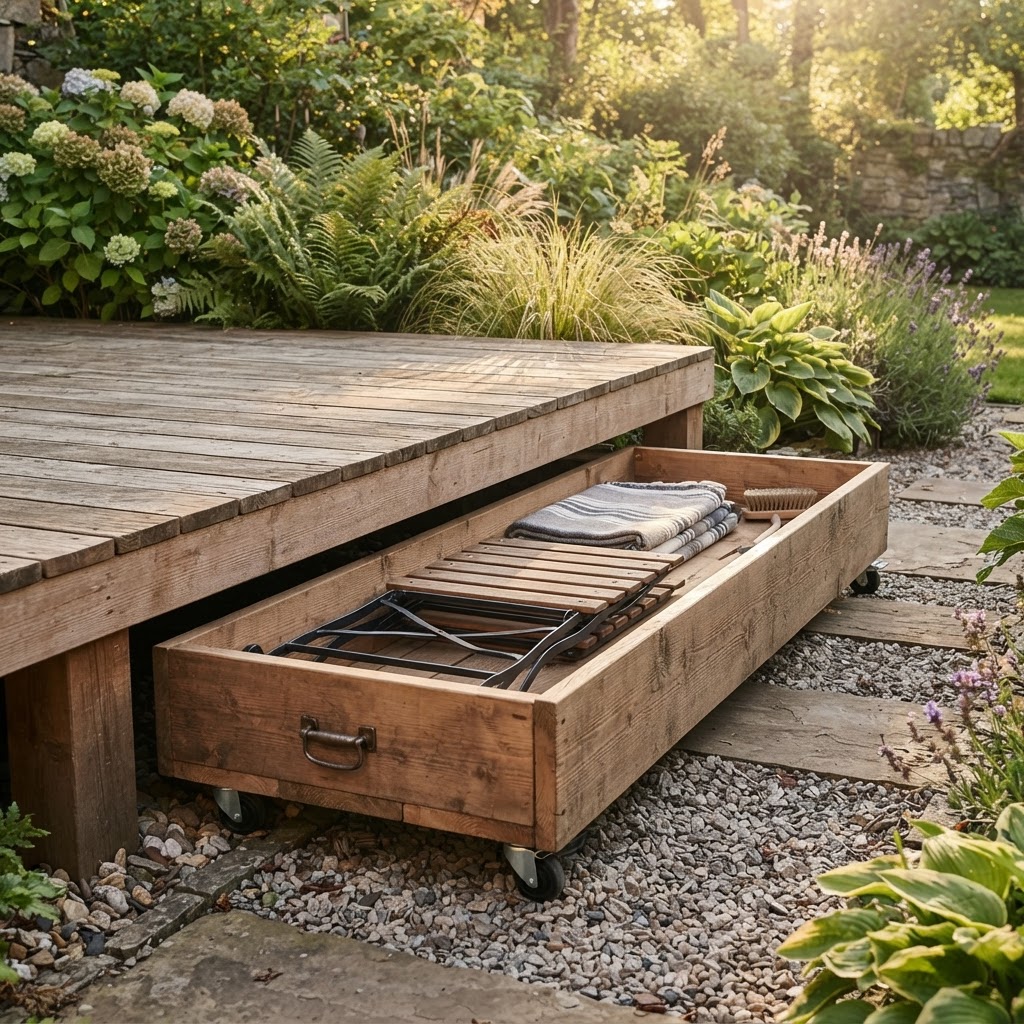
Under-Deck Drawers
Use the space beneath a raised deck for long pull-out drawers on castors. It stores garden furniture and hoses where nothing else fits.
Line the cavity with weed mat to stop damp rising and drill vent holes. A simple handle makes the whole drawer feel built in.
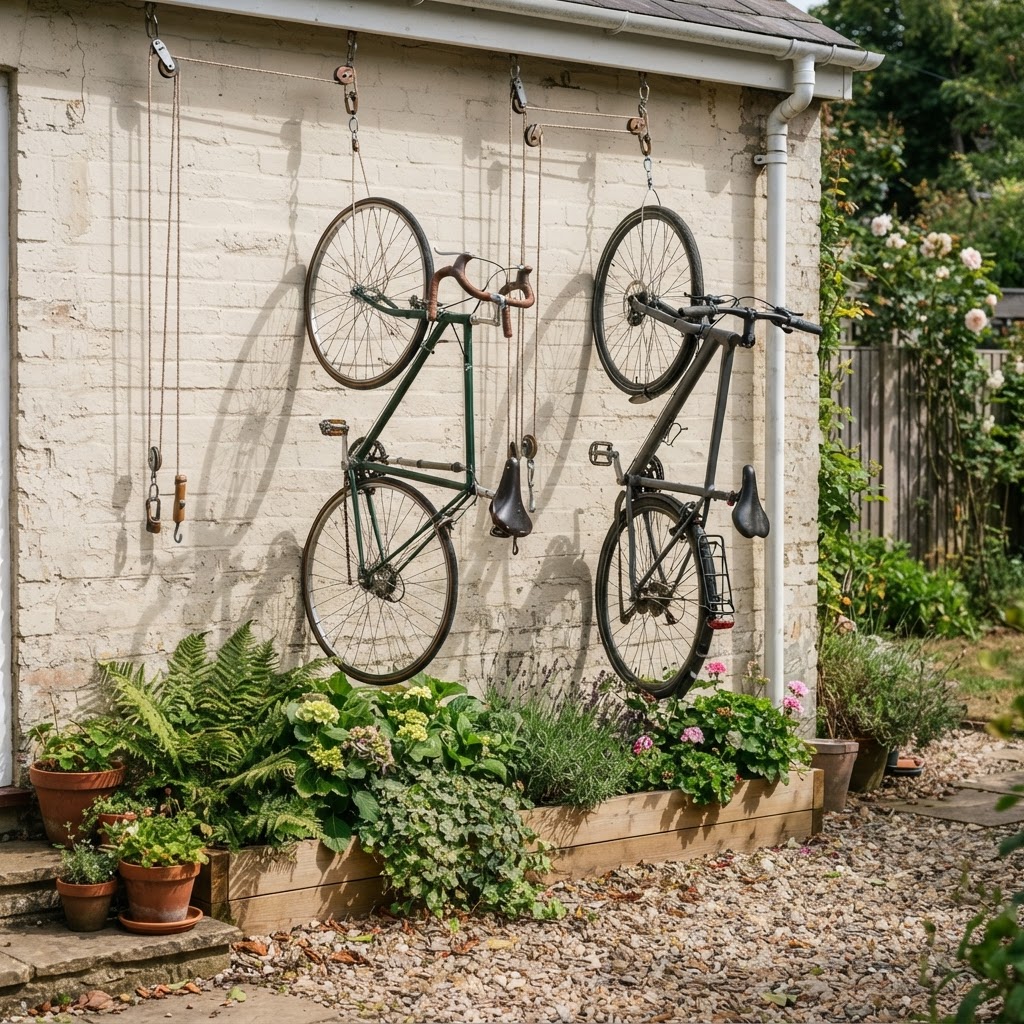
IDEA 63
Wall Bike Hoist
A pulley hoist lifts two bikes to the wall and frees the entire floor. Small yards gain a parking bay without losing a path.
Anchor into studs or masonry, never into a fence panel. Hoisting flat against the wall keeps frames out of the weather.
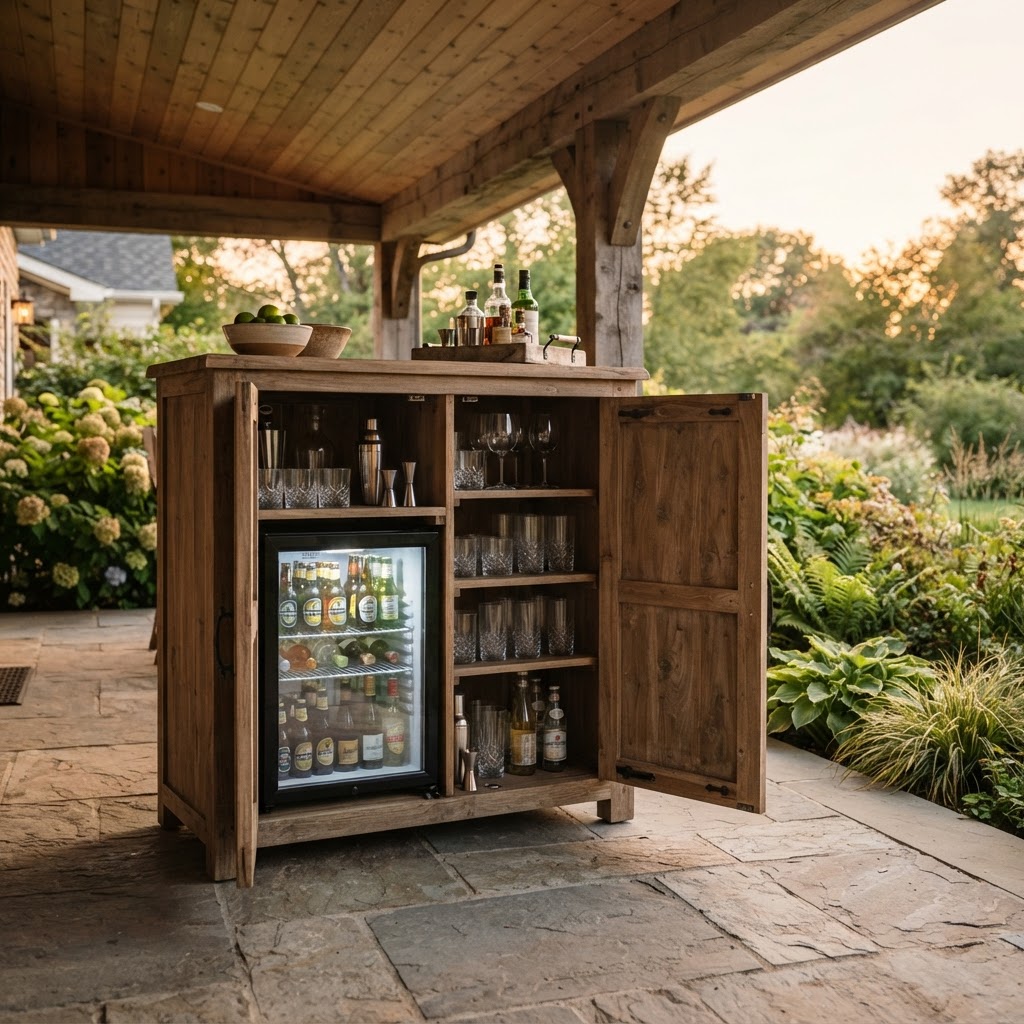
IDEA 64
Outdoor Fridge Cabinet
A weatherproof cabinet with a bar fridge and shelf keeps drinks outside the kitchen. Guests serve themselves and the back door stops swinging.
Leave ventilation gaps at the sides and rear. A drip tray under the fridge protects timber from condensation.
08Details, Colour and Budget DIY
The last eight ideas are the ones guests remember. They are paint, pattern and small handmade touches, and almost all of them cost less than a takeaway dinner. Do a few well rather than all at once.
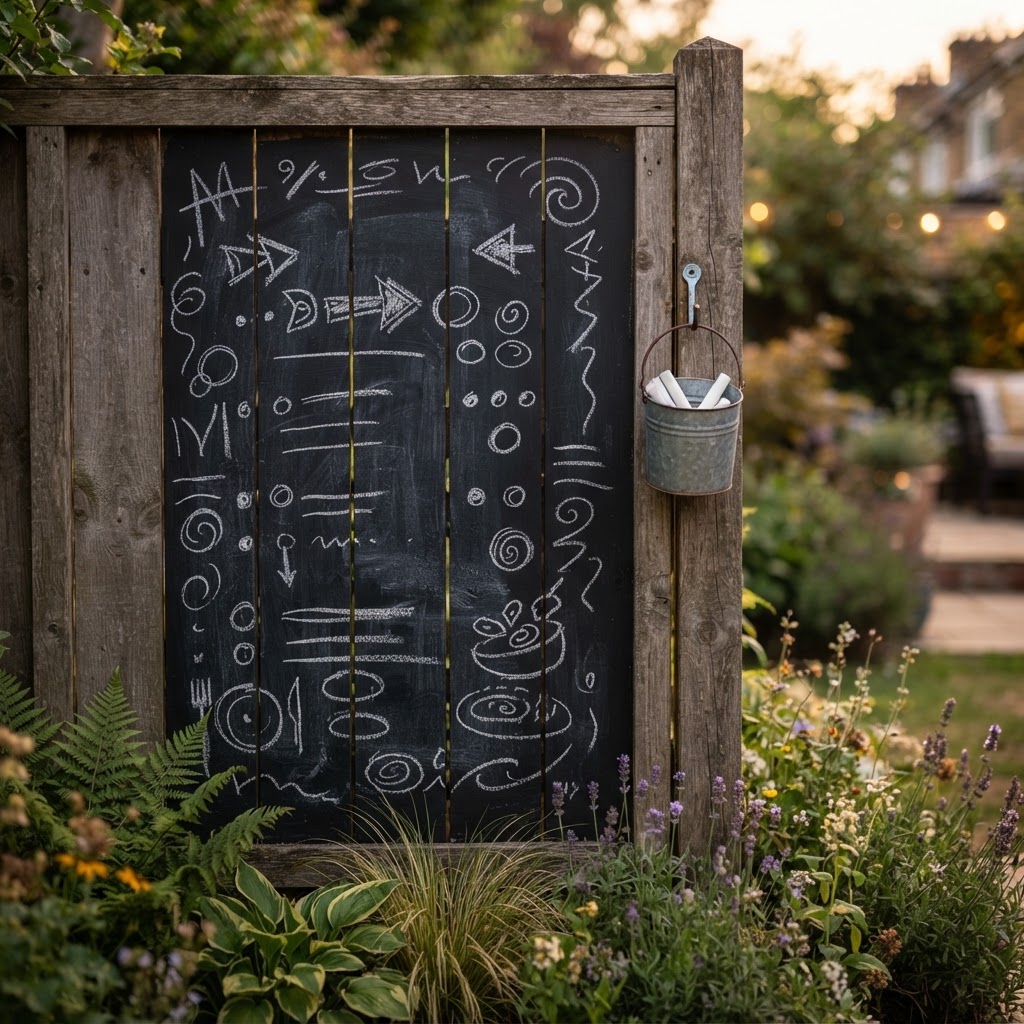
IDEA 65
Chalkboard Menu Wall
Paint a fence panel with chalkboard paint and write the evening menu in chalk. It turns a plain boundary into a host’s prop, and it wipes clean.
Seal the surface so chalk dust rinses off in rain. Keep a small lidded tin of chalk on a hook nearby.
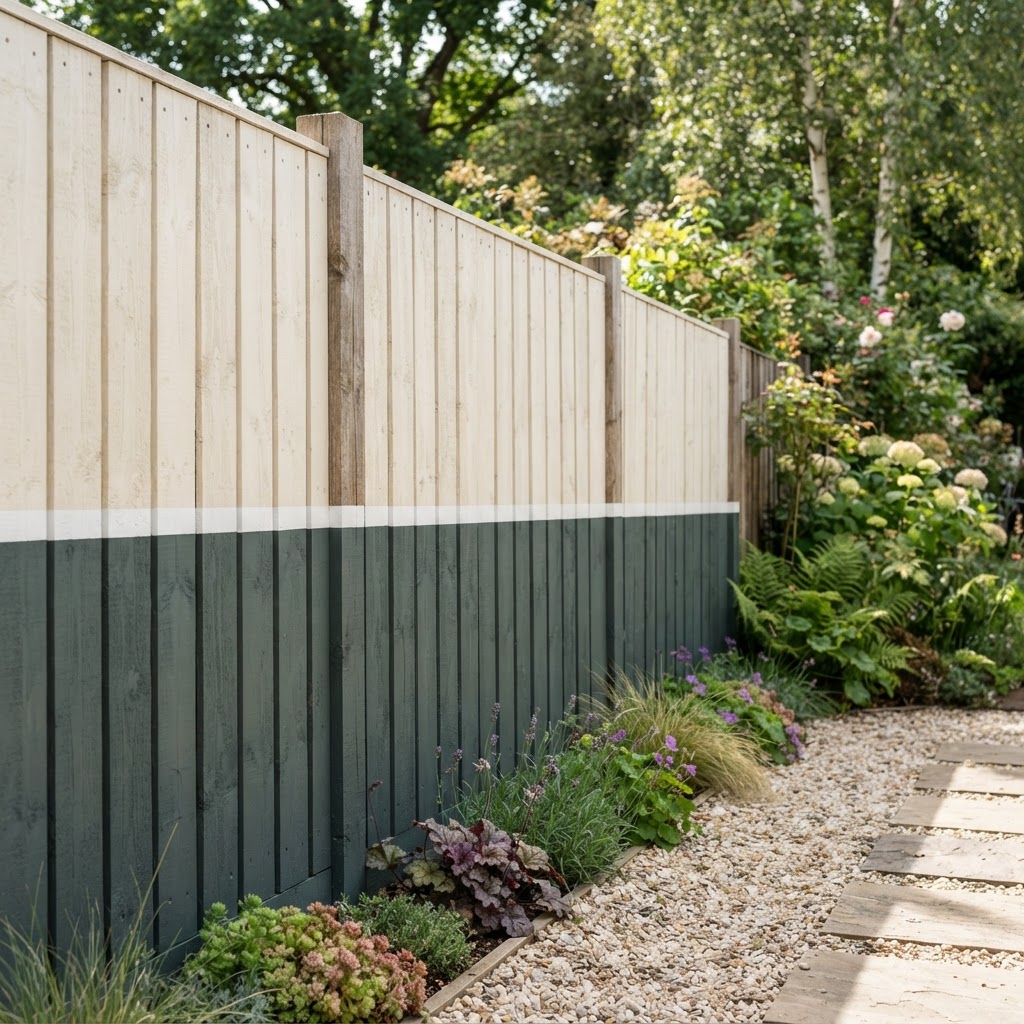
IDEA 66
Colour-Block Fence
Paint one fence in two tones split by a horizontal line and the garden gains depth. The dark base recedes while the light top lifts the sky.
Test colours in full sun on a hidden corner first. Carry the lighter tone around all three boundaries to stop the yard feeling chopped up.
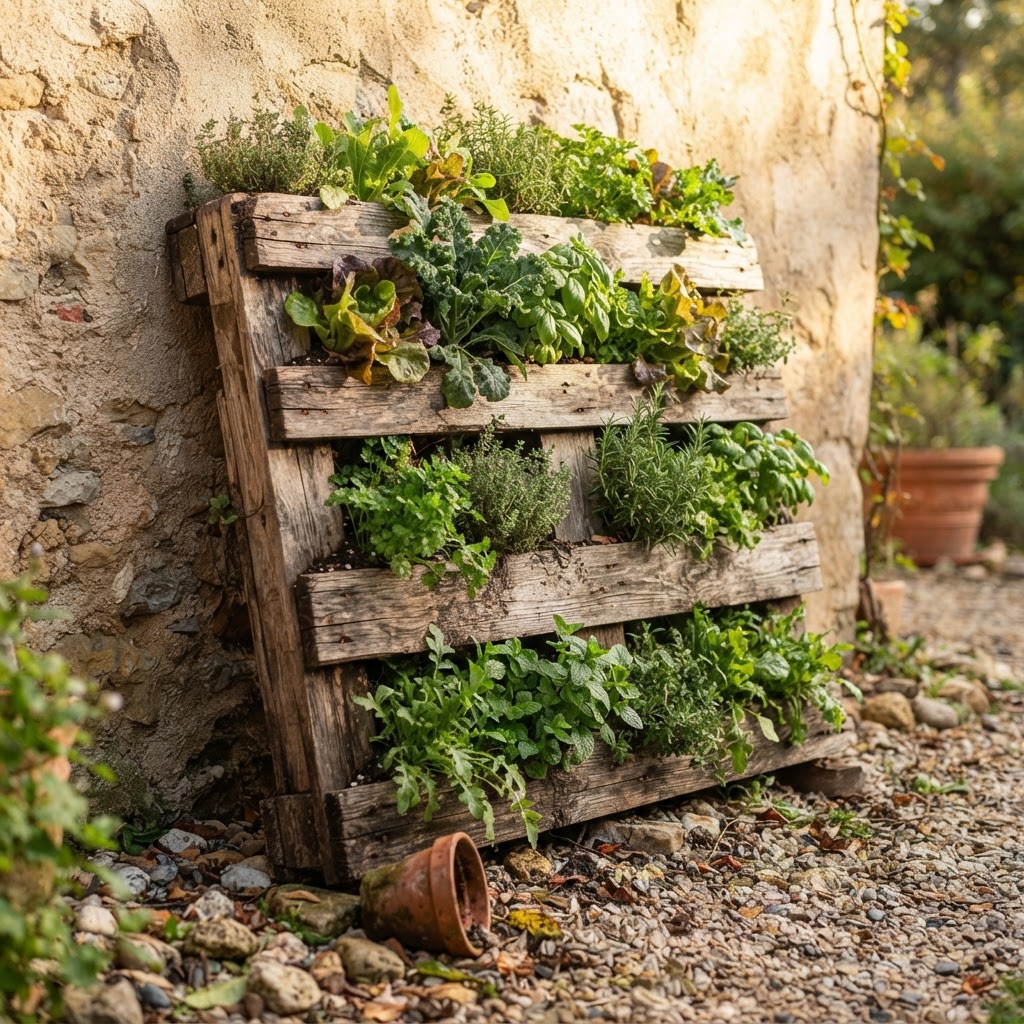
IDEA 67
Pallet Vertical Garden
Stack three heat-treated pallets against a wall, fill them with soil and plant the gaps. It costs almost nothing and grows a full season of herbs.
Line the back with landscape fabric before filling. Never burn pallet timber, and check for the HT stamp on each one.
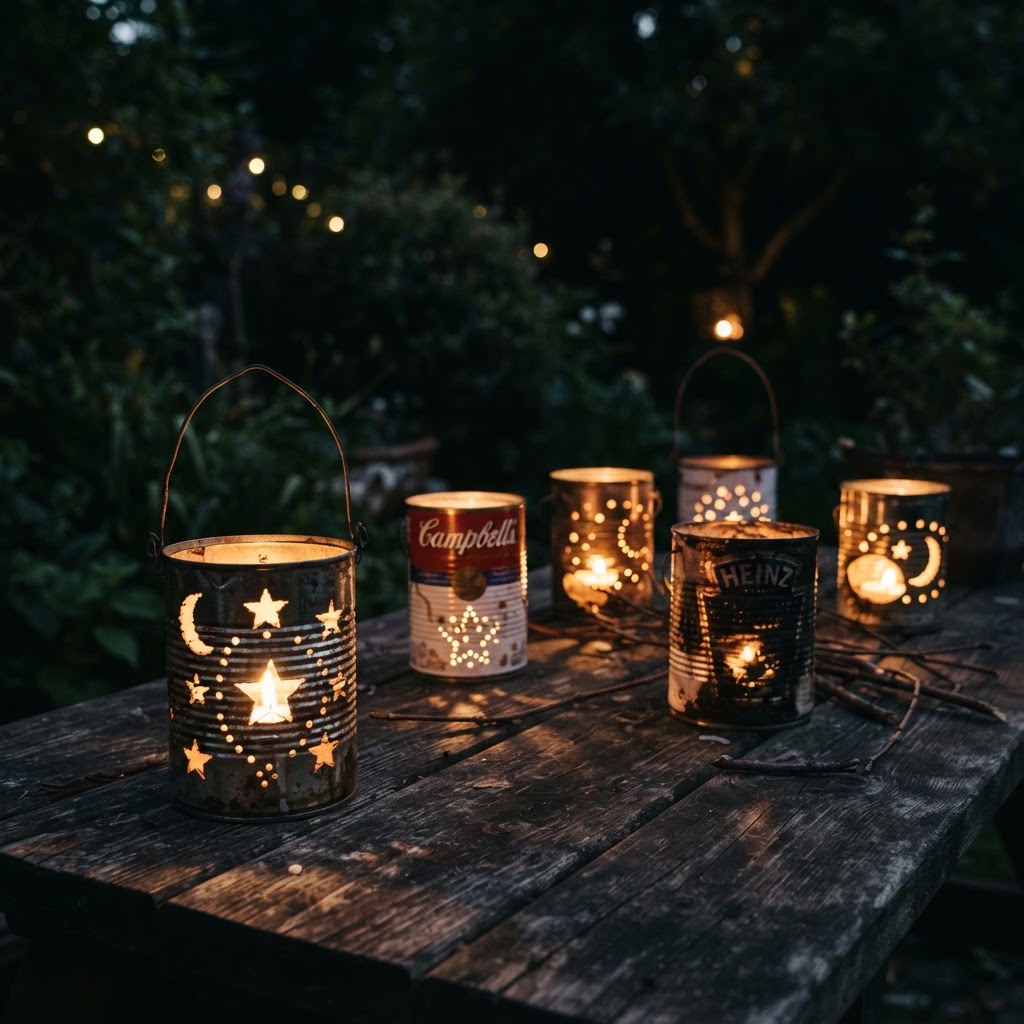
IDEA 68
Tin Can Lanterns
Punch patterns into old tin cans and set a votive inside each one. The holes throw stars across the fence for pennies.
Wear gloves, because punched edges are very sharp. Fill each can a third with sand so it never tips in wind.
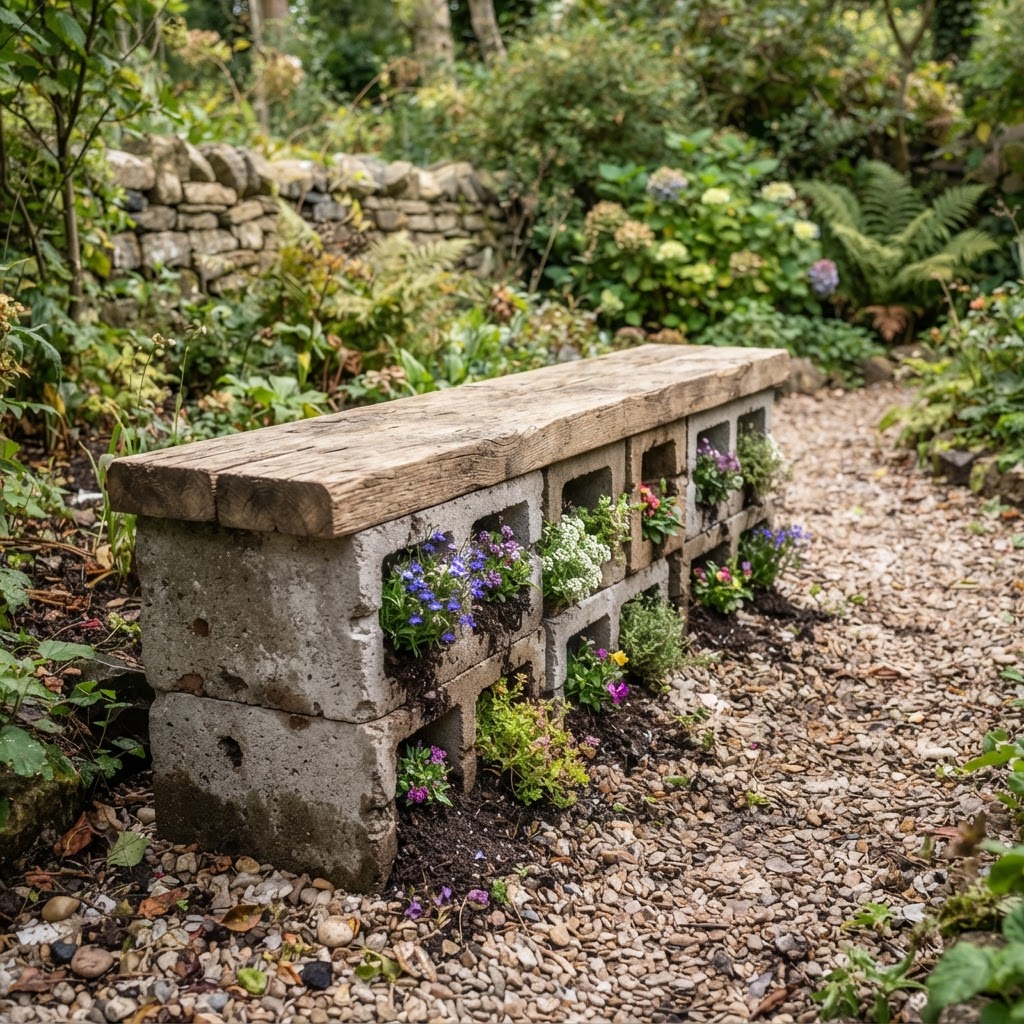
IDEA 69
Cinder Block Bench
Stack two rows of blocks with timber across the top and you have a bench in an hour. Fill the hollows with soil and let flowers grow through.
Cap the blocks with a rubber pad to stop movement. Paint the blocks the same colour as the fence and it reads as built in.
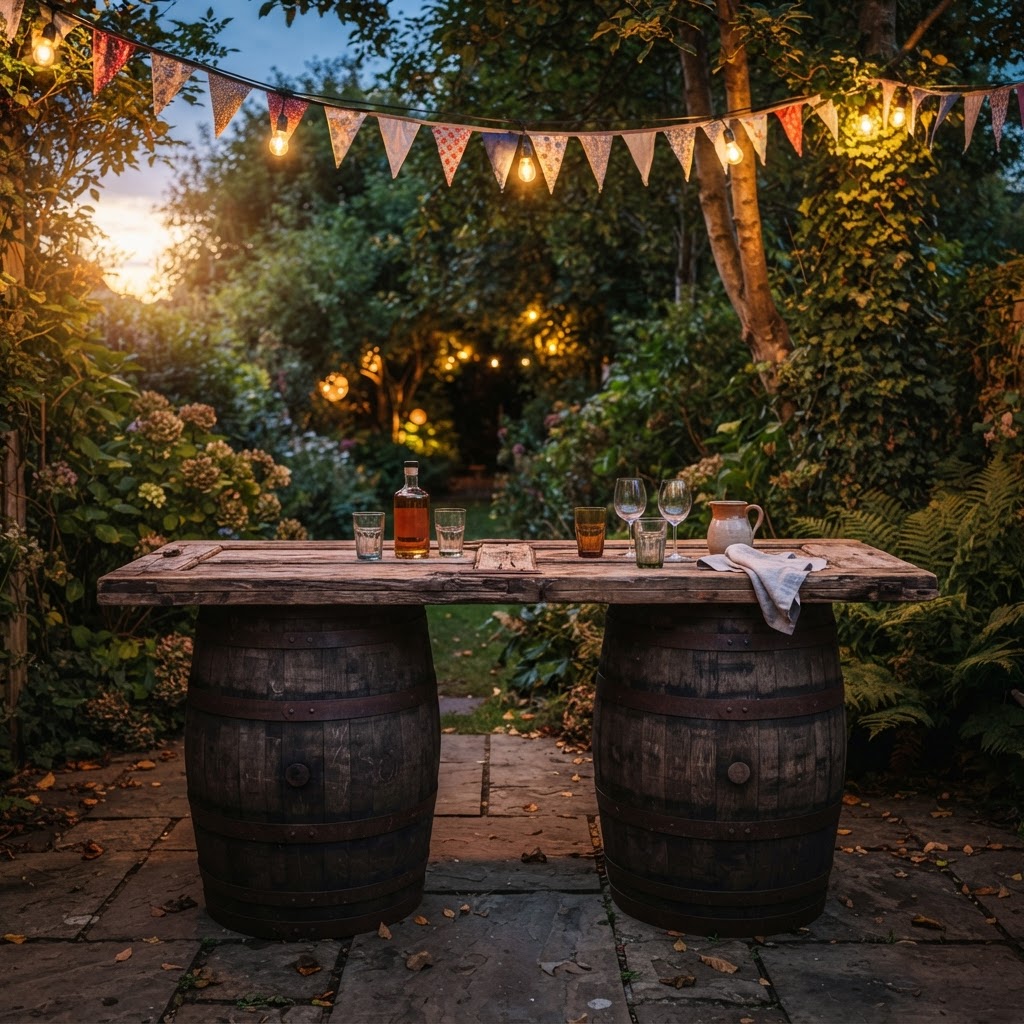
IDEA 70
Reclaimed Door Bar
Lay an old door over two barrels for a rustic bar that costs the price of a hinge. It wipes clean and stores flat in winter.
Sand the top and seal it with exterior oil. Choose a solid door rather than a hollow one, which swells with rain.
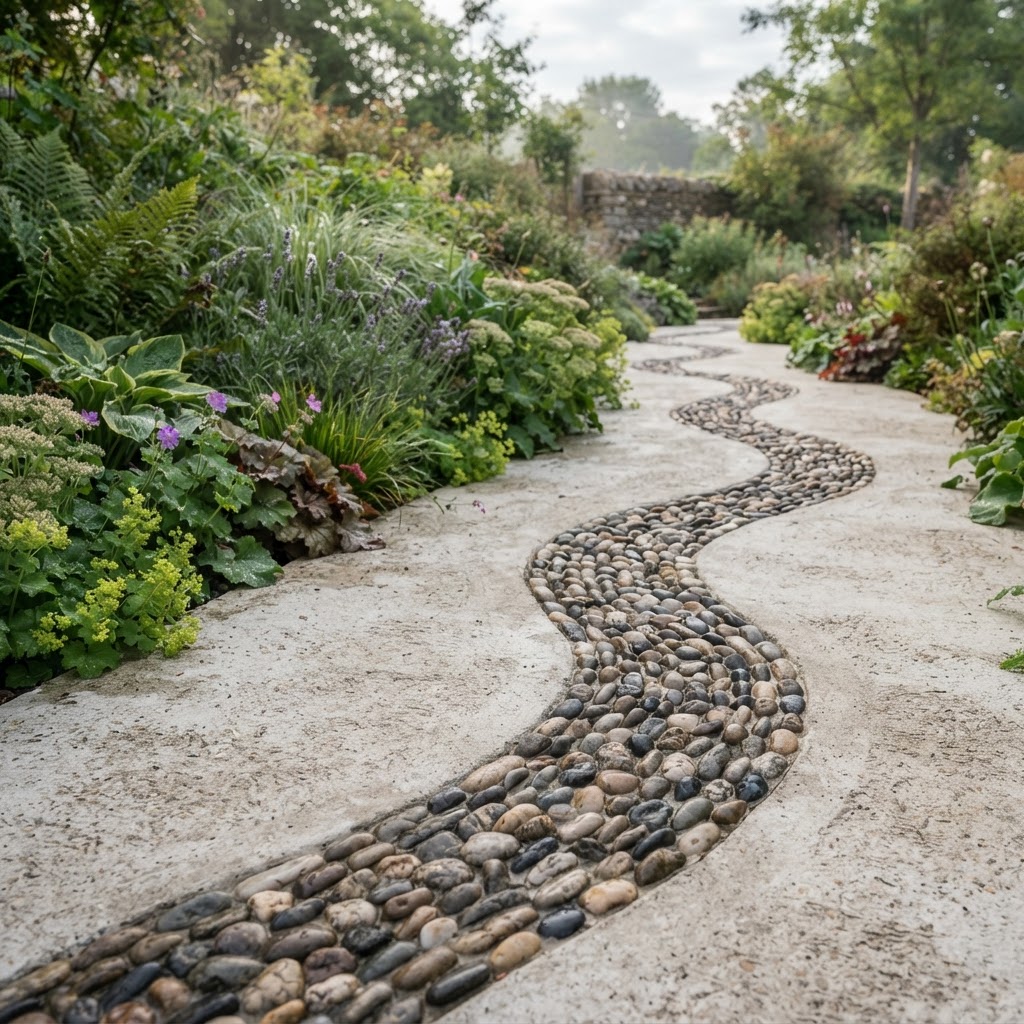
IDEA 71
Pebble Mosaic Detail
Press smooth pebbles into a concrete path in a simple wave pattern for a bespoke edge. It marks a zone and hides small imperfections in the slab.
Draw the pattern in chalk before the concrete sets. Work in small sections, because the surface stiffens within the hour.
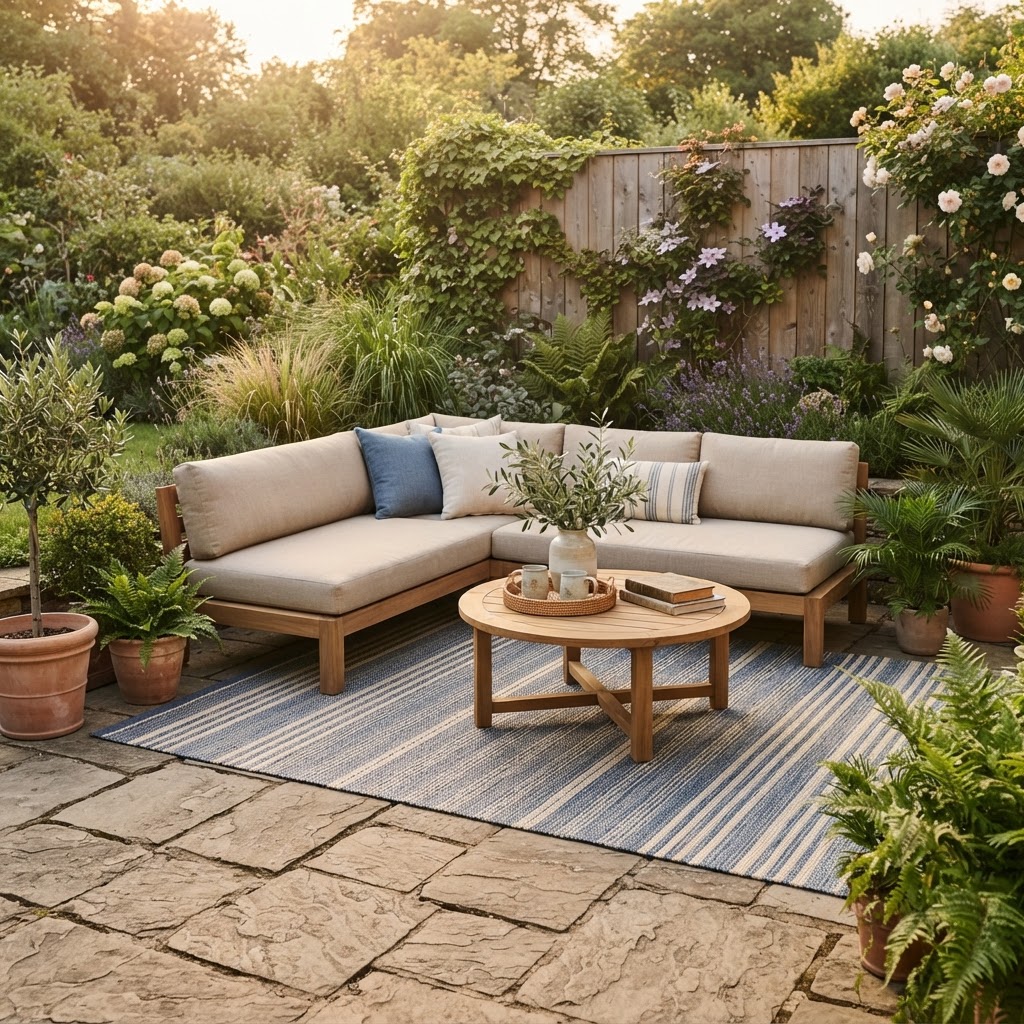
IDEA 72
Outdoor Rug Zone
An all-weather rug instantly reads as an outdoor room and marks where the lounge begins. It softens hard paving and stops a space feeling unfinished.
Choose polypropylene so it survives rain and hoses down easily. A rug two feet narrower than the furniture looks intentional, not squeezed in.
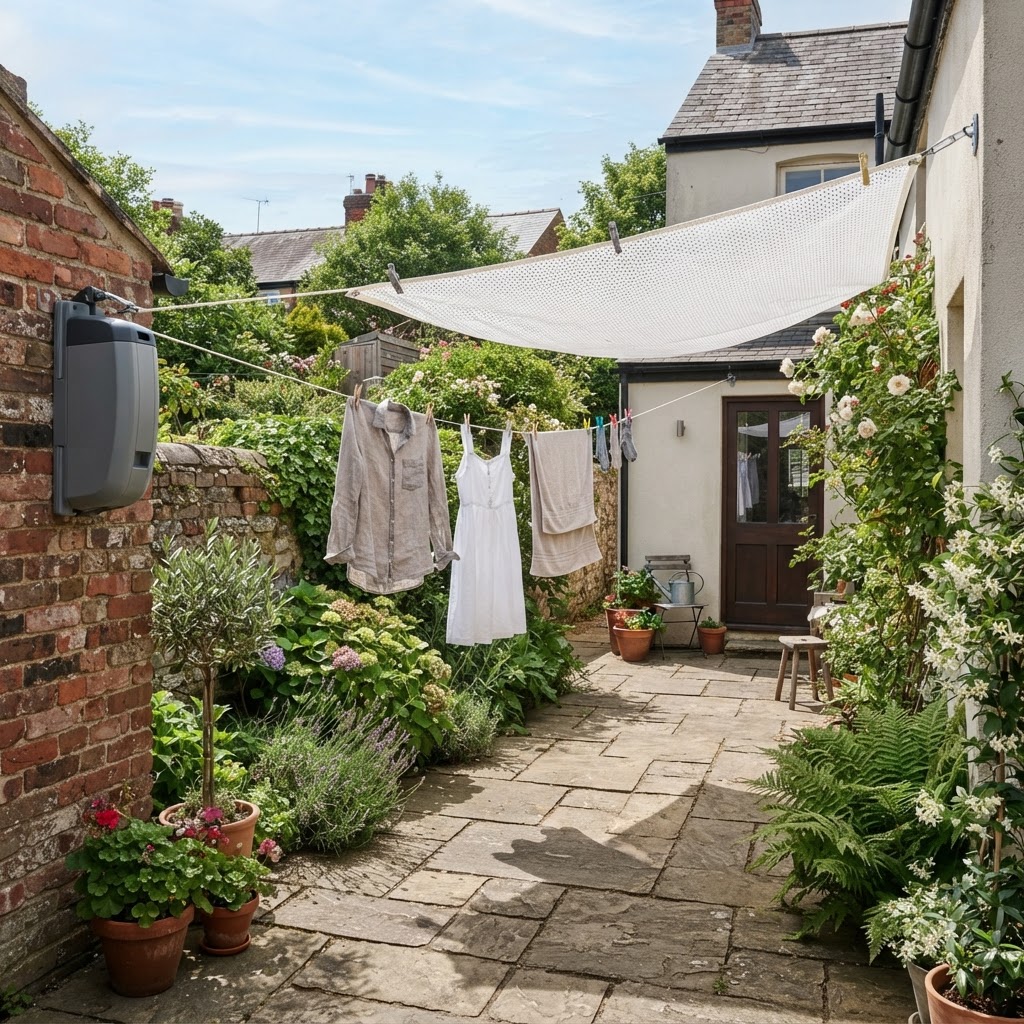
IDEA 73
Convertible Clothesline Court
Fit a retractable line across the yard and clip a shade cloth to the same anchors in summer. The same two hooks give you drying space and instant shade.
Use a locking hook so the line retracts tight and out of sight. A white cloth keeps the yard bright instead of turning it into a cave.
How to Choose Your First Project
Seventy-three ideas is a menu, not a shopping list. Choose one zone, build it completely, and live with it for a month.
Good yards are edited, not filled. Take something out every time you add something in.
Start with the floor, because paving and decking set the size of everything that follows. Then add shade, because shade decides where you actually sit.
Furniture comes third, and lighting comes last. Lighting is the cheapest step and the one guests notice most.
Measure before you buy. Draw your yard on paper at a scale of 1 inch to 1 foot and move paper shapes around before moving furniture.
Keep one path clear at all times. A yard you can walk through feels generous even when it is tiny.
Finally, let something grow. A single climber on a fence will do more for a small space than any piece of furniture.
- Zoning beats square footage. Give every corner one clear job.
- Build the floor first, then shade, then furniture, then light.
- Vertical space is free space. Walls, fences and posts all hold something.
- Choose materials in three tones only, so a small yard never looks busy.
- Buy furniture that folds, stacks or hides storage inside it.
- Water-wise planting keeps a compact garden green without daily work.
Questions People Ask
How do I make a small backyard look bigger?
Use one consistent paving tone and run it to the boundaries. Then keep the fence dark and the plants tall at the edges. A continuous floor with a dark frame makes the eye travel further.
What should I put in a 10×10 backyard?
A bistro table for two, one tall planter in a corner, and a bench with storage underneath. Add a string light run overhead and one water feature. That is a complete outdoor room.
Are small backyard ideas expensive?
Not always. Gravel, pavers, pallet planters, cinder block benches and string lights cost very little. The expensive items are decks, pergolas and built-in kitchens.
What is the cheapest way to add privacy to a small yard?
Roll-out reed screening over an existing fence is the cheapest fast option. Tall movable planters cost a little more and look softer.
How much should I spend on lighting?
Lighting is the highest return per pound in a small garden. A string light run, three uplights and a path of solar posts will change the yard for a modest sum.


