

58 Garden Pathway Ideas: Stone, Gravel & Wood Designs
A garden path decides how you move through your own outdoor space. Get it right and the garden feels bigger, calmer and finished.
These 58 garden pathway ideas cover every material, budget and style. Each one comes with a real photo, a short explanation and one practical tip.
Nothing here repeats. You can compare stone against gravel, timber against concrete and wild planting against clean architectural lines.
Read the whole list for inspiration. Or follow the category that matches your surface, your slope or your budget.
Every kind of garden appears below. Small courtyards, long country plots, sloping banks, shady corners and balconies all get their own idea.
How to Choose the Right Garden Path
Pick the surface before you pick the pattern. The material decides the cost, the maintenance and the feel of everything around it.
-
Start with how much traffic the path takes
A daily route to the bin store needs a firm, level surface like brick or concrete. A quiet corner route can be gravel, moss or stepping stones.
-
Match the material to the ground under it
Loose surfaces need drainage. Slabs need a compacted base. Timber needs air moving underneath it so it never sits in water.
-
Decide the width from how it will be used
900mm lets two people pass comfortably. 600mm is fine for one person. Anything narrower becomes a single file route.
-
Choose one dominant material only
One surface, one edge and one accent is enough. Three materials in a small space always look like a compromise.
Stone & Pavers
Stone is the most permanent choice and the easiest to live with. These ten paths use slabs, setts and tiles that improve with weather.
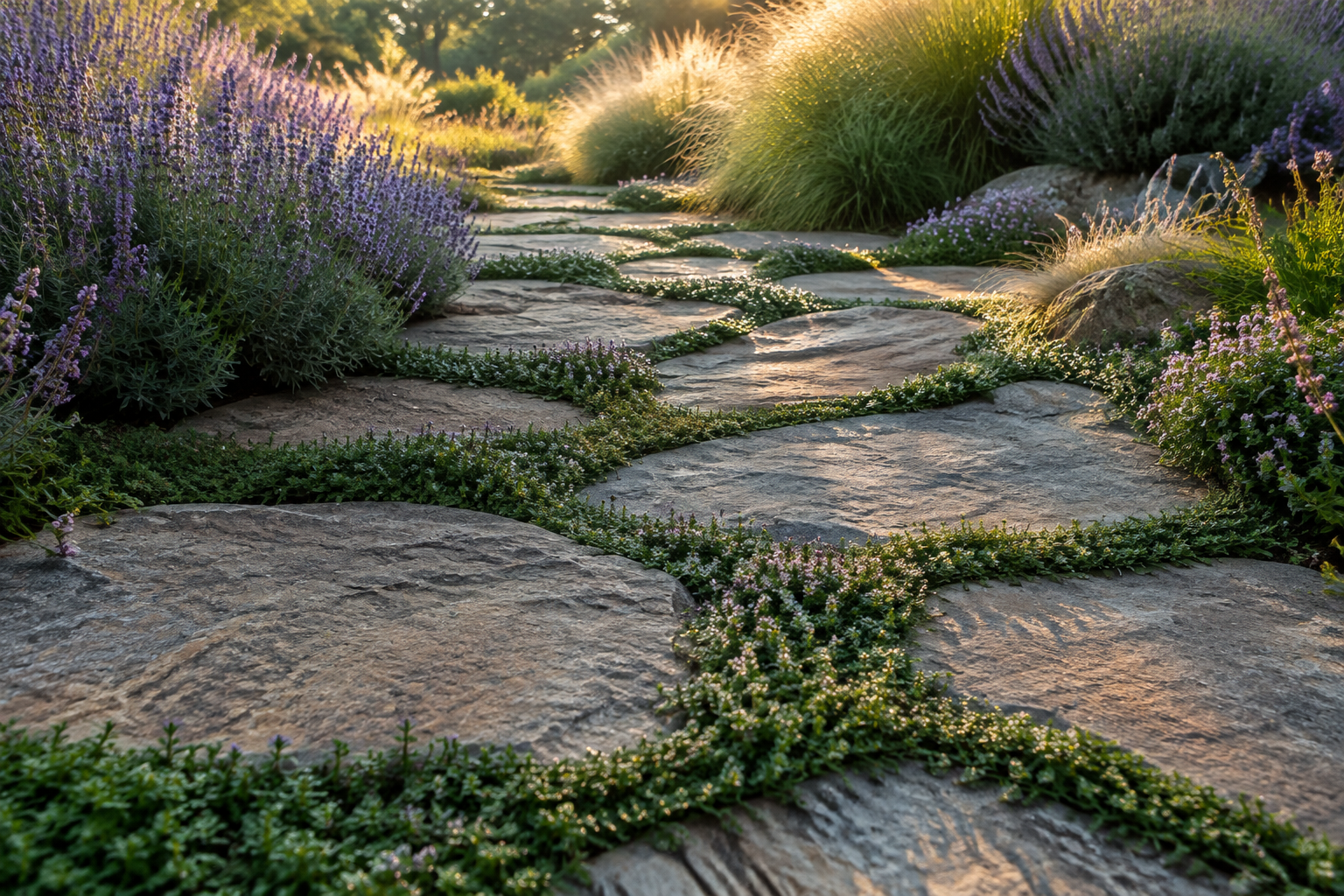
Flagstone Path with Creeping Thyme Joints
Wide flagstone slabs rest on a bed of sand, with creeping thyme tucked into every gap. The thyme softens the joints and releases a herby scent as you walk across it.
This is the most forgiving path style for an old garden. It looks settled on day one and only improves with weather.
Tip: Leave 75 to 100mm between slabs so the thyme can spread without lifting the stone.
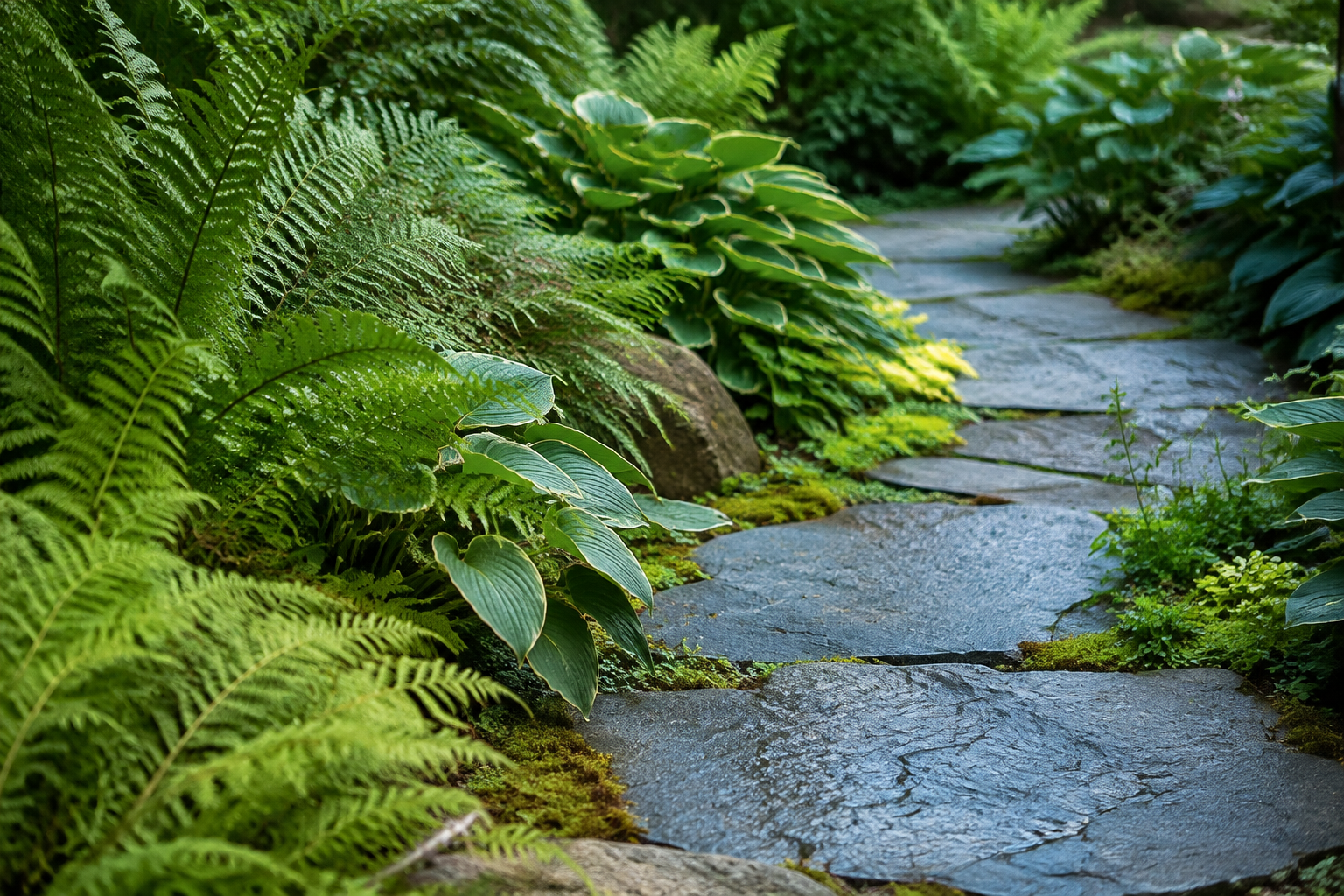
Irregular Bluestone Slab Walkway
Irregular bluestone slabs curve through a border of ferns and hostas. The natural cleft of each stone keeps the walk looking hand set rather than factory made.
Bluestone holds a cool blue-grey tone in shade and warms to silver in sun. That shift makes it feel alive through the day.
Tip: Lay the largest slabs at the start and end of the curve to anchor the eye.
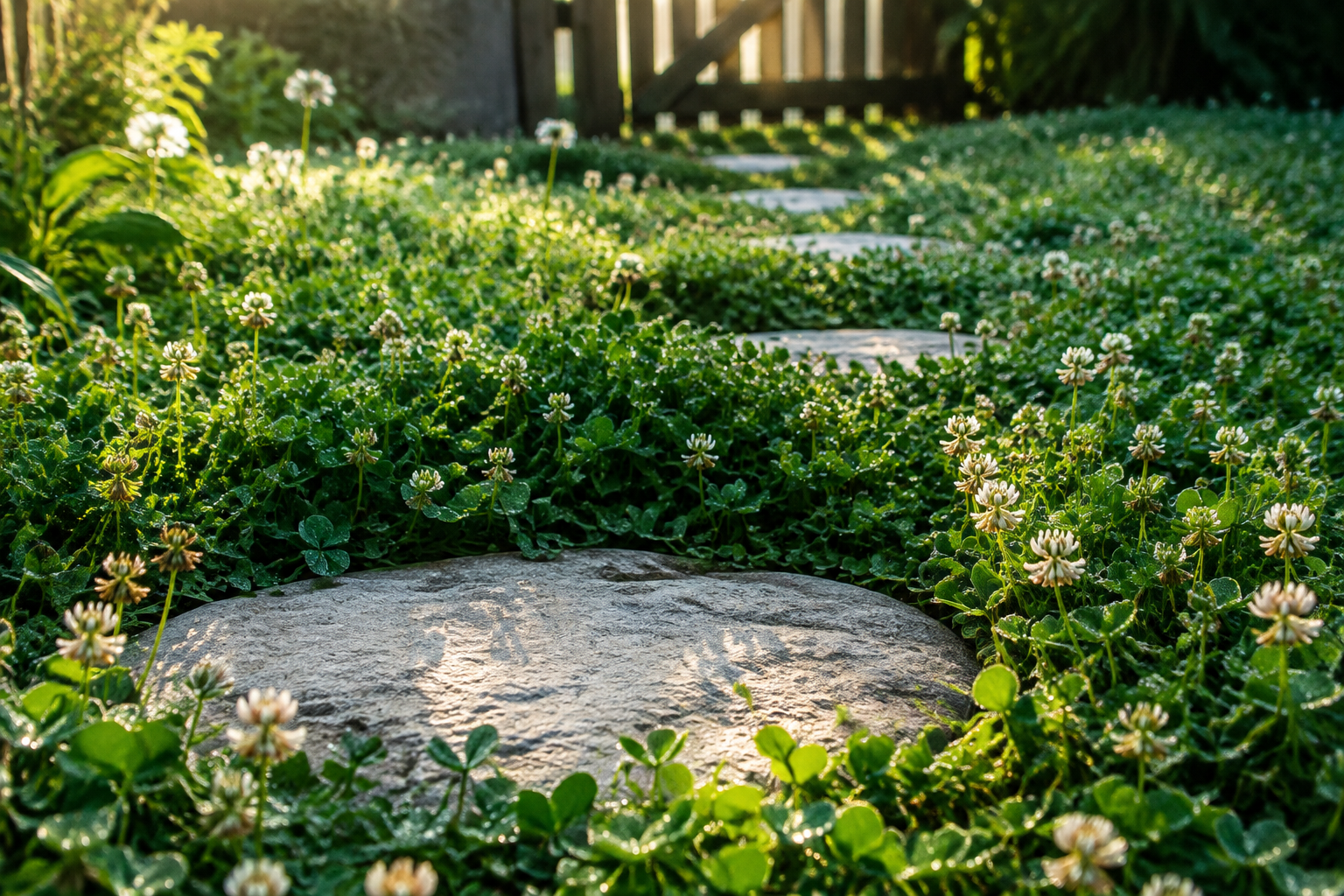
Stepping Stones Across a Clover Lawn
Flat round stepping stones sit flush with a dense clover lawn. You get a soft green route that stays green in dry spells.
Clover needs far less mowing and feeding than turf. It also feeds pollinators with small white flowers all summer.
Tip: Set stones 50mm below the turf line so the mower passes over them cleanly.
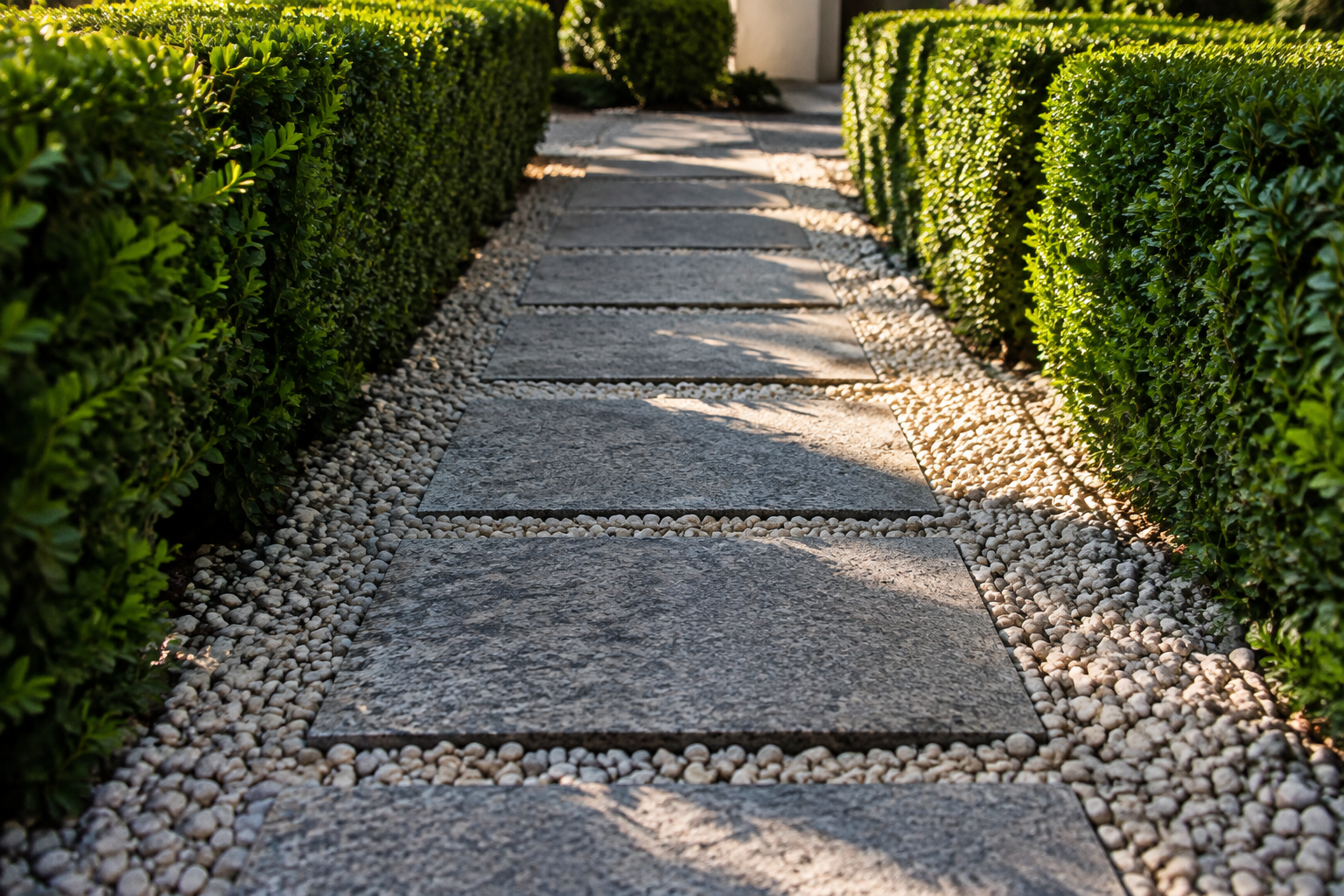
Cut Granite Pavers in a Gravel Bed
Sawn granite pavers float in a bed of pale pea gravel. The crisp stone edges contrast with the loose gravel and give the path a modern rhythm.
Because the pavers are cut square, the path reads calm and precise. It suits new builds and contemporary planting.
Tip: Use a stabilising grid under the gravel so it does not migrate into the borders.
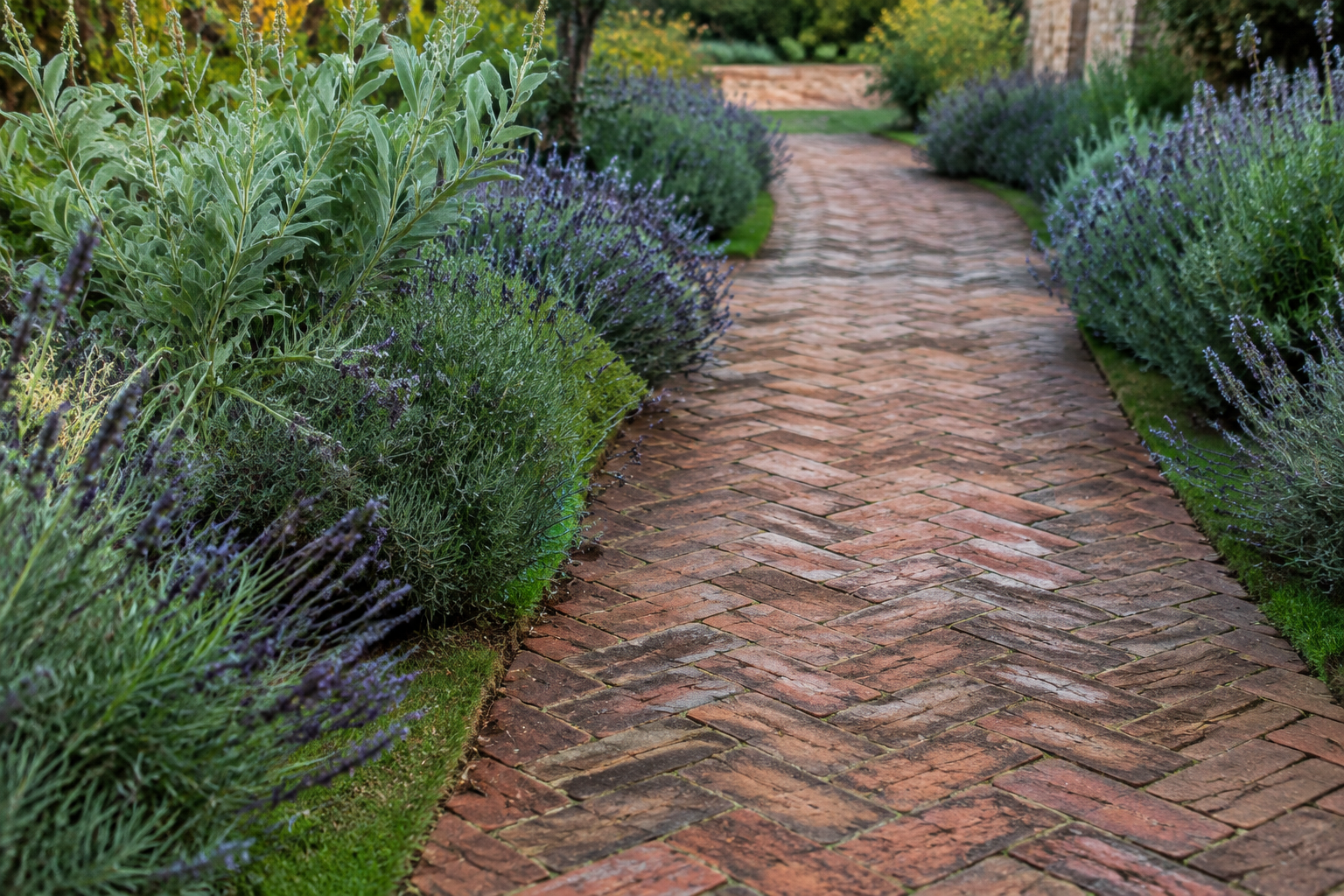
Brick Herringbone Path with a Mowing Strip
Aged red brick laid in herringbone looks warm and lasts for decades. The zigzag bond locks the bricks together so they resist shifting.
A flat mowing strip along one side lets you trim the lawn without edging by hand. That single detail saves hours every season.
Tip: Ask for solid clay bricks, not perforated ones, because frost splits the softer type.
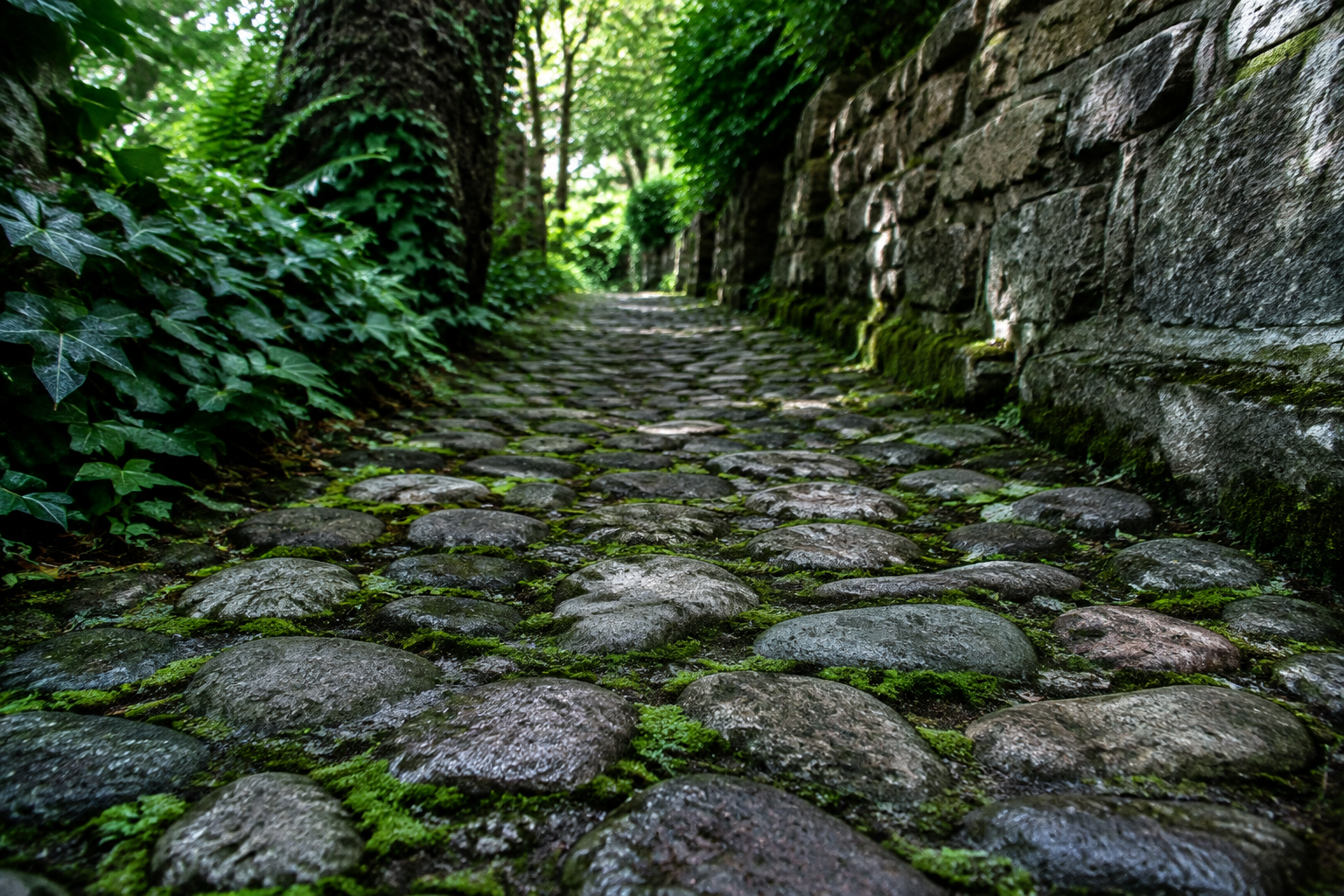
Cobblestone Walkway with Moss Filling
Rounded granite cobbles set in sand with moss filling the gaps create an old world floor. Moss thrives in damp shade and knits the stones together over time.
This is the path that looks oldest fastest. In two wet seasons it can read a century old.
Tip: Keep joints wide and fill with a sand and sieved soil mix to encourage moss.
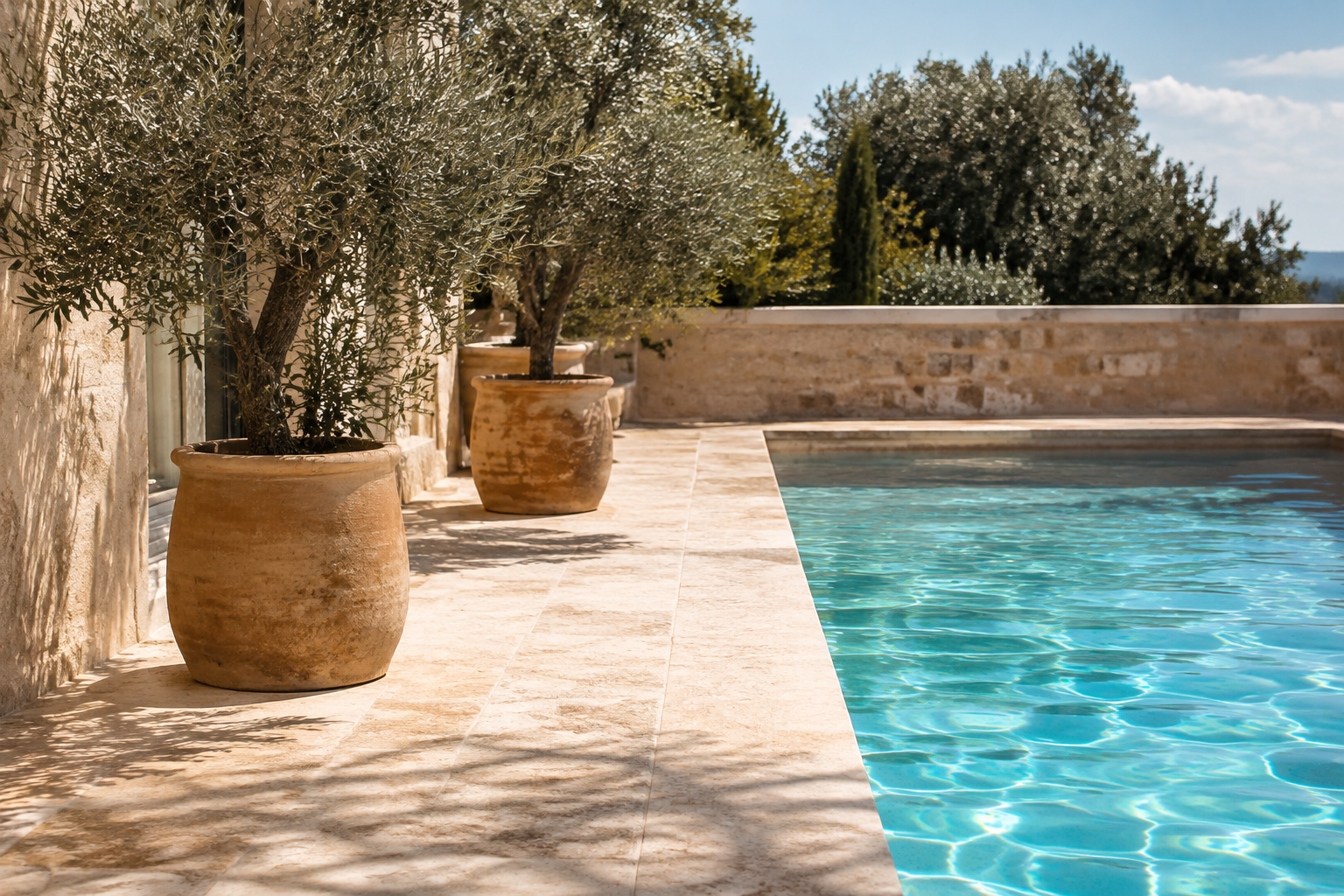
Travertine Tile Path Alongside a Pool
Warm travertine tiles stay cooler underfoot than most stone beside water. Their soft beige tone reads calm against blue pool water and silver olive leaves.
It is one of the few materials that looks equally right in a Mediterranean garden and a modern one.
Tip: Choose a honed or tumbled finish, because polished travertine turns slippery when wet.
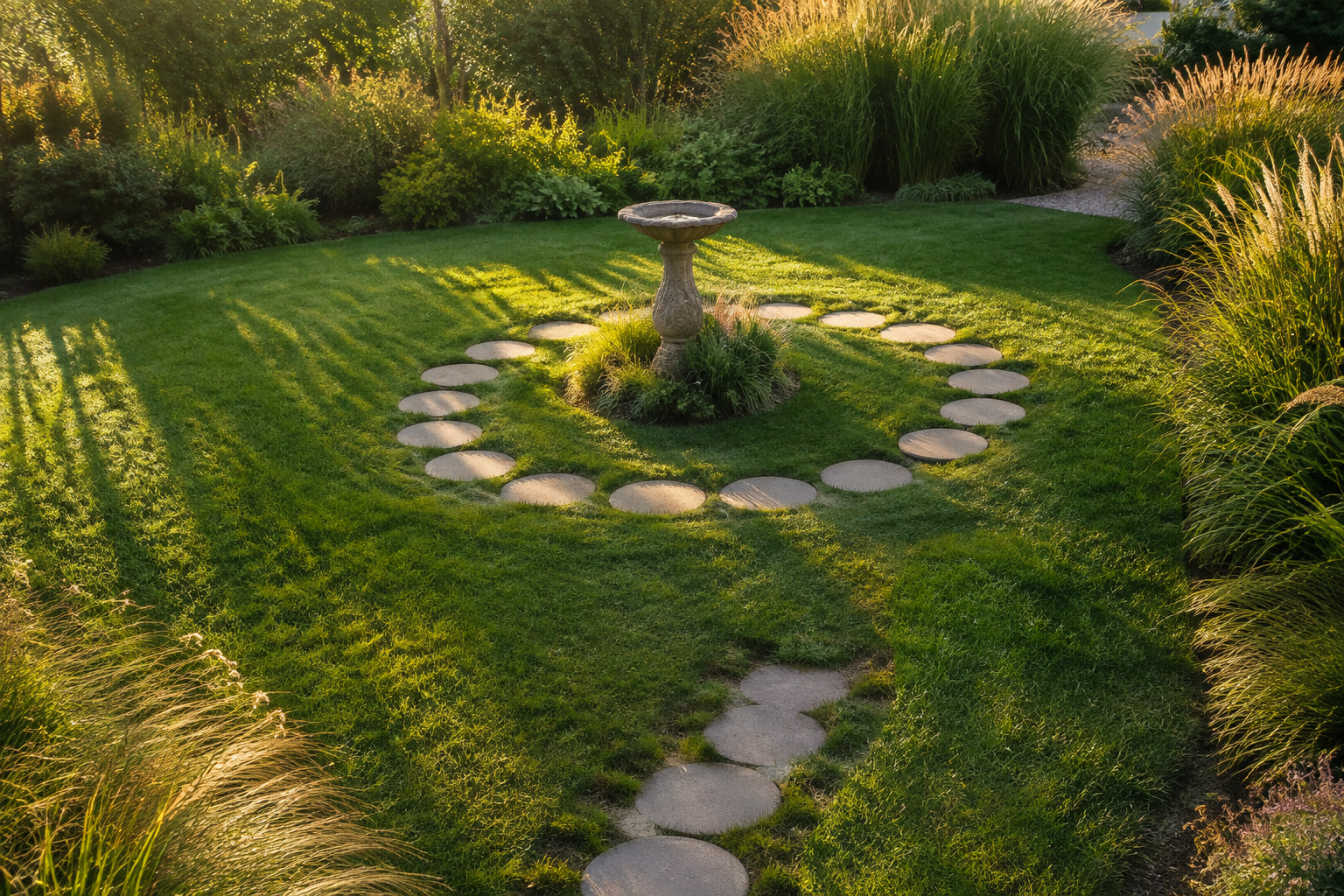
Spiral Paver Path Around a Focal Point
A spiral of round pavers draws the eye inward to a birdbath, statue or specimen tree. It turns a small lawn into a journey instead of a shortcut.
The spiral also slows your pace without a single step. That gentle pacing is what makes a garden feel designed.
Tip: Set the spiral centre off axis from the door so the walk feels longer.
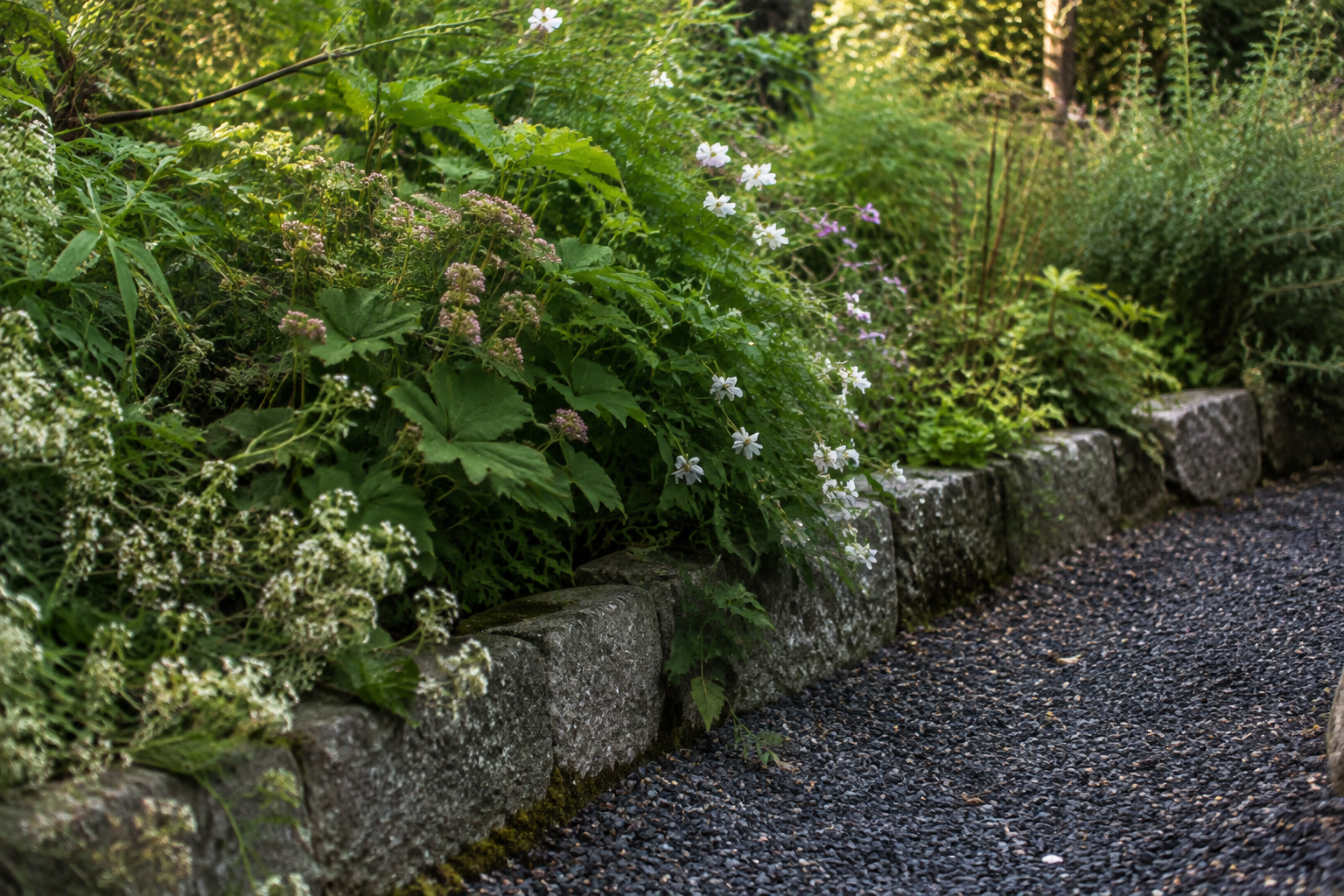
Reclaimed Granite Curb Edge Path
Old granite kerbstones make a rugged, long lasting edge for gravel. Their weathered faces add instant age to a brand new garden.
Because they are salvaged, no two stones match. That irregularity is exactly what new moulded edging cannot copy.
Tip: Bed kerbs on compacted sub-base so they hold the gravel without bulging.
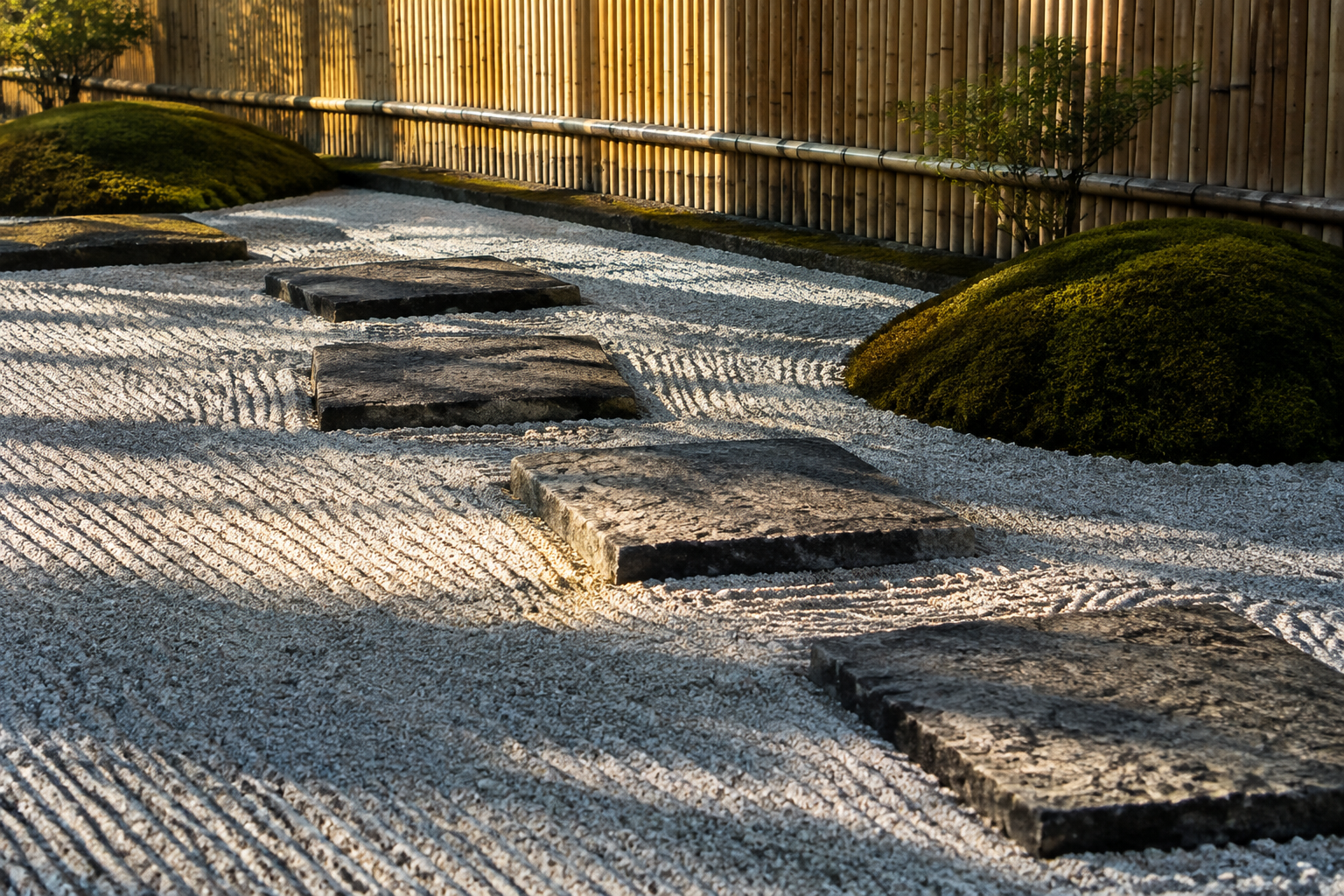
Zen Square Stepping Stones in Raked Gravel
Square cut stones float in finely raked pale gravel. Raking lines in arcs or waves turns the ground itself into a pattern you can change each week.
The path becomes quiet and deliberate. It asks you to walk slowly and look down.
Tip: Rake early in the day, when the gravel is dry and the lines will hold crisp.
Gravel & Aggregate
Loose surfaces are the cheapest way to make a garden feel finished. These paths cost little, drain fast and suit almost any style.
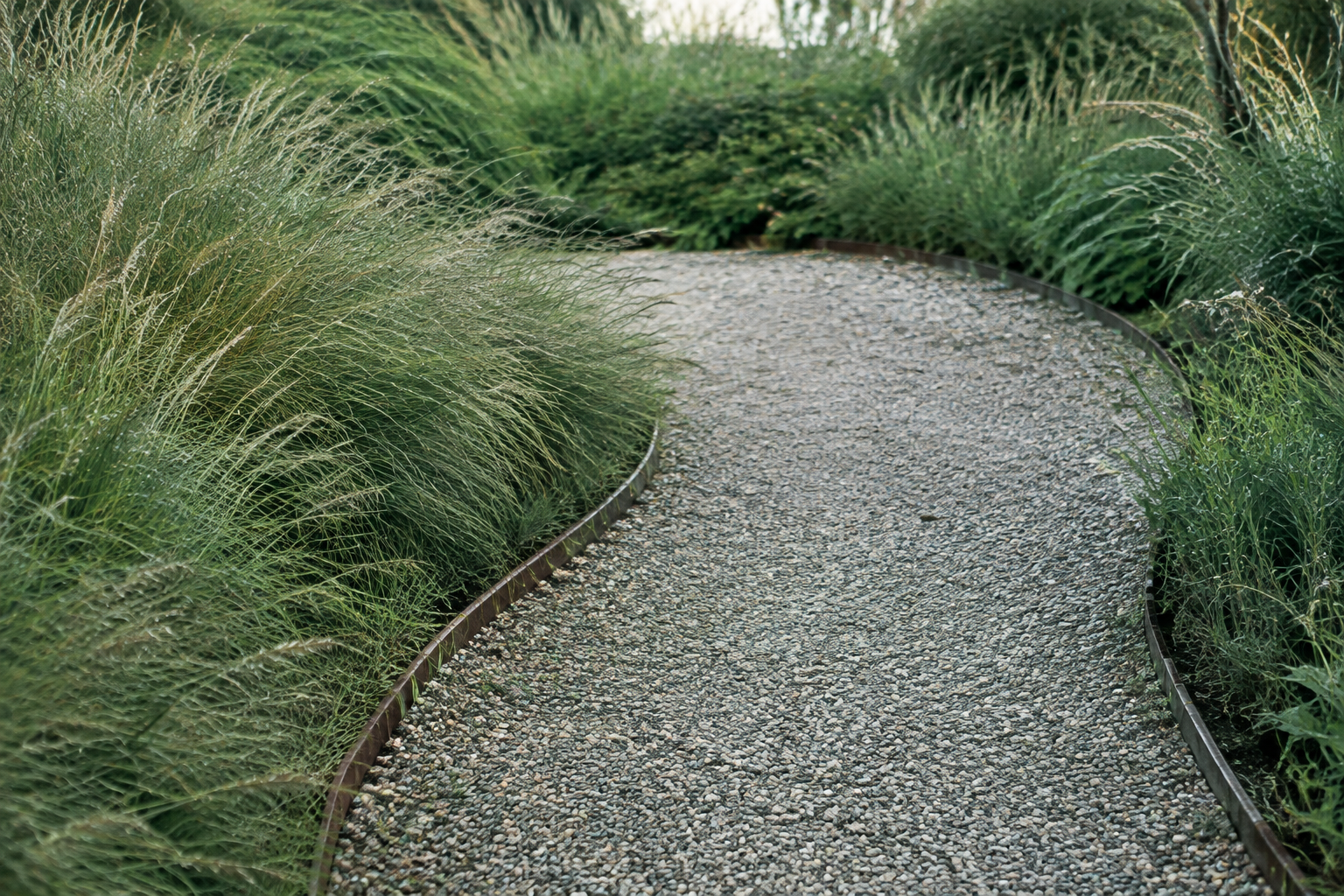
Pea Gravel Path with Slim Steel Edging
Smooth pea gravel underfoot makes a soft, quiet walkway. Slim weathered steel edging holds a clean line and slowly rusts to a warm brown.
Gravel is also the cheapest good looking surface you can lay yourself. A weekend of work covers most small gardens.
Tip: Lay gravel 50mm deep over a weed membrane to keep maintenance low.
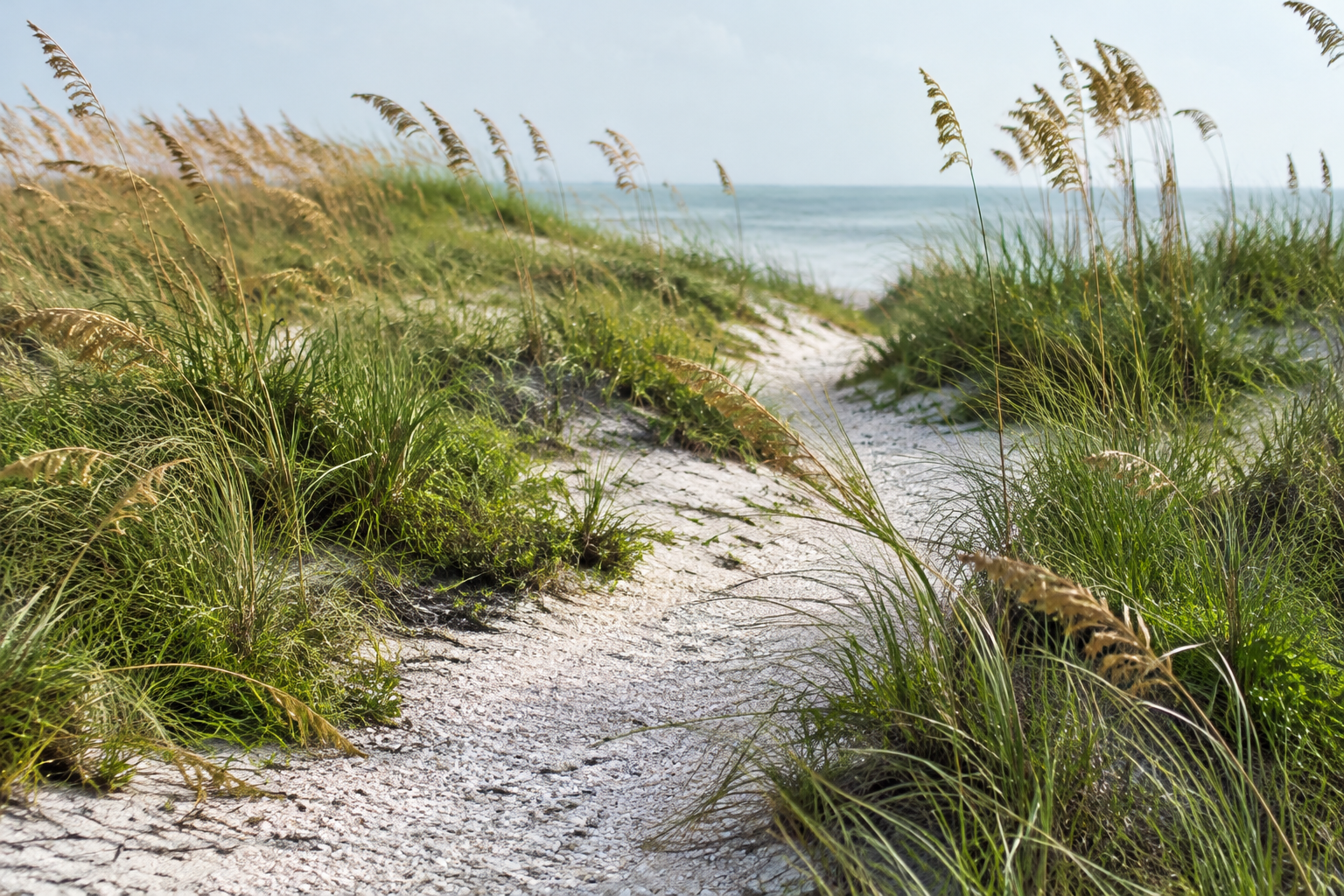
Crushed Shell Path Through Dune Grass
Crushed shell paths glow pale against sea oats and dune grass. The shell knits together into a firm surface that suits coastal gardens.
It also handles salt wind better than most paving. Nothing about it fights the seaside.
Tip: Rinse the shell before laying to cut down dust and pale salt marks.
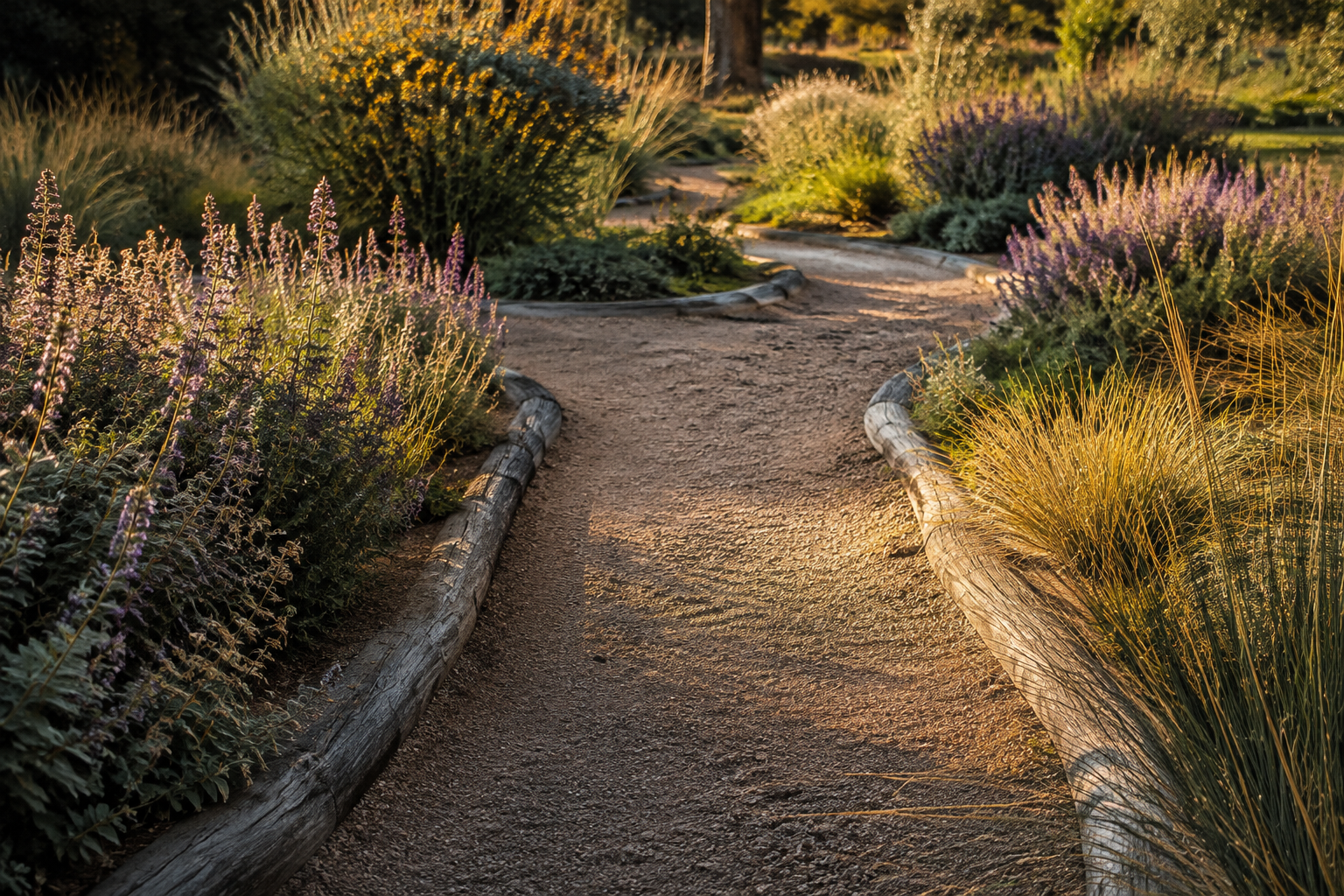
Decomposed Granite Meander with Log Border
Decomposed granite compacts into a firm, warm toned trail. Rustic log edging keeps the curve soft and lets planting spill inward.
It is the classic natural garden surface in dry climates. It looks like bare earth but wears like paving.
Tip: Water and re-compact the granite twice after laying for a surface that will not rut.
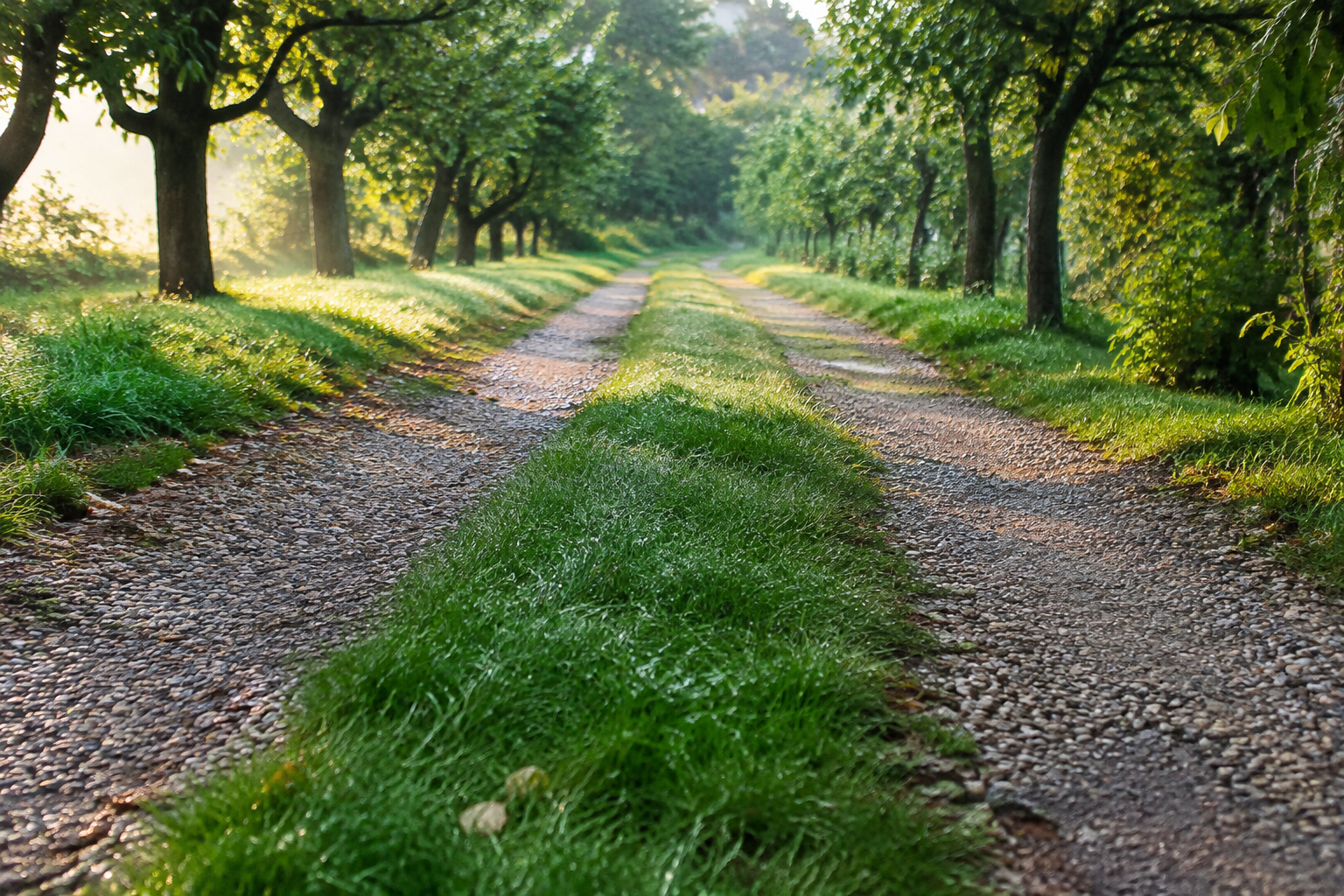
Two-Track Gravel Path with a Grass Centre
Two ribbons of gravel with a grass strip between welcome a car without paving the whole drive. It reads as a rural lane rather than a car park.
The centre strip also slows run off. Rain soaks in instead of racing toward the house.
Tip: Use a grass reinforcing mesh in the centre strip where wheels will pass.
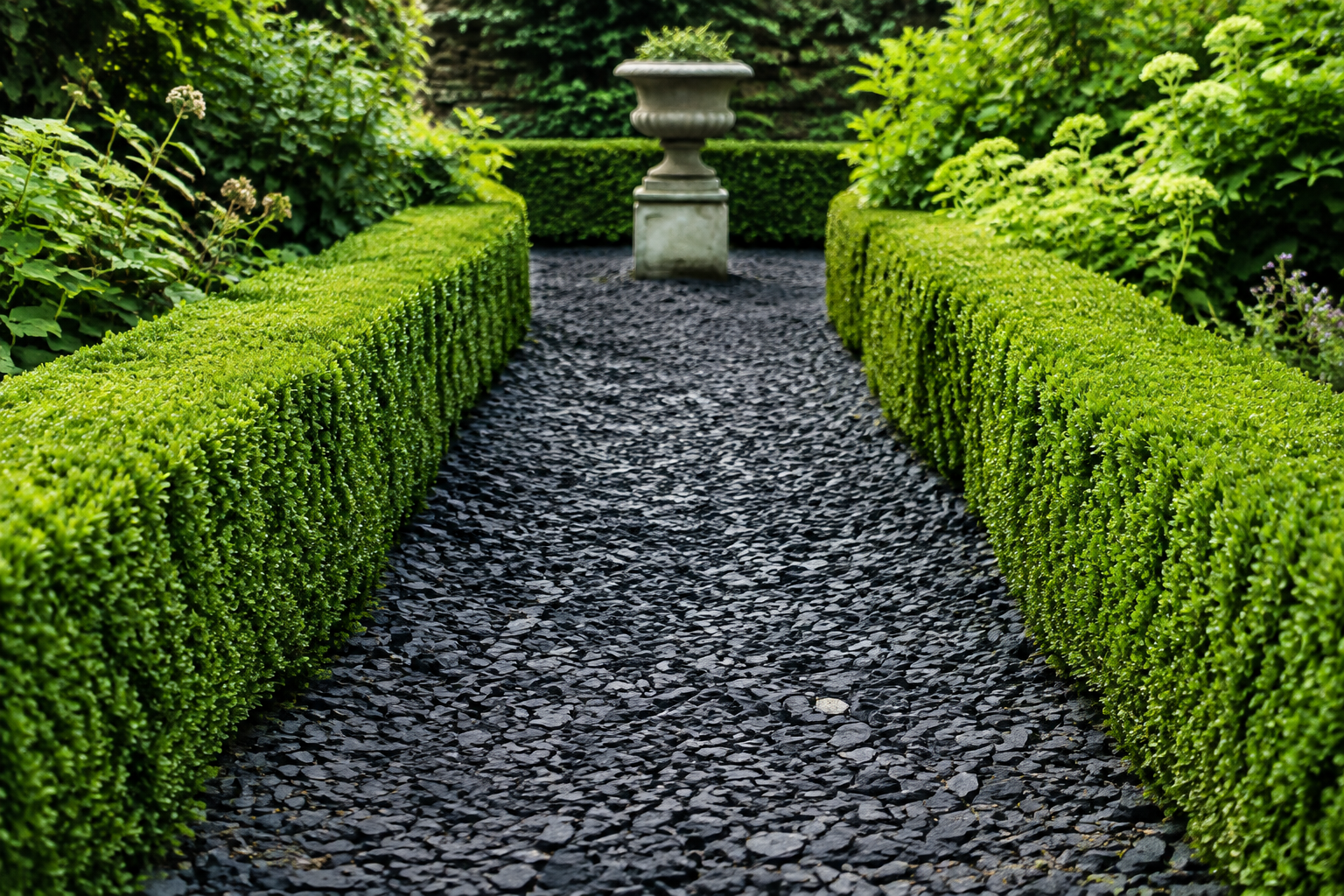
Dark Slate Chip Path Between Boxwoods
Dark slate chip sets off vivid green boxwood hedging. The near black gravel absorbs light and makes the planting look deeper.
It is a high contrast look with very little effort. Two materials, one strong idea.
Tip: Slate chips are sharp underfoot, so use round gravel where children run.
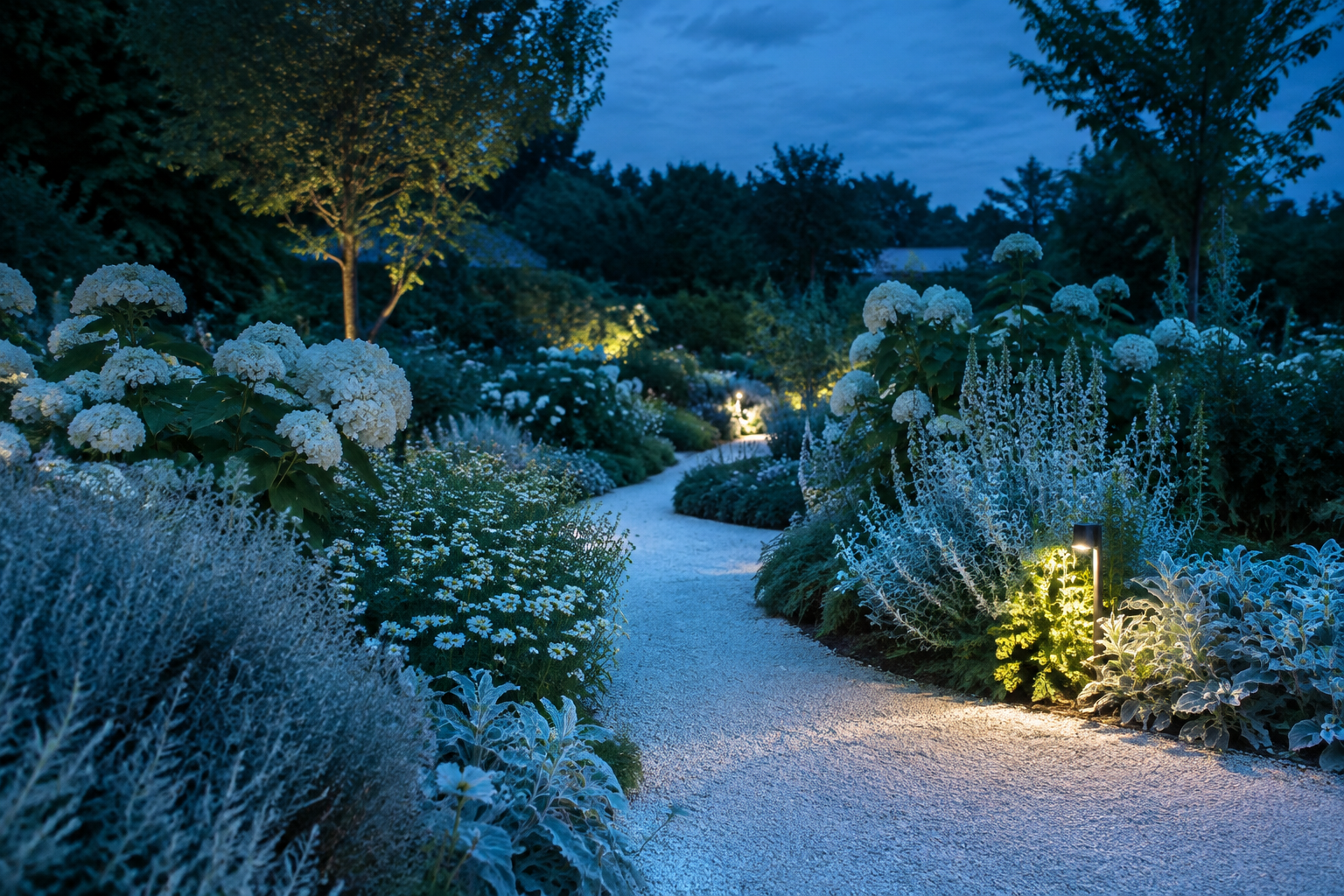
White Marble Chip Walkway in a Moon Garden
White marble chip reflects evening light and keeps a night garden visible. Plant white flowers and silver foliage beside it for a glowing effect.
The idea is simple. The pale ground acts like a low lamp after sunset.
Tip: Angle the path to catch moonlight for the strongest evening effect.
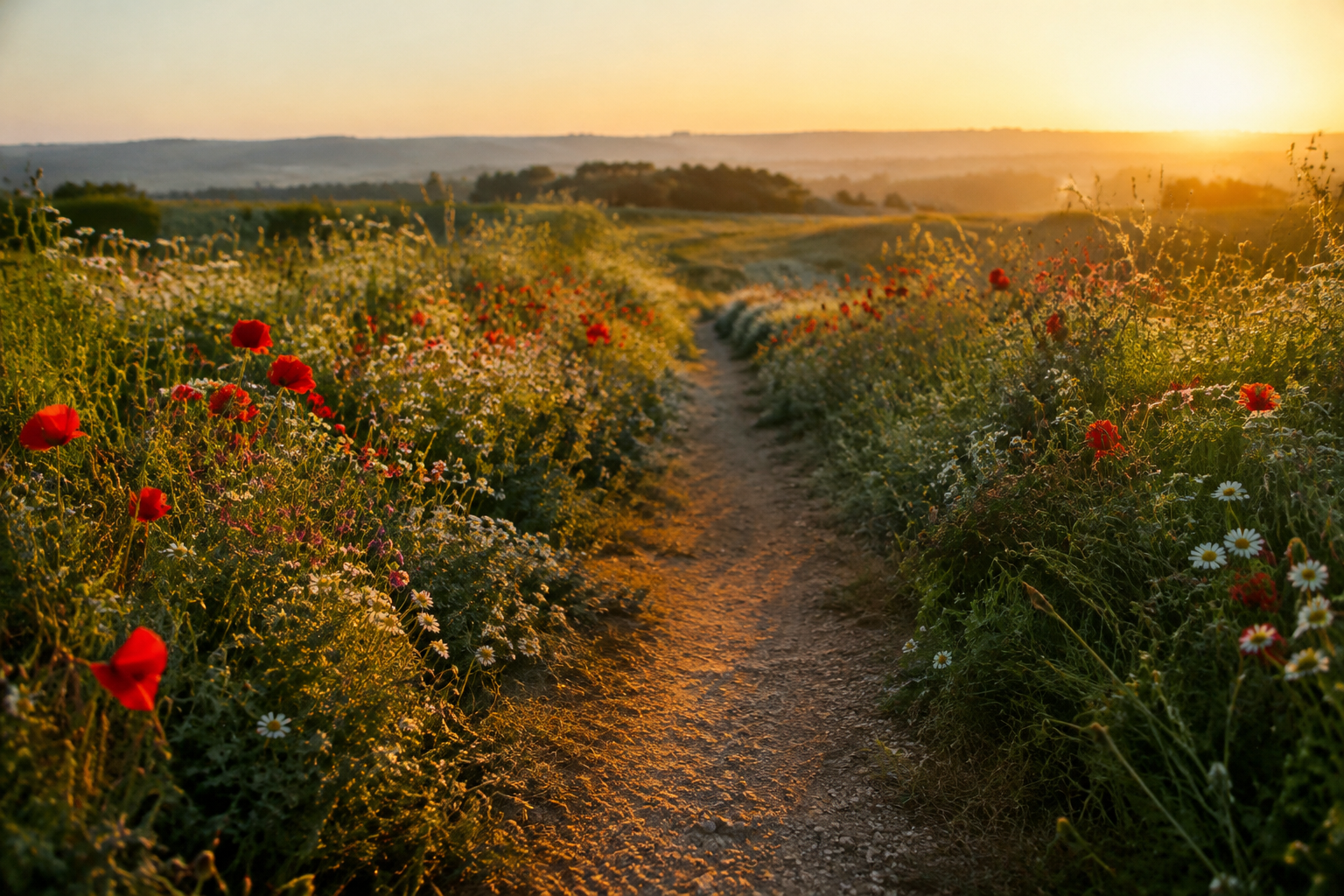
Compacted Clay and Gravel Meadow Trail
A simple compacted trail cuts through a wildflower meadow. It costs very little and mows back into the meadow within a season if you change your mind.
This is the least permanent path on this list. That is exactly why it suits a first try.
Tip: Cut the trail 900mm wide so two people can pass side by side.
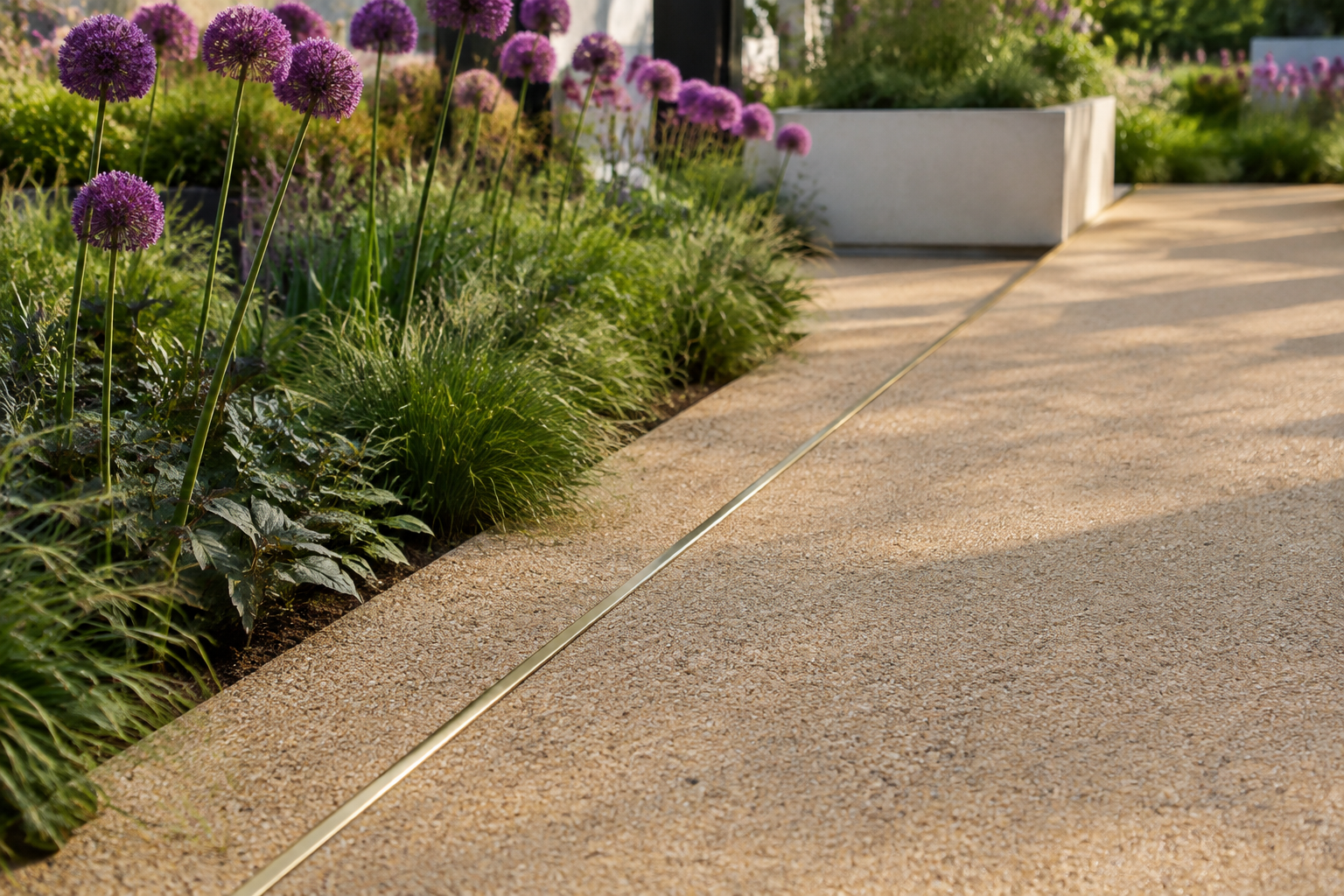
Resin-Bound Gravel with a Brass Divider
Resin bound gravel locks the stones into a smooth, firm surface. A slim brass divider gives the path a crisp contemporary inlay.
It is fully accessible and never scatters into the borders. Shoes stay cleaner than with loose gravel.
Tip: Resin bound paths need a fully solid base, so this is not the cheap option.
Timber & Wood
Wood softens a garden and warms it underfoot. These eight ideas cover decks, boardwalks, sleepers and simple slat paths.
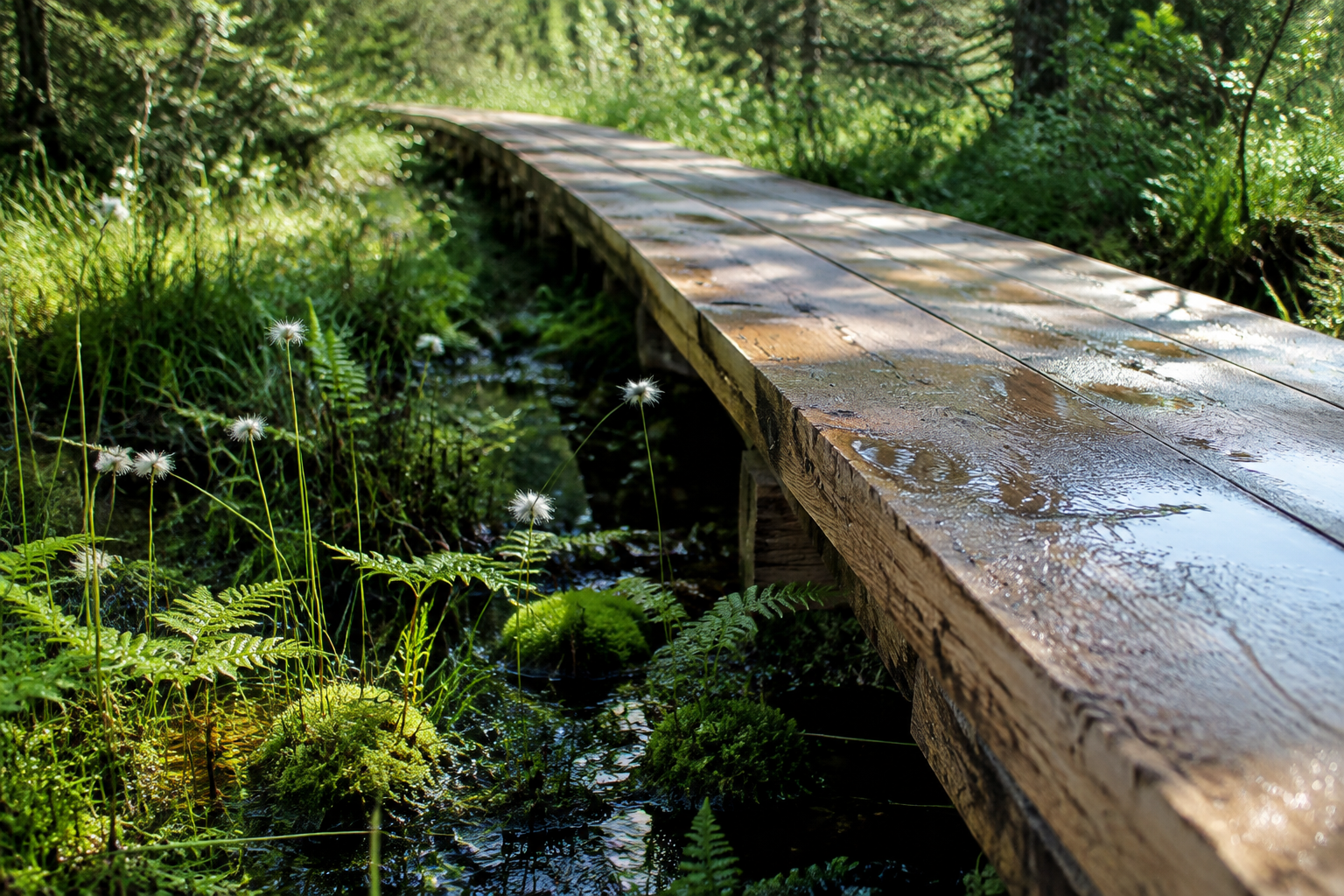
Cedar Plank Boardwalk Over Boggy Ground
A raised cedar boardwalk crosses ground too wet to dig. Cedar resists rot naturally and silvers beautifully with age.
It also protects the soil beneath. Roots and moss stay undisturbed while you walk above them.
Tip: Leave 5mm gaps between planks so rain drains and the wood can move.
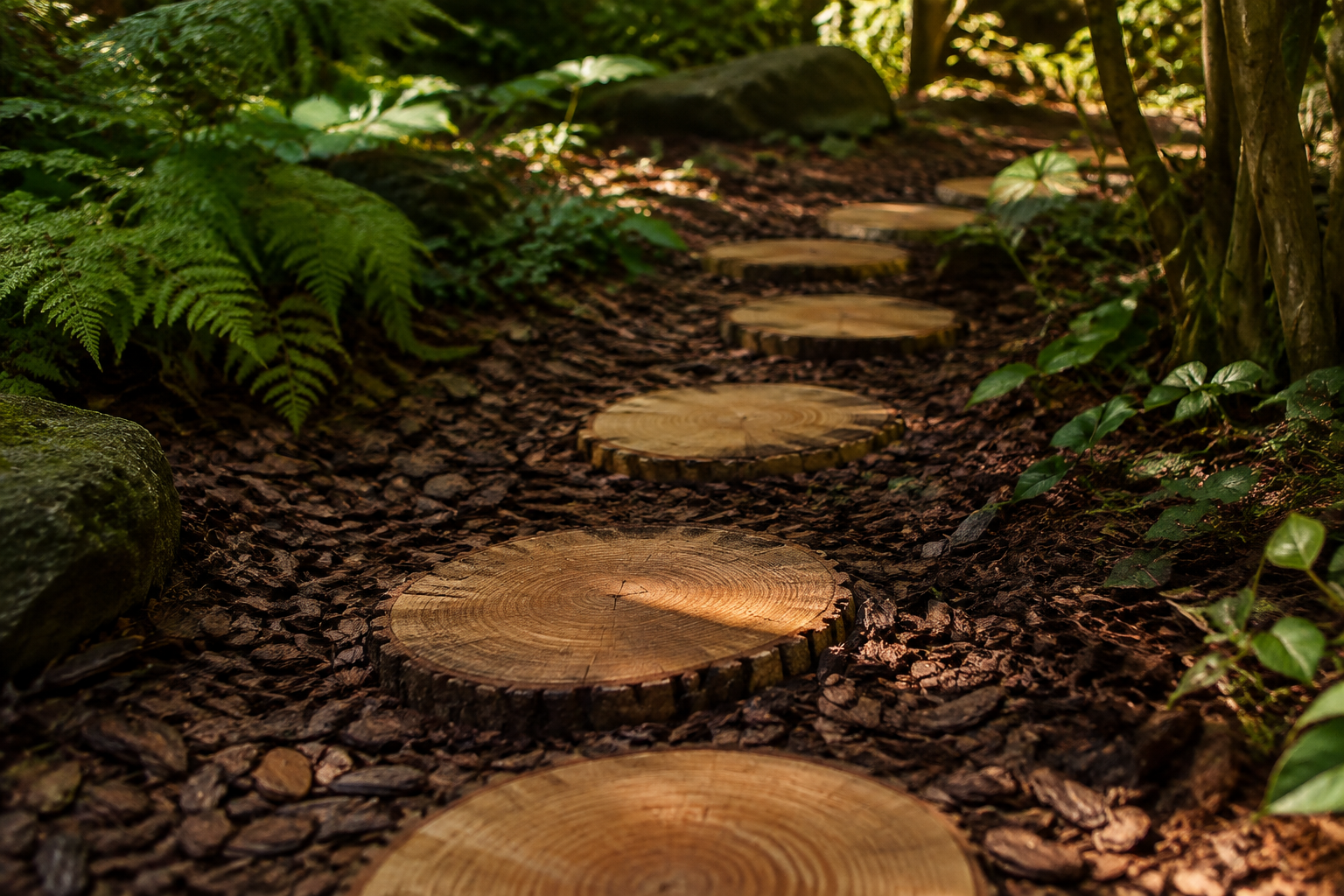
Log Round Stepping Path in Mulch
Slices of a felled tree make characterful stepping stones through mulch. Their rings and bark add texture you cannot buy new.
This is the cheapest way to make a path feel genuinely rustic. One storm felled tree can supply the whole route.
Tip: Treat the cut faces with a clear wood preserver before laying them.
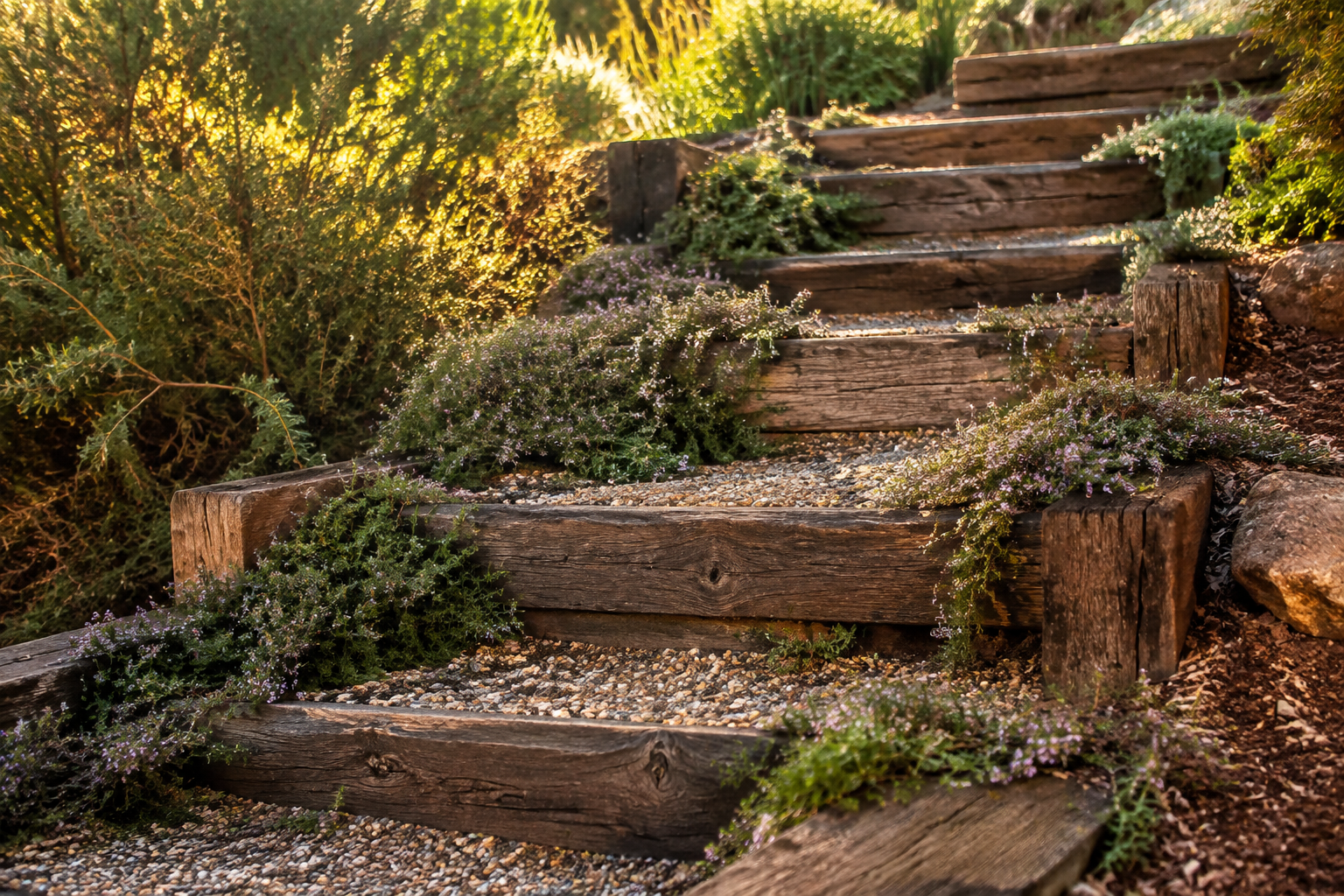
Reclaimed Sleeper Steps with Thyme Treads
Old railway sleepers build sturdy steps into a slope without concrete. Creeping thyme planted between the timbers softens every edge.
Reclaimed sleepers arrive already weathered. That means the steps look established the week they are finished.
Tip: Pin each sleeper with steel rods so the steps stay level over time.
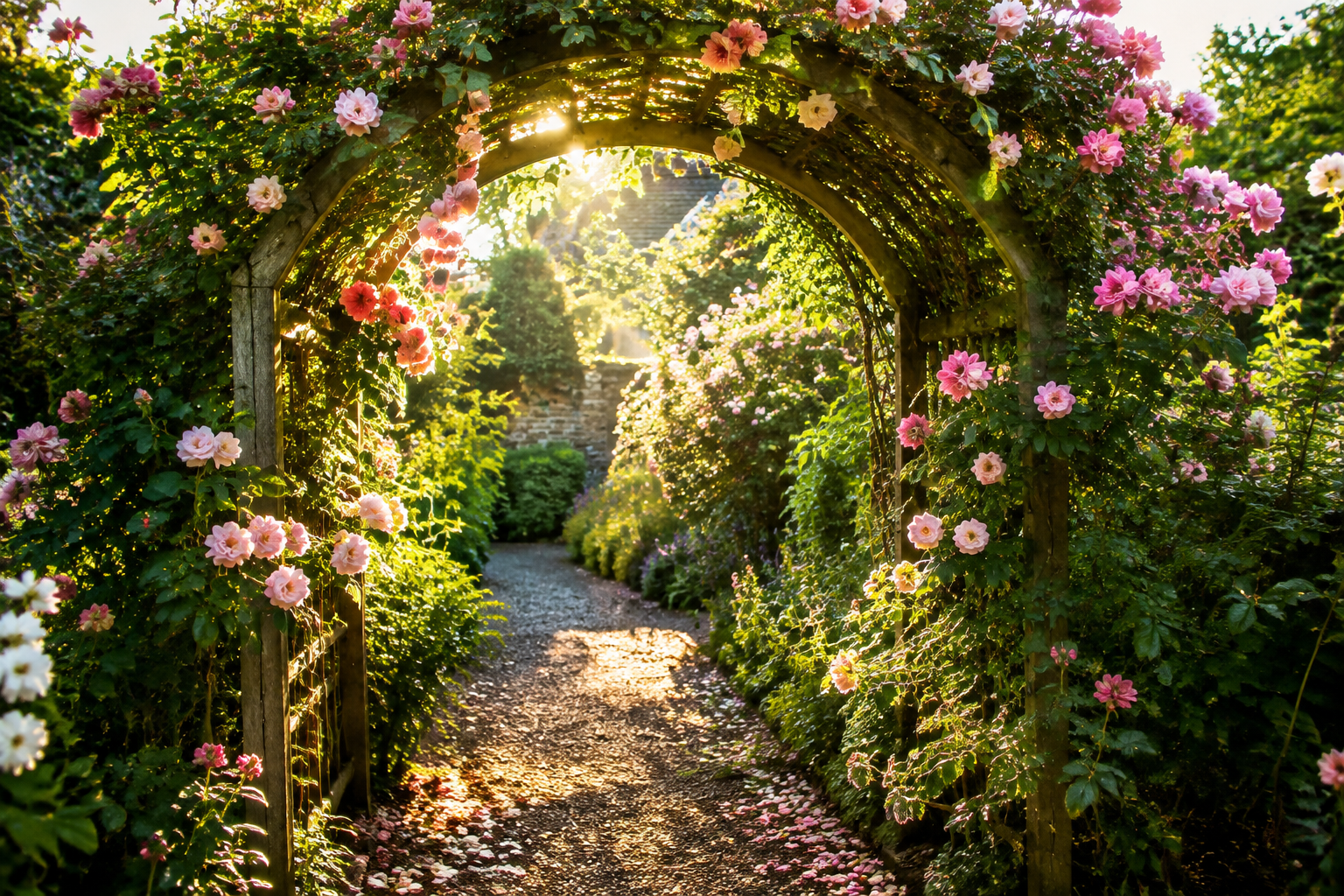
Curved Trellis Arch Over a Garden Walk
A curved trellis frame carries roses or wisteria over the path. It turns a straight walk into a moment you pass through.
The arch also frames a view. Stand at either side and the garden becomes a picture.
Tip: Plant on both sides and tie in one strong leader per arch.
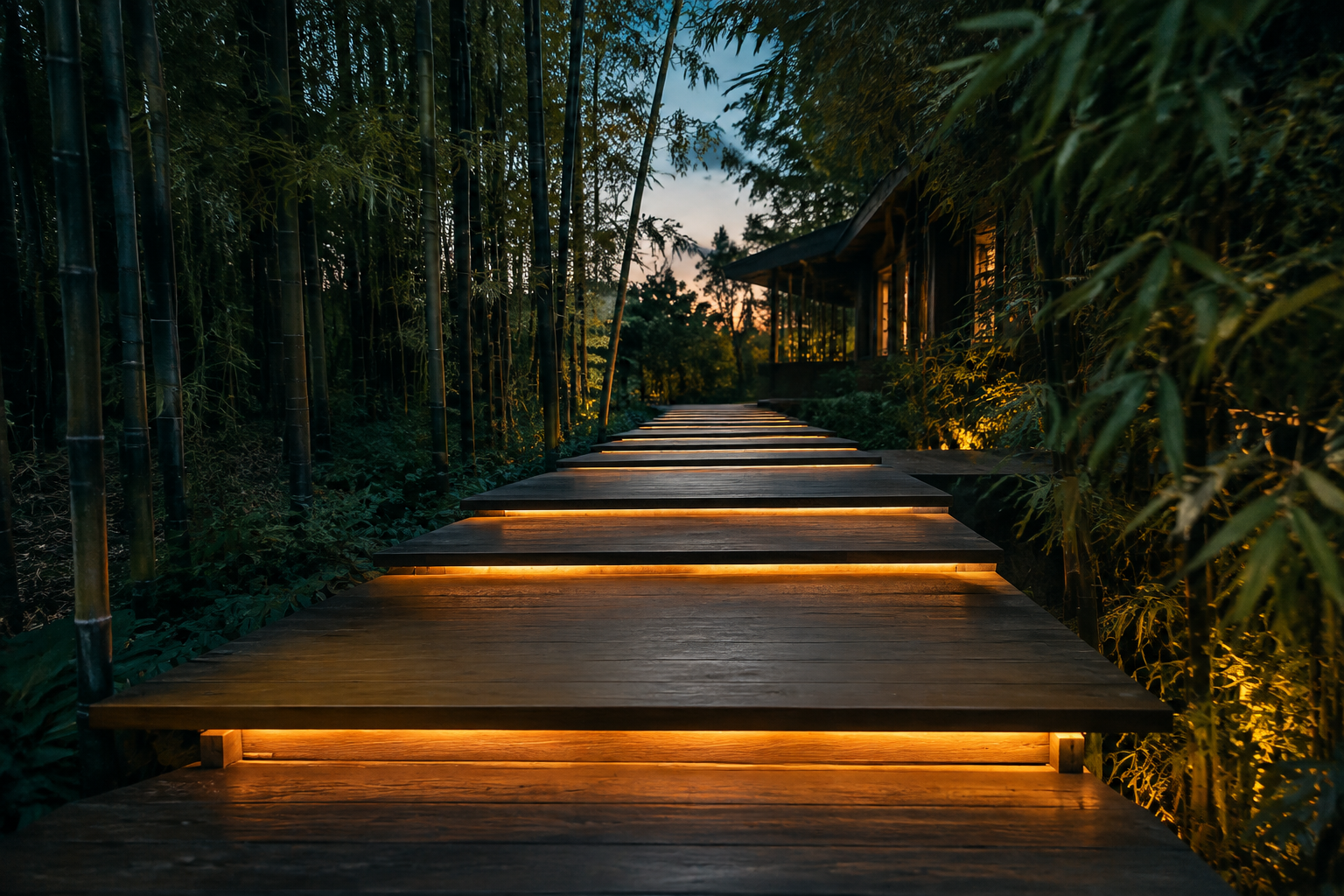
Bamboo Deck with Hidden Step Lights
Bamboo decking gives a sleek, warm surface that ages evenly. Hidden strip lights under each step make the path usable after dark.
Bamboo is a grass, so it grows back fast. That makes it a kinder choice than slow grown hardwood.
Tip: Use warm white lights at 2700K, because cool white looks clinical outdoors.
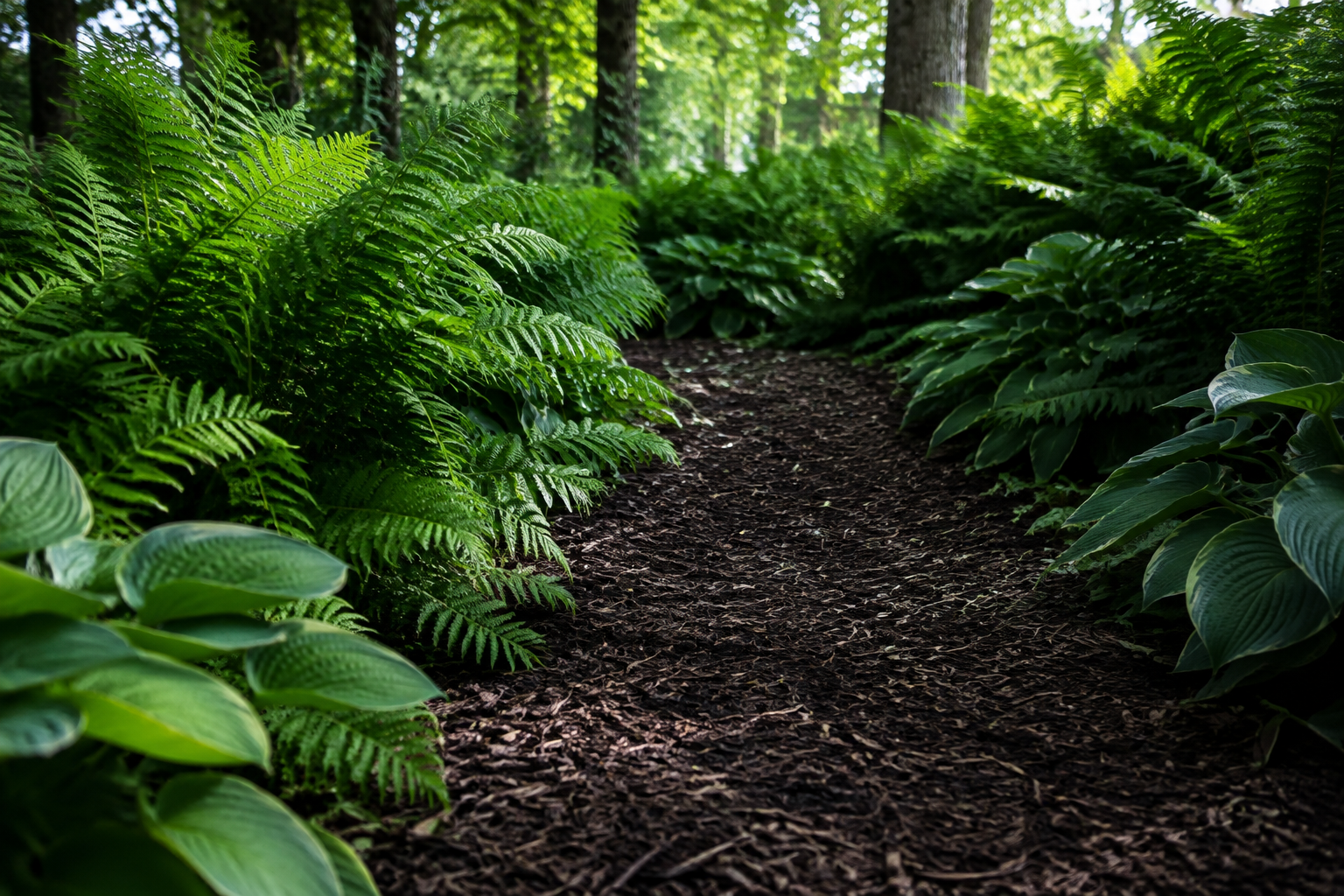
Bark Mulch Trail Through Ferns
A bark mulch trail costs little and feels soft underfoot. It suits shade gardens where grass struggles and ferns thrive.
Mulch also feeds the soil as it breaks down. The path slowly improves the ground beneath it.
Tip: Top up the mulch each spring to keep the trail clearly defined.
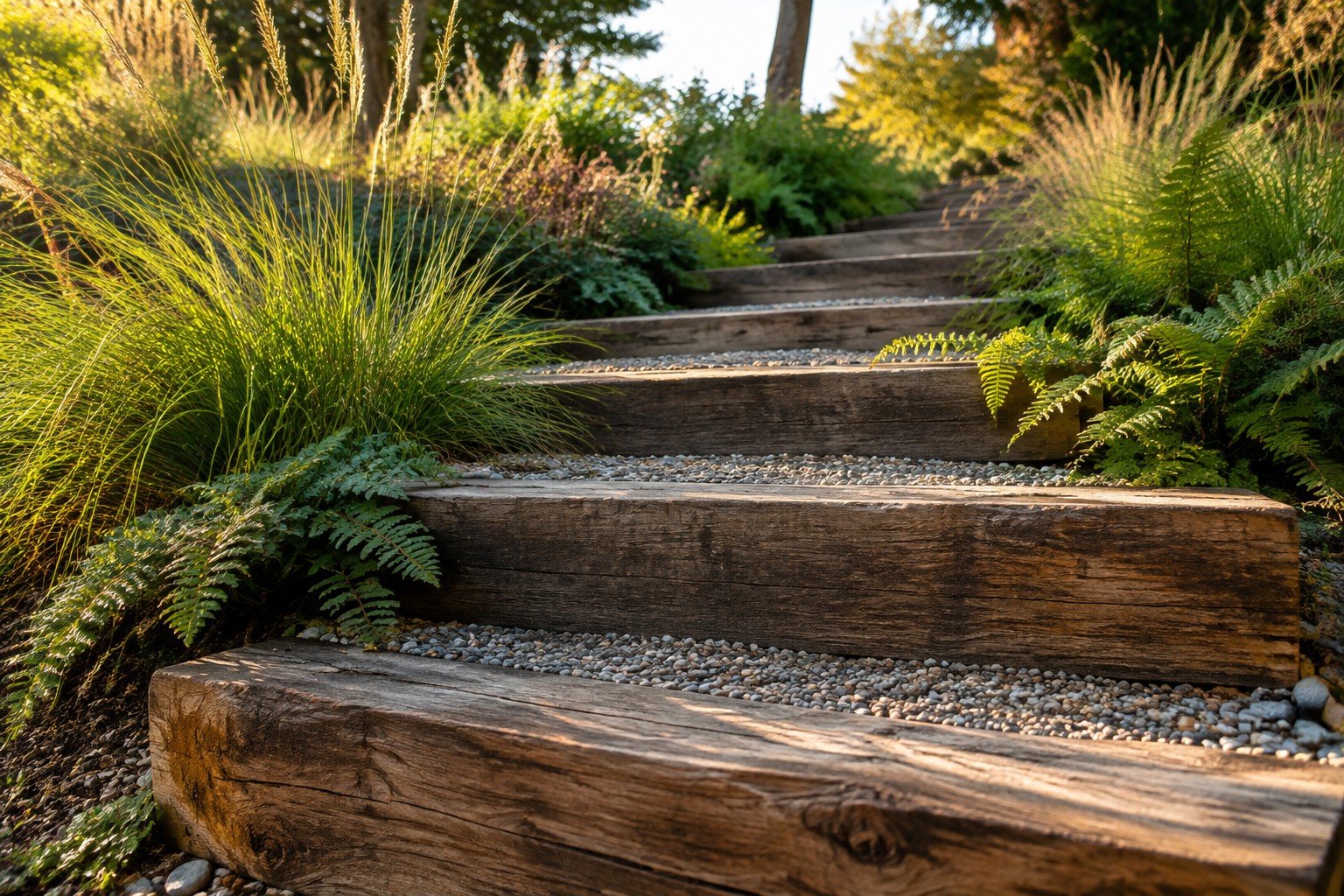
Terraced Timber Risers with Gravel Treads
Wide oak risers create shallow terraces on a bank, each filled with gravel. The landings are deep enough to stand on without rushing.
This is the safe version of a stepped slope. Low risers and wide treads suit every age and ability.
Tip: Keep risers under 150mm high so the terraces feel like walking, not climbing.
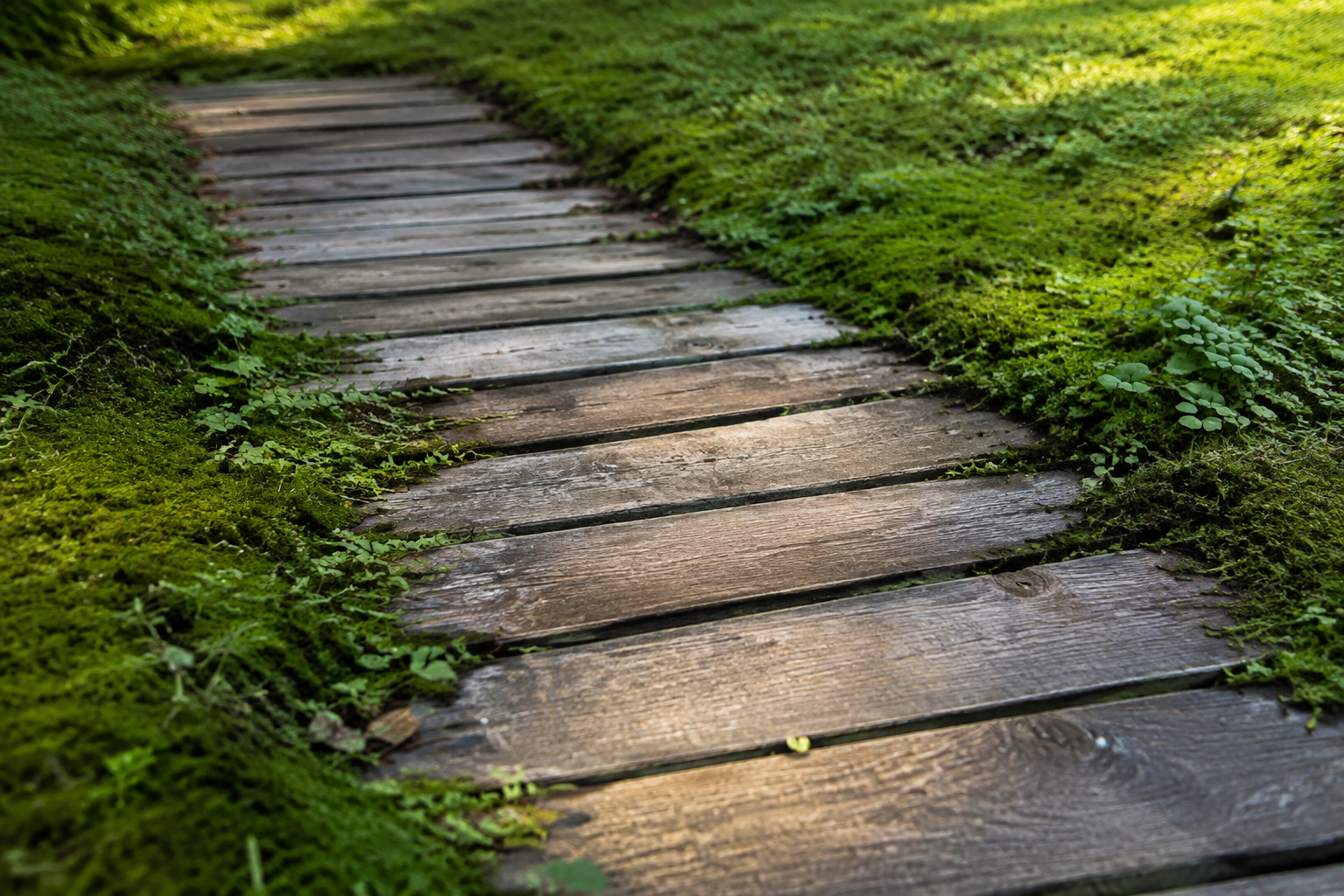
Slatted Reclaimed Timber Path in a Mossy Lawn
Thin slats of reclaimed timber laid into a mossy lawn make a light, almost floating path. The gaps let moisture and light reach the grass.
It is quick to lay and easy to lift. Nothing is fixed down, so you can move it with the seasons.
Tip: Lay slats across the direction of travel so feet never catch an edge.
Brick, Tile & Concrete
Made materials give you pattern, colour and precision. These seven paths prove that brick and concrete can look anything but plain.
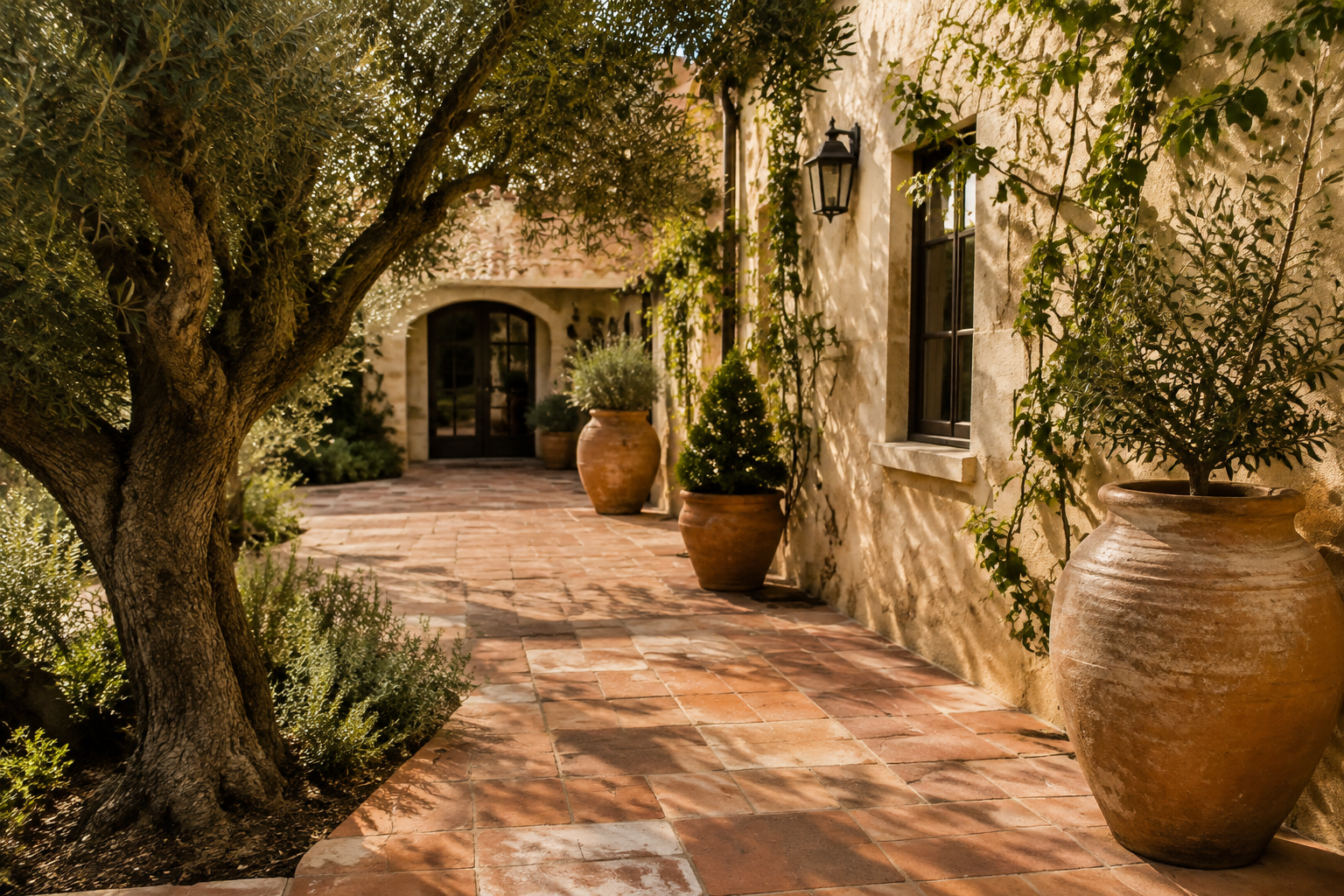
Terracotta Tile Courtyard Path
Handmade terracotta tiles warm a courtyard even in flat light. Their uneven surface and soft orange tone feel made rather than manufactured.
Pair them with lime render and clay pots. The whole scene then belongs to one climate and one palette.
Tip: Seal terracotta before winter, because frost damages unsealed tiles.
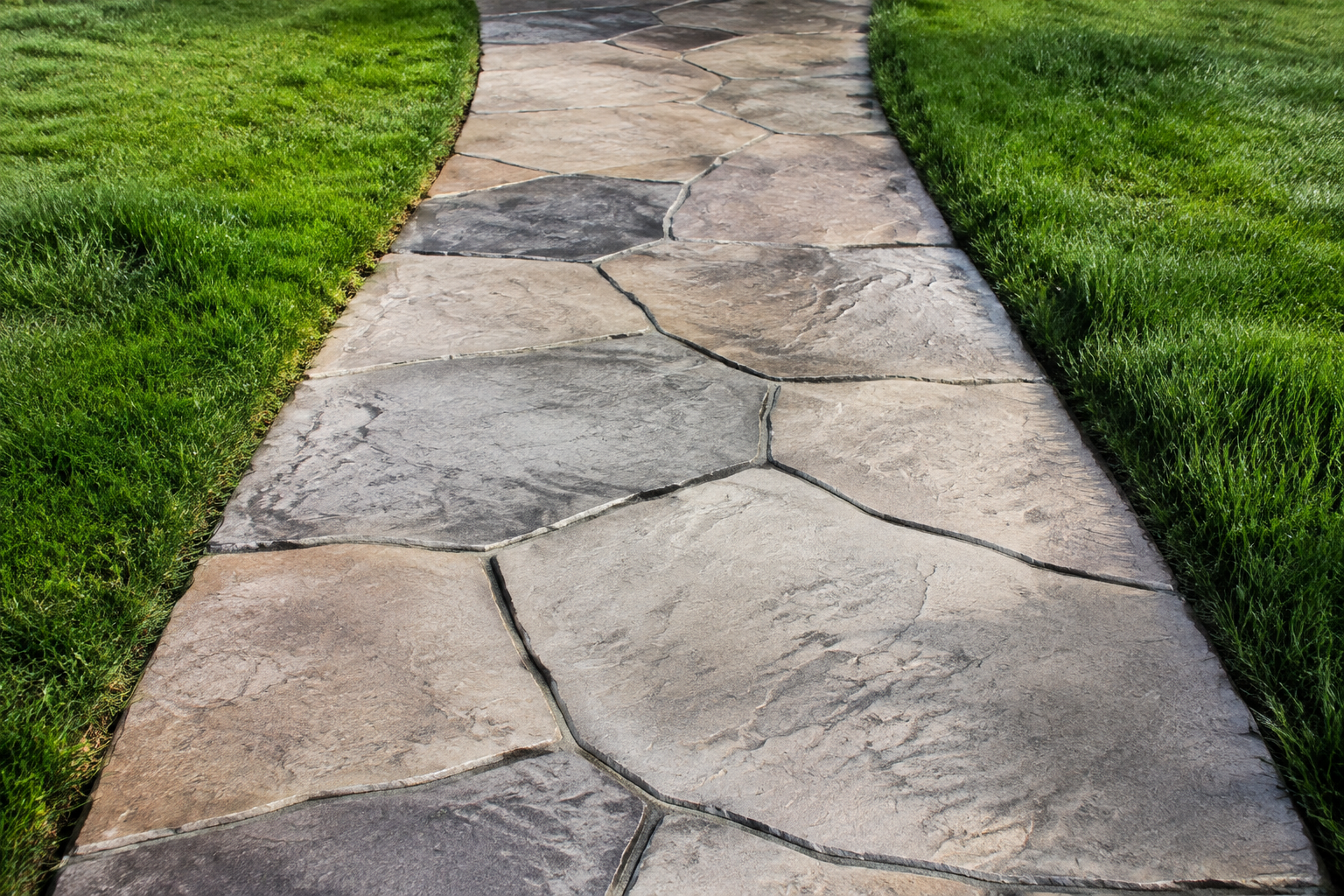
Stamped Concrete Imitating Flagstone
Stamped concrete copies the look of large flagstones at a fraction of the cost. Deep random joints give it the irregularity real stone has.
The whole path is one continuous slab. There are no loose stones to lift or reset.
Tip: Ask for colour hardener as well as stamps, so the tone is not flat grey.
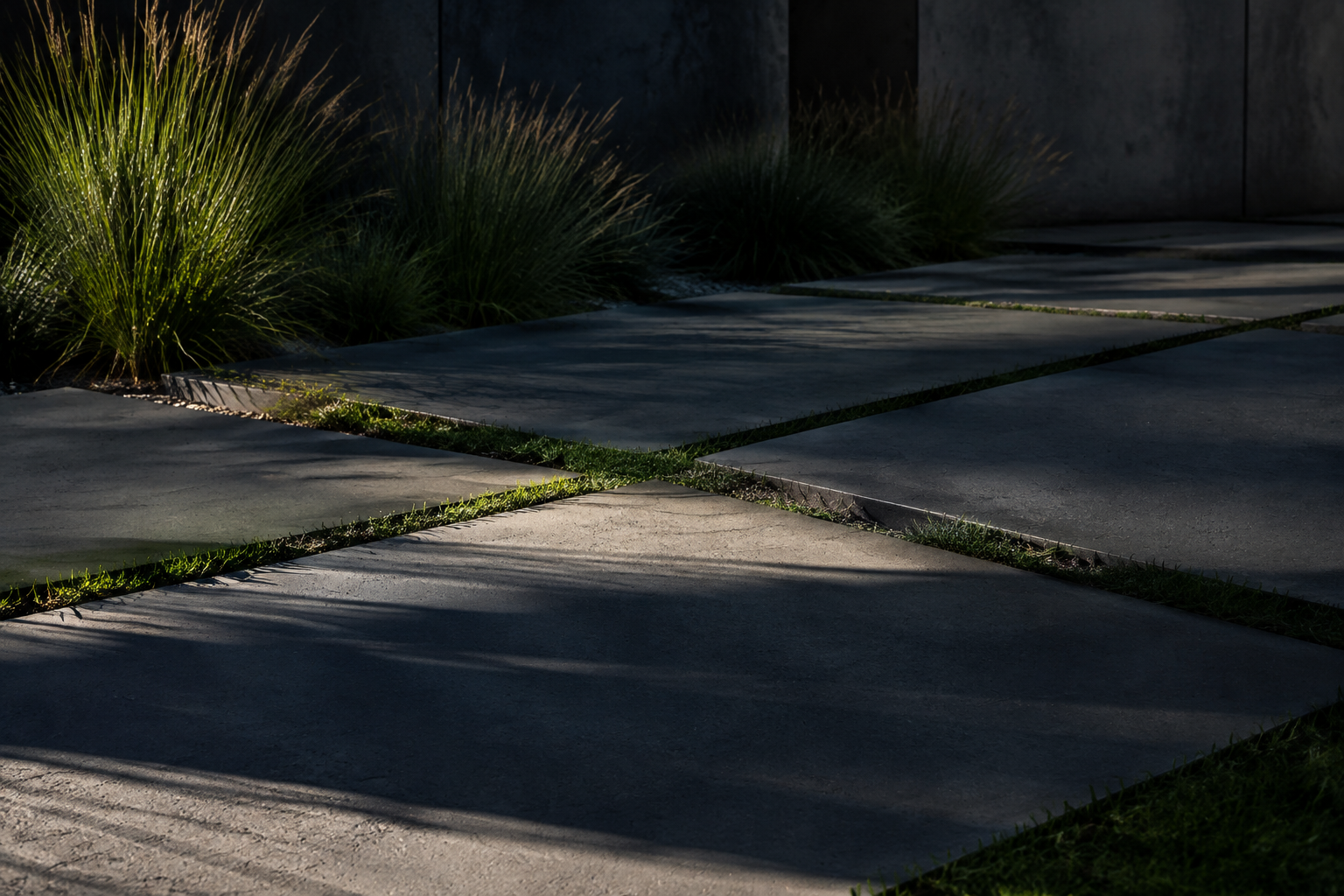
Charcoal Concrete Slabs with Grass Gaps
Dark charcoal slabs set with narrow grass strips make a bold modern floor. The thin green lines soften an otherwise severe grid.
Wide slabs also feel generous underfoot. Fewer joints mean fewer places for weeds to start.
Tip: Set slabs 5mm above the turf so the mower can run along the grass strips.
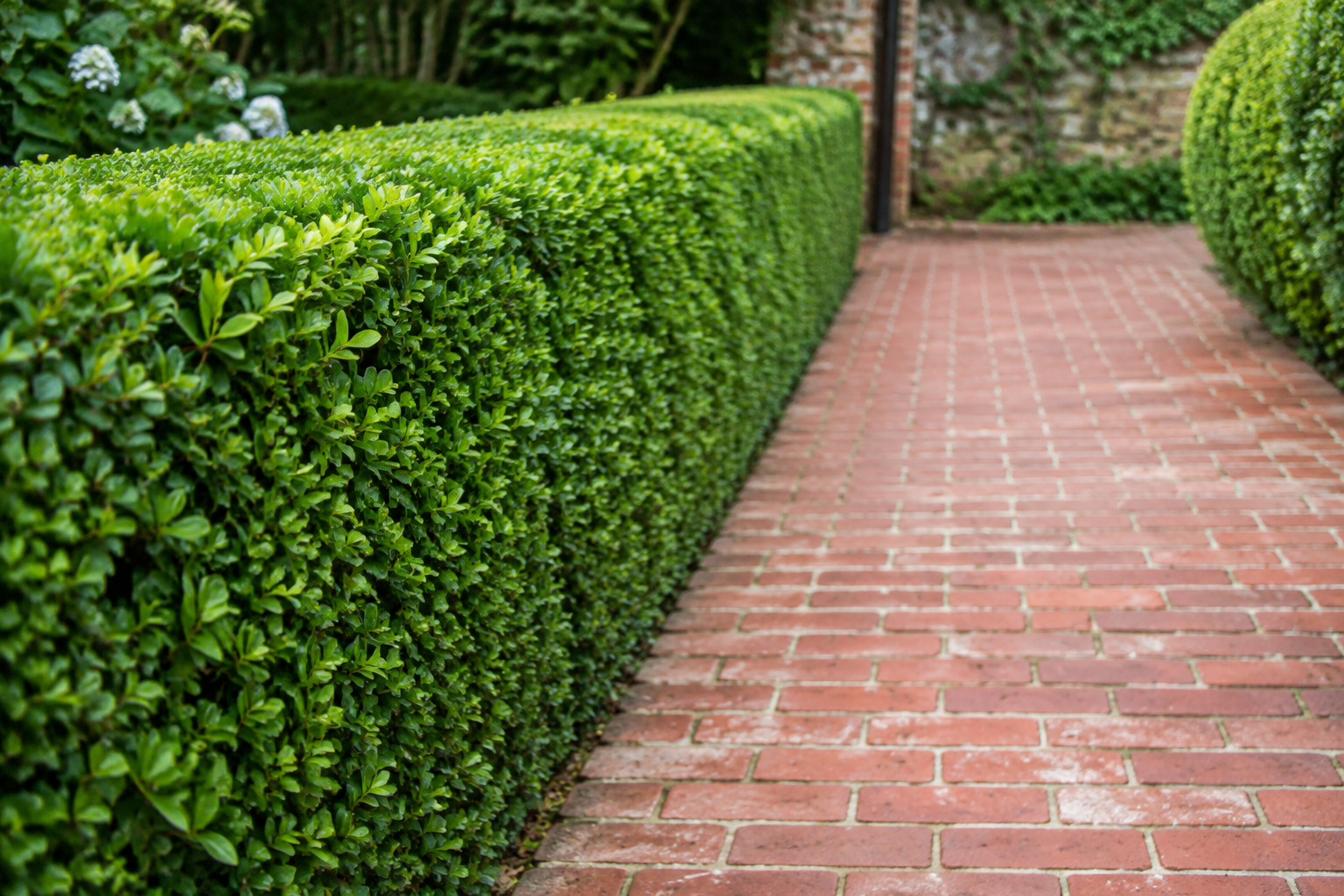
Red Brick Running Bond Beside Boxwood
A simple running bond in red brick is the most reliable path style in garden design. Beside clipped boxwood it looks quietly expensive.
Brick softens with age, not with damage. Twenty years of weather only improves the colour.
Tip: Use a lime mortar joint, which flexes and lets the path dry out.
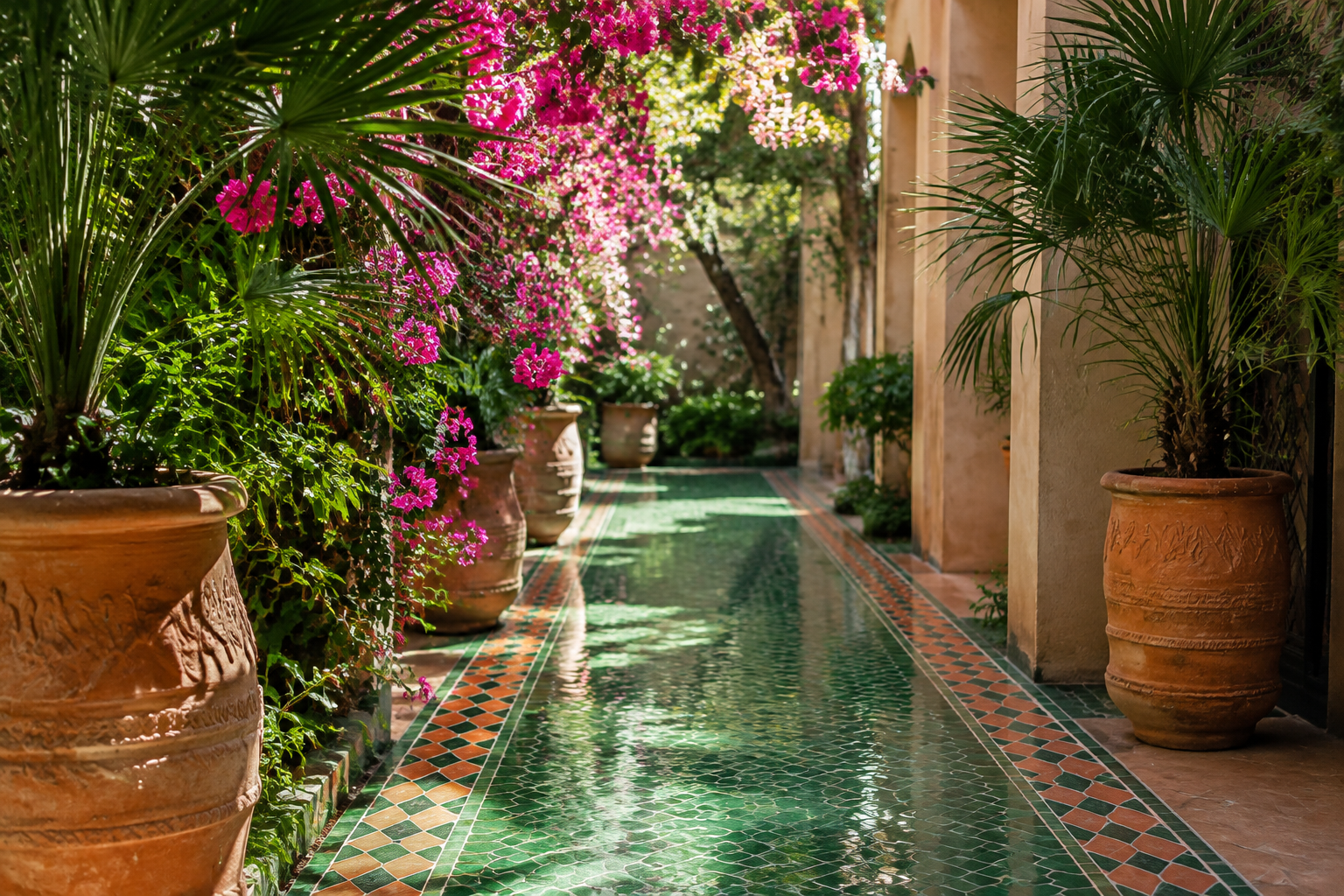
Glazed Zellige Tile Walkway
Handmade zellige tiles bring colour and glassy shine to a garden floor. Emerald and jade tones look jewel like against dry planting.
Because each tile is slightly irregular, the surface catches light unevenly. That is the whole charm.
Tip: Only use zellige in sheltered courtyards, since frost and slip risk are high.
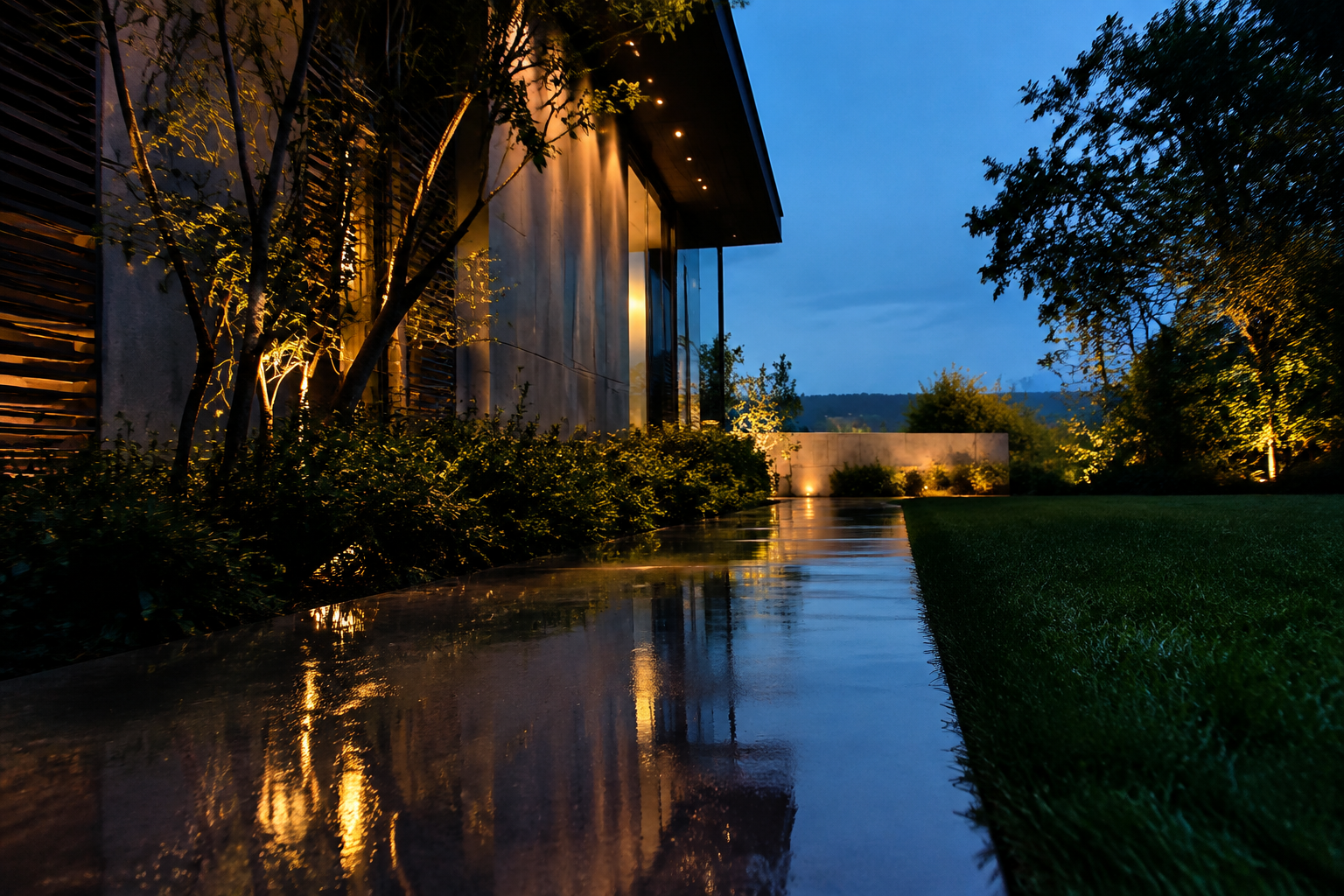
Polished Concrete Path that Mirrors Light
A polished concrete path reflects sky and light like still water. At dusk it doubles every lamp along the route.
It is also completely seamless. Nothing catches a wheel, a heel or a hosepipe.
Tip: Add a fine grit to outdoor concrete, because polished surfaces turn slick when wet.
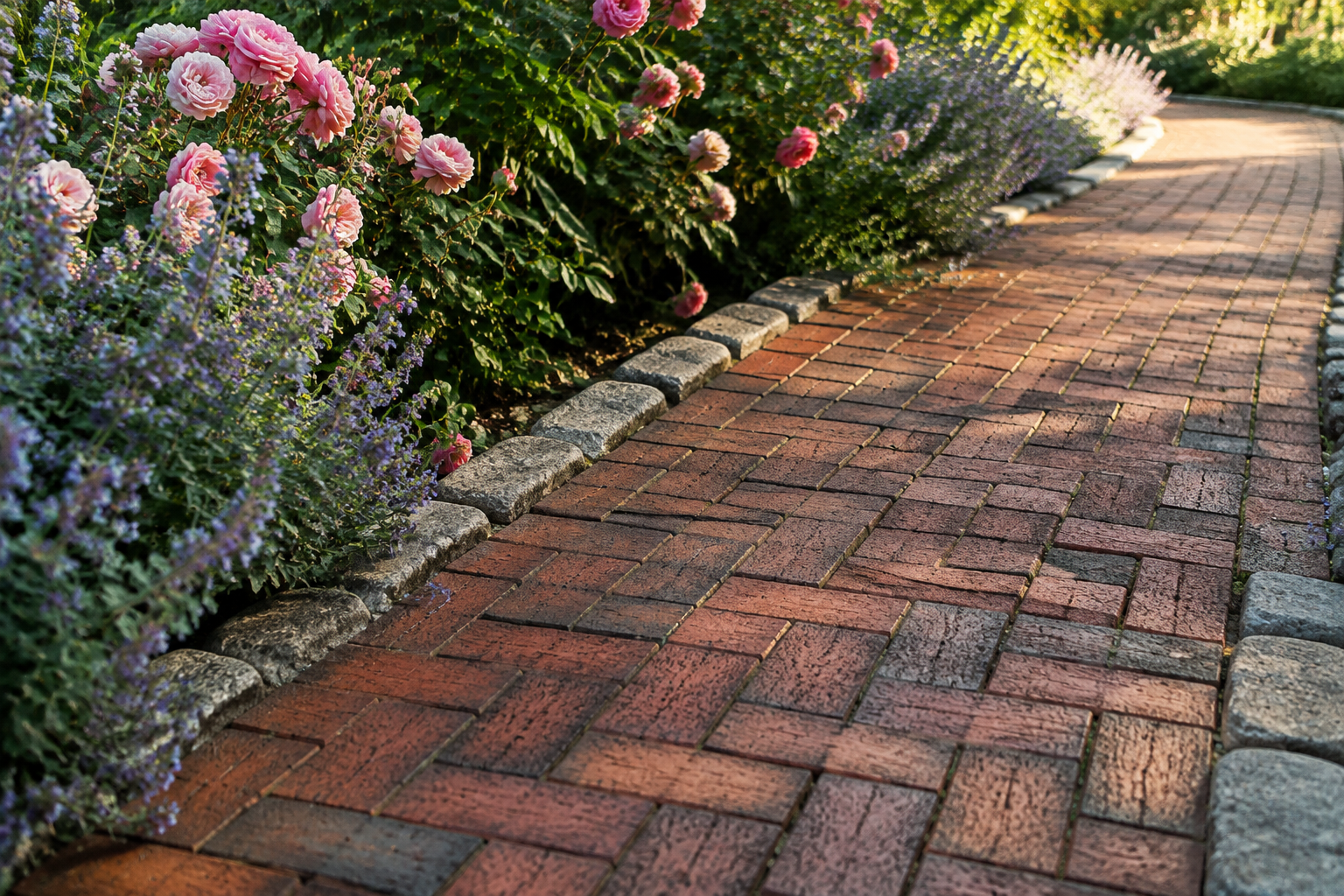
Brick Basketweave with a Cobble Border
Basketweave brick laid in squares looks woven rather than laid. A border of rounded cobbles gives the path a finished frame.
The pattern suits square courtyards. It reads as a rug made of clay.
Tip: Lay the cobble border first, then fill the centre to the exact width.
Living & Organic
The softest paths are grown, not built. These seven ideas use moss, thyme, clover and grass to make a walkway that changes with the seasons.
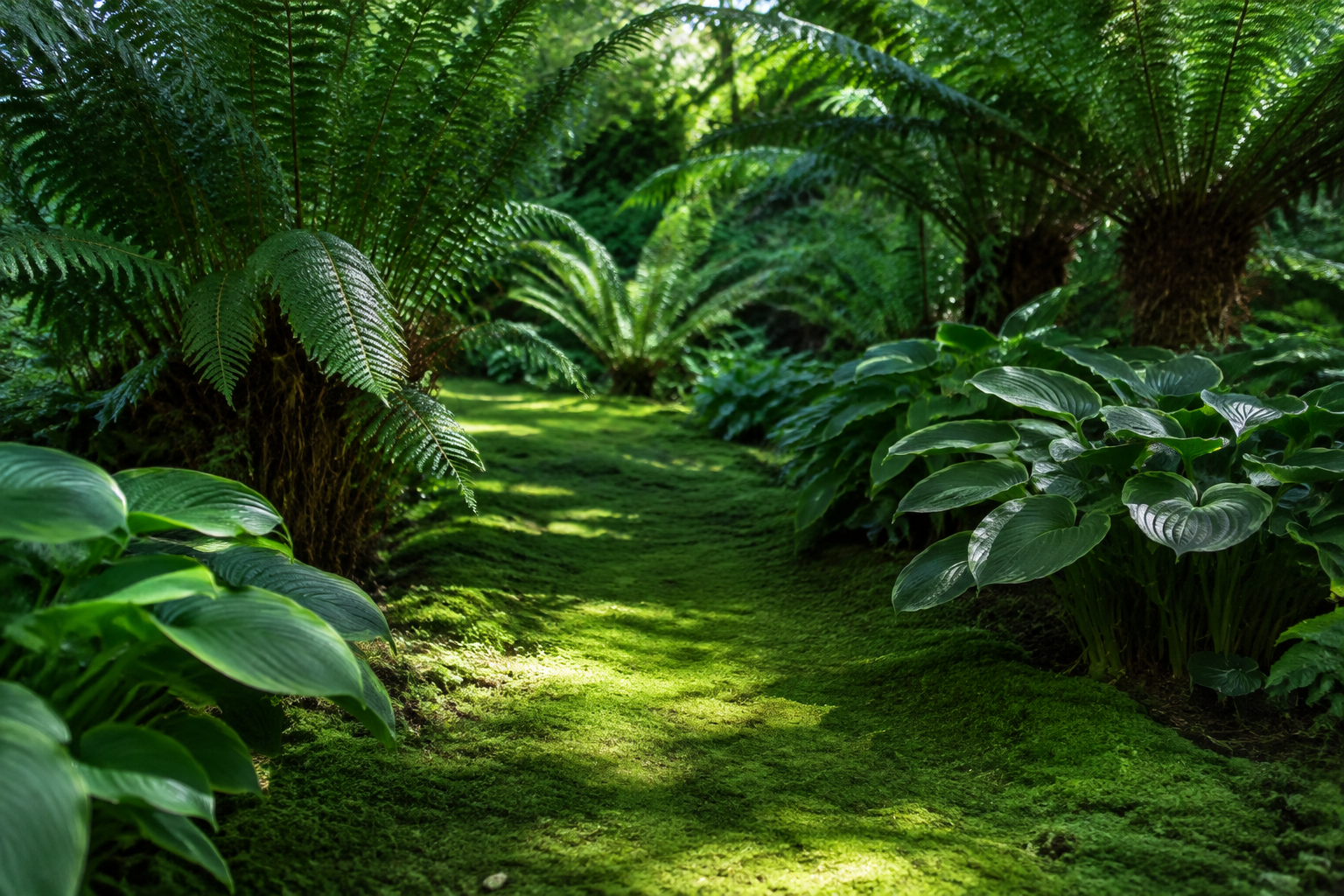
Velvet Moss Path Through Shade
A moss path feels like walking on carpet. It thrives where grass gives up, in cool damp shade under trees.
Moss never needs mowing or feeding. It asks only for shade, moisture and a little patience.
Tip: Keep leaves off it in autumn and moss will knit into a solid carpet.
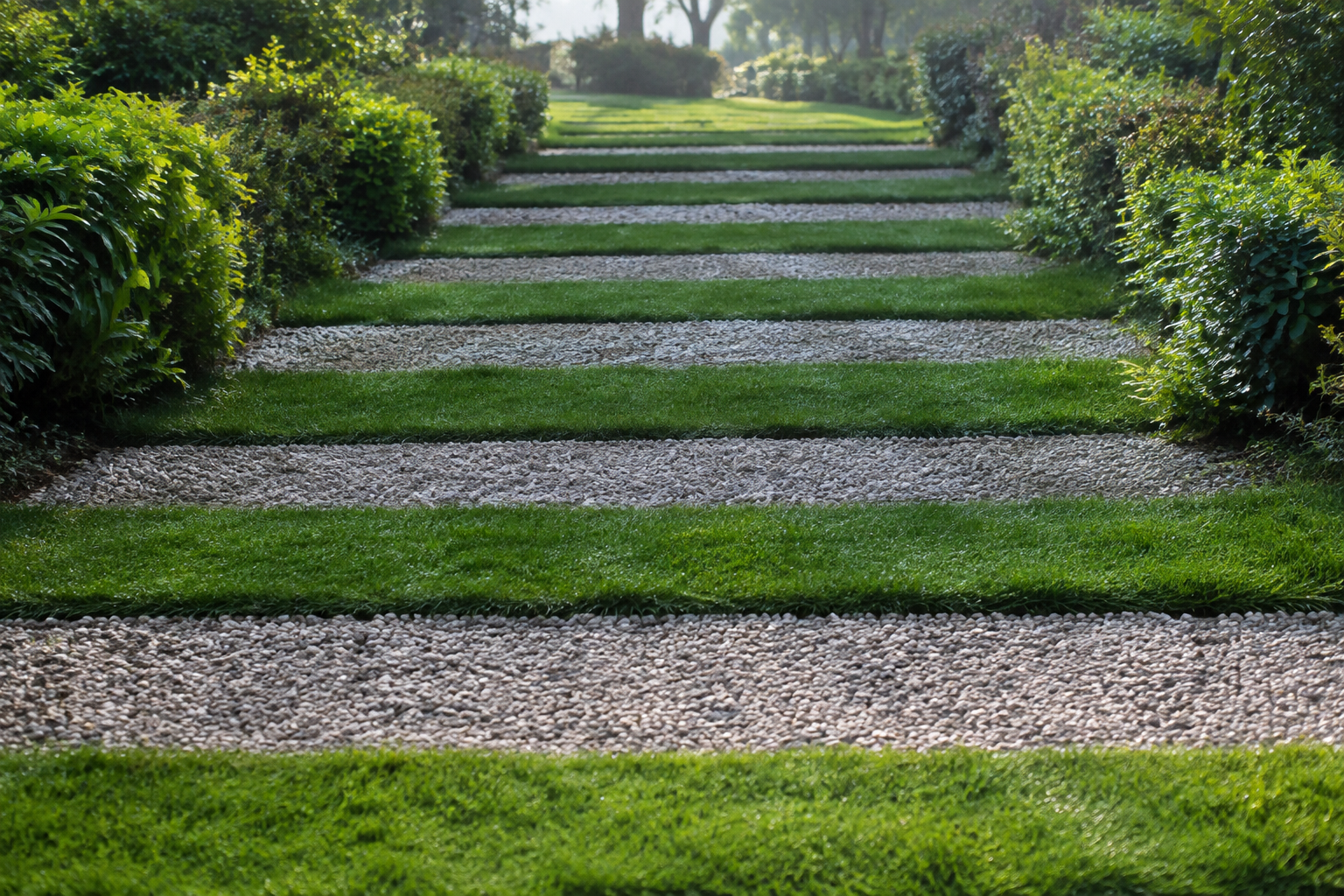
Grass and Gravel Ladder Path
Bands of gravel crossed by strips of lawn create a ladder up a slope. The pattern gives grip and a clear rhythm underfoot.
It also slows water running downhill. Each band catches a little before it reaches the next.
Tip: Cut the grass strips slightly lower than the gravel so edges stay crisp.
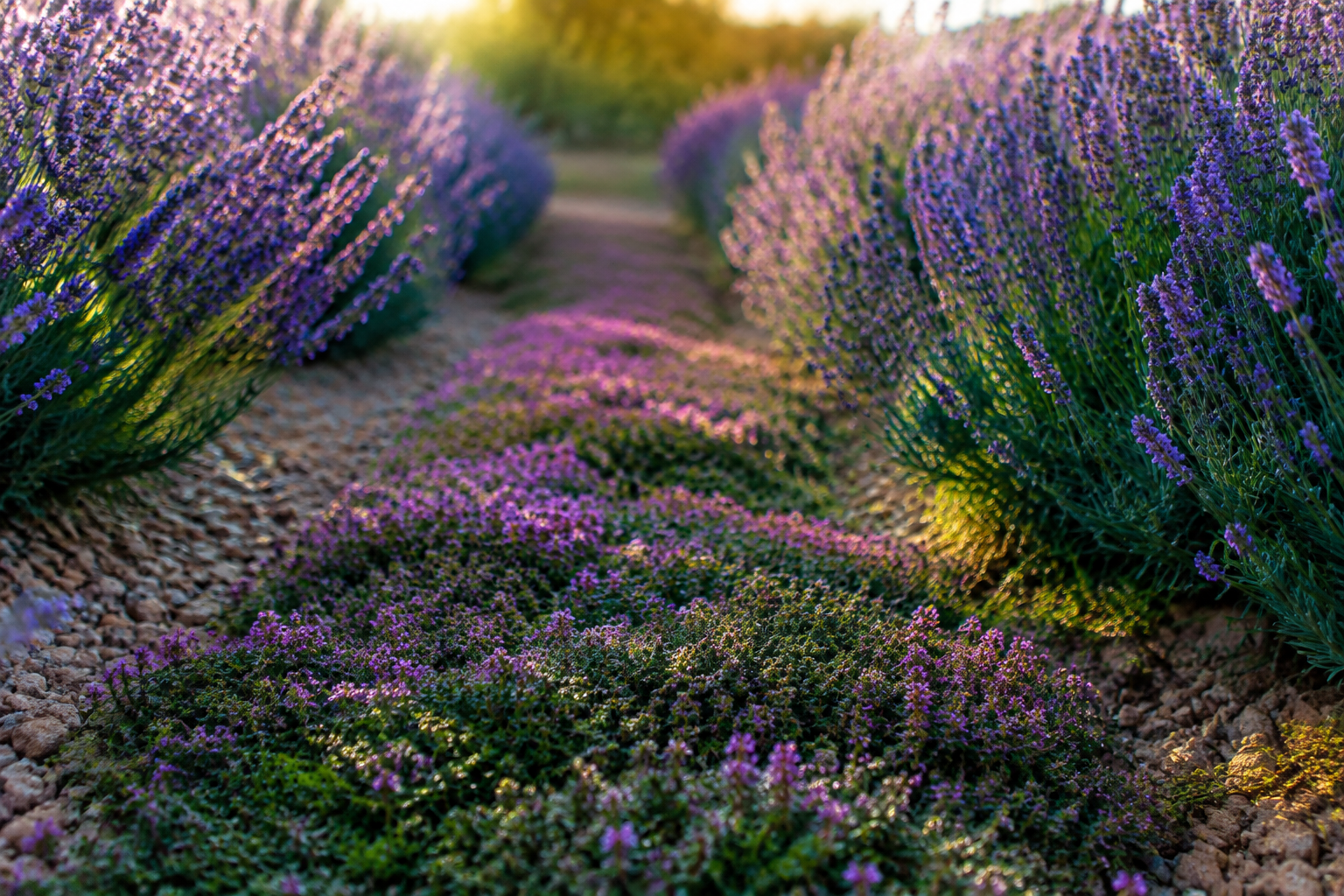
Creeping Thyme Walkway Between Lavender
A low carpet of creeping thyme makes a fragrant, drought proof walkway. Between rows of lavender it becomes a scent corridor.
Both plants love sun and poor soil. That makes this the easiest path on the list to keep alive.
Tip: Plant thyme plugs 200mm apart and water only for the first summer.
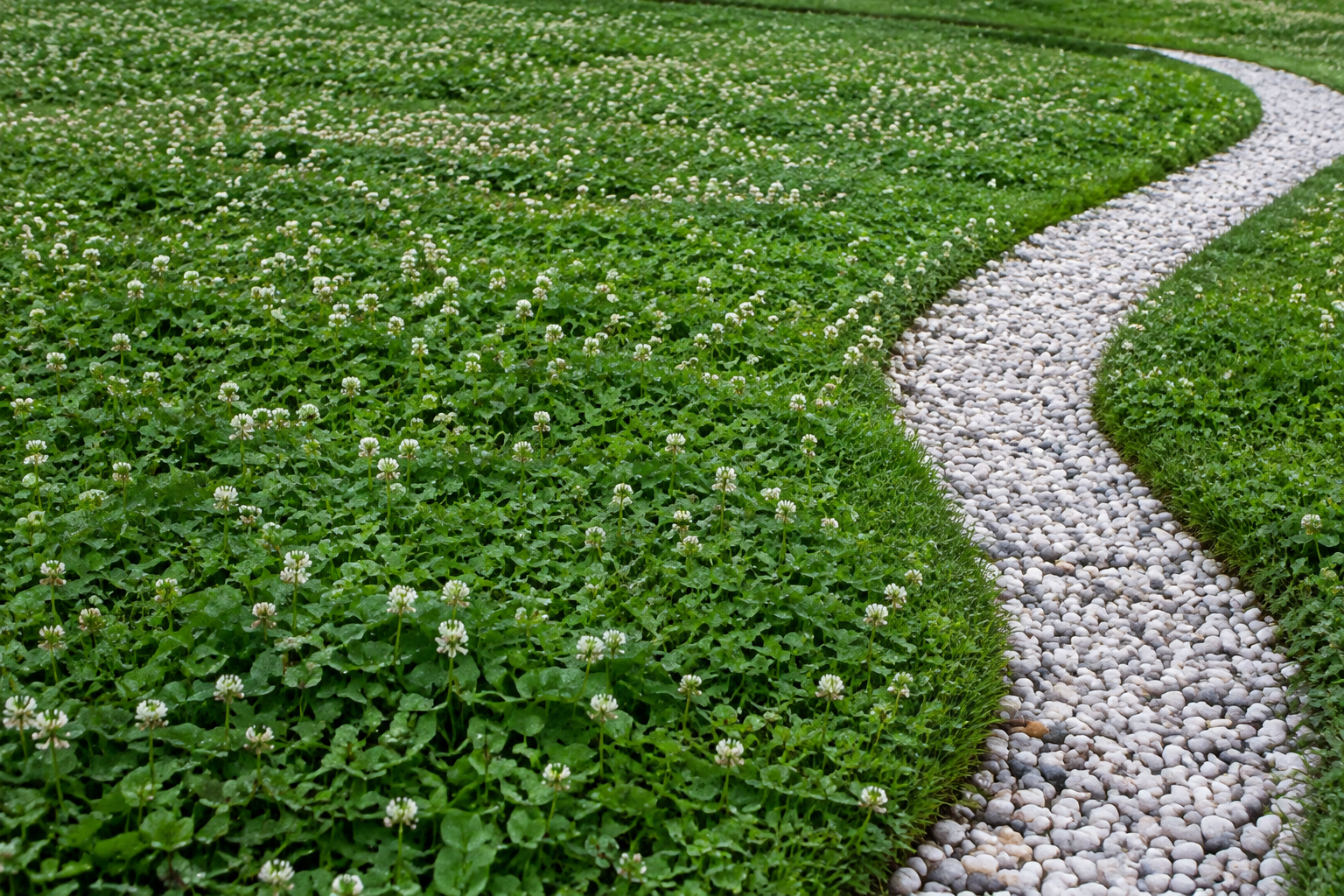
Clover Lawn Path Outlined with Field Stones
A clover lawn path marked out with pale field stones reads soft and wild. The stones hold the line without a hard edge.
Clover fixes nitrogen and feeds the soil. The path quietly improves everything it touches.
Tip: Re-lay the stones once a year as the edge creeps outward.
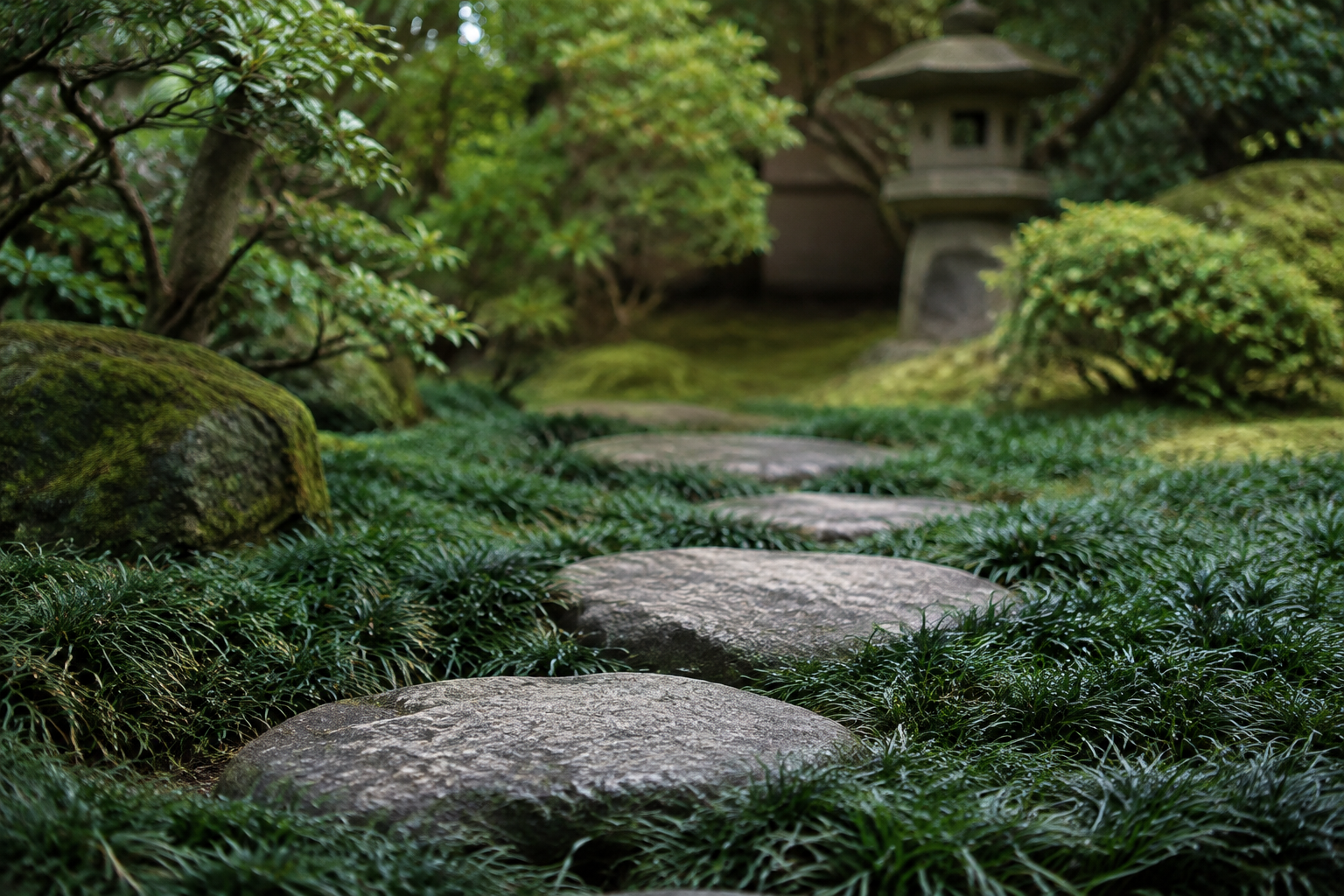
Mondo Grass Stepping Path
Grey stepping stones set into dark mondo grass create a calm Japanese rhythm. The black-green carpet makes every stone look lighter.
Mondo grass stays tidy all year. It needs no mowing and almost no water.
Tip: Plant mondo grass in a dense grid so weeds never find a gap.
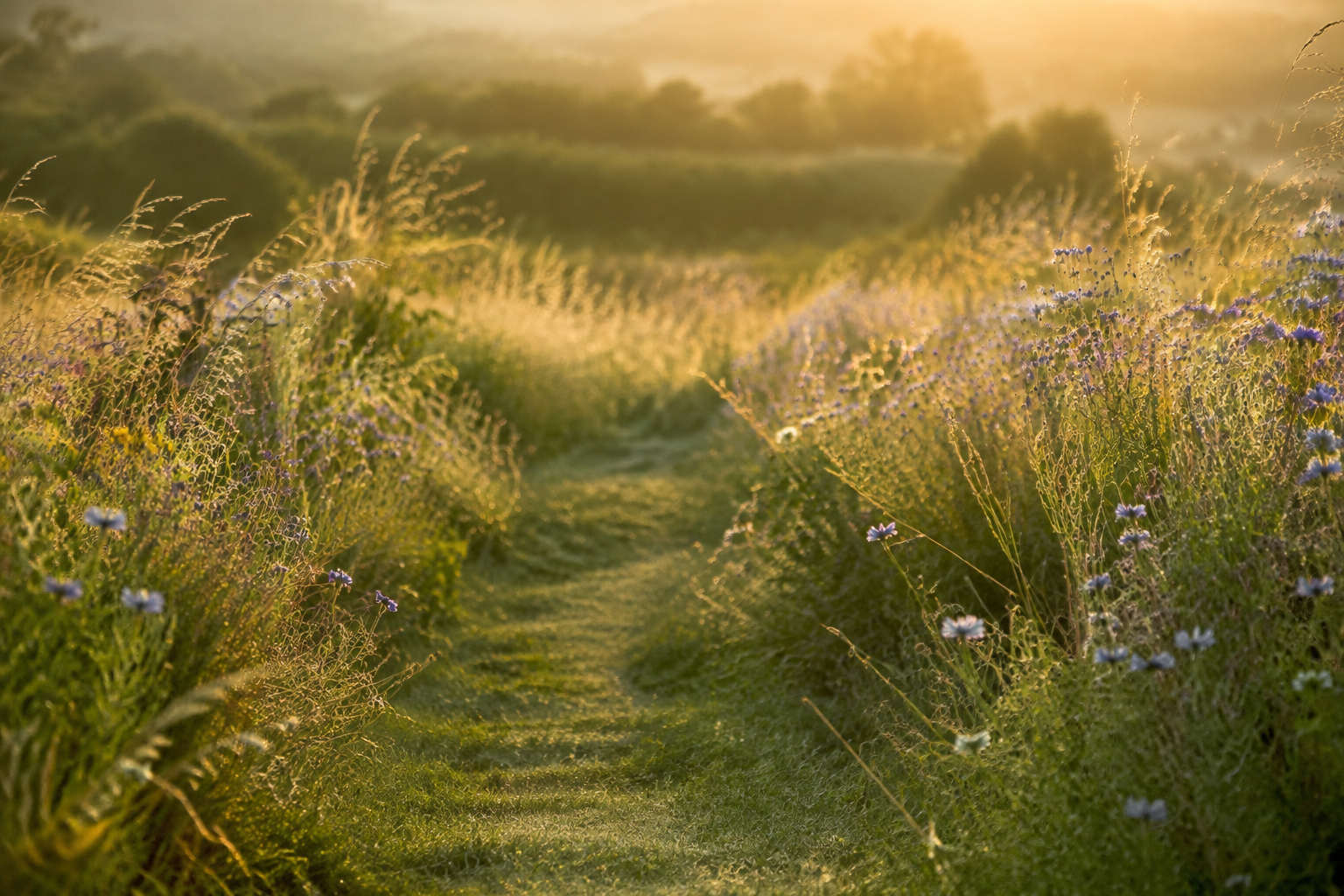
Mown Trail Through a Wildflower Meadow
A mown trail through tall meadow grasses costs nothing at all. You simply cut a route and let the rest grow long.
The trail changes weekly as flowers open. No paving can match that.
Tip: Cut the trail after the flowers set seed, then rake off the clippings.
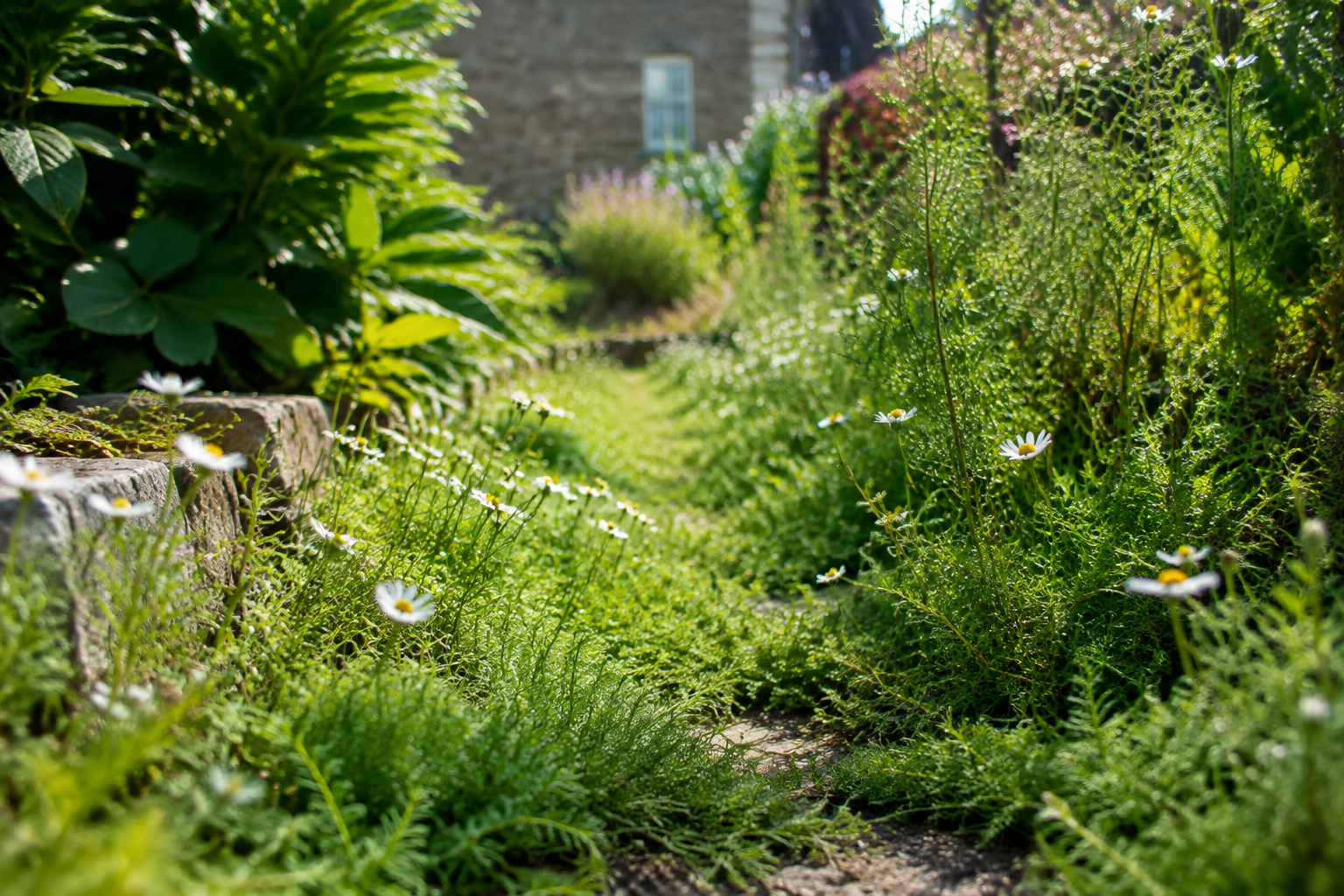
Chamomile Lawn Pathway
A chamomile lawn path releases apple scent when trodden. It suits small, gently used routes rather than busy ones.
It cannot take heavy traffic or drought. Where it works, nothing else smells better.
Tip: Use roman chamomile for a lawn, not the taller German variety.
Water & Features
Water adds sound before it adds anything else. These six paths cross it, run beside it or use it as the main event.
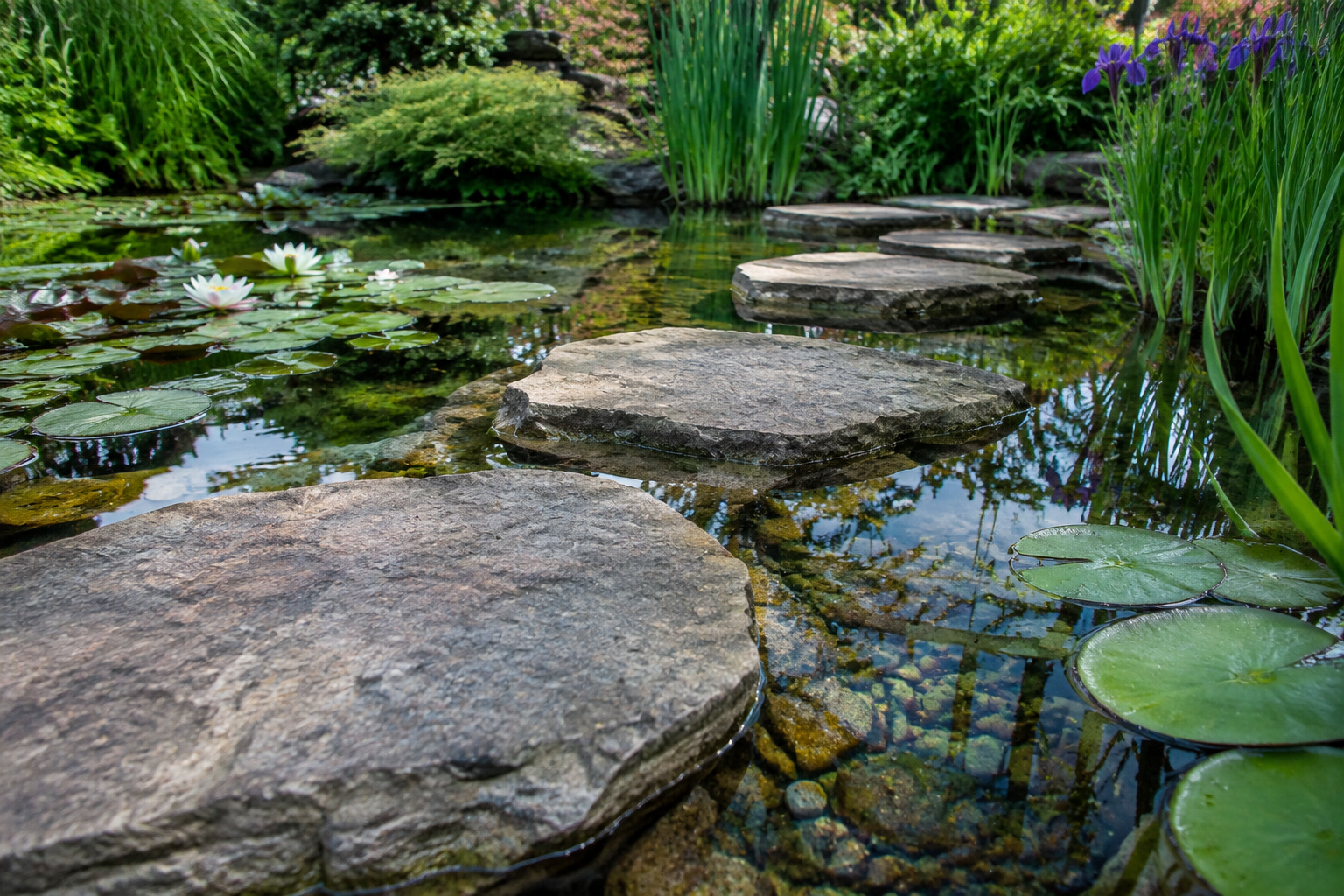
Stepping Stones Across a Shallow Pond
Large flat slabs set just above the water let you walk across a pond. Water passes beneath your feet and the garden feels twice as deep.
The pond also cools the air around the path. Planting beside it stays fresher in heat.
Tip: Set each stone on a hidden pier so it never rocks underfoot.
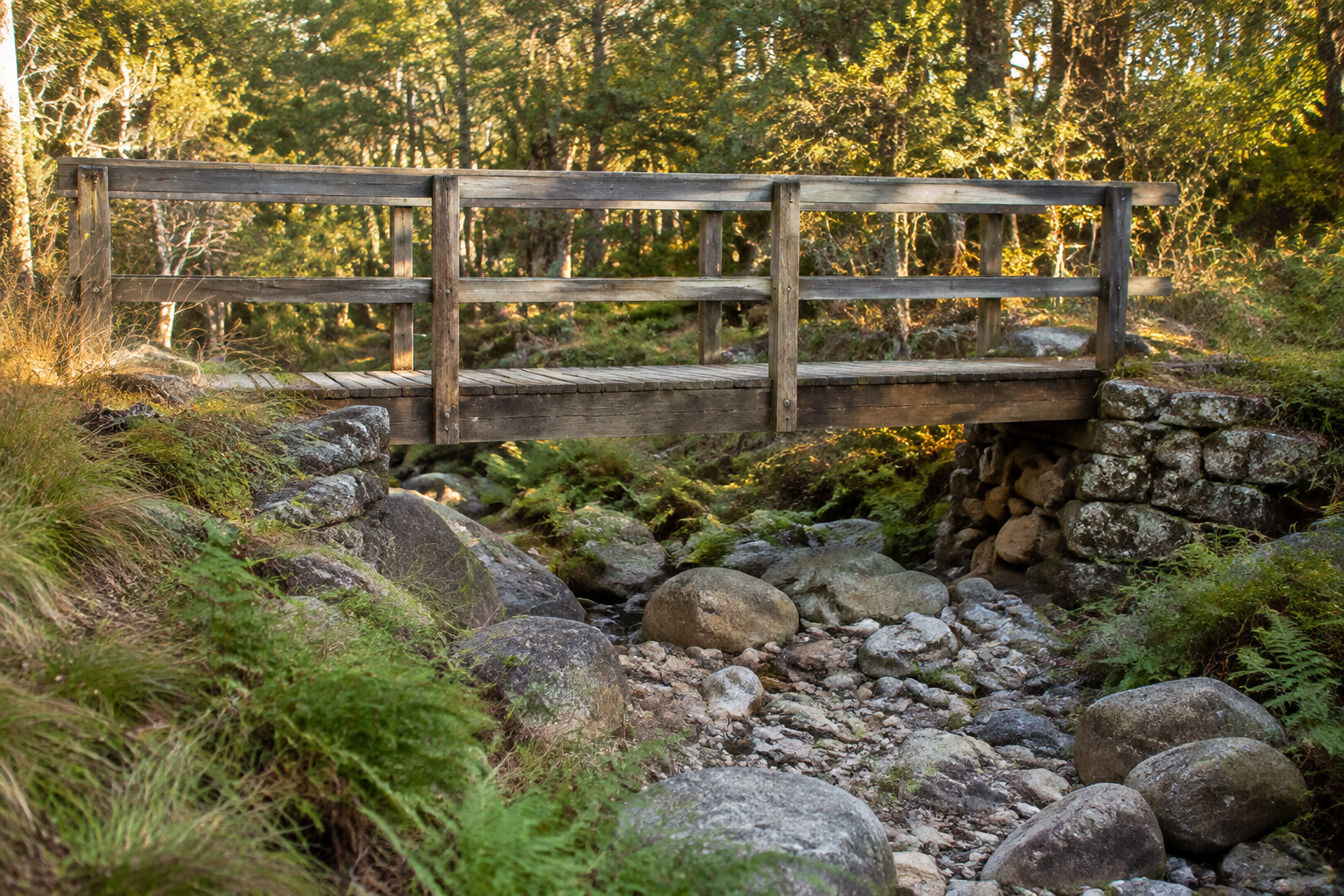
Timber Bridge Over a Dry Creek Bed
A dry creek bed of boulders carries storm water away from the house. A simple timber bridge crosses it with real occasion.
Even without rain the stones look like a stream. The bridge makes that illusion complete.
Tip: Line the creek bed with a membrane under the boulders so water flows rather than soaks.
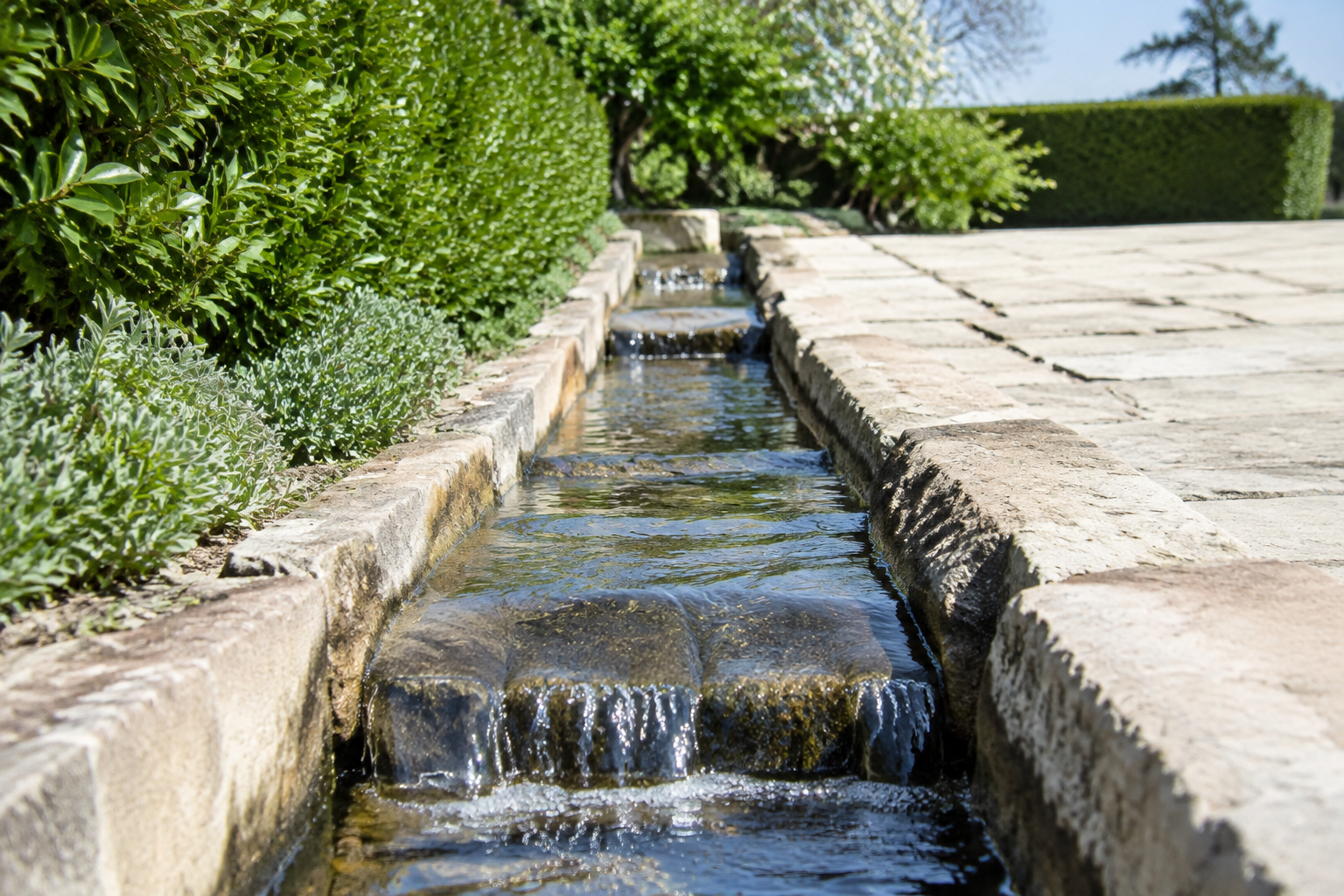
Rill-Lined Path with Running Water
A narrow rill of running water beside the path adds sound before it adds anything else. The trickle masks traffic and cools the air.
Rills suit formal gardens. A straight line of water reads as architecture, not decoration.
Tip: Keep the rill level and shallow, and screen the pump behind planting.
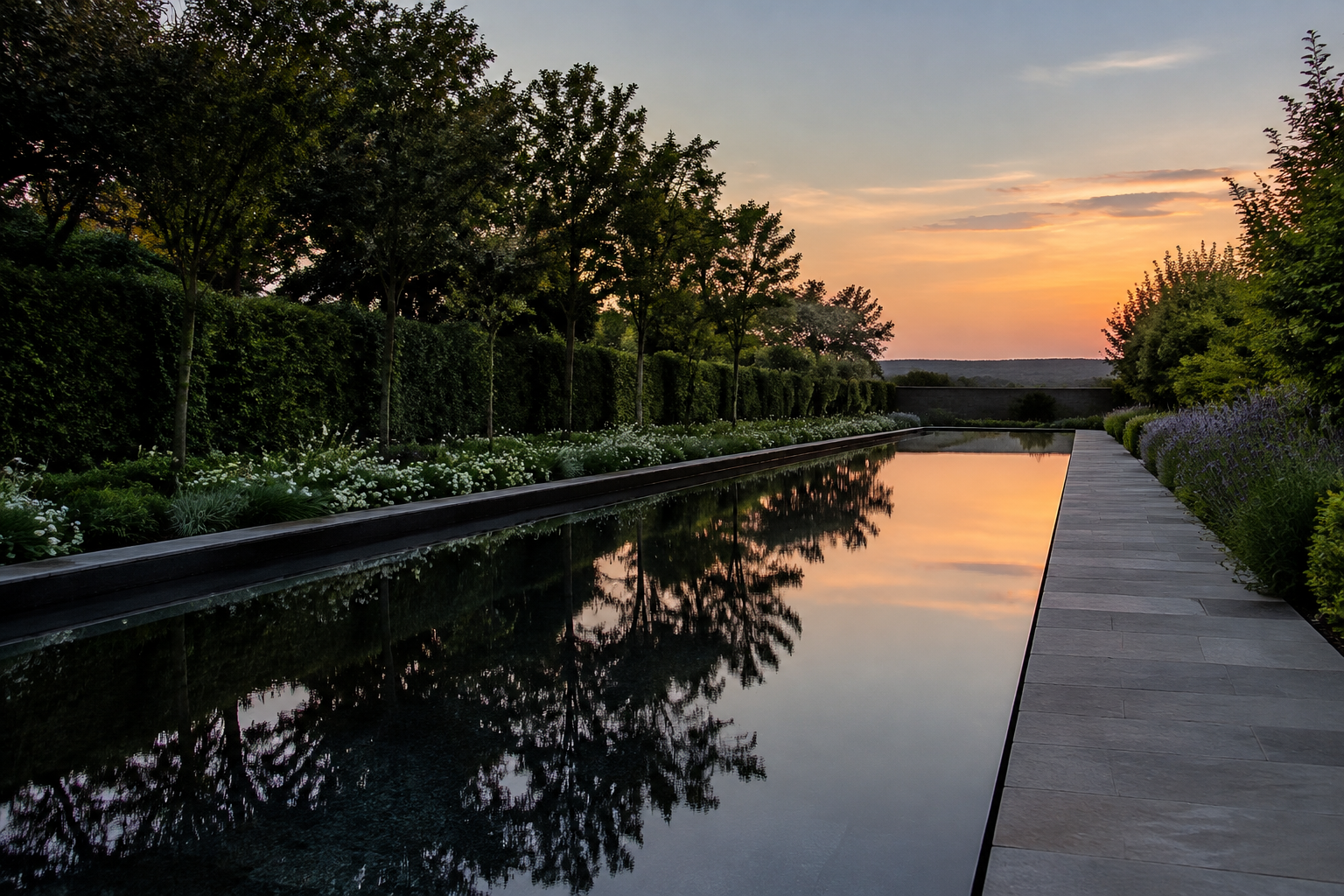
Path Beside a Reflecting Pool
A still pool beside the walk doubles the sky and the trees. The garden appears to continue downward.
Dark water reflects best. Keep the pool base black or deep charcoal for the strongest mirror.
Tip: Site the pool away from deciduous trees to keep it clear of leaves.
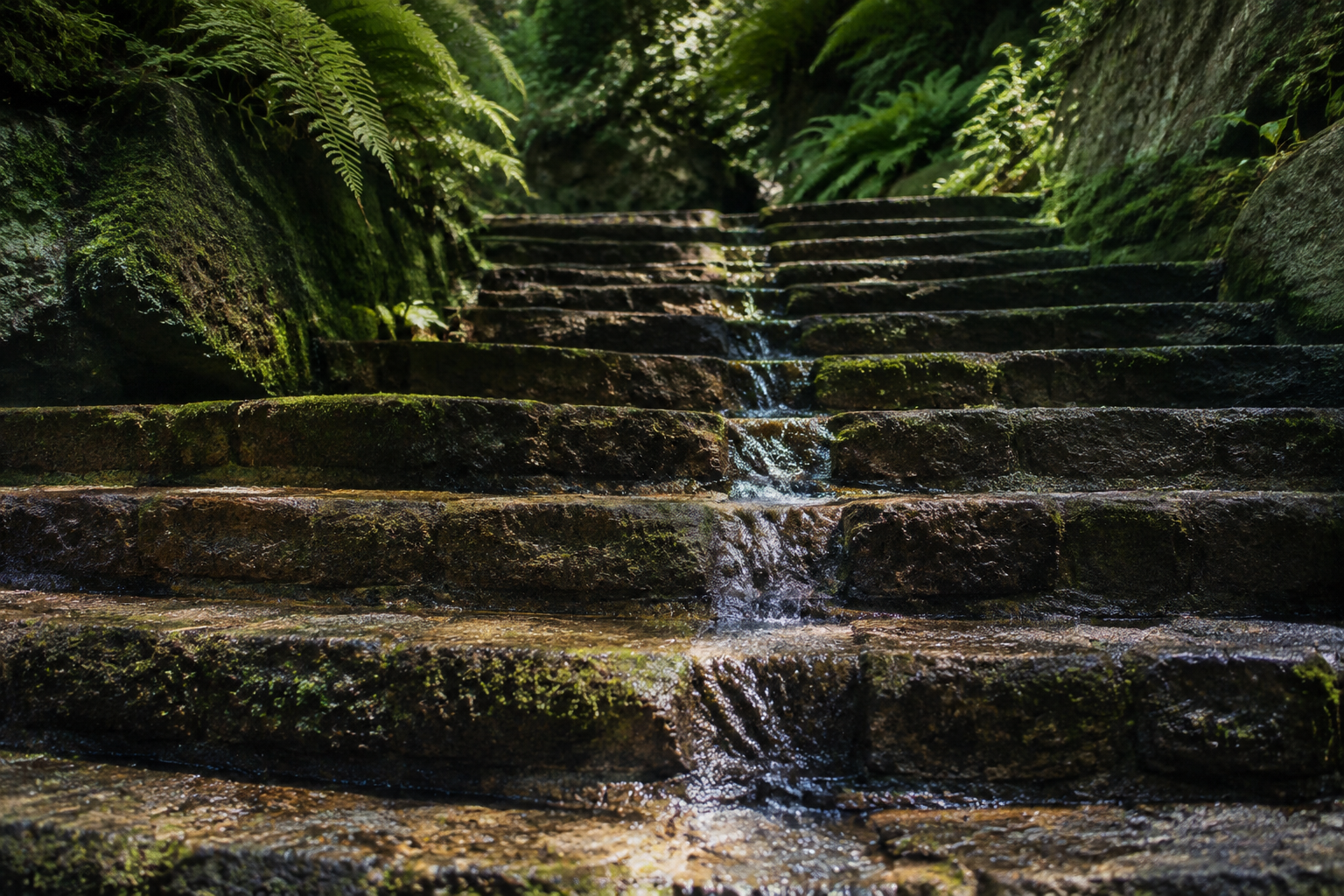
Stone Steps with a Water Cascade
A thin sheet of water running down the centre of wide stone steps turns stairs into a feature. The sound carries further than the water does.
It works on any slope. Two or three risers are enough to make it read.
Tip: Use a slight fall on each tread so water never pools on the step.
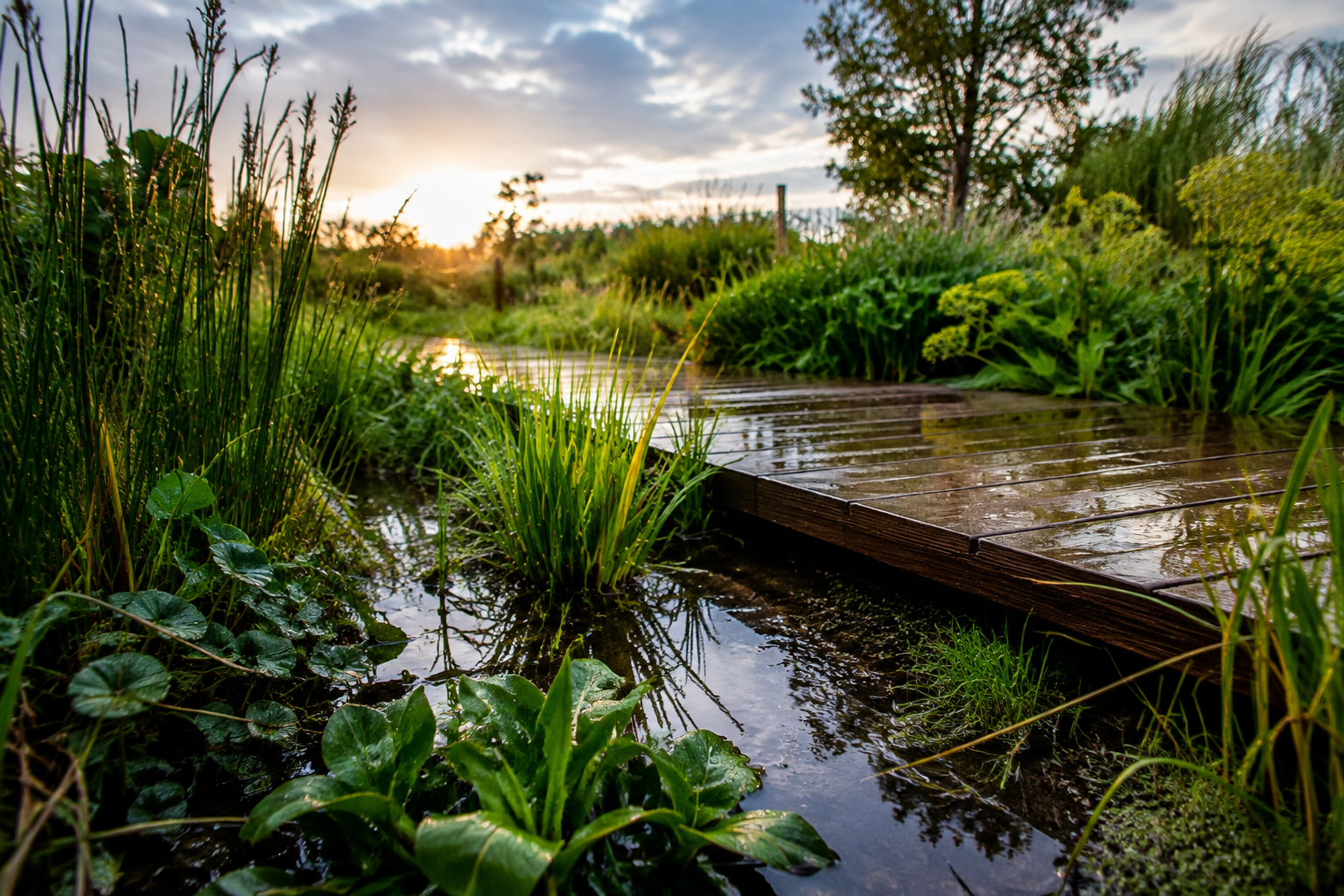
Boardwalk Over a Rain Garden
A low boardwalk crosses a planted rain garden that floods after storms. You get a dry route and the garden handles the water.
This is practical design that looks intentional. The path and the drainage are the same idea.
Tip: Choose sedges, rushes and moisture lovers that tolerate both wet and dry spells.
Light & Night
A path you cannot use after dark is only half a path. These six ideas make the walkway work in the evening too.
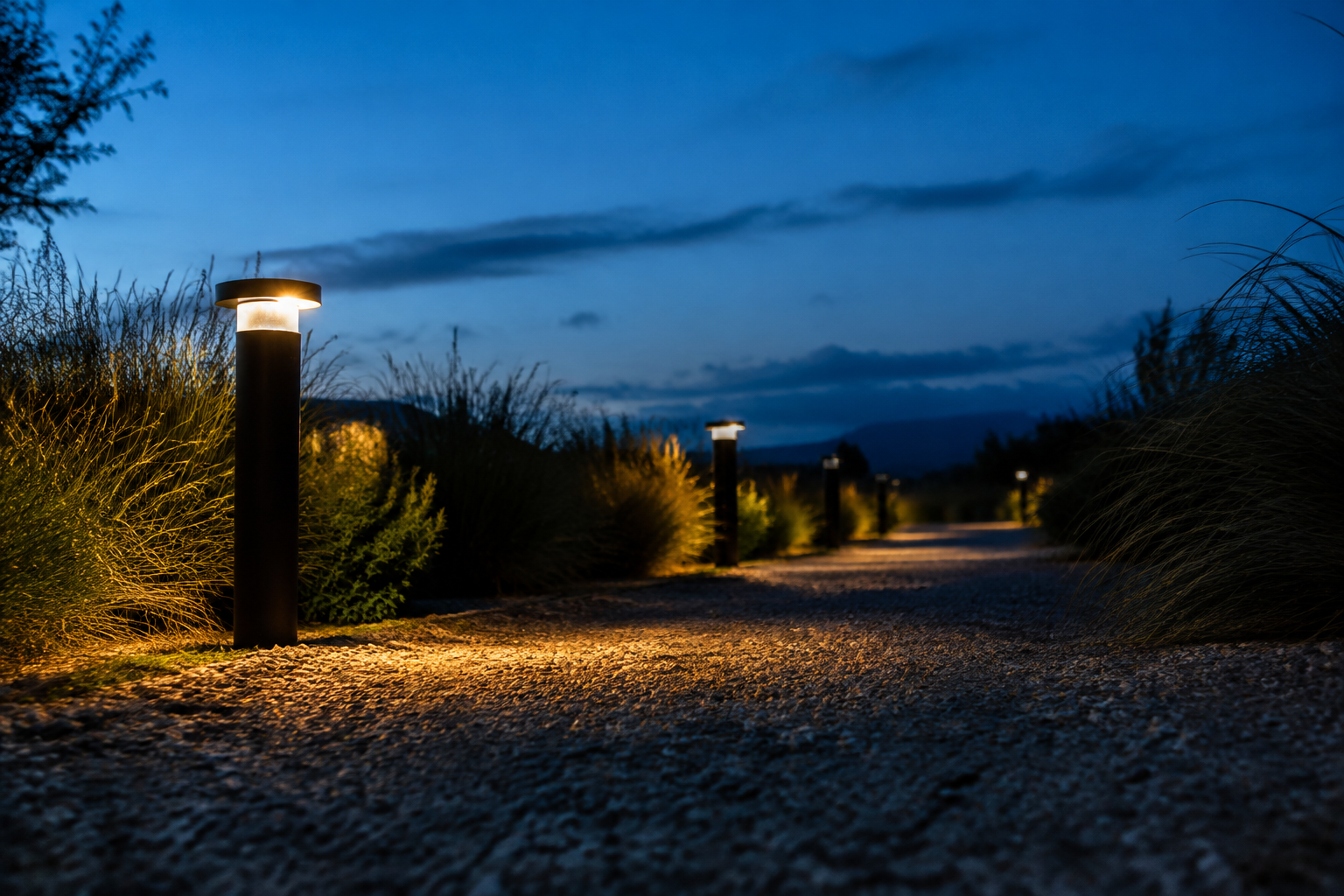
Path Lit by Low Bollard Lights
Low bollard lights sit at ankle height and wash the ground rather than the sky. They guide feet without flattening the planting with glare.
Space them at roughly twice their height apart. That spacing gives an even pool of light with no dark gaps.
Tip: Choose shielded fittings so the bulb is hidden from anyone walking toward it.
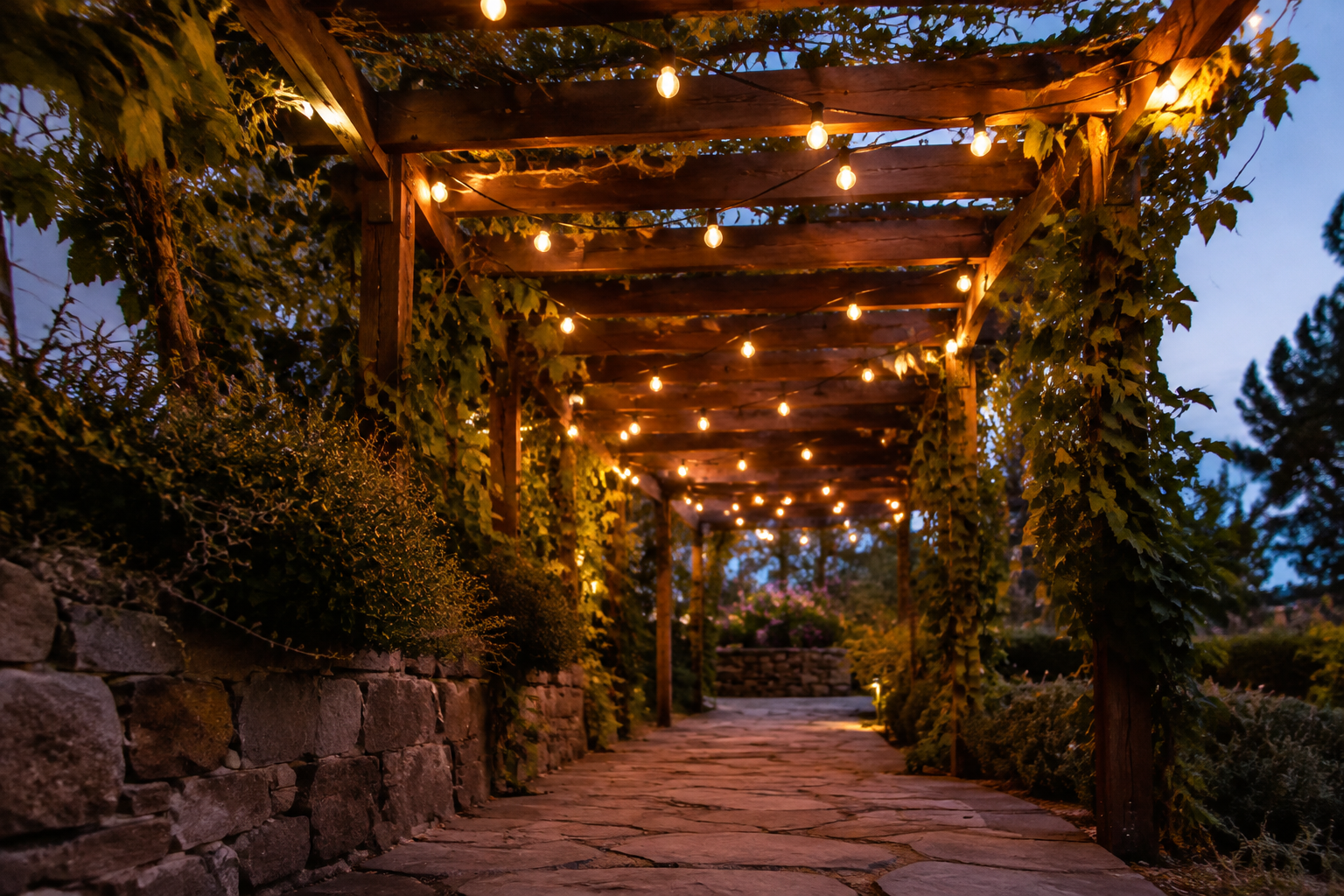
String Lights Along a Pergola Walk
A line of festoon bulbs along a pergola turns a walkway into an outdoor room. The light sits above head height, so faces stay lit and feet stay visible.
Warm bulbs at 2200 to 2700K look best. Anything cooler starts to feel like a car park.
Tip: Run the cable on a tensioned steel wire so the bulbs never sag unevenly.
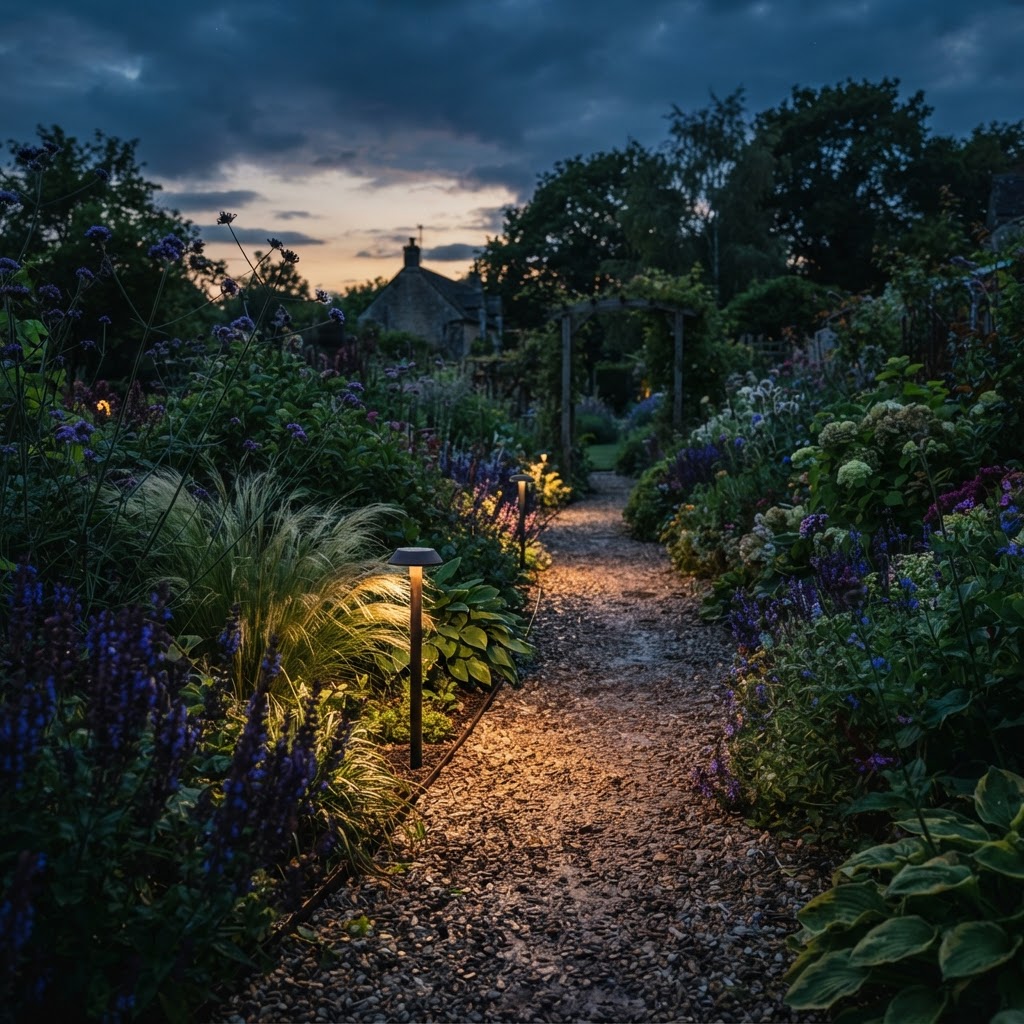
Solar Path Lights Between Perennials
Solar stake lights cost nothing to run and go anywhere. Place them between perennials so the light comes from inside the planting rather than from the edge.
Choose warm white output and a dark stake. Bright cool white LEDs read as security lighting, not garden lighting.
Tip: Move solar lights to a sunny spot for a day if they start to dim early.
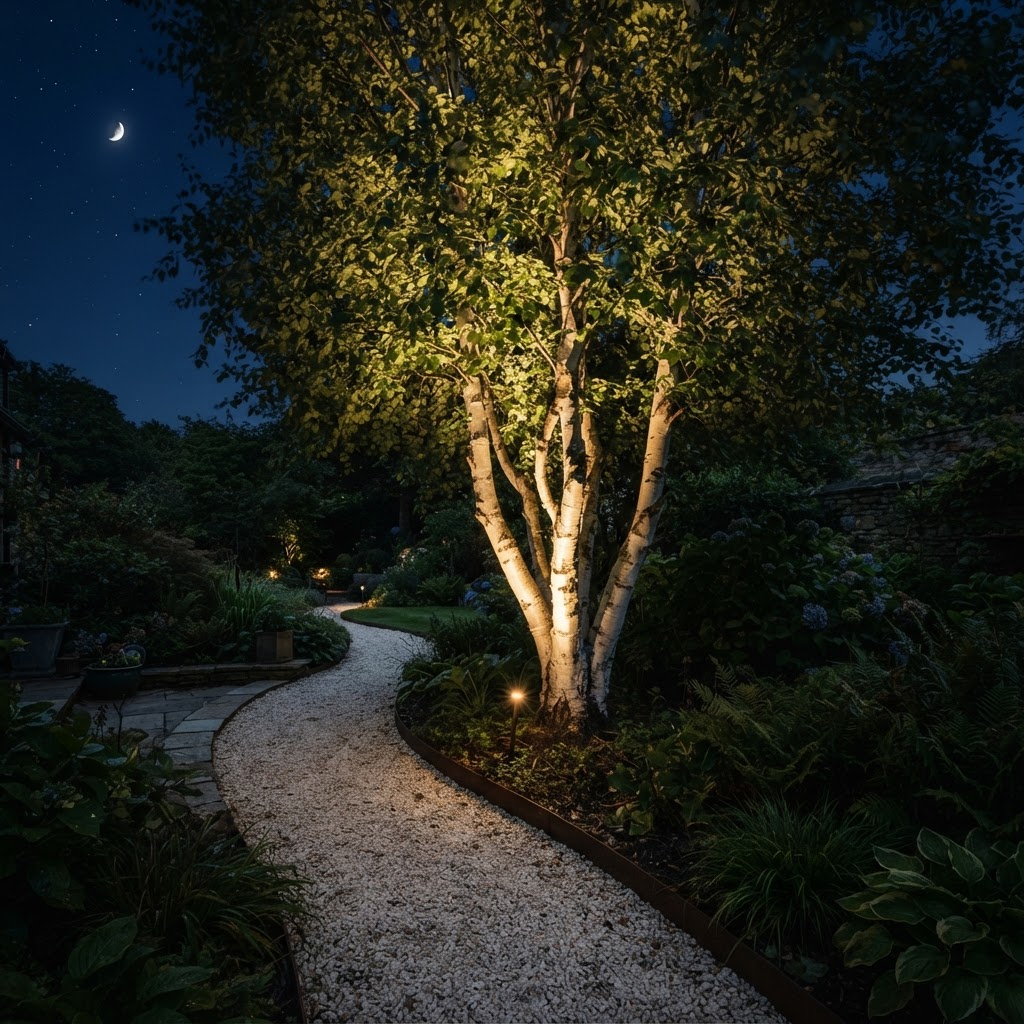
Uplit Specimen Tree Beside a Gravel Walk
One uplight at the base of a good tree does more for a garden at night than ten path lights. The canopy glows and the path becomes a route between shadows.
Use a narrow beam aimed up into the branches. Wide beams spill and lose the drama.
Tip: Fit a glare shield so the lamp itself never becomes the view.
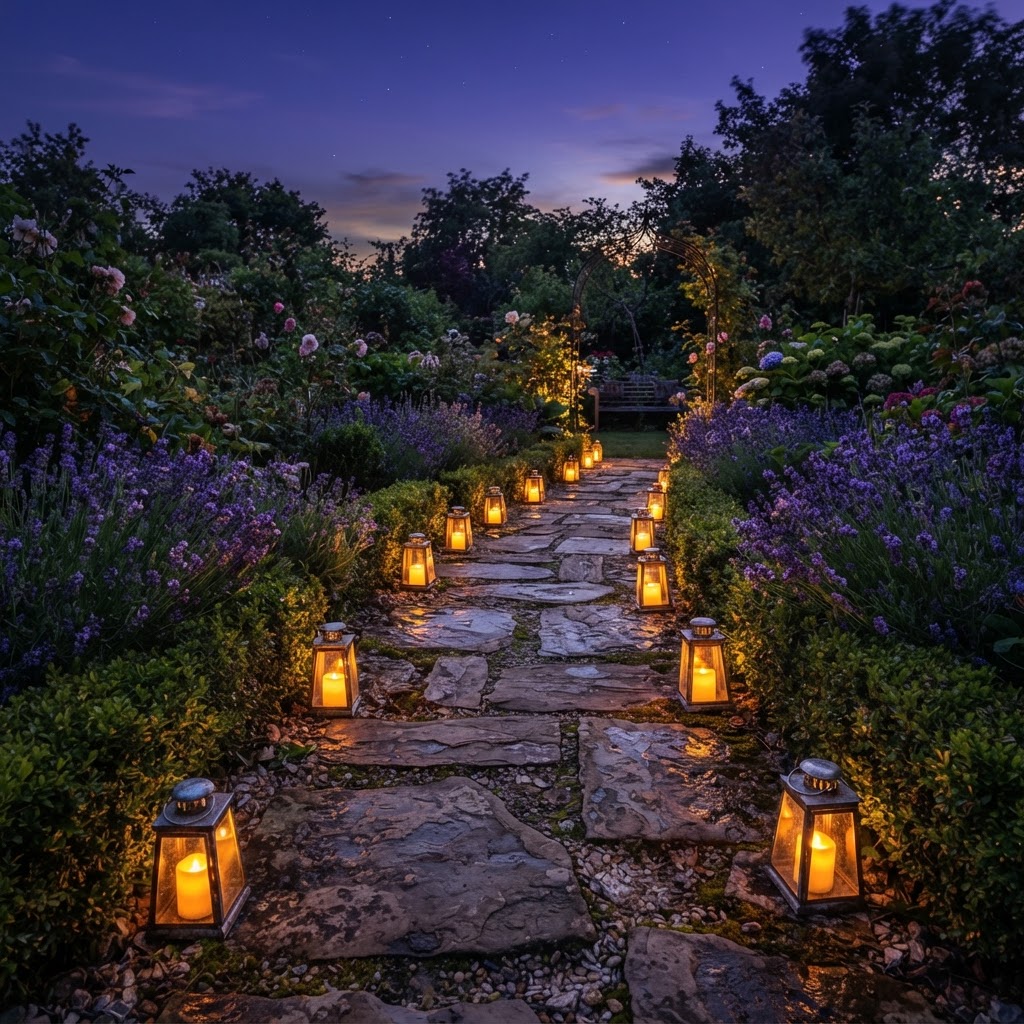
Lantern Line for Evening Gatherings
Small glass lanterns set on the ground along the path edge make an instant event. Twenty of them cost less than one garden light fitting.
They suit occasional use rather than every night. That rarity is what makes them feel special.
Tip: Use LED candles near planting, because real flames scorch leaves on a windy night.
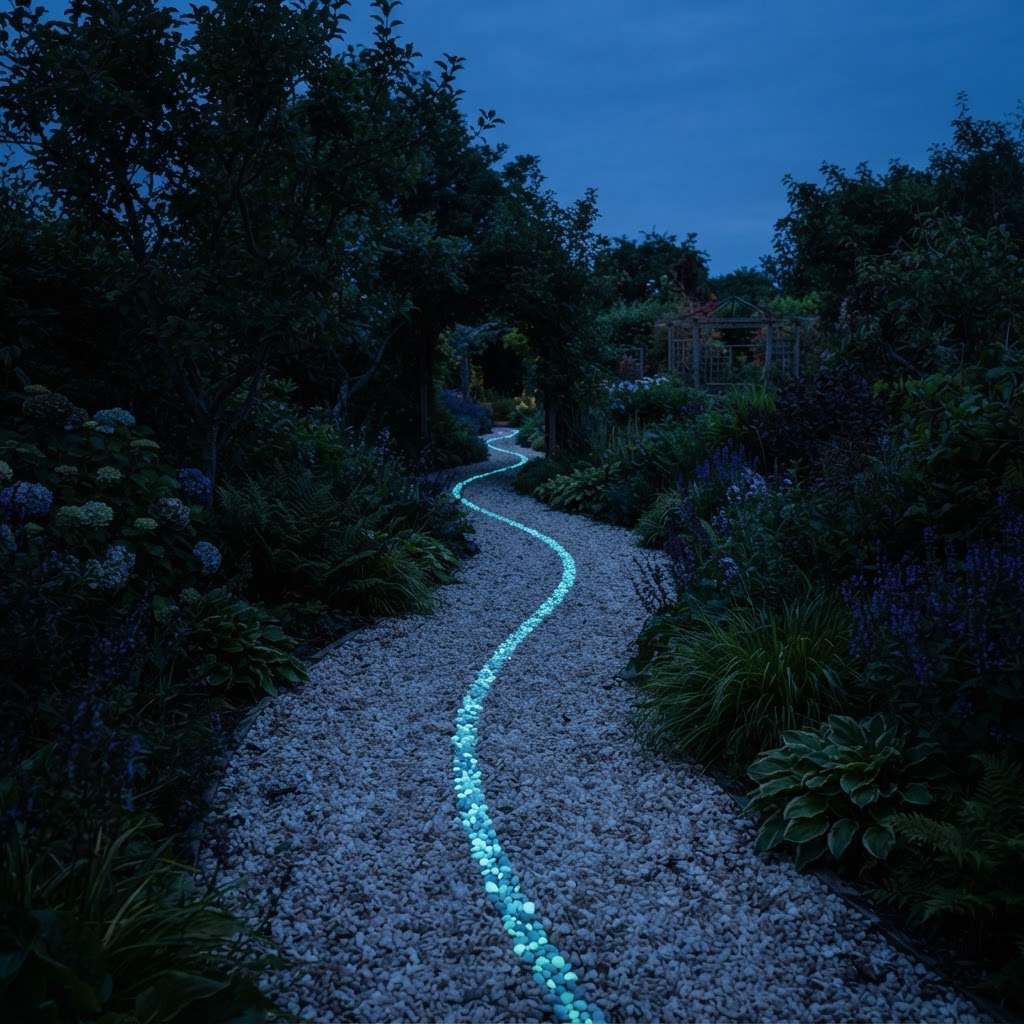
Glow-in-the-Dark Pebble Path
Luminous pebbles charged by daylight glow softly for hours after sunset. Set in a line, they draw the route without any wiring at all.
Use them as an accent rather than the whole surface. A single glowing line is far stronger than a field of dots.
Tip: Seal the pebbles in place so they are not kicked loose over winter.
Small Space & Budget
Good design has nothing to do with spending more. These six ideas suit tight budgets, narrow gaps and balconies.
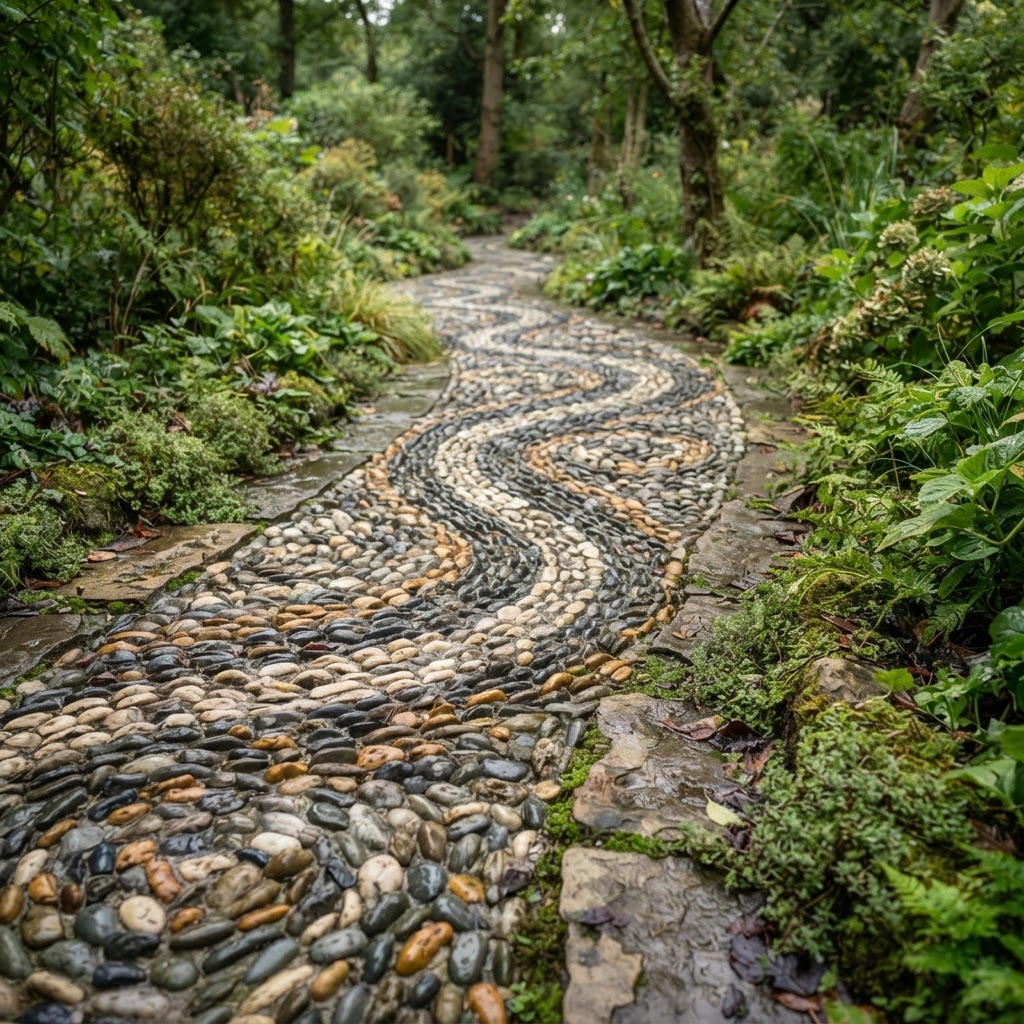
Pebble Mosaic Path Built From a Bucket
River pebbles pressed into mortar make patterns as simple or as bold as you like. A bucket of pebbles and a bag of mortar covers about a square metre.
Draw the pattern on the ground first. Pebbles are unforgiving once the mortar sets.
Tip: Sort pebbles by colour into trays before you start, so the pattern stays clean.
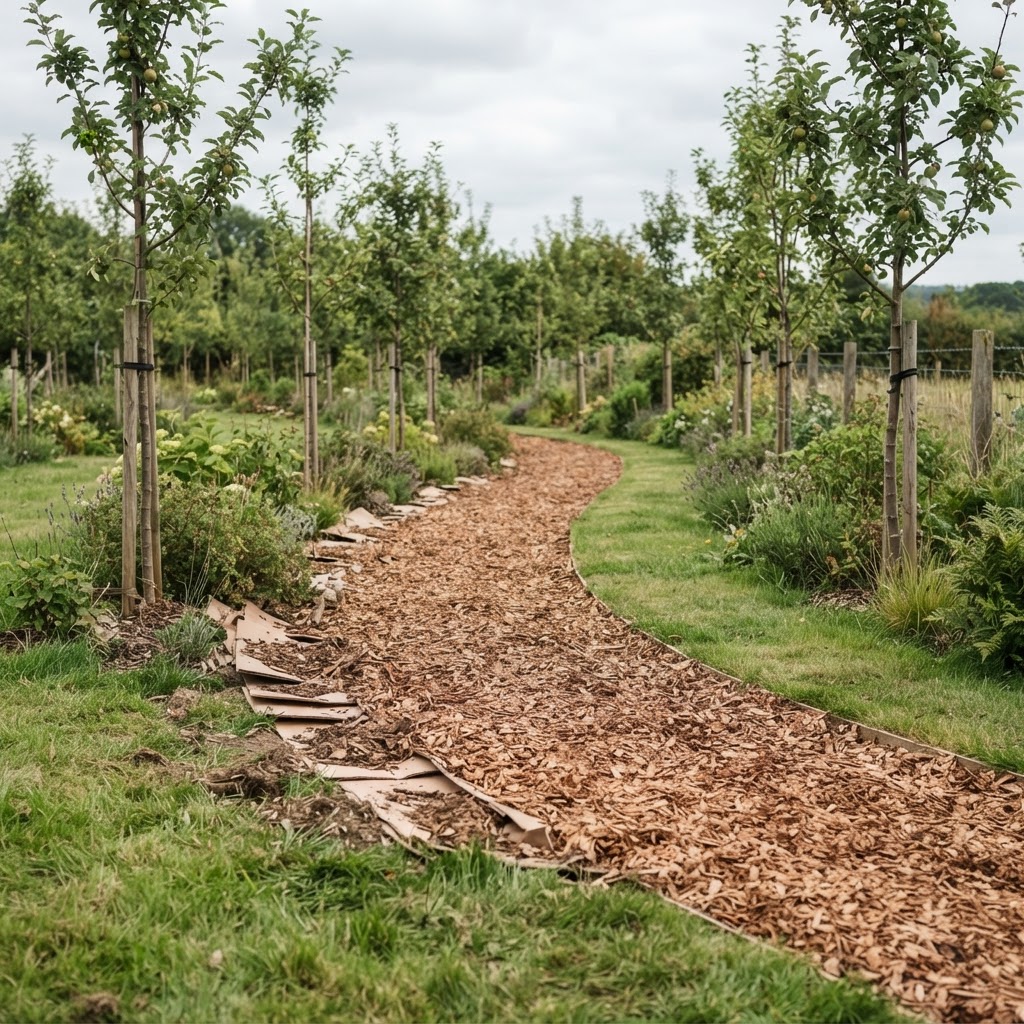
Free Wood Chip Path From Tree Surgeons
Tree surgeons pay to dispose of wood chip, so most will tip a load for free. Spread it 100mm deep over cardboard and you have an instant path.
Wood chip rots down in two to three years. Top it up and the soil underneath becomes rich.
Tip: Ask for chip from a single species so the path has one consistent colour.
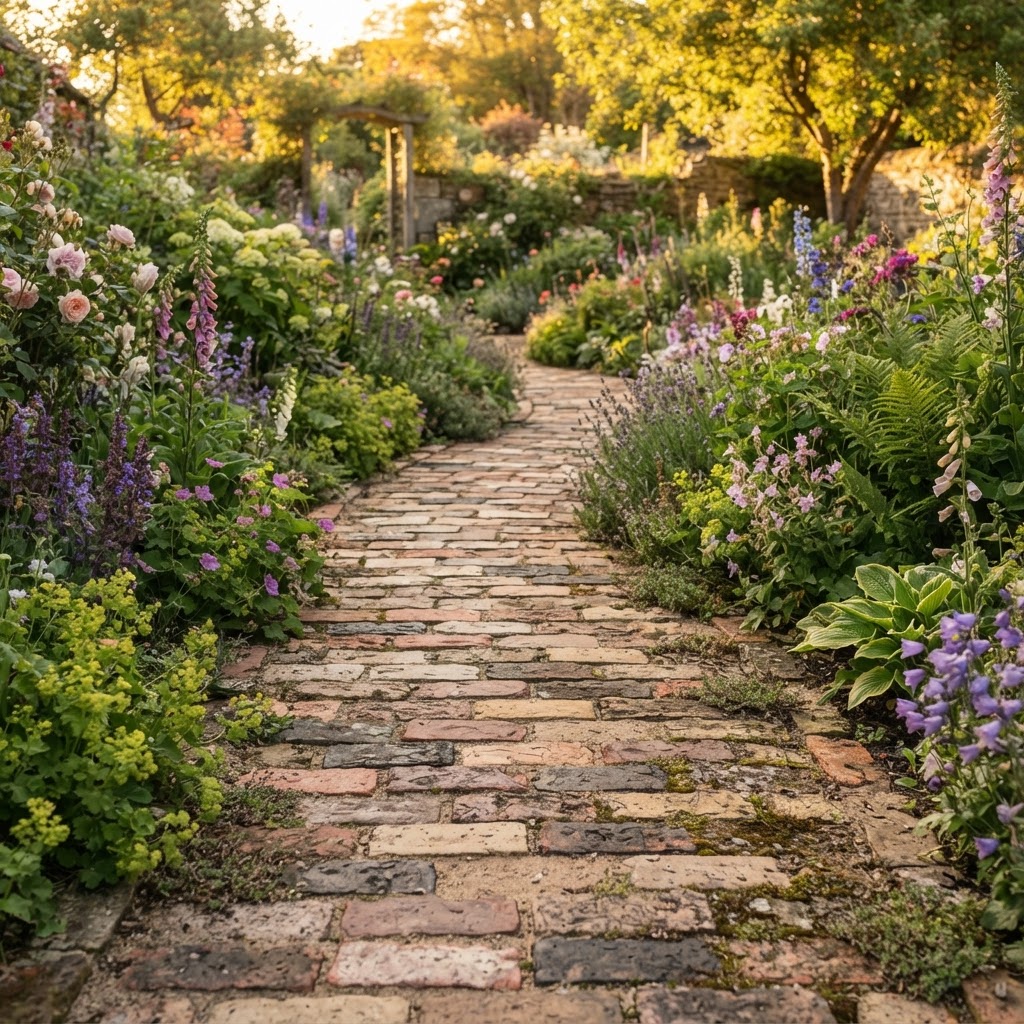
Salvaged Brick Path Laid on Sand
Old bricks from a reclamation yard cost a fraction of new paving. Laid on sand with tight joints they need no mortar and no specialist skill.
Mixed colours look better than uniform ones. Ask for a genuine salvage mix rather than sorted brick.
Tip: Lay a geotextile membrane first so worms cannot lift the sand under the bricks.
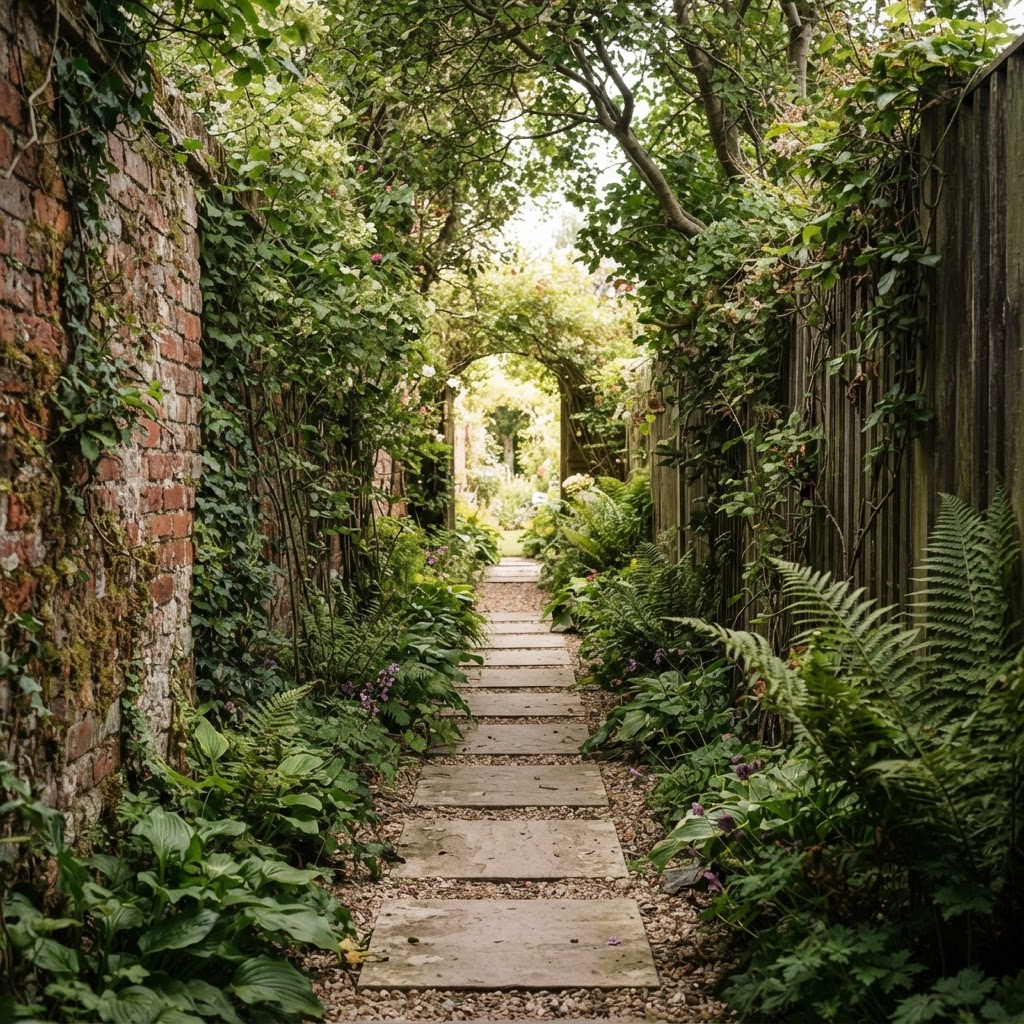
Narrow Side-Return Stepping Path
A side return is usually wasted space about a metre wide. Slim stepping slabs set in gravel turn it into a clean, useful route.
Keep planting vertical here. Climbers and tall ferns give depth without stealing the width.
Tip: Use slabs 600mm wide at most, so there is always gravel either side.
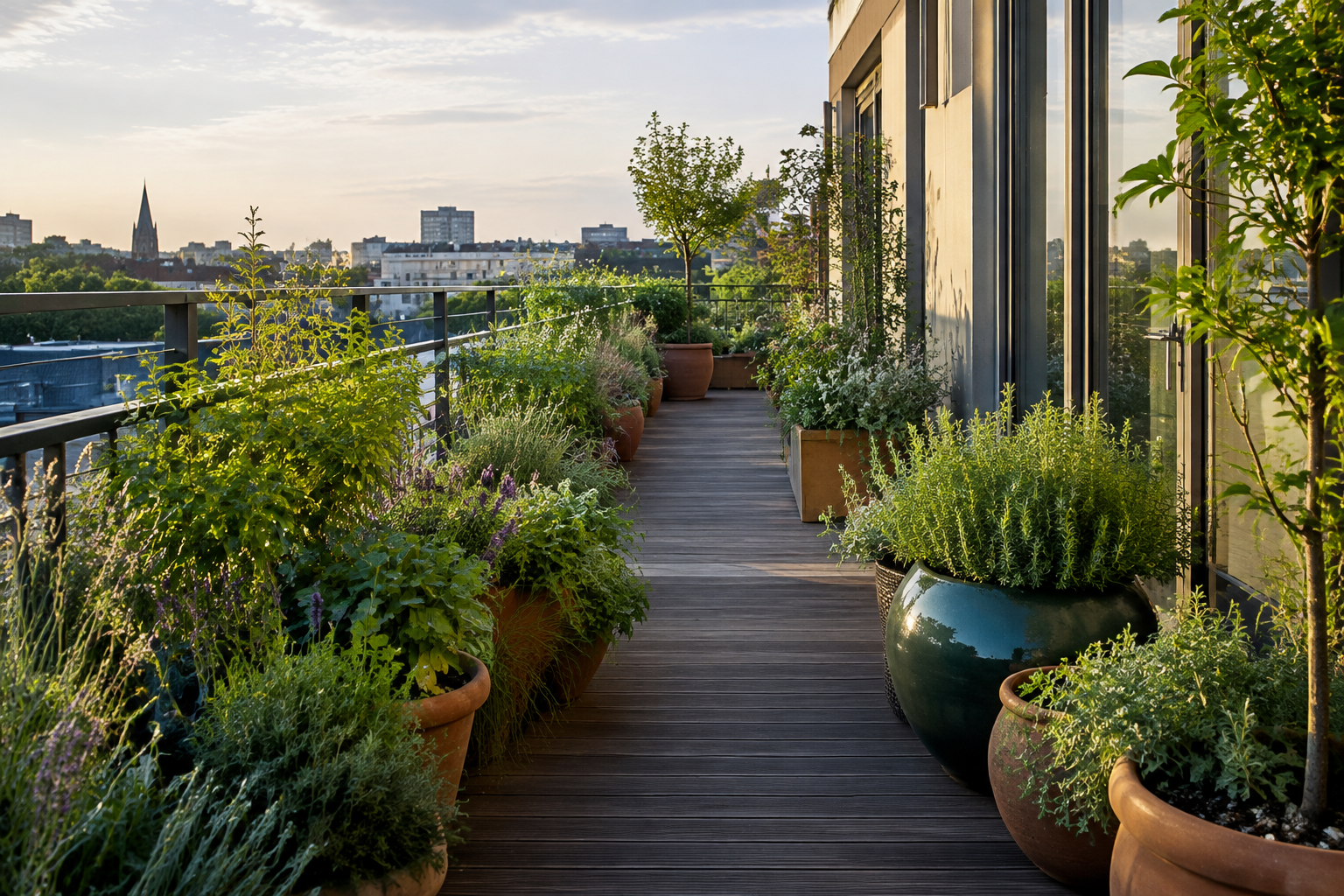
Container-Flanked Balcony Walkway
On a balcony the path is whatever space is left between the pots. Line the route with clustered planters and the walkway designs itself.
Group pots in threes of different heights. One tall grass, one trailing herb and one flowering pot is enough.
Tip: Use matching saucers and raise pots on feet so water never stains the deck.
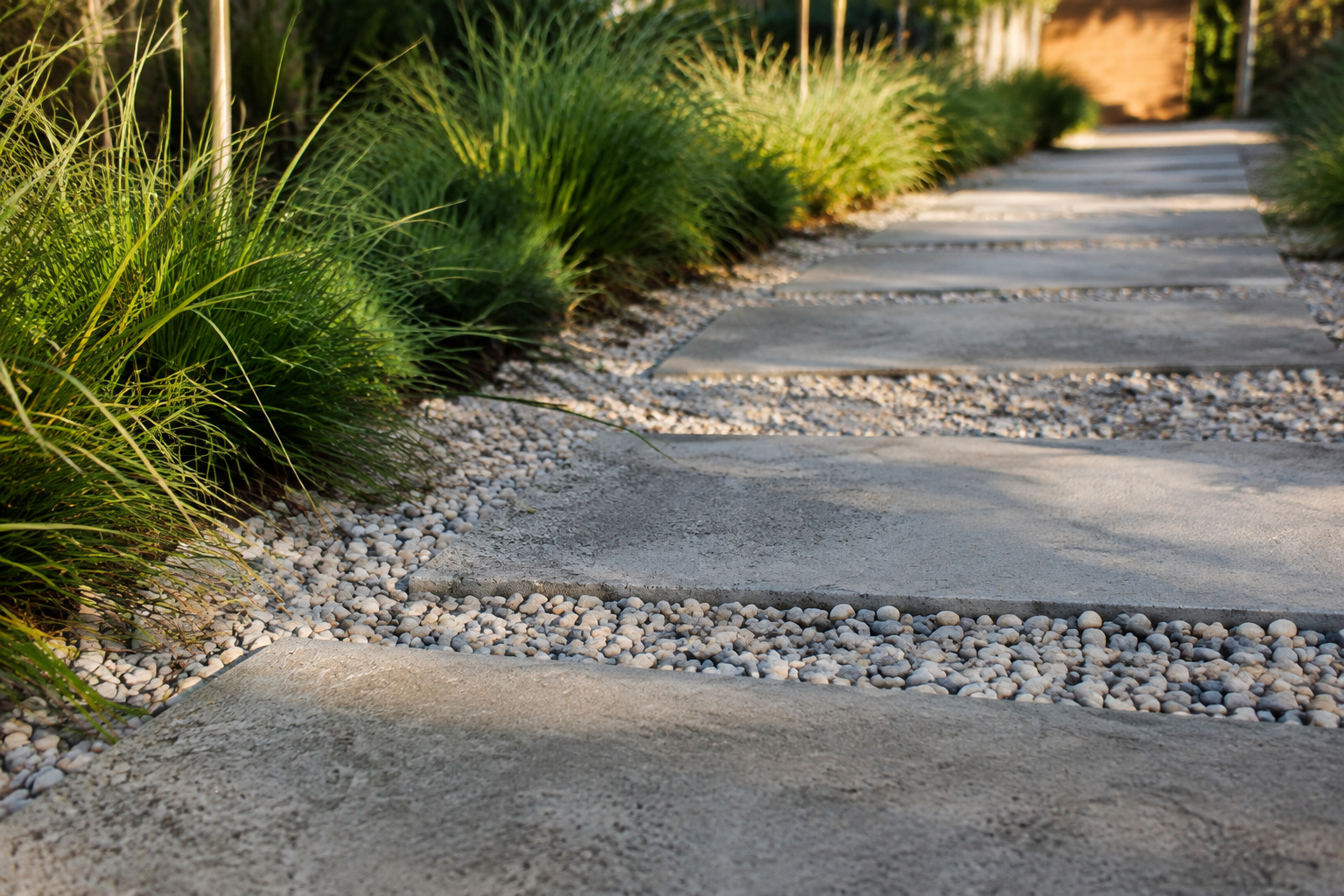
Gravel and Paver Mix on a Budget
Alternating one row of pavers with one band of gravel halves the cost of a solid paved path. It also drains better than full paving.
The rhythm looks deliberate at any width. Buy the cheapest plain pavers available and let the gravel carry the colour.
Tip: Lay pavers first on a compacted base, then fill the bands with 40mm gravel.
Garden Path Questions, Answered
What is the cheapest garden path to build?
Wood chip, gravel and salvaged brick are the cheapest options. All three can be laid by hand over a weekend with no specialist tools or trades.
What is the most durable garden path material?
Granite, brick and concrete all last decades with almost no maintenance. Stone set on a proper compacted base will outlive the house.
How wide should a garden path be?
Make main routes 900mm to 1200mm wide. Side routes and stepping stone paths can be 600mm, which is comfortable for one person.
Do gravel paths need edging?
Yes. Gravel spreads without an edge and ends up in the borders. Slim steel, granite kerbs or timber edging all hold the line well.
What is the best path surface for a shady garden?
Bark mulch, moss, stepping stones and gravel all work in shade. Grass struggles there, so avoid lawn based paths under trees.
How do I stop weeds growing through a path?
Use a woven geotextile membrane under loose surfaces and keep joints tight on solid paving. Deeper gravel also blocks light from weed seeds.
Picking Your Path
The best garden path is the one you actually use. A beautiful route that feels awkward to walk will be ignored within a month.
Start with one material and one clear line. Get the width and the drainage right, and the pattern becomes easy.
Any of the 58 ideas above can be built in a weekend or a week. Choose the one that suits your ground, your budget and the way you move through the garden.