
63 Green Kitchen Cabinet Ideas: Sage, Olive & Dark Green Inspiration
Green is no longer the brave choice in a kitchen. It has become the colour most people ask for, and it suits almost any house.
The reason is simple. Green sits between a warm wood floor and a cool white worktop without arguing with either one.
But the word green covers everything from pale mint to near-black forest. Two kitchens with the same word can look completely different.
So this guide is sorted by shade and by style. Every idea below shows the colour, the door style, the counter and the hardware together.
There are 63 ideas here and none of them repeat. Copy one exactly, or mix two to make something of your own.
One note before you scroll. Every idea below works in a real kitchen, not just in a photograph.
Soft Sage And Mint
Pale greens are the easiest place to start. They behave like a neutral and forgive a busy family life.
Idea 01 // Soft Sage
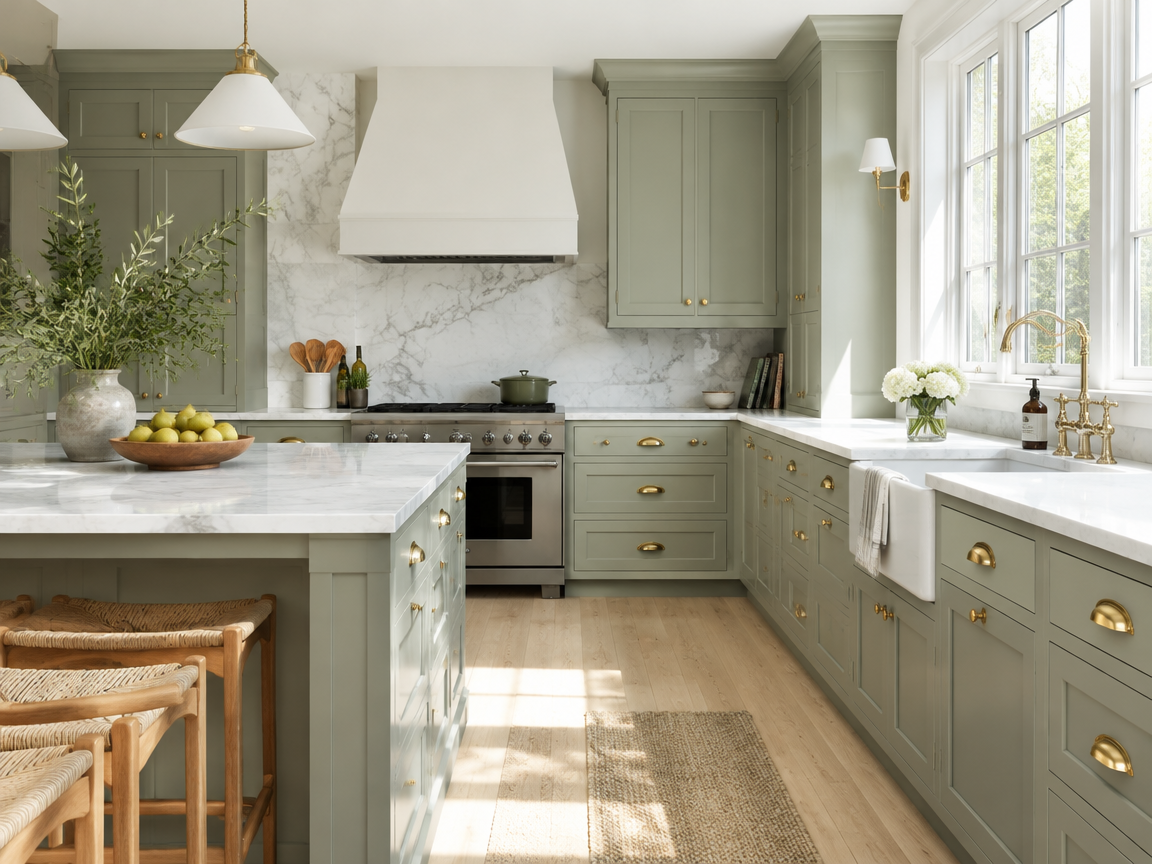
Sage Shaker Cabinets With Warm Brass Cup Pulls
Sage is the safest green you can pick for a busy family kitchen. It stays soft in every light and never fights with the floor.
Choose shaker doors for the classic look. Then add unlacquered brass cup pulls that darken slowly and warm the cool paint.
Idea 02 // Pale Mint
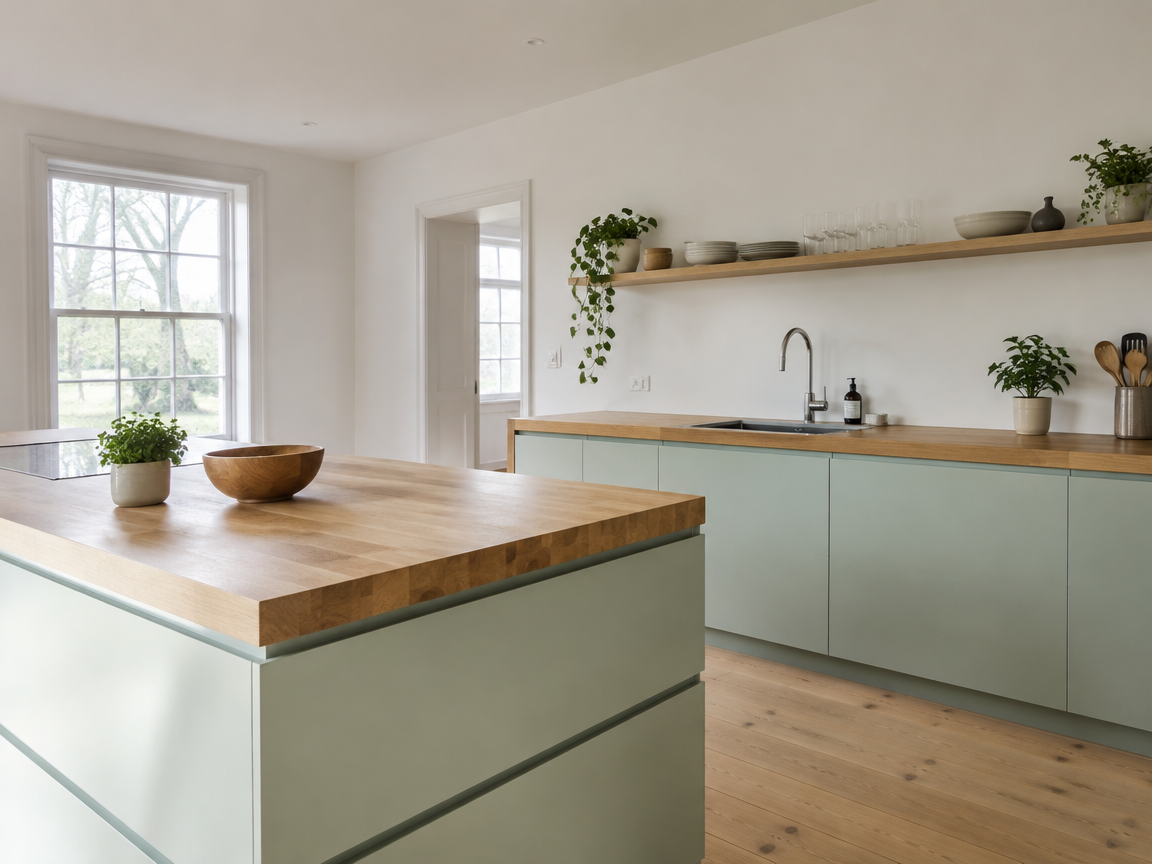
Pale Mint Handleless Flat Fronts With Oak Countertops
Mint turns bright when the doors are flat and handleless. The smooth face bounces light instead of catching small shadows.
Cap the run with a thick oak worktop. The grain keeps pastel green from feeling clinical.
Idea 03 // Soft Sage
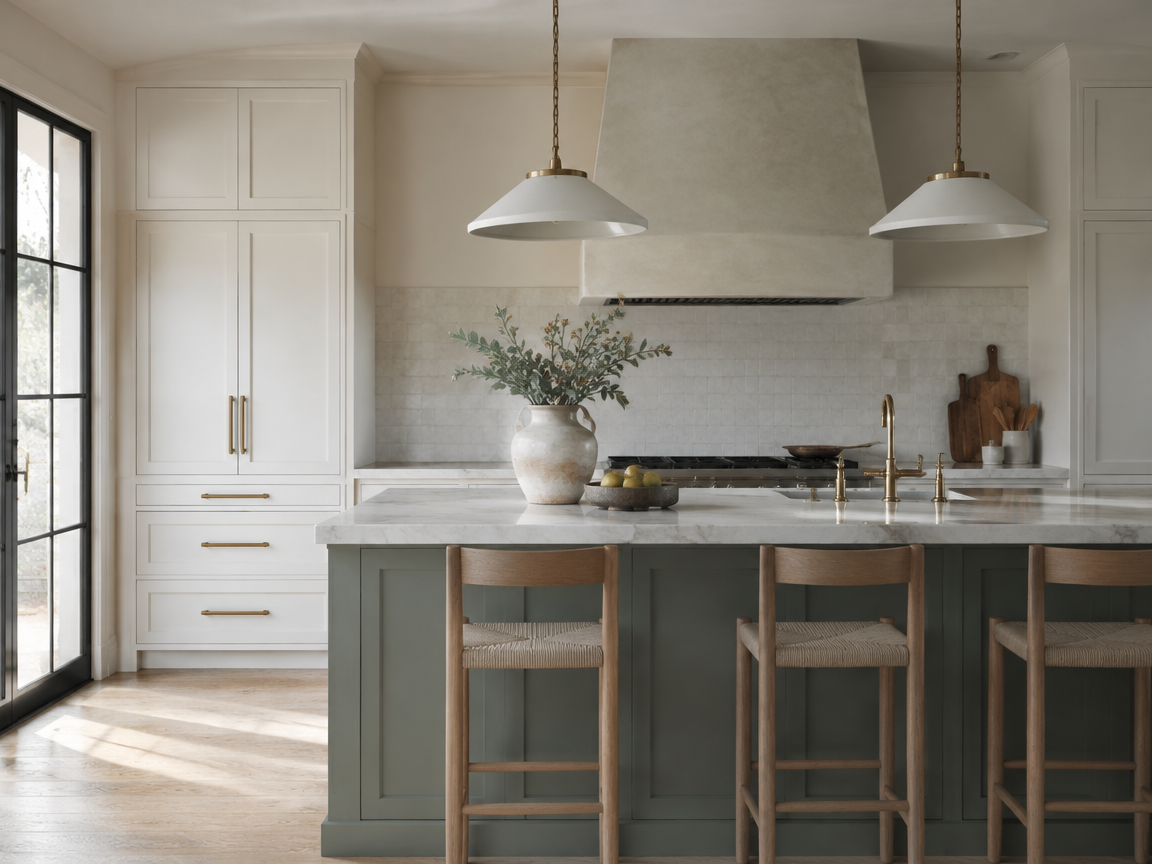
Sage Island Under A Limewash Plaster Hood
A sage island anchors an otherwise white kitchen without shouting. It reads calm and a little handmade.
Swap the steel extractor for a limewash plaster hood. The chalky texture softens the room and hides cooking marks.
Idea 04 // Sea Salt
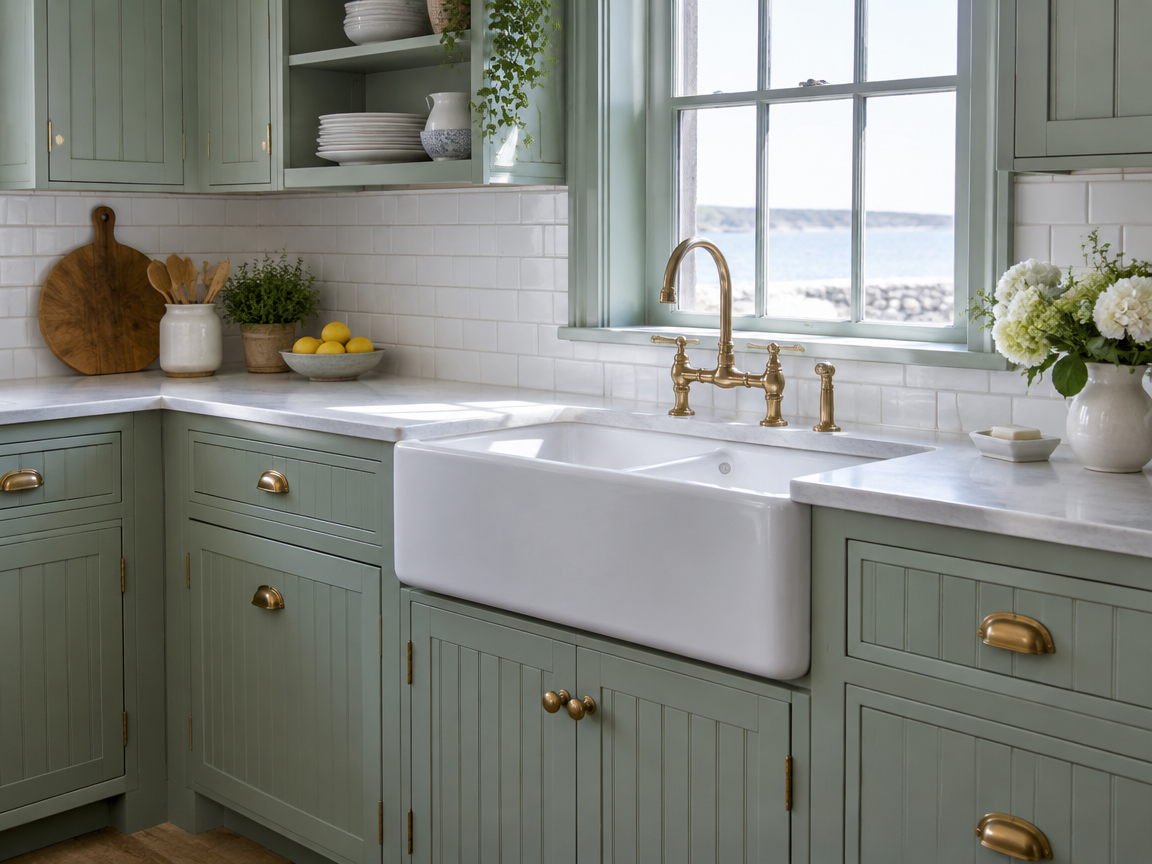
Sea-Salt Green Beadboard With A Farmhouse Sink
Beadboard adds vertical lines that make low ceilings feel taller. Sea-salt green keeps that texture from turning fussy.
Finish with a white farmhouse sink and a plain subway splashback. The result is coastal without the seashells.
Idea 05 // Colour Drench
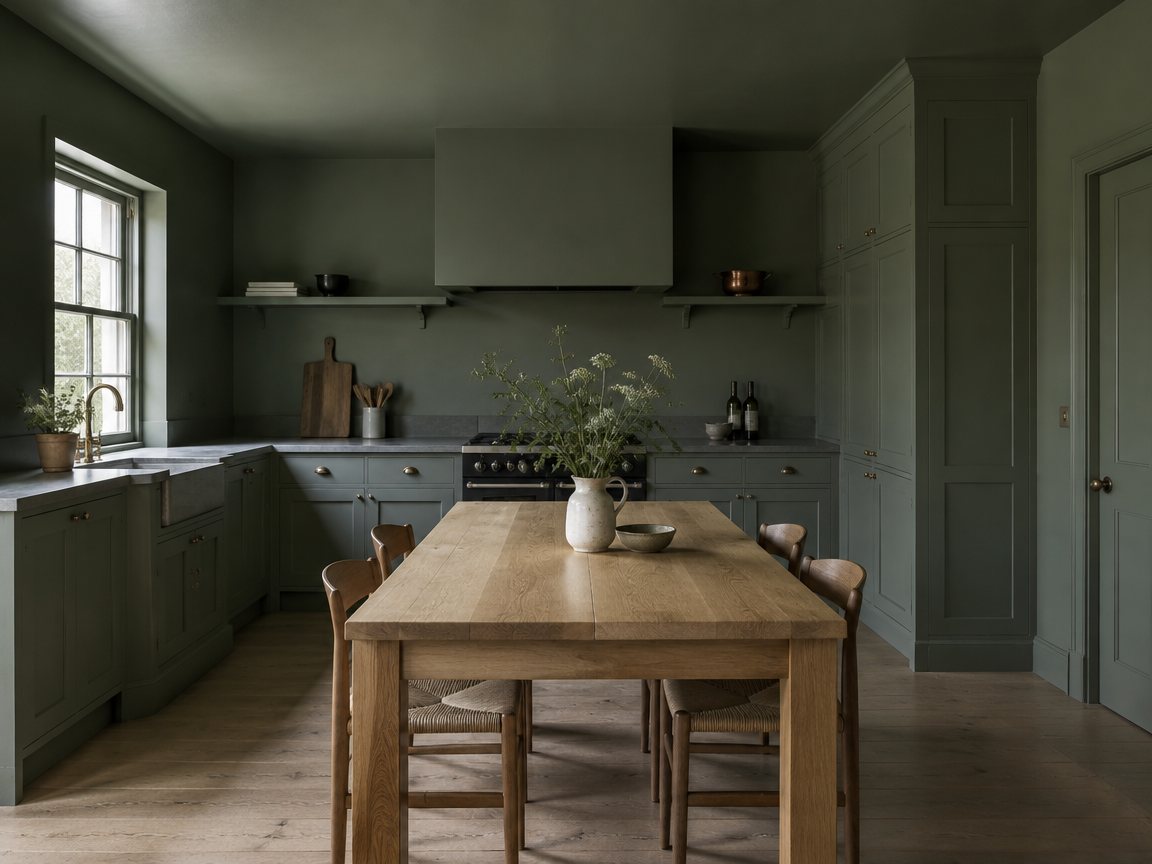
Dewy Green Colour Drench From Floor To Ceiling
Colour drenching means painting the cabinets, walls, trim and ceiling in one green. The room loses its hard edges and feels wrapped.
Pick a green with a touch of grey so it never goes sweet. Then bring in a bare oak table for warmth.
Idea 06 // Celadon Glass
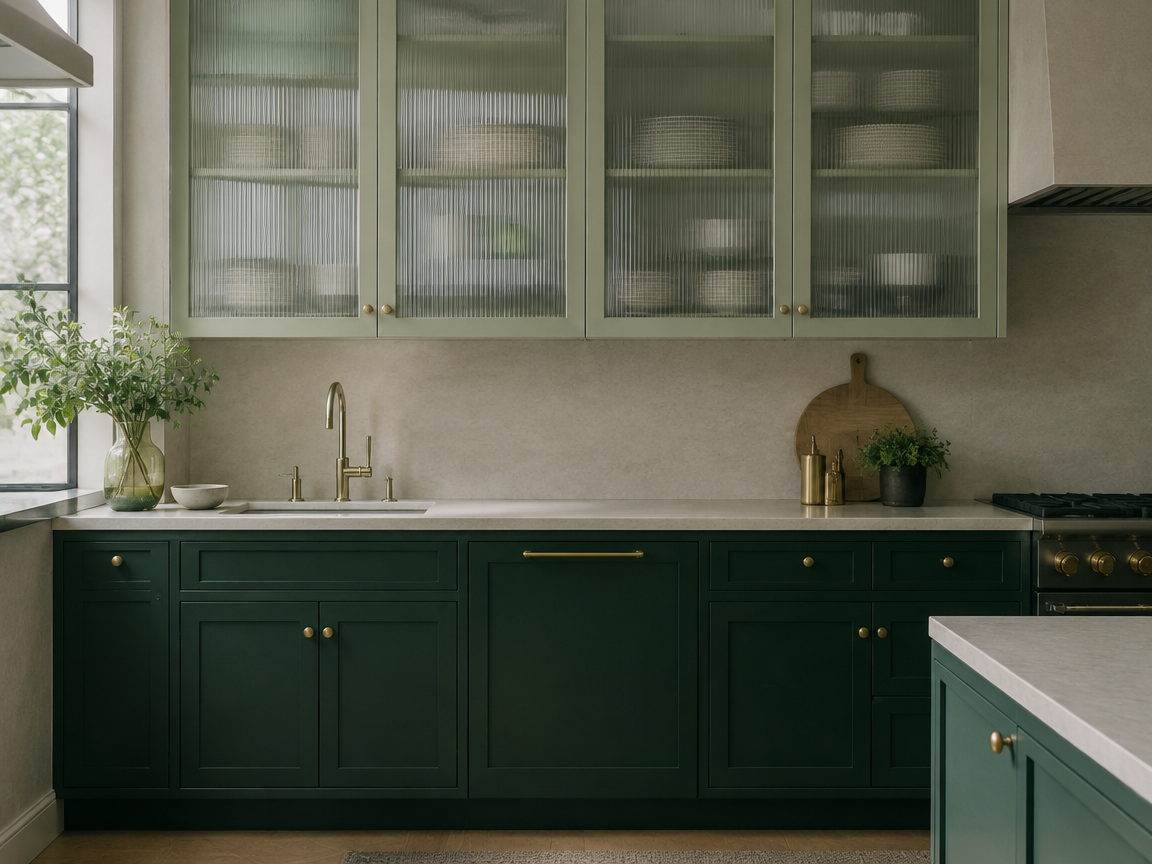
Celadon Glass Uppers Over A Deep Green Base
Celadon glass uppers sit lightly above a deeper green base. The contrast stays subtle because both colours share a green undertone.
Use fluted glass so the shelves look neat but soft. Small brass knobs finish the middle ground.
Idea 07 // Eucalyptus
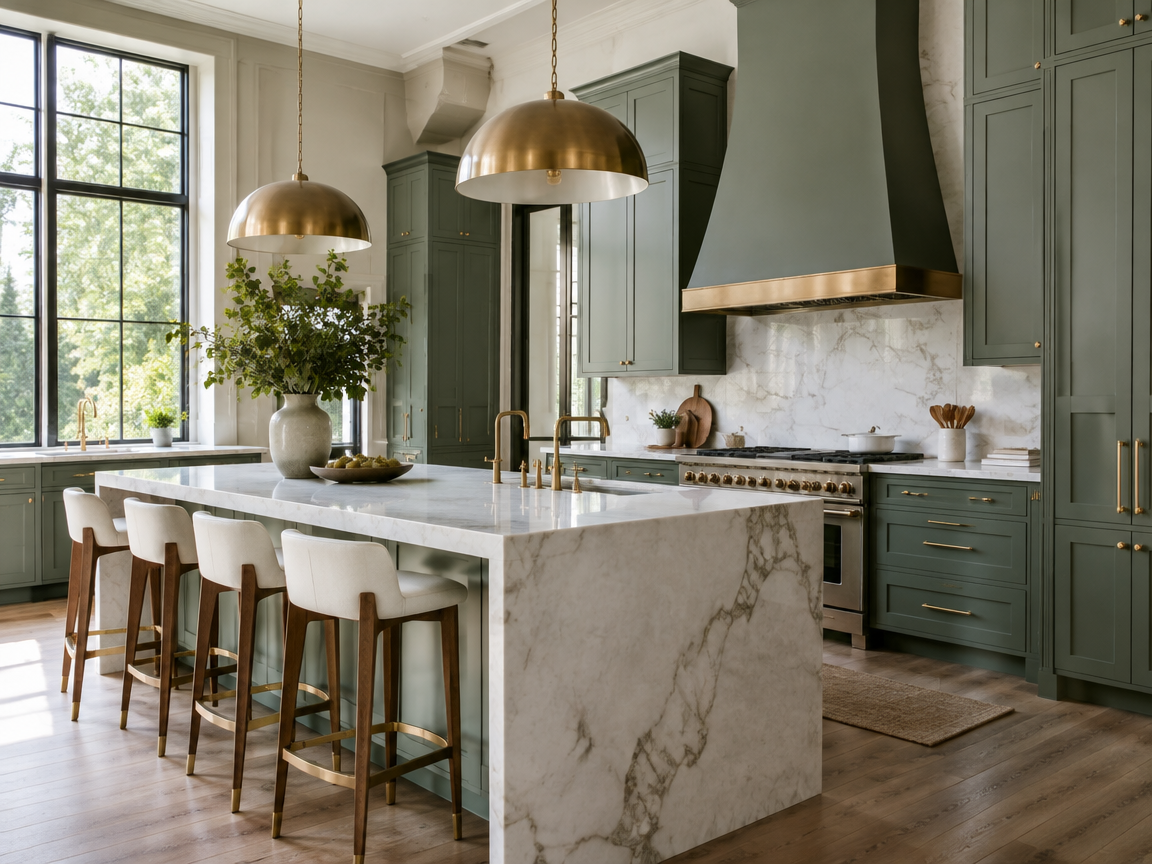
Eucalyptus Cabinets With A Marble Waterfall Island
Eucalyptus is green with a grey breath in it. That grey is what makes it look expensive rather than country.
Run the marble down the sides of the island in a waterfall edge. The stone frames the green like a picture.
Idea 08 // Pistachio
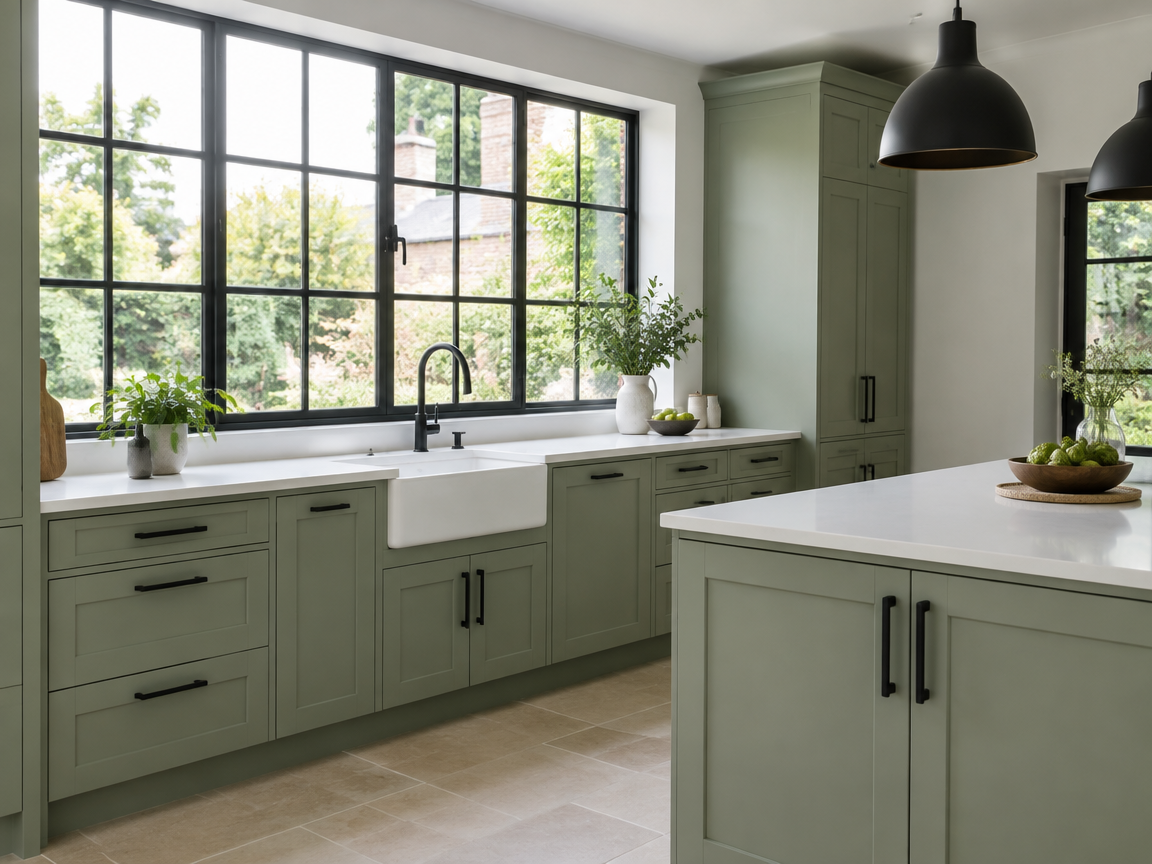
Pistachio Cabinets With Black Crittall Windows
Black steel windows give pistachio a sharp modern partner. The dark frames stop the green from reading childish.
Repeat the black on the handles and the tap. Two accents are enough for one room.
Idea 09 // Sage Shelves
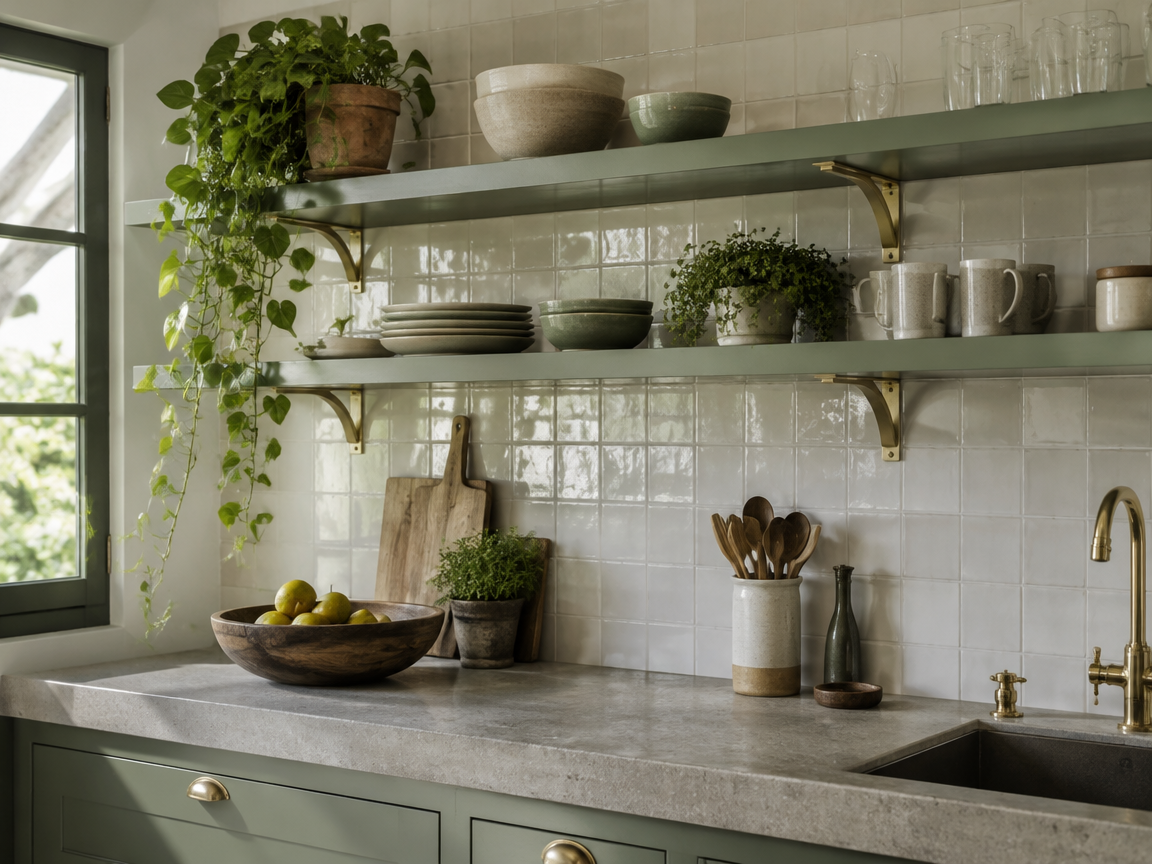
Sage Open Shelving Instead Of Wall Cabinets
Open shelves in sage paint keep the busiest wall light. You lose storage, so keep the lower run generous.
Space the shelves wide enough for plates and bowls. Brass brackets and plain white tile keep the look quiet.
Idea 10 // Green And Clay
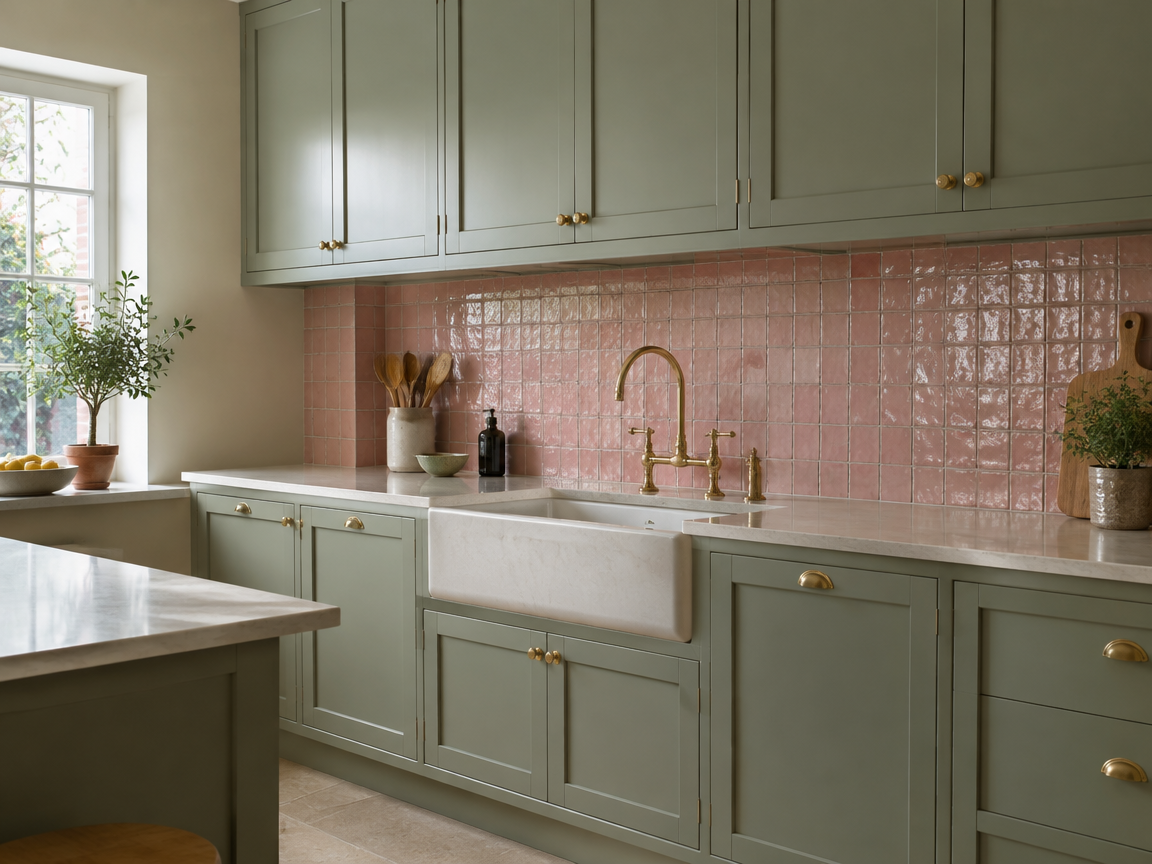
Soft Green Cabinets With A Clay-Pink Zellige Splashback
Soft green and dusty pink are a calm, grown-up pair. The pink reads like clay rather than bubblegum.
Handmade zellige tile brings movement as the glaze catches light. Keep everything else plain.
Olive And Moss
Olive and moss carry a little yellow and brown. That warmth is why they sit so well with timber and terracotta.
Idea 11 // Olive
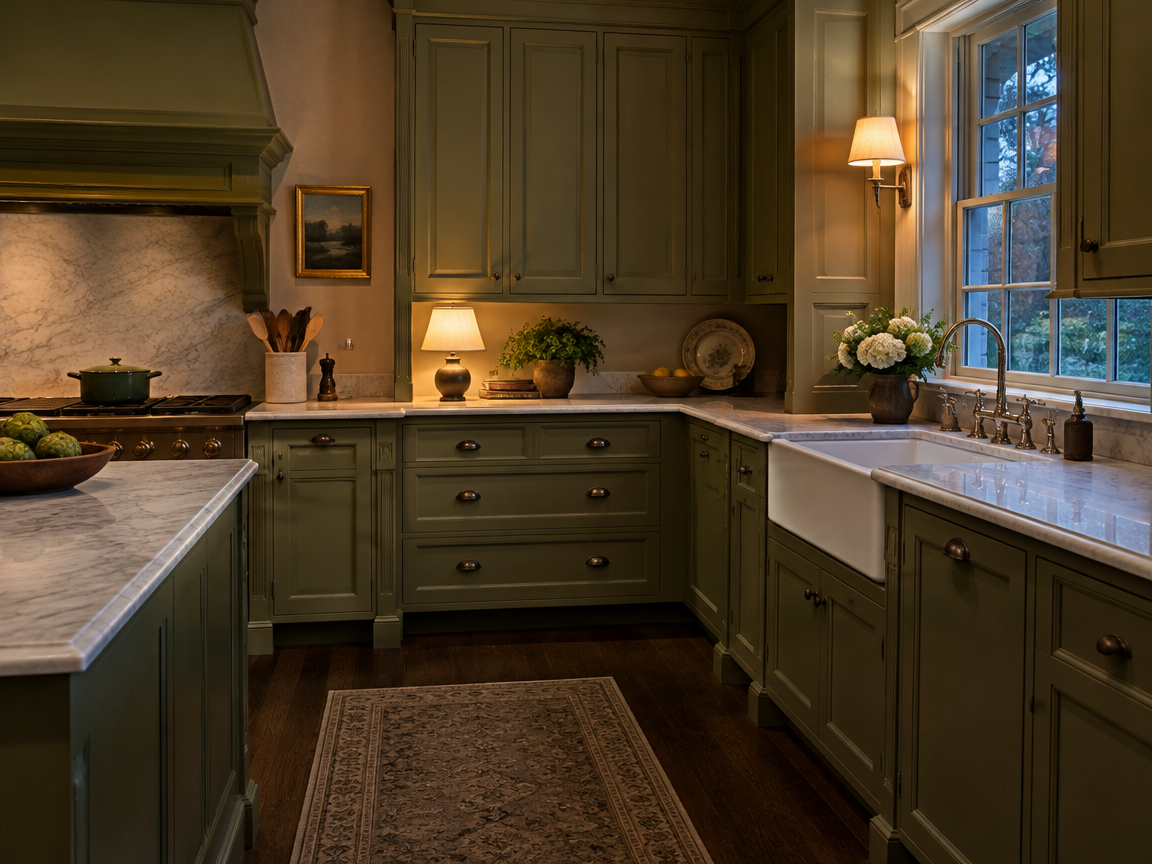
Olive Raised-Panel Cabinets With Antique Pewter Knobs
Raised panels suit olive green because the shadows add depth to the colour. This is a traditional kitchen that still feels modern.
Choose antique pewter knobs instead of brass. Cool metal keeps the olive looking earthy.
Idea 12 // Moss
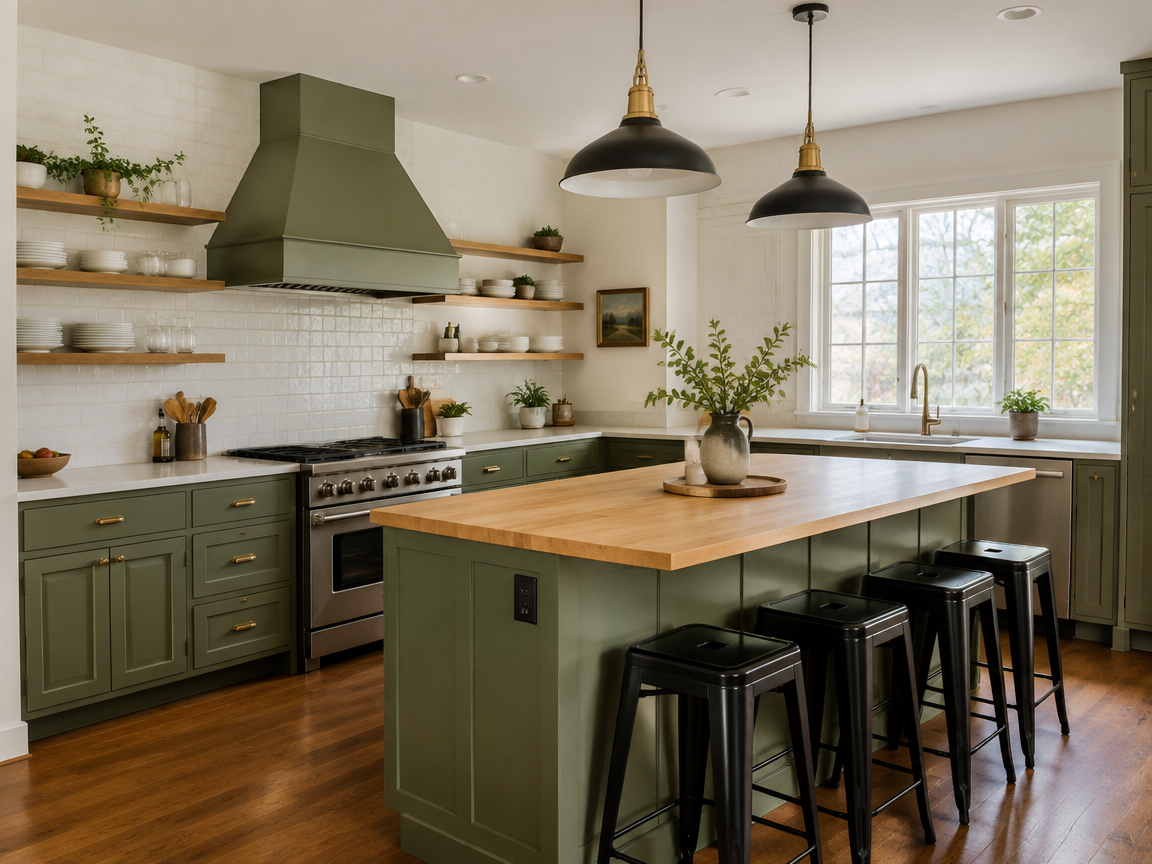
Moss Green Kitchen With A Butcher Block Island
Moss green on the perimeter walls lets a maple butcher block island take the centre. Wood and green are a natural pair.
Keep the worktop oiled rather than lacquered. A little patina makes the island look used and loved.
Idea 13 // Olive And Earth
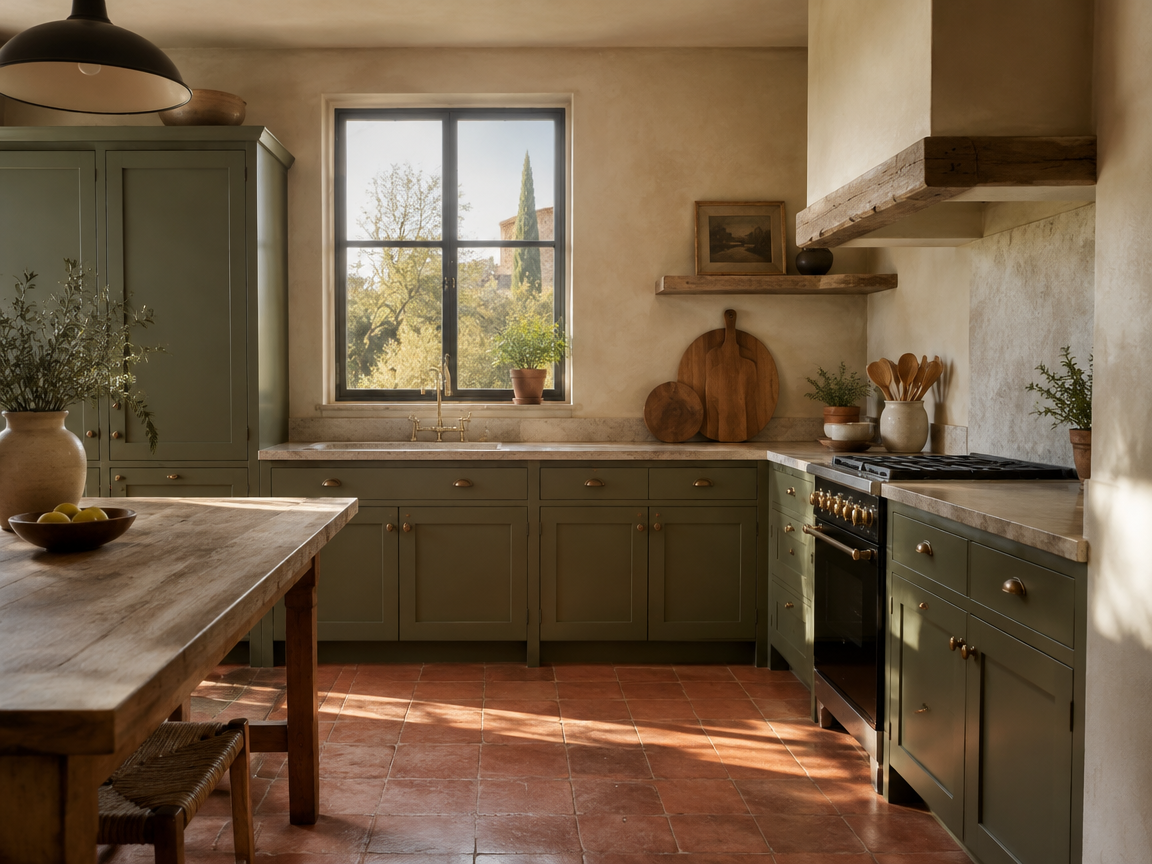
Olive Cabinets With Terracotta Floor Tiles
Terracotta tiles bring warm orange-red to olive green. The two colours sit together like a Mediterranean kitchen.
Pick a flat matte olive for the doors. Gloss would fight the handmade floor.
Idea 14 // Moss Microcement
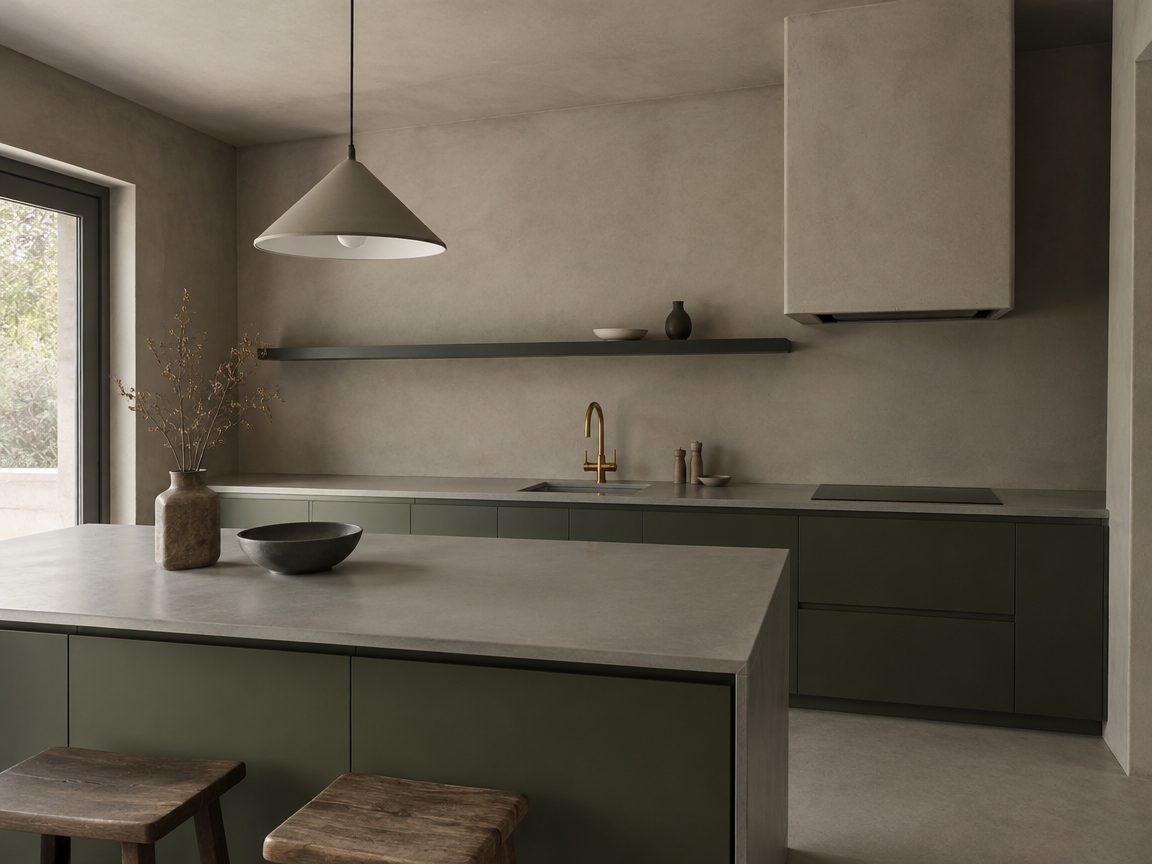
Moss Handleless Slab Doors With Microcement Counters
Microcement counters are seamless, so nothing interrupts the green sweep. Match them to a moss slab door with a finger groove.
Choose a warm grey cement, not blue-grey. It keeps the kitchen soft and touchable.
Idea 15 // Olive Copper
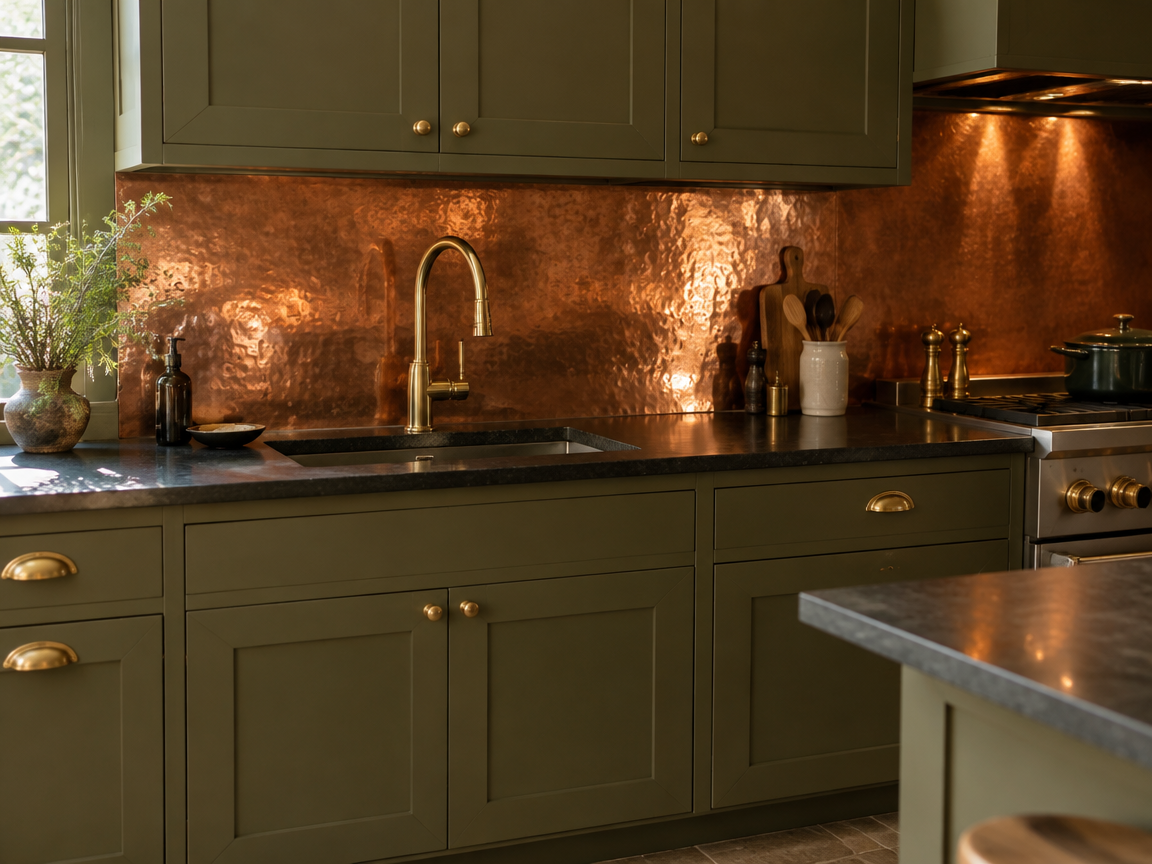
Olive Cabinets With A Hammered Copper Splashback
A hammered copper splashback glows amber against olive green. Copper also ages in a way that suits a lived-in kitchen.
Keep the cabinet hardware minimal so the metal stays the star. One brass tap is enough.
Idea 16 // Bronze Green
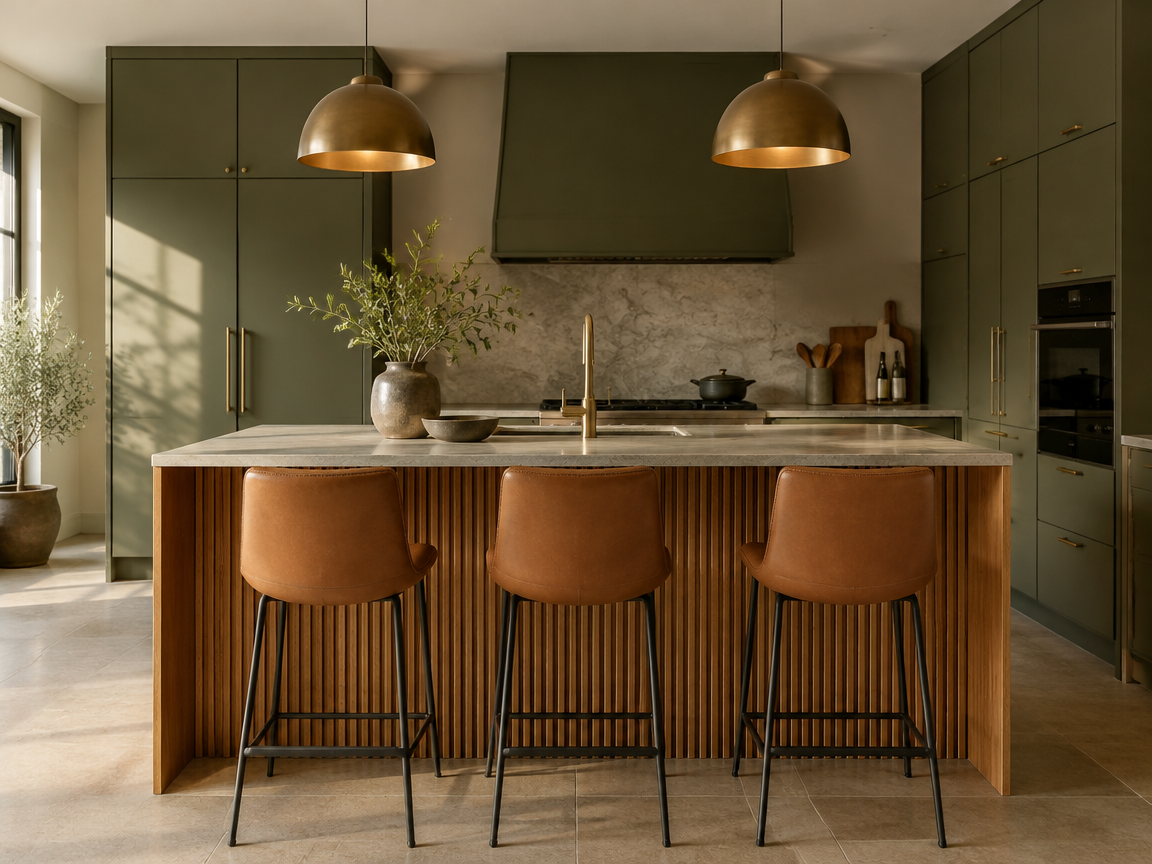
Bronze-Green Cabinets With A Slatted Oak Island
Bronze green has a yellow thread that pairs well with oak. Slat the island front to repeat that warmth in texture.
Add leather stools and let them darken over the years. The whole room improves with time.
Idea 17 // Moss And Cream
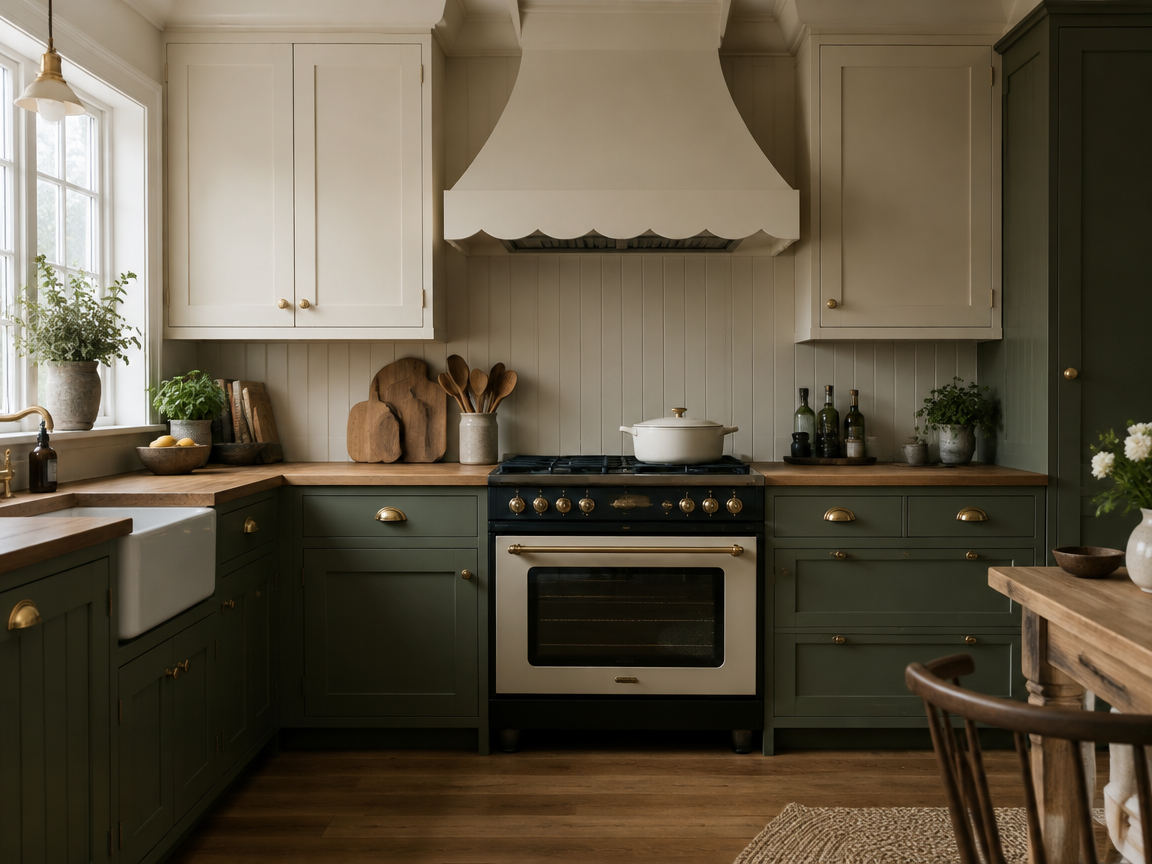
Moss And Cream Two-Tone With A Scalloped Hood
Two-tone works when the two colours share a mood. Moss lowers and cream uppers keep the top of the room bright.
Give the range hood a scalloped edge for a cottage detail. It is a small shape change with a big effect.
Idea 18 // Olive Fluted
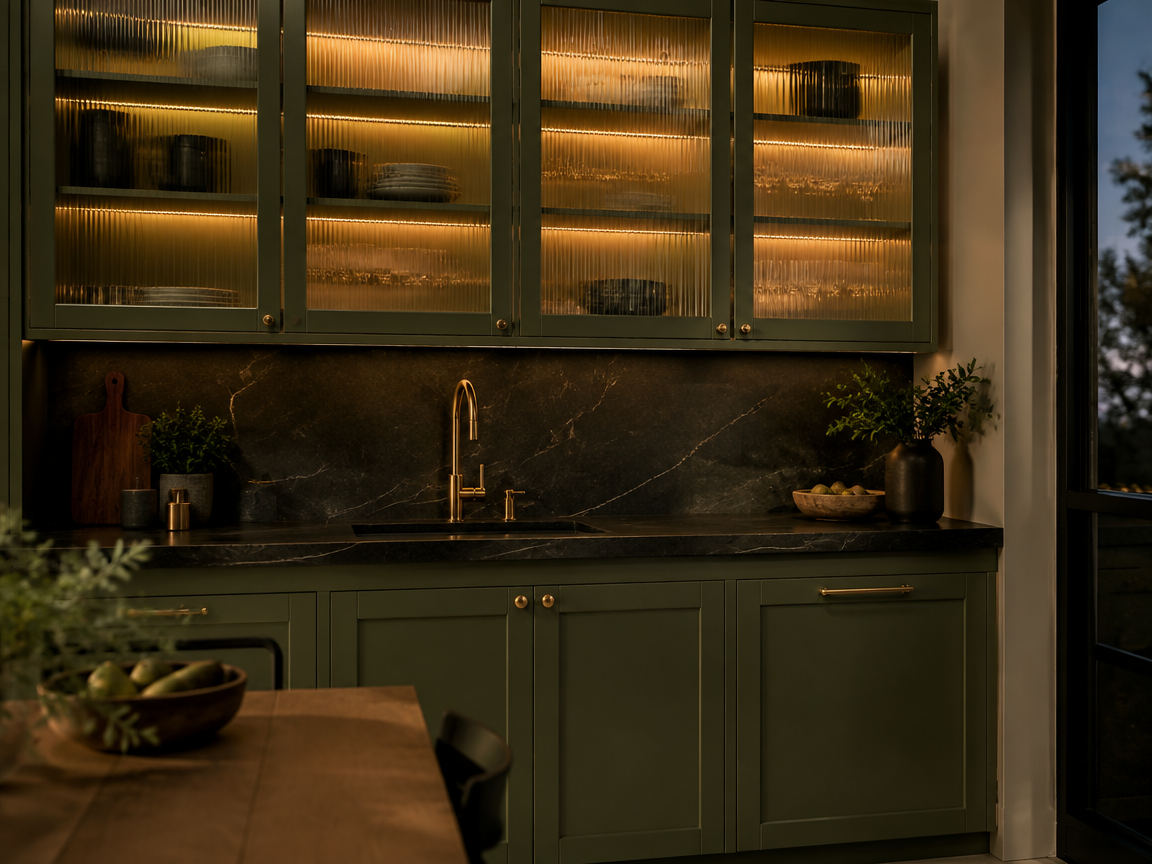
Olive Base Cabinets With Fluted Glass Uppers
Fluted glass blurs what sits behind it, so glass uppers stop looking messy. Olive beneath grounds the run.
Put warm LED strips inside the cabinets. The glow through the ribs looks like evening light.
Forest And Emerald
Deep greens bring drama and quiet at the same time. Pair them with pale stone and one warm metal.
Idea 19 // Deep Forest
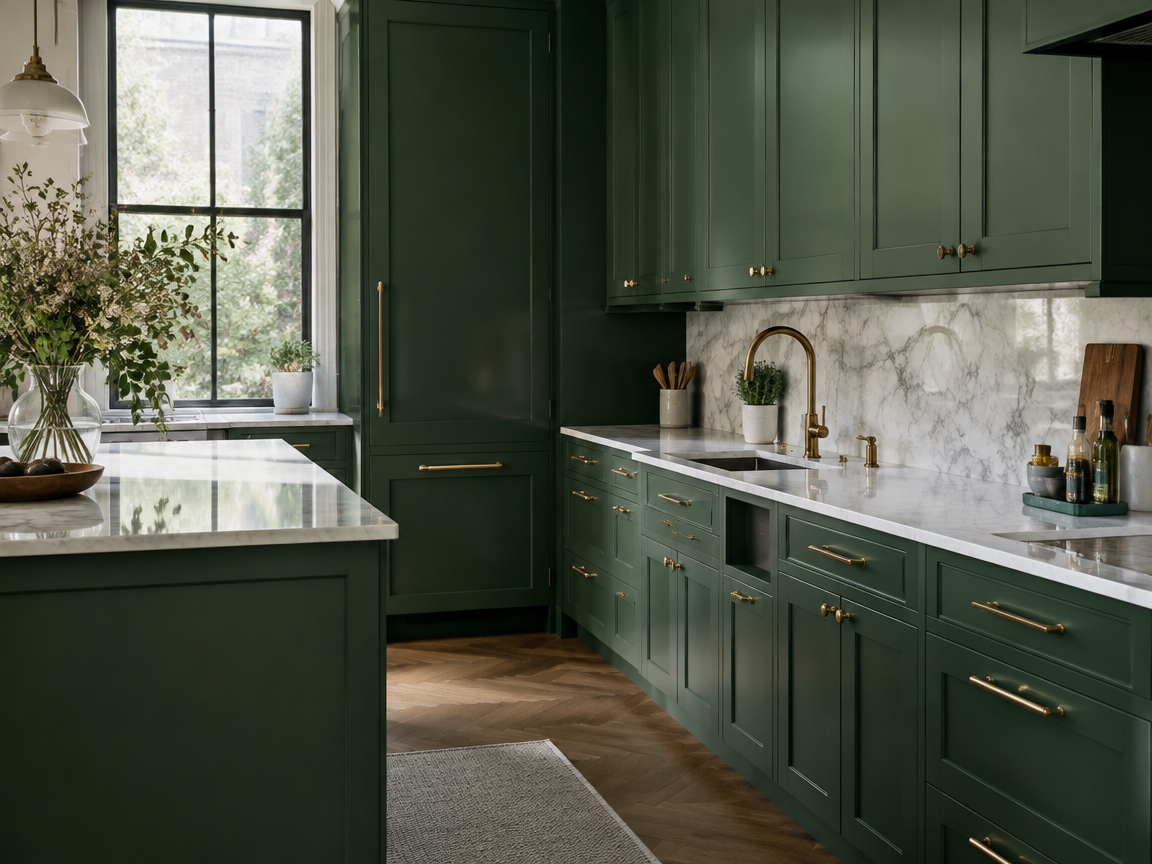
Forest Green Shaker With Brass And Marble
Deep forest green, white marble and brass is the classic trio. It looks rich without any pattern or print.
Choose a matte paint so the dark green absorbs light softly. Gloss dark green can look like plastic.
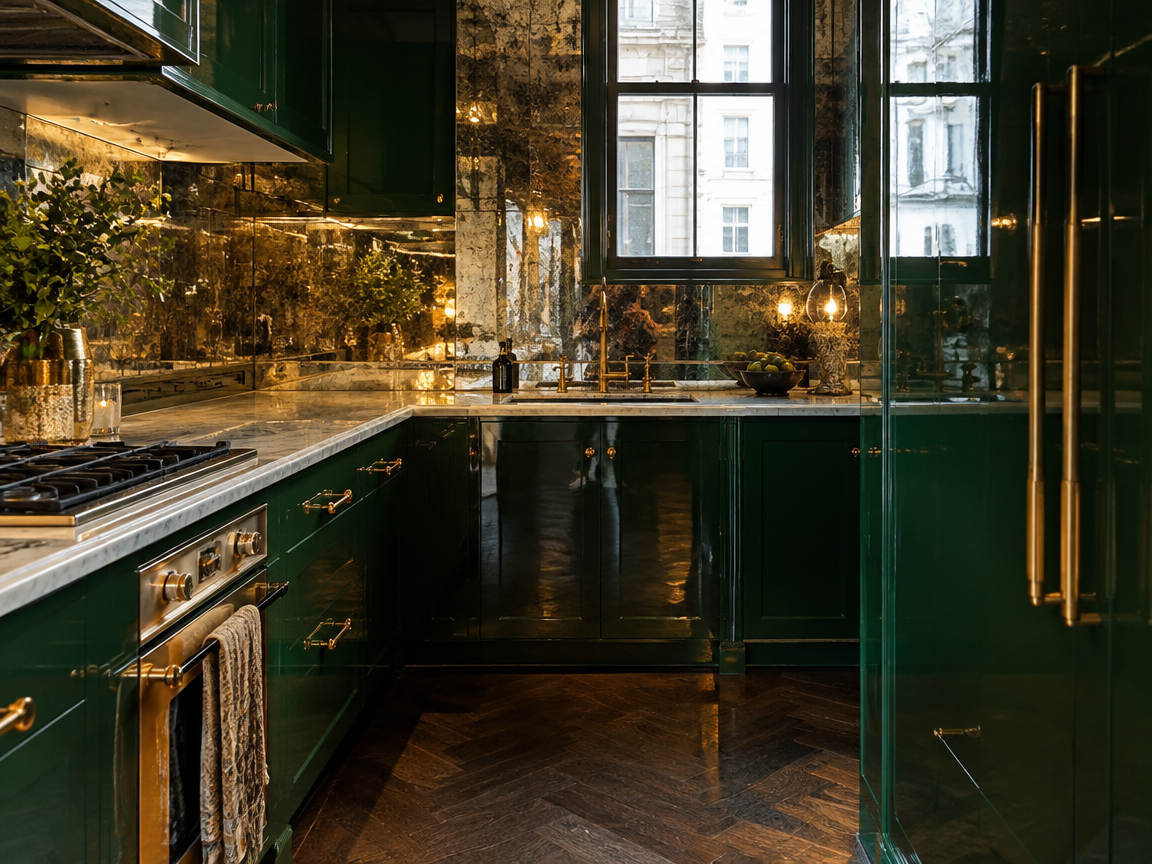
Idea 20 // Emerald Lacquer
Emerald Lacquer With An Antique Mirror Splashback
High-gloss emerald lacquer brings jewel-box shine to a small kitchen. Antique mirror behind it doubles the glow and hides splashes.
Warm brass handles keep the finish from feeling cold. Avoid chrome here.
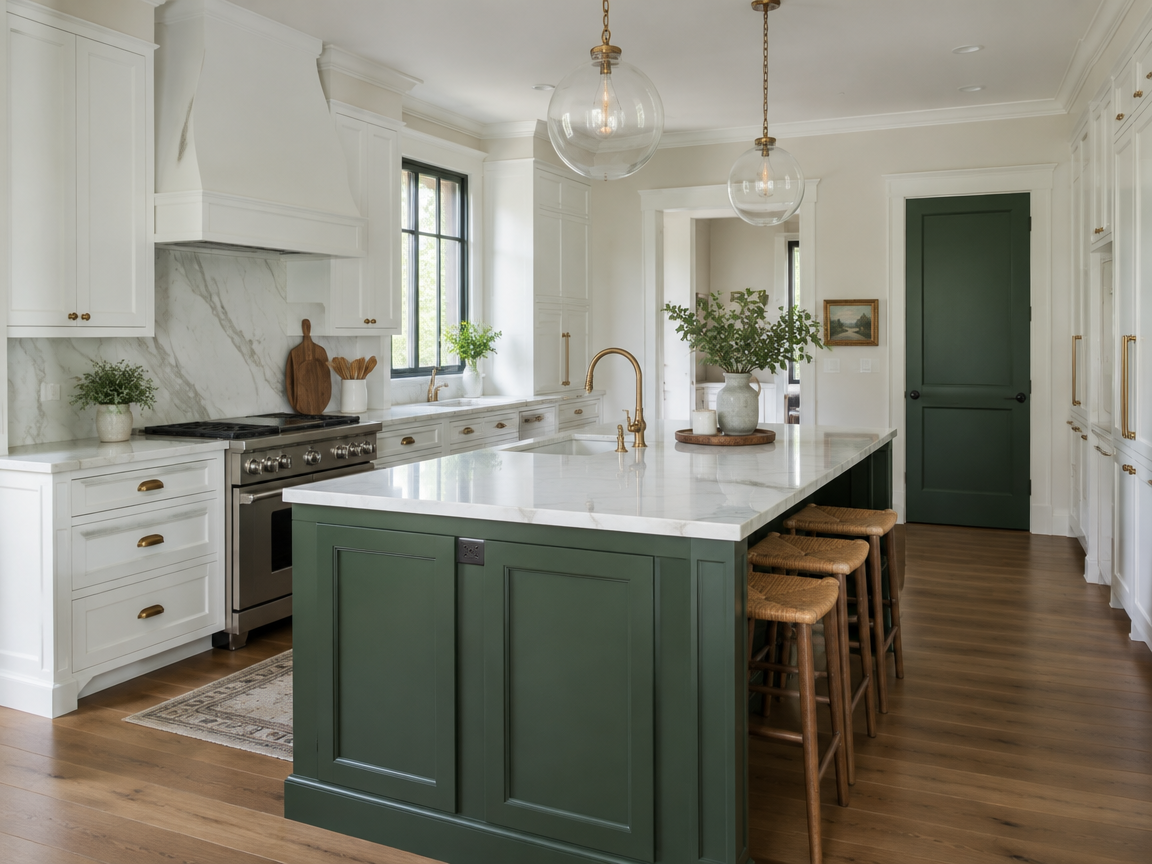
Idea 21 // Hunter Green
Hunter Green Island In An All-White Kitchen
A hunter green island gives you the green look with none of the risk. The white perimeter stays bright and easy to live with.
Repeat the green once more in the room, like a painted pantry door. That small echo makes it feel planned.
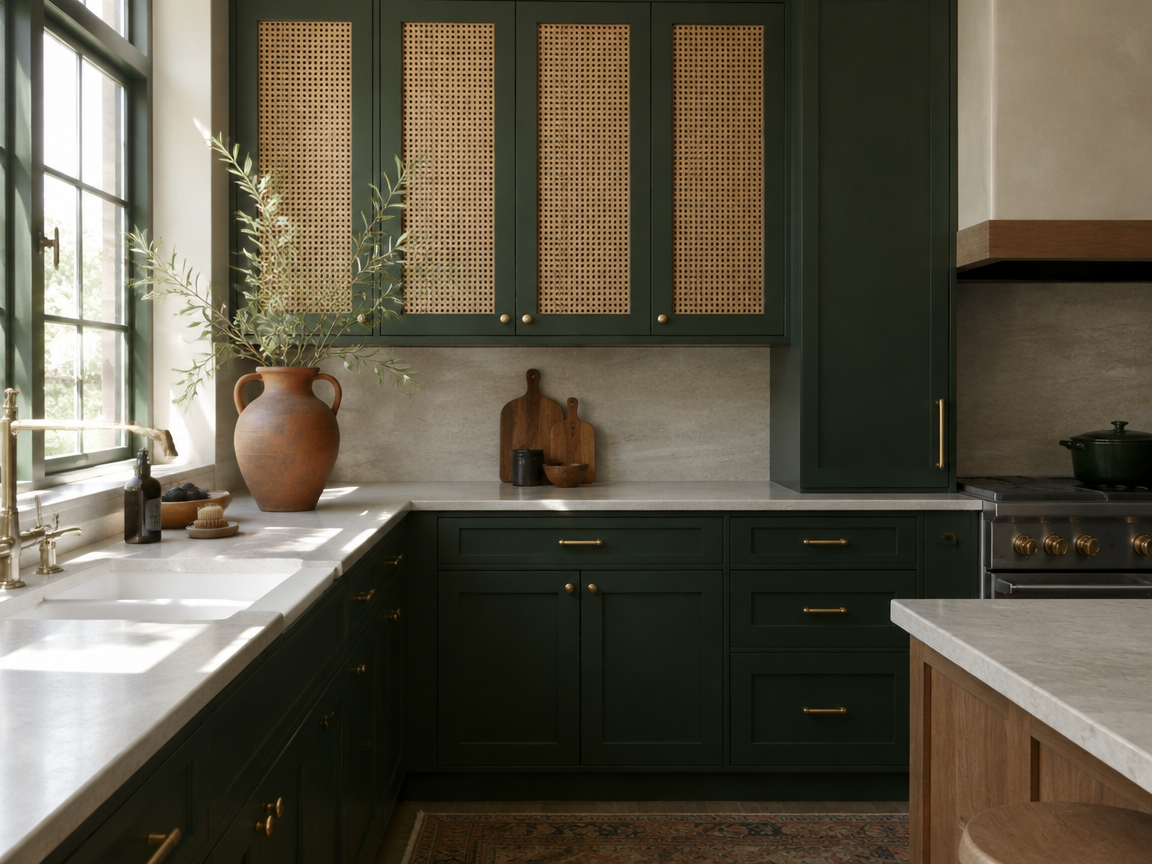
Idea 22 // Forest Rattan
Deep Forest Cabinets With Rattan Door Inserts
Rattan panels set inside dark green frames add texture and let a little air through. The mix feels collected rather than bought as a set.
Keep the counters pale stone so the weave stays the focus. Skip open shelves if the doors are already busy.
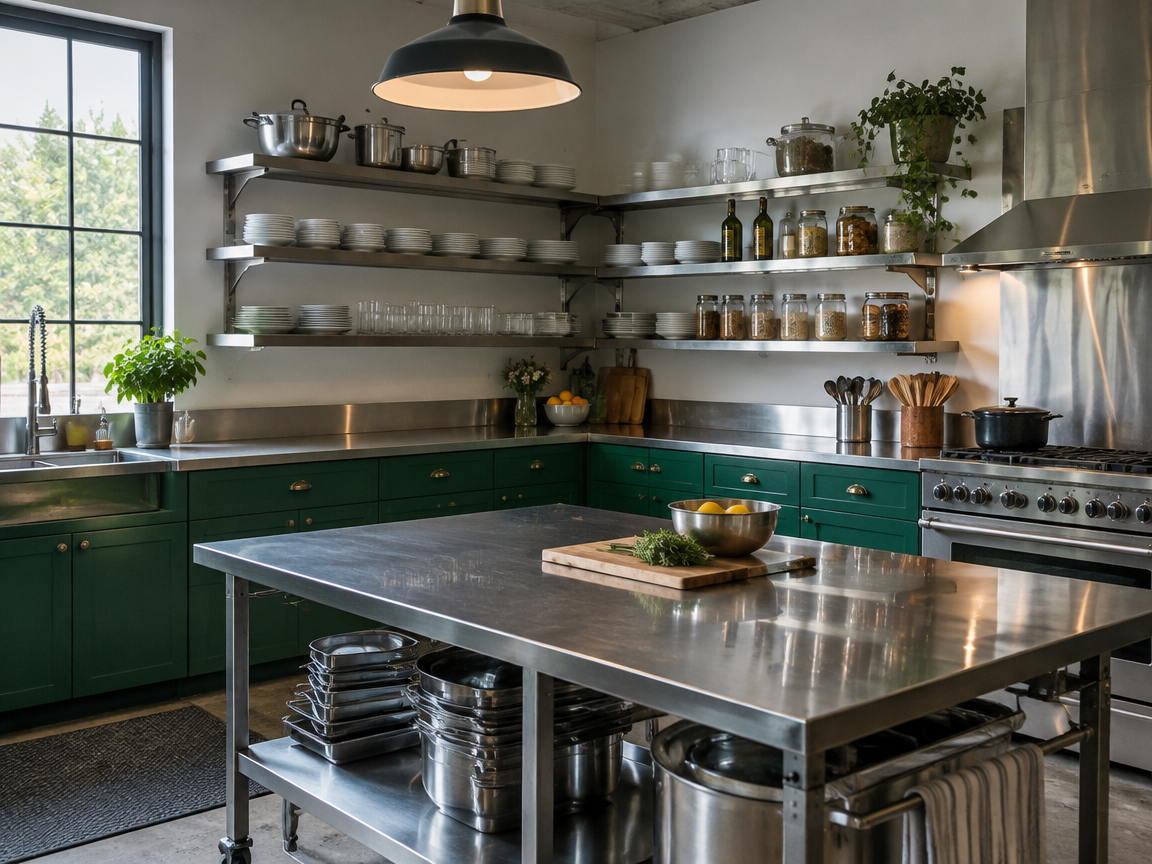
Idea 23 // Emerald Steel
Emerald Base Cabinets With A Stainless Worktable Top
A stainless top turns emerald cabinets into a working kitchen. It suits a serious cook who still cares about colour.
Leave the steel unpolished so it takes on fine scratches. Perfection looks wrong in a stainless kitchen.
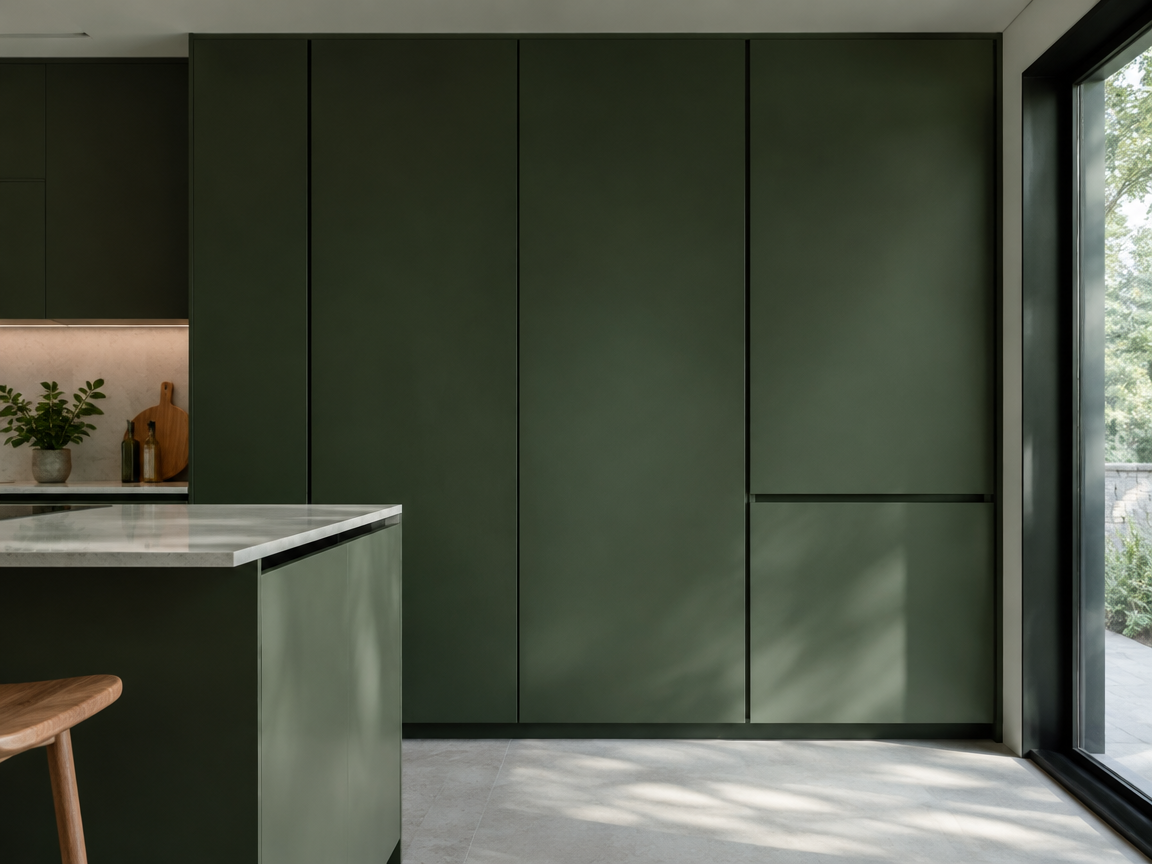
Idea 24 // Hidden Wall
Forest Green Fridge Wall With Hidden Appliances
Panelling the whole wall in forest green hides the fridge and the tall cupboards in one plane. The kitchen instantly looks calmer.
Add slim vertical shadow gaps instead of handles. The wall reads as architecture, not storage.
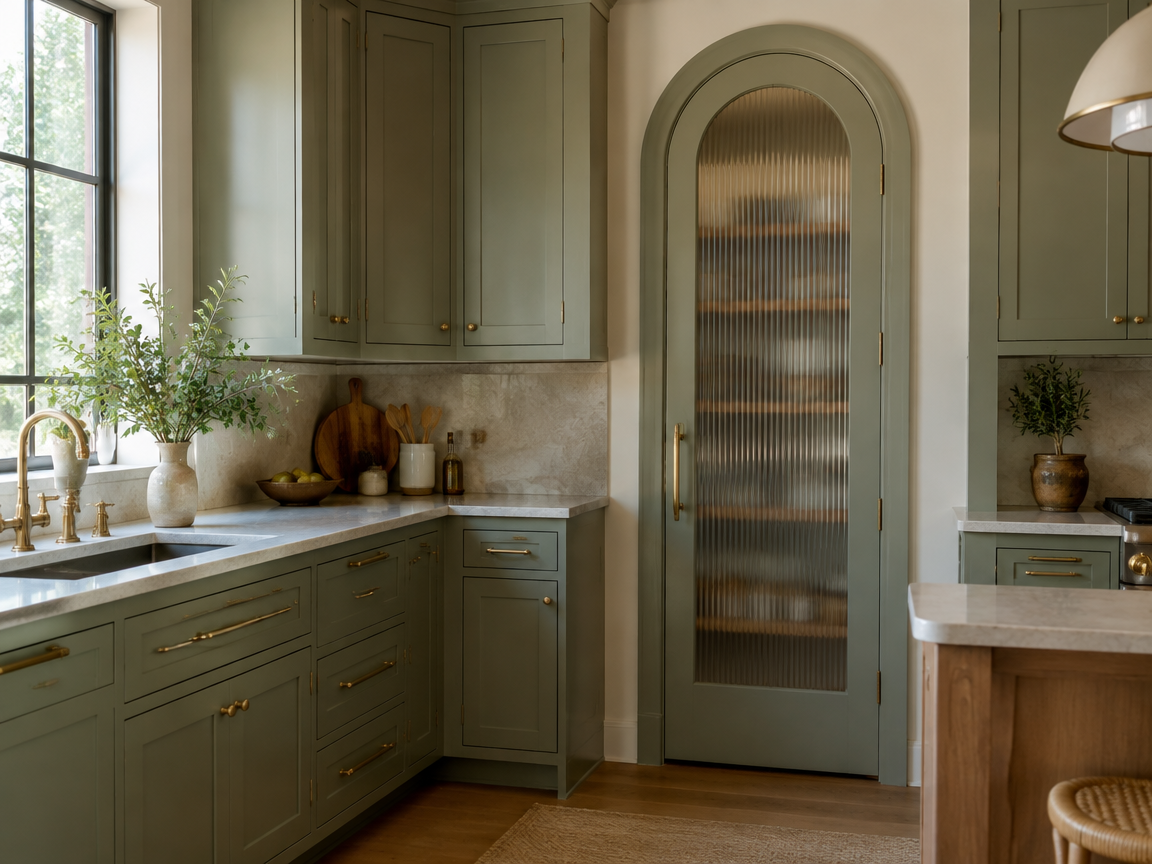
Idea 25 // Arched Pantry
Green Cabinetry With An Arched Pantry Door
An arched doorway cut into green cabinetry softens a long straight run. It also frames the pantry like a room of its own.
Fluted glass in the arch lets light through while keeping the shelves hidden.
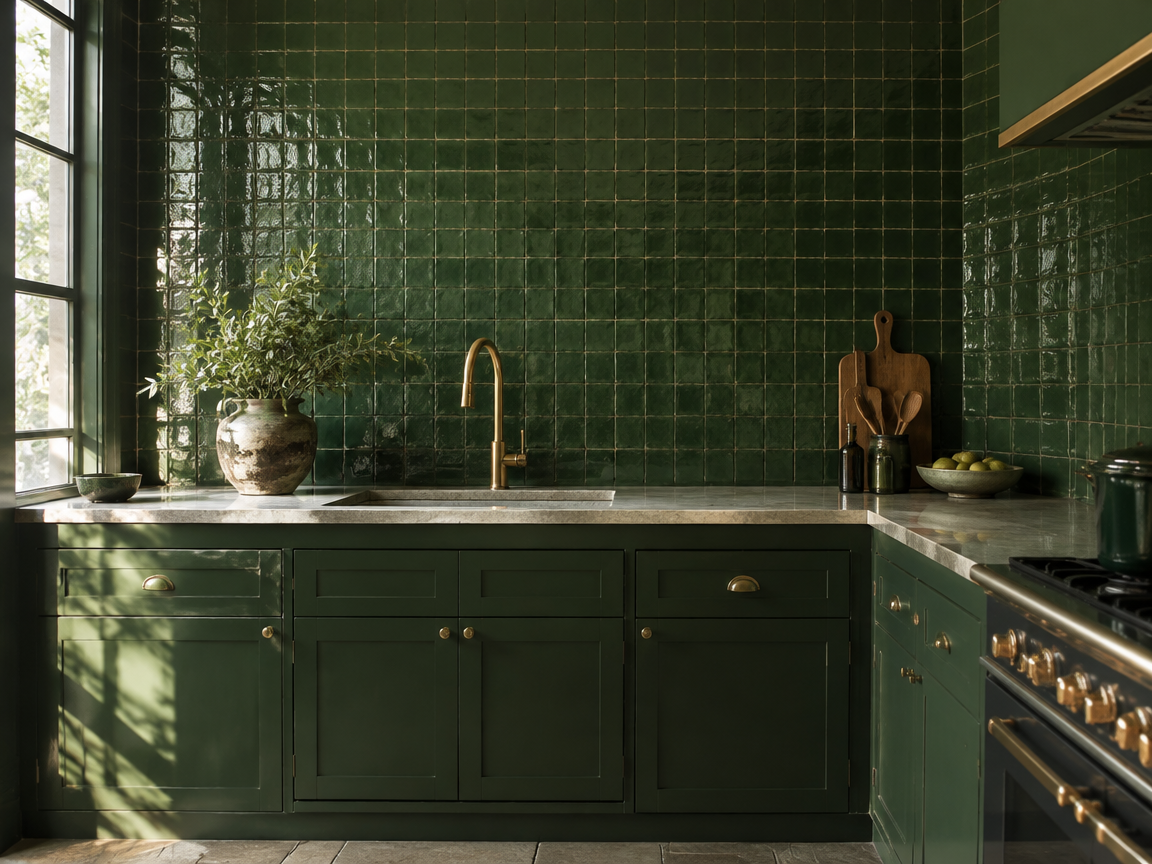
Idea 26 // Zellige Wall
Deep Green Cabinets With A Full-Height Zellige Wall
Taking handmade zellige from counter to ceiling makes a small kitchen feel taller. The uneven glaze keeps deep green from going flat.
Choose tile in the same family as the paint. Close tones look richer than sharp contrast.
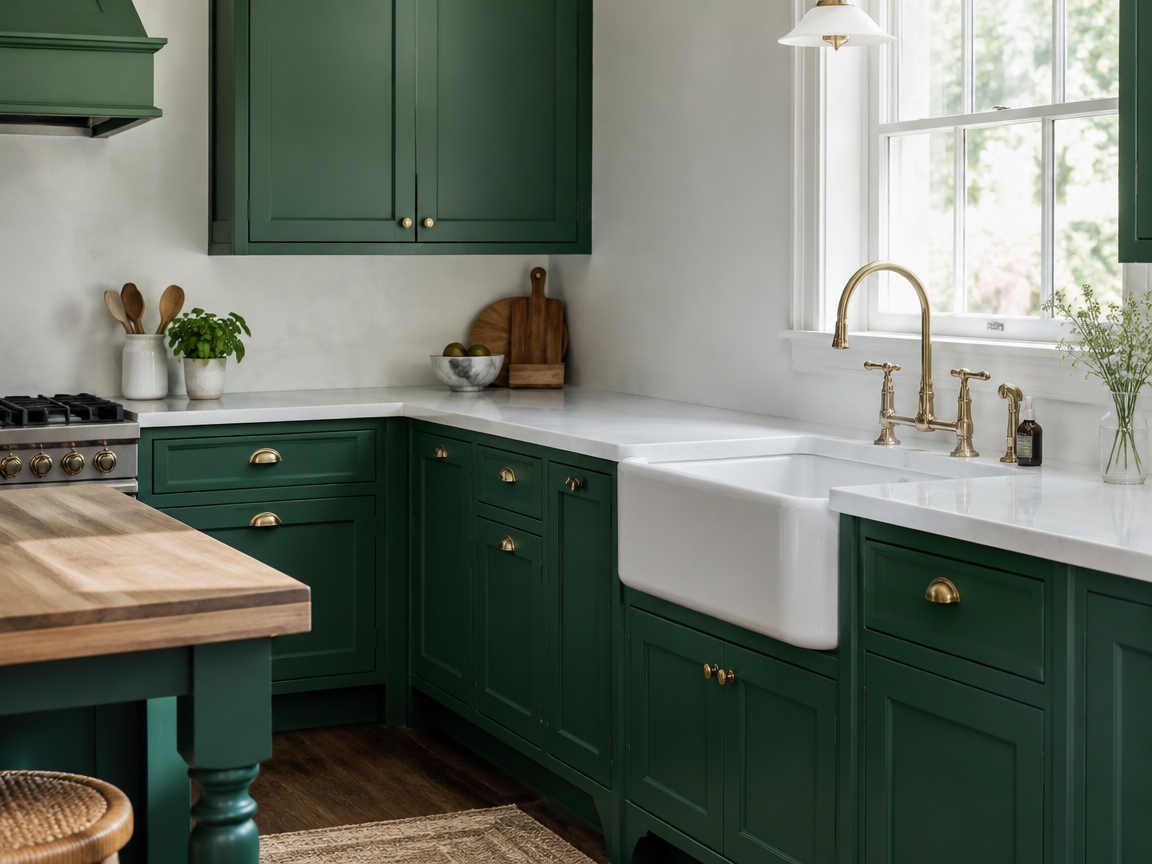
Idea 27 // Brass Bridge
Emerald Cabinets With An Unlacquered Brass Bridge Faucet
A bridge faucet adds old-fashioned plumbing charm over a farmhouse sink. Unlacquered brass will patina and warm the emerald.
Keep the splashback simple white. The tap and the colour are already the story.
Idea 28 // Forest And Oak
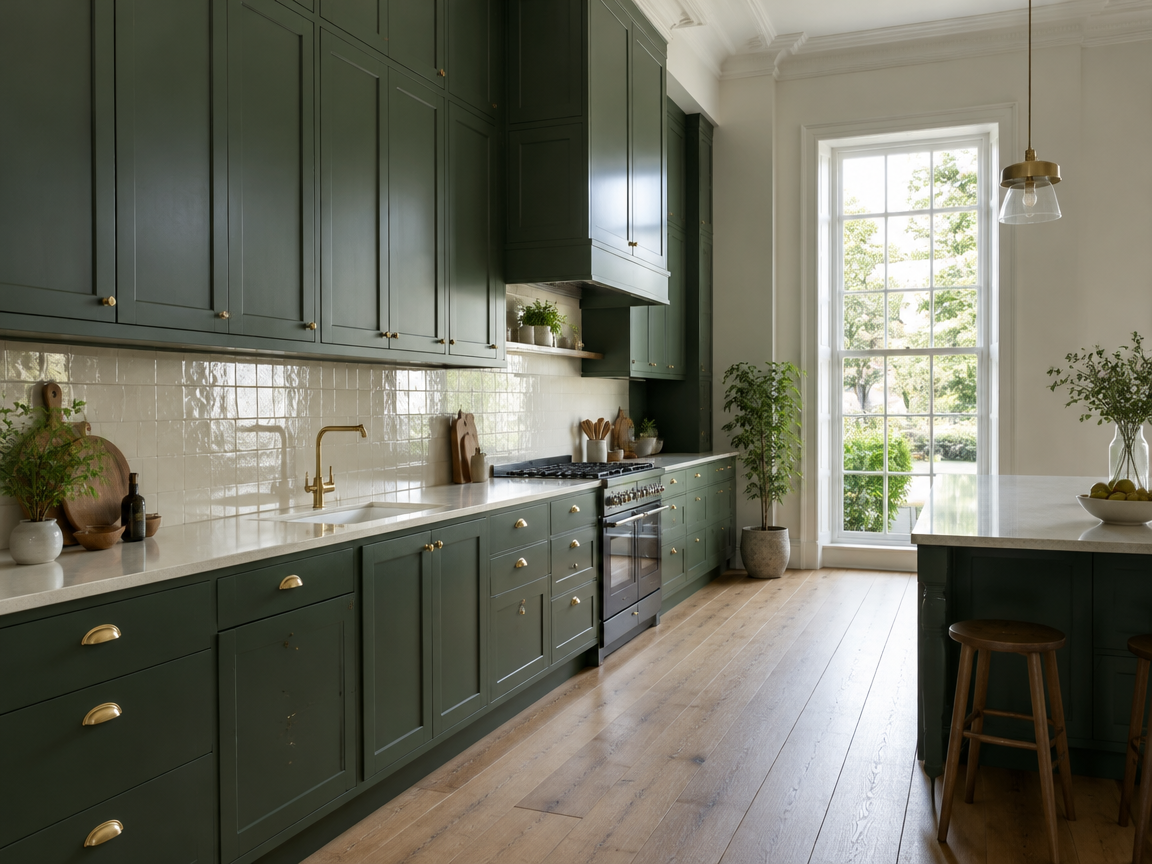
Forest Green Uppers With Glazed Tile And Oak Floor
Forest green wall cabinets draw the eye upward, which suits high ceilings. Cream glazed tile below keeps the mid-wall light.
A warm oak floor ties the greens to the rest of the house. Avoid grey flooring here.
Two-Tone And Islands
A colour on the island only is the lowest-risk way to try green. Two-tone walls give you even more control.
Idea 29 // Cream And Sage
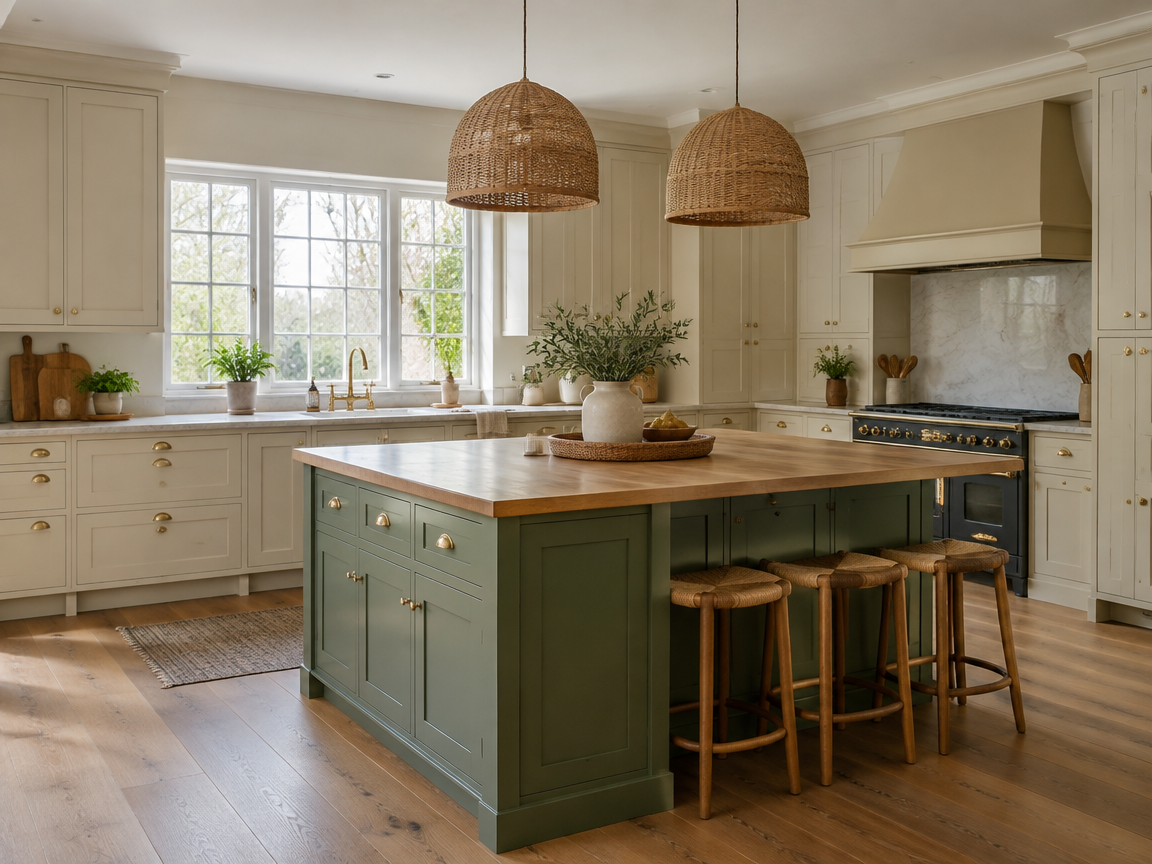
Sage Island With Cream Perimeter Cabinets
Cream around the edges and sage in the middle is the easiest two-tone. The island becomes the only coloured object in view.
Top the sage island with oak, not stone. Wood keeps a pale kitchen from looking washed out.
Idea 30 // Beadboard Mix
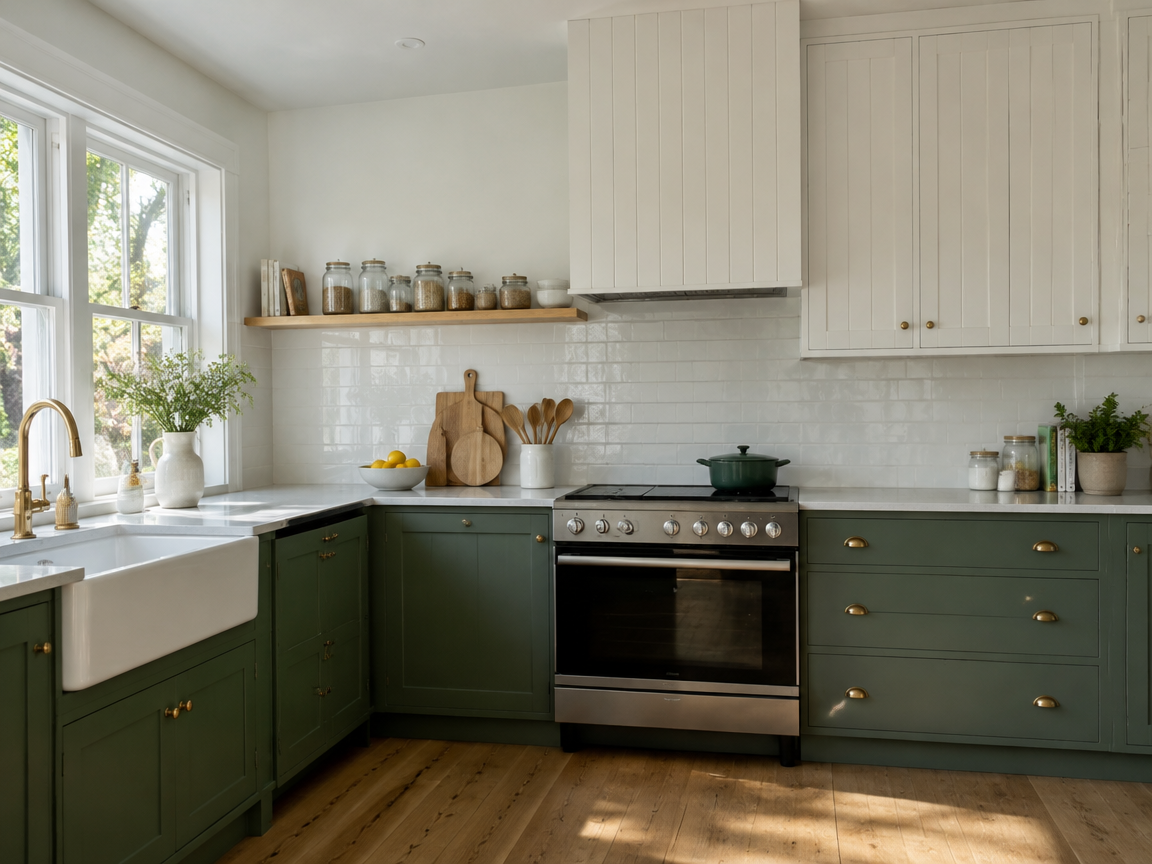
Green Base And White Beadboard Uppers
White beadboard uppers feel like a country larder. Green lowers keep the scheme from turning all white.
Run a slim shelf across the beadboard for jars. It is practical and it fills the empty gap.
Idea 31 // Stone Green
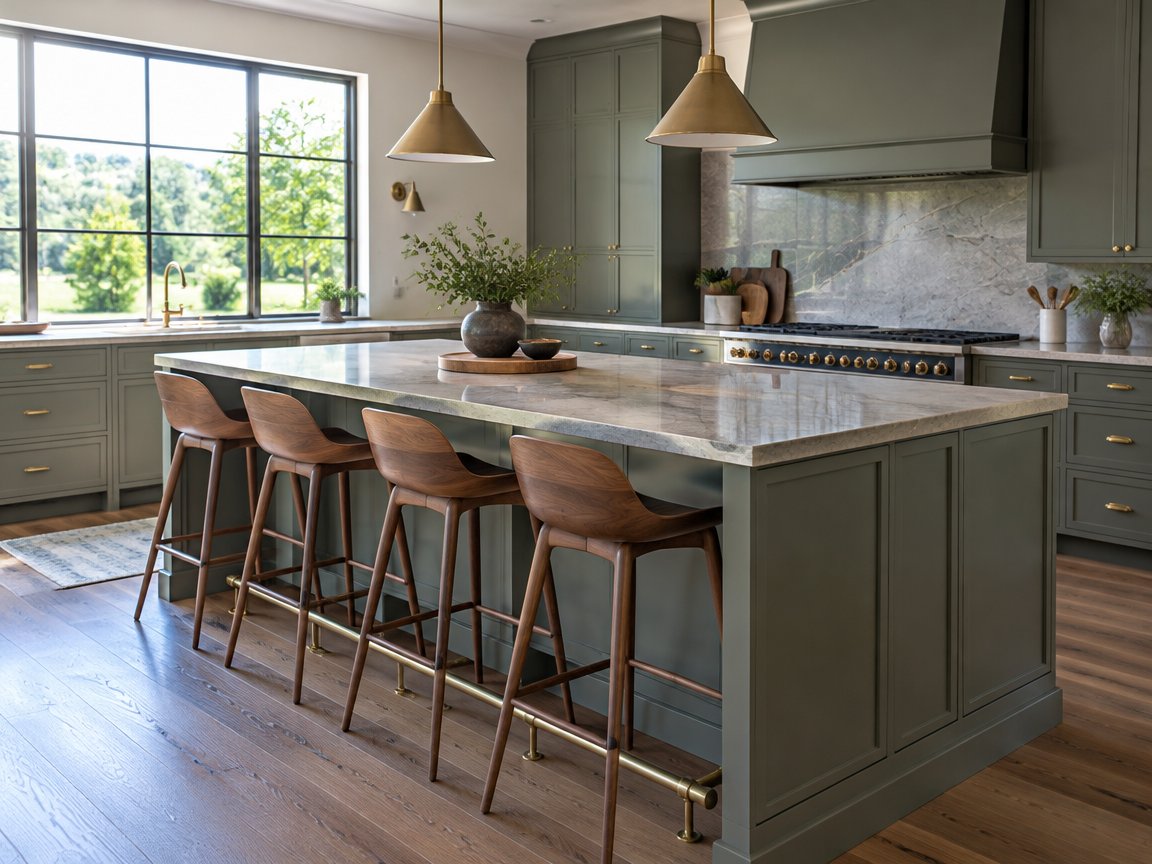
Stone-Green Island With Walnut Stools
Stone green is grey with green in it, a shade that suits modern architecture. Walnut stools add deep brown contrast without black.
Add a brass foot rail to the island. It gives the stools a place to land.
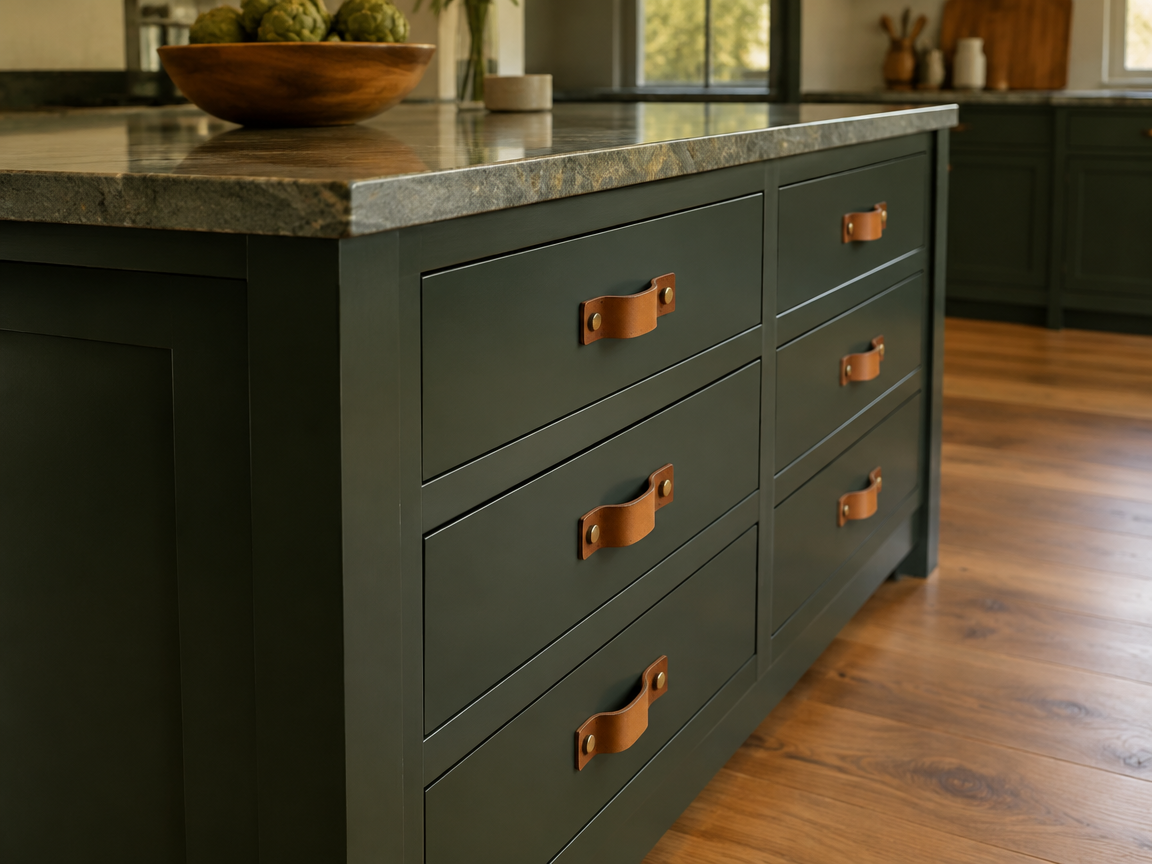
Idea 32 // Leather Pulls
Green Island With Leather-Wrapped Handles
Leather drawer pulls warm up a hard-edged green island. They also feel good in a hand, which matters on a busy island.
Match the leather to the floor tone, not the cabinets. Same-family browns look intentional.
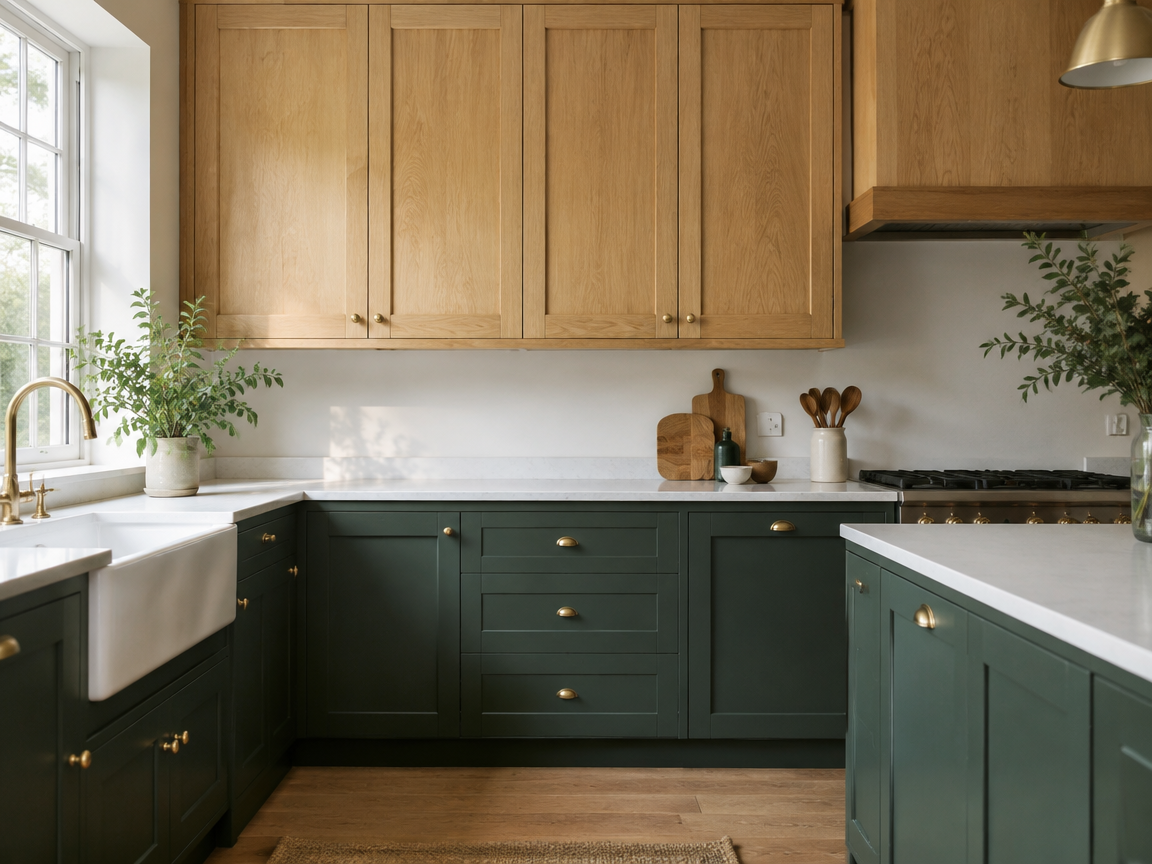
Idea 33 // Oak And Green
Natural Oak Uppers Over A Green Base
Oak uppers and a green base split the wall into two useful halves. The wood carries the light and the green carries the mood.
Keep the worktop white so the join line stays crisp. A busy counter muddles the effect.
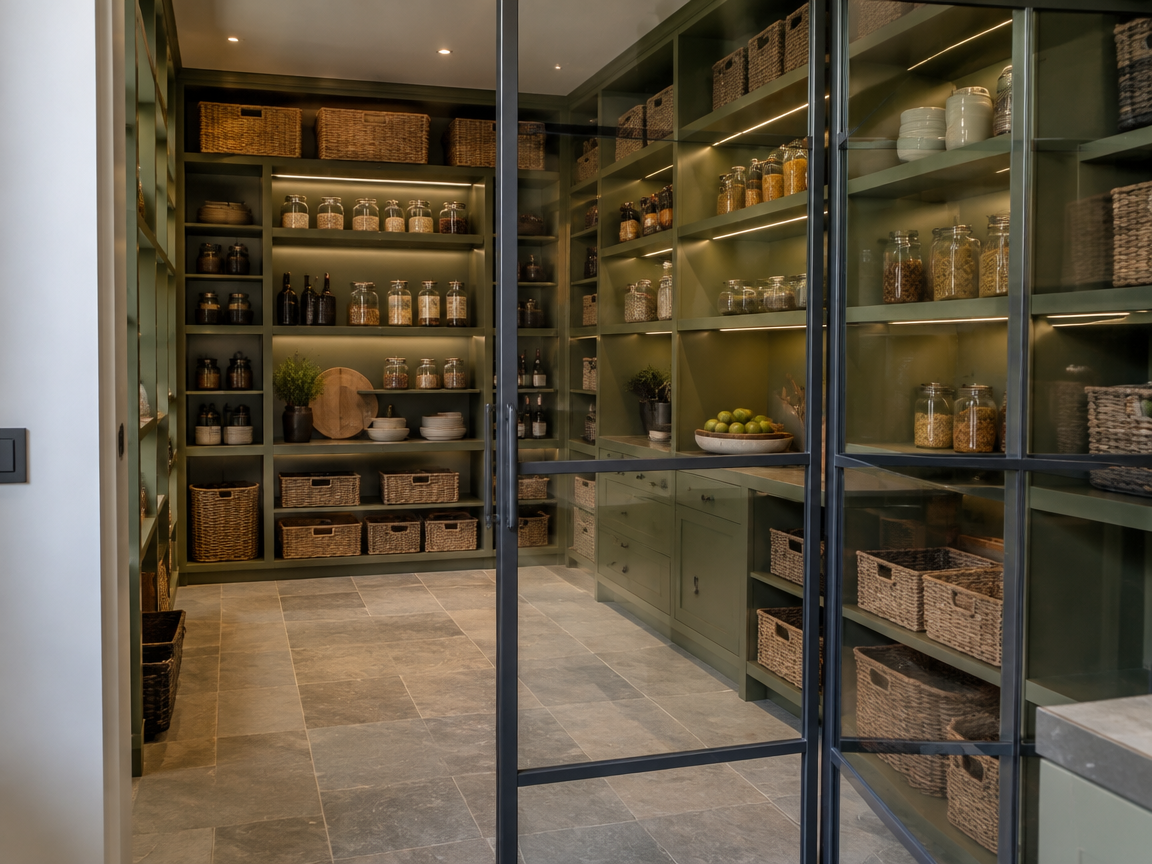
Idea 34 // Glass Pantry
A Glass-Walled Green Pantry
A walk-in pantry behind glass lets you see the green shelves from the kitchen. Storage becomes part of the design instead of a door you close.
Paint the shelves the same green as the cabinets. Then add strip lights and baskets to keep it tidy.
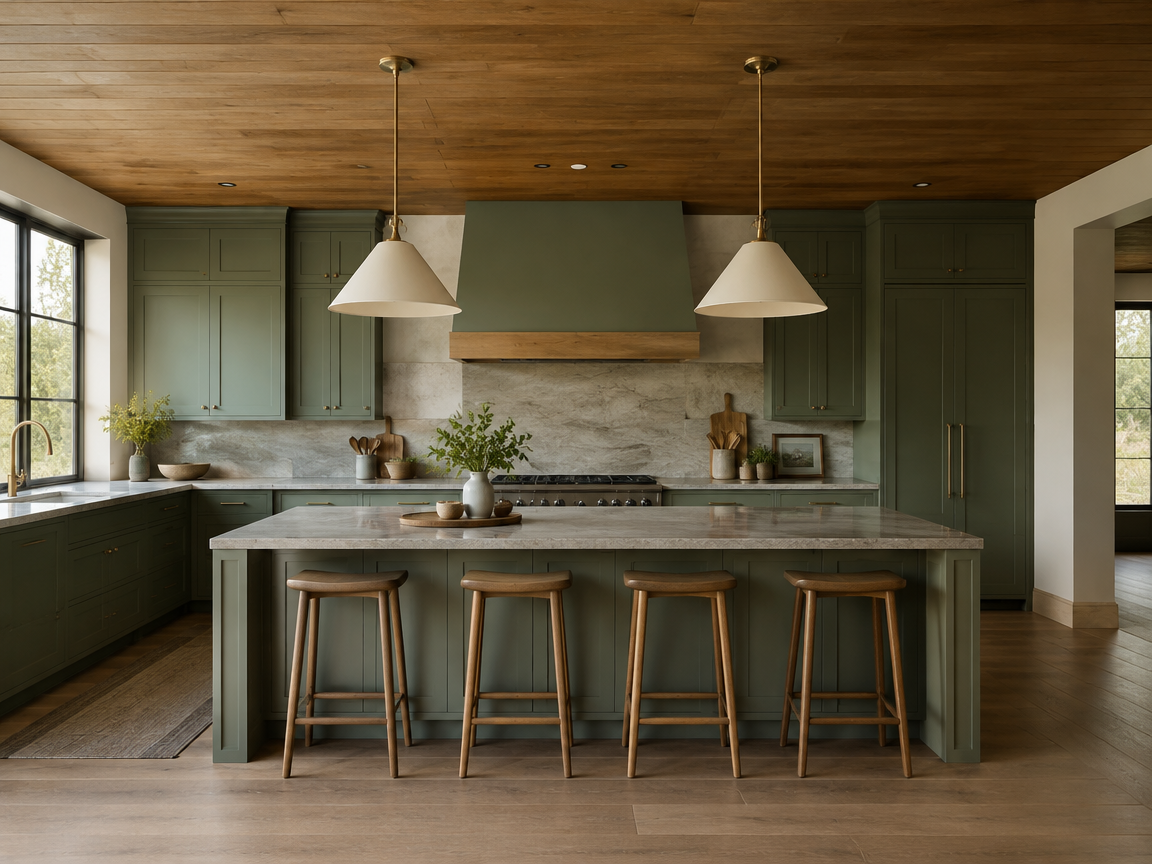
Idea 35 // Plank Ceiling
Green Island With Slim Shaker Doors And A Plank Ceiling
Slim shaker doors give green a fine, modern frame. A wood plank ceiling above softens the geometry.
Stain the ceiling a warm mid-brown so it does not compete with the green.
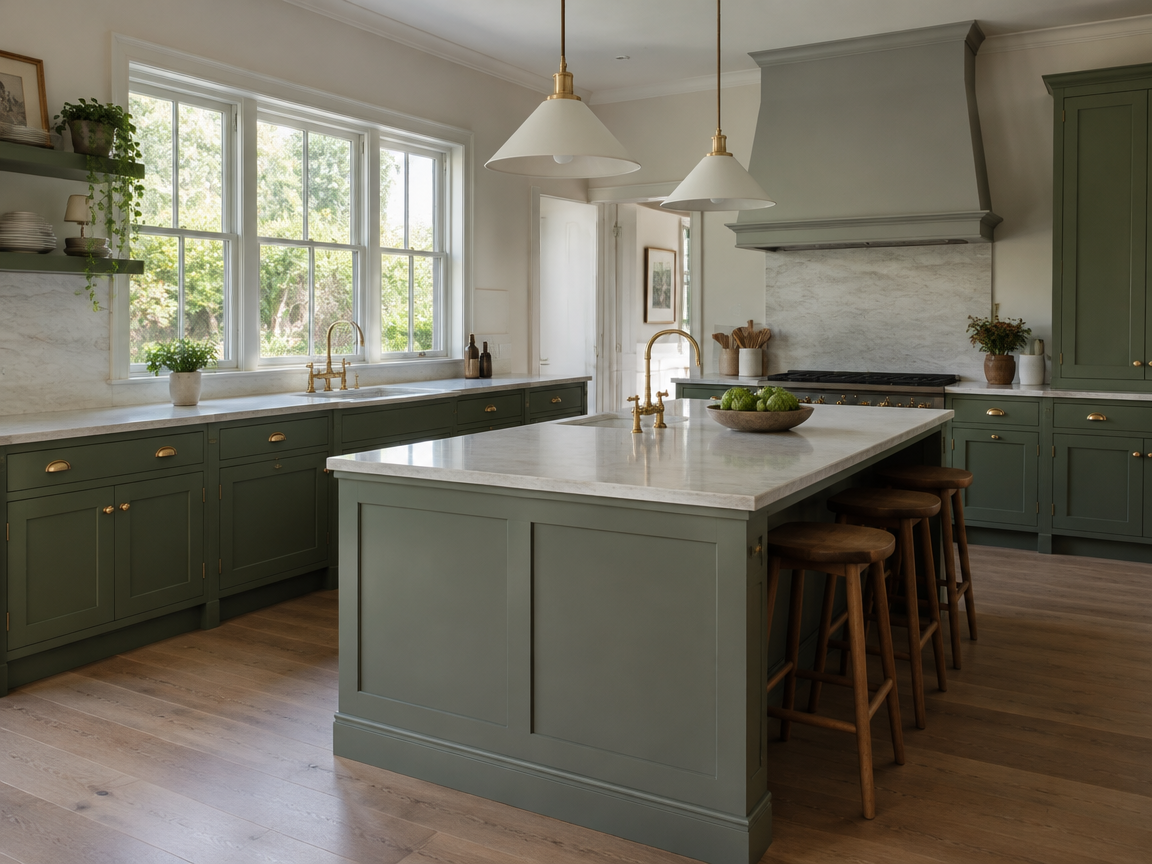
Idea 36 // Two Greens
Two Greens: Mid Green Base And Grey-Green Island
Two greens in one room only work when they differ in depth. Use a solid mid green on the base and a muted grey-green on the island.
Keep the countertops identical on both. One shared material ties the two colours together.
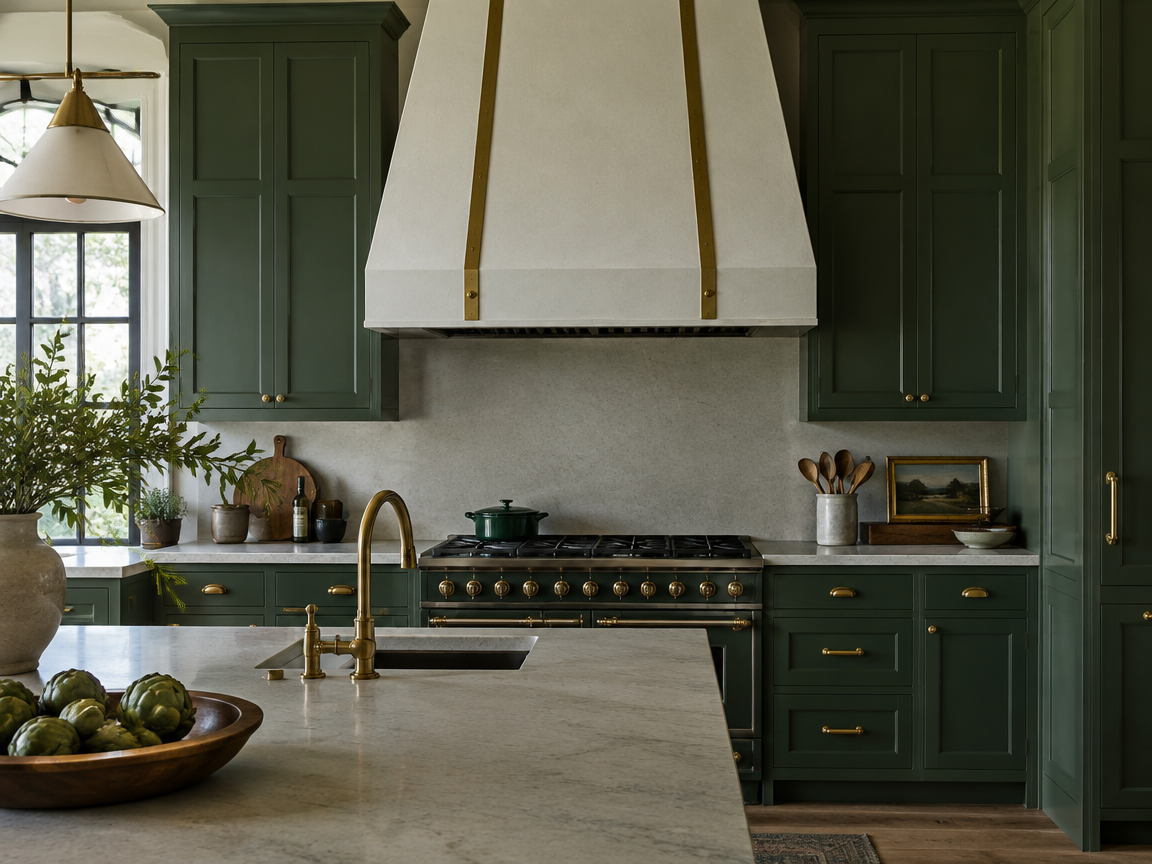
Idea 37 // Brass Strapping
Green Cabinets With A White Hood And Brass Strapping
A plain white plaster hood breaks up a wall of green. Two thin brass straps stop it looking like a blank box.
Continue the brass on the tap and one shelf bracket. Then stop.
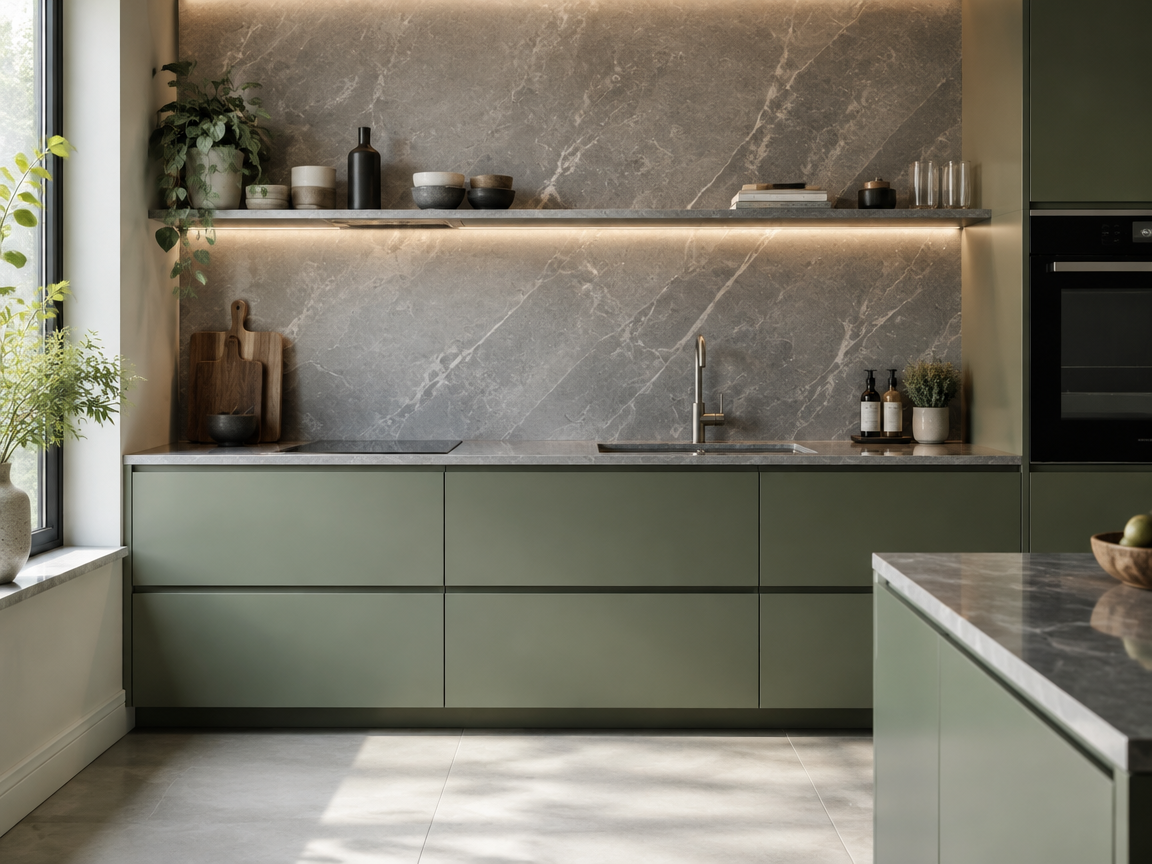
Idea 38 // Slab Backsplash
Half-Height Green Wall Cabinets Over A Slab Splashback
Short wall cabinets leave more room for a full-height stone splashback. The slab becomes the feature and the green becomes the frame.
Pick a stone with soft grey veins so it sits quietly beside the paint.
Moody And Dark
Dark greens can make a kitchen feel intimate and expensive. They need light, contrast and one bright surface.
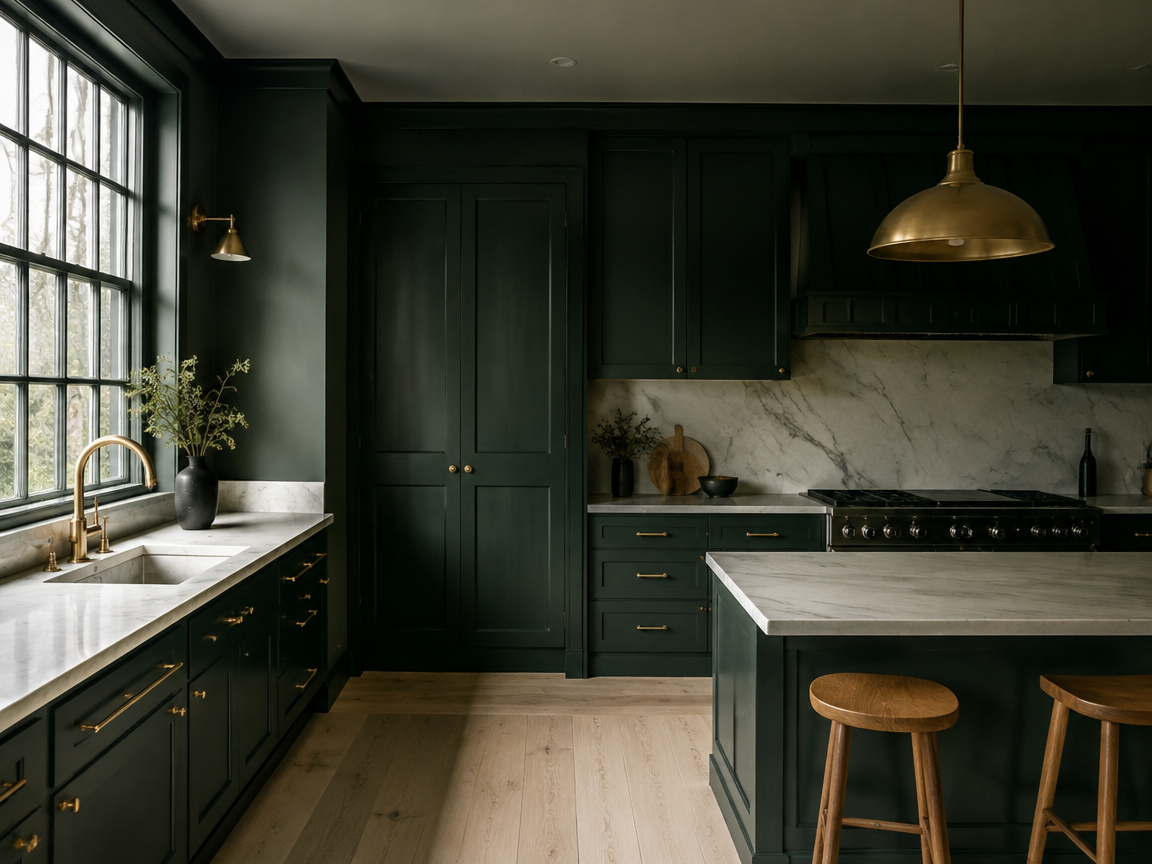
Idea 39 // Almost Black
Almost-Black Green Matte Cabinets
At its darkest, green reads as a soft black with a hint of forest. A matte finish keeps it velvety instead of glossy.
Put the light back with a pale floor and a bright stone top. Balance is everything in a dark kitchen.
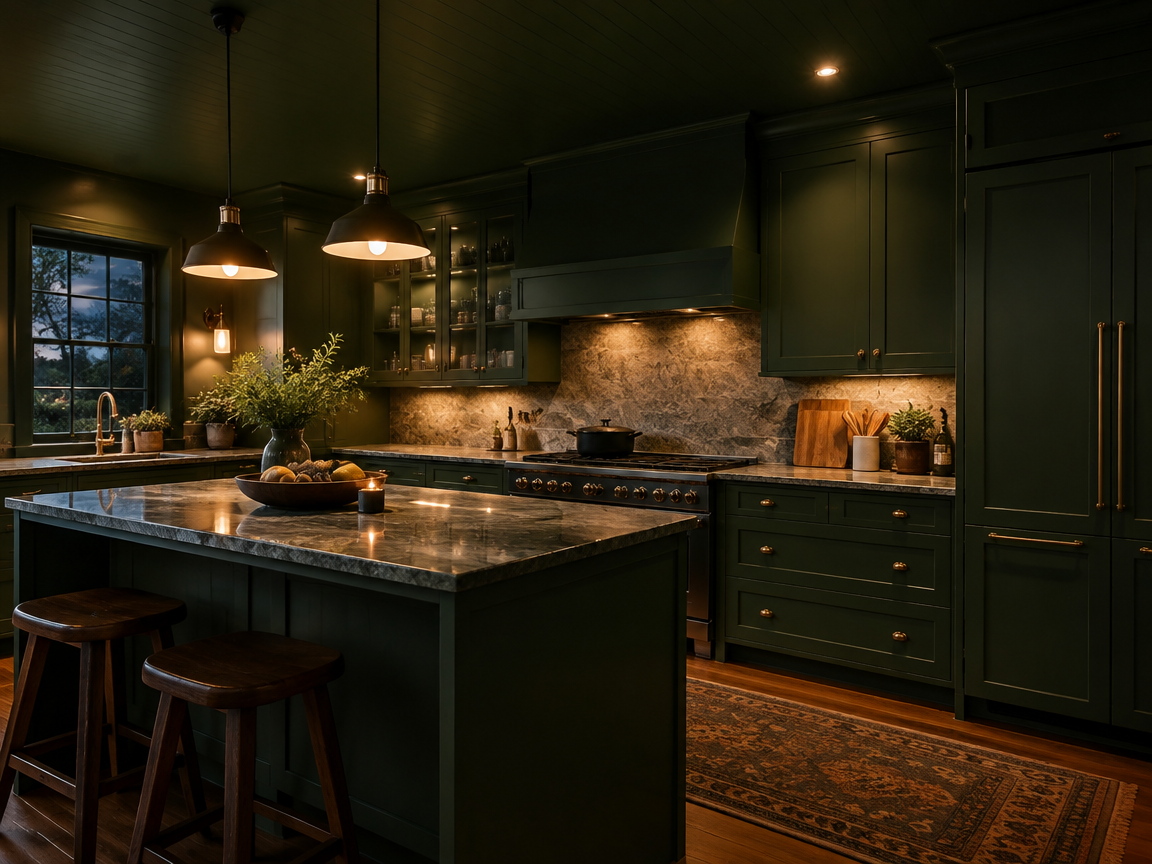
Idea 40 // Dark Ceiling
Dark Green Ceiling And Cabinets Together
Painting the ceiling dark green pulls it down and makes the room intimate. The cabinets continue the same shade.
Use a mid-sheen paint on the ceiling so light still reflects downward.
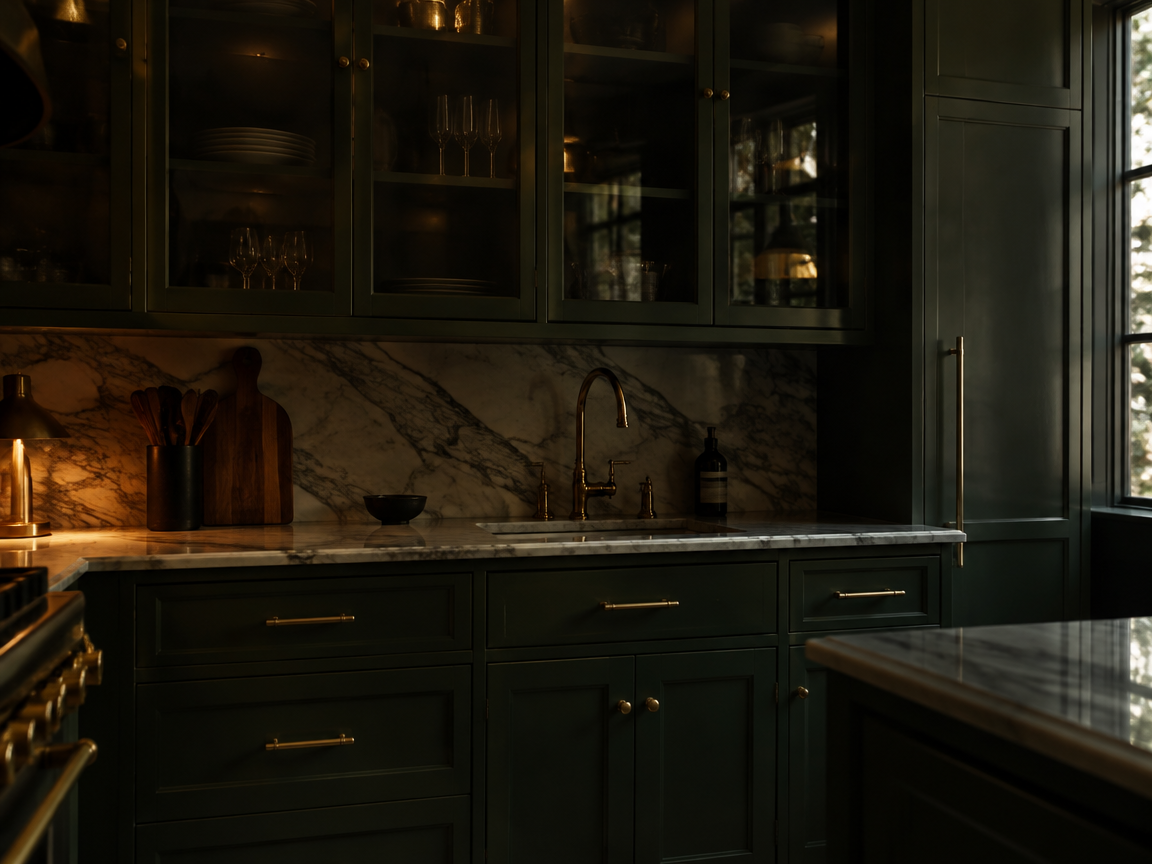
Idea 41 // Smoked Glass
Dark Green With Smoked Glass And Aged Brass
Smoked glass cabinet doors hide clutter and add a hazy depth. Against dark green the effect is moody and expensive.
Aged brass ties the glass to the paint with warmth. Cool steel would break the spell.
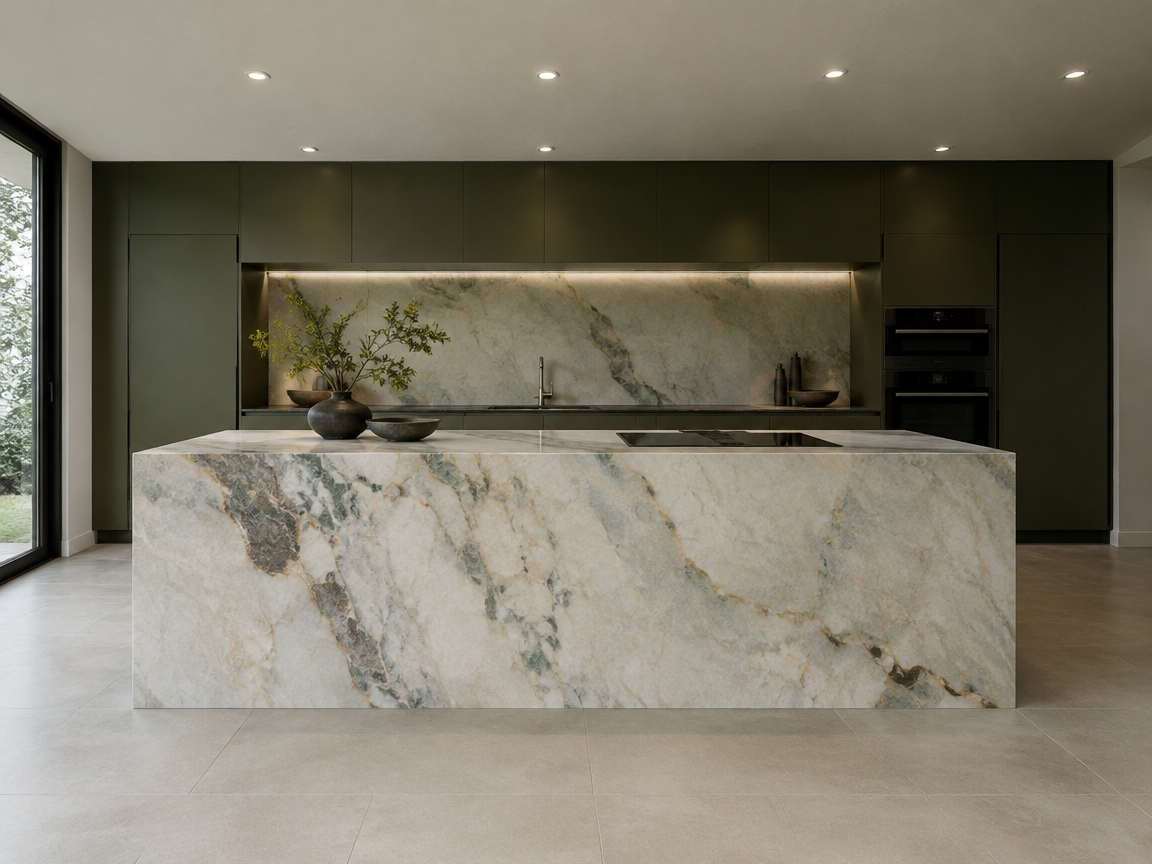
Idea 42 // Charcoal Green
Charcoal-Green Slab Doors With A Stone Island
Charcoal green is the quiet version of this trend. Flat slab doors keep the kitchen minimal and easy to clean.
Let the island be a pale, heavily veined stone. One dramatic surface is more powerful than three.
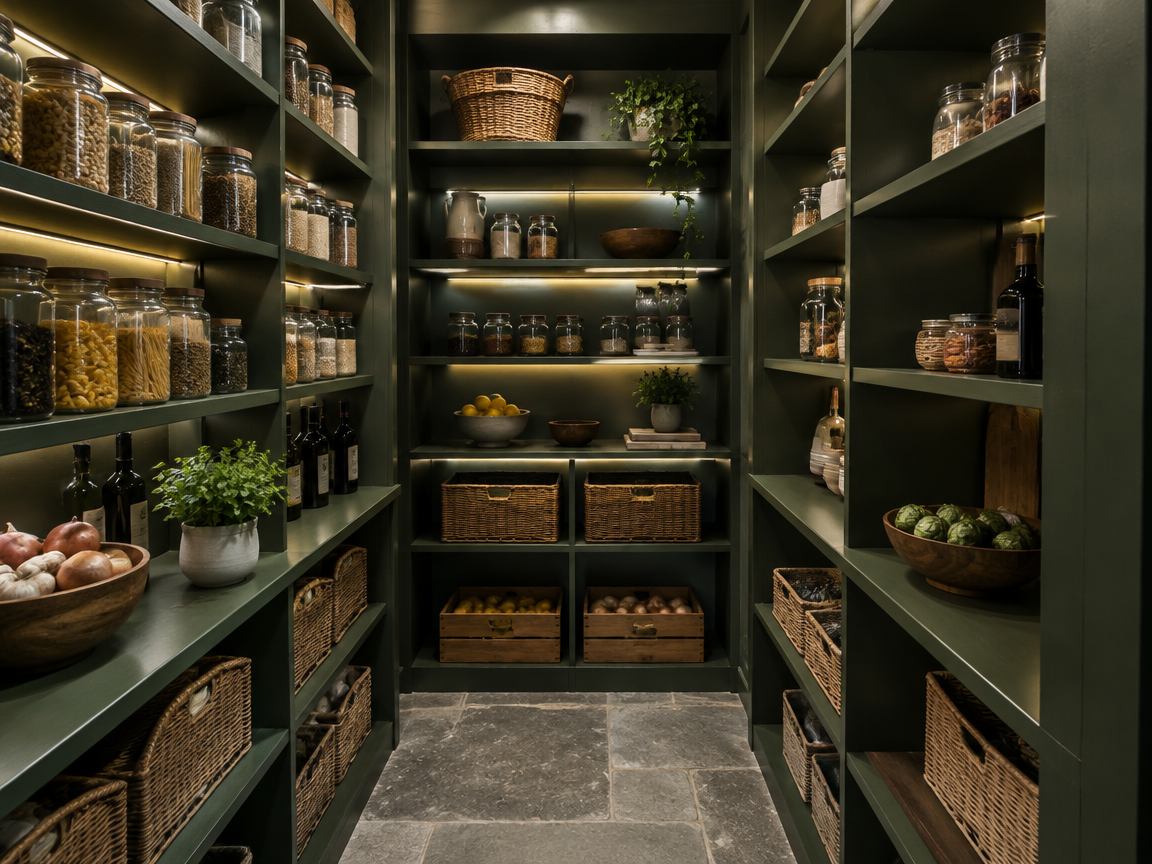
Idea 43 // Dark Pantry
Dark Green Walk-In Pantry With Warm LED Strips
A dark pantry feels like a wine cellar, and that is the point. Warm LED strips make the shelves readable without flattening the colour.
Line the walls with open shelves, not cupboards. You will actually use what you can see.
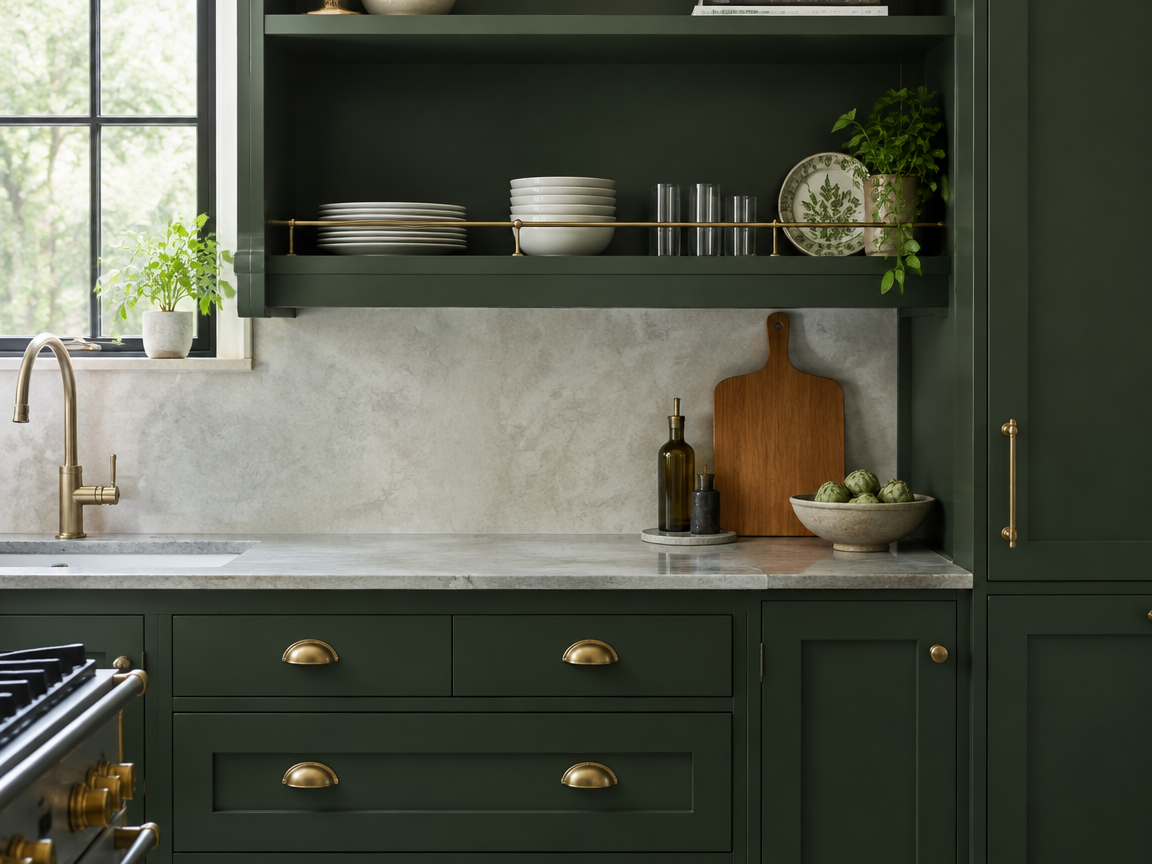
Idea 44 // Gallery Rail
Ink-Green Cabinets With A Brass Gallery Rail
A brass rail along the open shelf keeps plates from toppling. It also adds a thin gold line that lifts ink-green paint.
Keep the rail narrow. Wide bars look like gym equipment.
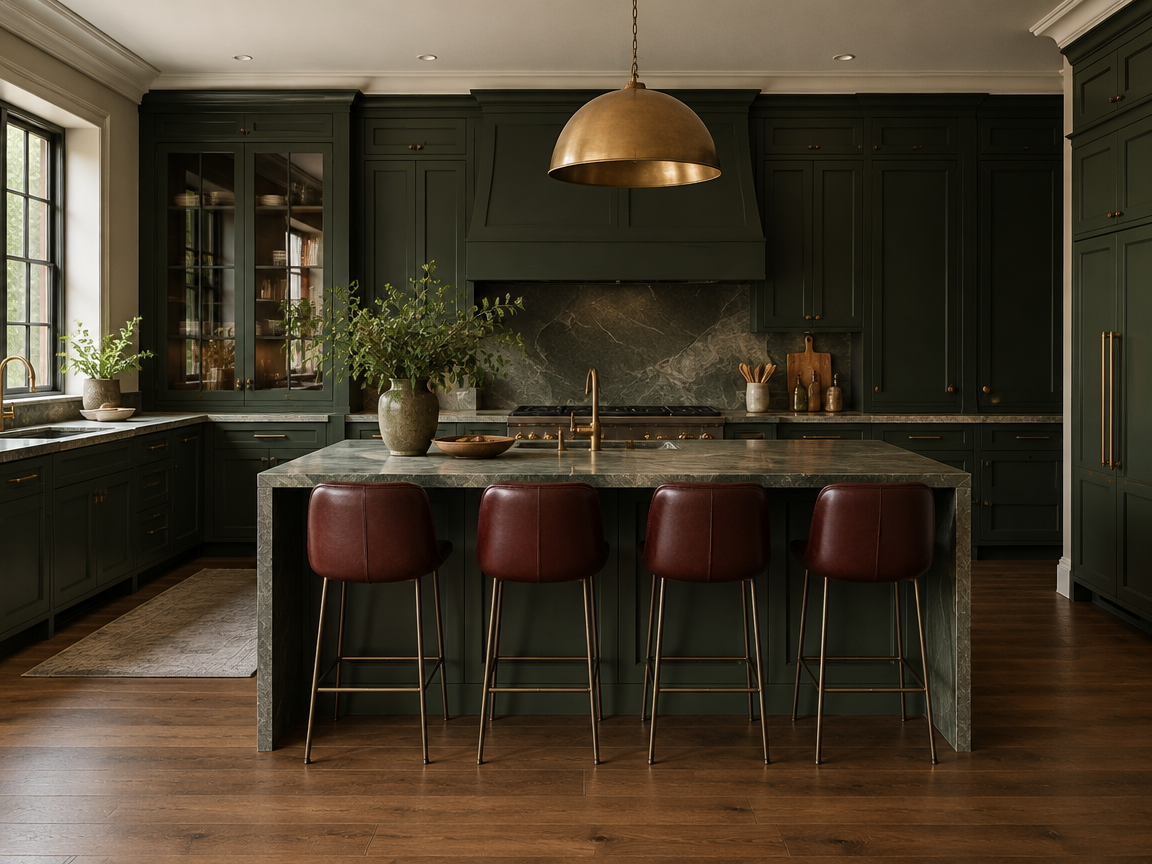
Idea 45 // Oxblood
Dark Green Cabinets With Oxblood Leather Stools
Oxblood leather is a bold, warm match for dark green. The red-brown keeps the room from feeling like a forest.
Choose stools with slim metal legs so the seats do not block the island.
Cottage And Vintage
Soft greens have always belonged in old houses. These ideas add texture instead of pattern.
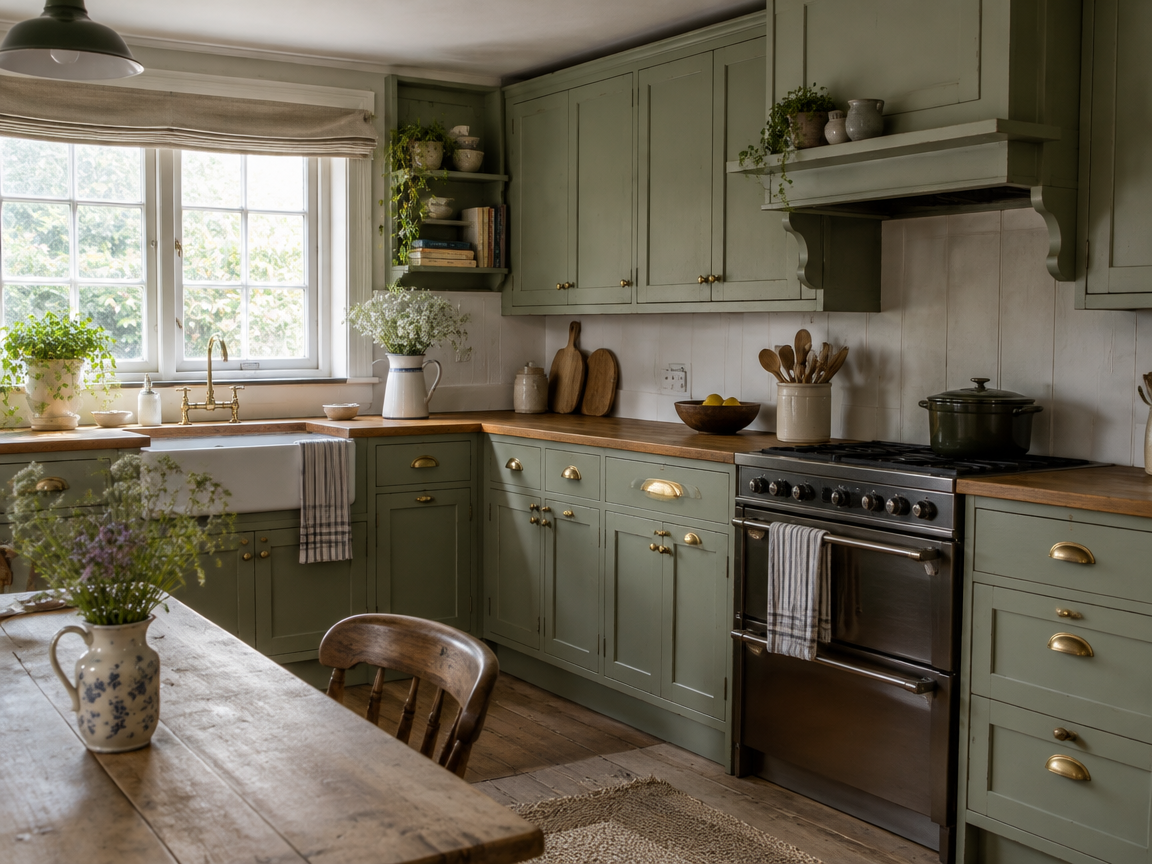
Idea 46 // Cottage Sage
Distressed Sage Cottage Cabinets With Cup Pulls
Lightly distressed sage suits an old house that has earned its dents. Ask for hand-brushed edges, not fake chips.
Cup pulls and small round knobs look right on cottage doors. Keep the woodwork simple around them.
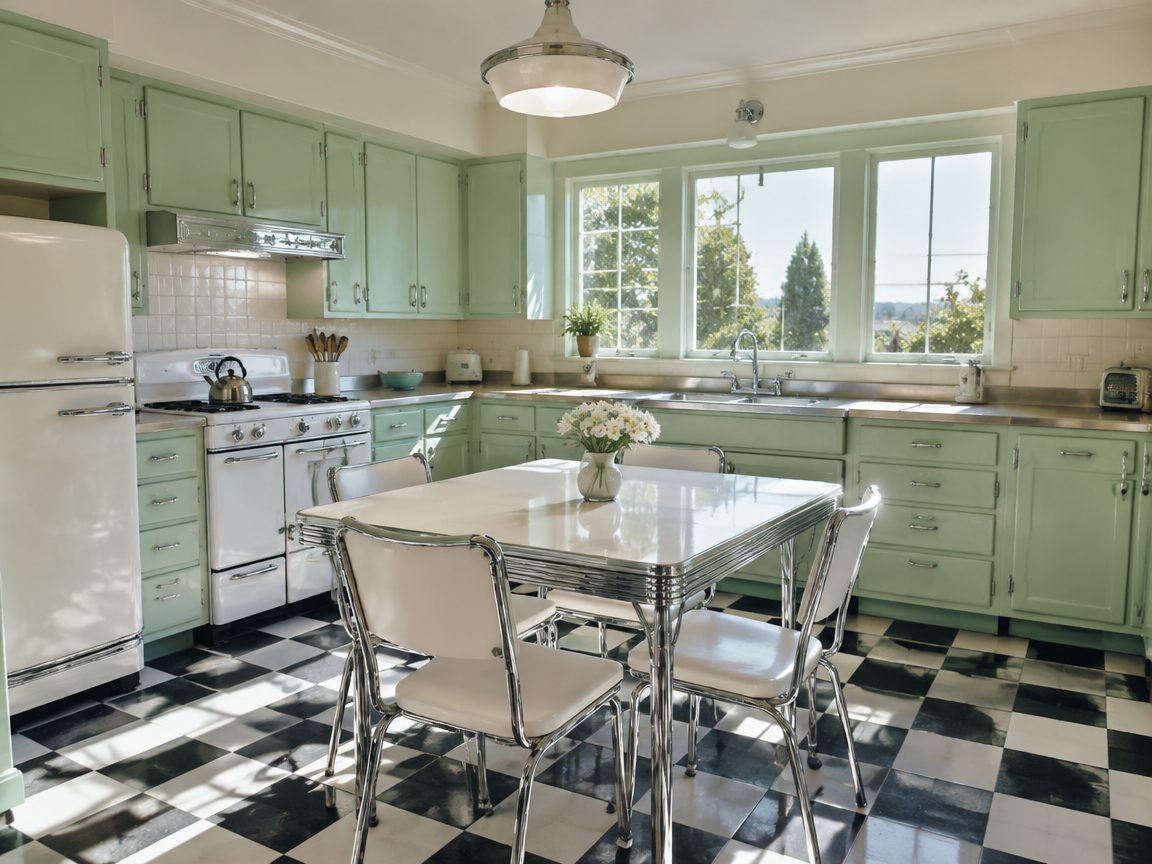
Idea 47 // Mint Vintage
Mint Vintage Kitchen With An Enamel Table
Mint cabinets and a white enamel table recreate the 1950s kitchen without the kitsch. Both surfaces wipe clean in seconds.
Add a warm checkerboard floor to finish the period feel.
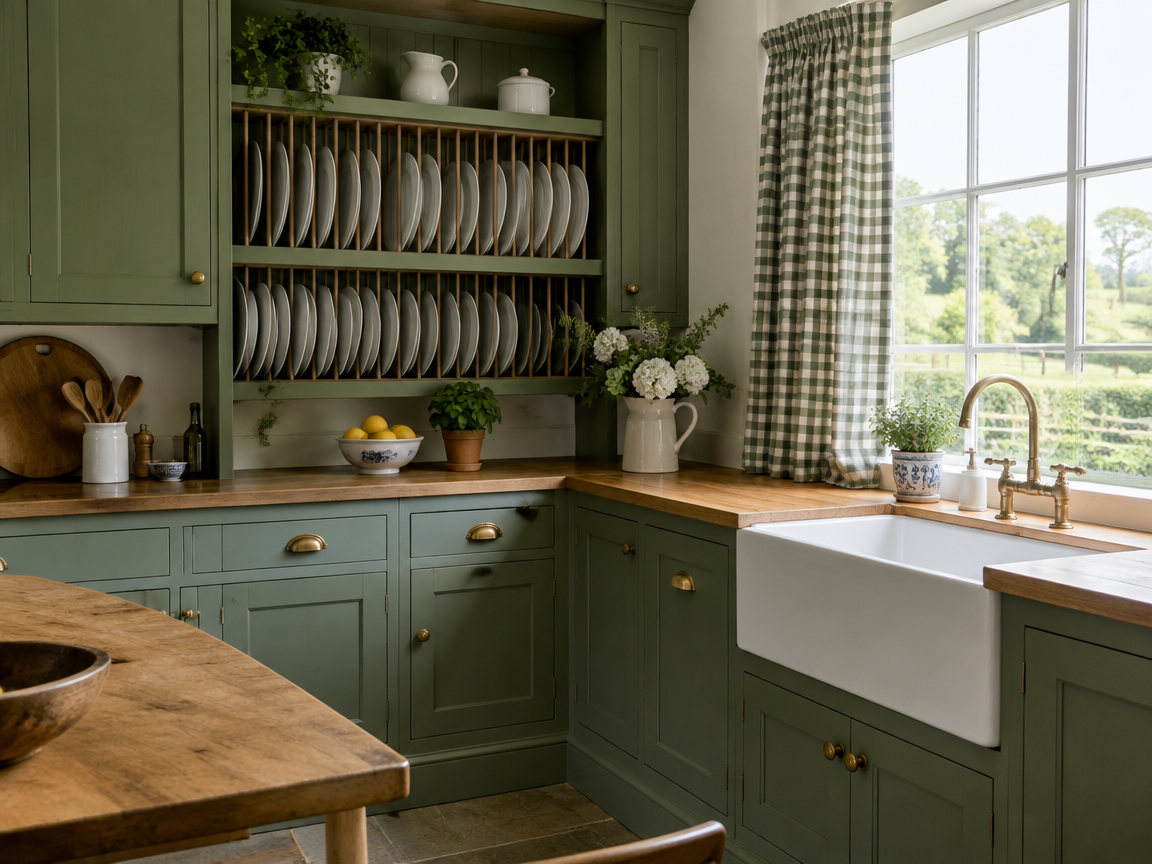
Idea 48 // Plate Rack
Green Cabinets With A Plate Rack And Gingham
A built-in plate rack breaks the flat run of cabinets and gives plates somewhere to live. Gingham at the window keeps it soft.
Repeat the gingham only once. Twice and the room turns into a tea shop.
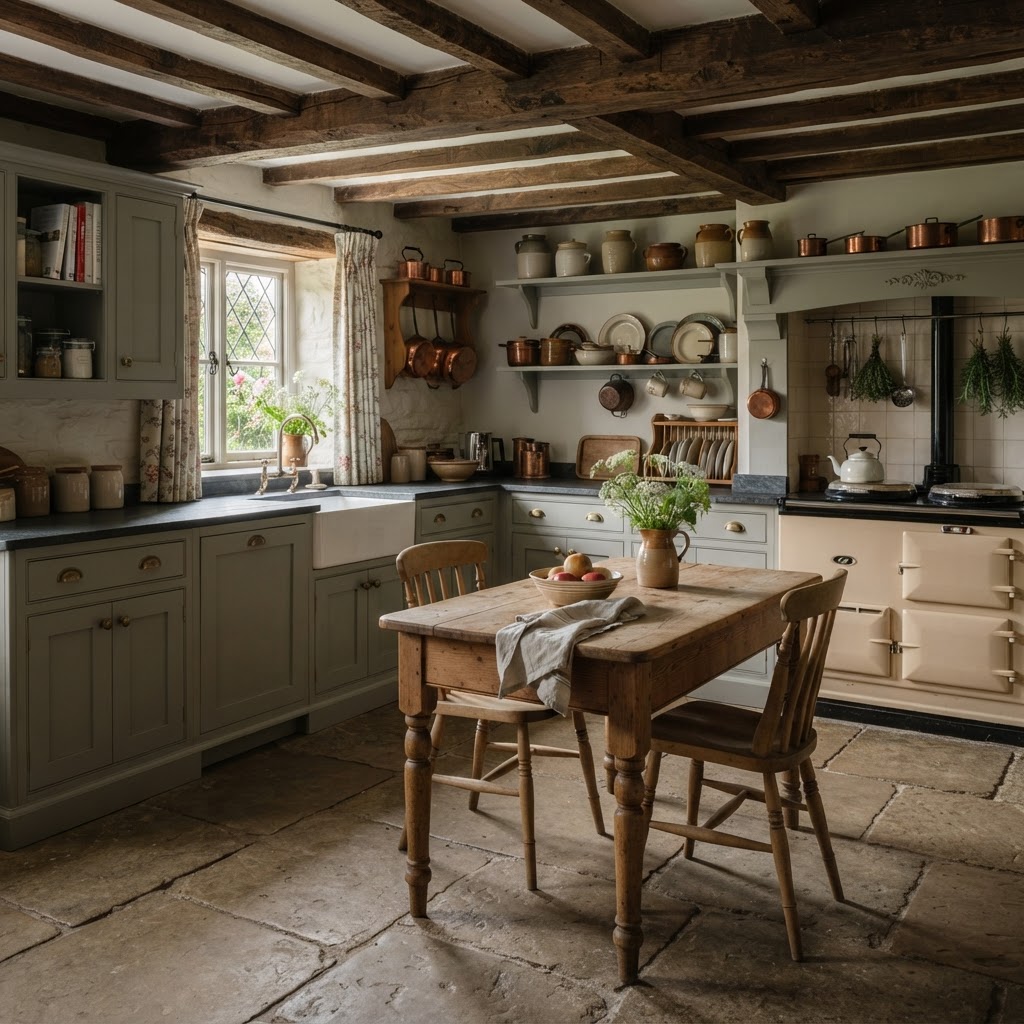
Idea 49 // English Cottage
English Cottage Green With Exposed Beams
Exposed beams and green cabinetry is a very old pairing. The beams bring back the dark tones the green needs.
Use a muted, slightly grey green here. Bright greens look strange next to old timber.
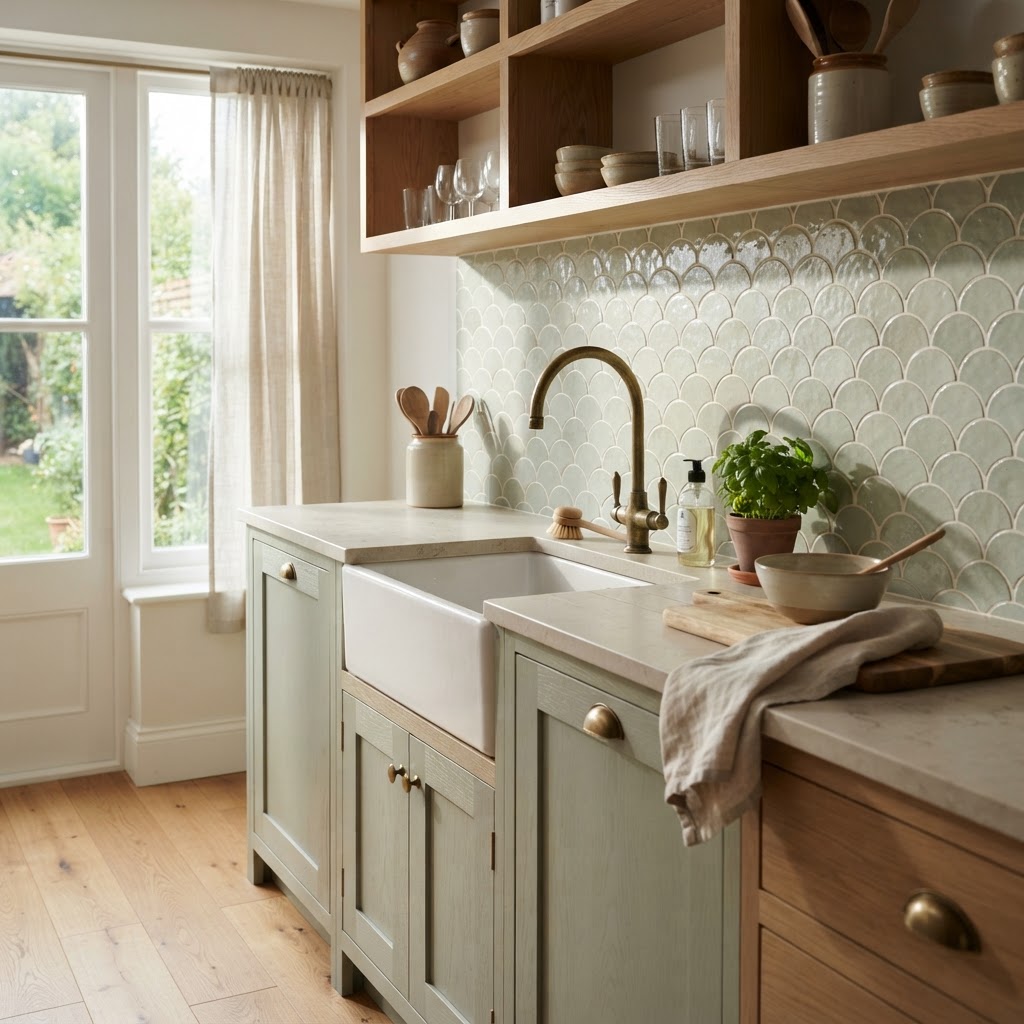
Idea 50 // Scalloped Tile
Soft Green With Scalloped Tile Mosaic
Scalloped tiles give a green kitchen a subtle pattern without a print. The repeated curves catch light along the wall.
Keep the tile one shade lighter than the cabinets. That gap keeps the wall from going flat.
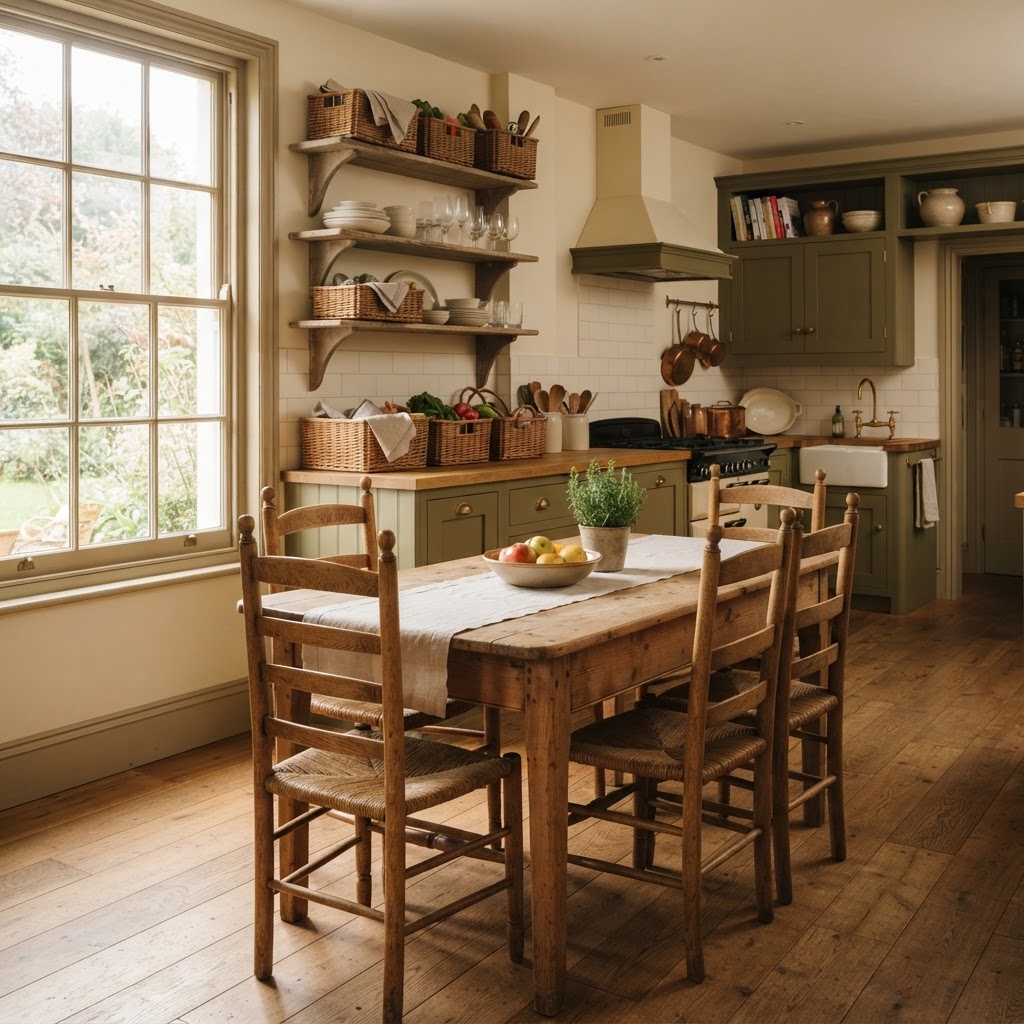
Idea 51 // Wicker And Green
Green Cupboards With Wicker Baskets And Ladder-Back Chairs
Wicker baskets in open cupboards make storage look soft. Ladder-back chairs continue the natural texture at the table.
Choose a green with warmth, like olive, so the wicker does not clash.
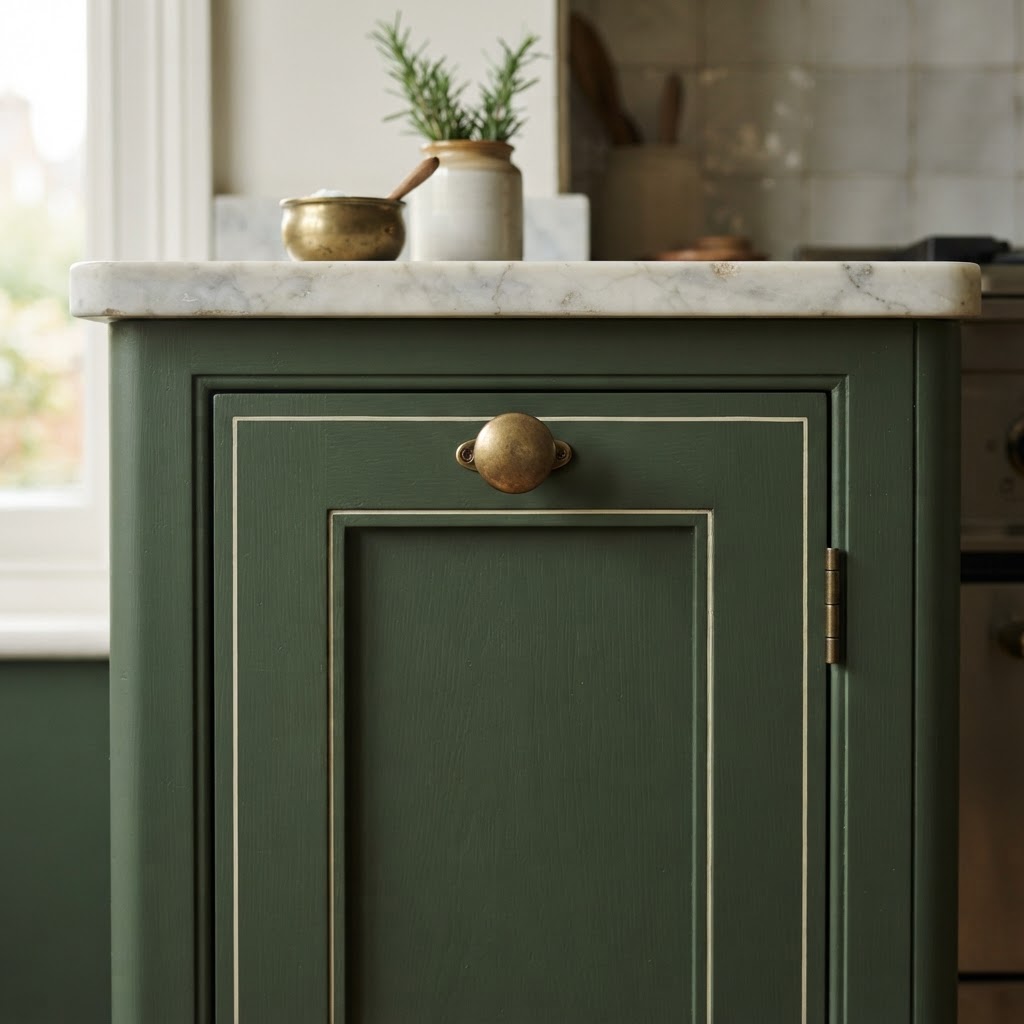
Idea 52 // Painted Border
Heritage Green With A Hand-Painted Border
A hand-painted border is an old cabinet detail that has come back. Keep it to one line around the door panels.
Match the border to the wall colour so the pattern feels built in.
Modern And Minimal
Flat doors and handleless runs let the colour do all the work. Fewer details look sharper in green.
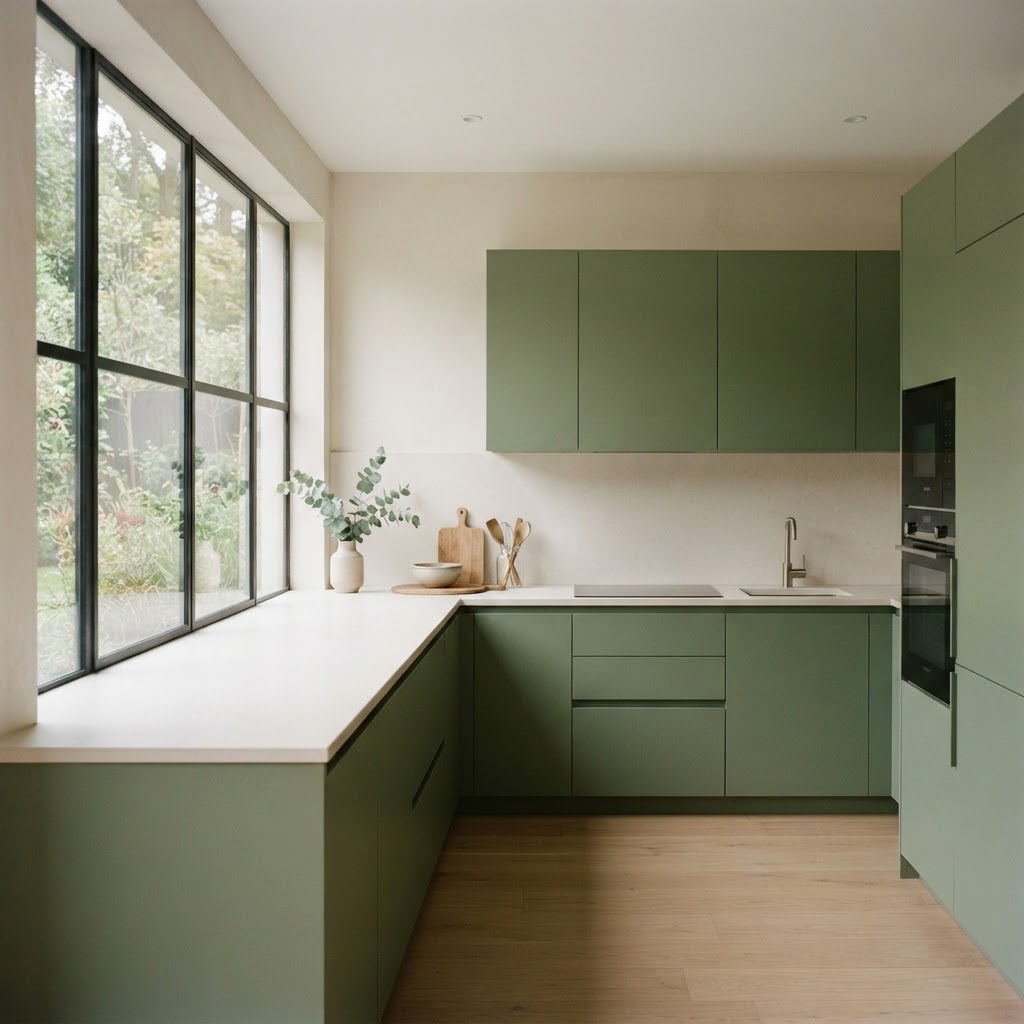
Idea 53 // Matcha Minimal
Matcha Slab Cabinets With Push-To-Open Doors
Matcha is a yellow-leaning green that looks modern on flat doors. Push-to-open catches remove the handles and the visual noise.
Plan for fingerprints. Matte lacquer marks less than gloss on a pale green.
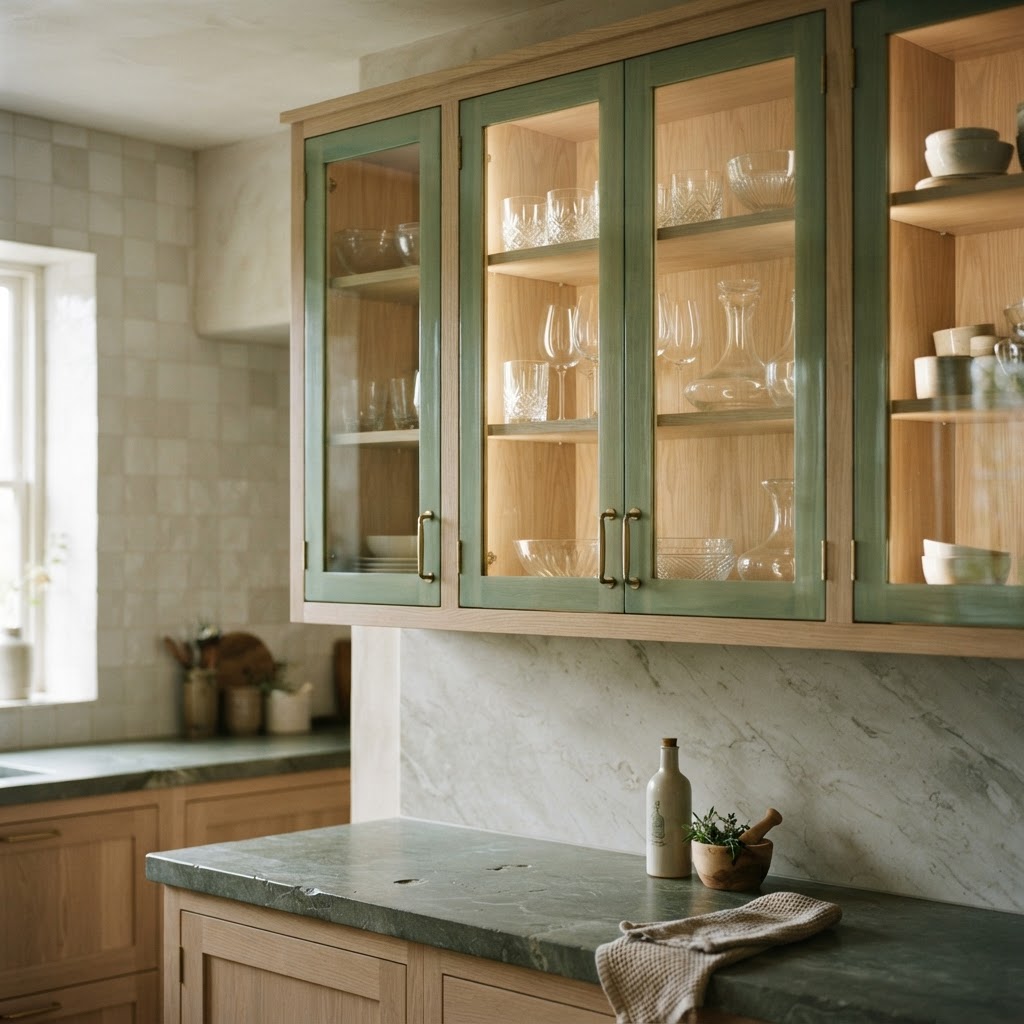
Idea 54 // Tinted Glass
Green Tinted Glass Cabinet Doors
Green-tinted glass reads as green without a drop of paint on the door. It also lets light pass into a dark corner.
Line the inside with pale wood so the tint has something bright to work against.
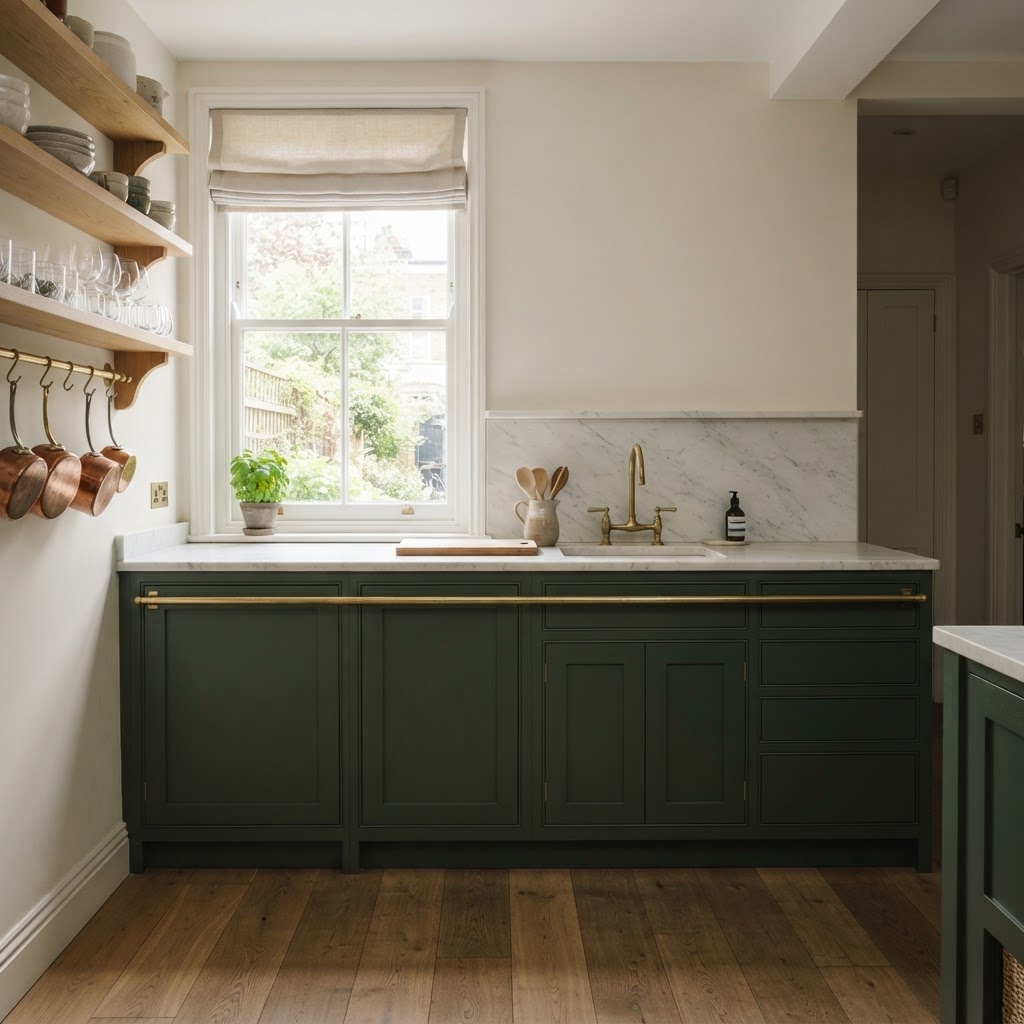
Idea 55 // Brass Rail
Green Cabinets With A Continuous Brass Rail
One unbroken brass rail across the doors replaces every separate handle. It creates a single gold line through the kitchen.
Keep the rail level with the door edges. Small misalignments are very visible on a long run.
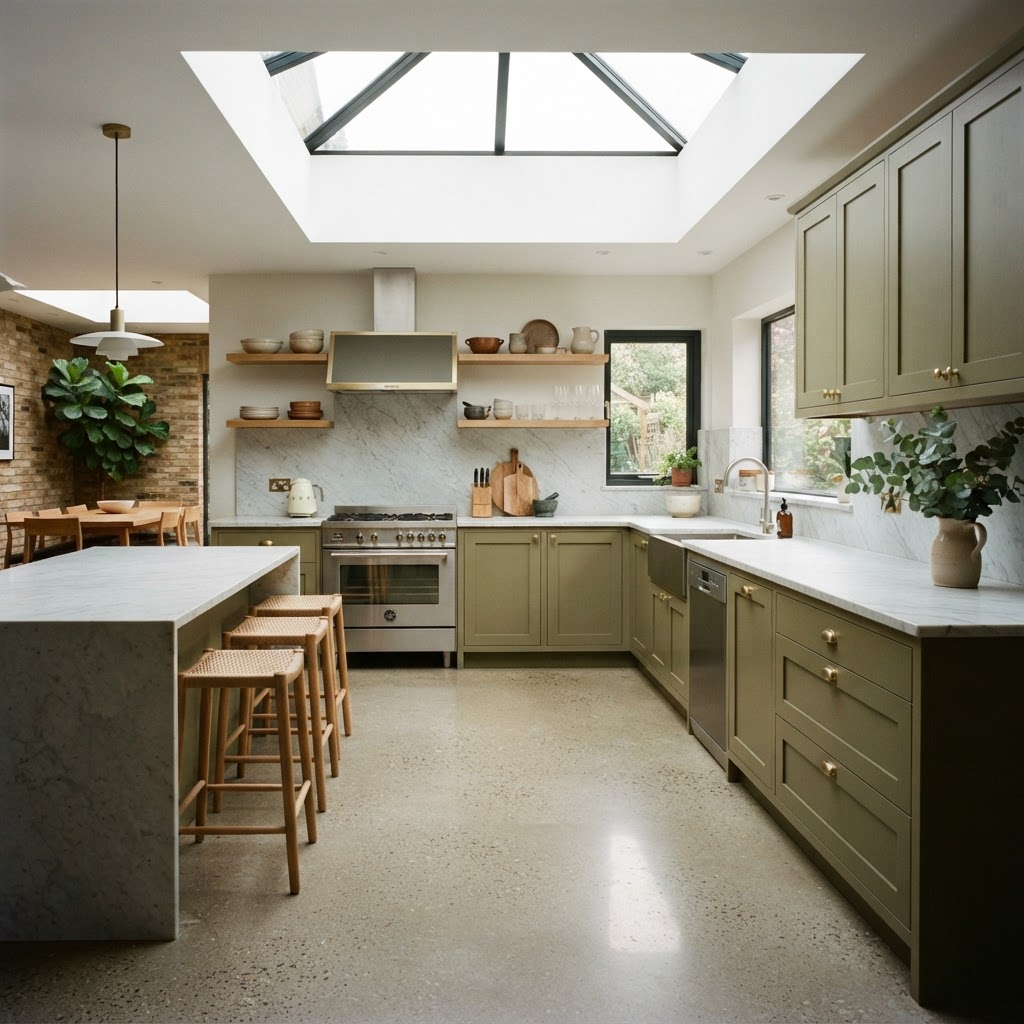
Idea 56 // Concrete
Green Kitchen With A Concrete Floor And Skylight
Concrete and green are a calm, modern pair. A skylight overhead makes the colour shift through the whole day.
Use a warm mid-green so the pale concrete does not drain the room.
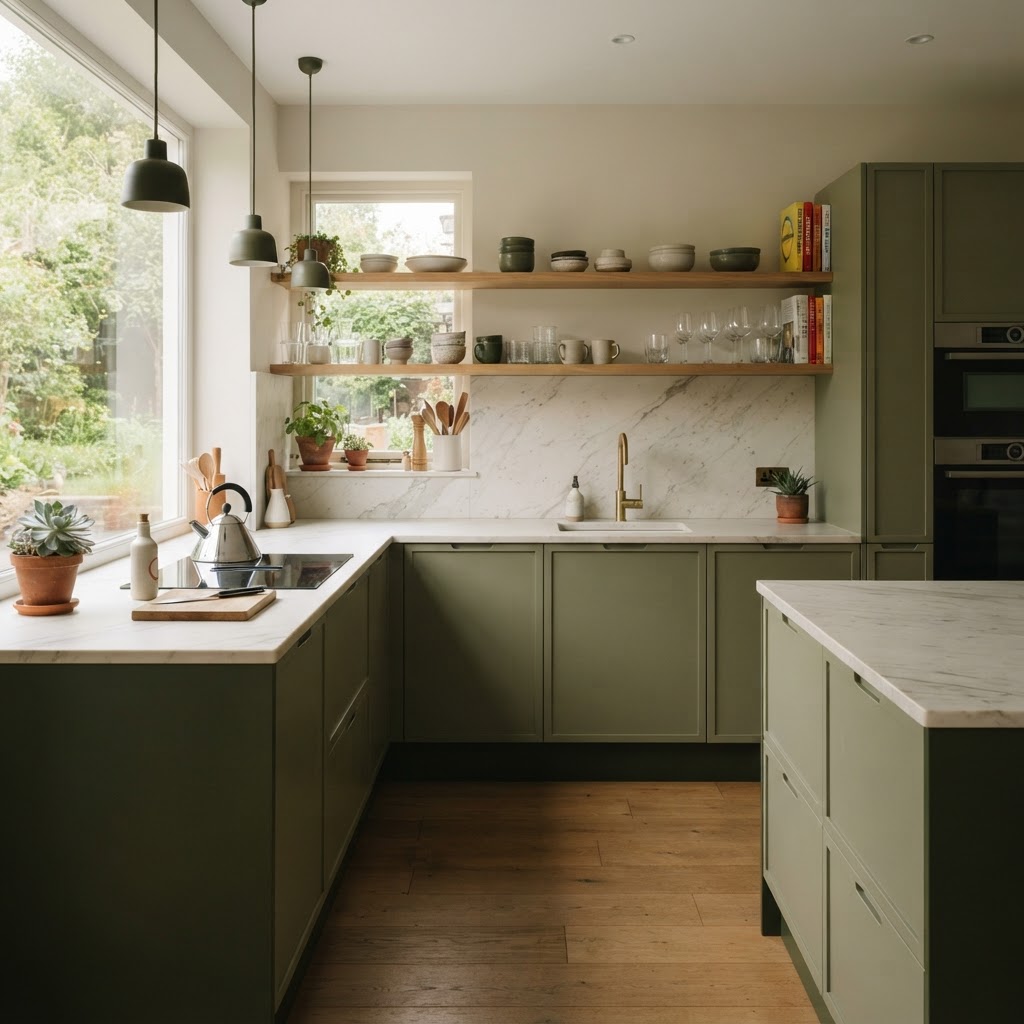
Idea 57 // Dark Plinth
Olive Micro-Shaker With A Dark Plinth
A dark plinth makes the cabinets look as if they float on shadow. Micro-shaker doors add a frame without fuss.
Paint the plinth a deeper olive than the doors. The small step in shade adds depth.
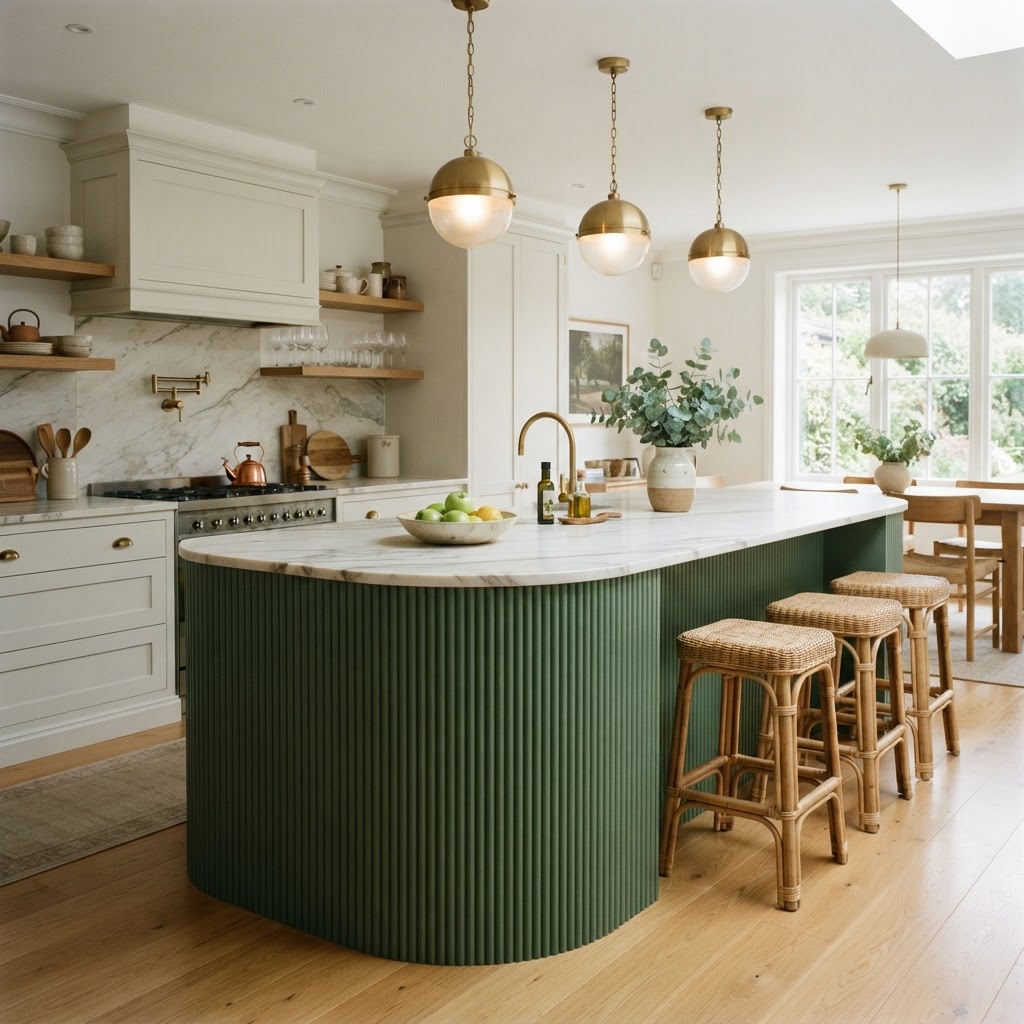
Idea 58 // Curved Island
Curved Green Island With Ribbed Fronts
A curved island removes the sharp corner that catches hips in a busy kitchen. Ribbed fronts add light and shade across the curve.
Choose a mid-tone green, since ribs read lighter than flat panels.
Bold And Unusual
For kitchens that want to be remembered. Each of these uses green in a way nobody else on the street will.
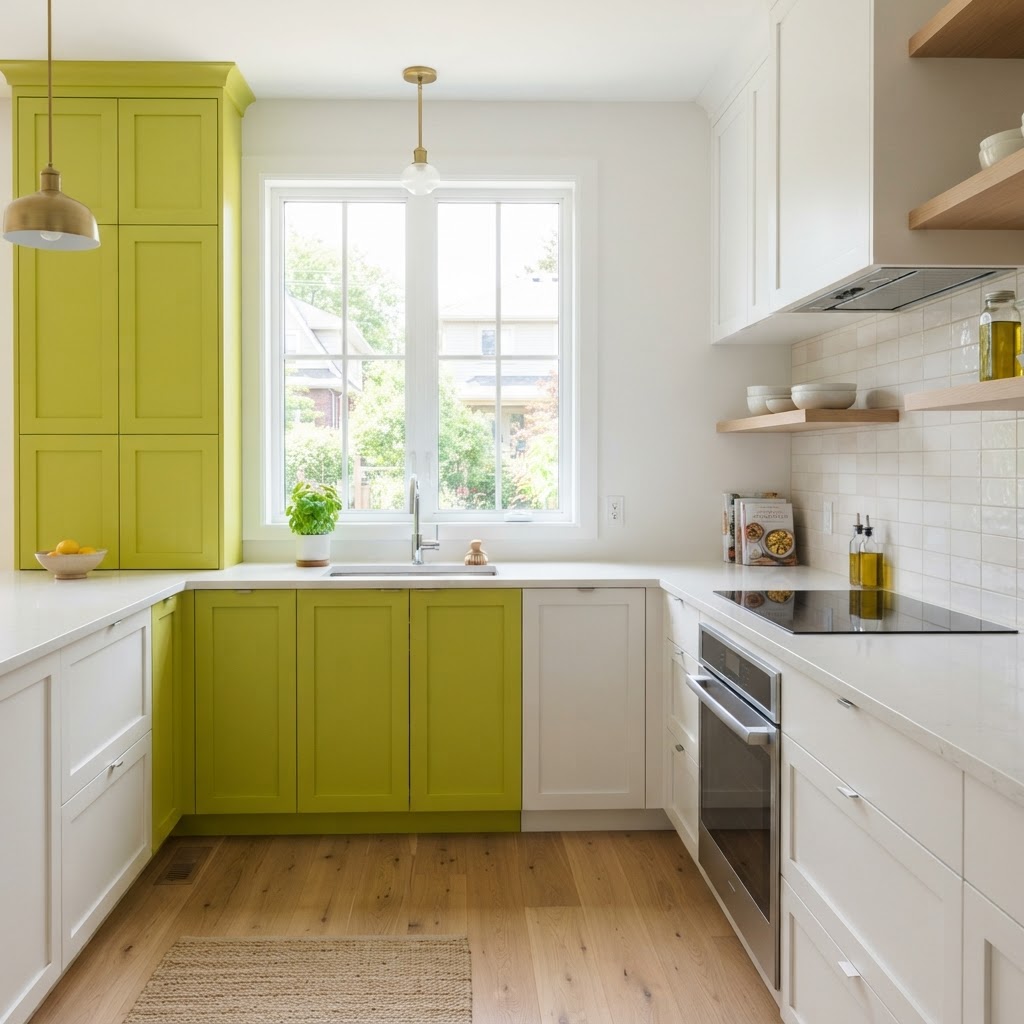
Idea 59 // Lime Accent
Lime Green Accent Wall Of Cabinets
One bank of lime green cabinets is enough to change a white kitchen. Lime needs daylight, so use it near a window.
Keep the rest of the room warm white so the lime looks chosen instead of accidental.
Idea 60 // Verdigris
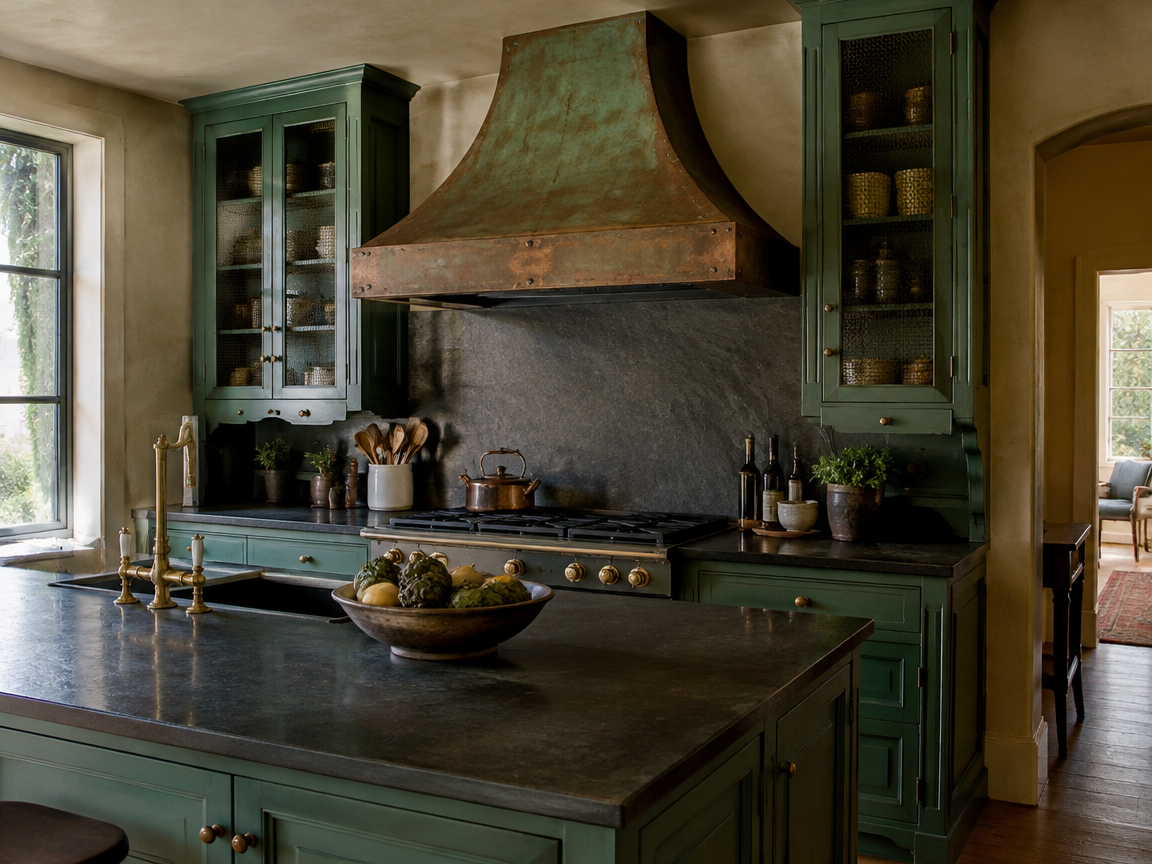
Verdigris Green With A Patinated Copper Hood
A copper hood left to patinate turns a soft verdigris green. Pair it with green cabinets in the same family.
This look works best in a kitchen with character. New-build plaster can look too clean beside it.
Idea 61 // Graphic Lacquer
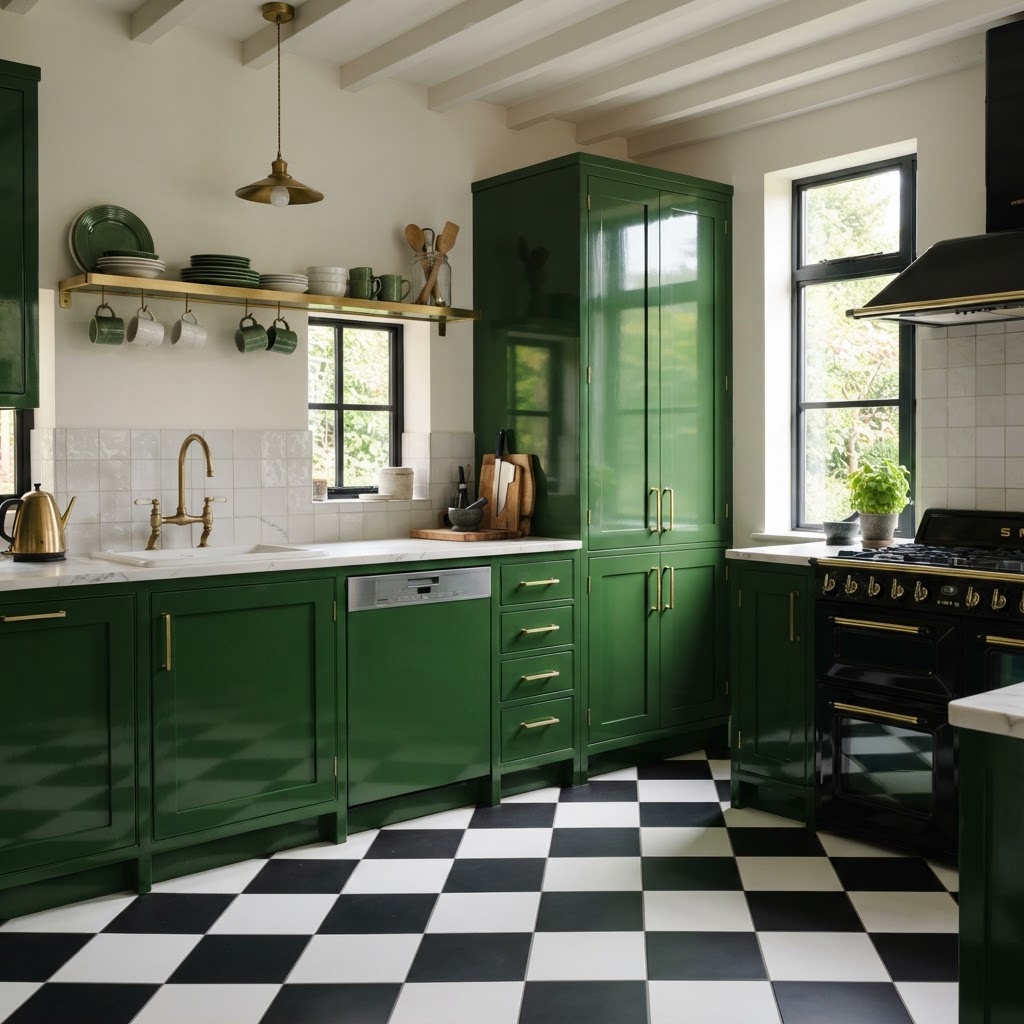
Green Lacquer With A Checkerboard Floor
Green lacquer cabinets over a checkerboard floor is a graphic, confident kitchen. The floor pattern gives the eye somewhere to play.
Keep the cabinet doors plain so the floor stays the pattern in the room.
Idea 62 // Mural Wall
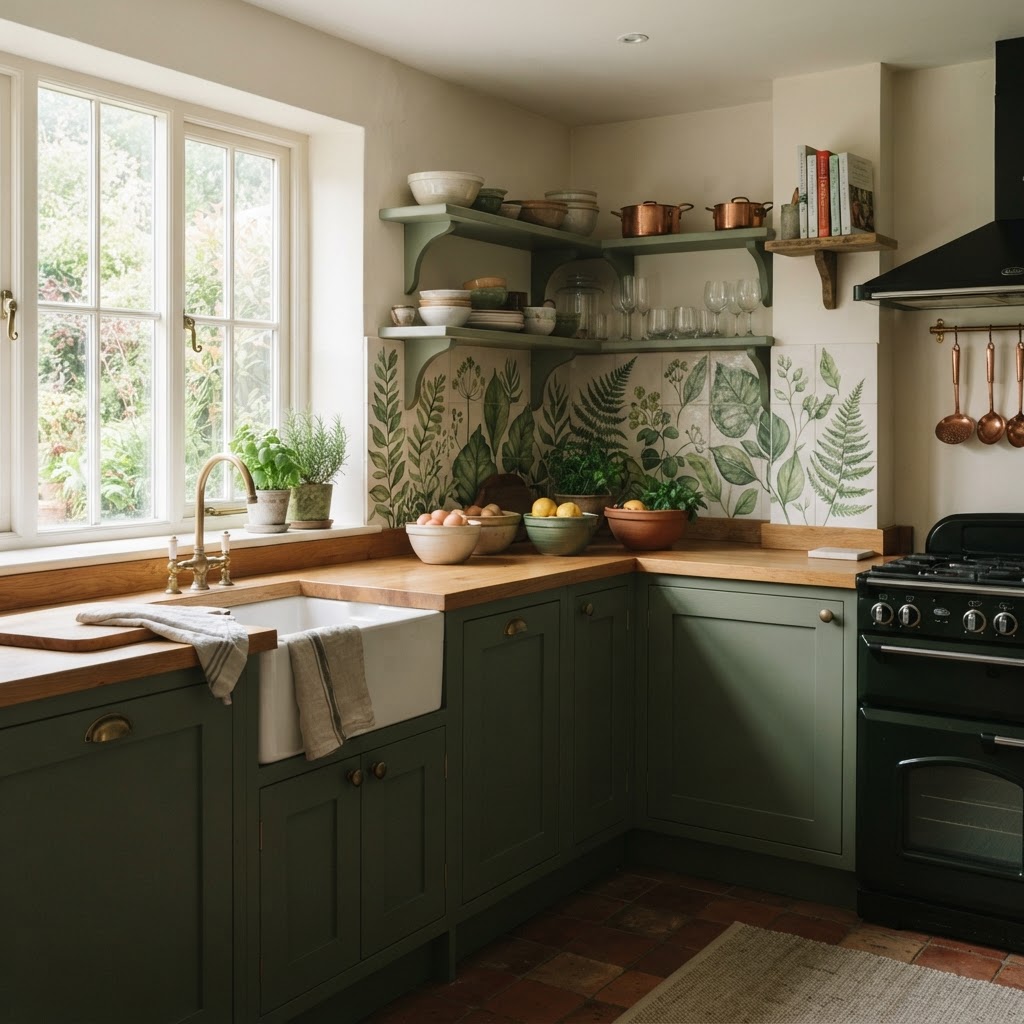
Botanical Green With A Mural Splashback
A hand-painted leaf mural behind the counter hides splashes with scenery. Botanical green cabinets let the wall do the talking.
Seal the mural with a matte varnish so the paint survives steam. Repeat one leaf colour in the room.
Idea 63 // Chartreuse
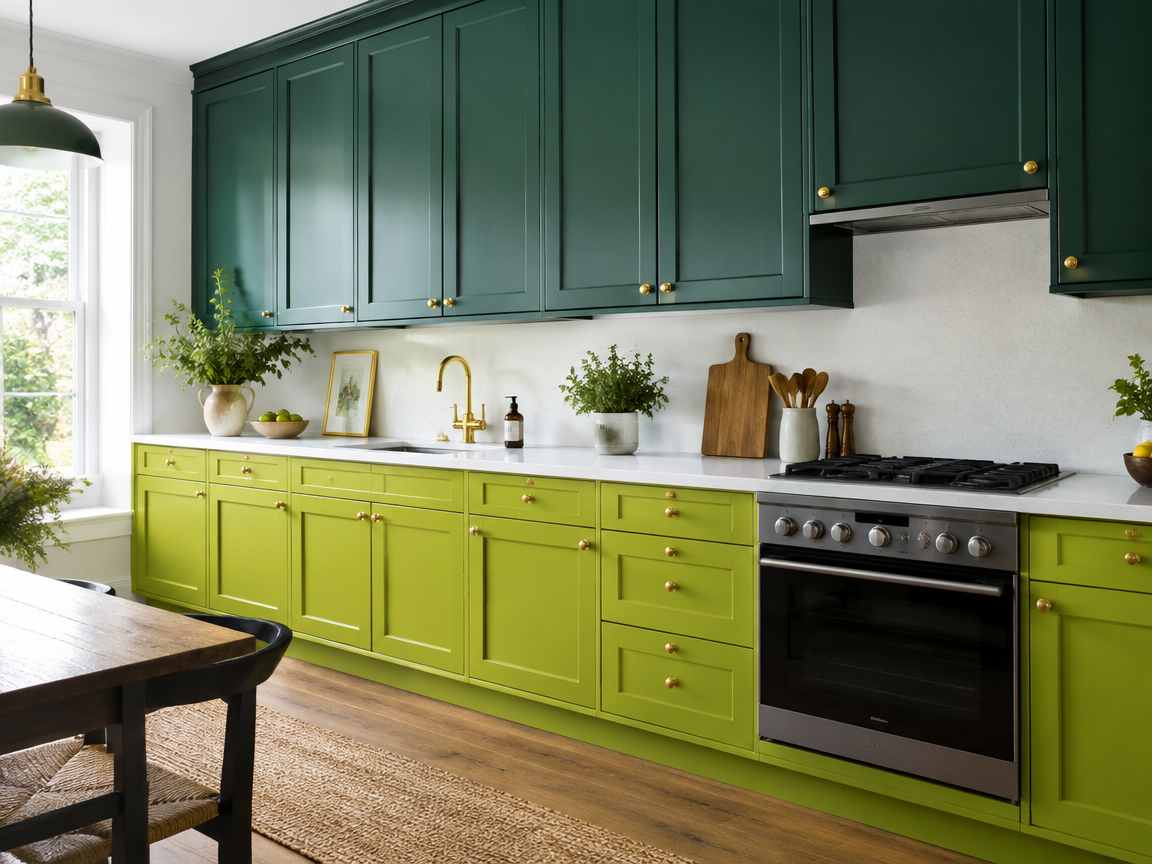
Two Greens: Chartreuse Base And Deep Green Uppers
Chartreuse below and deep green above is a bold two-tone for a confident kitchen. Both are green, so the pairing still feels calm.
Use a white worktop between them. It is the thin band that keeps the two colours apart.
How To Choose Your Green
Most green kitchens fail for one reason. The green was picked on a screen instead of on a door.
Work through the five steps below before you order anything. They take an afternoon and save a year of regret.
Start with the undertone
Hold the swatch against a plain white sheet of paper. A green with grey in it looks calm, and a green with yellow in it looks warm.
Your floor decides which one works. Yellow-based greens love oak, and grey-based greens love concrete and pale stone.
Match the light in your room
North-facing kitchens get cool light, so warm greens like olive stop them feeling grey. South-facing rooms can carry mint and eucalyptus without going pale.
Look at the swatch at night with the lights on too. That is when most people actually use the kitchen.
Test one real door
Paint a spare door or a large board in the finish you plan to buy. Tape it to a cabinet and live with it for a week.
Paint chips look far stronger in a small square than they do across a whole run.
Choose the worktop first
The worktop and the floor are the two biggest surfaces in the room. Pick them before the cabinets and the green becomes an easy decision.
A white stone top makes dark green safe. A wood top makes pale green warm.
Keep hardware to one finish
One metal across the whole kitchen is what separates a designed room from a collected one. Brass, pewter or matte black will all work with green.
If you want two metals, repeat them at least twice each so the pattern looks intentional.
Paint Colours And Finishes That Suit Green
The finish changes the colour as much as the shade does. The same green in matte and in gloss looks like two different paints.
Here is the short version of what each finish does in a working kitchen.
Matte
Matte absorbs light and makes dark greens look velvety. It shows fingerprints less than gloss but is harder to wipe on tall doors.
Use it on wall cabinets and keep the sink run in a lower sheen.
Eggshell and satin
These are the practical middle ground and the best choice for a family kitchen. The slight sheen wipes clean and still looks soft.
It also keeps pale greens from looking chalky under artificial light.
Lacquer and gloss
High gloss makes emerald and forest look like jewellery, but it shows every mark. It works best in a kitchen that is not the busiest room in the house.
Choose a satin lacquer if you want the depth without the smudges.
Hardware And Lighting Pairings
Green is a cool colour, so most kitchens need one warm element to feel finished. Metal and light are the easiest ways to add it.
These four pairings cover almost every shade in this guide.
Unlacquered brass
This is the most forgiving choice for green. It starts bright and dulls down to an aged gold that suits forest, olive and sage.
Antique pewter and nickel
Cool metals keep olive and moss looking earthy instead of sweet. They also suit a house with stainless appliances.
Matte black
Black gives pale greens a sharp modern edge and works with steel windows. Use it on handles and the tap, then stop.
Warm light at 2700K
Warm bulbs flatter green paint far better than cool white ones. Put a dimmable layer under the wall cabinets and keep the ceiling light soft.
Five Mistakes To Avoid
These are the ones that show up again and again in real kitchens. All five are easy to dodge at the planning stage.
Painting every surface the same green
Colour drenching works only when the light is good. In a dark room it turns the kitchen into a tunnel.
Mixing three metals
Two metals is plenty. Three makes even an expensive kitchen look unfinished.
Choosing green for the uppers only
Green wall cabinets with white lowers can leave a room top-heavy. Put the colour at eye level or below.
Forgetting the ceiling
A bright white ceiling above dark green cabinets looks like a lid. Tint the ceiling a shade of the same green.
Buying handles before the paint dries
Order the door sample first, then the hardware. Metal looks different against a wet swatch than against a finished door.
Frequently Asked Questions
What is the most popular green for kitchen cabinets in 2026?
Sage is still the most requested, because it behaves like a neutral. Olive and forest green are close behind, and two-tone green islands are the fastest-growing choice.
Do green kitchen cabinets make a room look dark?
Not if you pair them with a bright worktop and a pale floor. Dark green actually reads as depth rather than shadow, and it makes a small kitchen feel bigger.
What colours go with green kitchen cabinets?
White, cream, pale oak, terracotta and brass all work. Dusty pink and warm grey also pair well, especially with soft sage.
What hardware suits green cabinets best?
Unlacquered brass is the safest and most popular. Antique pewter, aged nickel and matte black all work well, as long as you keep to one finish.
What floor works with a green kitchen?
Warm oak suits every shade of green. Terracotta and pale concrete work with olive and mid greens, and patterned tile suits cottage styles.
Are green kitchen cabinets still in style?
Yes. Green has moved from trend to classic, and designers now treat it the way they treat navy or grey. The shade you choose matters more than the colour itself.
Pick One Idea And Build Around It
You do not need to copy a whole kitchen. One good decision is usually enough.
Choose the shade that suits your light, then let the worktop and the metal finish follow it. The 63 ideas above are there to show you how that looks in practice.
Start with the idea that made you stop scrolling. That instinct is usually right.


