

49 Living Room Shelving Ideas: Stylish Built-Ins, Floating Shelves & Displays
A living room with good shelving always feels finished. It is the one change that adds storage and personality at the same time.
The problem is that most shelves are filled badly. A wall of clutter looks worse than an empty wall.
This guide solves both problems at once. It gives you 49 shelving ideas, each with a real photo and the details that actually matter.
We have grouped them by style so you can scan to the one that suits your room. Every idea is different, so nothing here repeats.
Read the sizes and the styling notes as well as the photos. That is the part most shelf guides leave out.
Use the index below to jump straight to a section. Or scroll slowly and let the room tell you what it needs.
Built-In and Architectural Shelving
Start with the ideas that change the bones of the room. Built-in shelving replaces a blank wall with useful architecture.
It costs more than a floating shelf, and it adds the most value to a home. These nine designs are the ones worth saving.
Floor-to-Ceiling Oak Built-Ins Flanking a Fireplace
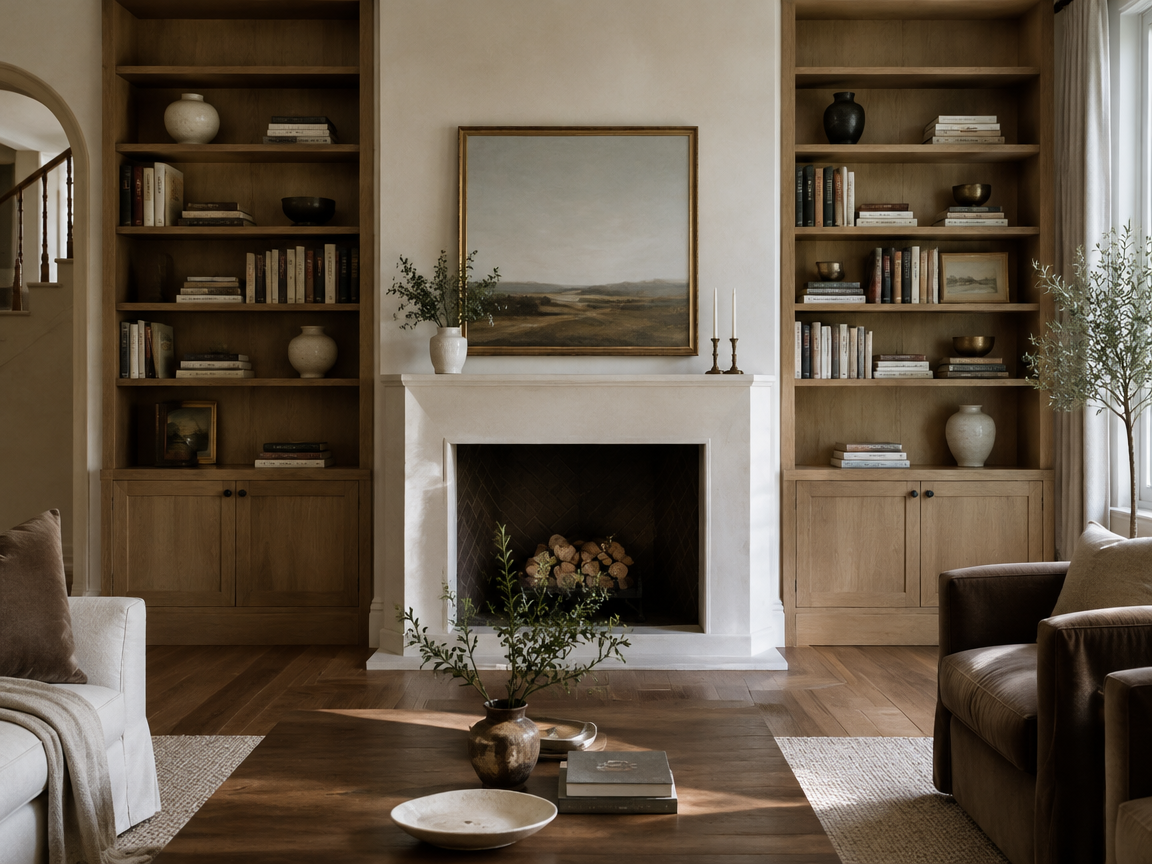
Take the shelving all the way from skirting to ceiling. Height pulls the eye upward and makes an ordinary room feel taller.
Flank a fireplace on both sides for instant symmetry. Warm oak stops the joinery from looking heavy or cold.
Best for rooms with a chimney breast and ceilings of 2.7m or more.
Arched Plaster Niches
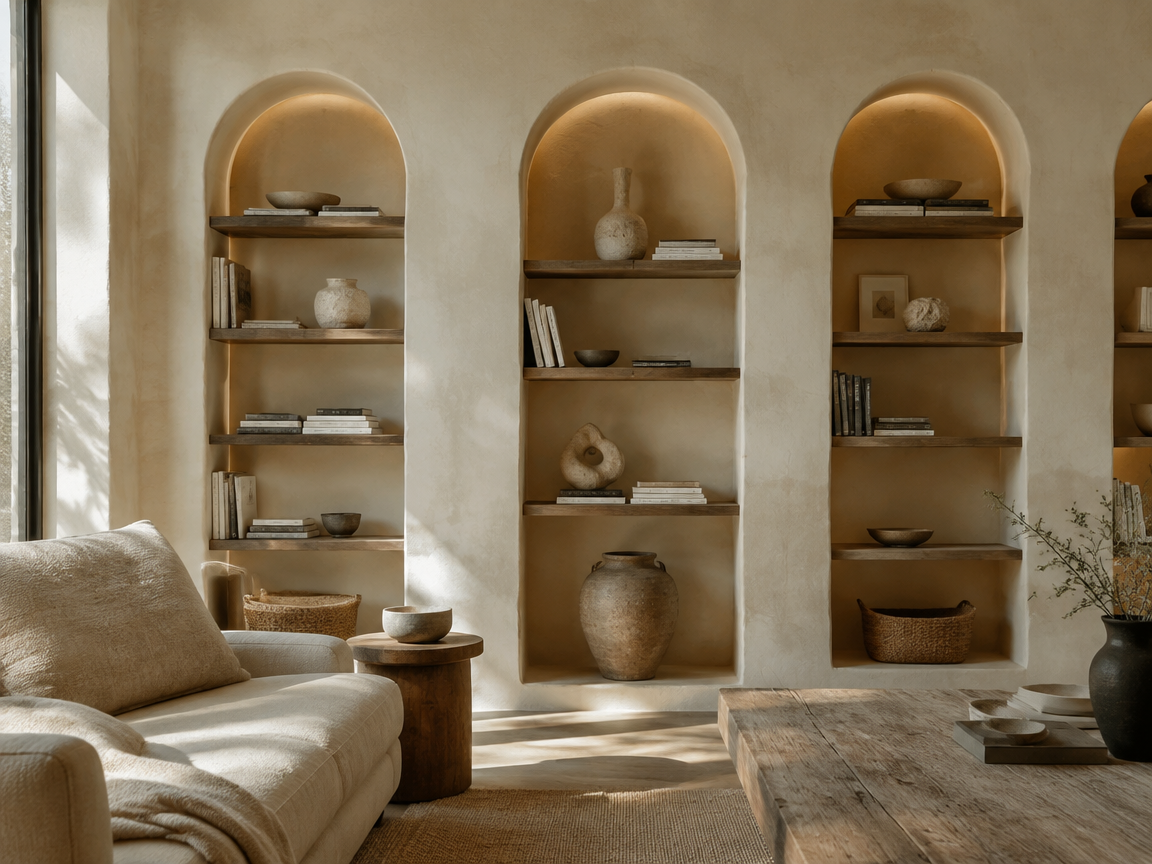
Curved niches carved into a plaster wall feel architectural rather than added on. The arch softens a wall full of straight edges.
Run a warm LED strip inside each arch. The glow picks out books and ceramics without a visible fixture.
Best for period homes and anyone chasing a soft Mediterranean mood.
Library Ladder Shelving
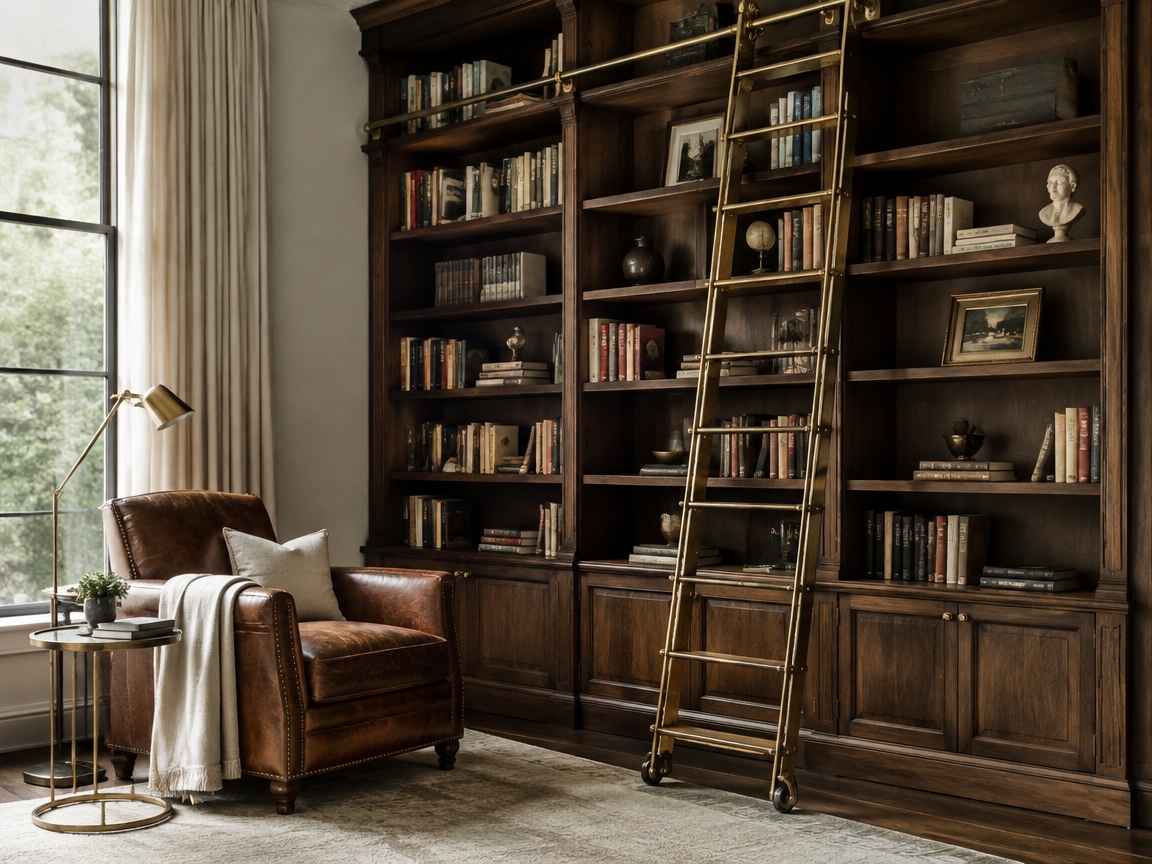
A rolling brass ladder turns a tall bookcase into a proper library. It also solves the top-shelf problem for good.
Keep the lowest shelves deep and the upper ones shallower. Staggered depths stop the wall reading as one flat slab.
Best for double-height walls and serious book collectors.
Shelves That Wrap a Doorway Arch
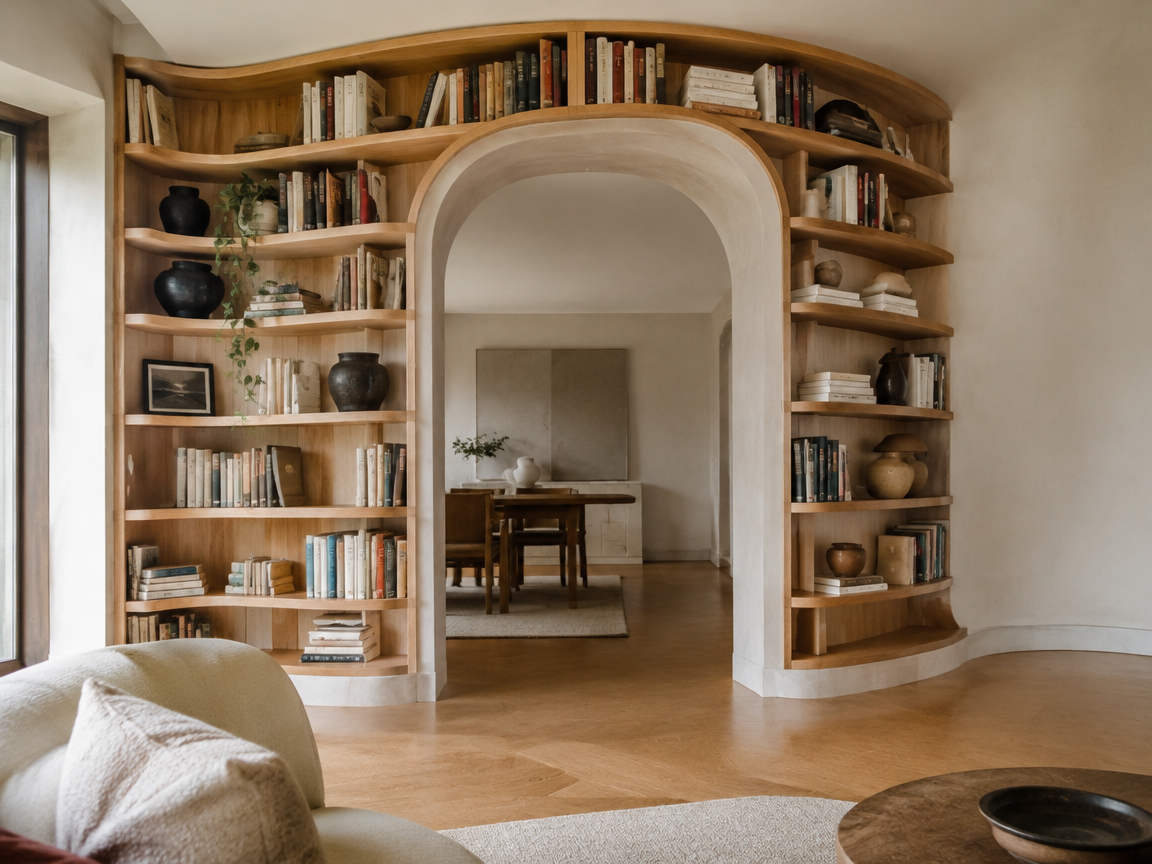
Curve the shelves around the doorway instead of stopping at the frame. The opening becomes part of the furniture.
Use slim 20mm boards so the arch still reads clearly. Continue the same timber into the next room for continuity.
Best for open-plan rooms with one strong doorway.
Under-Stair Living Room Shelves
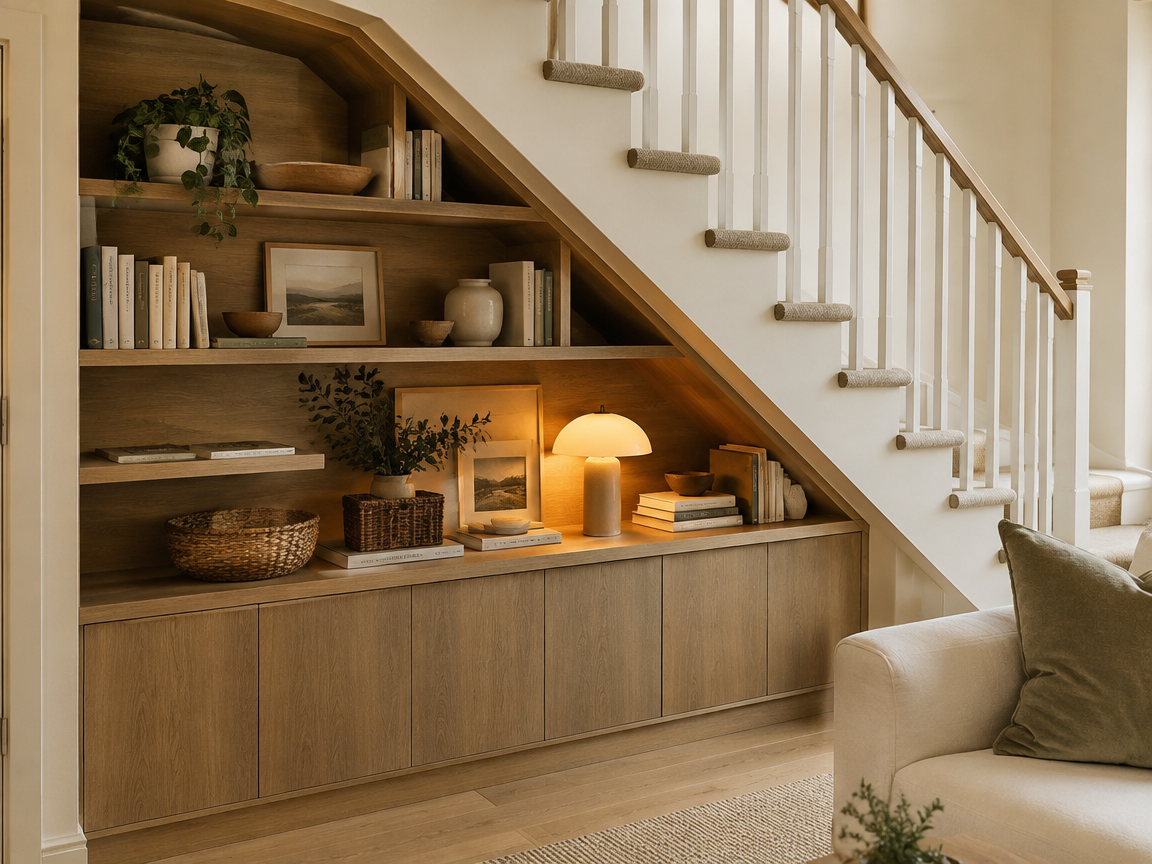
The triangle under a staircase is usually wasted space. Angled shelves turn it into the best display spot in the room.
Follow the pitch of the stairs with each shelf so nothing looks forced. Add low baskets at the bottom for hidden storage.
Best for staircases that open straight into the living room.
Full-Wall Bookcase With a Secret Pivot Panel
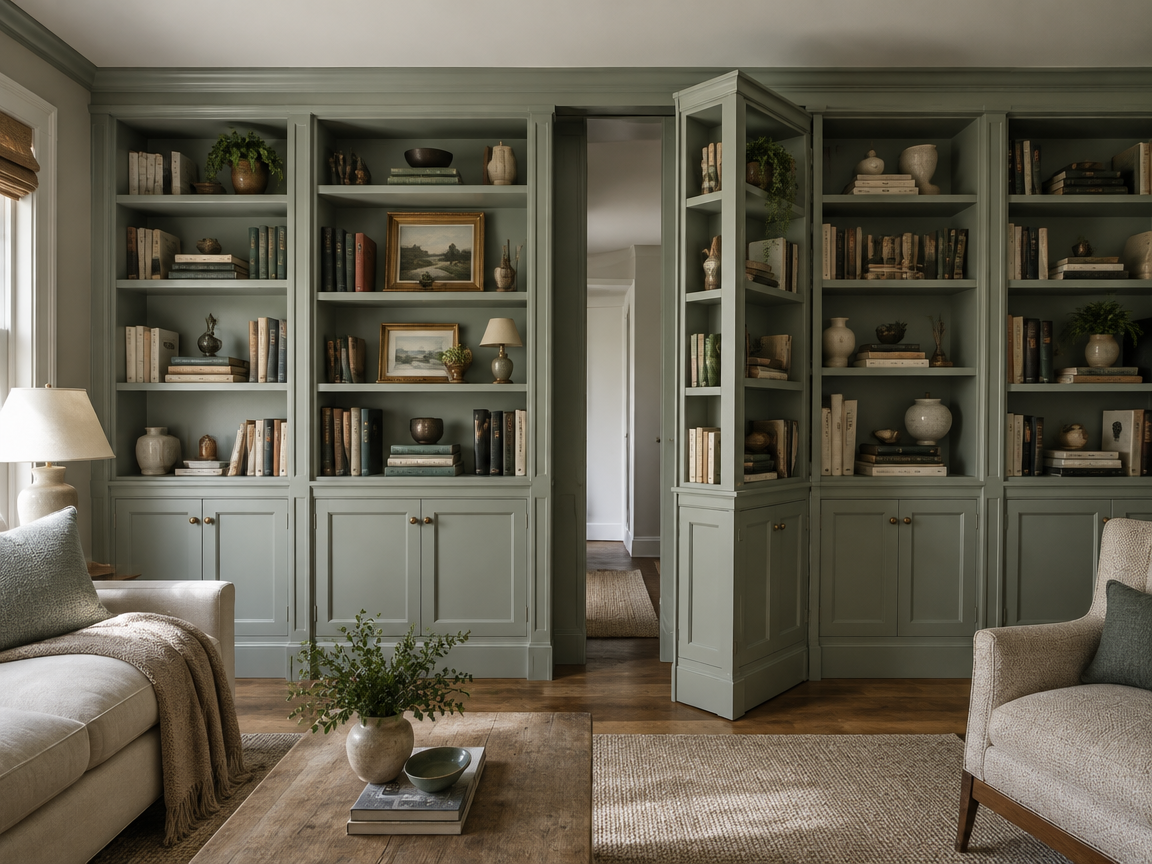
One section of the bookcase swings open on a concealed pivot hinge. Behind it sits a snug, a study or a stairwell.
Paint everything the same colour so the join disappears. Keep the panel’s shelves lightly filled so it still swings freely.
Best for period houses with awkward connecting rooms.
Bay Window Bench With Shelving Below
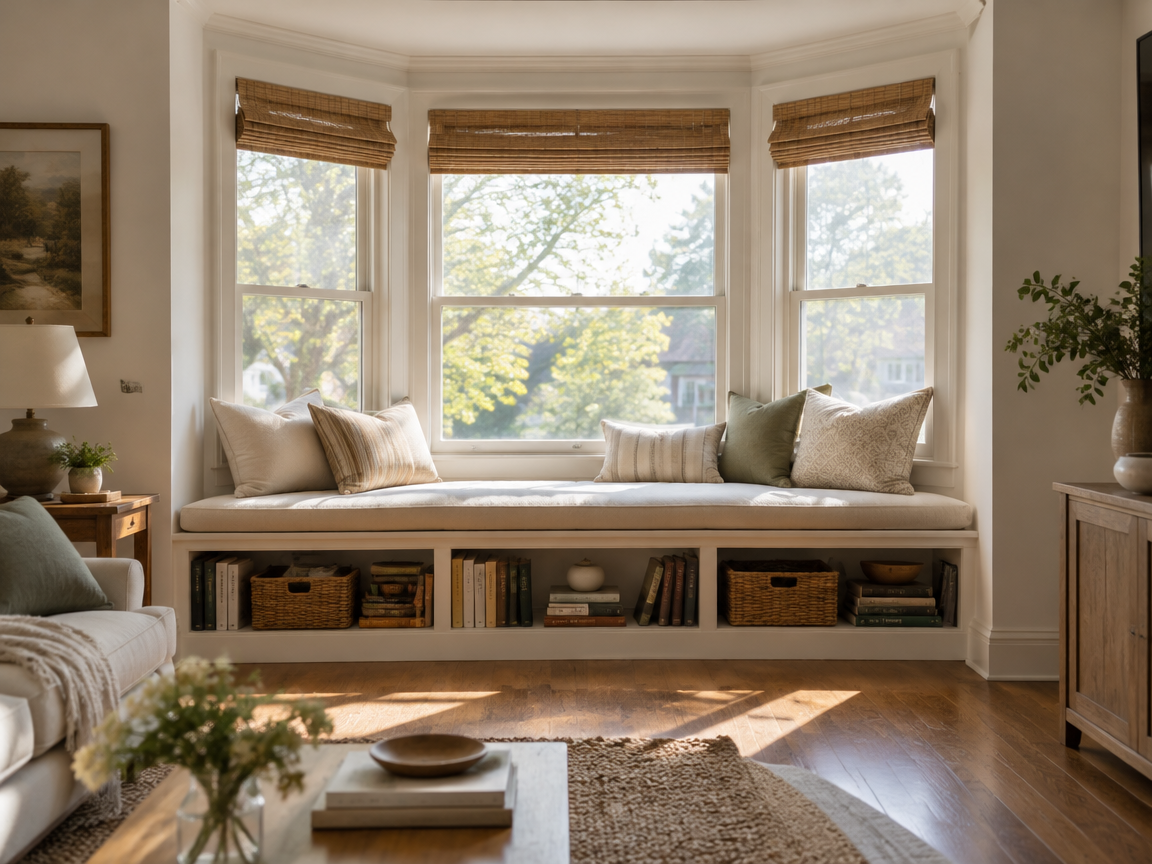
Run a cushioned bench across the bay and build open shelving underneath. You gain a reading seat and storage in one move.
Keep the shelf depth shallow so the window still floods the room with light. Baskets hide the mess of daily life.
Best for bay windows in Victorian and Edwardian homes.
Recessed Wall Niche With an LED Reveal
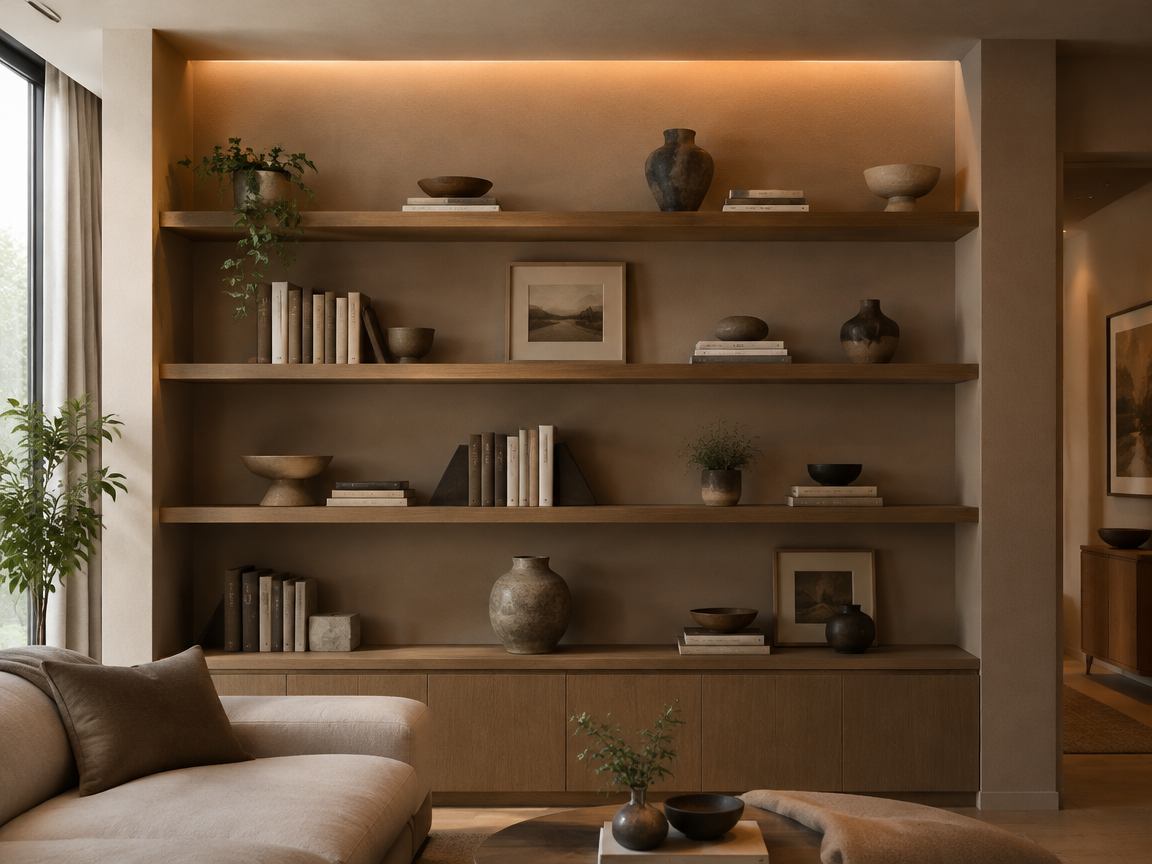
Chase a wide niche into the wall and line it with horizontal boards. A 10mm LED reveal at the top washes light down the back.
The hidden light source is what makes this look expensive. You see the glow and never the strip.
Best for modern builds with stud walls you can recess into.
Stair-Landing Shelf Wall Above a Sofa
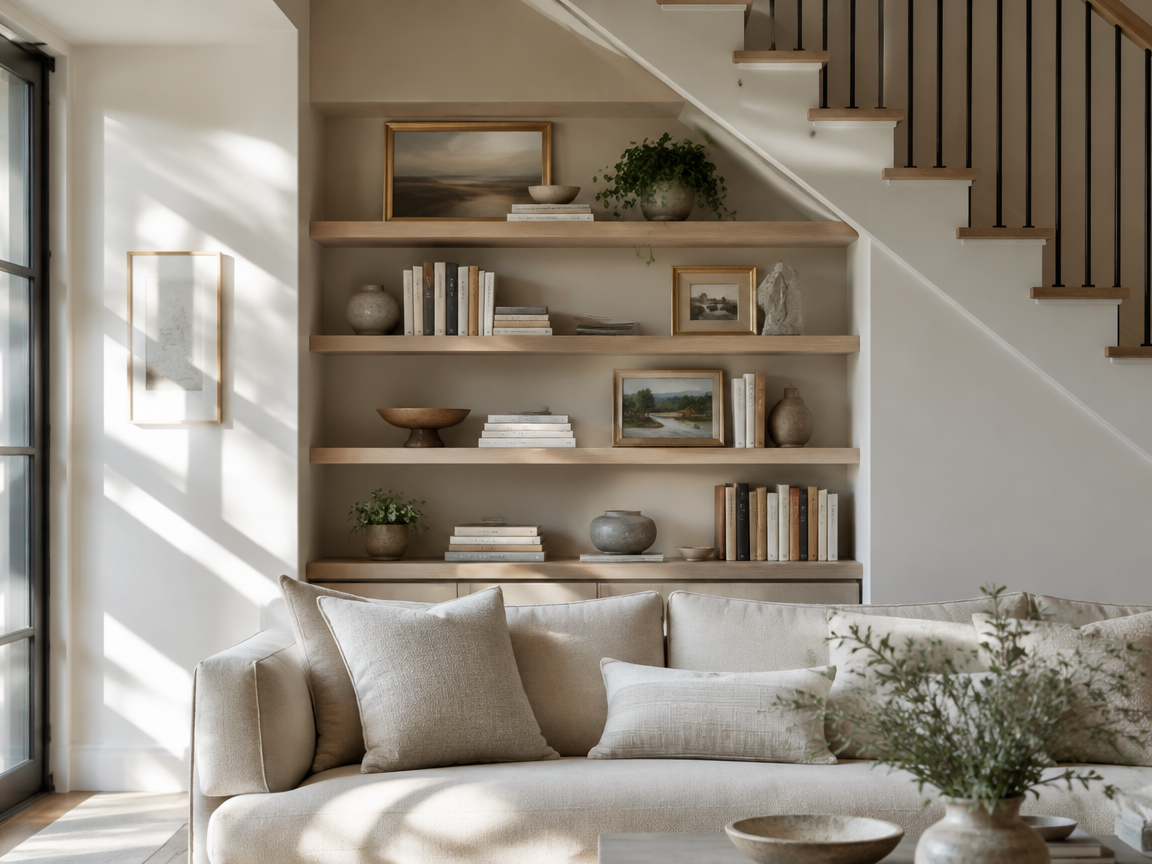
Use the wall that runs up beside a staircase for open shelving. It is often the largest blank surface in the house.
Keep the bottom shelf high enough to clear the sofa back. Continue the line up past the landing for a continuous run.
Best for split-level and open-staircase layouts.
Floating and Minimal Shelving
Floating shelves look simple and are anything but. The brackets, the board thickness and the spacing do all the work.
Get those three right and the wall carries the room. Get them wrong and every sag shows.
A Single Deep Floating Oak Shelf
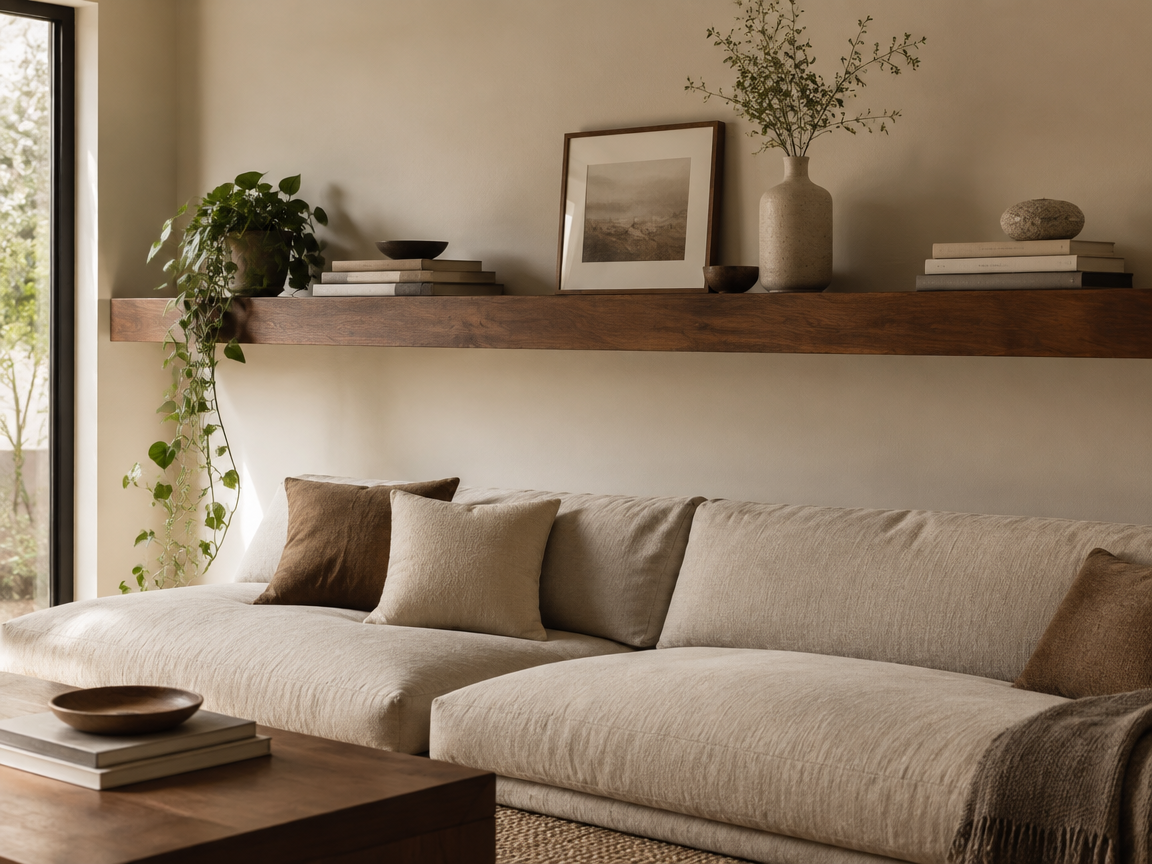
One generous shelf can do more than five thin ones. Go 250mm deep so books and vases actually sit safely.
Mount it roughly 350mm above the sofa back. Centre it on the sofa rather than the wall and it will feel intentional.
Best for minimal rooms that need one strong horizontal line.
Staggered Floating Shelves in Warm White
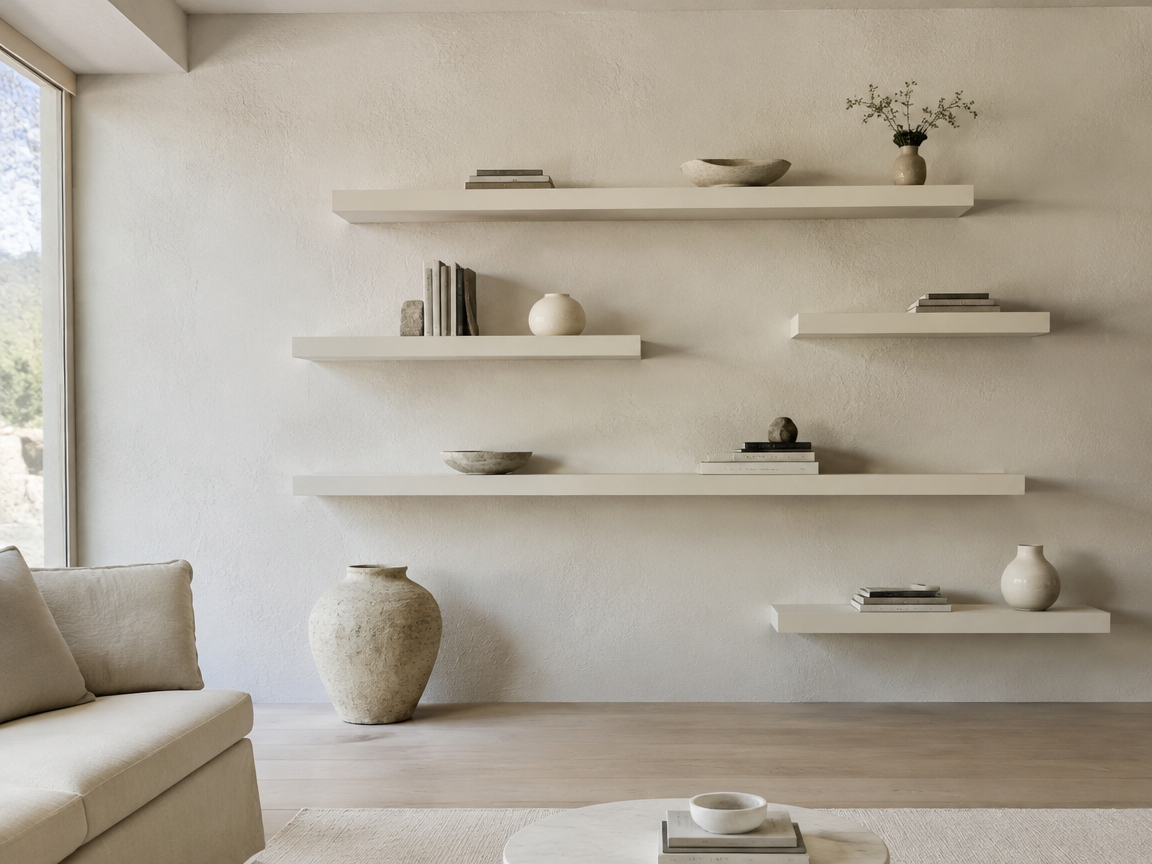
Alternate long and short boards at different heights across the wall. The uneven rhythm keeps a plain wall interesting.
Paint the shelves the same warm white as the plaster. The wall then reads as one soft texture instead of a grid.
Best for calm, minimal schemes and rented walls.
Ultra-Thin Picture Ledges for Rotating Art
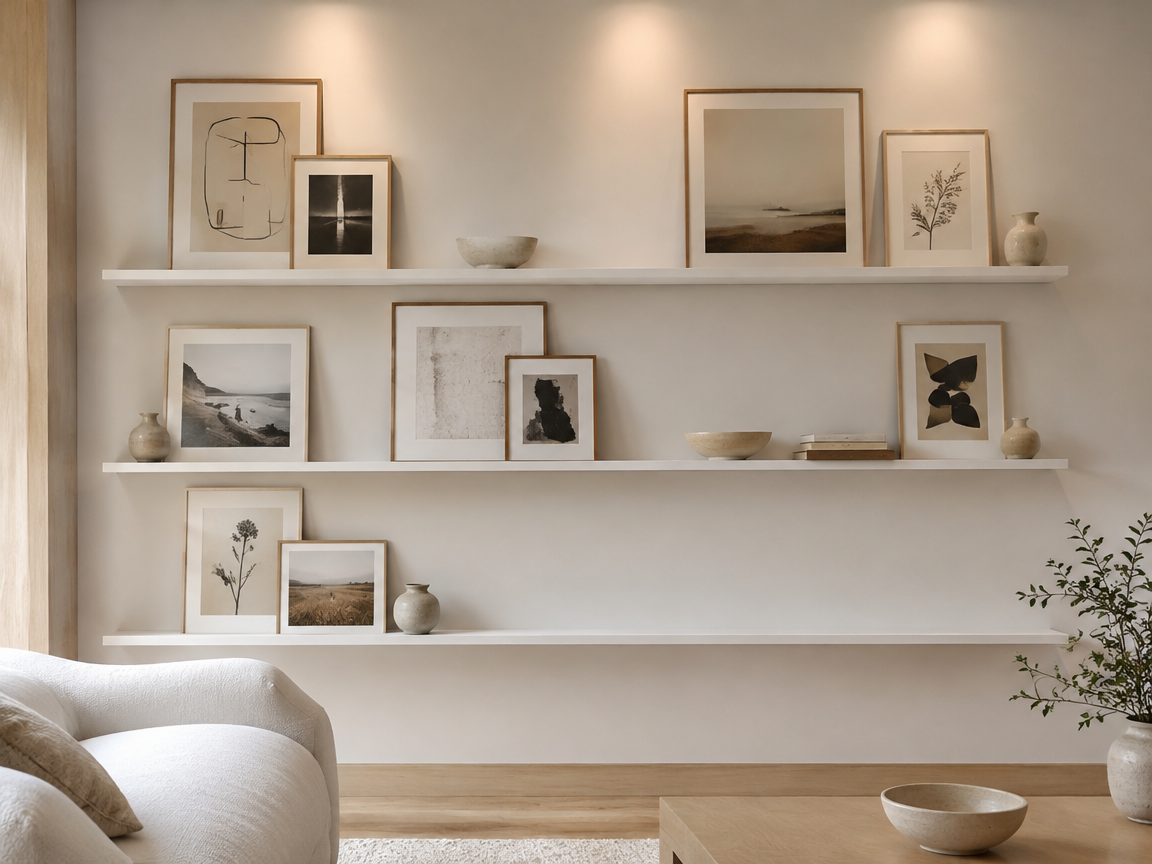
Shallow ledges let you lean art, prints and ceramics instead of hanging them. Rearranging takes seconds and leaves no holes.
Stack three ledges about 300mm apart for a gallery effect. Overlap the frames slightly so the display looks collected.
Best for anyone who likes to change their walls often.
Invisible-Bracket Floating Shelves
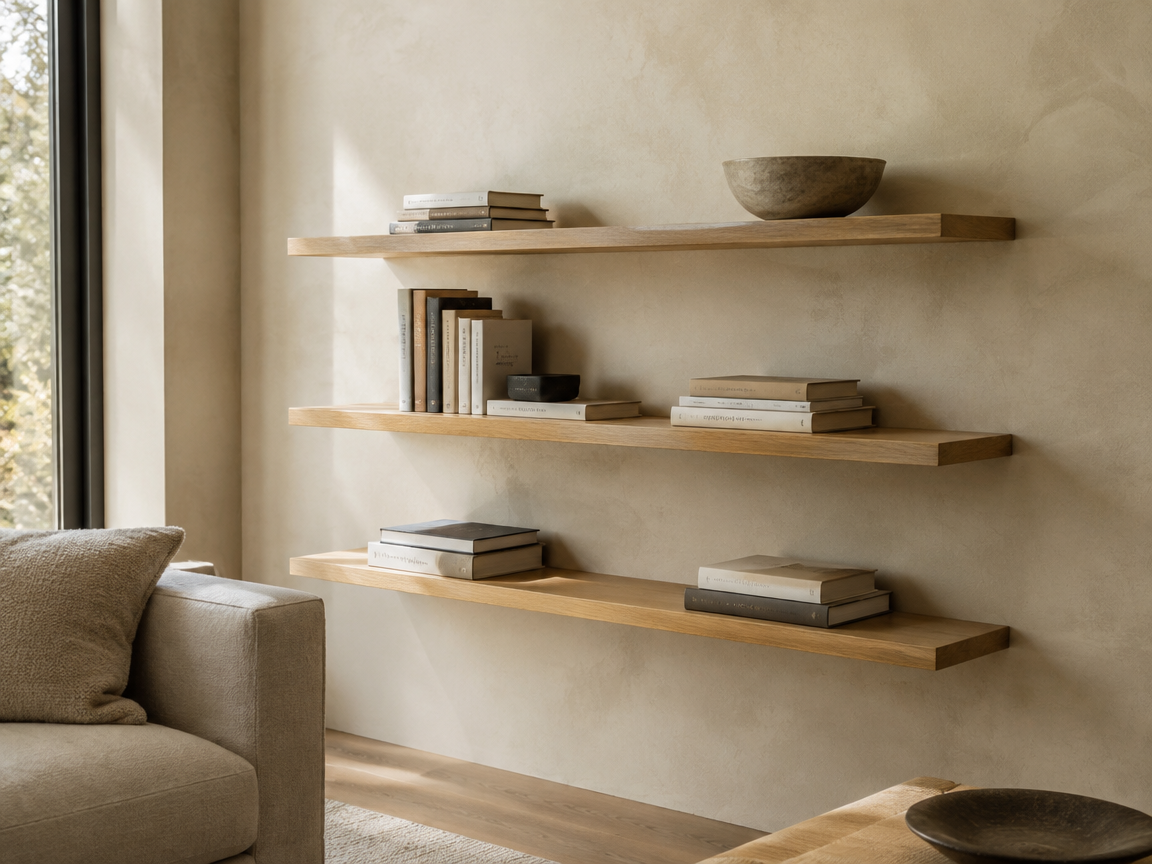
Concealed steel brackets let a shelf sit flush with no visible support. The result looks like it grew out of the wall.
Choose a 40mm board so it stays rigid over long spans. Fix into studs or add a hidden batten for heavy books.
Best for clean modern interiors with zero visual clutter.
Wraparound Corner Floating Shelves
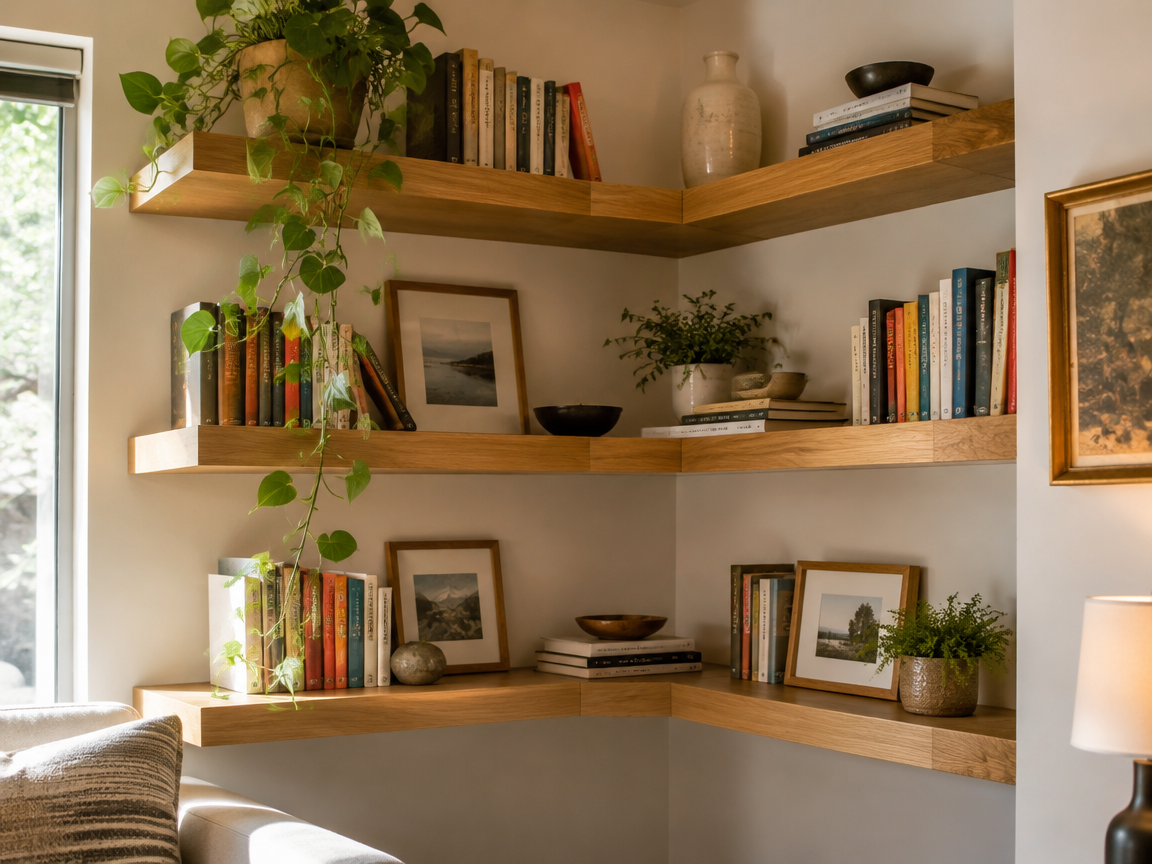
Run the shelves around an internal corner with a mitred joint. Corners are dead space until you do this.
Keep each return short so the shelves still feel light. A trailing plant softens the hardest point in the room.
Best for awkward corners beside a chimney breast.
Two-Tone Floating Shelves in Oak and Black
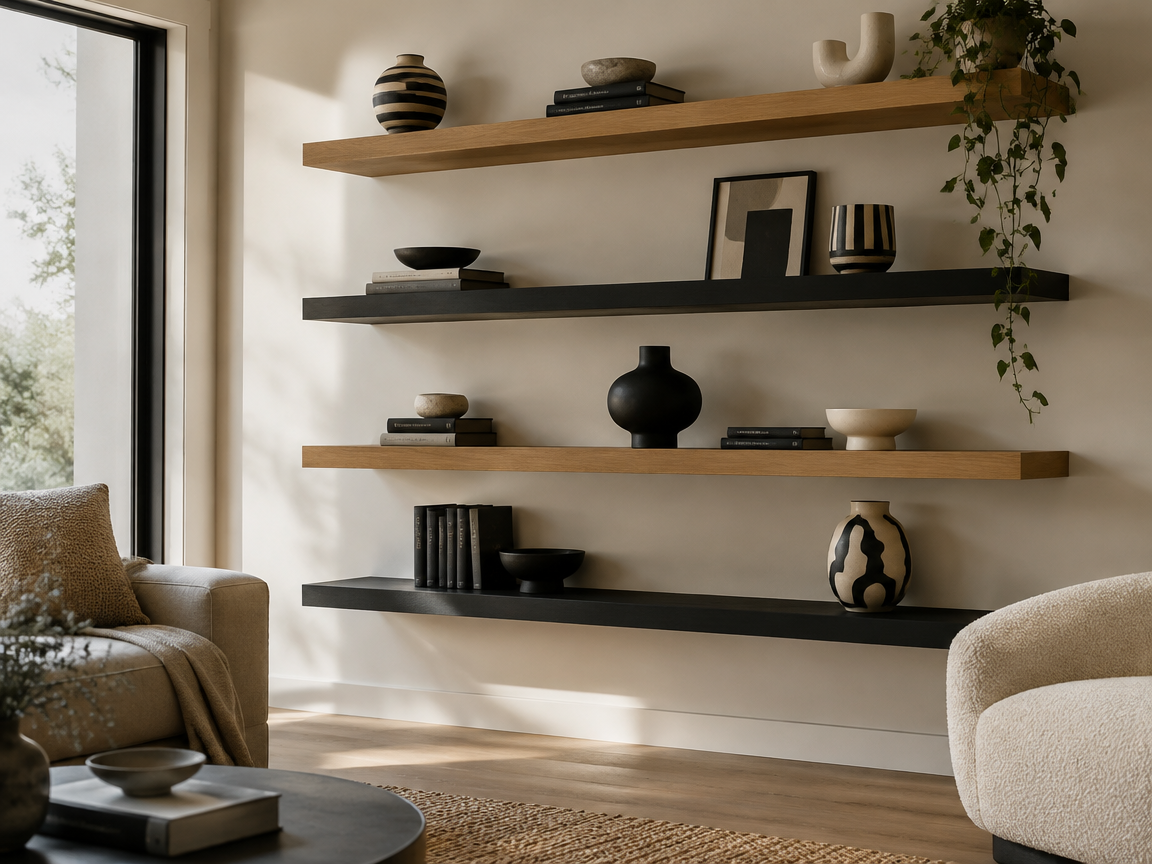
Alternate oak and matte black boards on the same wall. The contrast adds structure without adding furniture.
Repeat each finish twice so the pattern looks deliberate. Match the black to your window frames or lamp bases.
Best for modern rooms that feel a little too safe.
Cantilevered Concrete Shelf Wall
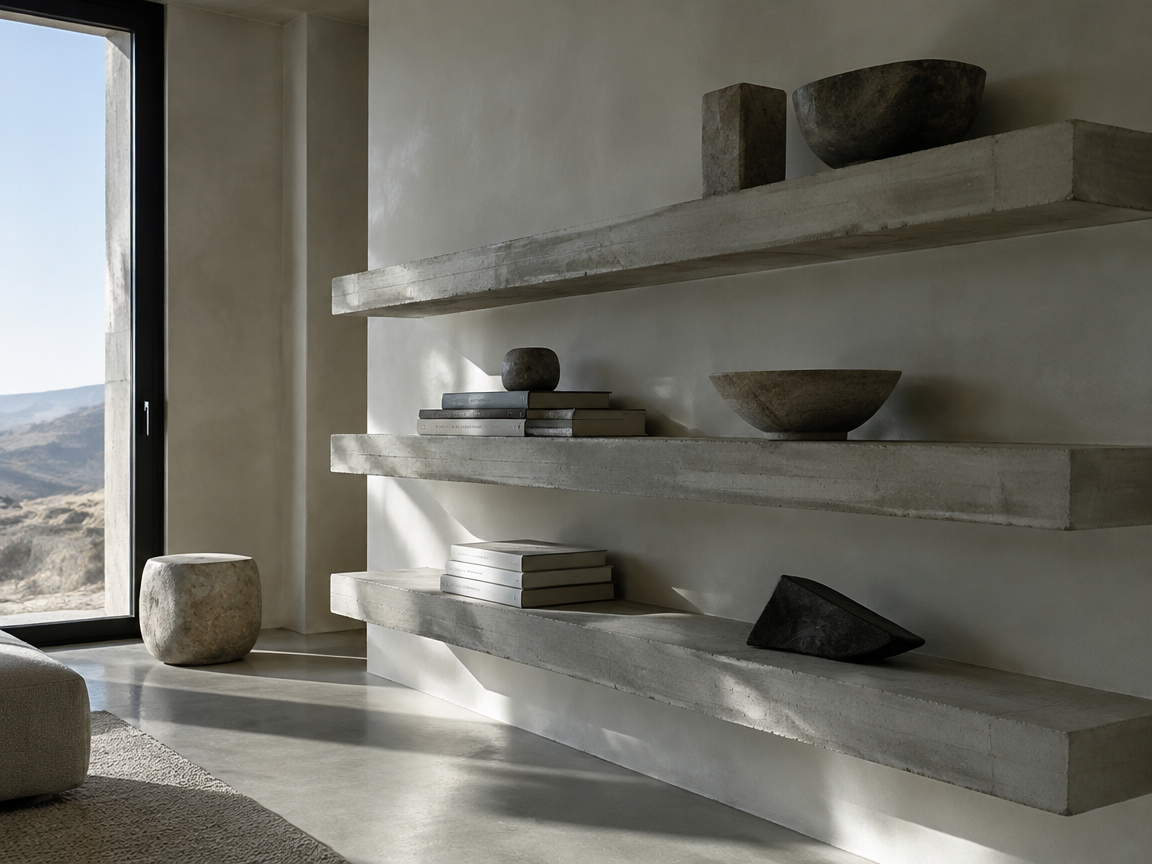
Thick concrete slabs cantilevered from the wall bring a sculptural weight. Each shelf becomes architecture rather than storage.
Space them widely and style them sparsely. Concrete needs air around it or the wall turns into a bunker.
Best for large rooms with strong natural light.
Fireplace and Media Wall Shelving
The wall around your fireplace or TV is the loudest surface in the room. Shelving is how you calm it down.
These seven ideas balance the screen, the fire and the objects between them.
Symmetrical Brass-Framed Shelves Around a Fireplace
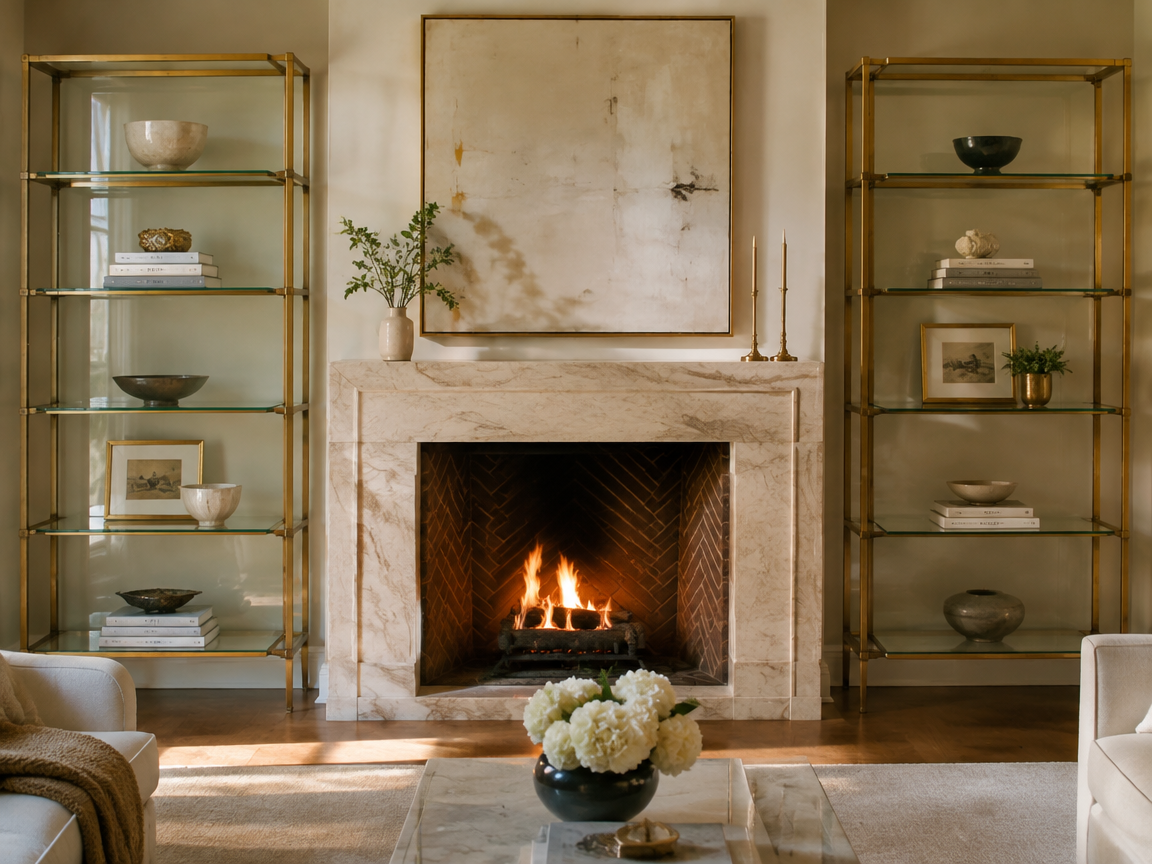
Slim brass frames with glass shelves keep the wall feeling open. The metal warms up a pale marble surround.
Let the brass age instead of sealing it. The patina is what makes this look collected rather than new.
Best for elegant rooms with a marble or stone fireplace.
Slatted Wood Media Wall With Floating Shelves
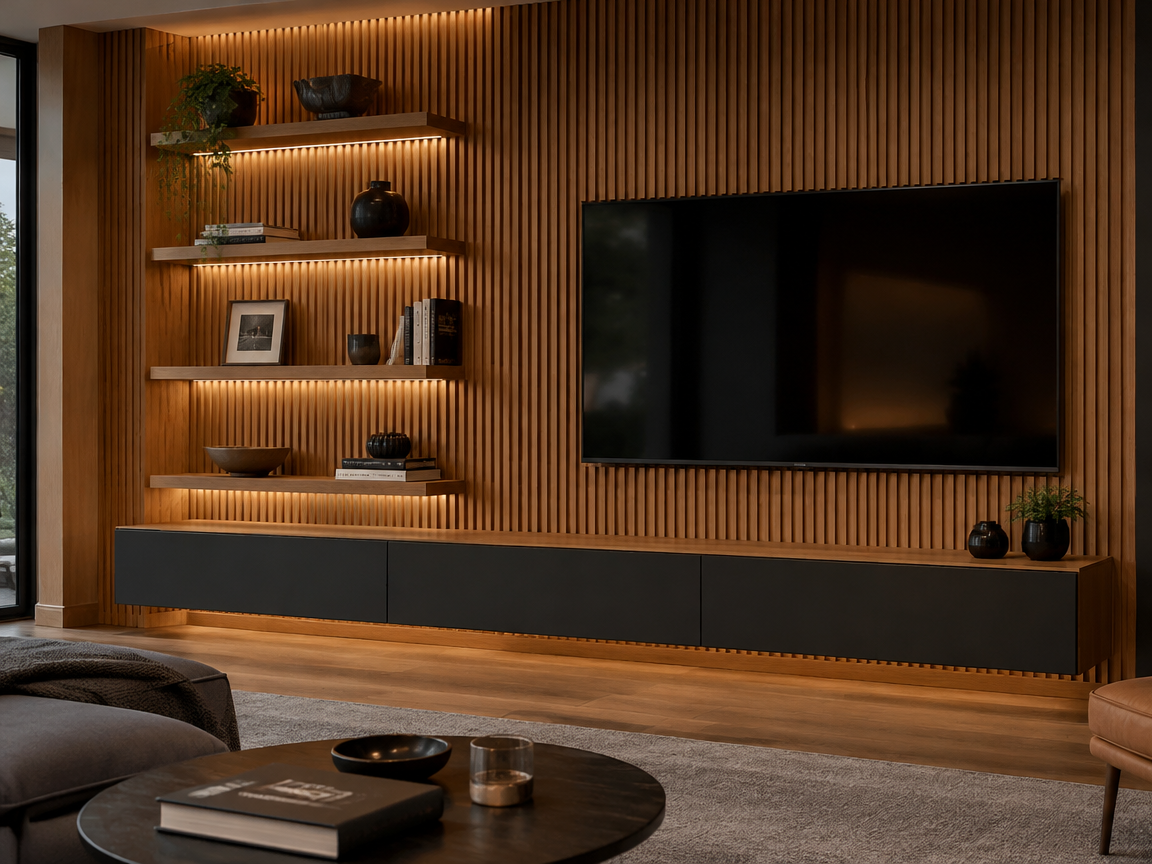
Vertical oak slats behind the TV add texture and hide the cables. Add floating shelves on one side for balance.
Keep the shelf depth under 250mm so they do not crowd the screen. Run the slats floor to ceiling for height.
Best for modern family rooms with a wall-mounted TV.
One-Sided Shelving Beside a TV
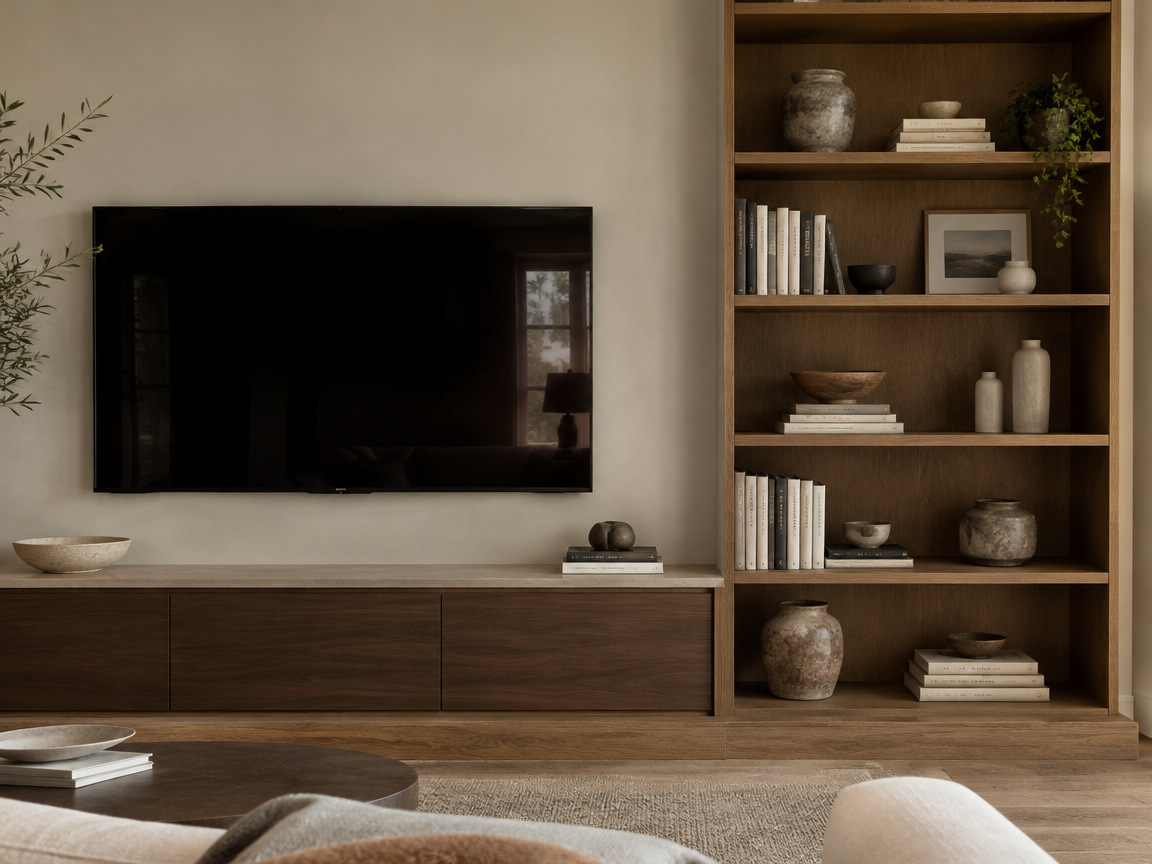
Skip the symmetrical media wall and put shelves on one side only. Asymmetry makes the room feel designed rather than fitted.
Take the shelf column full height to balance the width of the screen. Leave the lower shelves sparser than the upper ones.
Best for narrow walls where symmetry would feel cramped.
Stone Fireplace With Recessed Cubbies
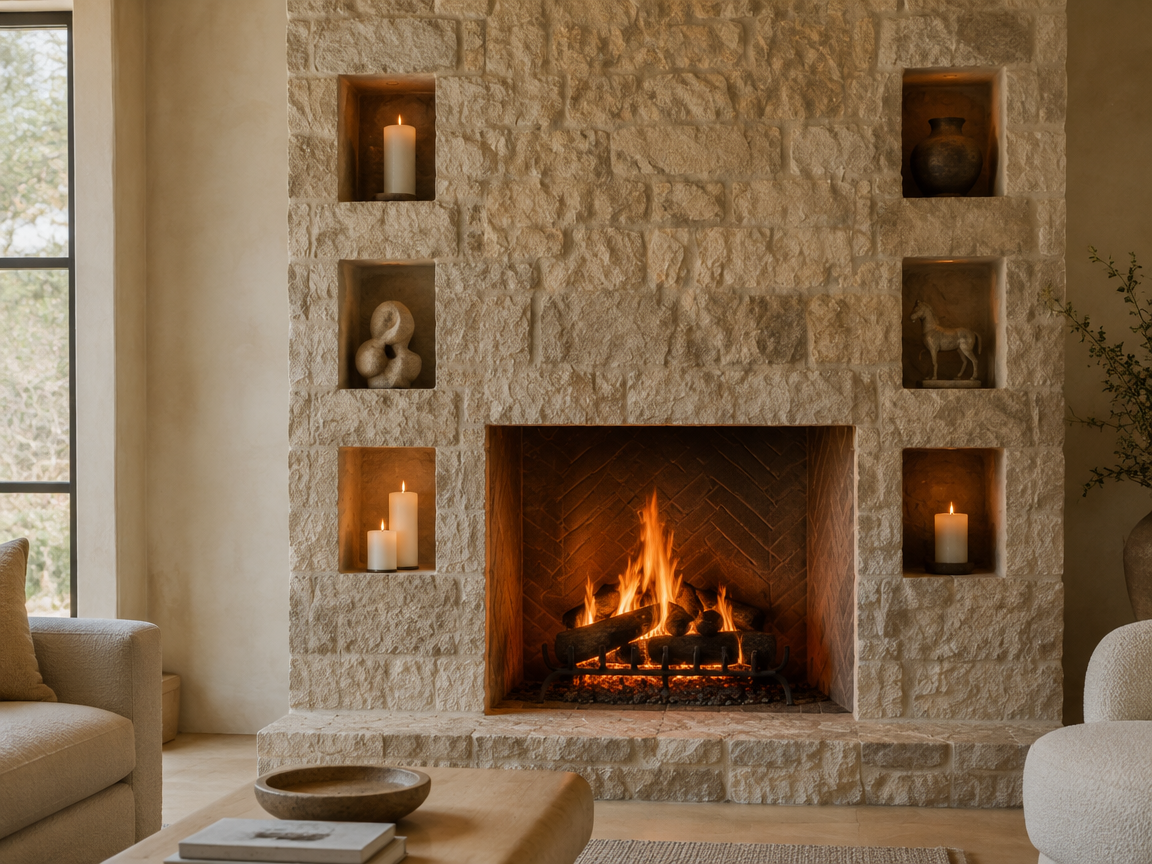
Small square cubbies cut into a stone surround hold candles and objects. They break up a large mass of masonry.
Line the cubbies with the same stone so they read as carved. Add a battery candle for a warm glow all year.
Best for chunky stone or brick fireplaces.
Fluted Panel Media Wall With Niche Shelves
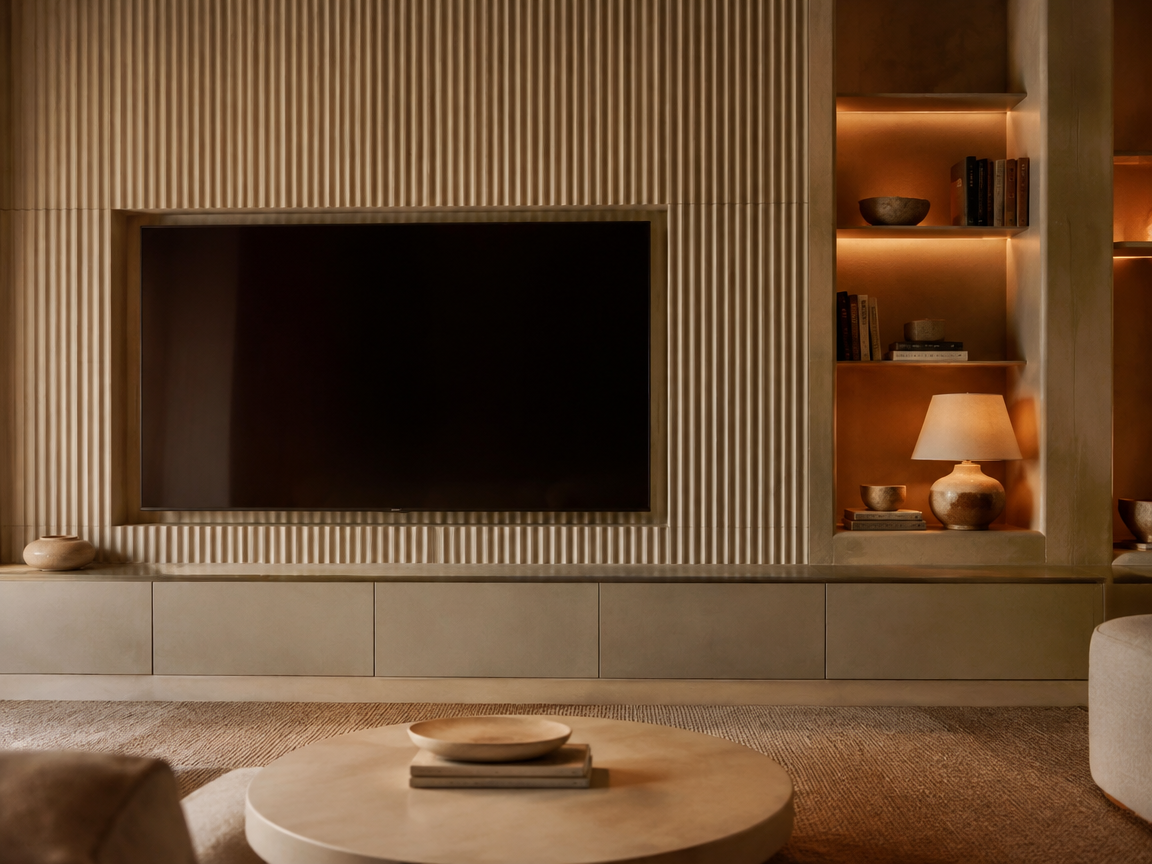
Fluted plaster or timber panels give a wall soft vertical shadow. Deep niches cut into the panels do the shelving.
Recess the niches so they disappear when empty. A warm 2700K bulb makes the texture glow after dark.
Best for warm minimal rooms with a plaster finish.
Low Media Console With Tall Shelf Towers
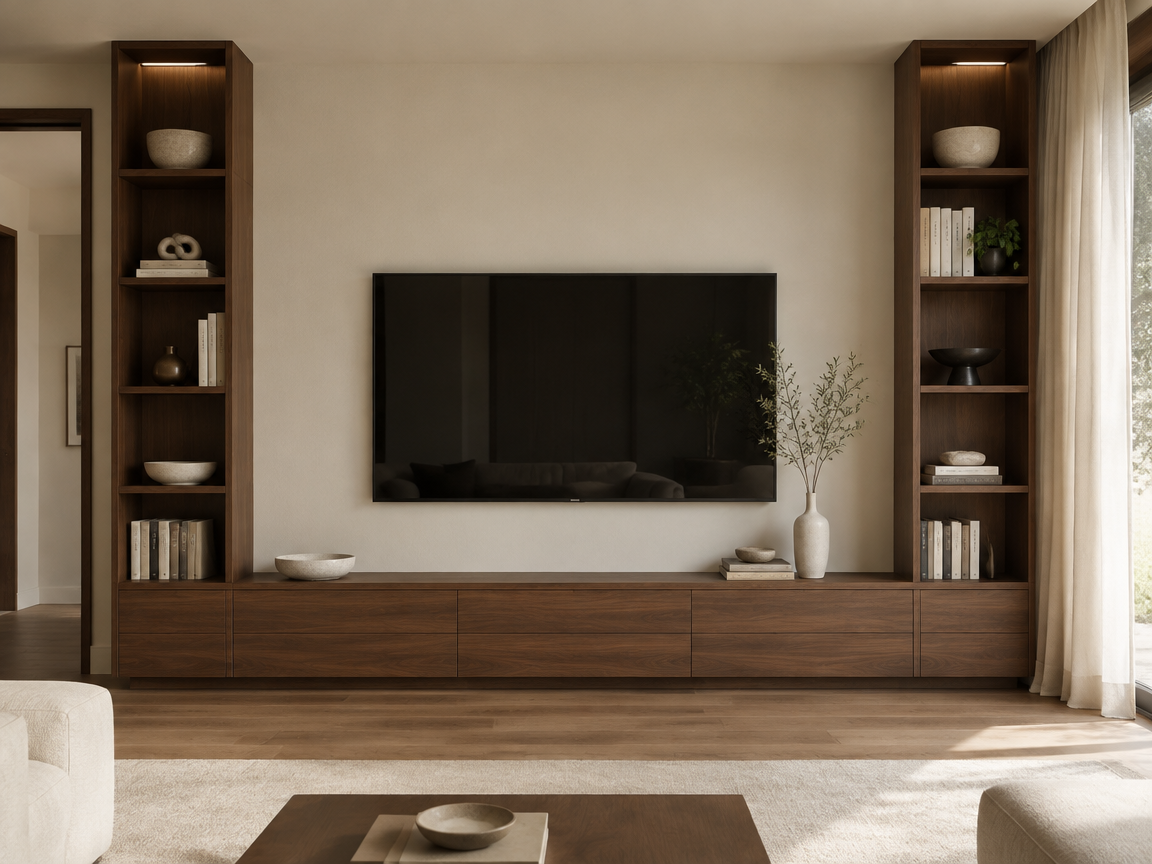
Start with a long console at around 400mm high and add two narrow towers either side. The low line keeps sight lines open.
Make the towers the same width as the console’s end panels. The whole wall then reads as one piece of joinery.
Best for long living room walls under 2.5m high.
A Floating Mantel Beam With Hidden Support
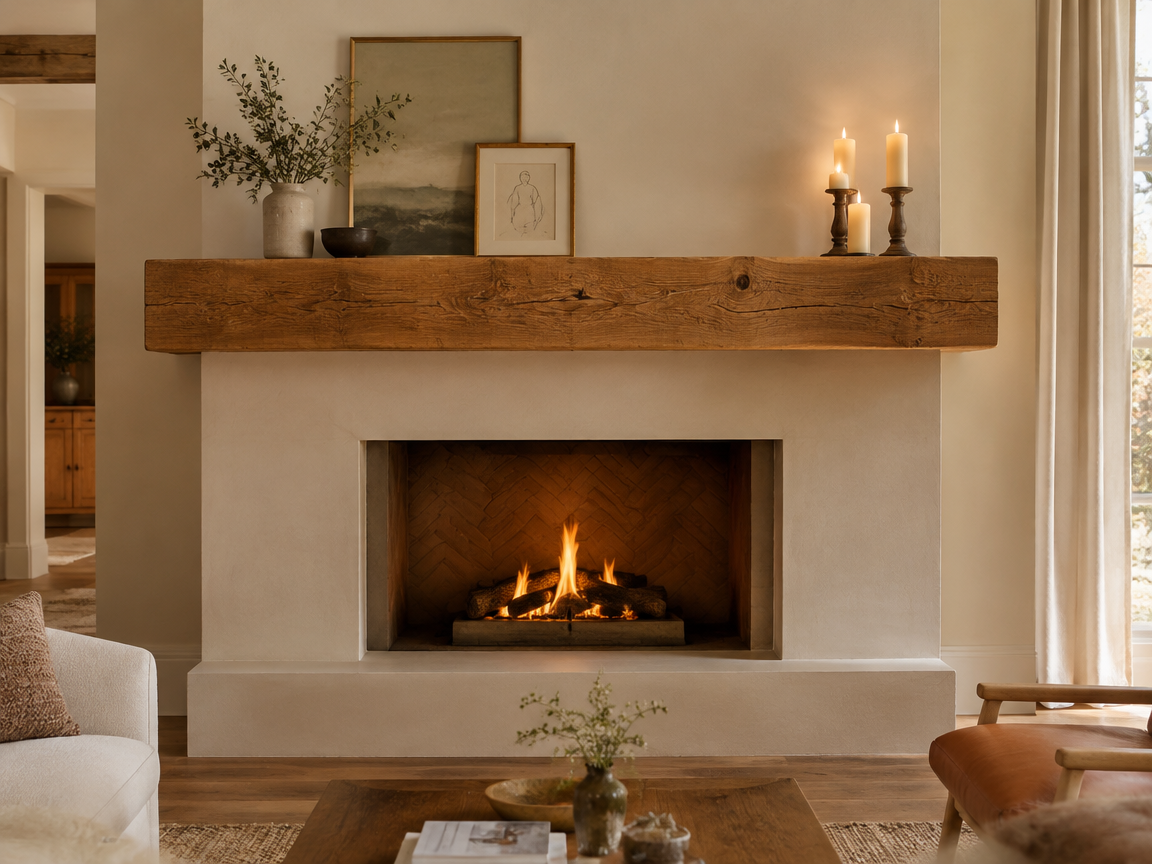
One chunky reclaimed beam above the fire does the work of a full mantel. A steel spine inside carries the weight invisibly.
Leave the top almost empty with candles and one leaning artwork. Crowding a mantel is what makes it look dated.
Best for fireplaces that need one strong focal point.
Industrial and Metal Shelving
Metal brings structure to a soft room. Thin frames let the objects lead, and raw materials add honesty.
These seven designs suit anyone who prefers texture over polish.
Slim Black Steel Frame Shelving
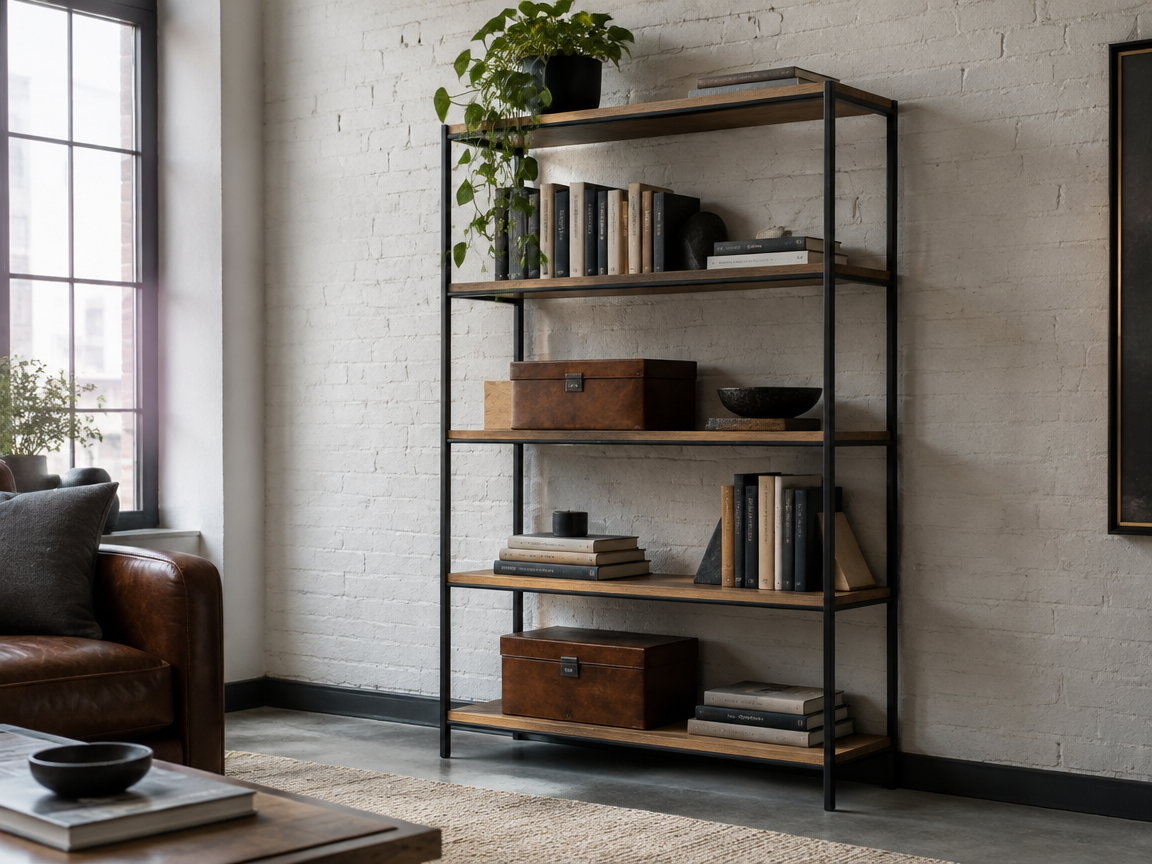
Thin powder-coated steel uprights hold oak or glass boards. The frame nearly disappears, so the objects do the talking.
Choose 25mm box section for a truly slim profile. Anchor the top to the wall so tall units cannot tip.
Best for loft apartments and open-plan rooms.
Scaffold Board Shelves on Steel Rods
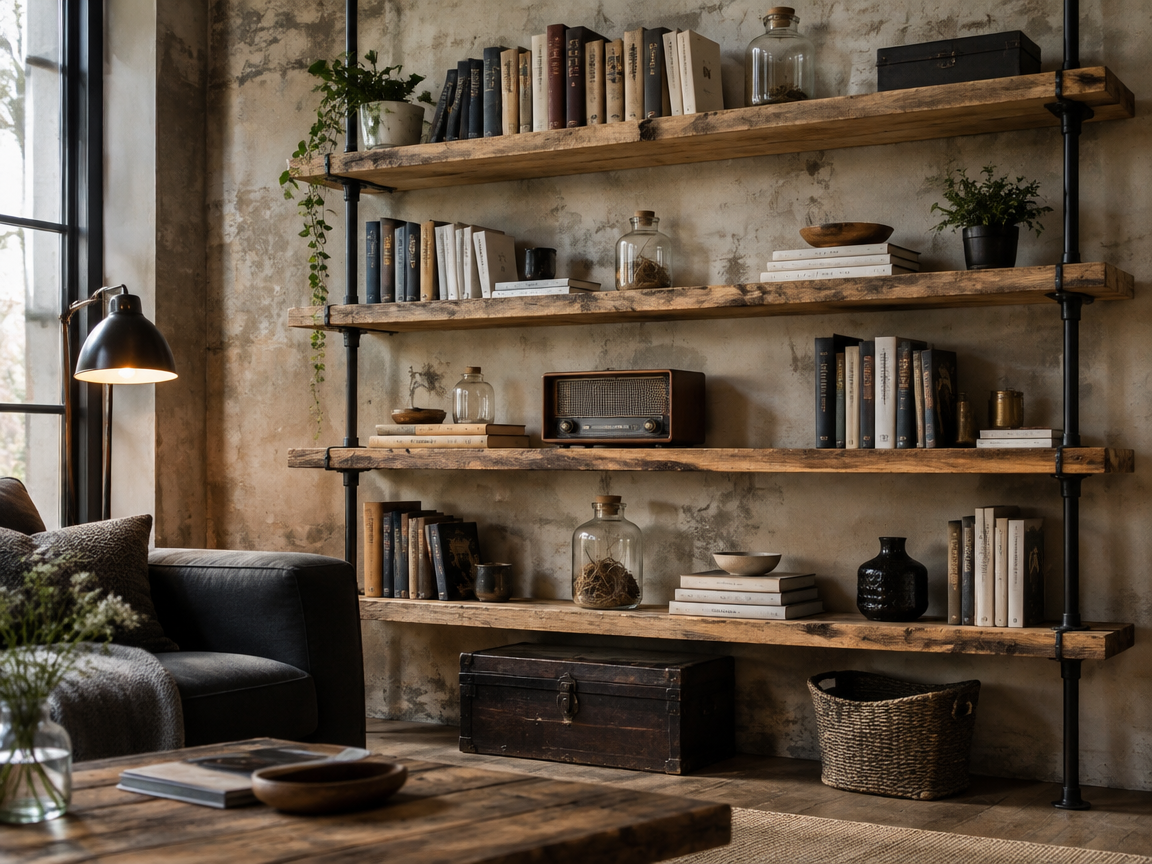
Wide reclaimed boards on threaded steel rods give instant loft character. They carry records, baskets and heavy books without sagging.
Sand the boards lightly but leave the marks and nail holes. The wear is the whole point.
Best for industrial and warehouse-style conversions.
Concrete Slabs on Black Steel Posts
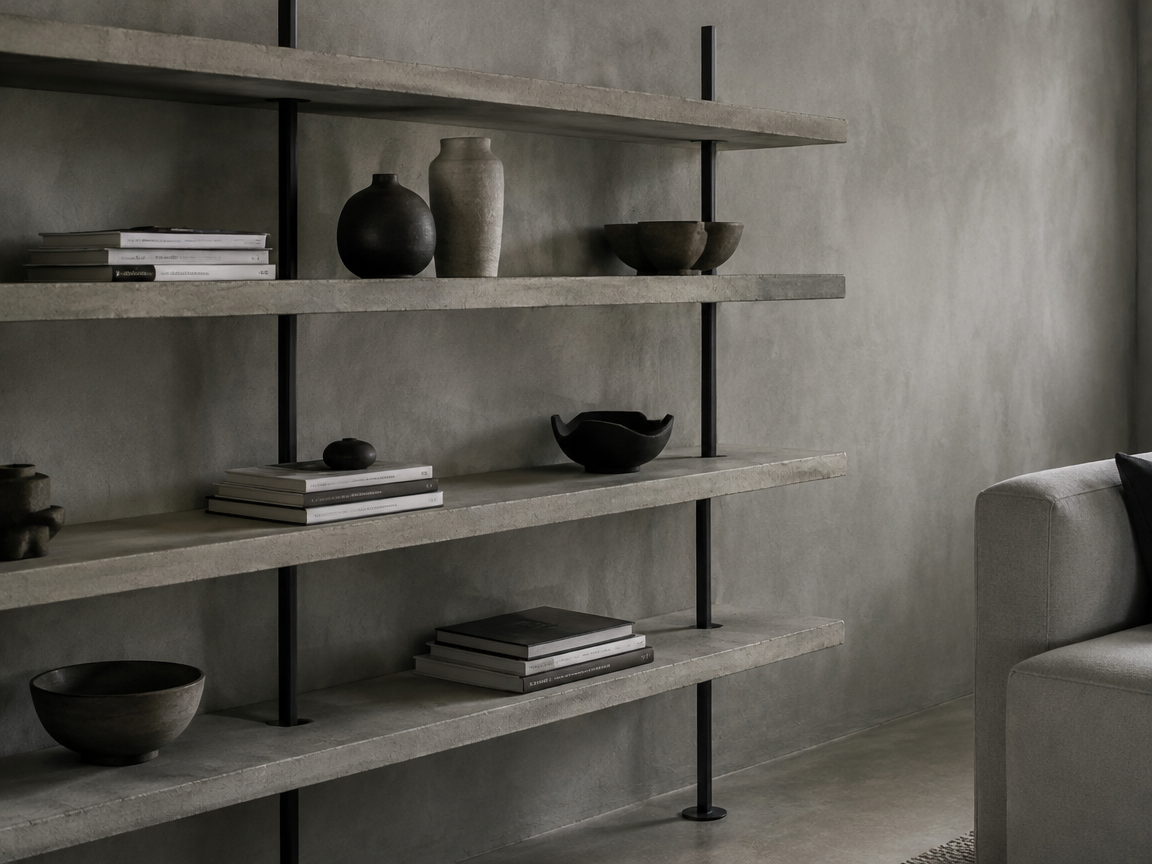
Pair grey concrete shelves with slim black steel uprights for a hard, honest look. The two materials flatter each other.
Use a microcement wall behind to continue the texture. Add one soft element such as a wool throw to warm it up.
Best for modern, architectural rooms.
A Glass and Brass Etagere
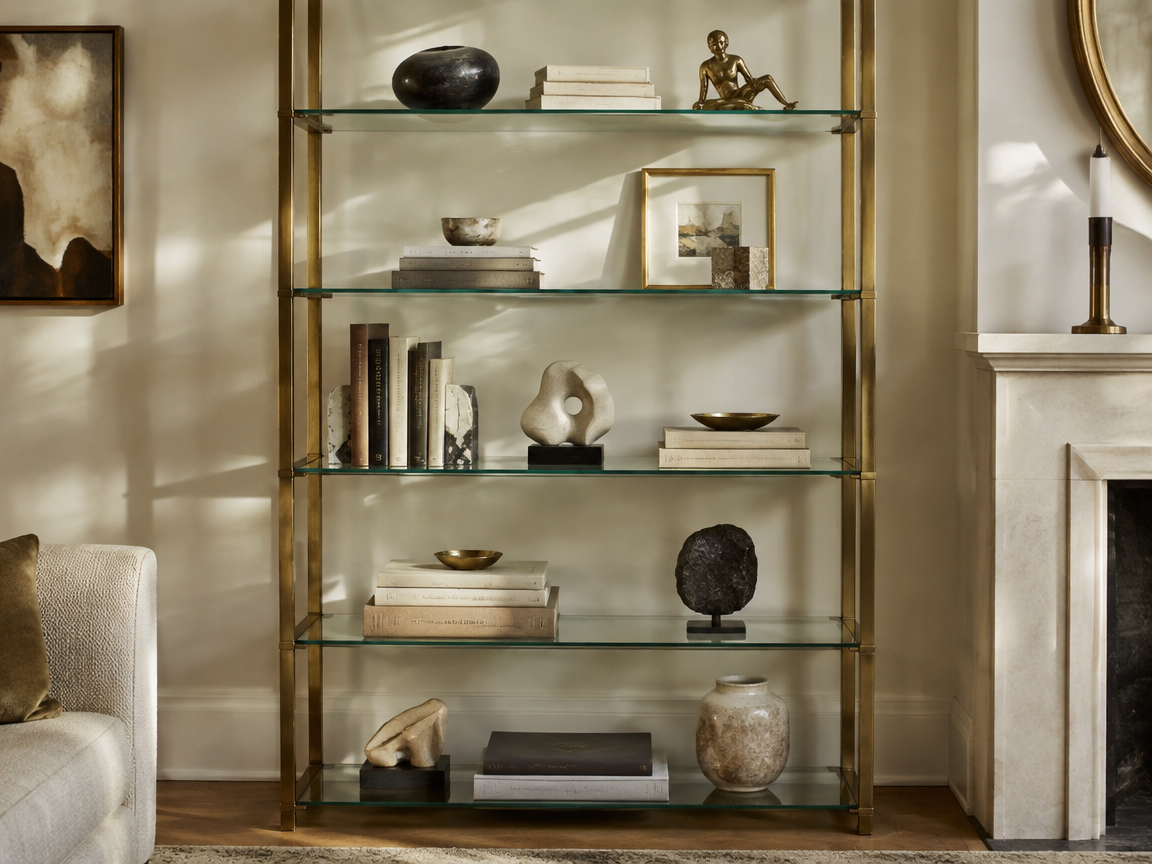
An open brass frame with glass shelves keeps the whole wall transparent. Light passes through instead of stopping.
Style it with objects of one colour and plenty of space. Glass shelves look cheap when they are crowded.
Best for small rooms that cannot afford visual weight.
Pipe-Style Industrial Shelves
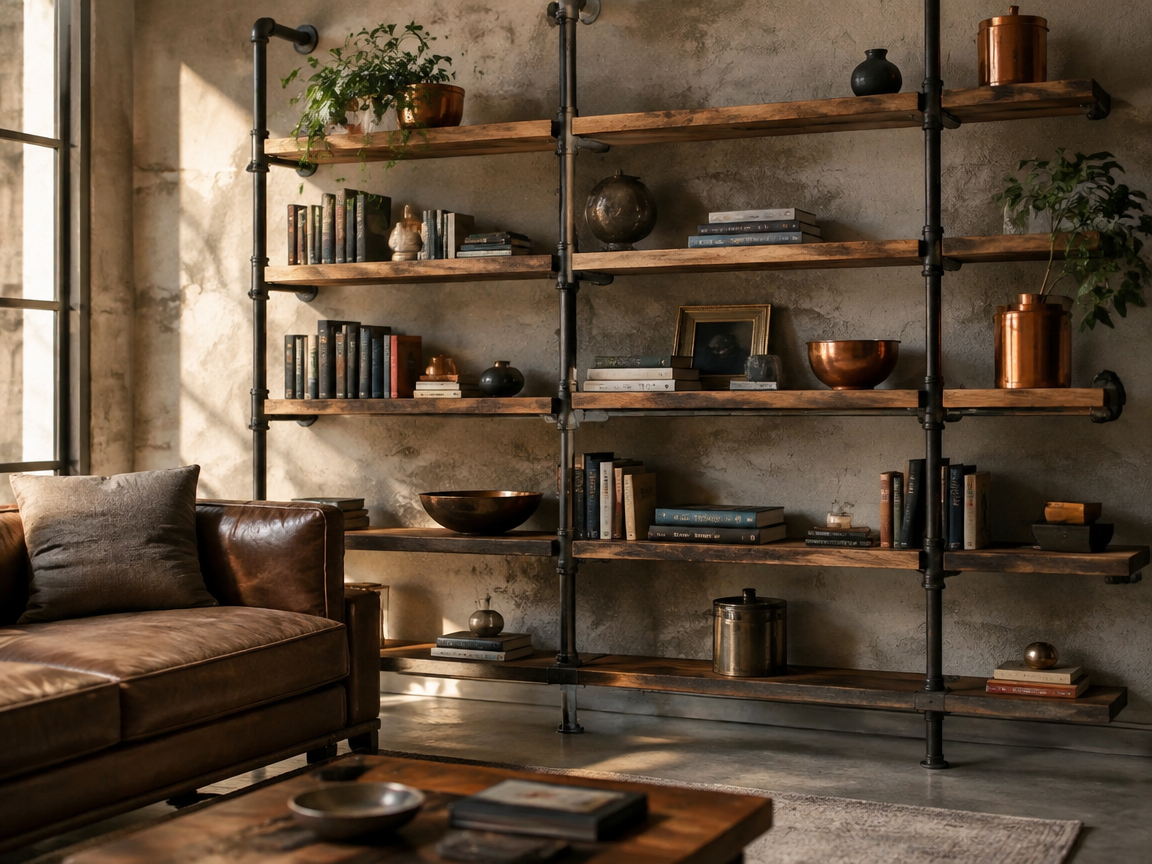
Black plumbing pipe and reclaimed timber give a strong workshop feel. The joints add rhythm across the wall.
Keep the pipe diameter slim so it does not dominate. Mix in one or two copper planters to break up the black.
Best for dens, studies and loft living spaces.
Woven Wire Mesh Shelf Backs
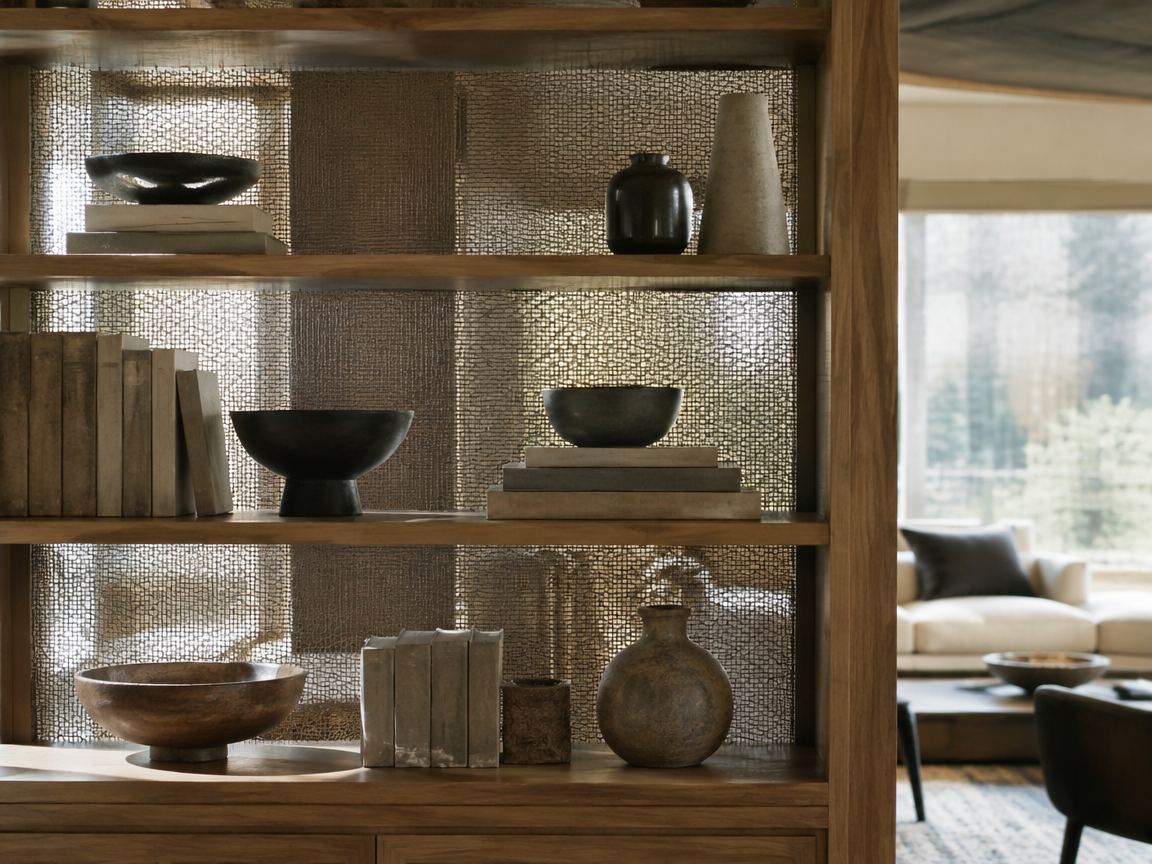
A mesh back panel behind open shelves adds a fine grid texture. Books and objects appear to float in front of it.
Choose an antique brass or bronze mesh rather than bright steel. The warmer tone suits timber shelves better.
Best for adding texture to a plain, flat wall.
Galvanized Metal Shelves in a Loft
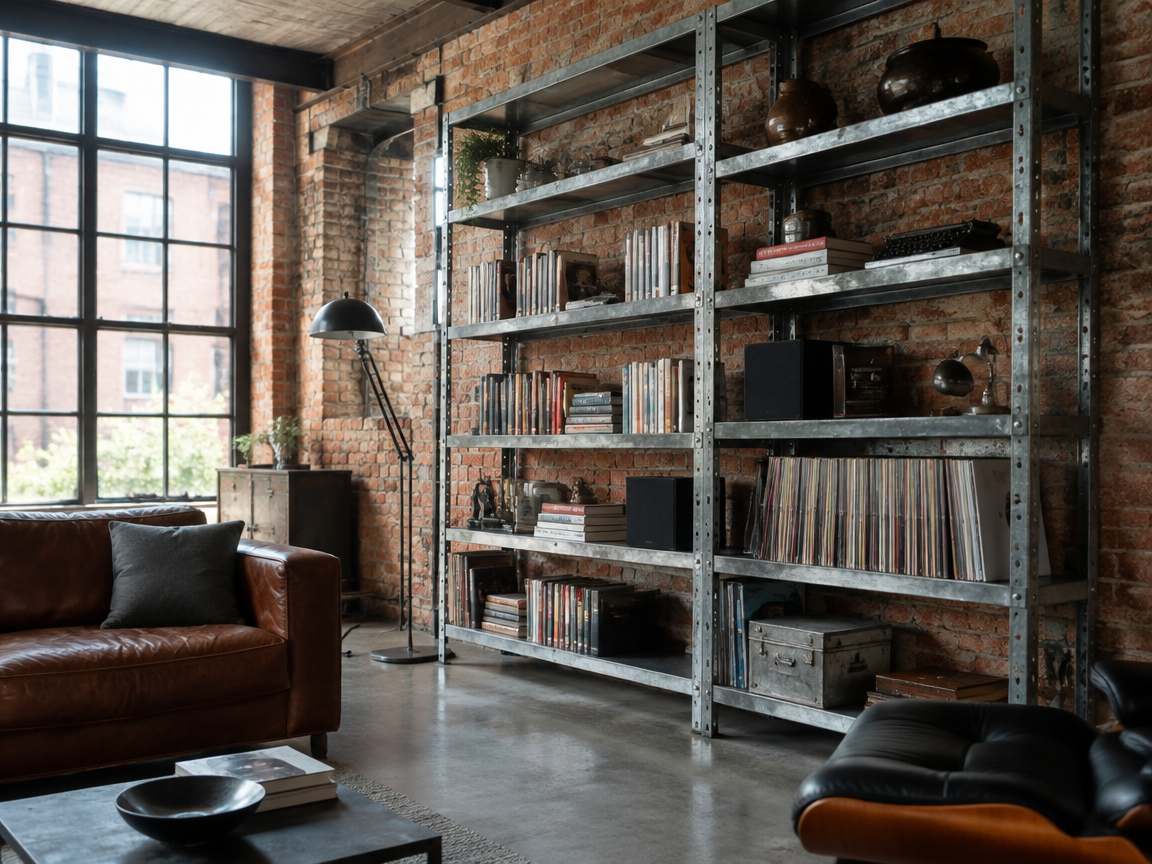
Bare galvanized steel shelving suits exposed brick and big factory windows. It also takes heavy loads without complaint.
Mix in woven baskets and warm bulbs so the room does not turn cold. One textured rug does the same job underfoot.
Best for converted lofts and industrial apartments.
Dark, Moody and Color-Drenched Shelving
Dark shelving has had a long run and it earns the attention. Deep colour hides clutter and makes objects glow.
Paint the shelves and the wall together for the full effect. These six schemes show how far to take it.
A Color-Drenched Charcoal Wall and Shelves
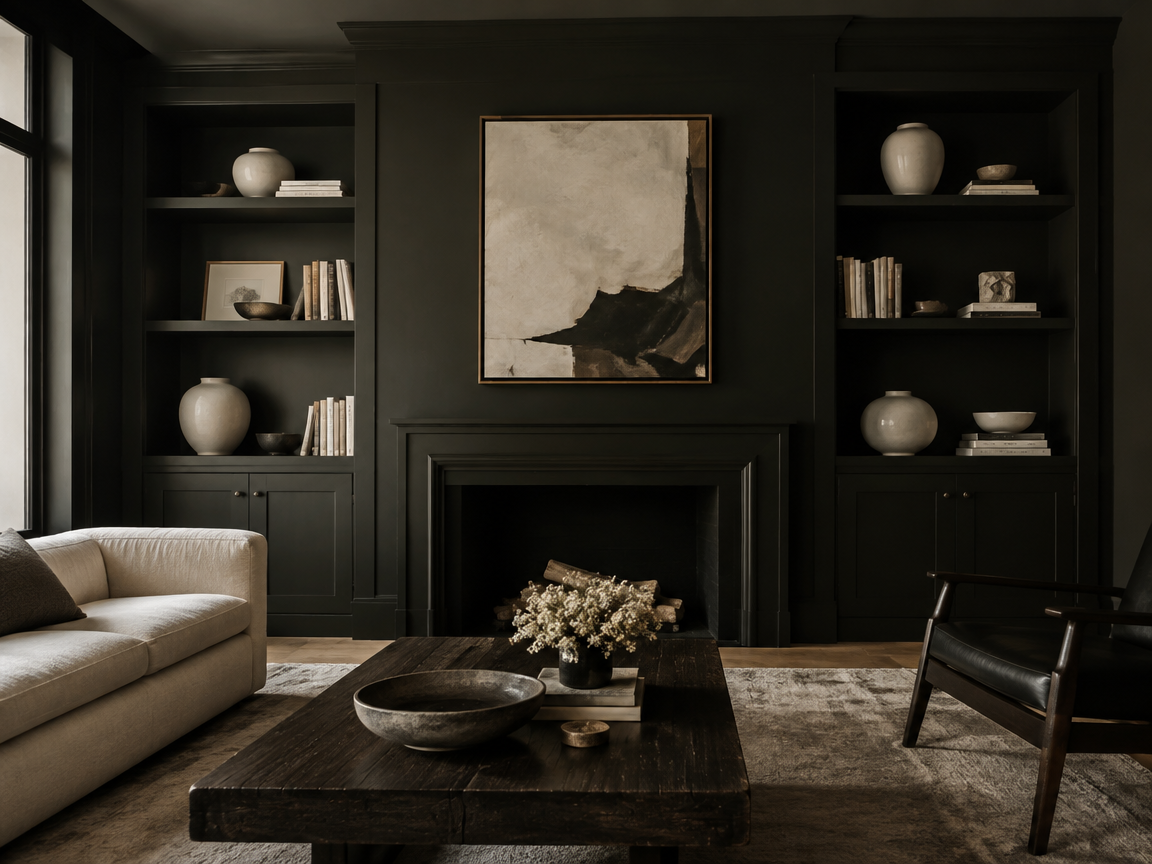
Paint the wall, the shelves and the skirting the same deep charcoal. The joinery disappears into the architecture.
Use pale ceramics and art books for contrast. Two or three bright objects are enough against such a dark backdrop.
Best for moody living rooms with good natural light.
A Deep Forest Green Library Wall
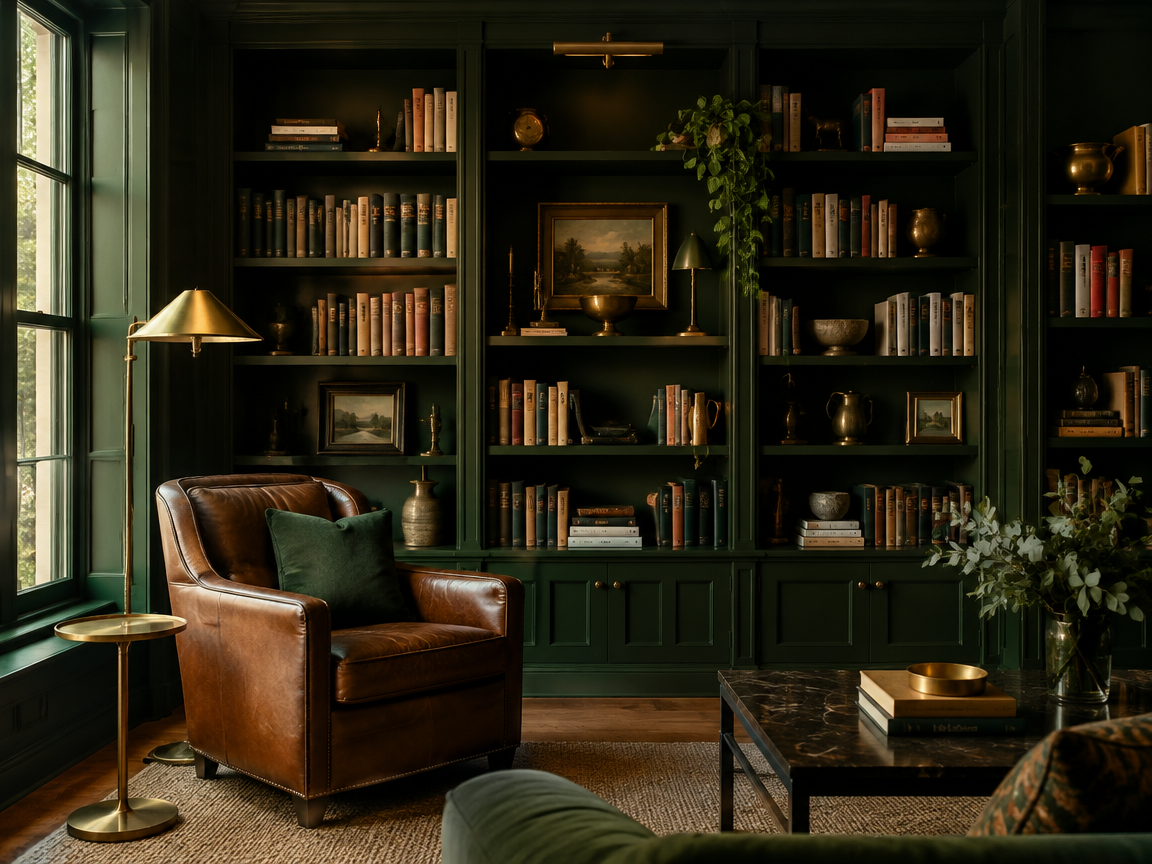
Forest green makes a wall of books feel like a members’ club. It is dark enough to be dramatic and warm enough to live with.
Add brass reading lights and a leather chair. The green reads far richer next to metal and hide.
Best for reading corners and evening rooms.
Navy Built-Ins With Brass Hardware
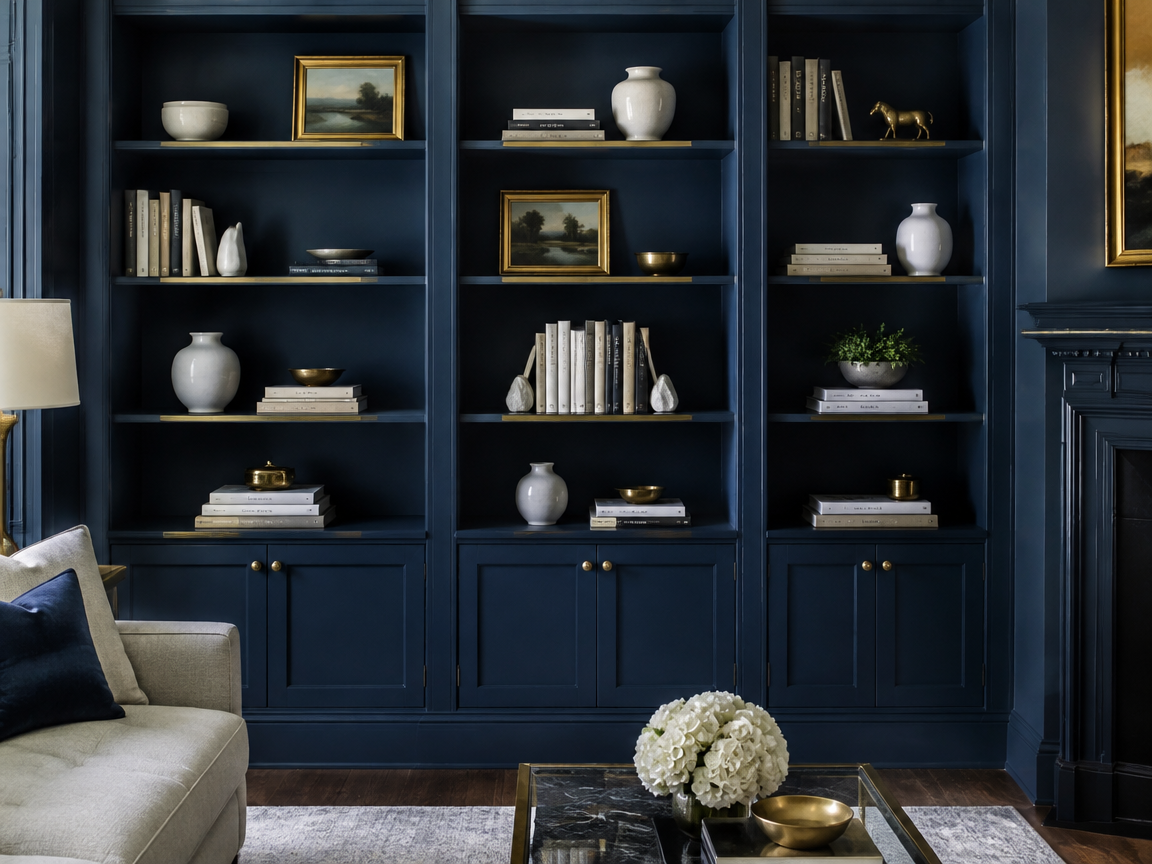
Navy joinery with slim brass shelf edges looks quietly expensive. The metal catches the light along every shelf.
Keep the lower cabinets plain so the shelves stay the star. Small brass knobs tie the two halves together.
Best for traditional rooms that want a modern push.
Black-on-Black Tonal Shelving
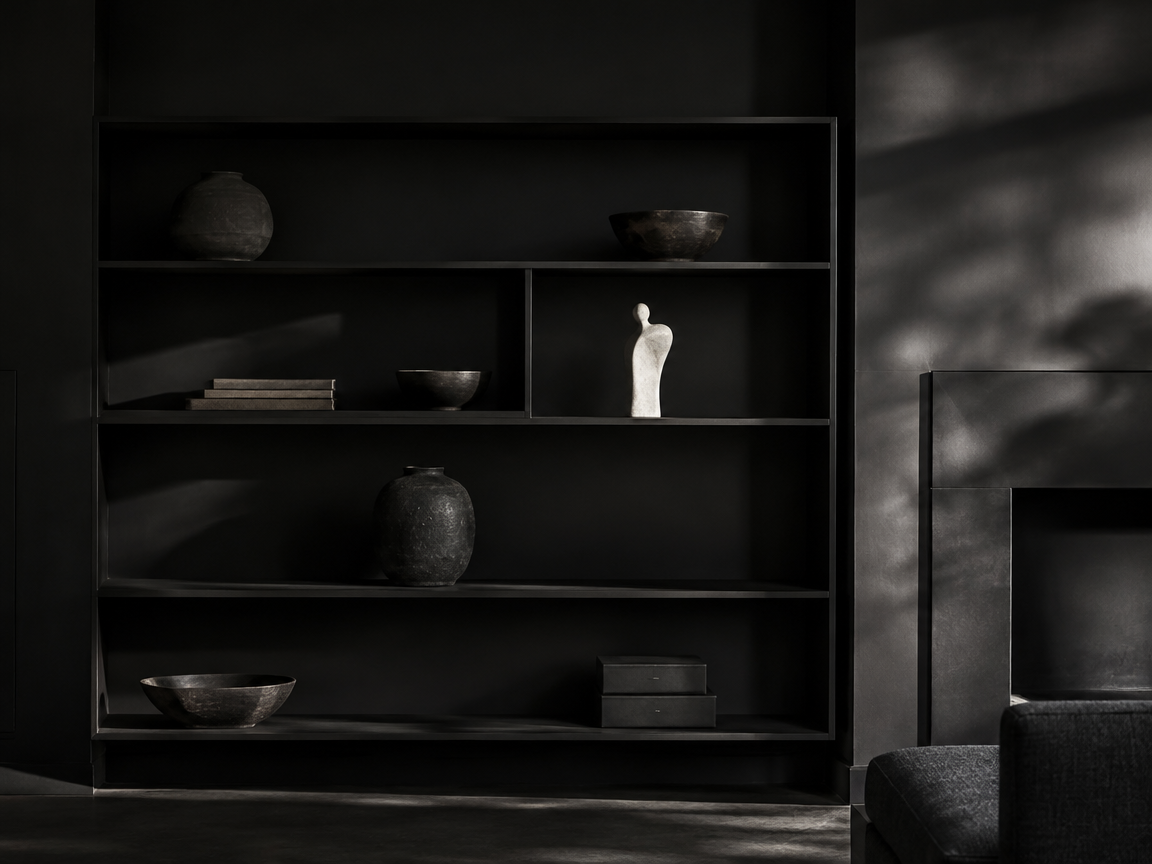
Matte black shelves on a matte black wall create pure shadow play. Objects seem to hover in the dark.
Use a matt finish rather than satin so it does not reflect. One pale sculpture gives the eye somewhere to land.
Best for dramatic, low-light living rooms.
Oxblood Backdrop Shelving
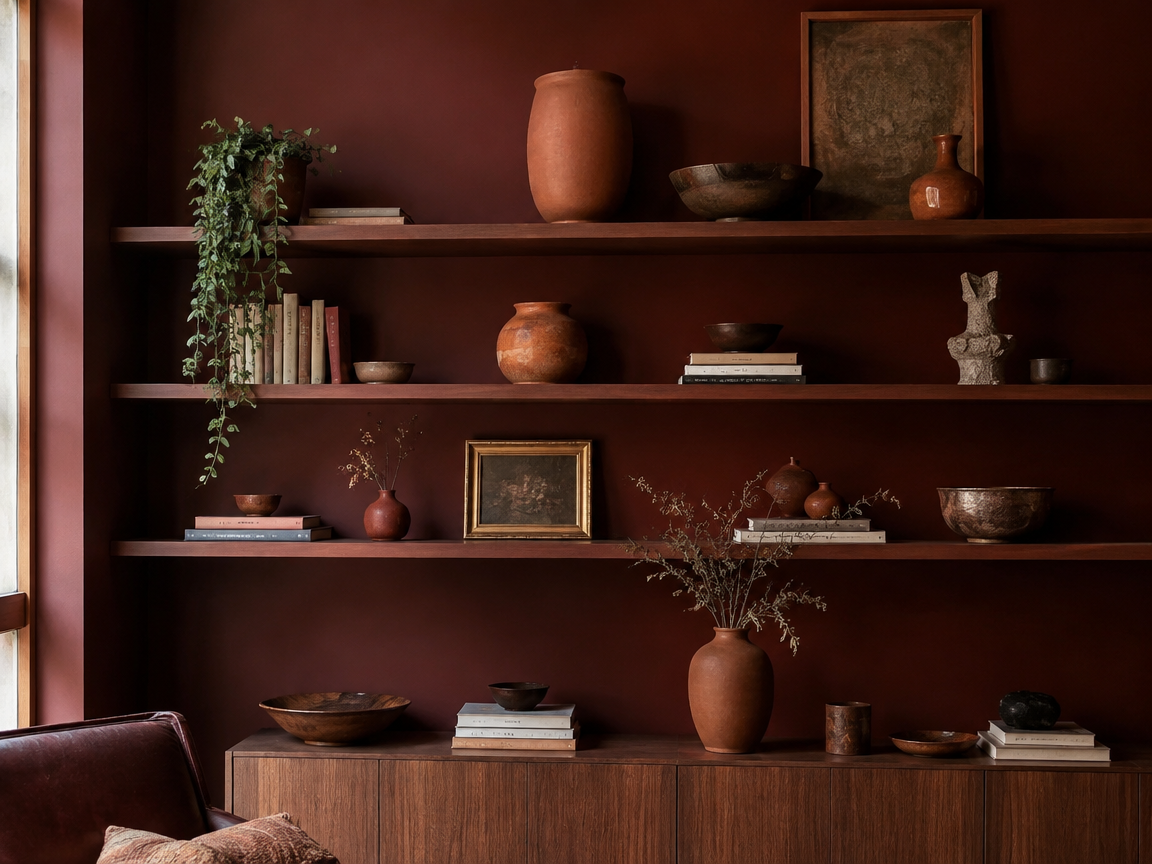
A deep oxblood wall behind warm timber shelves feels confident and cosy. It flatters terracotta, brass and old books.
Keep the shelves simple and the styling warm-toned. Cool blues will fight the red every time.
Best for period rooms with original fireplaces.
Dark Walnut Shelves on Warm Plaster
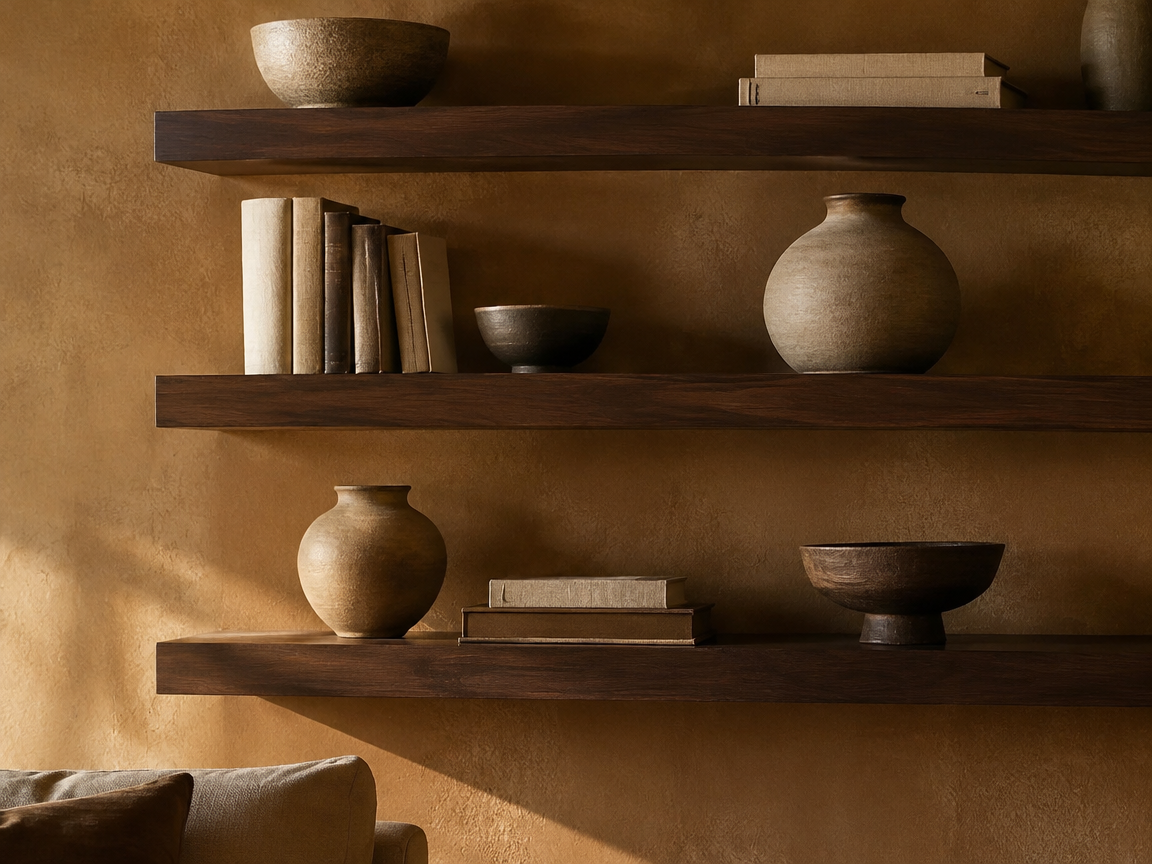
Dark walnut against clay plaster is one of the warmest pairings there is. Both materials improve with age.
Choose a plaster with visible trowel movement. The texture stops a dark wall looking like a flat painted panel.
Best for cosy rooms with low evening light.
Organic, Textural and Natural Shelving
Texture does more for a room than pattern ever will. Stone, cane, timber and plaster all age in a good way.
Mix two of them and stop there. The restraint is what keeps it calm.
Travertine Slab Shelves
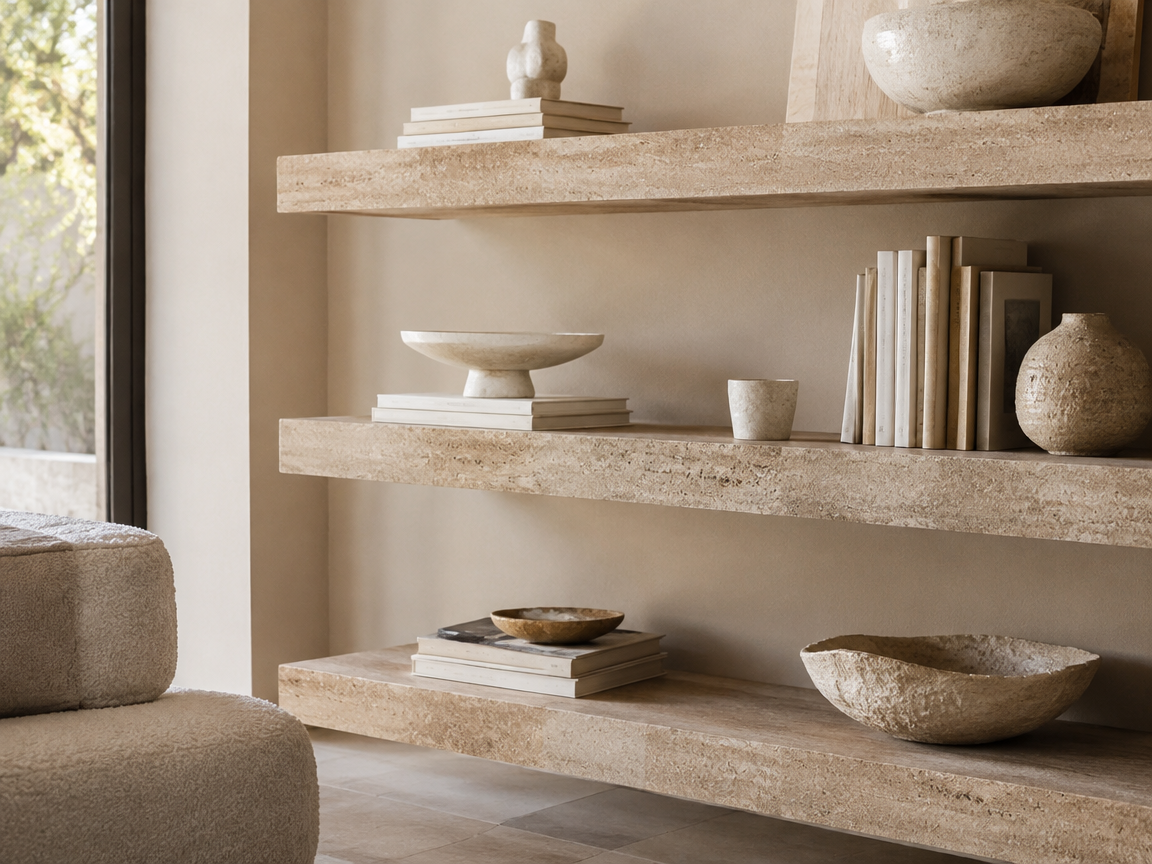
Thick travertine slabs bring stone texture without the coldness of marble. The pitted surface catches light softly.
Keep the edge simple and the styling pale. Ivory ceramics and linen-bound books let the stone lead.
Best for warm minimalist and Mediterranean schemes.
Cane and Rattan Shelf Inserts
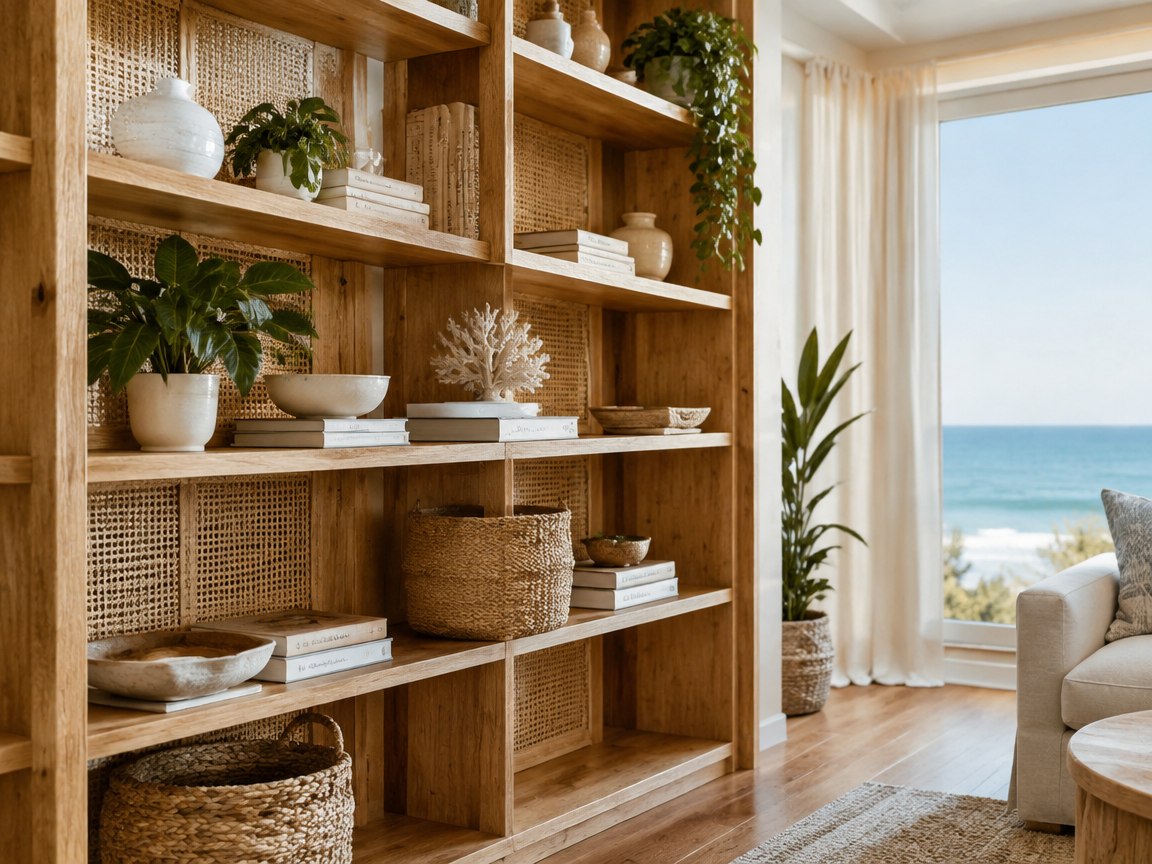
Woven cane panels behind open shelves add texture and a coastal softness. The open weave also lets light through.
Pair cane with pale oak rather than dark timber. The combination stays light even in a small room.
Best for bright, relaxed rooms and coastal homes.
Live-Edge Timber Shelves
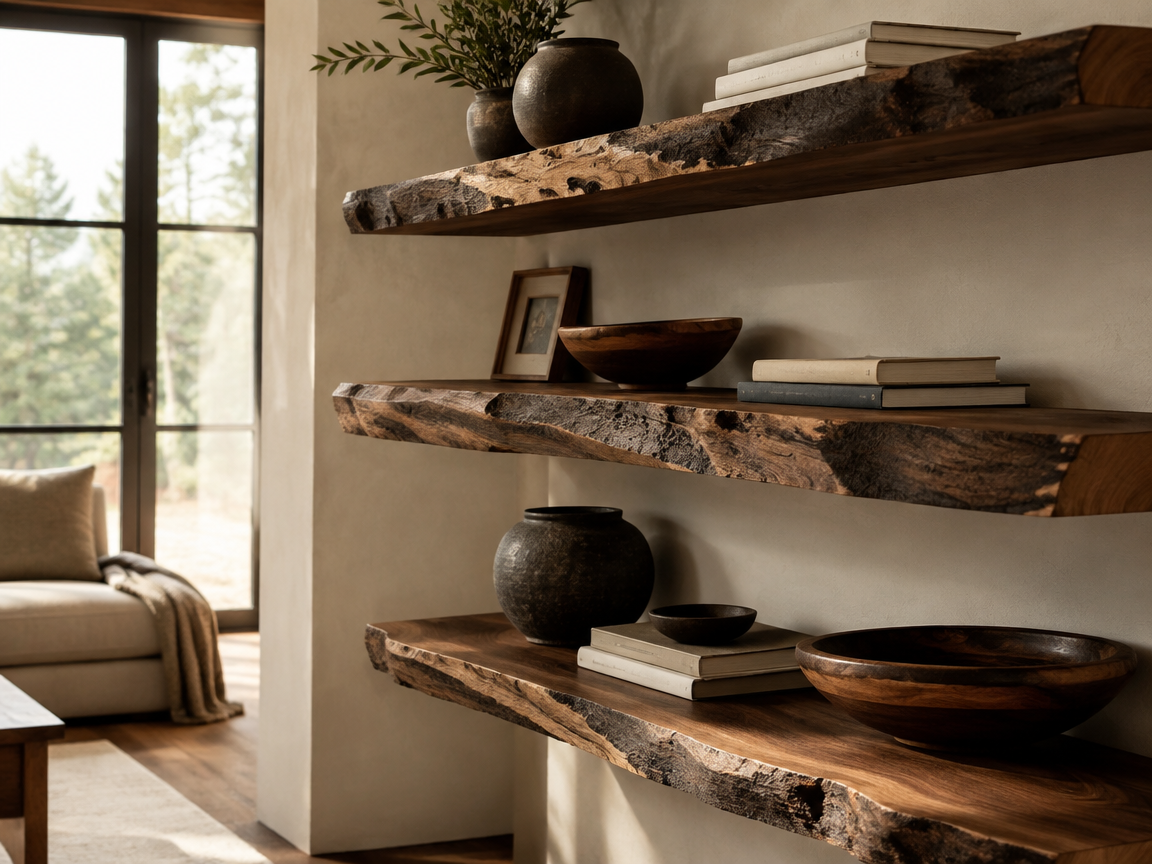
Live-edge walnut keeps the bark line and every knot. No two shelves are ever the same.
Use them sparingly and no more than two or three on one wall. Let the grain be the decoration and keep styling minimal.
Best for rustic modern rooms with natural materials.
Sculptural Plaster Shelves With Rounded Edges
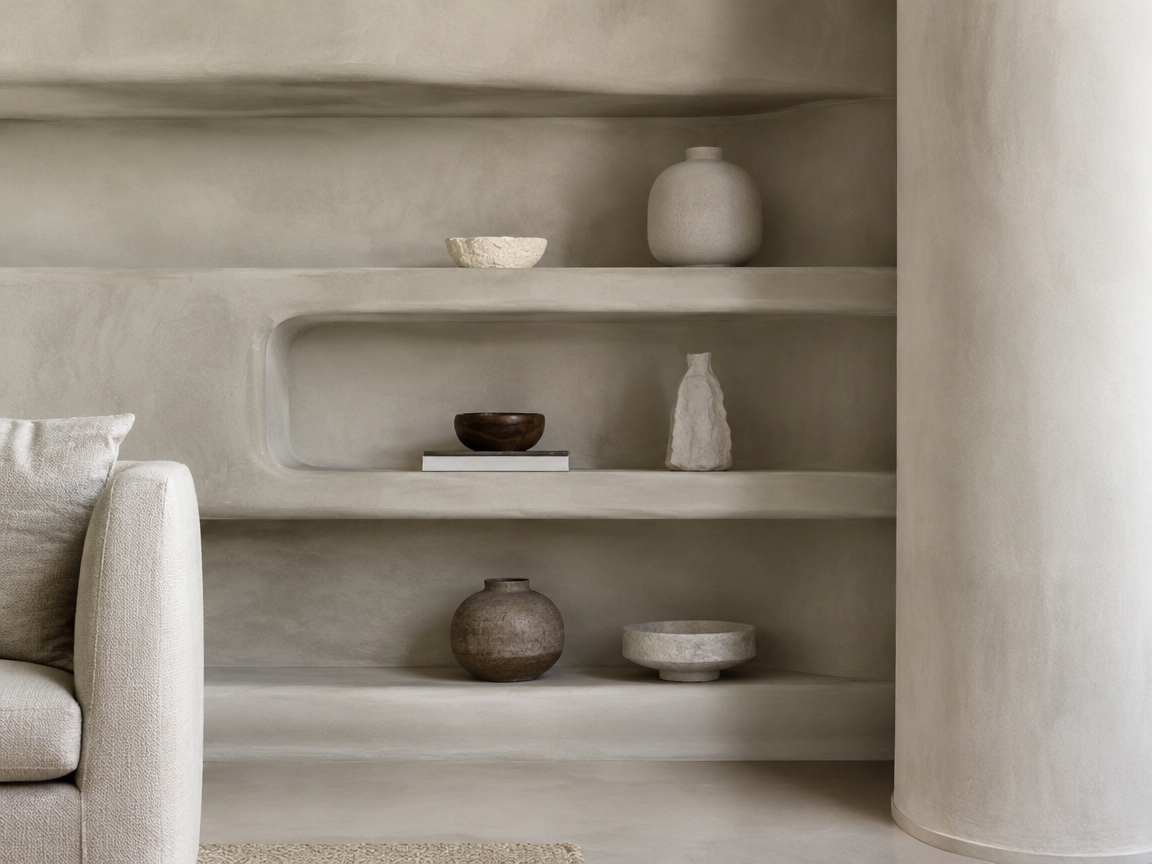
Shelves with a soft bullnose edge look carved rather than fixed. The rounded profile throws a gentle shadow line.
Build them into a curved or microcement wall for a seamless finish. Style with matte ceramics only, because gloss breaks the effect.
Best for minimalist rooms chasing a gallery feel.
Cork Backdrop With Oak Shelves
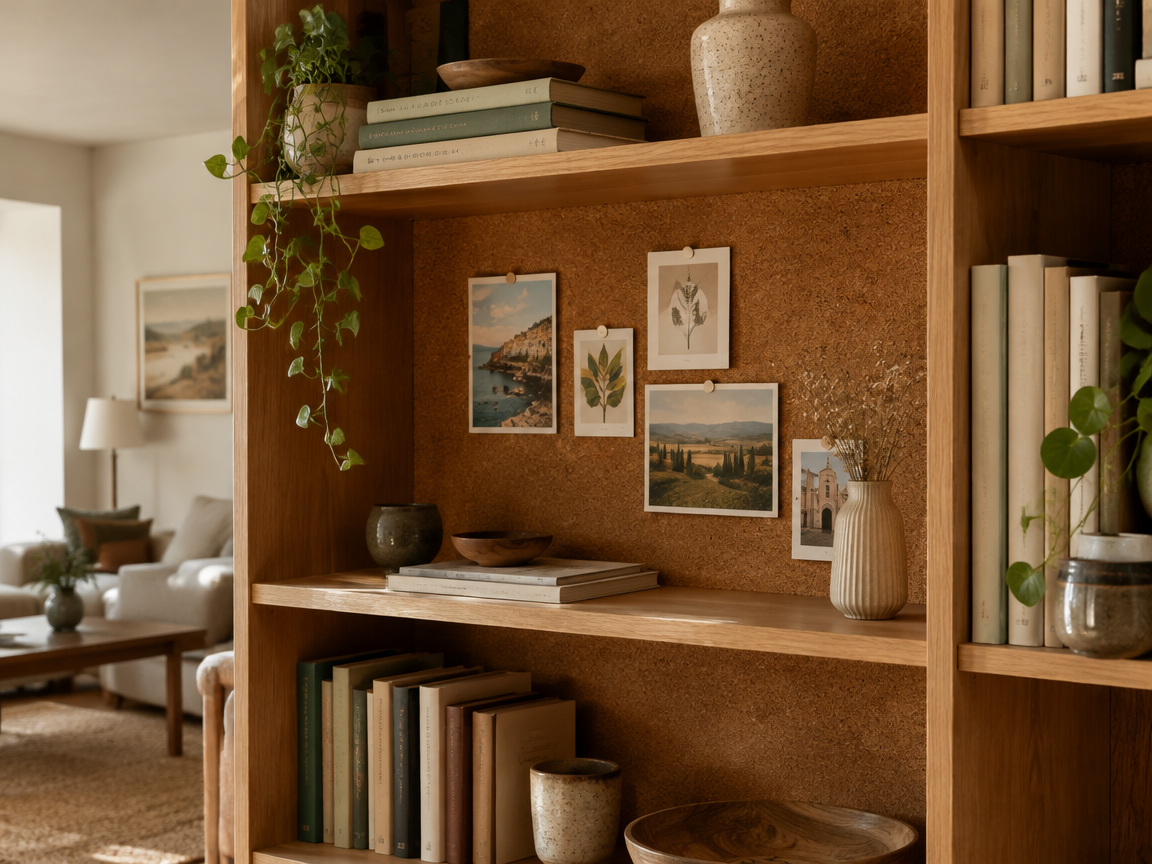
A cork back panel behind oak shelves adds warmth and absorbs sound. It also doubles as a pinboard.
Pin postcards, fabric swatches and photos between the shelves. The layered look is the whole point.
Best for family rooms and home offices.
Leather Strap Hanging Shelves
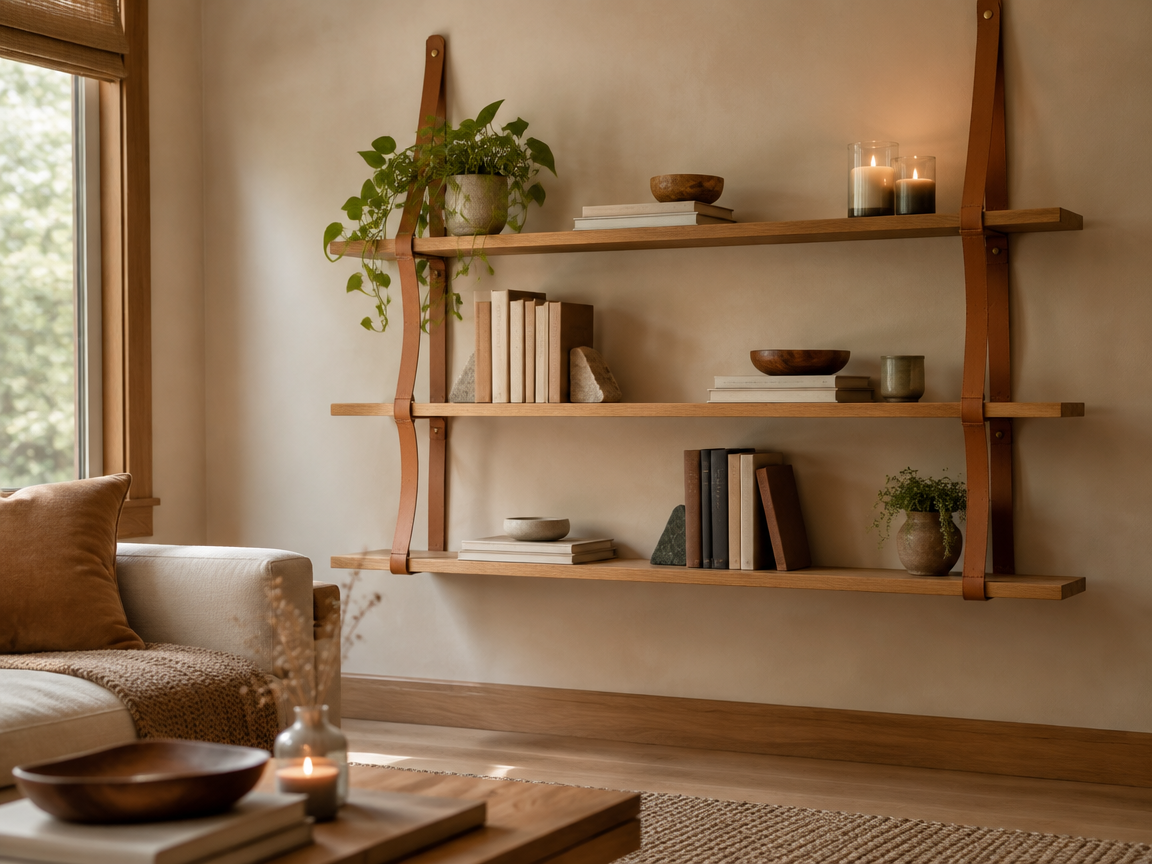
Tan leather straps suspend oak boards from a single wall fixing. The hardware becomes part of the design.
Use thick vegetable-tanned leather so it darkens over time. Keep the loads light with books, candles and small plants.
Best for rental walls you cannot drill much into.
Small Spaces, Storage and Styling
Some of these ideas solve a space problem. Others solve a styling problem.
Both matter when a living room has to work as hard as it looks.
A Narrow Shelf Above a Slim Console
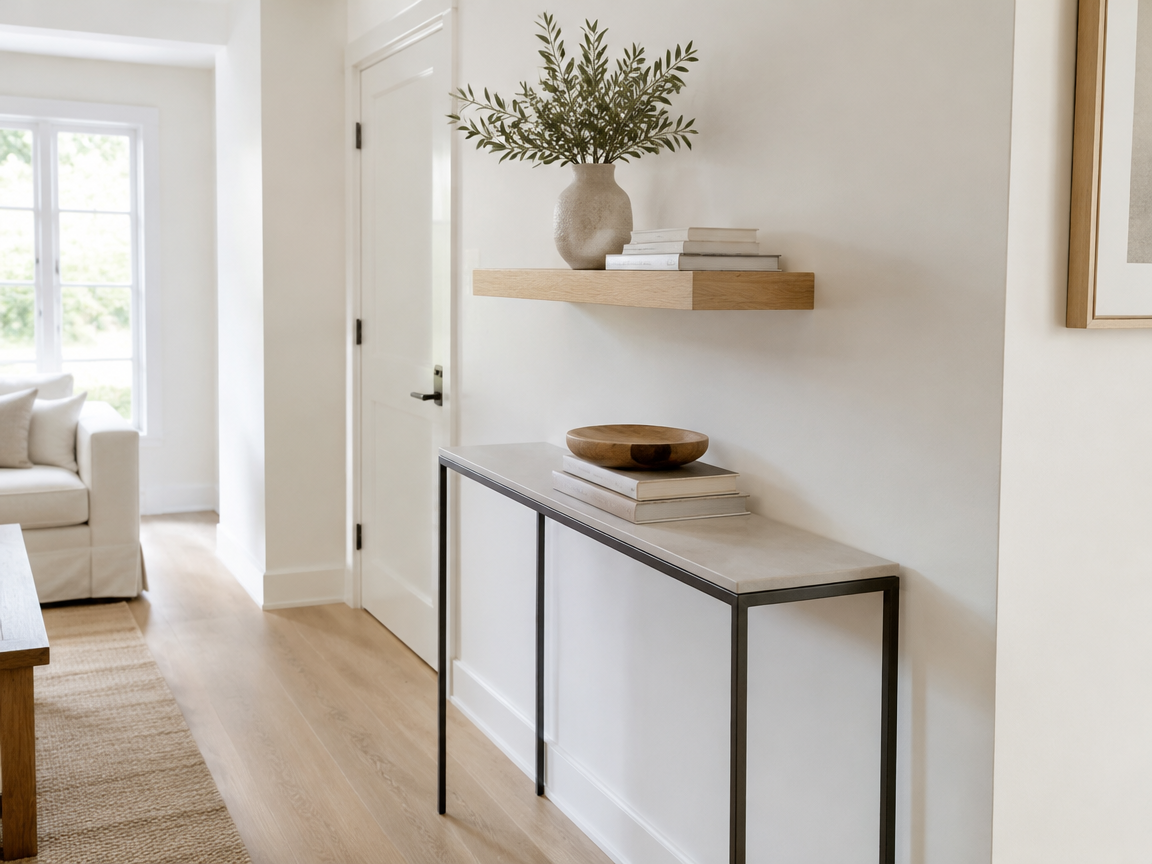
A single narrow shelf above a slim console fills a tight corner. The two horizontal lines make the space feel wider.
Keep the shelf shorter than the console for a layered look. Style it with one tall vase and a stack of books.
Best for entry corners and small living rooms.
Modular Cube Shelving as a Room Divider
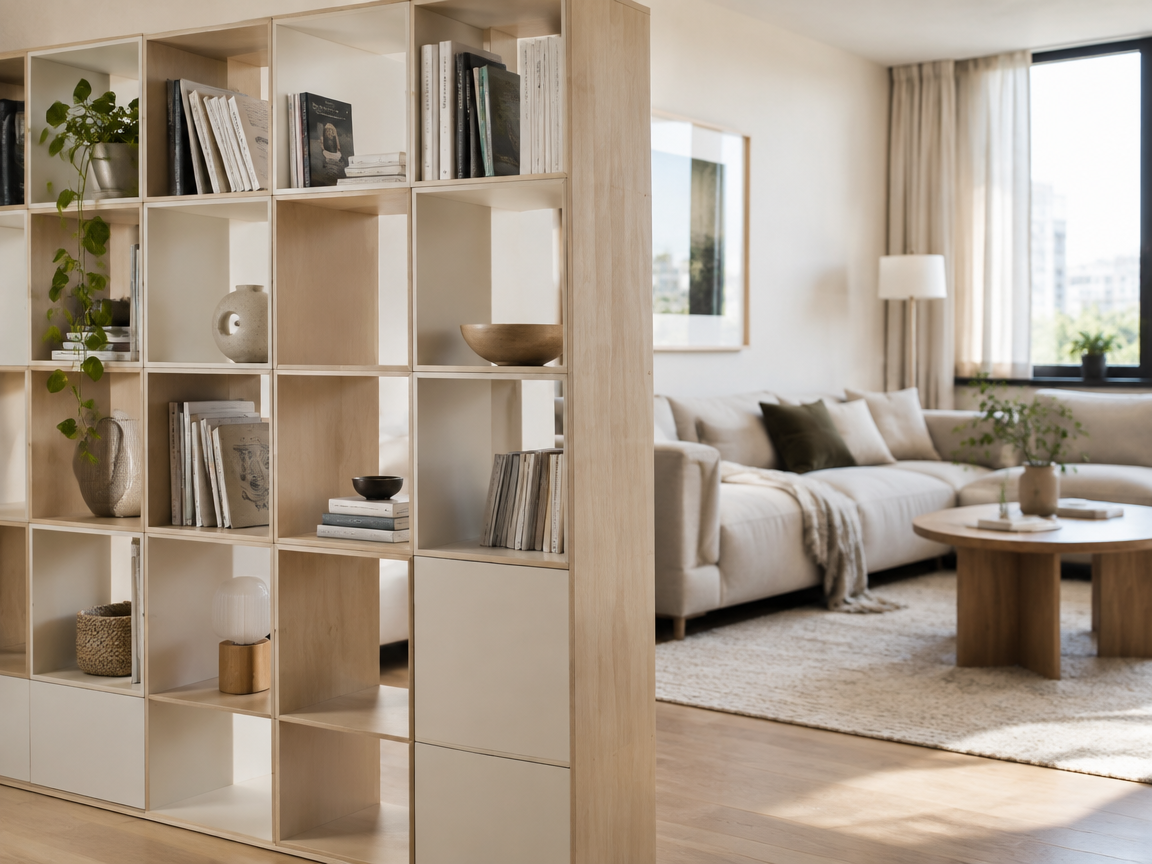
An open cube unit splits a room without blocking light. It gives you storage on both sides at once.
Leave some cubes completely empty so the divider stays airy. Anchor the unit to the floor if it sits in a walkway.
Best for studio flats and open-plan apartments.
Glass-Front Display Cabinet With Interior Lighting
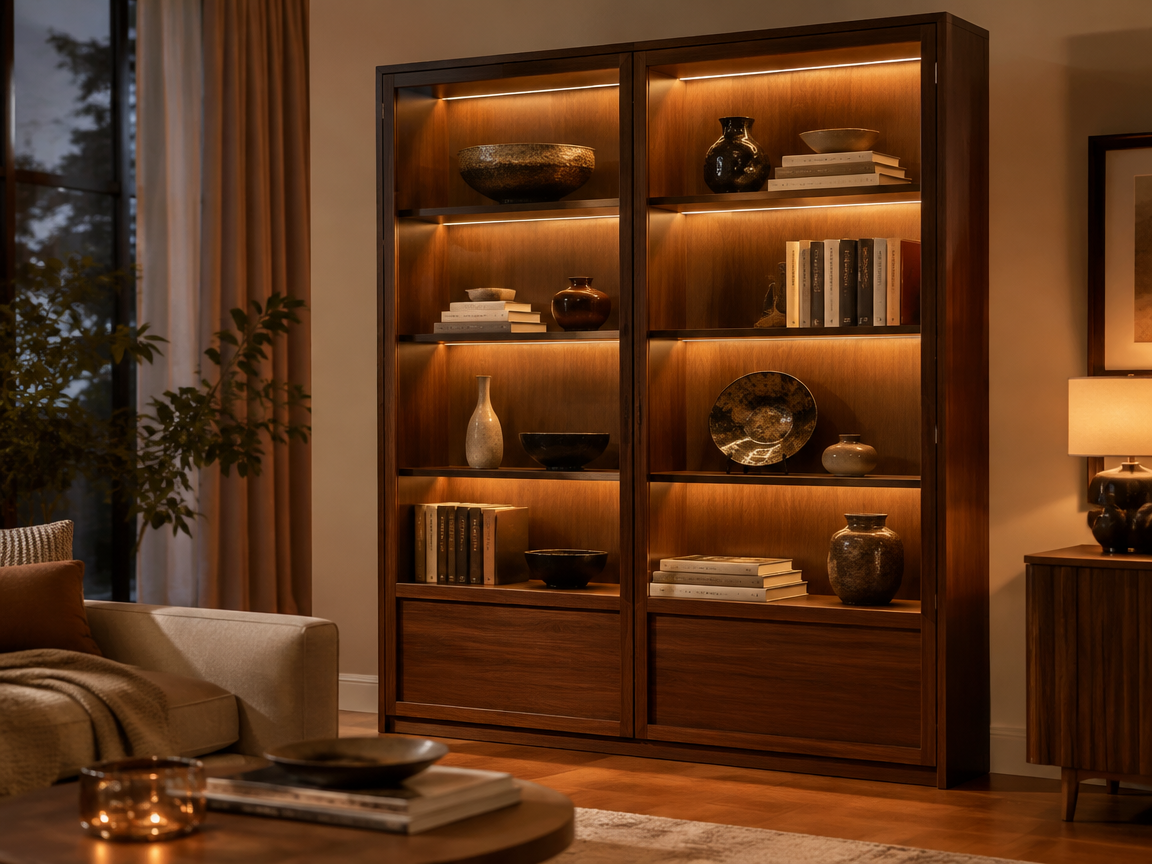
Glass doors keep dust off your best objects and let the shelves glow. Interior LEDs turn it into a display piece after dark.
Choose a 2700K warm white so ceramics do not look blue. Keep the shelves under 300mm apart for small collections.
Best for collectors and anyone short on cleaning time.
A Mixed-Depth Gallery Shelf Wall
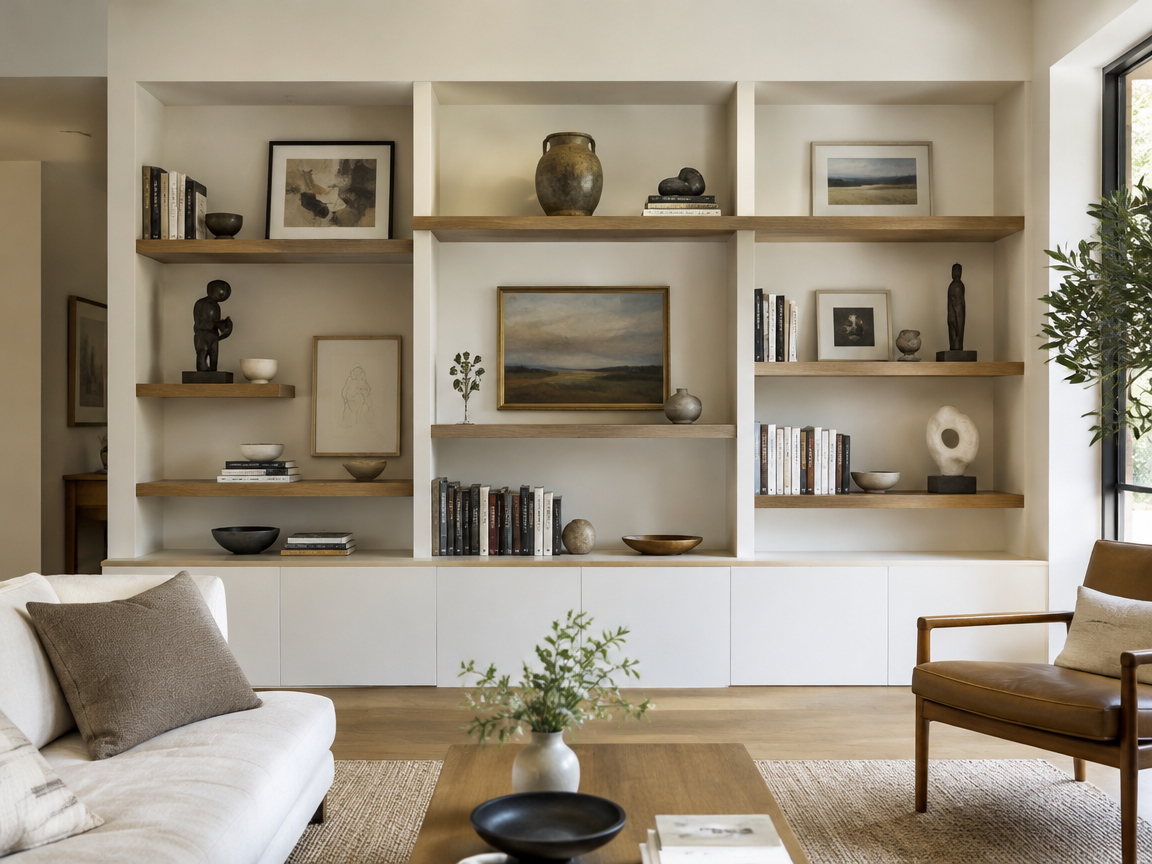
Mix shelf depths and widths across one wall for a gallery effect. Different planes create real shadow and depth.
Keep the vertical gaps consistent so it still feels ordered. Lean art on the shallow shelves and stack books on the deep ones.
Best for walls that need personality, not just storage.
A Corner Shelf Tower With a Plant on Every Level
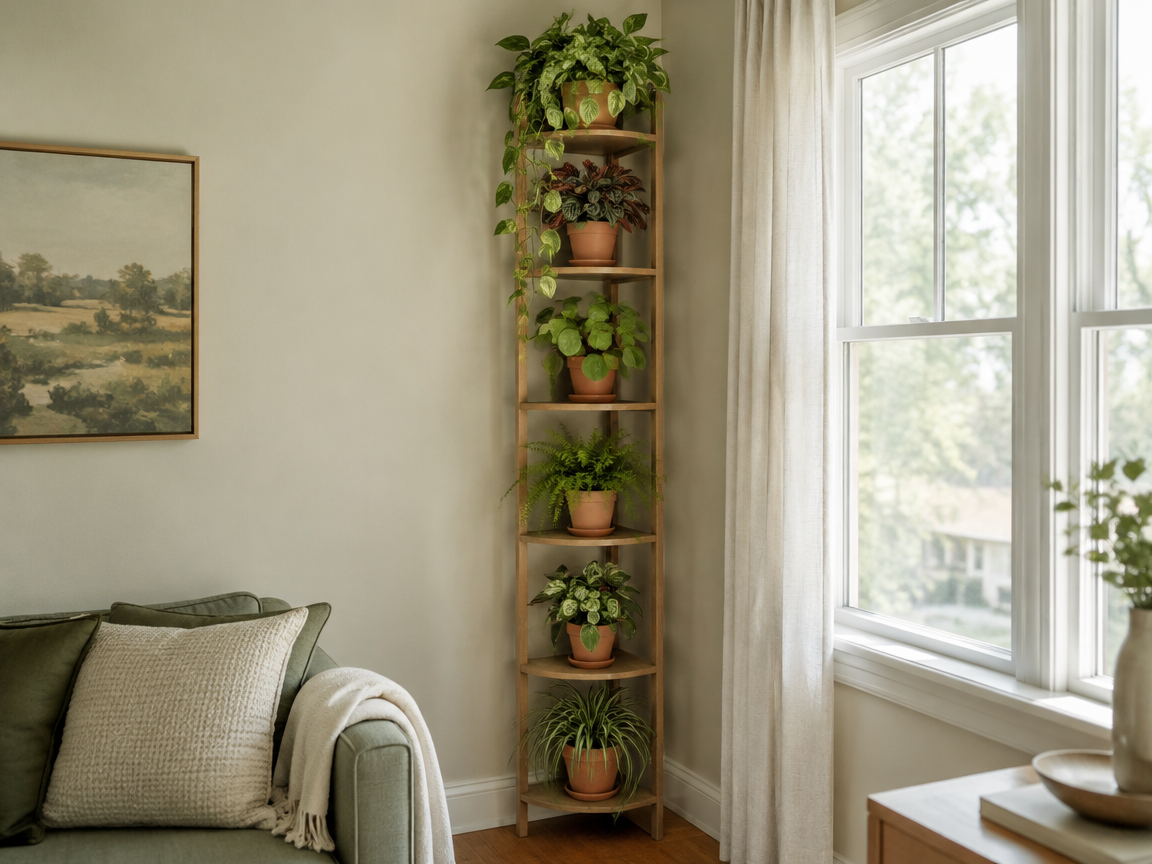
A tall narrow tower in a bare corner holds a plant on every level. Greenery fills vertical space faster than anything else.
Use terracotta pots for a consistent look across the levels. Water the top shelf first so drips do not ruin the one below.
Best for empty corners and plant lovers.
Pegboard and Shelf Hybrid Wall
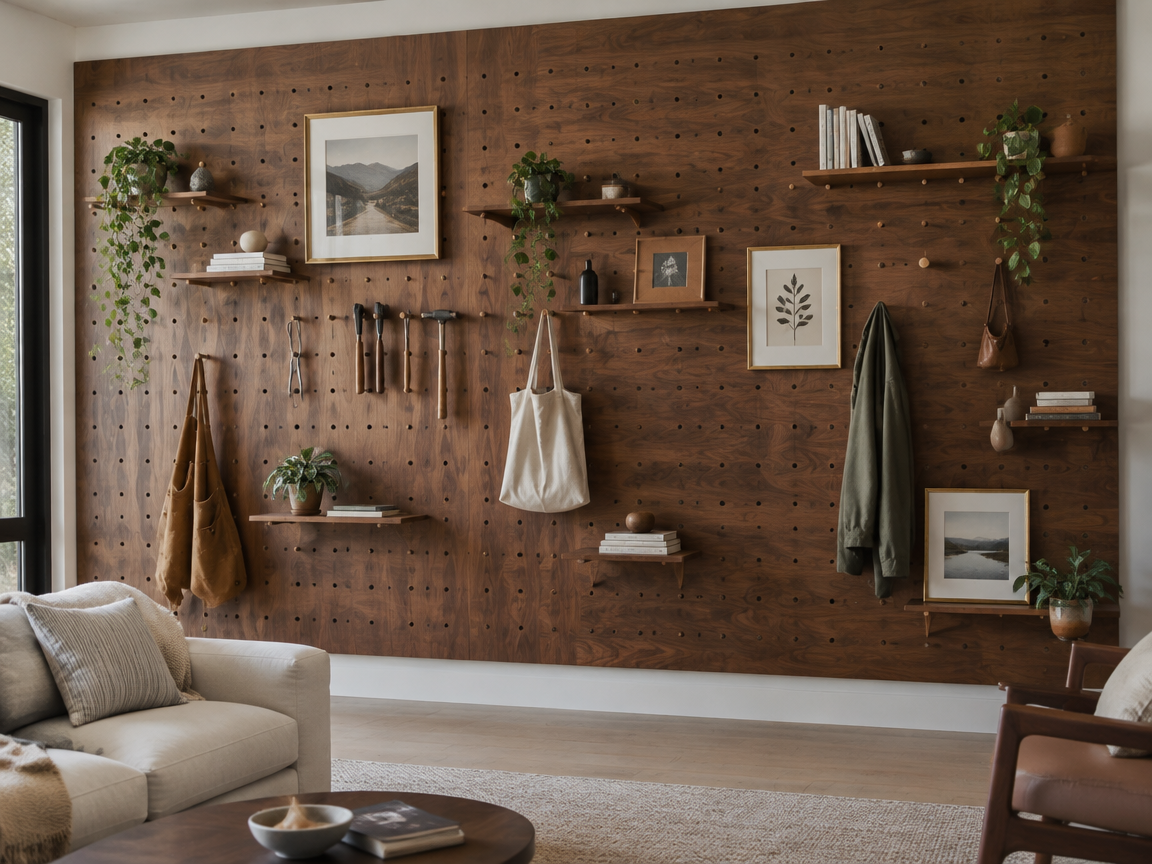
A full pegboard wall gives you holes everywhere, so the layout can change whenever you want. Add two or three floating shelves for the heavier pieces.
Keep the pegs busy at eye level and calmer lower down. The mix of hooks and boards stops it looking like a workshop.
Best for renters and anyone who rearranges constantly.
A Full-Wall Gallery of Open Shelving
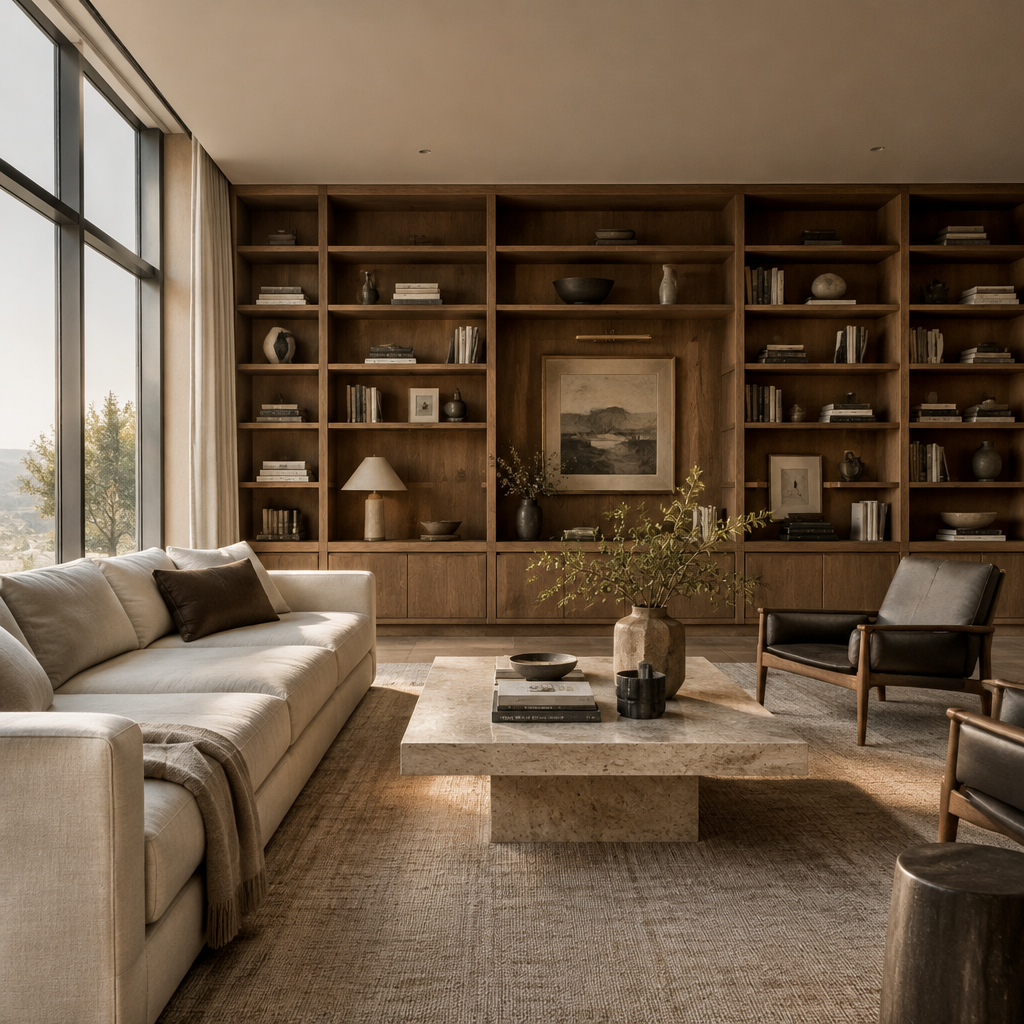
One wall of open oak shelving, fully stocked and lit by a tall window, is still the hardest look to beat. It works because the entire wall is treated as a single object.
Mix books, ceramics and art at different heights, then leave about a third of the space empty. That gap is what makes it look curated instead of crowded.
Best for large living rooms with one strong blank wall.
How to Style a Shelf So It Never Looks Cluttered
Good shelving is half the job. The other half is what you put on it.
These six rules work on any of the ideas above, whatever the material or the budget.
- Follow the rule of thirds. Fill roughly two thirds of each shelf and leave one third empty. The gap is what makes a shelf look styled rather than stored.
- Group in odd numbers. Three or five objects together always look better than two or four. Vary the heights inside each group so the eye moves.
- Repeat one colour three times. Pick a single accent tone and place it on three shelves across the wall. Repetition is what makes a display feel deliberate.
- Lean, do not just stand. Lean a framed print or a large platter against the back of the shelf. It adds depth instantly and costs nothing.
- Mix heights and weights. Pair a tall thin vase with a low heavy bowl. Contrast is what stops a row of objects looking like a shelf in a shop.
- Keep books horizontal sometimes. Stack three or four books flat and put an object on top. It breaks up the vertical lines and gives you a little pedestal.
Before You Buy: Five Measurements That Save You Money
Measure the wall and then subtract 100mm from each end. Shelving that touches both walls starts to look like a fitted cupboard.
Find your studs before you fall in love with a layout. A shelf that lands between studs needs a batten or a heavy-duty toggle fixing.
Set the shelf gap from your tallest object. A 380mm gap fits almost any vase, and a 300mm gap is tight but fine for books.
Think about what is already there. Never put shelves directly above a radiator, and never in front of a window you actually use.
Keep 250mm clear under the lowest shelf. It sounds fussy until you try to vacuum the floor.
Frequently Asked Questions
How deep should living room shelves be?
Use 250mm to 300mm for books and objects. Go to 350mm if you want to display large art books or wide baskets. Anything deeper starts to feel like a cupboard.
How far apart should shelves be?
Leave 300mm to 400mm between shelves for a mixed display. Use 350mm if most of your objects are vases and frames. Book-only shelves can sit closer at 280mm.
How high should a shelf be above a sofa?
Around 350mm above the sofa back is comfortable. Lower than that and people will knock things when they stand up.
Can floating shelves hold heavy books?
Yes, if the brackets are steel and fixed into studs. Keep the span under 1200mm and use a board at least 40mm thick.
Should shelves match the wall colour?
Match them if you want the wall to feel calm and seamless. Contrast them if you want the shelving to read as furniture. Neither is wrong, but pick one.
How do I stop shelves looking cluttered?
Remove one third of everything on them. Then group the rest into odd numbers and repeat one colour three times across the wall.
Where to Start
Shelving is one of the few living room changes that pays you back twice. You get somewhere to put things and something to look at.
Start with the wall that annoys you most. Pick one idea from this list, measure it properly and commit to the whole wall.
Do not add a second idea until the first one is styled. Two half-styled shelf walls look worse than one good one.


