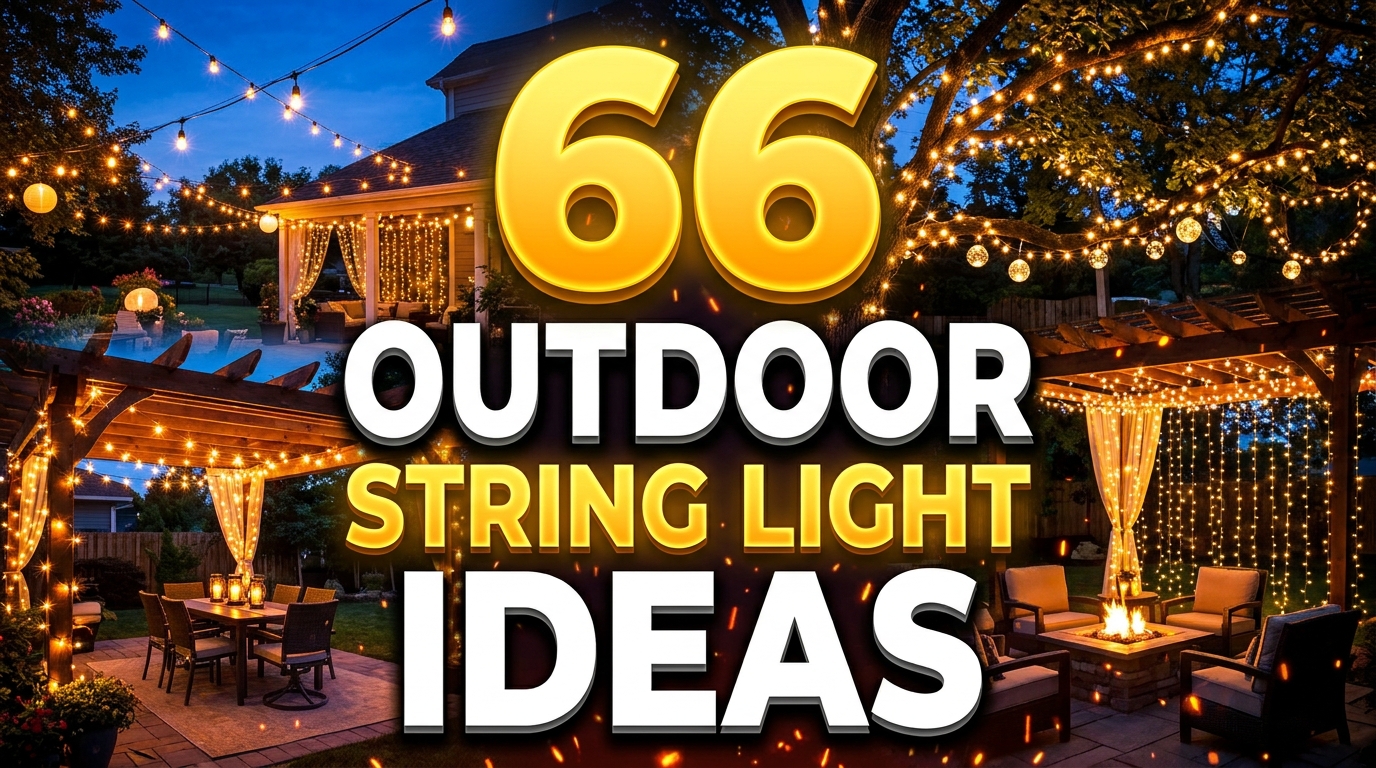
66 Outdoor String Light Ideas for a Magical Backyard at Night
Outdoor lighting
A dark garden is a wasted room. A single string of bulbs turns it back into one.
Outdoor string lights are the cheapest way to change how a yard feels after sunset. They need no digging, no wiring and no electrician.
We collected 66 ideas you can copy in a weekend. Every idea below is different, and every one works in a real garden.
You will find ideas for pergolas, trees, fences, paths, balconies and rooftops. Some of them cost less than a takeaway dinner.
Each idea comes with a photograph and a short explanation. We also included the small details that stop a neat job from looking unfinished.
Read it straight through, or jump to the space you are trying to fix. The ideas are grouped by where you hang them.
Before you buy anything, measure the run. Then buy twenty percent extra, because corners always eat more length than you expect.
Jump to a section
Patio & Pergola Ideas Tree & Garden Ideas Fence, Wall & Boundary Ideas Dining & Entertaining Ideas Path, Step & Railing Ideas Small Space Ideas Smart, Seasonal & Creative Ideas How to hang them FAQPatio & Pergola Ideas
The patio is where string lights earn their keep. These twelve setups build a soft ceiling where you had open sky.
The Zigzag Ceiling
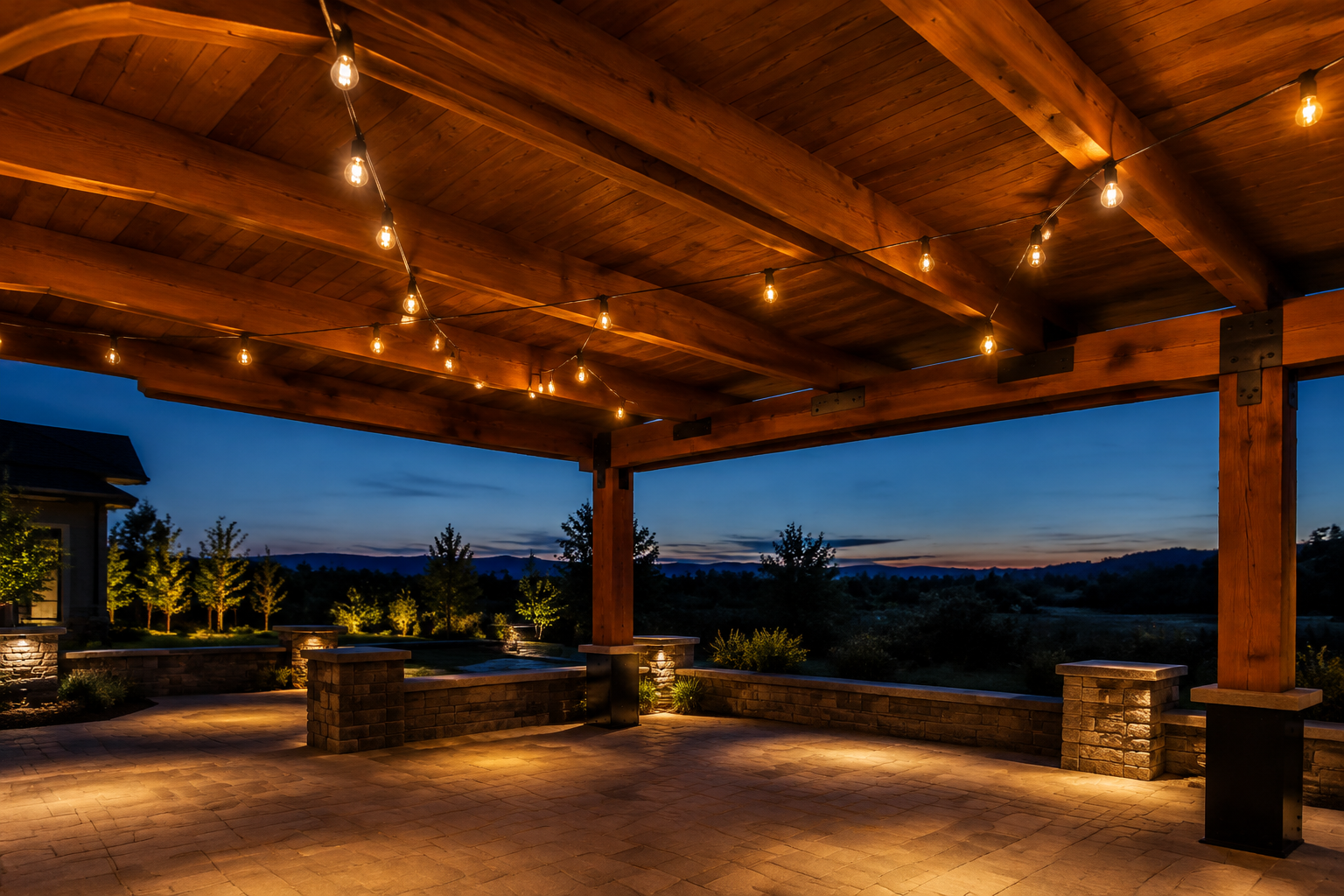
Start with the pattern that never fails. Run one long strand back and forth between your pergola beams.
Let each pass dip about 30 cm in the middle. That small sag is what makes bulbs look soft instead of stiff.
Keep every angle the same. A steady rhythm reads as design, while a careless one reads as a mistake.
The Parallel Rafter Run
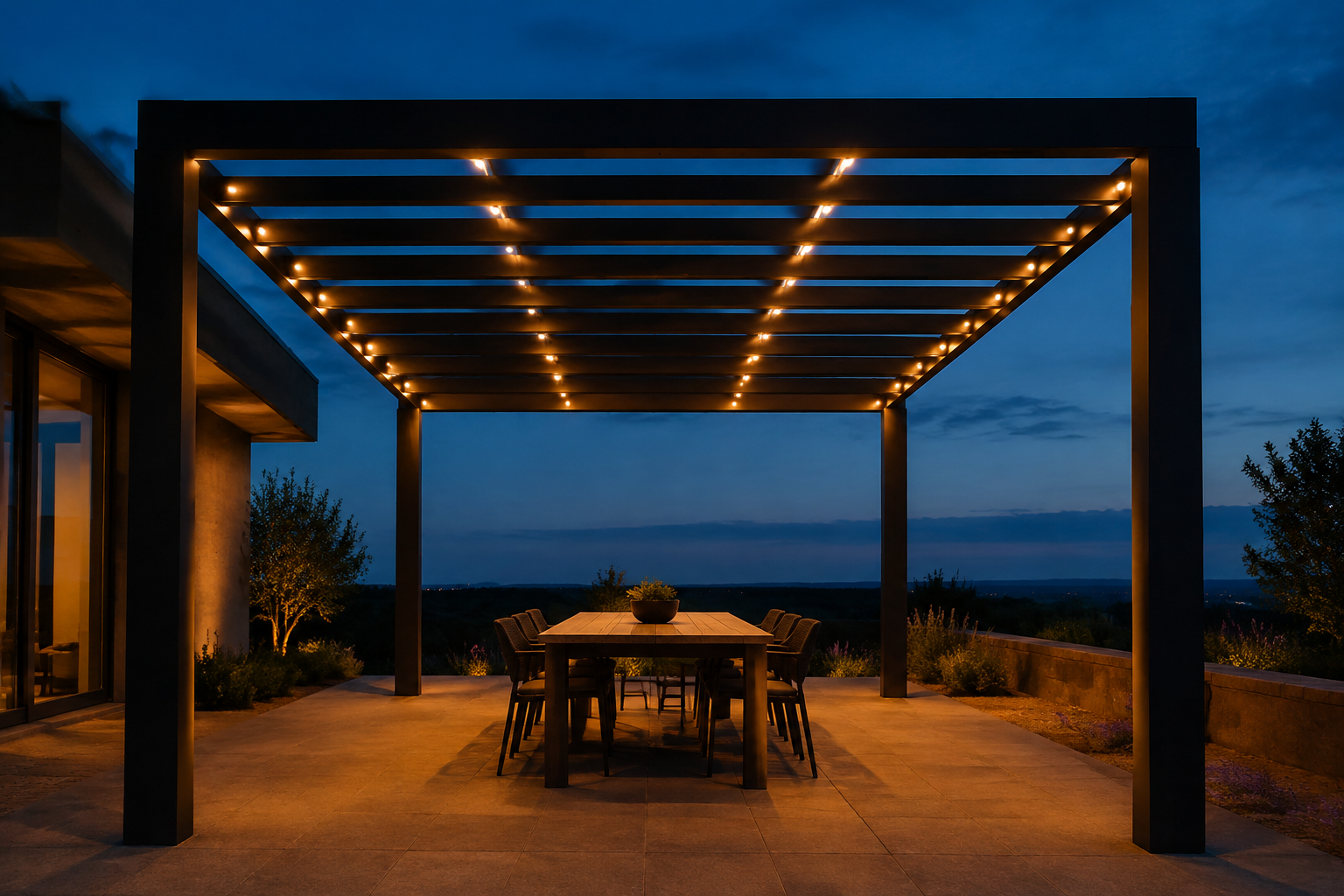
If your pergola has regular rafters, treat each one as a track. Run a single straight strand along every second rafter.
The lines mirror the roof and pull the eye outward. Your patio will instantly feel wider and more ordered.
Skipping a rafter leaves gaps of sky. Those thin dark lines keep the ceiling from feeling heavy.
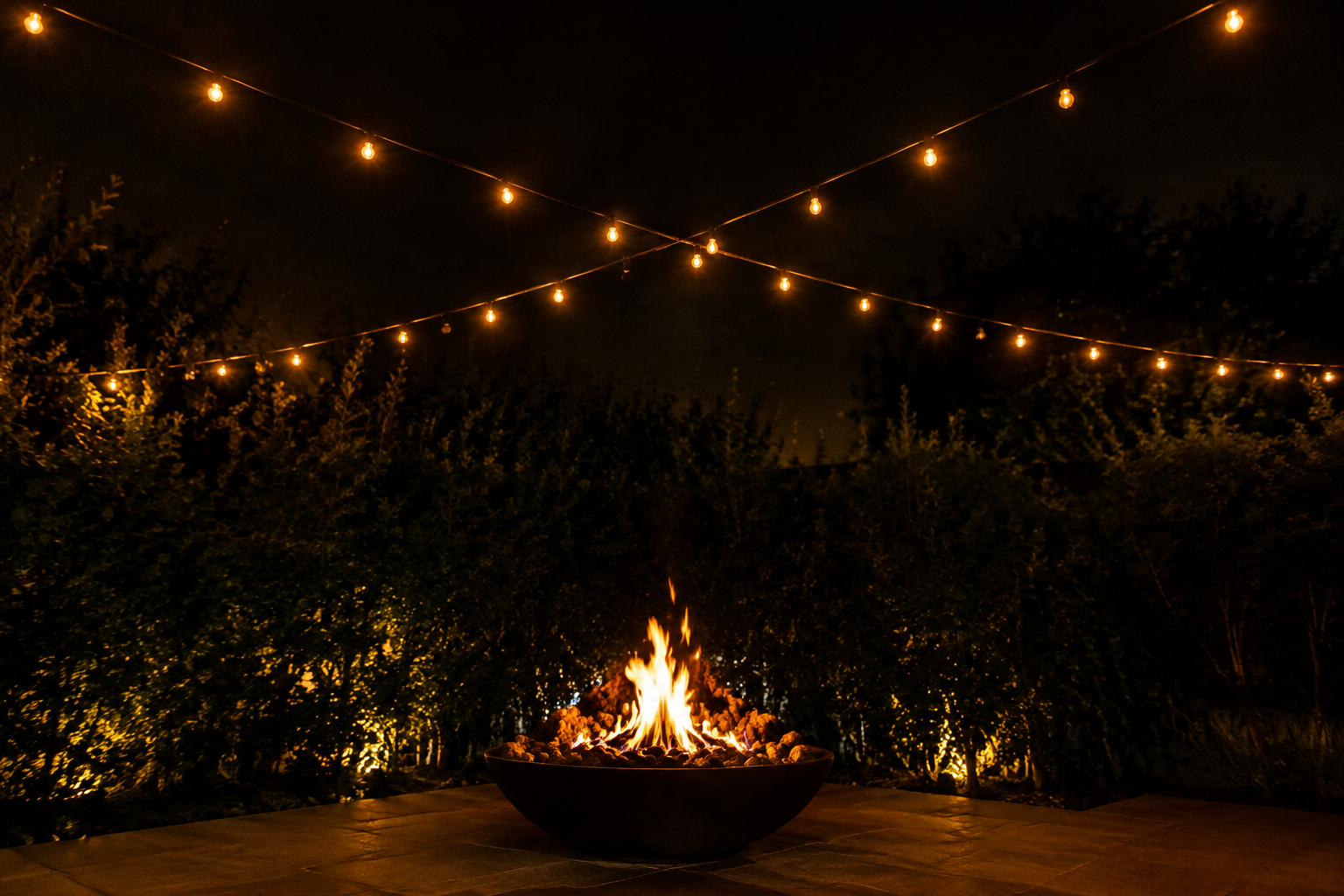
The Criss-Cross Canopy
Two strands are all you need for a dramatic outdoor ceiling. Run the first side to side and the second corner to corner.
Where they cross, add a small hook so the wires never rub. Friction wears through insulation far faster than weather does.
The X pattern brings energy to a plain square patio. It suits party spaces more than quiet reading corners.
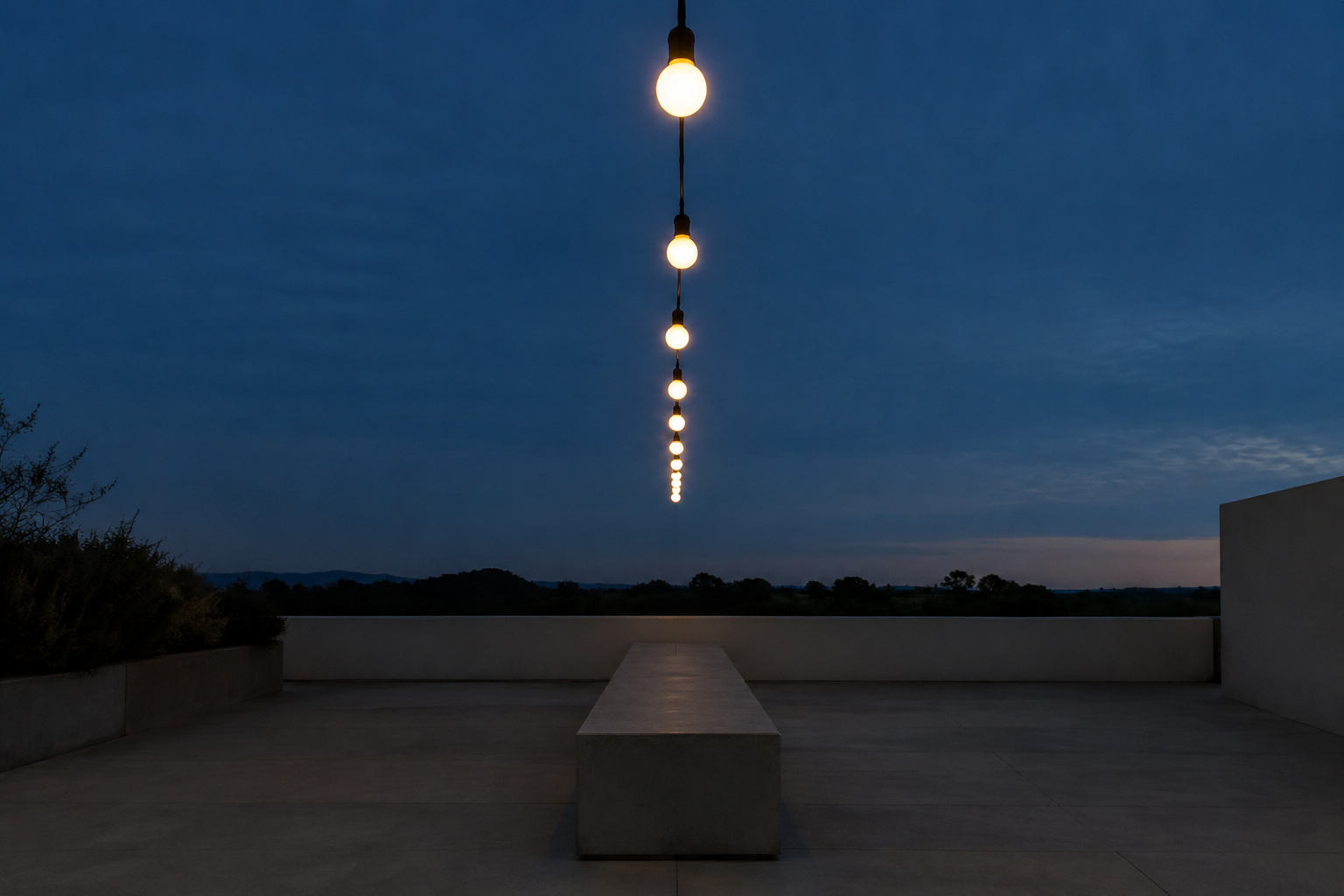
The Single Center Strand
Sometimes one line is enough. Hang a single strand down the middle of a patio and leave the edges dark.
Large globe bulbs look best here, spaced wide apart. The empty air around them becomes part of the design.
This is the trick for small courtyards that feel crowded. More strands would only make them busier.
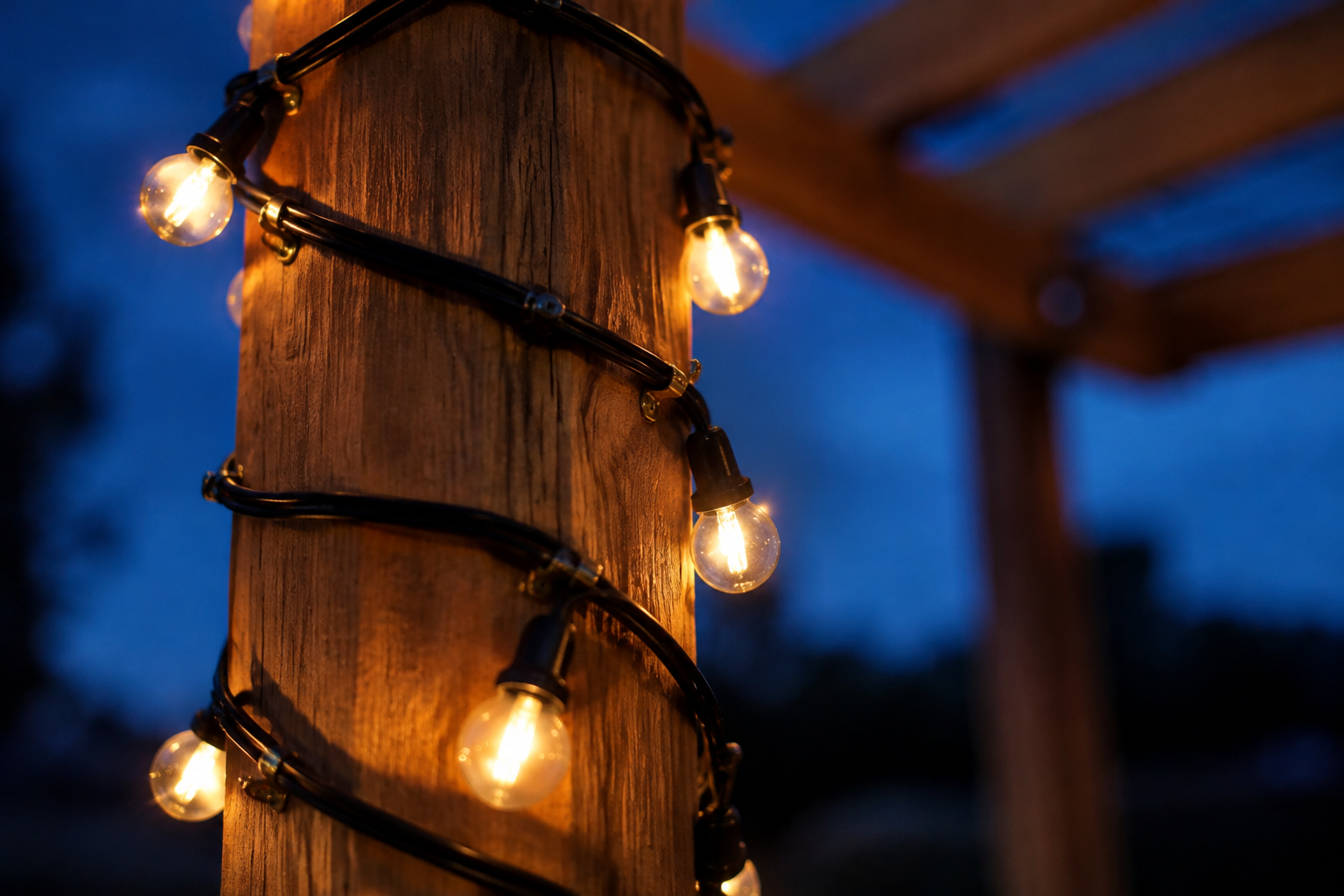
The Spiral Post Wrap
Wrap your pergola posts instead of the roof. Start at the base and spiral upward with small, even gaps.
The glow lands on the floor and on the people standing there. Nothing hangs above the table, so the view stays open.
Use a weatherproof outdoor strand and tuck the plug behind the post. A trailing cable ruins an otherwise neat job.
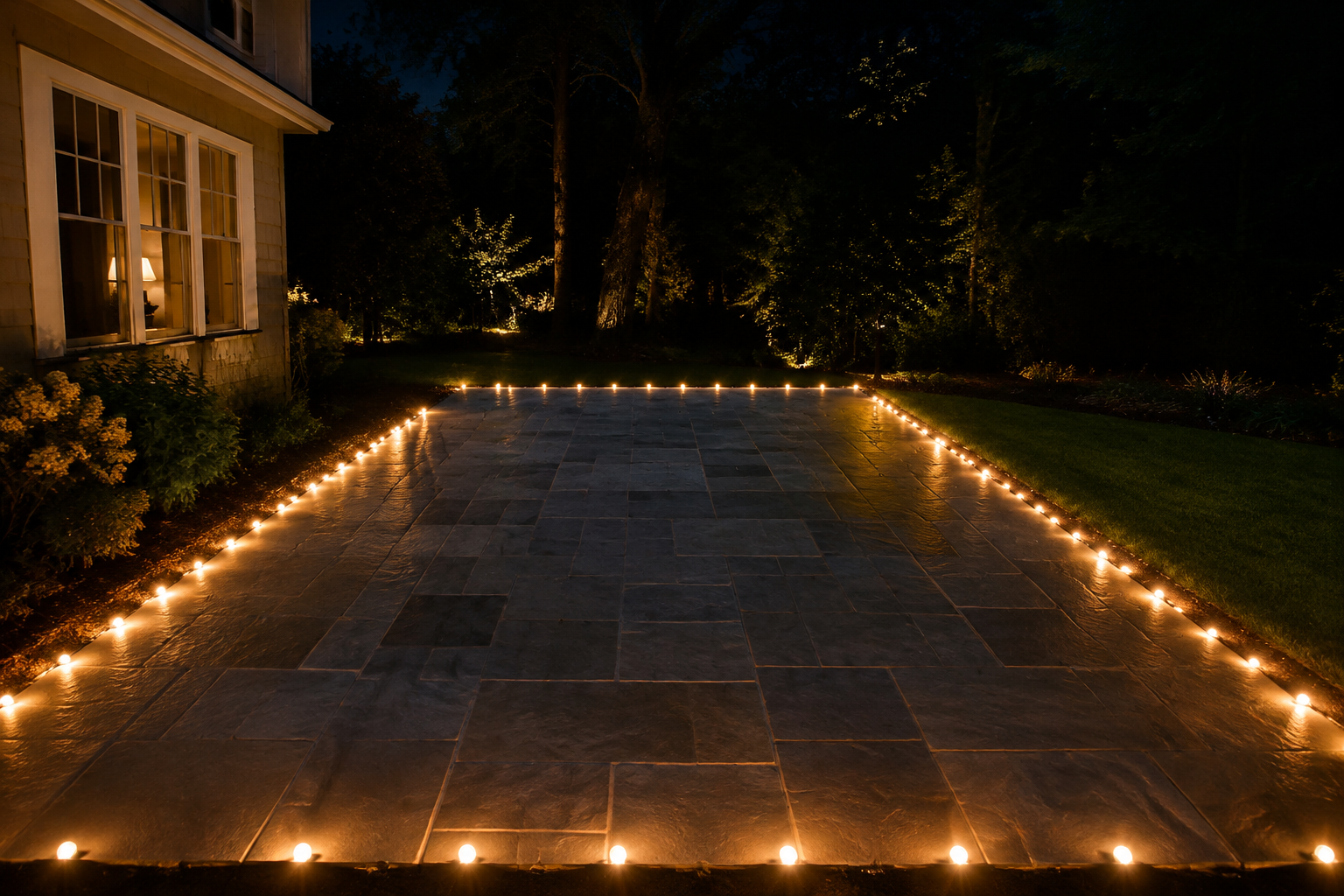
The Perimeter Frame
Trace the exact edge of your patio with light. The strand becomes a glowing outline of the room.
Guests read that line as a wall. They stay inside it without ever being told to.
Keep the frame about 2.4 m above the floor so nobody ducks. Anchor the corners first, then work along each side.
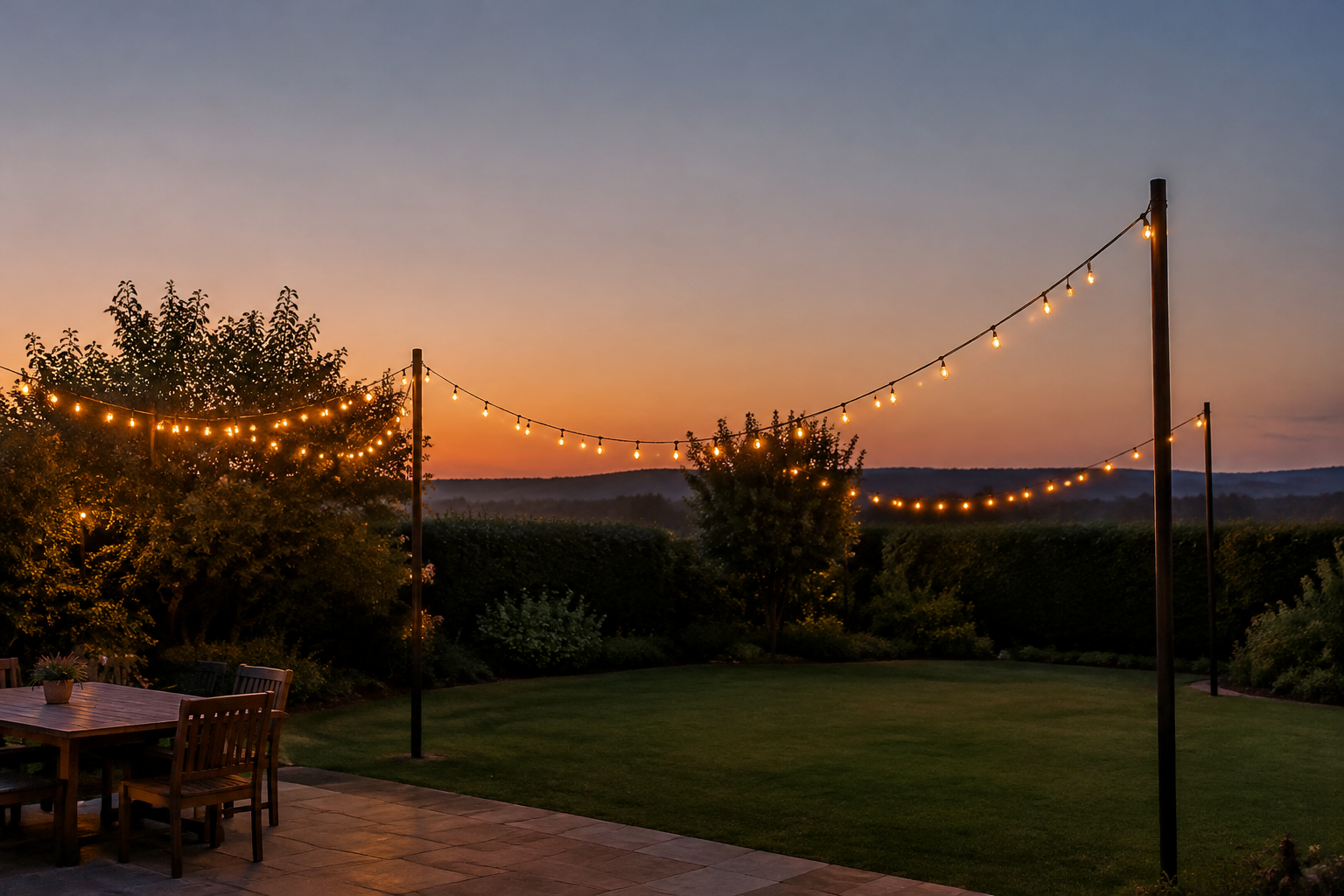
The Teardrop Swoop
No pergola? Set four slim poles and let the lights swoop between them.
Each curve should dip low in the middle. Hanging shapes feel natural, more like vines than architecture.
The poles can be removable, which suits renters and seasonal setups. Concrete planters with weighted bases need no digging.
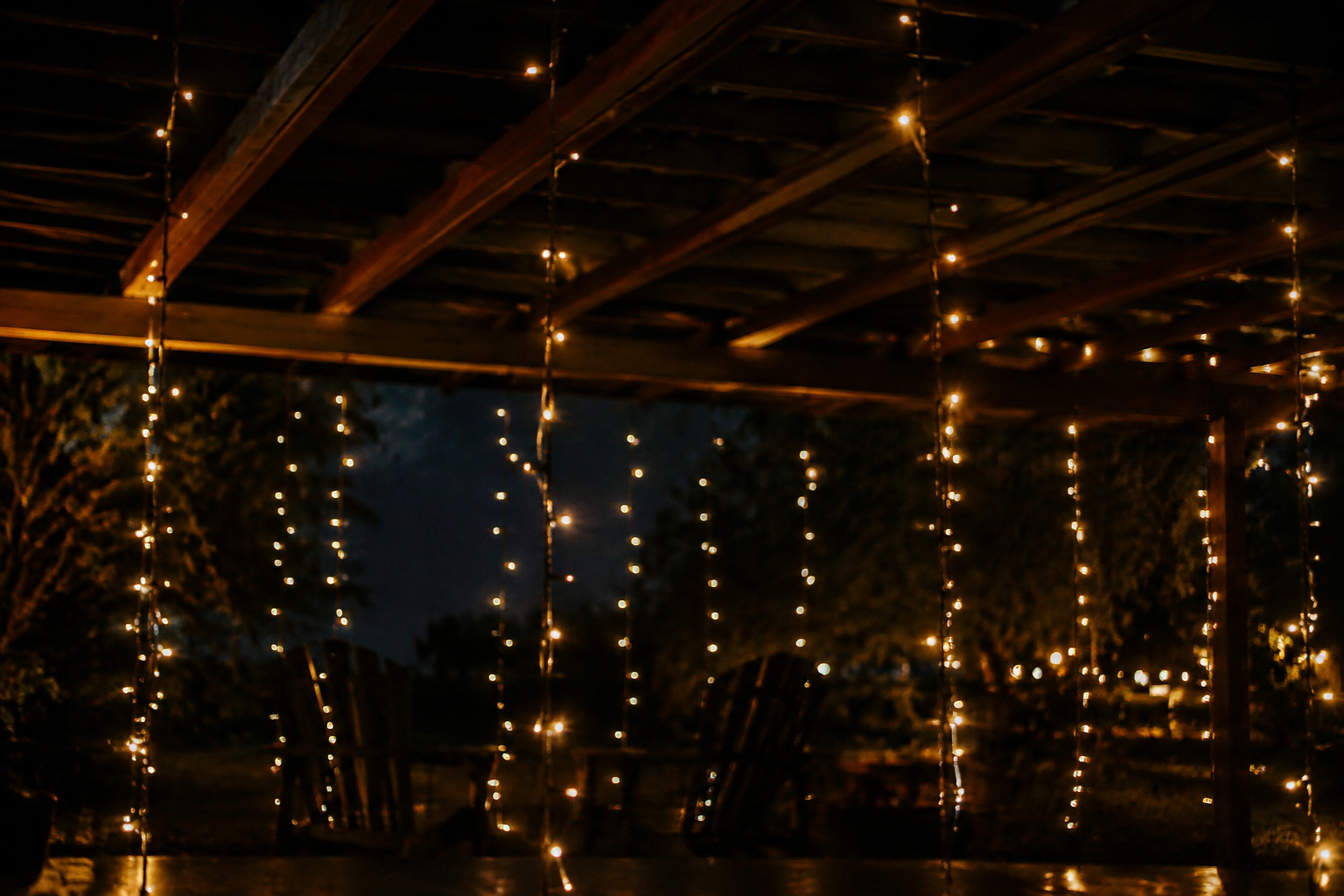
The Hanging Ladder
Hang short vertical drops of light between two beams. Space them like the rungs of a ladder.
The drops glow at eye level and turn a walkway into a corridor. They also screen whatever is behind you.
Keep each drop the same length so the rhythm stays clean. One long drop and three short ones looks accidental.
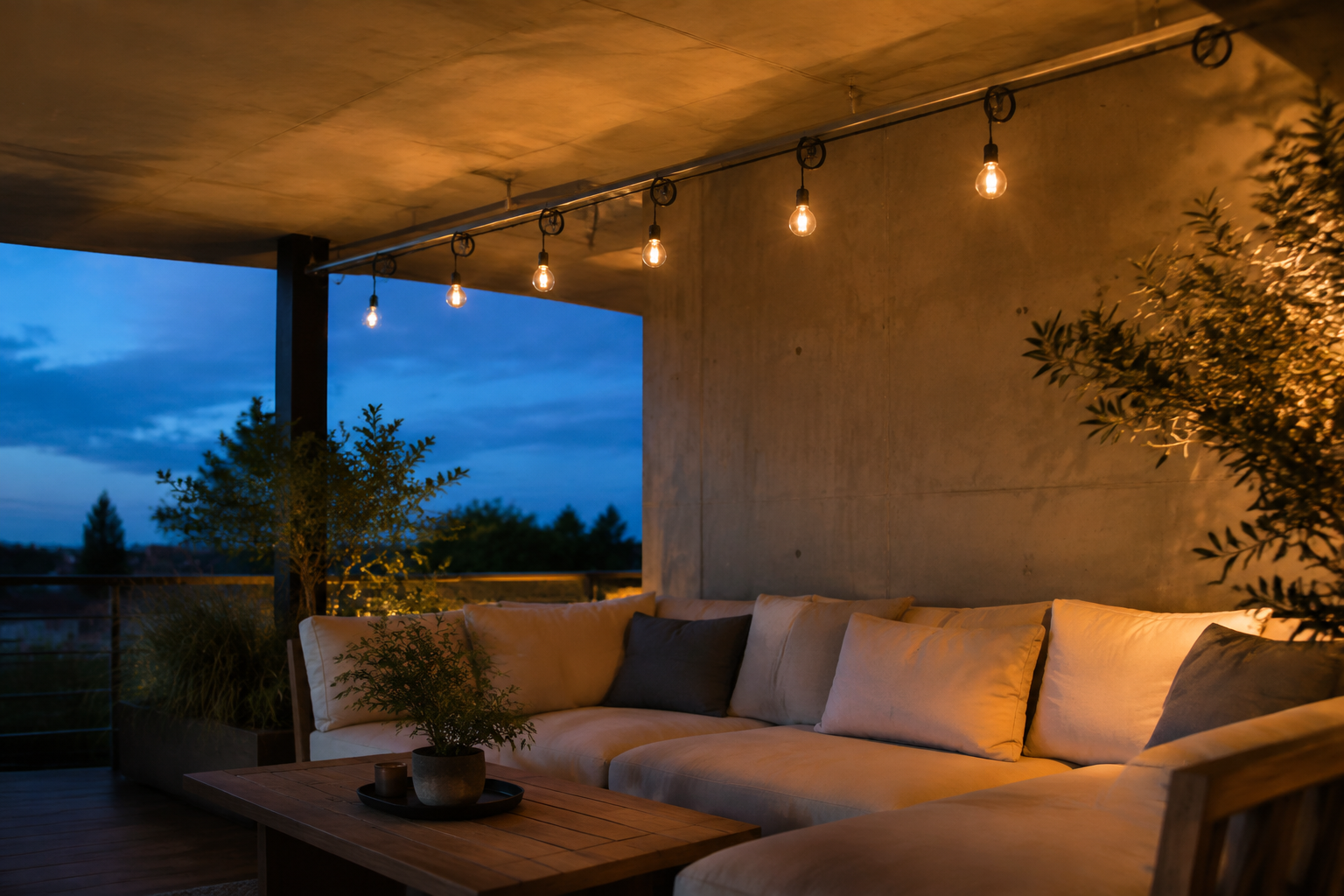
The Retractable Overhead
Mount your strand on a slim rail with small pulley rings. The whole line then slides open and closed.
Pull it out for dinner and park it against the wall before a storm. Your bulbs will last years longer.
This suits windy coastal gardens especially well. It also solves the patio that doubles as a parking space.
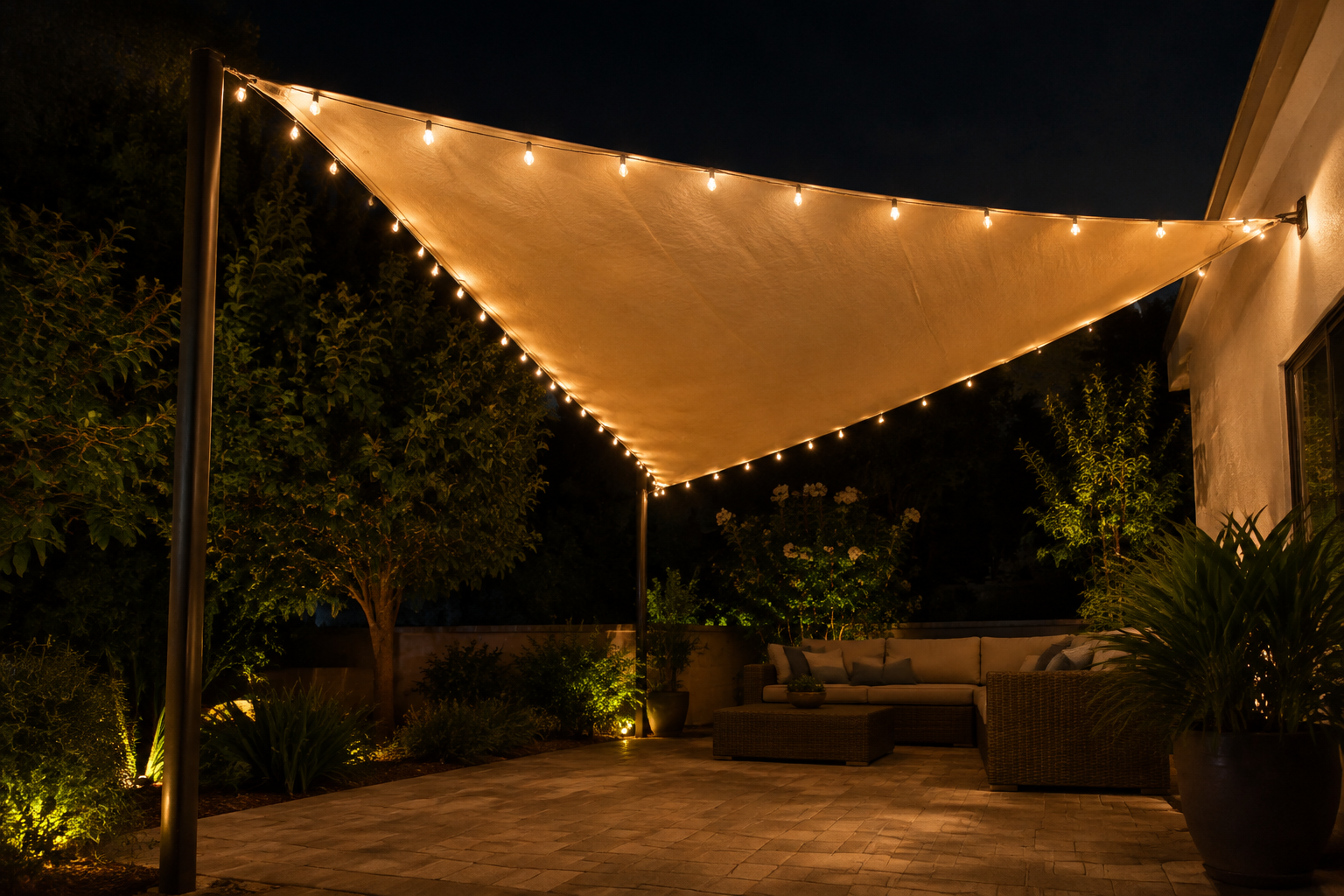
The Sail Strung
Already own a shade sail? Clip lights along its edge and the sail becomes a glowing roof.
The fabric bounces warm light back down onto the patio. You get twice the glow from half the bulbs.
Use plastic clips rather than metal ones that rub the fabric. The sail should carry no weight beyond the strand itself.
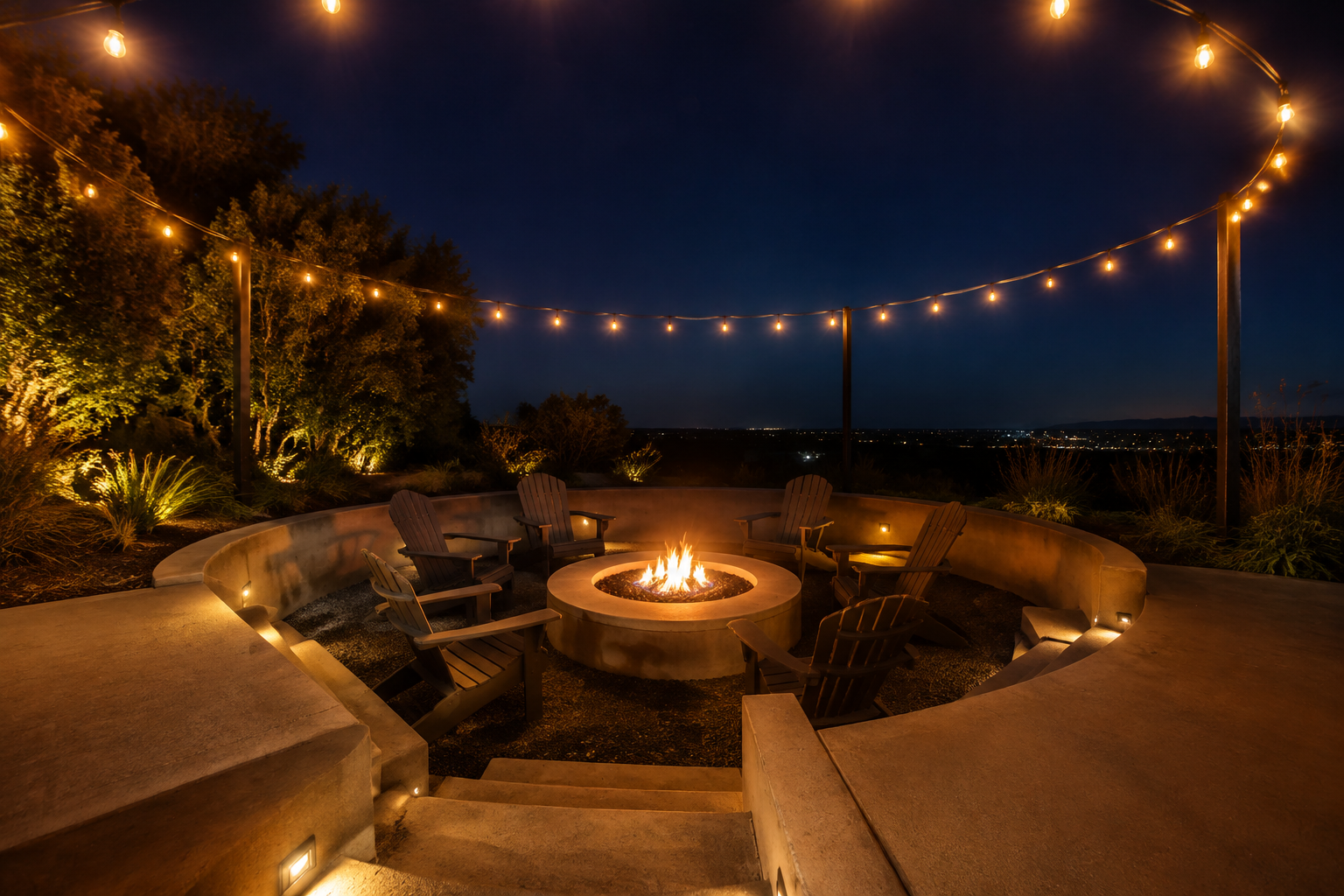
The Sunken Lounge Ring
A sunken fire pit needs light that sits low and wide. Run a loose ring of bulbs above the seating circle.
Let the ends fall slightly toward the steps so the edges glow too. Nobody trips on a stair they can see.
Keep the bulbs clear of the smoke path. Warm light through a haze of smoke will only look foggy.
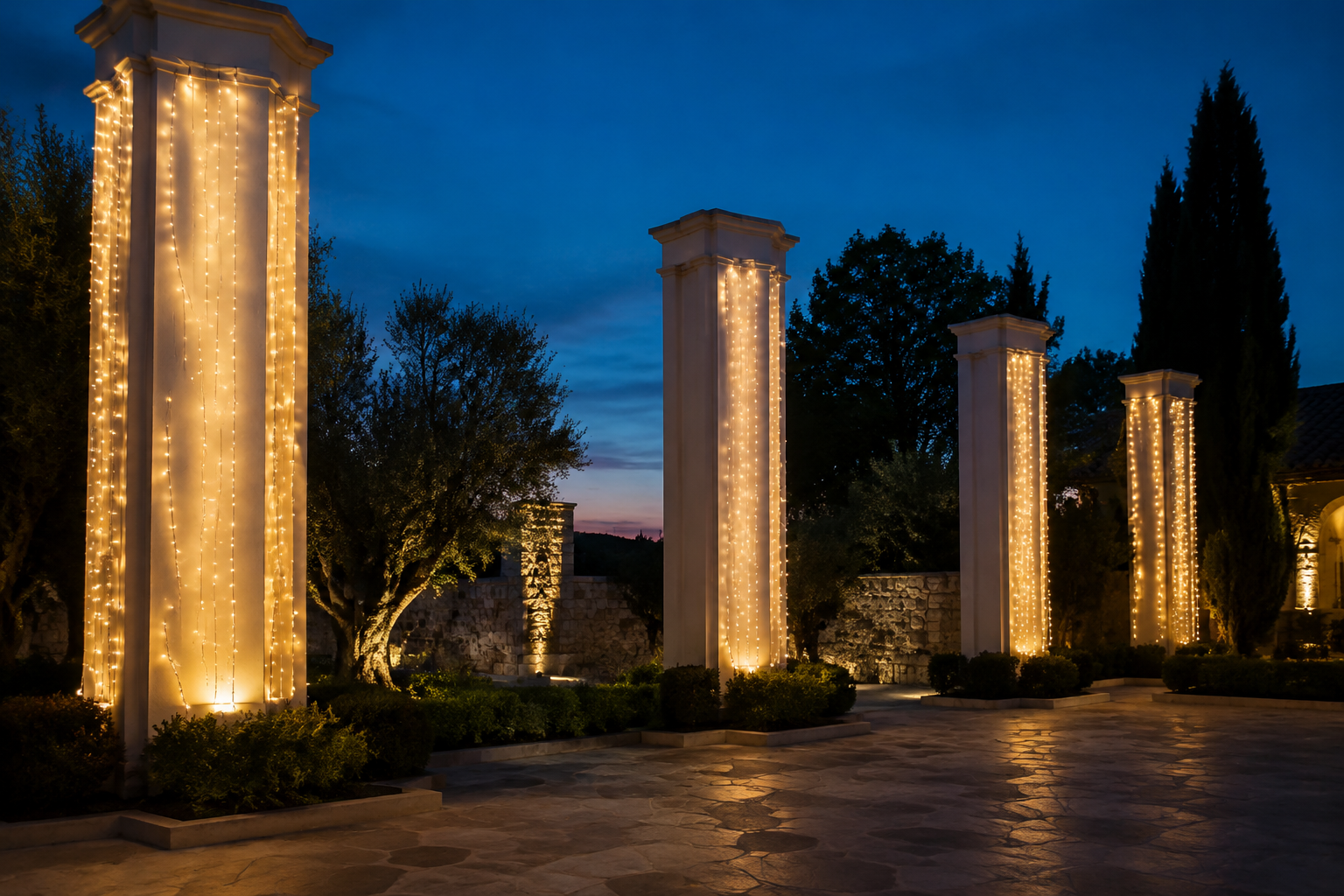
The Column Cascade
Tall columns deserve vertical drama, not a tidy line. Drop long cascades of light down their faces.
The effect looks like falling water and frames the whole patio. Two columns are enough to make a statement.
Anchor the bottom ends so wind cannot lift them. A small hook at ankle height does the job invisibly.
Tree & Garden Ideas
A tree is the best anchor in any garden. It is tall, strong and already in the right place. These ten looks work with the tree instead of hiding it.
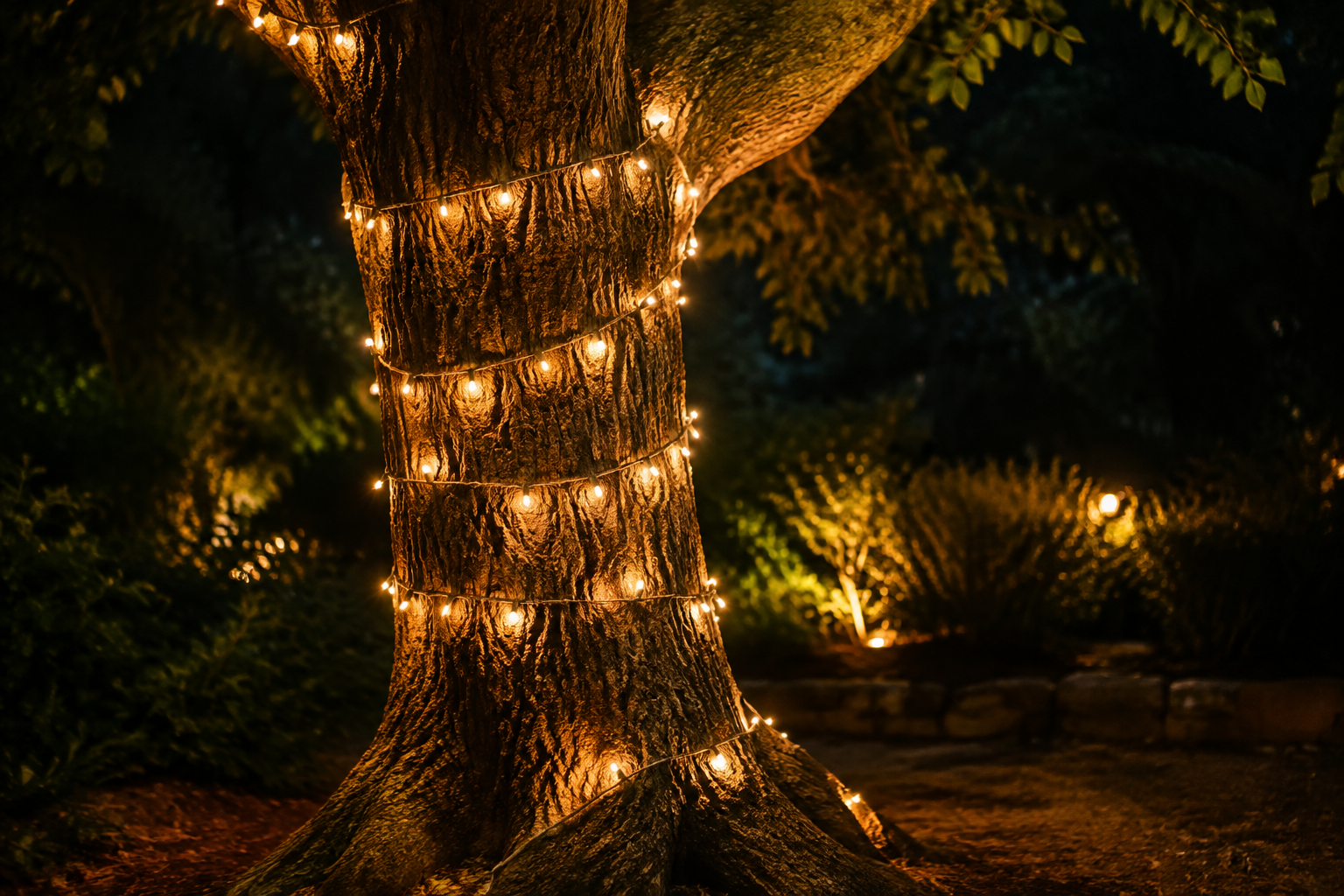
The Trunk Spiral
Pick one good trunk and wrap it from the base to the first branch. Keep the spiral loose and even.
The tree stops being a shadow and becomes a sculpture. Its shape is what you are lighting, not the ground.
Never wrap tightly around living bark. Leave a finger of space so the tree can grow without being strangled.
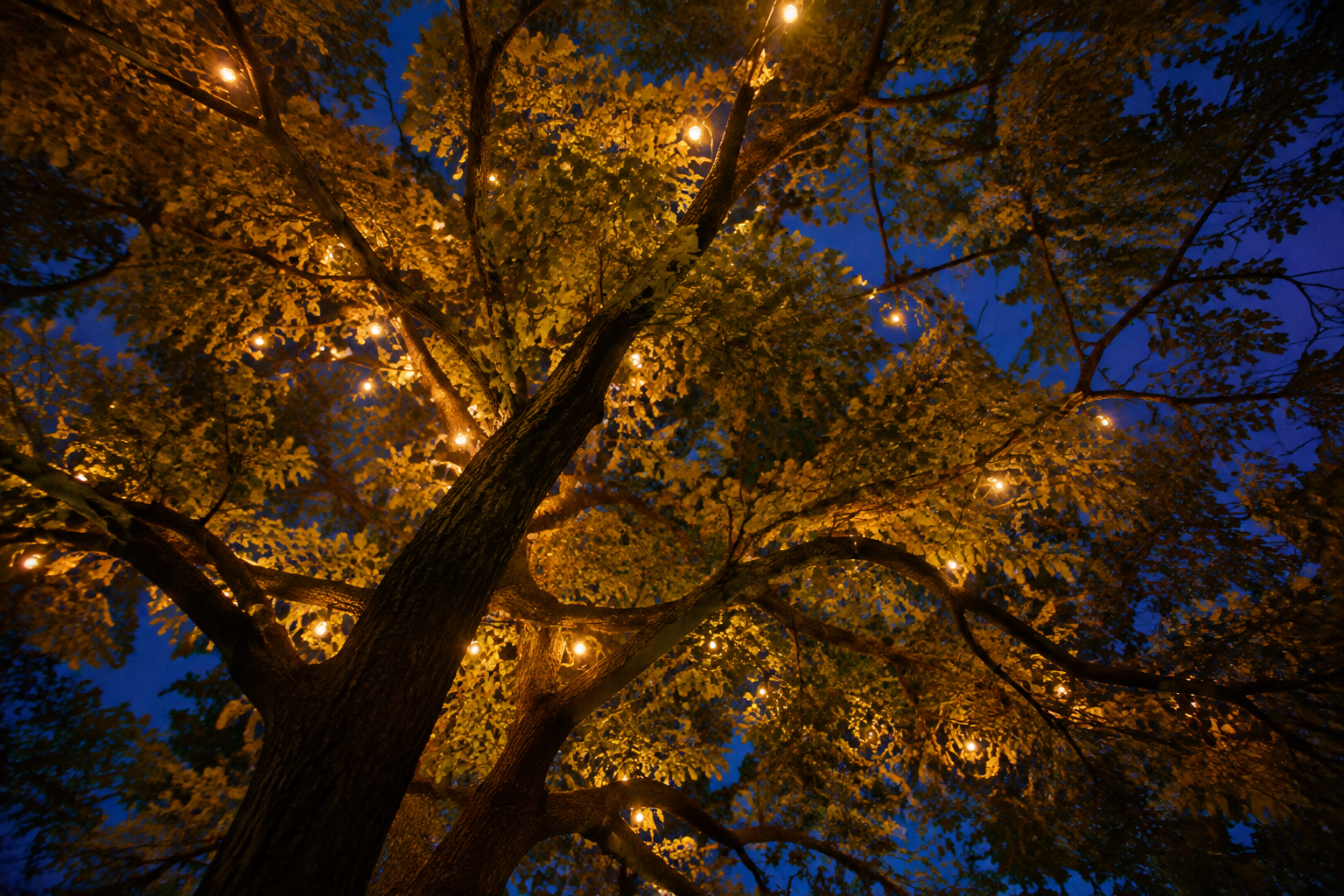
The Branch Weave
Follow the branches instead of fighting them. Weave the strand up and out along the strongest limbs.
Light from below turns leaves into a glowing ceiling. The effect is richest when you light the underside only.
Use a fibre pole to reach the high limbs without a ladder. Leave the strand slightly slack so the branches can move.
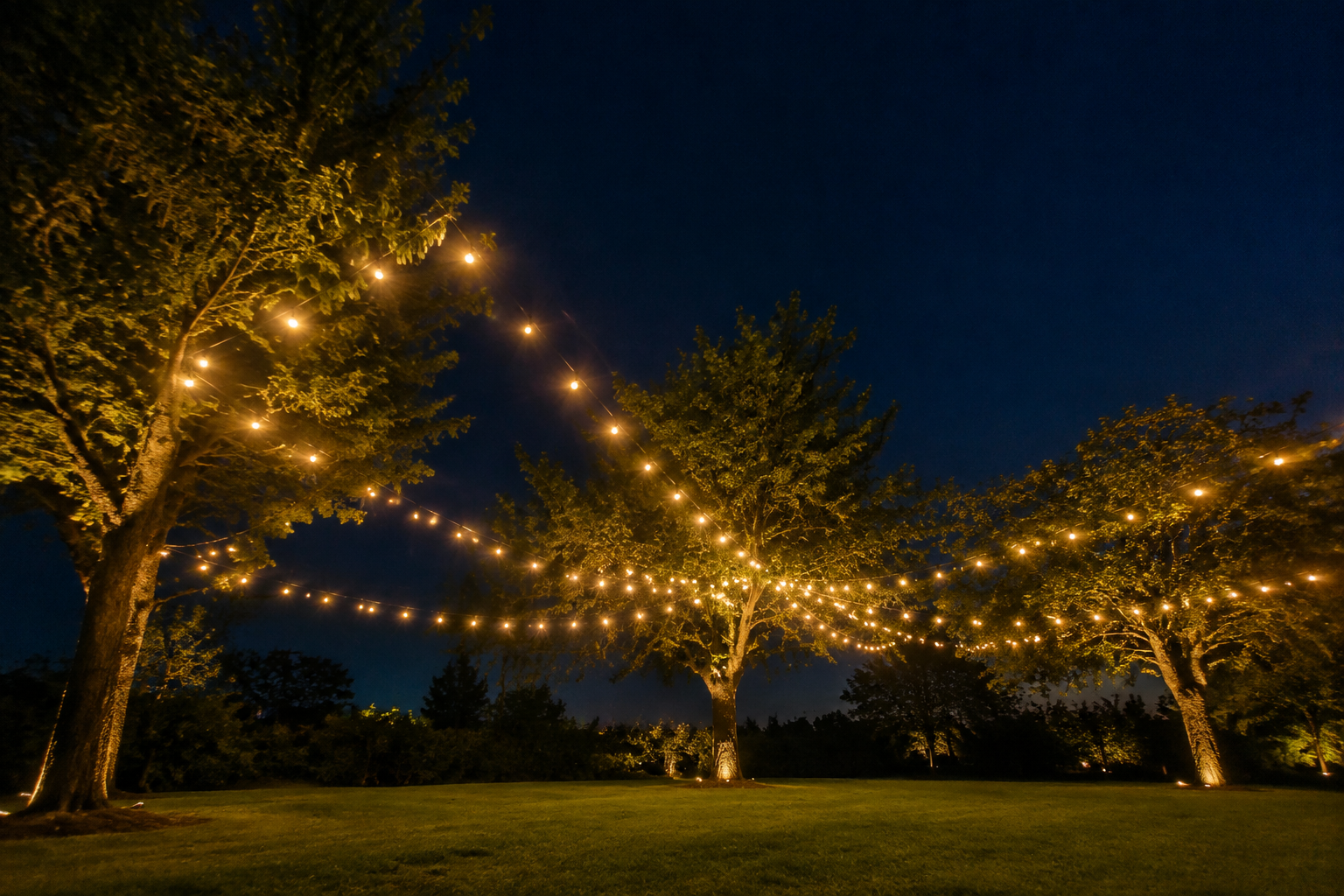
The Grove Canopy
Three or more trees can become one outdoor room. Run spans tree to tree until the lawn has a ceiling.
The result is a star field you can sit under. Wedding venues use this trick because it never disappoints.
String a steel guide wire between trunks first. The wire takes the weight, not the bulbs.
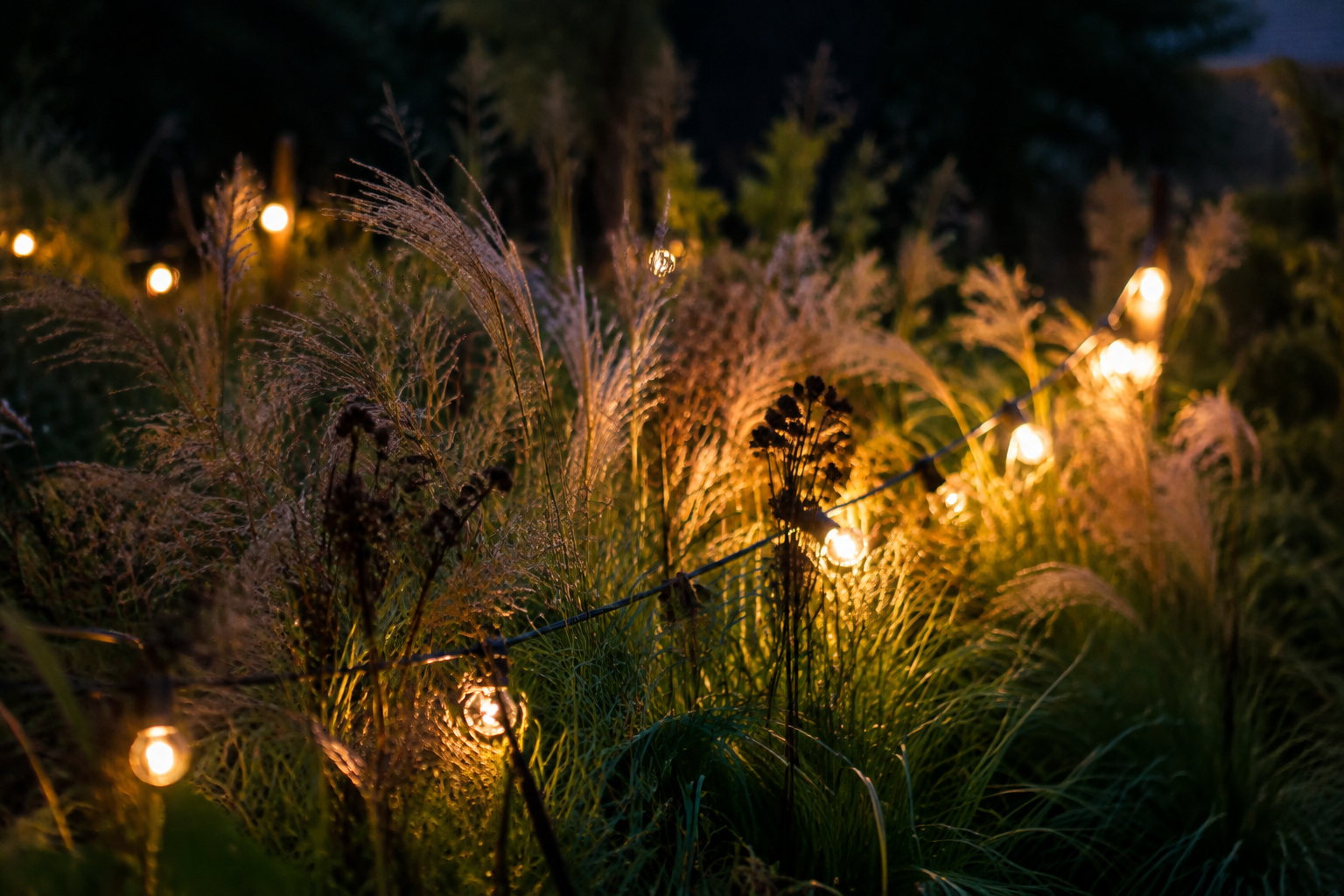
The Low Garden Swag
Not all lights belong overhead. Sweep a strand low through tall grasses and perennials.
The bulbs graze the seed heads and light the texture you normally lose after sunset. It makes a border feel deep.
Keep the lowest point above knee height. Anything lower will be kicked, mowed or buried in snow.
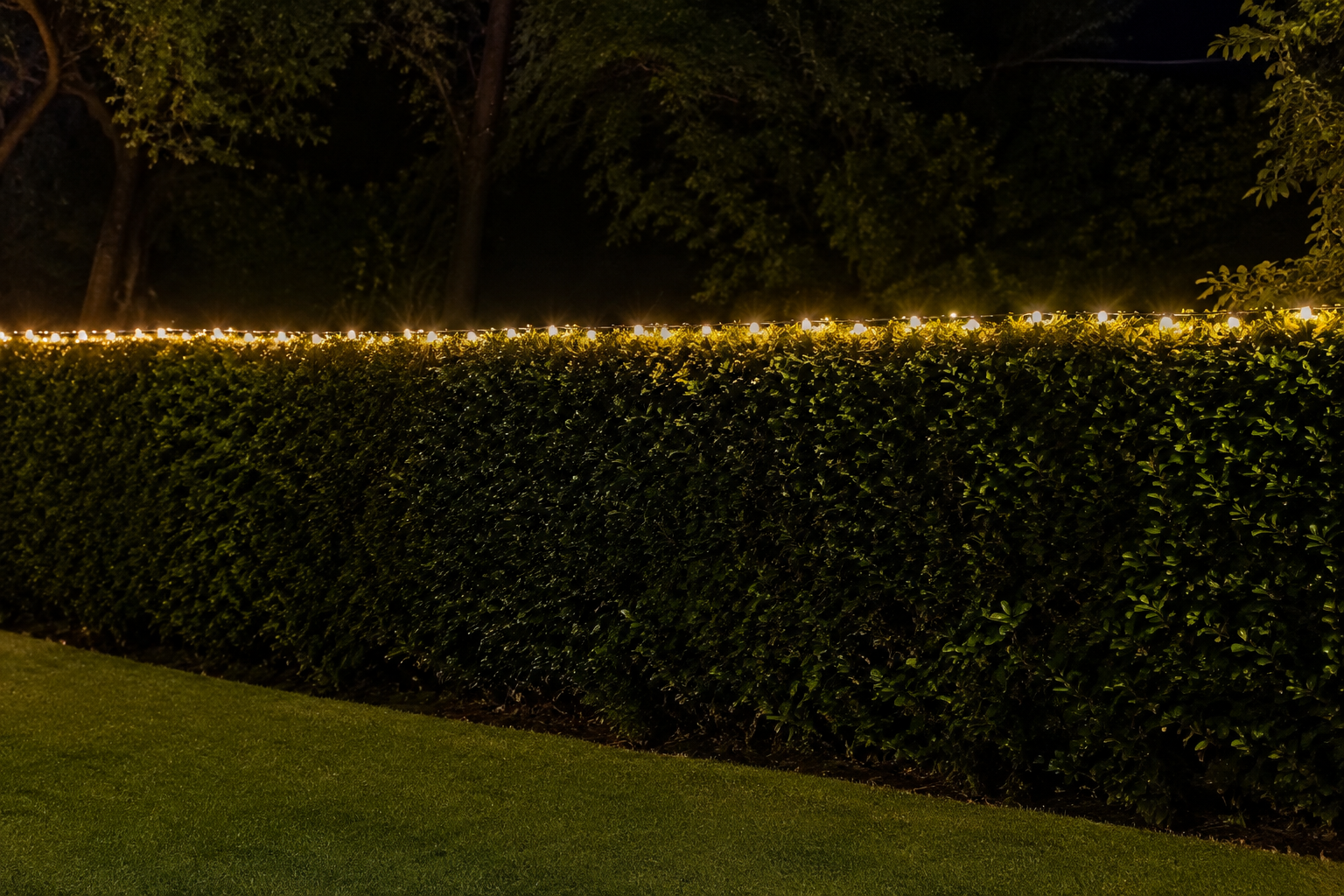
The Hedge Trim
A clipped hedge already has a straight edge. Lay a strand along its top and let the shape do the work.
The hedge reads as a lit wall and hides whatever stands behind it. It is the cleanest screen you can build for under $50.
Trim the hedge before you hang, never after. Fresh clippings will drag the strand down within a week.
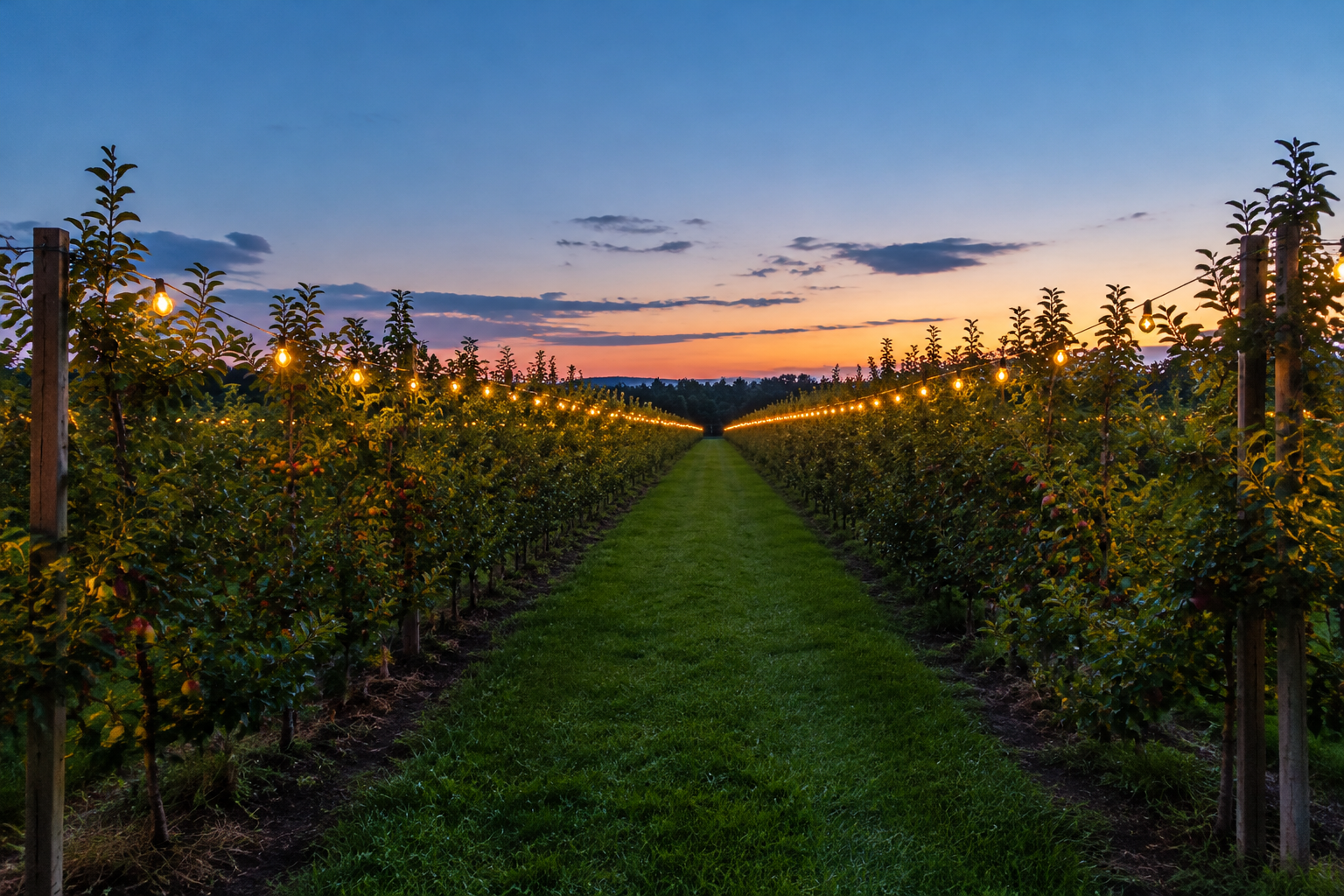
The Orchard Rows
If your trees stand in rows, light the rows. Each span becomes a line that leads the eye away.
Perspective does the decorating here. Ten small trees will look like an avenue of light.
Run the strands at the same height on every tree. Consistent height turns a farm into a garden.
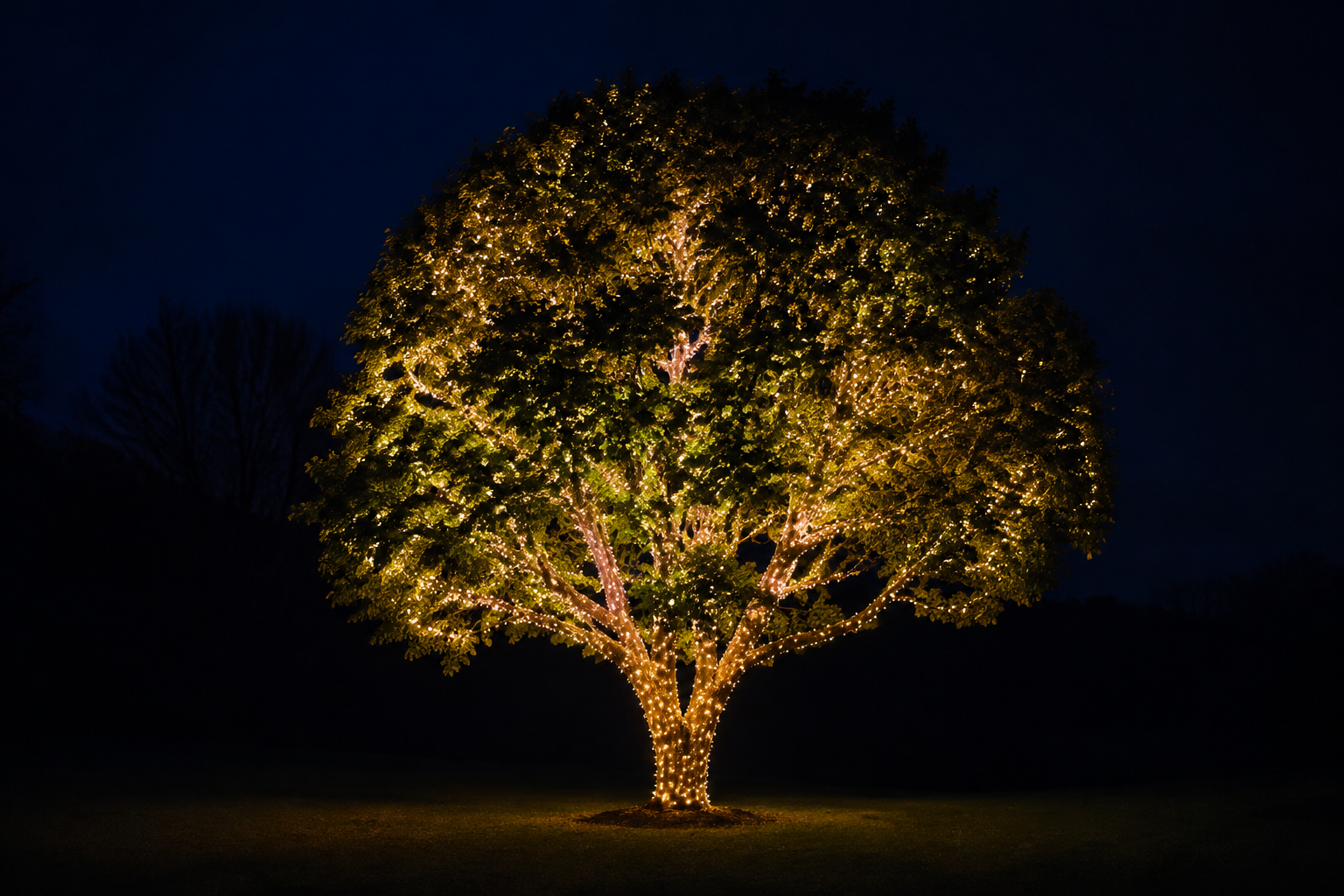
The Single Specimen Tree
Restraint is a design choice. Light one beautiful tree and leave the rest of the garden dark.
The darkness around it makes the tree louder than any crowded display. Your eye has only one place to go.
This works best with a tree that has real shape. A rounded canopy or a weeping branch will carry it alone.
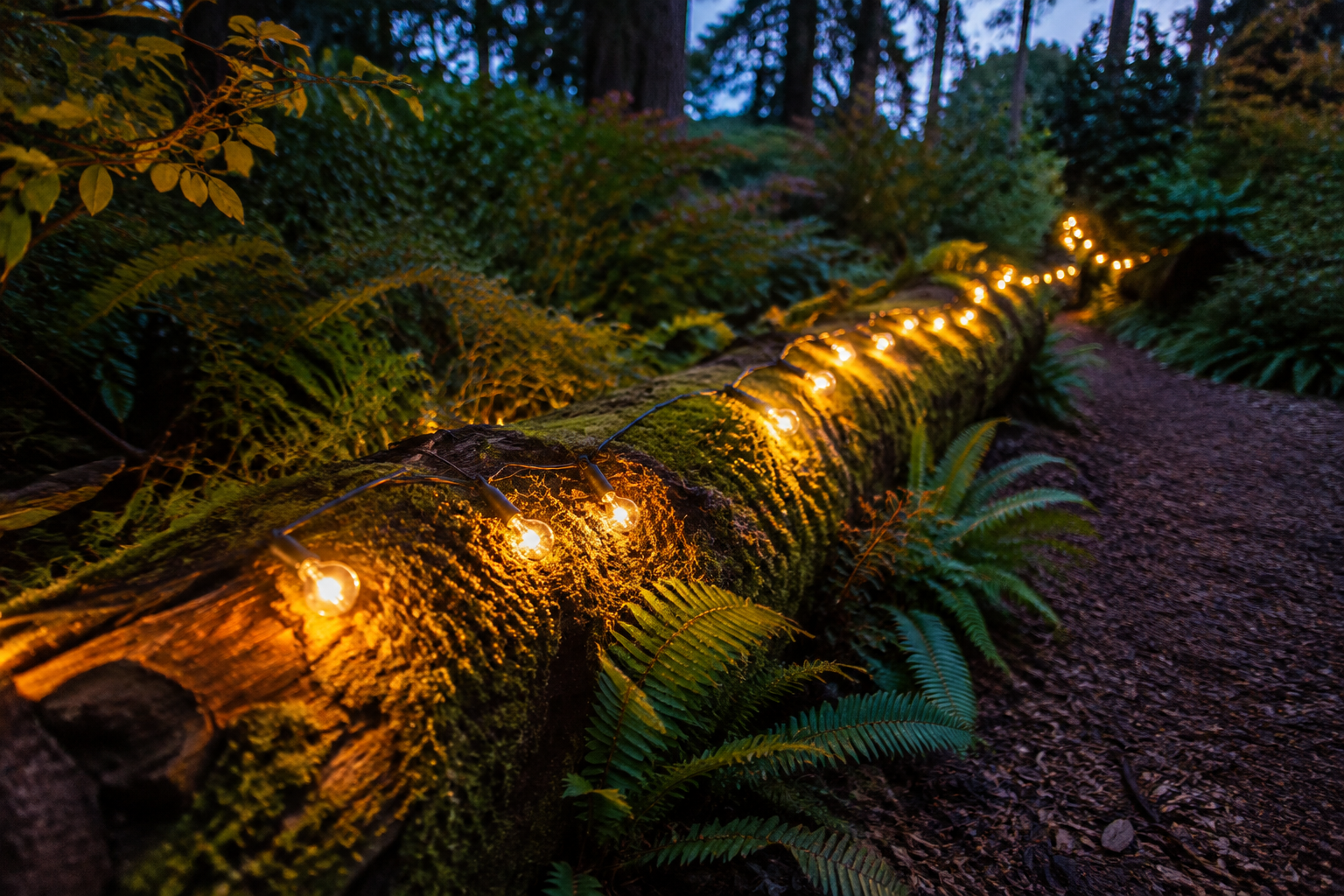
The Fallen Log Trail
A fallen log is a ready-made route for light. Rest the strand along its length and let it wander.
The path reads as guided without a single garden spike. It is the most natural look on this list.
Lift the wire clear of damp soil. Even outdoor strands dislike sitting in wet leaf litter all winter.
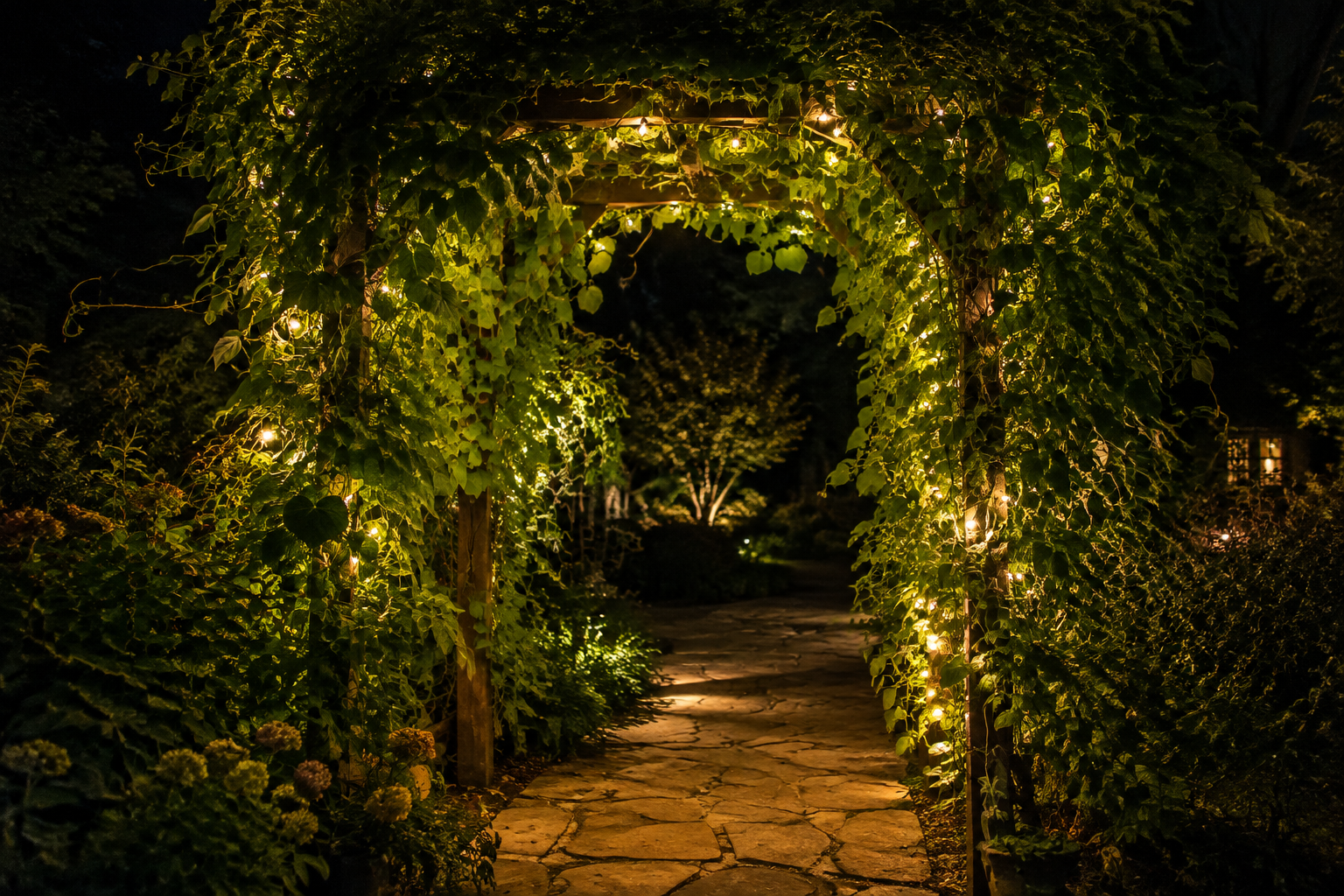
The Vine Arch
Lace lights through an arch that is already covered in vines. The leaves scatter the glow into soft patches.
An arch marks a threshold, and light makes that marking obvious. Guests slow down when they walk through.
Wrap the arch structure, not the vine stems. Growing stems will pinch and cut a tight wire.
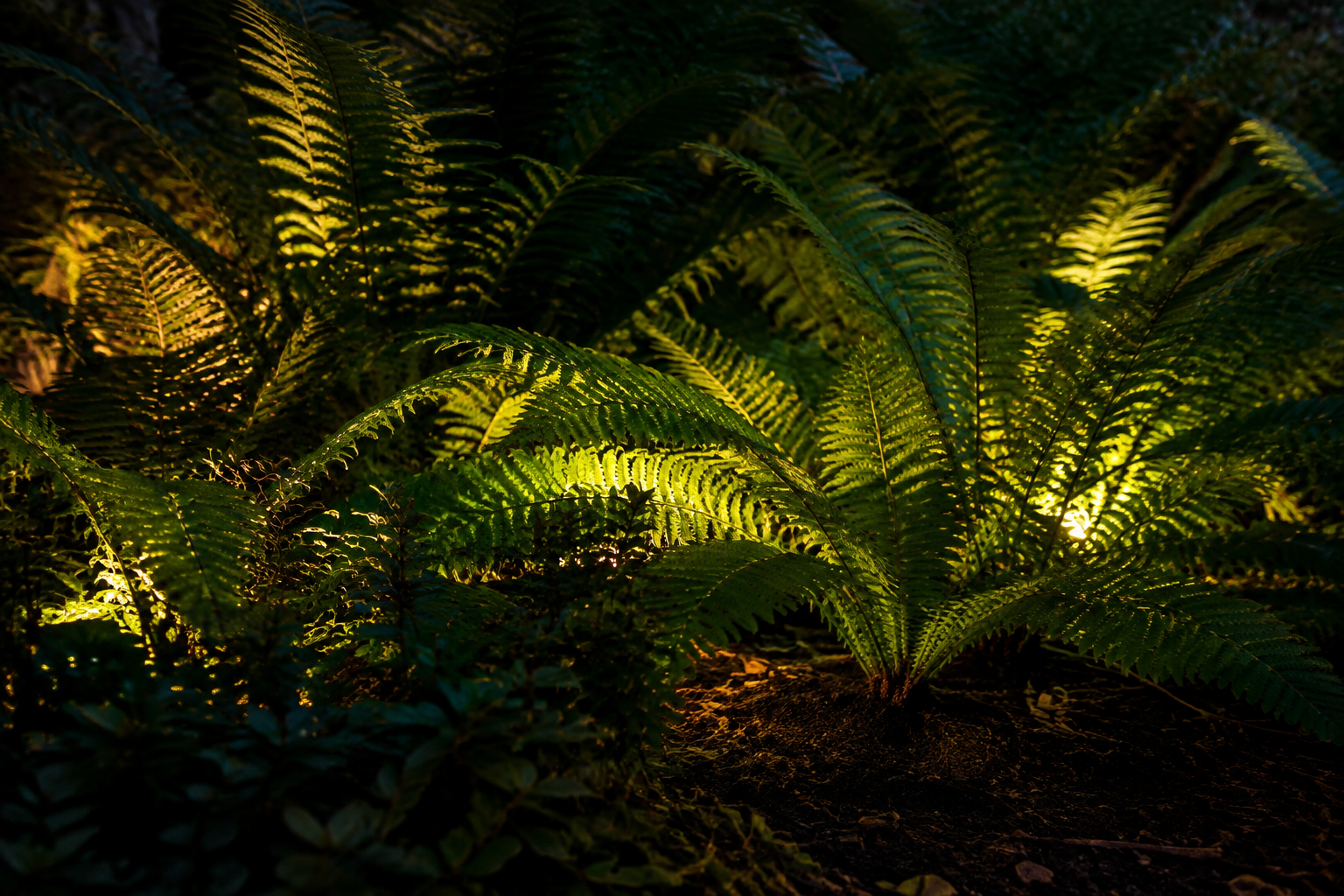
The Fern Understory
Hide the strand and light only the leaves. Tuck bulbs under ferns and low shrubs at ground level.
The planting glows from inside, as if the garden itself were lit. Nobody sees the wire at all.
Choose a dark green foliage bed for this. Pale leaves wash out and lose the effect within a week.
Fence, Wall & Boundary Ideas
A fence is a ready-made frame for light. Here are nine ways to use it as a wall, a path or a boundary marker.
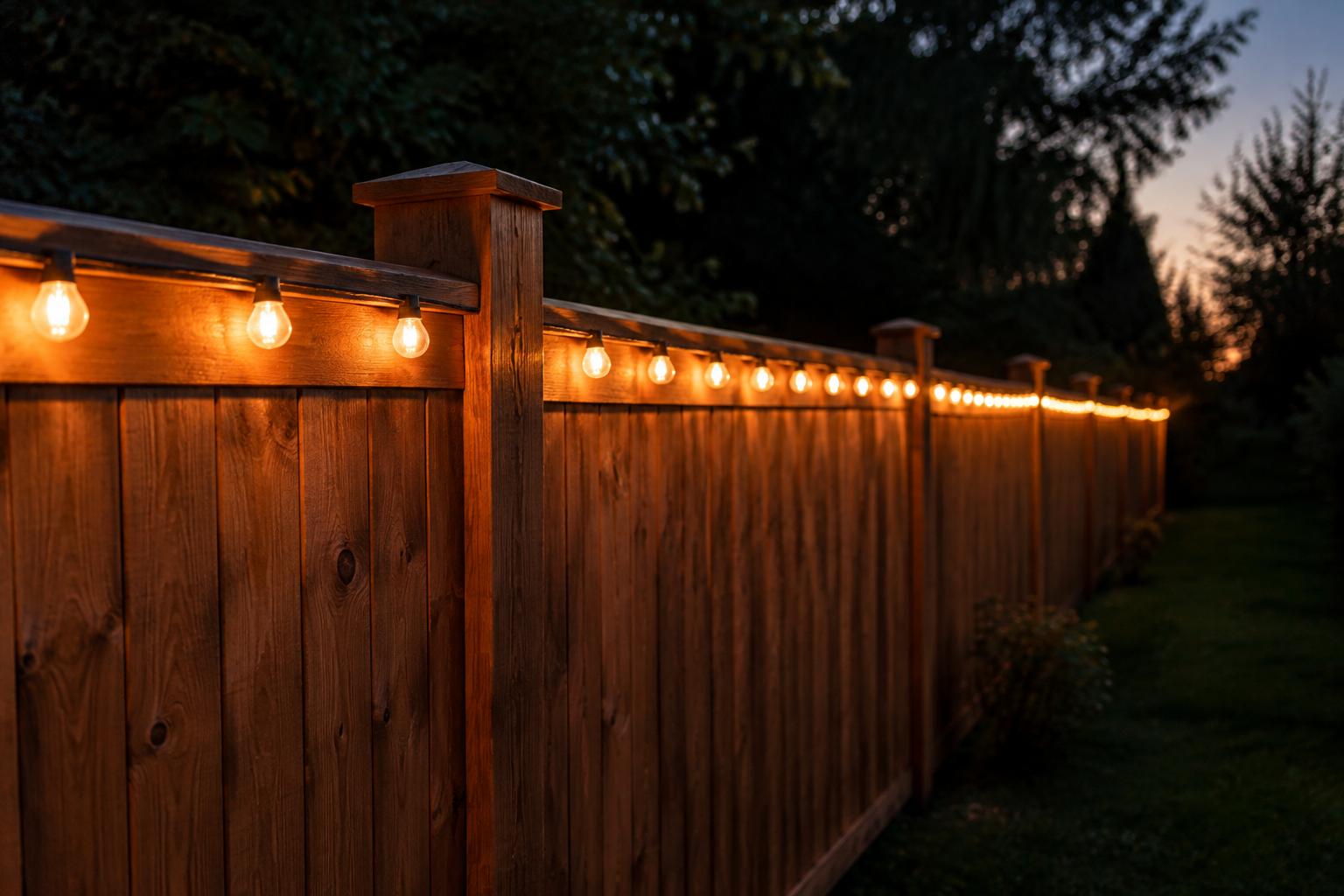
The Fence Top Rail
The top rail is the simplest run in any garden. Lay the strand along it and clip every metre.
The fence becomes a glowing boundary with almost no hardware. It is also the easiest run to take down.
Check the rail for splinters and loose caps first. A wire caught on a nail will fail by midsummer.
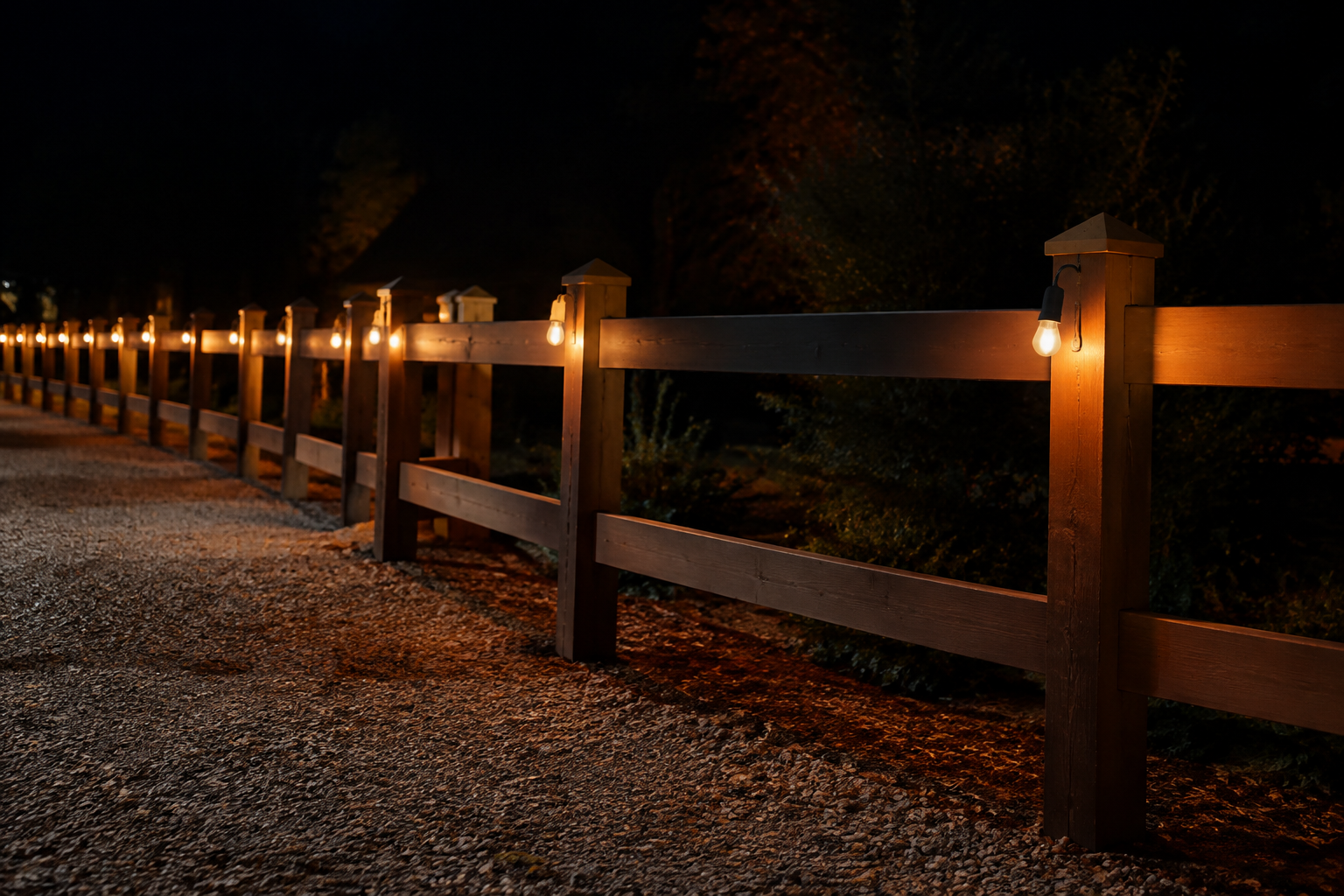
The Post Cap Drop
Give each fence post a short drop of light. One small loop per post creates a rhythm along the whole line.
It reads as a row of lanterns rather than a single wire. The gaps between posts stay dark and calm.
Use the same drop length on every post. Consistency is the whole trick here.
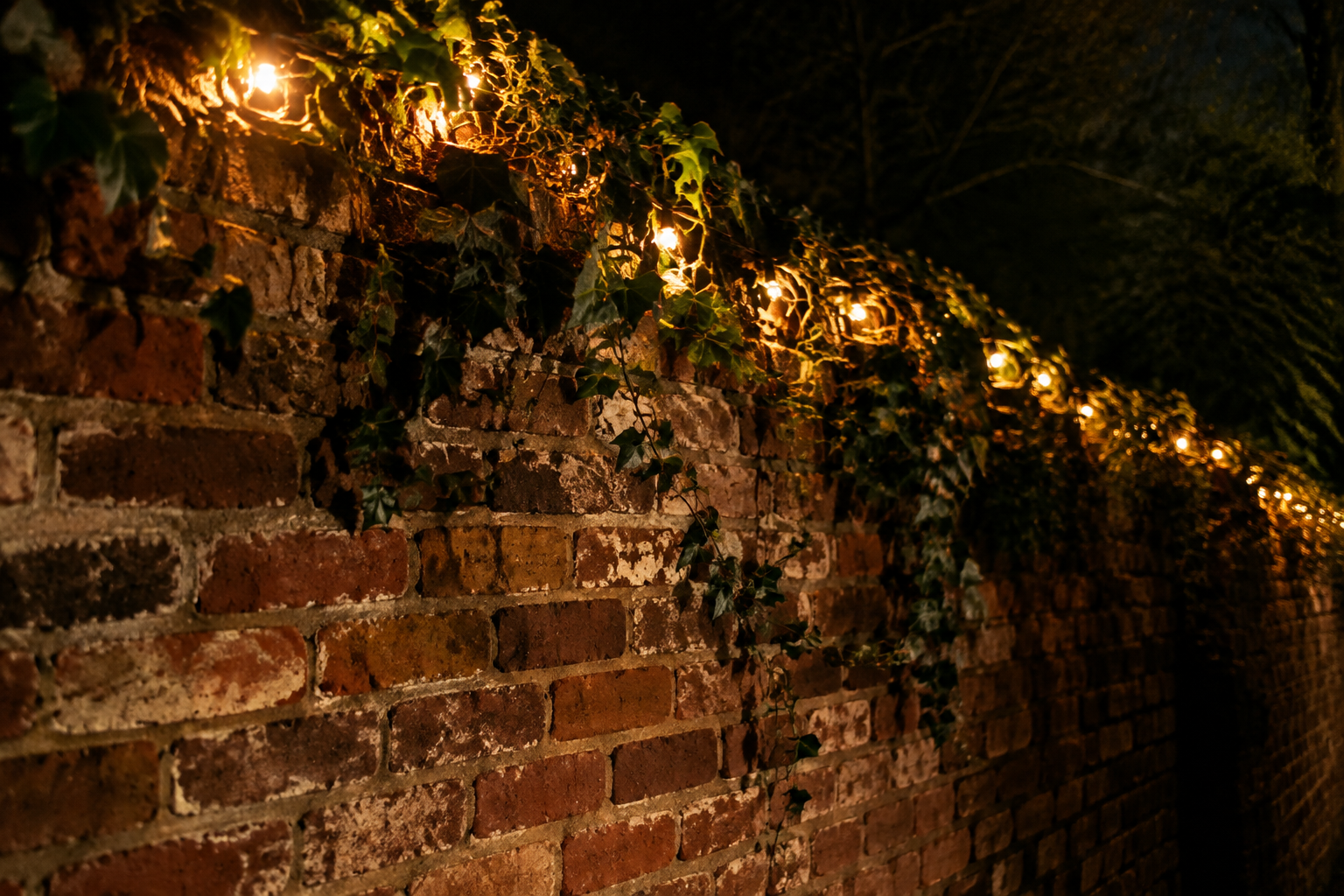
The Brick Wall Trace
An old brick wall has texture worth lighting. Run the strand just above the top course.
The bulbs graze the bricks and pull out every uneven edge. New walls look older and old walls look warmer.
Leave a small loop at each end. Brick expands and a tight wire will pop its clips in winter.
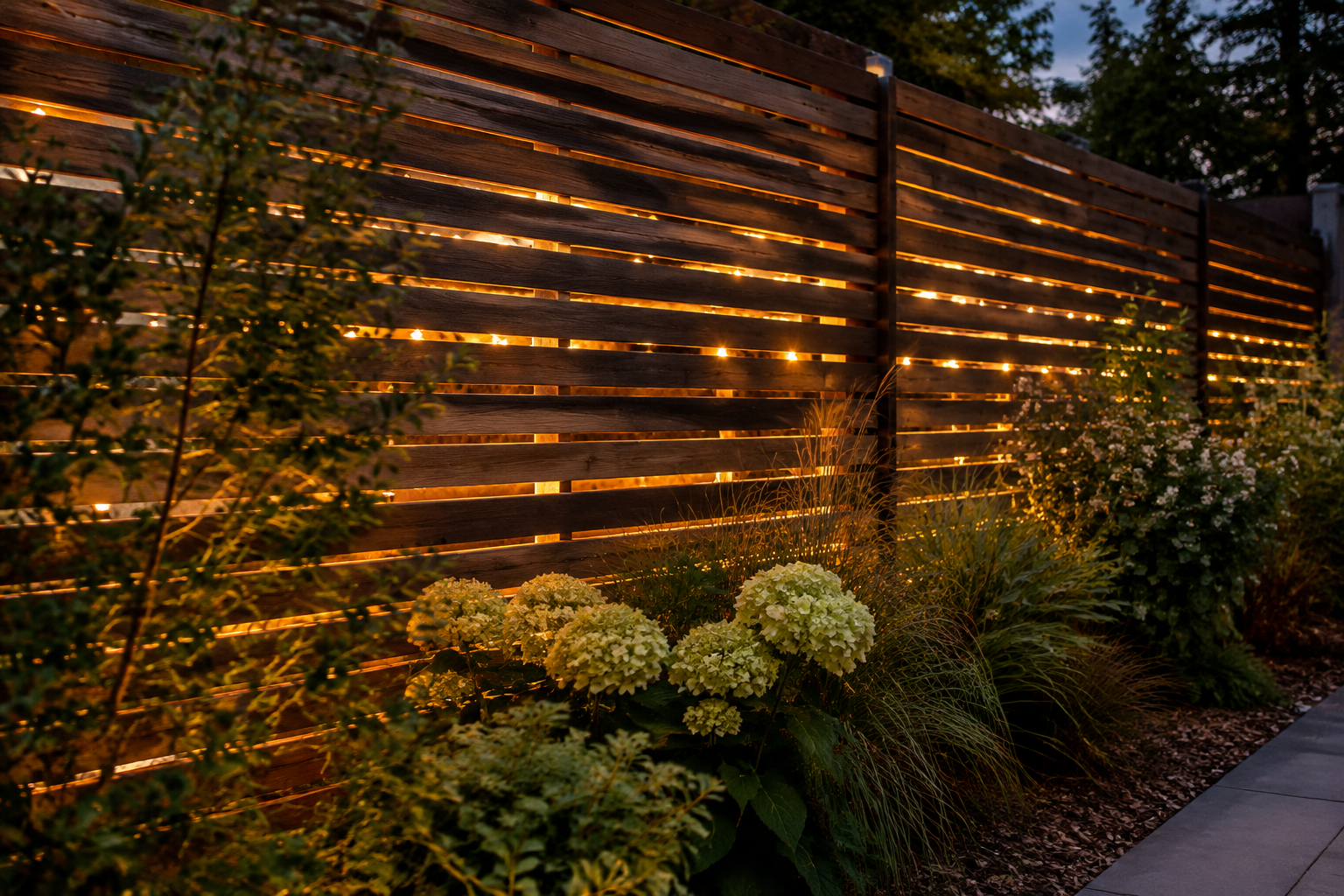
The Privacy Panel Weave
Weave the strand through a slatted screen instead of over it. The light comes through in horizontal bands.
The panel turns into a soft lantern and hides the mess behind it. Your neighbour gets glow, not glare.
Space the weaves evenly and count them. Odd spacing is the first thing anyone notices.
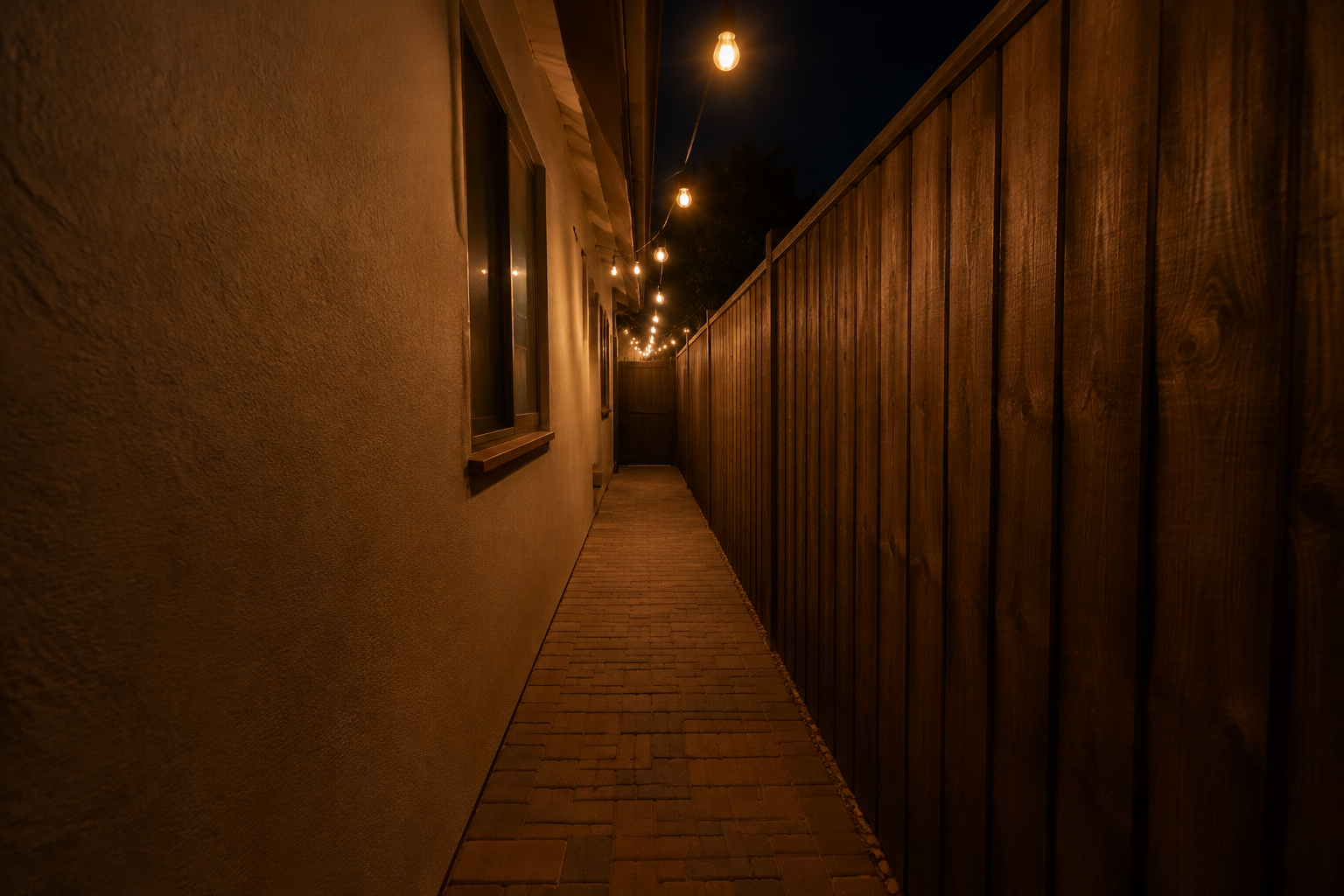
The Side Return
That narrow gap beside the house is usually wasted. One overhead line turns it into a passage.
Light travelling down a tight corridor feels intimate and safe. It also stops the bins from being invisible at night.
Hang it high enough to clear a wheely bin lid. Check the clearance before you drill anything.
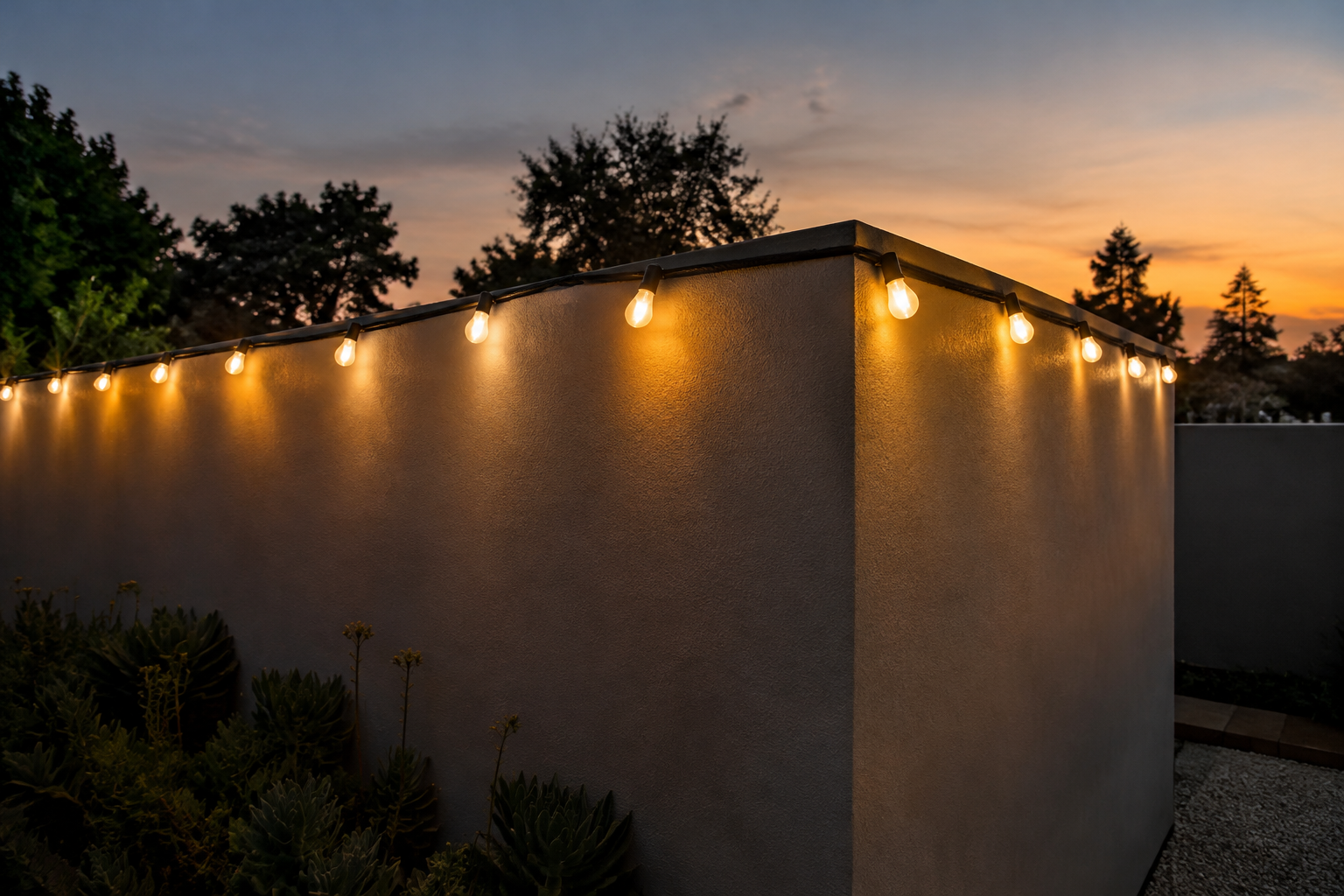
The Corner Turn
Outside corners are where light runs get messy. Fix a hook at each corner and keep the turn tight.
A clean 90 degree turn looks deliberate. A loose, drooping loop at the corner looks like you ran out of cable.
Leave a hand-span of slack at every corner. That slack absorbs the pull when the wind gusts.
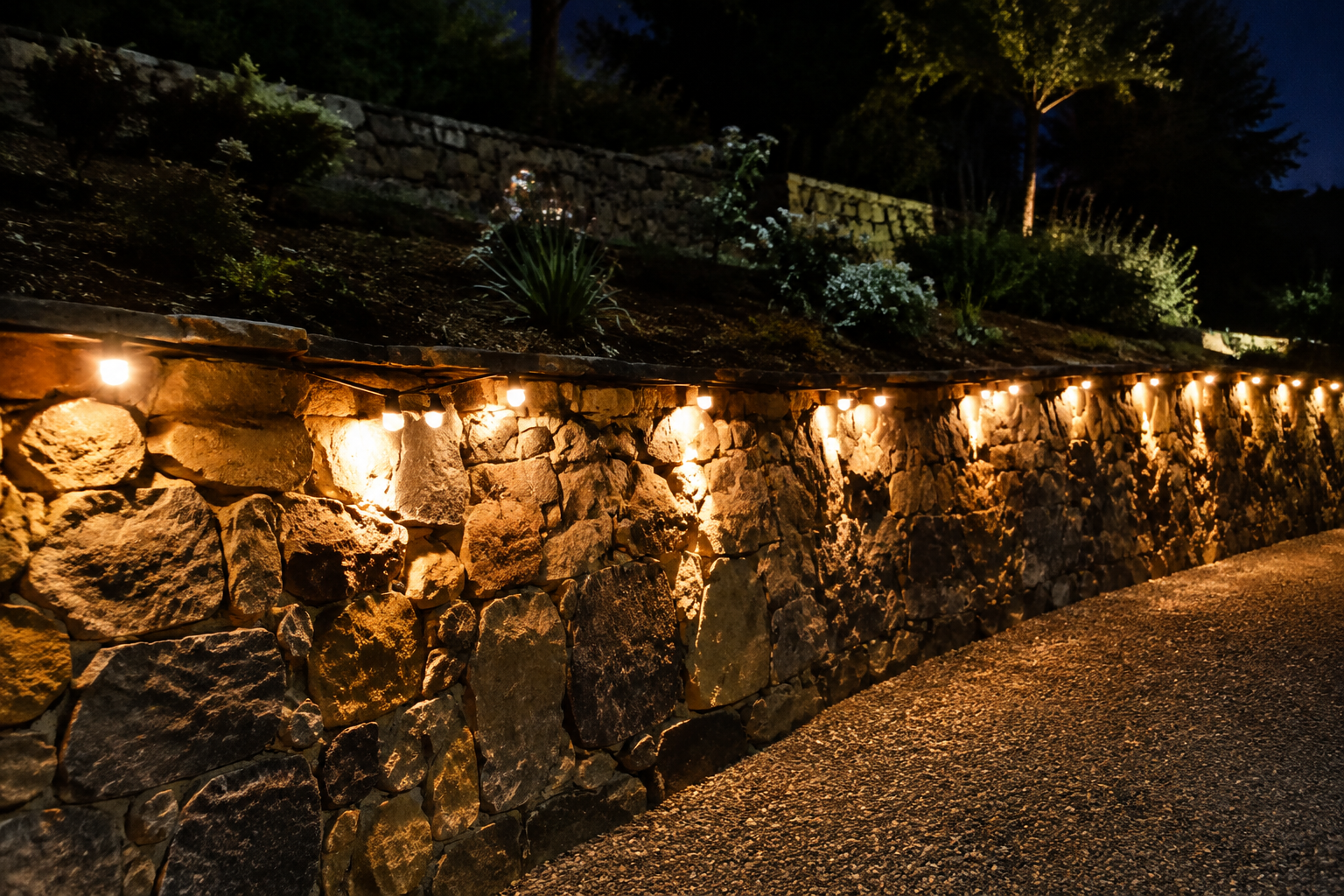
The Retaining Wall Wash
A retaining wall is a tall, blank surface. A strand just above it washes light down the stone.
The wall becomes a textured backdrop instead of a barrier. Terraced gardens look twice as deep.
Angle the bulbs slightly outward. Straight down and the light pools at the base and dies.
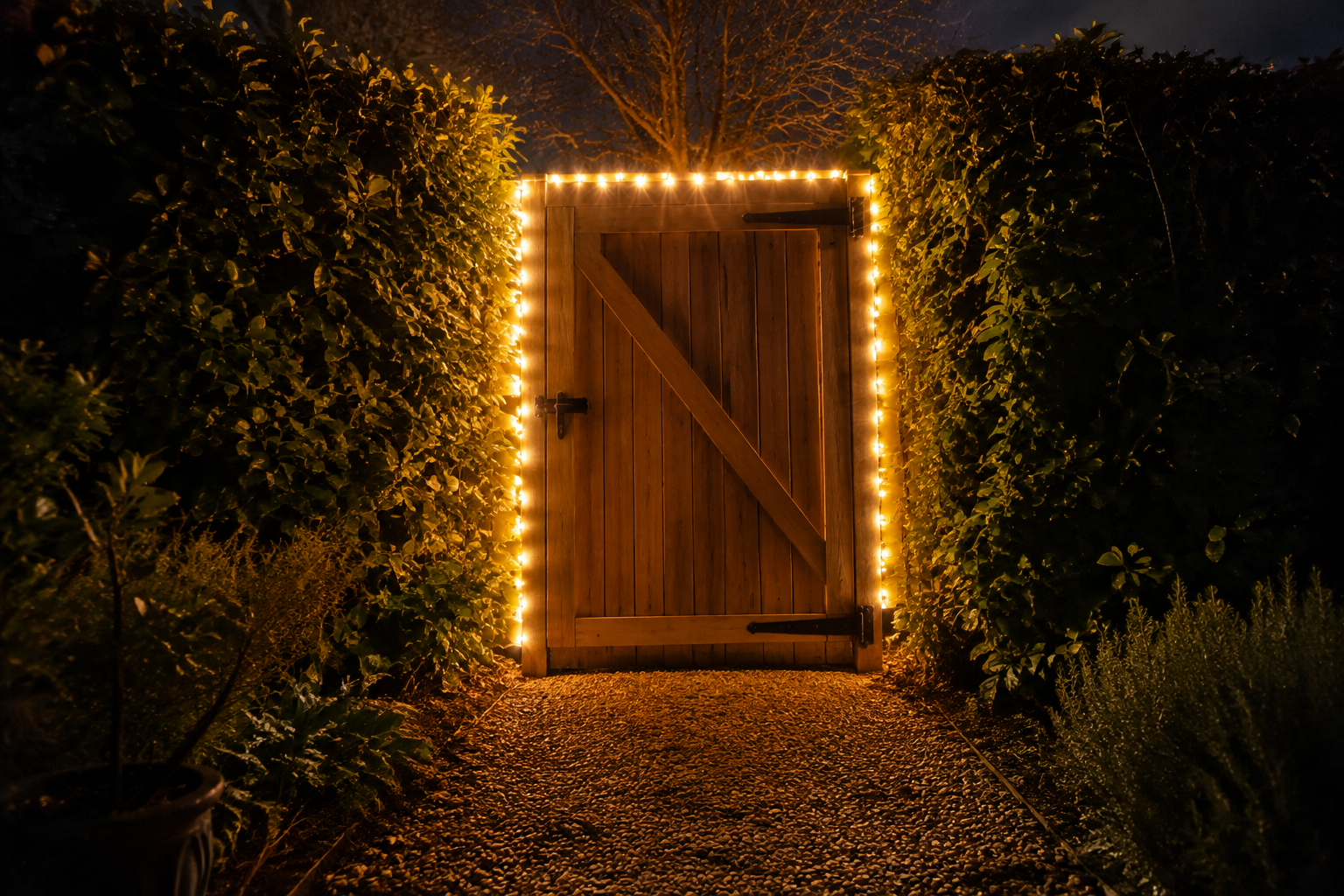
The Gate Frame
Outline your garden gate with light. It becomes the single clearest welcome point on the property.
Guests find it without being told, and delivery drivers stop leaving parcels at the wrong door.
Frame three sides only. A full rectangle, top and bottom, looks like a shop sign.
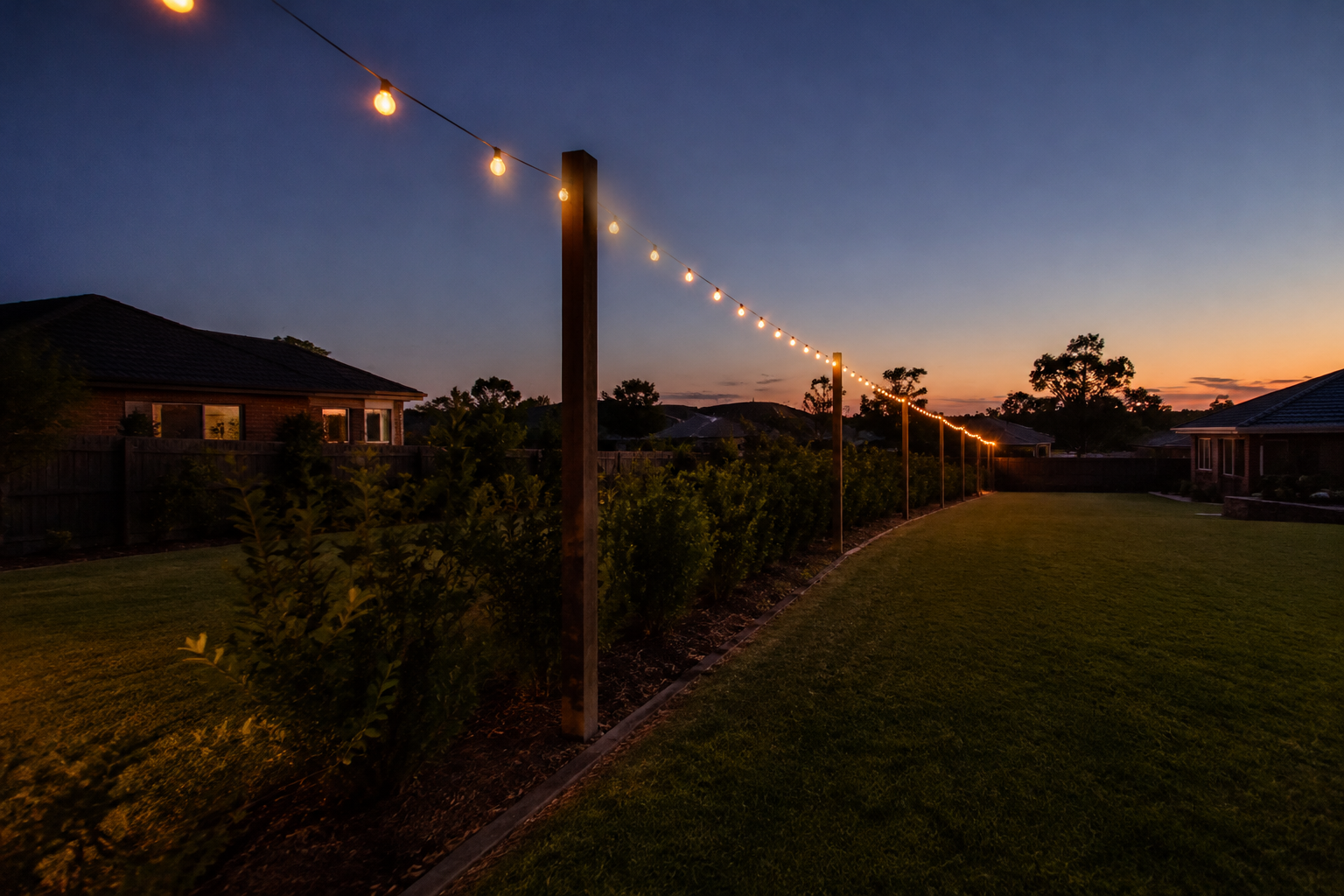
The Property Line Glow
Marking a boundary with light is friendlier than a new fence. It shows the line without building a wall.
The glow also keeps the edge of the garden from disappearing after dark. Your usable space grows.
Agree on the anchor points with your neighbour first. Shared posts save half the hardware.
Dining & Entertaining Ideas
Light does not just decorate a table, it changes how long people stay. Ten ideas for eating, drinking and gathering zones.
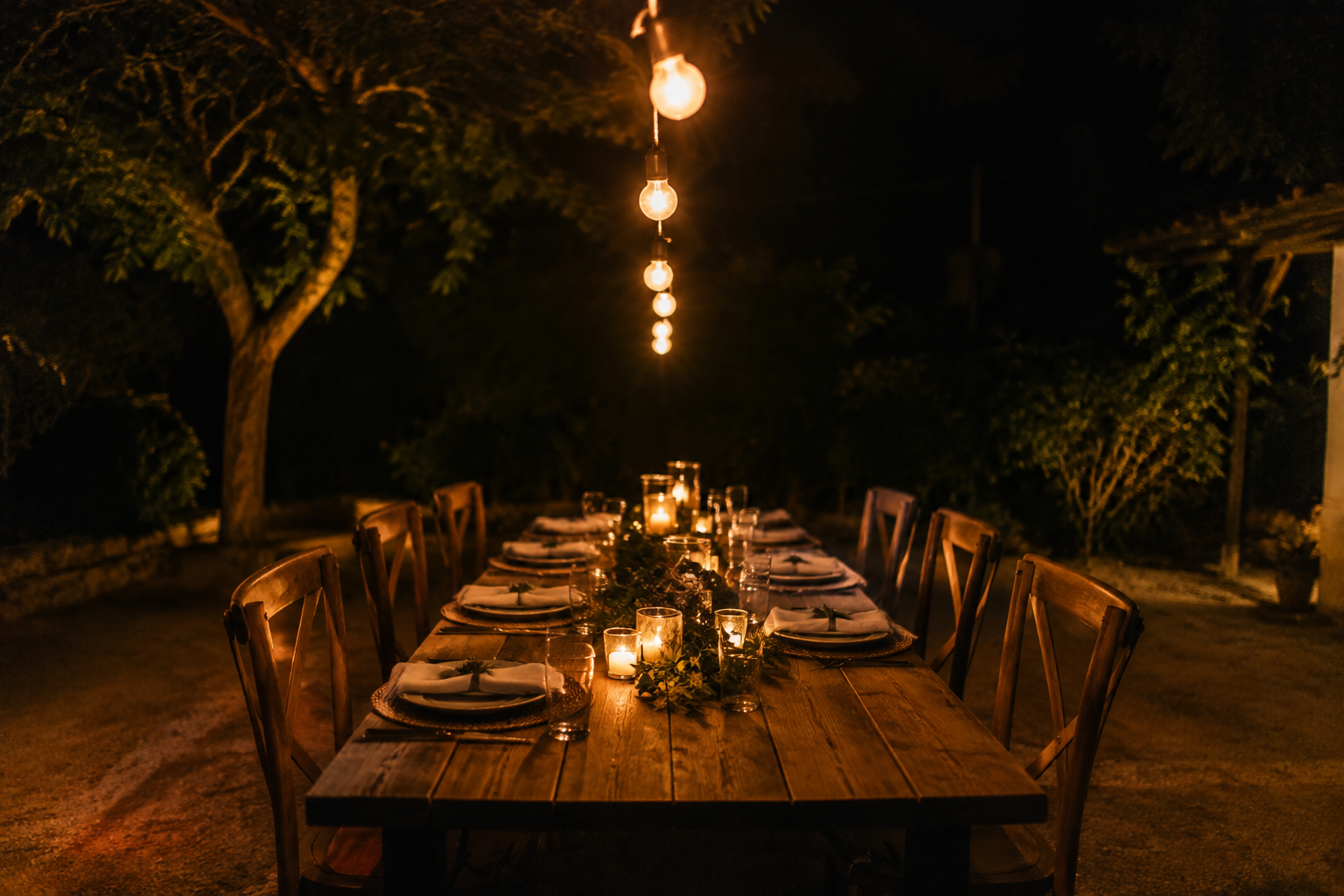
The Long Table Canopy
One strand directly above a long table is the most useful light in this article. Keep it low and centered.
At 2.2 m the bulbs light the plates and the faces. At 3 m they only light the sky.
Run it the full length of the table and 60 cm past each end. The overhang makes the table feel bigger.
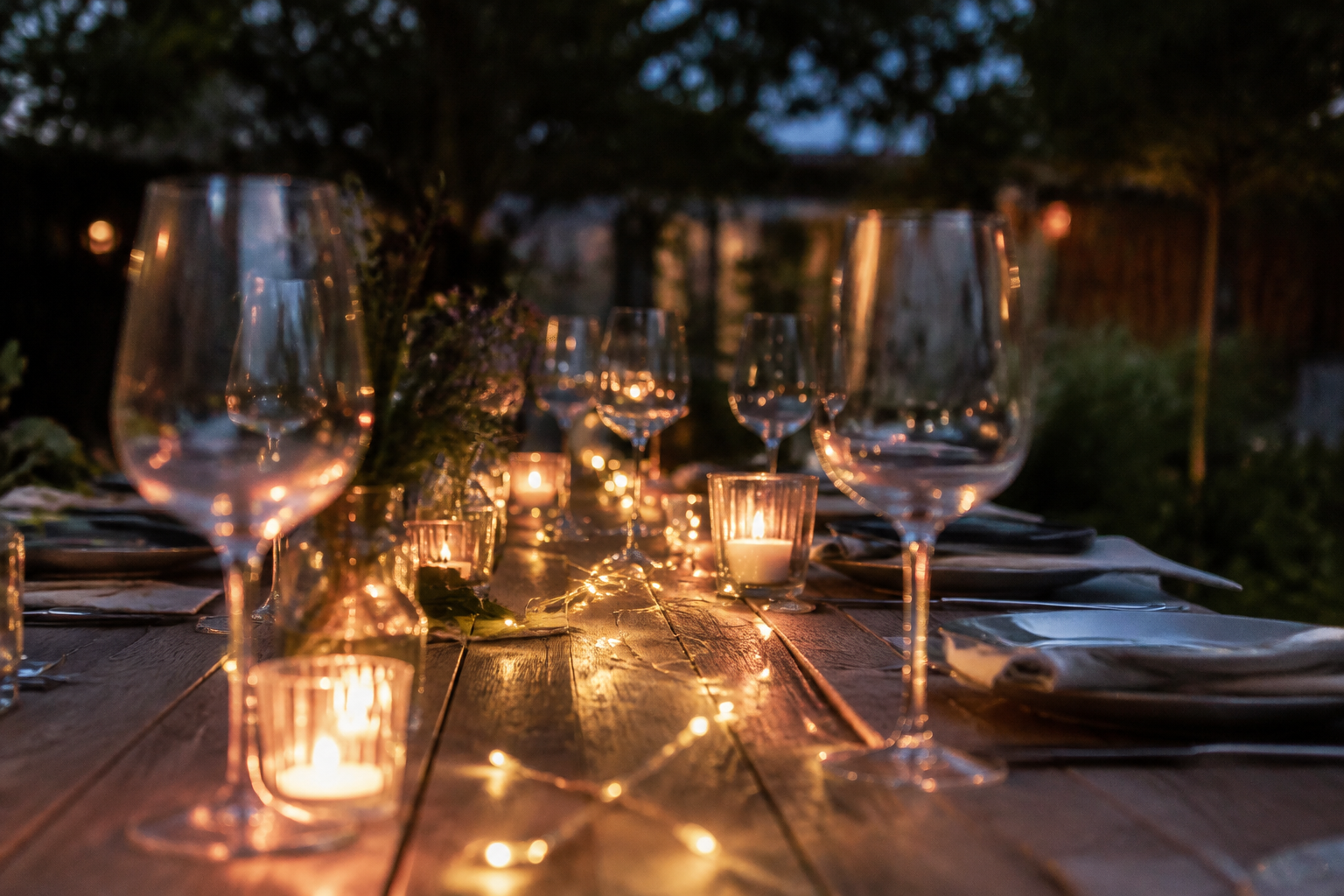
The Table Centerpiece Strand
Not every strand needs to hang. Coil a battery strand loosely along the centre of the table.
Glass, plates and wine catch the bulbs and throw small sparks of light. It is the fastest fix for a dull table.
Use warm white, never cool white. Cool bulbs make food look grey and unappetising.
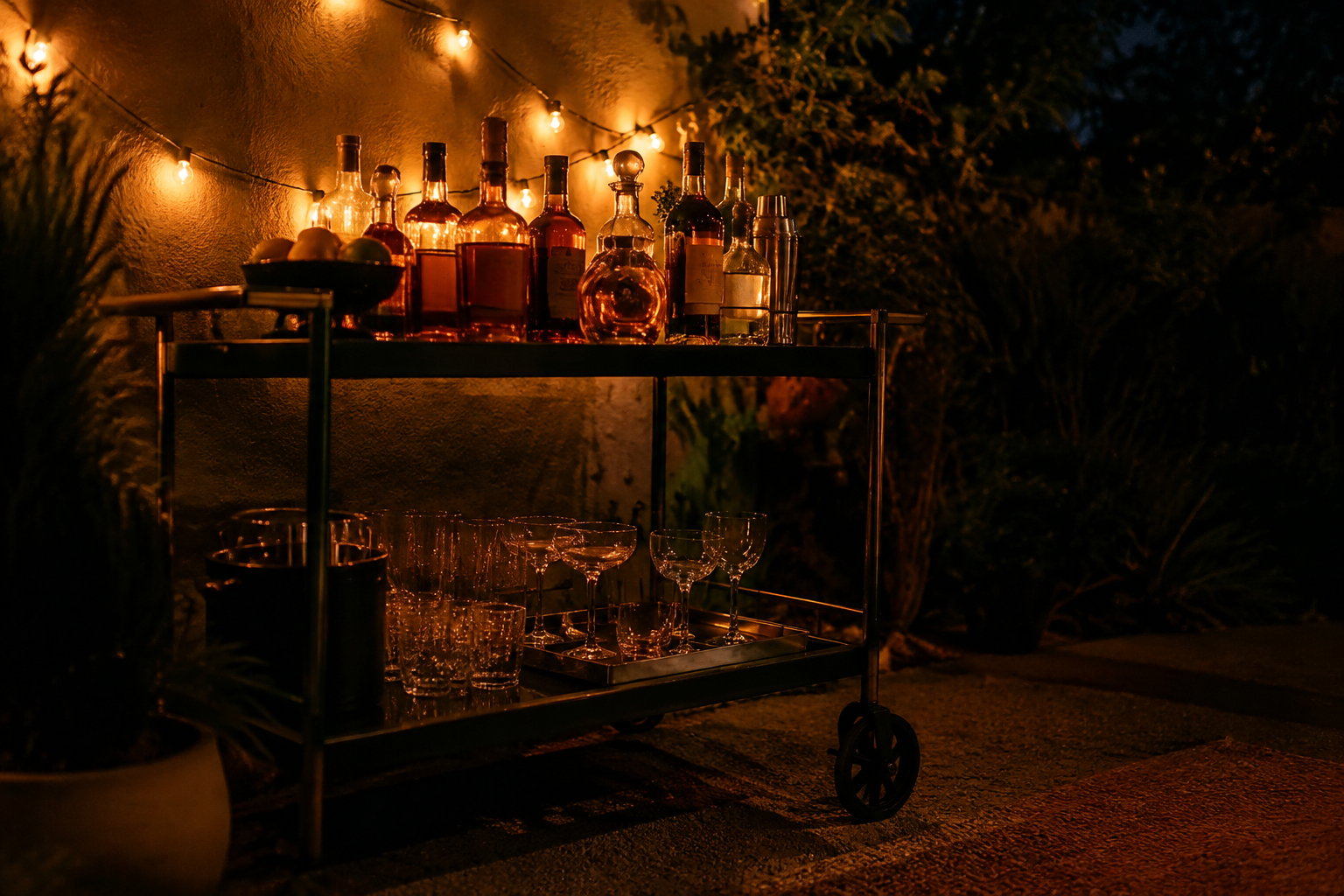
The Bar Cart Glow
Light the wall behind your bar, not the bottles. Backlighting makes glass and liquid glow from within.
The bottles silhouette against the bulbs and the whole cart looks professional. It costs one strand.
Keep bulbs at least 40 cm from the glass. Heat and condensation are an unkind pair.
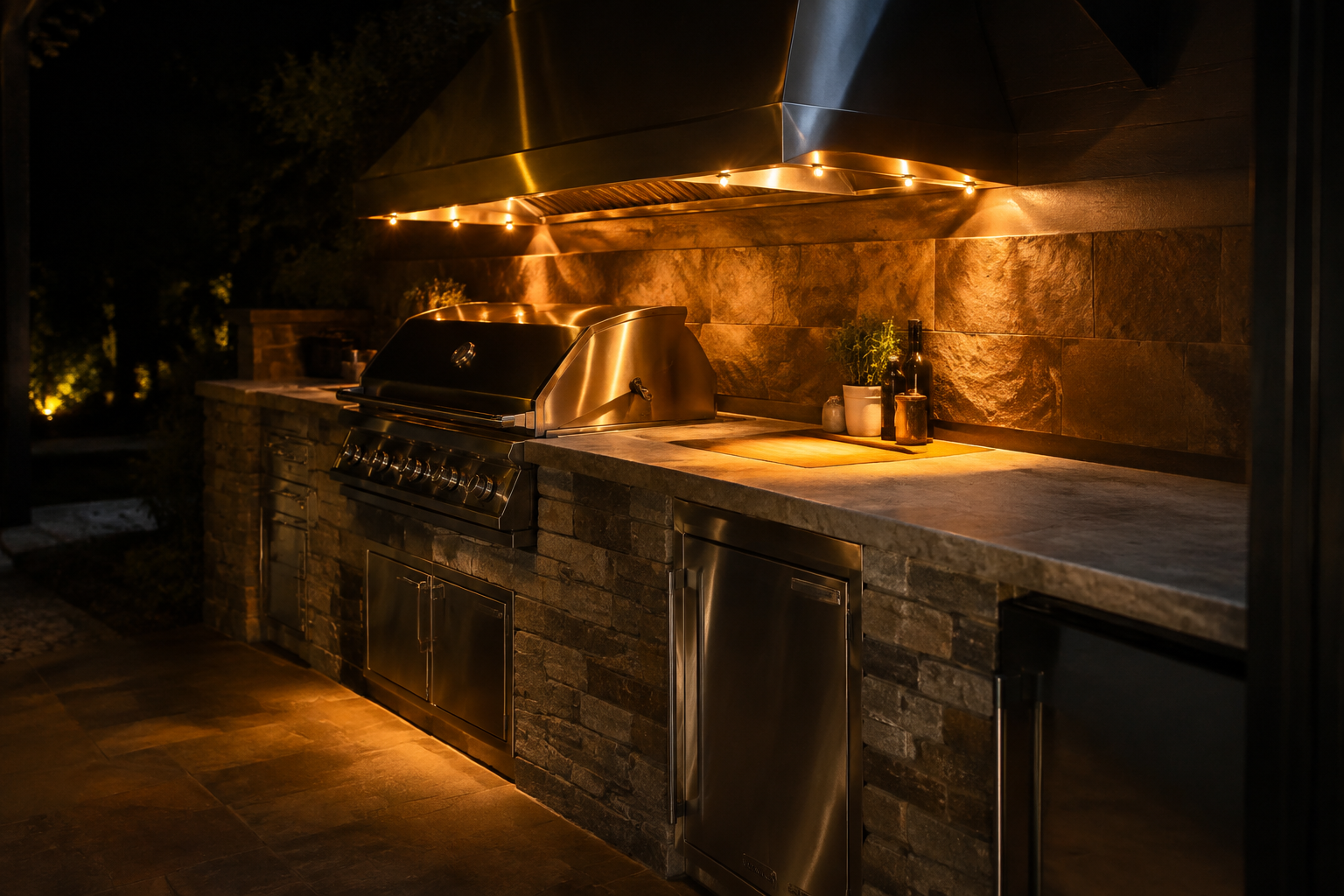
The Outdoor Kitchen Run
An outdoor kitchen needs task light, not mood light. Run a strand along the underside of the hood.
Now the grill is lit properly and the mood survives. Nobody turns on the harsh patio floodlight.
Choose a bulb with a high colour rendering index. Meat should look the colour it actually is.
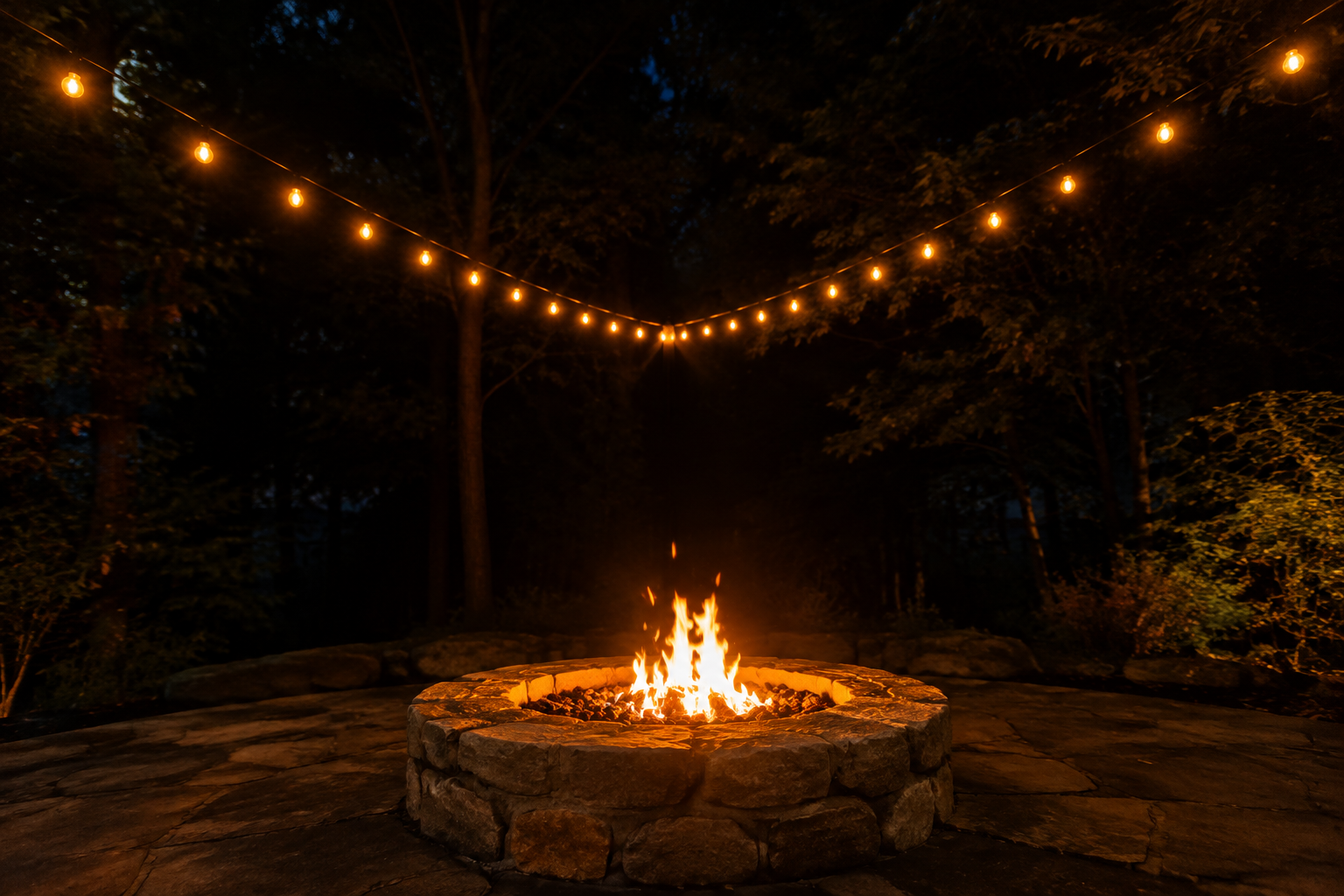
The Fire Pit Cross
A fire pit gives light from below. Add two strands above it and you have light from both directions.
The V shape frames the flames instead of competing with them. Warm bulbs echo the fire’s colour.
Hang high, at least 2.7 m. Smoke rises and any lower, sooty bulbs will look tired by autumn.
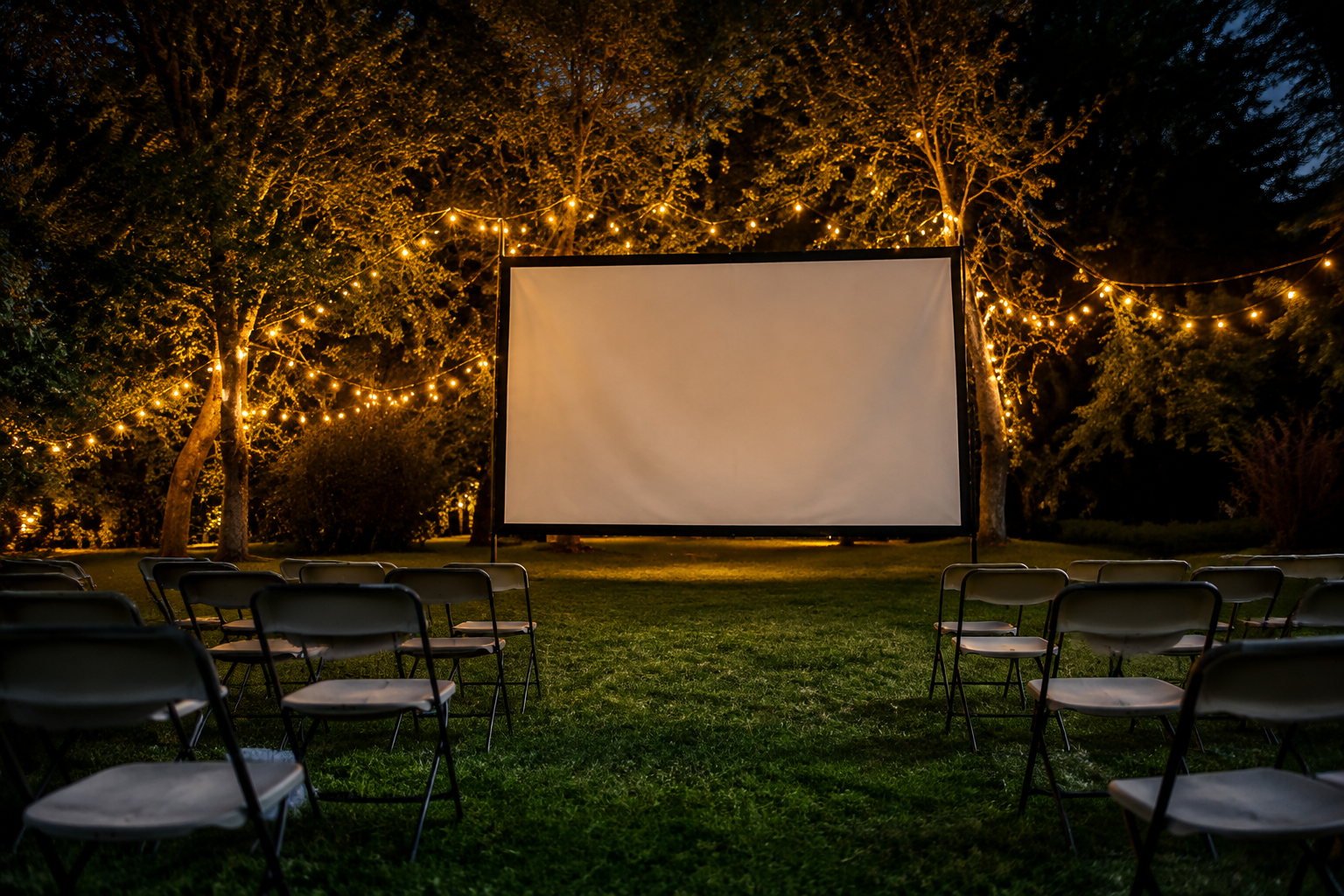
The Movie Night Backdrop
A projector screen looks flat in the dark. Light the space behind it.
The bulbs give the screen a glowing halo and stop it floating in a black void. It also lights the walk to the chairs.
Angle the strand away from the screen surface. Any bulb facing forward will wash out the picture.
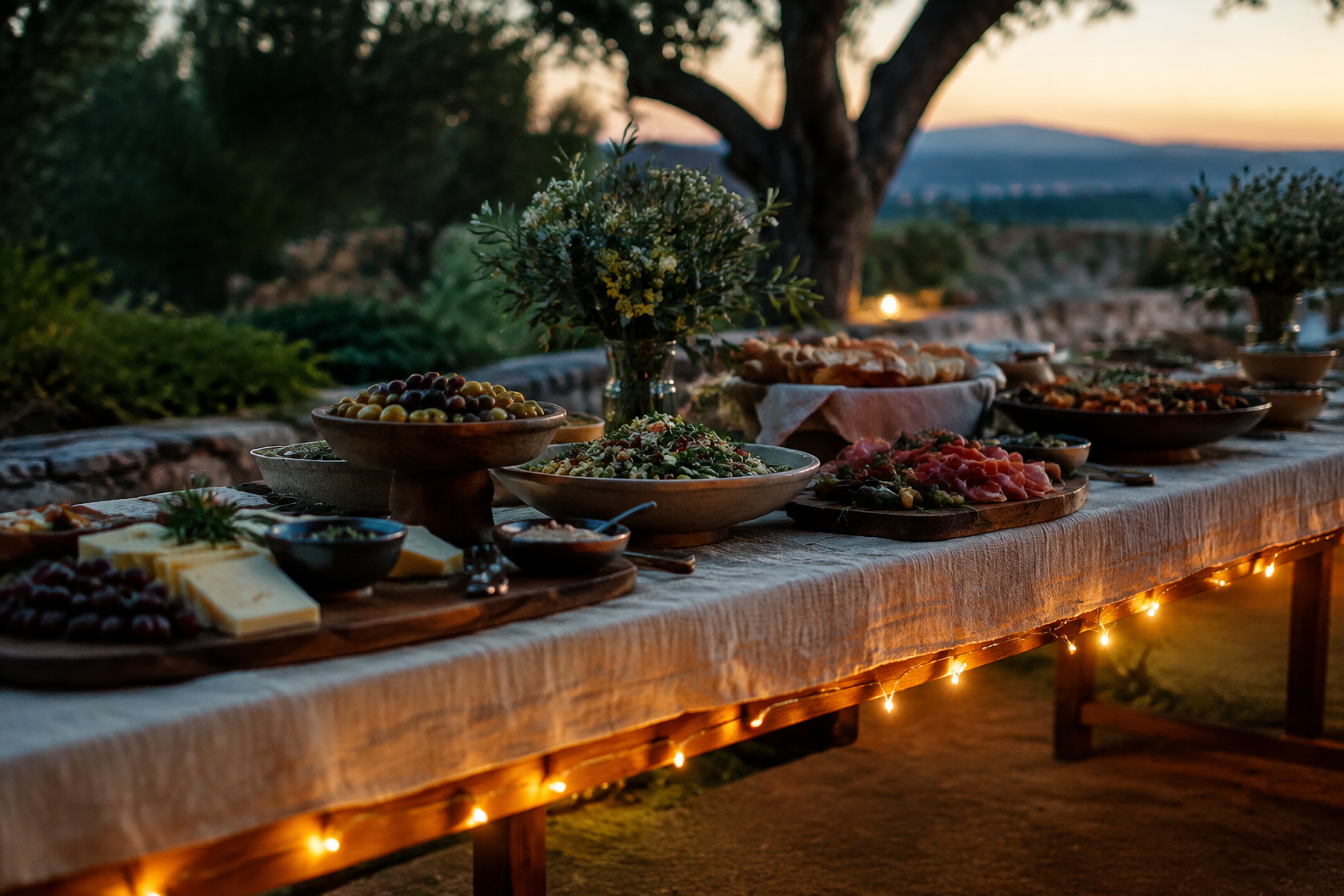
The Buffet Underline
Buffet tables are usually lit from above, which means your guests cast shadows on the food. Light it from the front instead.
A strand tucked under the front lip throws even light across every plate. It also marks the table as the food station.
Use a battery strand to avoid a cable across the serving area. Trip hazards are the enemy of a good party.
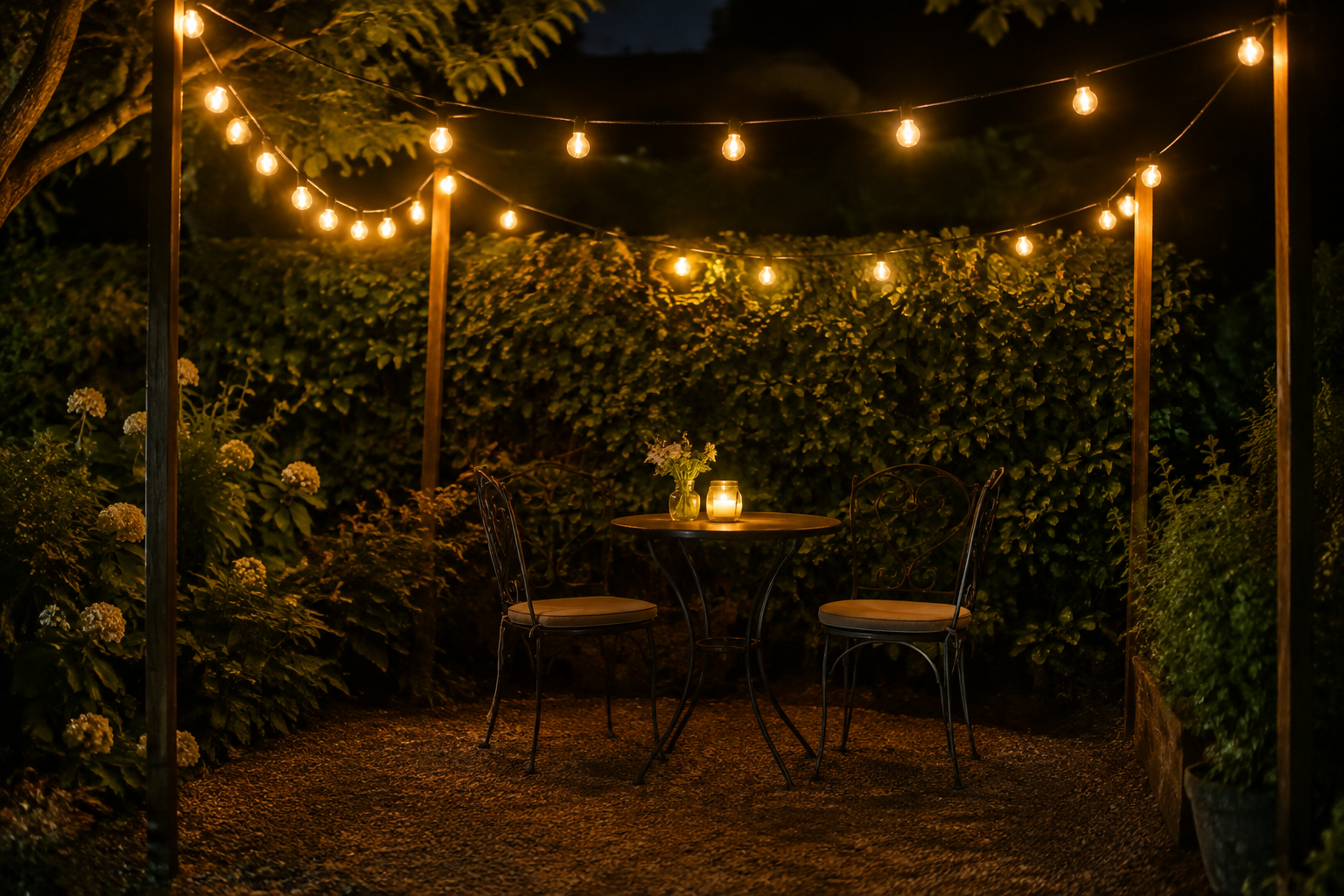
The Bistro Nook
Two chairs and a small table need almost nothing. Enclose them in a loose square of light.
The corner becomes a private room inside the garden. It is the most romantic idea on this list.
Tuck the nook against a wall or hedge. The enclosure needs one solid side to feel like a room.
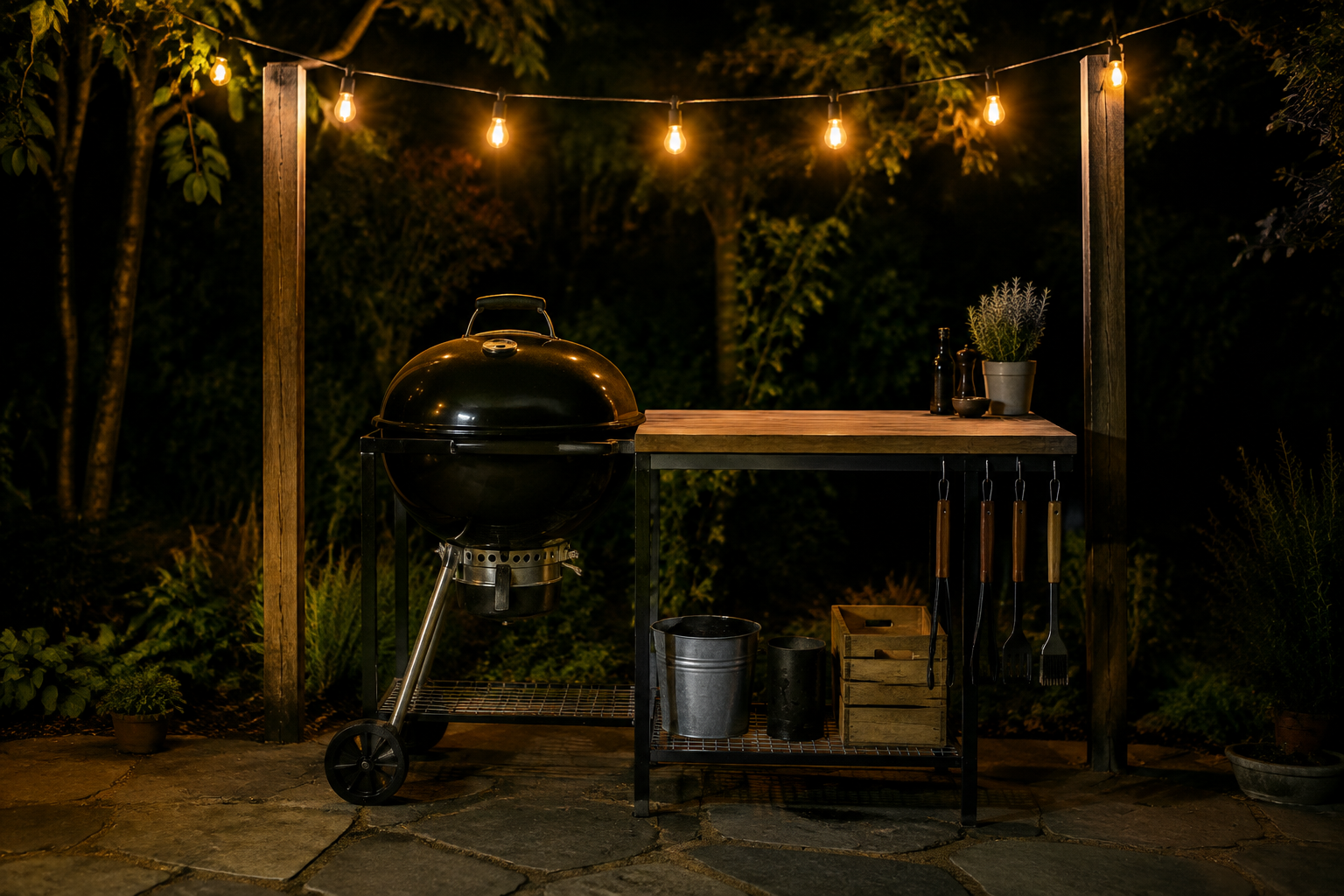
The Grill Station
The grill is where the host stands all evening. Give that spot its own light.
A short strand above the station keeps the cook out of shadows and out of the conversation. Both are good things.
Use shatterproof bulbs here. This is the one place where a hot lid and a glass bulb will meet.
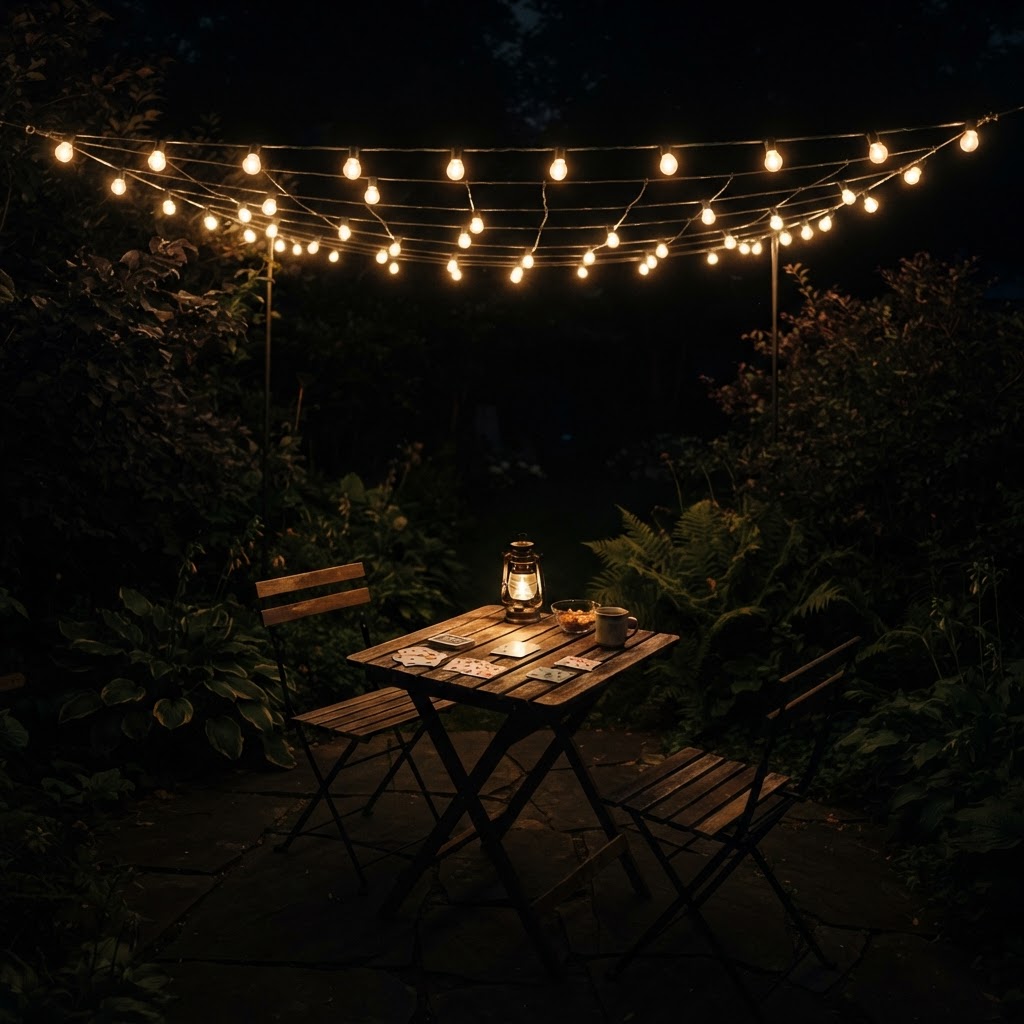
The Game Table Glow
Games need light on the table, not in the eyes. Hang a tight square of bulbs directly overhead.
Cards stay readable and the surrounding garden stays dark and calm. Nobody complains about glare.
Add a dimmer. Long games always end later than planned, and full brightness gets tiring.
Path, Step & Railing Ideas
A path should tell your feet where to go. Here are seven ways to light the route without a single garden spike.
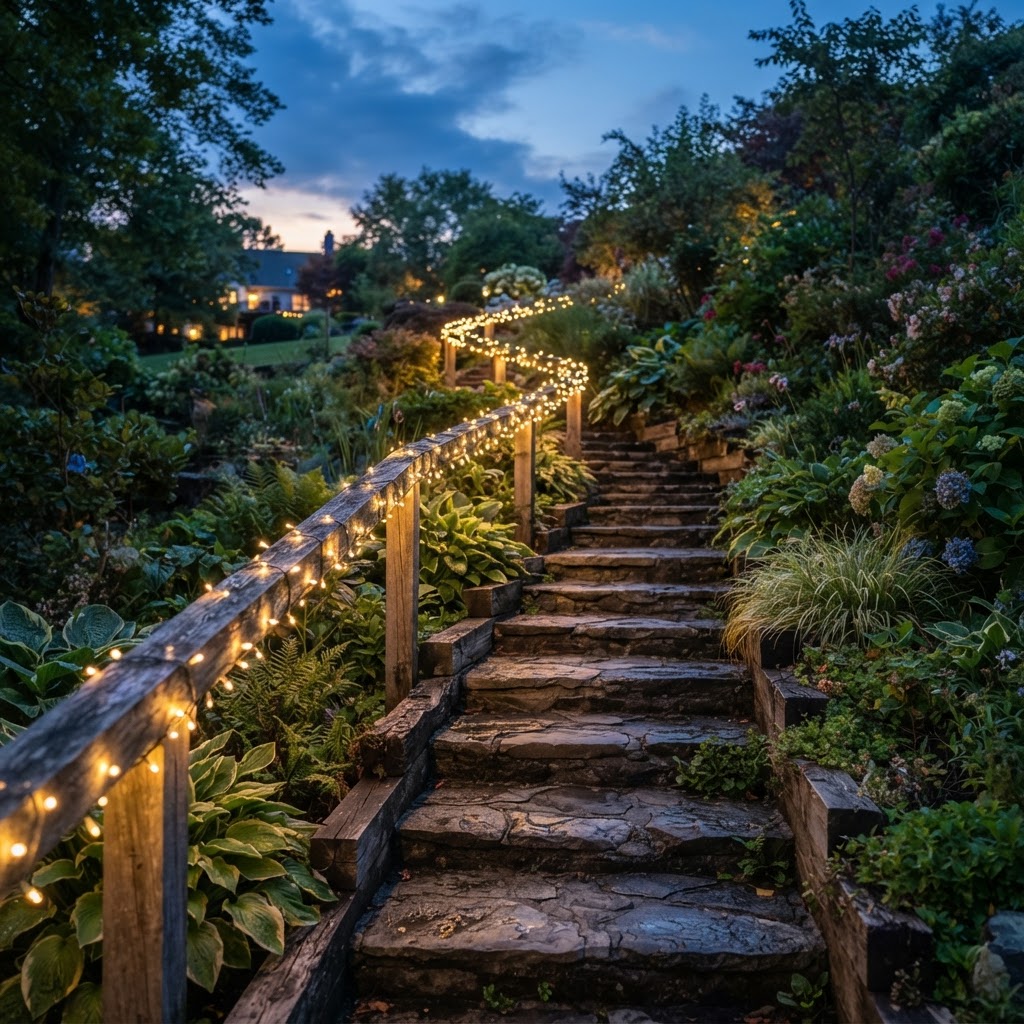
The Stair Rail Wrap
Wrap the handrail and the stairs light themselves. The strand follows the shape you already trust.
Guests hold the rail, so the glow lands exactly where a foot needs it. It is functional light that looks decorative.
Wrap loosely and check for pinches at each post. Rails expand in heat and shrink in frost.
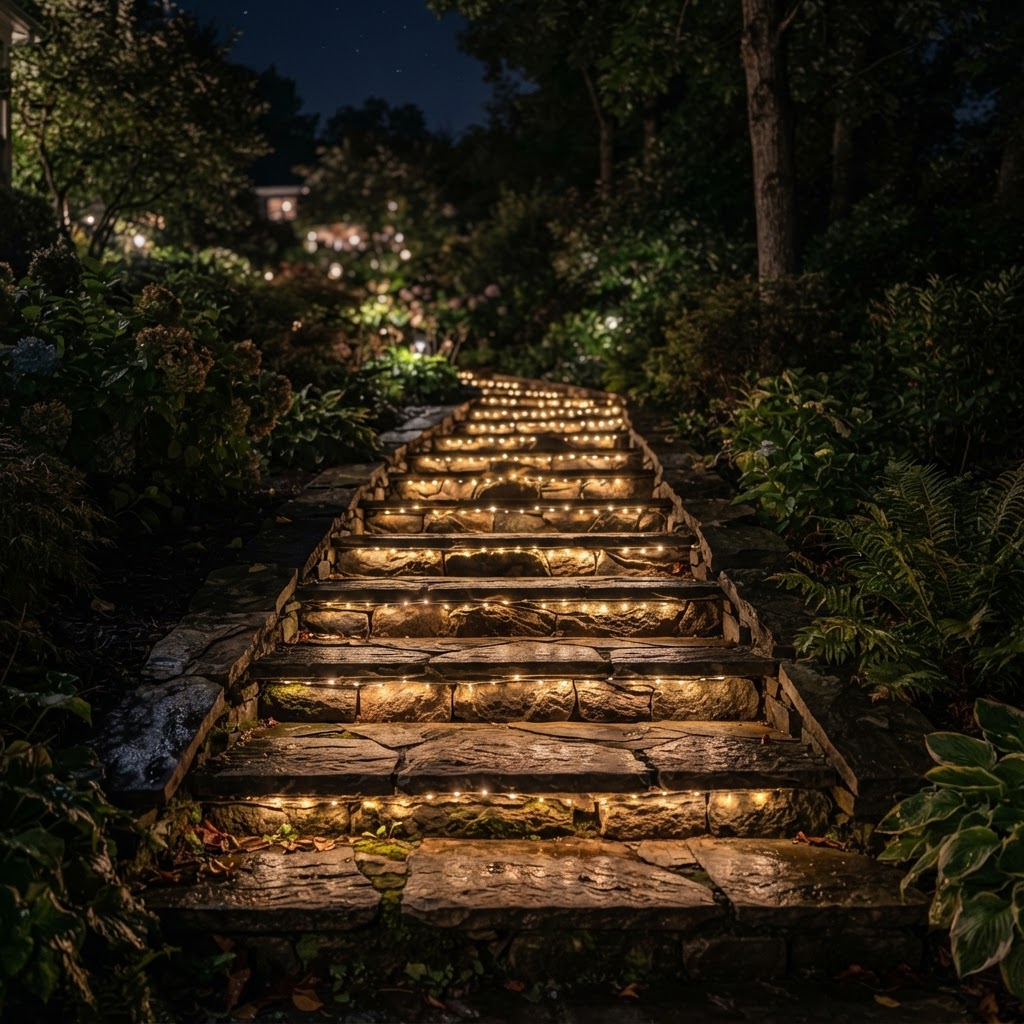
The Step Riser Line
Run a strand along the back of each step riser. The light washes forward over the tread.
Every tread edge becomes visible without a single glare point. This is the safest lighting on this list.
Keep the strand tight to the riser. Loose wire plus a foot equals a broken bulb.
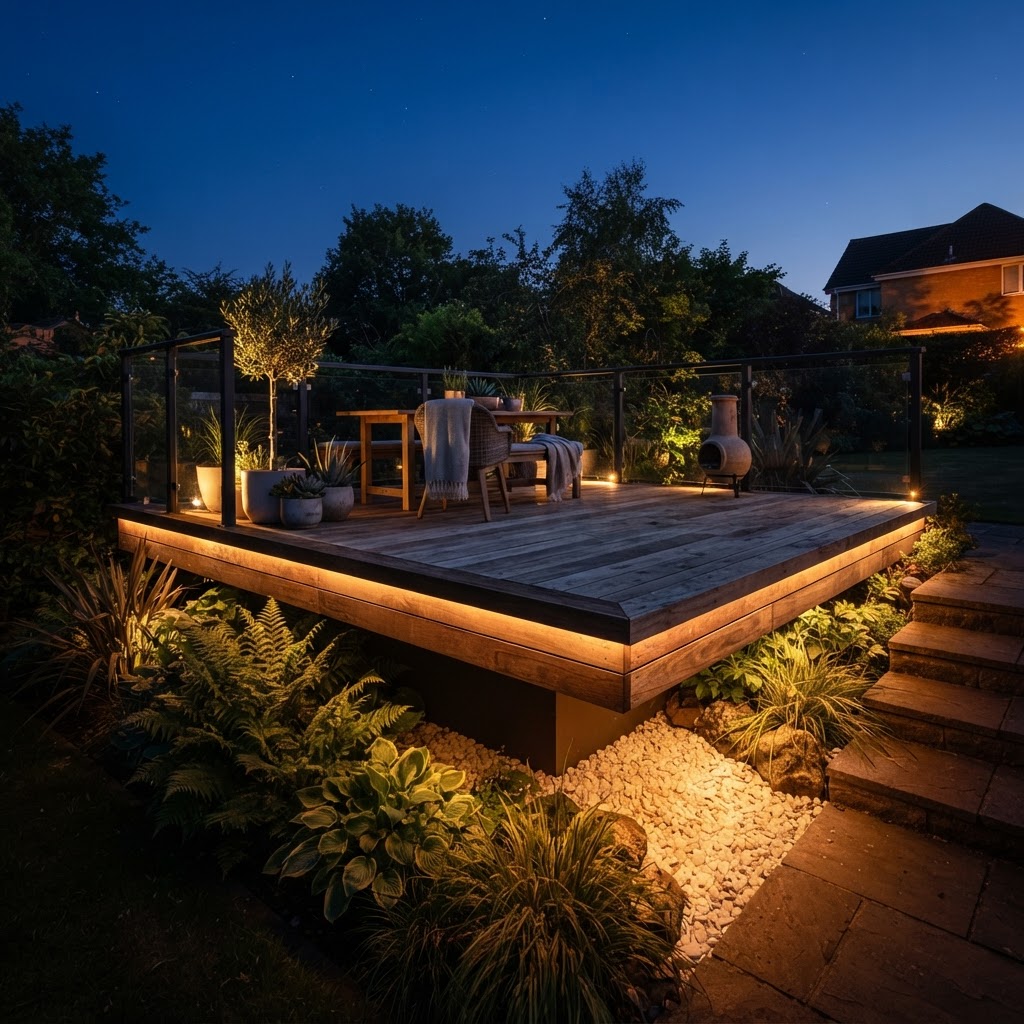
The Deck Lip
A raised deck has a hidden edge underneath. Tuck a strand up there and light the ground below.
The deck looks like it is floating on air. The garden beneath it becomes usable after dark.
Choose a strand rated for damp spots. Under-deck air stays wet long after the rain stops.
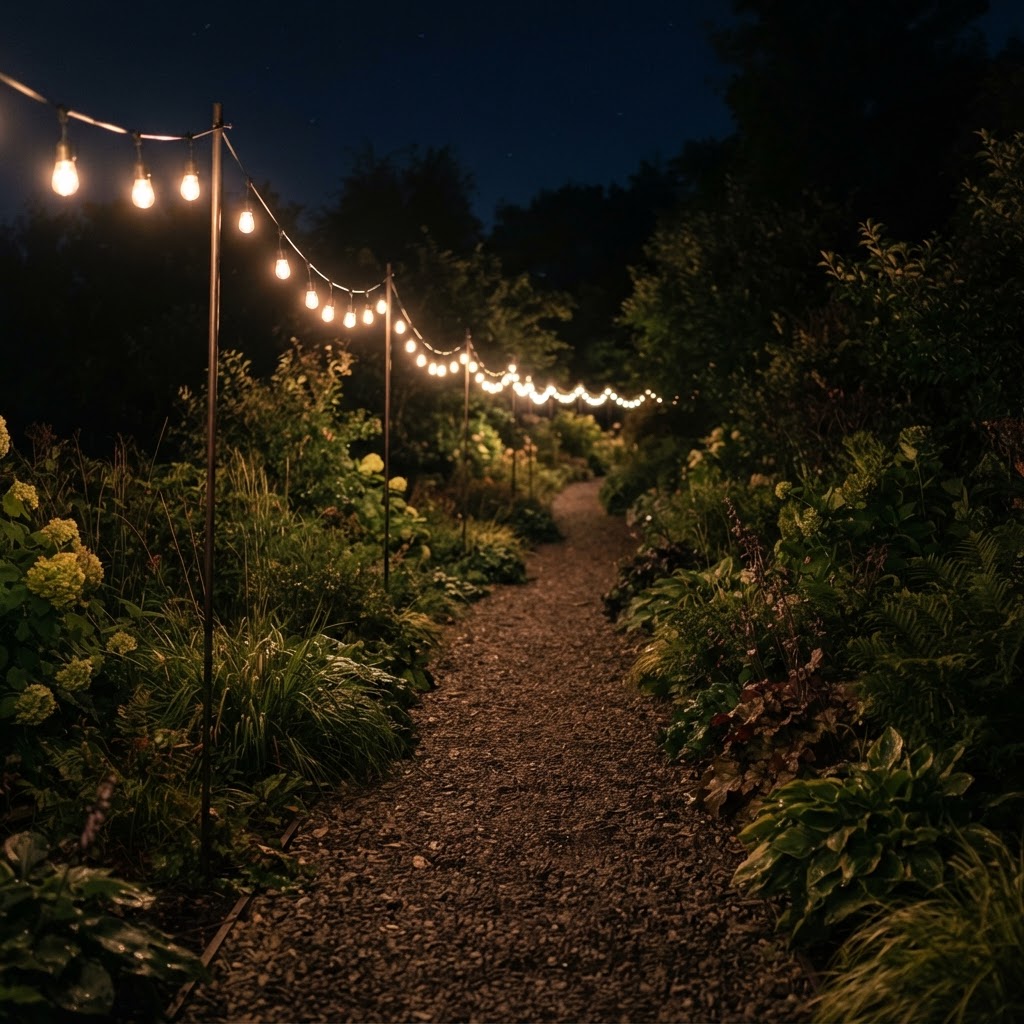
The Path Pole Run
Short poles along one side of a path give you a guided route. Keep them below 1 m for a natural look.
The line reads as a fence made of light. It separates the path from the planting without blocking it.
Set poles 2 m apart and align them by eye, not by measurement. Nature does not do straight lines.
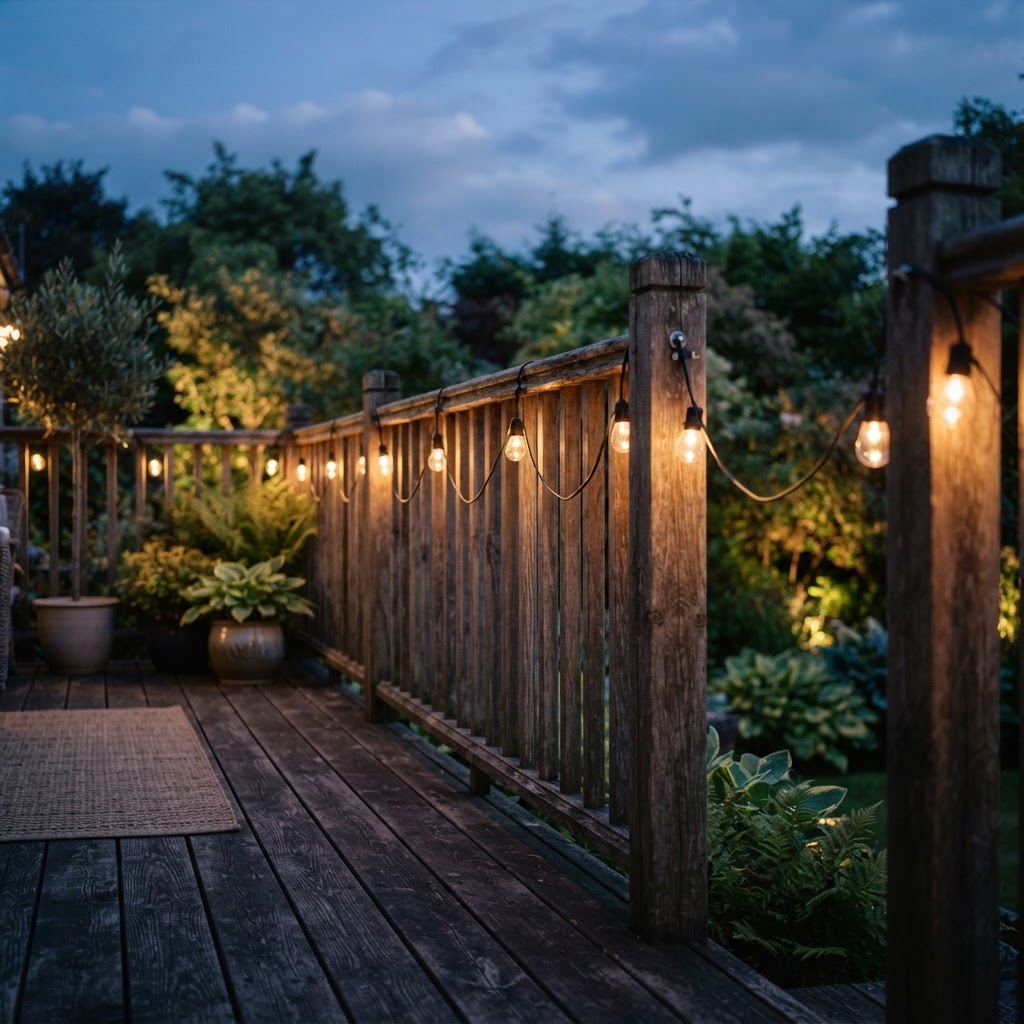
The Railing Scallop
Scallops along a railing are the classic garden look for a reason. They are cheap, quick and forgiving.
Each dip should be the same depth as the one before. Repeating shapes read as intentional.
Tie at every post, never between posts. The post is the only part that will not flex.
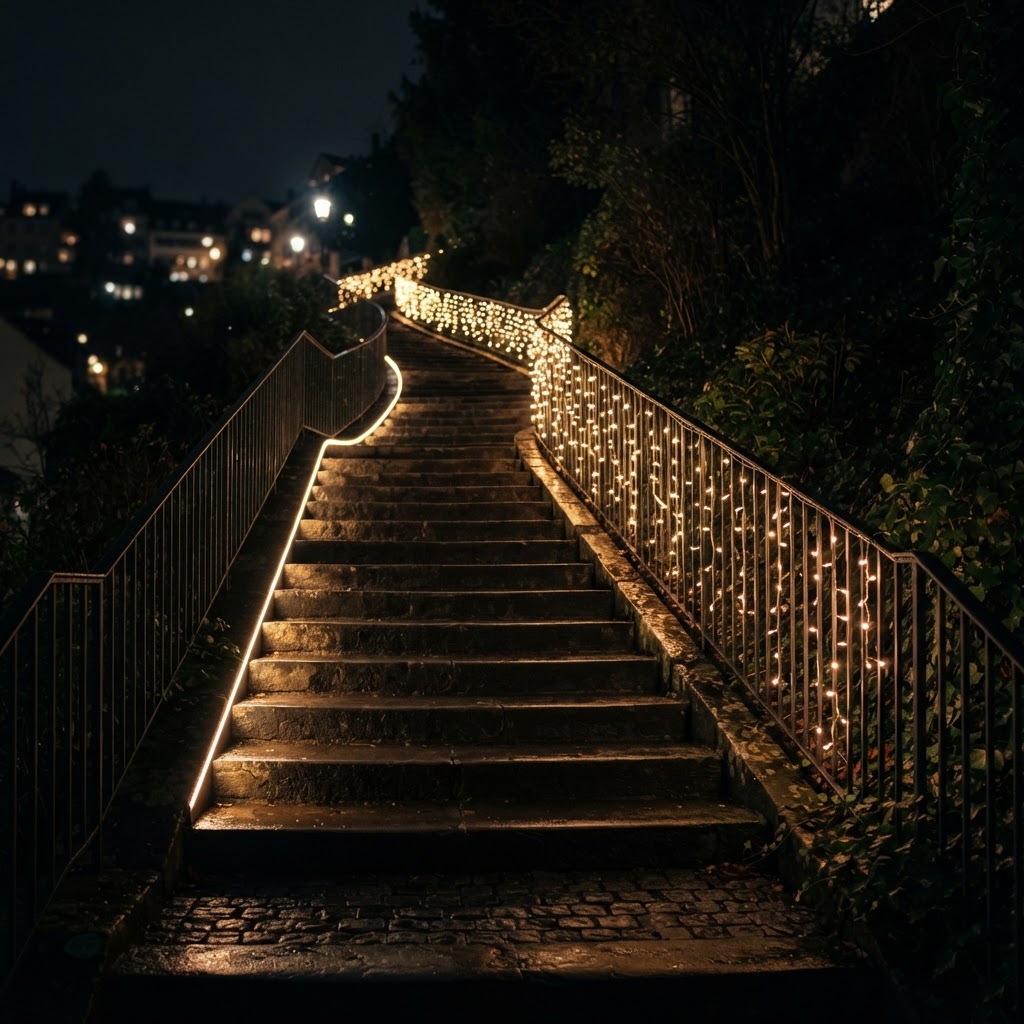
The Stair Drop Ladder
Light the side of a staircase instead of the steps. Hang short vertical drops from a top rail.
The drops guide the eye down the flight and light the wall beside it. It works on narrow outdoor stairs.
Keep drops clear of head height on the walking side. Anything you can touch, you will touch.
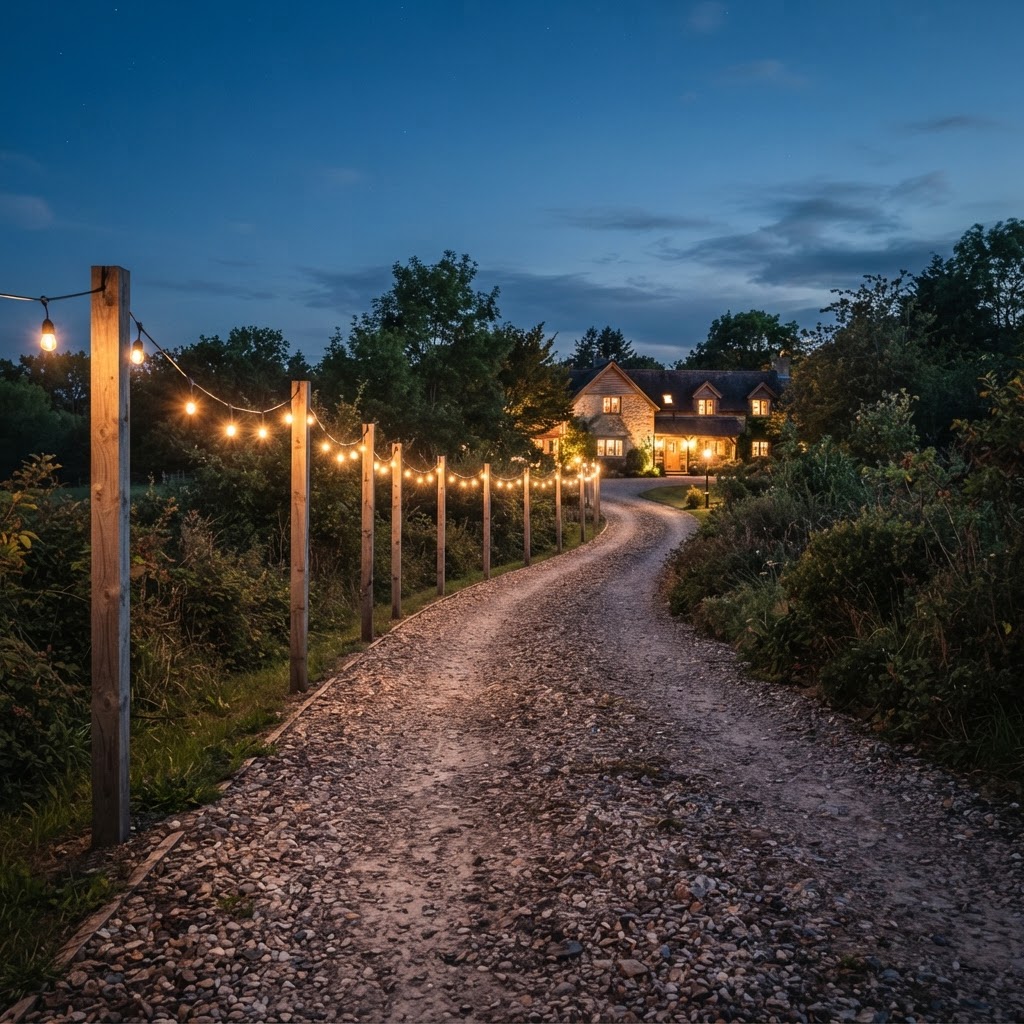
The Driveway Marker
A dark driveway is the least welcoming part of any property. Line it with low, evenly spaced light.
Guests arrive already inside the atmosphere. It also keeps cars off the lawn on party nights.
Use warm bulbs on the house side only. Both sides at once looks like an airport runway.
Small Space Ideas
Small spaces are not a problem, they are the easiest to light well. Eight ideas for balconies, porches, rooftops and narrow urban yards.
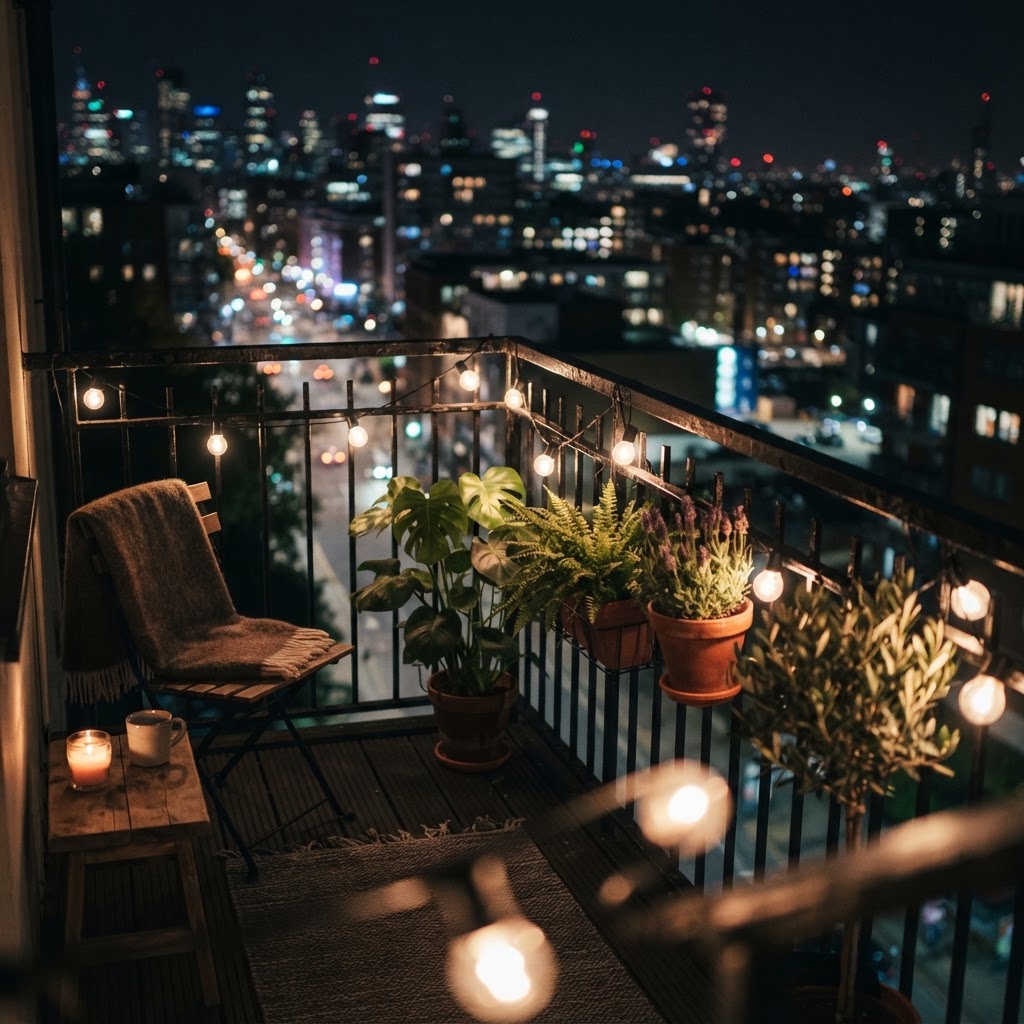
The Balcony Rail Swoop
A balcony rail is the only anchor you need. Swoop a single strand along its whole length.
One strand covers a 3 m balcony completely. The space stops feeling like a fire escape and starts feeling like a room.
Use plastic clips, not nails. Rental deposits are more expensive than any string light kit.
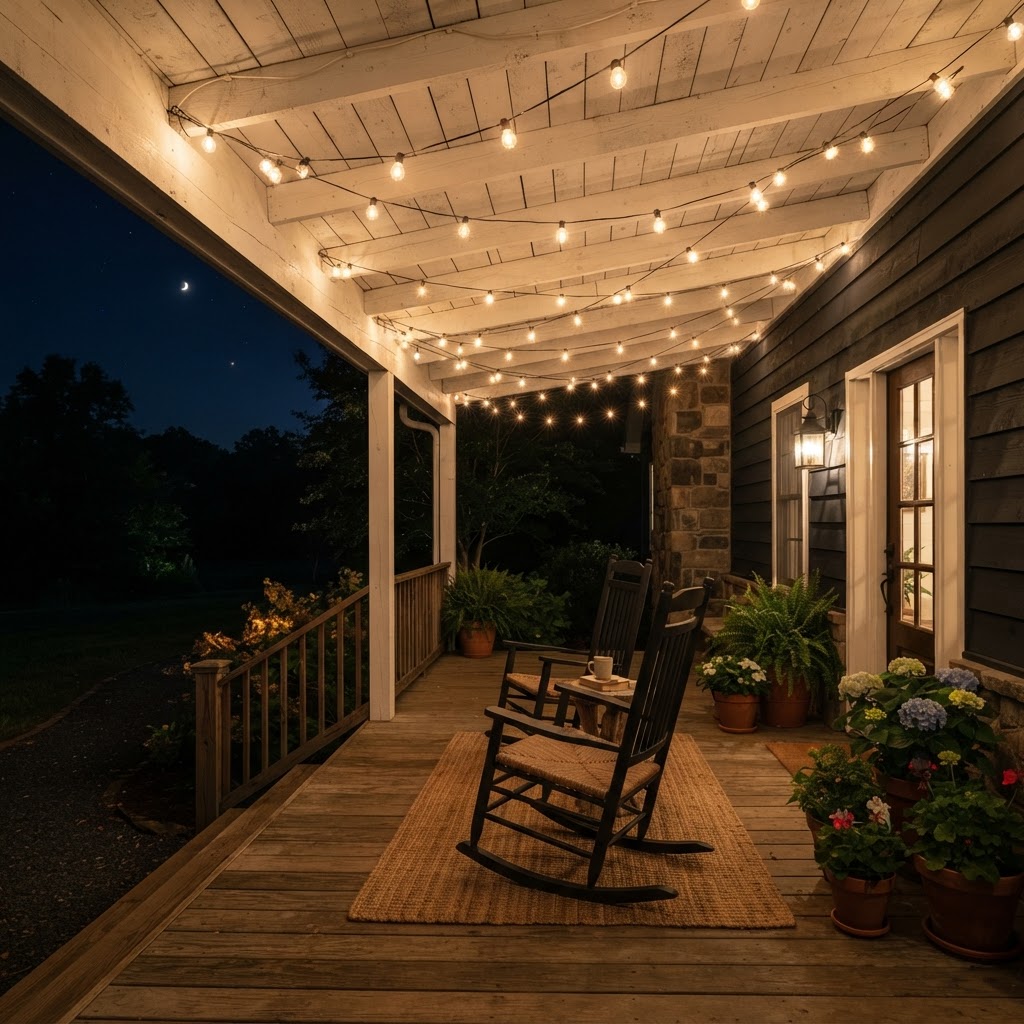
The Porch Ceiling Grid
A porch already has a ceiling, so give it a pattern. A loose grid of three runs turns it into a lit room.
The grid hides cracks, stains and old paint. It is the cheapest way to refurbish an ageing porch.
Run the strands parallel to the house first. Then add one crossing run to finish the grid.
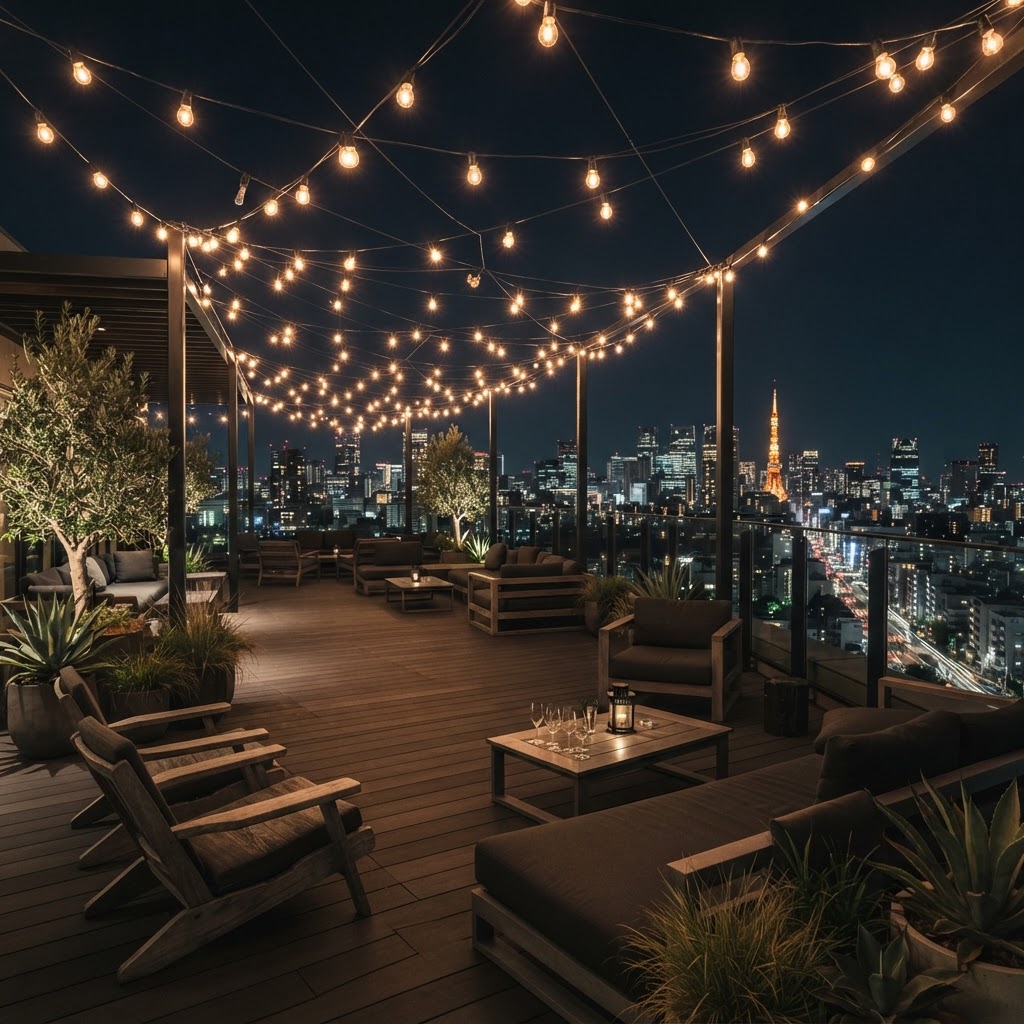
The Rooftop Constellation
Rooftops have no trees and often no walls. Run lights in a random scatter instead of a grid.
The result looks like a private constellation above the city. It suits open, exposed spaces.
Anchor to weighted bases, not the parapet. Rooftop wind is stronger than garden wind.
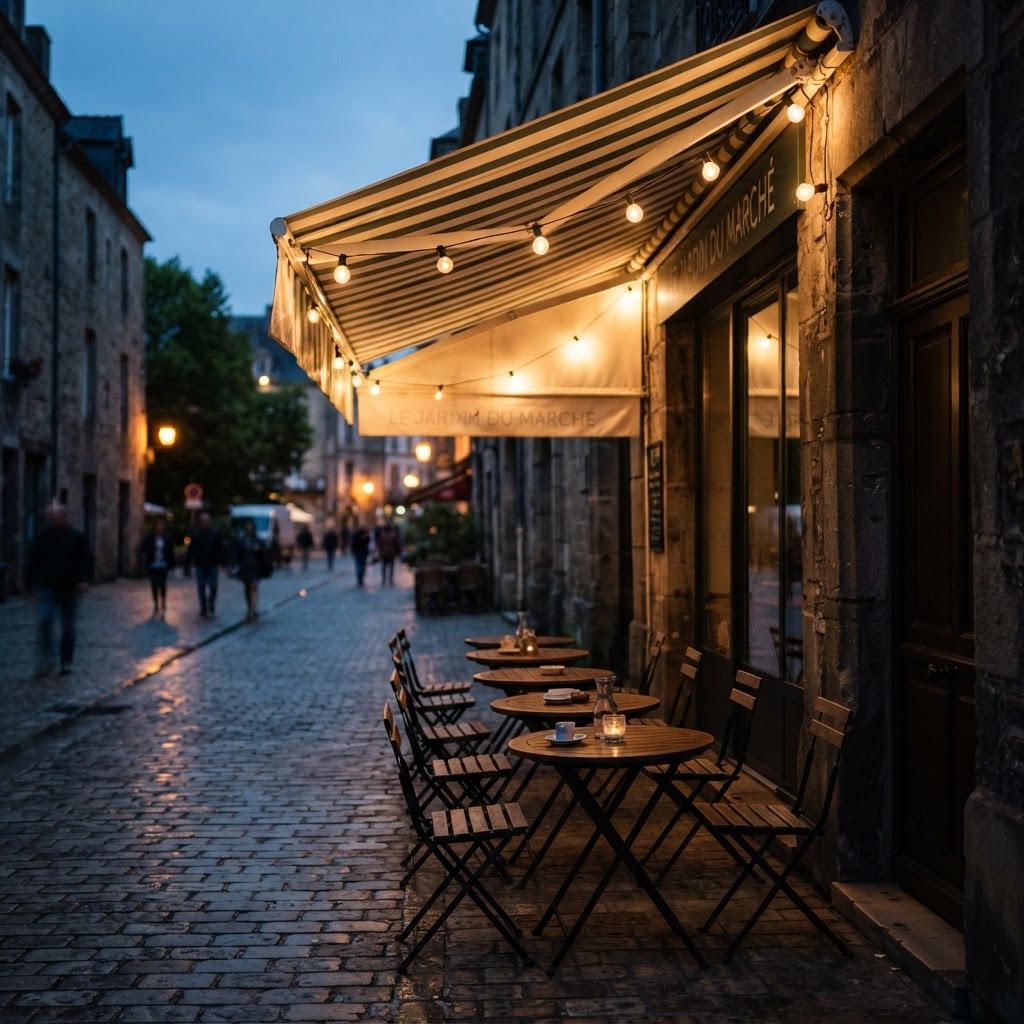
The Awning Underline
An awning is a wide, flat surface at exactly the right height. Clip a strand beneath its front edge.
Light spills down and forward onto the seating area. The awning also hides the bulbs from above.
Leave the fabric unsupported by the wire. Let the frame carry it, never the canvas.
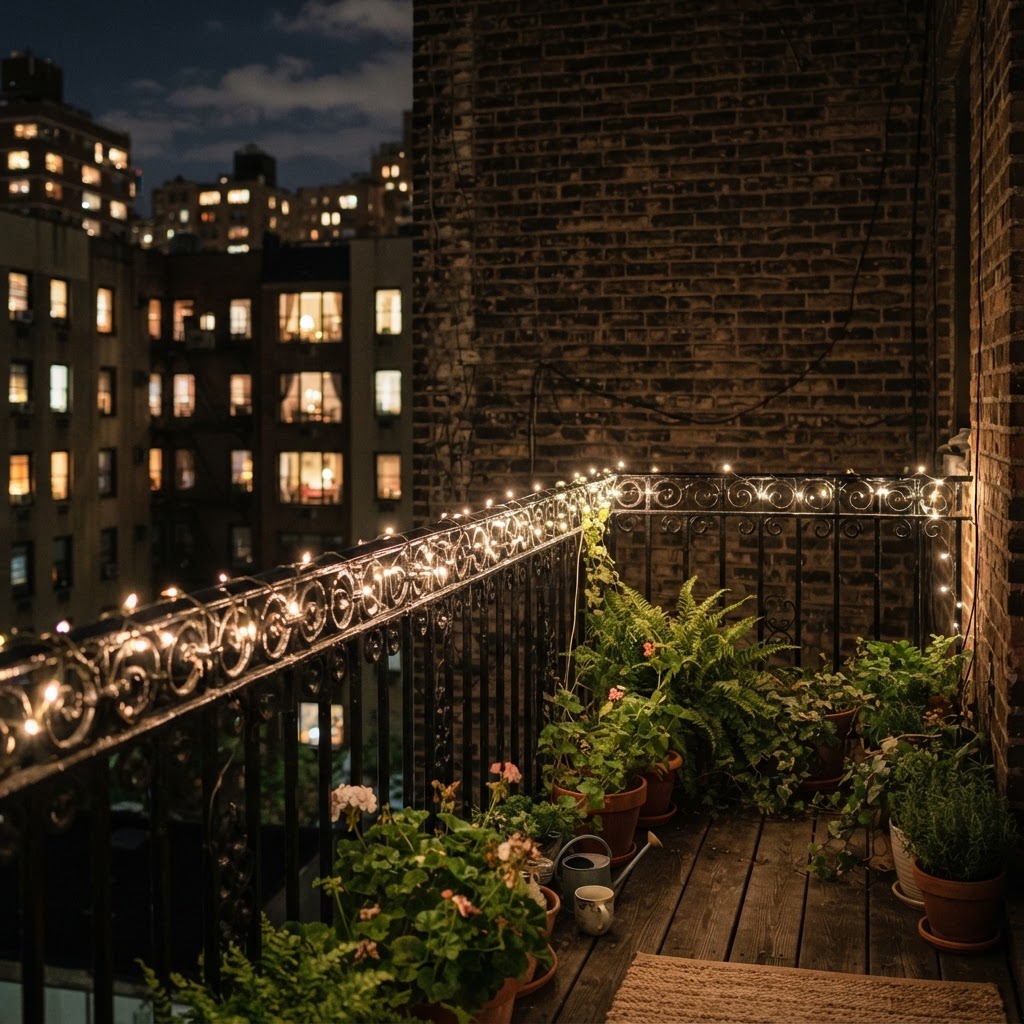
The Fire Escape Glow
Urban metalwork is excellent for light. Wrap the railing of a fire escape or service balcony.
Warm bulbs soften the hard lines and make a tiny city space feel tended. It photographs beautifully.
Never block the ladder or the exit path. Check local rules before you hang anything permanent.
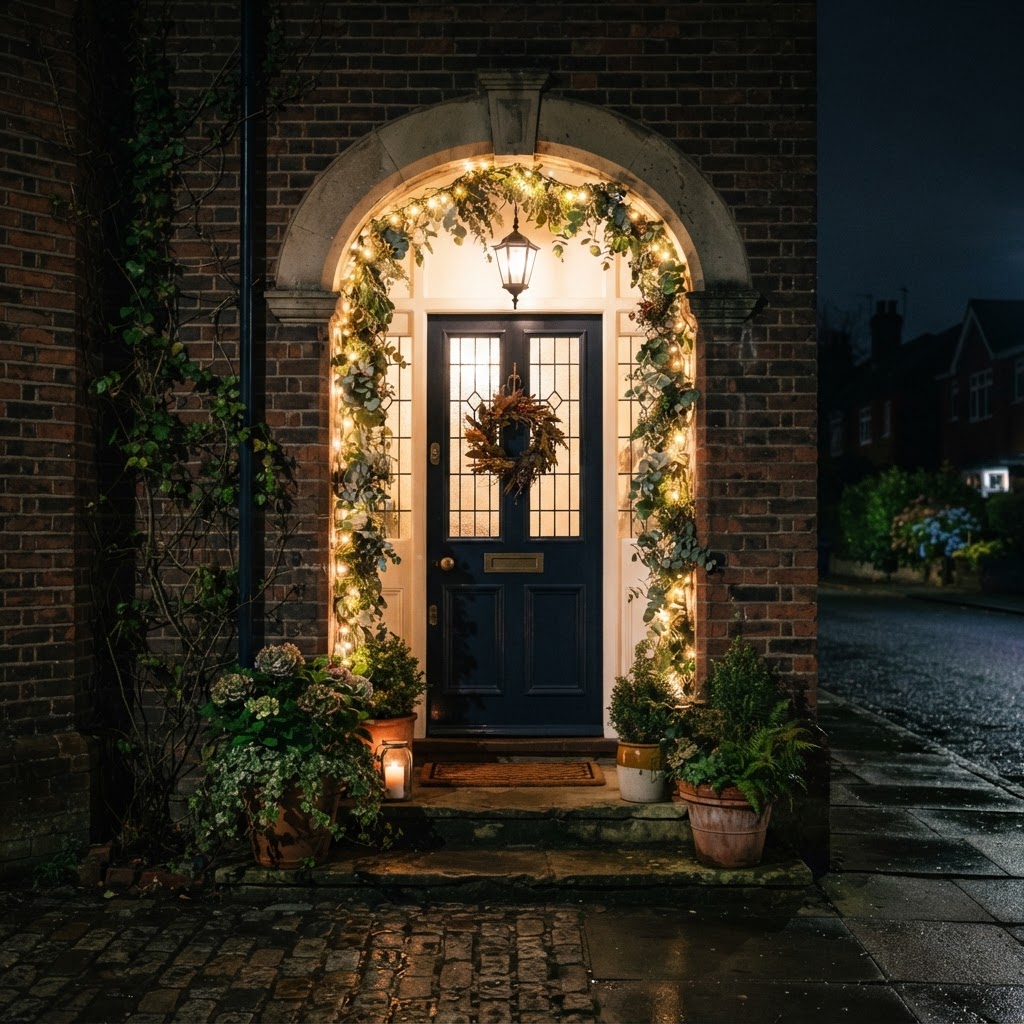
The Front Door Frame
The front door is the photograph every visitor takes. Frame it with a soft arch of bulbs.
An arch, not a rectangle, keeps it elegant. The curve reads as a welcome rather than an outline.
Keep the strand above the door swing. Nothing should brush a head or catch a hinge.
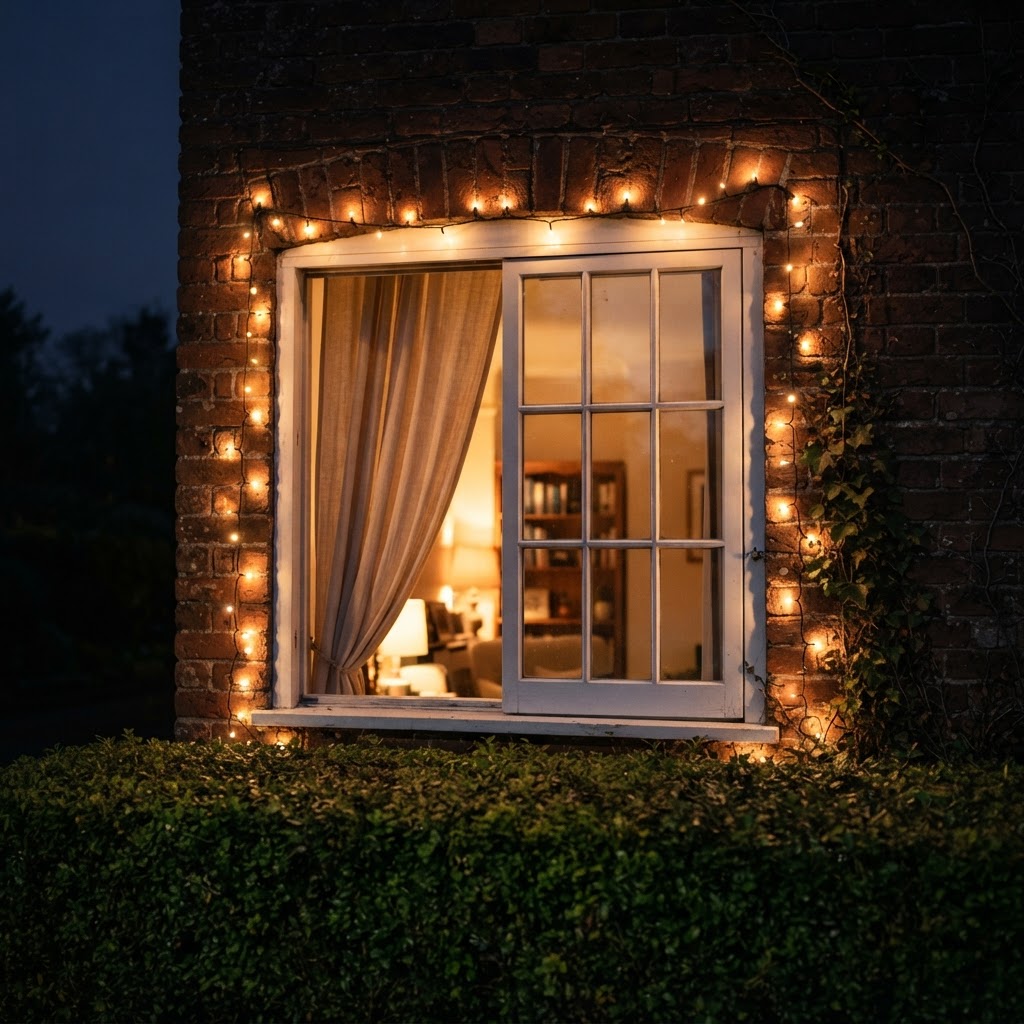
The Window Reveal
Light the outside of a window and the inside of the room changes. A strand around the reveal works both ways.
From the garden the window becomes a warm picture frame. From indoors you get soft reflected light.
Avoid facing bulbs directly into the glass. Angled light avoids a mirror effect and harsh reflection.
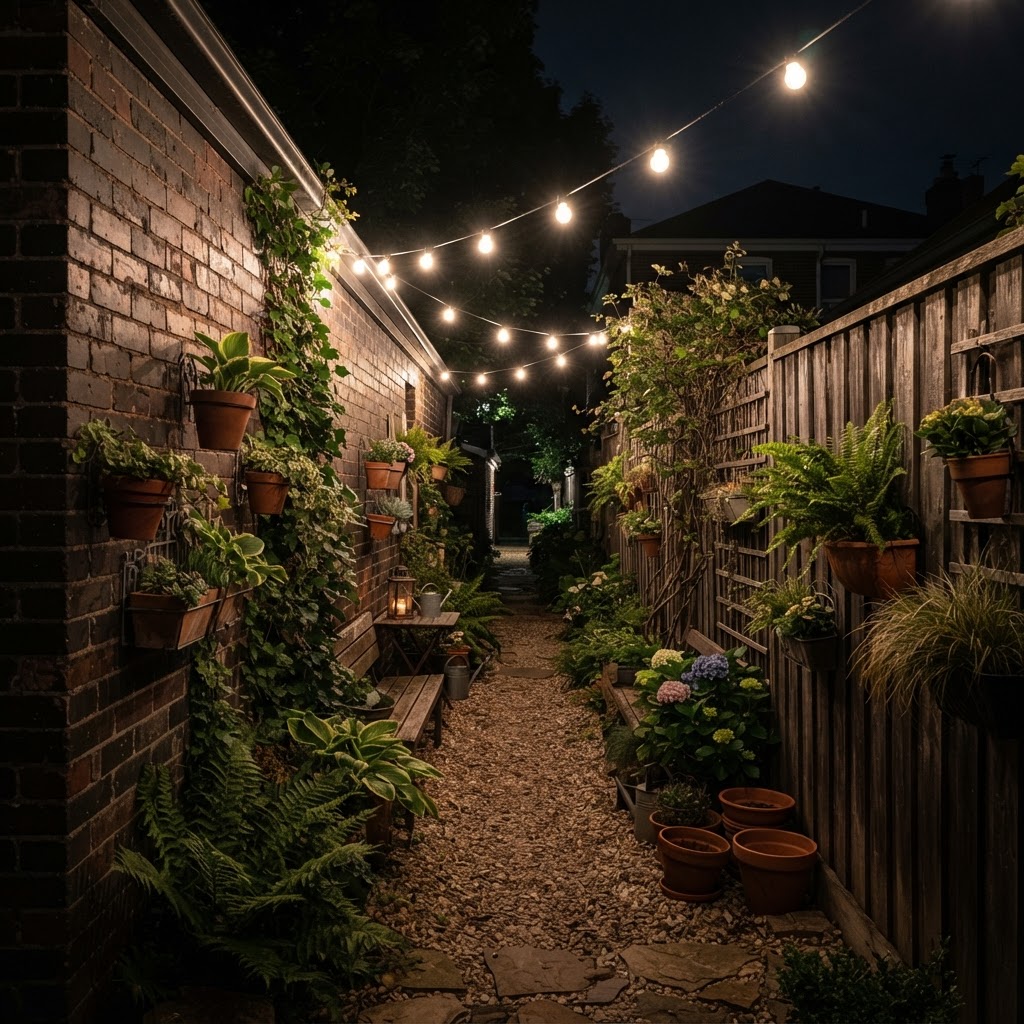
The Garage Alley
The alley beside a garage is usually storage. One overhead line turns it into a courtyard.
The tight walls hold the glow in and the space feels warmer than the open garden. Small and enclosed always does.
Cover the ground with gravel or pavers first. Light on bare concrete only shows you the stains.
Smart, Seasonal & Creative Ideas
The final section is for anyone who wants something nobody else on the street has. Ten ideas that mix colour, water, fabric and control.
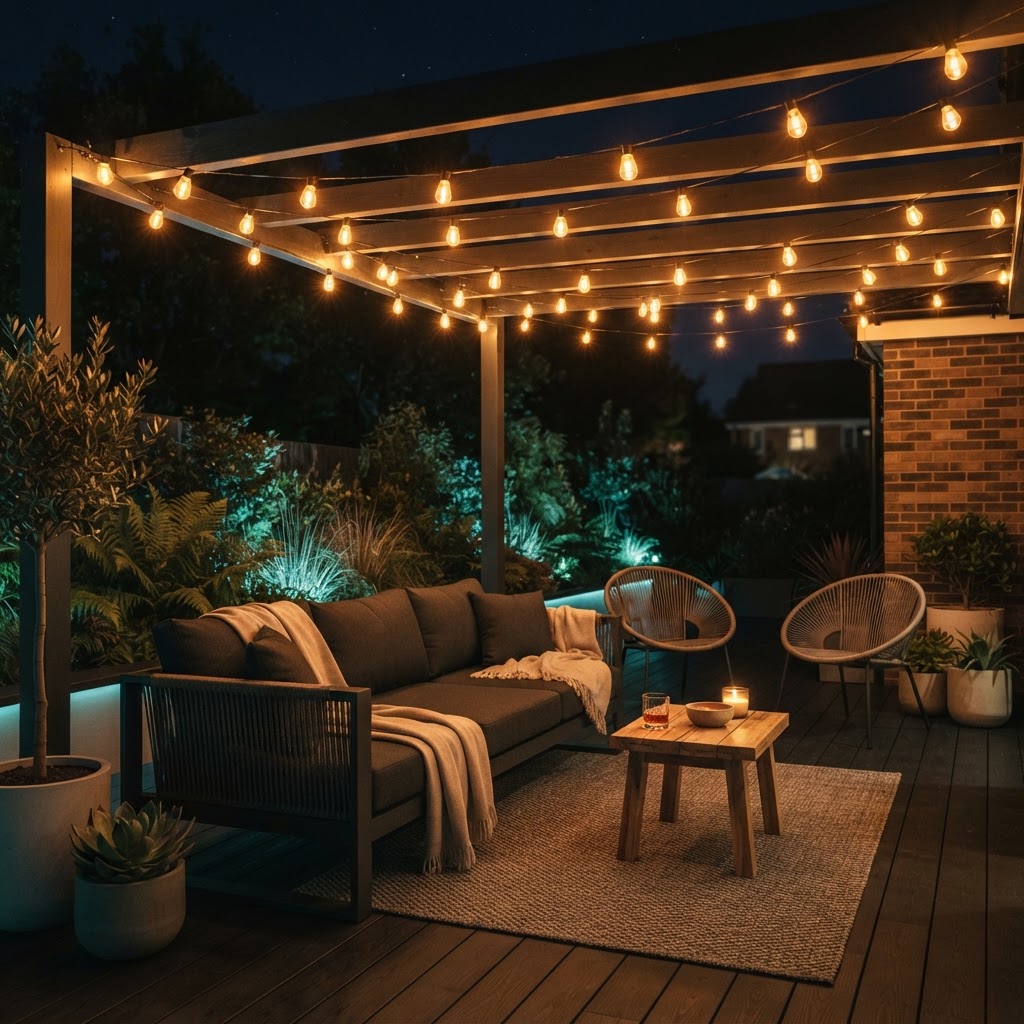
The Smart Colour Scene
App controlled strands let one set of bulbs do six jobs. Keep them warm for dinner and cool for a party.
You can also schedule them to come on at sunset. The garden is lit before you get home.
Set a warm 2700K scene as the default. Colours are a treat, not a living room.
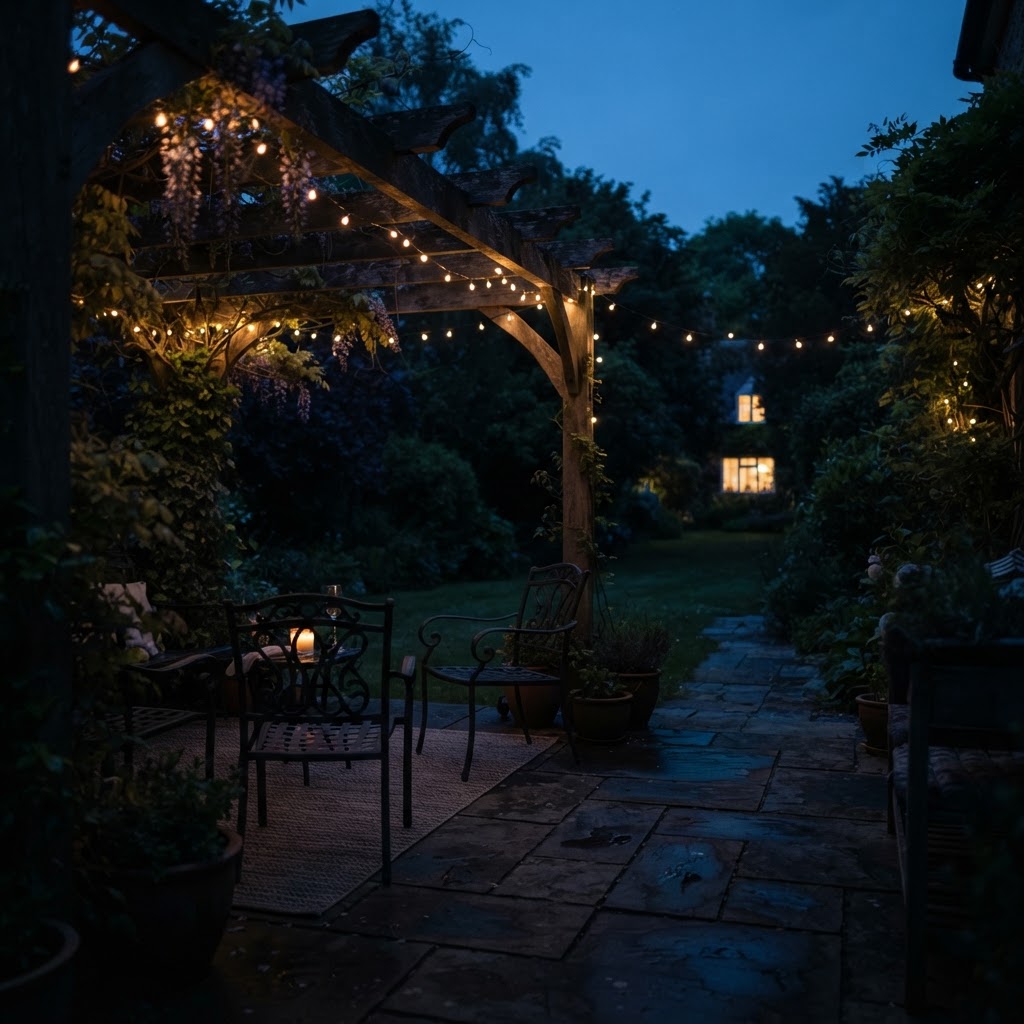
The Dimmer Curve
Brightness matters more than bulb count. A dimmer turns one strand into three different moods.
Run them bright while people arrive and cook. Then drop to 30 percent for the long conversation.
Cheap dimmers buzz and flicker with LED bulbs. Buy a dimmer rated specifically for LEDs.
The Seasonal Swap
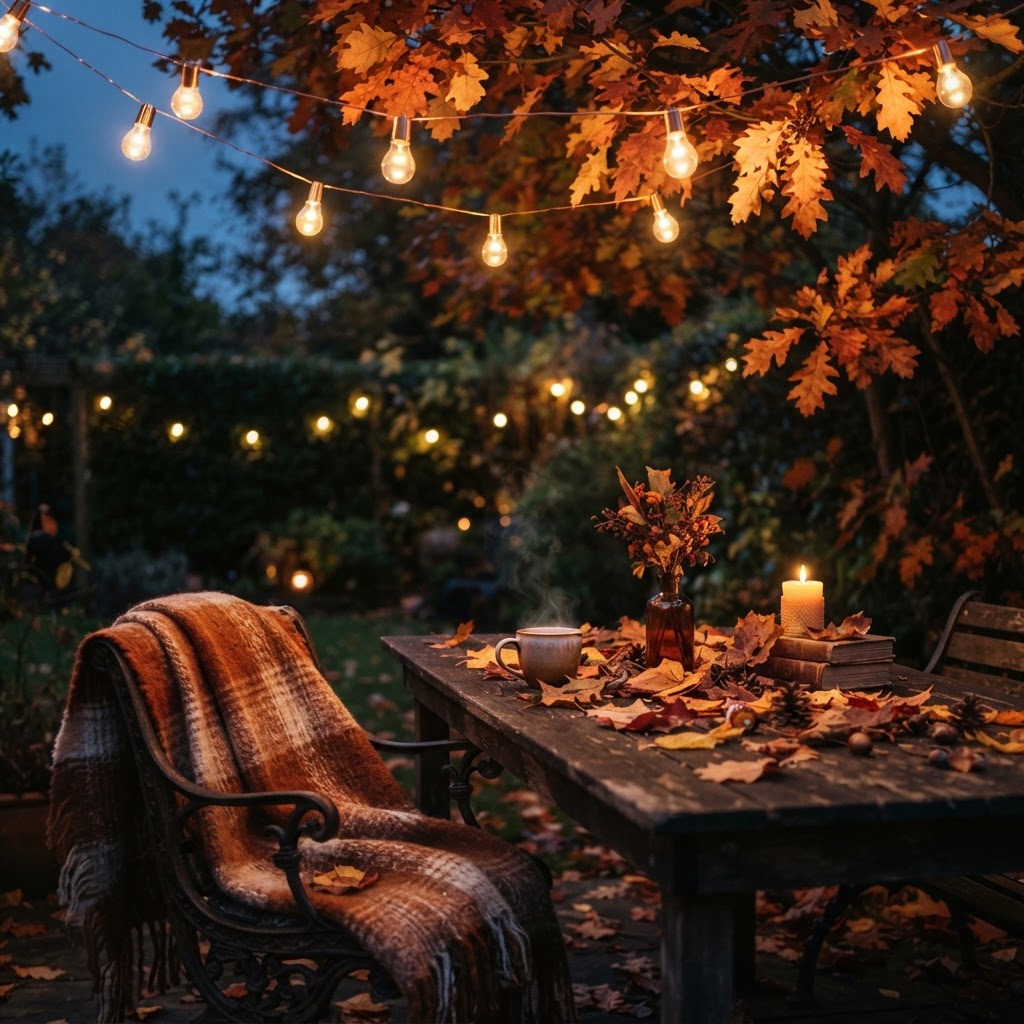
One set of lights can last the whole year if you change the details. Swap the bulb colour, not the wire.
Amber bulbs for autumn, clear for winter, warm white for summer. The scene changes with two dollars of bulbs.
Store spare bulbs in a labelled jar. Hunting for a matching amber bulb in December is miserable.
The Lantern Mix
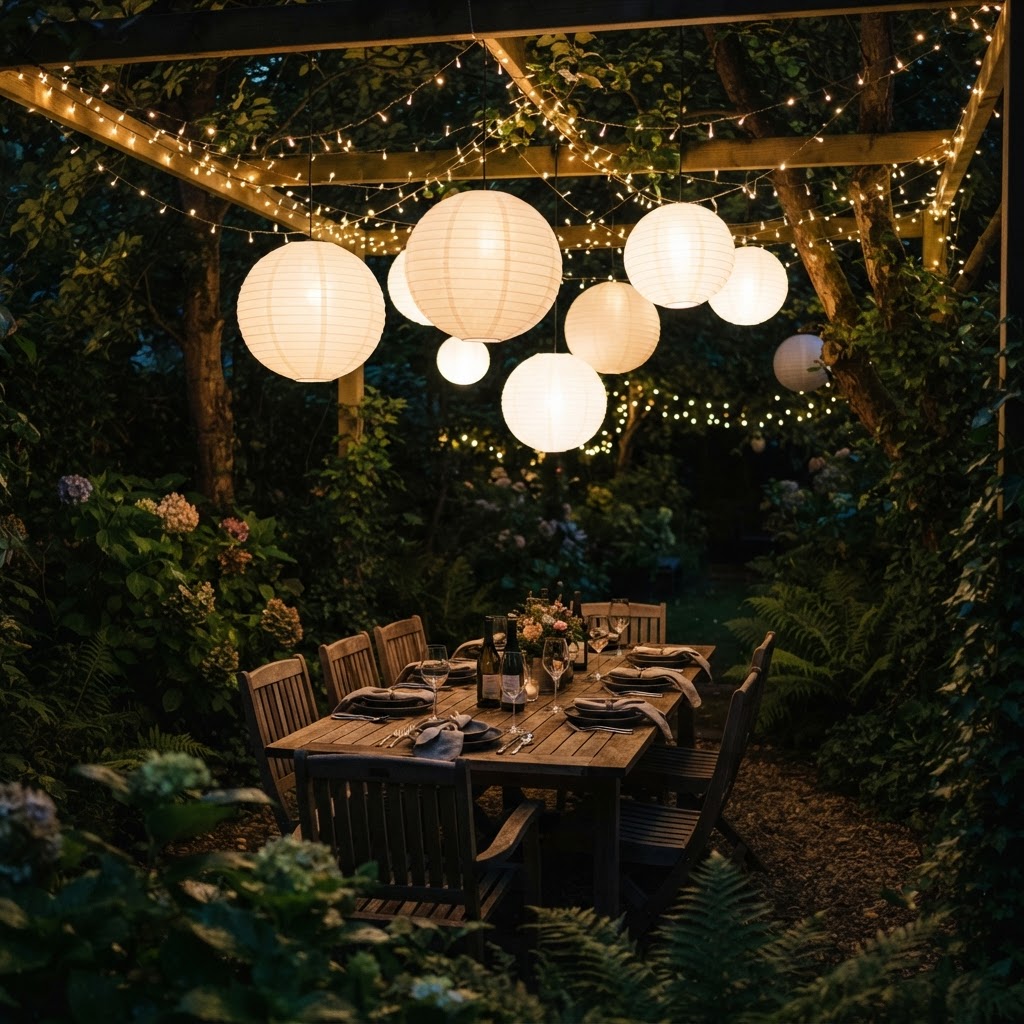
Hang a few paper lanterns along the strand. The larger spheres break up the repetition of small bulbs.
Scale is what makes a display look designed. One size of bulb everywhere looks like a hardware kit.
Only use outdoor rated lanterns. Paper plus rain equals a very short evening.
The Water Reflection
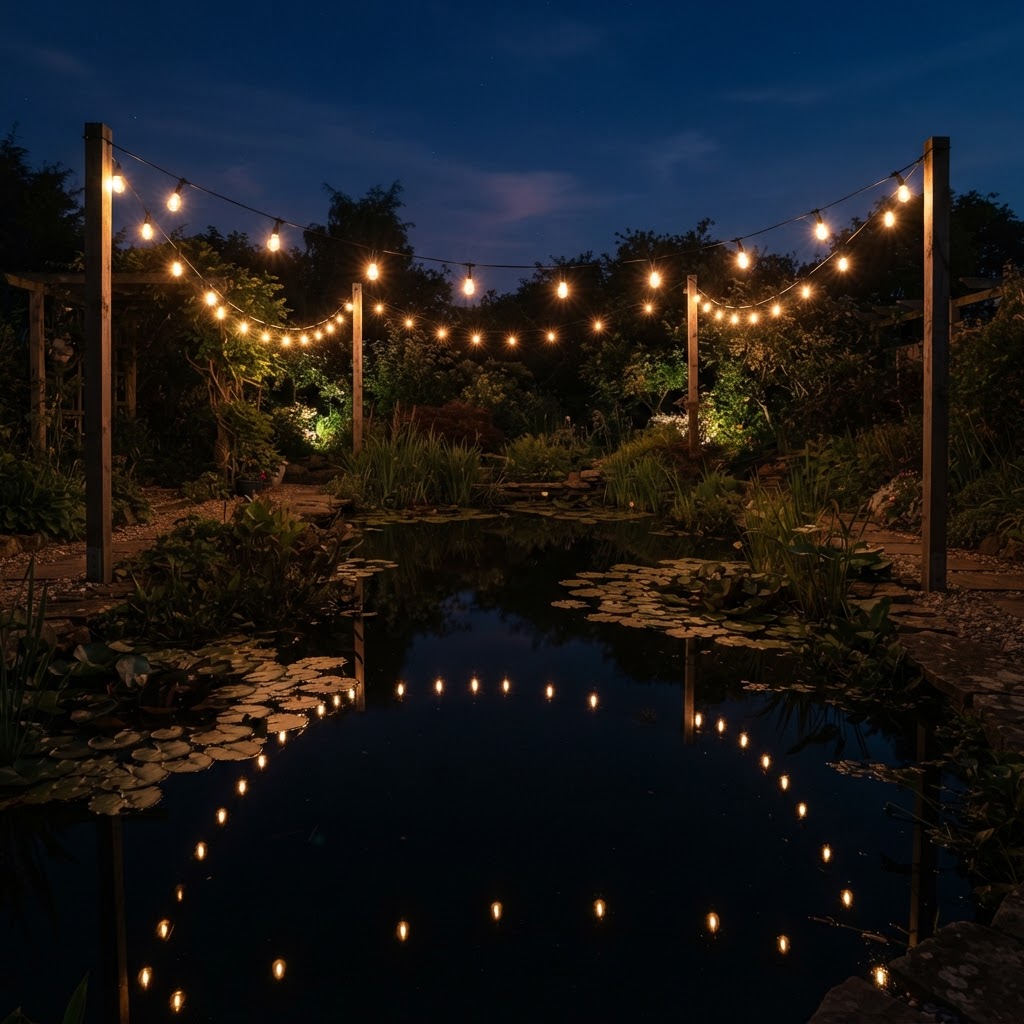
Hang lights above still water and you get the whole display twice. A pond is free decoration.
The reflection doubles the glow and adds movement when the wind ripples the surface. Nothing else does this.
Point the bulbs slightly away from the water. Direct glare kills the reflection you were hoping for.
The Poolside Line
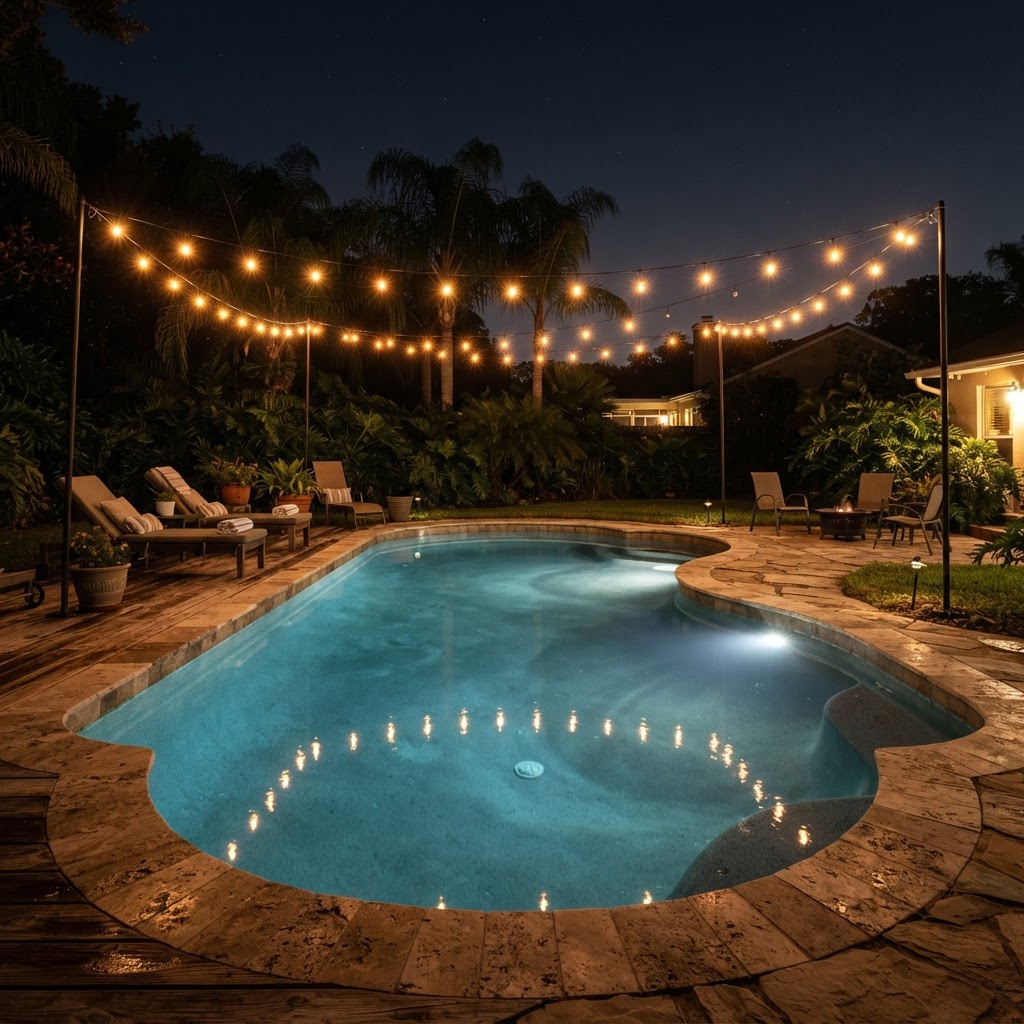
Pools need light that never enters the water. Run the strand high above the deck on tall poles.
The water catches the glow and lights itself. Swimmers stay visible and the pool stays safe.
Never run a cable where it could fall in. Check that every connection sits above the splash line.
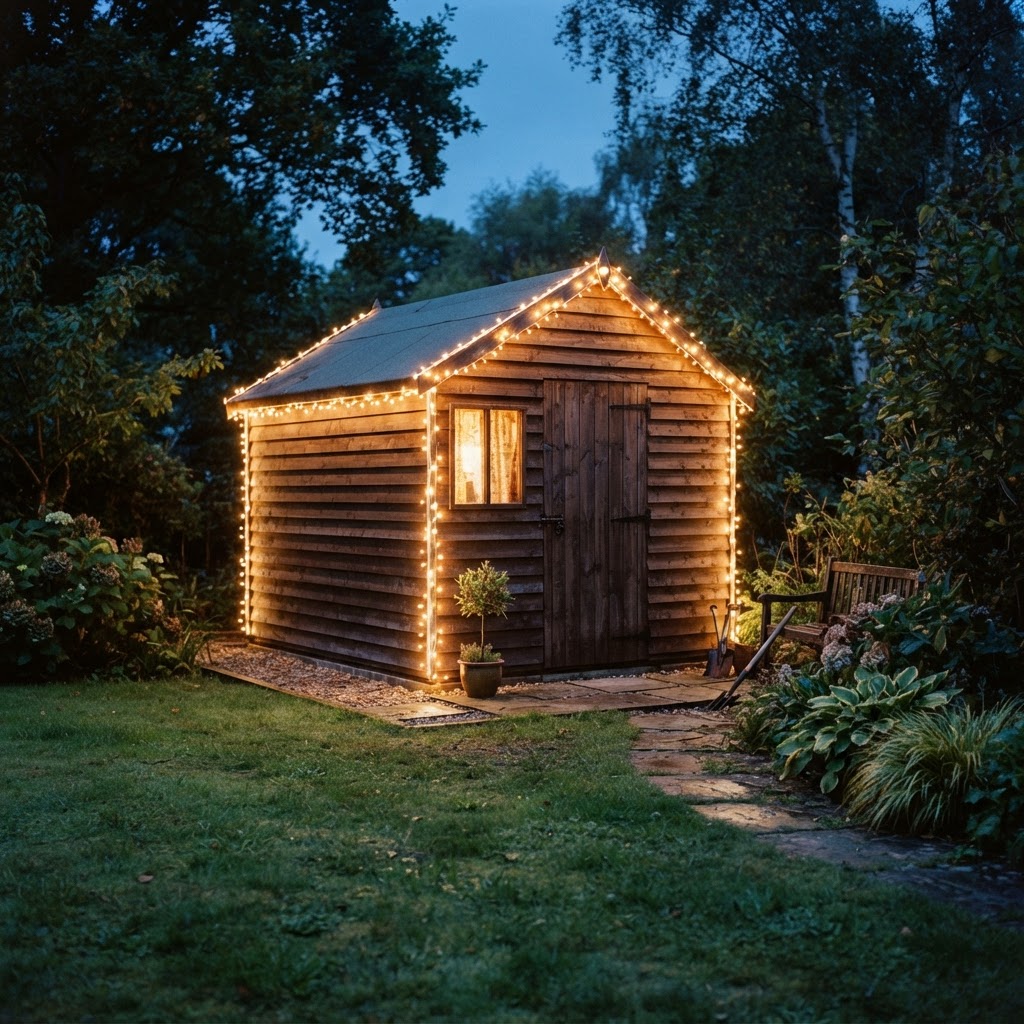
The Shed Wrap
A garden shed is usually a dark lump in the corner. Wrap the whole outline and it becomes a feature.
Follow the roof line, then the corners. The shed turns into a little lit house at the end of the lawn.
Check for gaps in the cladding first. Water behind a wire will rot the timber quietly.
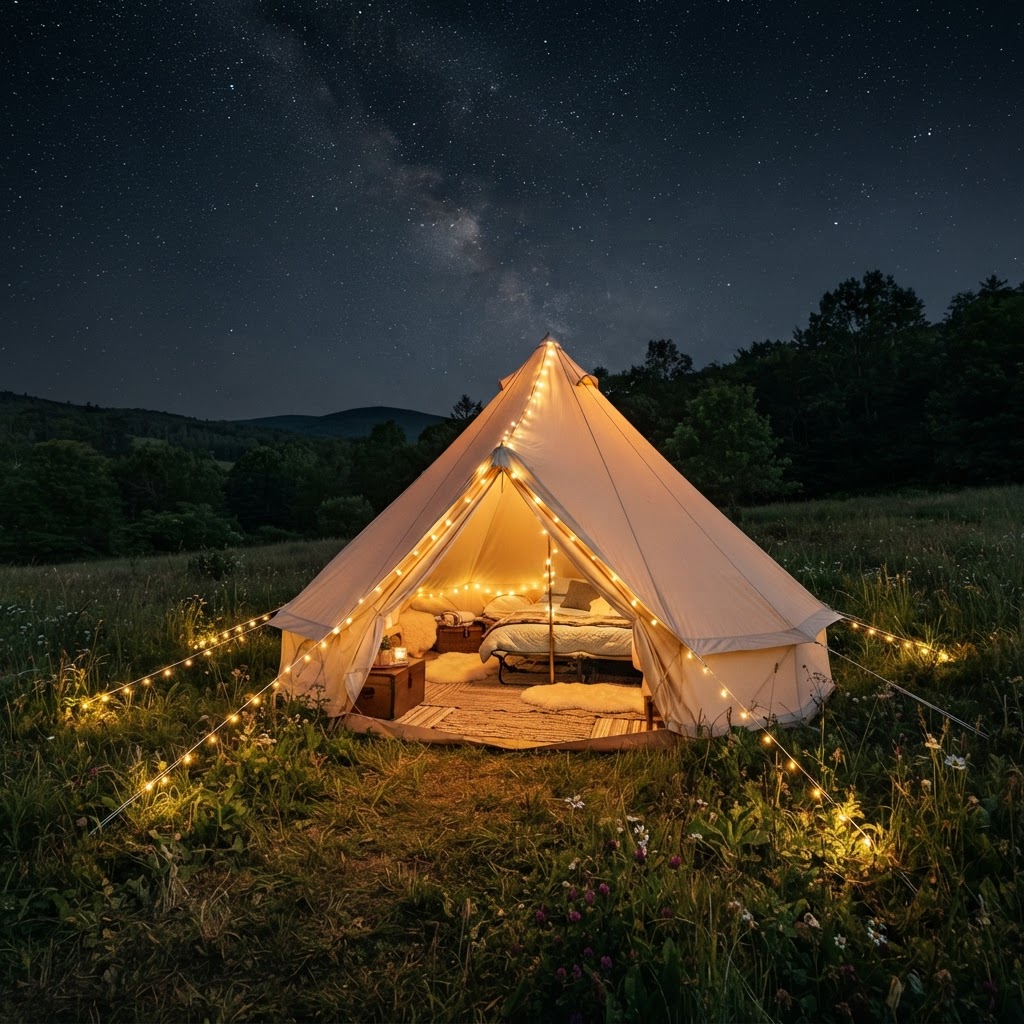
The Glamping Canopy
Bell tents and canvas shelters are made for string lights. Run a strand inside the ridge and outside along the guy lines.
Inside gives warmth and outside marks the tent in the dark. Guests find their way back without a torch.
Use battery strands and keep every cable off the canvas floor. Wet ground plus mains power is never worth it.
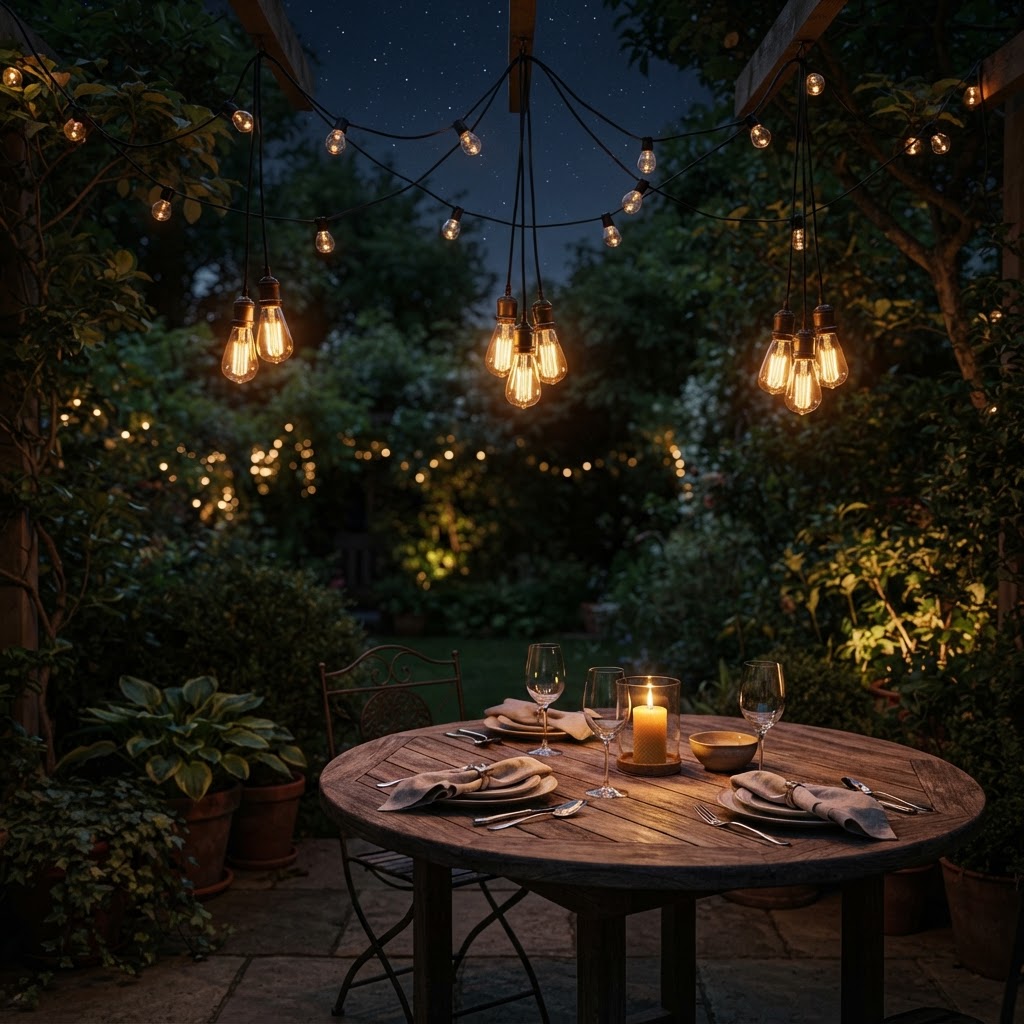
The Chandelier Cluster
Instead of a single line of bulbs, hang small clusters from it. Three or four bulbs drop together at each point.
The clusters read as a chandelier and give a focal point above the table. It looks custom built.
Keep each cluster under 400 g. More weight than that and the strand starts to sag unevenly.
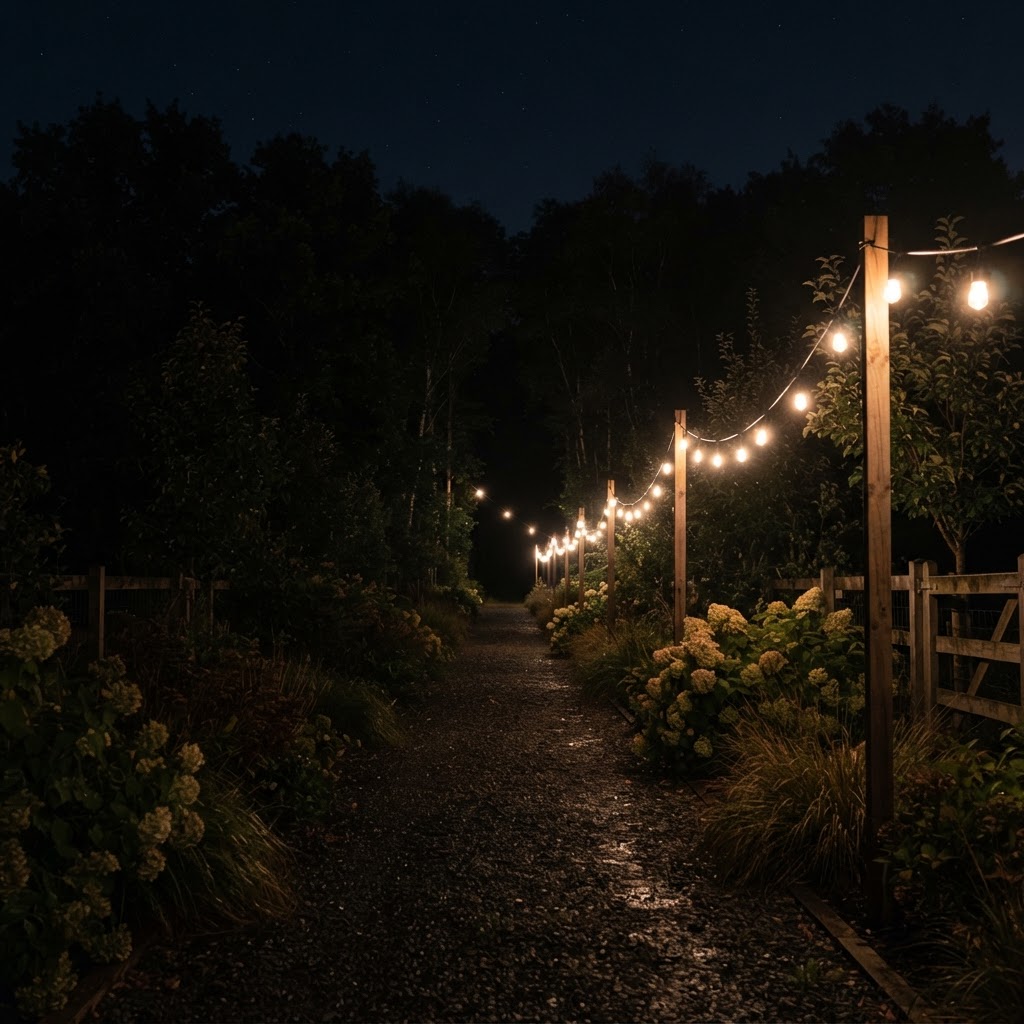
The Star Field Fade
End your run in the trees rather than at a wall. Let the last few spans disappear into the darkness.
The eye cannot find the end, so the garden feels larger than it is. This is the oldest trick in landscape design.
Fade by spacing bulbs further apart toward the back. Even light across the whole garden kills the effect.
How to Hang String Lights So They Last
Height decides everything. Hang overhead strands between 2.4 m and 3 m from the floor, and always above head height.
Let every span dip about 30 cm in the middle. A wire pulled tight will vibrate in wind and snap at the clip.
Add a steel guide wire for any span longer than 6 m. The cable carries the weight, not the bulb sockets.
Use one outdoor rated extension lead and a weatherproof box. Never let a connection sit in a puddle or wet grass.
Buy shatterproof LED bulbs between 2200K and 2700K. That range produces the warm amber glow in every photo here.
Clean the bulbs once a year with a dry cloth. Dusty bulbs lose half their light and look grey, not warm.
Frequently asked questions
How many feet of string lights will I need?
Measure the whole run, then add twenty percent for sag and corners. A 15 ft by 20 ft patio usually needs around 100 ft of strand.
Can outdoor string lights stay up all year?
Yes, if they are rated IP65 or higher and the plugs stay dry. Check the wire after winter storms and replace any cracked bulbs.
Are solar string lights as good as plug-in lights?
Not for a main patio, because they are dimmer and fade after a few hours. Use them for paths and accent lines instead.
How far apart should the bulbs be?
Thirty to forty-five centimetres is the sweet spot. Closer than that looks busy and further apart looks sparse.
How do I hang lights with no pergola or trees?
Set tall poles in concrete, or use heavy planters with weighted bases. Then run a guide wire between them and hang from that.
A final word
Pick one idea and finish it before you start a second. One clean span always beats five half-hung strands.
Then dim everything by thirty percent and sit outside for an hour. That is when you will know if the height and the colour are right.