
53 Bathroom Mirror Ideas: Round, Arched & Backlit Inspiration
A mirror is the one object in a bathroom that has to do two jobs at once. It has to work as a surface you look into every morning, and it has to hold the wall together visually.
Most bathrooms get this wrong in the same way. The mirror is bought last, in a hurry, and it is chosen for size alone. The room then looks unfinished even when the tiles and taps are expensive.
This guide treats the mirror as the first decision instead of the last. Fifty-three ideas are grouped by what each one changes: shape, frame, light, layout, texture and restraint.
Every entry lists the mounting, the lighting and the material. Use the index to jump to a section, then copy the idea straight into your plan or your shopping list.
Shape Studies
Start with the outline. Shape decides how heavy the wall feels before any frame or bulb is added.
Round Frameless Halo
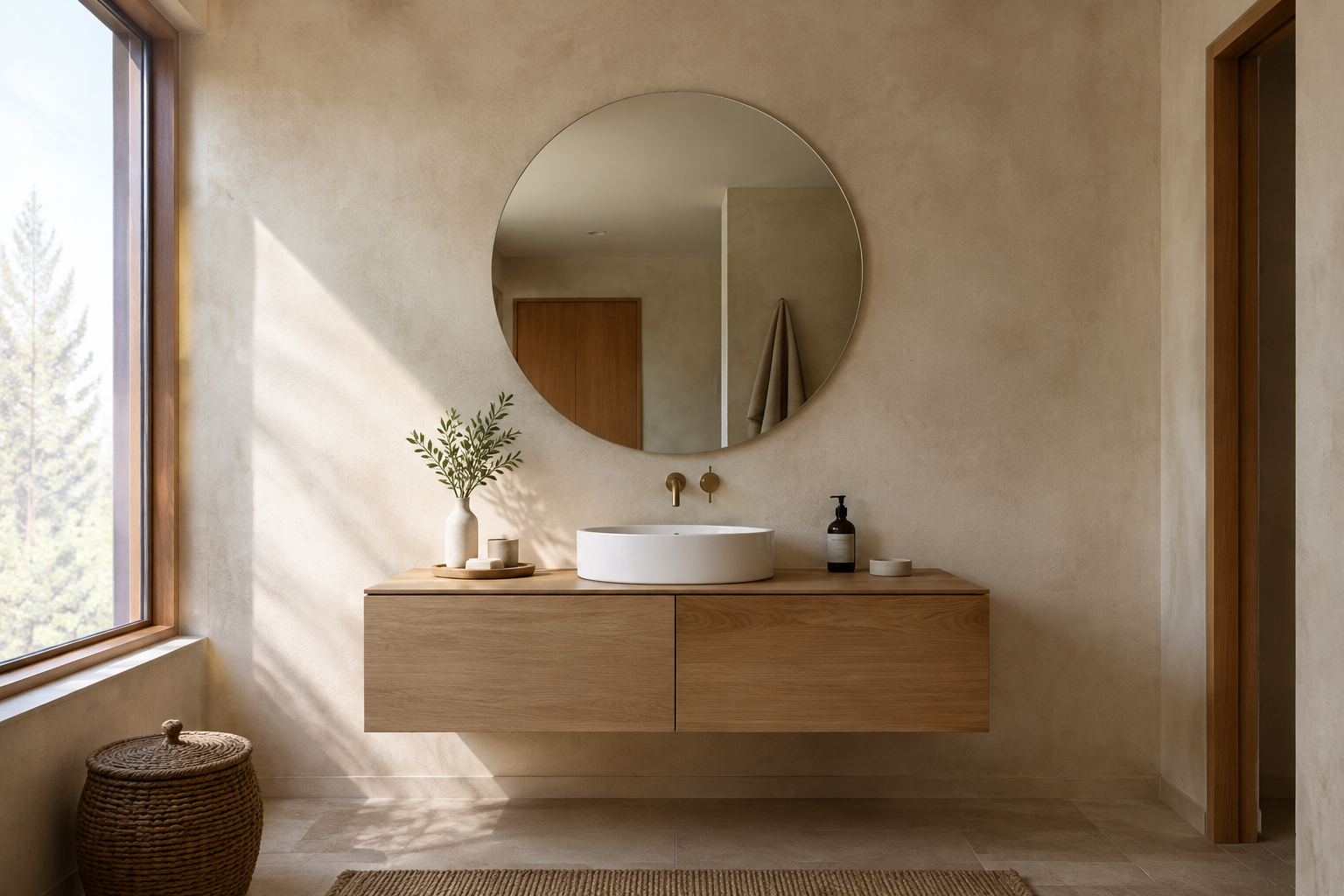
A frameless circle removes every distraction from the wall. The glass is polished on all edges so the mirror appears to float.
Use this shape above a floating oak vanity to soften a room full of straight lines. Keep the reveal tight so no shadow gap breaks the illusion.
It suits small bathrooms because a circle never feels heavy. Pair it with an unglazed plaster wall for quiet contrast.
- MountingWall hung
- LightingAmbient only
- MaterialPolished edge glass
Tall Arched Brass Band
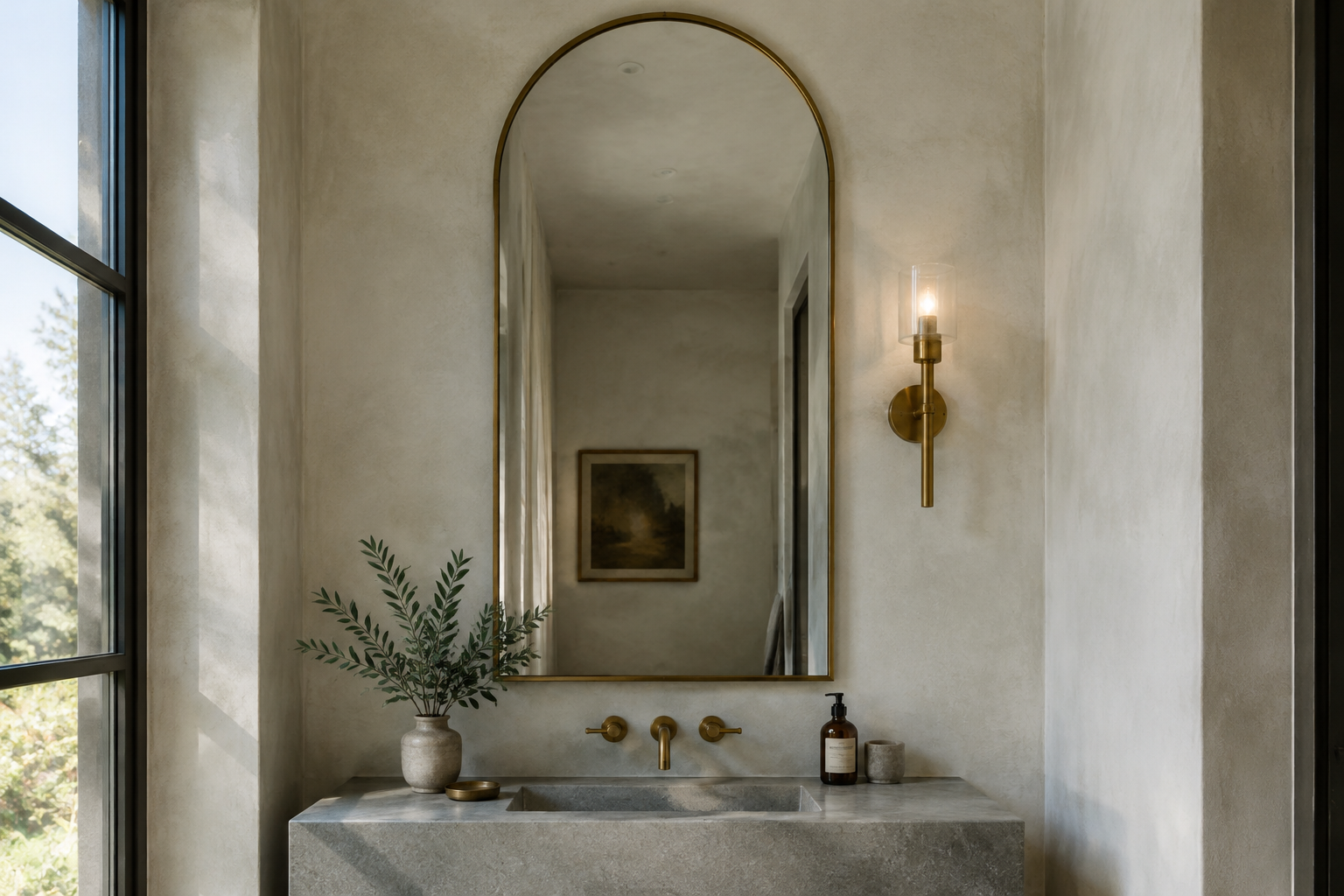
An arch borrows height from the ceiling and hands it back to the room. A thin brass band is the only decoration it needs.
Set the arch directly on the counter so the mirror feels built in. This works best over a narrow stone vanity in a tall room.
Brass will darken slowly with humidity and handling. That patina is the point, so skip the lacquer.
- MountingCounter resting
- LightingWall sconces
- MaterialUnlacquered brass
Elongated Pill Mirror
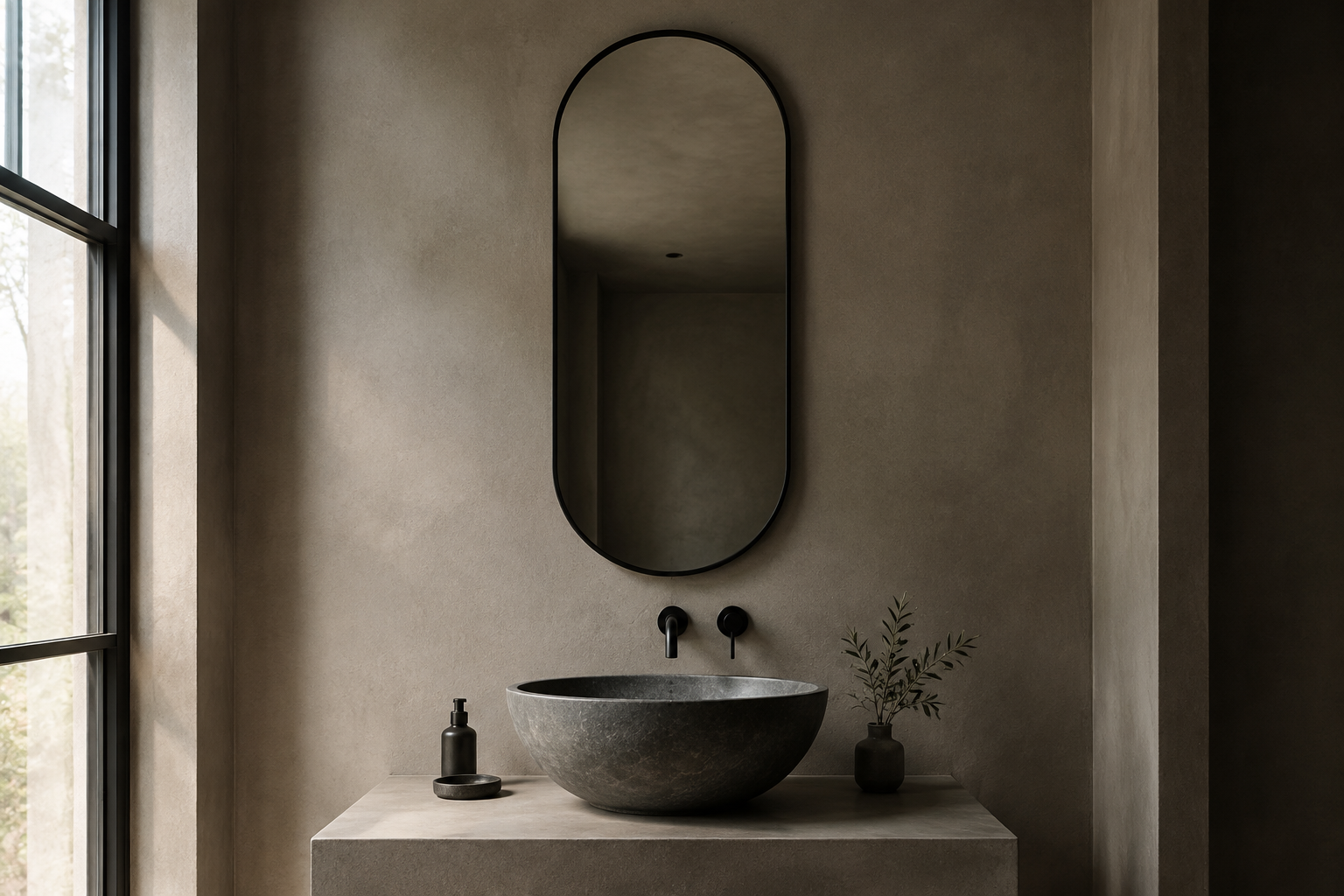
The pill shape is a circle that learned to stand in line. Rounded ends take away the hard corners that crowd a double vanity.
Run it vertically over a single basin to add height without width. A matte black frame keeps the soft shape from turning sweet.
Choose a width at least ten centimetres wider than the basin. That margin is what makes the proportions feel deliberate.
- MountingWall hung
- LightingWall sconces
- MaterialPowder-coated steel
Low Wide Landscape Pane
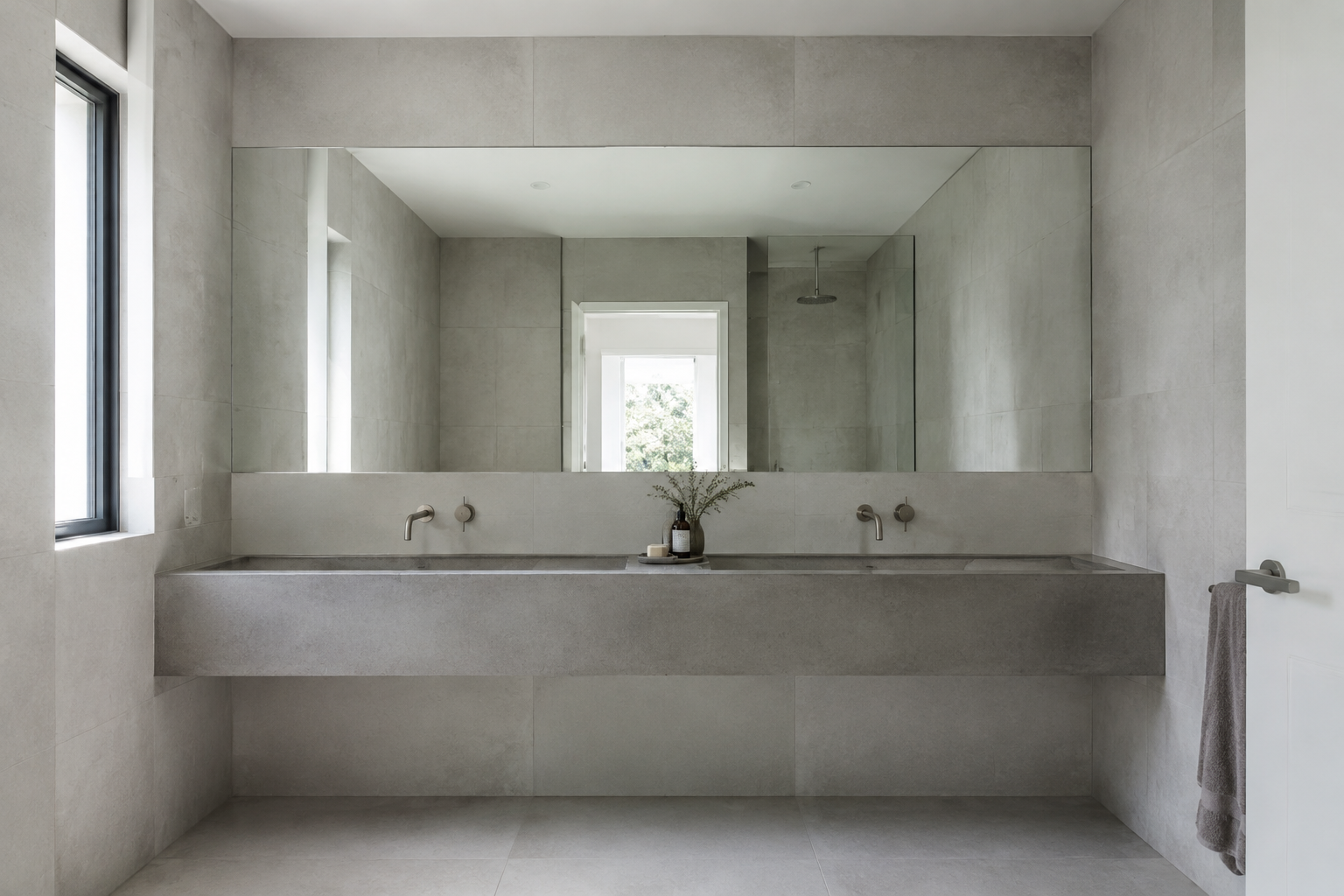
A wide landscape mirror widens a narrow bathroom instantly. It repeats the horizontal line of the counter instead of fighting it.
Hang it low so the bottom edge sits just above the tap. This gives you the reflection you actually use throughout the day.
Use it over a trough sink or a long floating shelf. One wide pane reads calmer than three small ones.
- MountingWall hung
- LightingCeiling downlights
- MaterialFrameless glass
Pebble Organic Silhouette
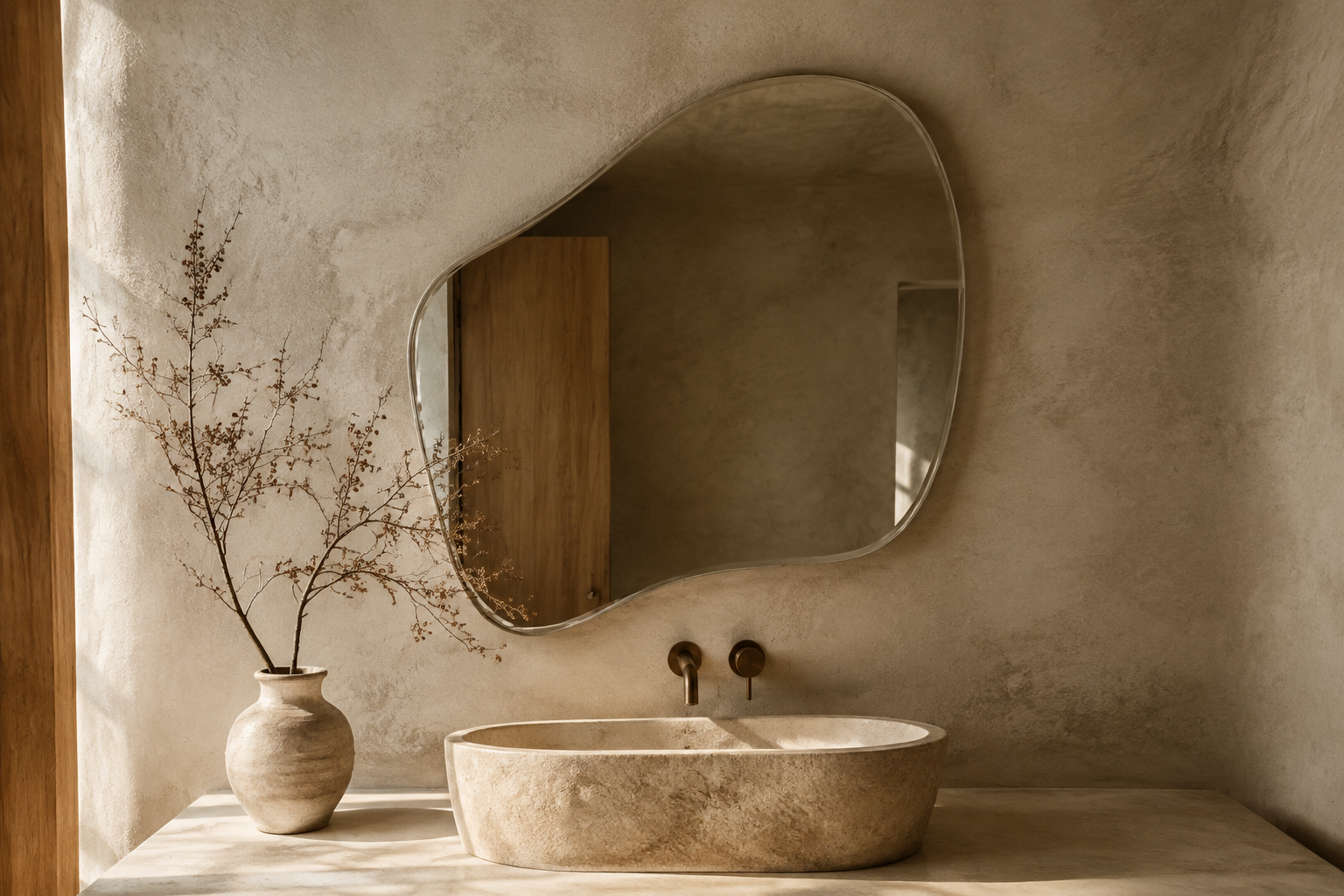
An irregular silhouette looks cut from a riverbed rather than a factory. No two edges repeat, so the eye keeps moving.
Set it against limewash or microcement to make the soft outline read. A hard tile grid will flatten the effect completely.
Keep everything else quiet. One organic shape per wall is enough, and two will start to look accidental.
- MountingWall hung
- LightingAmbient only
- MaterialLimewash backdrop
Double Circle Pair
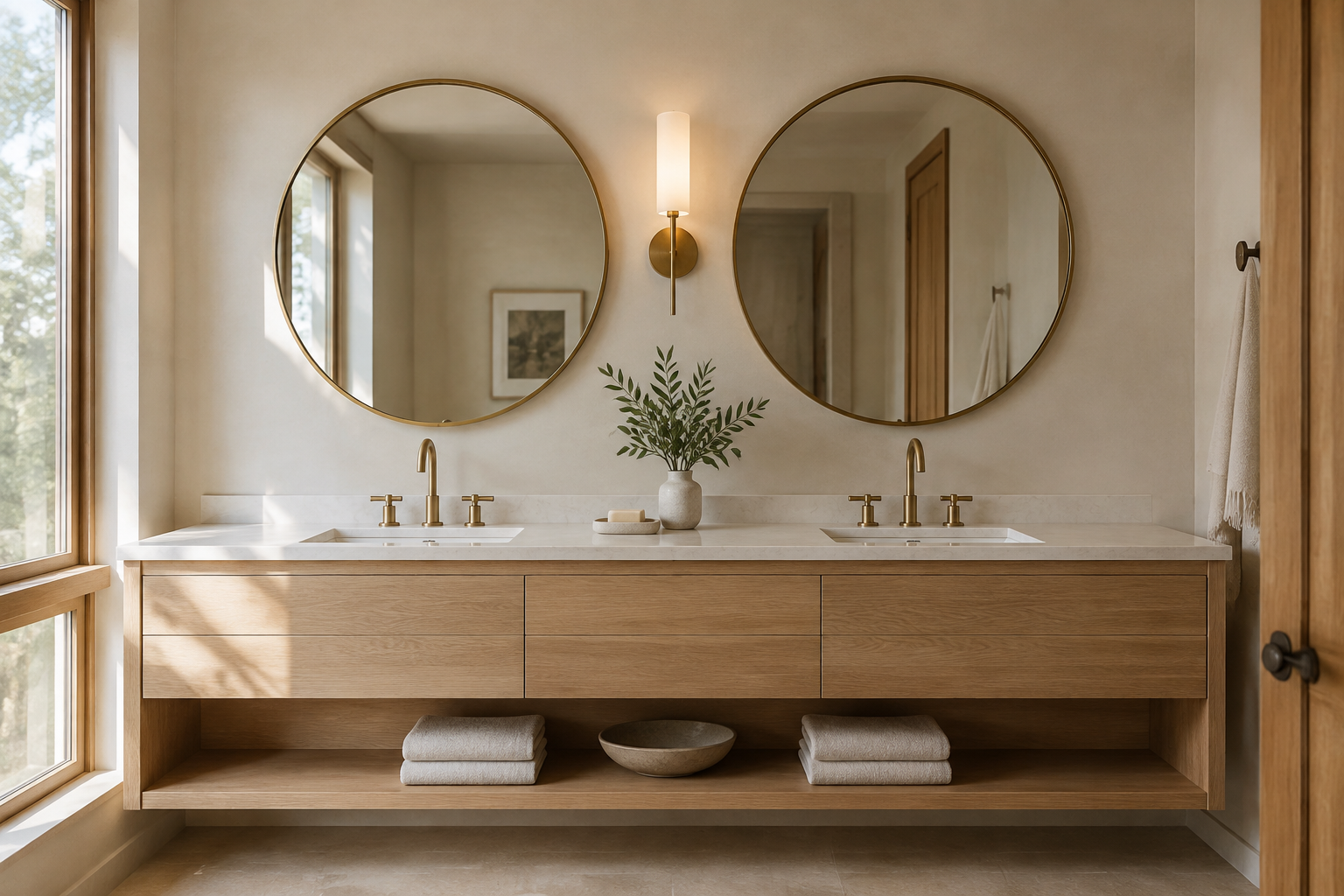
Two circles side by side give a double vanity its own rhythm. The gap between them becomes a third shape on the wall.
Align the centres with each basin and keep the gap narrower than one mirror. Equal spacing is what makes the pair read as a set.
Hang them on a shared horizontal line rather than at eye level. Consistency matters more than individual height here.
- MountingWall hung pair
- LightingTwin sconces
- MaterialBrushed brass
Porthole with Exposed Clips
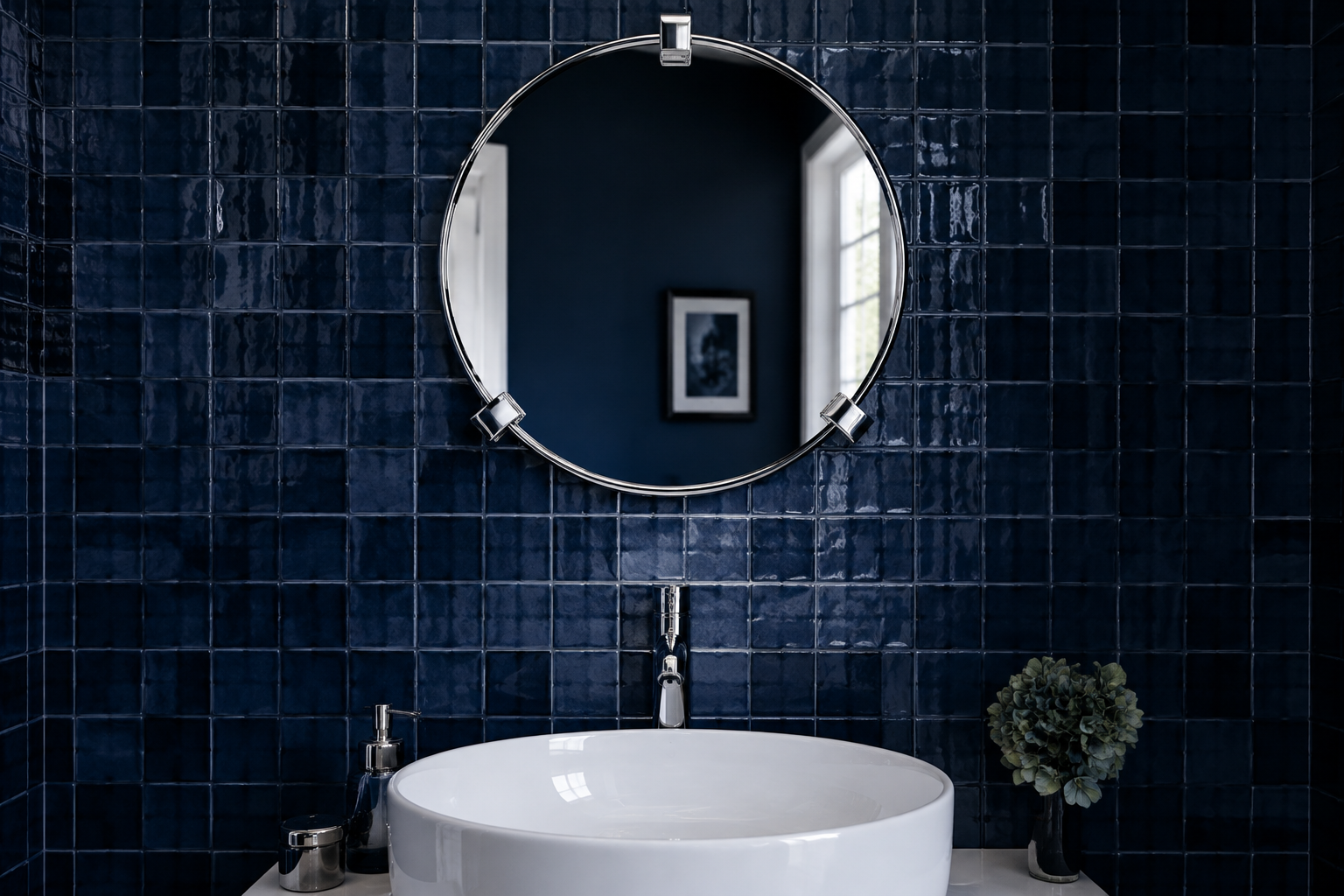
A small circle with exposed clips reads more like a boat fitting than a bathroom mirror. The hardware is meant to be seen, so make it the same metal as the taps.
This suits a single basin in a tight room where a large mirror would feel like a wall. Keep it small enough to leave generous tile around it.
Clip mounts also make the mirror easy to lift off for cleaning behind it. That matters more than it sounds in a humid room.
- MountingClip mount
- LightingAmbient only
- MaterialPolished chrome
Scalloped Petal Edge
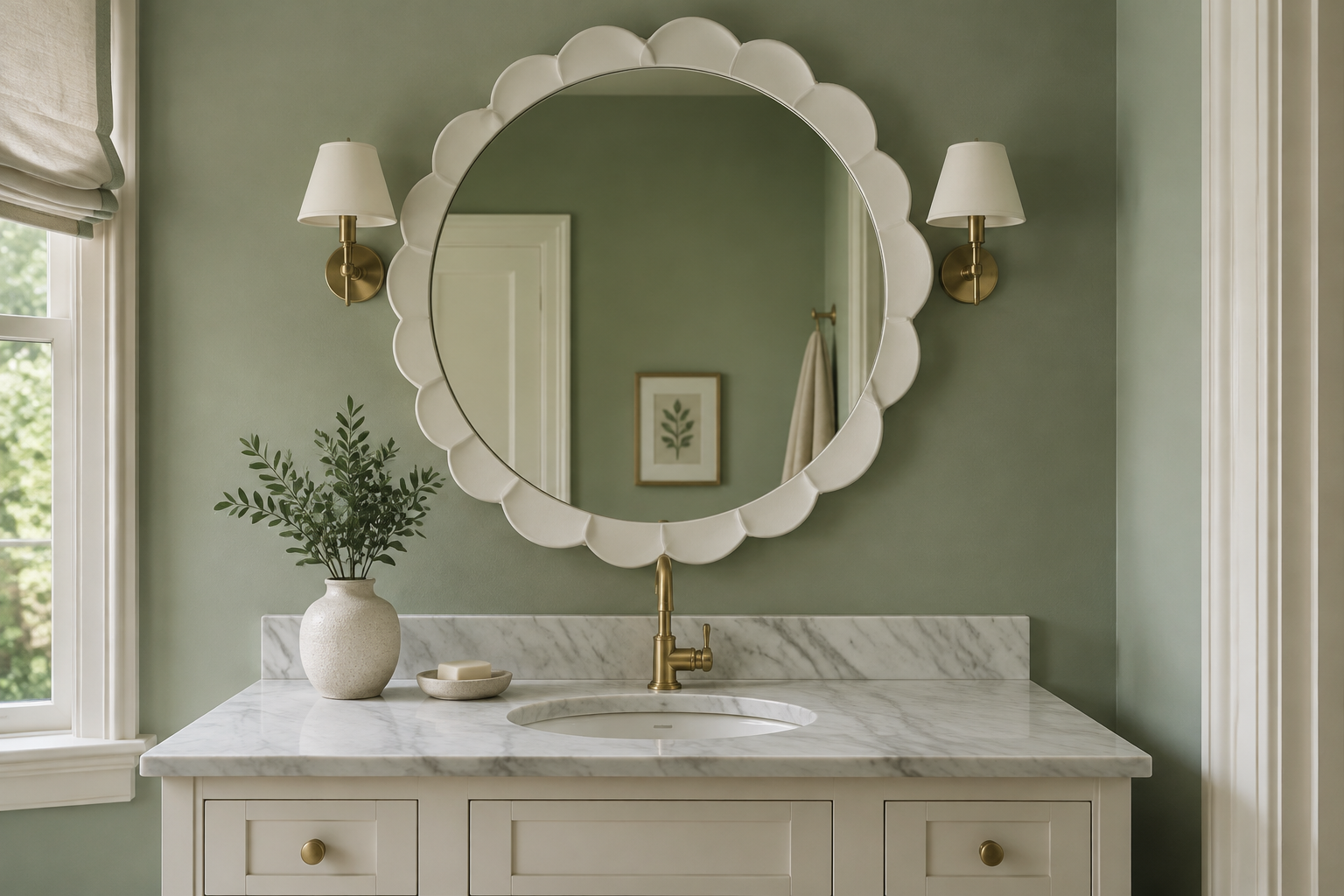
A scalloped edge softens a rectangle without turning it into a circle. The petals read as handwork rather than geometry.
Keep the timber pale so the shape stays the main event. This suits a painted wall in a soft green or a warm cream.
Choose a mirror at least five centimetres wider than the basin. The scallop needs empty wall beside it to breathe.
- MountingWall hung
- LightingAmbient only
- MaterialPainted hardwood
Teardrop Curve
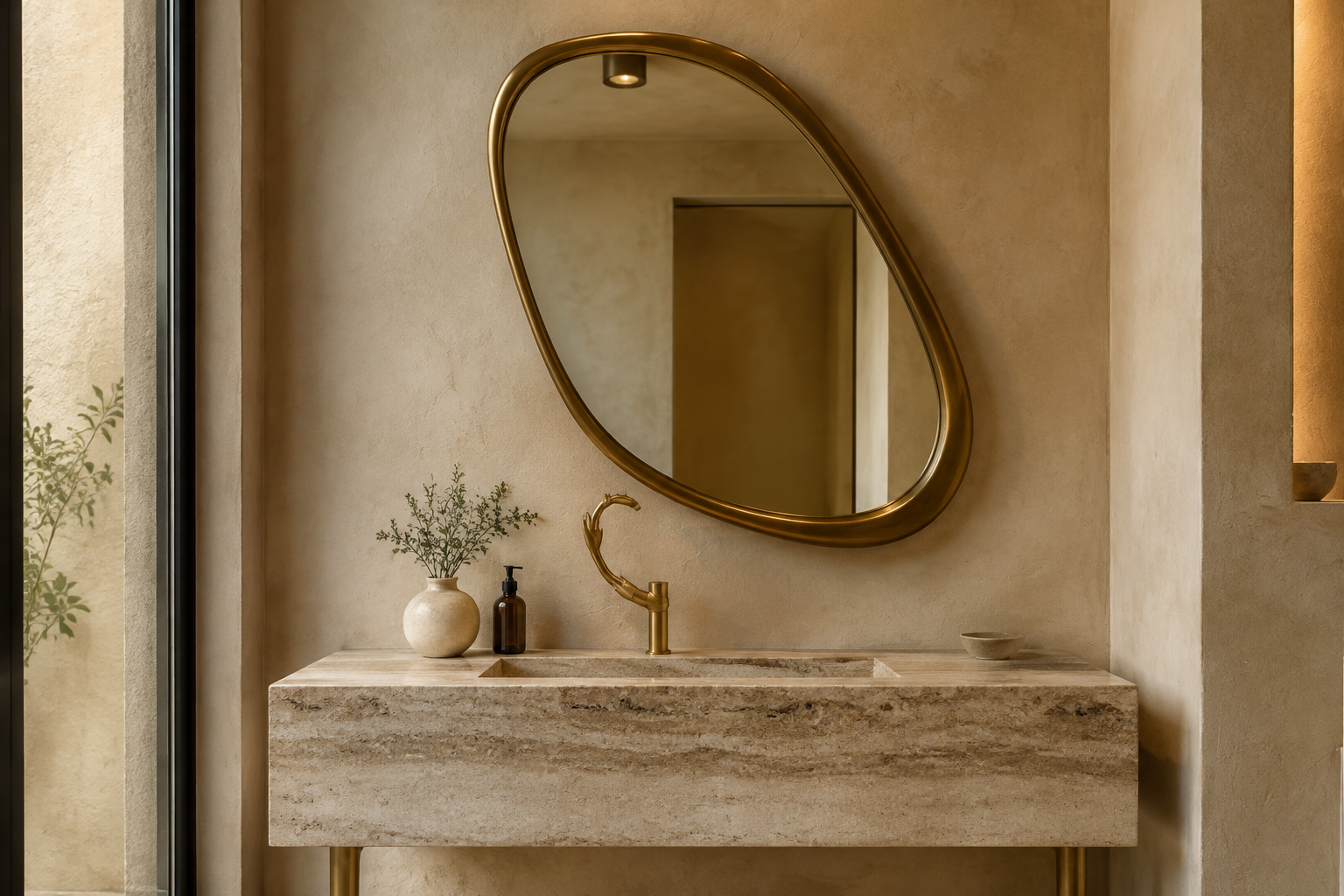
A teardrop is a circle that has been pulled slightly wider at the base. It gives a small wall a sculptural focus without weight.
A curved brass frame follows the shape rather than boxing it in. The result feels drawn rather than manufactured.
Use it above a stone basin with a strong natural grain. Both materials then read as found objects rather than products.
- MountingWall hung
- LightingWall sconces
- MaterialHand-formed brass
Frame and Material
A frame is the only jewellery most bathrooms get. Choose the metal or timber once and repeat it on the taps and handles.
Hairline Brass Frame
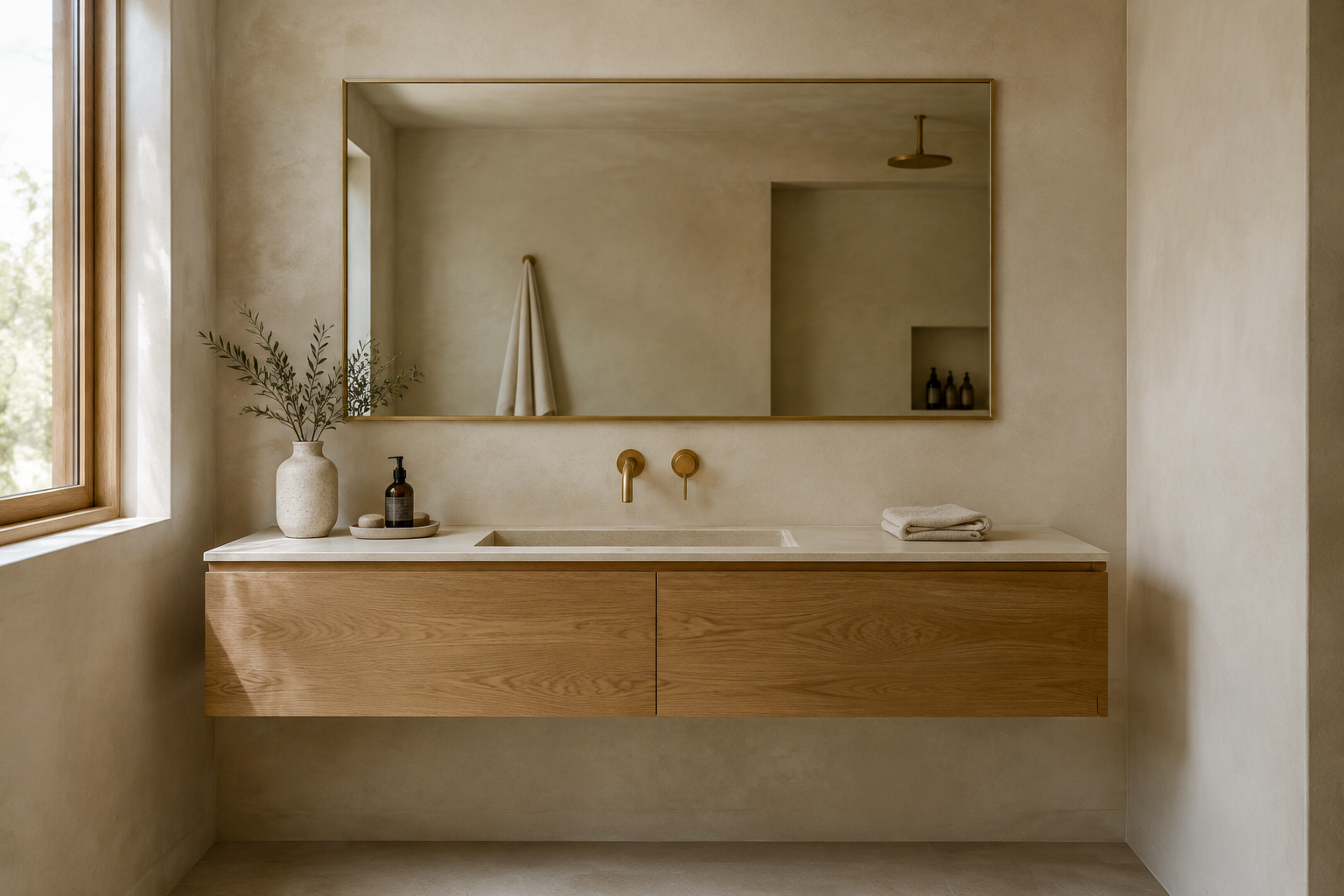
A frame this thin does not decorate, it only defines the edge. The mirror stays the surface and the metal just closes it.
Hairline brass suits a large rectangle on a warm white wall. It keeps a big mirror from looking like a window.
Leave the brass unlacquered so it darkens near the sink. The variation becomes a quiet record of daily use.
- MountingWall hung
- LightingWall sconces
- MaterialHairline brass
Matte Black Square
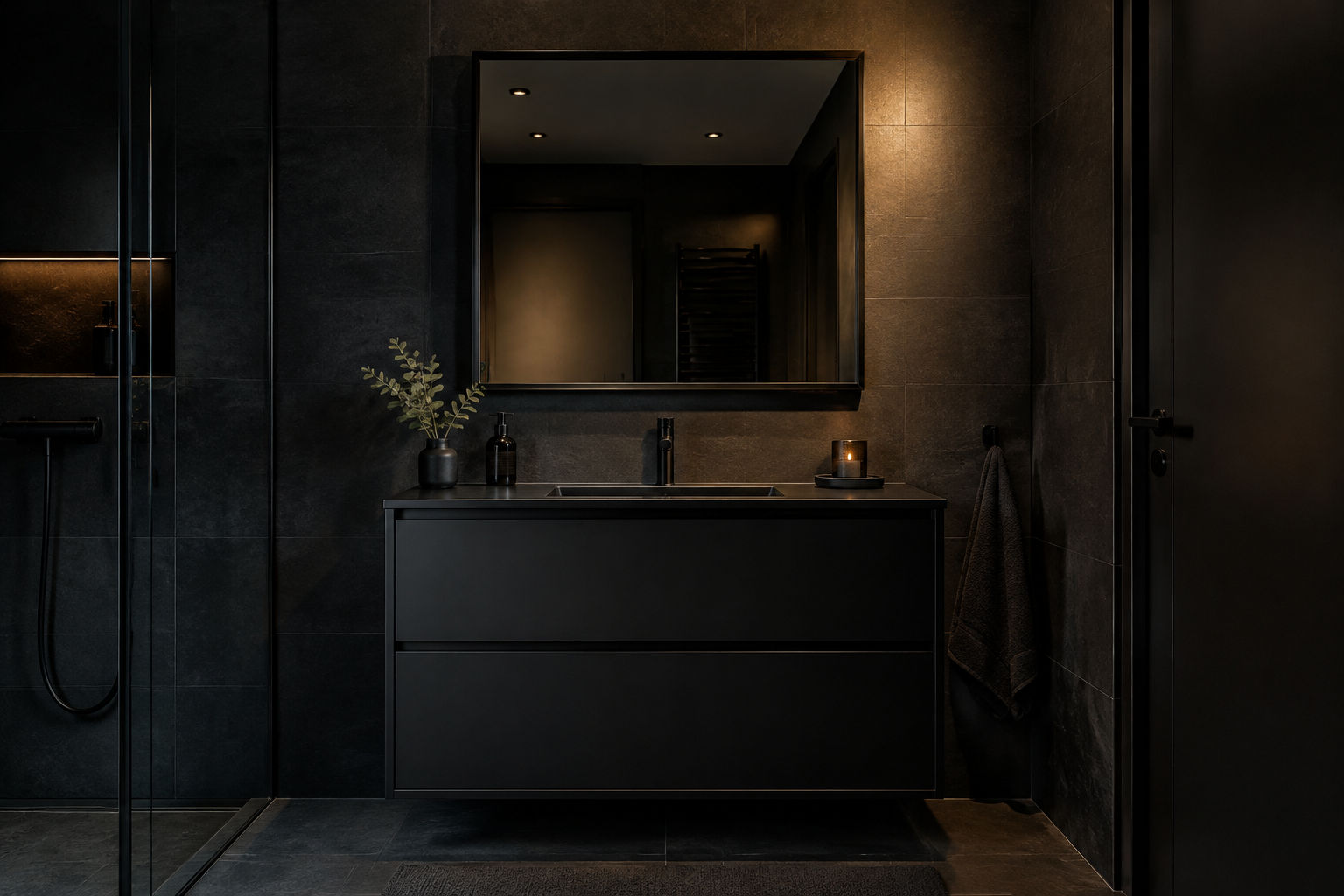
A square with a black frame makes a bathroom feel resolved rather than decorated. The shape is honest and the colour disappears.
Use it above a black vanity in a dark tiled room. The mirror then becomes the only light object on the wall.
Matte finishes hide water marks better than polished ones. Wipe the frame rather than the glass and it will keep a flat, even look.
- MountingWall hung
- LightingCeiling downlights
- MaterialMatte black alloy
Chunky White Oak Frame
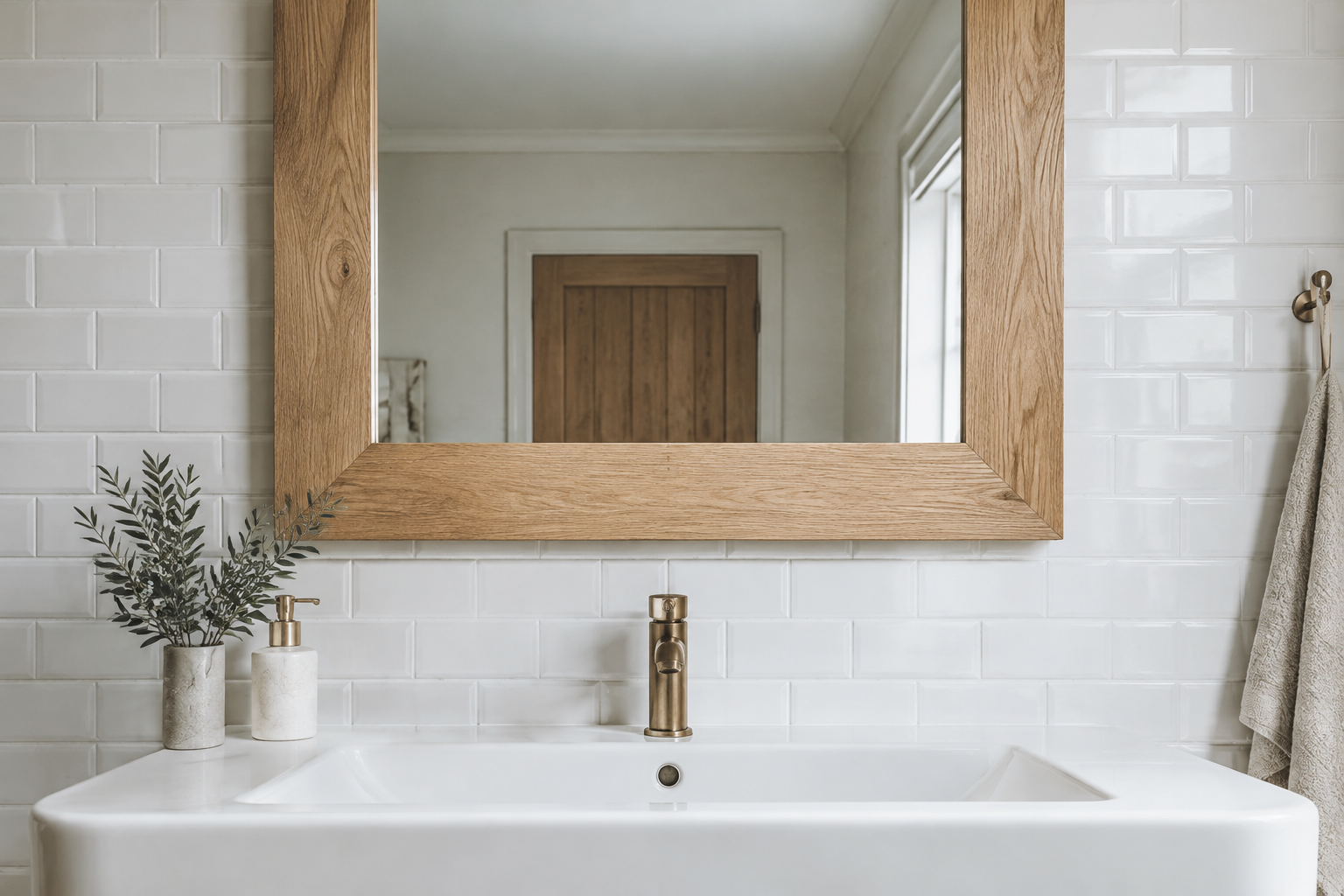
A thick oak frame adds warmth that tiles cannot provide. Oiled timber also softens sound in a room built from hard surfaces.
Choose a depth of at least four centimetres so the frame casts a real shadow. A shallow frame looks like a picture, not a mirror.
Repeat the same oak on a shelf or a stool. One timber tone across two objects is what makes a bathroom feel designed.
- MountingWall hung
- LightingAmbient only
- MaterialOiled white oak
Fluted Glass Border
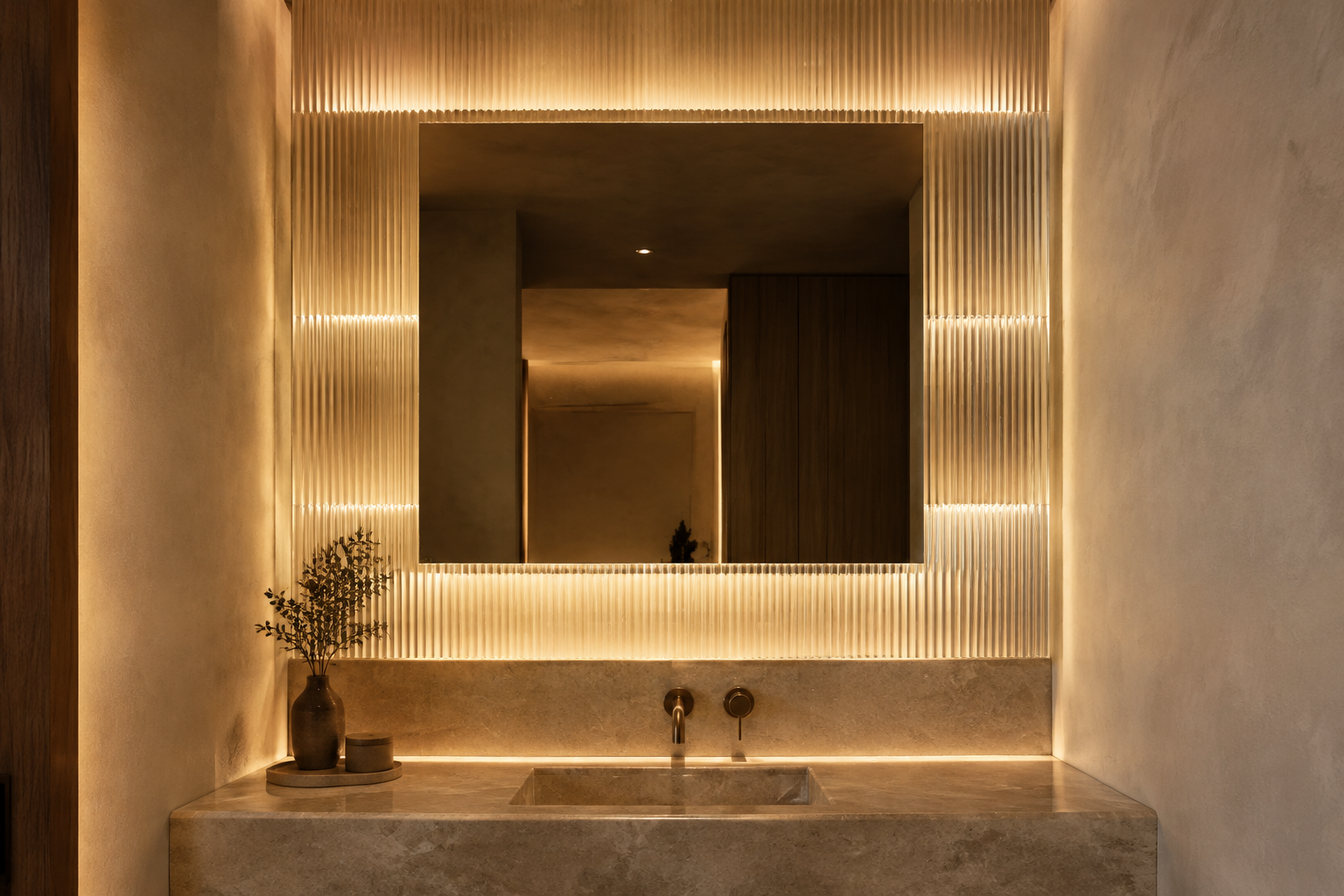
Fluted glass around a plain mirror adds texture without colour. It also blurs the wall behind so the border reads as light rather than material.
Set warm LEDs behind the flutes and the border becomes a gentle light source. This is the most forgiving way to light a face.
Keep the central mirror perfectly clear. Only the surround should be textured, or you will distort what you actually use.
- MountingWall hung
- LightingIntegrated LED
- MaterialFluted glass
Leather Strap Hang
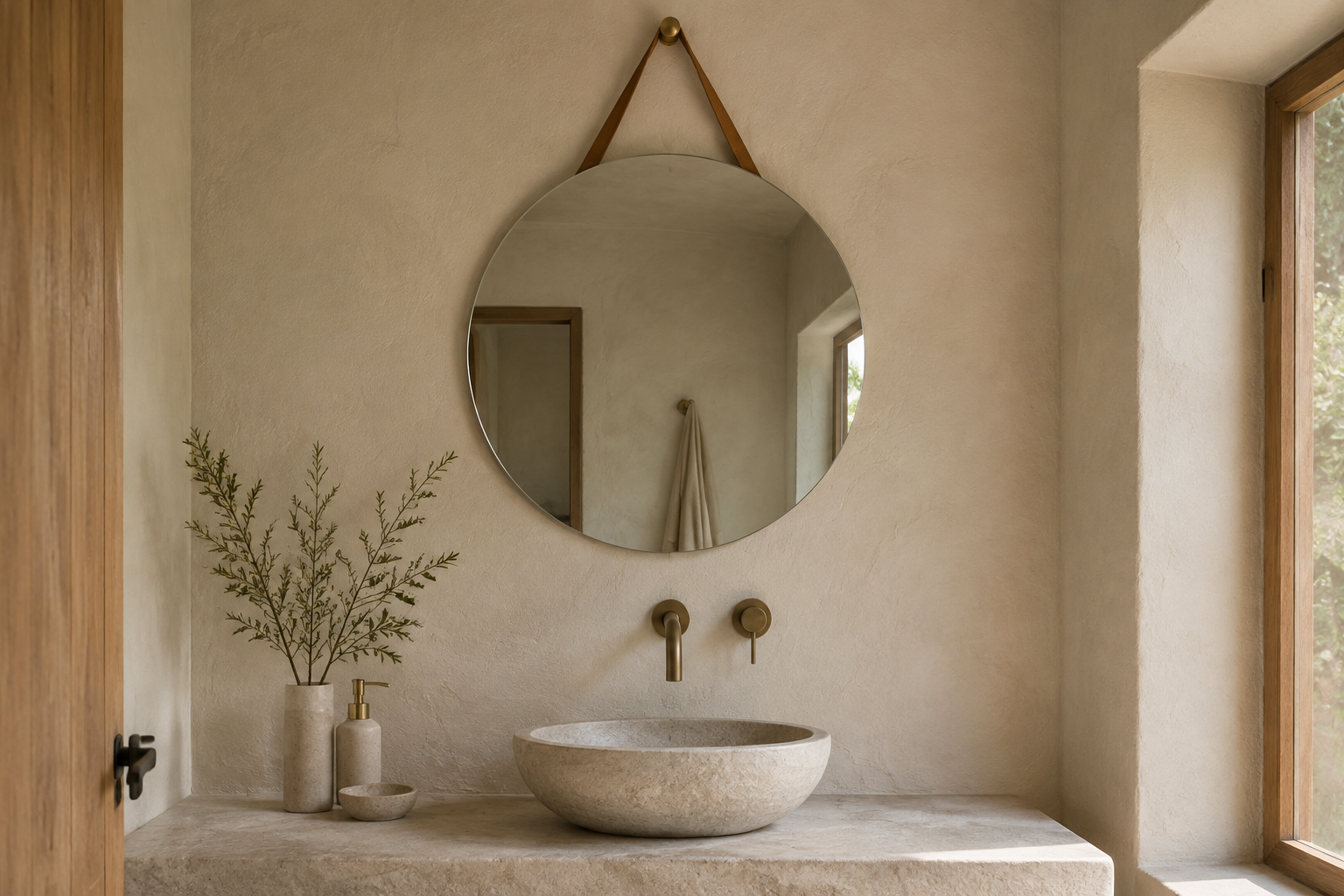
A leather strap turns a plain circle into a hanging object. The strap carries the weight and the brass stud becomes the ornament.
This works best on a plaster wall where the strap can sit flat. On tiles the leather will slide and mark the glaze.
Choose vegetable-tanned leather and expect it to darken. A strap that ages is better than one that looks new forever.
- MountingStrap hung
- LightingAmbient only
- MaterialTan leather, brass
Woven Rattan Round
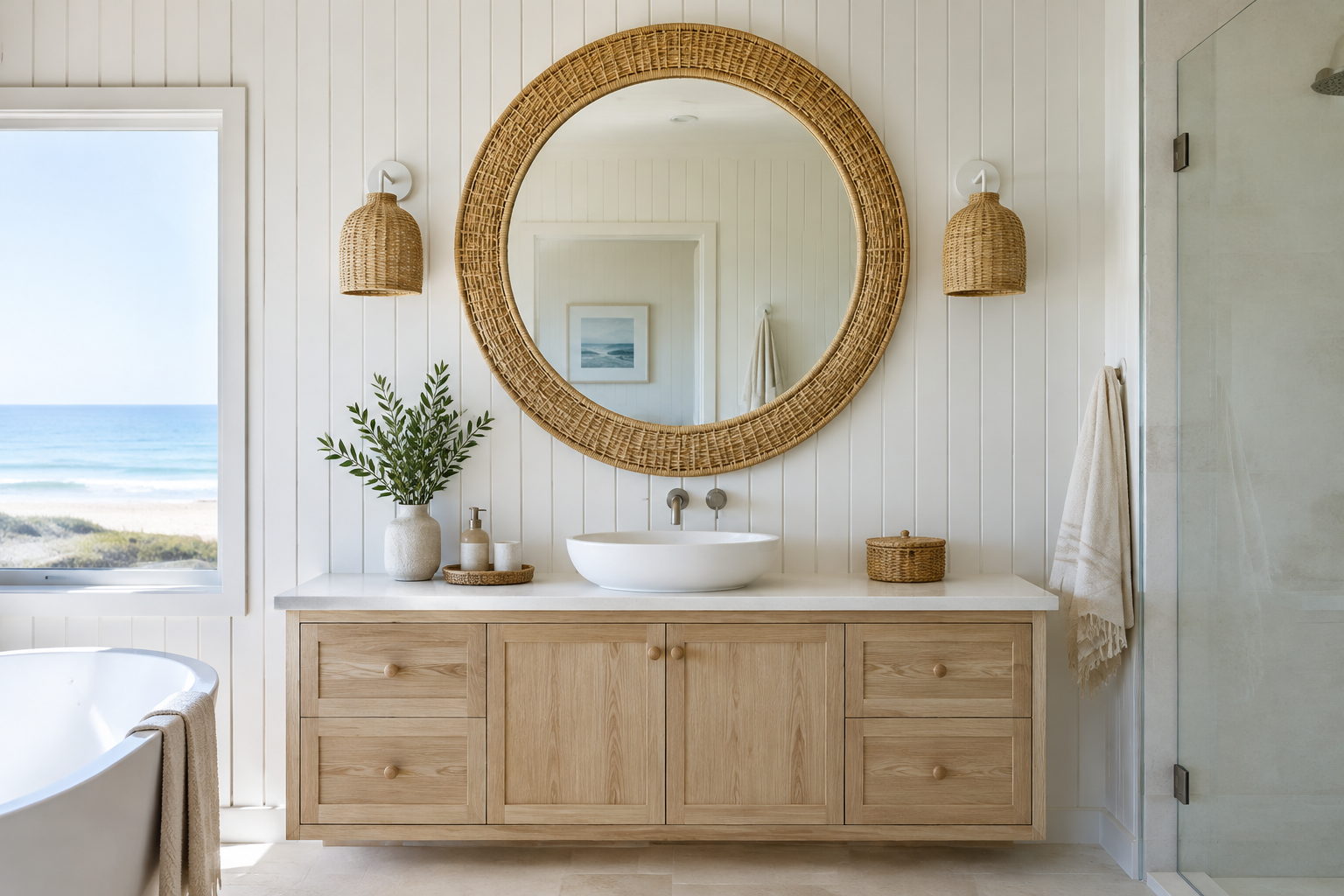
A rattan frame brings a coastal softness to a tiled room. The weave also breaks up hard reflections on a flat wall.
Keep the rest of the room white and timber so the texture leads. Rattan already carries enough visual noise.
Hang it away from direct spray. Natural fibres survive humidity but not daily soaking, so give it thirty centimetres of air.
- MountingWall hung
- LightingAmbient only
- MaterialWoven rattan
Reclaimed Barnwood Frame
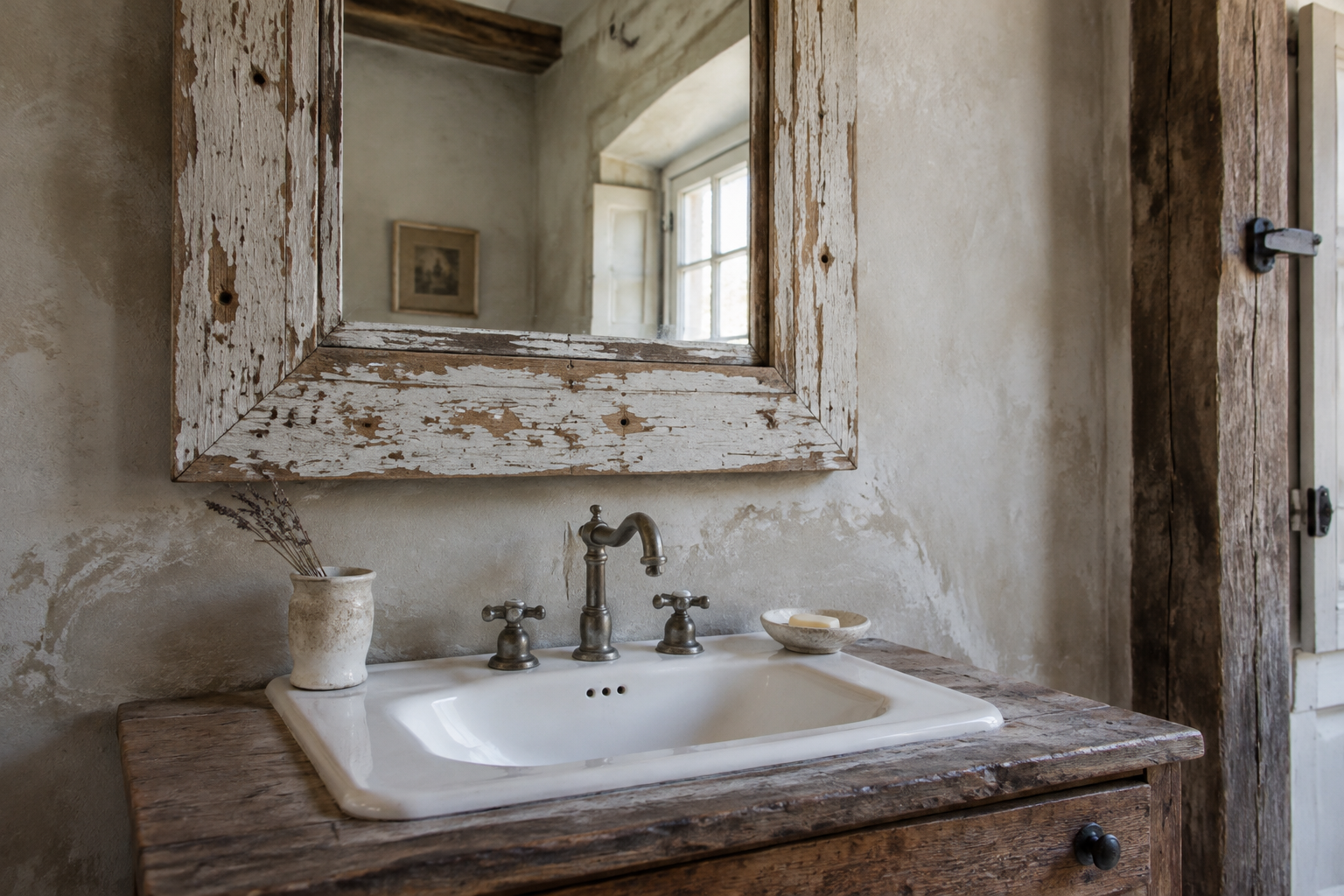
Old barnwood carries marks that new timber cannot copy. Chipped paint and old nail holes give a bathroom instant history.
Keep the basin and tiles clean and modern so the frame does the talking. Two rustic elements together look themed.
Seal the timber with a matte oil before hanging. Old wood absorbs moisture quickly and will swell without protection.
- MountingWall hung
- LightingAmbient only
- MaterialReclaimed pine
Cast Concrete Frame
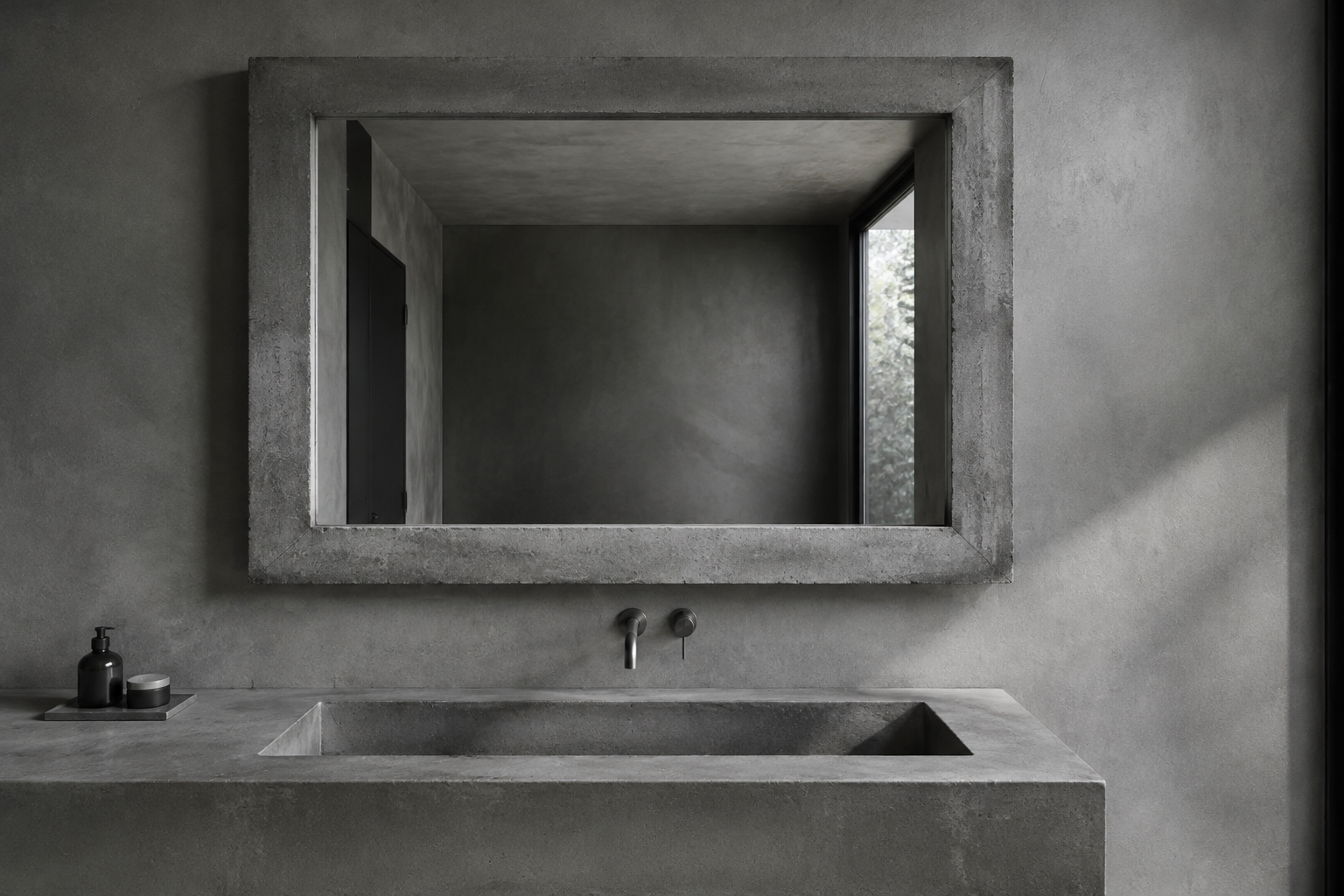
A concrete frame makes the mirror feel built rather than bought. The visible pour texture is the point, so choose a frame with slight variation.
Concrete is heavy, so the wall must be sound and the fixing rated for stone. Plan the mount before you fall in love with the frame.
Pair it with softer materials like linen and timber. Concrete alone can make a small room feel cold and unfinished.
- MountingHeavy-duty bracket
- LightingAmbient only
- MaterialCast concrete
Terrazzo Surround
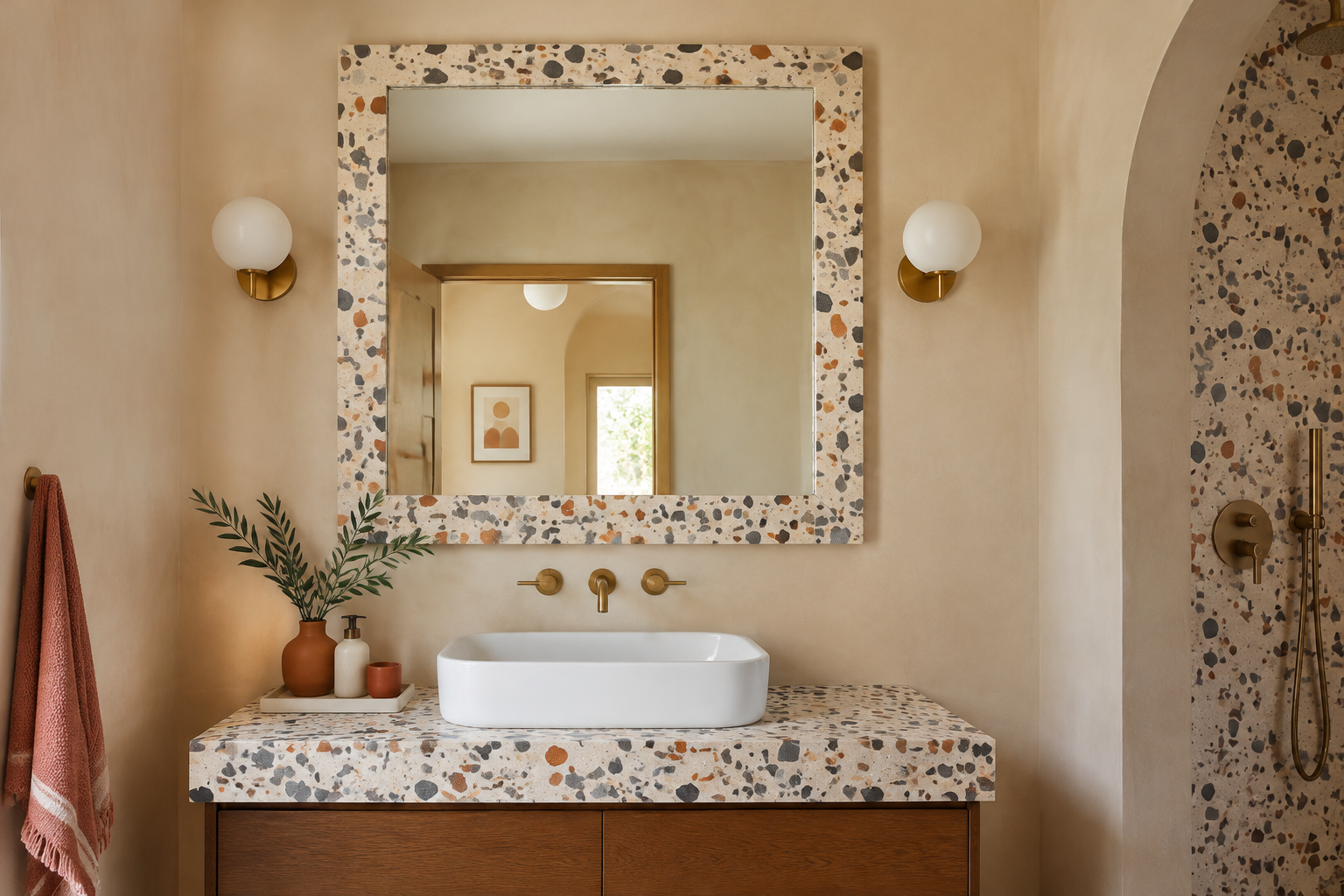
Terrazzo gives a mirror a speckled, playful border that suits modern family bathrooms. Small chips of colour lift a plain wall.
Match one chip colour to the tiles and another to the towels. That repetition is what makes the pattern feel intentional.
Keep the mirror itself frameless inside the surround. Two edges competing will make the whole wall busy.
- MountingWall hung
- LightingAmbient only
- MaterialTerrazzo composite
Light and Technology
Lighting turns a mirror into a tool. These eight ideas solve shaving, makeup and steam in one move.
Backlit LED Halo
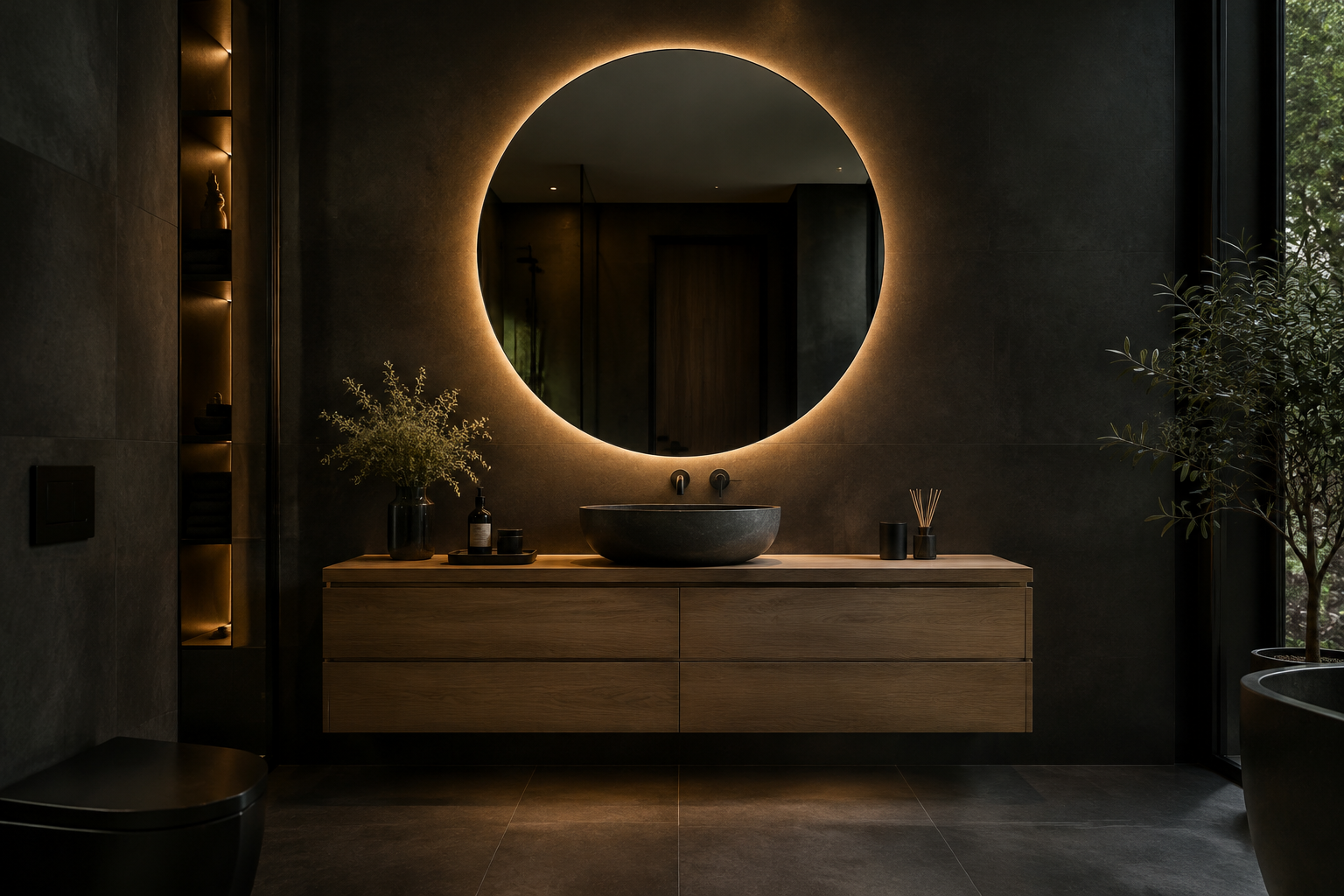
A hidden LED ring makes the mirror float off the wall. The glow also acts as night lighting so you stop switching on a harsh ceiling light.
Choose warm white around 3000K to keep skin tones natural. Cool white light makes a bathroom feel like a clinic.
Leave a gap of four to six centimetres behind the glass for the halo to spread. A tight gap produces a bright line instead of a wash.
- MountingWall hung
- LightingBacklit 3000K
- MaterialFrameless glass
Front-Lit with Demister
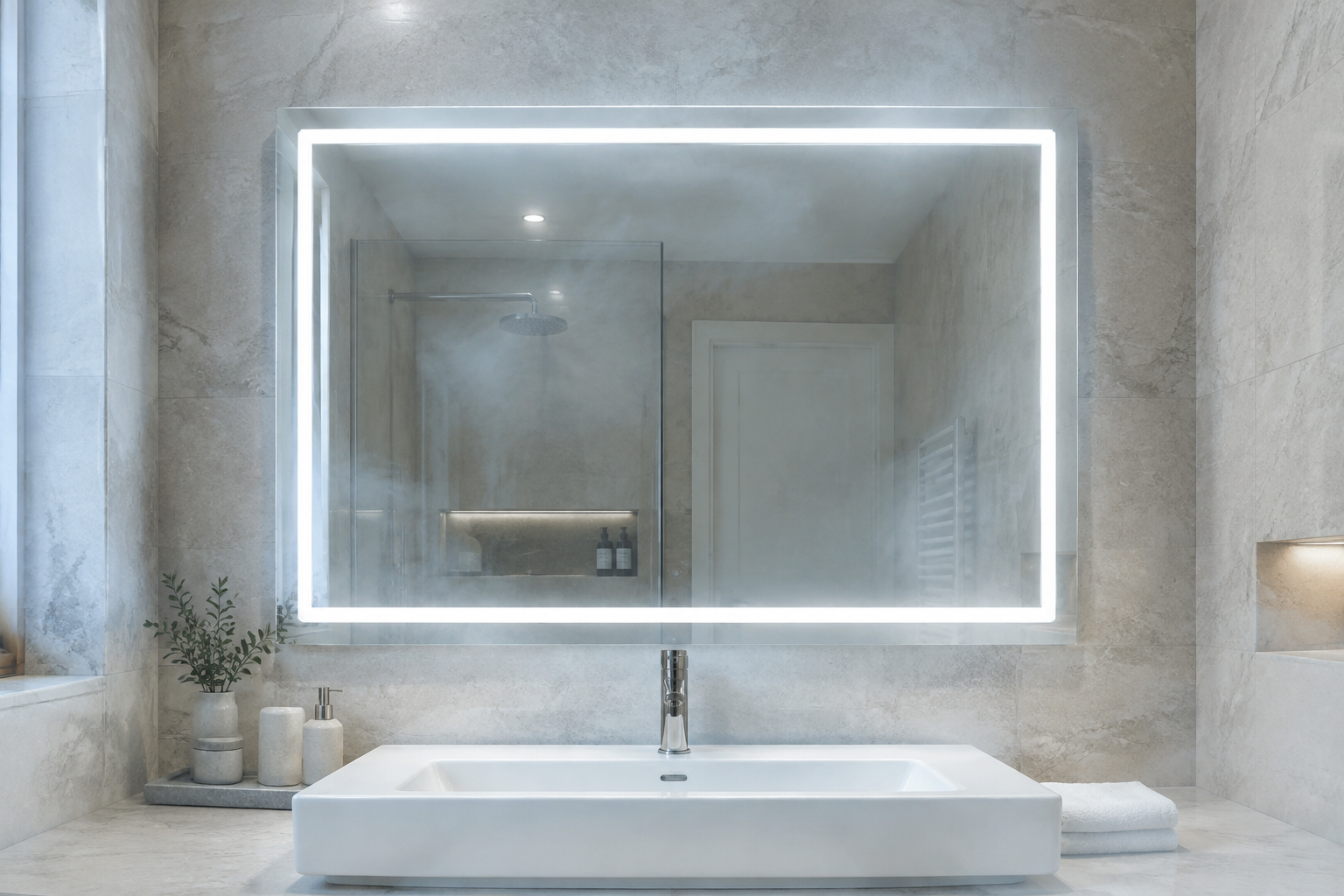
Front-facing light strips illuminate the face instead of the wall. That difference is what stops shadows falling under your eyes while you shave.
A built-in demister pad keeps the centre clear through a hot shower. Look for a pad that covers at least half the glass.
Run the demister on a separate switch from the light. You rarely need both at once, and it saves power.
- MountingWall hung
- LightingFront LED + demister
- MaterialSilvered glass
Smart Touch Panel
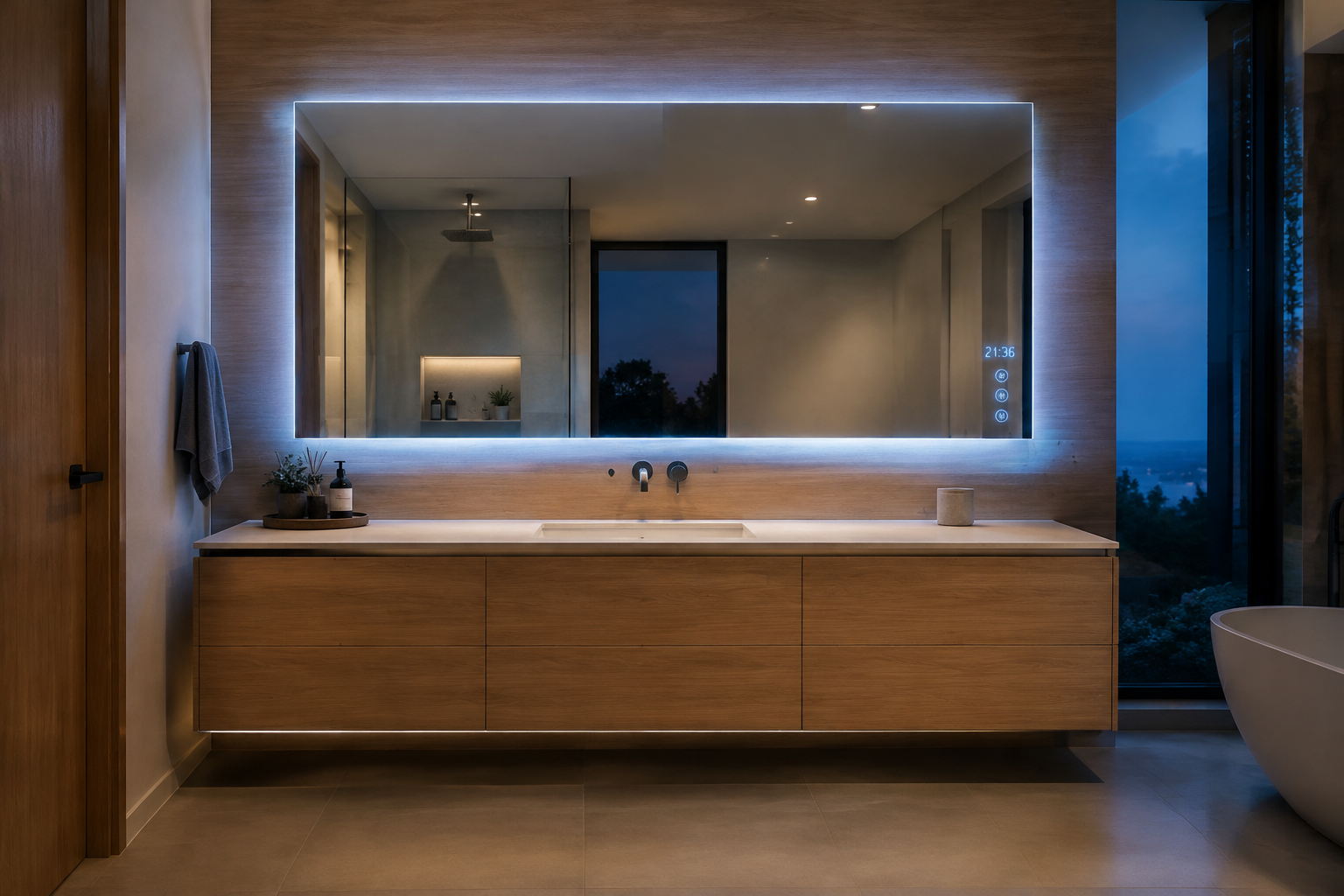
A touch mirror puts the clock, the weather and the light control on the glass itself. It removes clutter from the counter.
Keep the icons small and dim. A bright display in a dark bathroom at night is worse than no display at all.
Choose a model that remembers its brightness. Otherwise you will reset the level every morning after a power cut.
- MountingWall hung
- LightingIntegrated LED
- MaterialSmart glass panel
Sconces Through the Glass
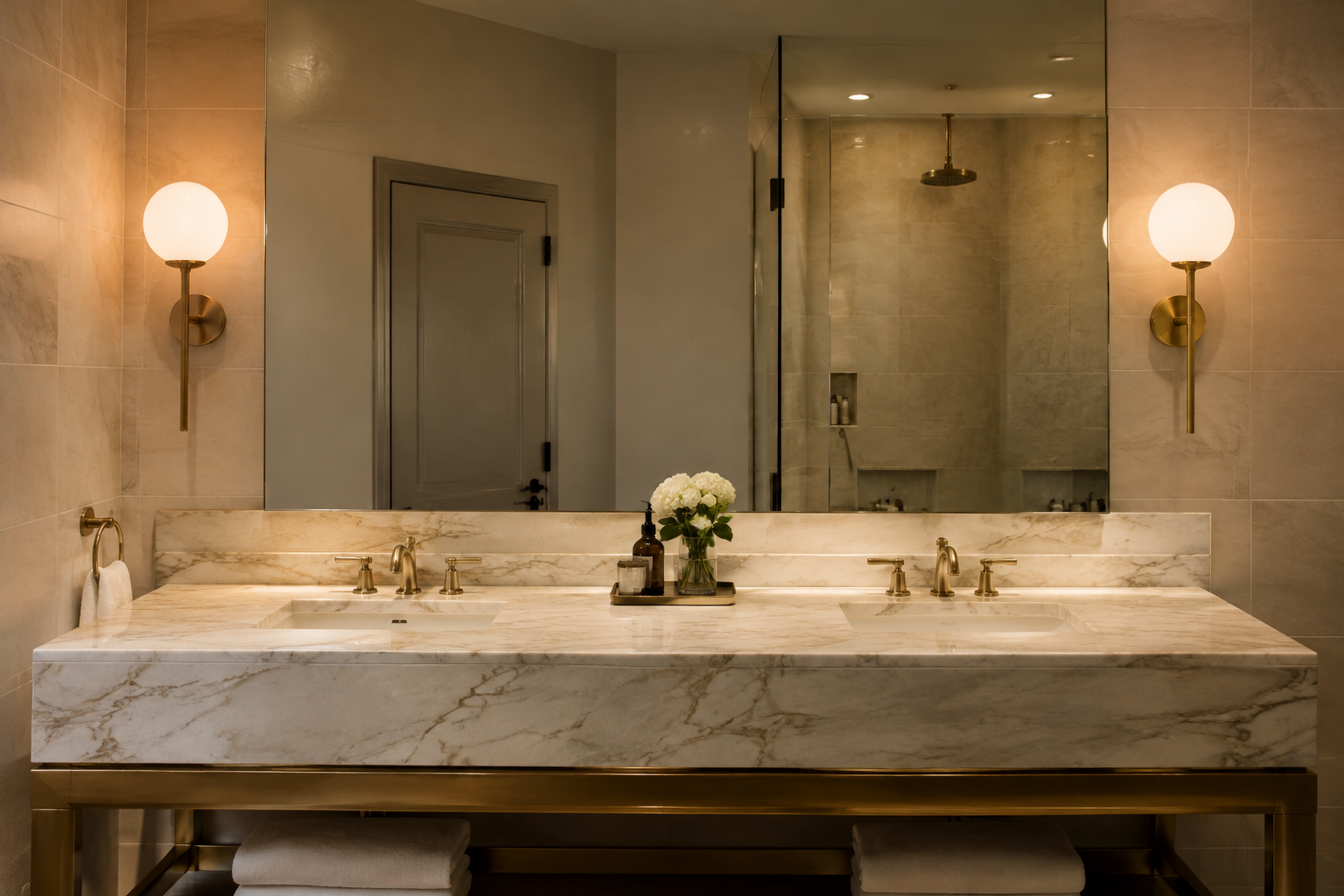
Mounting sconces through the mirror creates one continuous lit surface. There is no gap between the light and the reflection.
This needs a mirror drilled before tempering, so order the hardware first. It cannot be changed once the glass is made.
Use two globes at eye height on either side of your face. Lighting from above alone will shade the jawline.
- MountingWall hung, drilled
- LightingGlobe sconces
- MaterialFrameless glass, brass
Shower Niche Mirror
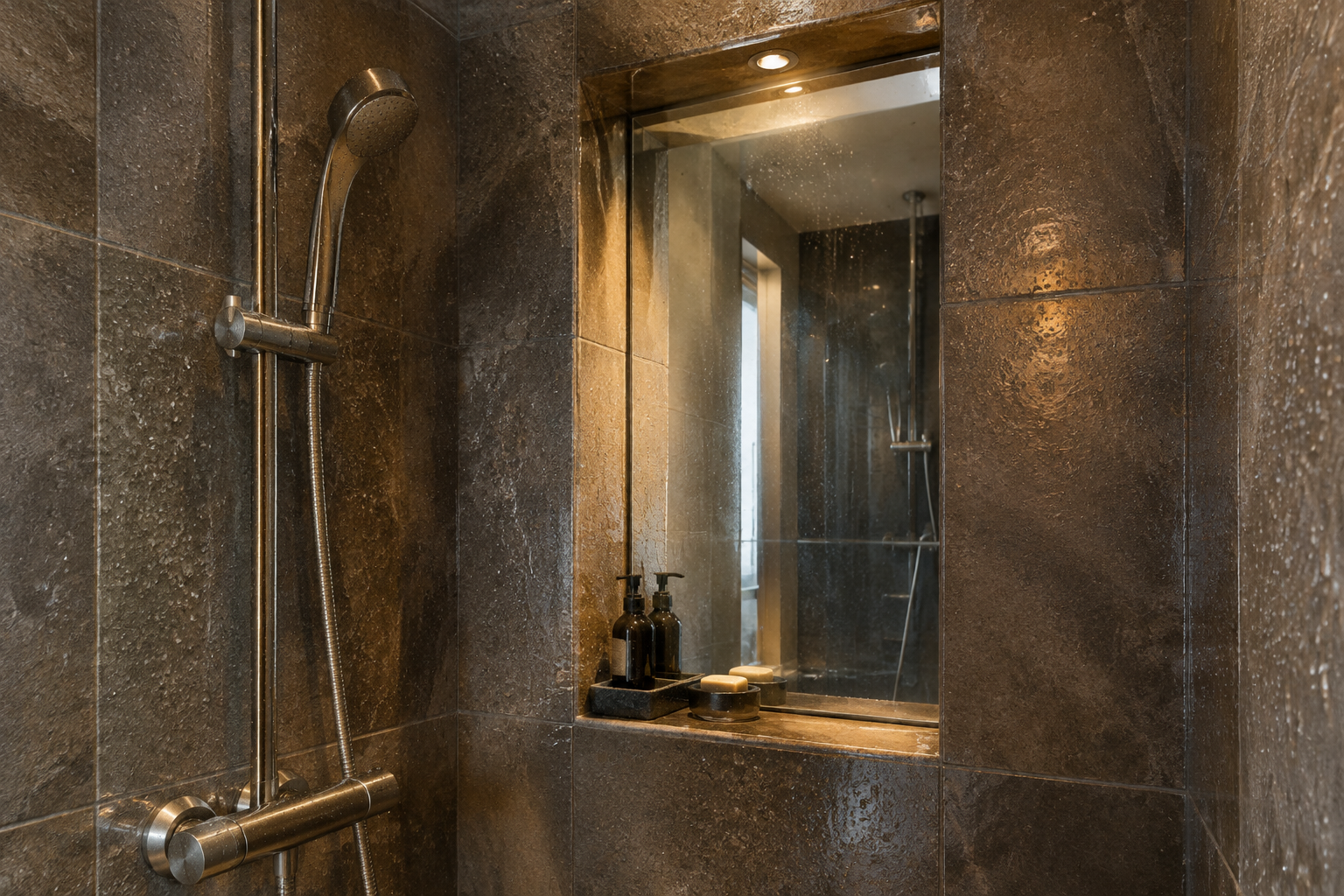
A small fog-free mirror inside the shower removes the need to step out for a shave. It also makes a dark wet zone feel open.
Use a demisting model rated for wet areas and seal the edges fully. Shower mirrors fail at the perimeter, not the centre.
Keep it small, around thirty centimetres. A large mirror in a shower will show every water mark.
- MountingNiche mounted
- LightingDemisting, IP rated
- MaterialSealed float glass
Warm Dim-to-Glow
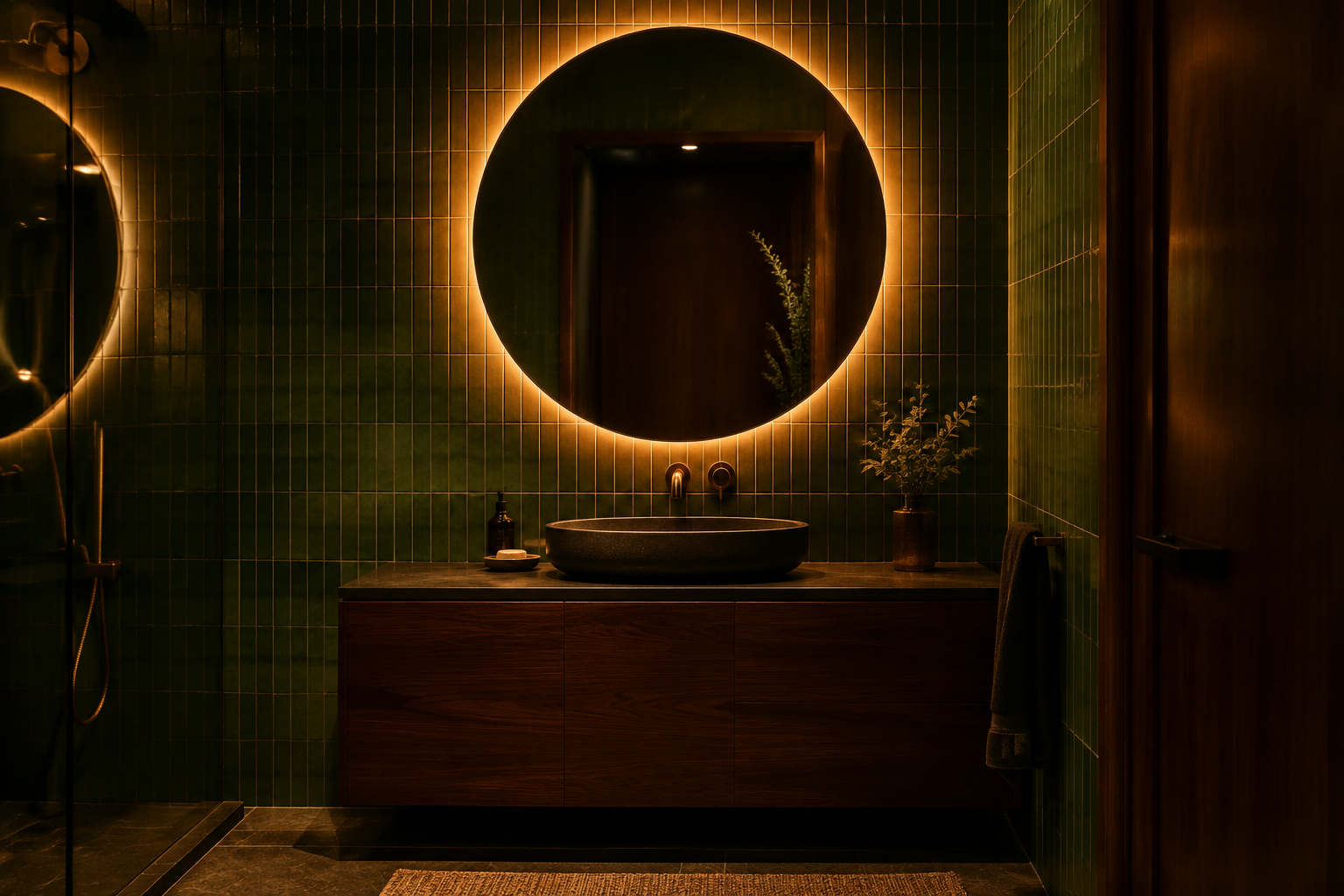
A very warm dimmable glow turns the mirror into evening lighting. At low output it works as a night light for the whole room.
Set the lowest level to about ten percent. Anything brighter will wake you up when you only want water at two in the morning.
Use it against a dark wall and dark timber. Warm light on dark surfaces looks calm, while on white it looks exposed.
- MountingWall hung
- LightingDimmable 2700K
- MaterialFrameless glass
Magnifying Inset
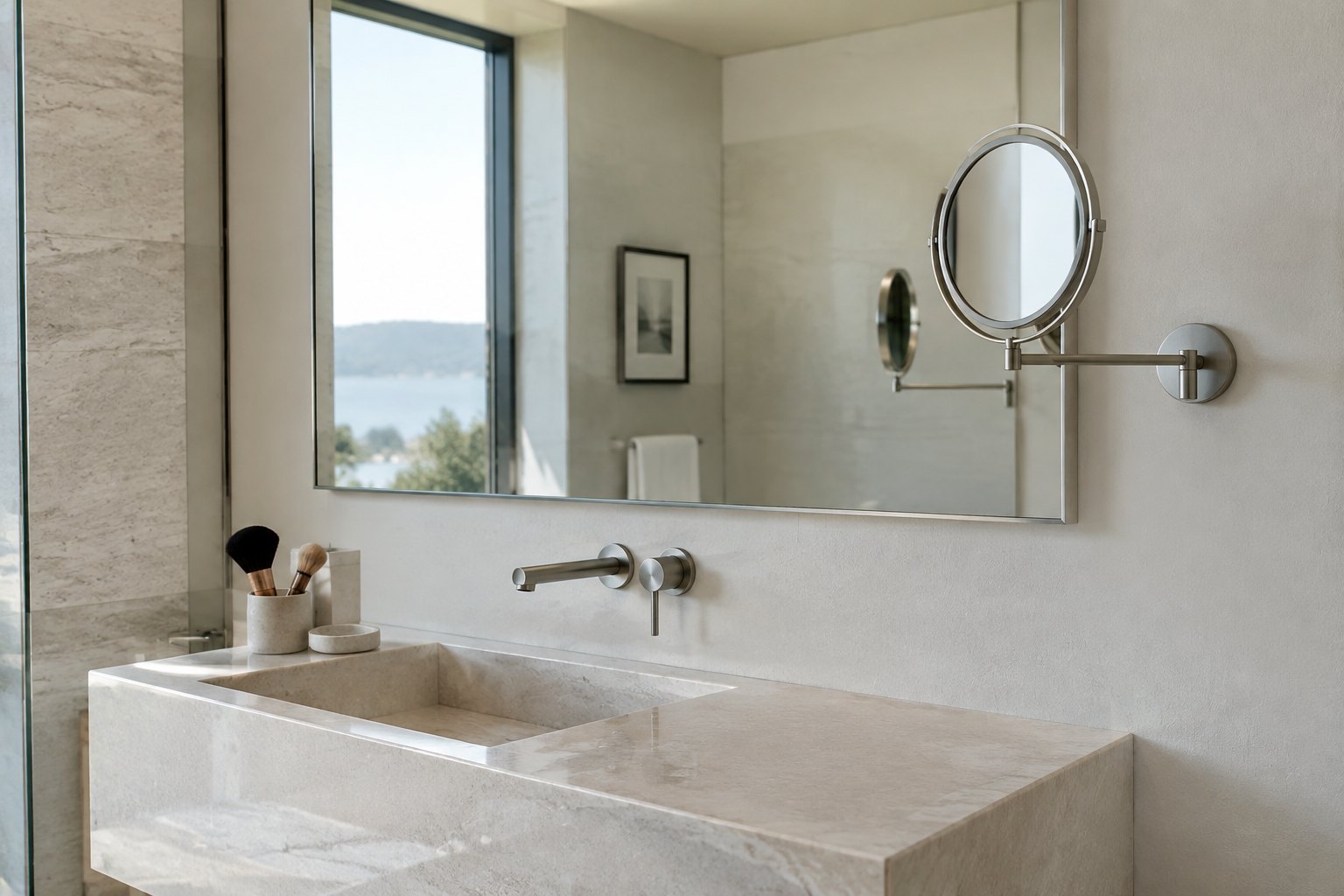
A small magnifying circle on an arm solves close work without a second mirror. It folds away when you do not need it.
Place it at chest height rather than face height. That keeps it out of the way of your normal reflection.
Choose five times magnification at most. Higher strengths are hard to use in a room that moves.
- MountingArticulated arm
- LightingAmbient only
- MaterialStainless, glass
Hidden Speaker Mirror
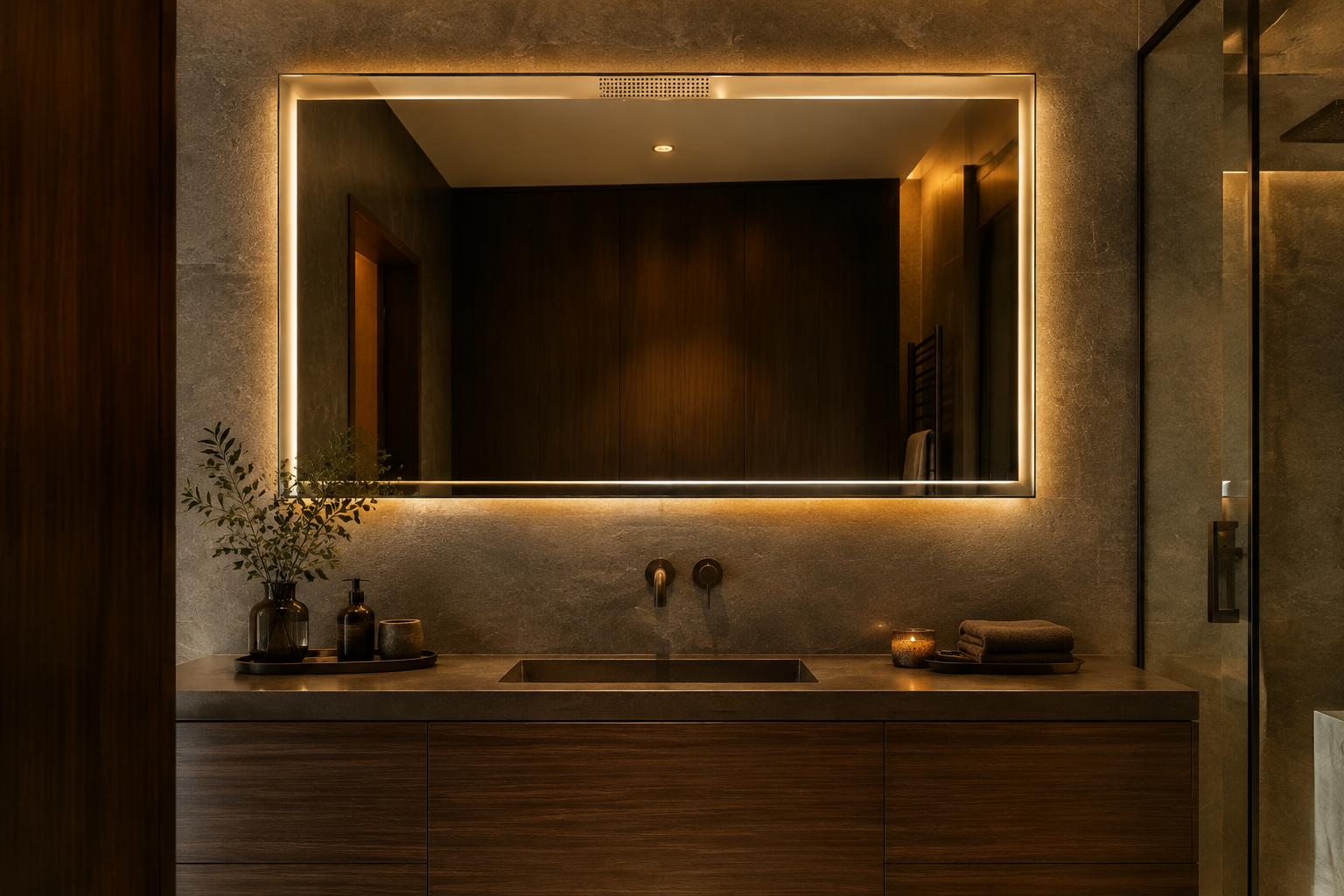
A mirror with a concealed speaker keeps music in the room without a visible box. The grille sits in the frame edge where nobody looks.
Check that the speaker is humidity sealed before buying. Bathroom steam destroys drivers that are not rated for it.
Keep the volume control physical as well as app based. Wet hands and touch screens are a poor combination.
- MountingWall hung
- LightingIntegrated LED
- MaterialAluminium frame
Layout Playbook
Where the mirror sits matters more than what it is made of. These nine layouts fix awkward walls and narrow rooms.
Floor-Length Leaner
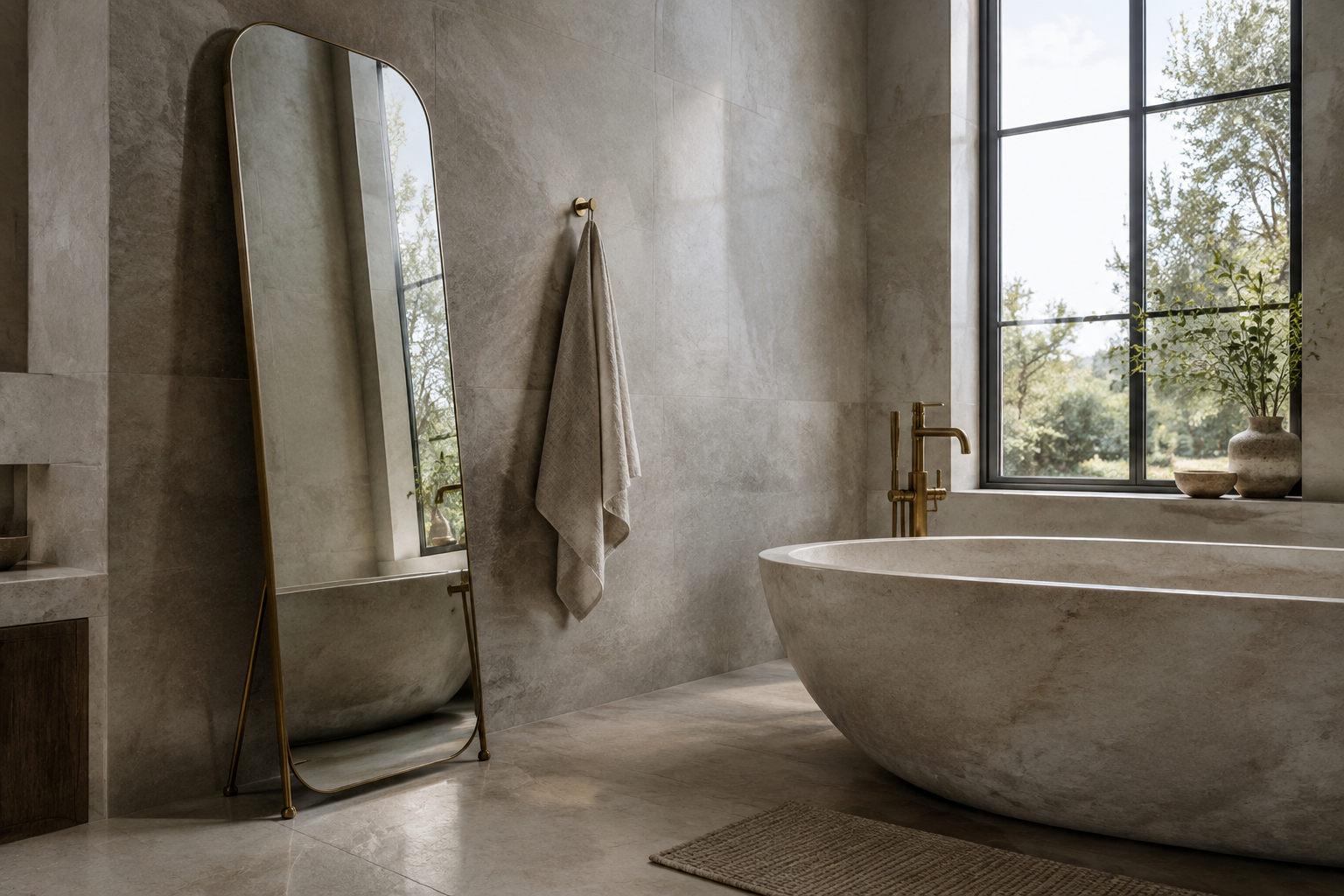
A tall mirror leaning on the wall gives you a full-length view that a vanity mirror cannot. It also adds depth without any fixing.
Use an easel base or a wall strap so a heavy mirror cannot tip. Leaning mirrors need a safety fixing in a home with children.
Place it beside a freestanding bath or a tall window. The reflection of daylight is what makes the room feel twice its size.
- MountingFloor leaner
- LightingAmbient only
- MaterialFrameless glass
Set Flush Into Tile
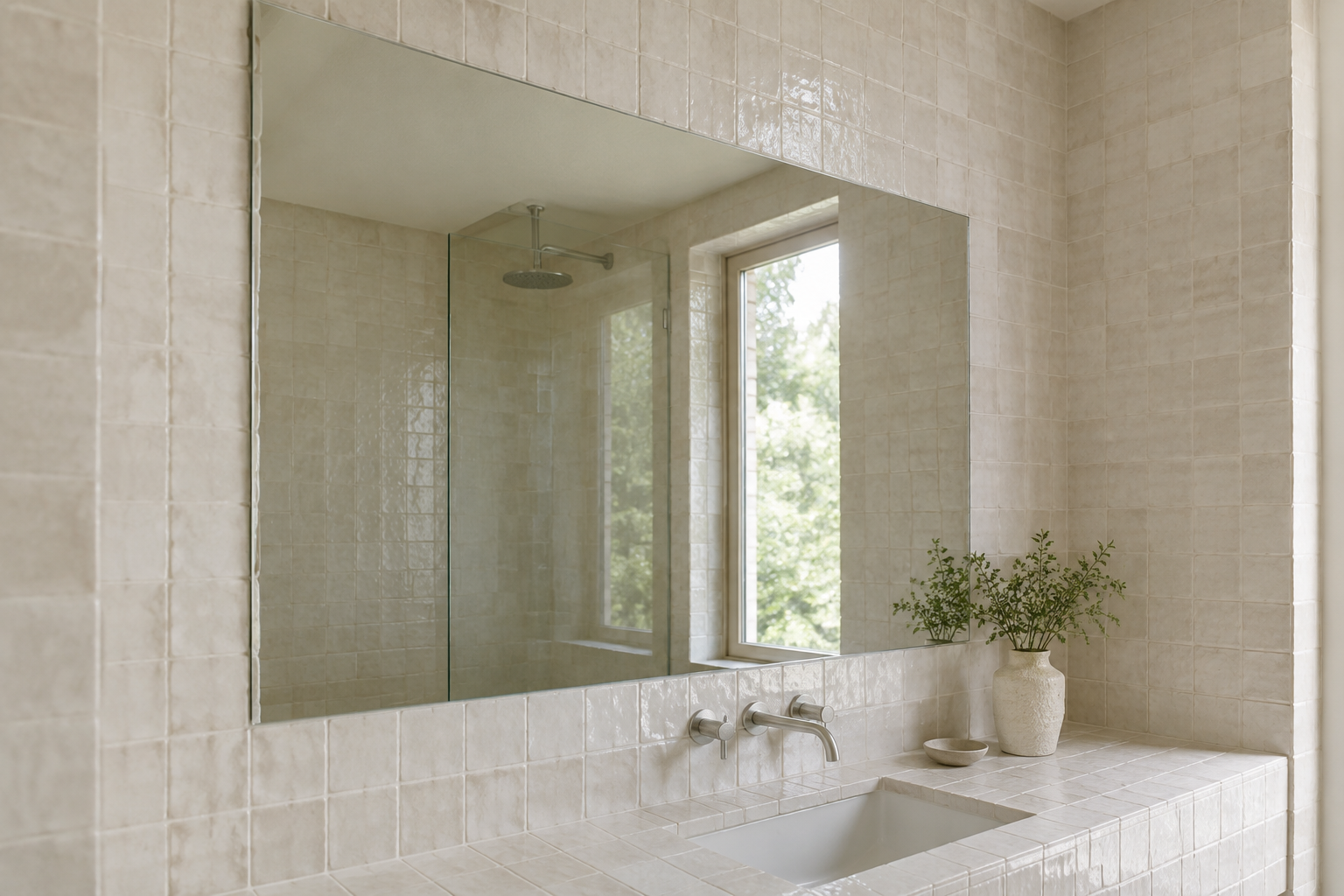
A mirror set level with the tile face looks like part of the wall. There is no edge to collect dust and no frame to interrupt the pattern.
This has to be planned before tiling so the wall can be recessed. It cannot be added later without removing tiles.
Use it with handmade or large-format tiles that are worth showing. A busy small tile will lose the effect entirely.
- MountingRecessed flush
- LightingCeiling downlights
- MaterialSilvered glass, tile
Mirror Above a Stone Ledge
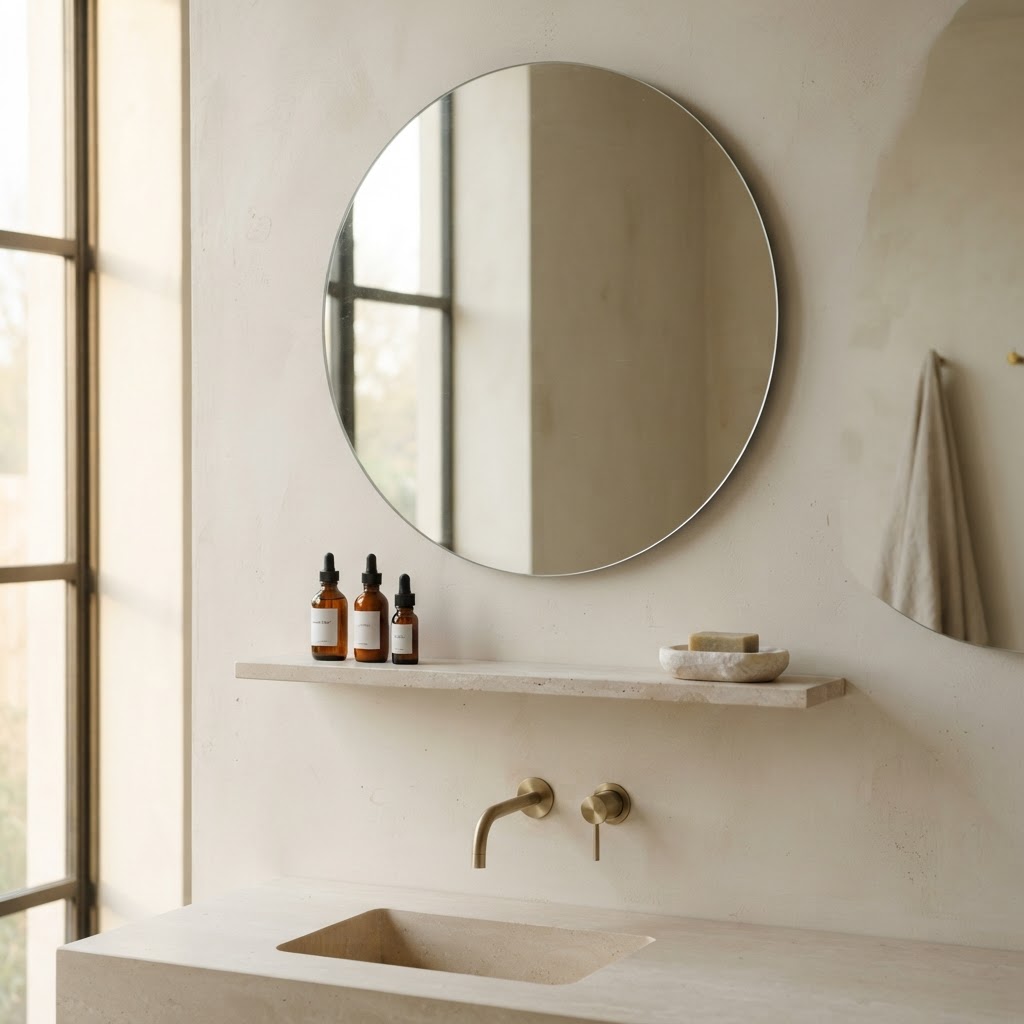
A stone ledge under the mirror gives the eye a line to rest on. It also keeps bottles off the counter and away from the tap.
Cantilever the ledge without visible brackets so it reads as carved from the wall. Visible supports will kill the effect.
Keep the ledge narrow, around fifteen centimetres. A deep shelf turns into clutter within a month.
- MountingWall hung
- LightingAmbient only
- MaterialStone, plaster
One Wide Mirror, Two Sinks
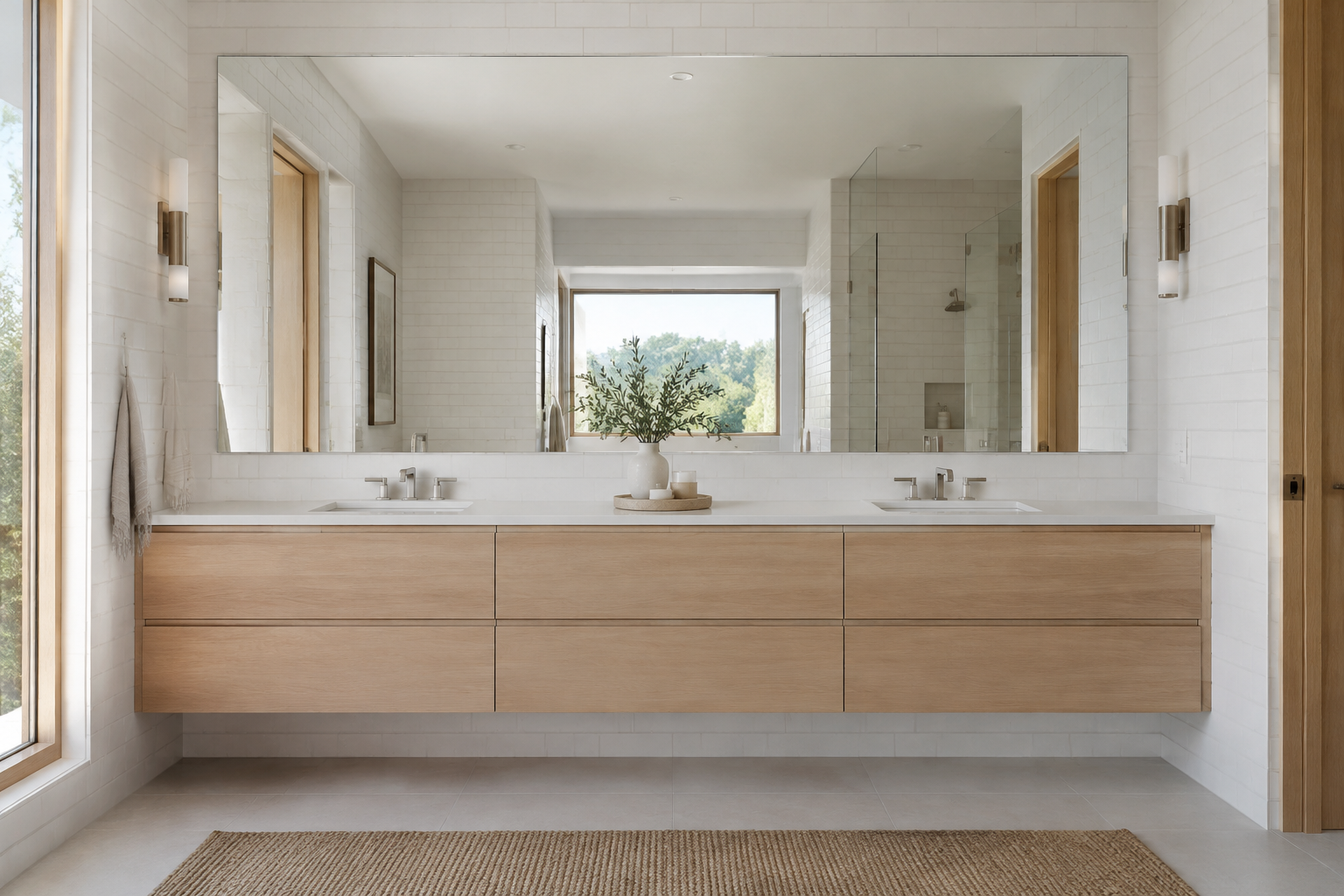
One wide mirror across a double vanity looks calmer than two separate ones. It also reflects more of the opposite wall, which makes the room feel bigger.
Light it from the sides rather than the middle so both people get even light. A single centre light will shade one side of each face.
Keep the mirror edge inside the vanity edge on both sides. Overhang makes a long wall look unbalanced.
- MountingWall hung
- LightingTwin side sconces
- MaterialFrameless glass
Trio Grid
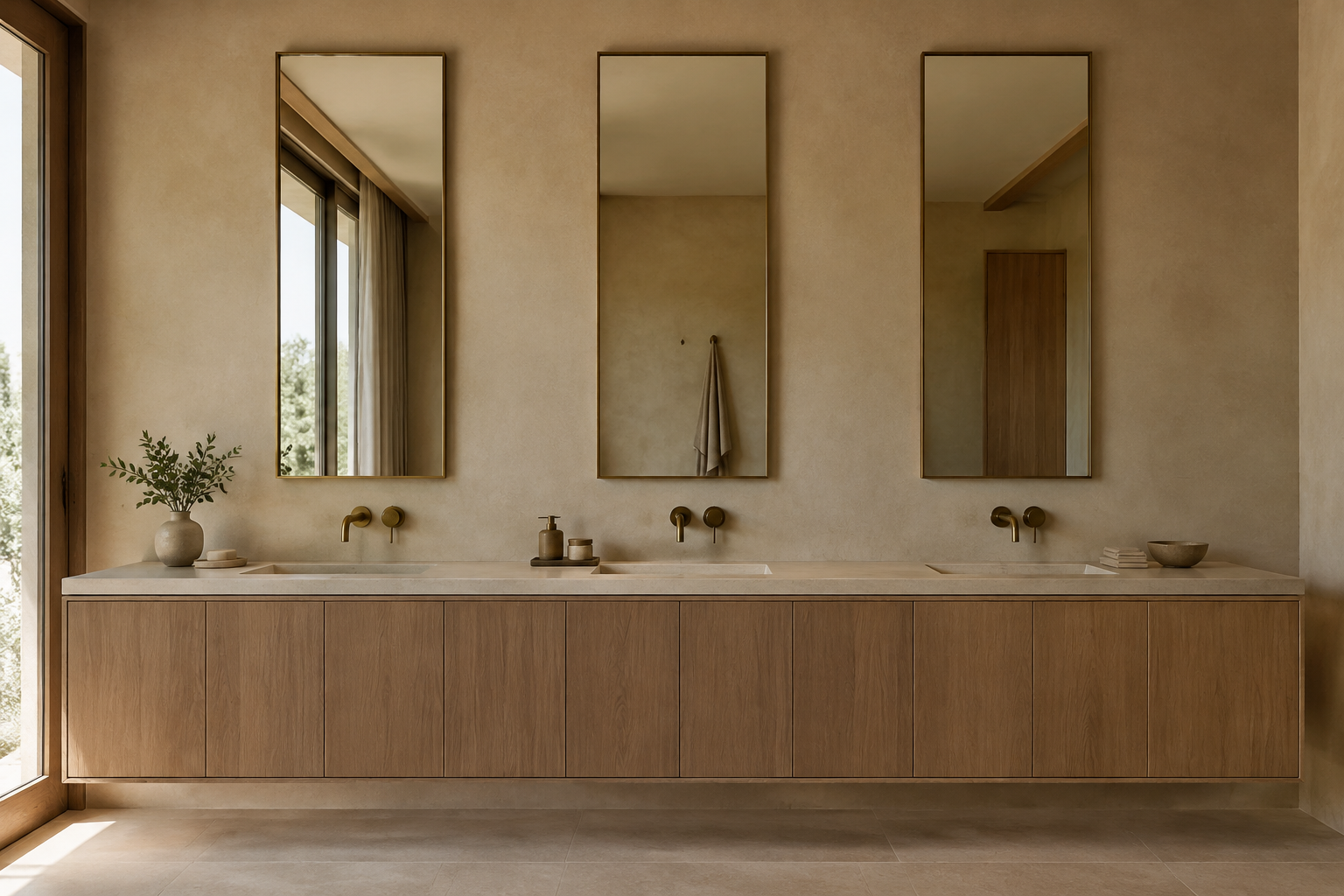
Three matching mirrors in a row create a rhythm that a single pane cannot. The gaps let the wall show through as vertical stripes.
Space the mirrors evenly and align their centres with the basins. Irregular spacing reads as a mistake, not a design.
This suits a long vanity in a narrow room. Three narrow shapes add height without demanding width.
- MountingWall hung trio
- LightingThree sconces
- MaterialSlim brass frames
Asymmetric Cluster
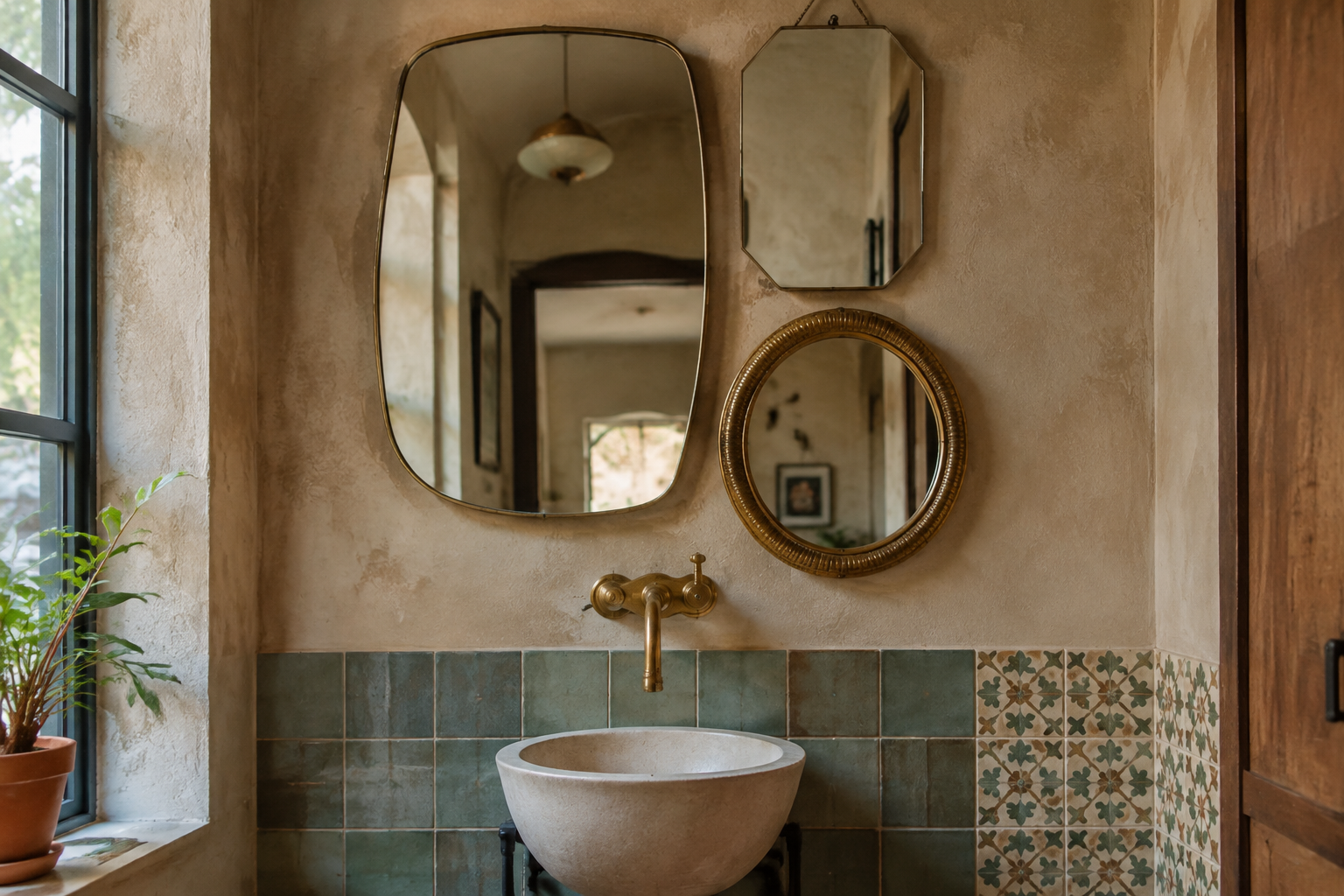
Mixing three mirrors of different sizes turns a plain wall into a collected arrangement. It suits rooms that are already a little eclectic.
Keep every frame the same material and the cluster will still read as one object. Different metals will make it look accidental.
Lay the shapes out on the floor first. Paper templates taped to the wall are the fastest way to avoid eighteen holes.
- MountingWall hung cluster
- LightingAmbient only
- MaterialMixed, one metal
Mirrored Medicine Cabinet
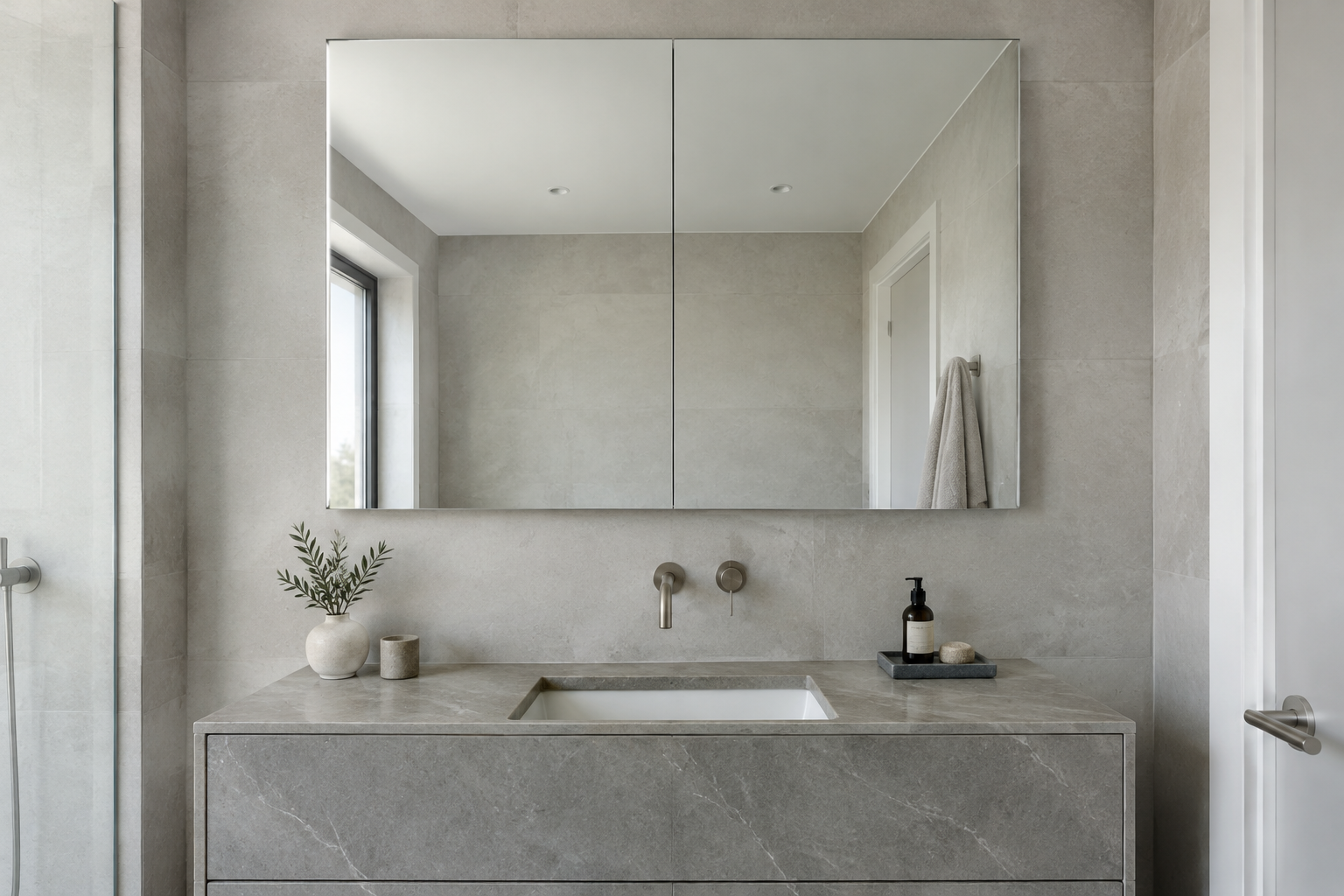
A mirrored cabinet hides storage inside the reflection. The mirror does two jobs and the wall stays flat.
Choose a push-open door so there is no handle breaking the surface. Soft-close hinges matter more than they sound.
Recess it if the wall allows. A protruding cabinet above a small basin will crowd your head.
- MountingRecessed cabinet
- LightingAmbient only
- MaterialMirrored steel
Pivot Arm Mirror
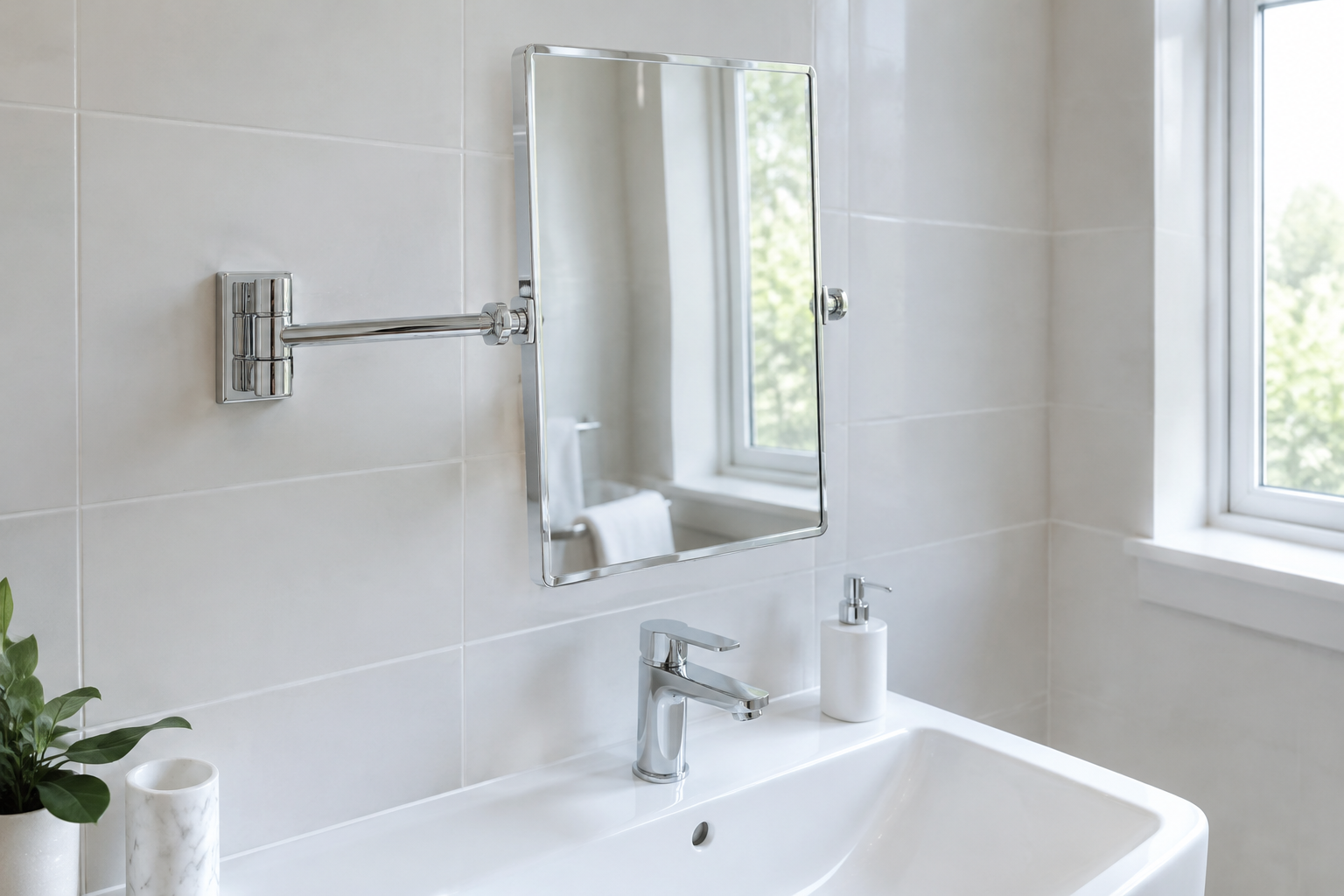
A mirror on a pivot arm can be pushed back when you are not using it. That flexibility suits a basin shared by two very different heights.
Choose a solid arm with a tension screw rather than a friction joint. Friction joints loosen quickly in a humid room.
Fix the arm into timber blocking, not just plasterboard. A wet mirror is heavier than it looks.
- MountingPivot arm
- LightingAmbient only
- MaterialChrome, glass
Mirror in an Arched Niche
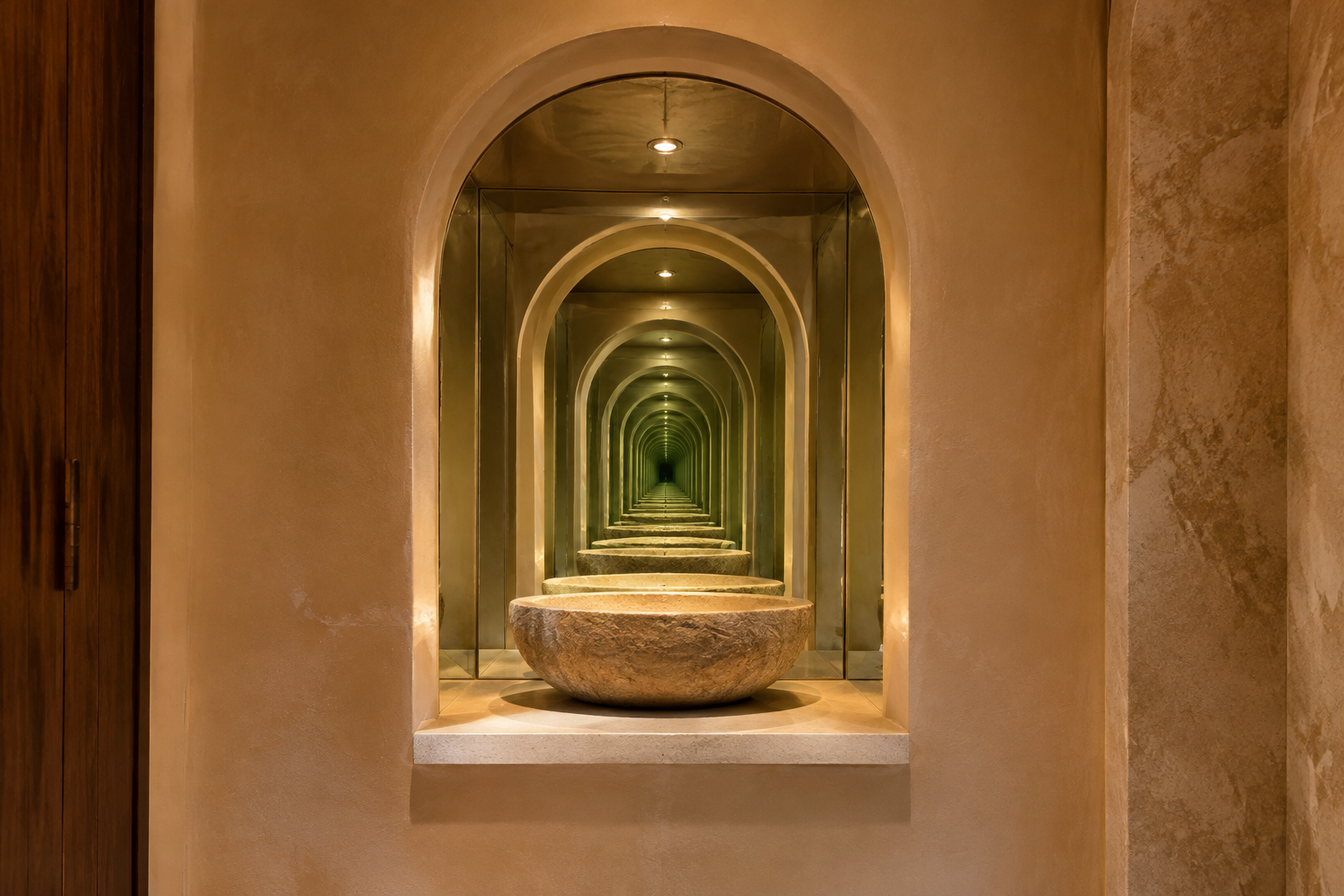
Lining an arched niche with mirror makes a shallow recess look deep. The arch repeats into itself and the wall becomes softer.
This works best below a window where the light can reach inside. A dark corner will just look like a hole.
Keep the niche shallow, at around ten centimetres. Deep mirror boxes look like cupboards.
- MountingRecessed niche
- LightingWarm niche LED
- MaterialMirror-lined plaster
Texture and Vintage
Age and imperfection add warmth to a room built from hard, new surfaces.
Foxed Mercury Glass
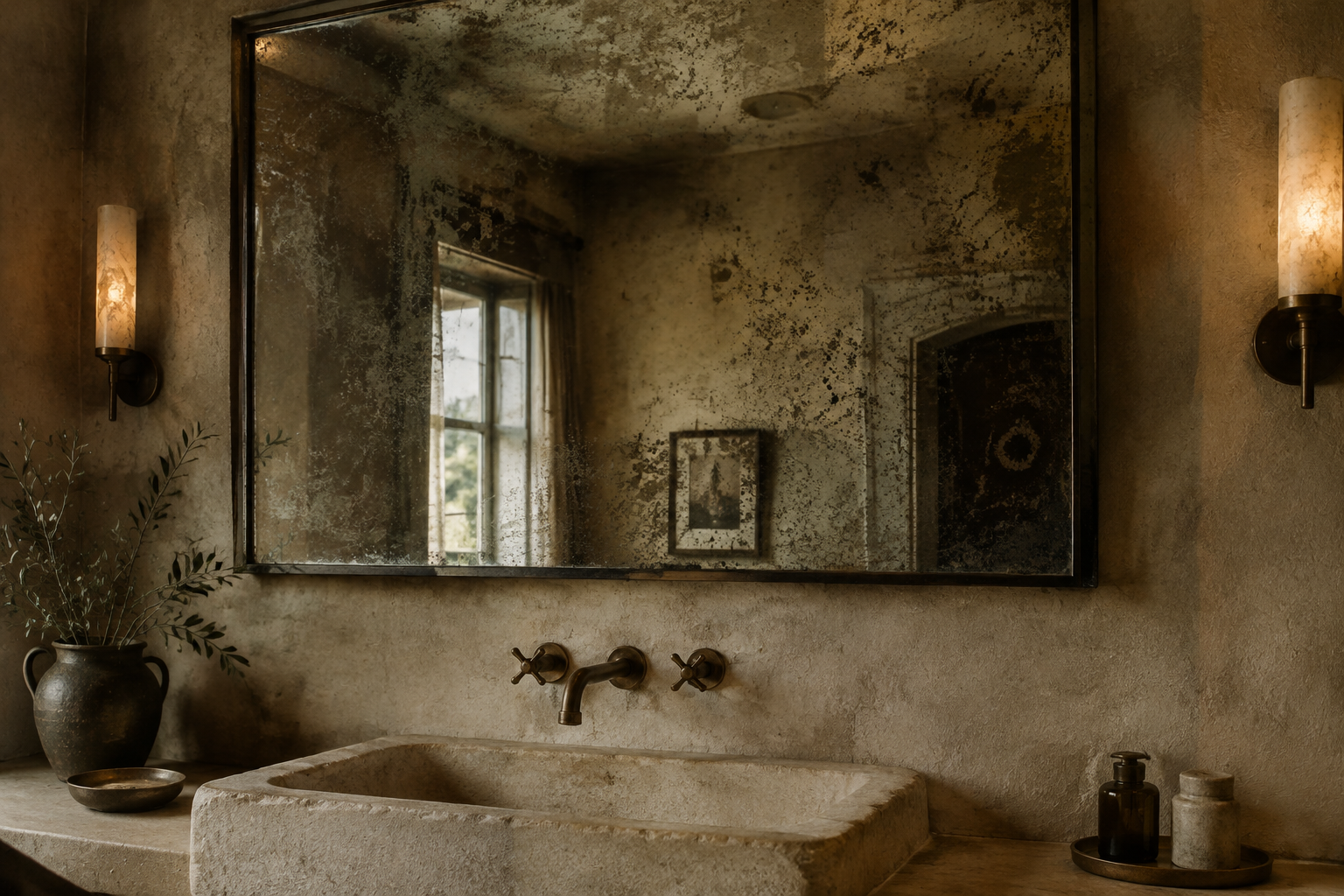
Antique glass with cloudy spots and dark edges gives a bathroom instant age. The imperfection hides water marks that would show on new glass.
Buy from a dealer who photographs the actual piece. Foxing varies wildly and two mirrors of the same size can look completely different.
Seal the back of old glass before hanging it in a wet room. Antique silvering fails quickly when moisture reaches the edge.
- MountingWall hung
- LightingAmbient only
- MaterialAntique mercury glass
Old Sash Window Frame
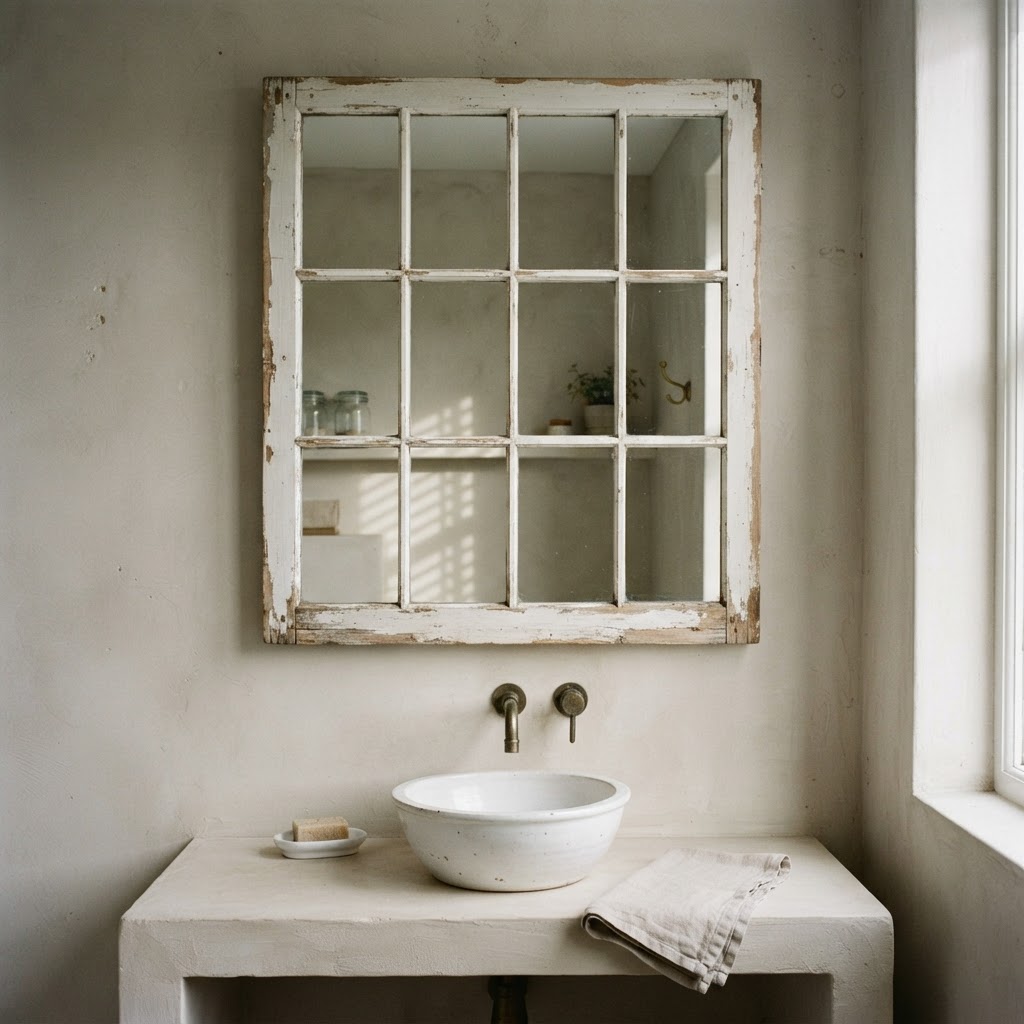
A reclaimed window frame becomes a mirror with history built in. The glazing bars divide the reflection into small, calm panels.
Keep the original paint and distress rather than stripping it. The chips are what make the piece worth hanging.
Replace the glass with new mirror cut to each pane. Old glass is too thin and uneven for a bathroom.
- MountingWall hung
- LightingAmbient only
- MaterialReclaimed timber
Shou Sugi Ban Frame
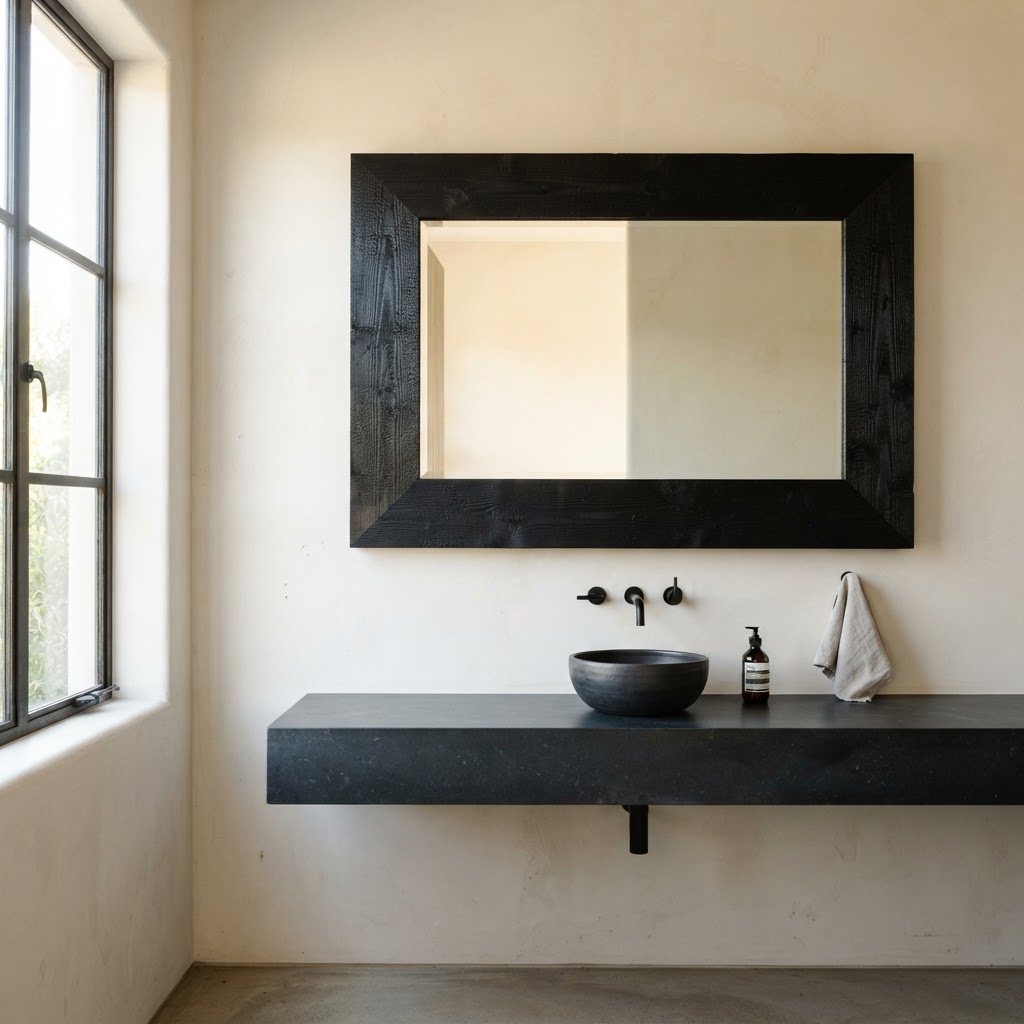
Charred cedar gives a deep black frame with visible grain and no shine. The surface absorbs light, which makes the mirror look brighter by contrast.
Use it in a room with plenty of daylight. Charred timber in a dark bathroom will simply disappear.
Seal the charred face with a natural oil so it does not mark white walls. Brushing the timber first removes loose carbon.
- MountingWall hung
- LightingAmbient only
- MaterialCharred cedar
Mirror Over a Freestanding Tub
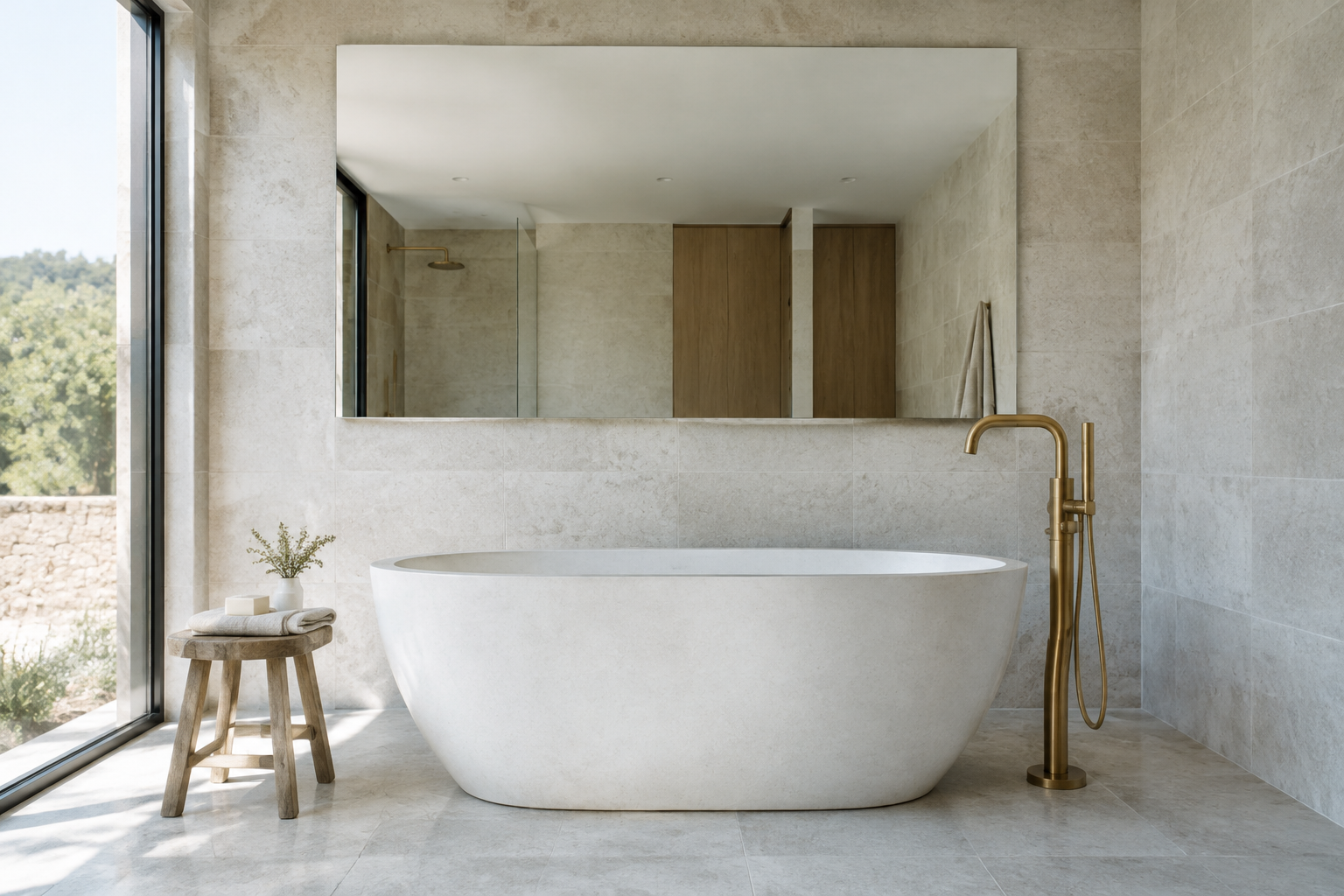
A large mirror above a freestanding bath turns it into the focal point of the room. It also catches the daylight that would otherwise be lost.
Hang it high enough that splashes stay off the bottom edge. Water creeping behind the glass is the main cause of failure.
Keep the frame minimal here. A bath already provides enough shape for the wall.
- MountingWall hung high
- LightingAmbient only
- MaterialFrameless glass
Flanked by Towel Hooks
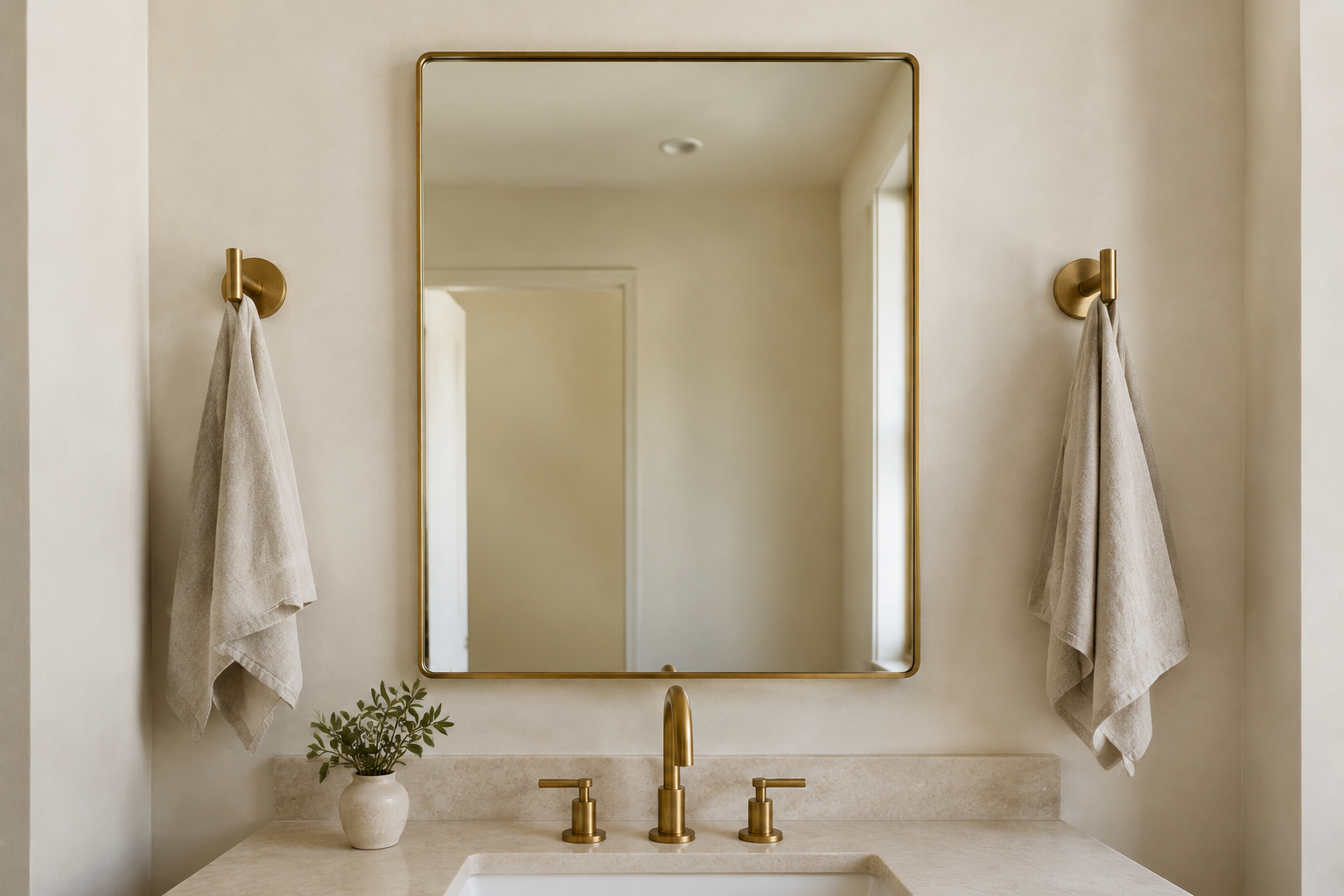
Two brass hooks either side of the mirror make the wall work as a whole. The towels also soften a hard, flat surface.
Set the hooks lower than the mirror centre so towels hang clear of the glass. Wet fabric against a frame will damage it.
Use solid brass rather than coated steel. Coatings chip in a wet room and the rust shows within a year.
- MountingWall hung
- LightingAmbient only
- MaterialSolid brass
Twin Antique Mirrors
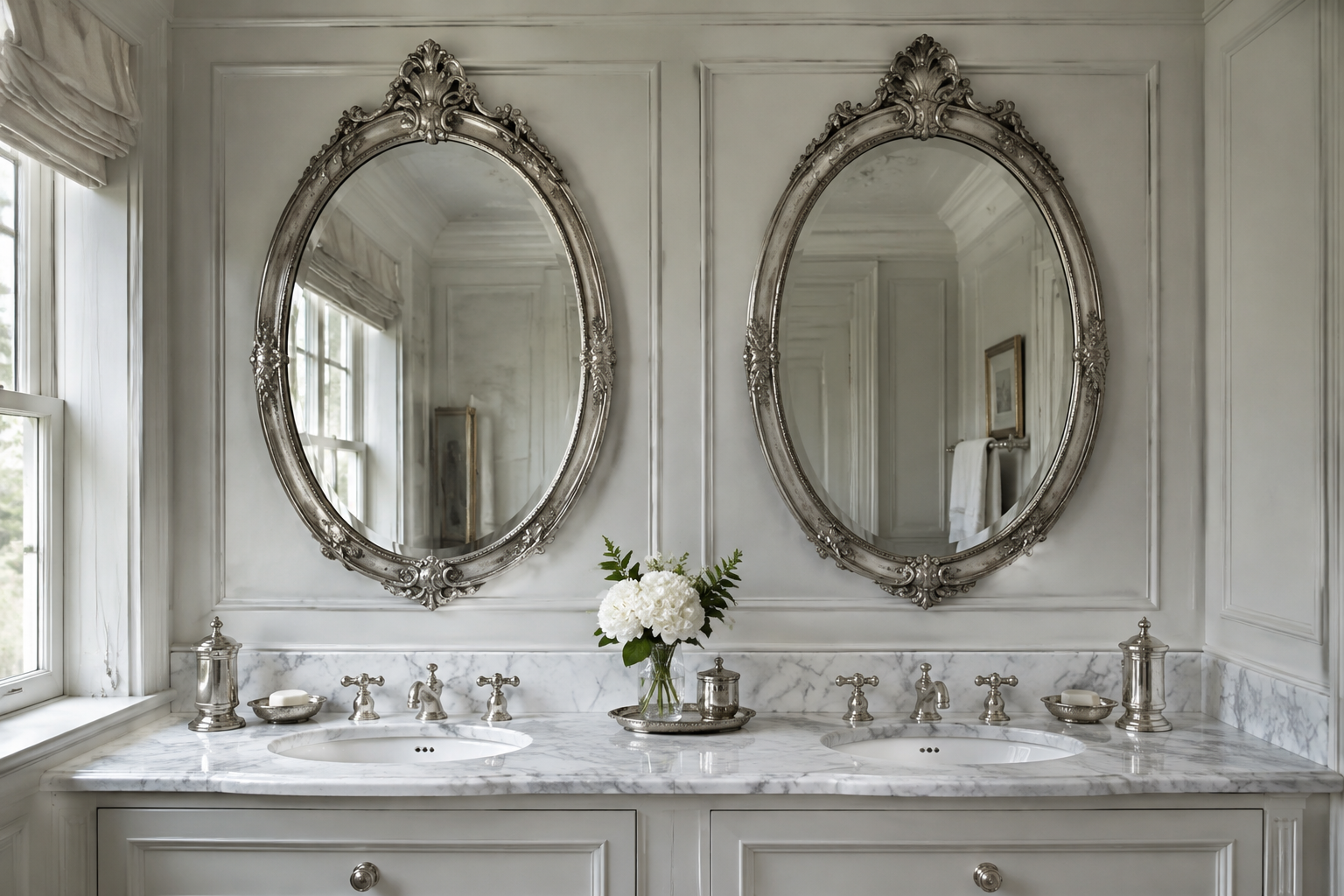
Two antique mirrors over twin basins give a heritage bathroom its symmetry back. Matching frames do the job that a single large mirror cannot.
Look for a pair of the same size but not the same age. Slight difference makes the room feel collected over time.
Check the silvering on both before buying. One clear mirror beside one cloudy mirror will look like a mistake.
- MountingWall hung pair
- LightingTwin sconces
- MaterialAntique silver leaf
Plaster-Wash Frame
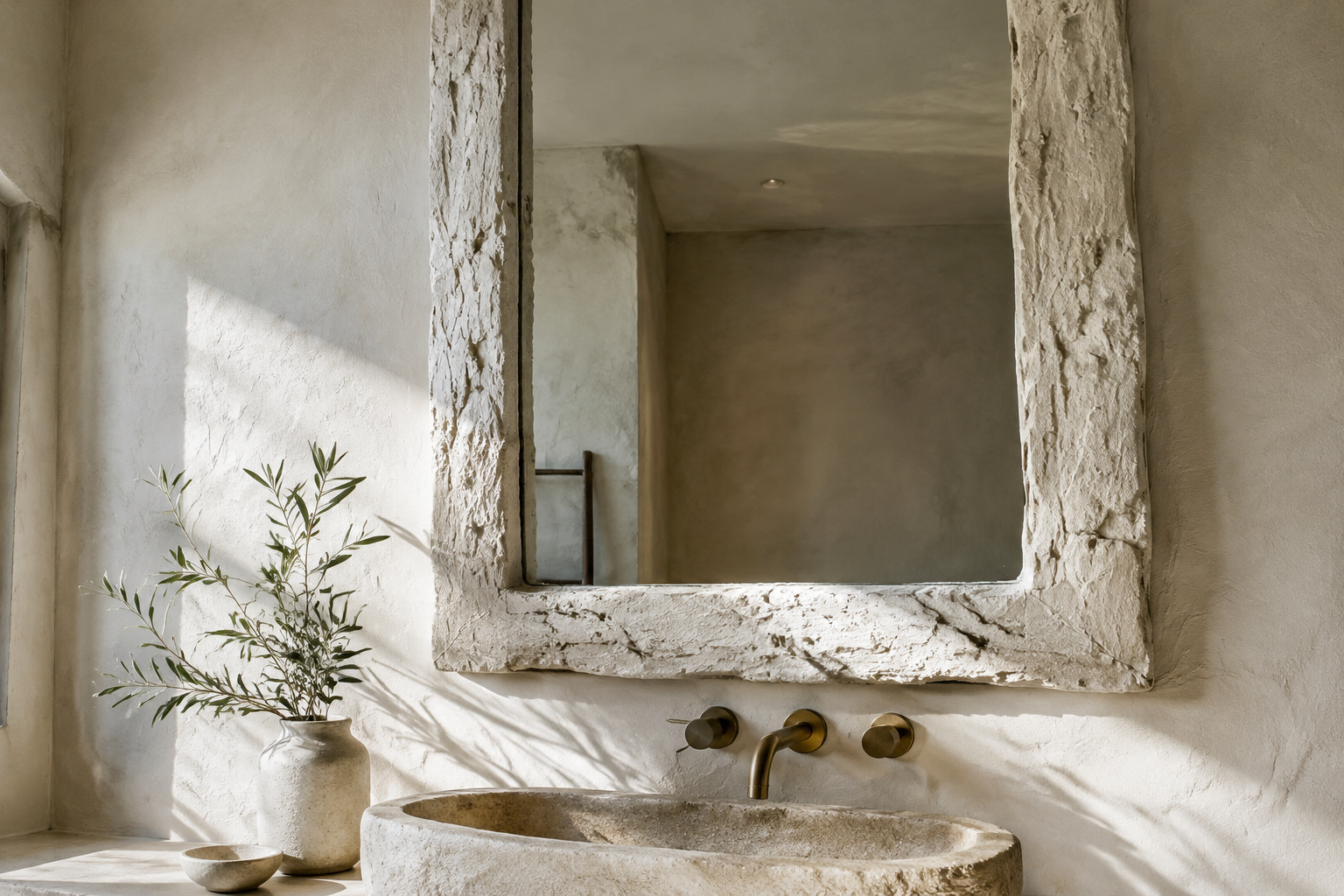
A rough plaster frame brings the wall forward and makes the mirror feel carved from it. The texture catches light in a way paint cannot.
Keep the plaster unpainted and slightly uneven. Sanded perfection defeats the purpose of the material.
Seal it with a matte sealer designed for splashes. Bare plaster will stain the moment water reaches it.
- MountingWall hung
- LightingAmbient only
- MaterialLime plaster
Mirror With a Plant Ledge
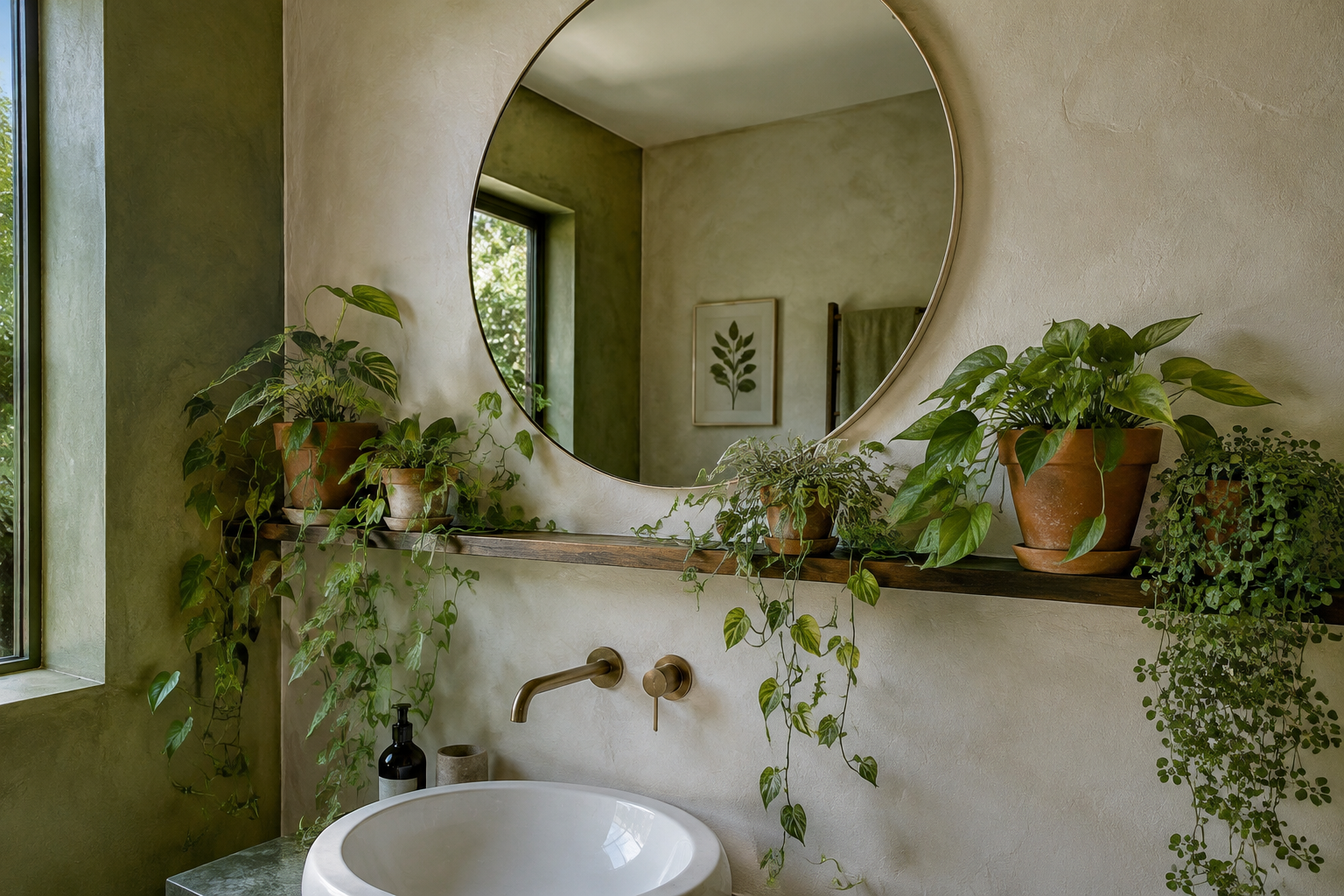
A narrow ledge under the mirror gives trailing plants somewhere to live. The green reflection doubles the effect.
Choose plants that tolerate humidity, like pothos or ferns. Succulents will rot above a steamy basin.
Keep pots in terracotta or stone so the shelf stays quiet. Bright plastic will pull the eye away from the mirror.
- MountingWall hung
- LightingAmbient only
- MaterialGlass, terracotta
Gilded Crest Antique
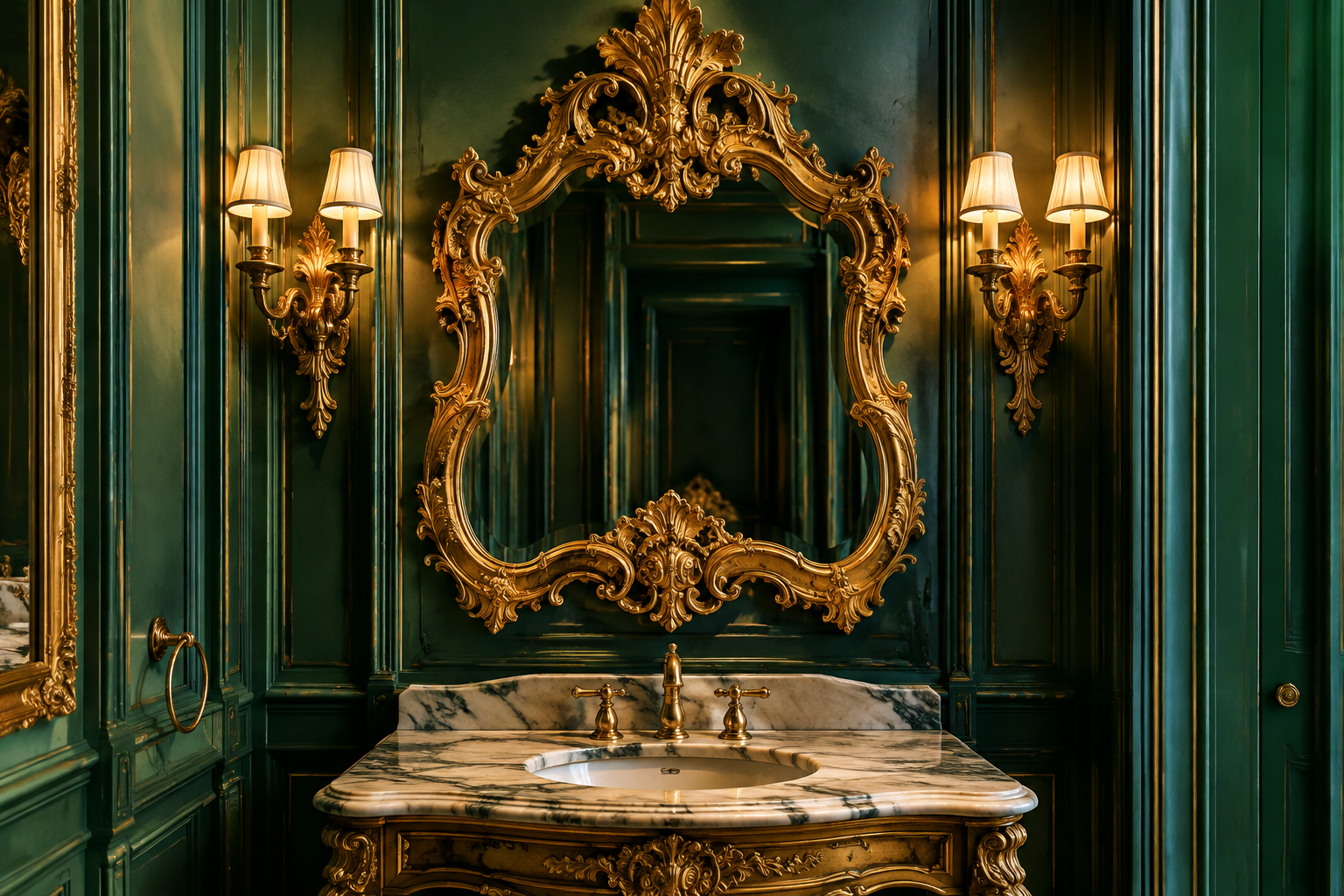
An ornate gold crest mirror is the one piece of genuine glamour a bathroom can carry. It works as jewellery rather than architecture.
Use it against a deep colour so the gold has something to sit against. On white it will look like a shop display.
Keep every other fitting quiet and modern. One ornate object needs plain company to look expensive.
- MountingWall hung
- LightingWall sconces
- MaterialGold leaf, glass
Modern Restraint
For rooms where the mirror should disappear into the architecture instead of sitting on it.
Full Mirrored Feature Wall
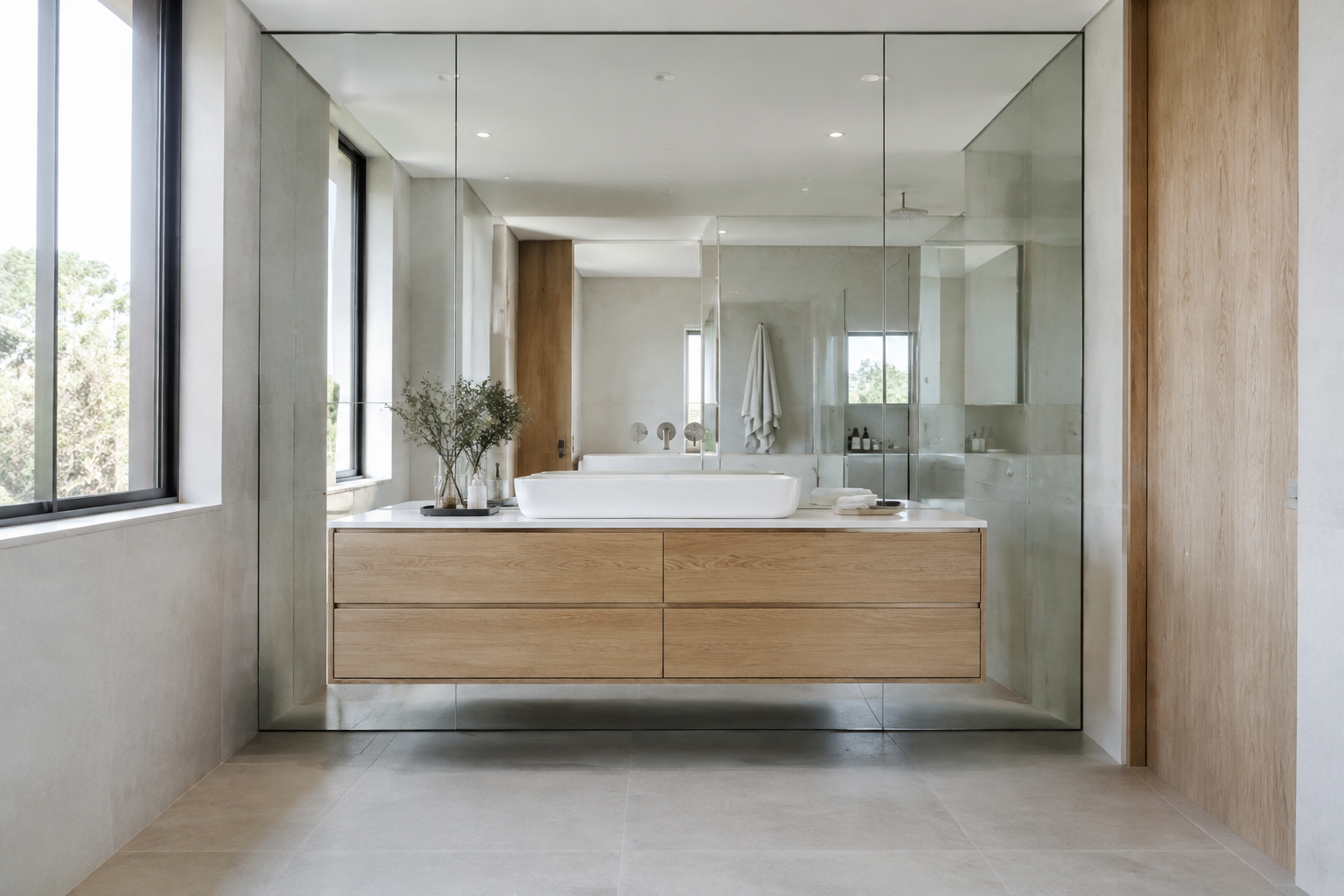
Mirroring the entire wall behind the vanity makes the room feel twice its depth. The joints should be as thin as the glazier can achieve.
This works in a narrow bathroom where depth matters more than anything else. Widen the effect by reflecting a window.
Plan the joints to land away from your face. A seam through the centre of the reflection is the one flaw people notice.
- MountingFull-wall panel
- LightingCeiling downlights
- MaterialMirror panels
Chevron Corner Wrap
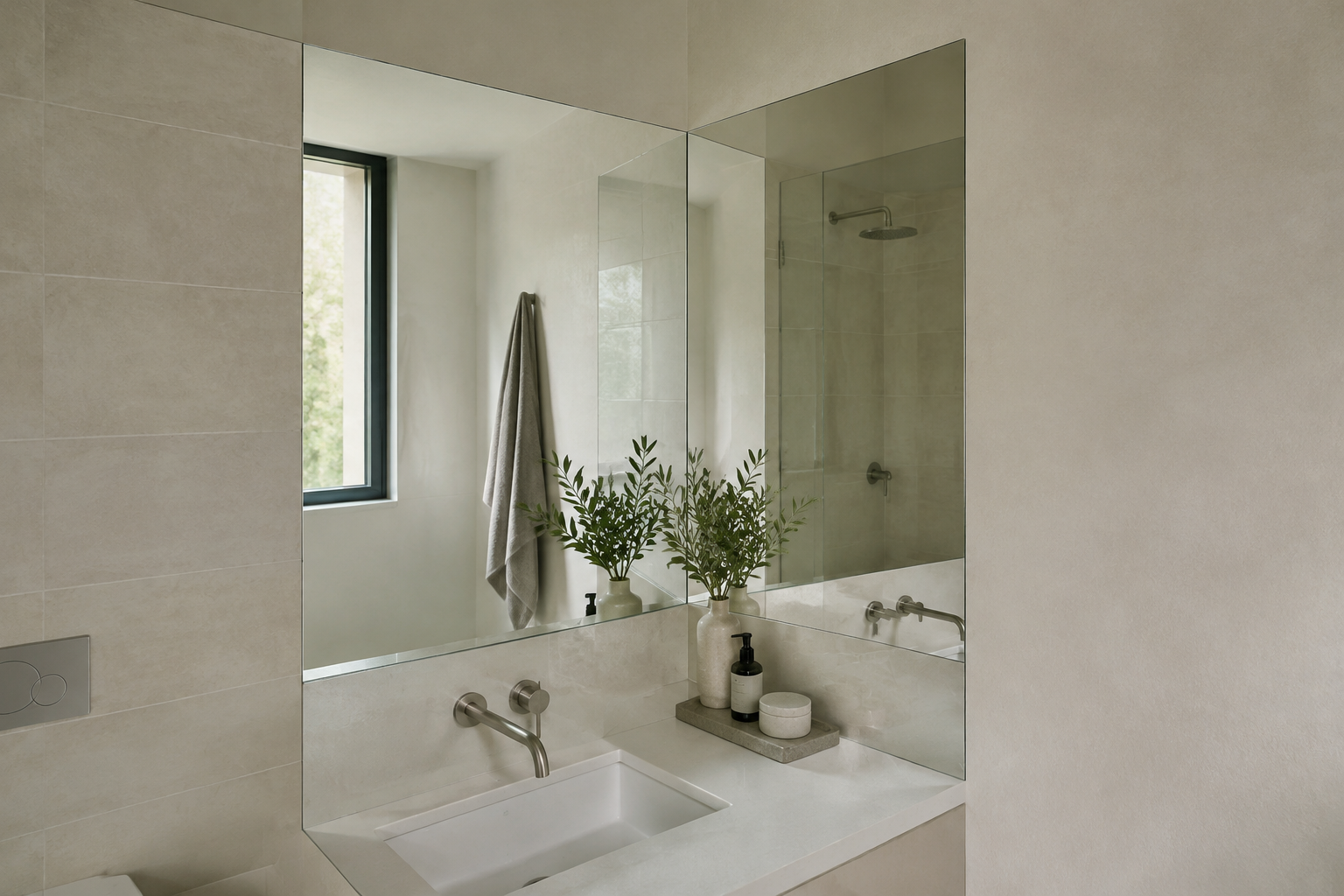
A mirror that turns a corner makes a small room feel continuous. The mitred joint is the detail that sells it.
Use it in a bathroom where the vanity sits tight against a side wall. The wrap removes the hard visual stop.
Order the two panels as a matched pair from one glazier. Colour and reflection have to agree across the joint.
- MountingCorner wrapped
- LightingAmbient only
- MaterialMitred glass
Flush Plaster Reveal
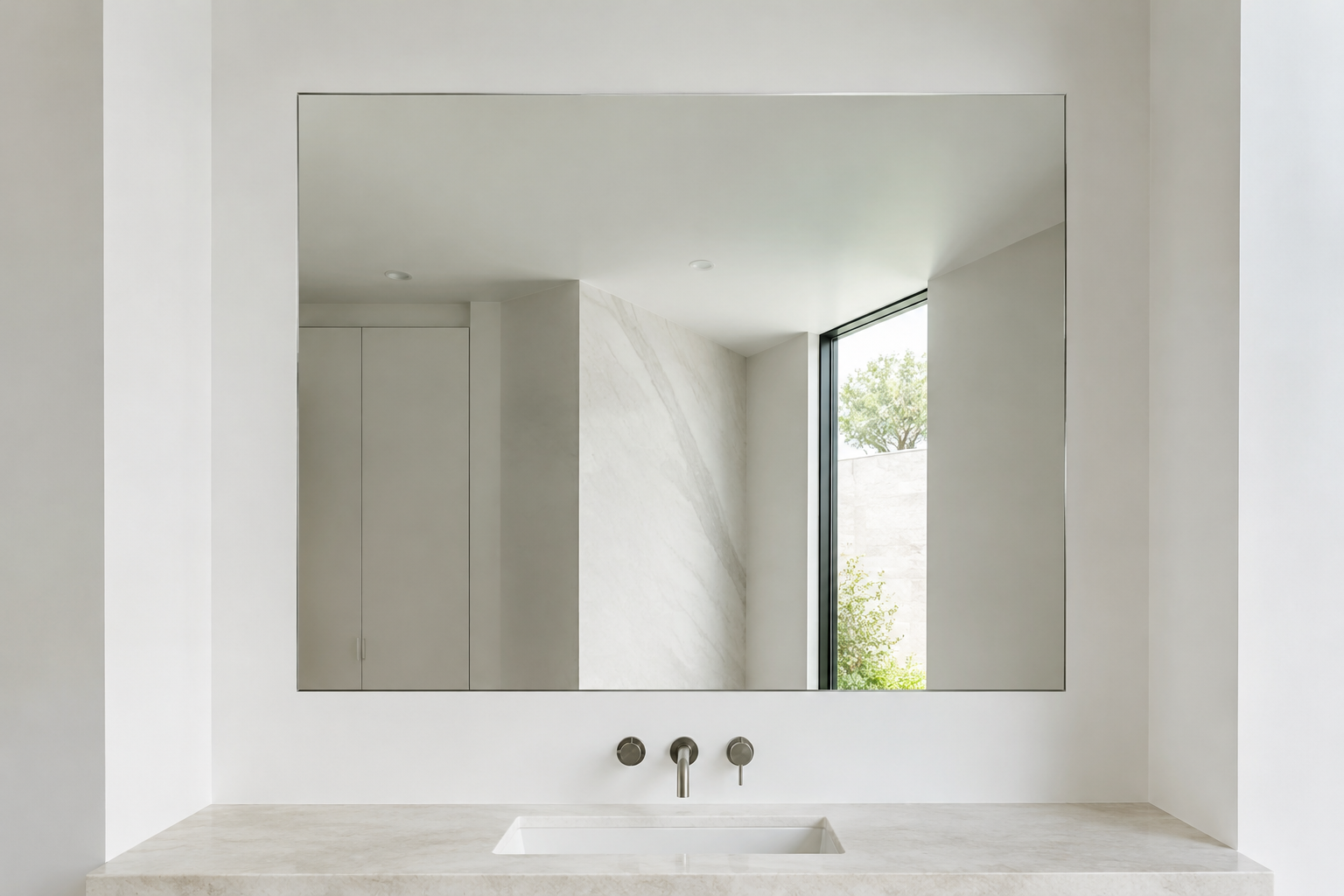
A frameless mirror set into a plaster reveal leaves only a thin shadow line around the glass. Nothing interrupts the wall.
This is the most restrained option on the list and the hardest to get right. The recess has to be built to the millimetre.
Use it with a wall that has nothing else on it. Any other object will compete with the purity you paid for.
- MountingFlush recessed
- LightingConcealed strip
- MaterialPolished edge glass
Hexagon
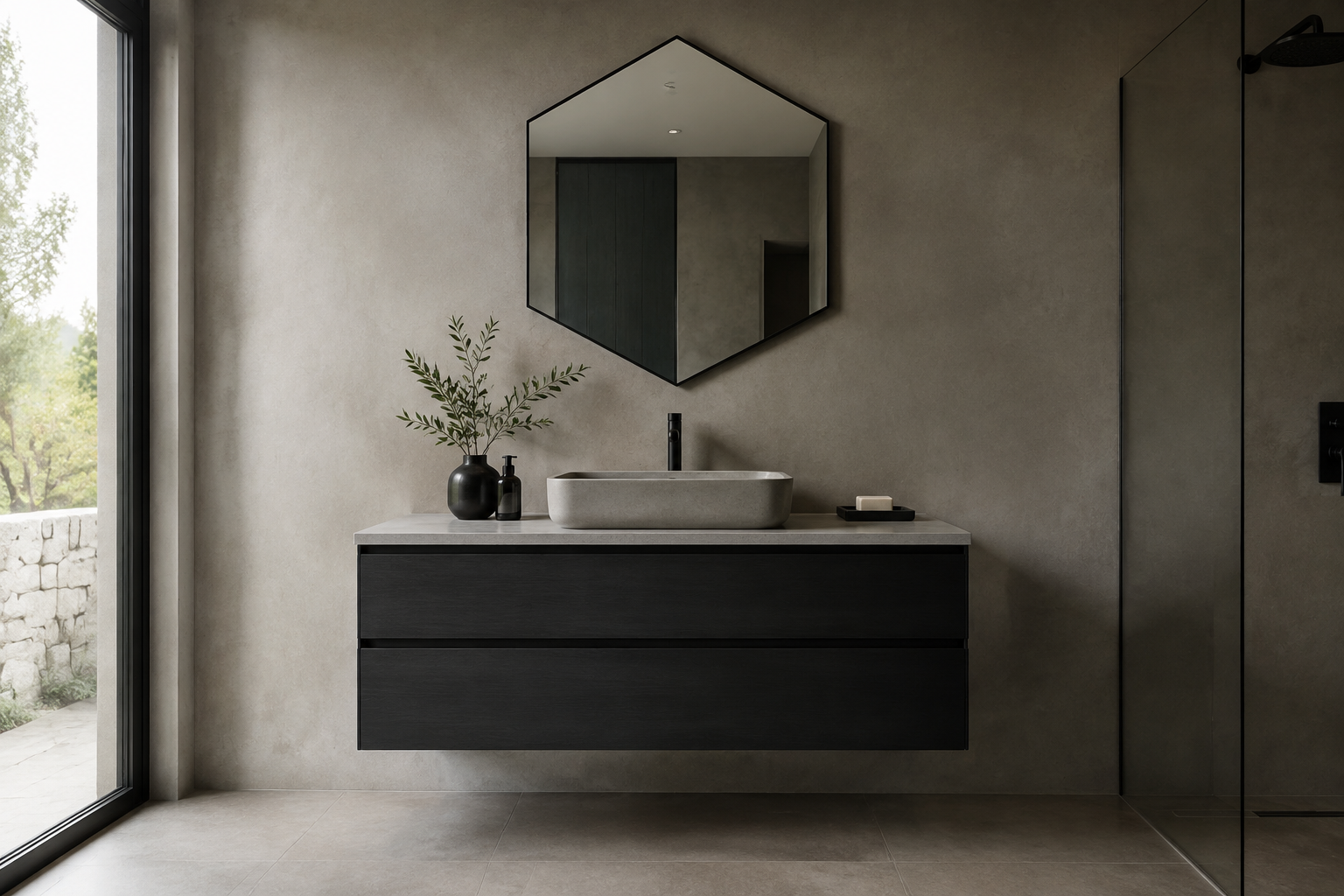
A hexagon gives a geometric wall an object that belongs to it. Six edges also read softer than a square at the same size.
Keep the frame thin and dark so the silhouette does the work. A heavy frame turns the hexagon into a sign.
Pair it with large format tiles laid in the same geometry. Repeating the angle is what makes the choice look considered.
- MountingWall hung
- LightingCeiling downlights
- MaterialMatte black alloy
Split Two-Panel
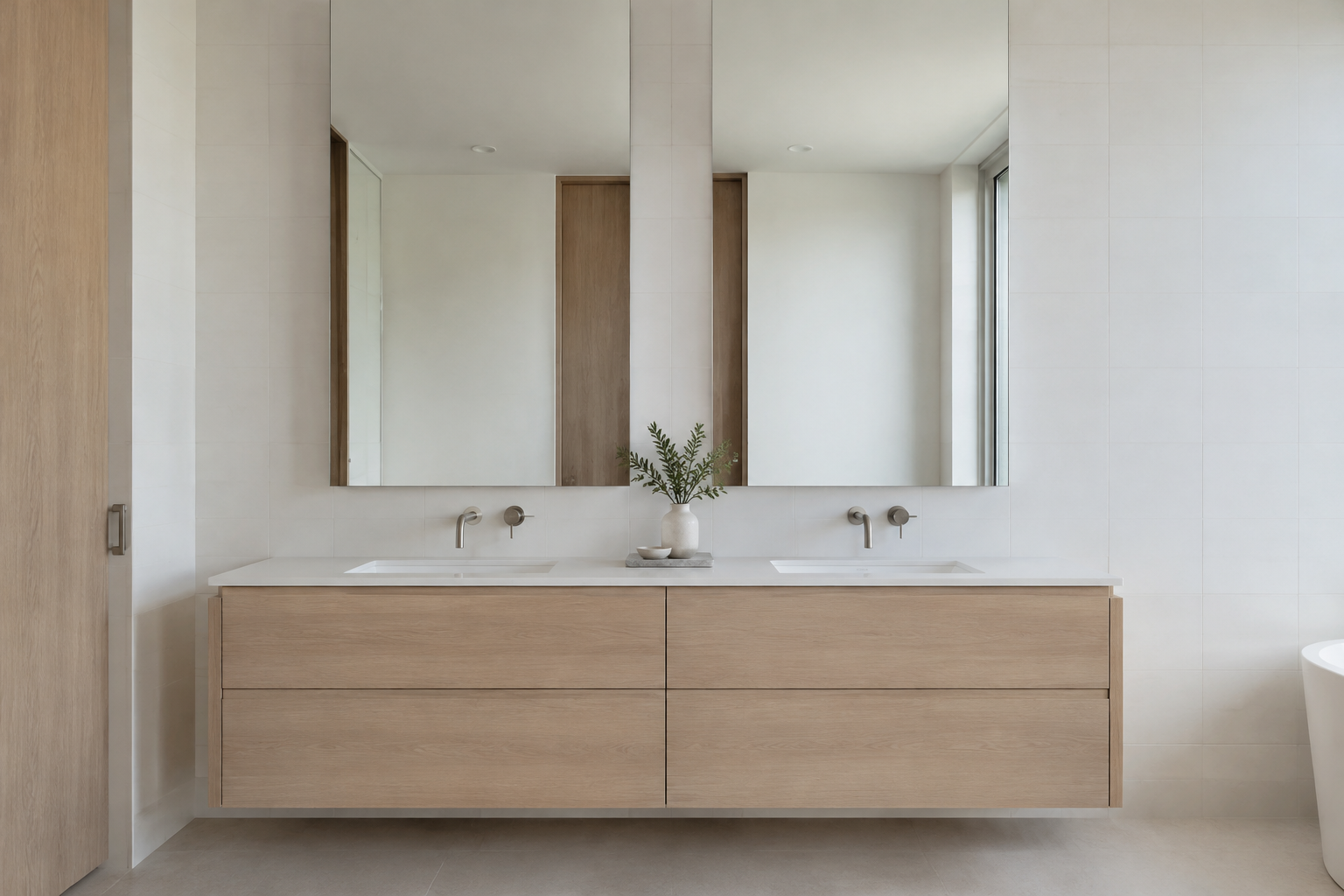
Two tall panels with a narrow gap divide a wide wall without clutter. The gap acts as a vertical line that adds height.
Use a gap of two to three centimetres, no more. Wider gaps look like two mirrors that were meant to be one.
Align the panels with the vanity edges rather than the room centre. Following the furniture reads more deliberate.
- MountingWall hung pair
- LightingTwin sconces
- MaterialFrameless glass
Mirror Under a Skylight
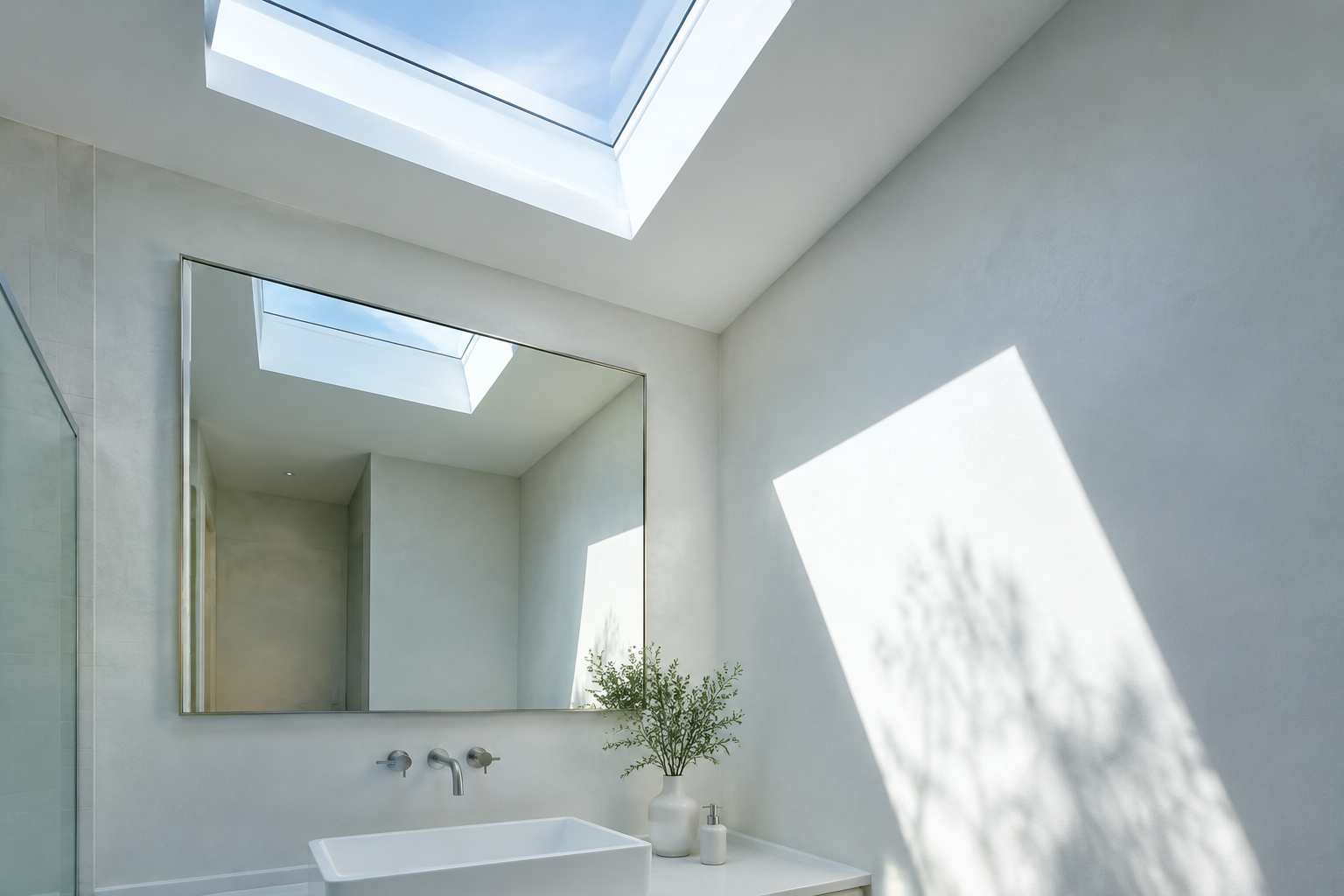
A mirror placed below a skylight throws daylight back into the room. It turns a roof window into general lighting.
Angle the skylight or the mirror so the bounce lands on a wall, not in your eyes. Plan this before the ceiling is closed.
This is the cheapest way to brighten a windowless bathroom. It costs nothing to run and it never fails.
- MountingWall hung
- LightingDaylight bounce
- MaterialFrameless glass
Sage Green Statement Frame
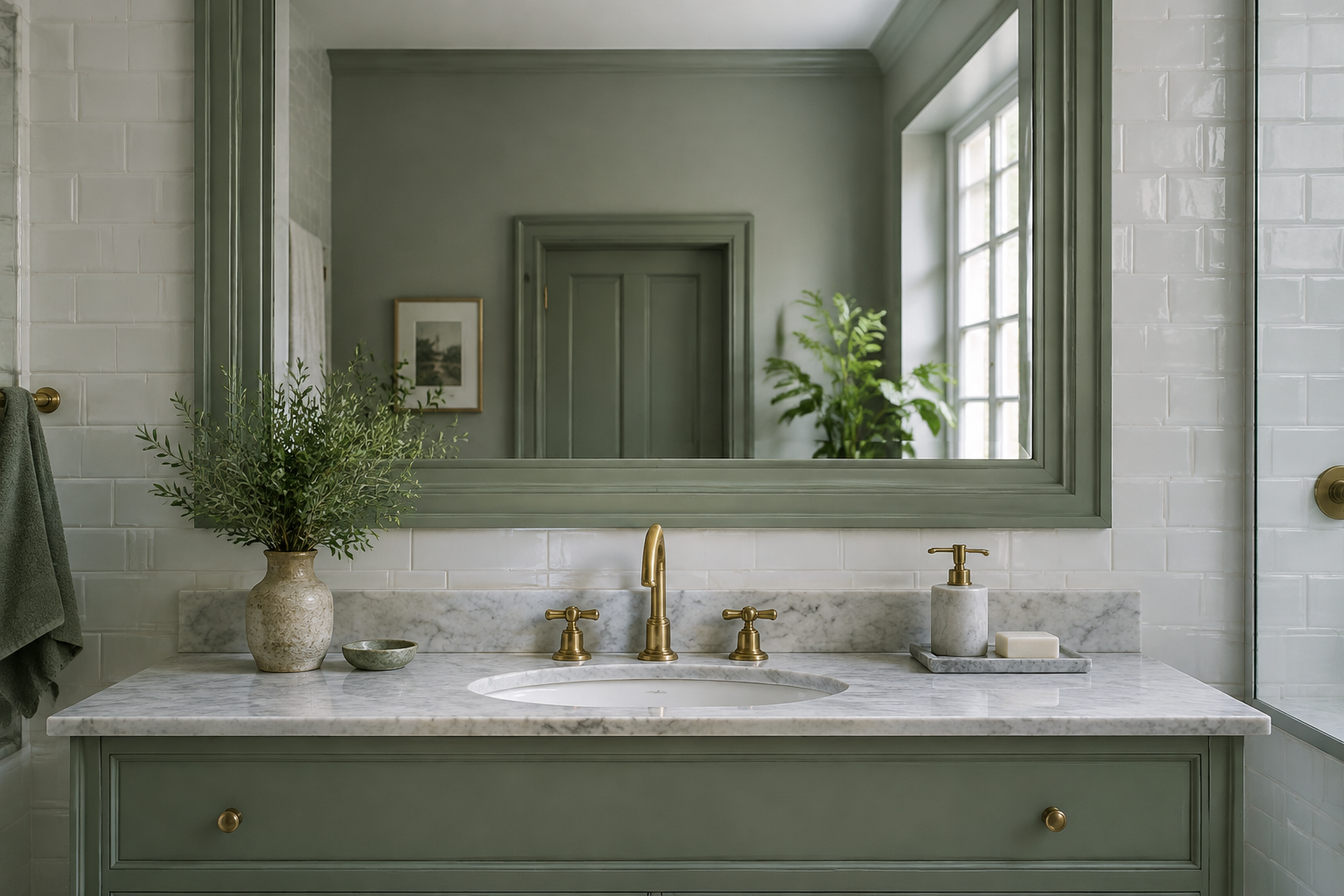
A painted frame in sage green adds colour without adding a pattern. It reads calm against white tiles and warm against marble.
Match the green to a towel or a tile grout rather than the wall paint. A small, repeated note of colour looks chosen.
Use a matte finish so the frame does not compete with the taps. Gloss paint and chrome fight each other.
- MountingWall hung
- LightingAmbient only
- MaterialPainted timber
Ceiling-Hung Cable Mirror
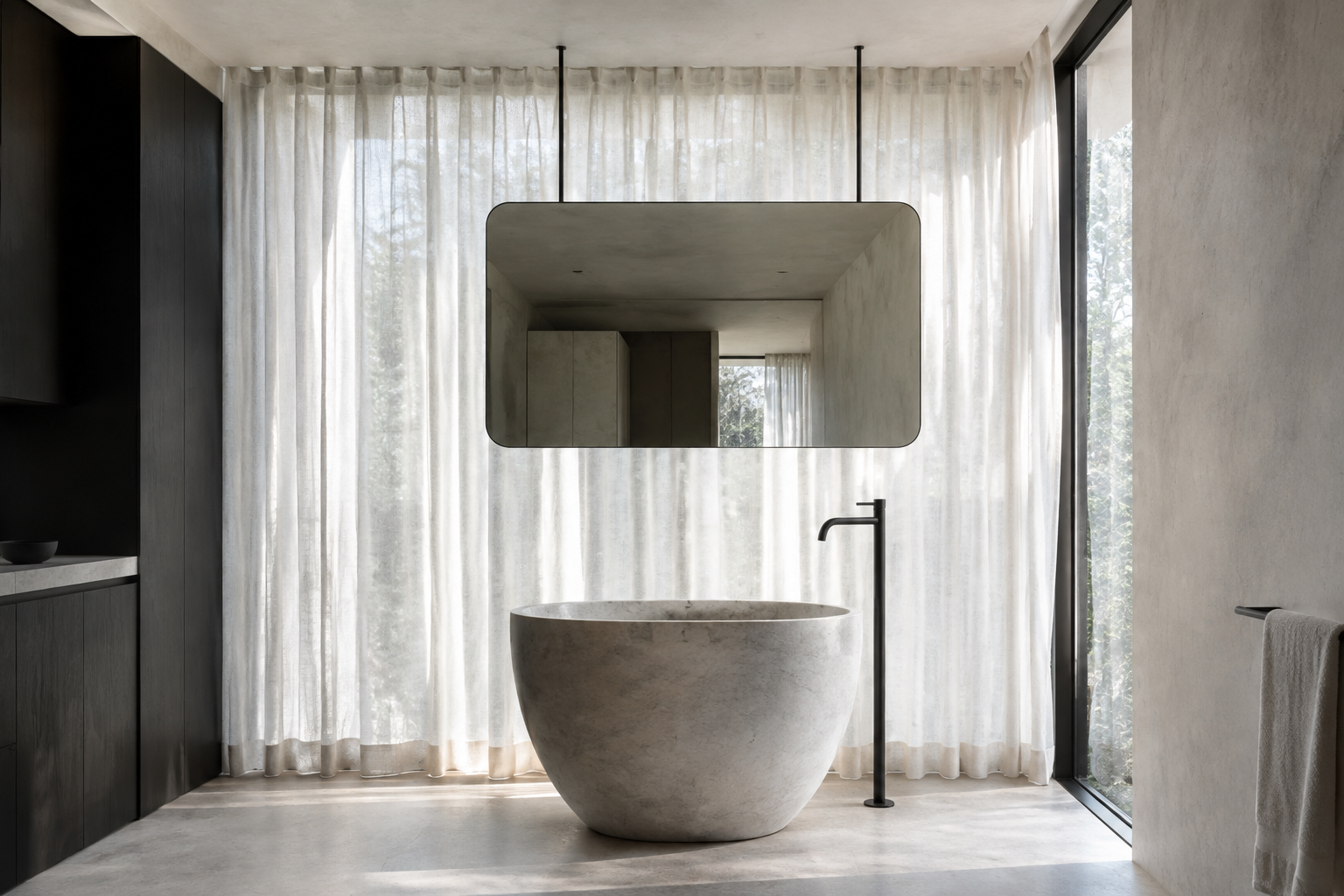
Hanging a mirror from the ceiling frees the wall for a window or a full-height tile. The cables become a thin, deliberate detail.
This is the only sensible option when the vanity sits in front of glass. It also lets you set the height exactly.
Use stainless cables and a ceiling fixing rated for the weight. A mirror that swings is a mirror that will crack.
- MountingCeiling hung
- LightingAmbient only
- MaterialSteel cable, glass
Beveled Infinity Edge
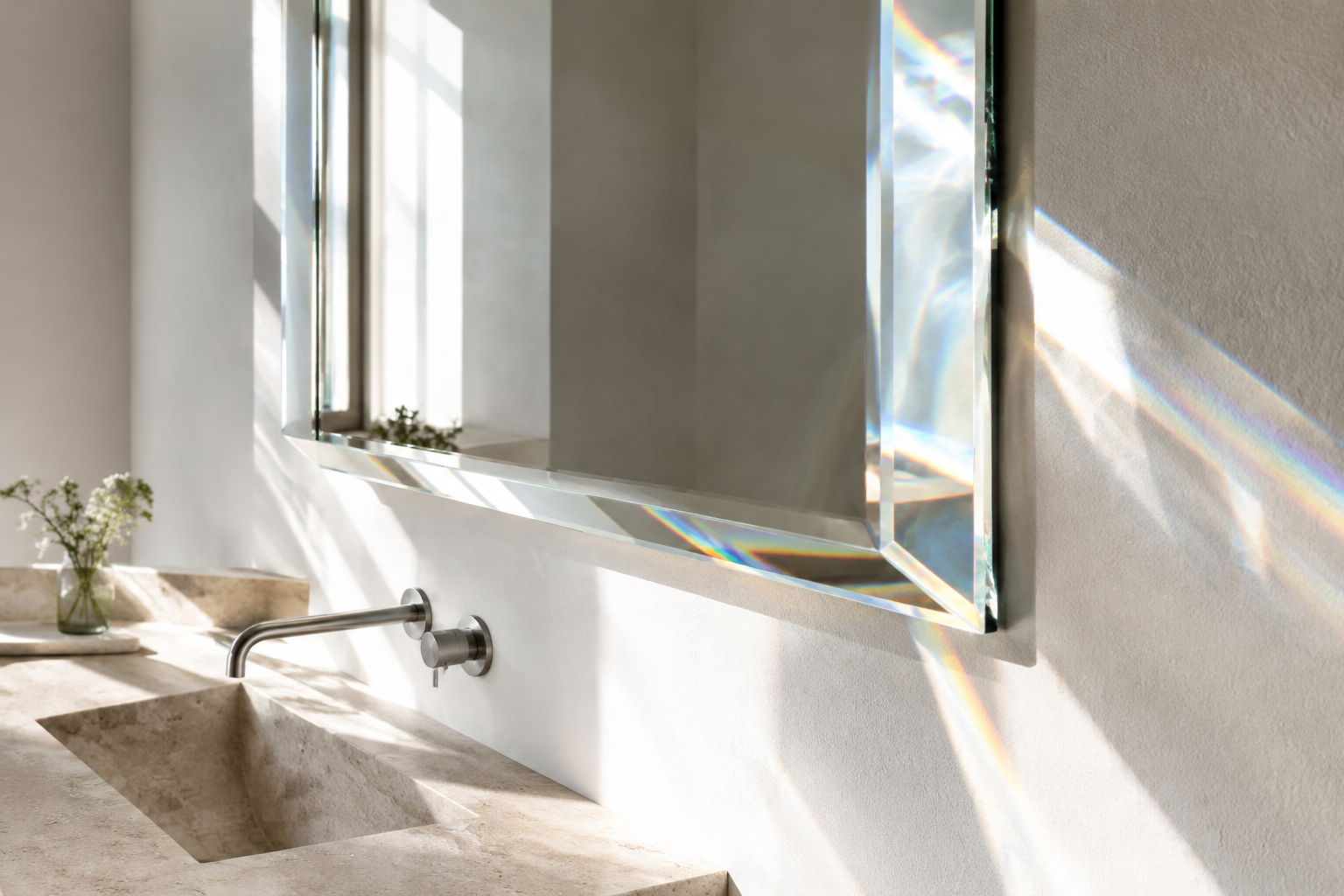
A deep bevel turns the edge of a frameless mirror into a prism. Light bends across the cut and the glass appears to have a rim of its own.
Bevels catch sunlight, so place the mirror where a window can reach it. In flat light the detail simply disappears.
Choose at least two centimetres of bevel to see the effect. Shallower cuts read as a smudge rather than a facet.
- MountingWall hung
- LightingDaylight
- MaterialBevelled glass
The best mirror in your bathroom will not be the most expensive one. It will be the one whose shape repeats something already in the room, whose frame matches a metal you have used elsewhere, and whose light you enjoy switching on.
Pick one idea from this list and build the room around it. Two competing mirror ideas cancel each other out, and three will make the wall look like a showroom.
Measure the wall, measure your basin, then leave a margin of at least ten centimetres on each side. Choose the shape first, the frame second, and the light last.


