

45 Short Garden Fence Ideas for Small Yards (Photos)
A short garden fence does not have to be a compromise. At waist height it frames a border, hides a bin store and keeps a small garden feeling open. This guide collects 45 short garden fence ideas you can build, buy or rescue from a scrap pile. Every idea stays low, so light still reaches your beds and your neighbours still see the sky. Use the list as a starting point, then match the material to your soil, your budget and the upkeep you actually enjoy.
Why Short Garden Fence Ideas Work in Small Gardens
A tall fence closes a garden in. A low one divides the space without turning it into a box.
Short fences also use less material, so they cost less and a weekend is usually enough to build one. That makes them the safest way to try a new look.
Light matters most on a small plot. Anything under about a metre still lets low winter sun reach the borders behind it.
Open sightlines keep the garden feeling bigger. That is the real reason low boundaries look so generous in photographs.
How to Choose the Right Height
Most of the ideas below sit between 60cm and 100cm. That range divides space while staying visually light.
A front garden boundary usually works best at 90cm. Anything taller starts to read as a wall from the street.
Patio dividers can be lower still. A 60cm screen is plenty to mark where one part of the garden ends and another begins.
Check your local rules before you build. Some areas limit front boundary heights, especially next to a highway.
Materials, Cost and Upkeep
Timber is the cheapest option and the easiest to change later. Softwood needs treatment every few years, while cedar and oak can be left bare.
Metal and stone cost more at the start and then ask for nothing. In a wet climate that trade-off usually pays for itself.
Living boundaries take a season to settle. After that they cost you little more than a trim each winter.
Whatever you choose, set the posts in concrete. Everything else on a fence is easy to repair, but a loose post is not.
Planting to Soften the Line
Hard edges always look better with something growing over them. A few well-chosen plants do most of the work.
Trailing plants hide the base of a fence, which is where most of the mess lives. Grasses blur the top line and add movement.
Choose plants that suit the light the fence creates. The shaded side of any boundary stays damp for longer.
Leave a small gap between planting and timber. Airflow keeps both the fence and the roots healthier.
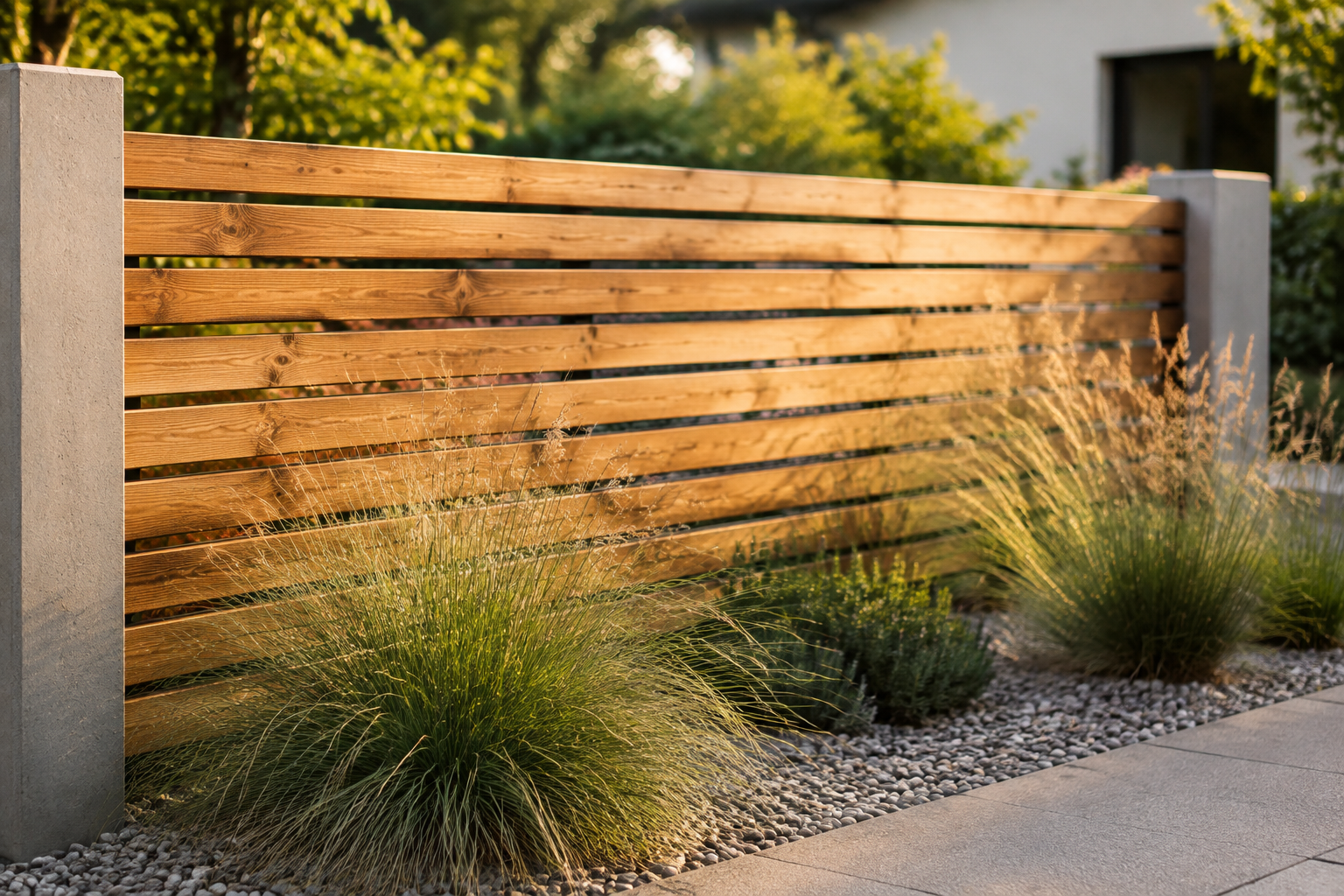
1. Horizontal Cedar Slat Screen
Cedar slats laid flat give a low fence a calm, horizontal rhythm. It feels modern without turning cold.
Fix 90mm boards to slim posts and leave a finger-width gap between each one. Those gaps let air and light pass through.
Keep the run around 90cm tall so it frames the planting instead of hiding it. A clear oil finish holds the honey colour for years.
Set soft grasses at the base to blur the hard edge. As they grow, the fence settles into the border.
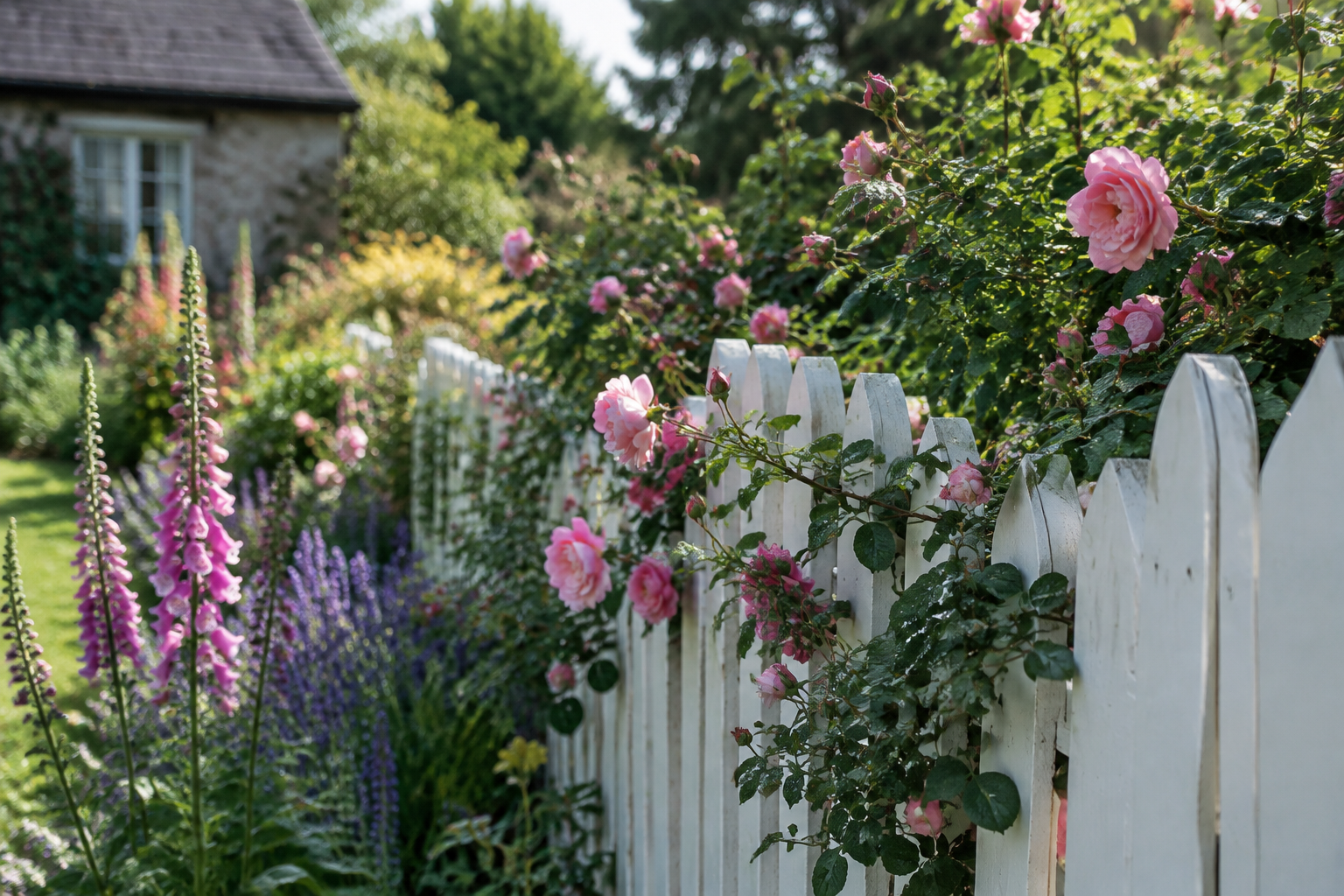
2. Scalloped White Picket Fence
A scalloped top turns a plain picket fence into something soft and playful. The curved line works well in small cottage gardens.
Cut each picket to a shallow arc and space them about 8cm apart. Two horizontal rails behind hold everything straight.
Paint it a warm off-white rather than a bright white. It looks older and softer against green leaves.
Let climbing roses spill over the top rail. The flowers break the straight line and hide the fixings.
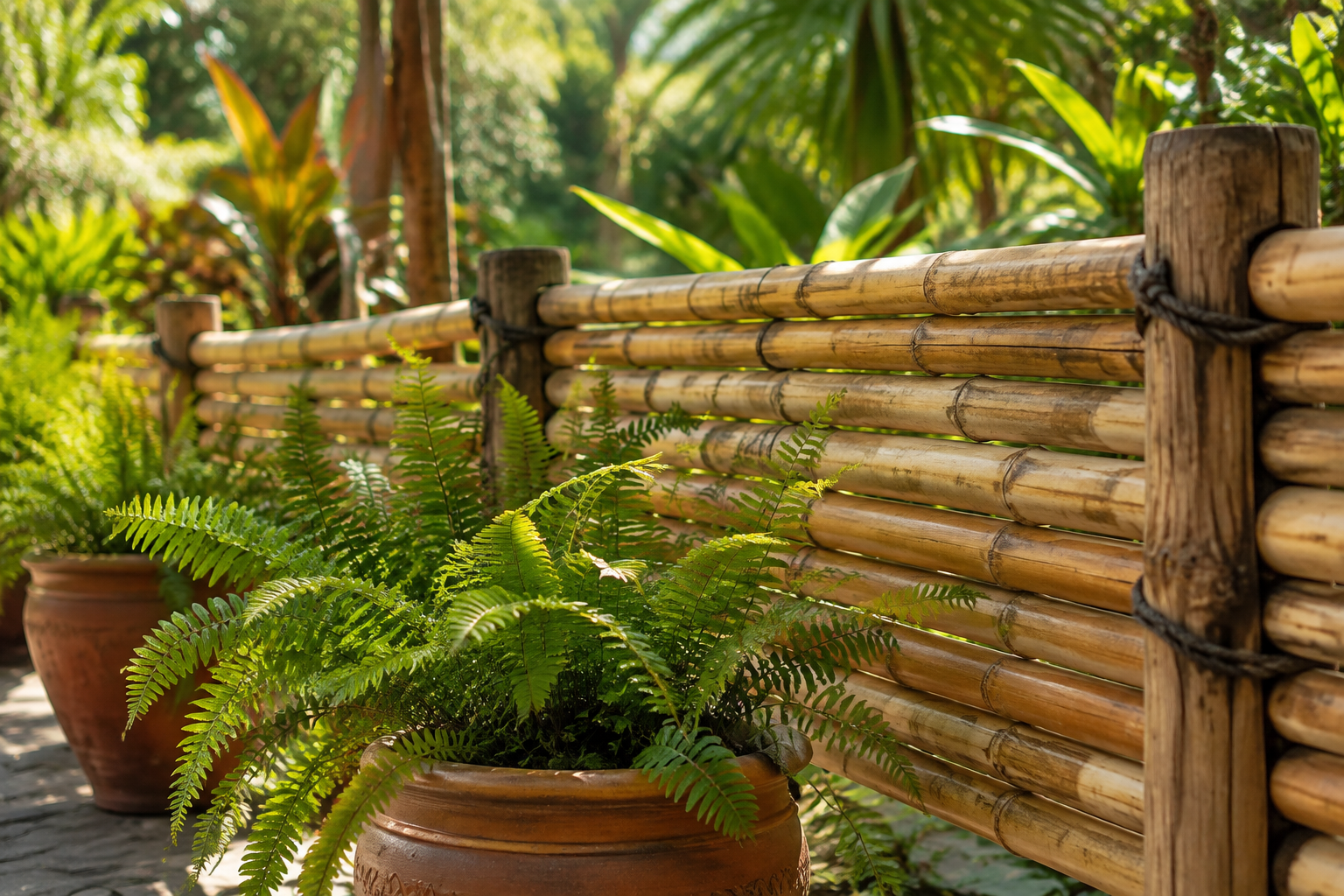
3. Rolled Bamboo Privacy Screen
Rolled bamboo gives instant height and texture for very little money. It also suits rental gardens because it fixes to existing posts.
Stand the roll upright and tie it to timber stakes with galvanised wire. Keep the roll 20cm off the soil so it does not rot.
Choose a roll with thick canes if you want it to last. Thin cane rolls fade and split within a couple of summers.
Group terracotta pots in front to hide the base. Ferns and hostas love the shade the screen creates.
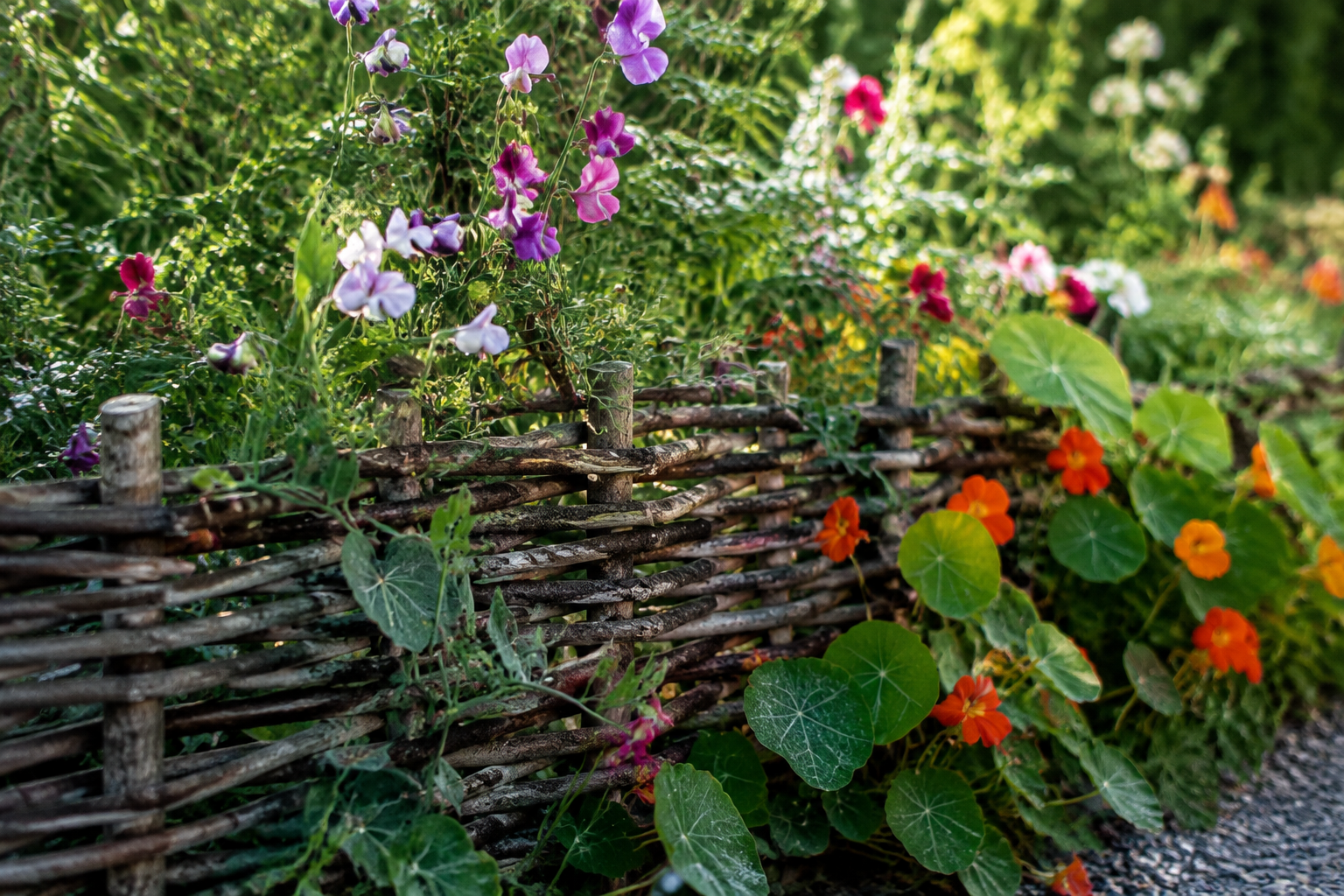
4. Woven Willow Hurdle
Woven willow hurdles look hand-made because they are. Each panel is a grid of supple rods that flex with the wind.
Buy panels ready-woven and drop them between two stakes. A low hurdle sits nicely at 90cm.
Willow silvers with age, so expect the colour to soften. That patina is part of the charm.
Underplant with sweet peas and nasturtiums. Their loose growth contrasts beautifully with the tight weave.
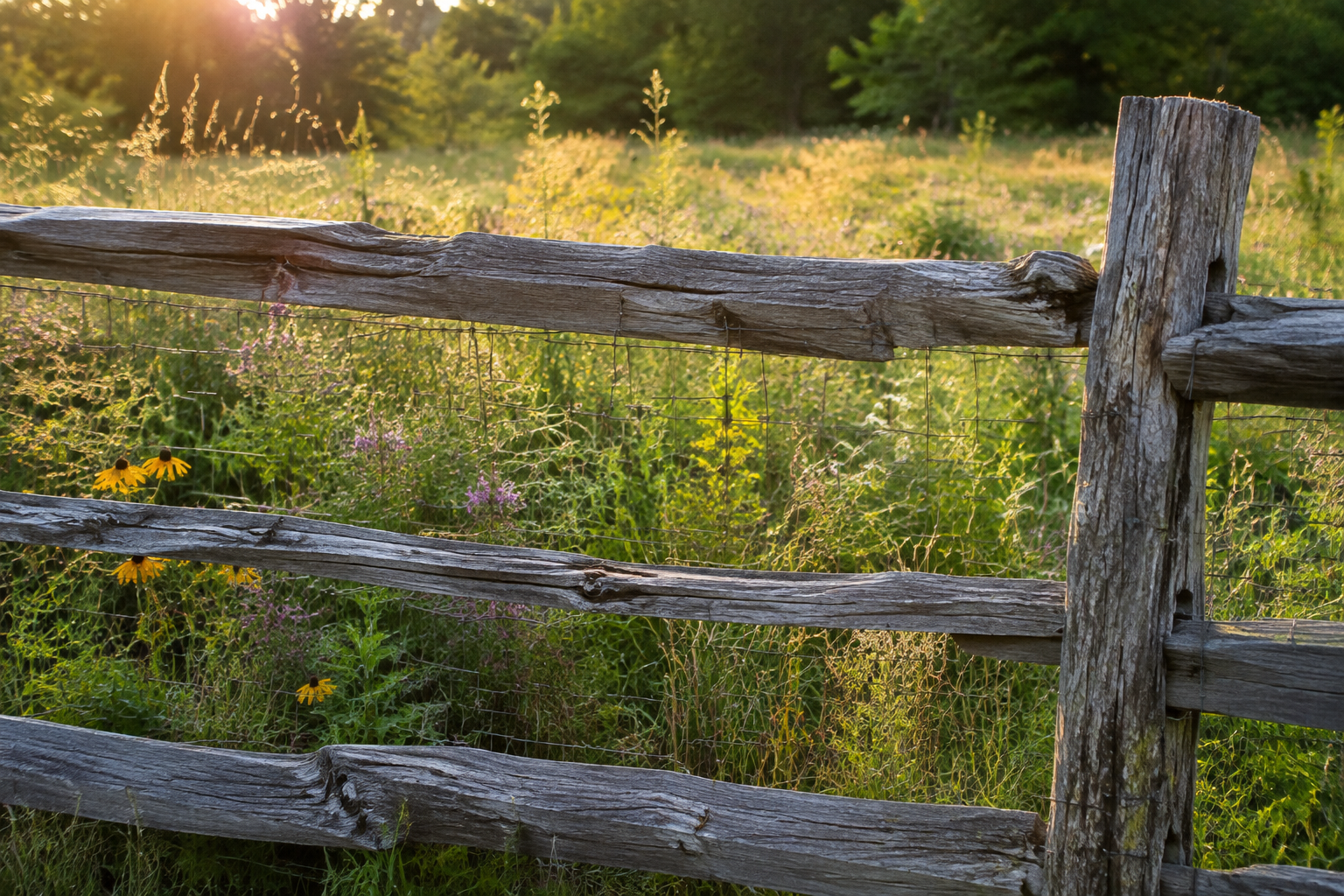
5. Split-Rail Fence with Wire Mesh
Split rails alone let rabbits straight through. A fine wire mesh stapled behind the rails solves that without changing the look.
Use two rails at 45cm and 90cm with 13mm mesh between them. Bury the mesh 10cm into the soil.
Leave the timber untreated so it weathers to silver-grey. Split chestnut or oak lasts longest.
A wildflower strip at the base hides the mesh line. It also feeds the bees your garden needs.
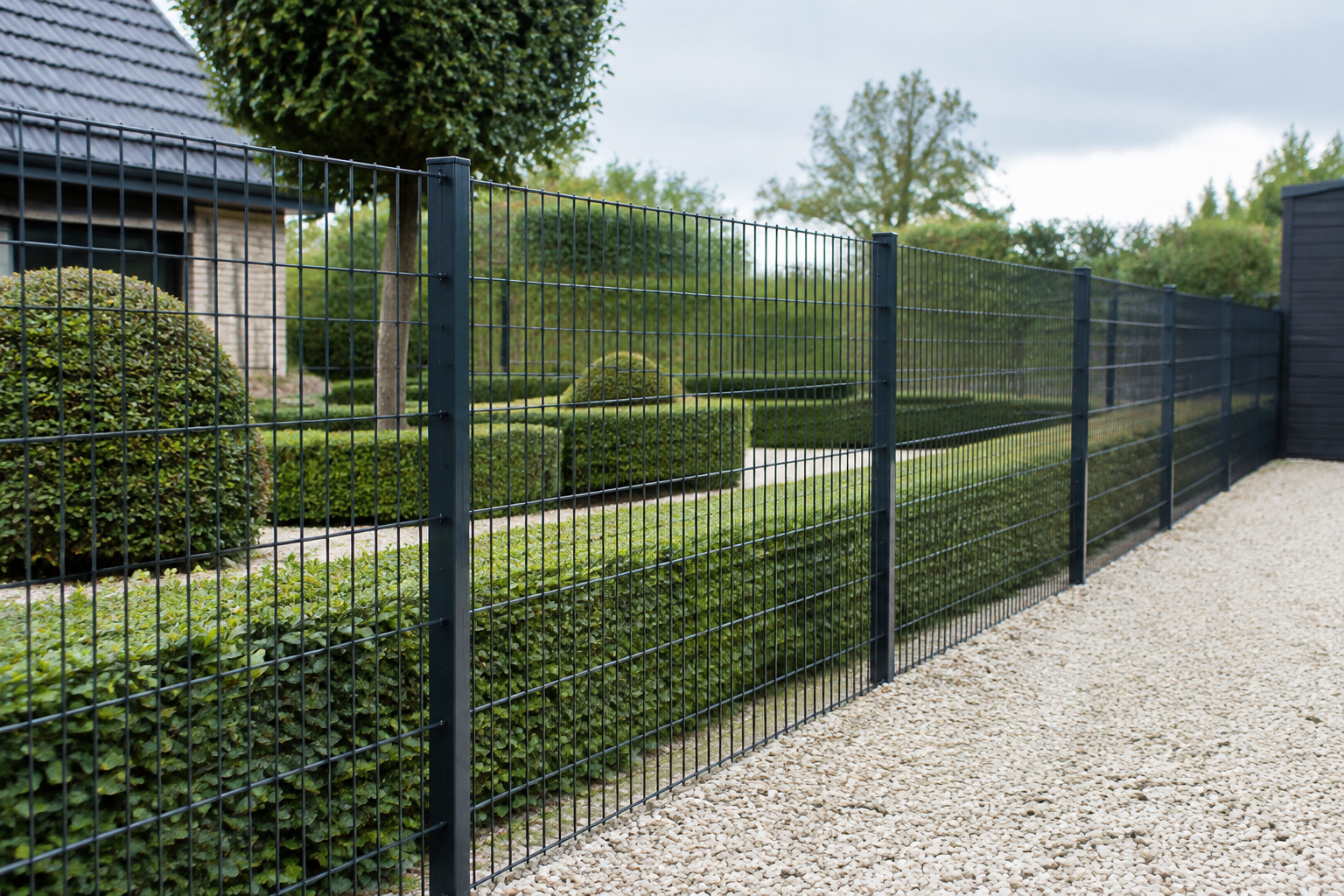
6. Black Steel Mesh Panel Fence
Black steel mesh is almost invisible from a distance. That makes it perfect where you want a boundary but not a wall.
Choose panels with 50mm square mesh and slim 40mm posts. Powder-coated steel will not rust or need painting.
Set the top rail at waist height. The open grid keeps the garden feeling wide.
Clip box hedging behind the panels. The dark metal reads as a shadow against the green.
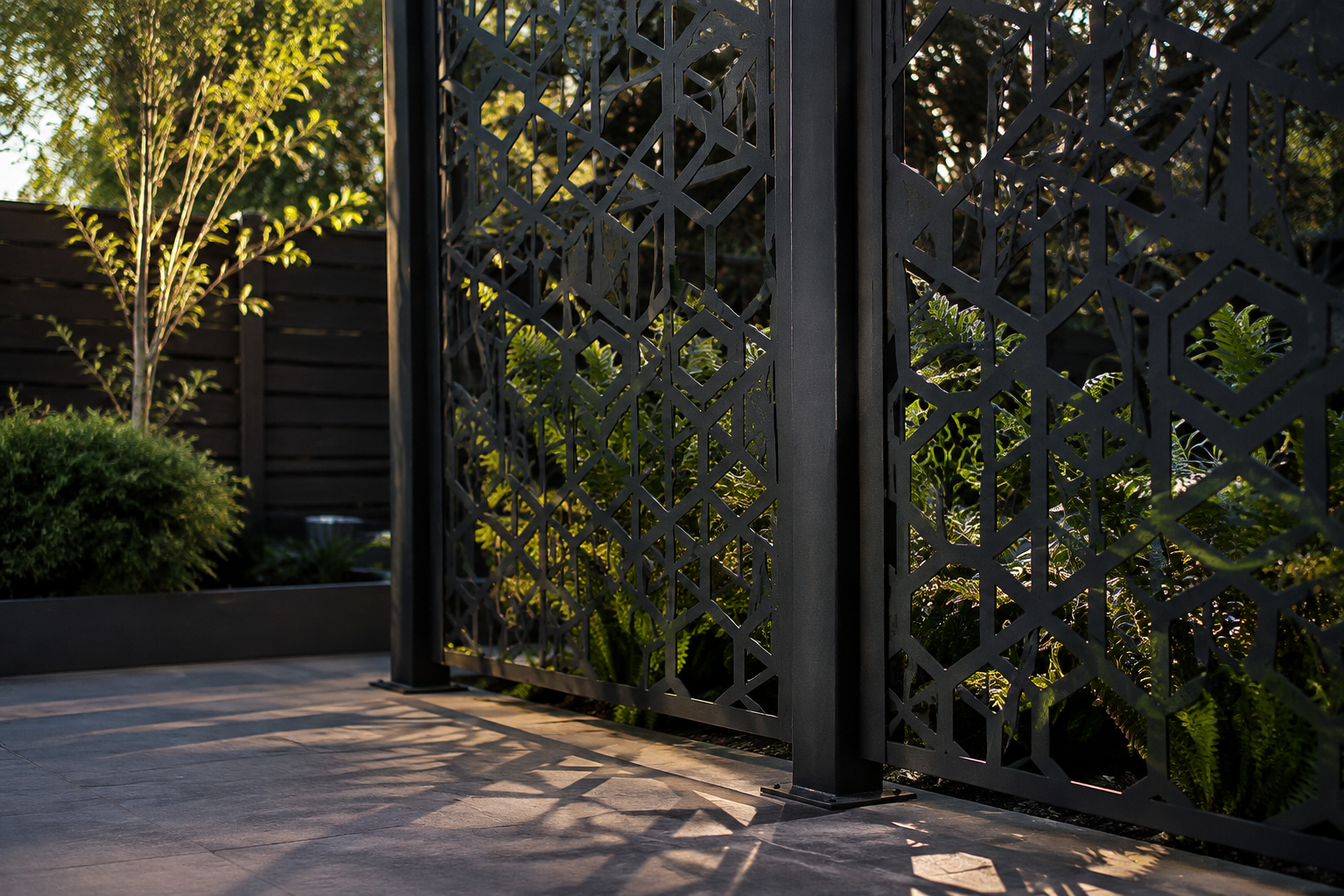
7. Laser-Cut Geometric Screen
A laser-cut screen adds pattern to a small garden without blocking light. Choose hexagons, circles or a simple grid.
Fix the panel to a steel frame set in concrete footings. A panel around 1.2m wide is light enough to handle alone.
Charcoal or bronze finishes show less dirt than pure black. They also cast better shadows.
Place a fern bed behind it. The cut-outs frame glimpses of foliage from the house.
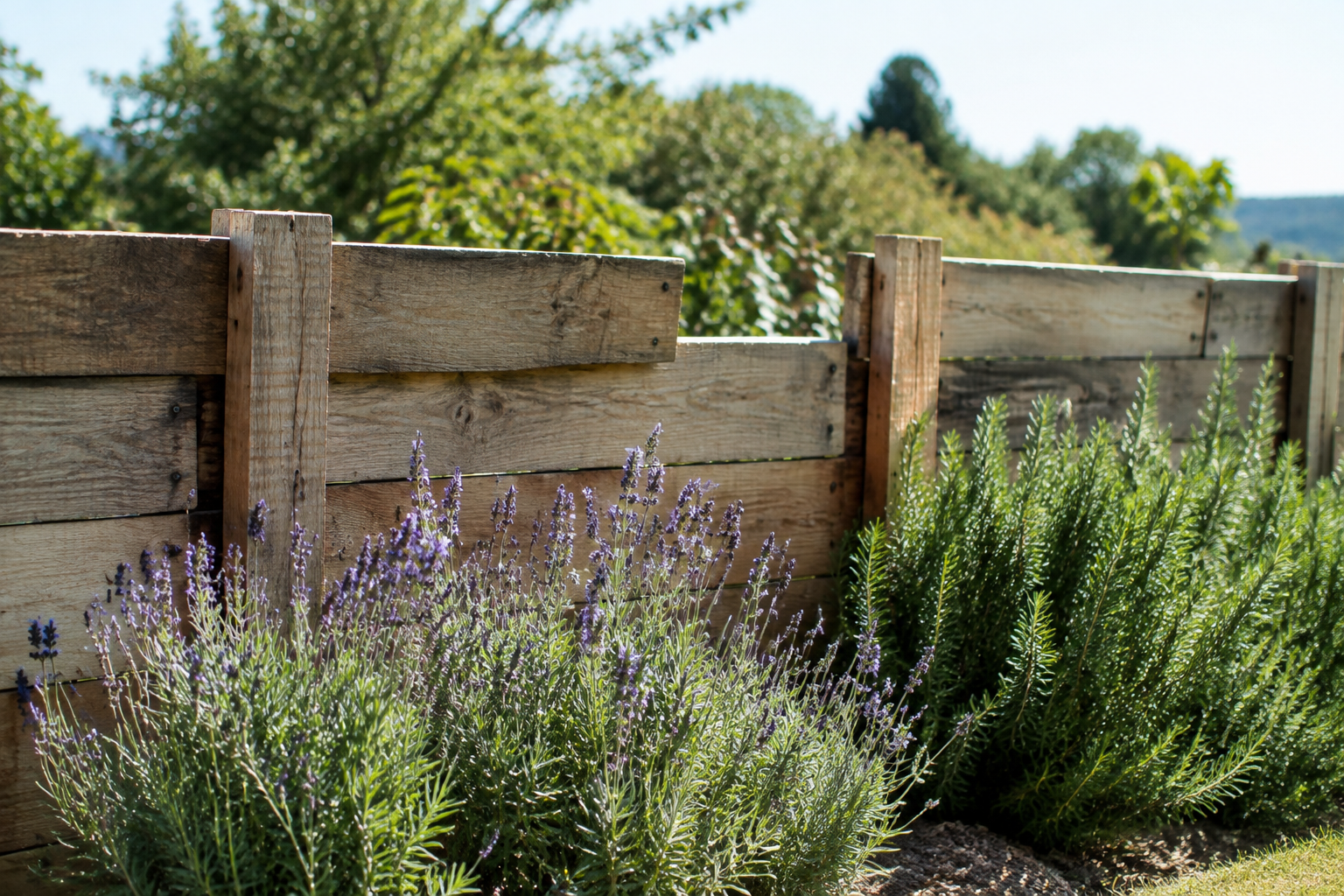
8. Pallet Wood Cottage Fence
Pallet wood is free, weathered and full of character. A short run of pallet boards can screen a bin store or define a bed.
Break the pallets down and sand the rough edges. Treat each board with a garden-safe wood preserver.
Fix boards vertically with small gaps so the fence can move. Nail them to rails, never straight into the posts.
Lavender and rosemary in front complete the look. Both enjoy the dry, sunny conditions pallet wood suggests.
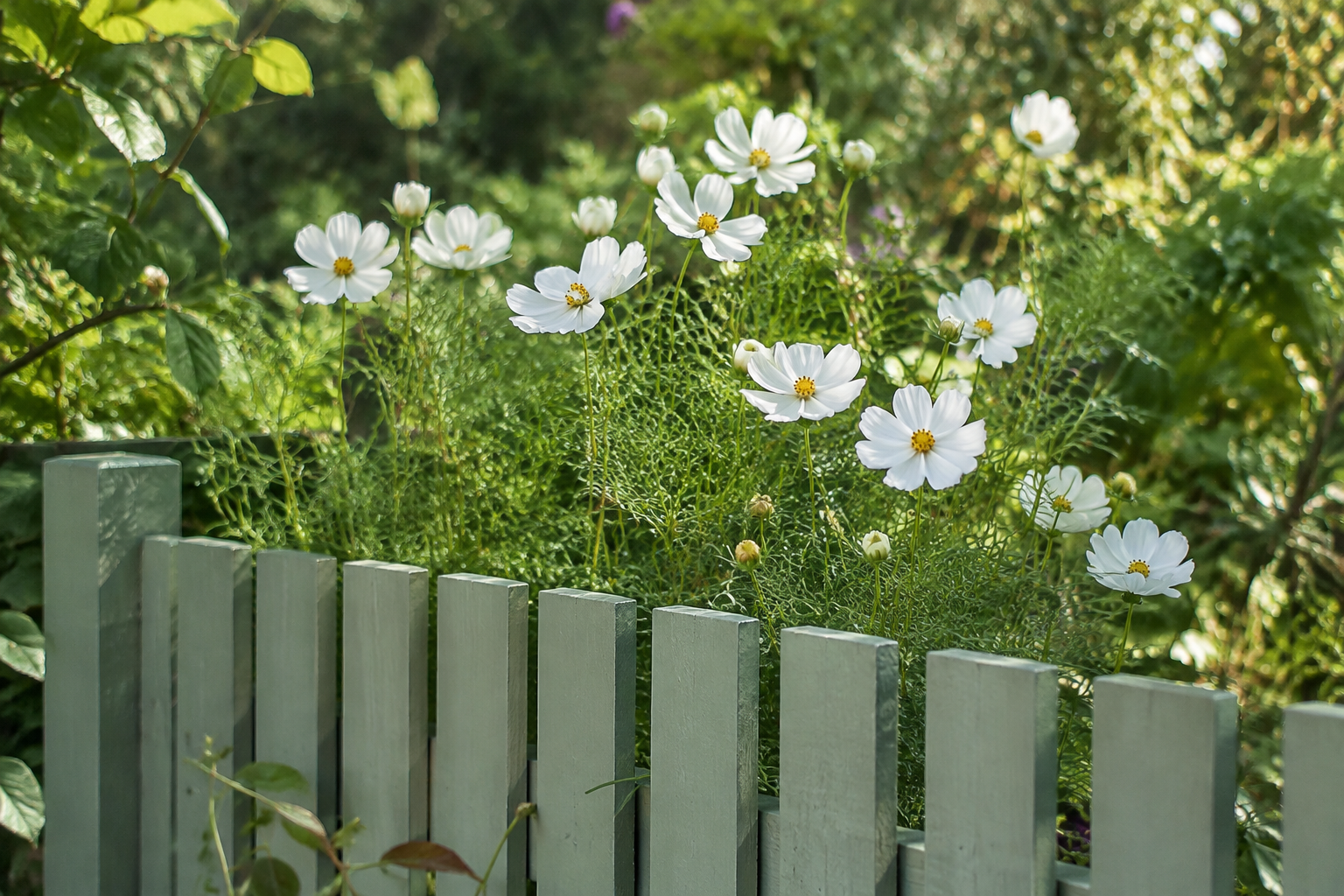
9. Sage Green Painted Picket Fence
Sage green pickets disappear into planting in the best way. The colour feels calm and is far less common than white.
Use flat-top pickets for a modern edge, or round them for a softer finish. Space them 10cm apart.
Apply two coats of exterior eggshell over a primer. Eggshell resists green algae better than gloss.
White cosmos and green foliage lift the muted colour. Add a few tall stems for movement.
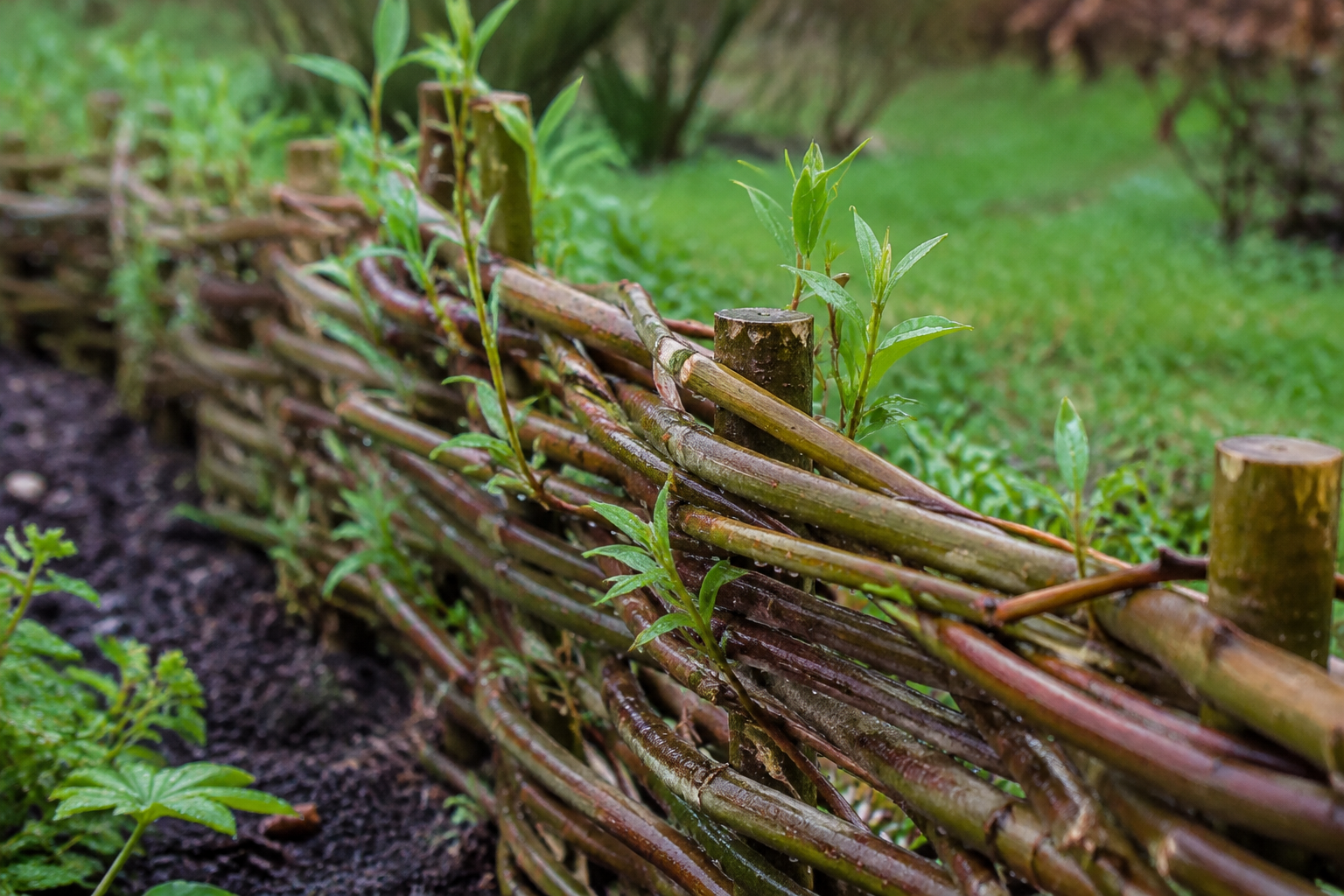
10. Living Willow Fence
A living willow fence keeps growing after you plant it. Fresh rods root into the soil and knit together as they leaf.
Push 2m rods into damp ground at 30cm spacing and weave them across. Do this in late winter while the rods are dormant.
Water heavily for the first season. After that the fence looks after itself.
Trim the top each winter to keep the height low. The cuttings become next year’s rods.
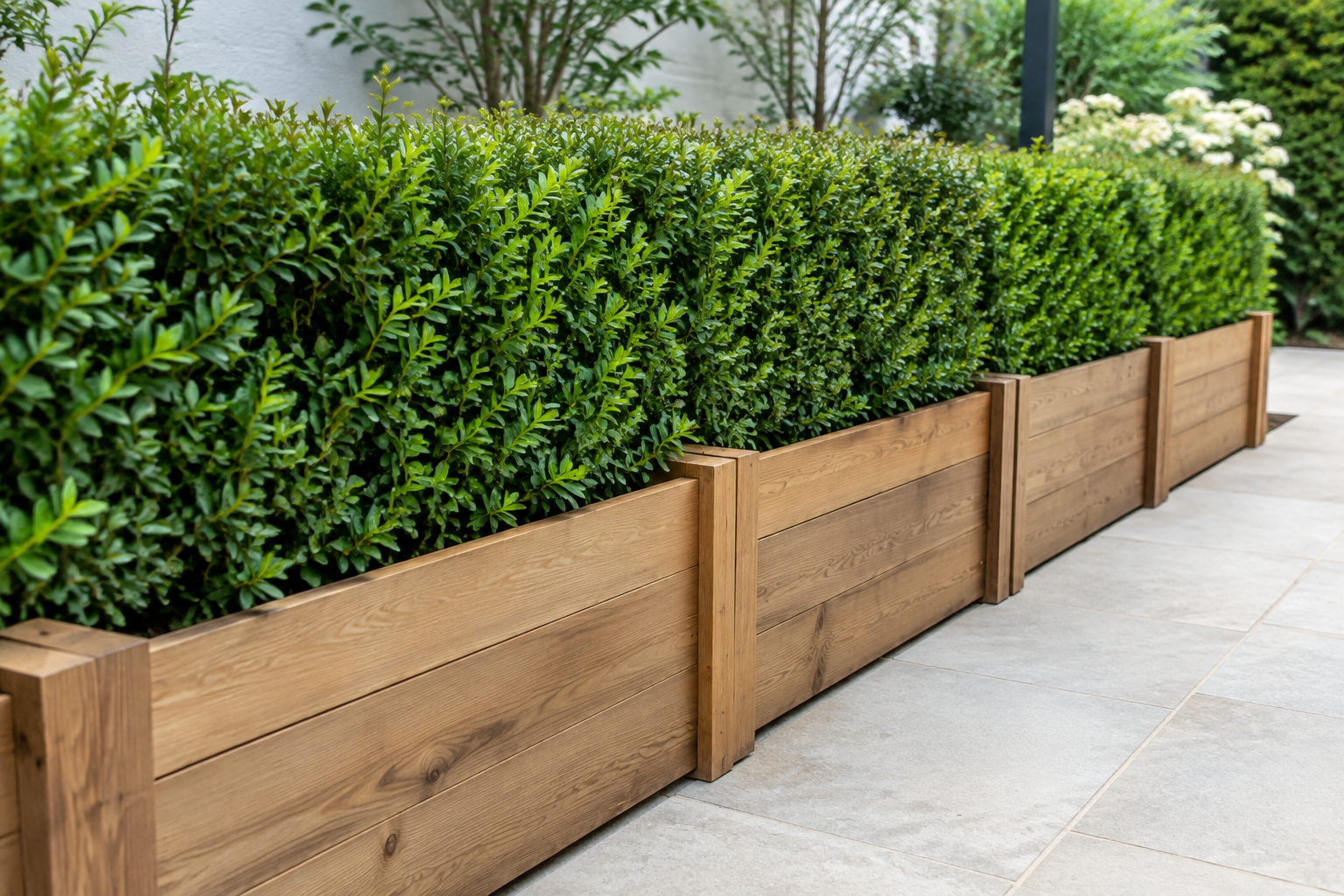
11. Planter Box Hedge Fence
Rectangular planter boxes filled with clipped box create a hedge you can move. It is the fastest way to add a green boundary.
Line the boxes with a waterproof membrane and fill with loam-based compost. Space them 60cm apart for a continuous line.
Choose a slow-growing shrub so trimming stays rare. Box, yew and Japanese holly all work.
Run the row along a patio edge to separate dining from lawn. The boxes double as seating height.
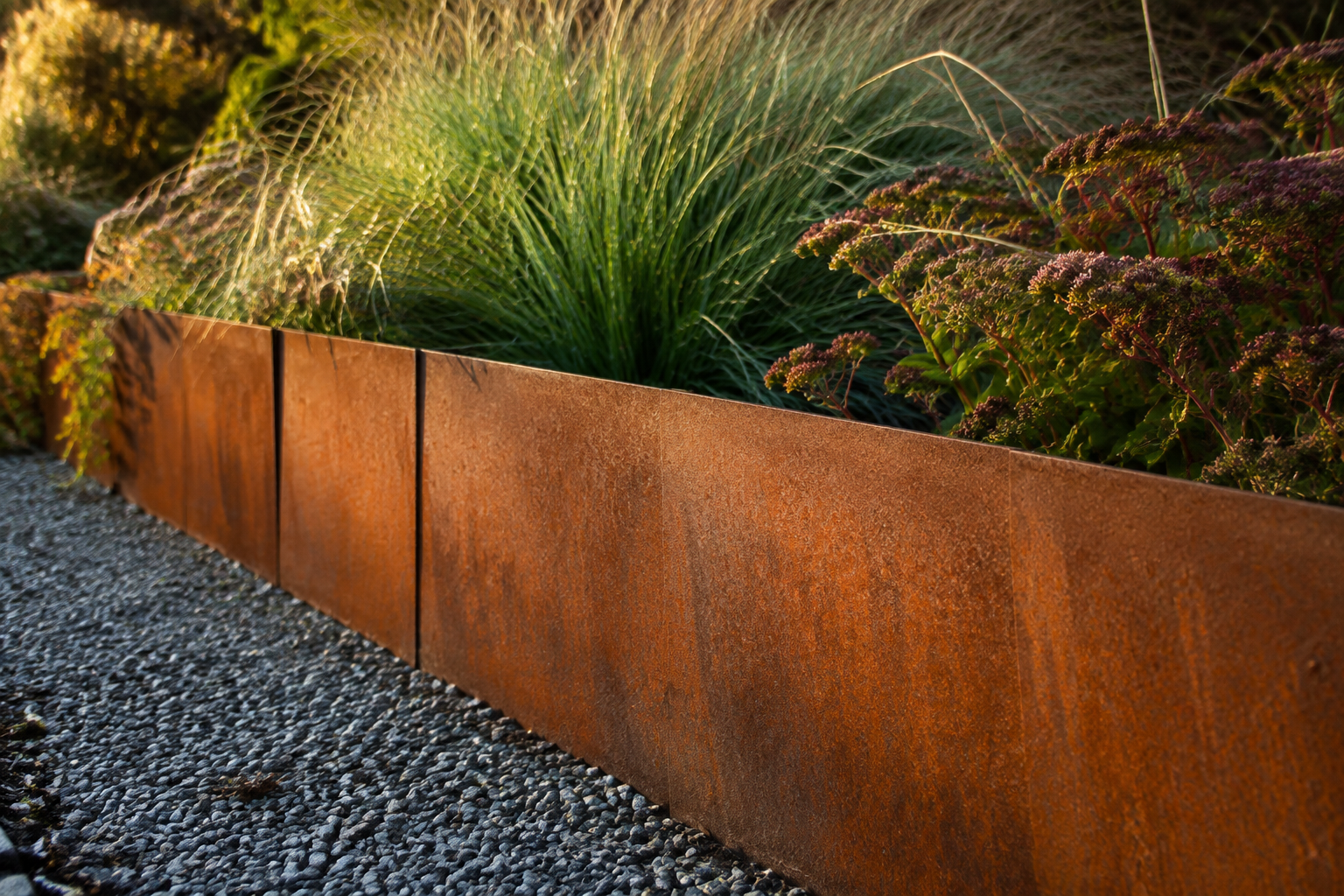
12. Corten Steel Edging Fence
Corten steel panels rust to a deep orange-brown and then stop. The stable surface means no maintenance for decades.
Set 30cm tall panels 5cm into the soil on a compacted base. Overlap the joints so the rust line reads as one surface.
The colour warms cool grey paving and dark green planting. It also looks good against gravel.
Plant ornamental grasses hard against the steel. Their soft seed heads contrast with the rigid panel.
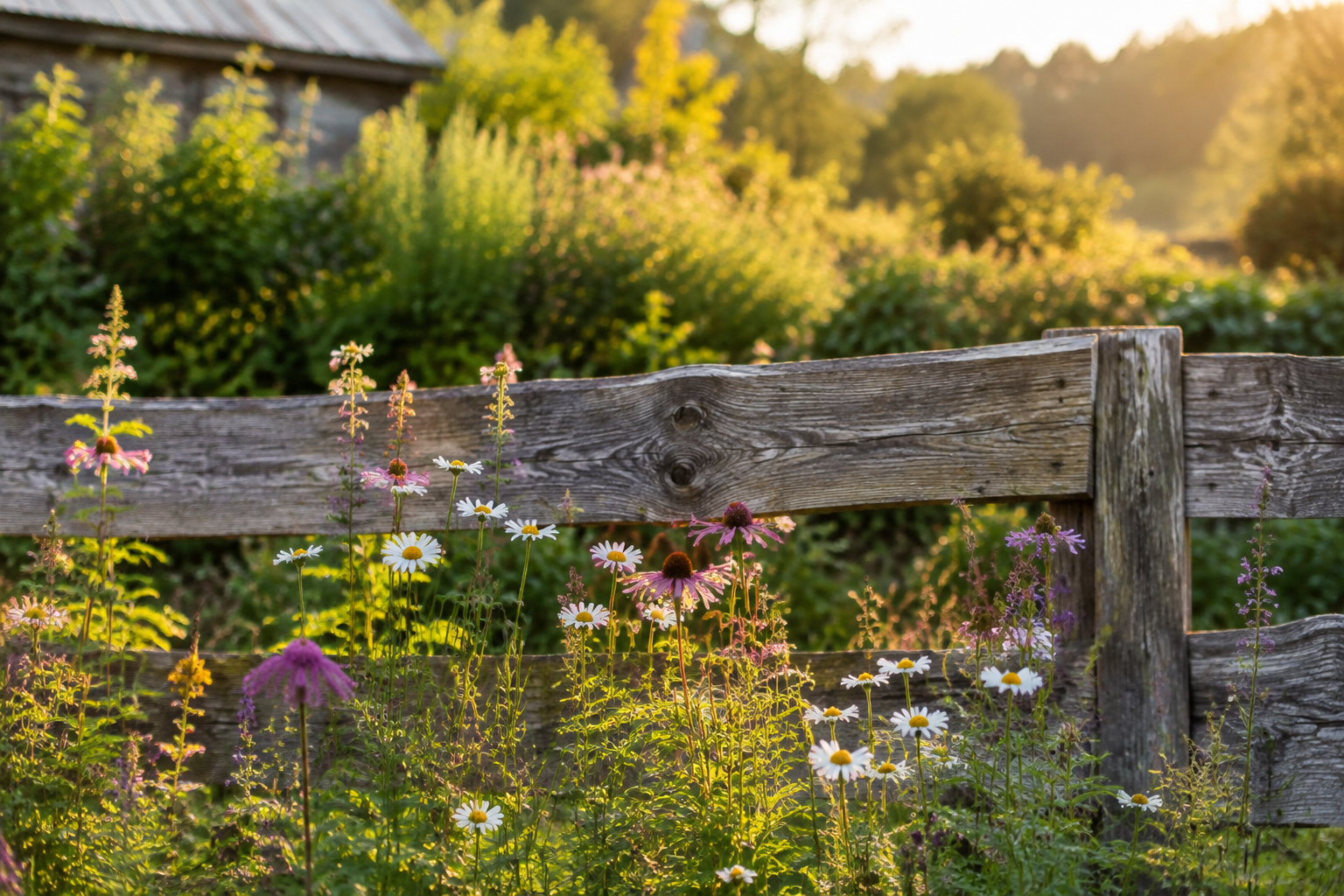
13. Reclaimed Barn Wood Fence
Old barn boards carry a century of grain and knots. A short fence made from them looks like it has always been there.
Sort boards by thickness before you start. Trim the rot and treat any soft patches with a hardening primer.
Fix them horizontally to treated rails with galvanised screws. Leave a small gap so water drains.
Wild cottage flowers at the base suit the weathered timber. Avoid tidy bedding plants that fight the look.
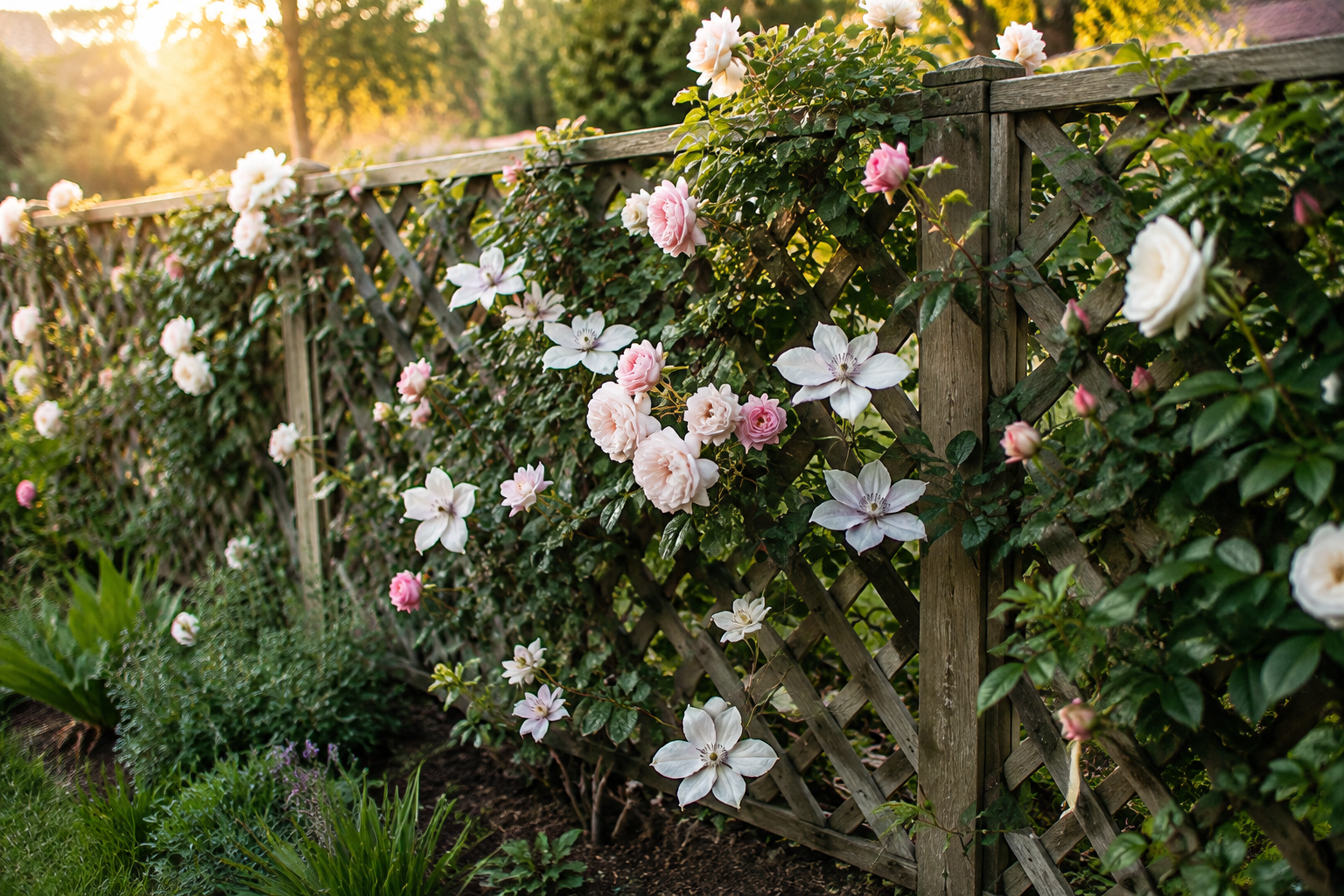
14. Rose-Covered Trellis Panel
A trellis panel gives climbers something to hold onto. Once covered, the fence becomes a wall of flowers.
Fix the trellis 5cm off the fence so air can move behind. This also stops damp rotting the timber.
Plant a repeat-flowering rose at each end. Tie in the main shoots horizontally to encourage more blooms.
Add clematis for a second season of colour. Choose a group that suits your pruning patience.
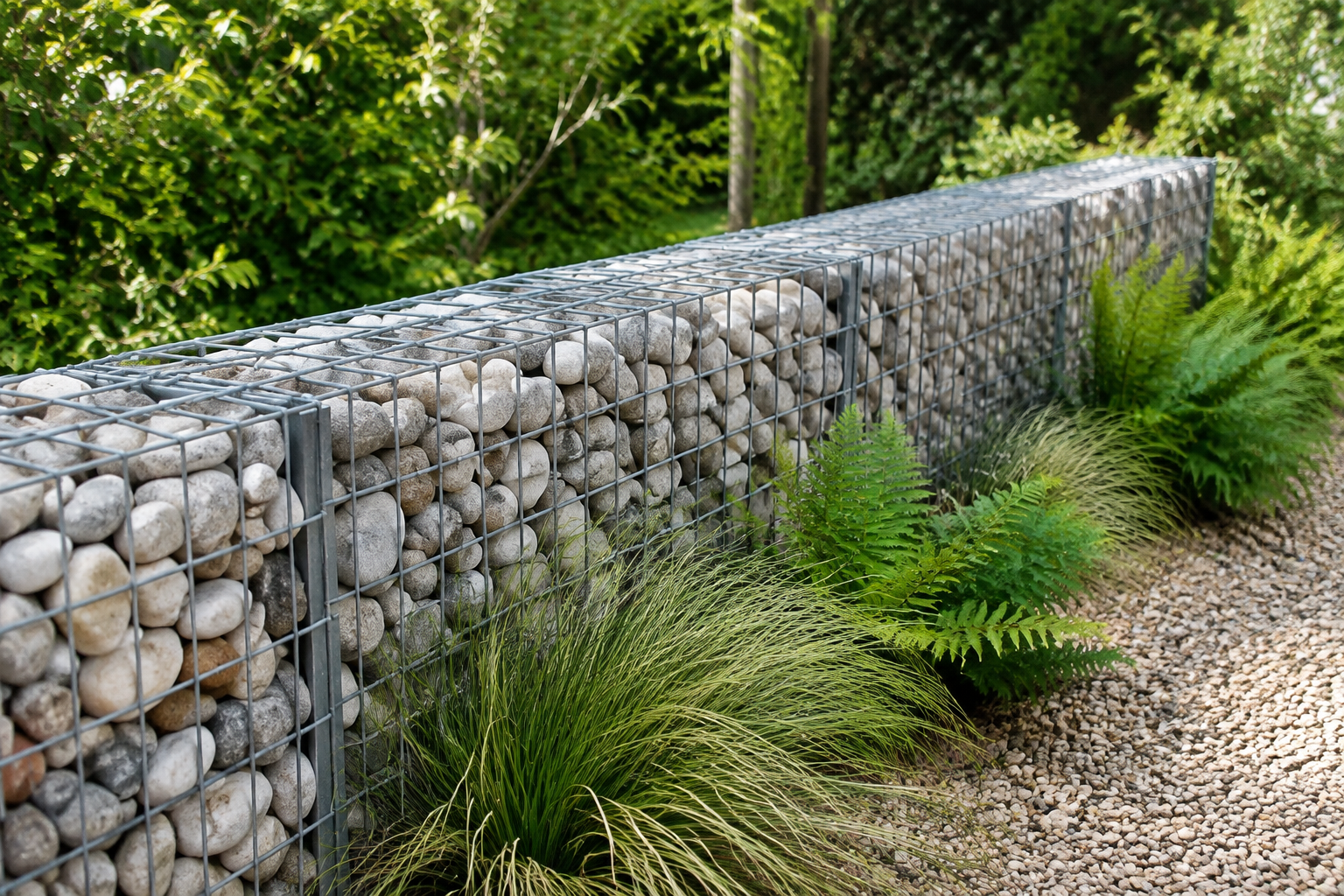
15. Gabion Stone Wall Fence
Gabion cages filled with pale river stone make a heavy, textural boundary. They look permanent and need almost no care.
Use 60cm tall cages and fill them with 60 to 100mm stone. Line the base with a geotextile membrane.
Stagger the joints between cages for strength. This also breaks up the grid pattern.
Grasses and ferns soften the hard edges. Plant them at the base rather than on top.
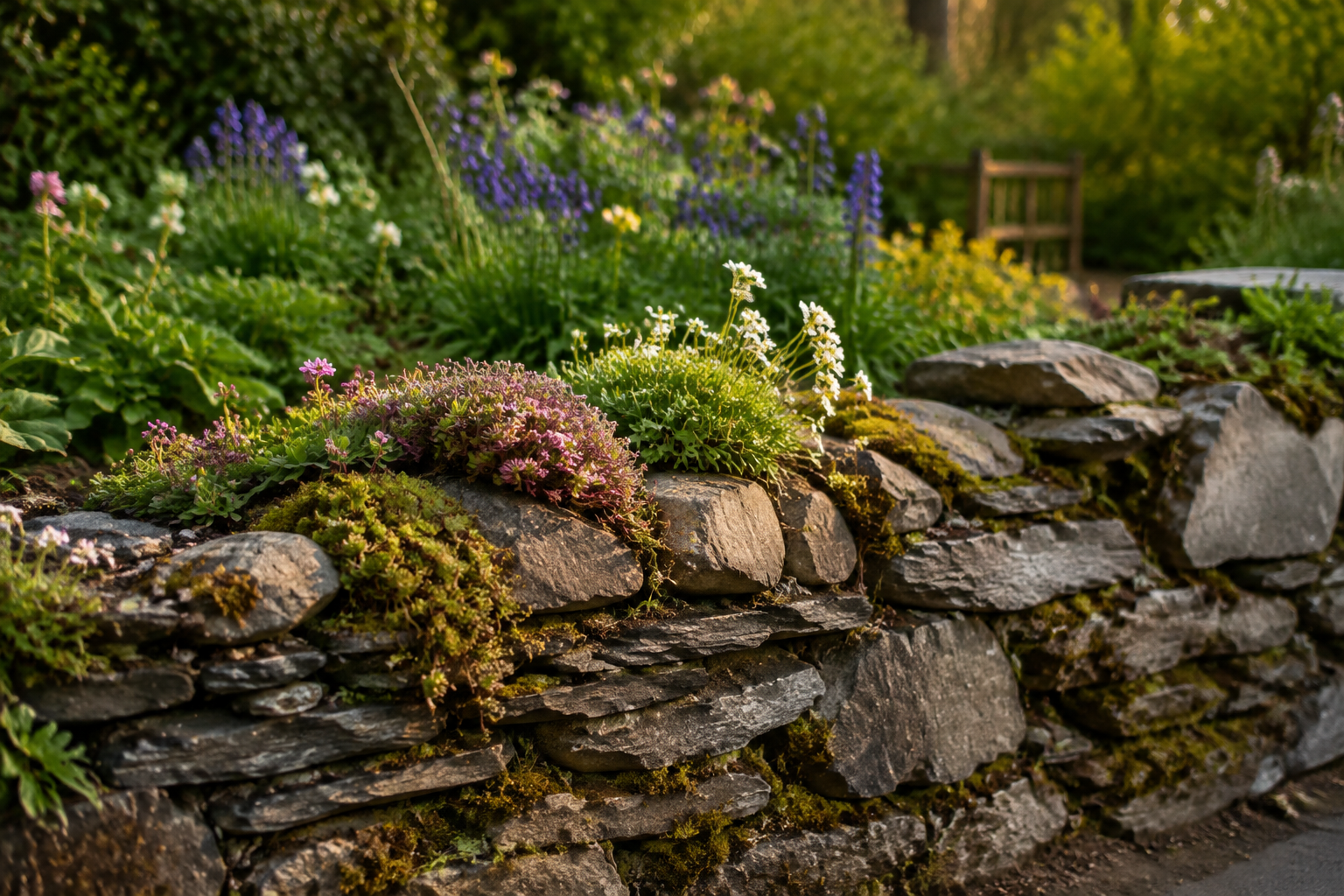
16. Dry-Stone Wall Border
A dry-stone wall is stacked without mortar, so it drains freely and lasts for generations. Even a 40cm wall is enough to edge a border.
Sort stones by size before you build. Place the largest first and wedge smaller stones into every gap.
Keep the wall slightly wider at the base than at the top. This shape holds everything in place.
Alpines and moss settle into the crevices on their own. Speed things up by pressing in small thymes.
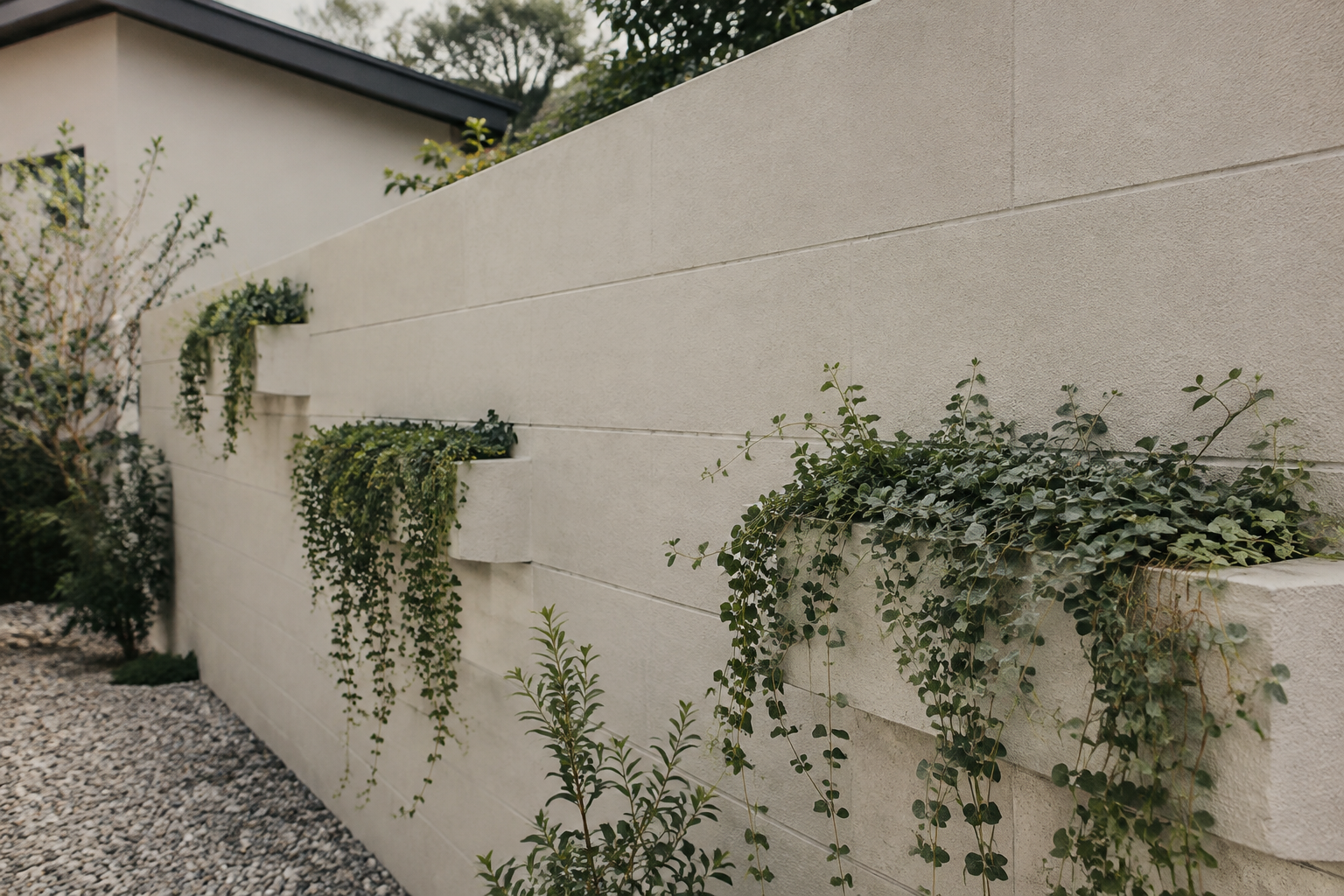
17. Rendered Block Wall with Niches
A rendered wall gives a smooth, quiet surface that suits contemporary gardens. Built-in niches turn it into a display shelf.
Build the blockwork first, then render it in two coats. Leave the niches 20cm deep so they hold pots securely.
Paint the render a warm off-white or soft clay tone. Pale walls make small gardens feel wider.
Fill the niches with trailing plants like ivy or dichondra. They spill over and soften the geometry.
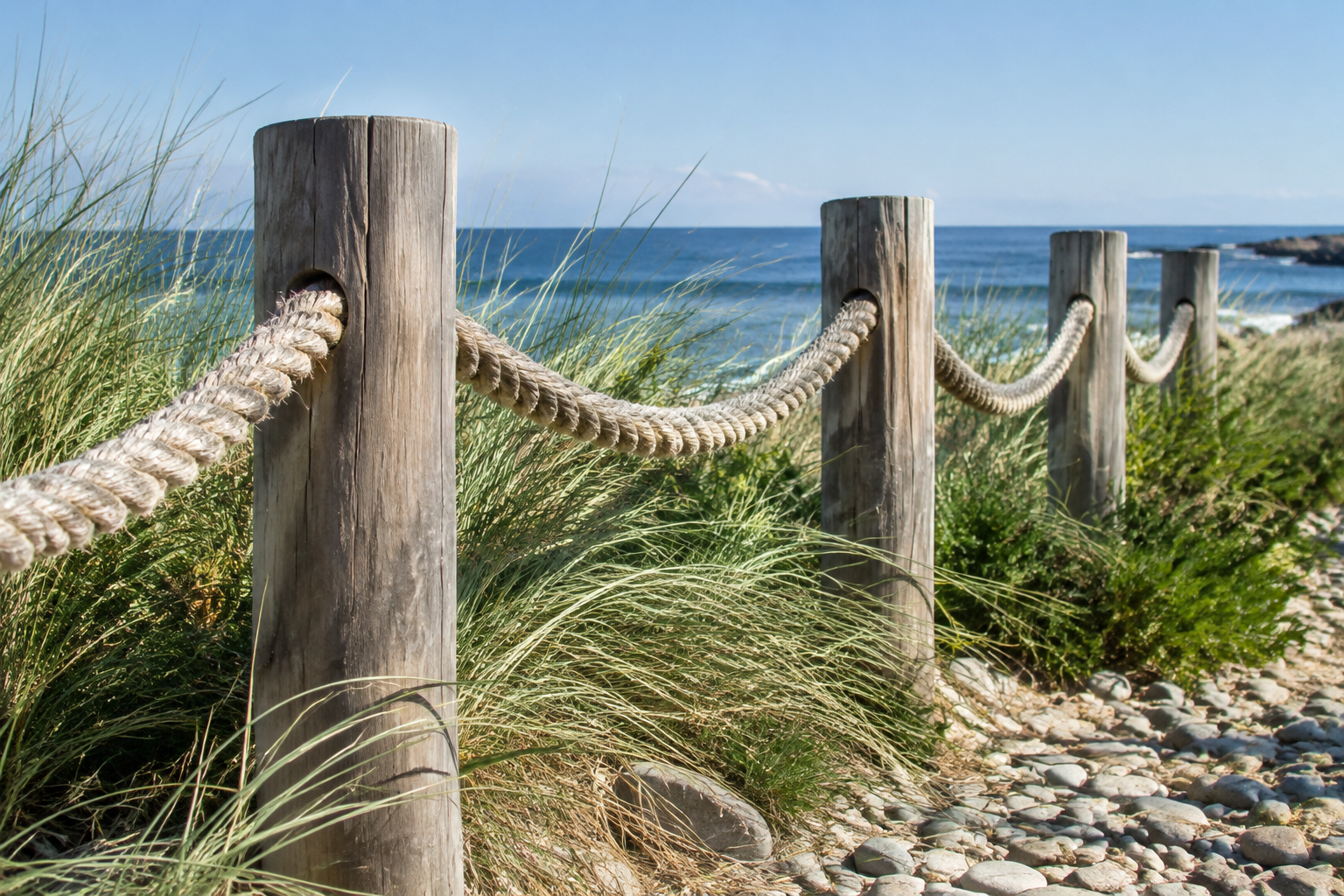
18. Rope and Post Fence
Thick rope swagged between chunky posts gives a relaxed coastal feel. It guides the eye without ever blocking the view.
Use marine-grade rope so it survives sun and salt. Fix it with stainless eye screws at 60cm and 90cm.
Leave the posts unpainted so they weather like driftwood. A pointed top sheds rain.
Sea grasses, pebbles and silver foliage complete the scene. Avoid bright flowers that fight the muted palette.
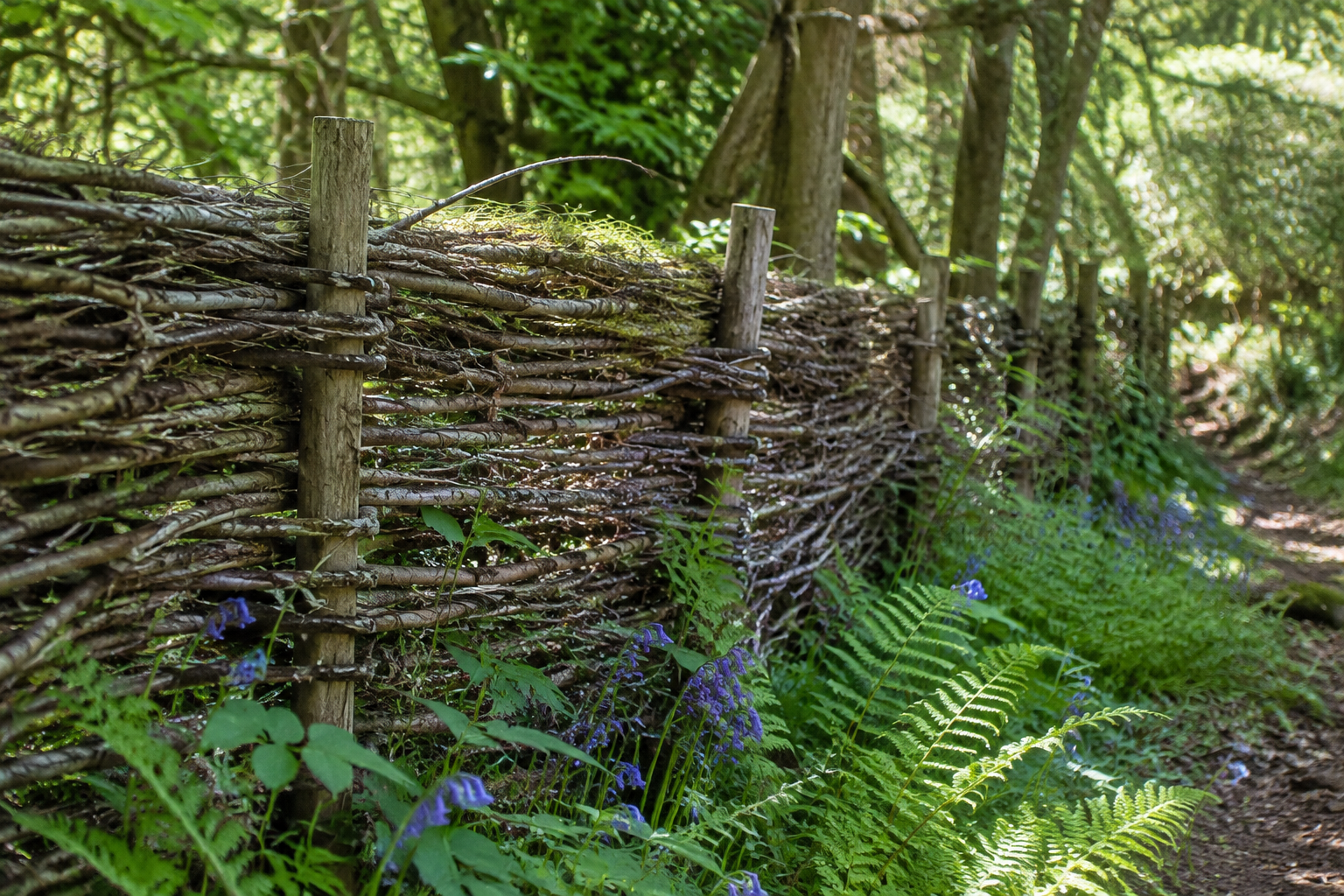
19. Hazel Brushwood Panels
Hazel brushwood panels are made from bundles of twigs bound to stakes. They look wild and cost very little.
Push the panels into the soil and tie them to stout stakes every 90cm. Overlap each panel by 5cm.
These panels last around five years before they need replacing. Keep them off wet ground to slow rot.
Bluebells and ferns suit the woodland mood. Both tolerate the dappled shade brushwood creates.
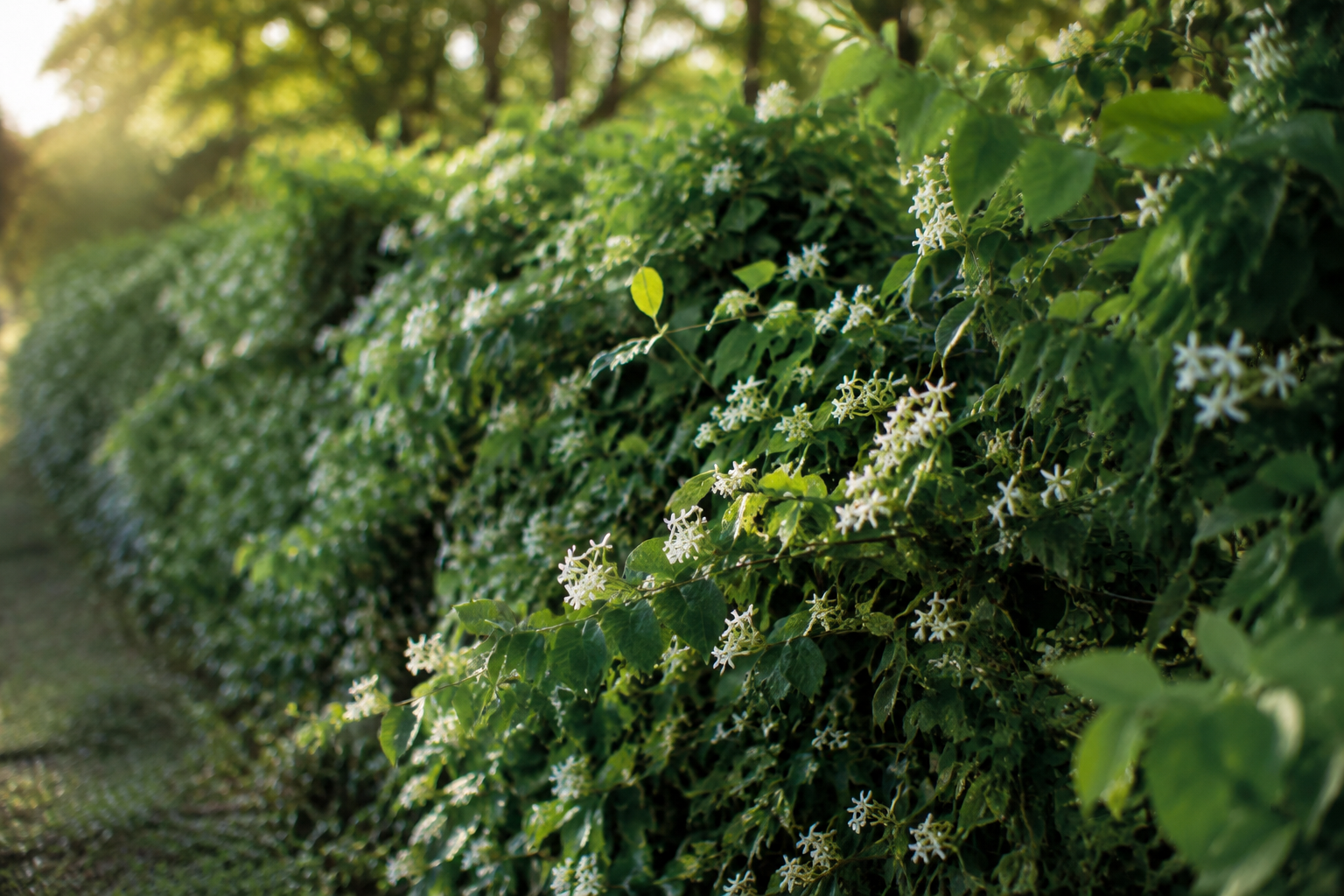
20. Vine-Covered Wire Fence
A plain wire fence disappears once climbers take over. Within two seasons you have a green boundary that flowers.
Run tensioned wires between posts at 30cm intervals. Use vine eyes to keep the wires off the timber.
Plant jasmine for scent or a rambling rose for early summer colour. Both cover quickly.
Tie new growth in every few weeks. Without help, climbers bunch at the base and leave the top bare.
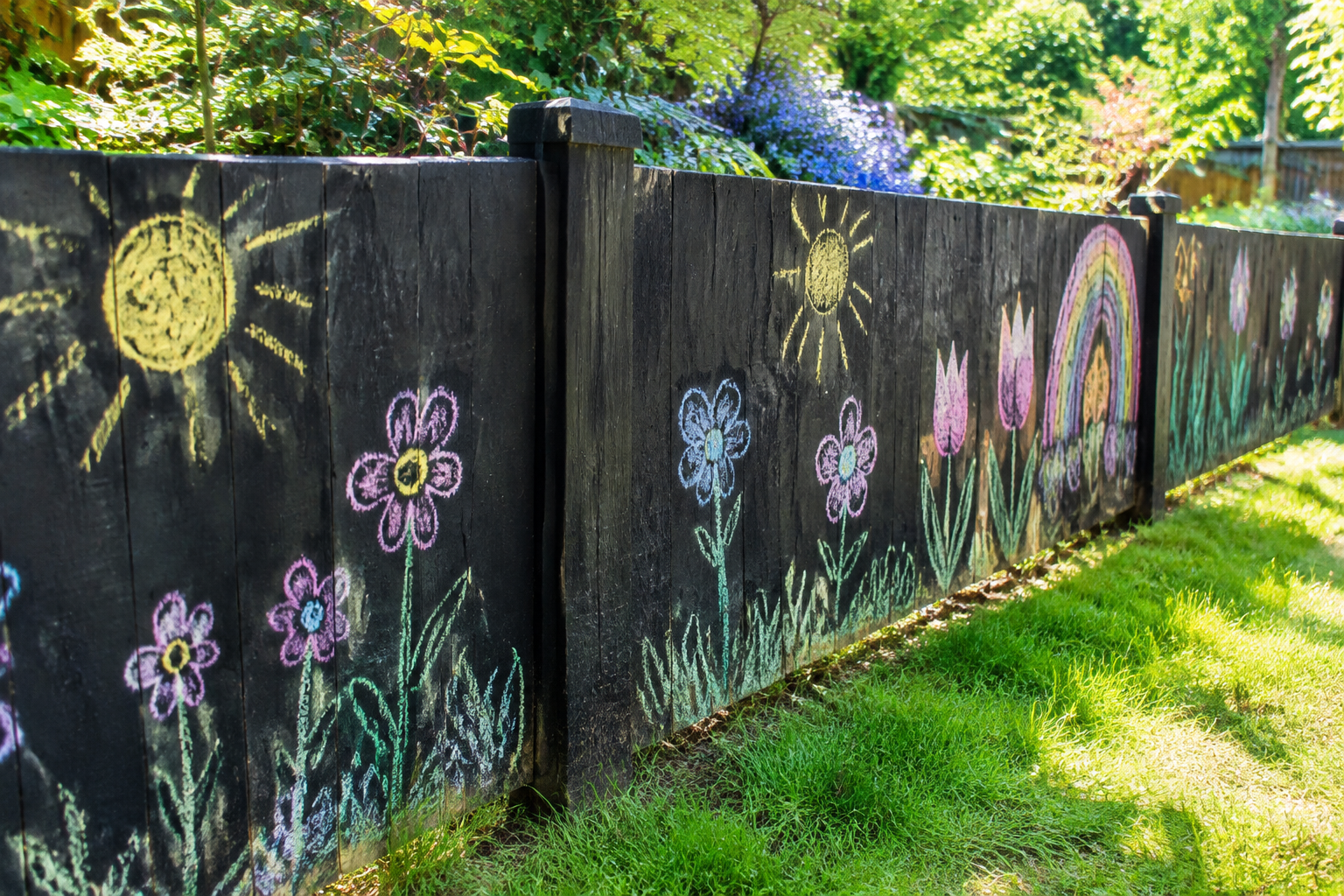
21. Chalkboard Play Fence
Chalkboard paint turns a low fence into a drawing surface. Children use it while you garden, and rain wipes it clean.
Sand the boards smooth, then apply two coats of exterior chalkboard paint. Let it cure for three days before use.
Keep the height at 80 to 90cm so small children can reach. Round the top edges to remove sharp corners.
Store chalk in a small tin fixed to a post. Choose dust-free chalk to keep the garden tidy.
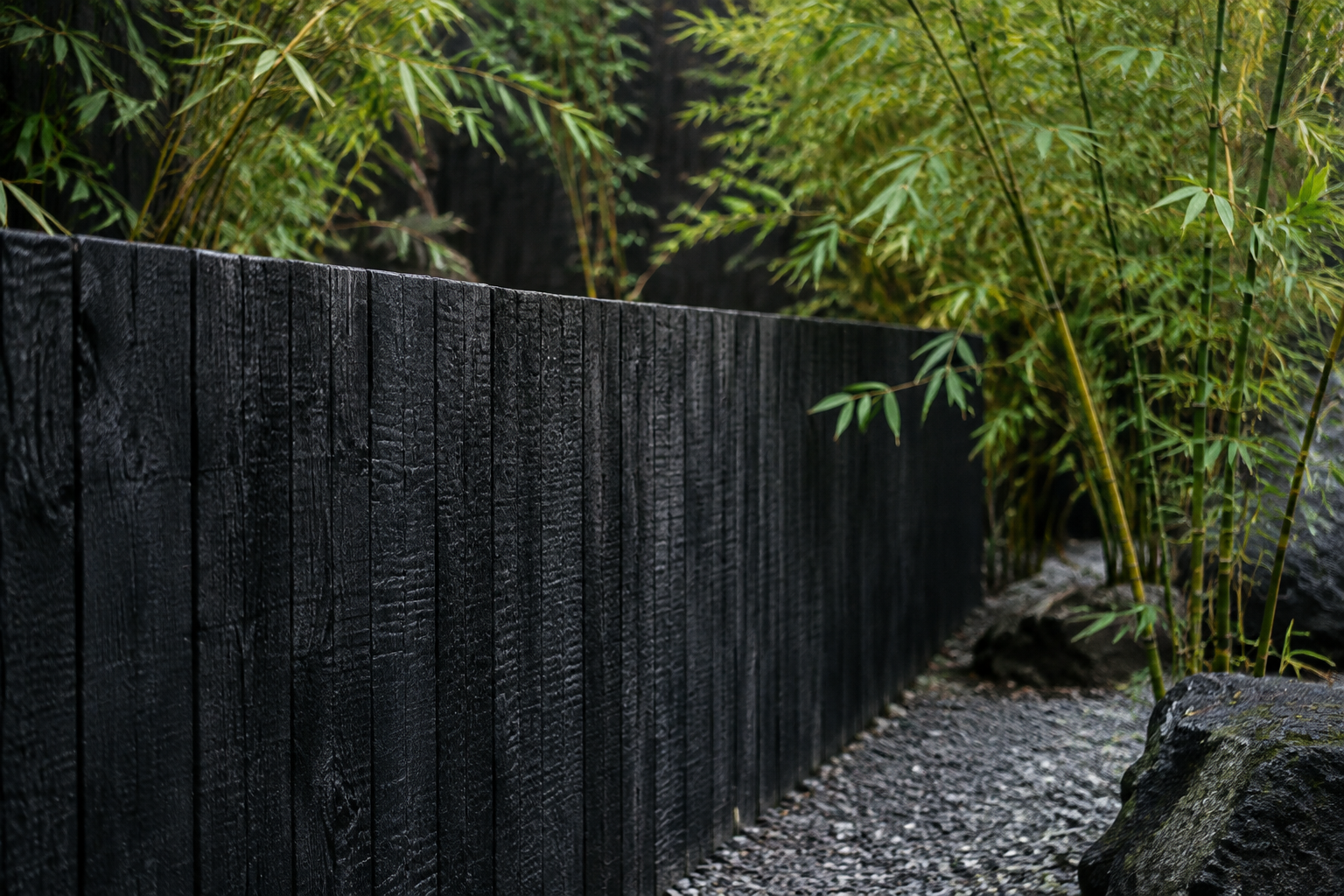
22. Charred Timber Fence
Charred wood, known as shou sugi ban, is burnt to seal the surface. The result is a deep black fence that resists rot and insects.
Boards are burnt with a blowtorch, brushed, then oiled. Buying pre-charred boards saves time and gives a more even finish.
The black surface makes greens look brighter. That contrast is why it suits modern planting so well.
Pair it with bamboo and gravel for a calm, architectural feel. Keep the fence line simple and unfussy.
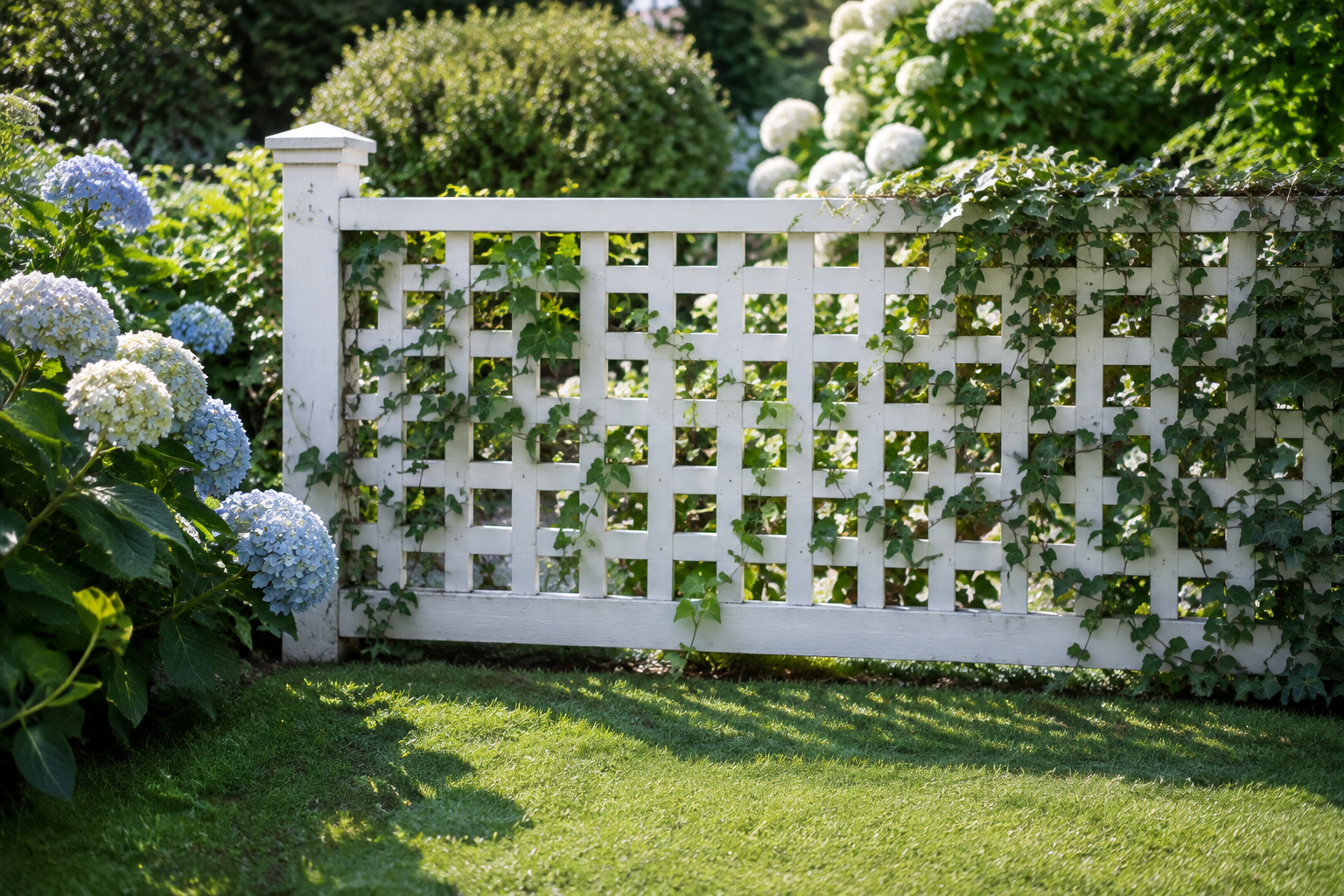
23. White Square Lattice Fence
Square lattice adds structure without weight. Painted white, it reads as a classic garden detail and lets light through.
Fix lattice panels into a timber frame for strength. A bare panel flexes and will not stay flat.
Choose a lattice with 100mm openings. Smaller squares block light and collect debris.
Let ivy creep through a few openings. Partial cover looks more natural than a fully smothered panel.
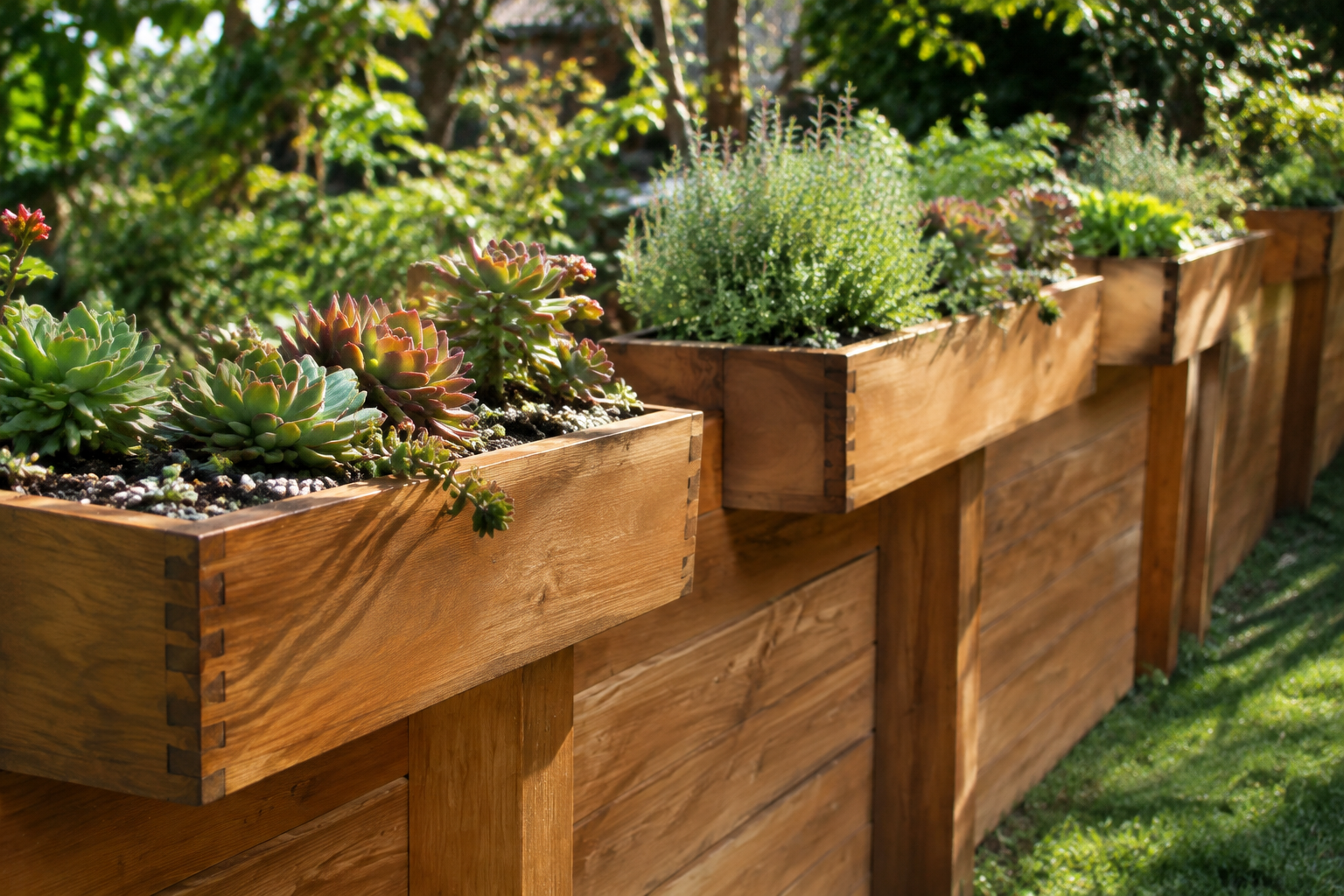
24. Fence with Built-In Planter Boxes
Planter boxes fixed along the top of a fence turn wasted space into growing room. They suit herbs, succulents and small flowers.
Fix the boxes with brackets through the posts, not the panels. That way the weight sits on structure.
Drill drainage holes and add a layer of gravel. Line the sides with membrane to protect the timber.
Choose drought-tolerant plants so the boxes do not need daily water. Succulents and sedums cope best.
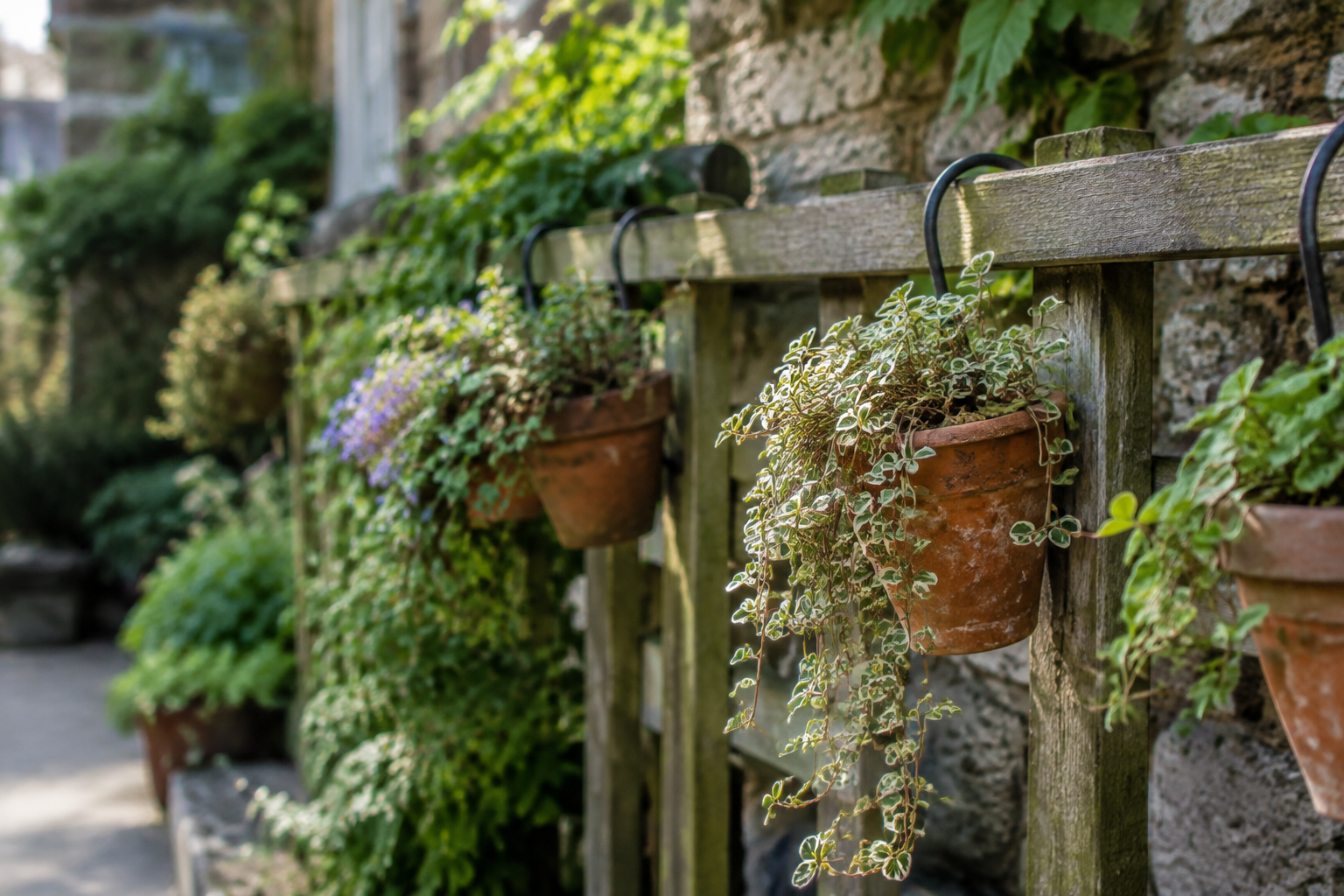
25. Hanging Pot Fence Panel
Small terracotta pots hung on hooks turn a plain panel into a living wall. It is cheap, quick and easy to change each season.
Fix hooks into the top rail where the timber is thickest. Space them 30cm apart for balance.
Use light plastic pots behind terracotta faces if weight is a concern. Both look the same from a distance.
Trailing plants like ivy and nasturtium hide the hooks. Their spill softens the straight fence line.
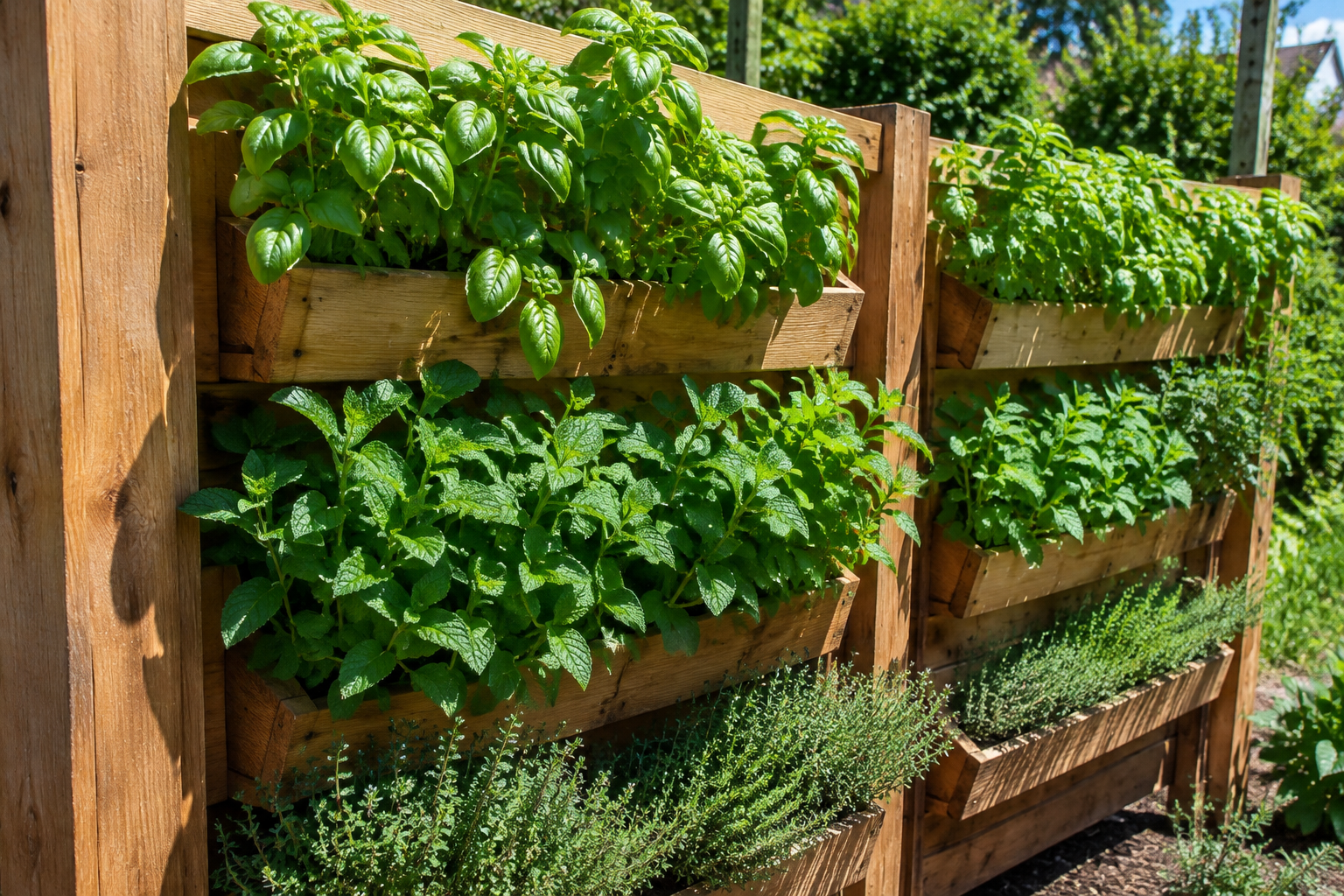
26. Vertical Herb Garden Fence
A tiered herb fence puts parsley, mint and thyme within arm’s reach of the kitchen door. It also smells wonderful in the sun.
Fix shallow wooden pockets to the fence in three staggered rows. Line each pocket with membrane before filling.
Use a gritty compost mix so water drains fast. Herbs hate sitting in wet soil.
Trim regularly to keep the plants bushy. Pick from the top so each plant keeps its shape.
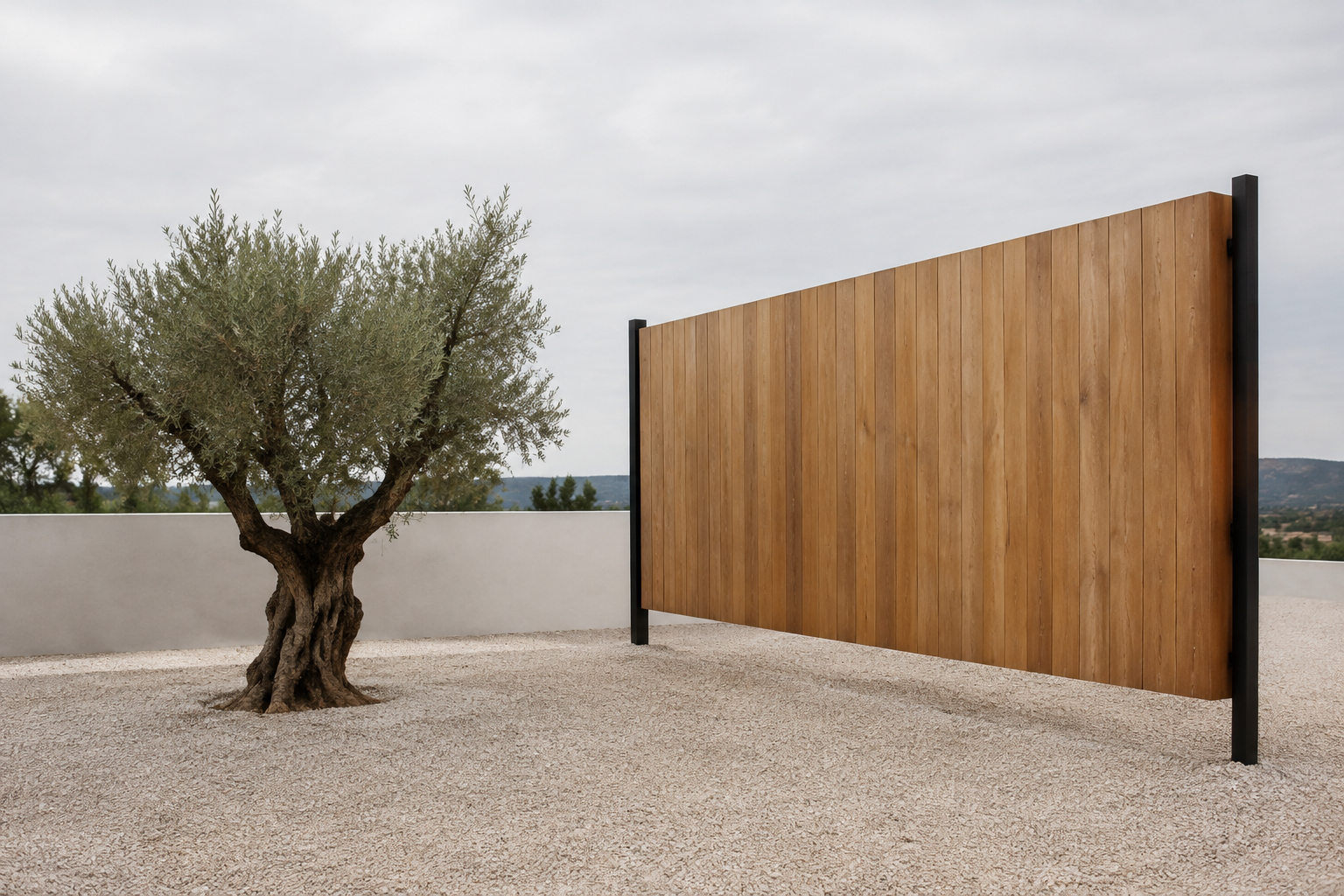
27. Floating Cedar Panel
A single cedar panel held between two posts looks like a piece of furniture. It defines a space without closing it.
Set the posts in concrete and leave a 10cm gap under the panel. The gap stops water pooling at the base.
Keep the panel narrow, around 1.2m wide. Wider spans need a frame that spoils the clean look.
Place one sculptural plant nearby. A single olive or acer gives the panel something to frame.
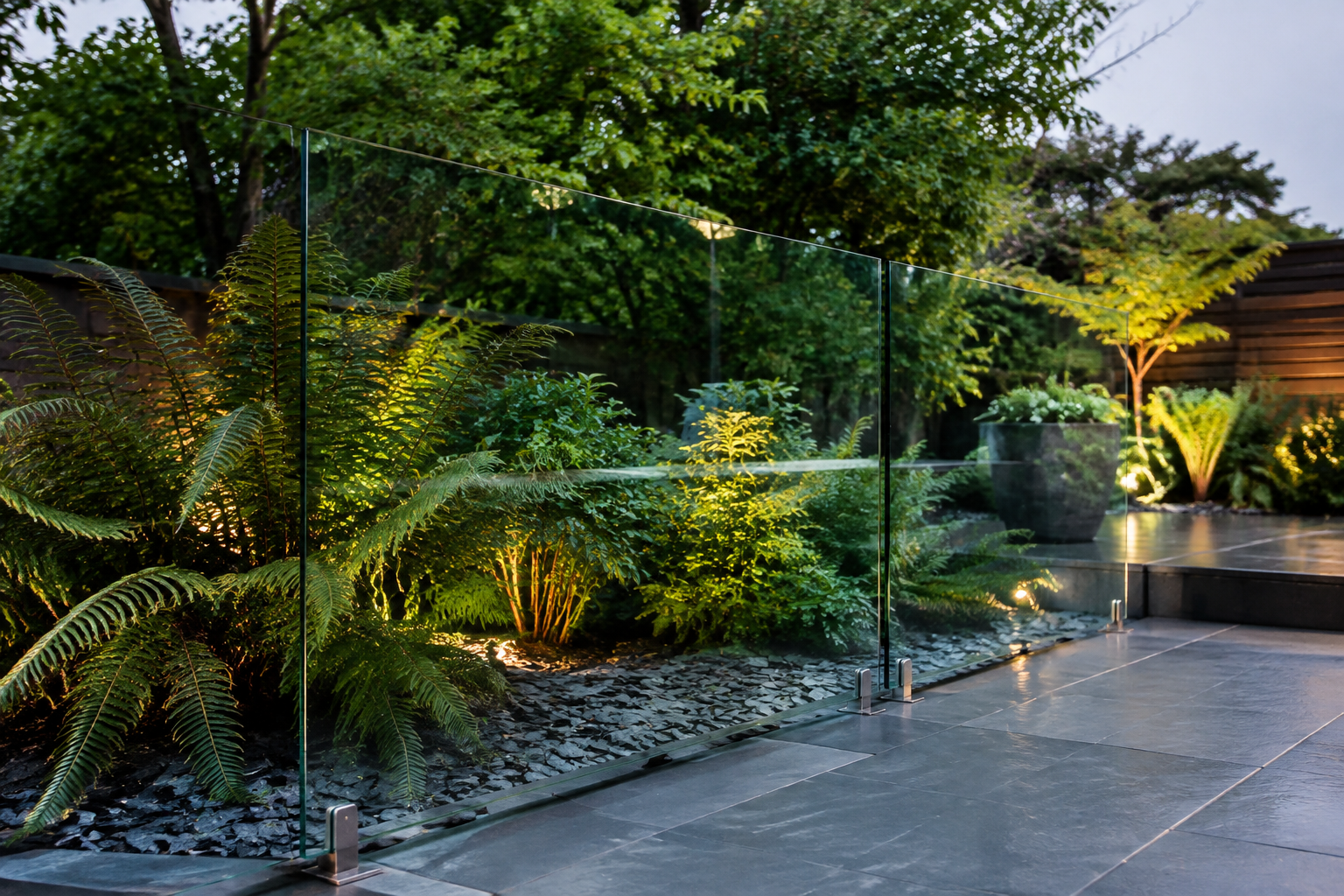
28. Frameless Glass Screen
Glass screens block wind but keep every view. In a small garden that openness is worth more than privacy.
Use toughened glass at least 10mm thick and clamp it into steel shoes. Never drill the glass for fixings.
Choose low-iron glass for clearer views. Standard glass carries a green tint that dulls foliage.
Clean the glass monthly with a soft cloth. Smudges show badly in low evening light.
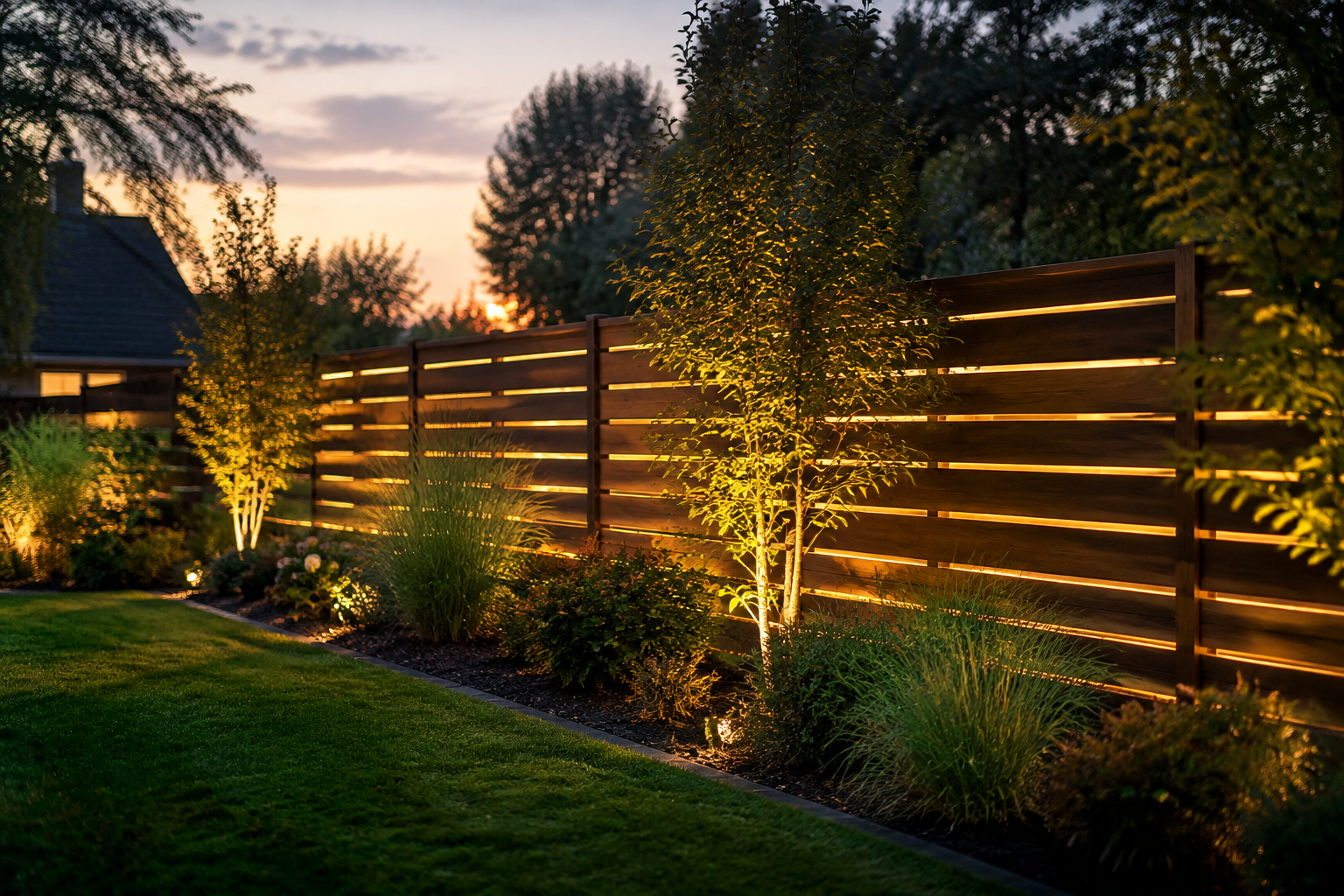
29. Backlit Slatted Fence
Hidden LED strips turn a slatted fence into a glowing screen after dark. It extends the garden into the evening.
Run weatherproof warm-white strips along the inside of the top slat. Hide the driver in a sealed box behind a post.
Use a dimmer so the light stays gentle. Bright light flattens the garden and upsets neighbours.
Point the light downward onto planting. Grazing light shows leaf texture far better than a floodlight.
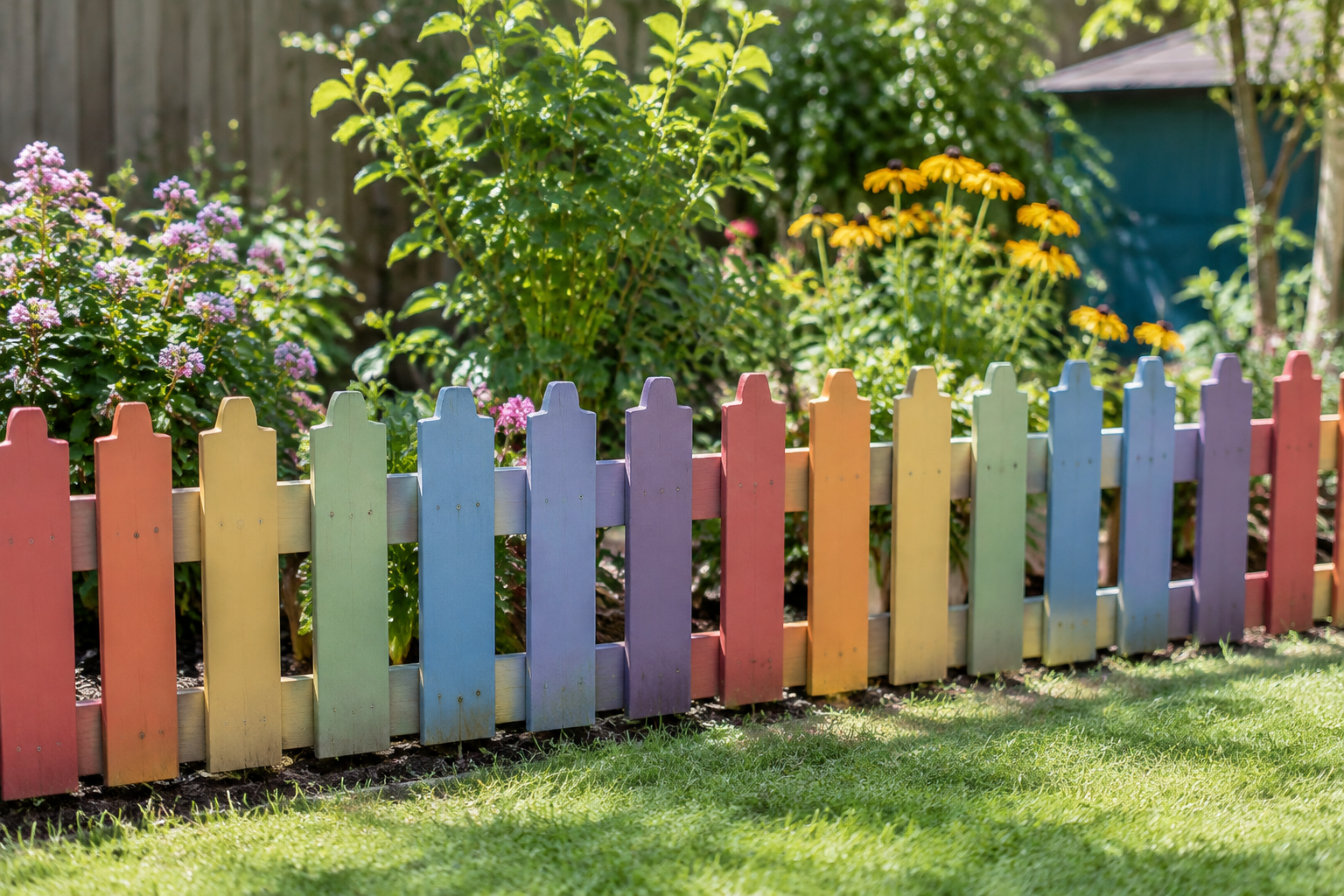
30. Rainbow Picket Fence
A rainbow fence brings instant cheer to a family garden. Each picket takes one colour, moving through the spectrum.
Use exterior wood paint in muted tones rather than neon. Softer colours age better in strong sun.
Paint the pickets before fixing them. It is faster and avoids paint bleeding onto the posts.
Keep the rest of the garden simple. Green lawn and a few white flowers let the fence be the star.
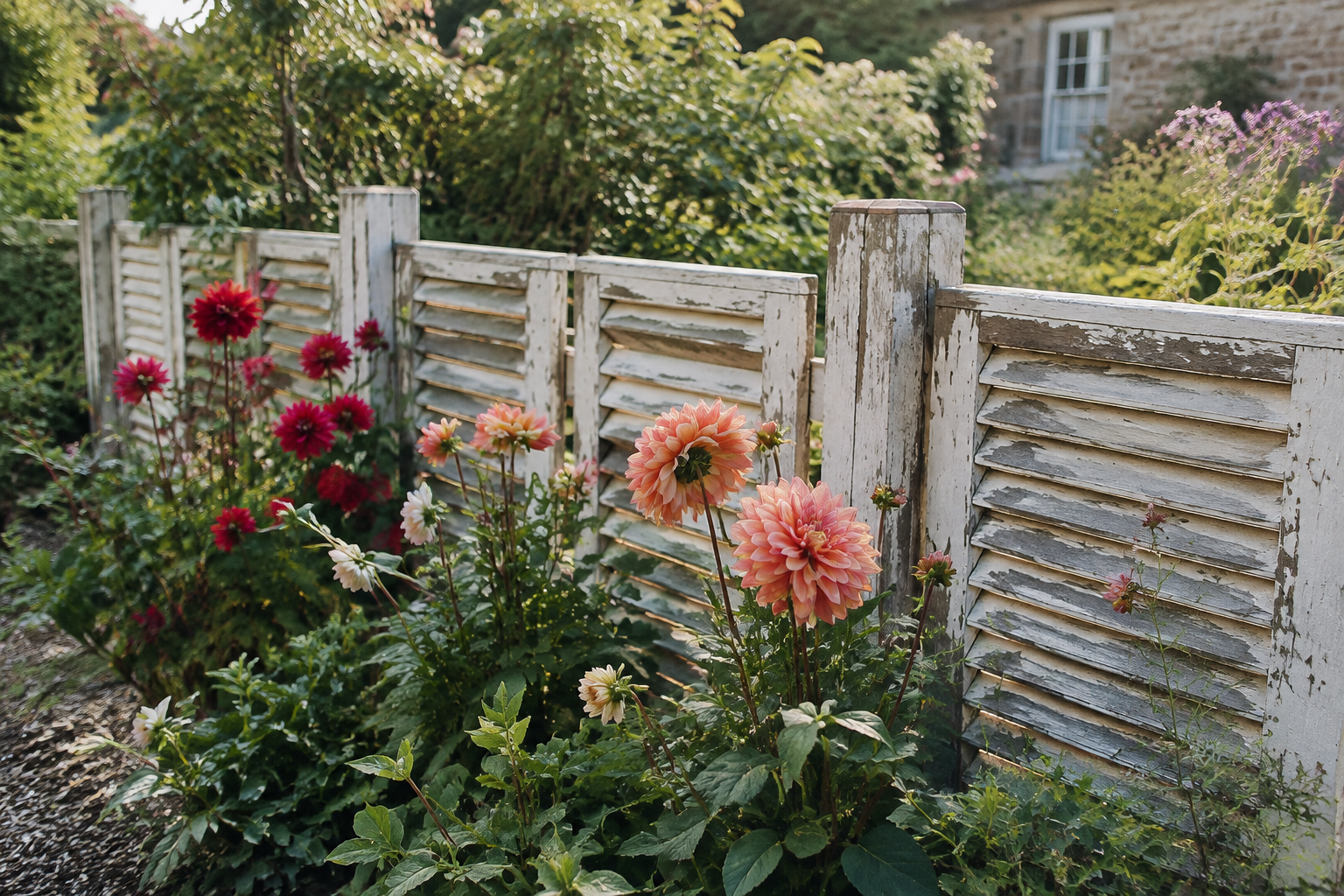
31. Upcycled Shutter Fence
Old louvred shutters make a light, airy fence with built-in texture. They are often free at salvage yards.
Stand each shutter upright between two posts and screw through the frame. Leave a small gap between shutters.
Strip loose paint and seal the timber before fixing. Lead paint needs professional removal, never sanding.
Dahlias and cosmos in front suit the faded, romantic mood. Both flower long into autumn.
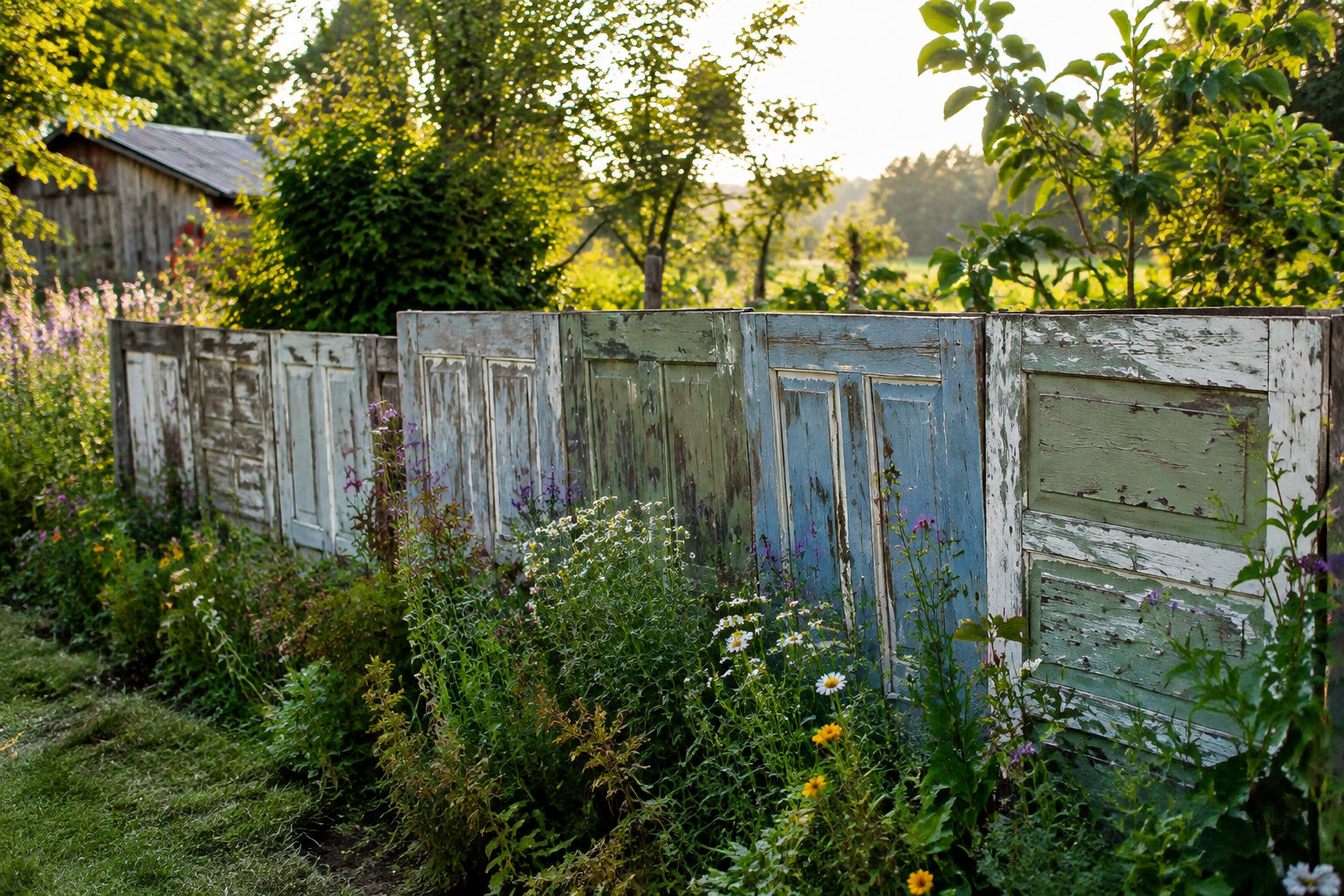
32. Old Door Boundary Fence
Reclaimed panel doors set side by side make a boundary with real character. Each one brings its own colour and history.
Sink a post between each door for support. Doors alone cannot carry wind load.
Seal the bottom edge with a strip of timber to stop water wicking up. That detail doubles the life of the fence.
Paint them all one colour, or leave the mixed finishes. Mixed looks best against wild planting.
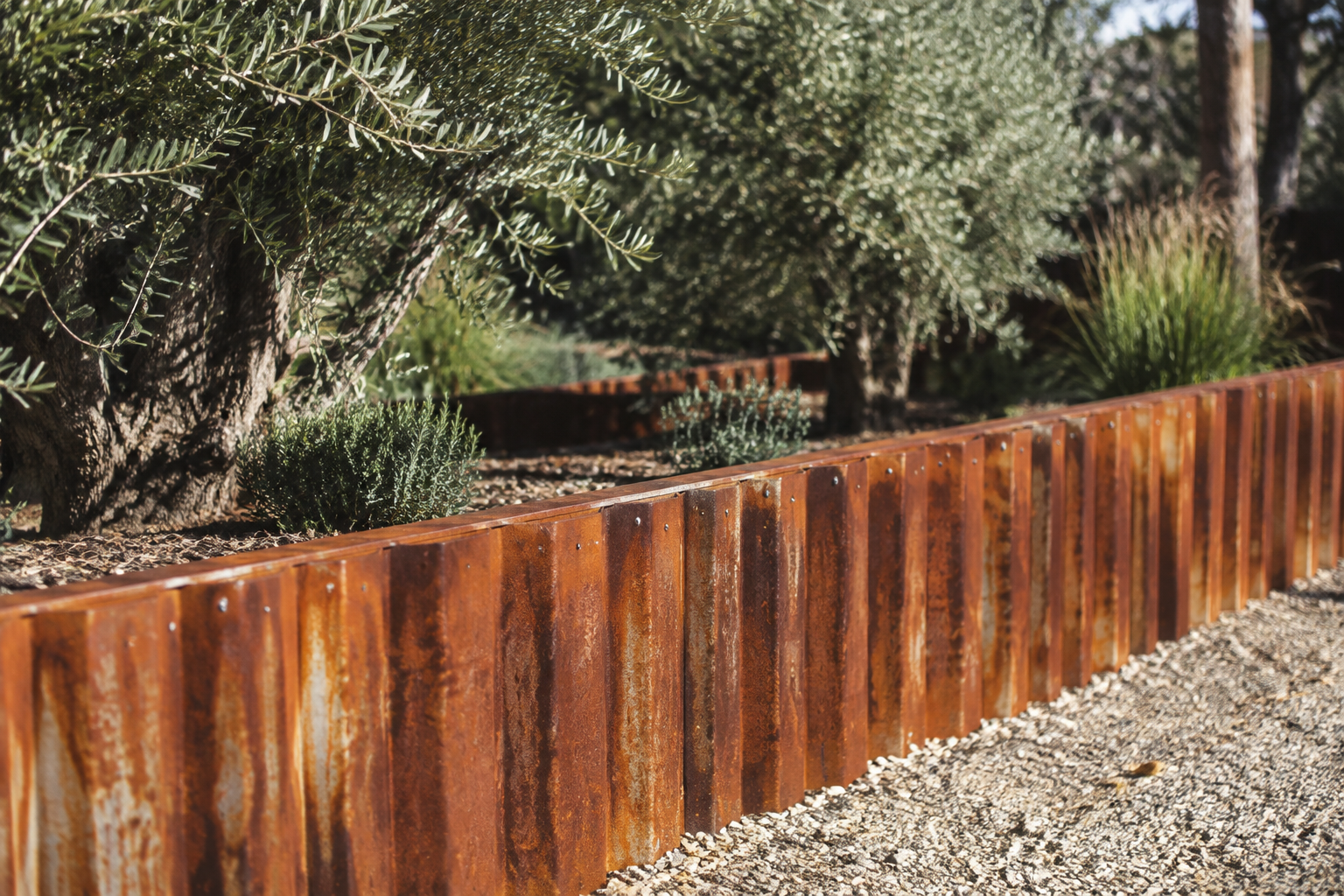
33. Rusted Corrugated Metal Fence
Corrugated metal rusts to a warm orange-brown that glows at sunset. It makes a bold, industrial edge for a small plot.
Fix sheets to steel posts with self-tapping screws and washers. Overlap each sheet by one corrugation.
Seal the cut edges to prevent sharp corners. Gloves and eye protection are essential here.
Olive trees and gravel plant the look properly. Add a few grasses to break the metal line.
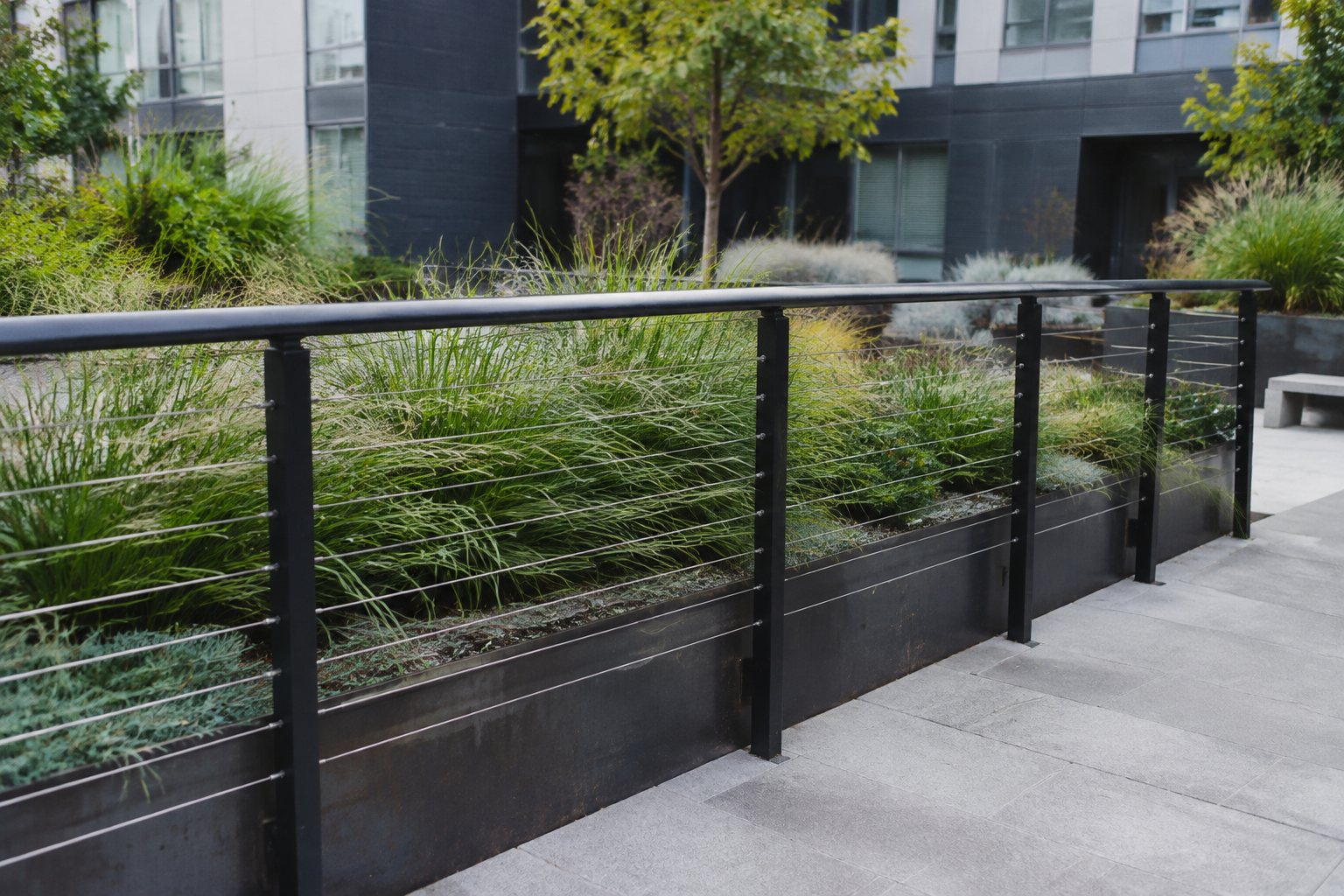
34. Steel Pipe and Cable Fence
Steel pipes with stainless cables between them create a fence you can see straight through. It looks engineered and precise.
Set 48mm posts in concrete at 1.8m intervals. Run cables through drilled holes and tension them with turnbuckles.
Choose a matt black or galvanised finish. Both need almost no maintenance.
Low grasses and gravel at the base keep the lines clean. Avoid bushy plants that swallow the posts.
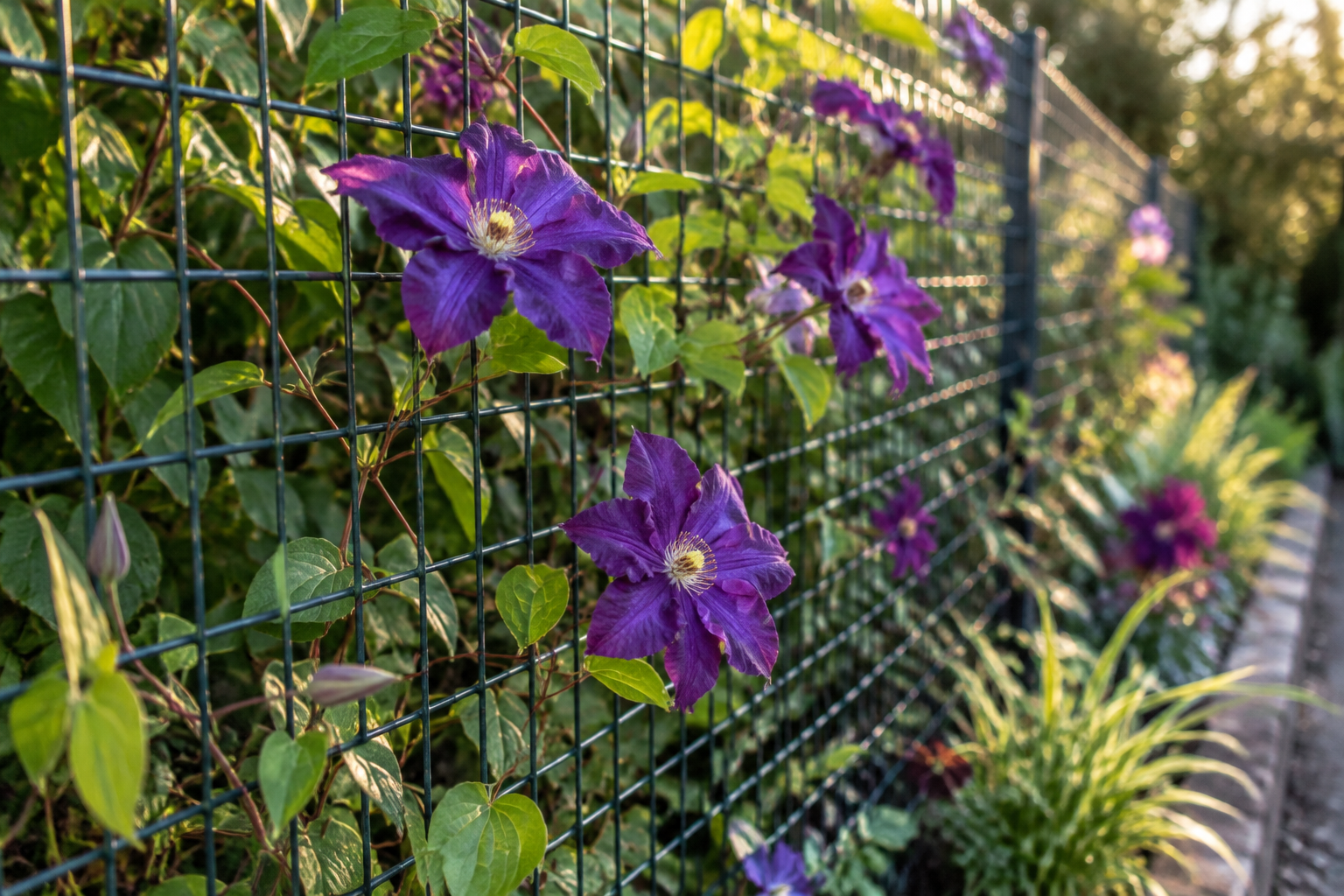
35. Clematis Mesh Fence
A close-mesh fence gives clematis plenty to grip. The wire vanishes behind a curtain of flowers by midsummer.
Use welded mesh with 50mm openings and fix it to posts with tension bands. Pull it tight so it does not sag.
Plant clematis 30cm away from the fence and angle the stem towards it. This keeps the roots cool.
Mulch the roots and keep them shaded. Clematis flowers best with a cool base and a sunny top.
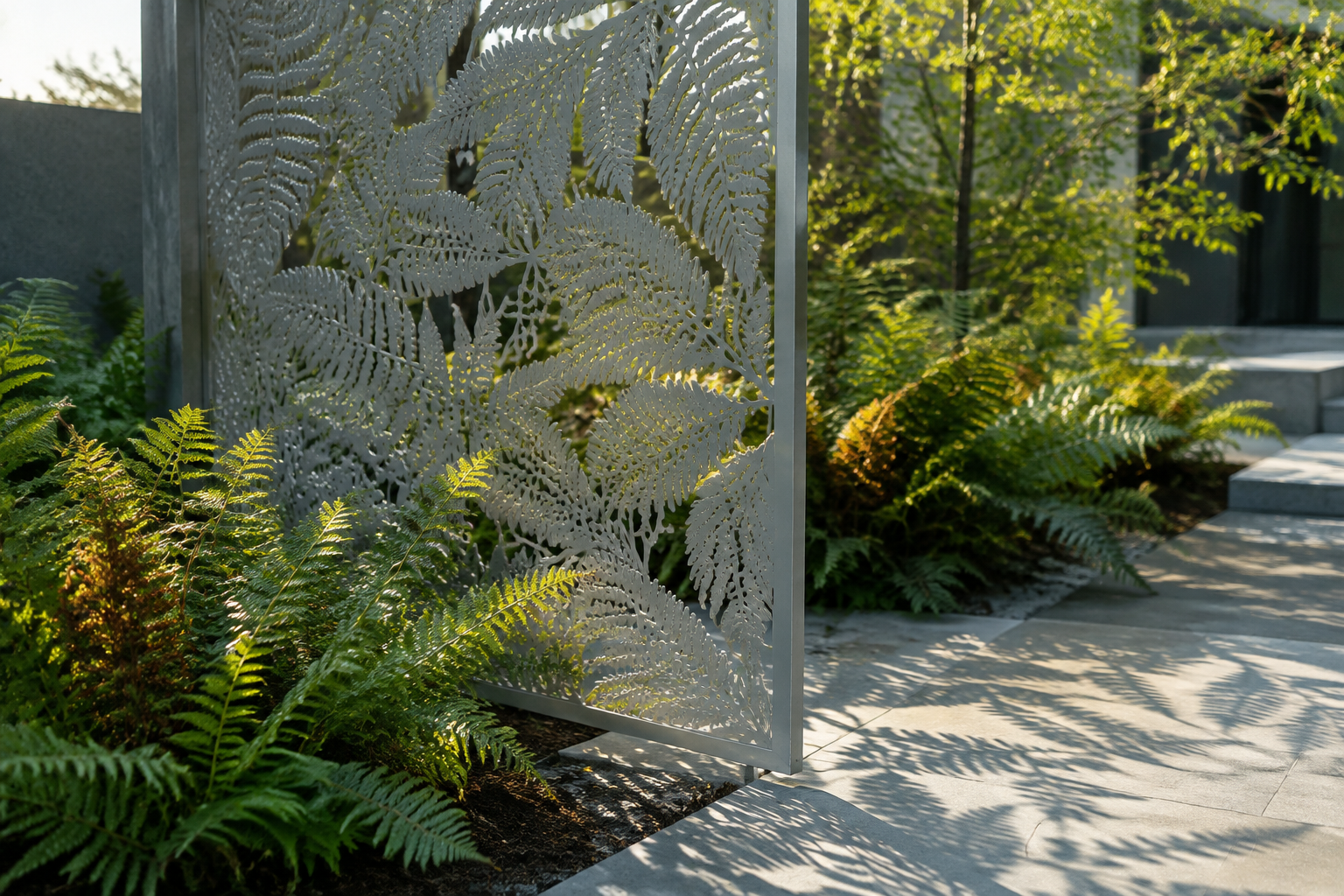
36. Laser-Cut Fern Screen
A screen cut with fern shapes brings planting into the structure itself. The pattern reads clearly against the sky.
Order panels in powder-coated aluminium for a light, rust-free screen. Fix them to posts with a hidden channel.
Place a real fern bed behind so cut-outs and leaves overlap. The effect is deeper than either alone.
Wash the panel twice a year with a hose. Dust dulls the pattern and traps moisture.
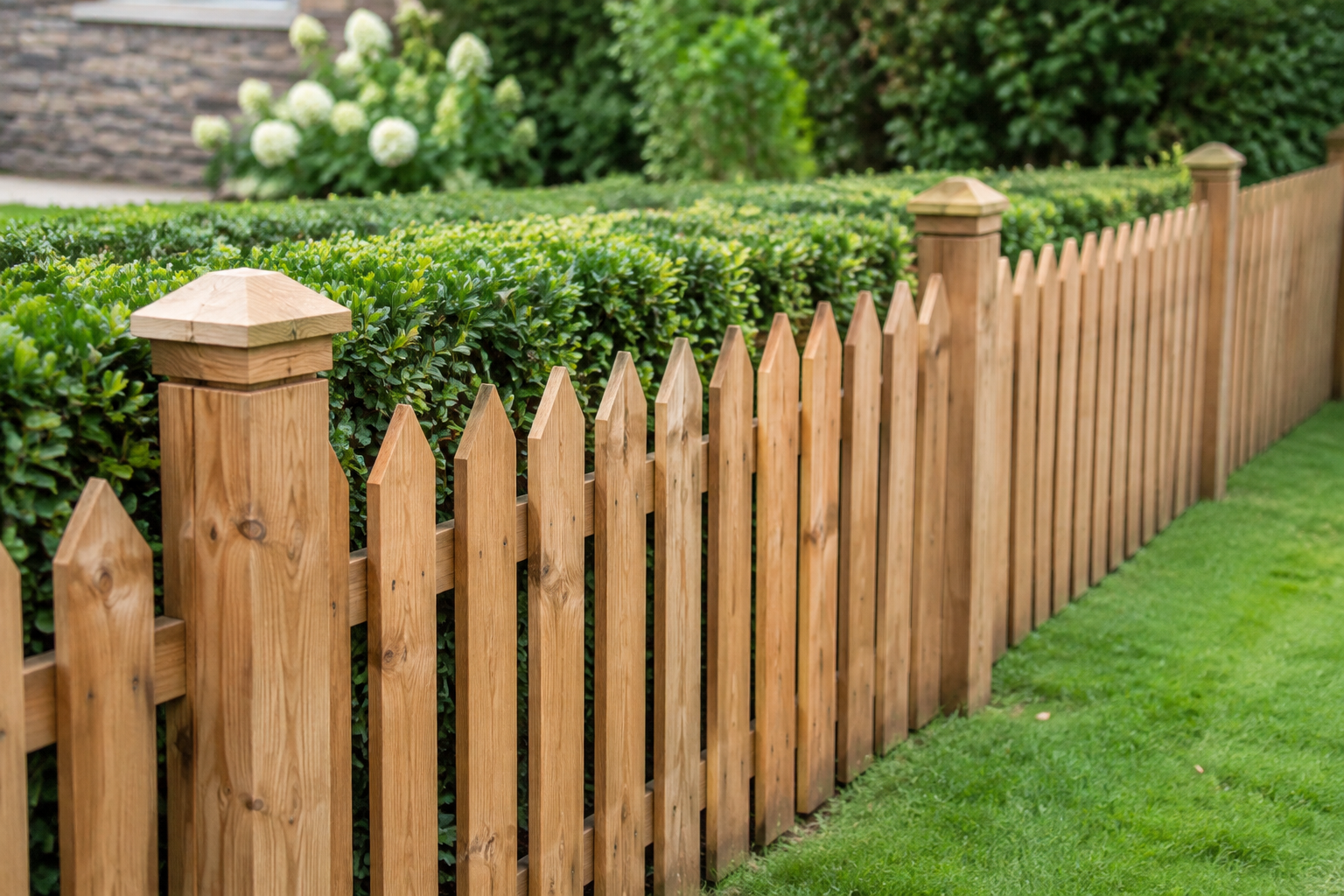
37. Cedar Picket with Pyramid Caps
Pointed pickets with pyramid caps are the classic garden fence. Small details like the caps make it feel considered.
Use 90mm pickets on 100mm centres with two rails. Cap each post with a timber pyramid.
Cedar needs no treatment, though a clear oil keeps the colour. Untreated cedar greys beautifully.
Clip box hedging behind the fence for structure. The dark green makes the pale wood stand out.
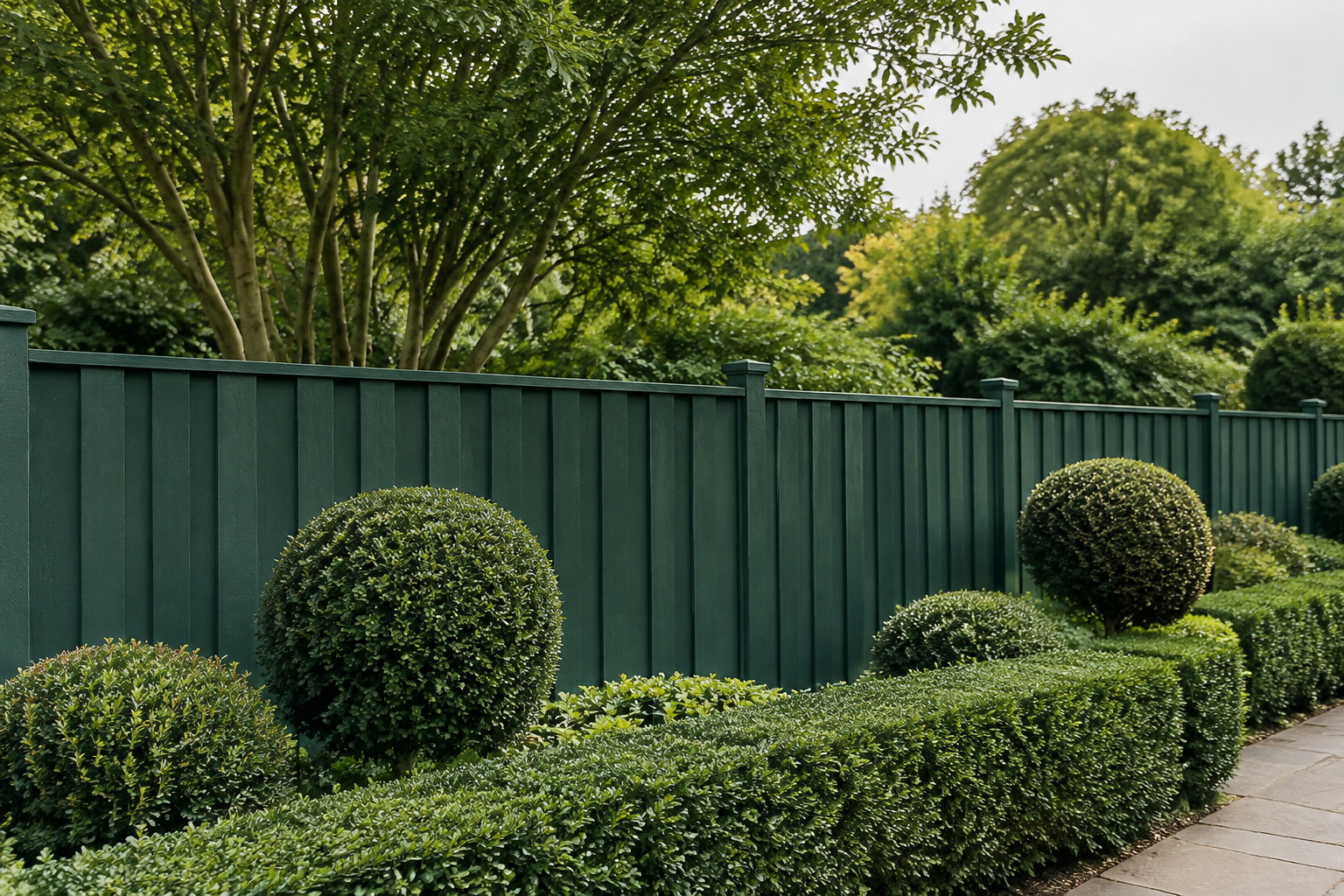
38. Board-and-Batten Painted Fence
Board-and-batten is a flat fence with narrow strips over the joints. Paint makes the pattern crisp and graphic.
Fix wide boards vertically, then nail narrow battens over each gap. This hides movement and adds strength.
Use a deep forest green or charcoal. Dark colours recede and make the garden feel larger.
Formal topiary in front suits the tidy geometry. A single row of clipped balls is enough.
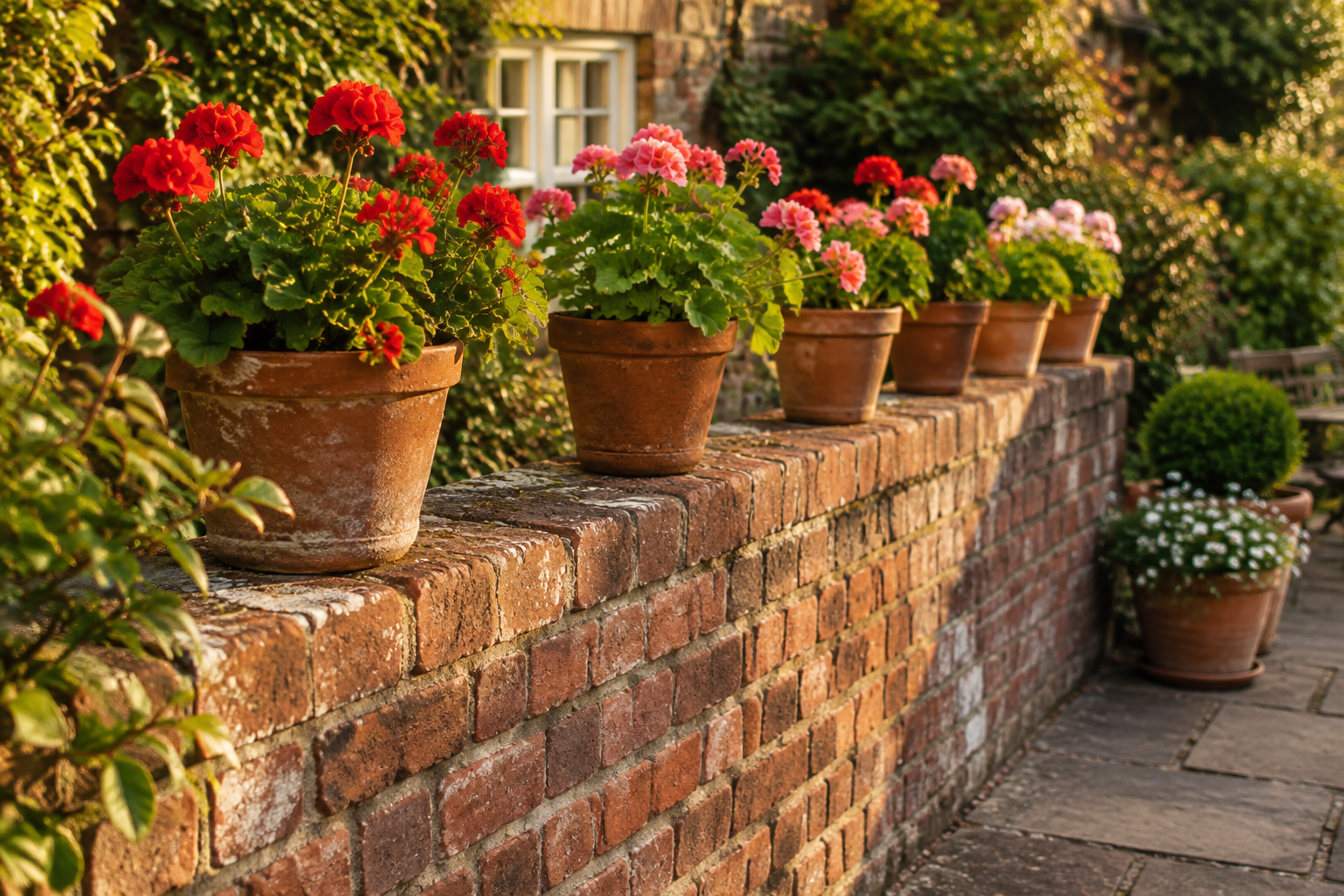
39. Brick Wall with Terracotta Pots
A low brick wall gives a solid, warm base for a flower display. A row of terracotta pots along the top completes it.
Build the wall one brick wide and 60cm tall on a concrete footing. Add a coping course to shed rain.
Choose frost-proof pots if you garden in a cold climate. Cheap terracotta cracks after one hard winter.
Geraniums and trailing lobelia work best. Both enjoy the warmth the brick holds into the evening.
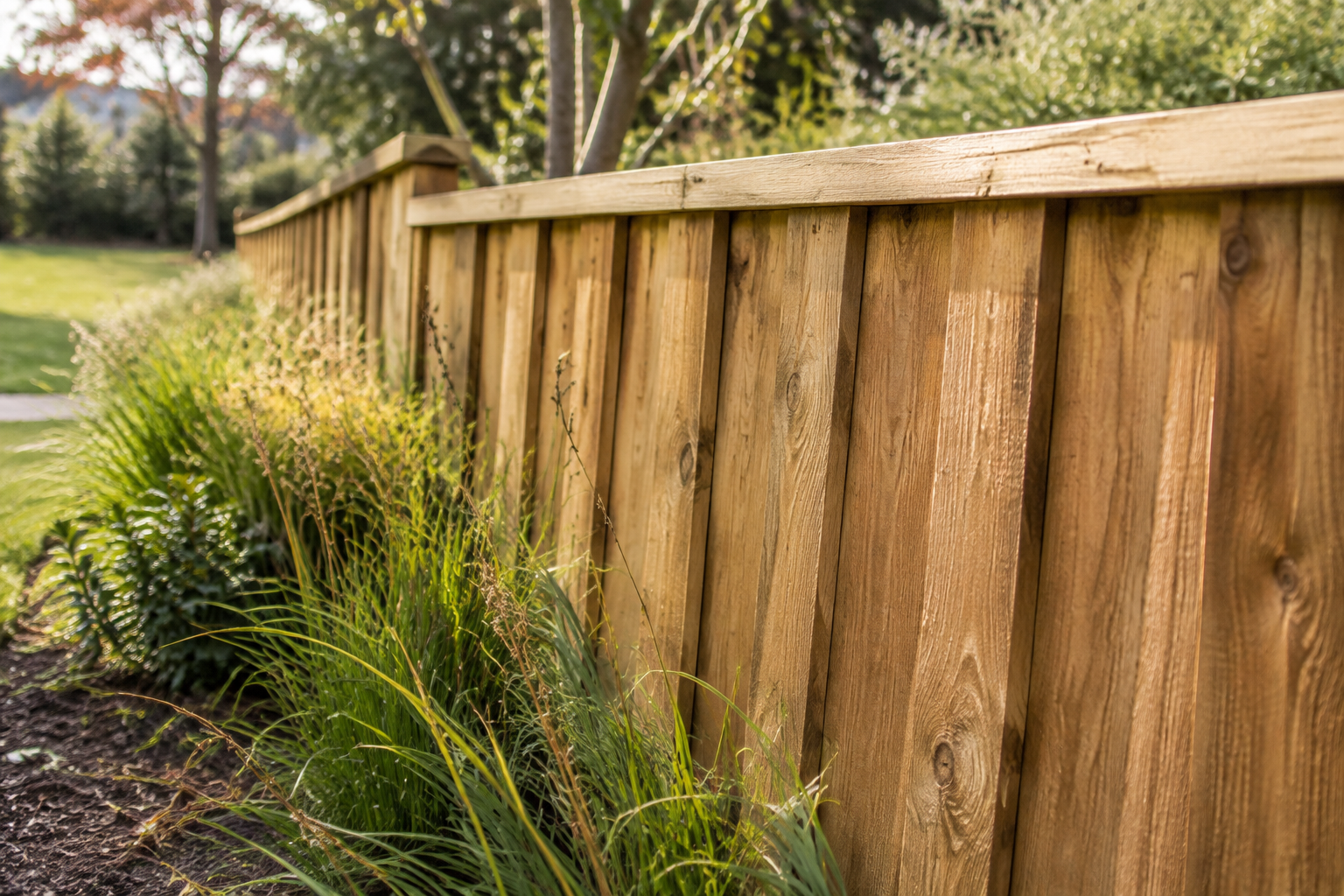
40. Feather-Edge Timber Fence
Feather-edge boards overlap so water runs off. The tapered edges give a fine, layered texture.
Fix the boards to rails with the overlap facing away from the weather. Add a capping rail along the top.
Use treated pine and stain it after a season. New timber needs time to dry before stain will hold.
Soft grasses at the base blur the bottom line. Keep shrubs away so the boards can dry out.
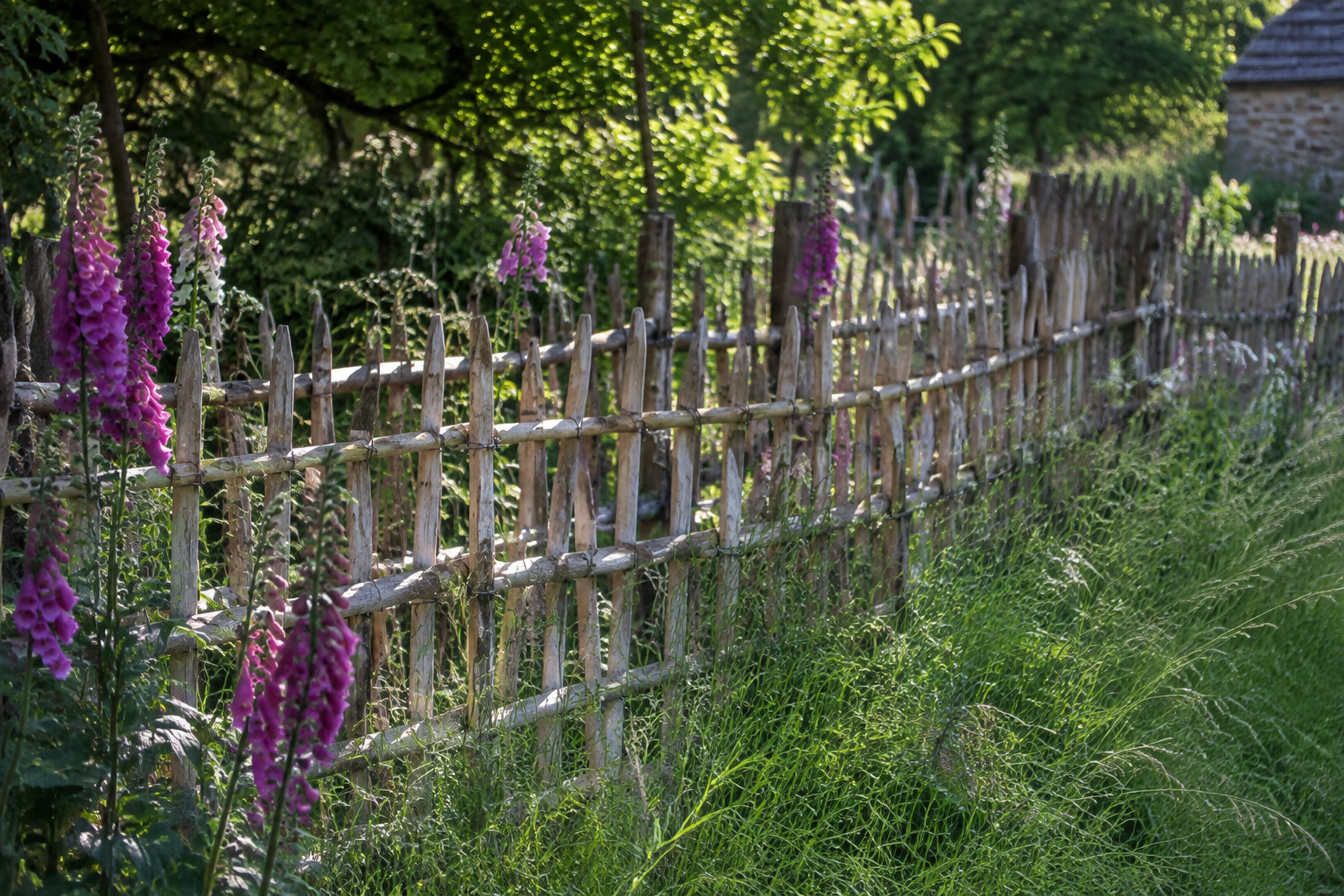
41. Chestnut Paling Fence
Chestnut paling is a slim, traditional fence of stakes and split rails. It looks handmade and costs far less than panels.
Wire the rails to the stakes with galvanised wire and twist it tight. Panels come ready-made and simply push into the ground.
Keep it under a metre to avoid wind damage. Tall palings need extra bracing.
Foxgloves and long grass suit the rural mood. Leave a wild strip at the base for insects.
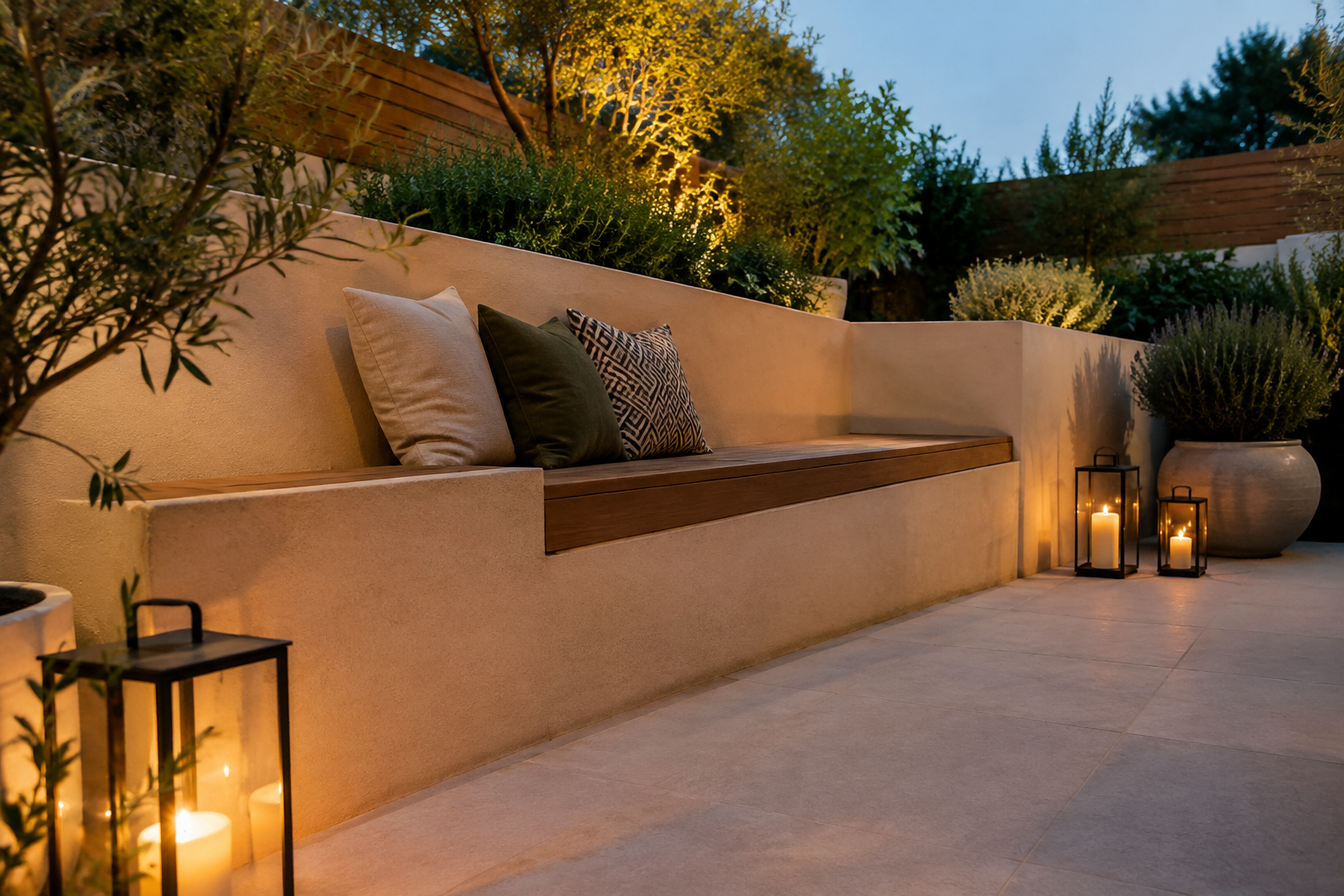
42. Rendered Wall with Built-In Bench
A low wall can do two jobs at once. Add a bench seat and it becomes a place to sit, not just a boundary.
Build the wall from blockwork and render it smooth. Leave a recess for a timber seat slatted for drainage.
Keep the seat 45cm high and 40cm deep. That suits most adults comfortably.
Add lanterns and cushions for evenings. The wall holds the day’s heat and the garden feels warmer.
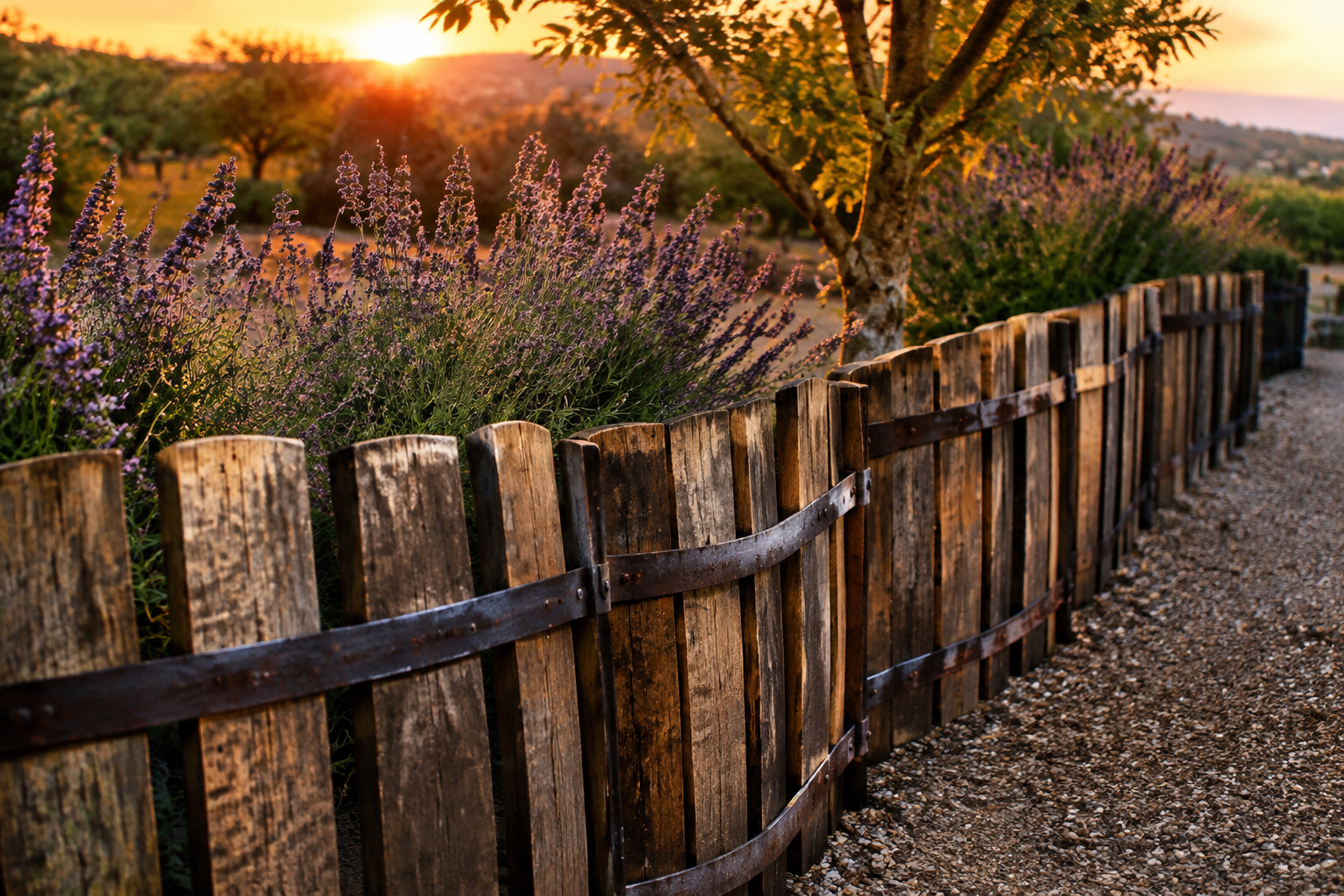
43. Wine Barrel Stave Fence
Curved wine barrel staves make a fence with a soft, rhythmic shape. The oak is already seasoned and beautiful.
Stand staves vertically and fix them to two horizontal rails. Vary the heights slightly for a hand-made feel.
Sand lightly and oil with a UV-resistant garden oil. That keeps the oak from drying and splitting.
Lavender and gravel set the scene. The look suits a patio far better than a lawn.
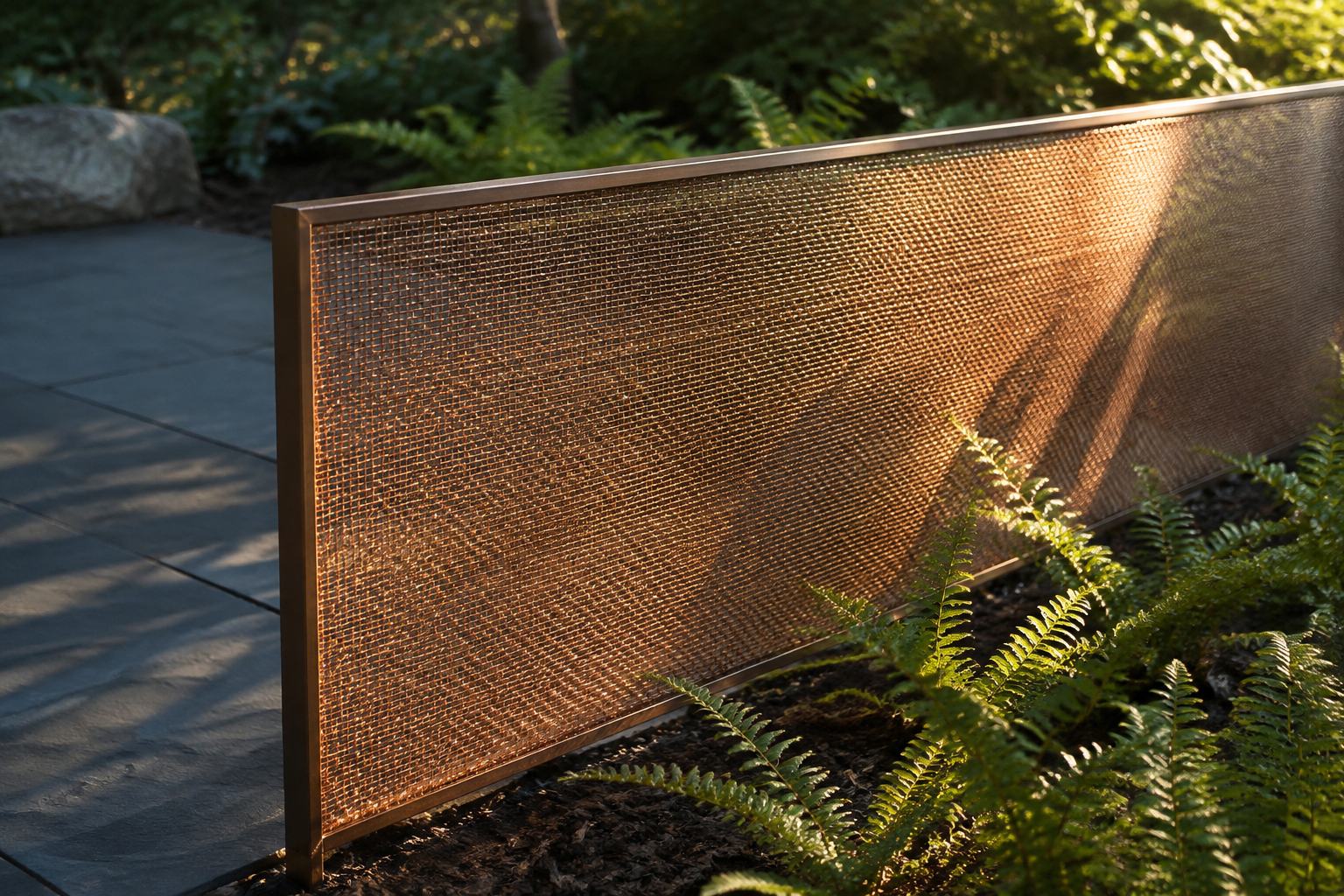
44. Woven Copper Mesh Screen
Copper mesh brings a warm metallic sheen to a small garden. It patinas to a soft bronze over a few years.
Fix the mesh to a slim bronze or black frame and stretch it tight. Loose mesh will bow in the wind.
Use it where you want light with a hint of privacy. Mesh at 70% density still lets daylight through.
Ferns and dark slate planting suit the metal. The contrast makes the copper glow.
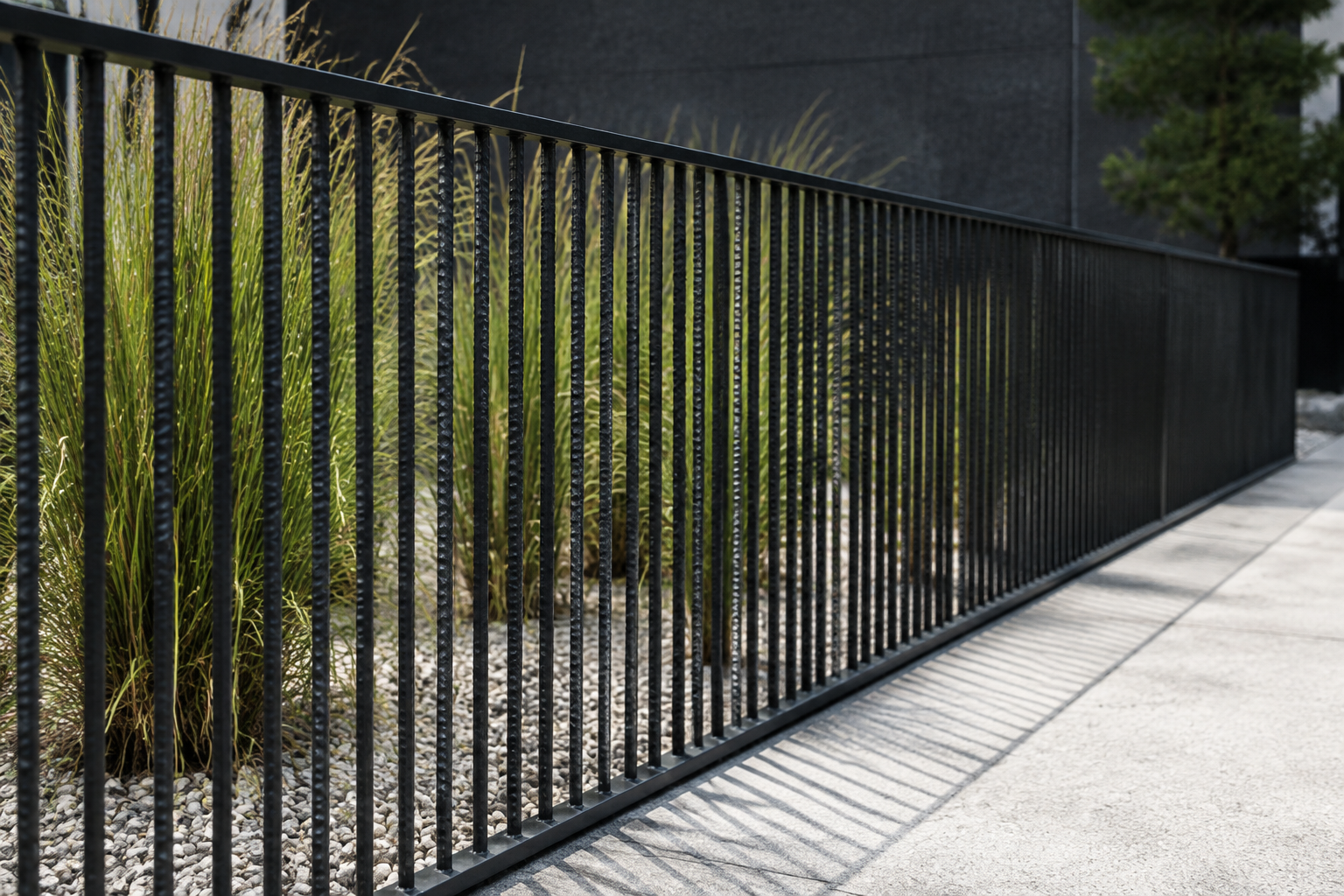
45. Vertical Steel Rod Fence
Vertical steel rods create a fence that is mostly shadow and rhythm. It looks minimal and never needs paint.
Use 10mm rods set 80mm apart inside a welded frame. Galvanised rod will not rust at ground level.
Fix the frame to posts set in concrete. Rods alone flex too much to resist a leaning child.
Gravel and grasses at the base complete the look. Rake the gravel so the shadow pattern shows.
Final Thoughts
Start with one short run rather than the whole boundary. A single panel teaches you how the material behaves before you commit.
Measure twice and set your posts in concrete. Every other mistake on a fence is easy to correct later.
Pick an idea that suits your patience as well as your taste. The best short garden fence is the one you still like after five winters.