

71 Apartment Organization Ideas: Small Space Hacks for Every Room
A small apartment does not need more furniture. It needs better decisions.
Every idea below solves one specific problem in a real flat. Each one costs little, takes an afternoon, and keeps working long after.
Start with the room that frustrates you most. Do not try all seventy-one at once.
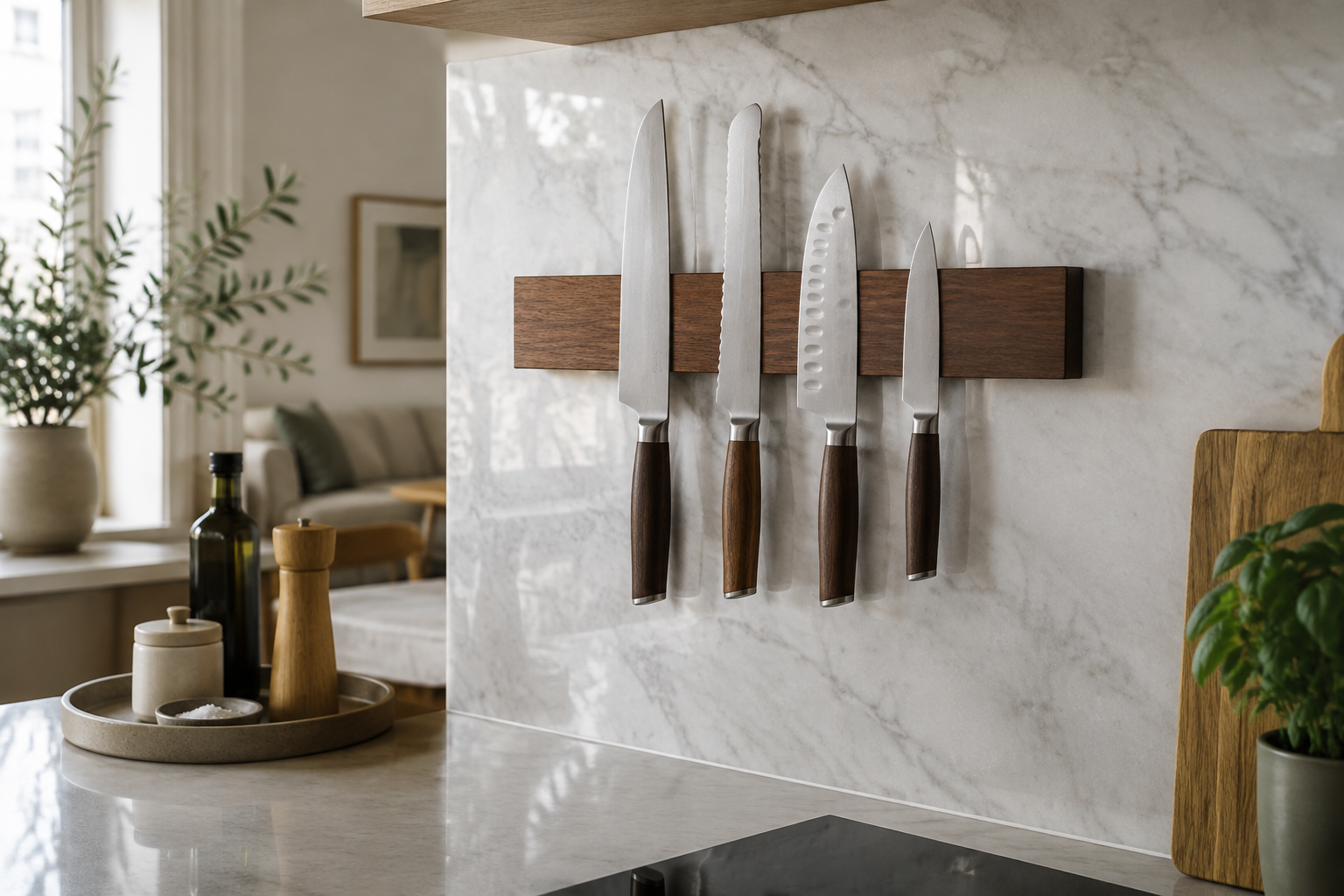
The Magnetic Knife Strip
Move your knives off the counter and onto the wall. A strong magnetic strip holds every blade within easy reach.
It also frees a whole drawer for things you actually use daily. Mount it at eye level between the hob and the sink.
Choose a strip at least 30 cm longer than your longest blade, so the knife hangs balanced.
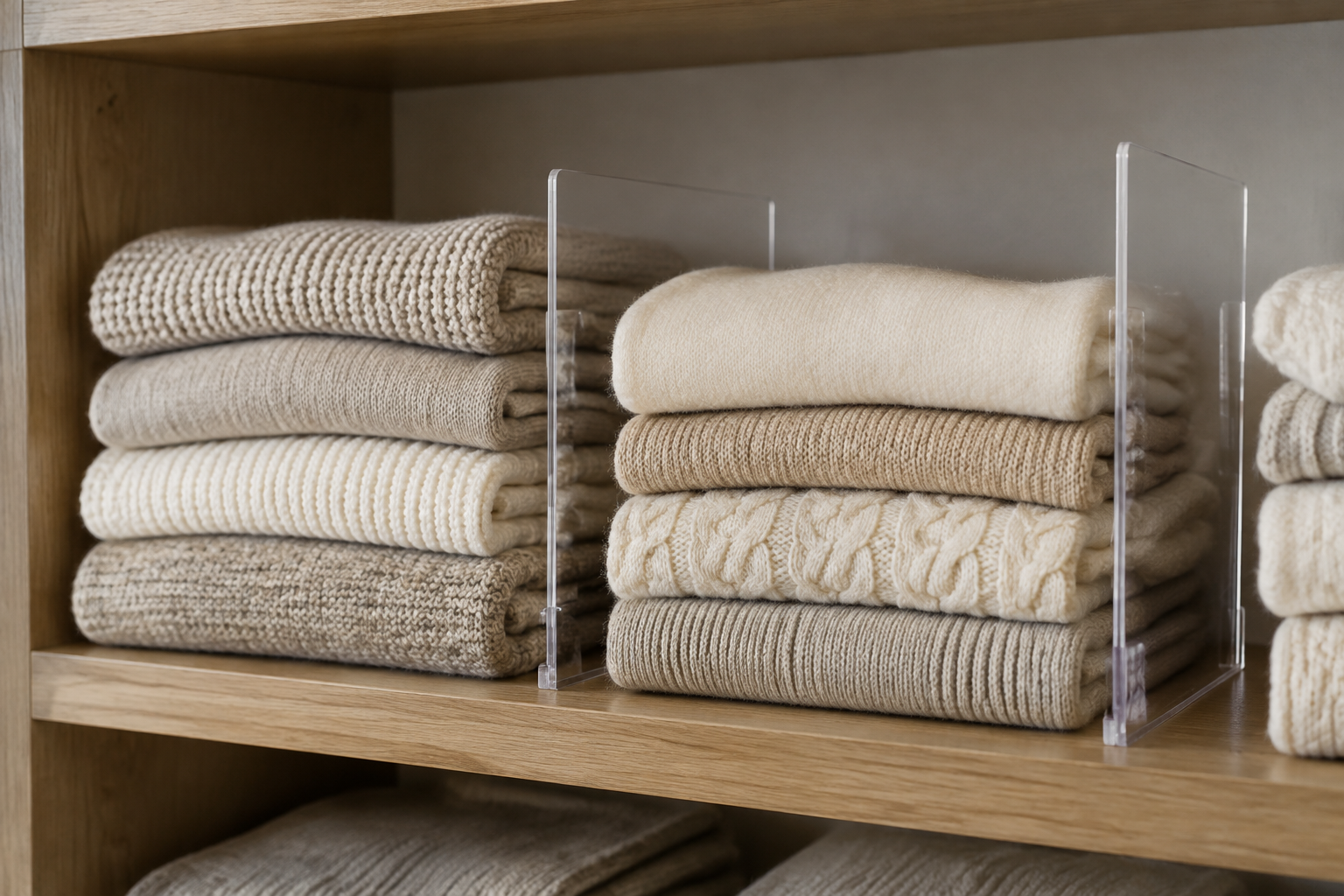
Acrylic Shelf Dividers for Folded Stacks
Folded clothes slide and topple the moment you pull one item out. Clear acrylic dividers hold each stack in a neat vertical column.
They almost disappear on the shelf, so the wardrobe still looks open. One divider per stack is usually enough.
Skip dividers on shelves deeper than 35 cm, because the stacks drift back out of reach.
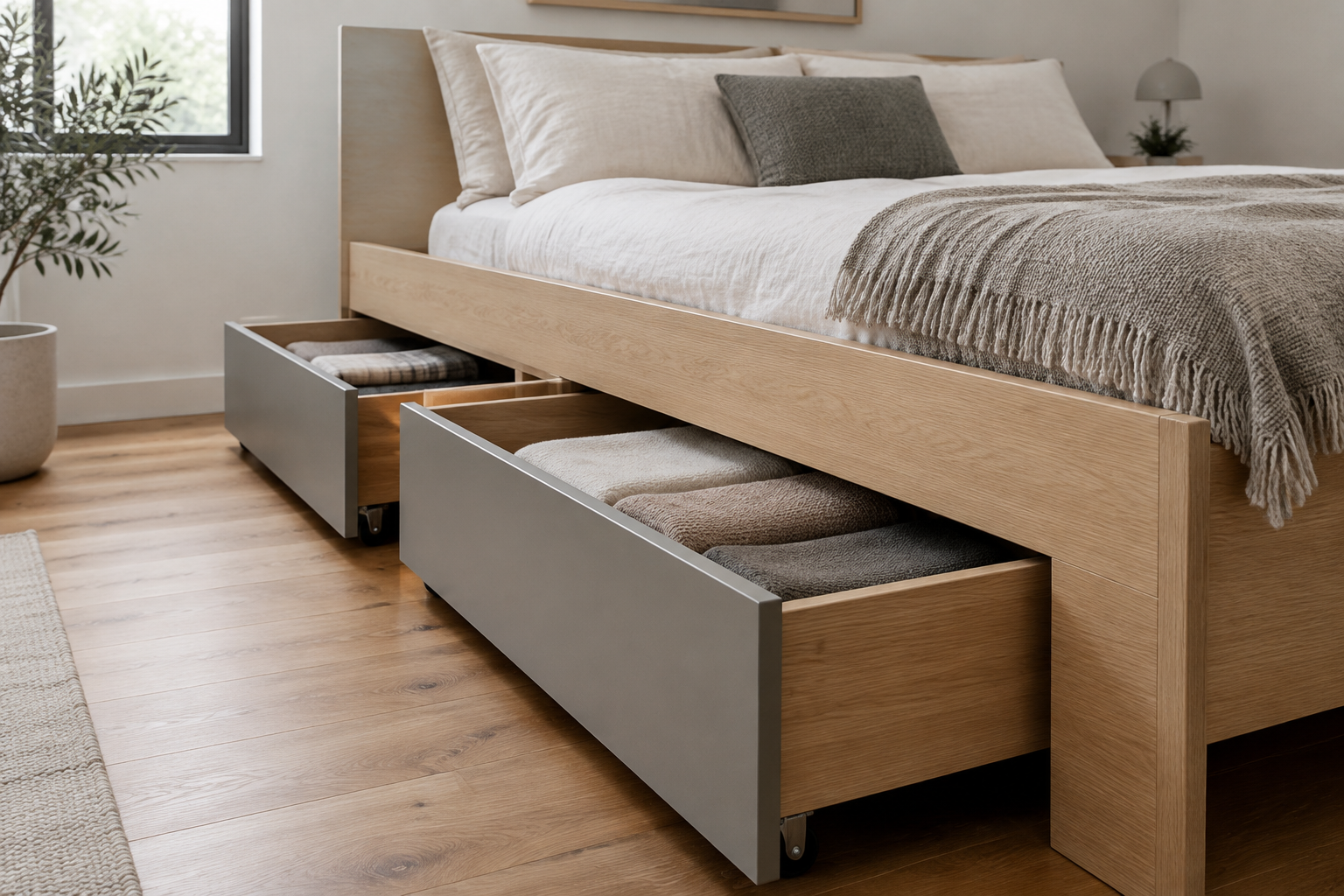
Under-Bed Drawers on Casters
The space under your bed is the largest unused volume in a small flat. Slim drawers on casters turn it into a second dresser.
Low-profile wheels roll over rugs and floorboards without effort. Keep bedding and off-season clothes down there, not daily items.
Measure your bed frame first. Drawers need at least 12 cm of clearance to roll freely.
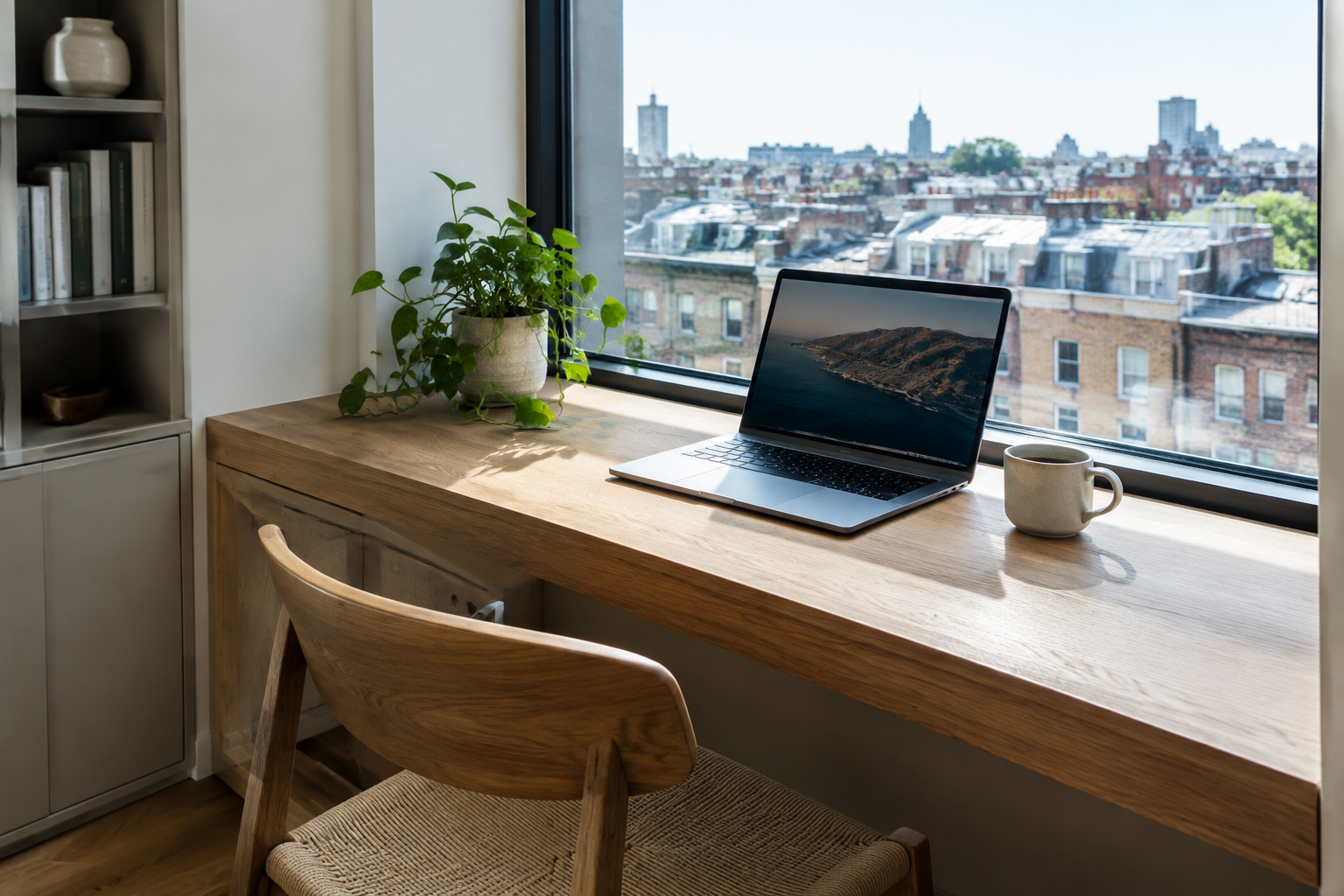
An Alcove Desk Nook
A deep window alcove can hold a desk without stealing any floor space. The top spans the opening and the chair tucks underneath.
Daylight comes from the side, which is kinder to screens. Add one drawer for pens and a hook for your bag.
Add a clip-on lamp so the nook still works after the sun goes down.
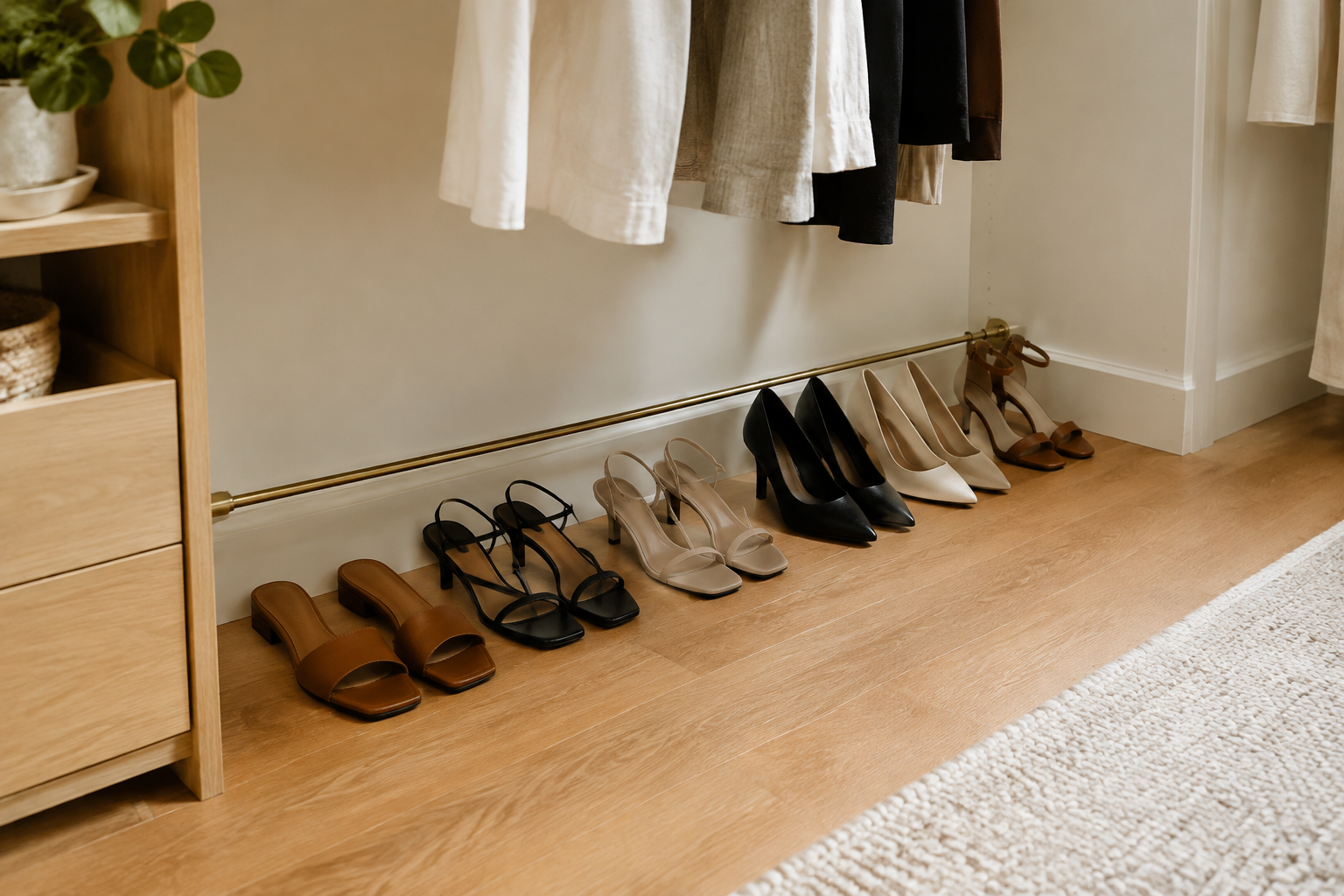
A Tension-Rod Shoe Gallery
Line heels and sandals along a slim tension rod at the base of the closet. The shoes stay angled, visible and paired.
No drilling is needed, so it suits rentals perfectly. Raise the rod slightly as your collection grows.
Keep a shoehorn on a hook beside the rod, so pairs go back where they belong.
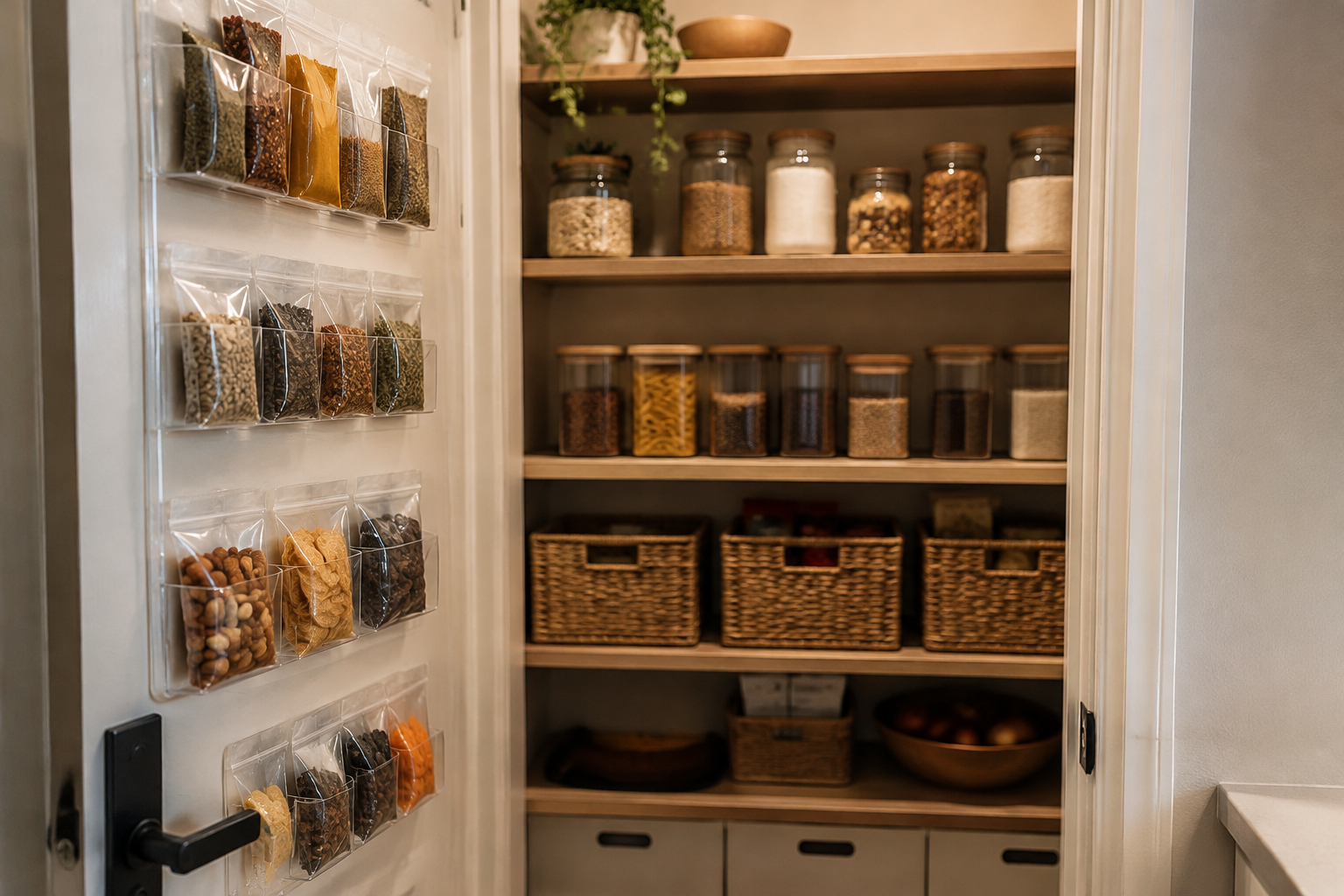
Behind-the-Door Pantry Pockets
The inside of a pantry door is wasted wall space. Clear pocket sleeves hold spice packets, tea boxes and snack bags in plain sight.
Because you can see everything at once, you stop buying duplicates. Wipe the pockets monthly to keep them clear.
Sort the pockets by how often you use things, not by size.
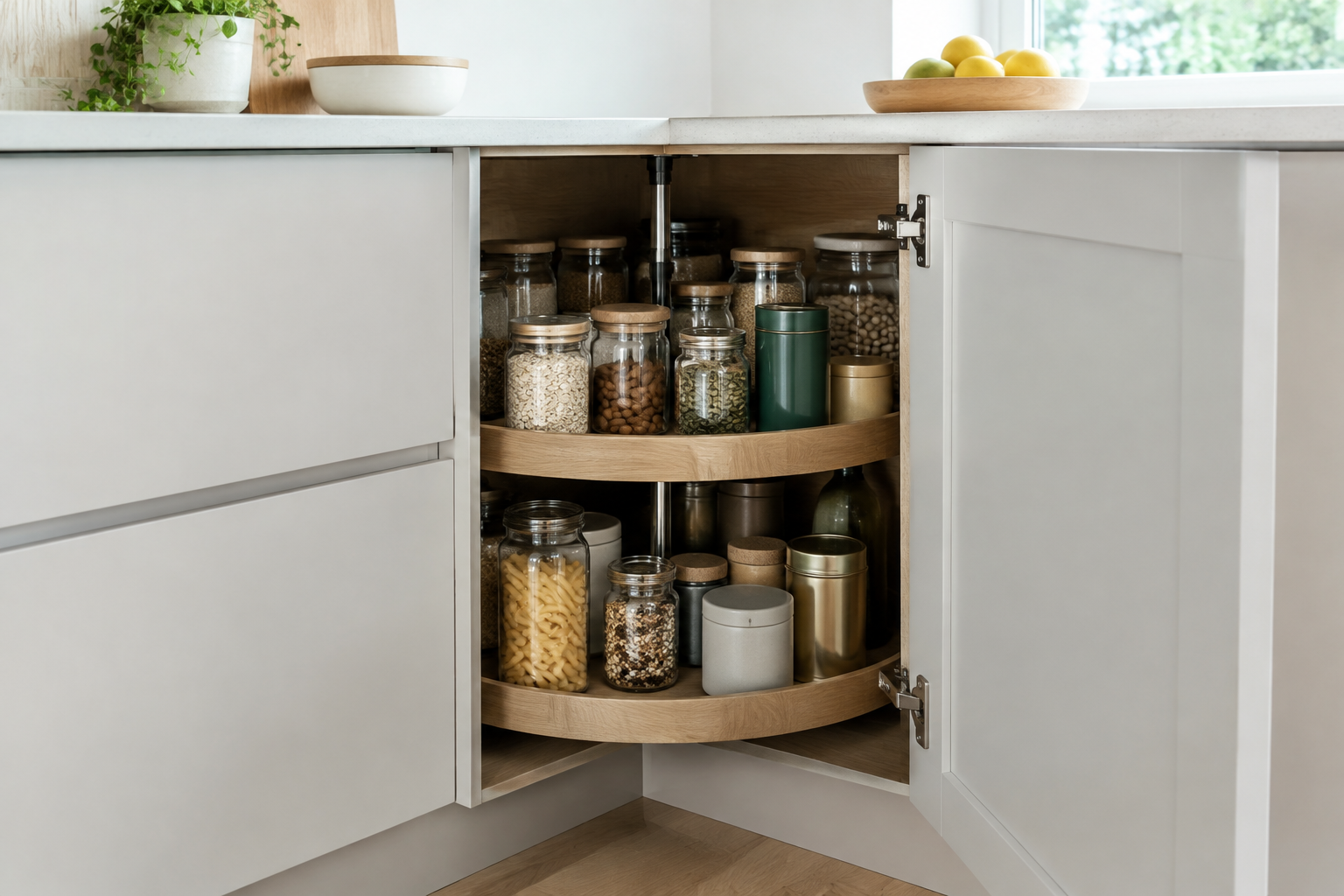
A Lazy Susan in Corner Cabinets
Deep corner cupboards swallow jars into darkness. A round turntable brings every item forward with a single spin.
Choose a raised edge so bottles do not slide off. Two stacked turntables often fit where one shallow shelf used to be.
Tape a thin line around the turntable edge so you can see when it is full.
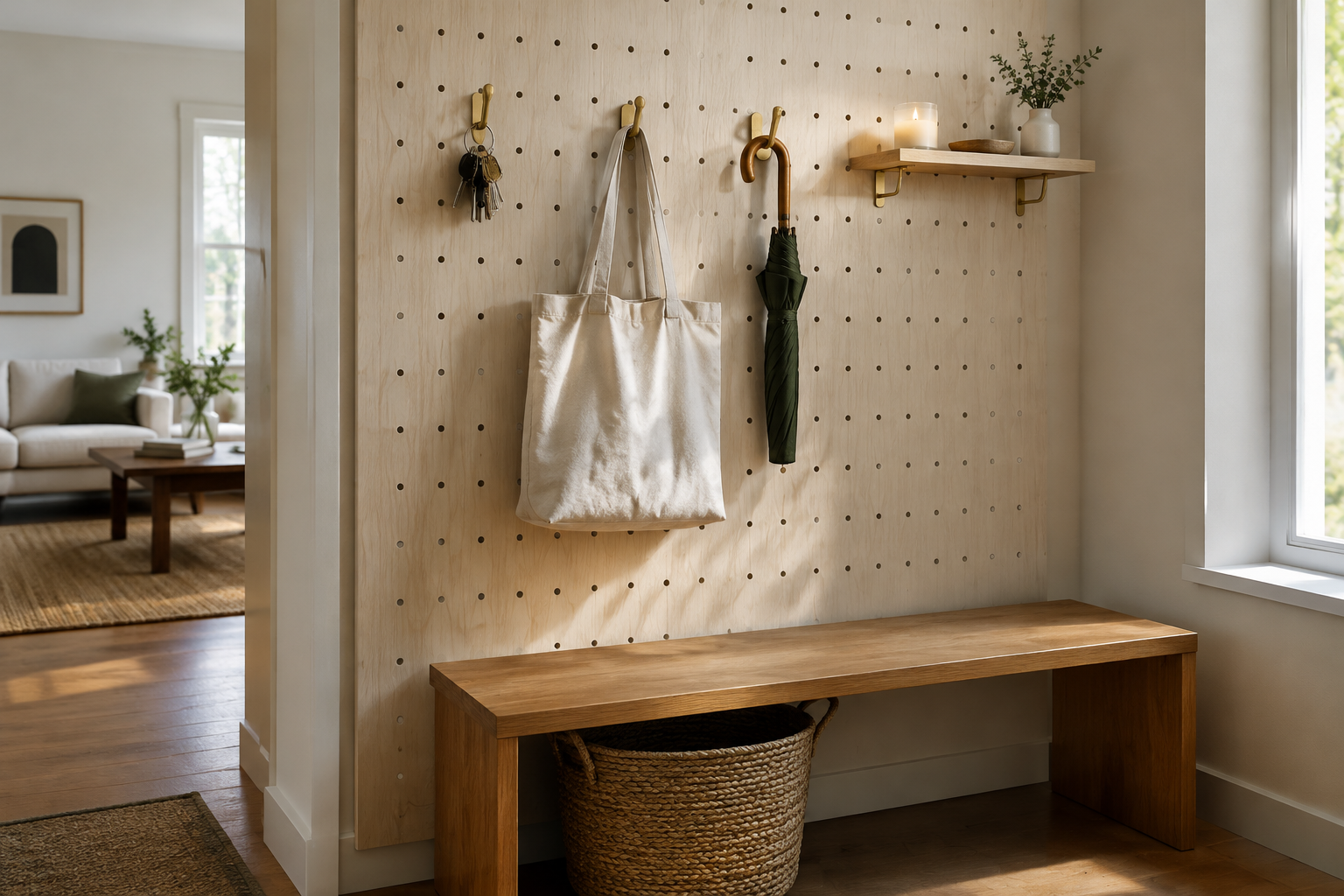
A Pegboard Utility Wall
A painted pegboard turns a blank entryway wall into flexible storage. Hooks and small shelves move wherever you need them.
Keys, bags, headphones and the dog lead all get a home. Rehang the whole wall in an afternoon when your routine changes.
Paint the pegboard the same colour as the wall and it stops looking like a workshop.
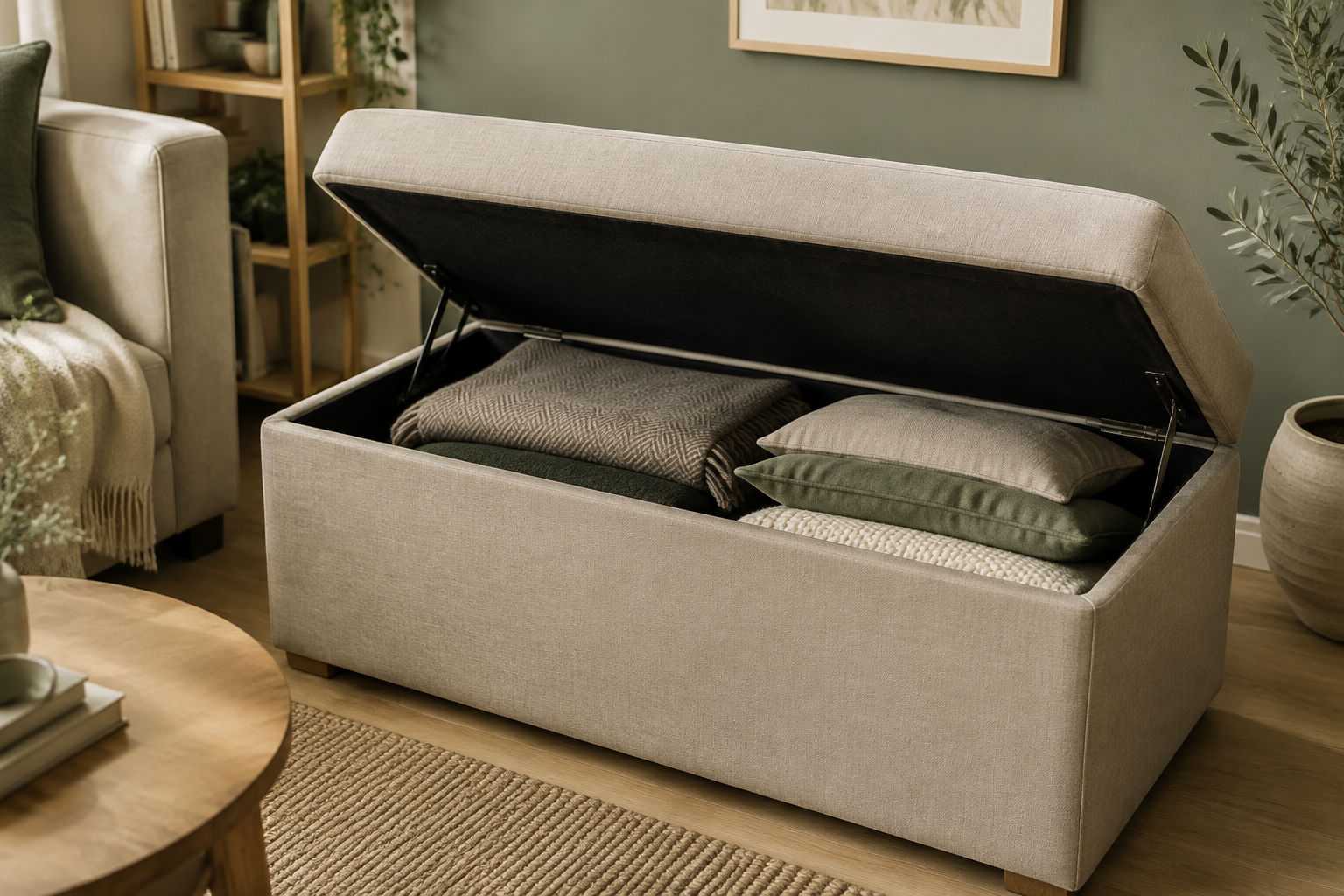
Storage Ottomans
An upholstered ottoman earns its floor space twice over. It seats a guest and hides blankets, board games or winter bedding inside.
Choose one with a soft-close lid so it never slams. A lid tray keeps remotes and coasters above the clutter.
Look for a lid that holds its own weight open. Cheap hinges sag within a month.
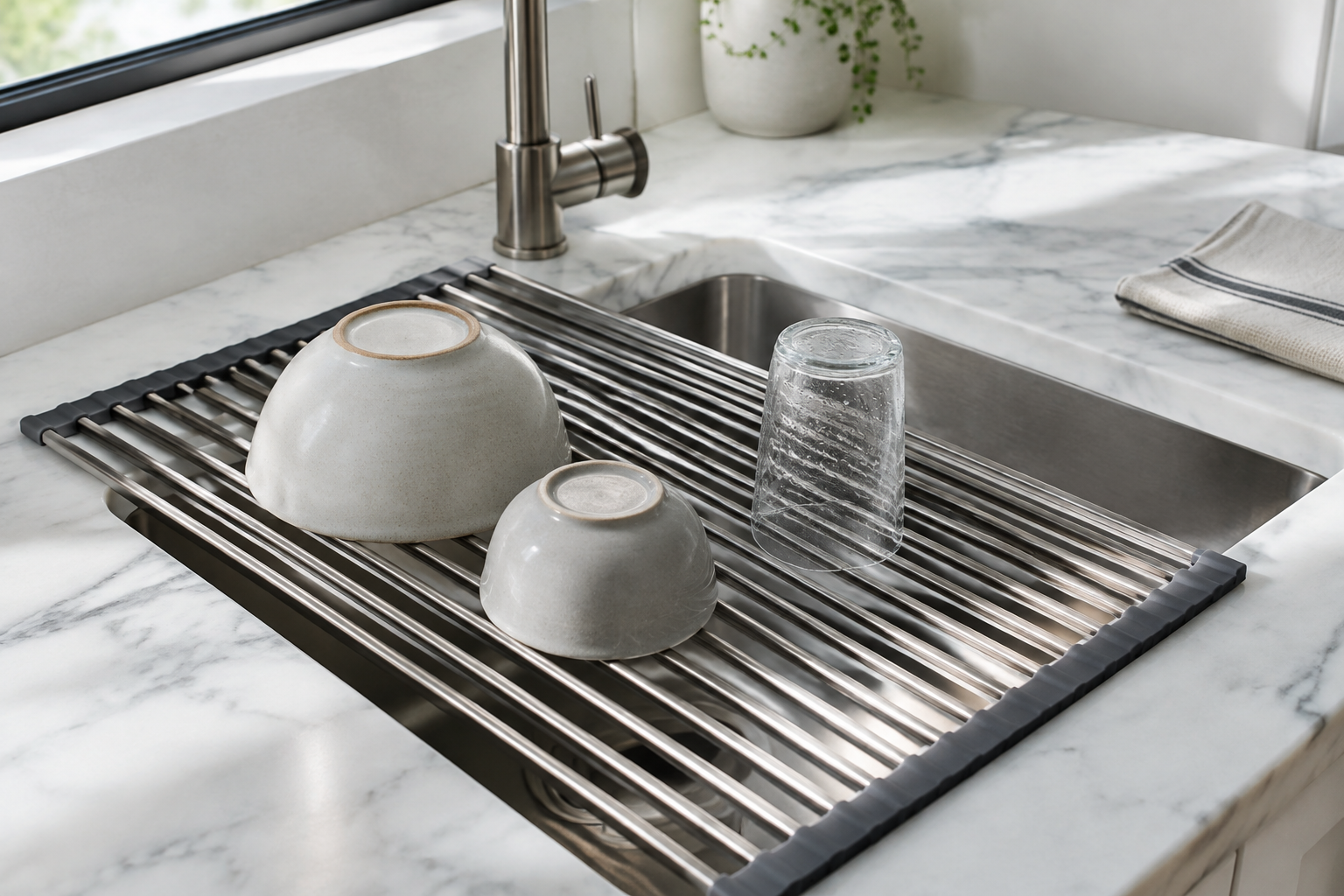
An Over-the-Sink Roll-Up Rack
A flat drying rack eats the counter you actually need. A roll-up rack sits over the sink and disappears when the dishes are dry.
Stainless steel rolls up in seconds and stores in a drawer. It also works as a rinse station for vegetables.
Dry the rack completely before rolling it away, or the drawer picks up rust spots.
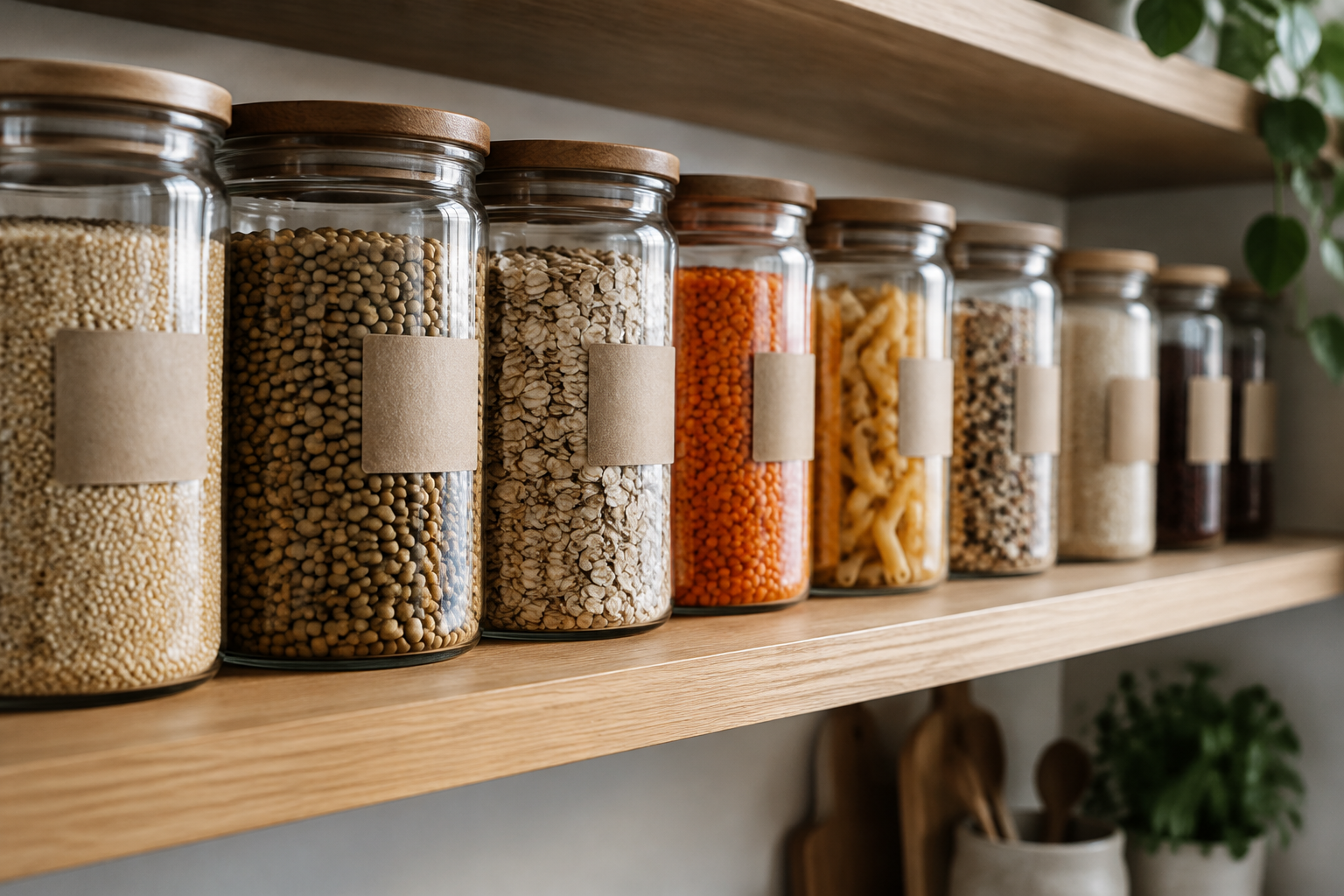
Uniform Glass Jars for the Pantry
Mismatched bags and boxes make a small pantry feel chaotic. Decanting dried goods into identical jars fixes the view instantly.
You can also see what is running low before you shop. Keep one jar per staple and refill it from the bag below.
Write the fill date on the lid so older stock gets used first.
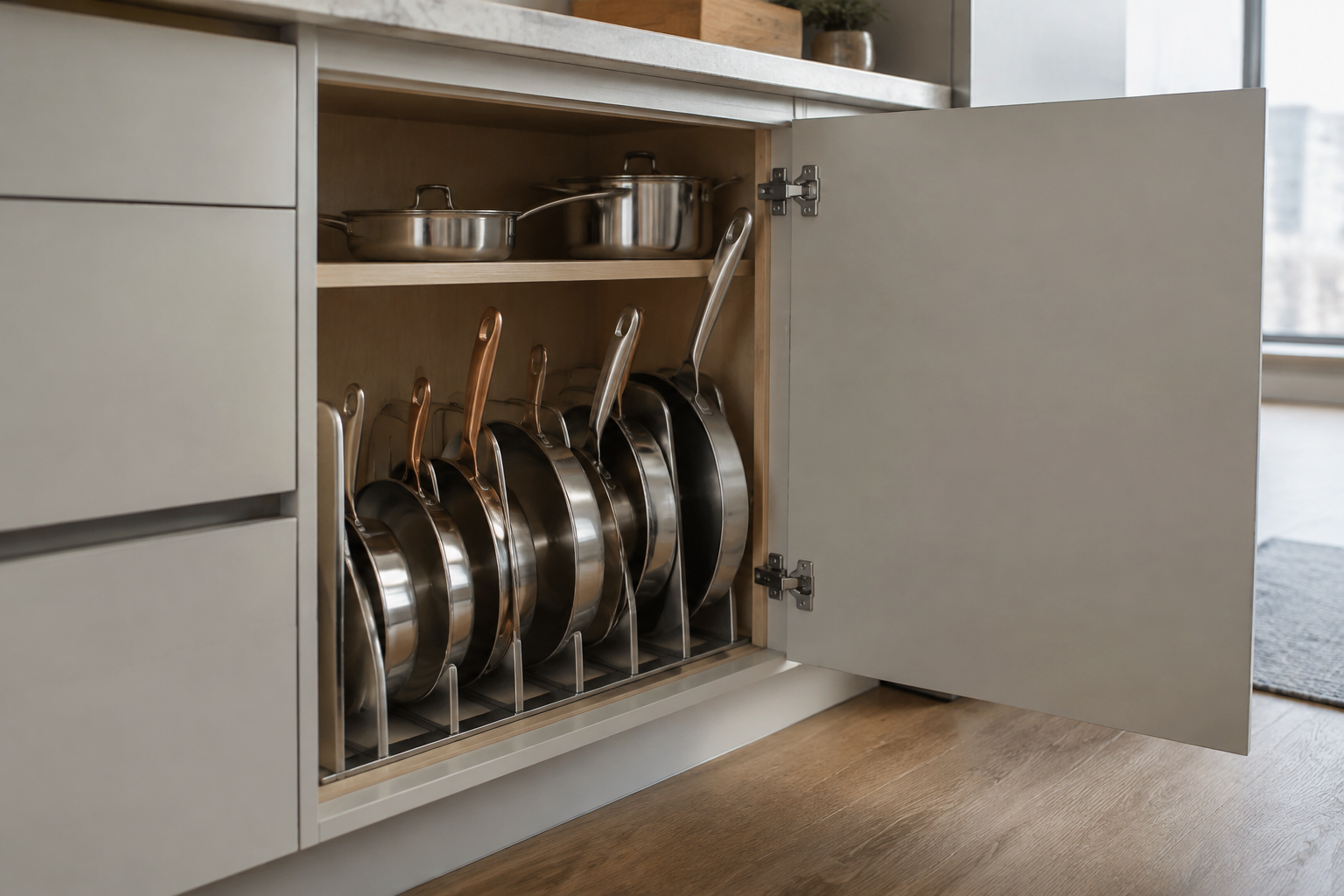
The Vertical Pan File
Stacked pans scratch each other and wake the neighbours. Standing them upright in a slim rack ends both problems.
File them from largest to smallest so every handle stays visible. The same rack works for baking trays and chopping boards.
Leave one empty slot in the file, so a pan comes out without moving three others.
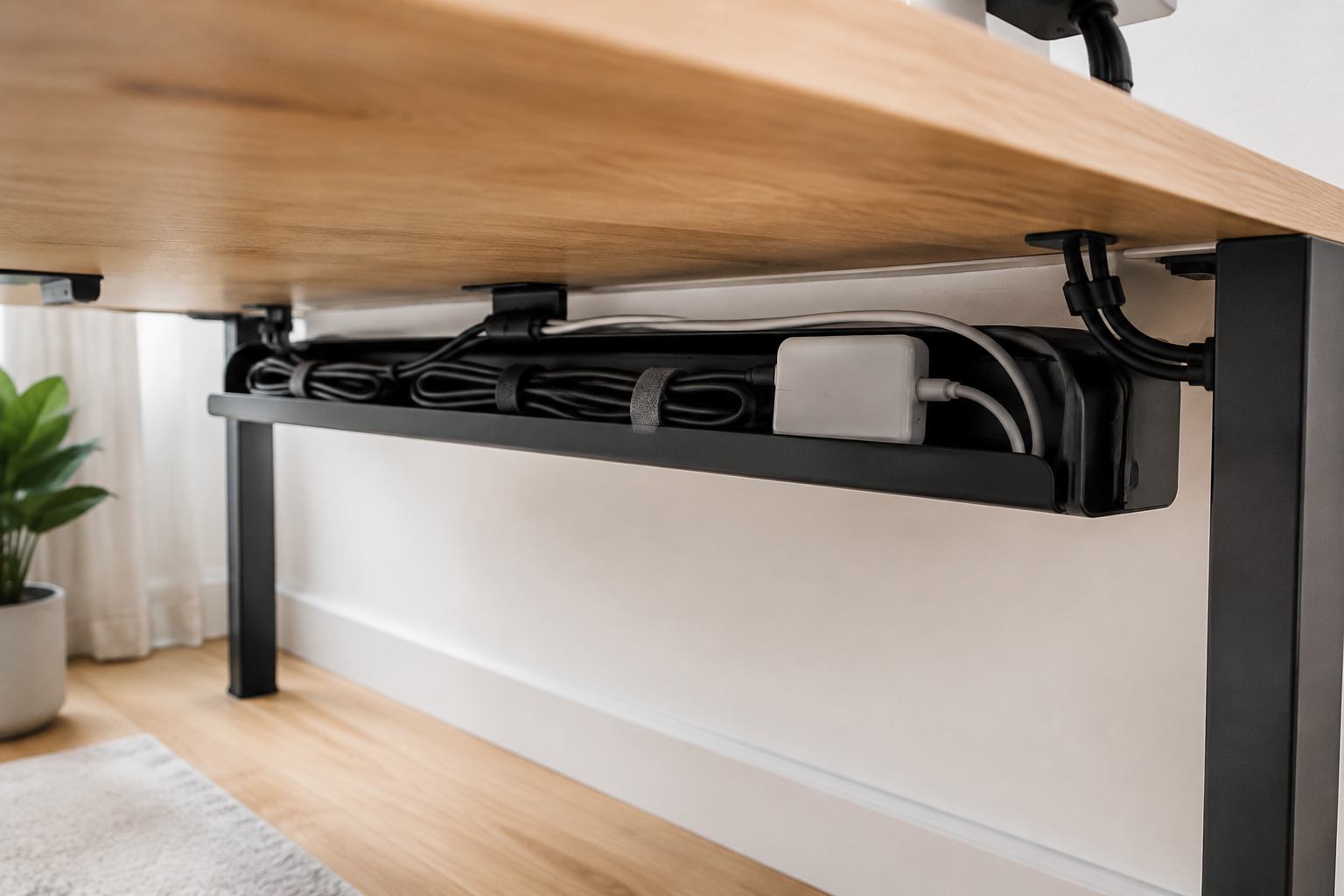
An Under-Desk Cable Tray
Loose cables drag a tidy desk back into disorder. A shallow tray screwed under the top holds every wire out of sight.
Gather the slack into loops and clip them with fabric ties. The floor below stays clear, which makes the room feel bigger.
Label both ends of every cable with a paper tag before you hide them.
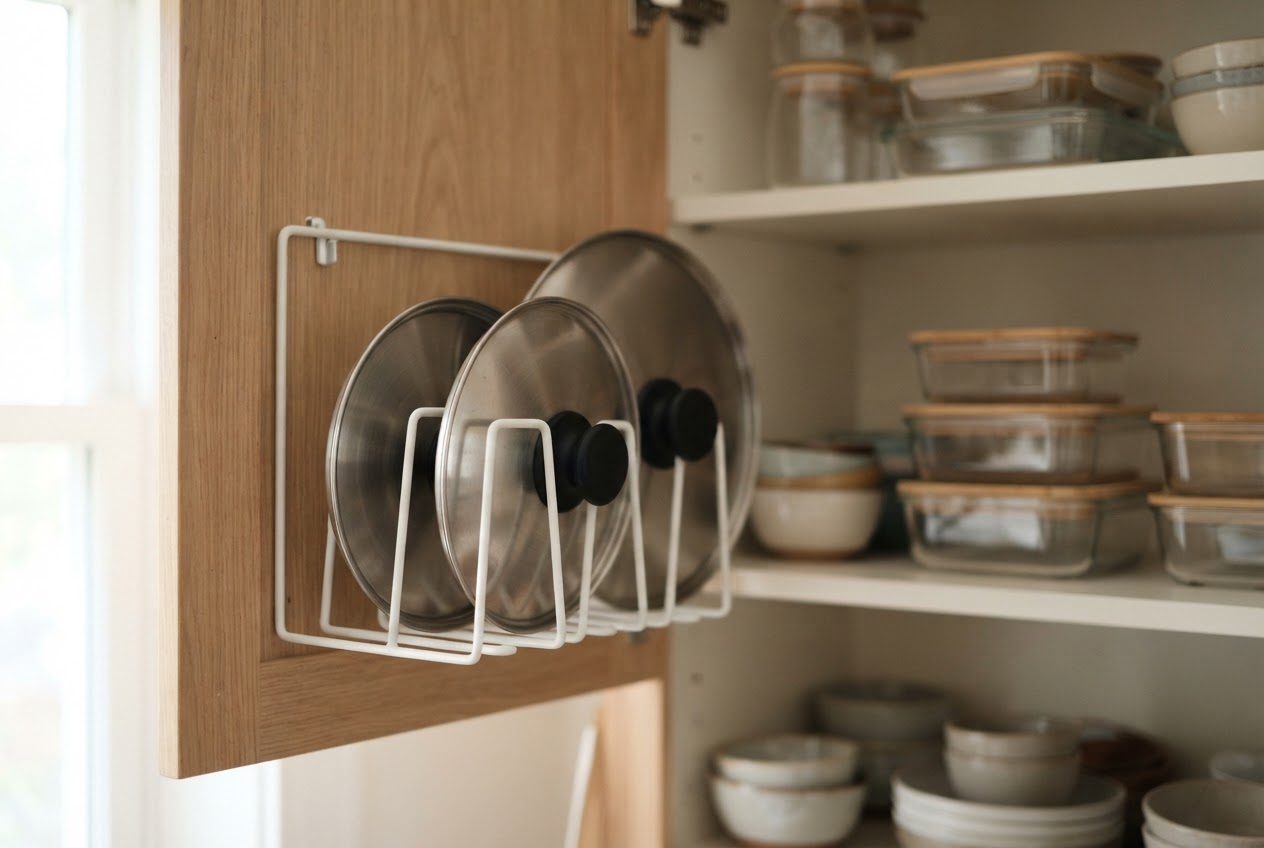
A Lid Rack Inside the Cabinet Door
Pot lids are the hardest thing in a kitchen to stack. A wire rack on the inside of the door holds them upright and separate.
Measure the door depth before you buy one. Nothing should touch the shelves when the door closes.
Test the door swing with the thickest lid already in the rack.
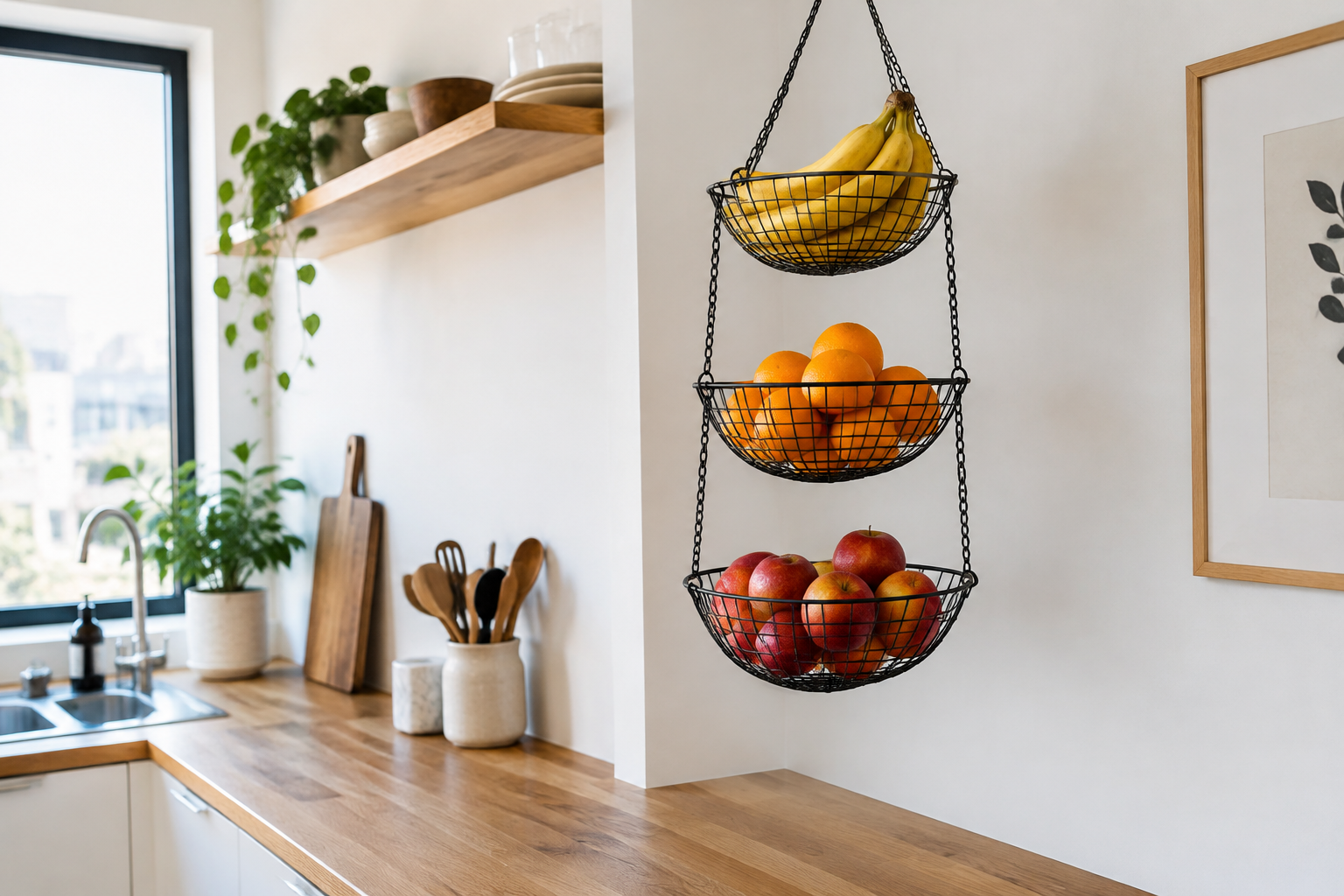
A Hanging Three-Tier Fruit Basket
Fresh produce needs air, not a bowl taking up counter space. A tiered hanging basket lifts it beside the wall.
Keep bananas on their own tier so they ripen at their own pace. The basket also frees the surface for prep.
Hang the basket away from the hob. Heat ripens fruit faster than you want.
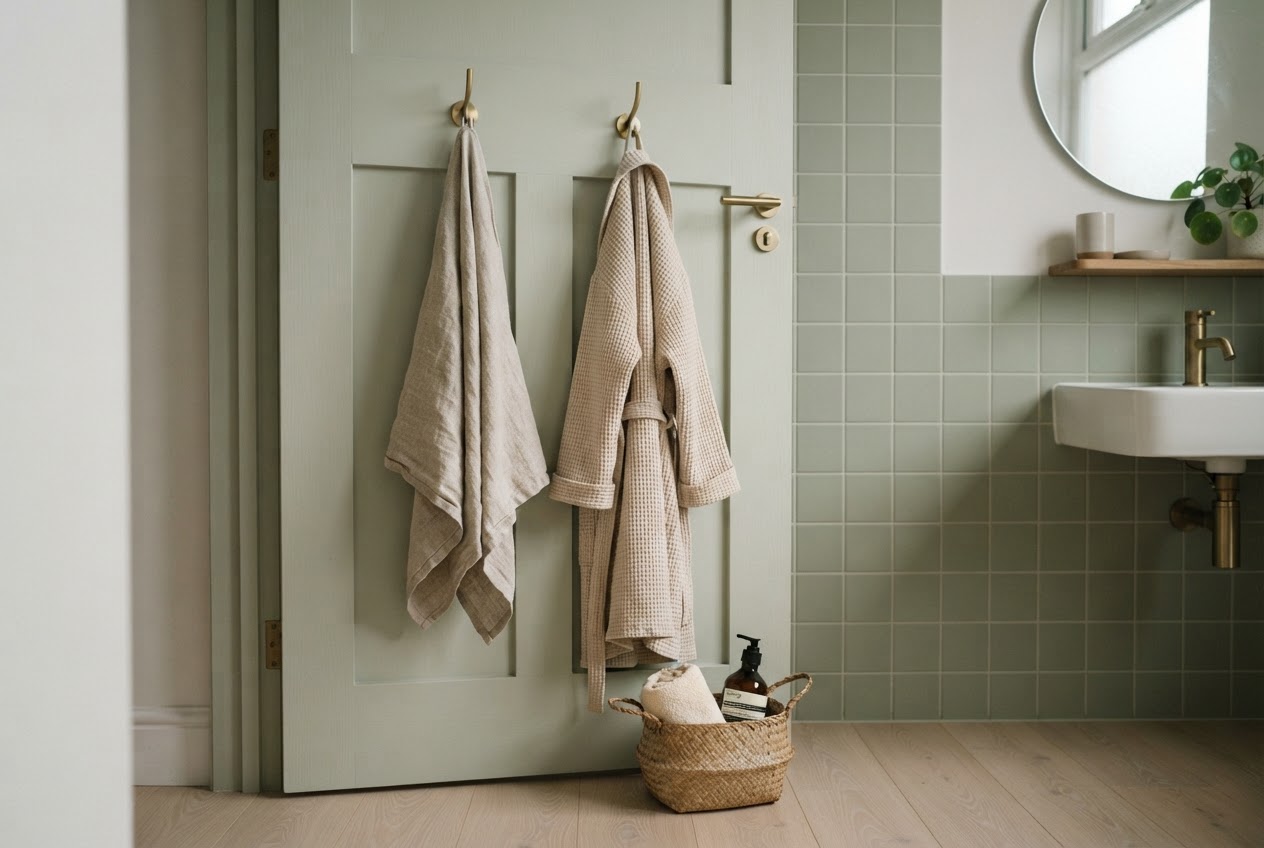
A Hook Rail Behind the Bathroom Door
Towel bars only hold so much. A row of hooks on the back of the door takes robes, towels and the laundry bag.
Space them evenly and pick hardware that matches the taps. The door still closes flat against the wall.
Use two hooks per robe, so heavy fabric does not stretch at one point.
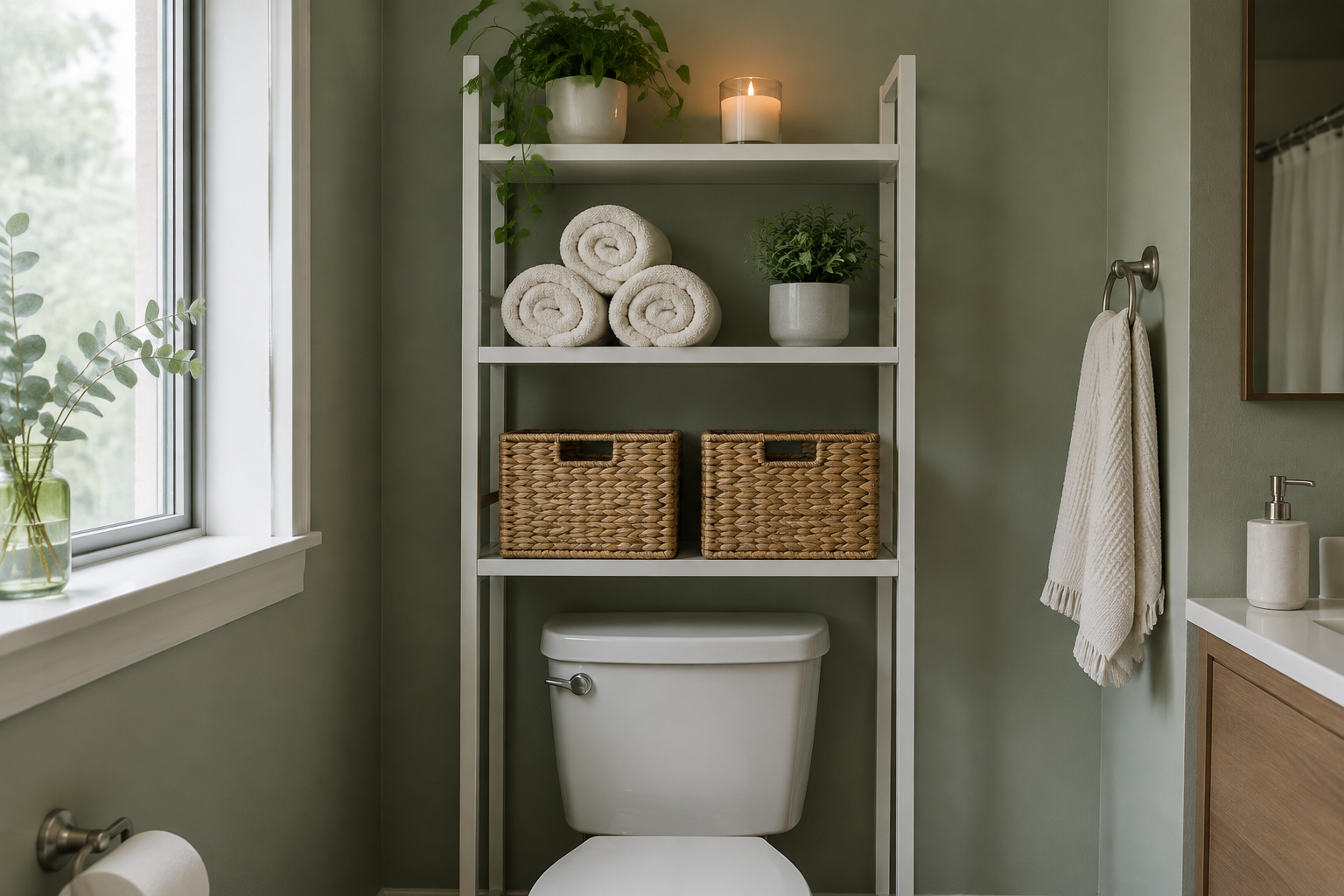
An Over-the-Toilet Étagère
The wall above the toilet is the most overlooked storage in a flat. A narrow ladder shelf turns it into three useful levels.
Roll towels, then stack baskets for spare soap and toilet paper. Keep the lowest shelf light so the room stays calm.
Bolt it to a wall stud. A loaded shelf over a toilet is heavier than it looks.
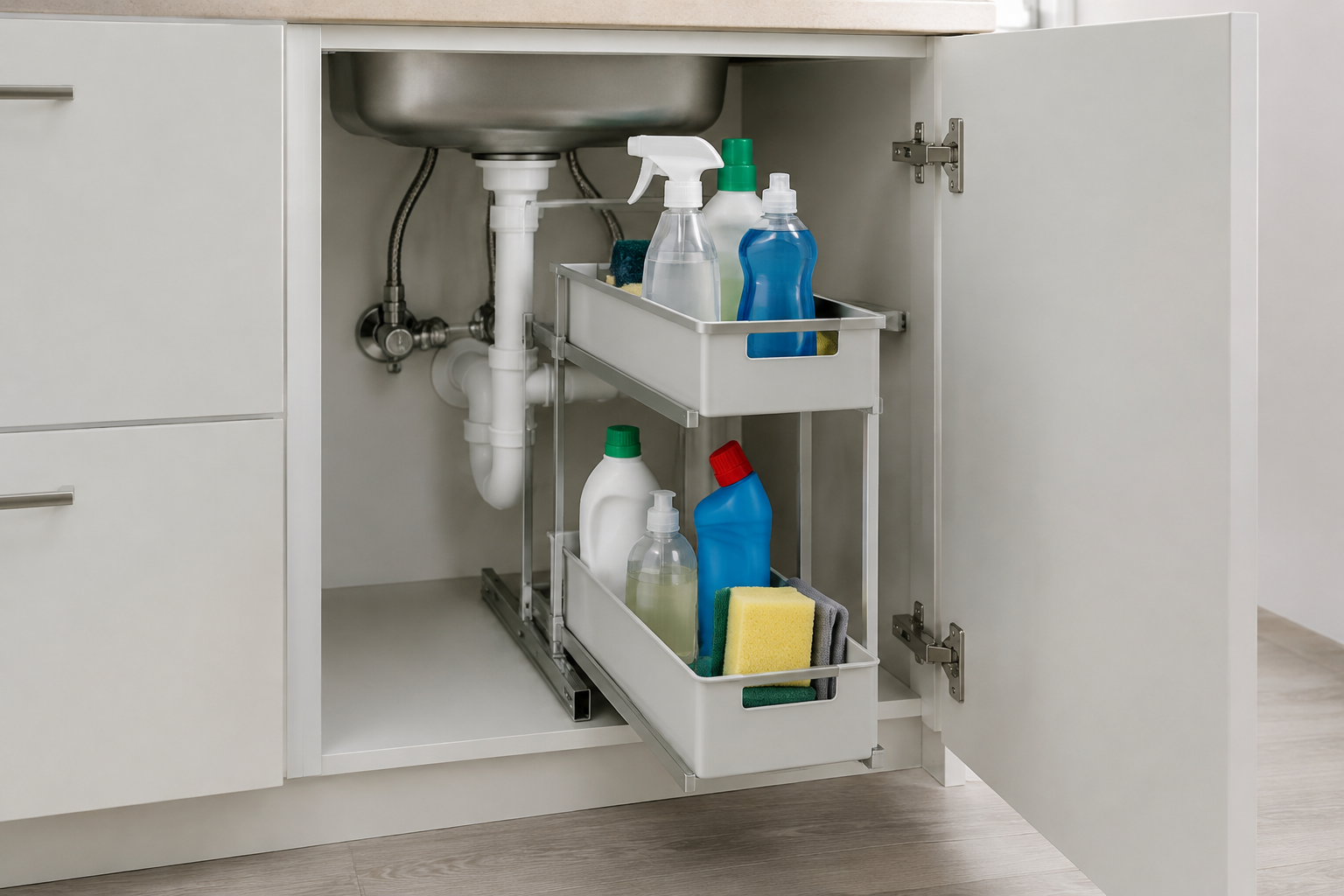
An Under-Sink Pull-Out Caddy
Cleaning products get lost behind the pipes. A two-tier pull-out caddy slides the whole shelf into the light.
Bottles stand upright so nothing leaks. Keep the tallest sprays at the back of the lower tier.
Put the tallest bottles on the lower tier, so nothing blocks the drawer slide.
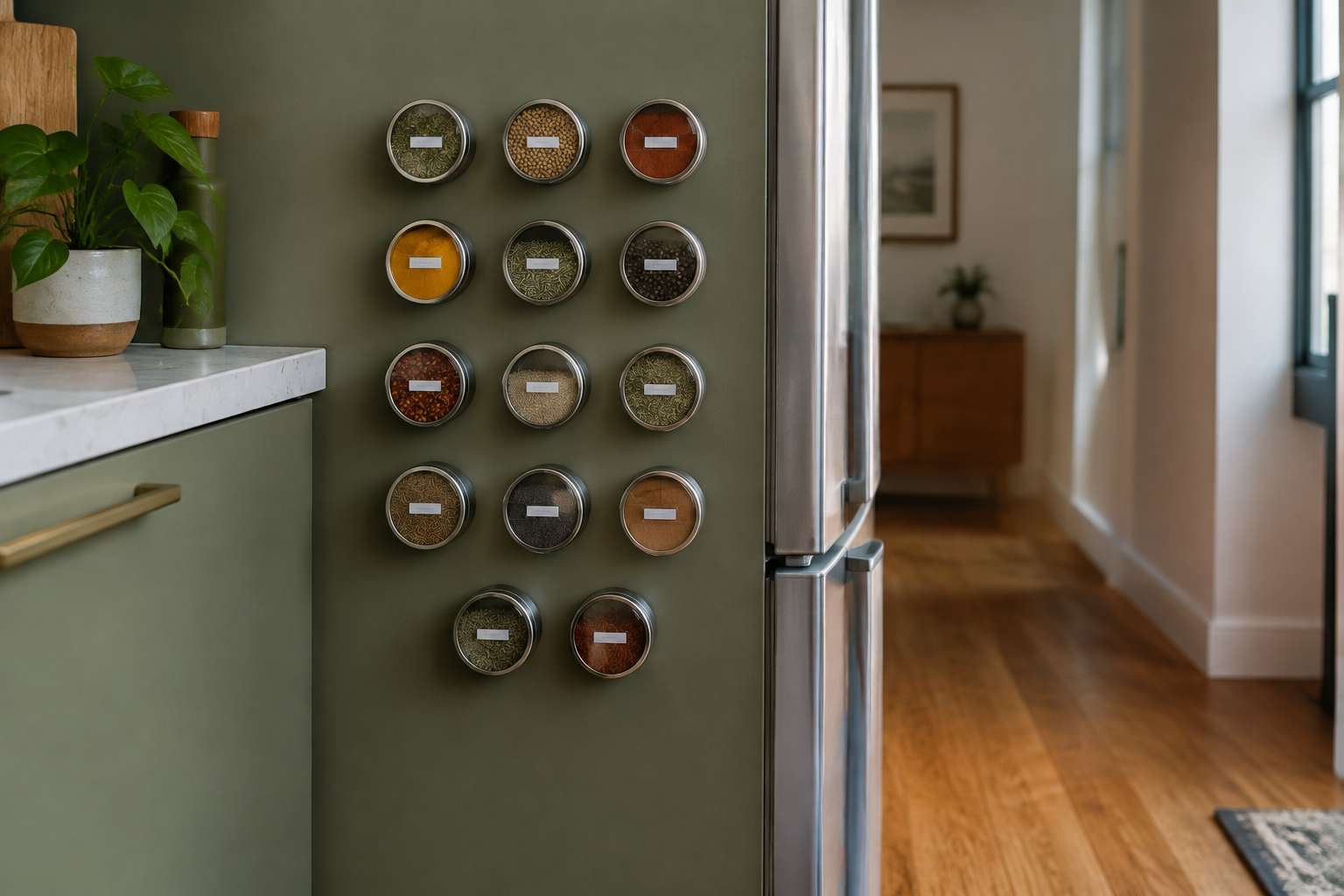
Magnetic Spice Tins on the Fridge Side
A blank fridge panel can hold an entire spice collection. Round magnetic tins turn it into a tidy, readable wall.
They are easy to grab while cooking and free a whole cupboard. Group them by cuisine so you can find things fast.
Buy tins with a strong magnet and a shallow rim, so they never slide off.
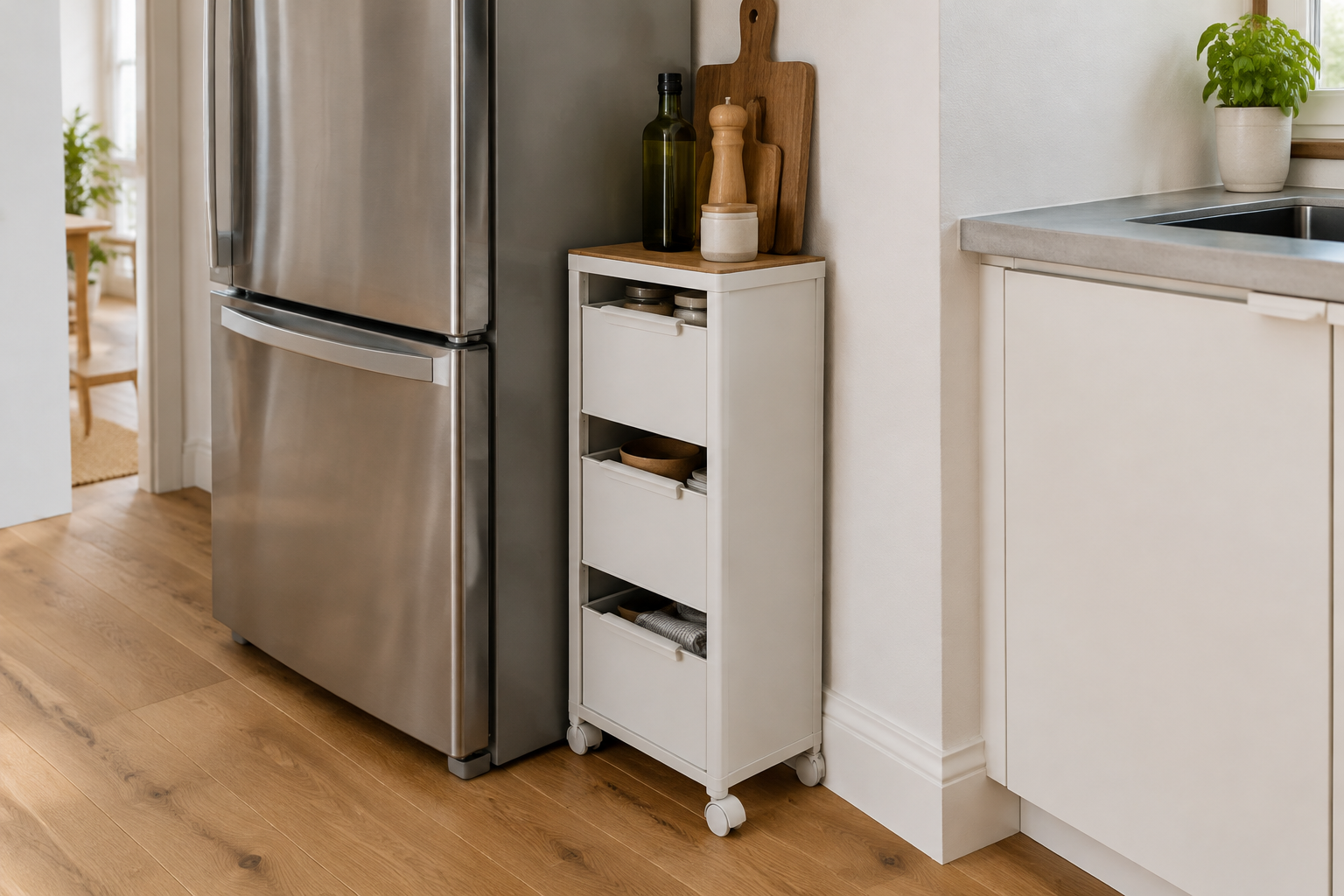
A Slim Rolling Cart in the Gap
Most kitchens have a dead gap beside the fridge. A narrow cart on wheels uses every centimetre of it.
Store oils, boards and foil below, then roll it out for prep. Choose drawers rather than open shelves to keep dust out.
Measure the gap at the floor and at the worktop. Walls are rarely straight.
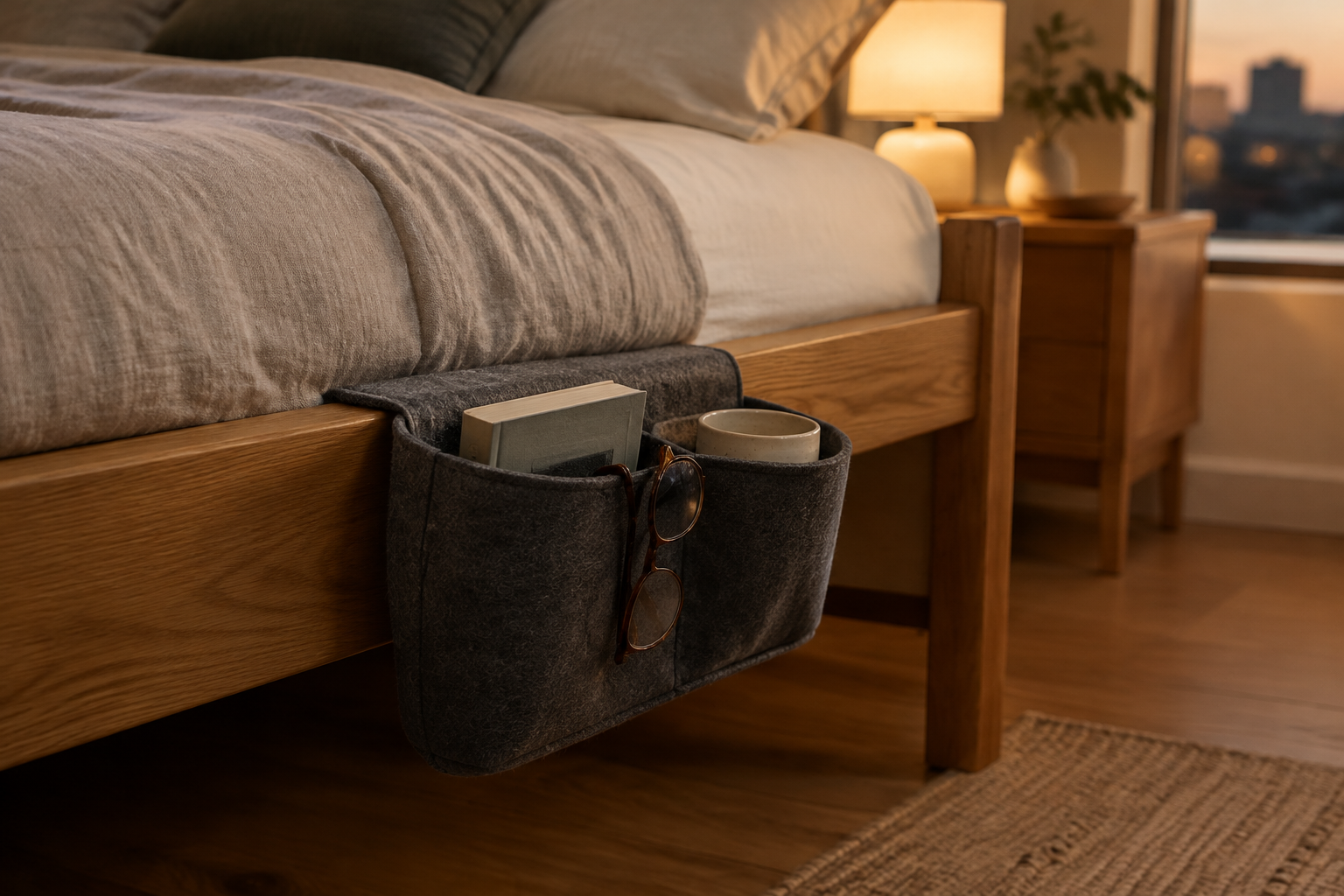
A Bedside Caddy on the Bed Frame
A nightstand needs floor space you may not have. A felt caddy clipped to the frame holds your book, glasses and phone.
It moves with the bed and takes no room at all. Empty it weekly so it does not become a paper tray.
Pick a felt thick enough to hold a phone without sagging overnight.
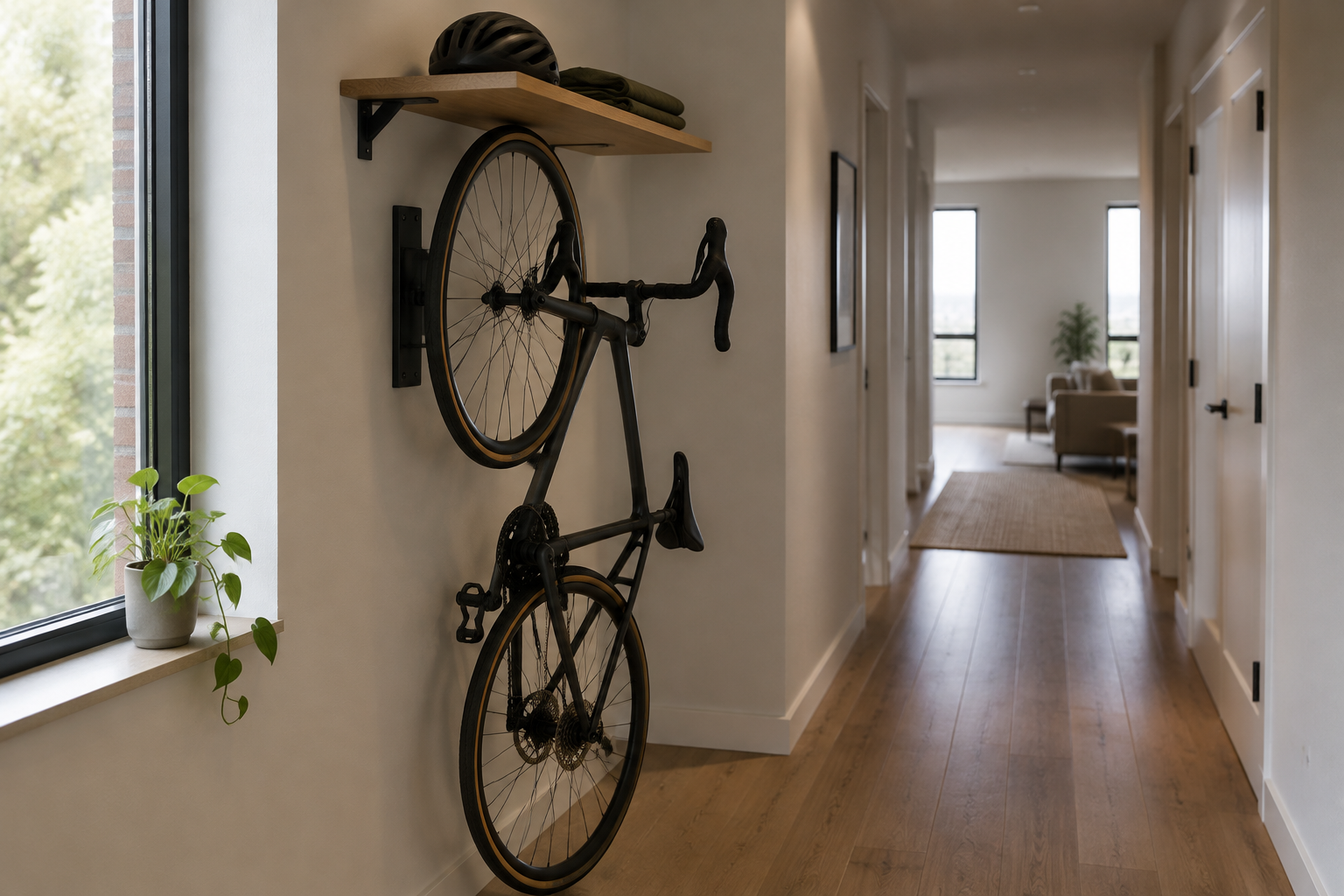
A Wall-Hung Bike Rack with a Shelf
A bicycle parked in the hall blocks the whole corridor. A vertical wall rack stores it flat against the plaster.
Add a shelf above for the helmet, lock and repair kit. Pick a rack with a rubber cradle to protect the frame.
Hang the front wheel at shoulder height so lifting stays easy.
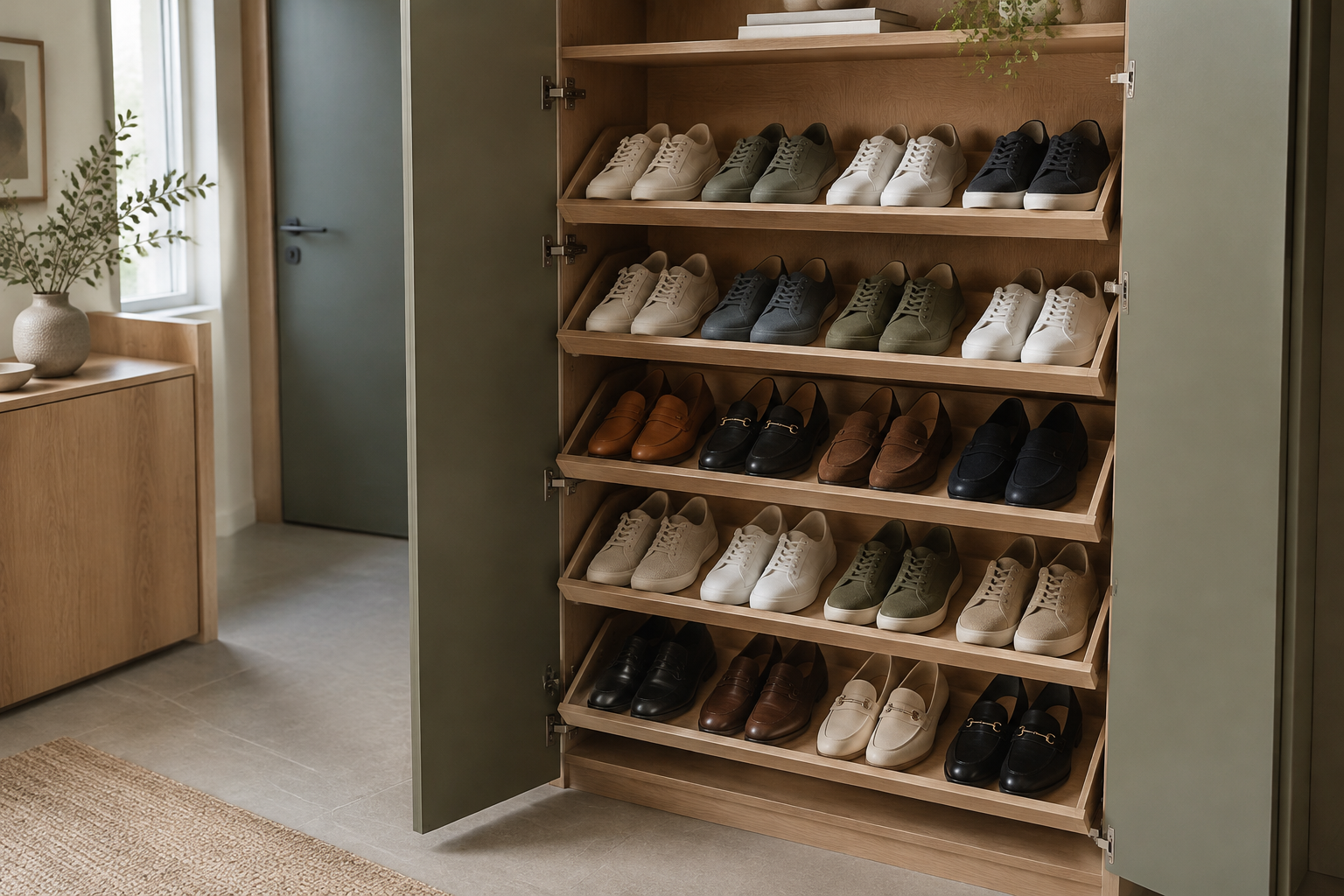
Angled Shoe Shelves in the Cabinet
Flat shelves waste the height between rows. Tilted shelves let you see every pair without crouching.
An angled shelf holds about a third more pairs in the same cabinet. Line the surface with a washable mat.
Take one pair out when a new pair comes in. The shelf only works at that limit.
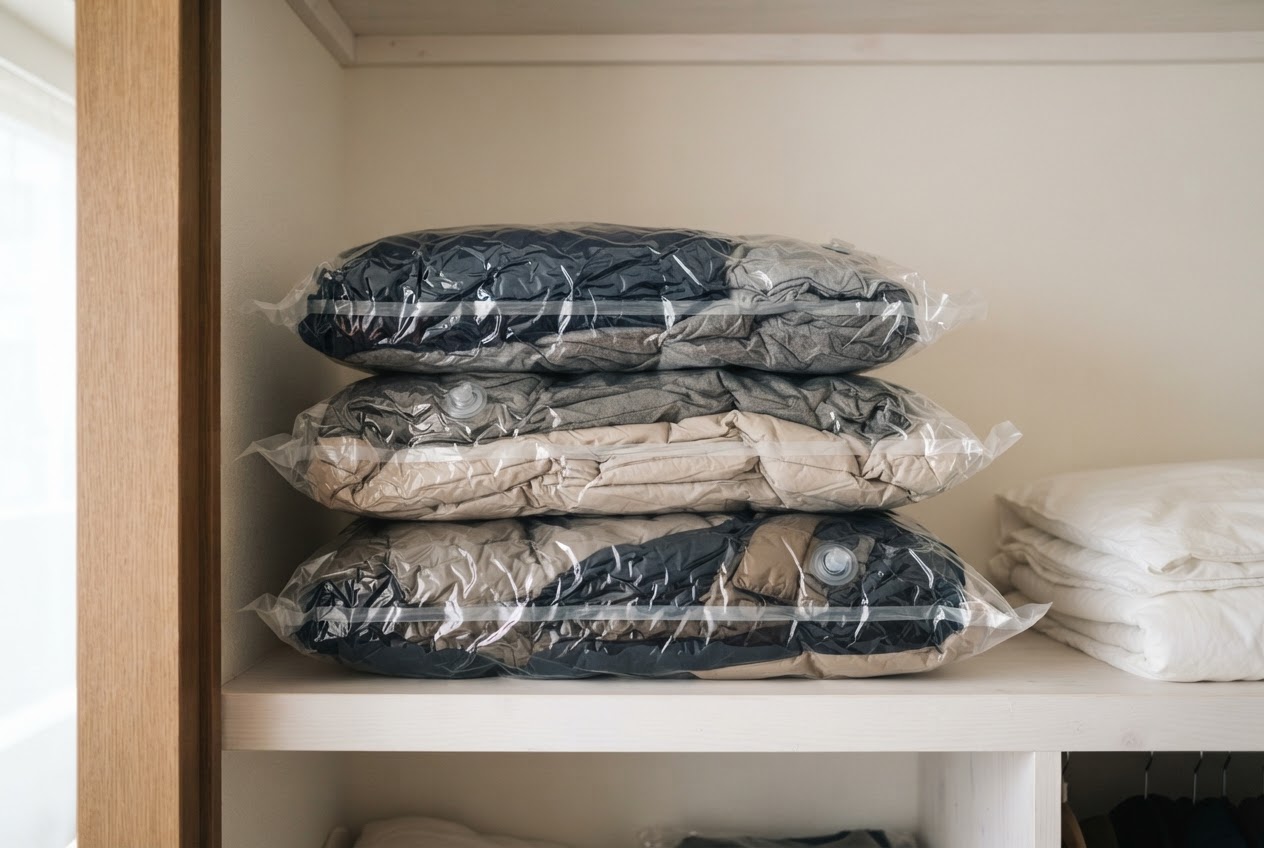
Vacuum Bags for Seasonal Bedding
Duvets and winter coats take up a whole shelf when left loose. Vacuum bags shrink them to a third of the volume.
Store the sealed bags high and away from damp. Label each one with its contents and the season.
Never seal anything damp, or the bag becomes a mould experiment.
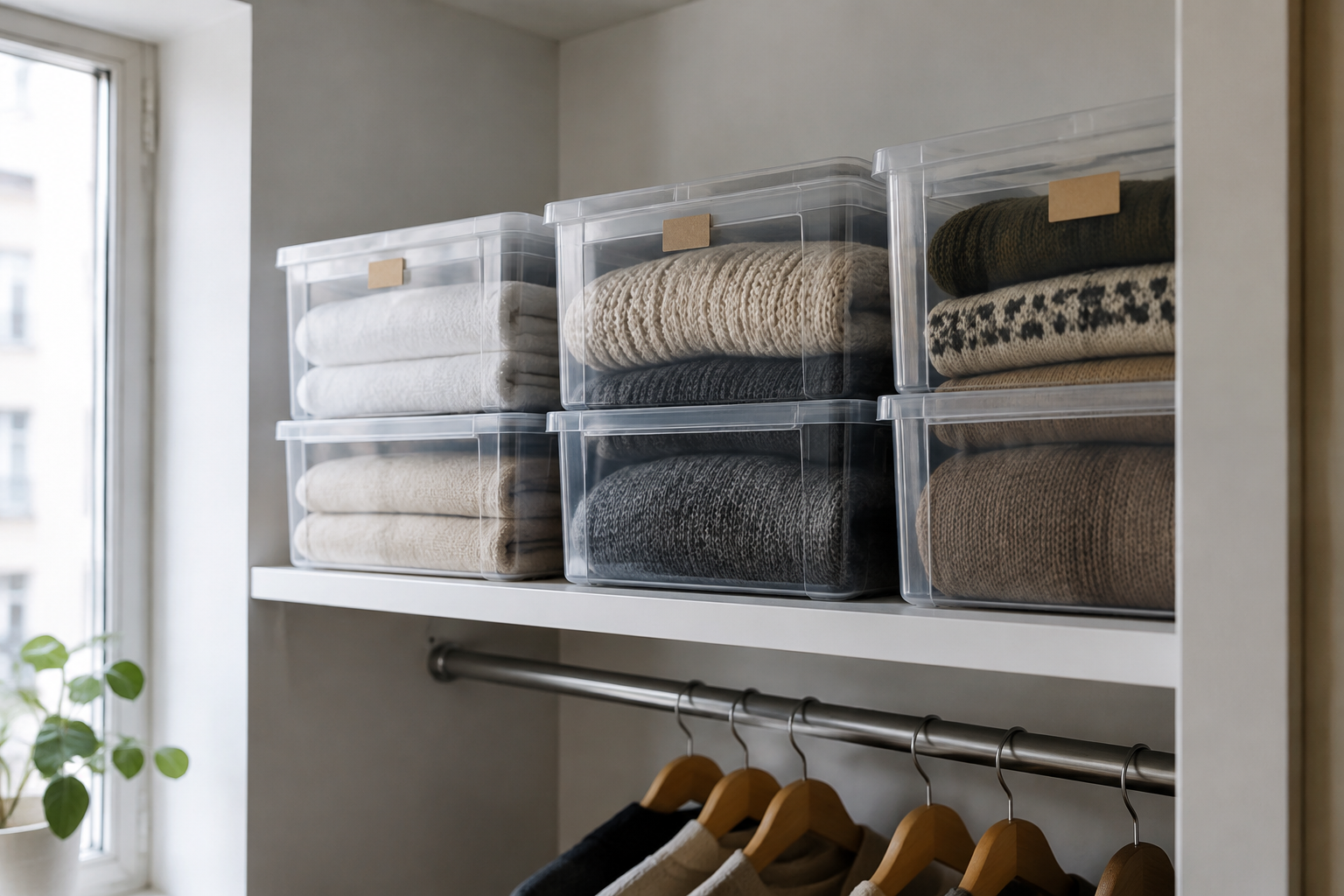
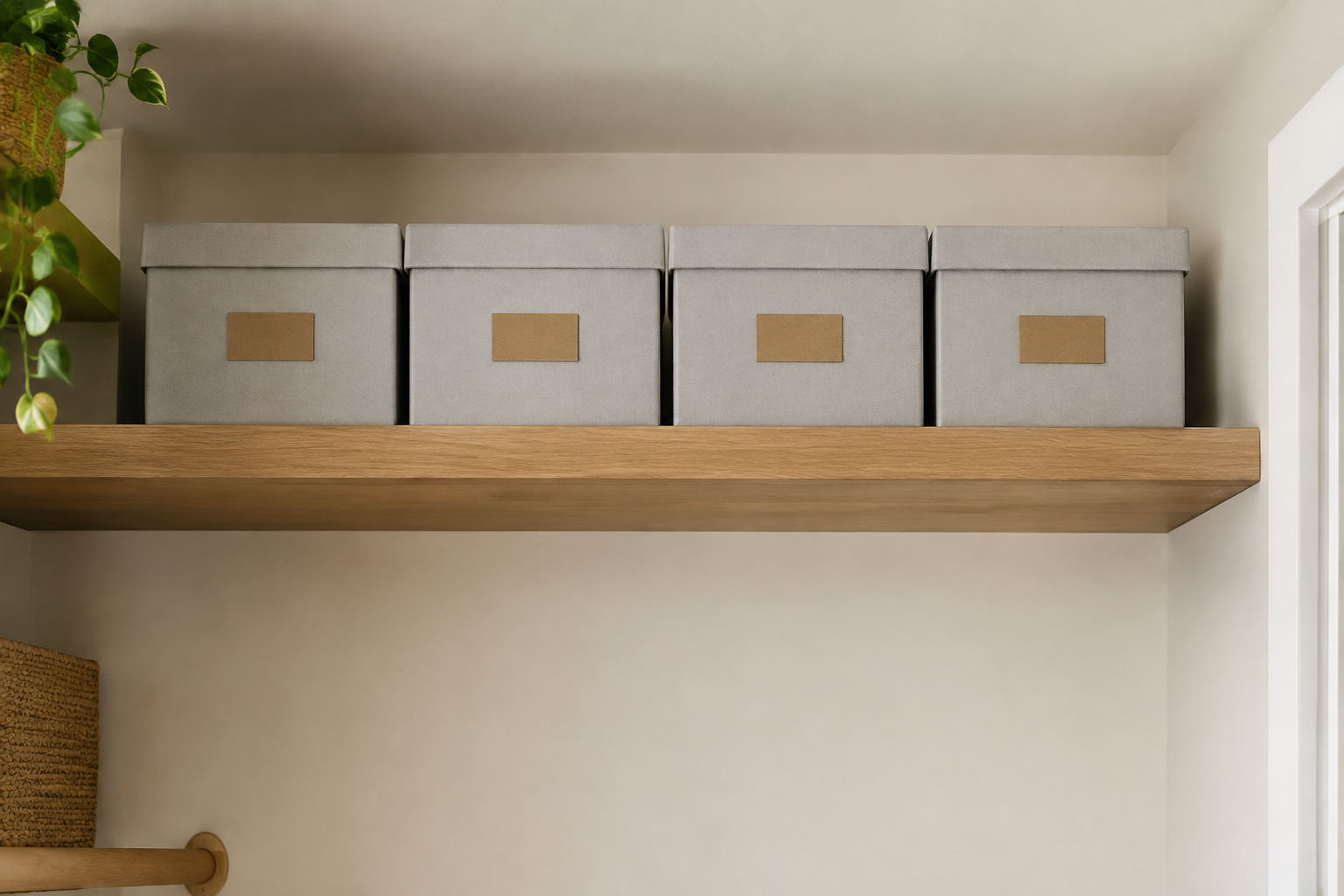
Clear Stackable Bins on the Top Shelf
The top shelf only helps if you can see what is up there. Clear bins keep the contents visible at a glance.
Buy one size and stick to it so the bins stack square. Attach a simple label to the front edge.
Keep the label on the short edge you actually see when the bin is stacked.
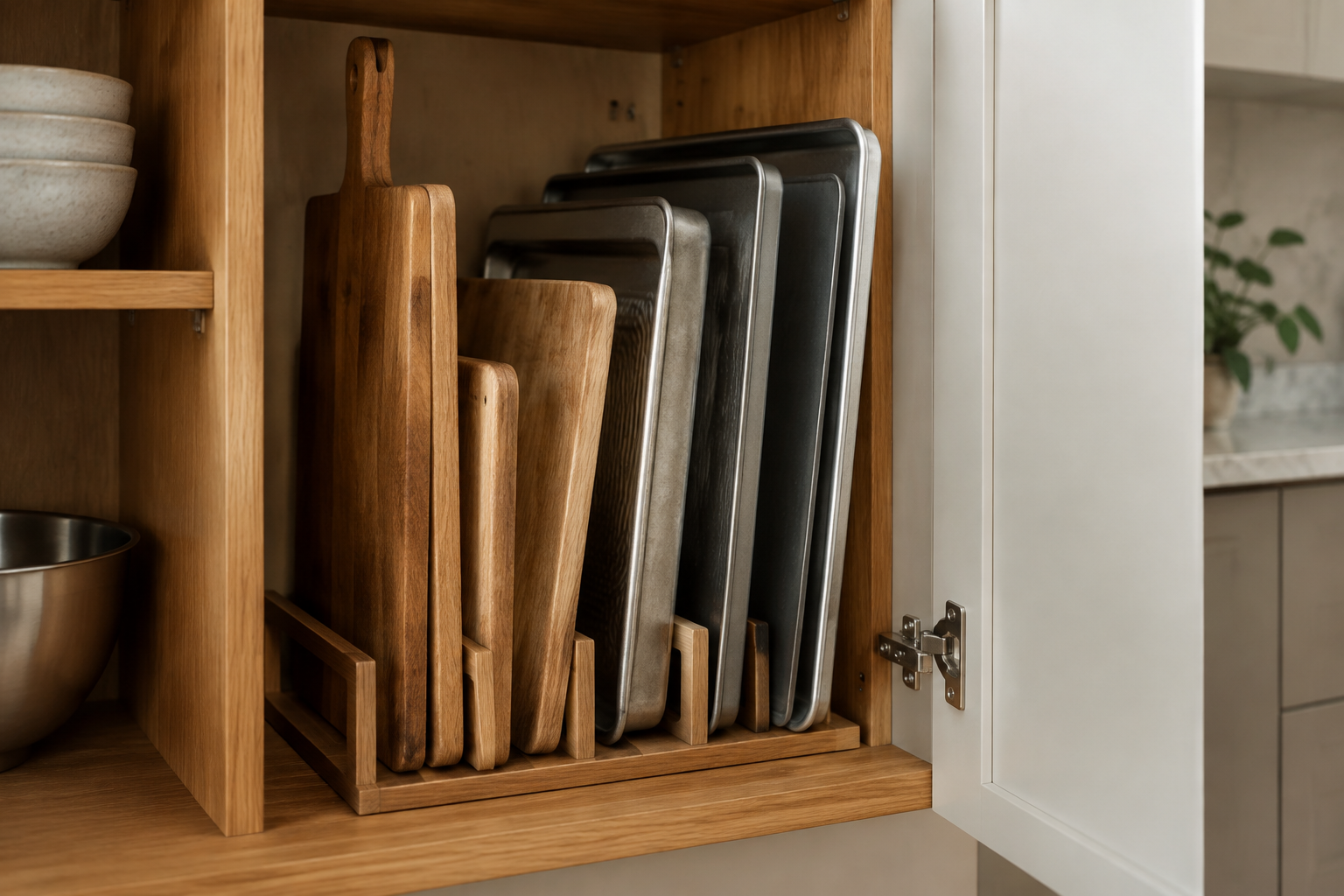
A Vertical File for Boards and Trays
Chopping boards, trays and cooling racks all want the same flat spot. Stand them in a slotted file instead.
Slide the heaviest board to the back for balance. The file fits inside a cupboard or on an open shelf.
Store boards with the handle up, so the grip is the first thing you find.
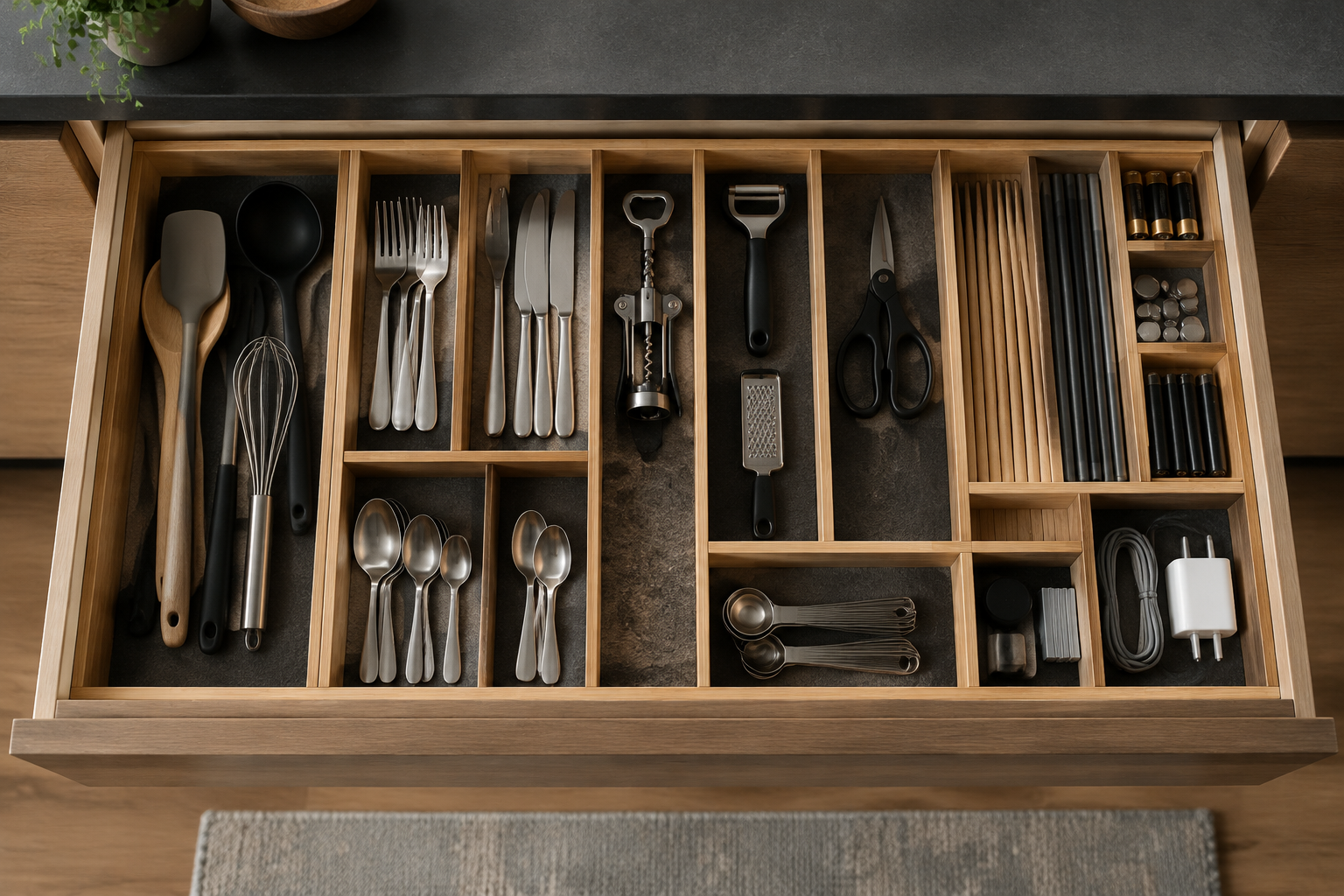
Expandable Drawer Dividers
One deep drawer becomes a jumble of cutlery, tools and batteries. Expandable dividers carve it into clear zones.
They grip the drawer walls without screws, so you can move them any time. Measure the internal width first.
Leave one wide zone free for odd items. Dividers only work with a spare gap.
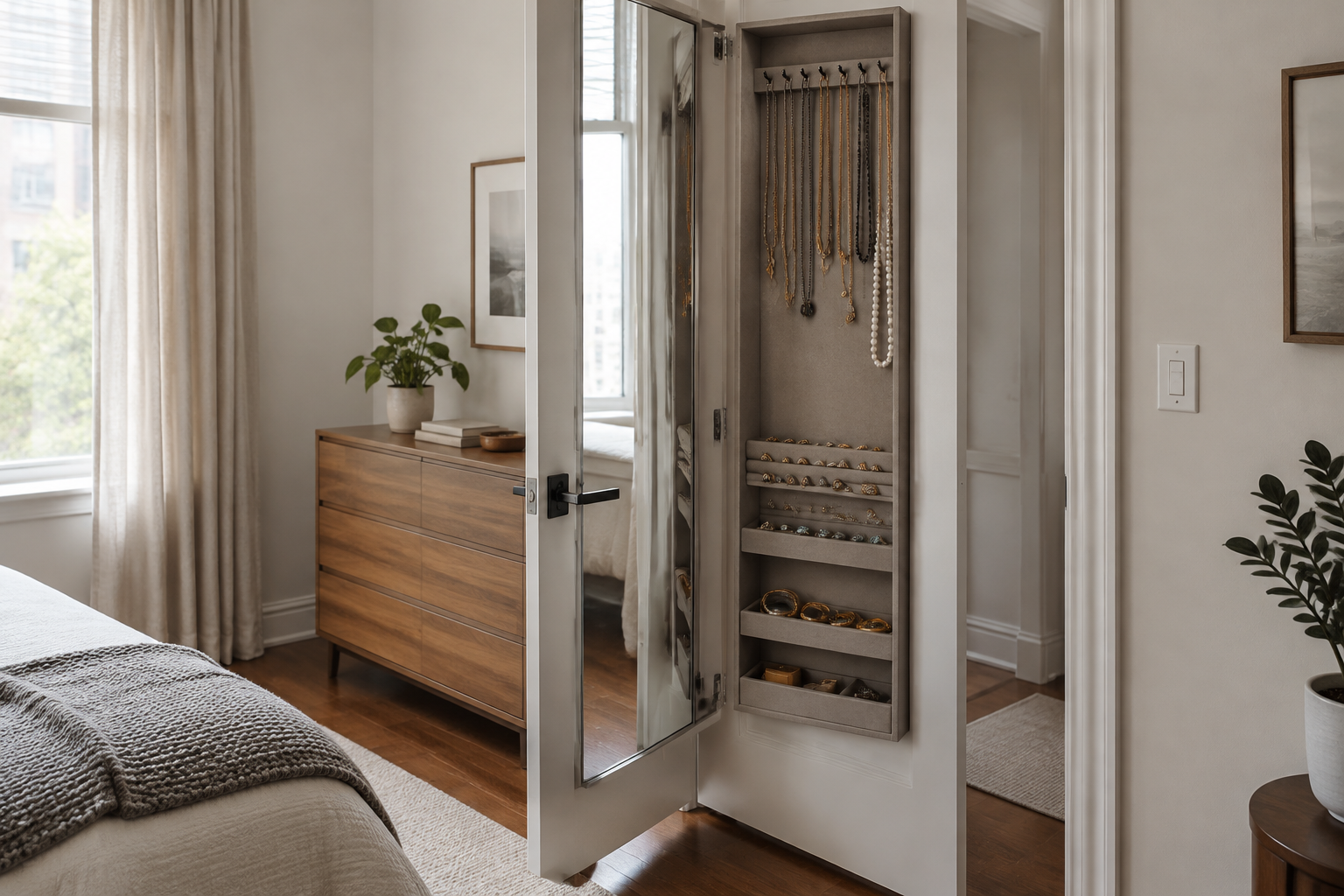
A Jewelry Mirror Cabinet
A full-length mirror on the back of a door can hide a shallow cabinet. Inside, hooks and trays keep necklaces untangled.
The mirror makes the room feel larger and the jewelry stays private. Line the shelves with felt to stop scratches.
Check the mirror clearance before you hang anything on the back of the door.
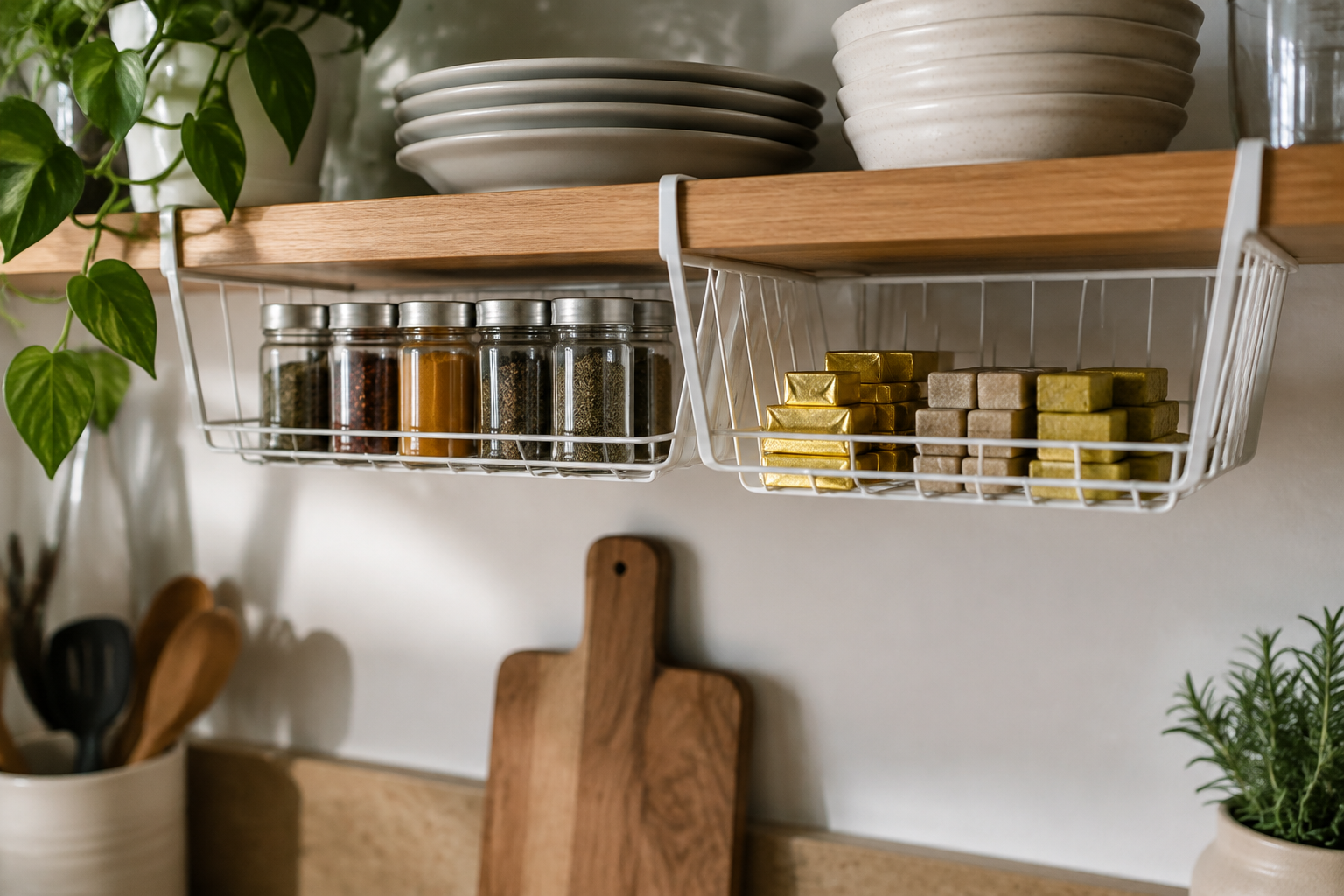
Under-Shelf Wire Baskets
The gap between stacked plates and the shelf above is dead space. Hanging wire baskets put it to work.
Slide in spice jars, tea or stock cubes and gain a whole level. Check the shelf thickness before hanging anything heavy.
Put the basket where you can reach the rim without a step.
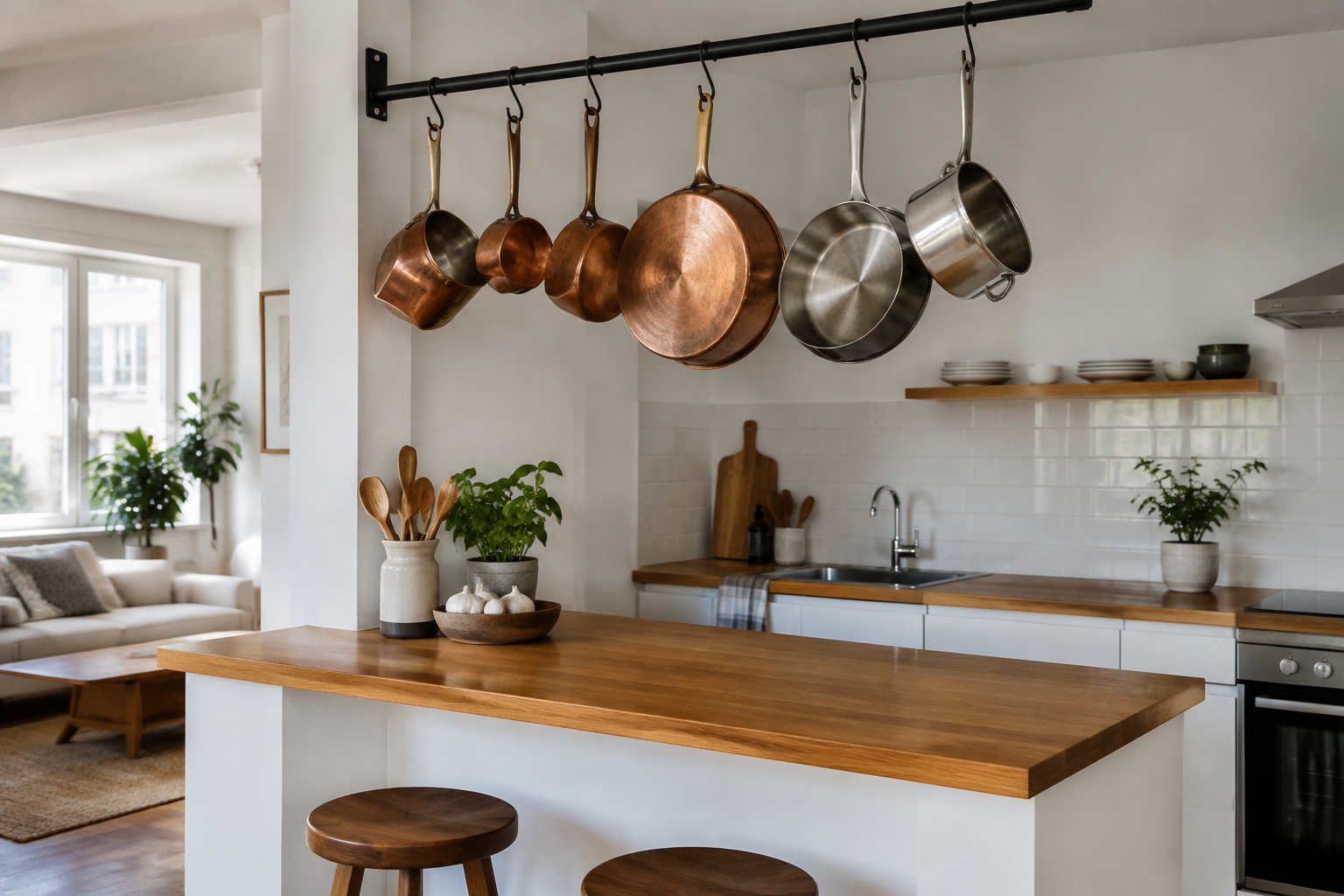
A Hanging Pot Rail Over the Peninsula
Pots stored in cupboards are hard to reach while cooking. A rail above the peninsula keeps them overhead and ready.
Use S-hooks that match the rail finish. Hang the heaviest pan at the end nearest the wall.
Hang the rail so the tallest pan clears the worktop by a hand’s width.
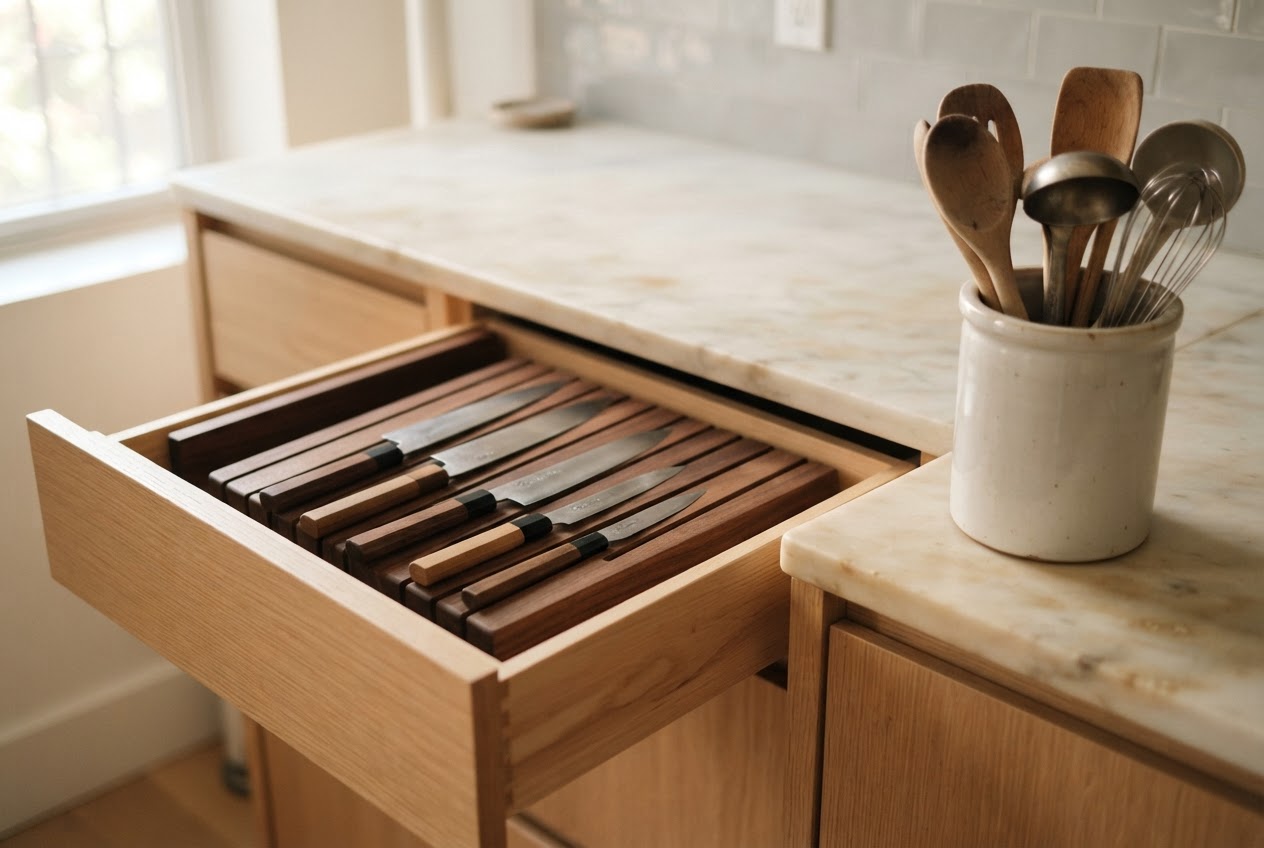
A Drawer Knife Insert and Utensil Crock
Knives thrown into a drawer lose their edge against other metal. A slotted insert holds each blade separately.
Keep everyday utensils in one crock beside the hob. Everything you use less often can live in the drawer.
Sharpen the knives monthly. A dull blade is the real reason drawers get messy.
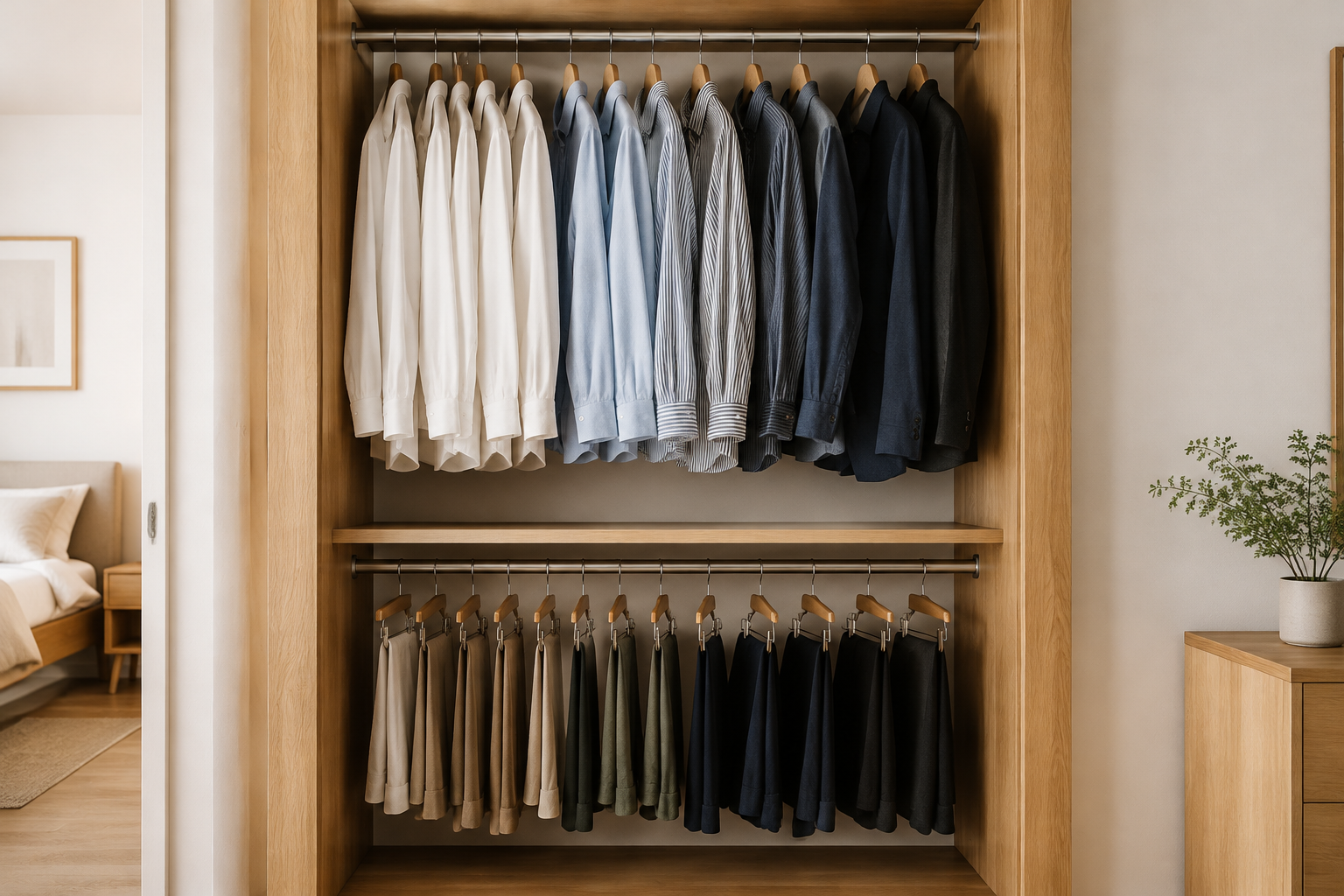
A Double-Hang Rod in the Closet
One rod leaves the lower half of a wardrobe empty. A second rod doubles the hanging space in minutes.
Hang shirts on the top rod and trousers or skirts below. Keep both rods at shoulder height for easy reach.
Fit the second rod at the height of your shortest hanging item.
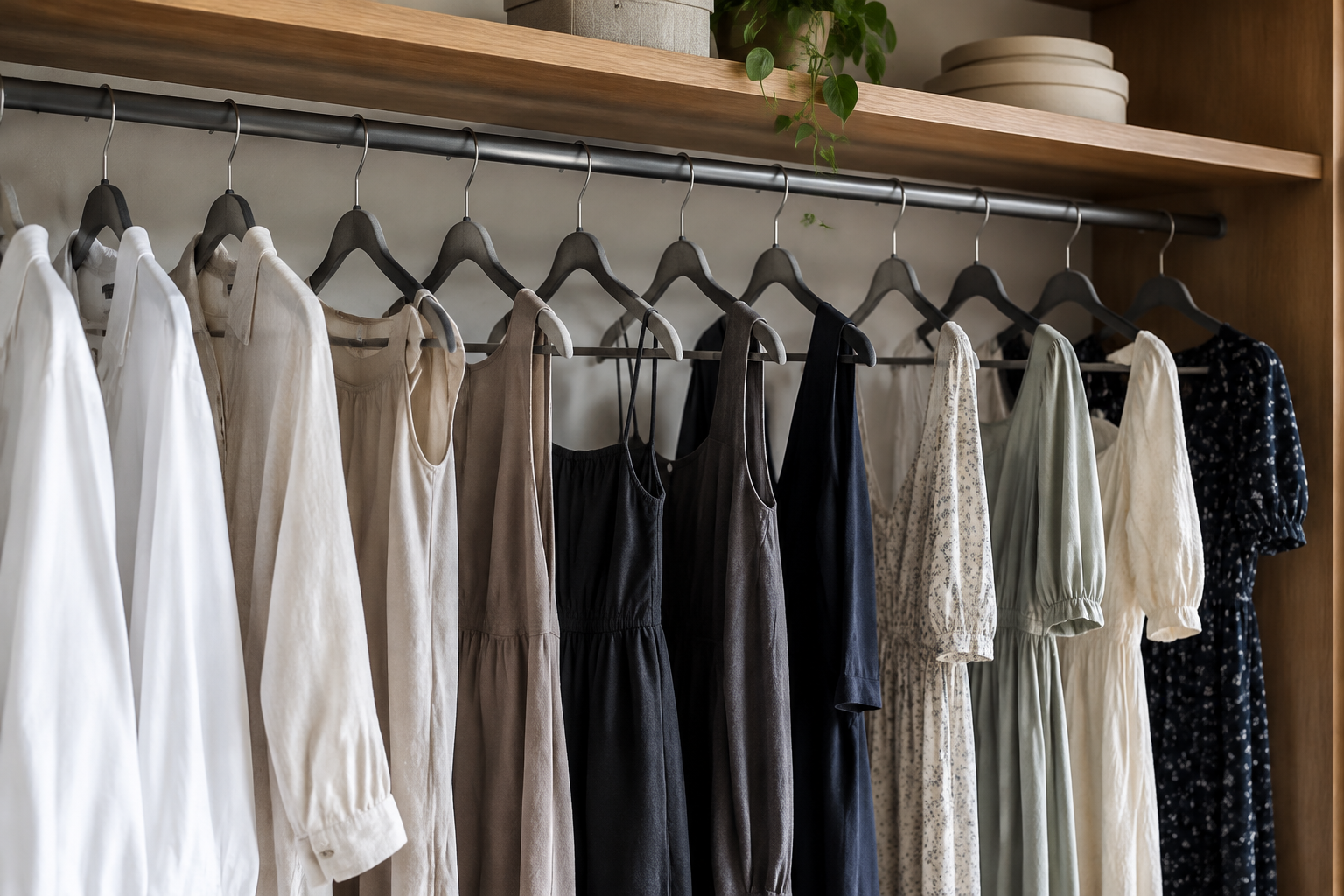
One Hanger Type for the Whole Wardrobe
Mismatched hangers make a rail look messy and waste height. Switching to one slim design adds space instantly.
Slim velvet hangers hold slippery fabric without slipping off. The uniform line also makes outfits easier to scan.
Add a hook for belts and scarves at the end of the rail.
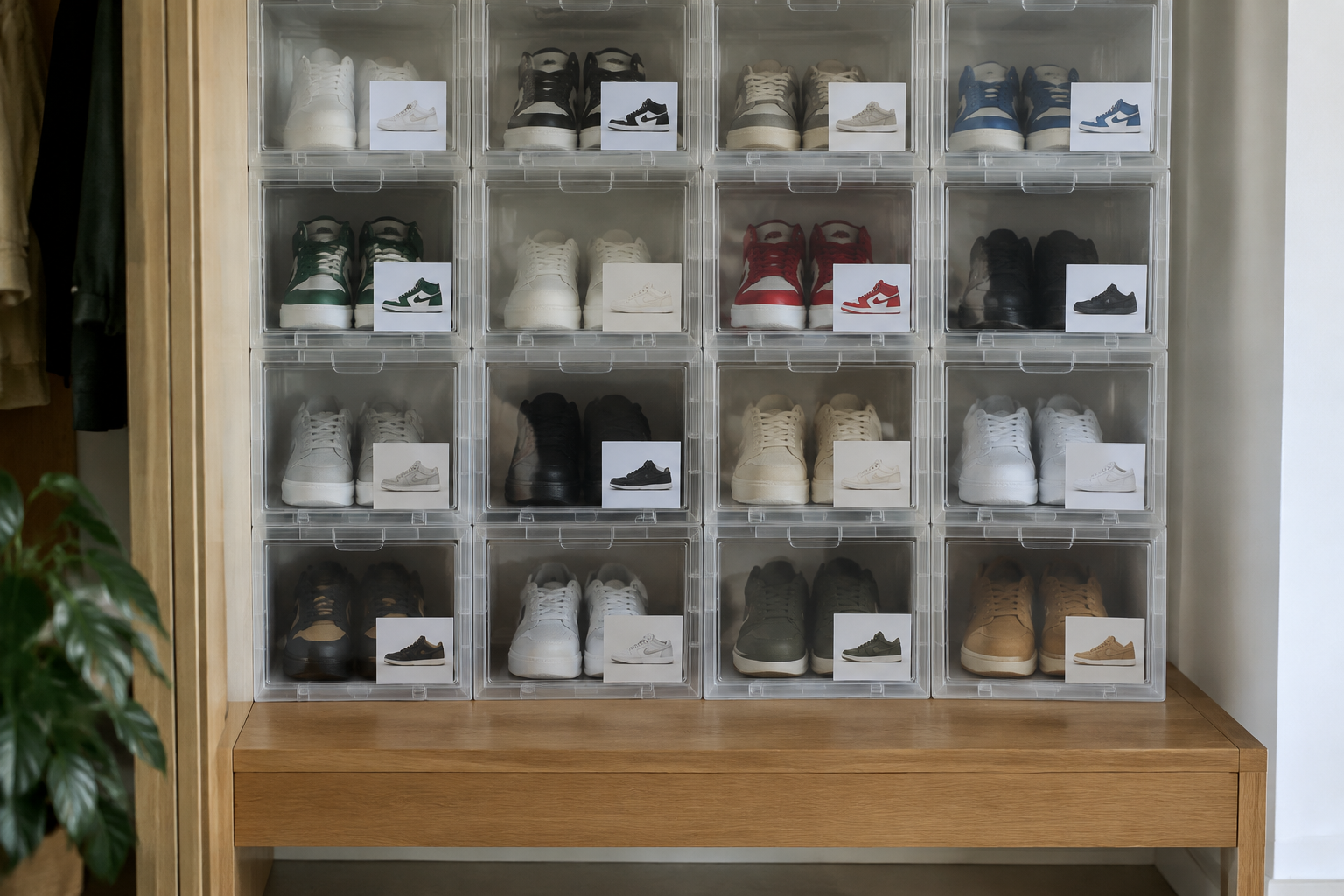
Clear Shoe Boxes with Photo Labels
Stacked boxes hide which pair is inside. Clear fronts and a small photo label solve that without opening anything.
Store them heel to toe in pairs so each box stays compact. Keep the most-worn pairs at waist height.
Photograph each pair in daylight, or the label looks orange on the box.
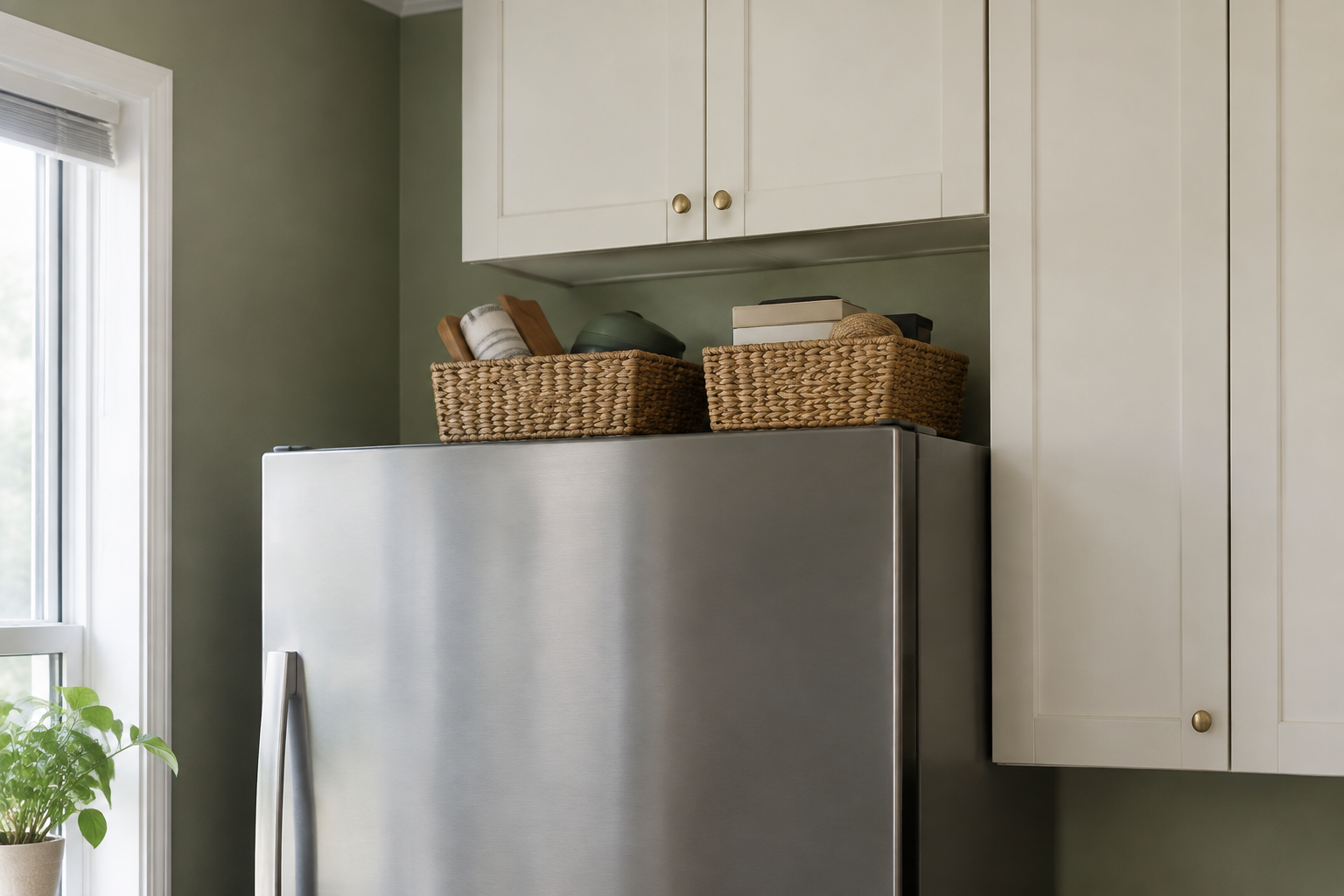
Baskets on Top of the Fridge
The space above the fridge is warm, high and usually empty. Shallow baskets turn it into storage for rarely used items.
Keep it for bulk goods and party gear, not food that spoils. Choose baskets with handles so you can pull them down safely.
Keep nothing up there you need weekly. A step stool is a barrier, not a habit.
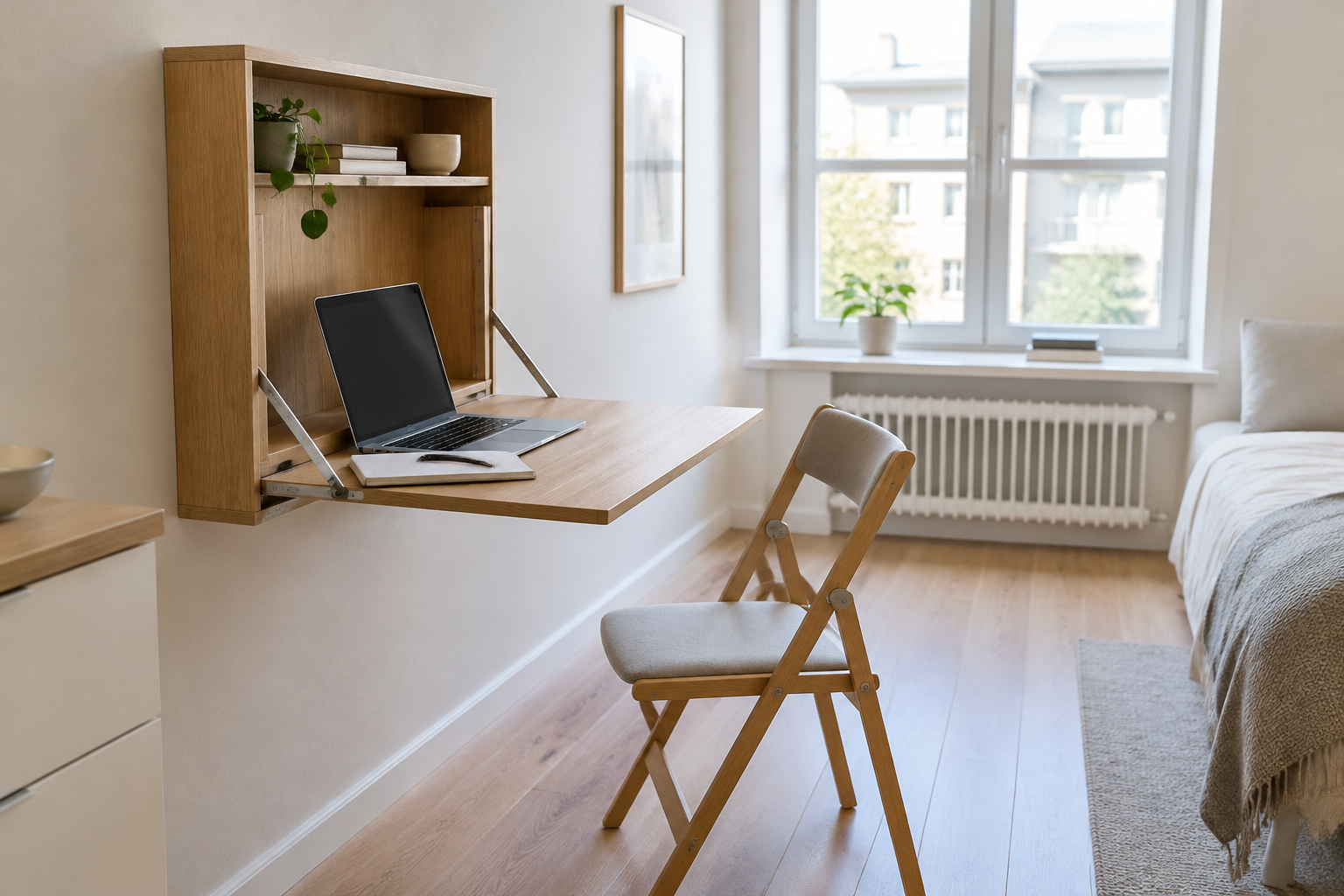
A Wall-Mounted Folding Desk
A full desk can dominate a studio flat. A folding desk drops flat against the wall when the workday ends.
Pair it with a folding chair that hangs beside it. The floor returns to living space every evening.
Cover the wall behind the desk with a pin board, so paper stops landing on the floor.
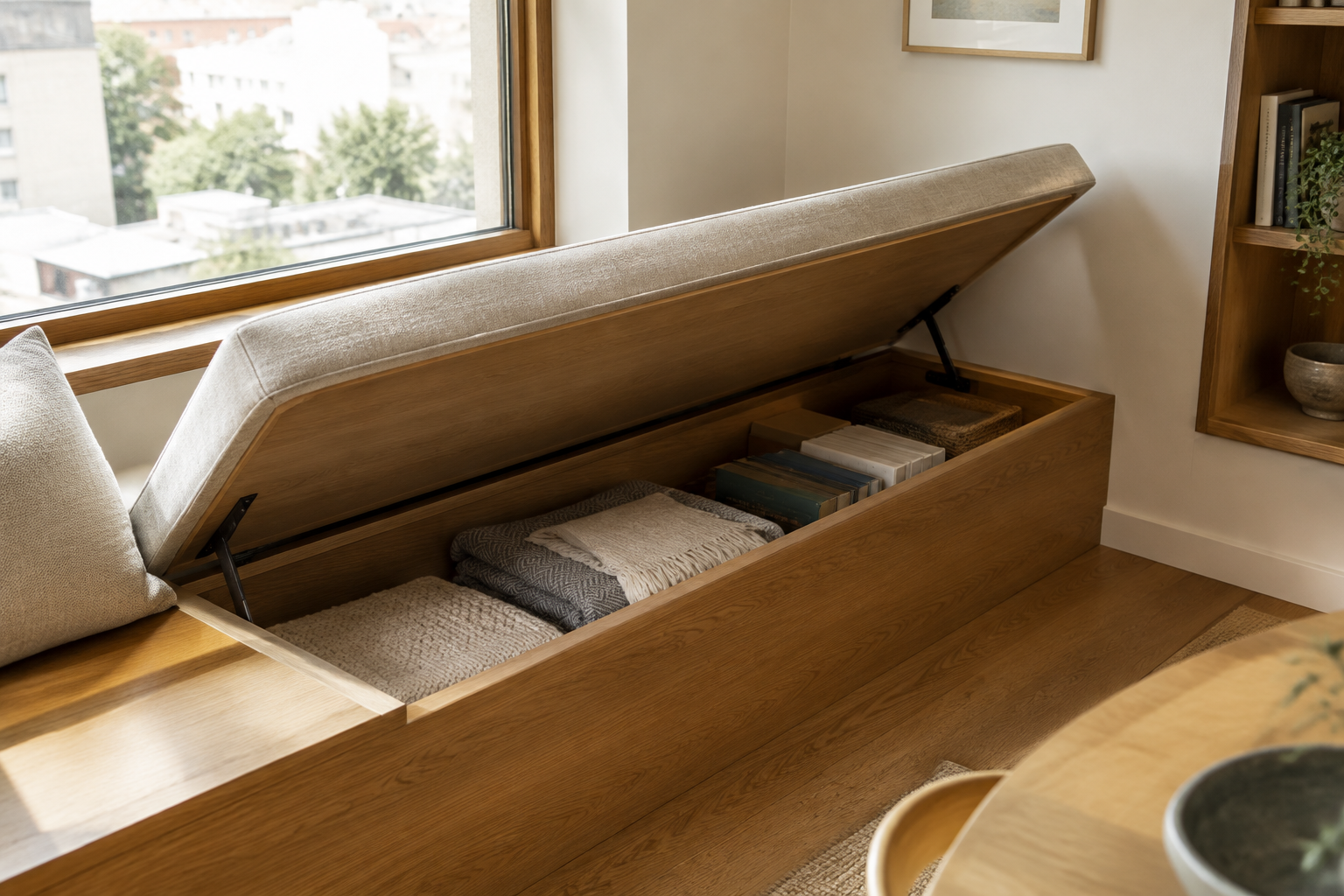
A Window-Seat Storage Bench
A bench under the window adds seating and hides a chest. The cushion lifts to reveal a deep compartment below.
Store bedding, books or out-of-season clothes inside. A lift-up lid is easier to load than a row of drawers.
Choose a lid that opens with one hand while the other holds the cushion.
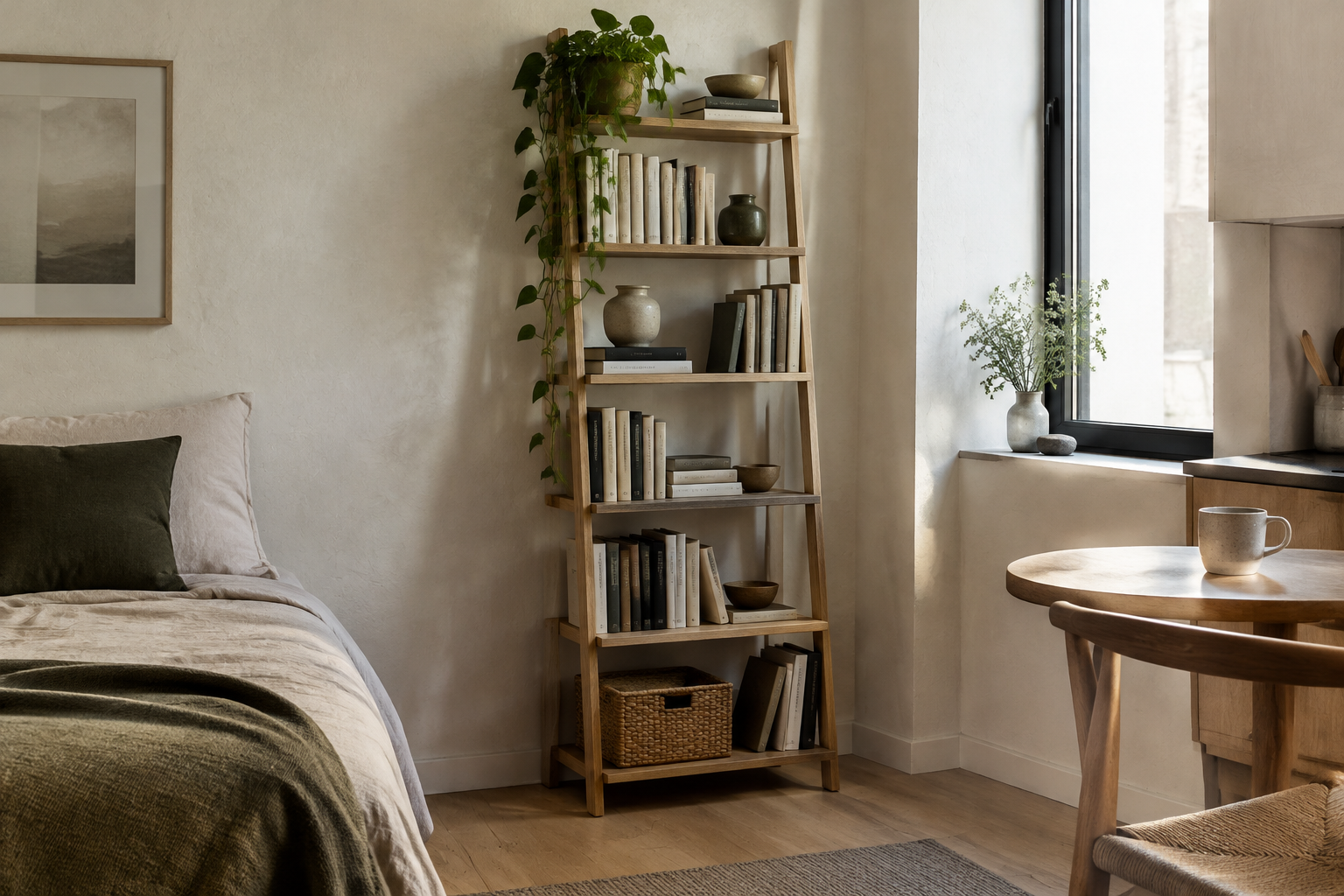
A Ladder Shelf as a Vertical Library
Books spread sideways take up a whole wall. A tall ladder shelf stacks them vertically in a narrow footprint.
Use the top rungs for plants and the lower ones for heavy books. Keep the deepest items at the bottom for balance.
Anchor the top rung to the wall. A leaning shelf is a tipping shelf.
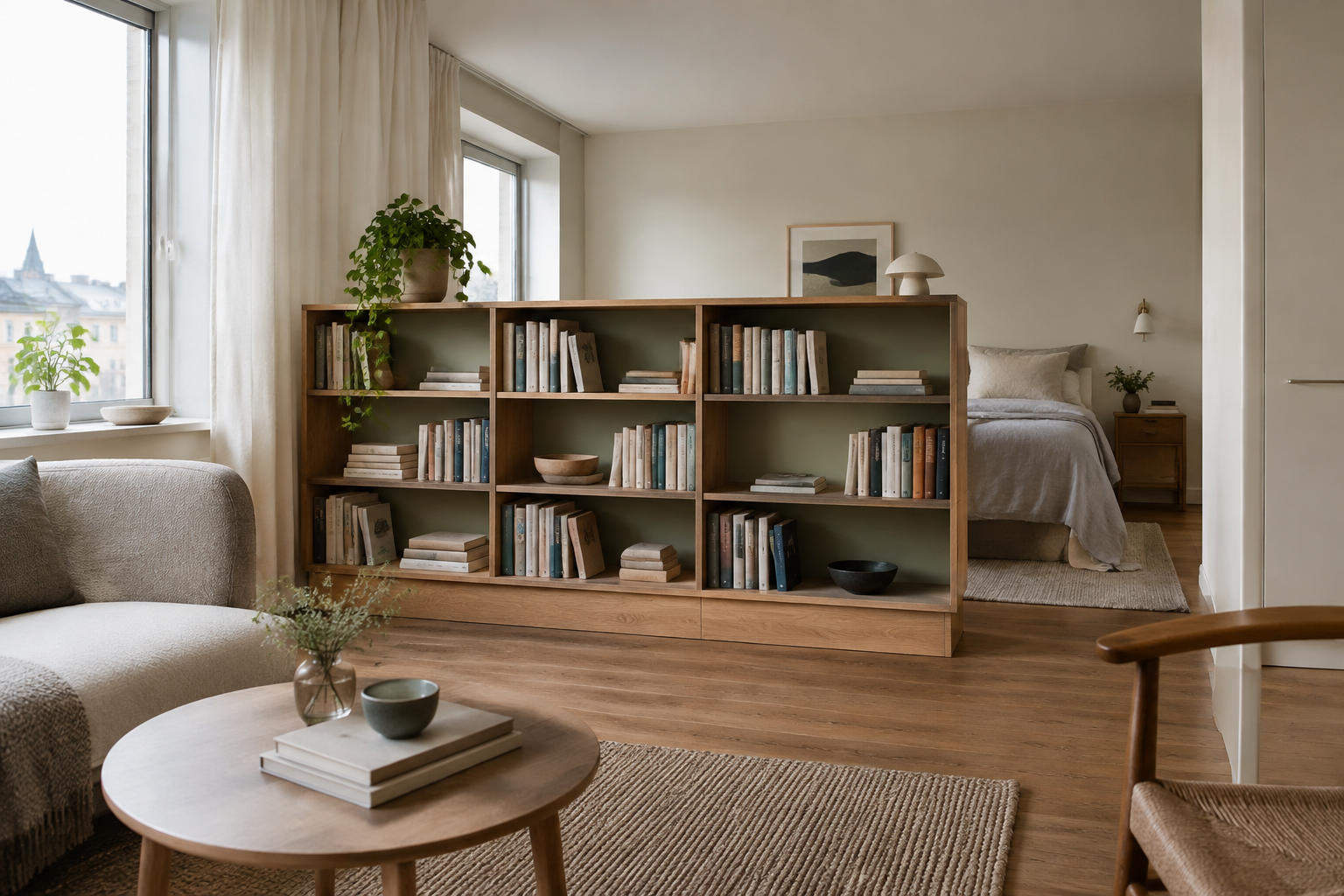
A Bookcase Room Divider
In a studio flat you need zones, not walls. A low bookcase with a solid back divides the sleeping and living areas.
Face the shelves toward the room you use most. The back panel gives the sleeper a sense of privacy.
Keep the shelf below eye level so the room still feels open from the sofa.
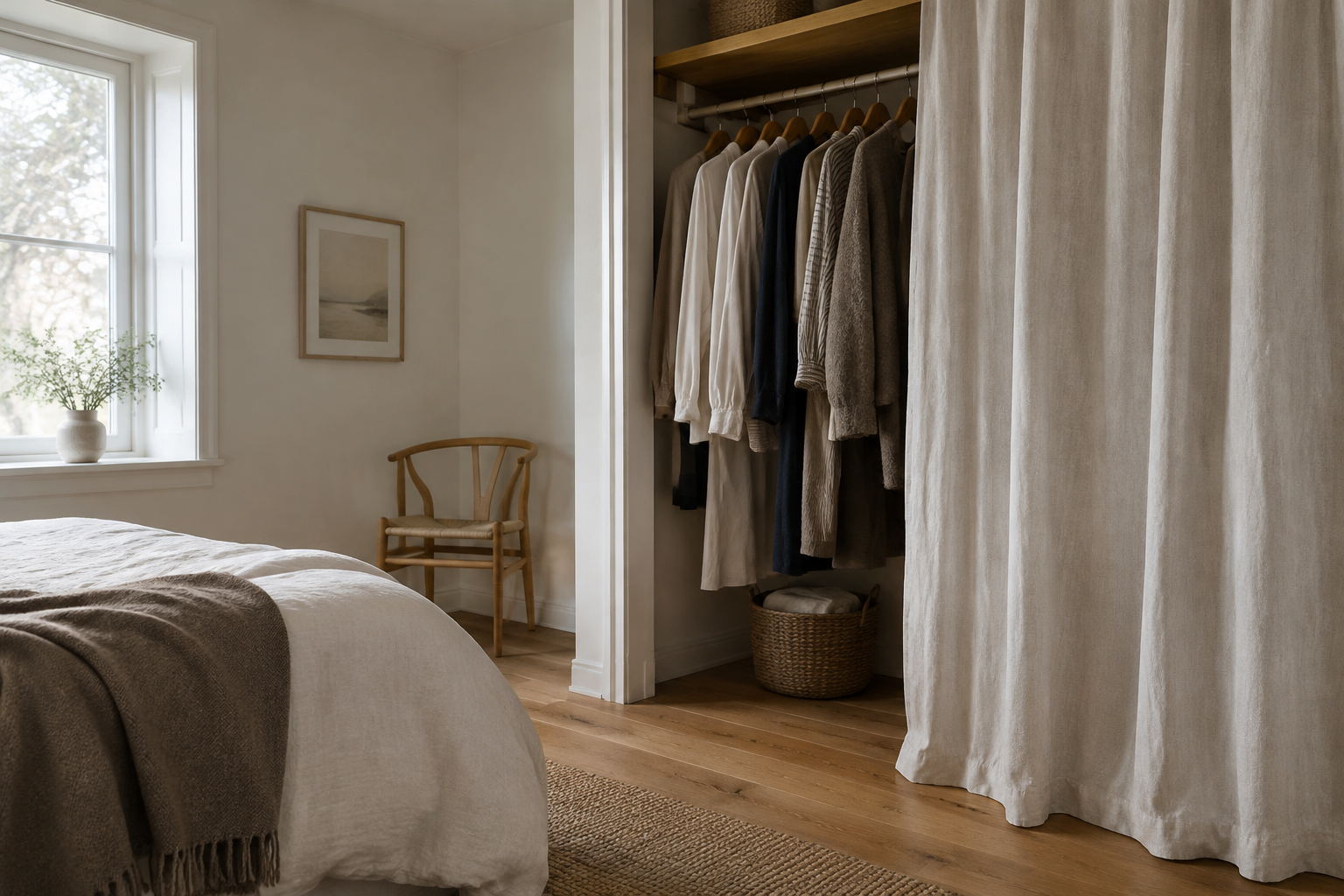
A Curtain-Front Open Wardrobe
An open rail looks untidy the moment you own more than ten things. A linen curtain hides the whole wardrobe in one sweep.
It is cheaper than doors and softer than panelling. Choose a fabric close to the wall colour for a calm look.
Iron the curtain once before hanging it, or the folds never settle properly.
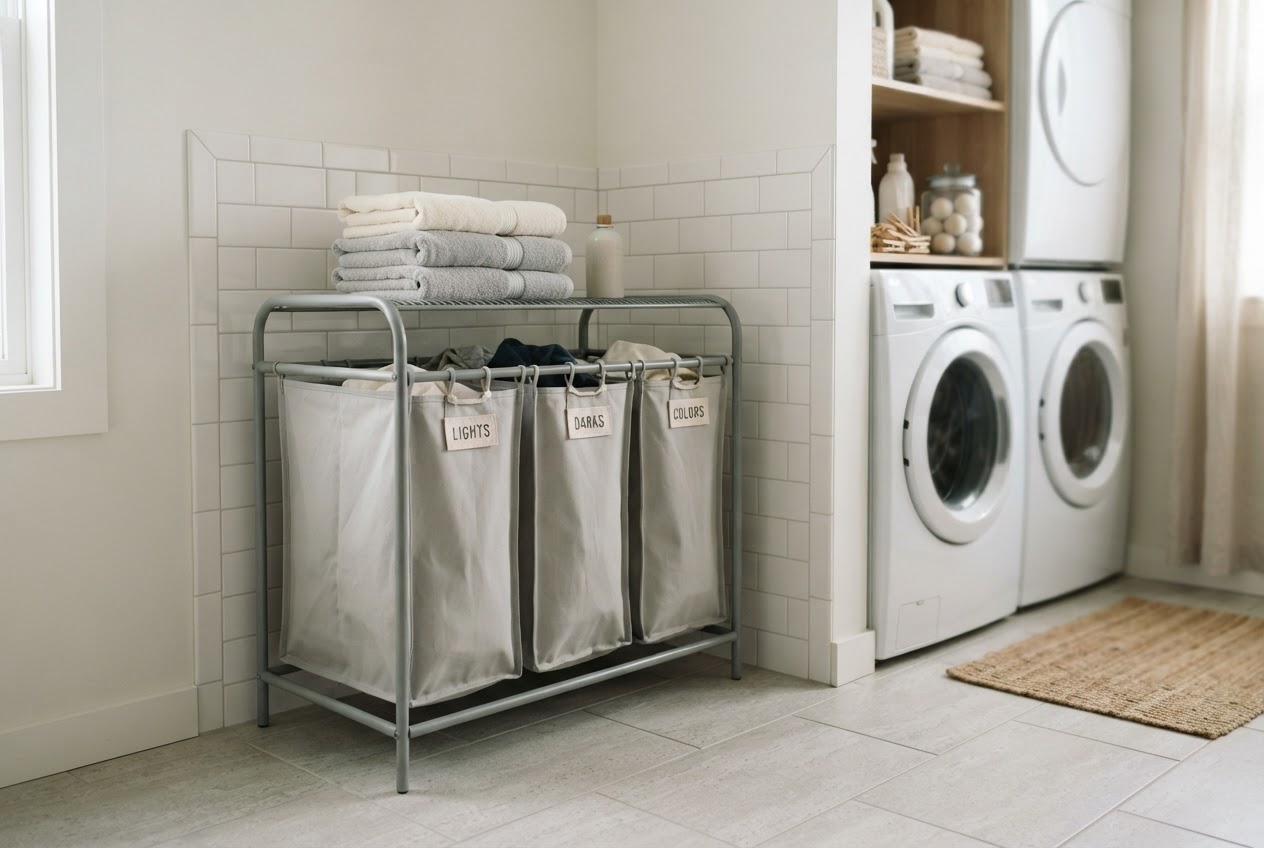
A Three-Bin Laundry Sorter
One basket forces lights, darks and delicates together. Three slim compartments sort the laundry as it happens.
Look for a frame that slides under the counter. Wash day becomes a single trip instead of a sorting session.
Line each bag with a removable cotton liner so it can be washed.
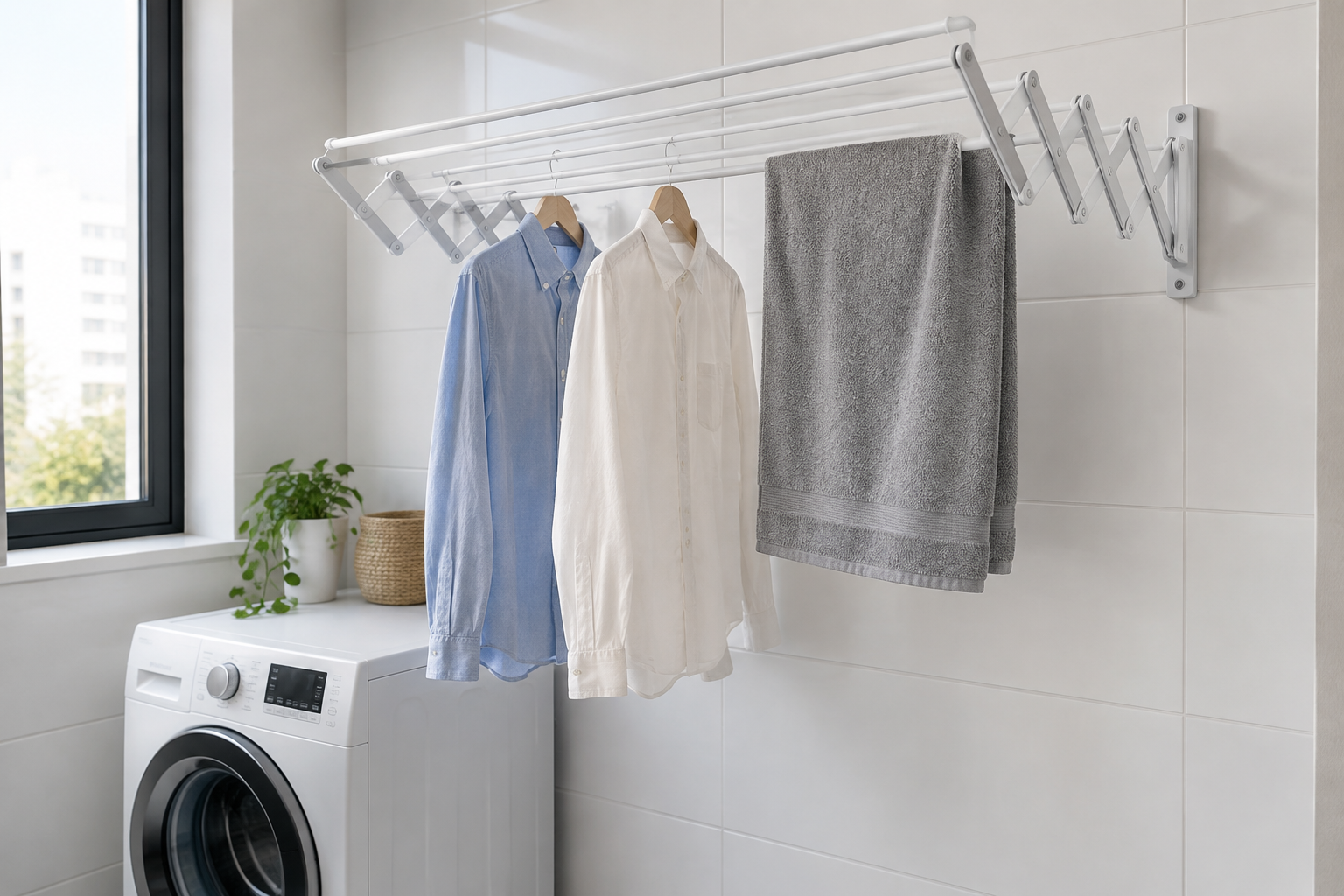
An Accordion Drying Rack on the Wall
A freestanding rack lives permanently in the way. A wall-mounted accordion opens for laundry day and folds flat after.
Mount it above the washing machine or the bath. Keep it clear of doors that need to swing open.
Point a small fan at the rack on humid days and towels dry twice as fast.
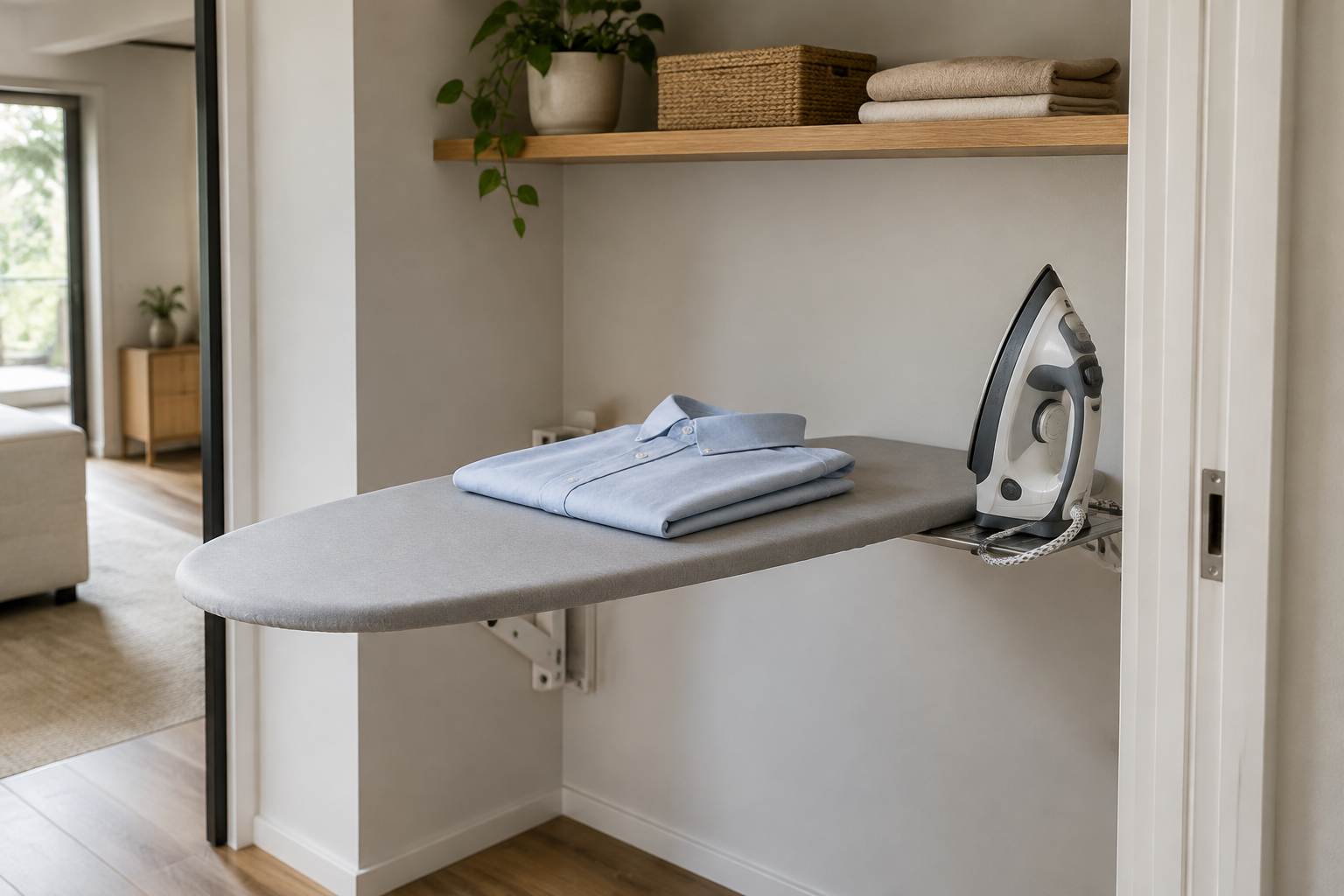
A Wall-Mounted Ironing Board
An ironing board in a cupboard falls out every time you open it. A wall-mounted board folds down only when needed.
Choose one with a built-in iron rest and a heatproof cover. It can live behind a door in a hallway.
Leave the board up for ten minutes after ironing so the pad cools flat.
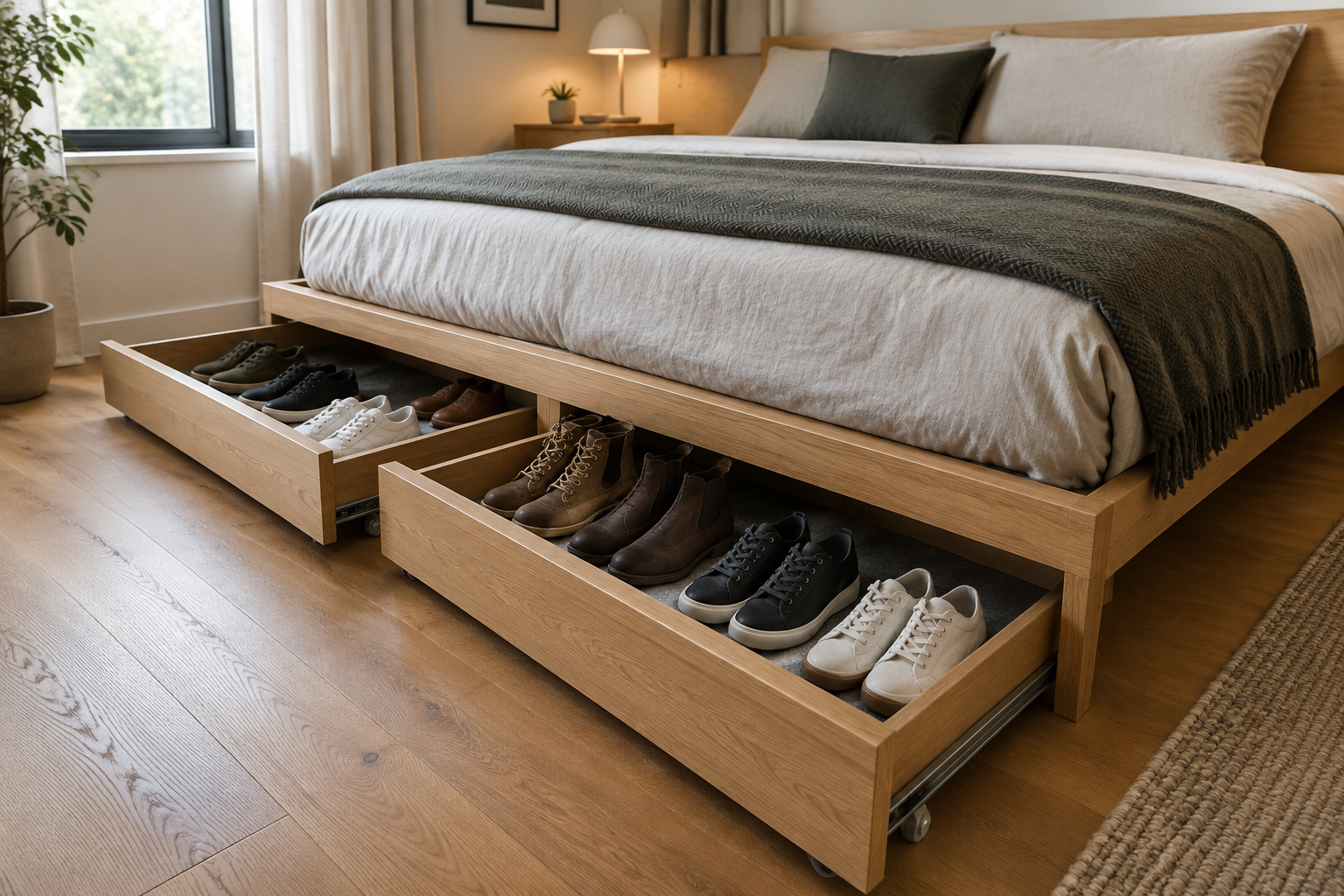
Rolling Shoe Drawers Under the Bed
Shoes pile up in the hall when the closet fills. Flat drawers under the bed hold a whole collection out of sight.
Choose low drawers with dividers so pairs stay together. Felt liners stop heels from sliding around.
Vacuum the floor under the bed before the drawers go in. It will be months.
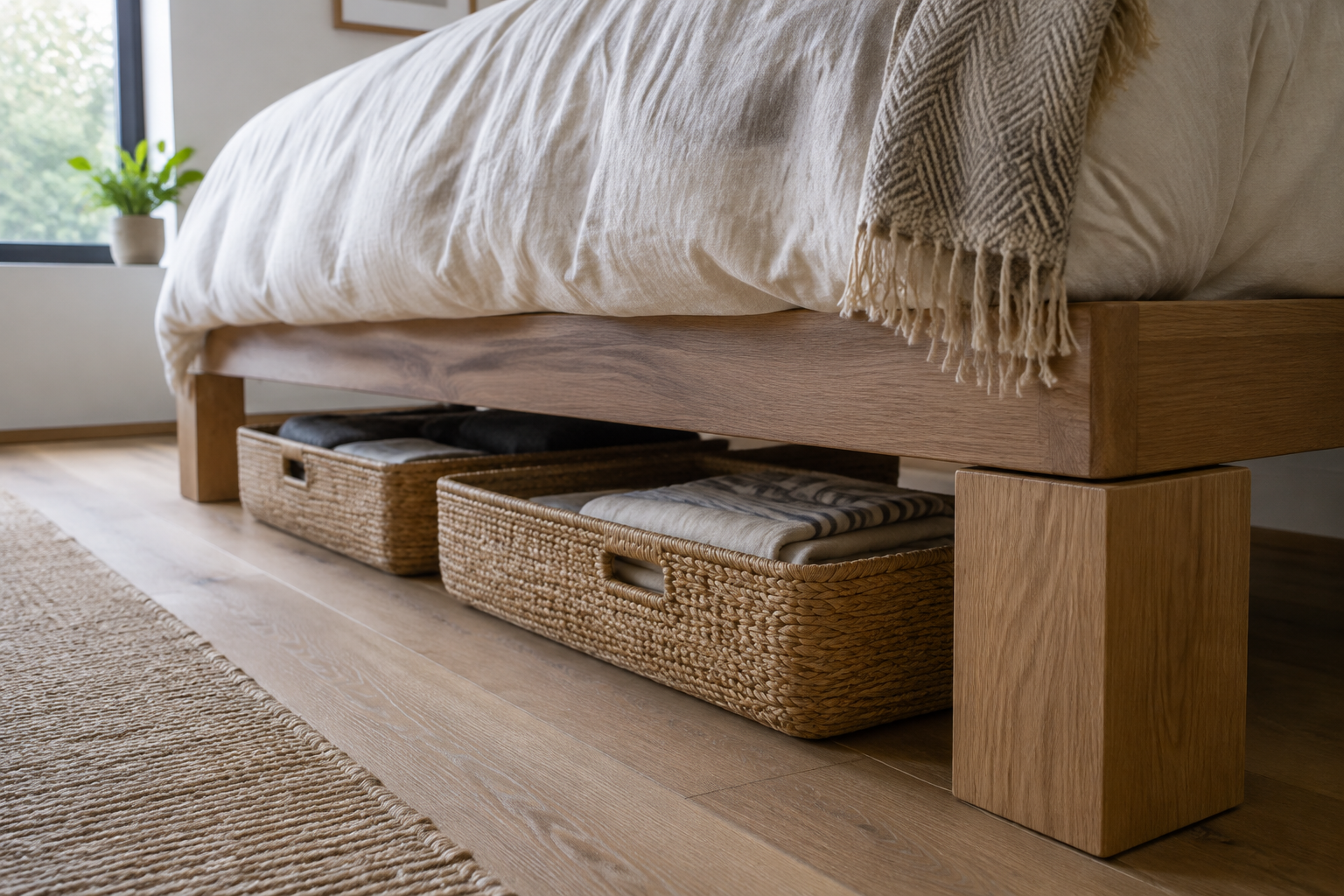
Bed Risers with Slide-In Bins
A few extra centimetres under the bed are enough for real storage. Risers lift the frame and shallow bins slide underneath.
Pick risers with a non-slip base and a matching finish. Keep the bins light so you can pull them out easily.
Check the riser matches your frame leg shape, or the bed will wobble.
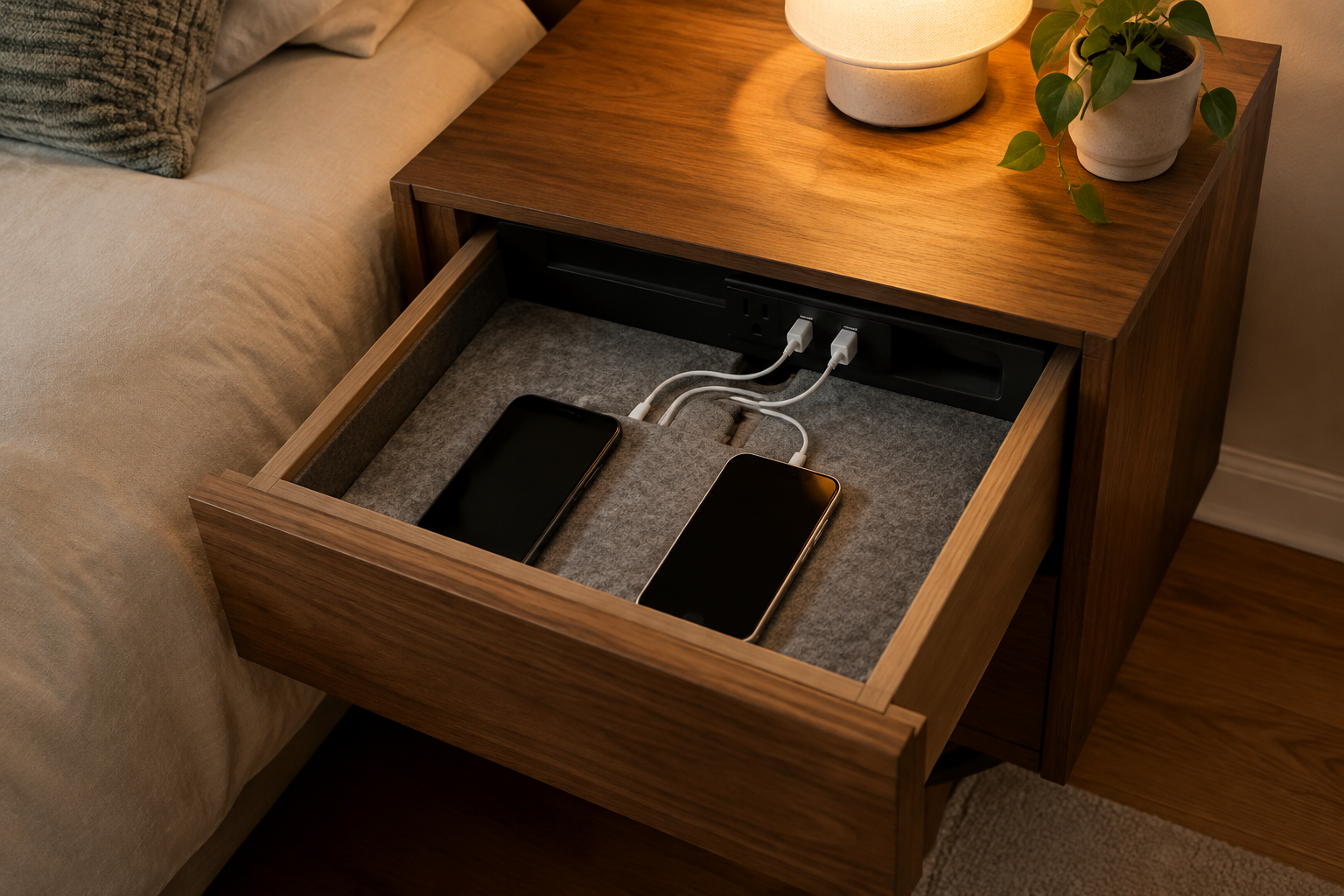
A Hidden Charging Drawer
Chargers and cables cover every surface. A drawer with a power strip inside hides the whole charging station.
Drill a small hole at the back for the cable and line the base with felt. Phones and tablets charge out of sight.
Use a strip with a surge protector and a switch you can reach without kneeling.
A Woven Basket for the Router and Cables
The router and its tangle of wires are the least attractive corner of any flat. A lidded woven basket conceals them.
Cut a small notch at the base for the cables and leave the lid slightly raised. Signal strength stays fine through natural fibre.
Test the signal in every room after the router moves into the basket.
The Entryway Drop Zone
Keys, post and shoes land wherever there is space. A defined drop zone stops the mess at the door.
Hang a row of hooks above a slim tray and one basket. Everything has a home within arm’s reach.
Keep the tray small. A big one collects everything you drop.
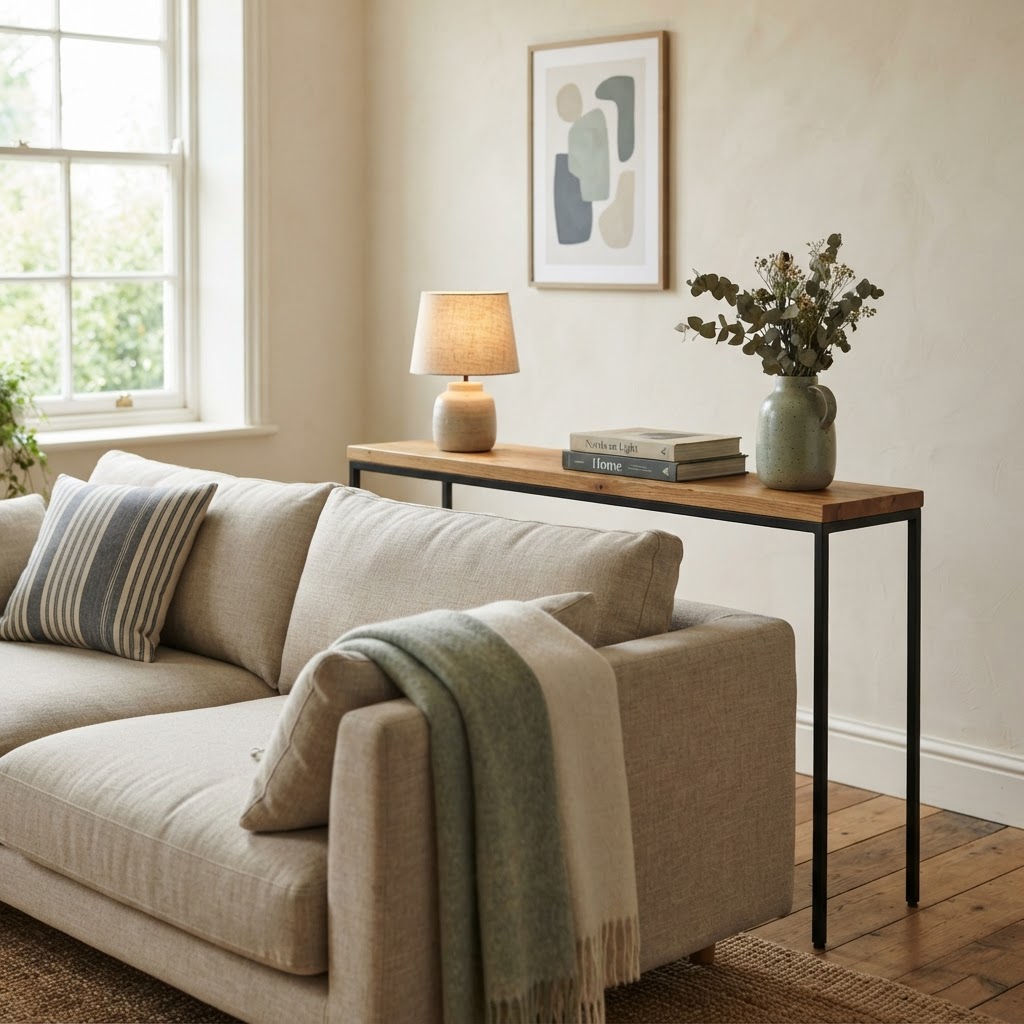
A Narrow Console Behind the Sofa
A sofa floating in the room looks unfinished. A slim console behind it creates a shelf, a lamp ledge and a boundary.
Use the lower shelf for baskets and the top for a lamp. The console doubles as a hallway table in a studio.
Pick a console no wider than the sofa, so it never blocks the walkway.
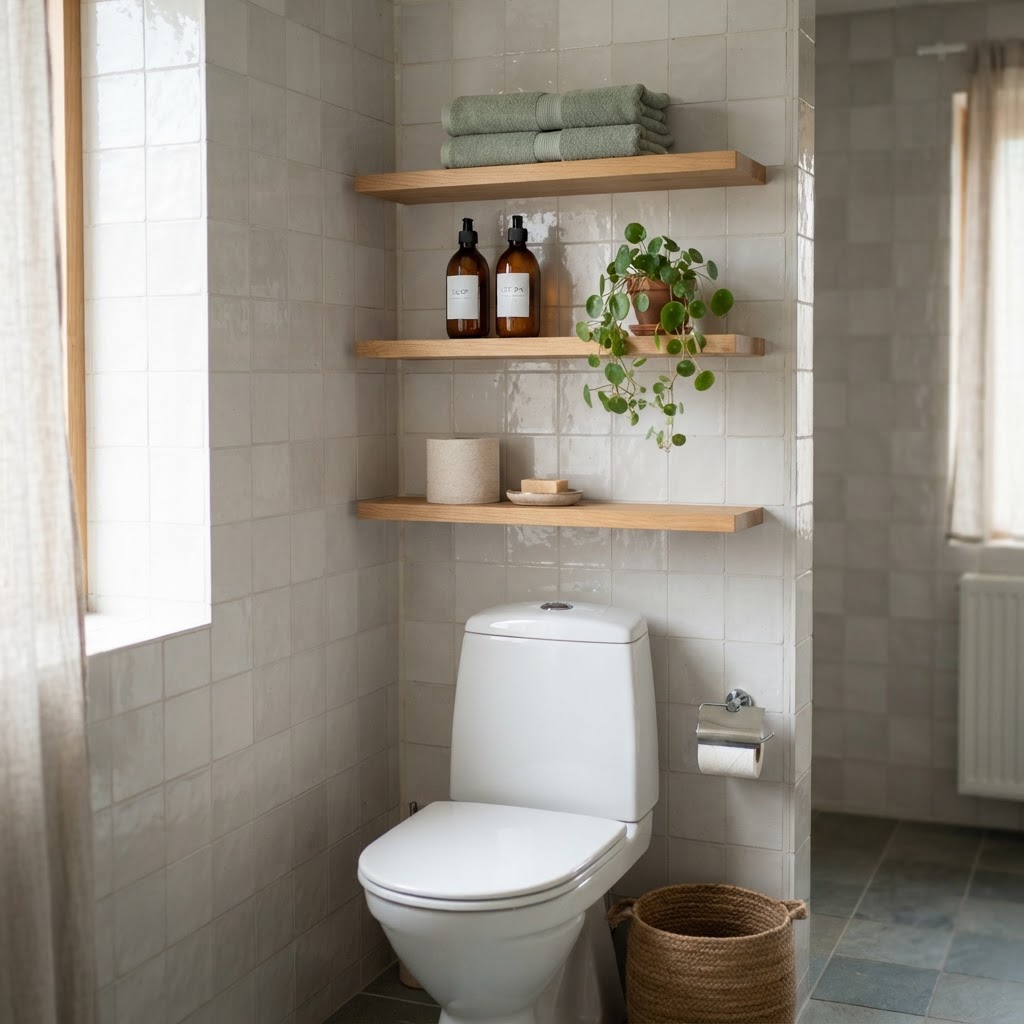
Floating Corner Shelves in the Bathroom
Corners are the most overlooked space in a small bathroom. Three floating shelves stack toiletries without a cabinet.
Stagger the heights so tall bottles still fit. Choose moisture-resistant wood or powder-coated steel.
Put the heaviest shelf lowest, right above the tiles.
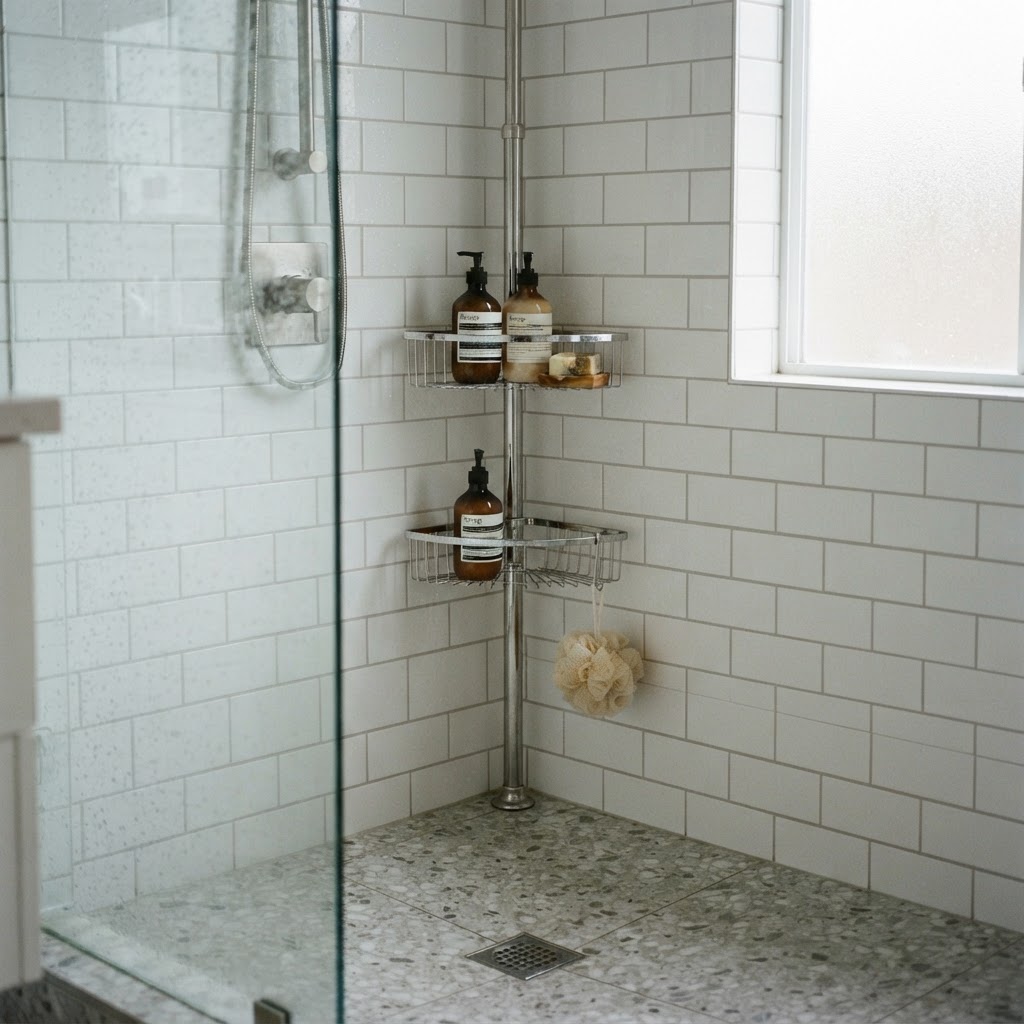
A Tension-Pole Shower Caddy
A shower tray crowded with bottles never looks clean. A full-height tension pole adds four shelves without drilling.
Keep daily products at waist height and refills above. The pole grips between floor and ceiling with no fixings.
Dry the pole ends after every shower so the tension grip keeps its bite.
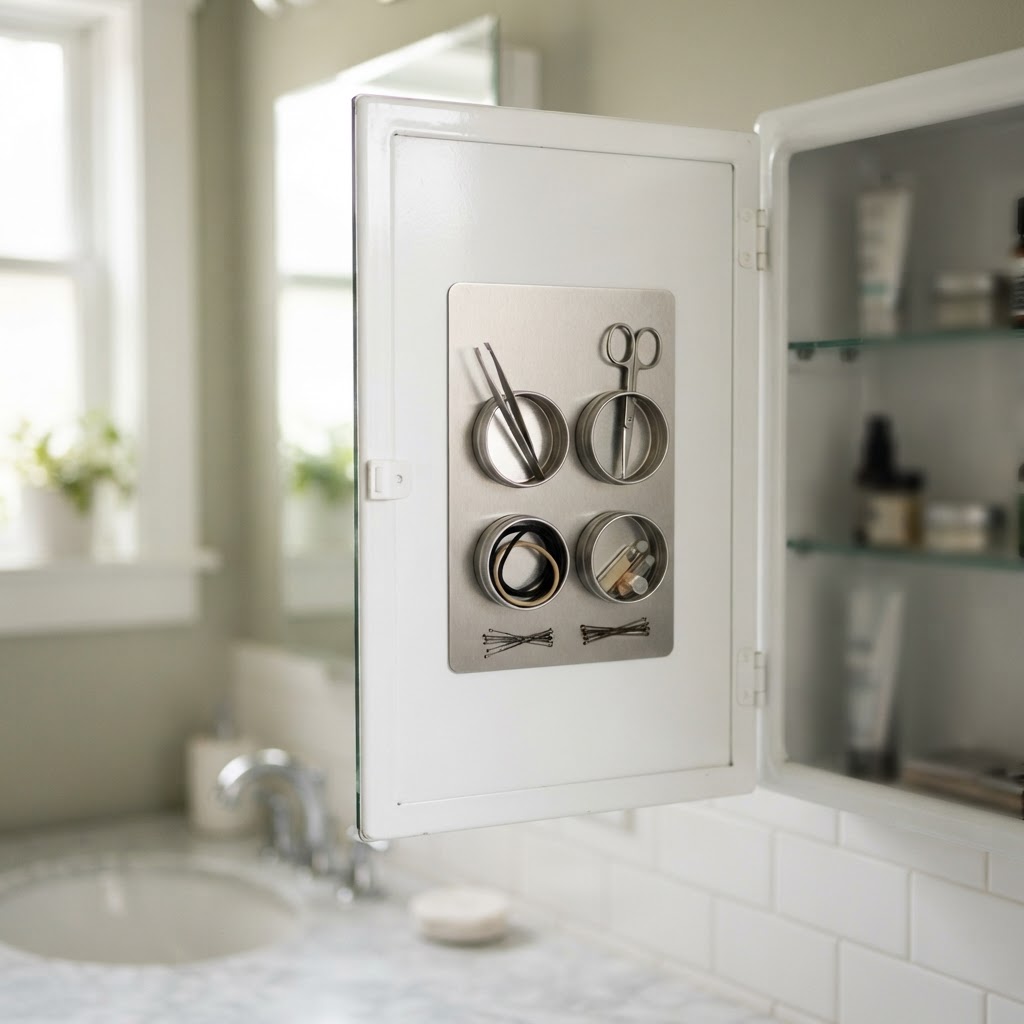
A Magnetic Board Inside the Medicine Cabinet
The inside of a medicine cabinet door is a flat, unused panel. A magnetic sheet holds tweezers, scissors and nail files.
Everything stays visible and off the shelves. Wipe the sheet when you clean the mirror.
Use magnets with a felt backing so the door still closes softly.
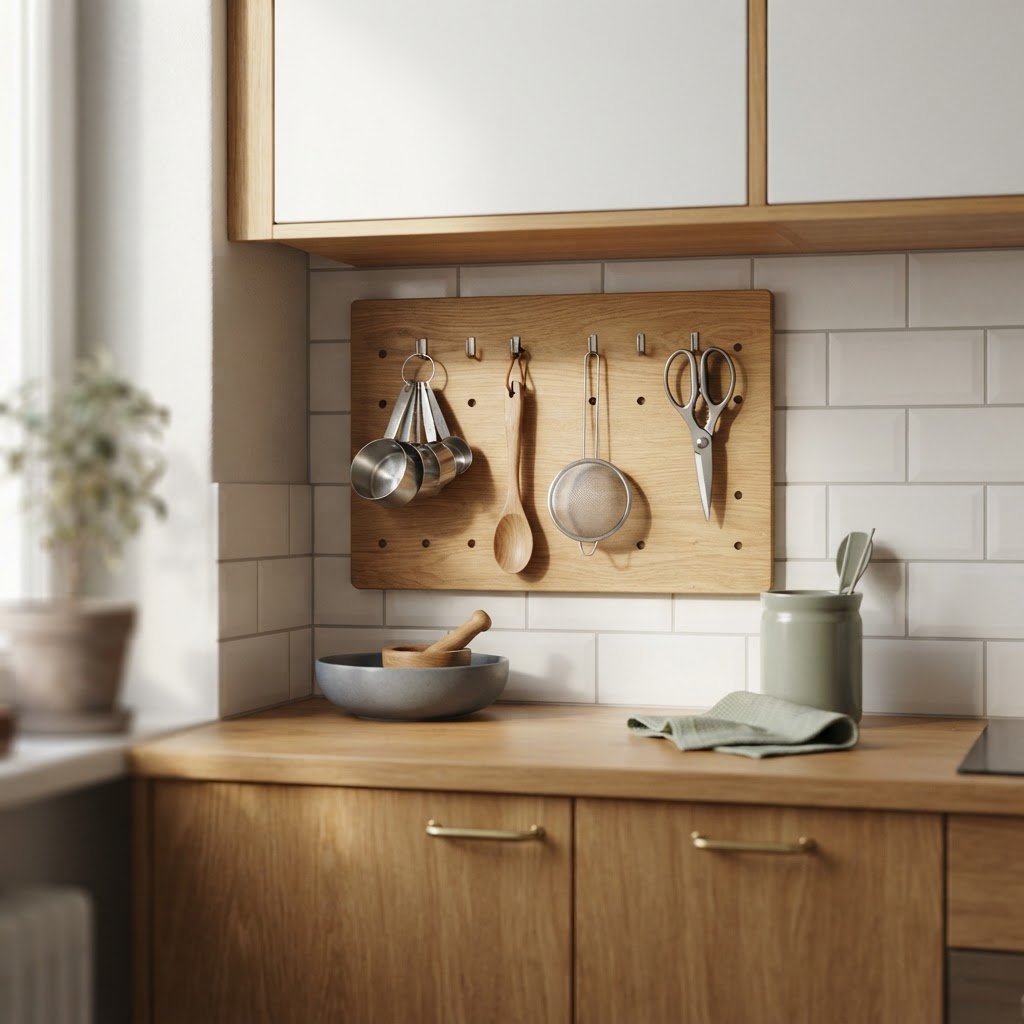
A Pegboard Under the Upper Cabinets
The wall between the worktop and upper cabinets is mostly empty. A slim pegboard there holds utensils within reach.
Hang measuring spoons, spatulas and a small shelf for oils. Keep it clear of the hob for safety.
Keep the pegboard at least 60 cm from the hob. Grease travels.
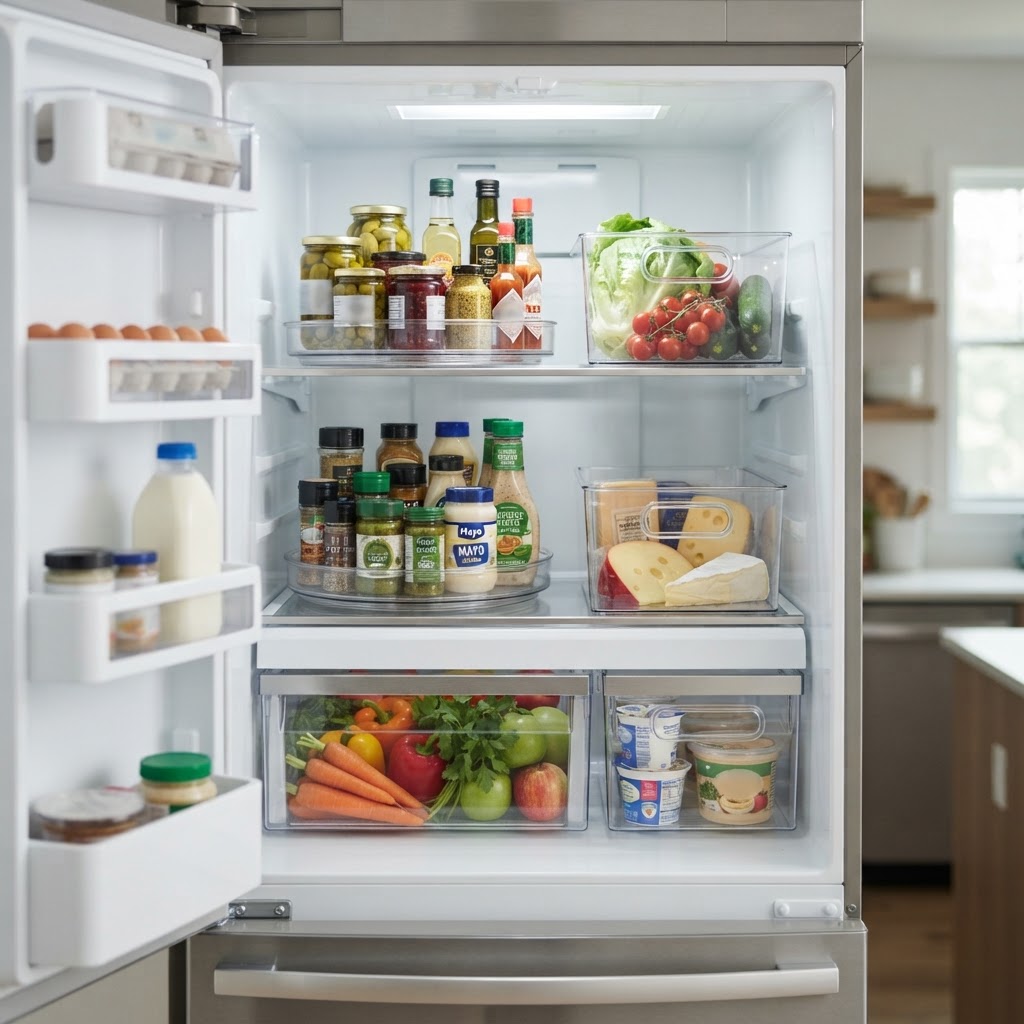
Fridge Turntables and Handle Bins
Deep fridge shelves hide jars at the back. A turntable brings condiments forward and handle bins group small items.
Keep dairy on one shelf and drinks on another. Clear containers also make the fridge easier to wipe down.
Wipe the turntable every time you restock, while it is empty.
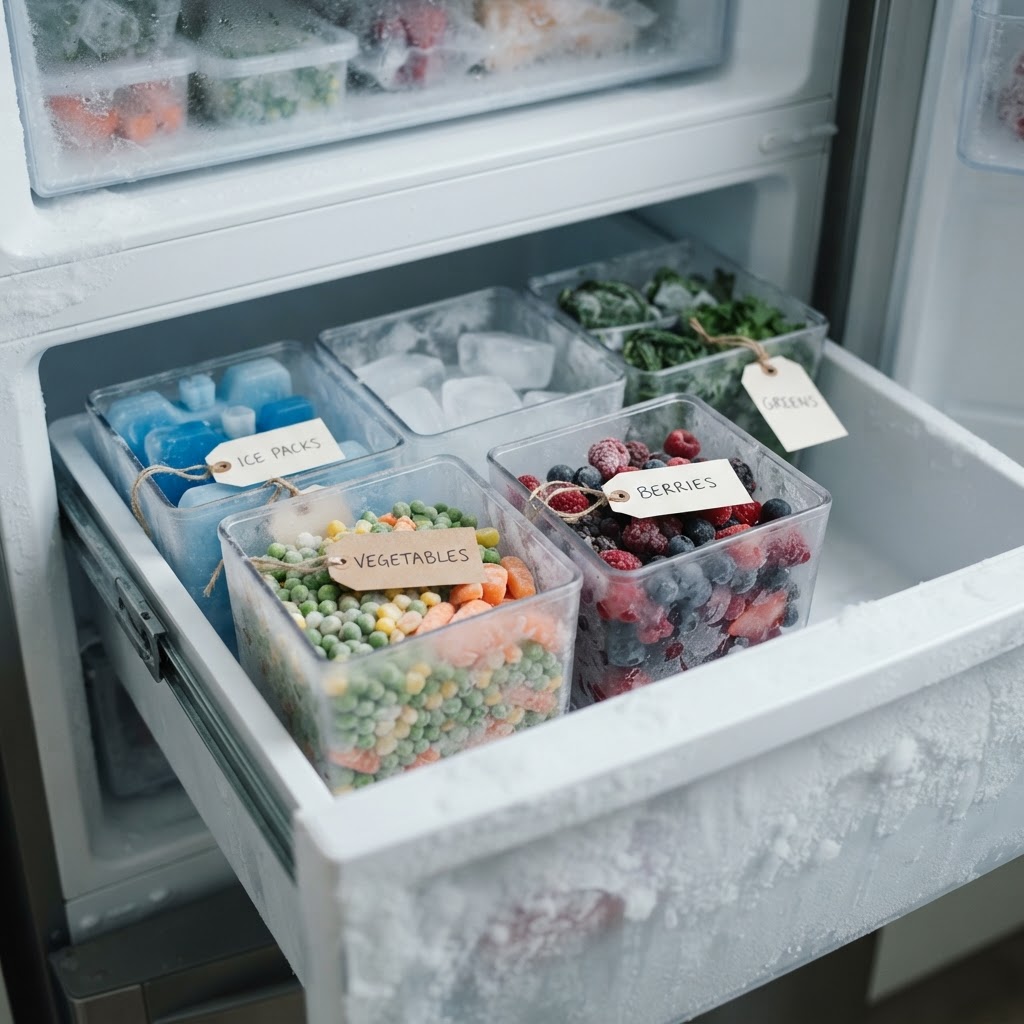
Freezer Bins by Category
A packed freezer turns every meal into a search operation. Bins sorted by category, such as meat, veg and bread, fix that.
Label the bins and stack them vertically where the drawer is deep. You will also waste far less food.
Freeze in flat portions. They stack better and thaw faster.
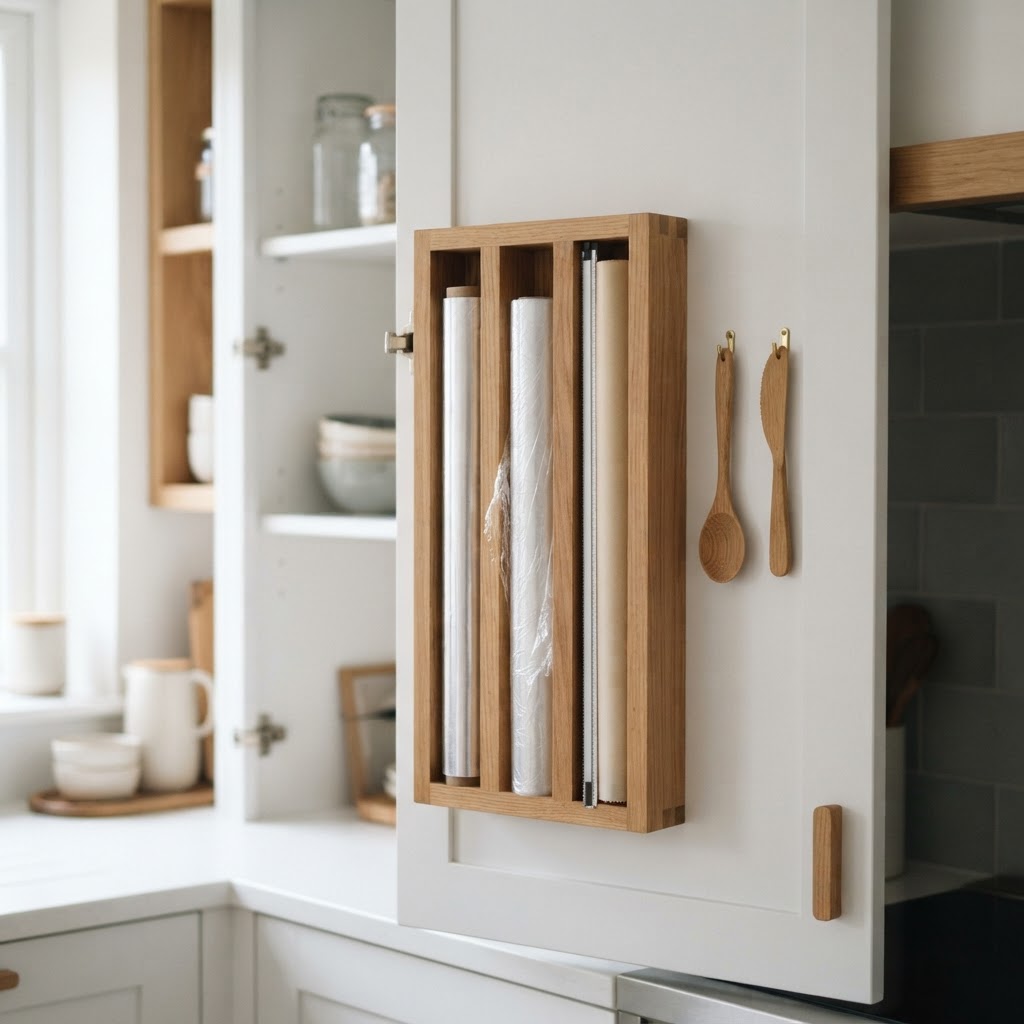
A Foil and Wrap Rack Inside the Cabinet Door
Cling film, foil and baking paper live in a rattling pile. A slim rack on the door holds all three in a row.
Mount it low so the boxes do not block the shelf. The cutter edges stay protected from other items.
Store the boxes with the cutter facing out, so you can tear without lifting.
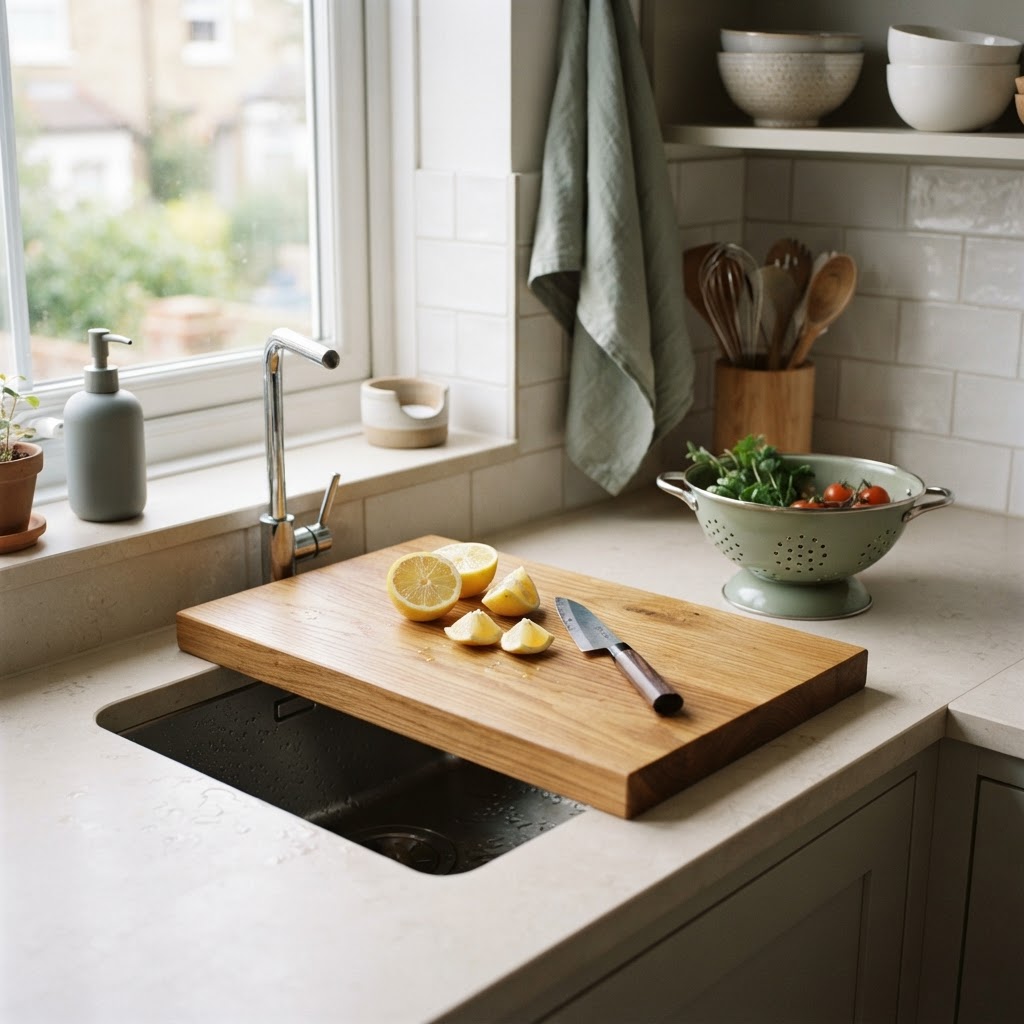
An Over-the-Sink Cutting Board Bridge
Counter space disappears when you prep a big meal. A board that spans the sink adds a work surface instantly.
Choose one with a groove to catch juices. It stores behind the taps when the cooking is done.
Oil the board monthly with food-safe oil so it does not split over the sink.
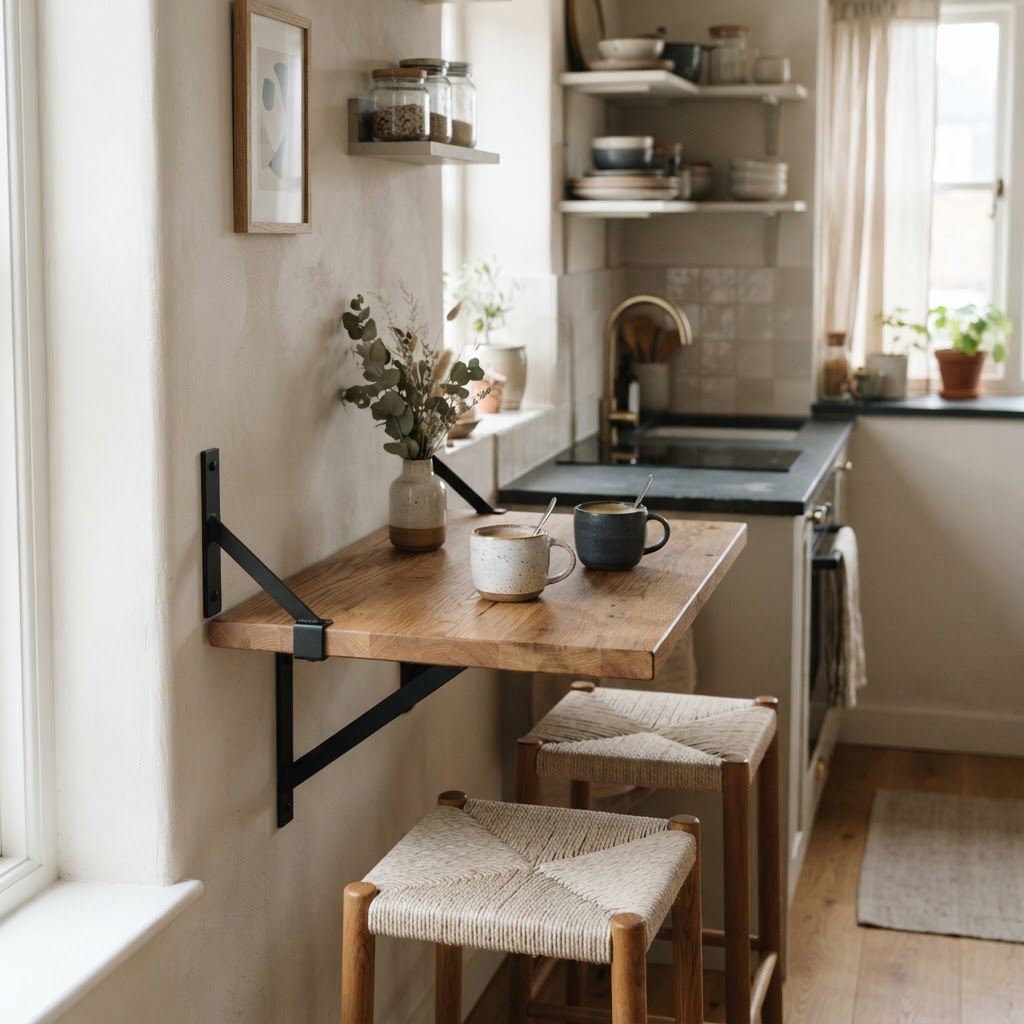
A Fold-Down Breakfast Bar
A dining table takes half of a small kitchen. A fold-down bar seats two and hangs flat when the meal is over.
Mount it to a solid wall at counter height. Stools tuck underneath when the bar is folded up.
Check the wall for pipes before drilling. Small kitchens hide water and wire.
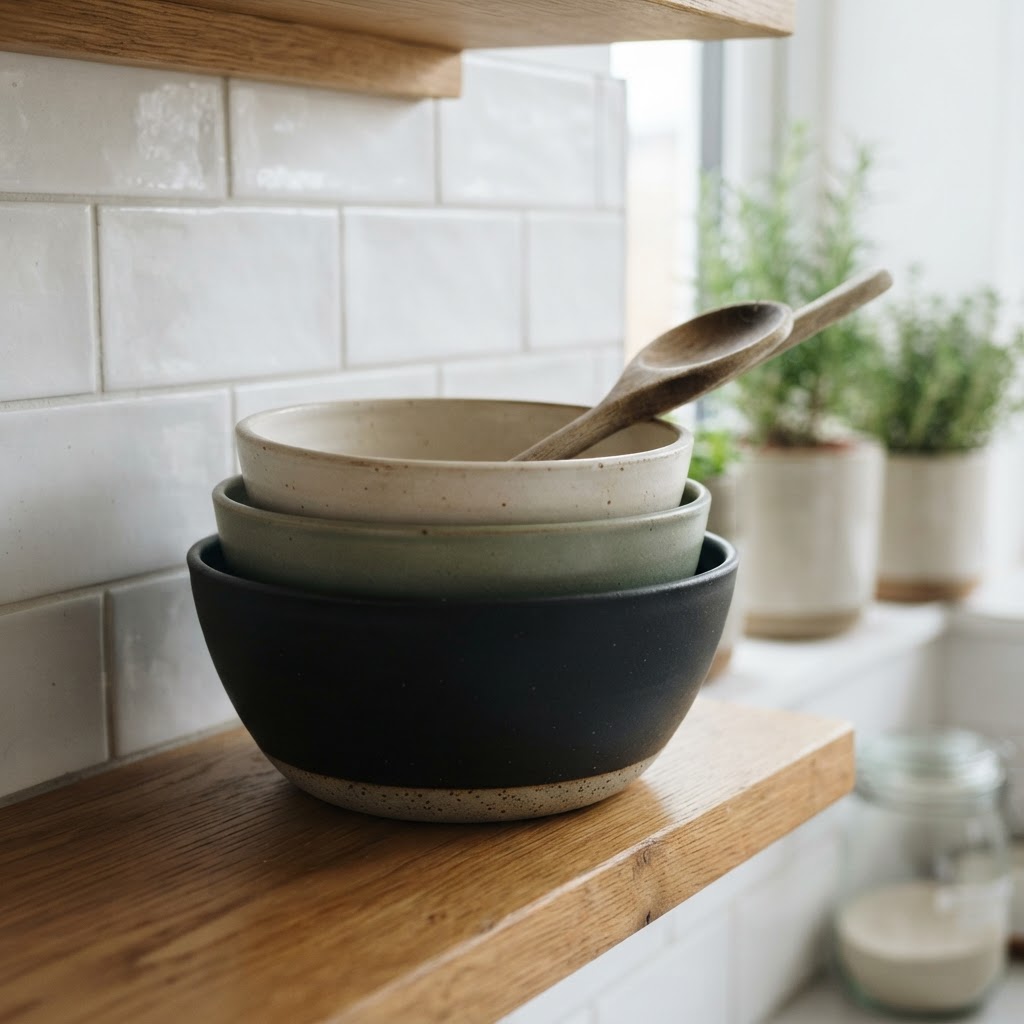
Nesting Mixing Bowls
Bowls and colanders stacked loose take up a whole cupboard. A nested set occupies the footprint of the largest one.
Choose sets with lids so they double as storage. Keep the smallest bowl on top for quick access.
Keep the smallest bowl loose on top, never wedged inside the stack.
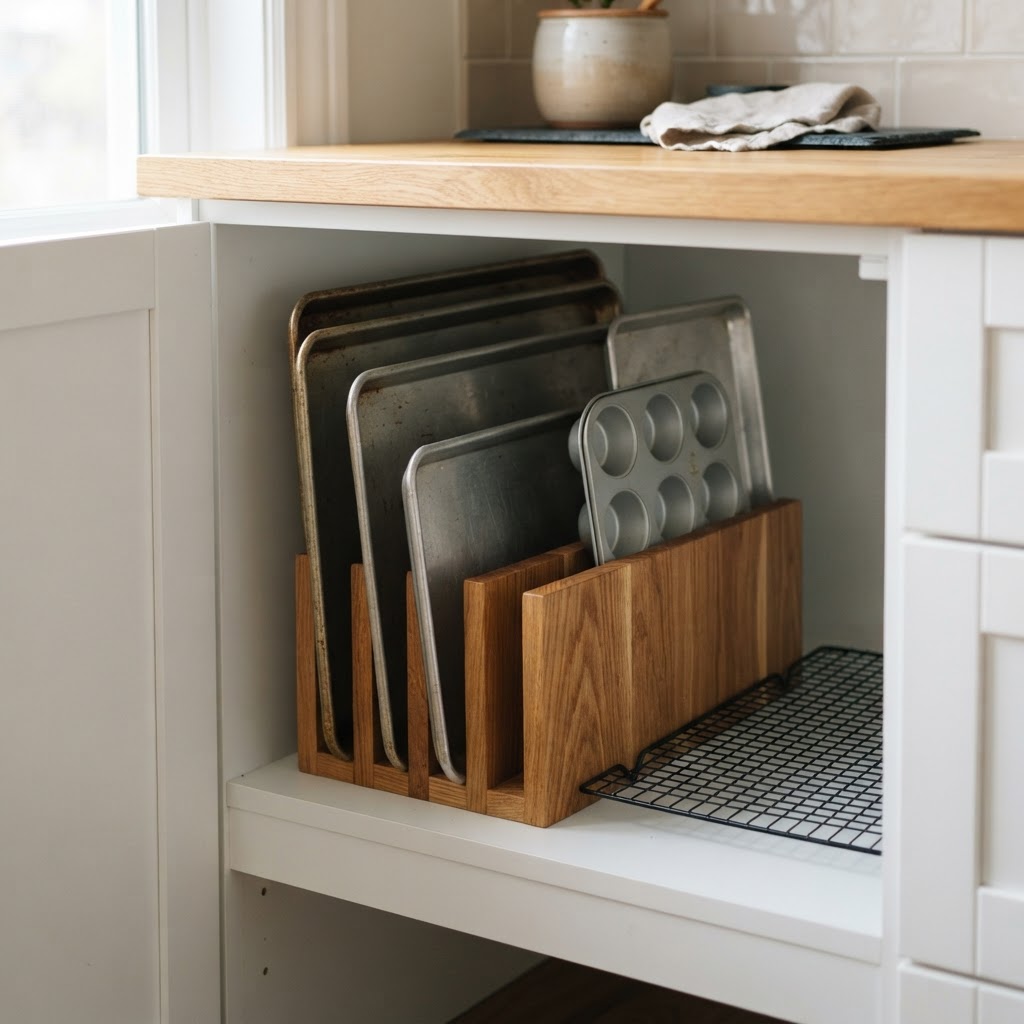
A Vertical Baking Sheet Divider
Baking trays stored flat use more space than they should. A slotted divider stands them in a neat row.
Slide it into a deep cupboard beside the oven. The same divider holds muffin tins and wire racks.
Store sheets on edge, never flat. They slide out in one motion.
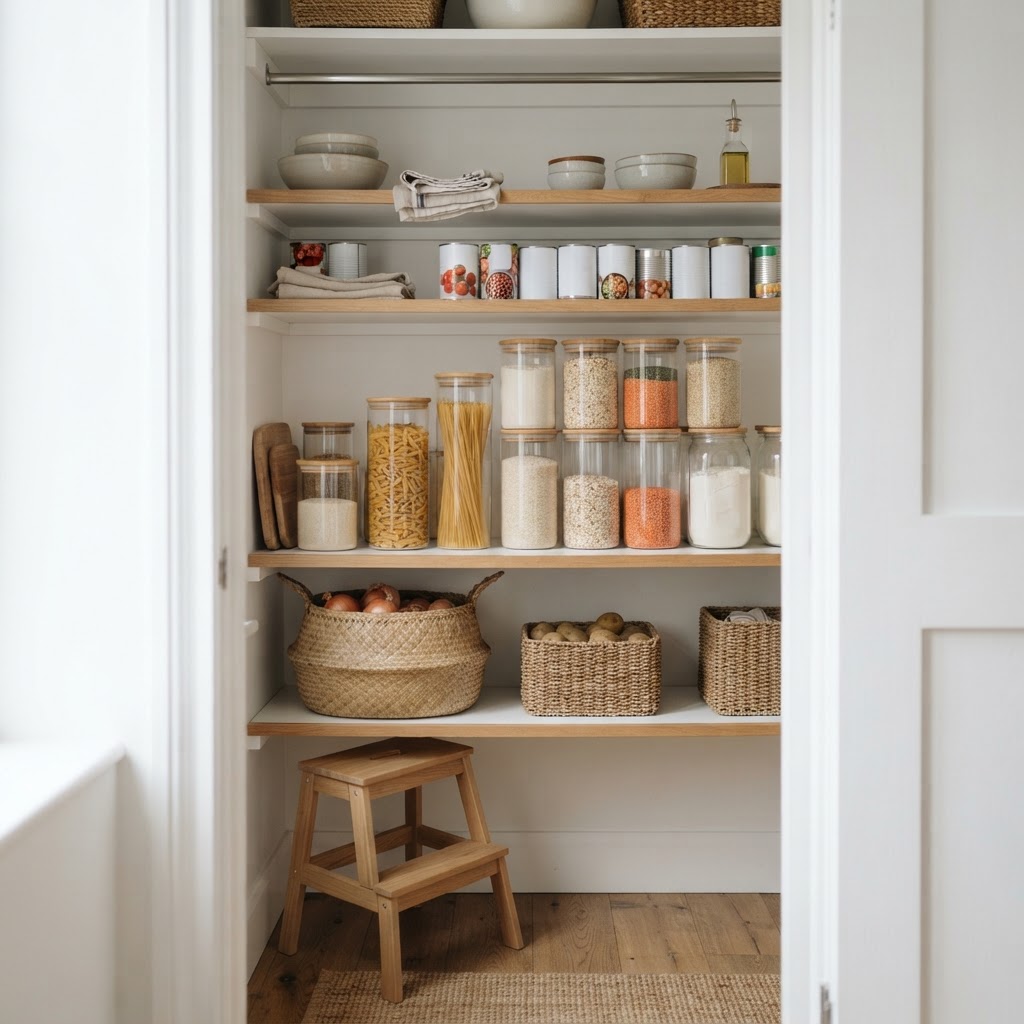
A Closet Turned Pantry
A second closet can hold more food than most kitchen cupboards. Adjustable shelves turn it into a walk-in pantry.
Keep the floor for bulk items and the eye-level shelf for daily staples. Add a battery light if there is no socket.
Add a small step inside a deep closet, so the top shelf stays reachable.
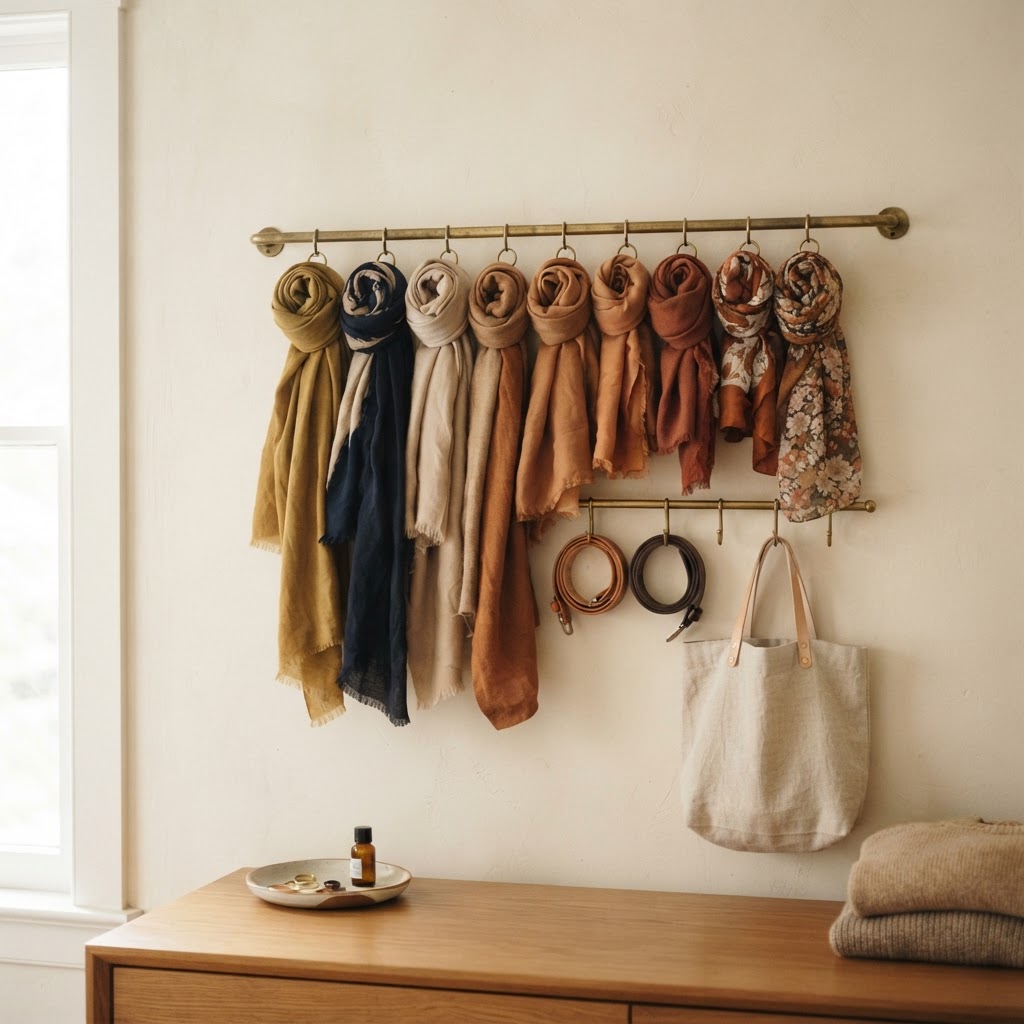
A Scarf and Accessory Rail
Scarves, belts and hats end up in a pile on a chair. A slim rail on the wall holds them where you can see them.
Use small clips or S-hooks so nothing slips. Keep the rail inside the wardrobe or behind the door.
Roll scarves instead of folding them and the rail holds twice as many.
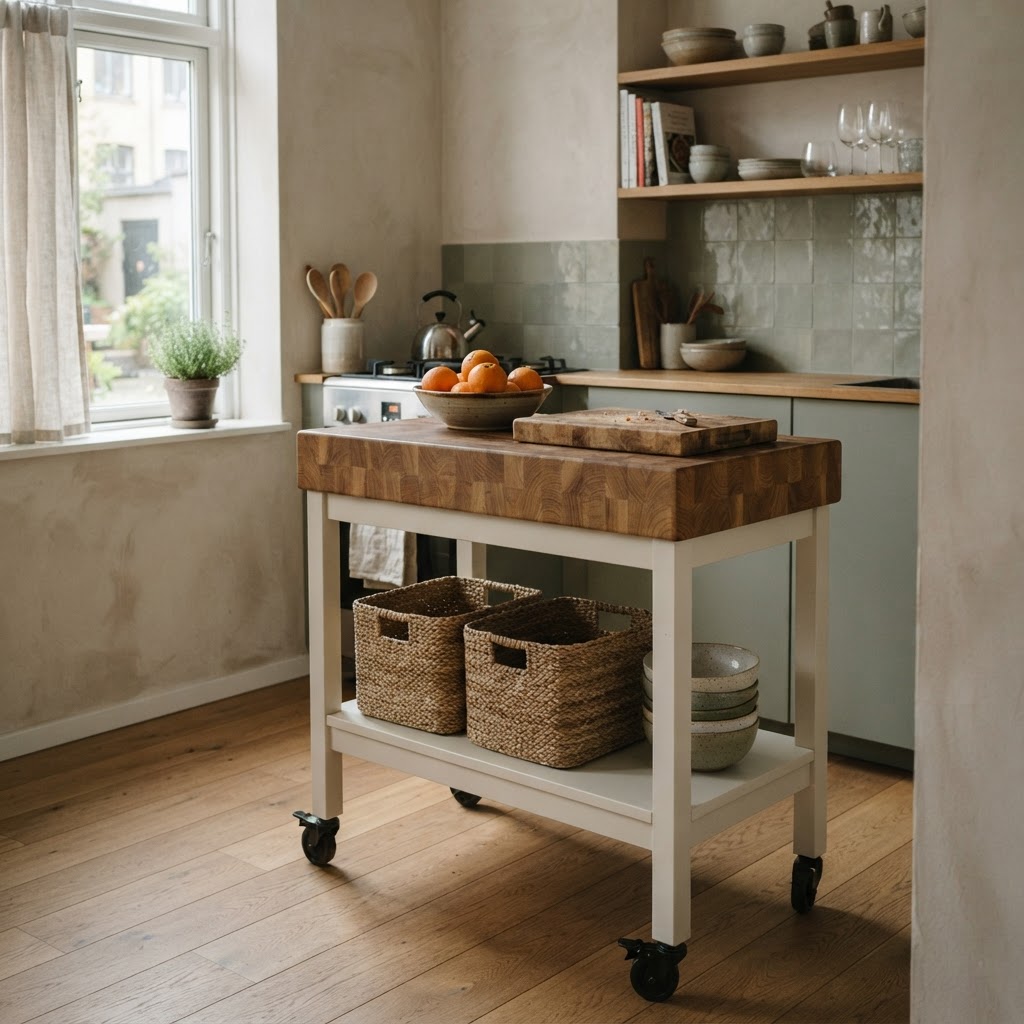
A Rolling Island Cart with a Butcher Block
A tiny kitchen has no room for a fixed island. A cart with a butcher-block top rolls in for prep and out for space.
Choose locking casters so it stays still while you chop. The lower shelves hold pots and dry goods.
Lock the casters every time. A moving island while chopping is an accident.
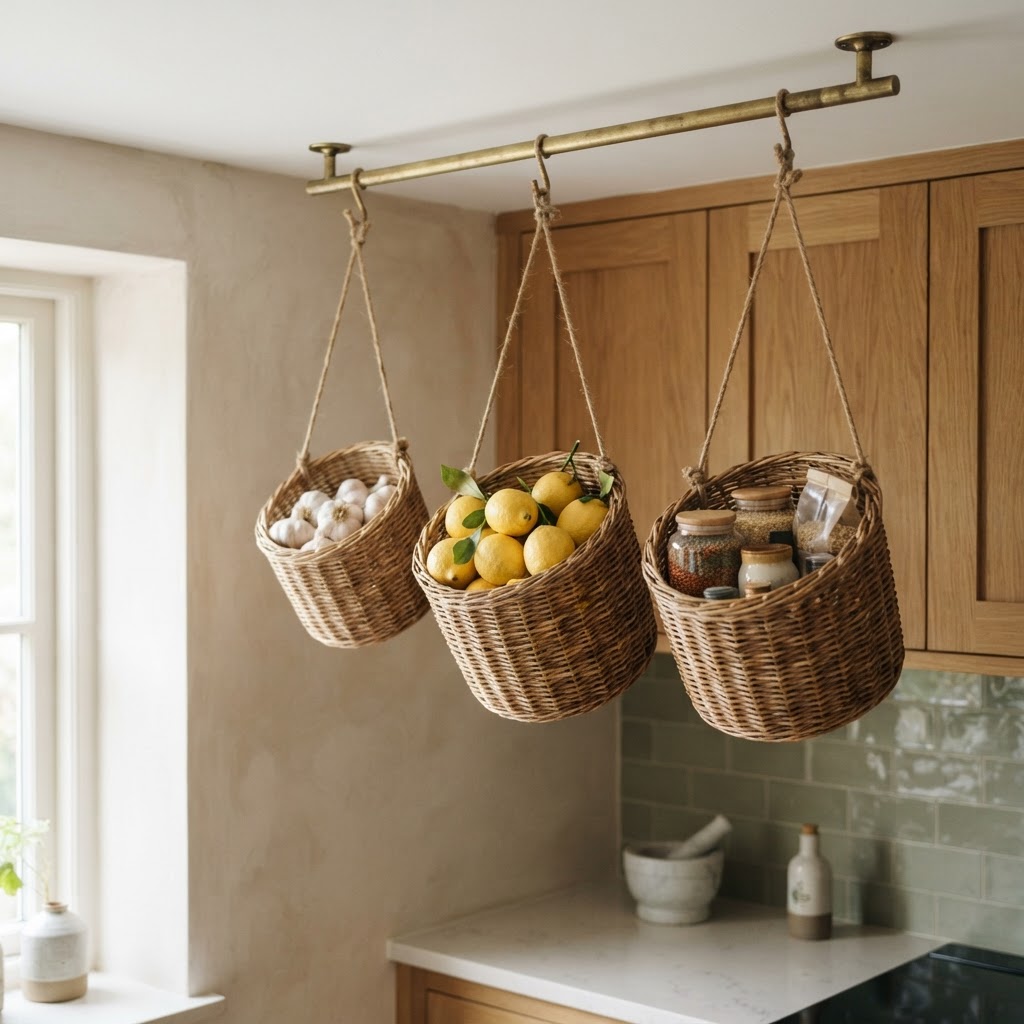
A Ceiling Rail with Hanging Bins
Vertical space above head height is usually empty. A ceiling rail with S-hooks suspends bins for light, bulky items.
Keep it clear of walkways and doors. Hanging baskets suit plants, produce or laundry bags.
Use a rail rated for twice the weight you plan to hang from it.
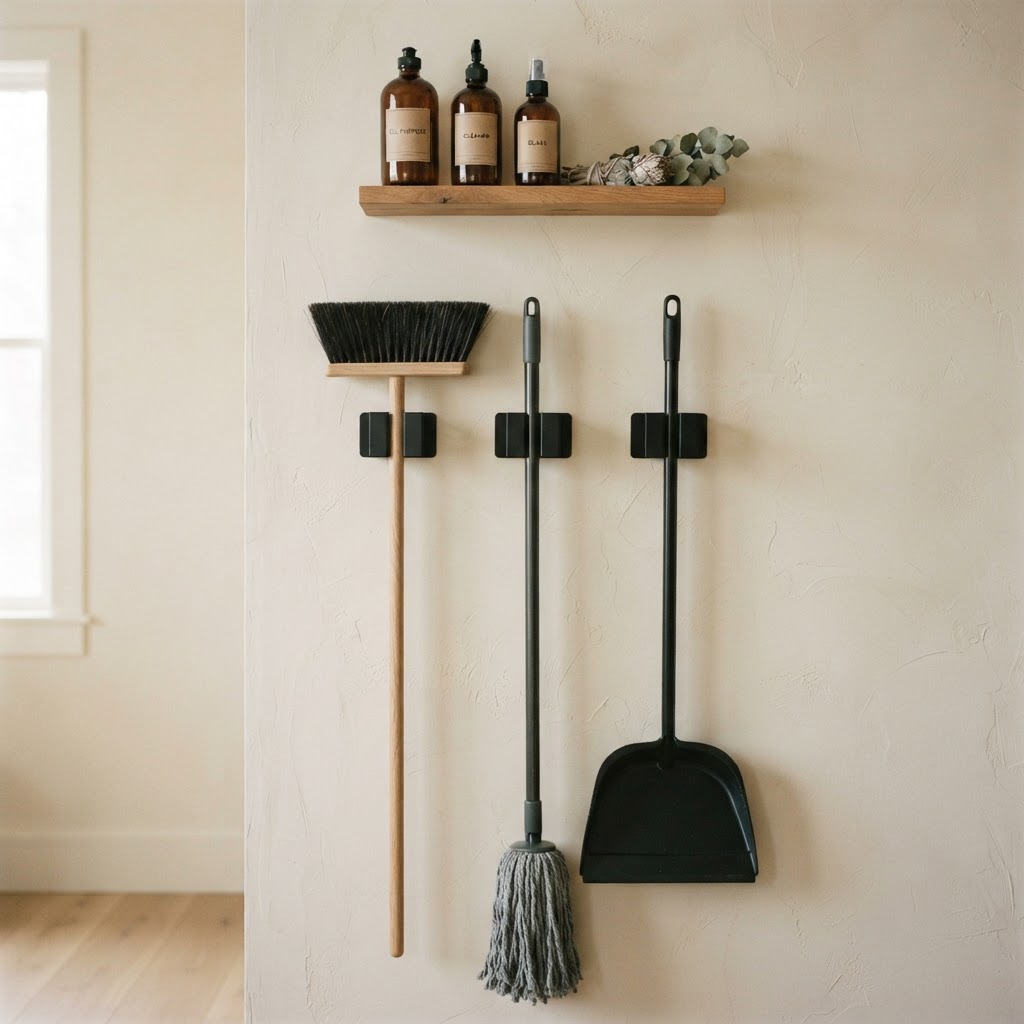
Wall Clips for Brooms and Mops
Brooms and mops lean in corners and fall over. Spring clips on the utility wall hold each handle upright.
Mount them at a height where the heads clear the floor. Group cleaning tools together so they are easy to grab.
Clip the mop handle upside down so the head dries without touching the wall.
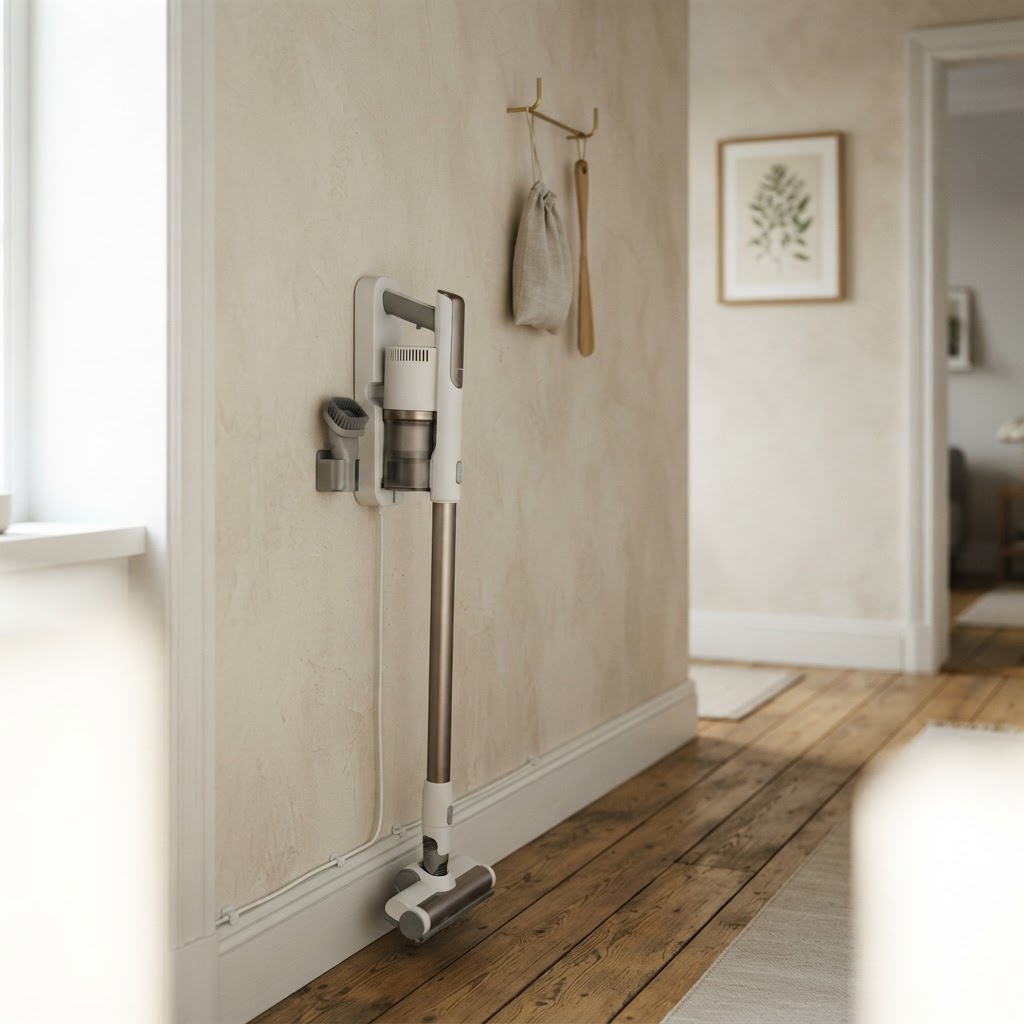
A Vertical Vacuum Dock
A vacuum cleaner on the floor is always in the way. A wall dock hangs the whole machine out of the traffic path.
Fit it inside a cupboard or at the end of a hallway. Check the dock suits your model’s weight before mounting.
Run the cable along the skirting, never across a doorway.
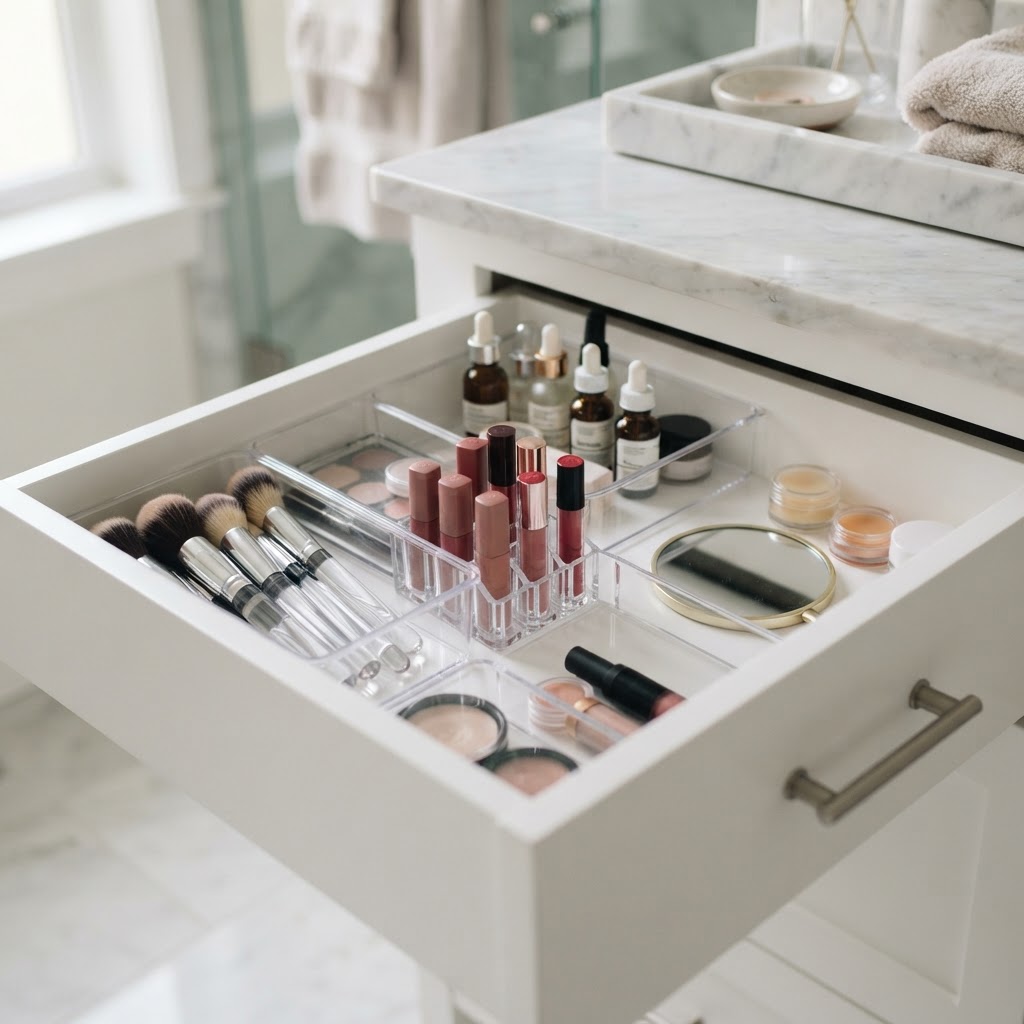
Clear Vanity Drawer Organisers
A shallow bathroom drawer can hold more than it seems. Clear trays divide it into zones for skincare, makeup and tools.
Stack two trays where the drawer is deep. Everything stays visible, so you stop buying duplicates.
Wash the trays quarterly. Clear plastic shows every mark.
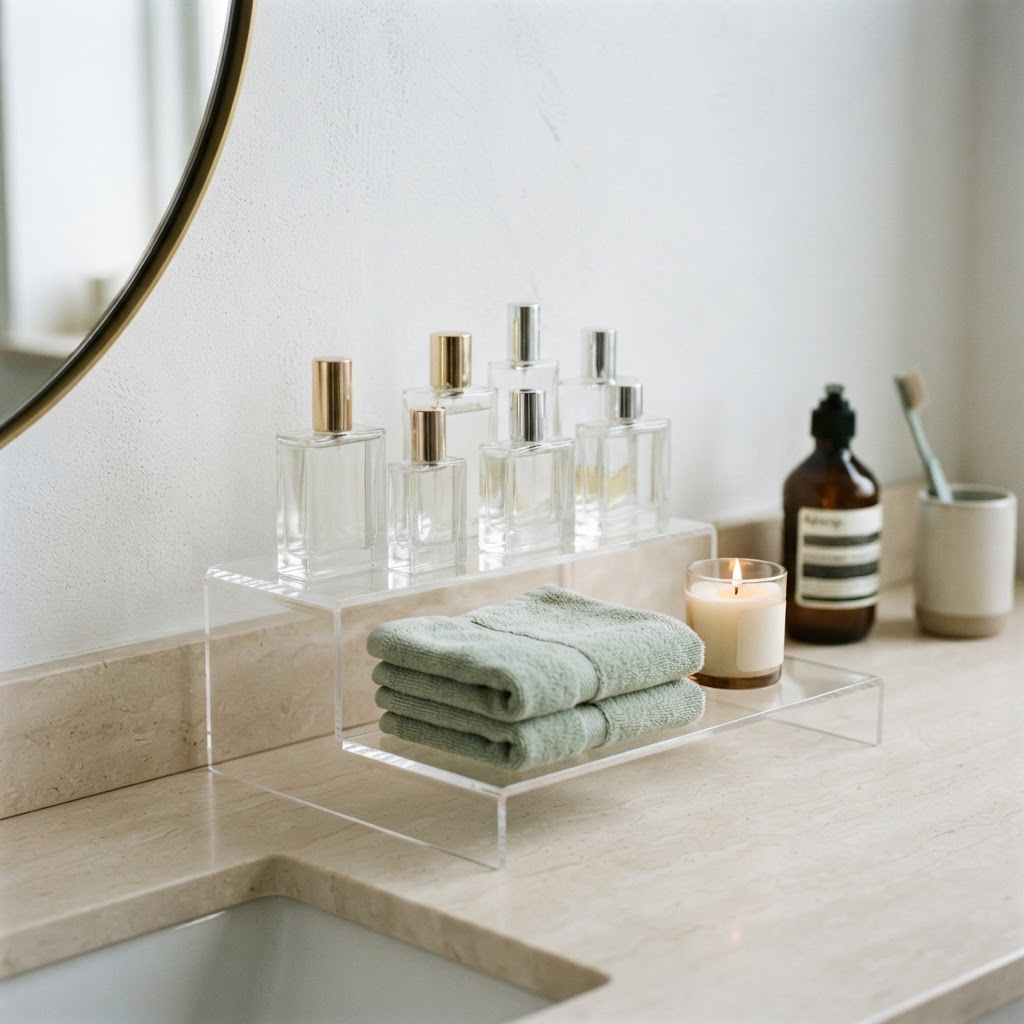
Acrylic Vanity Risers
A bathroom counter turns into a row of bottles. A small acrylic riser lifts the shorter ones so every label is readable.
It also creates a hidden shelf underneath for cotton pads and soap. The clear material keeps the counter feeling light.
Group by height rather than brand, so the riser does three jobs at once.
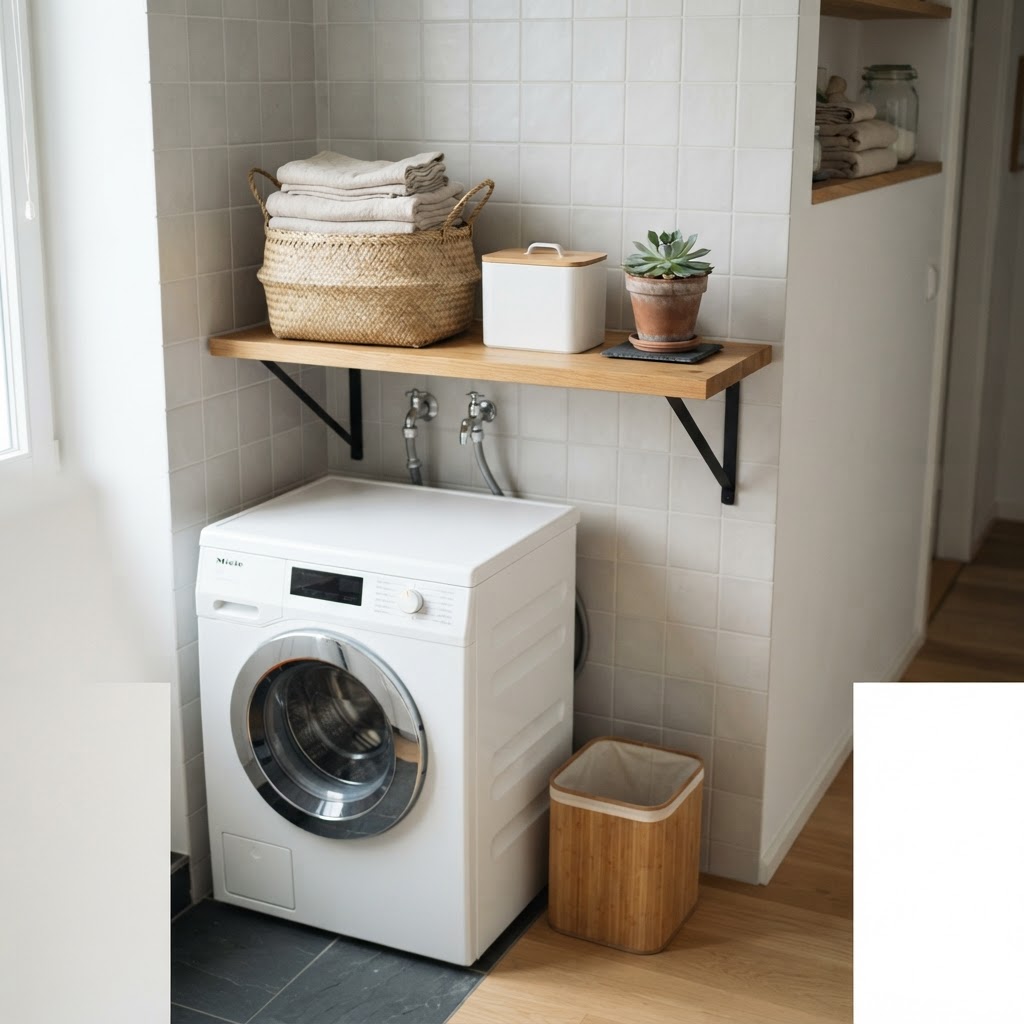
A Shelf Above the Washing Machine
The wall above a washing machine is free storage. A sturdy shelf holds detergent, softener and stain remover in one place.
Mount it high enough to load the drum comfortably. Keep powders in sealed jars so they do not clump.
Keep a cloth on the shelf edge to catch drips from the detergent bottle.
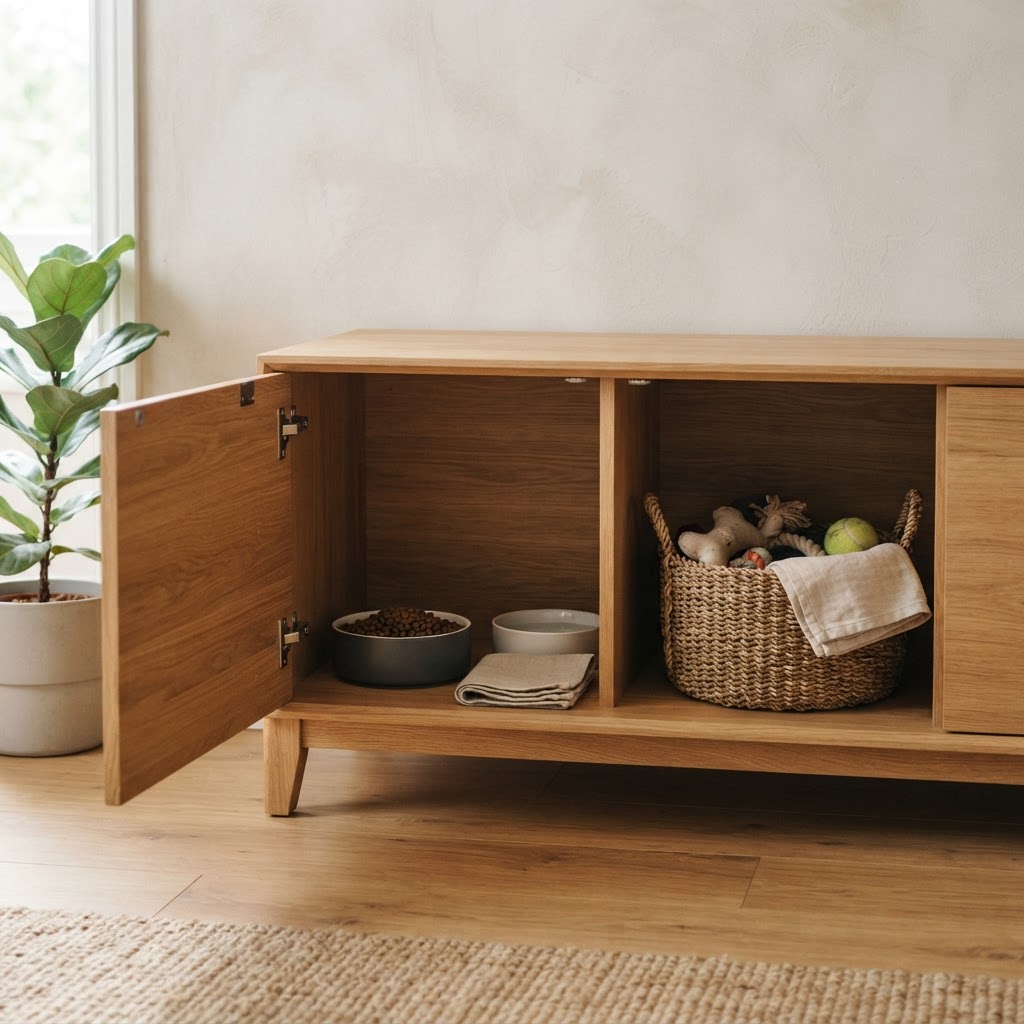
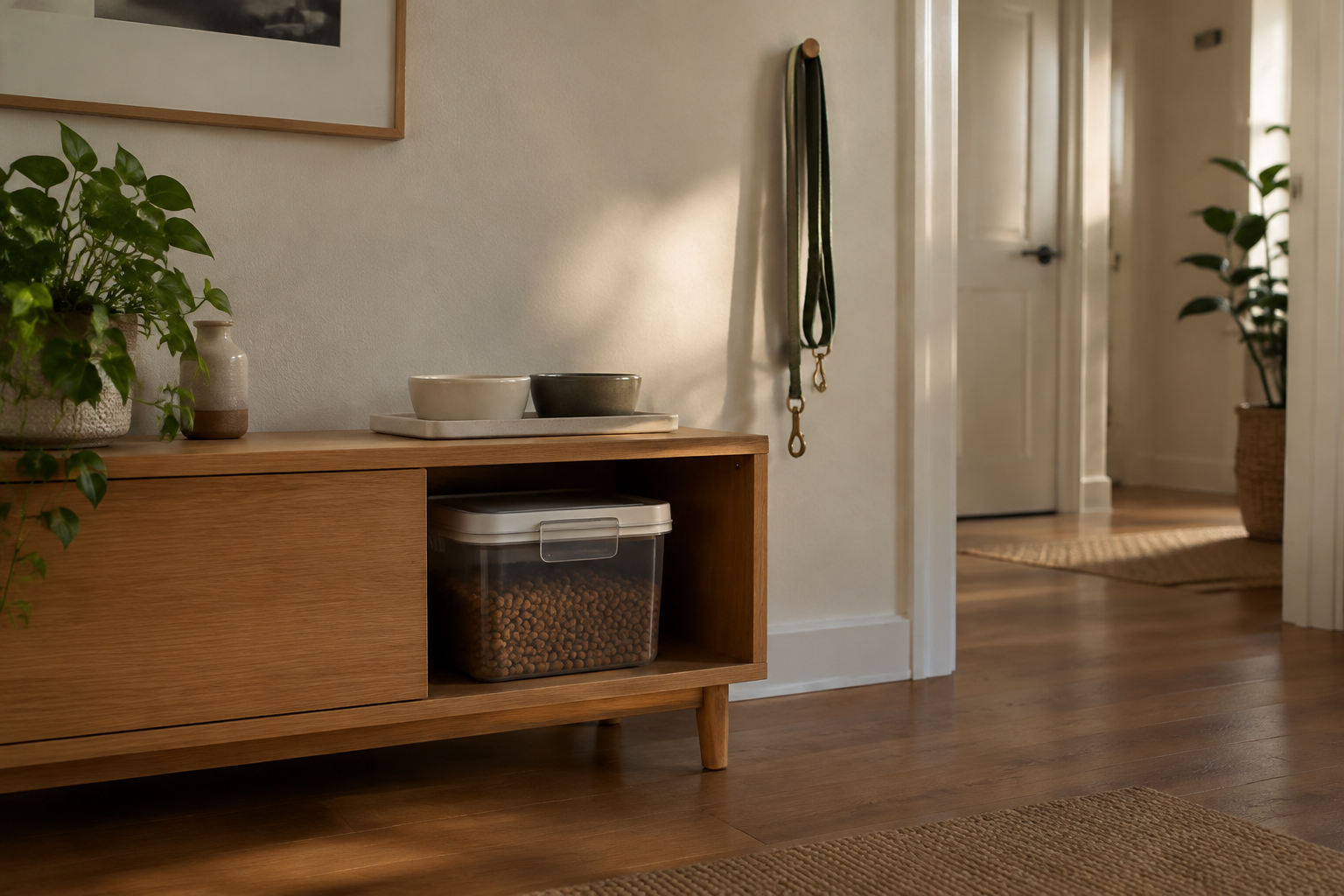
A Pet Station Inside a Console
Bowls, leads and food bags usually take over the floor. A console with an open cubby makes a tidy pet station.
Keep food in a sealed container below and leads on a hook beside it. A tray under the bowls catches every spill.
Put a mat under the whole station. Kibble travels further than you think.
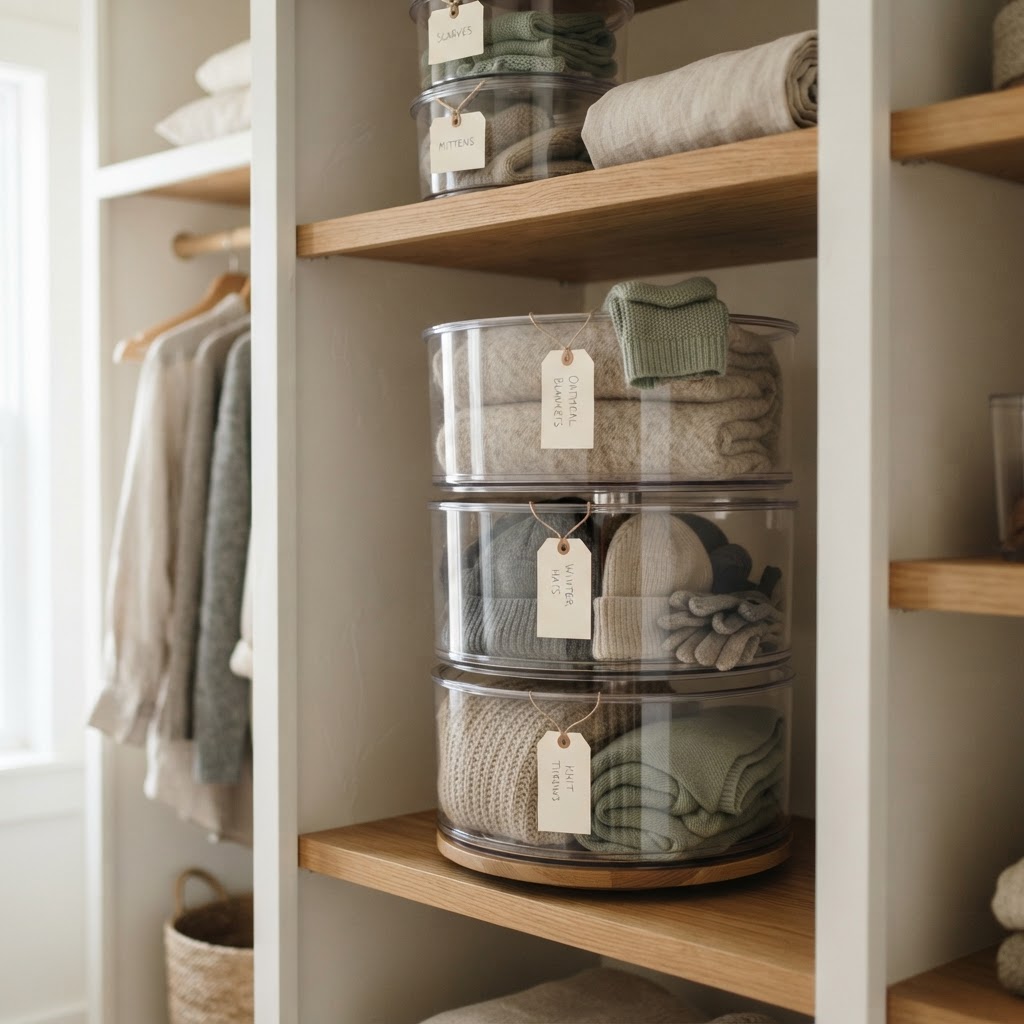
Rotating Seasonal Archive Bins
Seasonal items do not need daily access. Labelled archive bins rotate twice a year and free the prime shelves.
Store them high, dry and out of the way. Keep a list on your phone of what sits in each bin.
Photograph the inside of each bin and keep the pictures in one album.
How to Start Without Feeling Overwhelmed
Pick one zone this weekend. The kitchen drawers or the entryway are the easiest places to see a result fast.
Empty the space completely before you measure anything. You will always find something you forgot you owned.
Buy the container after you know what goes in it. Buying first is how clutter comes back.
Wait three weeks before you change anything else. Storage that survives a normal week is storage that works.


